Free baklava as the police sirens wail

Today, I had a stressful day.

I lost my debit card in the Golan Heights, my phone’s data plan stopped working, and I had a long bureaucratic meeting at the Ministry of Absorption.  And that was all before noon.

It ended up working out, but I just felt exhausted and stressed.  So, as has become my custom, I went for a walk by the beach.  I called my friend Jack in Minnesota to wish him a happy birthday and made my way down the boardwalk to Yafo.

I miss Yafo.  I’ve since moved to a new apartment in another part of town, but I used to live right by this beautiful 10,000 year old city.  Every time I went, I just felt the stress lifted off my shoulders as I stared at the Mediterranean, listened to the waves, and talked with the people.

After eating some delicious schwarma, I headed to the Abouelafia bakery, site of my first in-depth Arabic conversation in Israel which you can read about here.  I was in desperate need of a good talk with my friend Adnan but instead I found his much younger coworker Sager who I had met with him.

When I first met Sager a few weeks ago, he was quiet.  I tried to engage, but Adnan and I did most of the talking and Sager looked uninterested.

When I came back this time, from the second our eyes met, Sager looked excited to see me.

He invited me in and we got to talking.

Over the past week, there has been rioting in Yafo.  There have been Arabs protesting against the police, sometimes violently.  I honestly don’t know all the details because I hate listening to the news.

Sager didn’t wait one moment to tell me his opinion.  He is an Arab Muslim.  He is from East Jerusalem.  And in his experience, the police do ethnically profile here and it is quite unpleasant.  At the same time, he is furious with the protestors, who are burning things and causing problems.  He feels that they are unnecessarily damaging relations between Arabs and Jews, who he views as brothers.  In addition, he is concerned for the livelihood of the bakery’s owners and his own job.  If Jews and tourists are afraid to visit Yafo, then there won’t be any business.  This pain will also hurt the dozens of Arab businesses in the area.

We talked about our shared hatred for extremism on all sides.  How the rest of the world likes to obsess over every last problem between Israel and the Palestinians but the world is silent when hundreds of thousands of Syrians are butchered.  I shared with him an Arabic poem I wrote in the Golan overlooking the Syrian border, which he loved.  In his words, the Golan Heights it the most beautiful place on the planet and I think I agree with him.

We talked about what it’s like to be a minority.  Most Jewish Israelis don’t know what it is to be a minority as a Jew.  Part of that is a good thing- it’s a product of Zionism and it’s part of the blessing of having one small place on this planet where we are normal.  Part of it is problematic- I think some folks here have lost sight of the Jewish experience and the sensitivity we’ve often had for other minorities.  My minority identity, which was undoubtedly a burden in the U.S., is to my advantage here.  I can enjoy all the blessings of a validated identity while showing empathy and kindness to the minorities I share this country with.

In between us singing Nancy Ajram and dancing dabke together (yes, this actually happened), Sager thanked me for speaking Arabic with him.  Our whole conversation was in Arabic and while, like in any second language you speak, there were times I didn’t remember this or that word, we got our points across.  My speaking Arabic has made living in Israel a much, much richer experience and frankly I think every Israeli should speak it.  A fifth of the population already speaks it as a native language, not to mention our millions of Palestinian, Egyptian, Jordanian, Syrian, and Lebanese neighbors.  You don’t have to speak it perfectly to speak it well- give it a shot.  When you speak to someone in their language, their heart opens up.  You will do more for peace by getting to know your neighbors than any lobbying effort or protest.

Finally, as we wrapped up, I wanted to head home and get some rest after a long day.  I kept trying to pay, but he was attending to other customers.  I was getting a little annoyed but he’s a good guy so I waited.

Then the sirens came.  Firetrucks and police cars drove by, racing down the street and wailing.  Sager told me they were dealing with the protestors again.  Our hearts sunk for a moment.

Honestly, I felt pretty safe.  In fact, I felt safer than in most areas of D.C. where I am originally from.  Yeah I might choose to read the news a bit more, but also I might not.  There’s some sense of tranquility with just being able to live in the moment and trust your instincts.

My instincts said that Sager was a good guy.  I tried to pay for the baklava but he just nodded his head and told me to take it for free.  We smiled at each other, gave each other a bro-ish high five, and I grabbed a cab home (better not to mess with buses when there’s rioting).

That’s Israel for you.  Intercultural dialogue.  Baklava.  Racial profiling.  Rioting.  Sirens.  Kindness.  Brotherhood.

You can have your quiet suburb of Kansas City.  I’ll take a place where a piece of baklava means so much more than Baskin Robbins.


Bombs during dinner

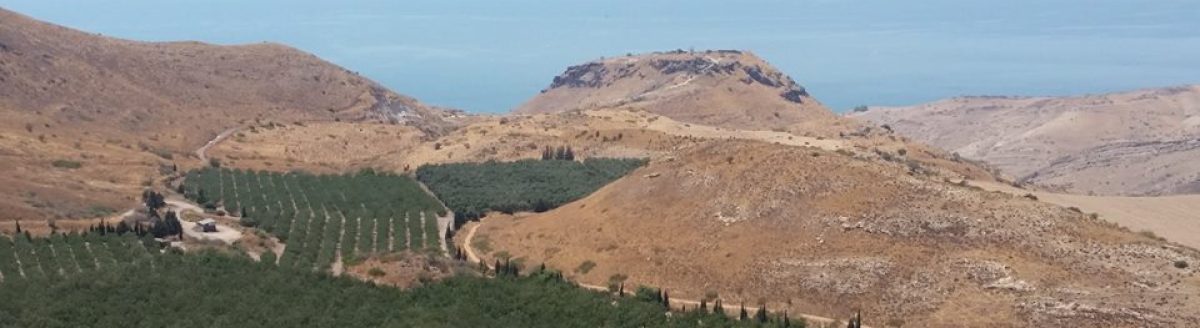
This weekend, I went to one of the most beautiful places on the planet, the Golan Heights.  Please don’t bother reading the Wikipedia article, it’s a bunch of political nonsense and needs to be edited.

In short, the Golan Heights is the northernmost part of Israel.  Once it was a part of Syria, but after Syria invaded Israel in 1967 and lost the war, Israel pushed back the Syrian soldiers and gained the Golan.  The Golan is important strategically because it is high ground and for the first two decades of Israeli history, the Syrian Army used that advantage to pummel Israeli villages below in the Galilee.

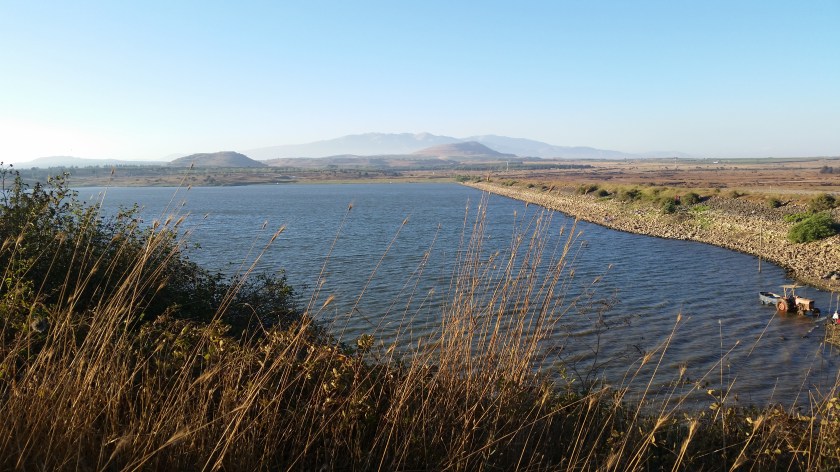
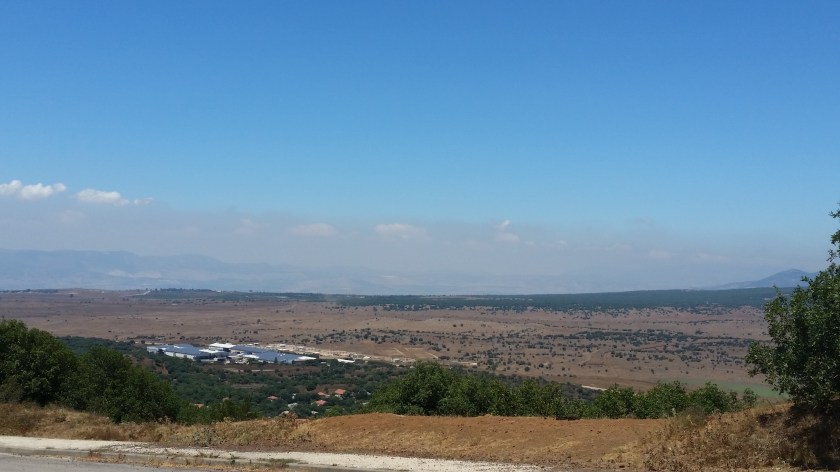
Now, the Golan is home to both Jews and Arabs, with a slight Jewish majority.  Arab communities include Druze, Muslims, and Alawites.  The Arabs often identify as Syrian, although a number of them have adopted Israeli citizenship.  It’s a very rural area and extremely green and beautiful.  It’s kind of reminiscent of a Middle Eastern Vermont or Switzerland.  Before I get into my story, here are some pictures to give you an idea (I visited the picturesque Galilee along the way so I’ll throw in a few from there too):

20170804_18335220170804_14395820170805_14041720170805_125759

Friday afternoon, my friends and I went for a hike in the Galilee.  A park ranger told my friend Jordan to get out of the creek and then told me I was wondering too far away.  As with almost all tense situations in Israel, the awkwardness immediately dissipated when I started to talk to the guy.  Turns out Muhammad is a Muslim Arab from the Golan, meaning his roots are in Syria.  I spoke with him in Arabic and he started to open up to me.  Turns out, Arabs in the Golan are afforded the very unique opportunity to go to college in Syria (this is astonishing because Syria and Israel are technically in a state of war and Syria doesn’t even recognize Israel.  But as with all things in the Middle East, you find loopholes).  He studied medicine in Damascus for a year, but then had to flee because of the civil war.  He decided he didn’t like medicine (despite his parents’ wishes that he become a doctor- does this sound similar, Jewish friends?) and became a park ranger and enjoys being in the peace of the outdoors.  He definitely had some delusional ideas about how great life is in Syria for its meager remaining Jewish community (after all, there is a reason almost all of them have left).  That being said, he was also clearly a very open-minded and tolerant person open to people of all backgrounds.  He is a person forging his own path (pun intended), something I can identify with.

After our hike, we went to a kibbutz to spend the night.  To say this place was magical is an understatement.  It’s the most romantic, scenic, and peaceful place I’ve ever been.  And I’ve been to the Alps.  It is a rural, progressive Jewish lifestyle, something that is almost non-existent in the United States.  Not only is most of rural America conservative (whereas kibbutzim have socialist origins and still lean left), but also Jews as a minority need to be around lots of other Jews in order to make for a rich communal life.  This partially explains the high concentration of Jews in New York, Boston, DC, Chicago, Miami, LA, San Francisco, Atlanta, etc.  The same could be said for gay people, which is a big reason why I, as a gay Jew, have stuck to major urban areas in the U.S.

This is not the case in Israel.  You can enjoy a progressive rural lifestyle and feel at home.  No rednecks here 🙂

I have a deep love for nature and tranquility so I found the experience awe-inspiring and thoroughly relaxing.  I wandered around the kibbutz and nearby and just felt at peace.  I have a strong inclination to raise my family in a place like this in the future- somewhere safe, Jewish, open-minded, and surrounded by God’s beautiful plants and animals.

After singing “Lecha dodi” by a lake as the sun set over the mountains much like the first kabbalists in Tsfat, I came back to the house for Shabbat dinner.  As we laughed and relaxed around the table, we heard a boom.  And then another boom.  And many more.  We realized that those were bombs being dropped in Syria’s civil war.  The border is just a few kilometers away.  It was a somber reminder of the violence raging oh so close by.  It’s one thing to hear about the civil war and quite another to simply hear it.  I prayed to God for the safety of my brothers and sisters just across the border.

We then had a lovely dinner and I wandered around alone afterwards exploring the kibbutz, praying, dancing, just unwinding.  I looked up at the moon and talked out loud to God.  “God, thank you for this beautiful Kibbutz.  God thank you for Shabbat and for the beauty of nature.  God thank you for the opportunity to visit the Golan Heights.  God, thank you for the gift of being an Israeli.  For the gift of living in this place, for bringing me here.  Where despite the news and despite the booms off in the distance, I feel safer than I ever have in my life.  Help me to grow stronger and heal and to make your name great.  To strengthen your people and to bring peace.  Amen.”

I went inside, talked to a really hot Lebanese guy Ameer on Tinder across the (other) border, and got the best night’s sleep I’ve had in Israel yet.

That’s life in Israel- radically accepting that there are some things you can’t change (war and borders), and then thoroughly enjoying all the amazing things in front of you (trees, lakes, mountains, Judaism, good food, friends, and more).  Never taking life for granted and, while things can be sad or scary, rather than being paralyzed, just enjoying the hell out of the blessings you’ve got.

It was a little scary and sad to hear those booms in the distance.  At the same time, I can honestly say that I actually felt safer at this kibbutz than in America.  Here, I feel my identity is validated, that I’m a part of a big national family, and that I’m enjoying life to the fullest.  It’s worth the risks because life here is so much better for me.

And who knows, one day maybe Ameer and I will be able to cross the border and pick up where we left off last night 😉

Dancing on Roman ruins

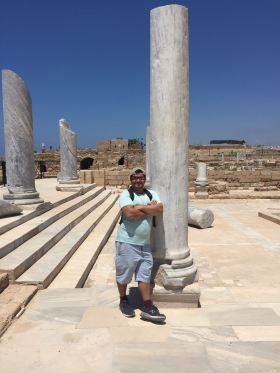
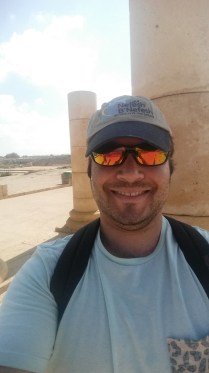
Wednesday I went to Caesarea, a beautiful seaside town of fourth century Roman ruins.

On my flight to Israel, I met a fellow oleh chadash (new immigrant) named Ari. We’ve become fast friends and recently he made the wise observation that I’ve spent almost all of my time in Tel Aviv and that we should go explore other parts of the country. Since he has a British accent and all things sound wiser that way, I obliged him.

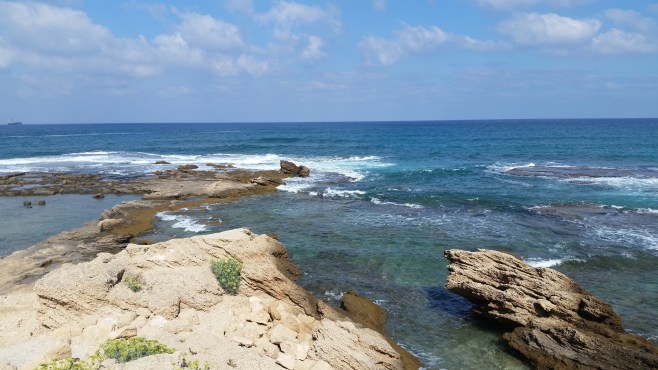
I could spend this blog telling you about the amazing Roman, Byzantine, and Ottoman ruins. Or the crystal blue sea. Or the snorkeling Ari and I did.

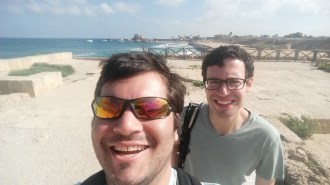
Instead, I’d like to tell you about our cab driver, Akiva. Before I get to that, look at the cool pictures below of our trip!

20170802_09160220170802_092206.jpgIMG-20170803-WA000120170802_092233

When Ari and I got off the train, we had trouble finding the right bus. Caesarea is the opposite of Tel Aviv- it is completely in the middle of nowhere, so it is hard to get around.

Instead of waiting for buses, I ran and hailed a cab dropping someone off and we got in.

The driver’s name was Akiva. Akiva is a Persian Kurdish Jew. He speaks some Farsi and fluent Kurdish. His mom made such good Kurdish food that he said he’d pay $500 just to taste her food again (she passed away at 82).

Before dropping us off at Caesarea, Akiva tells us he can show us the graves of ancient rabbis if we call him for a ride back.

After a day of fun and exploring and a little bit of sunburn, I called Akiva.

Twenty minutes later, Akiva comes walking down the street and tells us to follow him. He said the guards wouldn’t let him bring in his car.

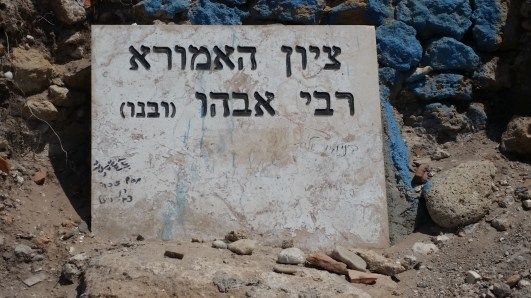
We walk 10 minutes down the road and he motions for us to literally climb with him down a cliff. We make our way down and there is the grave of Rabbi Abahu, one of the Amoraim (great scholars of old- and by old I mean 1700 years old). Rabbi Abahu was actually from 3rd century Caesarea- something people who deny Jewish history in this land would be wise to remember. Our cab driver was not bullshitting us- there’s an actual sign and little books of Psalms that you’re supposed to recite. We leave stones on the grave in the rabbi’s memory.

20170802_141808.jpg

It’s customary to pray for something when visiting the grave of a great rabbi. I prayed for our driver Akiva, my friend Ari, for me, for the Jewish people, for the whole region, for the victims of the war in Syria, and for the soul of the rabbi himself. I’ve never prayed at the grave of a rabbi- it was quite a moving experience, especially with the beautiful sea breeze and sound of the waves crashing behind us. Could Rabbi Abahu have ever imagined that his people would return to their homeland 2,000 years after the Romans brutally forced them into exile? I wonder if he prayed that one day his descendants (us) would visit his tomb.

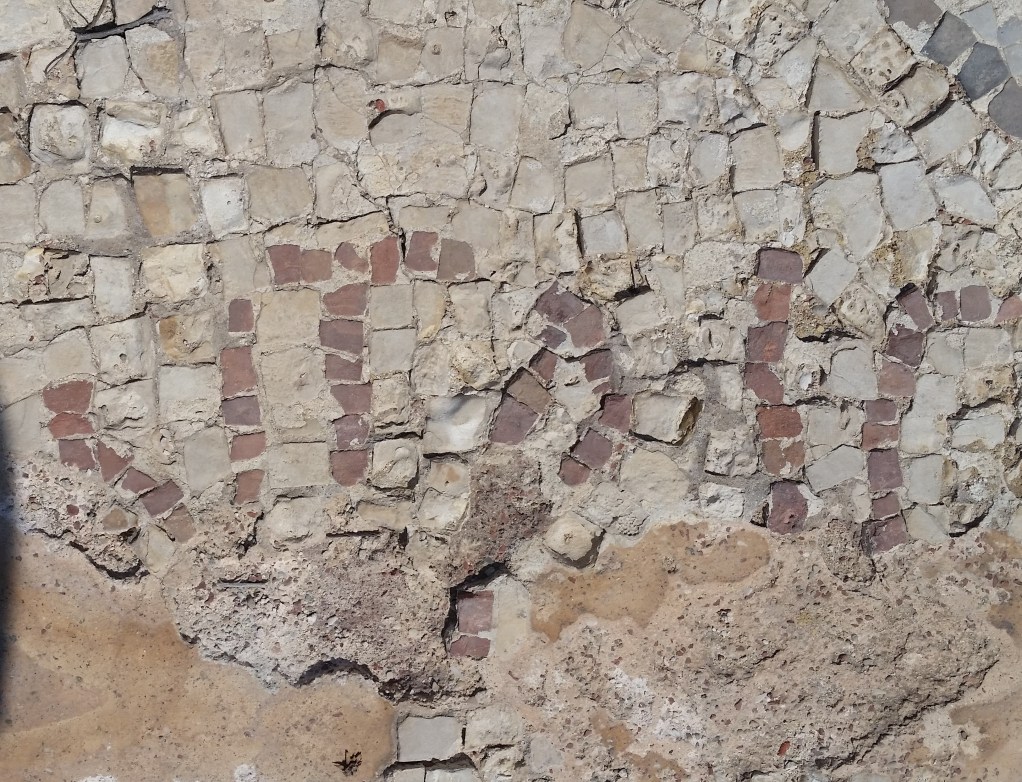
Akiva walked us back up the cliff (it’s worth pointing out that Akiva is probably 70 years old and there’s no cab meter running- this is just out of the generosity of his heart). Then he walked us to another site- an ancient synagogue mosaic. You could even see some Hebrew writing among the tiles. According to (our) Akiva, the famed Rabbi Akiva (1st century C.E.) was buried there as well after he was mercilessly tortured by Roman soldiers.

20170802_143842-e1501711832736.jpg

First off, I’ve never felt more connected to the land of Israel. Not just because of the stunning scenery that constantly keeps me in awe that I actually live here. But also because my ancestors walked this land. They defended our faith and kept our culture alive so that I can reap the benefits today and pass on that tradition to future generations.

Akiva, our wonderful cab driver, is the epitome of the best of Israeli society. After spending a good 20-30 minutes with us exploring these historic sites, he asks us to follow him again. This time, we headed towards the car. It was another 15 minutes down the road.

This 70-year-old man took an hour out of his day in pummeling heat to show us our heritage. Not because he had to, just because he is kind and he is proud of his people. There is a depth of generosity here- true, unrewarded, and authentic- towards strangers that I have never seen in any other place in the world.

Perhaps that is because we’re not strangers. Akiva, Ari, and I- as different as we might be- our stories are intertwined. We are not strangers. We’re more like long lost family getting reacquainted after a long and painful absence.

There is nothing sweeter in the world than for three Jews to dance on Roman ruins.

Nigerian Hebrew on Tisha B’Av

Today is Tisha B’av, a somber holiday where Jews recall the destruction of both holy Temples in Jerusalem   According to tradition, they were both destroyed on this particular date of the Hebrew calendar.  For some Jews, today is marked by fasting and reading from the Book of Lamentations.  For others, it’s a day to contemplate the baseless hatred that supposedly brought about the destruction of the Temples, the infighting among Jews that purportedly gave our enemies the opportunity to destroy us.  For some Jews, it’s just an ordinary day of the week, but where almost all the stores are closed for the holiday, making them frustrated that the Ultra-Orthodox Rabbinate has so much power in this country to impose their vision of Judaism on others.  On the night when Tisha B’Av starts, the Rabbinate has the power to fine businesses that open.  I’m starting to understand why secular Jews bristle at the power of this theocratic governmental institution.

That all being said, today for me was about moving.  While I had planned to go to synagogue last night, I didn’t end up going because I was looking at apartments, scrambling to find a place to live.  I successfully found a new place (yay!) and am now writing you from my new room!

To get my things to my new apartment, I took a cab.  The driver spoke English with some sort of African accent that sounded familiar.  I asked where he was from and he said Nigeria.  Nigeria!  I knew there were foreign workers here but never knew there were Nigerians!  I grew up with several Nigerian friends, so we bonded over our love of foo-foo (a Nigerian food).

Then, we started speaking in Hebrew.  I have spent my entire life doing Jewish things and have never heard someone speak Hebrew with a Nigerian accent.  It was unique and beautiful and a sign of true respect for my culture like I have rarely experienced.  To hear him say he was turning left on “Rechov Yud Lamed Peretz” (a street named after a famous Yiddish author) gave me the tingles.  I realized that my culture really is the dominant force here- like it is in no place on the planet.  Something that both excited me and make me kind of curious what life was like for this man.  I can’t imagine being a foreign worker in most places is particularly hospitable and I know the Israeli government doesn’t have a great track record with guest workers or refugees.  I felt empowered and privileged and fortunate and I also felt confused and uncertain.  All valid feelings.  I’m proud to see my identity validated after a lifetime of pain and discrimination.  And I am concerned about the fate of this man, my neighbor, considering he has lived here for 20 years and may not even have citizenship.

As we pulled up to my new place, I heard something curious.  The man was speaking in Ibo, a Nigerian language, but I recognized some of the words.  Not just the English words, but also Hebrew ones!  He’d slip in “balagan” (a mess), “chashmal” (electricity), and other Hebrew words into sentences he was speaking in Ibo.  It reminded me of how American Jews sprinkle our English with Yiddish sayings or how Latinos in the U.S. do likewise with Spanish.

This place is a melting pot.  Judaism has always been a place where different cultures come together.  Long ago in the days of the Temple it may have been Moabites and Canaanites.  Today in Israel it’s Polish Jews and Russian Jews and Moroccan Jews and Ethiopian Jews and American Jews and yes, even Nigerians.

As I got out of the car, I heard a politician on the radio say “today, our Temple is the Knesset, it’s modern Israeli society.”  An interesting thought.  Rather than waiting for us to rebuild the Temples of old, perhaps we should consider that we live in a time where we once again control our own destiny.  What should that look like?  Who belongs to our people?  How do we want to contribute to the world?

As it says in Leviticus: כְּאֶזְרָח מִכֶּם יִהְיֶה לָכֶם הַגֵּר הַגָּר אִתְּכֶם, וְאָהַבְתָּ לוֹ כָּמוֹךָ

“The stranger that sojourns with you shall be unto you as the home-born among you, and you shall love him as yourself.”

If the State of Israel is in some ways our new Temple, then can we make space for those who tie their fate to us, for those non-Jews who join us in peace along the journey?  Can we give them a holy space in our house?

I very much hope so.