A Tale of Two Orthodox

Ok it’s really four Orthodox Jews, but you’ll get my point.

Last night, I was at a rally for refugee lives in Tel Aviv.  It was exhilarating- over 20,000 people.  Some estimate 30,000.  Considering Israel has only 8 million people, it’s quite sizable.  Although being from Washington, D.C., the capital of rallies, it still feels small 🙂 .

On my way home, I wore my yarmulke (head covering).  Foremost, because last time I walked home from a rally I got shouted down and followed by hateful people in my neighborhood, which was scary.  I have met neighbors for refugee rights and it’s probably a minority position where I live.  Since Judaism is a source of privilege here, I felt wearing a yarmulke might afford me a sense of safety from some people who might otherwise be angry at me.  People who can’t imagine why a religious Jew would even be at a refugee rally.  I suppose once I decided to put it on, I was glad to do so because it made me feel a little bit connected to a religion I increasingly feel distant from.  To put my yarmulke to good use for human and Jewish values.

Before I get to what happened on the way home, I’d like to share what happened the other day.

On my way to get kebabs, I heard English in my neighborhood.  I was so astounded- I am definitely the only American for several blocks around my house- that I asked the people in Hebrew what language they were speaking.

Turns out, they were Americans from nearby neighborhoods coming for food.  Both of them Orthodox Jews.  We bantered a bit, they made some uncouth remark about refugees, but honestly nothing too grave considering what I hear in Israel.  And other than that, it was fine.  I told them I was gay and a Reform Jew, which aroused curiosity- but really nothing beyond that.  When I said I was a religious Reform Jew- they simply pondered, asked a few questions, and said “OK cool, do you want to join us for dinner?”

Which brings us back to yesterday.  On the way back from the rally, wearing my yarmulke, two Orthodox men approached me to say they didn’t like my signs.  They said it was great there was a rally because finally there were enough police to keep the streets safe.  They told me: “it’s so hard to raise children here with these Eritreans around.”  Right in front of the Eritreans standing next to me.

I told them this: “I grew up with Eritreans in the U.S. and we get along fine.  Unlike in Israel, where everyone lives in their little bubble, I’m glad I have friends of different backgrounds.  That we learn and play together.  Here you have four separate school systems based on religion and race.  How many Reform Jews do you even know?”

And the man closest to me says: “None- thank God.”

My heart sunk- and I can’t say I was the least bit surprised because in Israel, I’ve heard this a lot.  I said “well you’re talking to one now.  I am disappointed by your hatred.  In the U.S. I have friends who are secular, Reform, Conservative, Orthodox, and Hasidic.”

He said: “I’m not hateful.  Anyways, all of your mixing in the U.S. is why American Jewry is disappearing.”

At this point, I felt the discussion was useless and went to talk to some absolutely lovely Eritreans who exchanged numbers with me.  We live down the street from each other and are going to hang out.  Our values are infinitely more intertwined than those of the Israeli I just finished speaking with.

If you want to understand in one anecdote the major difference between American and Israeli Jewry- it’s this.  Are there open-minded Israeli Orthodox Jews (or Israeli Jews in general)- yes.  I regularly do Shabbat with a gay Orthodox Israeli Jew who loves to learn about Reform Judaism.

And are there bigoted American Orthodox Jews (or American Jews in general)?  For sure.

Do I believe there is a substantial difference between the two groups’ attitudes?  Yes.

In America, by and large, Jews get along.  Perhaps better than American Jews even realize.  Only by being here in Israel have I realized the degree to which Judaism is different here- and far more divisive.  And far too often hateful.

Where two American Orthodox Jews saw my queer and Reform identities as nothing more than curiosity and an entree to a dinner invite, two Israeli Orthodox Jews couldn’t even stand the thought of befriending me.  To thank God for not knowing a Reform Jew (let alone an Eritrean)- that’s a true perversion of religion.

It’s important to remember people come in all shapes and sizes, both here and in Israel.  I could have turned this blog into an opportunity to hate Orthodox Jews.  And believe me, I was very angry last night and felt some of that hatred.  Instead, my cover photo is my picture of a Hasidic kids book- based on Elsa from the Disney movie “Frozen“.  Because I like to look for the unexpected and to try to speak with nuance and understanding.

For many American Jews, pluralism, diversity, and respect are key values- regardless of religious affiliation.  And for many Israeli Jews, the idea of a school where an Eritrean, a Reform Jew, and an Orthodox Jew could learn together is so out of the norm, it can barely be imagined.  Even if they agree with it.

And that’s exactly the kind of school I grew up at.  Eastern Middle School is where I spent my teenage years in Silver Spring, MD.  To this day, I remember an Eritrean friend of mine there teaching me about Tigre.  And I remember an Orthodox friend who was one of the popular girls bouncing to Backstreet Boys- and who now lives in a Haredi community in London.

And it’s not only “not a big deal”- it’s cool.  Living together is nice.  It can be challenging and mostly, it’s just interesting.  And fun.  And enriching.  And I personally pray for the day when God will soften the hearts of the two Orthodox men who berated me.  So that instead of complaining about their Eritrean neighbors, they might see they have something in common with them.  Or even to learn from them.

May it be so.  May it be soon.
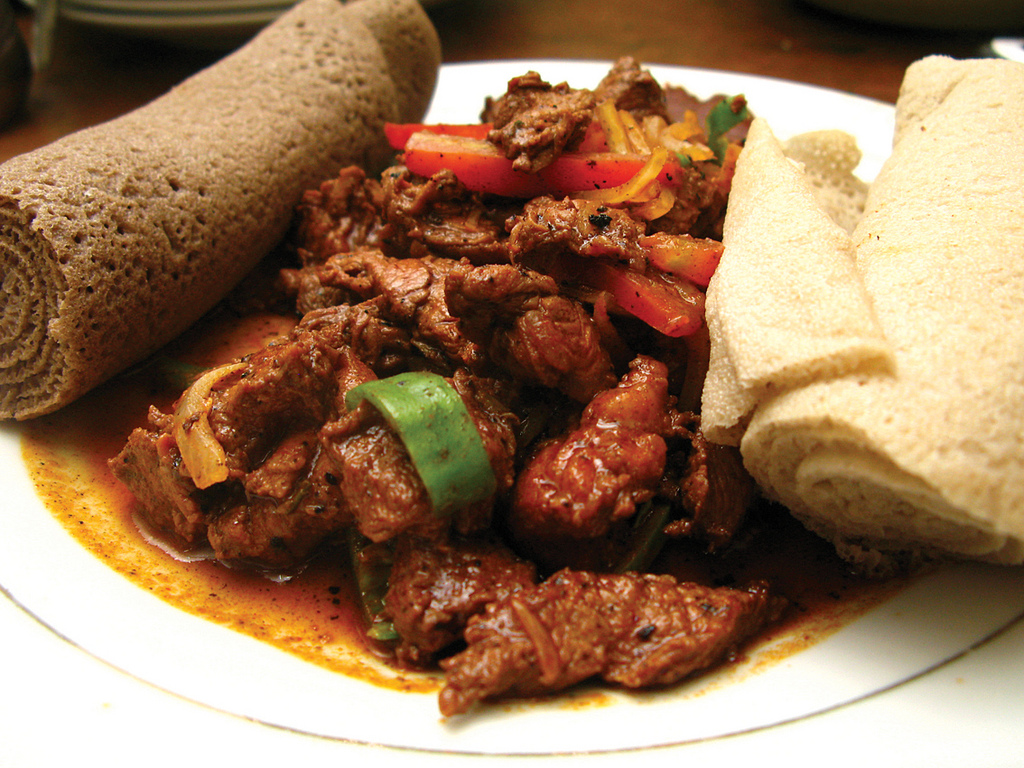
When you’ve sat at every table at the Eritrean restaurant

Tonight, I tried to make plans to go out.  Thursday is the start of the weekend in Israel, but unfortunately my friends were busy.  After talking with an American friend on the phone, I headed home.

As I walked around Shchunat Hatikva, I heard something strange: English.  I literally did a double take and was so unsure what language they were speaking, I asked the two young men – in Hebrew – what they were speaking.  Sure enough, they were American-Israelis!

You have to understand my neighborhood is nothing like the glitzy boulevards of North Tel Aviv.  And it’s really not much like the hipster neighborhood of Florentin in South Tel Aviv.  My Tel Aviv is a low-income cultural melting pot.  Sometimes a bit too loud and always interesting.  Very very rarely do I hear English.  The only other languages I hear besides Hebrew are Russian, varying dialects of Judeo-Arabic and Palestinian Arabic, Tigre, Tigrinya, Amharic, and Bukharan.

I got excited and talked to the two young men.  It was strange speaking English in my neighborhood and quite fun.  Unfortunately, the guys were not my cup of tea.  They made some rude remarks about refugees and were rather brusque with the nice guys at my shwarma stand.  I didn’t want to spend my night with them.  So I politely bid them adieu and walked down the street.

On Etzel Street, there’s an amazing Eritrean restaurant.  I’m giving a tour of my neighborhood tomorrow so I wanted to see what time they’d be open.

After I talked with the owner, I saw another man eating.  Woldu invites me to sit with him.  I grab a chair and we start talking.  Turns out he met me the other day when I brought an American friend there for dinner.  We talked about the refugee crisis, demonstrations, the importance of humanity, racism, and of course Eritrean music and dance.  Of which I’m a fan 🙂 .  He showed me his favorite artists, Helen Meles and Tesfalem Arefaine.

I want to highlight one very specific and important thing that happened tonight.  When I sat with Woldu, he insisted I eat with him.  As in, eat his food.  I felt a little awkward- I know people in this part of the world are very hospitable, but Woldu is a very low-income refugee and I had already just stuffed my face with kebabs.  I didn’t want to take advantage of him and frankly, I wasn’t that hungry.  I was very moved by the gesture.  Doesn’t get much more humble and loving than that.

What I came to realize, however, was this wasn’t just a gesture.  It was an order.  Like a top-notch Jewish mother, he gently scolded me for not eating enough.  Over and over again.  And even though I wasn’t that hungry, I gave in because frankly tibs are delicious.

Besides being utterly hospitable and kind, Woldu said something very important to me: “I’m not just asking you to eat- when I come here after a long day and have to eat alone, I want to eat with someone.  A friend.  So sit and eat with me.”

Wow.  I’m at a loss for words.  We weren’t just chatting or breaking bread together.  We were keeping each other company.  Because I like him.  And he likes me.  And I like this restaurant.  Not just because of the delicious food, but because of the beautiful people that work and eat there.  I identified with Woldu’s statement because I’m alone here too.  Thank God I have more legal protections than him and I hope he gets the justice he deserves.  When it comes down to it, we’re just two human beings, from opposite sides of the earth who met halfway in Tel Aviv.  And now are friends.  That is love.

Demonstrations are important.  I’ll be protesting Saturday night- please join me.  Supporting refugees is the right thing to do.

If Israel deports Woldu, I’ll be sad to see his pain, I’ll be furious at my government.  And I’ll feel lonely.  I’ll have one less friend here.  Refugees aren’t a news item for me.  I hang out with them.  They make me happy.  And in their struggle, I see a piece of mine too.  Newcomers in a faraway land.  Who don’t want to eat alone.

You know you love your Eritrean friends when you laugh with them because you realize you’ve sat at every table in their restaurant.

Cover photo: Daniele Bora

Yiddish softens the heart?

Two weeks ago, I approached my friends at FluenTLV about starting a Yiddish table.  FluenTLV is a fabulous event (my favorite in Tel Aviv) where people get together to exchange languages.  I offered to represent the language and they were thrilled.

Last week, the first week we did Yiddish, probably 3 or 4 people came and it went well.  One German guy, a couple Jewish Americans, and an Israeli.  Given how stigmatized my heritage language is in Israel, I was pretty happy.

Last night, Yiddish came to life.  At the beginning of the night, an Israeli came in and tried to take one of the three chairs at my tiny table.  I said: “actually that chair is for Yiddish.”  He said “well, nobody is going to come anyways, so I’ll take it.”  I said: “nope, this chair belongs here, you can leave now.”  I asked him if he wanted to learn something and he said “sure, teach me a word.”  I did, he laughed, gave me one of those “everything is OK dude” Israeli high fives and left.  Probably without a further thought about what he had said.

The best part of the evening is that this guy was totally wrong.  Group after group came over to my table.  We didn’t have enough chairs.  When all was said and done, about 15-20 people had visited my table.  A German guy and two Dutch men explained how Yiddish had made its way into their languages!  A Brazilian Jew talked about Yiddish in her family.  I met Israelis whose parents or grandparents spoke the language and remembered some phrases.  Together, we read my copy of “Der Blat”, a Satmar Hasidic newspaper.  And I could see the glow in their eyes when they realized they could understand some of it.

What was also astonishing was how willing people were to learn.  I often find Israeli culture frustrating because of the bravado.  So many people here feel the need to be right trumps all.  Hence often endless debate, even when the facts used are minimal.  I’ve even had Israelis try to correct my English- knowing I’m American.  We often laugh that off, but after a while it wears on you.  It’s tiring having to constantly defend yourself.  Humility is not an Israeli value.

Yet at the Yiddish table, Israelis came to learn from me.  And subsequently shared about themselves.  Their families, their stories, their grandparents’ Yiddish phrases.  For the first time, I actually felt in dialogue with Israeli Jews rather than a lecture.  Or an argument.  There was a softness to our conversation that made me happy.  It warmed my heart and it gave me hope.

In a society where, as I see it, traumatized Jews faced 2,000 years of violent persecution with few options for safety and survival.  Sadly, some of these Jews ended up traumatizing and displacing Palestinian Arabs in a bid for a homeland.  Some of these traumatized Palestinians subsequently re-traumatized the Israelis.  And now we’re stuck in a seemingly endless cycle of violence.

That’s how I see it on regel aches- or “one on leg” as we say in Yiddish.  My Tweet-length version of the conflict here.  The saddest part is the trauma on both sides continues.  Anti-Semitism is not just the Holocaust.  It’s a two-millennia phenomenon that continues to this day from America to France to Iran.  I’ve personally experienced it in the liberal suburbs of Washington, D.C.  When Jews are persecuted, we often have nowhere to go, which is why some people believe in a Jewish state.  I’m not sure it’s the best solution and I completely understand why people feel we need it.  It’s not by accident that there’s a lot of French people in Israel- they’re Jews fleeing violence and bigotry.  Palestinian terrorist attacks on pizza shops and buses and schools only feed this narrative as we feel under attack yet again.  Trauma piled upon trauma.

And for the Palestinians, you have those who are citizens of Israel yet continue to face discrimination, racism, and often poverty.  Whose lands were robbed of them- and are still in the hands of the Israeli state 70 years later.  You have those in the West Bank and Gaza Strip who live in immense poverty, have little right to travel, have few if any civil liberties, and often face violence from the Israeli military.  And even some settlers who burn their trees, deface their houses of worship, and physically assault them.  And you have Palestinian refugees in Lebanon, Syria, Jordan, and elsewhere who can’t even come back to the land they once called home.  Who have no rights in the villages they come from and whose host states often extensively discriminate against them.

Sometimes its enough to just make you cry and cry and weep for humanity.  With no end in sight.  Ya Allah, God please send us all healing.

So in the face of all this sadness, what gives me hope?  Yiddish.  Because tonight, I saw the softer side of Israeli Jews.  When they don’t have to be “tough”- not against Arabs, not against other Jews, not against their own heritage.  Rather, by connecting to their roots- roots violently uprooted both by European anti-Semites and the Israeli state– they felt warmth.

I hope politicians can figure out a solution to this problem.  Given their proclivity for narcissism and greed, I’m not sure what they’ll do.  In the meantime, perhaps part of the solution is culture.  When you feel connected to something bigger- especially something a part of your heritage- it puts things in perspective.  Rather than having to show how “Israeli” you are, you can be the multifaceted Jew beneath the uniform.  The Jew whose family was persecuted by Polish Nazi collaborators, the Jew whose family escaped to Israel, the Jew who lives on Palestinian land, the Jew who wishes to reconnect with his heritage.  A complex one, of persecution and co-existence.  Of perseverance and of trauma.

A little less prickly sabra and a little more soft kneydlach.  Those fluffy yet durable matzah balls that comfort you when you feel sick.

Cover photo by Jonathunder – Own work, GFDL 1.2, https://commons.wikimedia.org/w/index.php?curid=31812266

What I (still) like about Israel

Lately I’ve been writing some pretty critical posts about Israel.  I think they are necessary and true.

It’s been making me reflect on what I still like about Israel.  To be honest, I like a lot less about Israel than I did when I first came here.  The racism, aggression, sectarian hatred, and ignorance make my daily life here quite hard.  And hard for pretty much everyone here.  Not everyone embodies these problems and a lot of people do- more than I expected.  In every religious, political, and ethnic group here.  It’s sad to see the Holy Land so filled with hate.

So it got me thinking- what do I like about Israel?

I like the healthcare system.  Israeli healthcare is light years ahead of America, something I noticed when first arriving here.  Treatment is almost always cheaper and more often than not, free.  Even for going to specialists like allergists, sleep labs, and psychiatrists who are part of your kupah, or health network.  Dental work costs a miniscule amount of what it does in the States and there are no deductibles.  You don’t have to guess whether you’ll be covered.  All your records are digitized and you can make appointments on an app.  The system has varying degrees of access in Hebrew, Arabic, Russian, English, and French.

I like that you can talk to random people here and it’s not “weird”.  At least in Washington, D.C., where I lived before making aliyah, when I tried to help someone or make small talk, I often felt like I was imposing.  Or that the other person wanted to know what I wanted out of them.  As if a conversation itself wasn’t sufficient- there must be some other motive.  Here, you can talk with almost anyone, Jewish or Arab, sometimes for hours without having met before.  Things are a lot less formal.

The produce is absolutely fantastic and cheap.  And unlike in Washington, D.C., you don’t need to go to an expensive farmers’ market to get delicious vegetables.  In D.C., the veggies at the grocery store are kind of watery- most of them probably sent from warmer climes like California.  According to my friends in Cali the produce is great there.  But if you live in D.C., by the time they get to you, they don’t taste so great.  Unless you’re willing to shell out money to go to Whole Foods.  The market and shops near my house in Tel Aviv have affordable delicious produce all year round.  It keeps you feeling healthful and biting into one of those yummy carrots just makes me happier.

If you need help here, you just ask for it.  There’s no shame in asking for help and people- both Jewish and Arab- more often than not are willing to help.  I’ve been given a free room to stay in a number of times- sometimes by people I had just met- or never met.  In the U.S., I of course have crashed with friends but it felt like a much bigger “ask” than here.  I once saw a woman on the bus from Jerusalem to Tel Aviv offer to host someone who was worried she wouldn’t be able to catch the train home to Haifa.  They had just met 20 minutes beforehand.

There are also a series of things I both like and dislike depending on how they’re used.  For instance, I’m less worried about offending someone here when I say something that doesn’t come out right or they disagree with.  At times, I don’t feel like I have to “walk on eggshells”, which can be a relief- we all say things that we regret.  The downside is that I find Israelis much less empathetic than Americans.  So when you are actually offended, people more often than not tell you to stop being upset, rather than acknowledging your pain.

The same goes for rules and formality.  In Israel, I have never worn a dress shirt, tie, or suit.  Thank God- other than an occasional celebration, I hate these clothes!  Here jeans and a t-shirt are totally fine most of the time, even in synagogue.  Israelis generally don’t like rules- this is a place where you ask for forgiveness rather than permission.  That can be helpful in working out creative solutions for business, plans, or even activism.  D.C. often felt rigid to me and stifled my creativity at times.  The flip side is that Israelis’ lack of rules often results in less protections.  Renters here are regularly scammed by landlords- much more than anything I saw in the States.  I’ve been taken advantage of many times here- and it’s even a societal value.  Rather than be the “freier” or “sucker”, Israelis often prefer to strike first and take advantage of you before you them.  It’s a vicious cycle that explains a lot of the problems here.  Israelis often struggle when I say the word “no”.  Rules often have a purpose- boundaries need to be respected to treat each other with dignity.  So the informality and lack of rules that I like can also a problem.

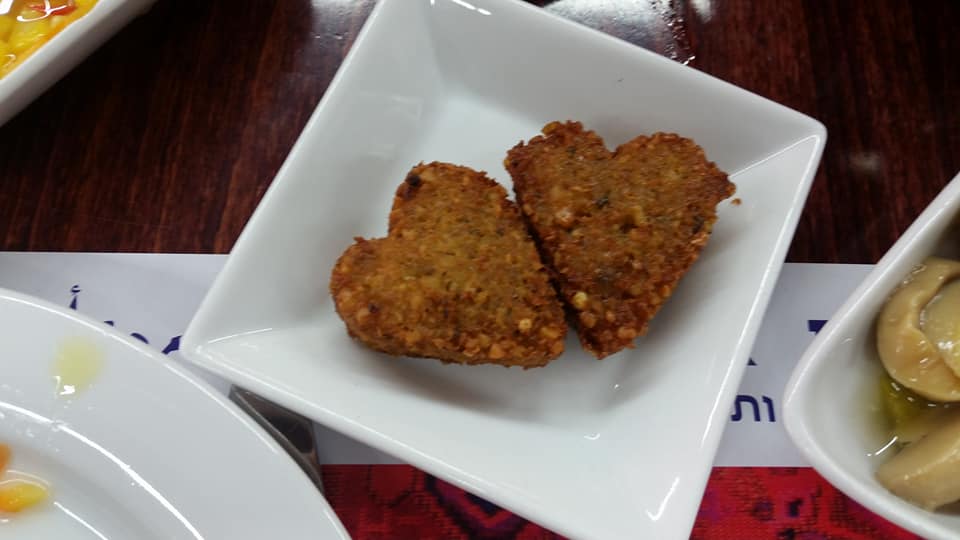
The cultural diversity is amazing here and threatened.  I’ve met Jews from places I never expected- India, Norway, Switzerland, Morocco, Tunisia, Turkey, Ethiopia- and so many other places.  With unique languages, traditions, and cuisine.  And non-Jews such as Druze (whose heart shaped falafel is in my cover photo), Arab Catholics, Arab Greek Orthodox, Arab Greek Catholics, Maronites, Alawites, Muslims, Armenian Orthodox, Armenian Catholics, and Circassians.  Darfuris, Ertireans, Sudanese, Nepalis, and Chinese.  I speak all eight of my languages here- regularly.  This beauty that I love is what the government threatens by shaming Jews for speaking other languages, by discriminating against Arabs, and by expelling refugees.  It pains to me to see such a beautiful gift under attack.

In short, it’s complicated.  There are good things in Israel.  The nature is also gorgeous, the weather is better than anywhere in the Northeast U.S. or most of Europe.  The location is ideal for traveling the world.

Once the Israeli people do the hard work of pulling themselves away from the toxic ideologies that gave birth to their country, they might find themselves feeling freer.  Freer for a secular Jew to be friends with a Hasidic Jew.  For an Orthodox Jew to acknowledge Palestinian Arab history.  For a Mizrachi Jew to dance to Eritrean refugees’ music.  For a secular Ashkenazi to raise his kids in Yiddish.  Or an Iraqi Jew to do so in Judeo-Arabic.  For a Haredi Jew to see the good in Reform Judaism.  For a Palestinian refugee in Lebanon to return home to my neighborhood and for me to help renovate her mosque.  For a Christian to marry a Jew.  For a Jew to convert to Islam.  In short, to be the complex beautiful human beings hiding beneath the divisiveness.

For Hasidic Jews, tikkun olam or “repairing the world” begins within.  I couldn’t agree more.  To make the world a better place, we must start with ourselves.  So see the good things I wrote?  Grow them.  And where we find barriers in our souls towards our fellow human beings, join me in tearing them down.  Inside and radiating out towards the heavens.

Israelis often like to think of themselves as a “light unto the nations”.  The thing is to see a candle best, you must first turn off the lights.  Scary and necessary.  Flip the switch.  It’s time for a reset.  Let the flame illuminate our path.

I found my people

Today was Friday.  Friday in Israel is the weekend, so I had the whole day to relax.  The problem was I couldn’t get myself to leave the house.  This has been a pattern lately.  Granted there isn’t a whole lot to do on a Friday afternoon because most things close for the Sabbath, but it’s best to get out of the house a bit.

After several hours of hemming and hawing I realized why I didn’t want to go out.  I was afraid of Israelis and don’t like spending time with them.  I am tired of being yelled at for no reason.  Or being told not to feel my feelings.  Or being cheated.  Or being lectured at about why Israel is great and being lectured at about why Israel is terrible.  Being told Americans are fake, Arabs are terrorists, Haredim are leeches, and on and on and on and on.  It’s just exhausting and I’m over it.  There are reasons for it and it doesn’t justify the behavior.  Some Israelis like to say they treat it each other “like family” which is why they’re so hard on each other.  To which I say if that’s how you treat your family, you need a therapist.  Take it from someone who has one.  It’s messed up.  And it’s only here.

So after looking at flights to Cyprus (they’re cheap!) and almost booking a flight, I realized I was just too tired to get everything ready.  If I wanted to hang out with non-Israelis, I needed another plan.

Remembering a few pleasant visits to Neve Sha’anan, an immigrant neighborhood, I headed that way.  When I say immigrant, I mean non-Jews.  Name a nationality and they’re there.  Just tonight, with minimal effort, I met a Moldovan, a Tibetan, Turkish Muslims, Hindu Nepalis, an Eritrean, a Gujarati, and yes- one Israeli, a Kavkazi Jew.  He was the only Israeli I talked to all night- and it felt great.

I started the night off at a Nepali restaurant eating the best momos I’ve had in Israel.  Momos are Nepalese dumplings, but quite different from the Chinese variety most people know.  They have intriguing spices and a spicy red sauce and are delightful.  I used to eat them all the time in D.C., which has a large Nepalese community and some fantastic restaurants.  At $5 for 10 dumplings, they were a steal and infinitely better than the shit momos I have eaten in Israeli Tel Aviv for at least twice the cost.

I chatted with some nice Turkish Muslim men about Tarkan (one of my favorite Turkish singers, in their words a “superstar”).  I pulled out my few Turkish words and between them, English, and Hebrew, we had a fun conversation.  I then noticed the chef was wearing a Tibet shirt.  Tibet is a place and cause dear to my heart.  Tibetans are persecuted much the way Jews have been over the centuries.  They have a beautiful culture and I admire Tibetan Buddhism.  Plus the amazing food.  When I lived in D.C., I would visit the International Campaign for Tibet headquarters and camp out in their basement library and read.  I also participated in their Tibet Lobby Day a few years ago alongside Tibetan-Americans to convince Congress to support human rights.

Turns out the chef is actually Tibetan.  I didn’t expect to meet a Tibetan in Tel Aviv, but here he was!  We talked about khatas, his excellent momos, and my favorite Tibetan singer, Ani Choying Drolma, who I saw in concert in D.C.  I first got to know her music via the Tibet Store in D.C. and grew even closer to her as I discovered she’s a fellow abuse survivor and just a beautiful human being.

The Tibetan guy, the Kavkazi Jew, and I took a cute selfie (probably the first time that sentence has ever been said!):

19030766_10101683699749032_2711488817479200980_n

As I left the restaurant, I heard the most beautiful music.  I saw a light and some signs and headed down a ramp.  Next thing I knew, I was in Nepal!  Surrounded by beautiful saris and offerings and chatter in Nepalese, I felt at ease.  People were so kind.  They let me take pictures of their shrine and to pray at it.  Which I did.  Because my Judaism- and frankly my spirituality- extends to the best of all faiths.  Why limit myself with such beauty at my doorstep?

The only non-Nepali in the room, I aroused some curiosity.  Most of which resulted in huge smiles, a ton of free food, and some great conversation.  More than any other time in Israel, I felt treated like a human being.  There wasn’t one raised voice, aside from an occasional emphatic part of the priest’s sermon, when everyone raised their hands in enthusiasm.  Like a Baptist church, but a little calmer, and full of the smell of incense.

Everyone spoke Nepalese, English, and Hebrew.  English far, far better than the average Israeli, with a beautiful accent.  While for some people this might be an exotic experience (and certainly finding it in Tel Aviv was a surprise), for me it reminded me of home.  Back in D.C. I spent a lot of time exploring the Nepali community.  Every weekend, I would tune in to the local MHz program “Nepal Darshan Television”.  It’s a program produced in the Washington area for Nepalis (and me).  The beautiful scenery of the country enchanted me.  I will visit that place before I die.  Lumbini in particular calls to me, the birthplace of Lord Buddha.

In addition, my friend Kristle and I for several years would go to Lhochar, the Tamang New Year celebration.  The Tamang in America are a minority within a minority (like me, as a queer Jew).  An ethnically Tibetan group in Nepal, they speak their own language in addition to Nepalese.  And they are Buddhist whereas most of the country is Hindu.  Although they frequently go to each other’s festivals, in a good example for the people of this region.

Kristle is a black Caribbean-American and I’m a queer Jewish-American.  We became friends on the Obama campaign in 2008 in Florida, where she was my intern.  And then became my friend 🙂 .  We would get tickets to Lhochar through our friend who owned a Nepalese restaurant.  And it was amazing.  Buddhist priests would bless us.  Dancers would perform.  A people preserving their culture within a culture in a foreign land.  It warms my heart- they’re my people.  And I pray for their success.

Going back to the Nepalese event, I met a guy named Padam.  We got to chatting and he asked if I spoke Hebrew.  I said yes and he said he also spoke Arabic (along with Japanese and Korean).  I asked how.  He said he learned it in Kuwait.  Probably as a migrant worker- I’m not an expert, but I’ve heard the working conditions can be pretty terrible.  Then I surprised him by responding in Arabic.  And here we were- in the most sacred moment I’ve had in this land- a Jewish American and a Nepali speaking Arabic.  We had a belly laugh about it.  It’s worthy of a shehecheyanu– the blessing Jews say for the first time something happens.  Because if you know another Jew and Nepali who speak in Arabic, feel free to let me know 🙂

As I headed out, I noticed music playing from a cell phone store.  I recognized the melodies but couldn’t place it.  I listened and listened and then approached the salesman.  “This is Vietnamese music, isn’t it?”  “Yes!  How did you know?”  I just smiled.  I know Vietnamese music- I listen to it.  I’ve bought many CD’s in Annandale, Virginia- Little Saigon.

Next to his Arab coworker was a sign.  I had to read it twice to make sure I could believe my eyes.  Here it is:

27336919_10101683698935662_1692337626540181976_n

That’s right- in Tel Aviv, there is a Tamang association.  Even as I write it, I feel it is a miracle.  If God speaks, this was how.  And through the magic we make between each other- the improbable.  The Nepali who speaks Arabic with me and the Arab store owner who has a Tamang sign in his doorway.

With an enthusiasm that words cannot describe, I asked him to give my phone number to the organization.  I even explained to him a bit in Arabic about the Tamang- almost certainly a first in this land.  He gave me a nice smile and we said ma3 asaalameh.

This is only a taste of this night.  I danced with an Eritrean guy to Tigrinya music in a supermarket while I bought Thai sauces for pad see ew.  I told a Moldovan woman my great-grandmother was born in Bucharest and she eagerly told her co-workers in Romanian.  Her smile grew when I asked if she was from Chisinau- her hometown.

People often ask “what I do” with my languages and my knowledge of culture.  People tell me to work for the CIA or the Mossad.  That wouldn’t work so well since I’m pretty much a pacifist- but people insist nonetheless as if they know what’s best for me.  Better than I do.  This is all you have to know- what I did tonight, that’s what I do with my languages.  I explore cultures, I make friends, I learn, I bring joy.  I’m the multilingual Ba’al Shem Tov so while you dream about how much money I could make helping the government, I’m going to be hanging out with my neighbors eating momos as the sounds of Hindu prayer fill the air.  Smiling as we connect heart to heart.  Because that’s what life’s about.  It’s not about your paycheck or your business card or the size of your apartment.

It’s about the size of your heart.

One of the reasons I came to Israel was to live with my people.  What I’ve come to realize is that I don’t have one.  I have many.  God leaves little miracles waiting for you where you least expect it.  Keep your eyes open and your heart warm and who knows what- or who- awaits you.

27331731_10101683698641252_4662140754374208990_n