Spain has an incredibly long history of co-existence (and discord) between Jews, Muslims, and Christians. Few cities offer a more beautiful way of seeing this interaction than Córdoba.
I started my visit off in the Mosque-Cathedral. Yes, it is a mosque and a cathedral, although actively only a cathedral these days. Built originally as a basilica by the Visigoths in the 6th century, it was destroyed and then built as a mosque by Muslim conquerors in the 7th century and then dedicated as a cathedral in 1146. You can see a timeline of the Mosque-Cathedral’s construction here.
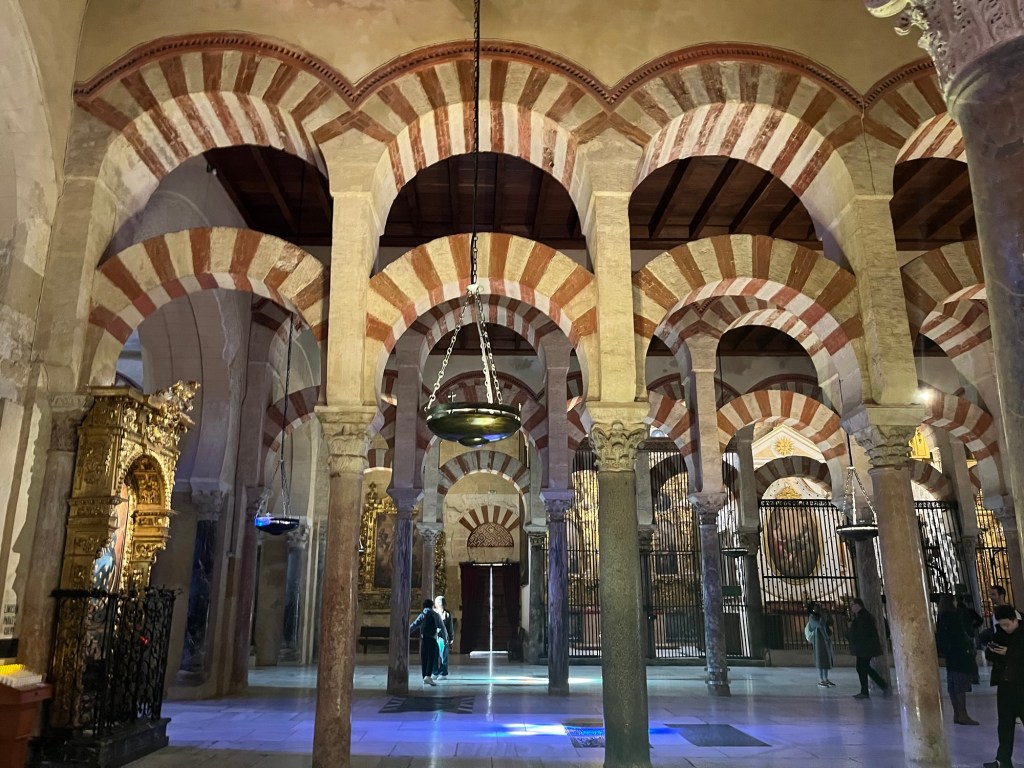
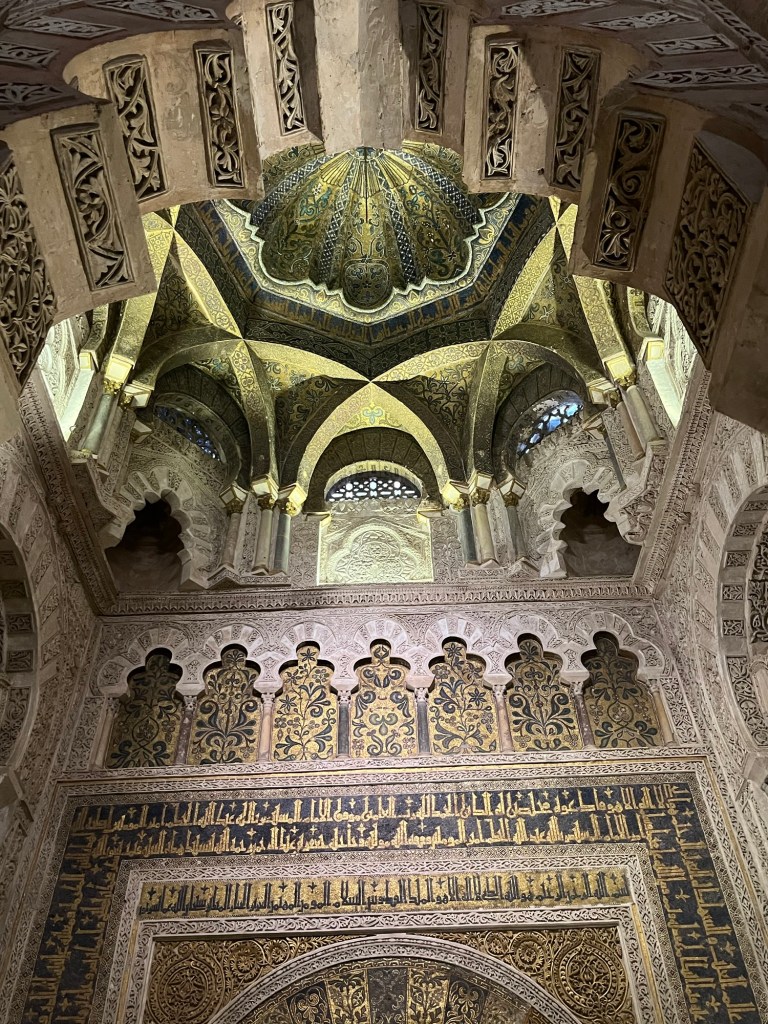
The back-and-forth conquest of the area by Muslims and Christians left its mark on the Mosque-Cathedral. There are clearly Islamic archways throughout the 23,400 square meter building (that’s about 250,000 square feet!). There’s even a beautifully restored mihrab, which showed Muslim worshippers the direction of Mecca for prayer.
And then smack dab in the middle of the enormous mosque complex, there’s a cathedral! And from the middle of the cathedral you can still see the Islamic archways that dot the entire campus. It’s like one civilization couldn’t escape the other.
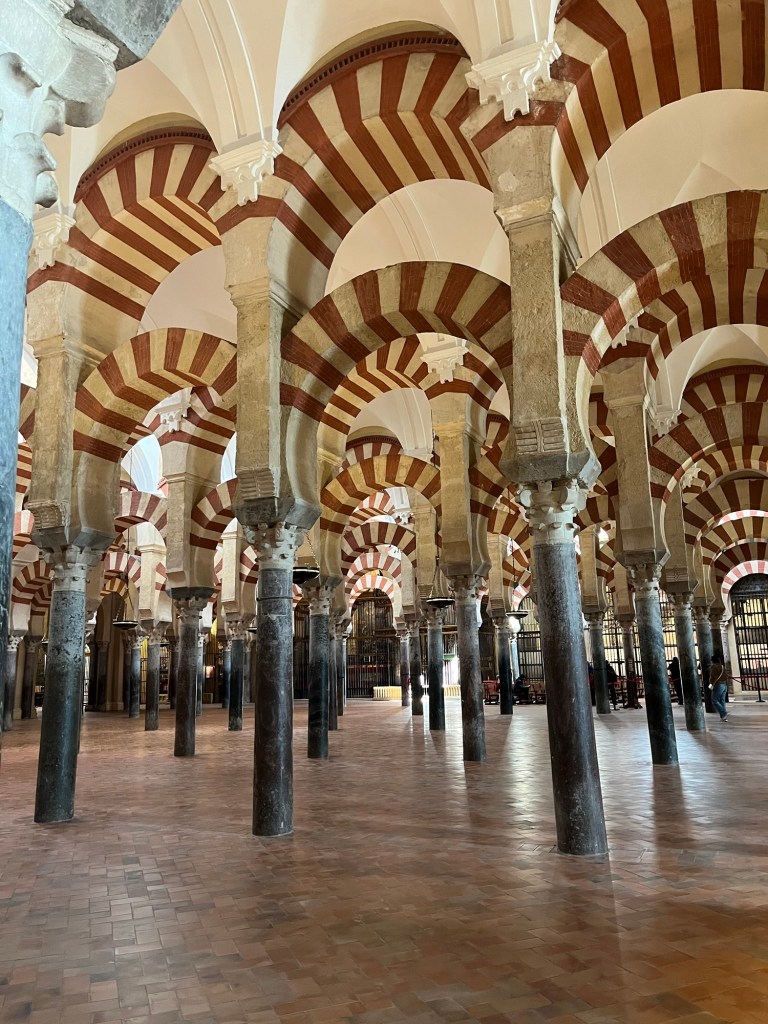
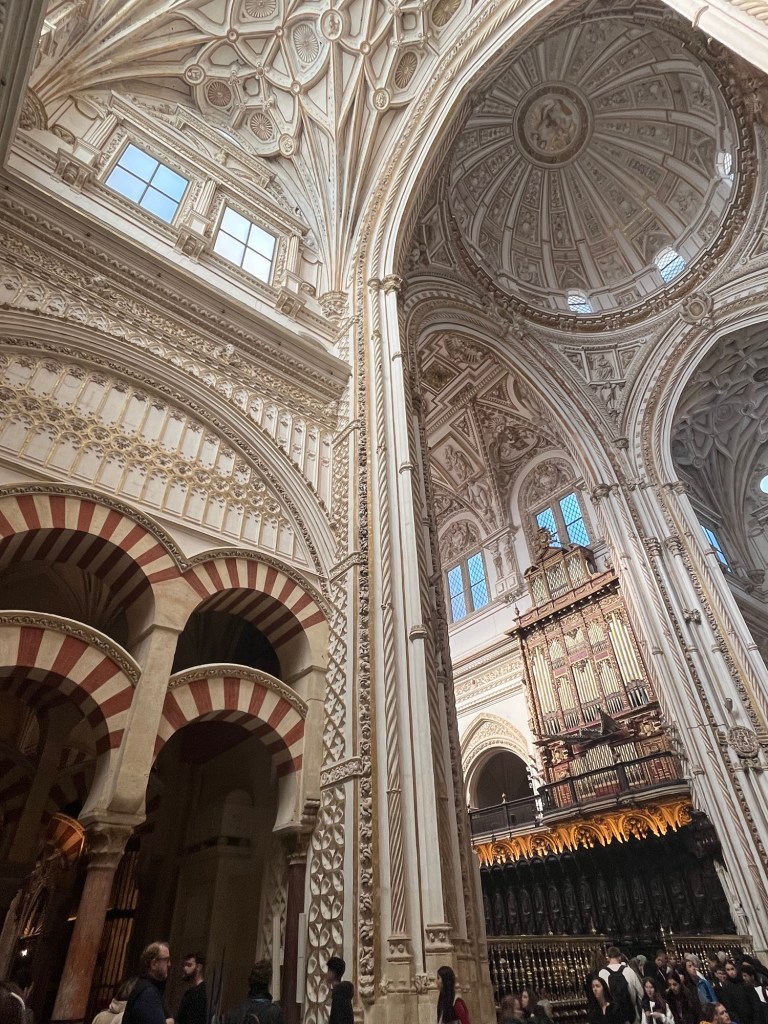
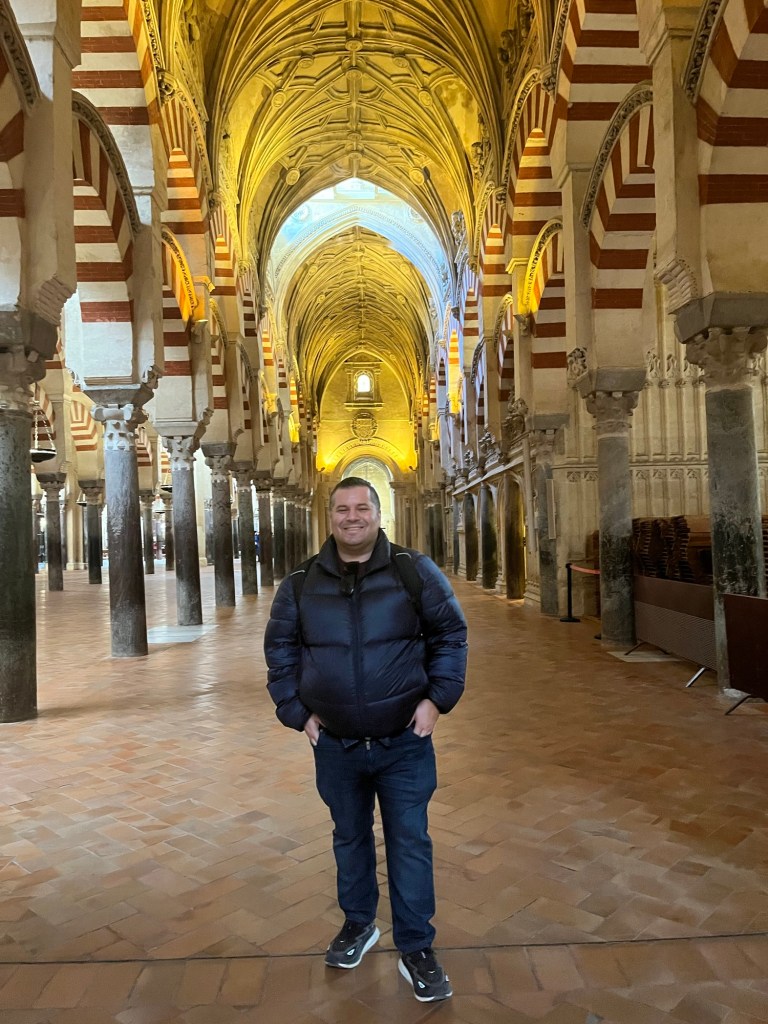
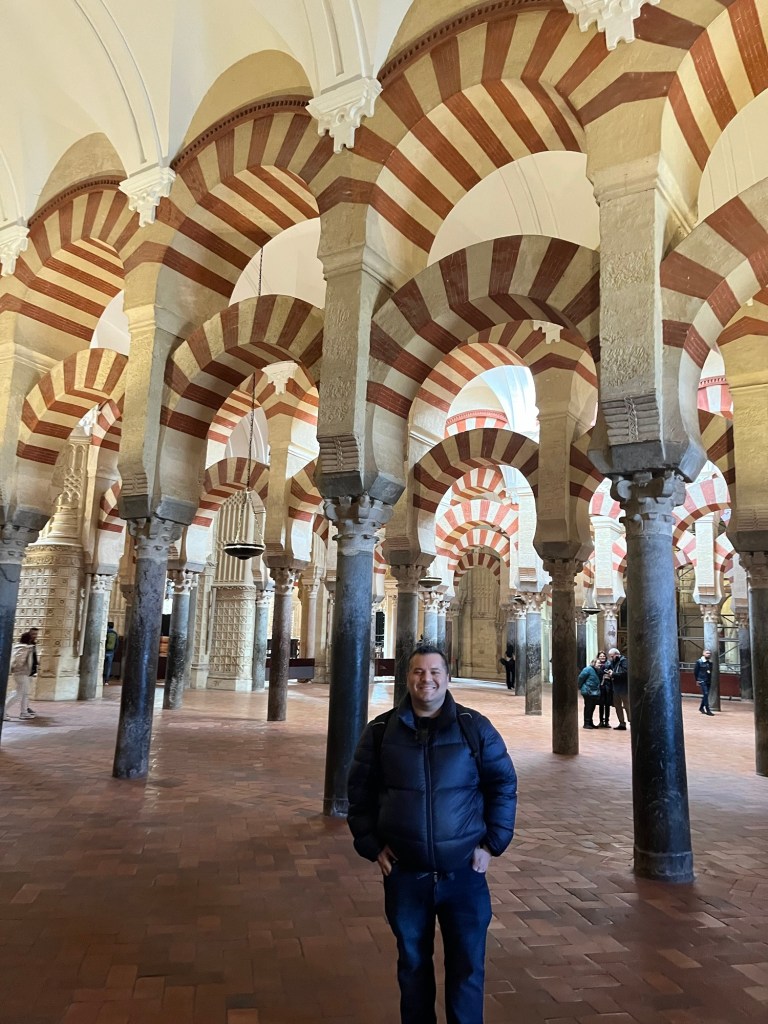
If you have the chance to go to Córdoba, this building is an absolute marvel and alongside the Alhambra, one of the most impressive pieces of architecture I’ve seen in Spain – indeed, perhaps all of Europe.
After my tour of the Mosque-Cathedral and eating some delicious gelato, I decided to explore the Judería, or Jewish quarter, of Córdoba. Because Jews also called this place home for many centuries, including the famous Maimonides who was born in Córdoba in 1135.
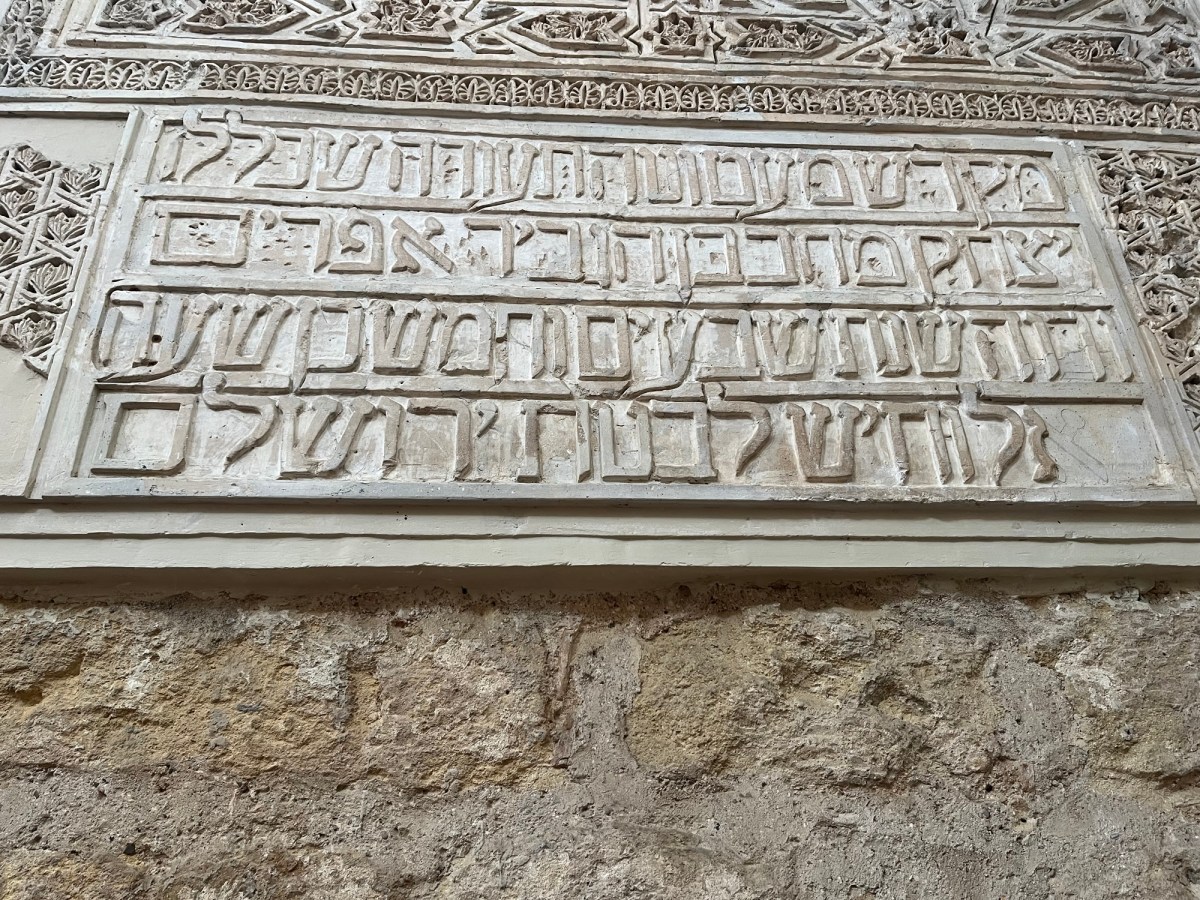
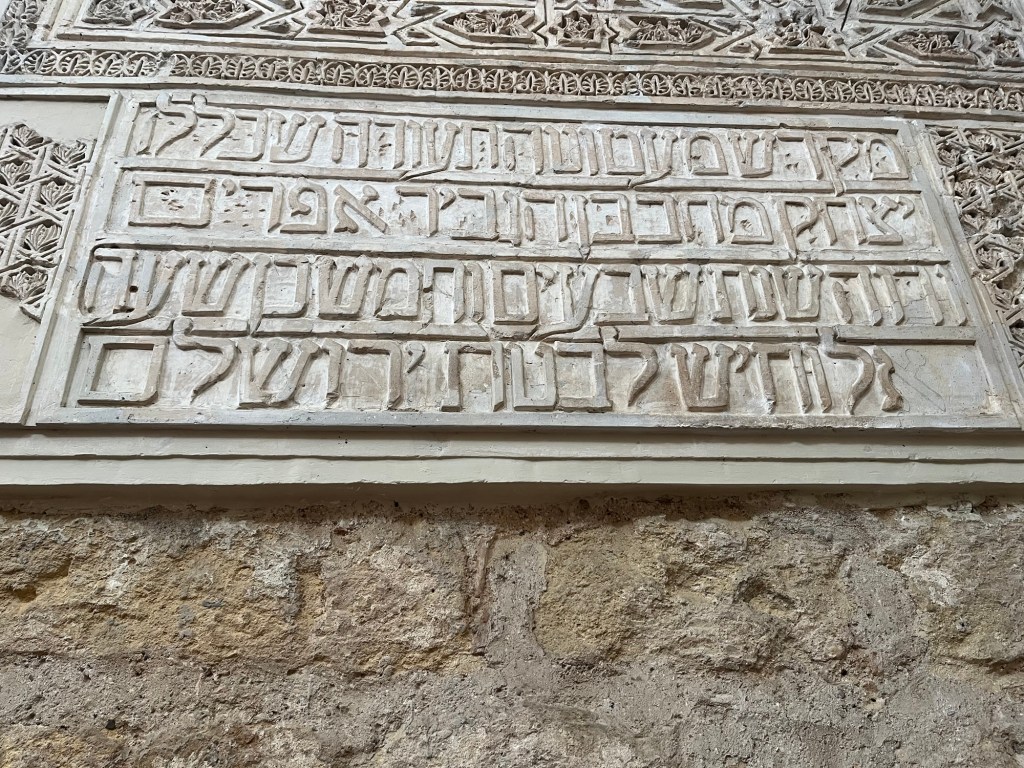
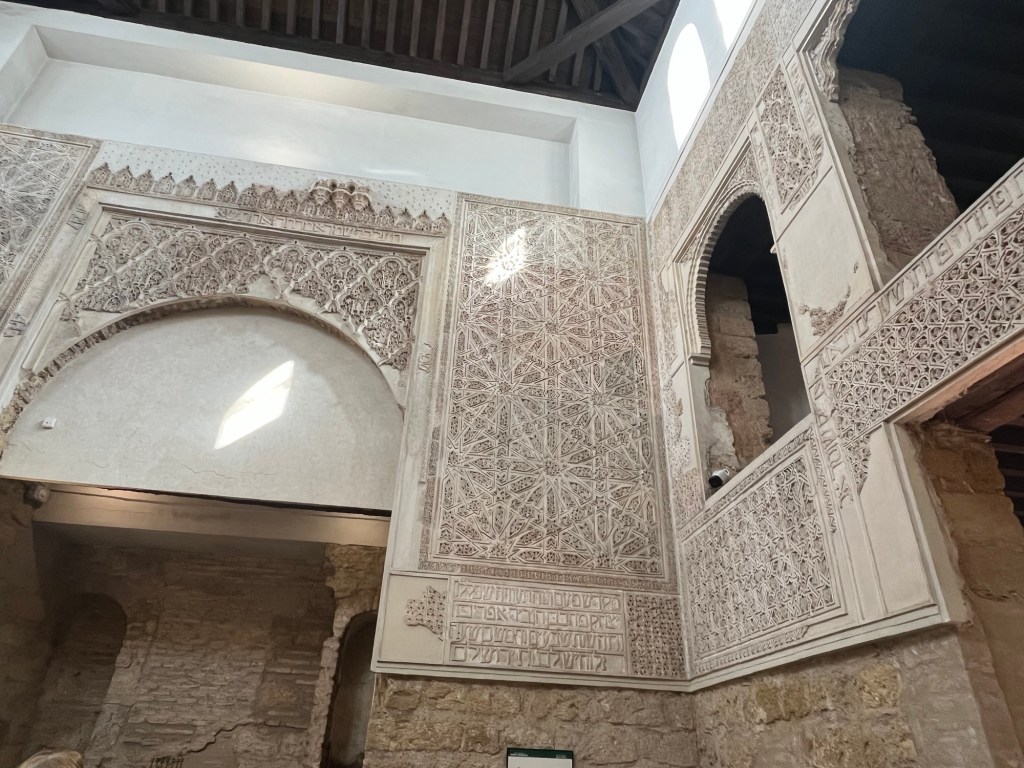
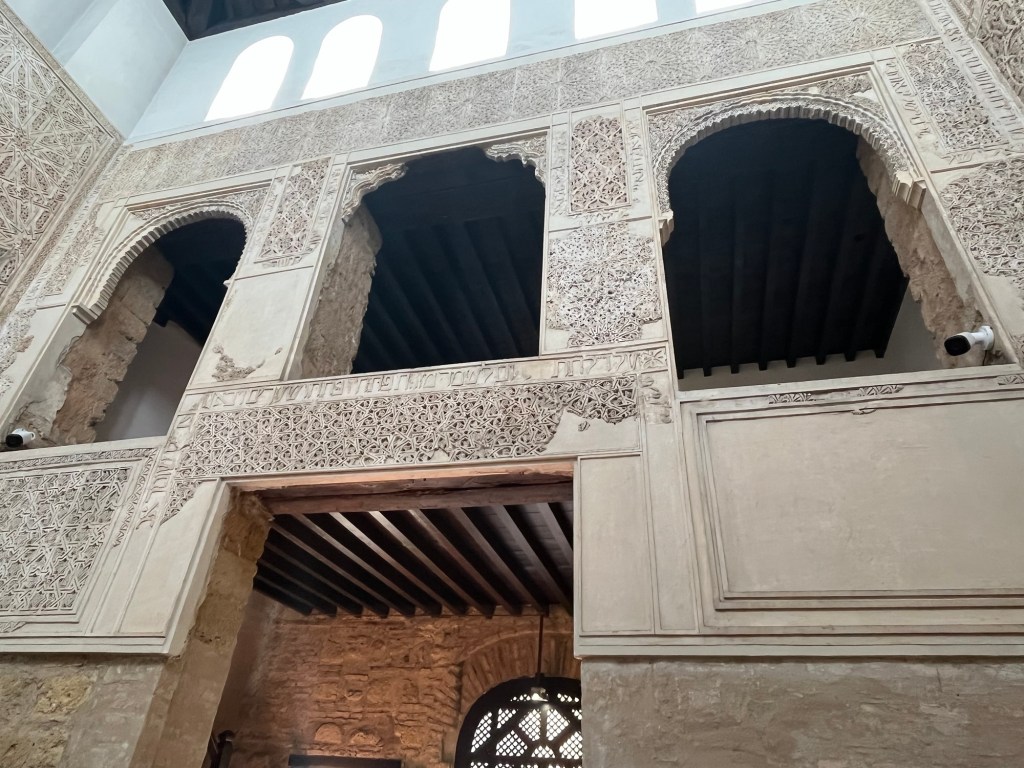
In the Jewish quarter, there is one of three remaining well-preserved medieval synagogues in Spain. It was built in 1314 and has beautiful Moorish-style architecture and you can still clearly see the Hebrew engraving on the walls. You can learn more about its history here.
The Hebrew on the walls particularly caught my attention and spiritual energy. The fact that I could read some of it really moved me. Jewish history is so often erased. Our connection to our ancestral homeland of Israel, where Hebrew comes from, is so often denied. Yet here in Spain, many miles from our home, there stood a synagogue, over 700 years old, with engravings in the same language I pray in. The same language I use to write to my Israeli friends on WhatsApp. Jewish history is real and the chain of our existence is unbroken by the conquerors of the day. I’m grateful to Spanish activists like Red de Juderías de España who have preserved Jewish heritage for us to enjoy despite all the pain our people have endured in this country.
I also stopped by Casa de Sefarad, a Jewish history museum housed in a 14th century Jewish home with a lovely and friendly woman at the front desk who was very proud of the city’s connection to Maimonides. It’s a beautiful museum and worth a visit.
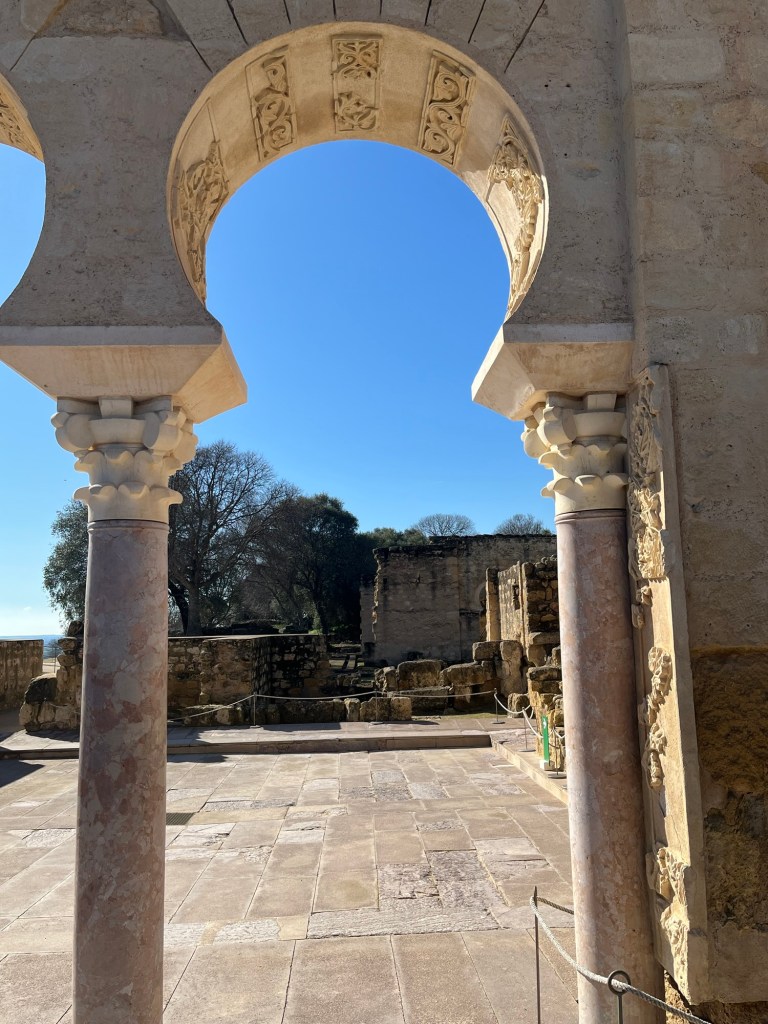
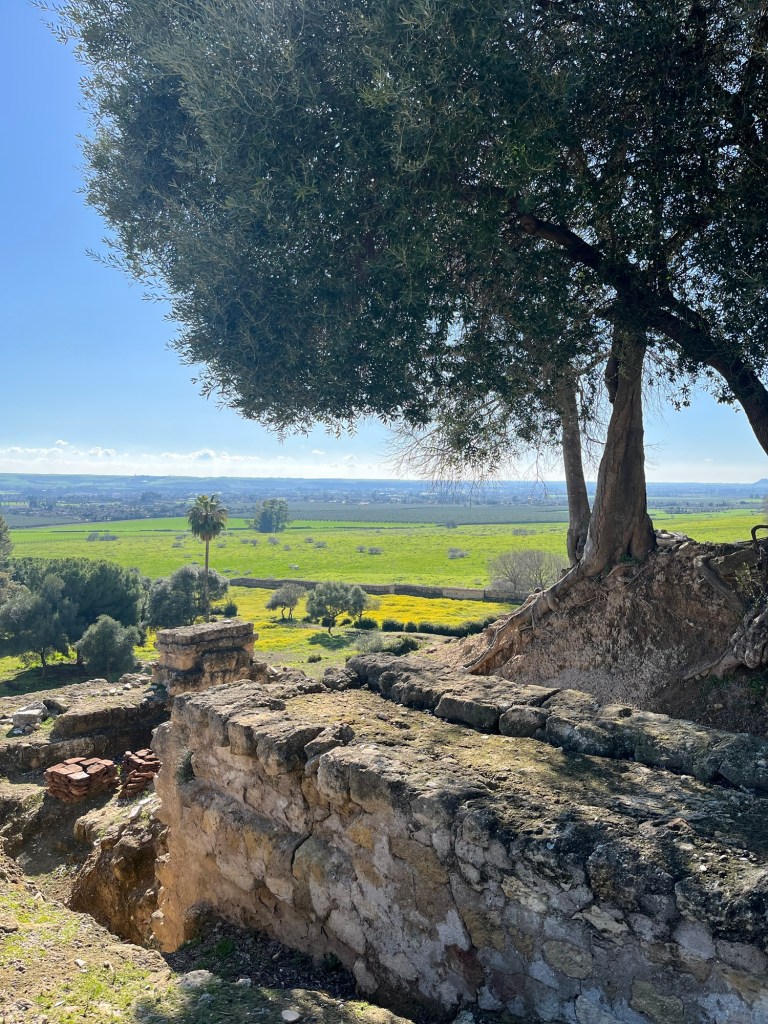
From the Jewish quarter, I decided to go a little outside Córdoba to Islamic ruins known as Medina Azahara. These ruins date from the mid-10th century and are absolutely stunning. This former city is now an archeological park and is set in a gorgeous rural area just a 15-minute drive outside of Córdoba. If you have the chance, you must go. You can still see archways and columns and elaborate Islamic architecture. And far fewer crowds than the center of Córdoba.
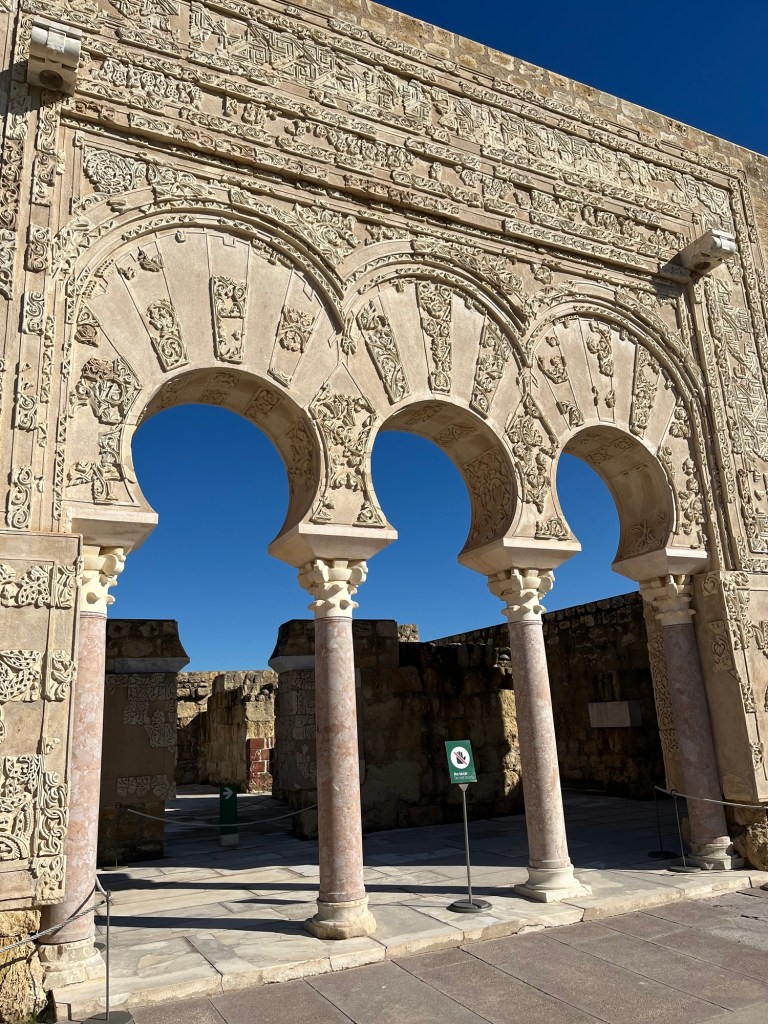
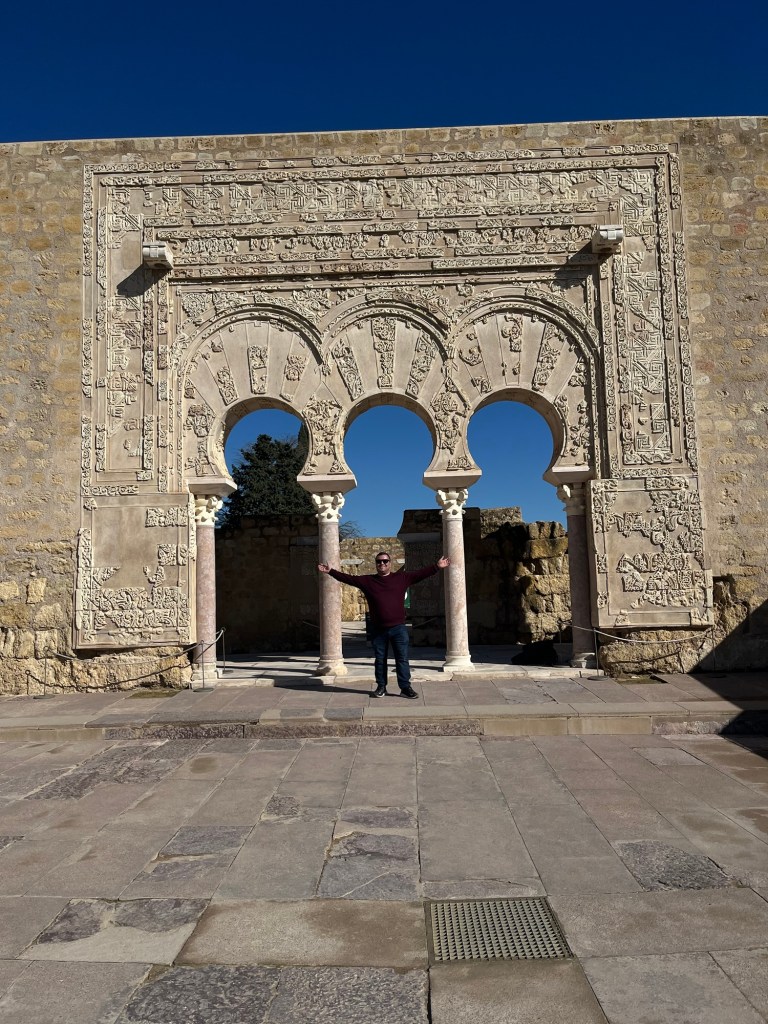
It’s a place where you can really meditate on the meaning of these three cultures – Jewish, Islamic, and Christian – which have been, and in some cases continue to be, living in contention with each other. But also influencing each other and at times even co-existing. Whether it’s the Islamic arches in a Catholic cathedral, the Moorish décor surrounding Hebrew in a synagogue, or the Jewish scholars like Maimonides who crafted wisdom while living amongst these civilizations- one thing is clear. We are interdependent. And nothing, perhaps nowhere, shows that better than Córdoba. So grab a salmorejo (feel free to hold the pork!) and enjoy this marvelous city of three cultures.

 Planting Roots Bearing Fruits