The biggest threat to Israel

There are many threats to Israel- terrorism, nuclear weapons, earthquakes, poverty, diminishing water resources.  You name it.  But for me, the biggest threat facing Israel is one word: invalidation.

First, let’s start with what the word validation means.  Validation does not mean agreement and it doesn’t mean love.  Validation means showing empathy and understanding where someone else is coming from.  How the conditions of their life have informed their views and even if you see the world differently, you can get a glimpse of why they are the way they are.  Even if, in the end, they may be too difficult for you to be friends with.  It’s a difficult skill and an extremely useful one for living an effective life.

Validation is useful for building healthy relationships.  And its opposite, invalidation, is how you destroy them.  All of us invalidate sometimes- we judge, we mock, we belittle.  Maybe other than Buddha himself, I don’t think there’s a single human being who never judges.  However, there are degrees of invalidation.  Invalidation is when we say harmful, hurtful things to (or about) people.  She’s ugly.  I’m fat.  My neighbor’s a dumb ars.  That Orthodox woman is frumpy.  That gay guy must be a pill-popping slut.  That Haredi man is a fanatical homophobe.  That Arab is only good for making falafel- he probably wants to throw us into the sea.

Israelis have a serious problem when it comes to judging both themselves and others.  Judging has been a part of Jewish culture since the Torah- the Bible isn’t exactly Zen Buddhism.  But I remain fairly convinced that the sometimes mind-numbingly intense judgments that I hear here are also a product of trauma.  When someone is traumatized or experiences intense pain, unless and until that person heals, it is common for people to pass that trauma onto others.  That is why it is so common to see families- generation after generation- experiencing abuse.  It’s also why I distanced myself from toxic relatives and broke a chain of toxicity to build a better life.

If you think of the Jews who’ve come to this land, it hasn’t usually been for happy reasons.  Ashkenazim escaping pogroms.  More Ashkenazim escaping the Holocaust.  Holocaust survivors escaping post-war pogroms (yes, you read that right- Europeans continued butchering Holocaust survivors after the war).  A huge percentage of Ashkenazim here are descendants of Holocaust survivors- including almost every Hasidic Jew.

Mizrachim escaped their own pogroms from Morocco to Yemen- only to find their property confiscated by Arab governments.  And then, upon arriving in Israel, they were put into impoverished refugee camps.  Russian Jews fled the Soviet Union (where their religion was banned) and its chaotic aftermath.  The U.S.S.R. was a government so antisemitic it literally has its own Wikipedia article about how antisemitic it was.  Persian Jews fled the Ayatollah, French Jews fled (and still flee) antisemitic terror and discrimination, and even today there are American Jews like me escaping rising antisemitism and white supremacy in the United States.  The list goes on and on and on and on.  And it has a 2,000 year old antisemitic backstory.

And when these Jews arrived in Israel, while many were grateful for a safe haven, their cultures were often decimated in the name of Jewish cohesion in the nascent state.  Ashkenazim were told to stop speaking Yiddish (police even raided Yiddish theaters- an unforgivable thought when you think that the spectators were likely Holocaust survivors).  I even remember a survivor telling me that when she arrived to Israel from Poland after the Holocaust, Sabras would call her and her mom “sabonim”- “soap”.  That was to make fun of the “weak” Diaspora Jews who the Nazis reportedly turned into bars of soap.  Mizrachim were also pressured to give up their languages, their music, their culture- which to many Sabras seemed a bit too much like the (Arab) enemy.  To this day, they continue to have significantly lower average incomes than Ashkenazim.  And every single Israeli Prime Minister has been Ashkenazi, unless you count some recently discovered Sephardic genes in Bibi’s DNA.

With these examples, we’re literally just scratching the surface with Jews.  And it’s worth saying that the Arab population here has suffered its own traumas- of wars, of discrimination, of terrorism (yes, Israeli Arabs are also attacked by terrorists), of families divided across borders, and more.

Add to this 70 years of on-and-off warfare, and you can understand why Israel has three times the rate of PTSD as the United States.

So when a fellow Israeli is harsh to me.  When they say something mean and judgmental- about me, about another community, about themselves- I understand.  I don’t by any means justify it- I think it’s harmful and if we’re going to thrive as a society, this must change.  And sometimes I frankly have to protect myself by distancing myself from their toxicity.  And I get it.  Israelis have been through a lot.  And not everyone is healing.  It took me a while to get to this understanding- but this is the ultimate validation.  I don’t personally agree with being racist or hateful- I just know that if someone got to that point, there’s something causing it and I hope they choose a different path.

Many Israelis complain to me about American “politeness”.  They think Americans are fake- when they smile, when they say thank you, when they do a whole variety of quotidian acts that make up American culture.  On the one hand, I get it- there are times when Americans can be exceedingly formal.  It can be hard to gauge if someone really likes you- or what they think.

At the same time, I remember what one Israeli friend said to me: “I don’t like that in America they’re all the time worried about whether they’re hurting you.”  To this I say- you’re not talking about politeness anymore.  You’re talking about consideration.  You’re talking about kindness.  You’re talking about someone caring how you feel- and trying to respect your boundaries.  In a way that you never got growing up in a society filled with people whose boundaries have been crossed over and over again against their will.  Who have endured but in many cases, not healed.  And who all too often pass their hurt along to others.

To this I say- enough.  All Israelis, in fact all people, deserve the right to heal from their traumas.  And to not have new pain heaped upon them.  As a society, we can still keep our bluntness and our assertiveness without the spite and without the cruelty.  Find one way to heal yourself this week- and find one way to encourage a friend.  I’m not a psychiatrist or a PTSD expert, nor do I have the power to stop violence.  But I think that if we each find a way to bring some healing into our society, it will do us all a lot of good.

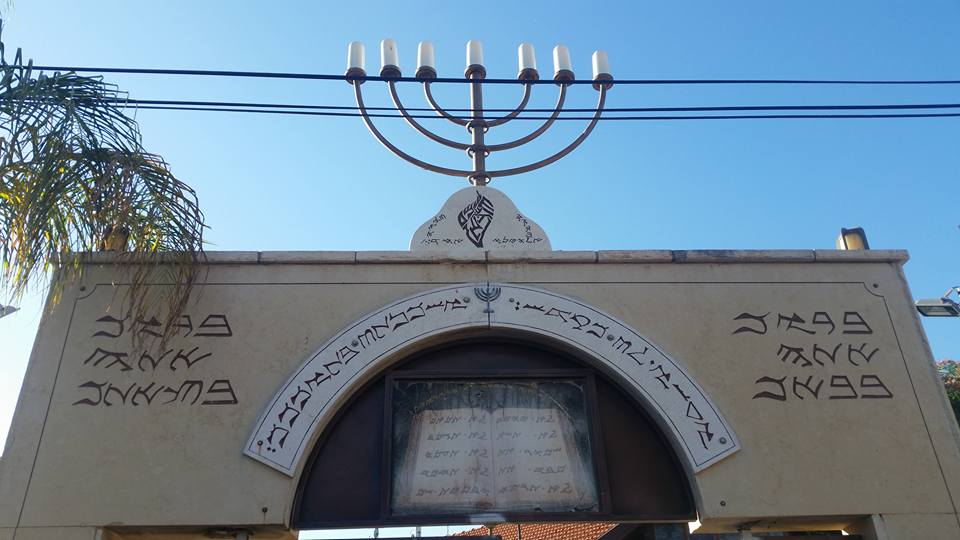
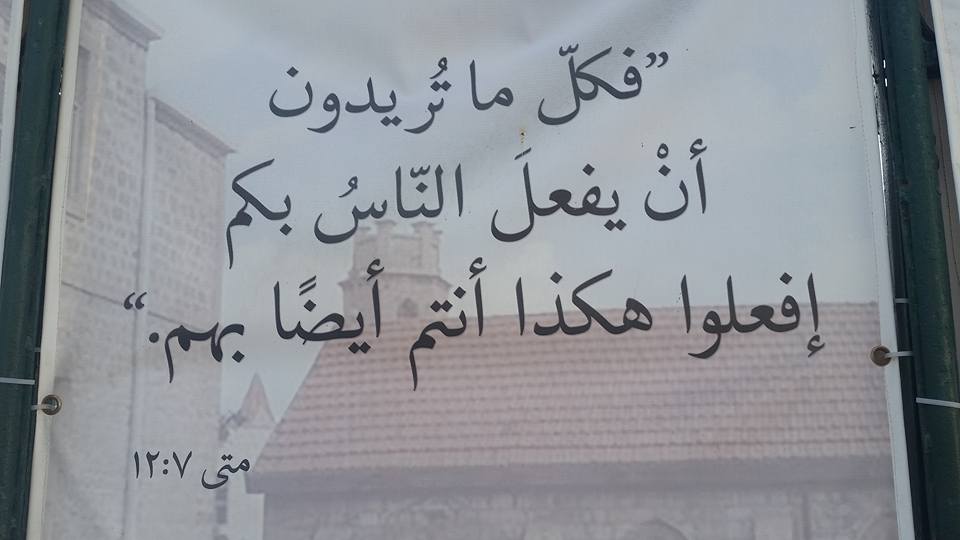
To borrow a bit from our Christian neighbors, my cover photo is from an Arab church in Haifa.  It says: “Do unto others as you would have them do unto you“.  Amen.

And that’s how I learned the Arabic word for “terror attack”

In a horrific terrorist attack in New York, 8 people were killed and at least another dozen were wounded.  I found out about the attack while perusing Facebook in an ice cream parlor in Yafo.  Everyone around me was laughing and having a good time and I just froze and started checking in on all my friends.  My emotions welled up as I saw 37 friends were marked safe.  Thank God.  And then I was on the verge of tears as I noticed that 175 friends of mine had not yet confirmed their status.  I even noticed some people had had friends ask them if they were safe and had not responded yet.

I then started messaging friends frantically, trying to find out if they were OK.  This is the strange and challenging part of being a dual citizen- I’m feeling the pain of my friends in America while I’m sitting at a gelato shop and people are giggling.  Obviously not at what happened, but they just don’t know what’s going on.  It’s somewhat of a dual life.

I finally found out a close friend was safe- but her husband works very close to the attack.  Thank God he survived, but it’s scary to think about.  Unfortunately for Israelis, this isn’t a new concept, although it’s one Israeli experience I hope to never have to suffer.

As I write this blog, it’s still Halloween in America.  Halloween in Israel is weird- it’s almost non-existent.  Some of the things I love about the holiday, like picking pumpkins, hayrides, pumpkin pie, candy corn, seeing cute kids in costume, or going to a friend’s party- they just don’t happen that much here.  It’s not part of the culture.  Understandable, but I still miss it.  It’s doubly hard because one of my very toxic relatives has a birthday on Halloween so it brings up all sorts of mixed emotions.

Tonight, I didn’t expect a scary Halloween, but I got one.  Just like the Halloweens with my toxic relatives and just like all too many days that have scarred people in the Land of Israel.

Some people ask me how I get through the tough times, through the excruciating challenges that I face as an oleh chadash, as a new Israeli citizen.  You know how?  Everyday miracles.

Before I heard about the attack, I was talking with an adorable 17-year-old named Tony who worked at the ice cream shop.  He really likes American rap, so I suggested some artists (he had never heard of Common!).  We talk about how he wants to move to Canada or maybe go to college in Germany to become an engineer.  When it came up that I’m gay, his co-worker joked that he’s a homophobe or a closet-case (this is the humor here- this is not derogatory).  He of course denied it and said he likes everyone.  He even was a little self-conscious and asked me if he looked like a homophobe.  Of course I told him he doesn’t (is there a way to look homophobic?), and he smiled.  What a nice young Jewish boy with a goldene neshamah- a beautiful soul.

Wrong.  Tony is Arab.  And like not a small number of Arabs here, if you called him David Goldstein you’d think he’s an American Jew.  Once he shared that he was Arab, I switched from Hebrew to Arabic and we kept talking.  About music, travel, culture, you name it.  After every customer he served, he’d come back and keep talking to me.

After I found out about the attack, I was visibly upset.  I didn’t say anything because I was too busy checking in on my friends.  But eventually I needed to go home and sit in a quiet place where I could call people.

Before leaving, I wanted to tell Tony why I had to go.  Many Arabs here mix Hebrew into their Arabic.  The Hebrew word for terrorist attack is “pigua”, and it would not be strange for an Arab to speak in Arabic but simply use a Hebrew word in the middle of a sentence.  Much like American Jews sprinkle our English with Yiddish and Hebrew.  But I knew that if I spoke with Tony in Arabic and then said the word “pigua” in the middle of the sentence, the Jewish customers might flip out and I didn’t want to scare anyone.

So I looked at Google Translate to find the Arabic word: “hujoom”.  I told Tony about what happened in New York and that I needed to go home to check in on friends.  He looked shocked and then sad.  He came over and gave me a nice warm bro handshake.  I hope to see him again soon at the ice cream shop- he might not be a nice Jewish boy, but he’s certainly a nice Arab boy.  And while I hope he pursues his dreams to study abroad, a part of me will be sad that this country will miss out on the presence of a kind person.

And that’s how I learned the Arabic word for “attack”.  Not by, thank God, an attack on me here in Israel.  And not from the media.  But rather, from seeing my friends in pain in America and wanting to share my sadness with a new friend, an Arab friend.  A 17-year-old kid who loves hip-hop and scoops ice cream.  My neighbor.

There is nothing positive to take from a terrorist attack.  It’s murder plain and simple.  It’s deranged and it’s sad.  I hope we can make a world where this kind of hate doesn’t exist anymore and we can live in peace.  Like my cover picture from a mural I saw in Tarshiha says in Arabic: “no to violence”.

In the meantime, let’s live.  Look for the everyday miracles, like my interaction with Tony.  An interaction made possible by my decision as a 17-year-old to start learning Arabic at the Jewish Community Center in Rockville, Maryland.  And for three years in college in St. Louis.  And with Syrian refugees over Skype.  And by his decision to open up to me- to show me kindness, to respect my queer identity, and to show empathy in my time of sorrow.

Peace is not made through powerful men shaking hands.  That may be part of it, but it’s the opening of hearts that truly sustains it and makes it possible.  May we all find a way to do so every day, even just a little bit.  It makes our world a better place and it gives us hope to overcome great challenges.

May the memory of those who fell today be for a blessing.  May God bring healing to wounded.  And may we know the fruits of peace so that the scariest Halloween we have is when our kids sneak up on us and say:

“Boo.”

Reform is a verb

I grew up as a Reform Jew active in every possible aspect of the movement.  When I made aliyah, I was certain to connect with Reform communities- I would never live in a city without one.

Another reason I chose to live in Tel Aviv was because of the queer community.  It is a city that is arguably gayer than anywhere I’ve ever lived- and I’ve lived in Washington, D.C., Fort Lauderdale, Madrid, and Barcelona.

Oftentimes, I felt like my sexual identity and my Jewish identity had to be separate.  When I was in one community, I was almost always still a minority due to my other identity.  While Reform Jews are largely accepting of LGBT people (in particular the NFTY youth group), I faced sometimes intense homophobia in my community.  I once had a Reform clergy person tell me bisexual people don’t exist and a Hebrew school teacher who giggled about which person was the “real man” in a gay relationship.  I even had another Hebrew school teacher posit that there was something strange that caused more Jews to be gay than non-Jews.  When visiting a Reform synagogue in another city, a 30-something rabbi told me all about how he likes gays to help with his fashion because that’s what we’re good at.  Not to mention my toxic relatives.  And all of this isn’t even including those among the more conservative elements of the Jewish community who twist texts to guilt and harm people like me.

And in the gay community, I also at times faced anti-Semitism or felt excluded.  I remember going on several dates with a non-Jew and everything seemed to be going well and then suddenly he broke off the relationship because I didn’t eat pork.  At the time I didn’t really care if he ate pork, so it seemed rather odd and when I pressed him on it, it was clear there was an anti-Jewish sentiment behind it.  One guy implied he couldn’t date me because I was “really Jewish”.  A non-Jewish ex-partner’s father – to my face – defended the KKK as an organization supporting Confederate soldiers, not racism and anti-Semitism.  His son, my ex’s brother, dressed up as a Hasidic Jew for a college Halloween party- peyos and all.  In addition to the more recent political anti-Semitism in the LGBTQ community, I think it’s just hard to be a minority within a minority.  Oftentimes LGBT events are scheduled without regards to Jewish holidays and people don’t necessarily know about Jewish culture.  It’s not necessarily malicious, but it does make it hard.  And sometimes, I felt like the gay community really prized white “straight-acting” gay men above other members of the community, including physically.  Above blacks, Latinos, bisexuals, trans, and- in my experience- Jews.  While I strongly believe that most LGBT people in the U.S. are not anti-Semitic, I can’t deny that at times I felt uncomfortable or out of place in the community.

Which brings us to tonight.  Tonight, as usual, I went to Reform Shabbat services which were lovely.  We had a communal dinner and then I went home.  When I got home I realized it was only 9:15pm and I was bored as hell.  It can be hard to make plans for Shabbat when you’re new to Israel and don’t know a lot of people.  And it can feel lonely.

I found a friend going to a gay pop music party.  I usually just chill with friends and eat on Shabbat and walk around.  But having no great alternative tonight and having the itch to get out of the house, I made a move and I went.

What a great decision.  First of all, it was my first Tel Aviv gay party.  And it was fun.  The music was also great.  Hearing a bit of American pop music was a nice escape from the stress (even the interesting stress) of everyday life here.  Also there were some cute guys- not the super muscle-y ones you see on the beach, more like cute nice Jewish boys.  It felt comfortable.  Also, pretty much everyone was Jewish- a completely unique experience.  I really felt this when the music switched from Britney Spears to Israeli pop.  Even to the first Israeli singer I ever got a CD from at age 13- Sarit Hadad.  That felt powerful.

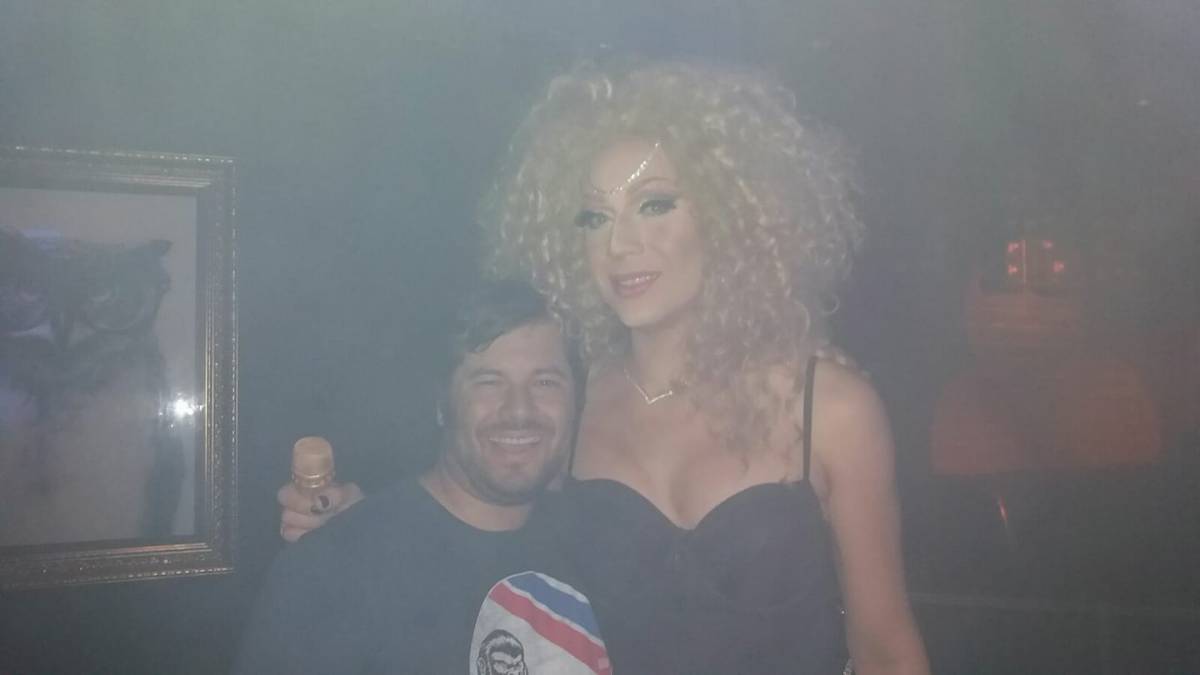
For Sabras – Israelis who grew up here – there is absolutely nothing novel about what I just said (which in and of itself is kind of cool).  But I’d like to remind them of something.  There is nowhere else in the world where a queer Jew can hear Hebrew on the dance floor all around him.  There is nowhere else in the world where every weekend there are gay dance parties and most of the people in the room are Jewish.  There is nowhere else in the world where when you take a picture with a drag queen (my cover photo) you say to them “todah”.

Only in Israel – only in Tel Aviv – do I feel my queer and Jewish identities meld.  Not at a conference, not at an event, but rather in my day-to-day life.  I don’t have to compromise on either important aspect of my self to live here.  And that is a gift – one that I hope I can inspire my Sabra friends to recognize and my American Jewish friends to respect.

There are some beautiful things about being a minority.  The solidarity, the awareness, the empathy you can develop for others.  The secret codes we use to find each other and protect our culture.  But honestly, a lot of the time it sucks.  And being a double minority makes it that much harder to feel at ease.

On a Friday night, I’m almost always at Reform services.  And oftentimes at a dinner afterwards, sometimes even with Orthodox friends.  Frankly, I feel more at ease at a Modern Orthodox Shabbat meal than with a lot of secular Jews.  I love zemiros and I love the many hours of chatter and fun.  As I see myself, I’m an “all-Israel Jew”.  I like to find the beauty in every community of the People Israel (and even the non-Jewish communities of the State of Israel).

And tonight I added a new community.  The queer Tel Avivi community is also my community- and also a part of my spirituality.  It’s a place I feel affirmed in every way and it’s a fun way to blow off steam after a long week.

I’m a Reform Jew because reform is a verb.  When Judaism or any religion becomes too static, its vitality withers.  Today I reformed my Judaism.  And I realized that while some Shabbats I’ll want to do long meals with singing and just be in the moment, sometimes, after a good hearty sing at services, I might just want to slip out at one in the morning and dance my heart out till the sun comes out.

That’s my Judaism too.

Why do so many Israelis know nothing about each other?

This is a question that confounds and deeply frustrates me.  If we’re going to live together and thrive and appreciate each other, we certainly can’t do it living in silos.

I’d like to share a few examples from people who I think are well-intentioned:

Yaniv is a Jewish doctor (every mom’s dream!).  Growing up in a secular Persian and Moroccan family, he’s now partnered with an openly gay Ashkenazi Orthodox man- already showing he’s pretty open-minded.  I was telling him about my trip up north last week, where I visited many Arab villages, including some Christian communities.  He actually lived for several years in Haifa as well so he has spent time in this part of the country.  I started talking about the different groups in Israel- Greek Orthodox, Greek Catholics, Maronites, etc.  And I noticed he didn’t really react.  I asked him if he had learned about Christianity in school.  He and his partner basically explained that in their schools, they learned only very basic information and didn’t get any exposure to the different types of Christianity.  In the country where the religion was born!  They were surprised, for instance, to learn that in the U.S. there are hundreds of different types of Protestantism alone.

Ahmed is an Arab Muslim cab driver.  We were talking about our backgrounds and he asked about my origins.  I explained that I’m Ashkenazi from Romania, Austria, Lithuania, Russia, and Belarus.  He asked why my family came to America.  I explained that in the late 1800’s and early 1900’s, there were massive pogroms in Eastern Europe along with crushing poverty that motivated Jews to move to America.  Ahmed asked me: “They killed Jews in Russia too?  I thought they just did that in Germany during the Holocaust.”  I was shocked, although I had heard similar things from European Christians in whose countries anti-Semitic violence took place, which is all the more problematic.  There is 2,000 years worth of anti-Semitic massacres and discrimination which you can read about a bit here.  Ahmed was sorry to hear about the anti-Semitic killings and genuinely surprised.

Yoav is a 26 year old Jewish guy from a moshav near Jerusalem.  An open-minded guy, he told me about how he thought it was important for Jews to get to know Arabs and vice-versa.  I told him how I visit all parts of the country, including nearby Bnei Brak, a Haredi city you can read about here and here.  He said he’s never been there (he lives 20 minutes away) and was considering a trip sometime, but he’d need time to think about whether he was up for it.  As an aside, I met an 18 year old from Ramat Gan, a 5 minute walk from Bnei Brak, who had never even stepped foot there, even to buy a bottle of water.  Yoav said he had seen on the news that someone paraded around Bnei Brak with an Israeli flag and got negative reactions from people, so he was afraid to go (a number of Haredim are not Zionist for religious reasons).  I told him that first of all, I’ve been a number of times and never had any issues- in fact, I found a lot of interesting food, music, and people.  I also told him that if your first interaction with someone is to delve into several-hundred-year-old political debates, you’re not going to have a very good discussion.  Rather than getting your information about your neighbors from the news, I said, just go and meet people for yourself.  He nodded in agreement.

Yair is a 20-something man from Jerusalem.  I believe he either is or was Modern Orthodox.  I had told him I was Reform and he and his Haredi friend asked me a bunch of (sometimes provocative) questions about the movement.  I do think that they were well-intentioned and curious but had not met many Reform people before.  Again- their sources were the news.  I did ask Yair: “What personal experiences have you had with Reform Judaism?”  He said: “Oh well I went to a Reform synagogue in London once and it did nothing for me.  Sorry, but Reform Judaism is kind of hollow.”  I then said to him: “There are millions of Reform Jews in the world and over 1,000 synagogues.  If I ate one bad schwarma in Jerusalem, would that be fair to say all Jerusalem food sucks?”  He said I made a good point and listened as I explained a bit about my community.

I could write a whole separate blog about ignorance I hear from tourists here (I met a Christian American tonight here for business who was absolutely shocked that Sunday is a day of work here and he wondered what Christians do here.  My answer: “they adapt”.  I had to spend a solid 15 minutes explaining how Jews in the U.S. adapt to a calendar that doesn’t reflect our holidays and traditions- he had no idea).  But I’d like to focus on my neighbors for a moment.

The examples I gave above are of Israelis who I truly believe have good hearts and are open-minded people.  These are not people who are hardcore bigots or full of hate (although those exist in every society).  These are people who know almost nothing about their neighbors, but who I believe have some curiosity about them.

I don’t have an easy answer to this problem.  Unlike in the U.S. where people go to school together with kids of all different races and religions, here there are separate schools for each sector of society.  Setting up a genuinely pluralistic multilingual public school system could take quite a bit of energy and time (although it’s perhaps an interesting outside-the-box idea to explore).

In the meantime, I do have a suggestion.  We need to step outside our bubbles and find one way each week in which we reach out to someone new.  Someone from a background we know little or nothing about- or are even afraid of.  It could be as simple as asking your Orthodox co-worker how the holidays were and what her family did.  Or asking the secular guy in your office what music he likes.  It could be opening up Wikipedia and reading about Arab Christians in Israel.  It could be watching this amazing dabke dance from Nazareth or asking your favorite Arab falafel guy to teach you a few words of Arabic.

The point is if we wait for the government or politicians or the media or NGO’s to do this work for us, it’ll be too late.  If we’re really going to make Israeli society work, we need to get to know each other.  You don’t need a program.  You don’t need a tour guide.  Gently step outside your bubble (knowing it’s still there when you need to reflect and regroup) and embrace the possibilities.

No law can make someone like you.  That only comes from an opening of the heart.

Samaritans, Russian Puppet Cabaret, and Hasidim

Today I heard or spoke Hebrew, ancient Samaritan Hebrew, Yiddish, Russian, English, Arabic, and Ukrainian.  Today I danced with Hasidim, watched a Russian man dance with life-sized puppets, and davvened in a messianic Chabad shul.

Here’s how it went down.

I wanted to get out of the house and explore.  Missing the fun of trekking up north, I decided to explore Gush Dan, or Central Israel (near Tel Aviv).  I went to the decidedly not-so-touristy Holon and Bat Yam, both a short bus ride away.

I had no plans and really no idea what to expect.

I got off the bus in Holon and noticed a sign pointing to the “Shomronim” neighborhood.  That’s the Hebrew word for “Samaritans“.  Maybe you learned about the “Good Samaritan” in your Bible class.  Yes, that’s them.  They claim descent from the tribes of Ephraim and Menashe, who are in turn tied to Samaria (Hebrew: Shomron).  Hence their name.

I immediately asked around and found my way to their neighborhood.  To give you an idea of how unique this is- there are 800 Samaritans in the entire world.  They are keepers of pre-rabbinic Judaism and they use an ancient form of Hebrew, including an alphabet much closer to the original since rabbinic Judaism adapted an alphabet based on Aramaic.

Here are some examples from today:

Because this is how I roll, after knocking on four or five doors (all of which had Samaritan Hebrew on them!), I got referred to Benny Tsedaka, a leader in the community.  He was sleeping, but his brother told me to walk in and wake him up.  So, to the horror of my friends in America, I walked into a total stranger’s home and basically kept talking and knocking on the door till the old man woke up.

He invited me in and gave me quite the lecture about the history of the Samaritans and their “original Judaism” (a phrase, incidentally, told to me several times by Haredim, but this guy might have them beat).  He, along with the other older men on the street, wore a white robe.  He showed me their prayer books, still written in the Samaritan script that I recognize from ancient Jewish tablets.  I almost asked him who their rabbi was, but caught myself 😉  It was like peering into the past, even as he told me to grab my smartphone and take pictures.

He chanted Torah for me using the Samaritan pronunciation and their trop, or cantillation system.  And he did it from memory.  Incidentally he chose the first day of Bereishit, or Genesis- the parashah I used to chant at synagogue on Rosh Hashanah.  The reason he could do it from memory is that unlike rabbinic Jews, like myself, they don’t read Torah in synagogue.  Instead, people pair off and go read in people’s homes- both men and women.  That way, he said, everyone learns to read.  A nice idea indeed.

He is very proud of his tradition and he has every right to- his community has survived conquest after conquest for thousands of years.  Before there were Christians or Muslims or Arabs or Byzantines or Persians here, Samaritans were here- and they managed to survive.  Or perhaps better put, since we are all Israelites, we managed to survive.  When I told him I was an oleh chadash- a newly minted Israeli- he made a point of saying “welcome home”.  A long delayed reunion, indeed.

He’s not a fan of Haredi Judaism because he feels it’s not traditional or authentic enough.  That it’s a product of Eastern Europe and interactions with Christians, unlike his authentic Judaism from here.  He also said he likes that in his community, women read Torah too and that if God didn’t want women to be front and center, why did Miriam sing as we crossed the sea?  An interesting point.  I won’t delve into the debate about what Judaism is best other than to say I think there’s something beautiful in all varieties.  I will say, though, that someone who wants to argue about what the most “original” form of Judaism is is going to have a tough time beating someone who prays in paleo-Hebrew script.

Still digesting my interaction with ancient Judaism, I hopped on a bus to Bat Yam to see the sunset.  I liked learning about Samaritan Judaism, but sometimes the conversation veered into (very) right-wing politics and religious debates that are less interesting to me.  Benny could certainly make Bibi (or a rabbi) blush.

As I made my way to the sea, I saw this ridiculous man dancing around with busty life-sized female puppets (and later, Jewish puppets with peyos!).  To disco music, to Russian music, to Mizrachi music, and even to Yiddish classics!  I can’t tell you how much this made me laugh and smile.  What a nice way to unwind after the meaningful but at times overwhelming experience I had in Holon.  Apparently his grandfather grew up with similar shows in the Soviet Union in the 50’s.  I was thoroughly entertained.  I gave him a nice tip and we exchanged words and smiles in Hebrew and a bisl Yiddish.  These are the people who make the world go round.

After some delicious kebabs, I grabbed a bus home.  Except that on the way, I heard Hasidic music blasting.  I hopped off the bus and ran and joined in dancing with a bunch of men in a circle.  Speakers blasted Hasidic hits (some of which I knew and are on my phone) as we oy yoy yoy’ed and danced.  Just when it couldn’t get any cooler, they started blasting Mizrachi music, including songs entirely in Arabic.  I swerved my queer Jewish hips and my hands suavely bounced around.  I felt a little out of place (I think some of the men just didn’t know what to think of me- it’s not every day someone like me is at a Hasidic street party in Bat Yam), but in the end, it’s my God too so I rolled with it.  And although I wish that the women and men could dance together, I had some fun.

Based on the signange, I knew it was Chabad that put on the event for Sukkot, the holiday currently being celebrated.  Chabad is a Hasidic group focused on kiruv, or outreach to other Judaism.  As Judaism is not evangelical, they only reach out to other Jews.  I don’t identify as Chabad, but I do appreciate some of the work they do.  Anywhere you go in the world, Chabad is there to give you a kosher meal, a place to pray, a place to do Jewish.  In my neighborhood, I frequently stop by to buy supplies for various Jewish holidays.  The best part about Chabad is whether it’s your style of Judaism or not, they’re always there.  And that is a mitzvah.

Now as my sweaty body prepared to hop back on the bus, a cute young Chabadnik asked me if I had davvened arvit (evening prayers).  I hadn’t (because that’s not usually how I approach Judaism), but I told him I’d join their minyan.  Jews are supposed to pray in groups of 10 (men only for Orthodox- men or women for progressive Jews).  I haven’t generally found the Orthodox prayer style meaningful for me (it feels too fast for what I’m used to), but I think it’s a mitzvah to help these people out so I joined in.

We went downstairs into a shtiebel (small synagogue) and prayed.  The cute guy helped me keep up with the pages (they move really fast!) and before you knew it, we were done.  By the way, when I say cute, he’s not a cute kid- he’s a cute adult.  He’s a “your kippah is super sexy I’d like to daven maariv and make a mitzvah” adult.

I digress.  As I’m leaving, another hot young Chabadnik starts talking with me.  He’s from Ukraine and the woman sitting next to us is half Georgian half Ukrainian.  They are both olim like me- new Israelis.  I’m starting to think I might want to learn Russian for an even richer Israeli experience.  I notice a sign in the synagogue about the former leader of Chabad, Rabbi Schneerson being the moshiach (messiah).  Not the typical generic “moshiach” signs, but much more direct and specific.  There are some Chabadniks who think he was just a great leader and others that veer into messianism, thinking this particular rabbi will come back as the moshiach.  Playing dumb, I ask the Ukrainian guy if the sign meant that the rebbe was the moshiach and he said yes.  I am far, far, far from an expert on Chabad, but I’m pretty sure I just prayed in a synagogue of the more messianic stream of the movement.

As I headed back to Tel Aviv, I couldn’t help but think what a messy, meaningful, and deeply satisfying day I had had.  I had been lectured about my progressive politics and rabbinic Judaism by a man who speaks ancient Hebrew.  I had felt kind of out of place as a Hasidic dance party as a queer person and a Reform Jew.  And I ended up praying with (maybe?) messianic Chabadniks when I absolutely never would have prayed with them if that’s what their synagogue was about.

And on the same day, I met an ancient relative of mine.  I saw ancient Hebrew script written on doors and flyers.  I danced to Hasidic music – for free – in public.  I saw a Russian guy dance around with ginormous puppets to Yiddish and Slavic dance music.  In short, I experienced thousands of years of history in the course of minutes.  I lived it up.

Sukkot is, in English, called the “Feast of Booths”.  It’s one of the few holidays that doesn’t commemorate an event.  Rather, by setting up sukkot, temporary structures, we remind ourselves of the fragility of life and of our wandering in the desert for 40 long years.  Wandering in search of a home, a more permanent structure than the ragtag hut of a sukkah.

This Sukkot, I’ve found my home.  A home where yes, things are sometimes complicated and messy and take a while to untangle.  And also a home filled with more meaning per square foot than anywhere else on the planet.

Some Israelis ask me if Americans make more money.  “You’re crazy!” some say, “you’d make so much more money there and have a bigger house!”.  So the f*ck what?  You can give me the biggest mansion on the highest hill with the best view, and I’m not interested one bit.  Because there’s no way in hell I’m going to spend Sukkot there with a Samaritan, a Russian puppet dancer, and Hasidim.

America has better air conditioning and cleaner toilets.  But I don’t really care.  I’ll be too busy out and about exploring thousands of years of history, dancing and laughing along the way.

Tul Karm in Tel Aviv

This story has a very happy ending, so read till the end.

Until 8pm today, my day sucked.  I went to the dreaded Israeli post office to pick up packages, saw a man screaming at a postal worker so loud he had to be escorted out, got swindled by a cab driver who tried to make me pay 50 shekels cash in addition to my fare, was shown three illegal apartments, and had to listen to a real estate agent bash Orthodox people (I told him I was religious too and I love all communities).  Then, I went to a baklava place where, when I asked the guy behind the counter how he was doing, he said “I don’t like to talk to people, tell me what you want.  This is business, leave me alone.”

So like I said, that really sucked.

Feeling despondent, I headed to the beach in Yafo.  First off, I love nature.  Also, I love Yafo.  And third, I know that no matter how shitty things get here, someone or something always help turn them around.

That’s exactly what happened, in the most unexpected way.

First, I bought tea from an old Bedouin guy sitting on a bench.  Bedouin tea is made with sage and it is delicious.  He invited me to sit and we chatted in Arabic as he went in and out of slumber.  Ibrahim, probably in his 70s, can’t be in the best shape.  After a nice chat (and helping him market his tea), I left him some extra money and continued homeward.

On the way back, I saw a middle aged man and his teenage son.  I recognized them because they had been talking to the Bedouin man.  The older man, Mounir, stalks talking to me in Arabic-accented Hebrew.  I was unsure at first if he was Mizrachi or Arab, but then I asked if he spoke Arabic and suddenly his son Basil joined in.

If this were America, the conversation would’ve probably lasted a minute or two and then ended with a “have a good night”.

But this is not America, so it instead lasted two hours and ended with exchanging phone numbers.

Mounir and his son Basil, 16 years old, work together in shiputzim, “renovations”.  I kept asking where they live and I couldn’t quite understand- something was said about Lod and something about Yafo.  I just basically tossed aside the question and moved on.

Basil is a cute kid.  Every time a Tel Avivi girl would walk by, his eyes would open wide with excitement.  He said he was tired of all the girls in hijabs at his school.  He saw one beautiful woman walking with a man and I joked with him that I would talk to the guy for him.  He laughed and said the guy would beat me up!

I noticed something curious.  The dad loved to talk in Hebrew and the kid would ask him to switch to Arabic.  I asked Basil if he spoke Hebrew and he said no, not really.  If this kid was indeed from Yafo, this is pretty out of the ordinary.  Seeing as how more than half of Yafo is Jewish, even an Arab kid educated in an Arab-language school would probably have some command of Hebrew.

That’s because they’re not from Yafo.  Perhaps sensing that after an hour or so of speaking to each other in Arabic about why I made aliyah, the attack in Vegas, the situation in America, and the beautiful women of Tel Aviv, I was trustworthy and kind, he told me they’re from Tul Karm.  Mounir and Basil have Israeli-government work permits that allow them to leave the West Bank and come to Tel Aviv.  Honestly, I was a bit in shock and for a moment, scared.  I had of course met Israeli Arabs and even Palestinians from East Jerusalem and a guy from Hebron while visiting Yerushalayim.  But never had I met a Palestinian right smack in the middle of Tel Aviv.

As we continued to talk, they told me how impressed they were that an American spoke Arabic and that the dad believes Jews are wise and built a beautiful city in Tel Aviv.  I said thank you and that while some Jews are wise, I’ve met some who are less so and that there are good and bad (and semi-ripe) apples among all peoples.  He agreed with a chuckle as my fear began to fade.

As the night drew to a close and they had to head home, I couldn’t help but think how this never- and I mean never- would have happened if I didn’t speak Arabic.  While the father spoke (some) Hebrew, the kid spoke none (other than an interestingly placed “hevanti” instead of “fahman 3aleyk” when he wanted to say “I understood”).  He didn’t speak much English either.  If the peoples of this region are to ever live in peace, we’re going to have to learn each other’s languages.  It’s a sign of respect and it’s the only way to truly understand each other and open hearts.  What good are propaganda posters and demonstrations if in the end we can’t talk to each other?

As Basil and I exchanged WhatsApp information, Mounir put his hand on my shoulder and said, “inte mitla ibni” – you are like my son.  I have no family in Israel and, as I wrote in a previous blog, the vast majority of my family in America is toxic.  The only family I have here is the one I make.  Who would’ve guessed that that would include Palestinian workers from Tul Karm?

I don’t know if you believe in God, but sometimes I just see signs of the divine in my everyday life.  I can’t think of something more spiritual and special than what Mounir told me.  That’s God’s love.

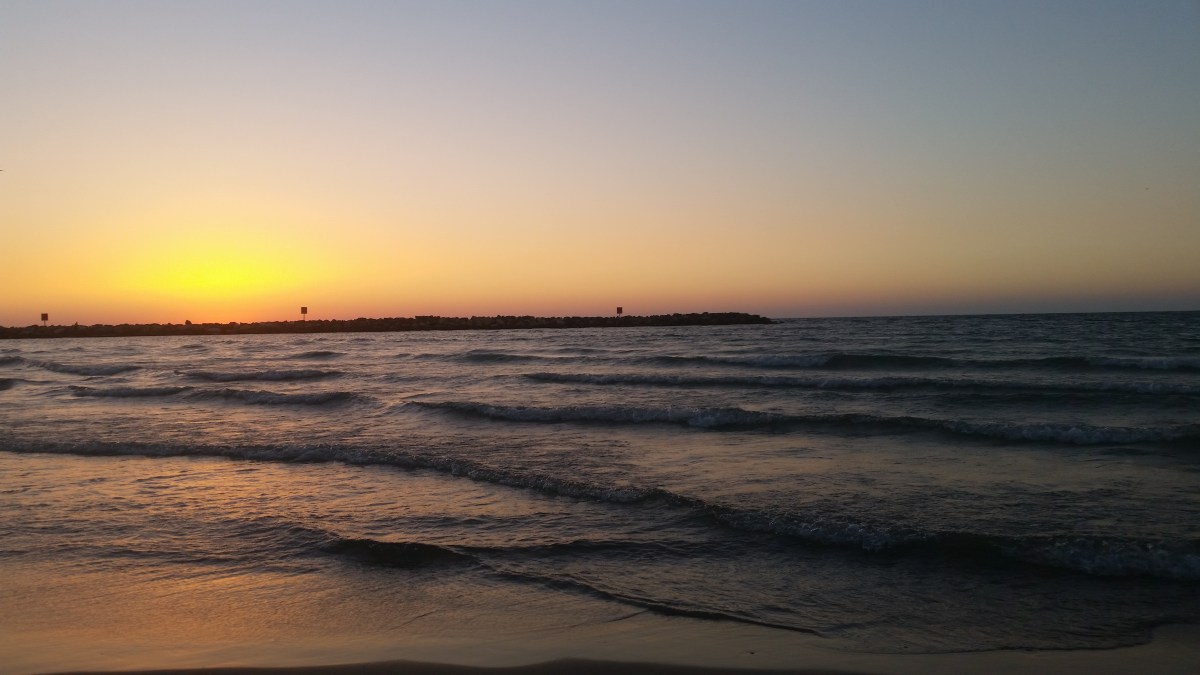
Walking alongside the sea, the tension of the day disappeared.  My heart lifted towards the sky as I thought about the little miracle happened in the most mundane place in the holiest of lands.  Between the crash of the waves, the sleeping Bedouin, and the lights of Tel Aviv.

An Israeli wishes Catalonia shanah tovah

Today, Spanish police beat up and injured 844 people trying to vote.  After 300 years of conquest by the Spanish, including the Franco dictatorship which outlawed their language, some Catalans want independence.  Other Catalans don’t want independence or are unsure.  The only thing almost all of them agree on is their right to vote in peace- over 80% want the chance to vote regardless of their views.

As a Jew, and as an Israeli, I support the right of the Catalan people to decide their future.

As someone who grew up as a minority in the U.S., I experienced many of the slurs, the exclusion, and ignorance that Catalans face in Spain.  When I was in Spain, my hosts in Madrid would sing to me: “Puta Barça, puta Cataluña, no son españoles, son hijos de puta”.  It’s something akin to “F*cking Barcelona, f*ucking Catalonia, they aren’t Spaniards, they’re sons of b*tches”.  In fact, interestingly, a lot of Spaniards refer to Catalans as Jews- and not in a good way.

I can’t help but think back to the time of the Inquisition, when the Spanish state decided to expel, murder, and forcibly convert my people (and Muslims) simply because we were different.  What has Spain learned since then?  After expelling my people, conquering the Catalans, and pillaging the Americas- has Spain really learned to live with diversity?  Perhaps it is the Catalans’ insistence on speaking their language and preserving their traditions that so irks a Spanish state so insistent on conformity.  It’s that same insistence on preserving our heritage that often lands Jews in the cross hairs of hatred.

And then I view this conflict differently now as an Israeli.  Since making aliyah and moving to Tel Aviv in July (incidentally the 4th, which I made my own “independence day”), I have realized my dream of empowerment.  This is a country where I’m not tolerated as a minority- it’s a country where my customs, my language, and my culture are the norm.  Where they’re safe.  Where I feel at home.  Never have I felt this more than during the recent Rosh Hashanah and Yom Kippur holidays.  Everyone’s greeting each other, everything shuts down.  Rather than being limited to a synagogue or a few foods on the shelf of a grocery store, my Judaism is everywhere.  It’s a unique feeling.  It’s great to talk about minority empowerment- but majority groups tend to get weak-kneed when it comes time for the minority to take control of their destiny.

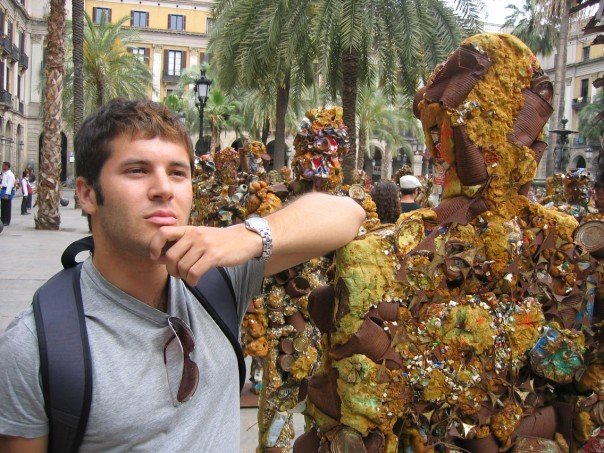
Which brings us to Catalonia.  I was talking to a Catalan friend before making aliyah.  I also happen to speak Catalan thanks to a program at my university and my insatiable curiosity for cultures and languages.  The picture for this blog is from a trip I took in college to do research in Barcelona, one of my favorite cities.  We were talking a few months ago about the independence referendum and he said “serà un bon moment, però al final, no passarà res” – it’ll be a good moment, but in the end, nothing will happen.  I told him to look at the example of Israel, where our national anthem is “The Hope”.  A state reconstituted after 2,000 years of persecution.  That miracles do happen.  And not to give up.  I told him I thought independence was possible, and he said he hoped I was right.

I think I am right.  Catalonia will become an independent state.  The brutal police response to a peaceful attempt to vote today surely botched any attempt of Spain to pursue an alternate route.  My hope is that the Catalan independence process is peaceful on all sides and brings about a new chapter in the history of the region.

The fight is not over and I’m not convinced the violence is either.  Yet I pray that the outcome will bring Catalans the sense of validation and warmth that I felt when I walked down the streets of Tel Aviv last week and heard “shanah tovah” – have a good year.  May it be a good year for Catalonia, and all humanity, too.

Every sector of Israeli society in one day

Today, my day started with terrorism and ending with me and some Mizrachim singing Umm Kulthum.

I’m in the (very stressful) process of finding an apartment in Tel Aviv.  I’ve never had such a difficult time finding a place to live in any other city.  The loosely-regulated rental market here is super competitive with sketchy offers abounding.  I’ll find something, it’s just exhausting.

In need of a break, I did something most Tel Avivim would not do when in need of relaxation, and went to Jerusalem.

Having gotten a bit turned around, instead of taking a bus from the Central Bus Station, I actually ended up taking a bus to Kfar Chabad and then a second bus to Jerusalem.  I could detour here and tell you about the adventures of making a highly-improvised bathroom stop between bus rides, but I’ll save that for one-on-one conversations 😉  Israel constantly challenges your definitions of “gross”.

I hopped on the second bus, which incidentally took us partially through the West Bank/Samaria.

This particular route was gorgeous.  Unlike the main bus lines to Jerusalem, this was totally rural with no traffic whatsoever.  The scenes were idyllic.

I felt a bit nervous going through this area today as there was a terrorist attack this morning.  Three young men – an Ethiopian Jew, one (I believe) Mizrachi Jew, and one Israeli-Arab – were ruthlessly murdered as they did their job providing security for the community of Har Hadar.  Solomon, Yossef, and Or – may their memory be for a blessing.  I’m praying for their families.  And I was so sad this morning I was frankly at a loss for words- and I still am.

I almost didn’t go to Jerusalem, but in the end- fuck terrorism.  There’s only so much you can control in life and after taking reasonable precautions, I just want to live my life.  Just like these young people would’ve liked to.

Incidentally, we passed by a sign to Har Hadar on the way to Jerusalem.  It’s that small of a country.

I get to Jerusalem, a bit frazzled, and hop off the bus.  To my right is a sign with bunch of Hasidic posters, one of which was in Yiddish.  I approached two twenty-something Hasidim and asked in Yiddish for them to explain one of the signs.  Turns out, there is a Yiddish-language theater production being broadcast out of Brooklyn into movie-style screens in Jerusalem and Bnei Brak, which they invited me to.

The two young men were Belz Hasidim and for an hour and a half, we spoke in a mixture of Yiddish, Hebrew, and English.  One, Dovid, was born in London and the other, Yankev, grew up in Montreal, another one of my favorite cities.  Yankev was a bit shy, though we spoke a little French together since he learned some in Montreal (and so did I!).  Dovid was a real shmoozer and a sweet guy.  He told me all about yeshiva and how he lamented the lack of Kosher steak in Jerusalem.  He made a point of telling me he doesn’t go to political demonstrations, which reminded me of how I often felt in America having to show I wasn’t one of “those” people in my minority group.  We talked about our favorite Jewish texts.  They love the halachos of Shabbes and I shared with them my favorite Jewish teaching – which, much to my surprise, they didn’t know.  In fact, they asked me to translate it for them into Yiddish, which remarkably I did!

Before leaving, as some people are wont to do here, Dovid shared with me a little bit of prejudice.  He told me, in light of today’s attack, that Arabs aren’t very bright.  I of course challenged him on this and his response, while bigoted, was quintessentially Jewish and kind of funny: “The Arabs aren’t very good at terrorism.  Jews don’t do terrorist attacks but if we did, we’d be better at it.”  So basically, in a phrase that would make the alt-Right twist and squirm and vomit, he said that Jews would make better terrorists than Arabs.  As the father in My Big Greek Wedding would say “the Greeks invented everything.”  I couldn’t help but chuckle.

I headed towards the Old City as two Arab women stopped me.  They asked me in Arabic for directions (how cool is that??) – and surprisingly, thanks to my Arabic and the glory of modern transit apps, I helped them find their way!  In fact, I was headed in the same direction.

We hopped on the train and I froze.  I had walked with them 10 minutes speaking in Arabic but when I got on the train, I was scared to keep talking.  I looked around, and thinking about today’s terrorist attack, I was worried how people might react.  There are legitimate reasons I felt that way, as you can read about here.

As I got off the train, I walked towards the Old City.  I saw an Arab man selling sunglasses.  I approached him and I said I didn’t need any glasses, but I told him he was making me happy so I wanted to give him a gift and handed him some money.  He invited me to sit with him.  We spoke in Arabic (I felt more comfortable out in the open air instead of cramped public transit where, frankly, attacks are more likely so I can understand people’s fear).  Turns out he’s from Hebron in the West Bank/Samaria.  He comes to work in Jerusalem each day.  He doesn’t know any English, so I taught him some English words to help with his marketing.  The poor guy is 60, 70 years old with 10 kids and a two-hour commute each way.  I can’t imagine what today’s terror attack is going to do to his livelihood as transit will slow and work permits may be frozen.  I suppose the terrorist wasn’t thinking of his fellow Palestinians who need to make a living when he shot three people.

The man gave me a big smile and a warm handshake as I headed off to meet my friend Sarah, a Modern Orthodox/Traditional Jew from America.  We ate Kosher pizza and then wandered through the Armenian Quarter, where I had never been.  I love Armenians.  When I was in high school, a friend gave me an Armenian CD which I still have on my computer.  Armenians are so, so similar to Jews.  They are a Diaspora community that survived a genocide and manages to preserve their language and religion.  And they’re pretty cute!

We talked with several Armenian men about their visits to the homeland, their life in Jerusalem, the Armenian Church (they had strong opinions- and not positive ones!), and the Armenian-language schools down the street.  I even got to hear their Armenian-accented Arabic!  One man votes Meretz and his wife votes Likud.  I went to an Armenian restaurant and got a fascinating dessert made out of crushed grapes and walnuts with a string inside.  And, because this is how I roll, I got info on some Armenian tutors- because at some point, that would be fun.

On my bus back to Tel Aviv, I befriended a handsome American tourist named Nicolai.  Non-Jewish and from Wisconsin, we talked the entire hour-long trip about Israel, Judaism, America, Bernie Sanders (we’re fans), and so much more.  A truly open-minded fellow- which is not something to take for granted.  Too many people arrive to Israel with preconceived notions of what it is and isn’t.  He was pretty much an open book.

His phone didn’t have internet, so I walked him 20 minutes to his bus stop and got him on his way home.  Because that’s what we do in Israel- we go out of our way to help others.  I find the generosity that surrounds me here encourages me to be even kinder to people.

I hopped in a monit sherut cab and headed home.  What a day!  Hasidim, Modern Orthodox, Arab-Israelis, Palestinians, tourists, Reform Jews (that’s me!).  What else was missing?

As our Russian driver helped us wind through (largely) secular Tel Aviv, two Mizrachi guys up front started singing.  Koby Peretz, Sarit Hadad, Shimon Buskila- you name it.  Then, to their surprise, I made a request.

“Inta omri,” I said.

Pleasantly surprised that an Ashkenazi would request an Egyptian classic, they started to sing.  And to their delight- I joined in.

On a day when a deranged man tried to break the place I call home, I started the day with his hatred and I ended it by singing with Jews in Arabic.

And in-between, I hung out with every sector of Israeli society.

Want to write public policy papers about how to solve the Middle East conflict?  Go for it- maybe they could help.  Honestly, I don’t know.

What I do know is I probably won’t have time for your conference.  Because I’m going to be speaking Yiddish with Hasidim, training a Palestinian in marketing, and singing Mizrachi music in a cab.  I’ll be getting to know my neighbors.  Just like Solomon, Yossef, and Or would’ve wanted.

The Mediterranean is my mikvah

Today, I really started feeling Rosh Hashanah.  I did some reflecting on the holiday and decided I wanted to adapt a Jewish tradition I learned about in the States.  Some people go to the Mikvah, the Jewish ritual bath, before the start of the New Year.  The idea is to cleanse yourself- to leave behind the sins, the hurt, the “shmutz”.

When I was in America, I would go to what most religious Jews would recognize as a mikvah- an indoor space where you disrobe and go through a series of ritual dunks and blessings.

Here in Israel, I tried something different.  I bought five rolls of old bread from the grocery store and headed to the beach.  I looked for something sweet to eat along the way for a sweet New Year and drank my first Israeli bag of chocolate milk (yes, that is a thing!).  I felt it was appropriate because as I’m keeping my Jewish customs alive I’m also adding to them.  A nice modern and Israeli twist.

I started by doing the Tashlich ceremony.  Tashlich is where we symbolically cast away our sins by throwing them into flowing water.  With the first few rolls, I hurled them into the sea as I thought about how I had hurt others or myself during the past year.  Then, I did something unconventional (I’m a Reform Jew and reform is a verb- so we believe in an ever evolving Judaism)- I threw a few rolls to chuck away the sins others had committed against me.  I asked God for forgiveness for the hurt I had caused and for justice to be served towards those who had hurt me.  I asked for healing for my body and soul from the pain and I asked God to send healing to those who I had hurt.

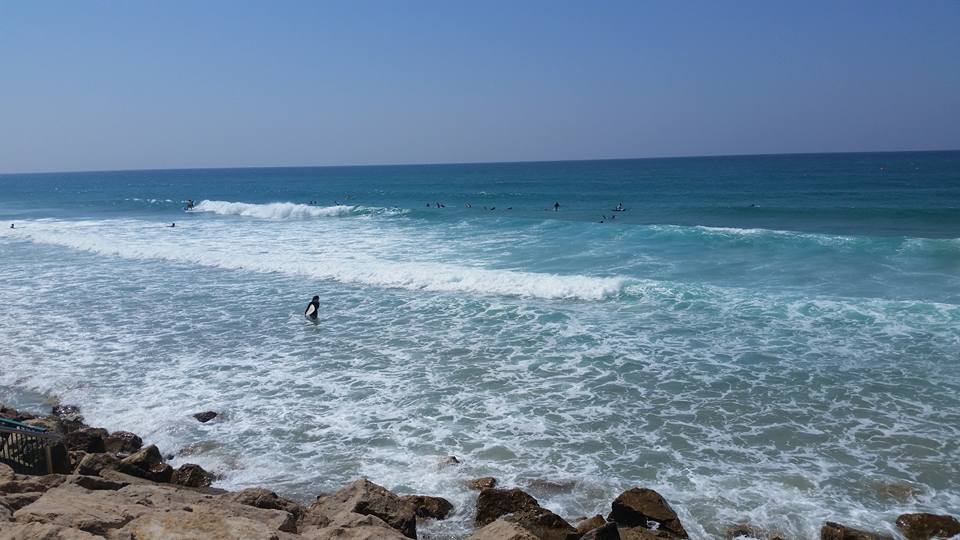
Then, I undressed (except for my bathing suit- a dunk in the mikvah is usually naked but I had to adapt since people were still walking along the beach- even Tel Aviv has limits 😉 ).  In an indoor mikvah, there are seven steps you walk down to get into the water.  So I simply walked seven steps into the Mediterranean, talked out loud to God about my hopes for the year, made the bracha, and took a dunk.  Each time I felt lighter and lighter.  I looked up at the stars, listened to the waves crashing, and thought to myself that really everything is bigger in Israel.  Instead of an aisle dedicated to your food at the grocery store, the whole store is your food.  Instead of holiday greetings being limited to the walls of a synagogue, you can say “shanah tovah” to any stranger on the street. Instead of a mikvah inside a synagogue, you’ve got the entire Mediterranean where your ancestors sailed.

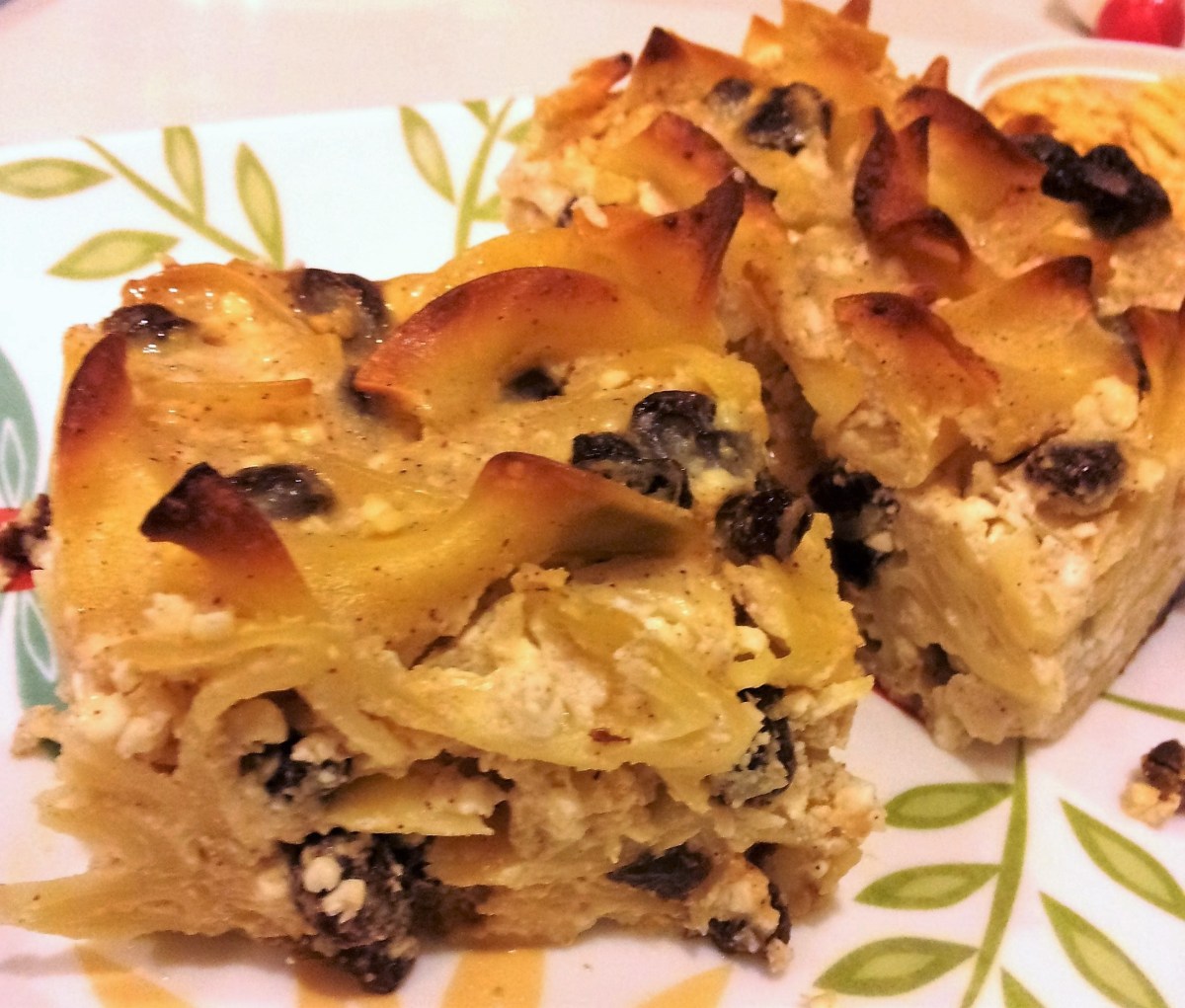
There are things I miss about American Judaism.  For one, it took me two separate trips to grocery stores here to get ingredients for dairy kugel!  And literally one store didn’t even have sour cream- thank God the Russians here appreciate this food so I found it at one of their stores.  I miss the rituality of American Judaism- I even found myself watching Youtube videos of Rosh Hashanah services at Reform synagogues to hear my favorite melodies and prayers.

What is amazing about Israel is that you can take these traditions and, in a completely spontaneous fashion, riff off of them.  Theoretically, I could’ve done a mikvah dunk in the Potomac River (although it might’ve required a lot of showers afterwards!), but I never thought of it.  Here, this whole country is a Jewish playground.  The sky is the limit.  Especially when you’re staring at it from your planet-sized mikvah.

My First Israeli Rosh Hashanah

Yesterday, I walked by a Breslover Hasid on the street doing his typical goofy (and cute) stuff to make people smile.  After I bought a sticker, he wished me “shanah tovah” – a happy new year.  I had to pause for a second.  Is it really that soon?  Is Rosh Hashanah only a week away?

And then I had another thought- other than a Jewish person I already knew, nobody in my life has wished me “shanah tovah” on the street.  If you want to understand in one interaction why I’m here, it’s that.  Something most Israelis don’t even notice because they’ve lived in a Jewish-majority society their whole lives is something very unique and special for me.  I’m validated on every street corner.

Then I got to thinking- what does Rosh Hashanah mean to me as a new Israeli?  I’ve never been here during holidays- only during summer trips.  What is it like?  I found out my synagogue doesn’t have first day Rosh Hashanah services- something unimaginable for an American synagogue.  For American Jews, the High Holidays (yamim noraim) are THE event of the year.  Millions of people who don’t regularly participate in any other aspect of Jewish life will still go to shul.  More secular Israelis may simply do a holiday meal.  But American Jews en masse go to synagogue- for hours and hours.  And they pay a lot of money for it.  It’s a very interesting difference.

In America, Ashkenazi Jews have our special foods.  For Rosh Hashanah or Yom Kippur break-fast, I remember eating sweet dairy kugel, amazing bagels, lox, whitefish salad, 5 varieties of cream cheese (including lox spread!), black and white cookies, dense American rugelach, matzah ball soup, chopped liver, egg salad, herring, you name it.  Israeli salads and Sephardi foods are delicious, they are just not what I grew up with as Jewish food because I’m Ashkenazi like 90% of American Jews.

Before the holiday, everyone runs around to get the food ready and pick up their spreads, greeting each other in our Jewish English sprinkled with Yiddish.  At my synagogue, you had to pick up your tickets in advance- because we don’t have a government that pays for our synagogues, we have to pay ourselves.  You get to synagogue and you’re dressed to the nines- suits, ties, high heels.  Here in Israel, the only time I’ve seen a suit is on a Haredi person!  There are people here who have “wedding jeans”.  We’d all eat together before going to synagogue.  The way I grew up I’d go to Erev Rosh Hashanah services followed by a 3 hour morning services.  Most Reform Jews don’t observe the second day.

I was lucky enough to grow up in an area with a large Jewish community, so public schools were closed.  But in the vast, vast majority of the U.S., schools and offices and transportation are open- and you need to request time off to observe it, which is not always as simple as it sounds.  In the U.S., Rosh Hashanah is special because of what you do at synagogue with your community and at home.  And it can be very special- very intimate.  Like you’re part of this cool 4,000 year old club.  Because outside your home, it is invisible.  When Israelis wonder why Americans go to synagogue, this is one of the reasons- to have a space to be Jewish.  At 2% of the population, there are no TV ads that wish you “shanah tovah”.  If you don’t make the space, there is no Jewish community.

Here, it is everywhere.  I was at a bakery last night and I noticed an ad for five different types of honey cakes (oh yeah, we eat those too in America).  These are cakes you eat specially for Rosh Hashanah.  I was in shock.  In America you have to know where to go to find these.  The local Au Bon Pain won’t be selling them.

I don’t really know what Rosh Hashanah will be like here.  I’m a bit anxious.  I’m a religious Reform Jew and it matters to me.  And yet on some level I feel less a need to go to all the services and more of a need to build community, especially in light of the fact that I’m here alone.  I also feel that if all I do is have holiday meals, that won’t be enough.  I believe in God and I want to pray for a good year and renewal.

My Judaism here is evolving, in ways I didn’t even expect.  This year was a hard one and one of immense personal growth and fortitude.  I sometimes miss being a Jew in America- the foods I know that are almost invisible here.  The heimish religious communities where if you are participating, it’s because you really care about your Judaism.  Because you don’t have to.  Here, you’re Jewish by default.  There’s something beautiful in how “normal” Judaism is here.  And I also feel like in some ways for that reason it can be easy for Jews here to lose sight of how special our tradition is.

My hope for this year is that I can embrace the beauty of a country where I can walk down the street and see myself in every street sign, every ad, in a Hasid with a clown nose wishing me a shanah tovah.  And where I can share some of my special American Jewish spirit so people here remember just how rich our tradition and spirituality is- and that it will only continue if we cherish it.

Wishing you all a Shanah Tovah- a good new year.  May it be filled with happiness, hope, community, and freedom.  A zisn yor – a sweet new year.  May it be as sweet as the dairy kugel I’m going to bake 😉