הפריווילגיה הישראלית

שלום לכם ושנה טובה.  אני פונה לחבריי הישראלים בפוסט הראשון שלי בעברית.  למי שמנסה לתרגם את זה דרך גוגל טרנסלייט, יהיה לו קשה ולא יתפוס את המשמעות העיקרית.  אז מומלץ יותר לקרוא בלוג דומה (אבל כן, קצת שונה) באנגדלית פה.  או, אפילו יותר טוב, תלמדו עברית

😉

אז בואו נתחיל מזה שאני לא גדלתי בכלל עם עברית בבית.  ההורים שלי הם לא ישראלים.  הייתי בארץ רק פעמיים לפני שעליתי.  ולמדתי עברית בוושינגטון עם מורה פרטית ישראלית כי דווקא אני רציתי.  בעצם היו אנשים במשפחה שלי שלא אהבו את זה שלמדתי עברית וגם התנגדו לעובדה שאהבתי ללכת לבית כנסת.  מי שחושב שזה לא הגיוני שיהודים יתנהגו ככה, הוא צודק.  אבל אין שום דבר הגיוני בהתעללות.

זה בדיוק הנושא שאני רוצה לדבר עליו עכשיו.  אני שורד התעללות מינית, רגשית, ופיזית.  והאנשים הראשונים שהתעללו בי היו במשפחה שלי.  ולצערי לא רק אחד או שתיים.  לא פעם אחת, לא “בטעות”, וכן מתוך רוע.

סיבה אחת גדולה שעליתי לארץ היה כדי לברוח מהאנשים שהתעללו בי.  מגיל 6 אני יכול לזכור טוב טוב את מה שעשו לי.  אני יכול לזכור כשאנסו אותי במשפחה שלי.  חברי המשפחה שלי.  ובוודאי היה נמאס לי.  תמיד היה לי חלום ציוני שרציתי להגשים אותו, אז שתי הסיבות האלה בנוסף להרבה סיבות אחרות הספיקו.  בגיל 31, לבד, עליתי לארץ לפני שנה וחצי. כמעט בלי להכיר שם אף אחד.  אני בנאדם אמיץ.

היו לי חוויות נהדרות בארץ.  אם עוד לא קראתם את הפוסטים שלי בבלוג, אני ממליץ בחום.  דיברתי עם צעירים דרוזים בערבית על הזהות ההומואית שלי.  התפללתי בבית כנסת חסידי בבני ברק- ואני יהודי רפורמי כל החיים שלי.  הלכתי למסיבות גייז עם מוזיקה מזרחית- מוזיקה שנתנה לי כוח לחיות בארה”ב.  כשרקדתי לבד לצלילי שרית חדד בחדר שלי במקום להקשיב לצעקות מהסלון.

ישראל זה מקום מיוחד מאוד ואני מעריך אותה אפילו יותר עכשיו, כשאני מטייל באירופה וחוויתי פה אנטישמיות ברמה שאף פעם לא ראיתי.  נגיד שמאוד נהניתי כאן אבל ממש לא פשוט להיות יהודי או ישראלי (לדעתי, ישראלי זה מן יהודי חוץ לארון כי יודעים מיד שאתה יהודי כששואלים מאיפה אתה).  היה לי ממש מעניין כאן- אתה יכולים לקרוא על כל מה שגיליתי בפוסטים שלי באנגלית.  אבל בואו נגיד שעכשיו הבנתי למה ישראלים מעדיפים לטייל בנפאל.  לא מעט אנשים פה יודעים על ה”אפרטייד הישראלי” אבל בכלל לא יודעים על היהודים שהיו פעם גרים במדינות שלהם.  שעכשיו יש יותר בתי קברות יהודים מאשר יהודים חיים.

אבל גם נכון שאני מטייל באירפה ולא נמצא בארץ.  כי הבנתי שהחיים כל כך קשים שם- במיוחד בשביל מישהו שסבל התעללות משפחתית.  אתם אך ורק מדברים על משפחה.  ואתם ממש אוהבים לשאול שאלות.  בלי סוף.

מצד אחד זה נחמד.  אני מעריך שבארץ יש חום- גם במשפחה וגם בין חברים.  והאמת שאחרי שהתרגלתי לחיים שם, אני כן קצת נמאס לי מהנימוס האירופאי-האמריקאי.  דוגריות לפעמים עושה לי טוב.

מצד שני, זה נורא.  כל הזמן אומרים לי שאני מטומטם כי עליתי לארץ.  שיותר טוב באמריקה.  ואיפה המשפחה?  ווואי אתה ממש מתגעגע אליהם, נכון?  קשה קשה.

לפעמים זה בא ממקום טוב, אפילו אם זה כן תמים.  אם זה שעליתי מארץ 1000 פעם יותר עשירה ומוצלחת ויש לי שני תוארים ואני דובר 8 שפות, כנראה ש*שי* סיבה שבאתי למדבר שלנו.  כן, להגשים את החלום הציוני (שהוא לפעמים יותר חלום ולפעמים יותר סיוט- זה משתנה אפילו משעה לשעה).  אבל הרבה פעמים, לא יצא לכם לחשוב למה דווקא הייתי עושה דבר כזה “מטומטם”.  שאולי דווקא כן יותר טוב לי בארץ מסיבות די טובות.  סיבות שגורמות לי לחשוב עכשיו שאולי אני אמור לחזור.

אז אולי ברגע הזה אתה רוצה לשאול אותי “אבל למה לא אמרת משהו?”  אבל כמה פעמים אני כן שיתפתי.  ורוב הזמן אנשים היו אומרים *לדבר* עם האנשים שאנסו אותי, לסלוח, לשכוח.  או שקשה אבל מה לעשות.  אפילו כזה צחוק מוזר מדי.  מישהו אמר פעם “אםםםם יאללה אז מי רוצה לדבר על אונס?”  אולי מן הומור שחור אבל ממש לא מתאים למי ששרד התעללות.

ולמי שלא מבין- זה מפני שאני כבר לא בקשר עם המשפחה שהצלחתי לא להפוך להיות כמוהם.  להיות בן אדם מכבד ואוהב.

היו כמה אנשים שכן הבינו אבל הגיע כזה רגע שהבנתי שזה כבר לא הגיוני להמשיך לספר אם זה יותר יכאיב לי מאשר יעזור לי להרפא.  אז יצאתי.

ולמרות שקשה כמו יהודי באירופה, אני כן למדתי הרבה על עצמי והצלחתי להבין למה אני איך שאני.  אפילו השתניתי מכמה בחינות. זה עזר לי להרפא.  להתקדם.  וימשיך להיות תהליך.

אז אם אפשר לשאול למה לא אמרתי, גם אפשר לשאול למה לא חשבתם?  האם זה באמת מורכב לחשוב שלבנאדם אחר יש סיבות שמסבירות את ההתנהגות שלו, את הבחירות שלו?  שעולים אמריקאים אנחנו לא *כל כך* תמימים ושאולי יש עוד סיפורים כמו הסיפור שלי (יש- אני מכיר)?

בזכות שיש לישראל כל כך הרבה דברים שהבנתי שאני כן אוהב, אני כותב את הבלוג הזה.  כי יש גם אנשים שהם לא מתנהגים כמו אלה שכתבתי עליהם פה.  כי יש אנשים אוהבים שמשתדלים להבין.  כי אני לא מוותר על המדינה שלי ועל החיים החדשים שביניתי.  וברור, כי אני כבר לא רוצה לספר את הסיפור שוב פעם ושוב פעם.  אז פשוט אשלח לכם את הלינק.  אתם אנשים חמים ואוהבים אבל לדבר איתכם לפעמים מעייף.  אני לא צריך להצדיק את החיים שלי אז יאללה, תמשיכו לקרוא ותבינו.

עכשיו אני מטייל באירופה.  כמה חברים שלי בארץ ממש מבינים ומעריכים את הבחירה שלי. לעזוב דירה ולצאת לבד.  בלי לדעת לאן ולכמה זמן ואיפה אני אשאר בסוף.  אין בית של אמא לחזור אליו בסוף.  סליחה, אבל זה לא הטיול שלכם להודו.  זה מאמץ כדי להרפא מ30 שנה של התעללות.  וכן, להינות קצת.

וזה לא שאני עשיר- להיפך.  אין לי שום תמיכה משפחתית ורק נותר לי כזה 2000 דולר בחשבון שלי.  בנוסף ל40000 דולר שאני צריך להחזיר לממשלה האמקריקאית על התואר השני שלי.  שם ללמוד זה לא זול כמו בארץ- ואני משמלם על זה לבד.

כמה חברים שלי בארץ אמרו לי “איזה פריווילגיה יש לך לטייל בחו”ל”.  ואם אתה אחת מהחברים האלה, אל תדאג, לא אקח את זה אישית ולא היית היחיד שחשב ככה.

אבל זה כן חרא של הבנה.  לכל אחד יש פריווילגיות.  העובדה שיכולתי לעלות לארץ זה מן פריווילגיה.  וגם העובדה שאני אמריקאי.  וגם שיש לכם משפחה (למרות שאני מניח שיש עוד ישראלים כמוני).  שיש לכם את שפת העברית מגיל 0.  ולצברים- שלא הייתם צריכים לעלות לארץ.  שיש לכם חבר’ה מהצבא ואפילי חברים מהגן שאתם עדיין יוצאים איתם למסיבות.  זה לא כולכם- אבל זה קיים.  אני אישית מודע ומודה על זה שלא גדלתי עם פיגועים ומלחמות.  ואני ממליץ לכם להודות על הפריווילגיות שלכם.  כי הזמנה לארוחת שבת לעולה בודד זה ממש לא דבר כמובן מאילו.  גם לכם יש מזל לפעמים.  תודה לכל מי שאירח אותי בשמחה ובאהבה.  בזכותכם הרגשתי פחות לבד.

אז בסופו של דבר, אני לא כל כך אוהב את השיח על “פריווילגיה” כי זה דבר די רלטיבי.  למרות שלפעמים עוזר לחשוב עליו.

אז בואו נגיד את זה ככה.  יש לי את הפריווילגיה להיות ישראלי ולתרום לחברה חדשה.  תודה לכל מי שנלחם על החלום והבית שלי.  עד עכשיו.

ויש לכם את הפריווילגיה לגור במדינה שגדלתם בה.  עם התמיכה של שכונות, משפחות, וחבר’ה.  לדבר את שפת המדינה מגיל אפס, להרגיש בבית ולא להתבלבל כל פעם שמישהו משתמש במילה חדשה שלא למדתם באולפן.

קשה להיות ישראלי.  אני יודע- פשוט מנקודת מבט אחרת.  אז בואו נעריך את הפריווילגיה להכיר אחד את השני.  כי למרות מה למדתם בבית הספר, לא באתי לארץ כדי להיות כמוכם, אלא להיות איתכם.

ליבי מזרח ואנוכי בסוך מערב.

אני מוסר לכם ד”ש, לרחוב יהודה הלוי מהארץ שבה הוא גדל.  איש גלותי מוכשר ומוכר. מתגעגע.


You’re welcome, Belgium

My trip to Benelux, as I like to call it, has been interesting.  The series of low-lying small countries- Belgium, the Netherlands, and Luxembourg- has long been a destination I wanted to visit.

I like small countries.  They have unique character and frankly they’re cute!  Not so overwhelming and often overlooked- just the way I like things sometimes.  People tend to be more appreciative too when you visit places a bit off the beaten path.  Brussels isn’t a village in Latvia, but it’s certainly not Rome or Paris either.  It’s cute- not too big, not too showy, interesting.  And for me, a French-speaker and a lover of languages, this is a fascinating part of the world.  With languages bumping up side-by-side- Belgium a truly multilingual country.  With all the good and challenges that poses for its society.

While unfortunately I didn’t make it to the Netherlands, I did visit Belgium and Luxembourg.

The good thing about small countries is you can see a lot in a short amount of time.  And things do tend to change a bit from place to place.

After flying into Charleroi Airport and staying over in Jumet, I visited Namur and the Ardennes.  The Ardennes is the site of tons of World War history- from both wars.  With tremendous casualties, including many Americans who died to liberate this part of the world from fascism.

The Ardennes are green and peaceful.  Some pockets of poverty.  And some gorgeous medieval villages like Dinant and Bouvignes.  Take a look:


While I didn’t plan on coming to the Ardennes for its military history, it kind of found me.

When you go to the cute village of Bastogne, you can see the war everywhere.  There are graveyards for soldiers, American tanks, a museum.  And mostly Western tourists coming to see it- sometimes to meet their departed relatives.

I knew my great uncle Barney Marcus was killed here in the war- he was an American soldier.  But I didn’t know where- it could’ve been Asia or Europe.  And I didn’t know exactly when.

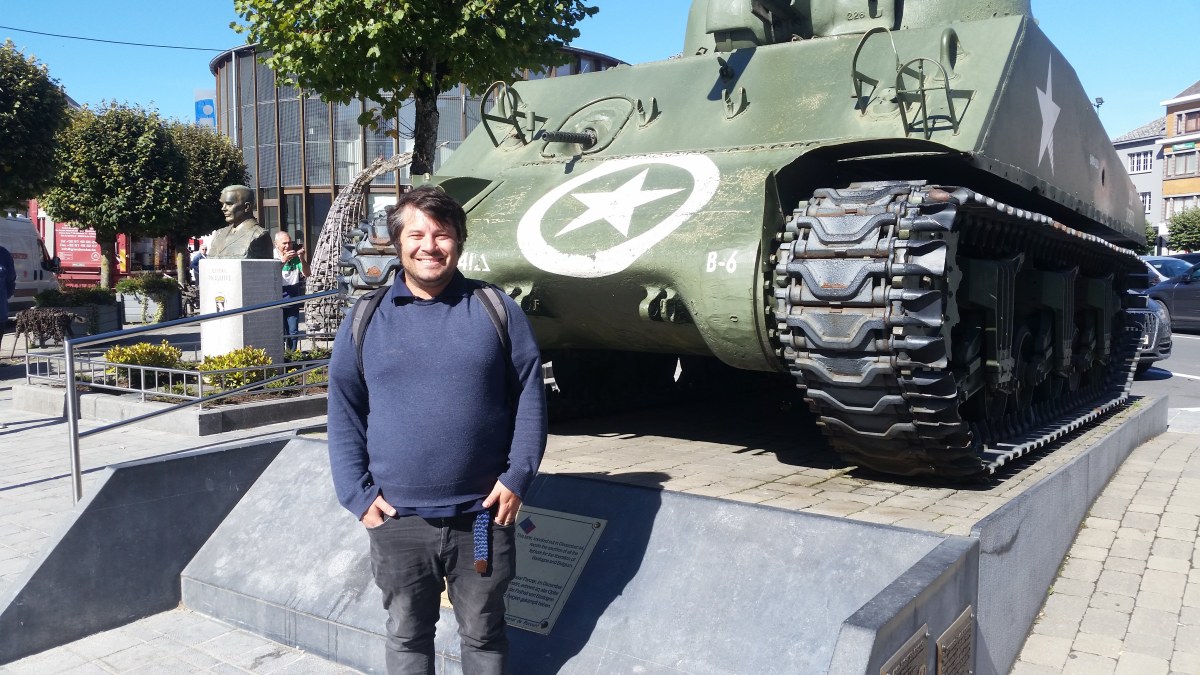
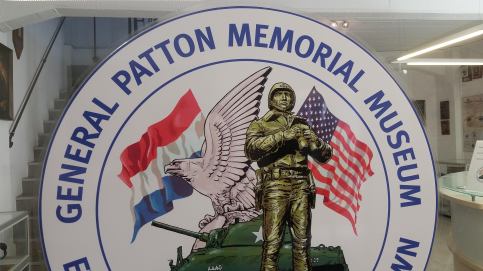
Without wanting to go into the war traumas or history (I think seeing the destroyed Jewish communities of Eastern Europe was enough), I didn’t visit much.  But I did take a picture with an American tank.  And I noticed that one older woman, initially standoffish, was quite warm to me in French when I said I was American.  I could feel her gratitude.  For something I didn’t even think of when planning this trip.  But nonetheless, it felt good.  After experiencing so much stigma in Eastern Europe, it was nice to see some people who liked me for who I was.  And to think about good things my country has done.  Like liberating this part of the world from fascism- twice.
20180926_151940

I also made time to visit Luxembourg.  While so many Debbie Downers asked me over and over why I would go there, my answer is simple: it’s there.  It’s a tiny country, with something different, right at my doorstep.  It’s cute, quadrilingual (Luxembourgish is a language!), and I find it interesting.

From Bastogne, I hopped on a bus.  Now I’m going to sound pretty hipster when I say I didn’t even go to Luxembourg City.  I passed through towns and villages on the way to Ettelbruck, an even smaller city in a teeny tiny country.

My image of Luxembourg was wealth.  It is one of the richest places on the planet.

And I saw some of it- the native Luxembourgers (is that a word?) were readily recognizable, driving Mercedes and BMW’s.  Not all of them, but a lot.

What was shocking was that Ettelbruck is anything but wealthy.  The rest of the town is a melting pot of Portuguese, Chinese, Africans, Cape Verdeans- name a culture.  There to work, to somehow survive in the face of eye popping prices, to make a better life.  Ettelbruck isn’t scenic, but I did learn a lot.

What I learned is there’s a lot of racism here.  Europe, in general, feels really racist.  Not everyone, but it’s a deep feeling.

As someone with caramel, olive skin and Semitic features- I stand out.  To the people (usually on the far left) who claim all Jews are white- tell that to the Luxembourgers who looked at me like I was there to clean their houses.

Because of my appearance (and sometimes because I go to decidedly non-touristic spots), I often am approached with fear and suspicion.

I should say, by all those who aren’t themselves outsiders.

On multiple occasions, Arabs have approached me in Arabic here.  Confirming my thought that the white people around me also thought I was Arab.

In fact, one night, after a particularly miserable AirBnB I had to escape (like the wolf in the forest I had to run away from- that’s another story), I ended up at an expensive hotel in Bastogne.  The Arab employee comes up and starts speaking to me in Arabic.  I said I was American…needless to say that despite my bravery and pride, this was not the moment to say I was Israeli.  Just this week, a Jew was attacked in Germany.  Sometimes it’s neo-Nazis, and a lot of the times it’s Muslim extremists.  Europe isn’t as safe as I thought it would be.

The Arab man, from Tunisia (a cool accent I hadn’t heard much before outside of Jewish Tunisian music), immediately directed me to a Halal restaurant.  Assuming I was Muslim.  Not about to say “I respect everyone but actually I’m a secular Godless Jew”, I simply went to the shwarma restaurant.

There I met a Kurdish man, a Syrian refugee, and a Libyan guy.  We had a nice chat- again, they all pretty much assumed I was Muslim (whatever, I don’t really care, and the food was great).  At the end of the meal, they gave me a free dessert, namoura.  It was delightful.  Also, the Kurdish man gave me PKK literature.  That was a first.  Despite having lived in the Middle East, I have never been so generously offered terrorist literature after dinner.  I smiled, accepted the brochure, took a few pictures, and threw it in the trash in my hotel.  The last thing I need is more airport scrutiny.  I’ll take the flight over the flier.

To return a moment to Luxembourg, something really stunned me.  I found a synagogue!  Obviously, like most of Europe, an empty abandoned one.

It was an unexpected, somewhat invasive surprise.  I was hoping to get a break from seeing the ruins of my people (see my blogs about Eastern Europe), but here we were again.  The 47 families of Ettelbruck turned into ash.  According to the sign, by “villains”.  As if this were a murder mystery and we didn’t know that Nazis and their Luxembourger collaborators killed them.


It’s a reminder that our blood lies spilled over this entire continent, over centuries.  It’s depressing, although I’m glad something of our civilization here remains, in spite of so much continuing hatred.

While I tried to engage with some Luxembourgers (interestingly, Yiddish proves quite useful in talking to them), they mostly shied away or even laughed at me when I said I was Jewish.

Meanwhile, the Cape Verdean women loved talking to me.  We shared the Portuguese language- a reminder that my tribes include the languages I speak.  The foreign workers in Luxembourg, almost to a fault, were welcoming and kind to me.  Perhaps seeing me, on some level, as one of their own.  Or at a minimum, to not look down on others in need of directions or a laugh.  Poor people, at the risk of sounding tokenizing, tend to be a lot warmer than rich people.  In almost every place I visit.  I suppose it doesn’t cost anything to be nice.  And when you don’t have much, hopefully you have a bit more empathy for others in need.

One of the reasons I came to Belgium was that there are living Jews.  Unlike the communities in Eastern Europe where the headstones outnumber the heads, Belgium still manages to keep Jewish life alive.  Though not with ease, in particular because of rising anti-Semitism from many directions, including (though not exclusively) its Arab immigrants.

I had the pleasure of visiting Moishe House Brussels.  For those who don’t know this international institution, it’s a pluralistic, secular-minded communal house that Jews live in around the world.  I used to go in Washington and it’s great to have a place to meet other young Jews.  Which is exactly what I needed after a long dry spell the past few weeks.

It was so nice to talk to people who understood me.  Not because I love every Jew any more than you could say you love everyone in any group.  But because in the deepest sense, all Jews share something.  Especially those who take the time to cultivate it.  We share 4,000+ years of history, of food, of persecution, of cohesiveness.  Of survival.  Of humor.  Things you can’t just understand by taking a course or going to a Bar Mitzvah.  It’s in our shared experience.

And what was also awesome was that a few non-Jews joined us.  An Italian-Belgian guy, even an Azerbaijani woman studying Israel for her PhD!  Even the Jews were diverse- Spanish, Argentinian, Croatian, Algerian, Belgian, and me- Israeli.

It was so nice to make some new friends and to do Shabbat.  Not to pray, but to eat together.  That’s what nourished me.  The conversation, the togetherness.  The warmth.

One person who I particularly connected with was named Forster.  I don’t have his whole story yet- we’re hopefully hanging out again tomorrow.  Besides a shared sense of humor, a love of animals, and a strong passion for secular Jewish culture, I was moved to hear that he grew up on his family’s Holocaust survival stories.  I know my family was murdered in the Holocaust, but since I never knew them and they were across an ocean, it’s more of a puzzle I’m piecing together.  And one thing I notice about European Jews is that, with the exception of some Sephardic Jews who made their way here after the war, almost all are descendants of Holocaust survivors.  Or are survivors themselves.

After Brussels, I visited Antwerp.  While the Brussels Jewish community is quite secular (which is cool, and somewhat hard to find outside Israel these days), the Antwerp community is hard core Hasidic.

For those of you who’ve followed my blog, you know that the last time I stepped foot in Israel, I was pretty pissed off at this community.  A community, while diverse, whose leaders use religion to prevent me from building a family.  From adopting, from using surrogacy, from getting married.  Because I’m gay and the Torah blah blah.  Utter bullshit.  Even though I spent a lot of time in Bnei Brak, Mea Shearim, Modi’in Illit, and other Haredi areas, I stopped going once I saw how hated I really was.

Something about this trip changed that.  Not because I think Haredi parties are any different now than a month ago.  But perhaps because living in the Diaspora makes it a little warmer between us.

When the government isn’t tied to religion, we don’t have to fight about it as much.  And when our non-Jewish neighbors are so fixated on persecuting us for no apparent reason, it acts as a glue to bring us together.  I can’t say I enjoy persecution, but it feels kind of nice.

As I imagined the ruined Hasidic communities of Romania and Hungary, it felt nice to see living Hasidic Jews.  Speaking Yiddish, Hebrew, English, Flemish- name a language.  It’s a Diaspora chulent.  And it tastes good.  Almost as good as *the* best cinnamon rugelach I have ever eaten in my life from Heimishe Bakery.  Go!

I had a nice chat with the owners and a Hasidic man.  I wished them a gut yontif- it was Simchat Torah that night.  The day of celebrating our book.  I’m not always a fan of this book, but it’s definitely ours.  And it felt a bit like home to be among my people.  Alive.  It put a smile on my face when the baker told me she was from Israel.  With a broad smile of her own.  In this little shop, I didn’t have to lie.

As I pondered what to do tomorrow, I thought about how I will meet with Forster.  I want to know his family’s story- if he feels up to sharing it.  And it got me thinking about my own.

I’ve often told people on this trip that I’m the first member of my family back in this part of the world since the 1880s.  When we were kicked out.

But it’s not true.

As I discovered tonight, Barney Marcus, my great uncle, died liberating Europe.

Barney Marcus was drafted at age 22 from Pittsburgh, Pennsylvania.  With World War II raging, he enlisted in the 314th Regiment of the 79th Infantry Division.

Barney was a proud Jew.  He served as the secretary of the Phi Lambda Nu fraternity- an all-Jewish fraternity started in Pennsylvania when non-Jews didn’t accept us in their ranks.

His frat brothers held a going away party for him before he was drafted.

Barney’s regiment wasn’t any old regiment.  It freed Europe from fascism in the Battle of Normandy.  You can read the incredible story here and see a rough map of his experience:
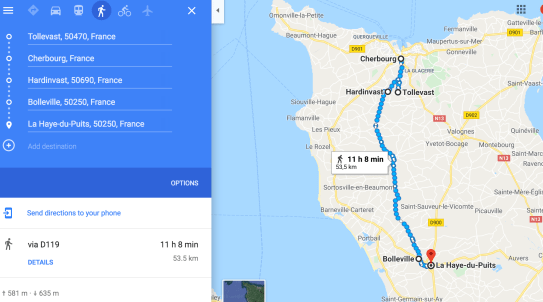
Screen Shot 2018-10-03 at 2.29.11 AM.png

His brothers in arms pushed the Germans out to clear the way for Allied Troops to free France, to free Belgium, to ultimately conquer Germany and put its demons to rest.

Unfortunately, Barney never made it to Germany.  He was gunned down by Germans and their sycophants in La Haye-du-Puits, France.  Not only that, he was awarded a Purple Heart and Silver Star posthumously for dying while trying to save a wounded friend.  His particular regiment was cited for “outstanding performance of duty” on July 7, 1944.  The very day he died.  Fighting his way through “artillery and mortar fire and across dense mine fields”.  I’m not bashful at all to say that his regiment took German soldiers prisoner- he came to Europe a soldier and died a victor.  An American, a Jew, a freedom fighter, and a Nazi crusher.

Barney’s regiment went on to liberate eastern France, close to the border with Luxembourg, then conquered Germany near Cologne, and ultimately ended up managing post-war chaos in Sudetenland, where German Nazi aggression started this war.  Including some displaced persons camps, perhaps with Jews in them.

I’ve noticed in my travels here that a lot of Western Europeans have forgotten.  A cab driver, when I asked him about the local history in the Ardennes, said the young people don’t want to learn it anymore.  Maybe some do, but when I hear anti-American sentiment or prejudices in this part of the world, it rubs me raw when I know that my family shed blood to keep here free.

As hard as all this genealogy has been, I think it’s been worth it.  I wish I had known my great uncle, Barney Marcus.  Because he sounds like someone pretty cool.  Someone proud of his Jewishness, a brave American, someone who sacrificed his very future to save another life.  Someone I am proud to call my own.

Europe- Jewish and non-Jewish- you’re welcome.  Barney and I have sacrificed for you to exist.  Like the library I visited today in Leuven, rebuilt twice by the Americans for the people of Belgium.

Jews here have a longer historical memory- though I can’t pretend I haven’t experienced some anti-Americanism from them too (or perhaps playful jealousy fed by delusional interpretations of Hollywood as reality).  But the non-Jews here, although there are some truly admirable ones like Alexis who actually lives in a Moishe House and worked for Jewish radio, they have forgotten.

They have forgotten that Belgium (not to mention France) exists because of the United States- twice.  That Jewish soldiers liberated their countries even as not a small number of their citizens helped deport our Jewish relatives.

Every city on this continent has a “Jew Street”, abandoned synagogue, or largely empty Jewish quarter.  And I’m tired of hearing people say they know nothing about it.

Or in the case of Germans I met, that I should visit Chemnitz, the site of recent neo-Nazi rallies, to realize that the people really are great and they’re just protest voters.

Enough.  Europe- anti-Semitism is your problem, not the Jewish people’s.  Just like racism is not black people’s responsibility to resolve.

I’m willing to pitch in and help educate- and even to learn from you.  Which is why I’m starting a new project, Nuance Israel, to bring together Jews and non-Jews, in Israel and abroad, to learn together.  To build connections between kind, open-minded people.  To help European non-Jews understand their Jewish neighbors- and Israelis.  For Israelis to understand their roots- and the importance of diversity.  For people across cultures to build a new tribe- a mindset of openness, tolerance, and moderation.  Join me.

In the end, I’m done hiding who I am.  Yes, I’m from Washington, D.C., but that’s not where I live now.  I’m Israeli.  And American.  And Jewish.  And gay.  And empathetic.  And a lot of things.  And I’m not a liar.

If you- whether you’re Moroccan or Belgian or whatever- can’t handle that, then too bad.  My family is part of the reason this continent isn’t called Germany.  And I’m tired of your worn-out excuses for why America or Israel are so terrible.

Your social safety net was set up by the Marshall Plan and your economies thrive in part because American tax dollars provide most of your defense.

I’m not suggesting America (or Israel) is perfect- it’s not.  We’re not a shining beacon of light for the rest of the world to emulate- we’re just another country.  But one that does some good.  And has things to learn from you too.

I thought about making a spontaneous trip to La Haye-du-Puits tomorrow to see where my uncle sacrificed himself for freedom.  For Europe, for its Jews, for tomorrow.  On some level, for me.  Thank you, Barney.  Today you gave me a little ray of hope- a connection to someone I’m proud to call my own.

Maybe one day I’ll visit- I’ve long been searching for specific places in Europe my family stepped foot on.  I have some I might visit one day, but I don’t know that I’ve reached them yet.

What I do know is tomorrow I’m hanging with Forster.  A living Jew.  A new friend.  Someone whose own destiny is tied up with my own.

Because even though we’ve barely met, I know we’re both survivors.  That when his family, wherever they were, were resisting Nazi fascism and anti-Semitism, holding on for dear life in the face of deep inhumanity.  My great uncle was working to set them free.  Because wherever we are, we don’t give up.

Which is why in the face of the deep inhumanity I’ve faced, especially from within my family, I choose life.  Am yisrael chai, the people Israel lives.

And if you don’t like it, I’m afraid you’ll never succeed in extinguishing our flame.  It burns as bright as the bombs my great uncle dashed between to set your country free.
Nuance Israel

Dear friends and readers-

Over the past year and a half, you’ve grown accustomed to seeing this space being used to tell stories.  You’ve seen me traveling Israel and Europe.  To places many people never visit- the Bedouin village of Al-Aramsha, Hasidic Bnei Brak, Modi’in Illit, Taibeh, Kiryat Gat, and almost every single Druze village.  And in Europe, places like Salerno, Italy; Debrecen, Hungary; and Sibiu, Romania.  Off the beaten path and exciting.

If you follow my blog, you know how much I like to talk to people.  About being Jewish, American, Israeli, gay.  In different languages and in different cultures.  And learning about the people I meet.

Sometimes, it goes great and sometimes it’s really hard.  On this blog, I’ve shared 137 posts and counting.  192,085 words.  Completely free of cost for you to explore.  Filled with my passion for life and learning and growth.  I have spent thousands of dollars and hours on this project- and it is so worth it.  I’m proud to have connected with 70,000 readers from Libya to Poland, Taiwan to Pakistan.  I even have 22 readers in Saudi Arabia!

Every story I hear from readers inspires me too.  The Libyan woman learning Hebrew on her own.  The Lebanese gay guy in Germany who loves Israel.  The Kurdish Muslim who wanted to serve in the IDF!  Where physical borders exist, technology sometimes helps us break down barriers and warm hearts.  In all directions.

My new project, Nuance Israel, is all about this.  I want to create travel, language, and cultural exchange programs to build human connections between Jews and non-Jews in Israel and around the world.  To show that Israel is not black-and-white.  My country is good, bad, and mundane.  It has beautiful texture, like life itself.  Together, we can grapple with the challenges and grow.

I’d be so grateful if you take the time to learn about my new venture and to consider making a donation.  If you’ve loved my blog, it’s more than fair to ask for a little help to keep things going 😉  Your donation will help me build infrastructure- a website, staff, volunteers, grant writing.  To be able to set up language classes, exchange programs, and more.  It’ll give me the time to start this important work.  Even $5 can help.

With your help, we can bring some nuance to the world’s understanding of Israel and promote the value of understanding in Israel itself.  At a time of increasing polarization, let’s cross boundaries, not each other.

Thank you for your support.  Join me in my next adventure 😉

-Matt

A trip to Hungary

Sometimes life truly surprises you.  Having left Romania (see posts), I decided I needed somewhere nearby, more gay-friendly and with more *living* Jews.  So I headed to Hungary, another one of my ancestral homelands.

I am a quarter Hungarian.  My great-grandparents were from Pacza, which today is either Pacsa, Tornyospálca, or the (formerly Hungarian) Slovakian village Pača.  I’m still doing extensive research- finding Jewish genealogy here is a bit like finding a needle in a haystack.  Due to both the time passed (130 years) and the killer job Nazis did in burning our archives, it can be quite hard.  An entire continent uprooted us over ages, so it’s hard to feel rooted here, even as we’re the oldest religion on the continent and our empty houses of worship dot the landscape.  Sometimes turned into trendy cafes or Italian restaurants, without so much as a word of our consent.

Budapest is an interesting place.  Gorgeous scenery, grand buildings, and a surprising calm for a city of its size.  The screaming and chaos of Tel Aviv this is not.  Cute cafes (including one that has cats in it!), affordable prices, and phenomenal safety make it a good place to spend a few days.  Not to mention Hungary’s 1700-year-old Jewish community that I’m a part of.  Before the frickin Huns even arrived.

As a Jew, some things stood out to me.  First off, there are actual Jews here.  Most parts of Romania I visited had almost no Jews left, or a very old (as in gray hair) community.  In a place that was once home to over 700,000 Jews, dating back to Roman times.

Secondly, the people here are really…brusque.  Maybe that’s not the word- I’ll be blunt: they’re assholes.  No, not everyone.  But most people.  There is a deep politeness to Hungarian society.  At first, this was refreshing, having experienced so much rudeness in Tel Aviv.  But you soon start to see that it’s a big facade.  People here have literally thrown my change at me in stores, they stare a lot (until I stare back), a woman I was paying for genealogical research berated me for taking water from a water cooler.  In the office I was paying her to sit in.  To quote: “in our country, you ask for water first.”  Message understood.

While this brusqueness is pretty much thrown at everyone (especially if you’re a foreigner), it has at times manifested itself towards me as a Jew.

I visited a beautiful library the other day.  It was so peaceful- quiet, relaxing, a great place to think and reflect.  The architecture here is marvelous and the tranquility truly, aggressively silent.  There is no neighbor blaring Beyonce at 3am on a Wednesday.  Yes, that has happened to me in Israel.

It’s in fact a branch of the Hungarian National Library.  Hoping to find some books to relax (I love books!), I went exploring.  I found most books were in Magyar, the local language.  But some were in French, German, Romanian, English, and other languages.  I even found a small book on Judaism.

I approached a young man working behind the information desk.

In my best American-polite voice, I asked: “excuse me, sir, do you have any books in Yiddish?  Or on Hungarian Jews?”

His answer: “this is the Hungarian National Library.  We only have books about Hungarians.  In Hungarian.  You can try one of these other libraries to try to find what you’re looking for.”

As he handed me a scrap of paper.

This is Hungary.  A place so reminiscent of the nationalism that plagues the Middle East, it might as well live there.

The fact that the city he lives in was a quarter Jewish just 70 years ago didn’t seem to factor into his commentary.  Or maybe it did.  After all, the Jewish quarter today is a bunch of bars and hipster cafes.  This kind of appropriation and abuse happens a lot with nationalism- it’s just that in America, you don’t often *see* the Native American ruins turned into a nightclub.  Perhaps it would sensitize Americans to how they achieved their great wealth.  Or perhaps they’d end up bland and desensitized like far too many Hungarians.  Despite having nearly cleared their country of Jews (in collaboration with Nazis), an astonishing 41% of the country is anti-Semitic.  The highest number in all of Eastern Europe.  A region famed for hating me.

The other day I heard an American voice.  A woman was taking a picture of a synagogue, I thought she might be Jewish.  “It’s beautiful,” I said.  She said back: “indeed!  Where are you from?”  I said: “I’m originally from Washington, D.C., and going back 130 years I’m Hungarian.”

She laughed: “well yeah, if that’s how we’re counting, I’d be speaking Irish right now.”  Chuckle, chuckle.  Completely unaware that maybe one of my ancestors worshiped in this synagogue.

I said: “my ancestors were kicked out of this country for being Jews.”

A dead silence.  “Oh, ok.”  She then stepped inside, maybe 10% embarrassed, 90% too focused on the lens on her camera.  Never to be seen again.

Feeling decidedly unconnected to most locals, I used the Couch Surfing app to find some internationals to hang with.

I’m really here to get away from the Middle East for now- to get some space.  But to my surprise, I found a young Jordanian woman (let’s call her Amira for privacy’s sake).  Who wanted to go to a gay bar!

Thank God, I really wanted to see some cute guys and connect to that other community I’m a part of- the fun one 🙂 .

A little nervous that politics might come up (it says that I’m Israeli on the app), I didn’t know what to expect.

But instead of a long drawn out conversation about the region’s ongoing PTSD, we ended up sitting down with two queer Macedonian girls.  And dancing with some British people.  And giggling.  And singing.  And frankly having a fantastic time.  It gave me a little hope that especially when we’re away from the mess, we can have a little more fun.

I met a few nice Americans here as well.  It was kind of refreshing to speak English and to share the same culture.  I can’t pretend Israeli culture hasn’t impacted my life- it has.  In a lot of ways, traumatically.  In some ways, kind of cool.  At heart, I’m still pretty American- more than you might expect.  And it was nice sharing that with people on kind of a neat neutral ground here somewhere in between corn bread and challah.

Friday night I went to Reform services.  I do not believe in God.  It’s something I’ve fully realized lately, and my experiences in Israel have convinced me of.  But I really miss community.  And when you’re traveling, Jews are better than anyone else at being nomads.  We’ve been doing it for 2,000 years.  And we find each other everywhere 🙂 .

I went to the services and found myself liking some of the same melodies (for those who don’t know, I’m really, really Jewish- I’ve led Reform services in varying locations since I was 14).  I especially love the old tunes- the ones from this part of the world.

And I found myself unable to mouth the word “God”.  I found some of the words I could kind of reinterpret or recreate with my meaning.  But the God piece- it really angered me.  I don’t believe in God- and the concept makes me furious.  I feel it’s an abusive one- not that all people who believe in it are abusive, but the idea of an invisible being telling us what to do- often to the detriment of our self-worth- really irritates me.  Especially when you see that conflict up close literally killing people.

I excused myself for the latter half of the service and came back for the meal.

The meal was great- a potluck, with some Hungarian surprises.  Hungarians love paprika.  I don’t know why, but they do.  And to be honest, it was found in nearly every dish I ate as a child.  So I guess my family brought it with us across the ocean.

The rabbi taught me all about Hungarian Jewish food.  And her congregant told me all about Hungarian Jews.  Apparently 19 out of 20 Nobel Prize-winning Hungarians were Jewish.  No wonder so many of them can’t stand us 😛 .

The rabbi has a fascinating story.  Her parents hid in the forests near Budapest during the Holocaust.  While her grandfather was deported to Buchenwald, her parents buried a suitcase under a tree each night.  And pretended to go to work each day.  Sleeping in the dirt under the moonlight.  Until the war ended.  And 565,000 out of 800,000 Hungarian Jews were evaporated.  An entire civilization, a race, loving parents with their little children- burnt to a crisp.  To supply a bunch of Germans with BMW’s.  And to satisfy Hungarian blood lust with the active participation of their fascist government.

What was so astonishing was how normal the rabbi was.   How kind, how gentle, how welcoming.  How easy it was to talk with her about one of the hardest things to talk about.

A deep note to my Israeli friends- losing loved ones in the Holocaust is not an excuse to be abusive yourself.  Not to other peoples or to other people.  This rabbi proves that.  If anything, it is a reason to work extra hard not to be that way.  This is an incredibly difficult hurdle- as someone who has been abused for decades myself, I know that.  And in the end, we’re responsible for our behavior, even as we know what has caused it.  And we can choose to pass that abuse on or to break the chain and strive to treat others better than we were treated.  Stop weaponizing the Holocaust to excuse bad behavior and instead, let’s heal.  Evidently, without the help of many countries that caused our pain.

In the end, while I don’t believe in God, I loved the Shabbat dinner.  Not for religious reasons, but for culture.  For history.  For conversation.  Yes, for continuity and change.  A Reform service- a tradition deeply rooted in Central Europe.  Where Neolog synagogues still stand.  And where, despite the best efforts of more than a few miserable neighbors, we still exist.  We are here.  I think I’ll keep seeking out, maybe creating, Jewish culture because I like some of it.  It’s mine, and I’m proud of our survival and our thriving in the midst of sometimes unbelievable pressure.  Perhaps something we share in common.

For ages upon ages, Christian Europeans denied us the right to own land.  To practice everyday professions.  Forced into banking and jobs that goyim didn’t want.  So more people would hate us than the actual governments oppressing them.  To then pay taxes to go to church and learn why we’re awful- and burn us on Christmas Eve as tradition.  No Christmas tree for me, I think.

Jews were stereotyped as “rootless”- a people wandering miserably, punished for killing Jesus.  When in reality, it was Christians themselves who regularly uprooted us.  Stealing our homes, killing us, even enslaving us at times.  Which is how a bunch of people with Mediterranean features and DNA ended up in bitter-cold Poland instead of on a beach on the Dead Sea.

We’re not rootless.  We are from here- me too.  My tradition, my very blood is Middle Eastern, it has stained the soil of Hungary, and I am no guest.  Do not throw plastic bags at me in your grocery stores or tell me your libraries are “just for Hungarians”. And stop complaining about how hard it is for you.  Communism sucked, you’ve been through a lot.  The economy isn’t great.  But I’ve literally met Darfur genocide survivors more cheerful than you.  Have a little perspective.  At least you’re here to complain unlike the rabbi’s grandfather.  Turned to dust.

Now a word to my Palestinian friends.  Through a mutual friend, I had been dialoguing some with a Palestinian woman from Hebron online.  One of the most violent and chaotic focal points where Israeli extremism and Islamic fanaticism meet in utter despair.  Where settlers bemoan the existence of Arabs- and sometimes physically attack them.  And not a small number of practically caged-in Palestinians throw bombs, stab babies, and shoot Jewish civilians.  If you want to really feel bad about humanity, this is a good place to take a peek at the darkness.

This woman, let’s call her Fatima, is religious.  I tried dialoguing and it went well for a while until she starting erupting at me- kind of out of nowhere.  Having seen some of the conditions in the West Bank, I displayed a lot of empathy.  Including sharing about the documentation I’ve done about Palestinian villages destroyed in Israel.  My empathy was several times thrown viciously back in my face.  Which really hurt.  Sometimes she managed to listen and acknowledge.

Fatima shared she was excited to go to Austria to teach Palestinian culture.  I told her my family was Austrian- in fact, all of Hungary once was.  And she said “oh, that’s random, you’re American and Israeli though.”  And I said: “yes, they were kicked out for being Jews- and the ones who remained were mostly massacred in the Holocaust.”

She said: “I hate Hitler and all his ilk.”  The “ilk” part floating softly in the air, its full meaning to this day not entirely clear to me.  Did she mean me?  Did she mean Israel?

Despite a lot of hateful rhetoric she spewed at me without even knowing me- despite me frankly trying to be an ally for a better future for her and her people in ways that gets me into trouble with a lot of Jews.  I told her this: “if you really want to understand why Jews feel we need a state, ask the Austrians what happened to the Jews there.  Why there are barely any Austrian Jews left.  You might not want to learn Jewish history now- that’s OK, maybe you’re not ready.  But you won’t understand a thing about us if you don’t understand why we left the wealthiest continent on the globe to colonize a conflict-ridden strip of desert.”

To the Palestinians desperate for support and solidarity- you deserve humanity and you deserve a better life.  In peace.  And watch out who you ally yourselves with.  Just as I bemoan Bibi becoming friends with anti-Semitic, anti-Muslim nationalists in Europe (that’s a thing), I encourage Palestinians to think twice before cheering our former oppressors.  In some cases, our current ones.  You may think they’re coming to show you solidarity- some of they may be.  And some might be coming to help you just because they hate us.  And if you’re really smart, you’ll realize they helped create the very conflict you live in.  By smashing us for generations and by colonizing you too.  Not a small number of them and their families and friends are just as happy to hate Muslims in Europe as they are to see you and I go head to head to realize their anti-Semitic blood fantasies.  Even if you think they’re on “your team.”  Every time you bring your case against Israel to the E.U., even if you don’t mean to, you’re revitalizing our trauma.  I don’t have a lot of great alternatives, but you might want to think about how you do what you do if you’re really serious about successfully solving things.

I don’t believe in God, I believe in accountability.  Not theoretical after-death accountability from above.  Accountability in the here and now.  That we must take into our hands if it is to happen at all.

As a survivor of abuse, I often wondered to what degree that abuse- widespread in my family across generations- was caused by anti-Semites.  Every individual is responsible for his behavior- and that includes my family members.  No amount of systemic or individual oppression justifies heaping that hurt on someone else.  Over and over.  And that’s why I have worked so amazingly hard to be a better person than the people who abused me.  And why I’ve cut toxic people out of my life, at great cost that has brought me impressive progress.

I do notice a lot of abuse in Jewish families.  And I wonder to what degree this pattern, if it is one, is tied to our less-than-generous neighbors who belittled us and uprooted us for generations.  It has to have had an effect.  I wonder if similar toxins have infected African American and Native American communities for the same reasons.  I’m not sure, but I’ve heard some arguments that it has.

I have skin in the game.  I want to know why I had to suffer for so long- with so many horrendous consequences for my health and well-being.  And while I can hold my family and my fellow Jews accountable (especially Israelis, whose society has turned a lot of abusive behavior into social norms- a scary development), I want to know why so many bigots here in Europe demeaned us.  And I want to call them to account.

I’m grateful for the brave non-Jews here who are allies to us and other minorities.  And I ask you to realize just how bad it can be here.  That it is still one of the most anti-Semitic regions of the world despite being practically Judenrein.  That large percentages of almost every country hate Gypsies, gay people, and increasingly Syrian refugees.  A problem admittedly complex (a number of them have perpetrated violent anti-Semitic attacks), but hardly one that justifies hatred and racism towards suffering people.

While taking a break tonight from genealogical research and writing this blog, I stepped outside for some food.

I found myself in front of a kebab store.  With the famous spinning shwarma machine.  Just the kind of culture I was trying to get some space from, to rest.

I found myself walking and re-walking the block debating whether to buy it.

And feeling so angry at Hungarians (the only other options around) and really hungry, I went in.

Turns out, the owner is a Syrian refugee.  And I told him I’m American and Israeli and we had an awesome conversation.  He told me my Arabic is as sweet as baklava.

As I bid him a warm goodbye, I couldn’t help but think to myself that the best people I’ve met on this trip are not Romanians and they’re not Hungarians.  Even though I am “from” these places- and they do have some fun stuff to offer in addition to the hardships.

The people who made me smile the most were a queer Jordanian girl who had never been to a gay club and a Syrian refugee.

Dear Europe- you may have gotten rid of us Jews.  But like a racist Israeli cab driver once told me: “you killed 6 million Jews and got 50 million Muslims.”

To which I say: “if you won’t show us the kindness we deserve, then I will help every refugee I can.  Because you uprooted us- but you will not uproot them.  My pain- the way I see life- my job is to turn it into honey.  Or at least not bitterness and bile.  So if it helps a Syrian refugee feel a little happier to chat, I’ll do it.  And I support their right to a safe life.  If it causes you a little pain to live with the ‘other’, then I’ll be blunt with you: you’ve earned it.  Grow up.  The grand Hungarian Empire is never coming back.  And it’s your turn to show a little kindness where you showed indifference towards my family.  An indifference I feel I continue to pay for to this day.”

You kicked me out 130 years ago.  I’m the first of my bloodline back.  With an American and Israeli passport- something you could envy.  You can choose to live in misery wailing about the communism that was, quivering about “Muslim invasions” that do not exist outside of your TV screen.  There hasn’t been a Turkish soldier here since the 1600s.  Or you can do something Jews have had to do for a long time in the shadow of your pitchfork: adapt.  If you don’t want to change, at least give me mine with a smile.

p.s.- the picture is of the Great Neolog Synagogue on Dohany Street.  If there’s one reason to come to Hungary besides great affordable food- it’s this.

The incredible yo-yo of being a Jew

Lately, I’ve been traveling in Romania.  It’s my third time here since March- I fell in love with the beautiful scenery, delicious and cheap food, and overall calmer atmosphere than Israel.  A place with far more history than America but with no active warfare like Israel.  And a place where a quarter of me comes from 🙂

Well, here’s the conundrum of being a Jew.  Especially a gay one.  Romania has some pretty awful things too.  Just as I’m trying to get space from Israel (and its creeping fascist state, persecuting minorities), I get a reminder of how stupid people around the world convinced us we needed a state.  Like theirs- faulty, and usually creating more problems than solving them.  But understandably could seem better than being regularly persecuted.

Romania has a storied history of anti-Semitism.  There are brave non-Jews working to preserve our heritage now- I’ve met young people interested in Klezmer, old women doing Israeli folk dancing, people looking after our synagogues.  The ones that haven’t been turned into pizzerias.

It also has a lot of bigots.  On Rosh Hashanah, I was sitting in a restaurant.  I almost went to services, but for the first time in my life, I didn’t.  I don’t believe in God.  I considered going for the community, for the tunes, for maybe a bite of Jewish food.  But when I saw the historic-synagogue-turned-arts-center was fastidiously set up to separate men and women, I felt that an Orthodox Rosh Hashanah was the last thing I wanted to do now.  I talked to some of the non-Jewish staff members, which was nice.  And then I left to eat.

So I’m alone noshing in this restaurant.  And a woman, maybe 40 years old, is playing with her kid.  The kid waves at me and we say hi.  He’s super cute.  The mom starts talking to me in English.  She’s from Bucharest but moved to Cluj some years ago because it is nice and calm.  When she asked where I was from, I said I was both an American and Israeli citizen.

She then says: “I want to go to Gaza.”  I said that wasn’t possible now.  And she says: “I know, I want to go get arrested [to protest].”  I said: “it’s a difficult situation on all sides.  My friend lives on the Israeli side of the border with rockets falling on her house and I’m sure it’s hard for Gazans too.”

I tried to conclude the conversation, but she kept pushing.  While making every effort to smile, she told me: “I want to go to PalestinA”.  With an “A” as if she just needed to emphasize every last consonant.  Like somehow I didn’t pick up on her political message the first time she bluntly interrupted my holiday meal.

I said: “great, you can go.”

Romanian woman: “I want to go to Jerusalem and see the Orthodox Christian sites.”

Me: “you can do that, you should realize that the Christian sites aren’t so protected in Gaza under Islamist rule and that Jerusalem is a part of Israel.”

First things first, I could have gotten into a nuanced conversation about West and East Jerusalem, varying land claims, the suffering on all sides, the Christians caught in the middle of national conflicts, but I knew this woman wasn’t interested in nuance.

Instead, she said the strangest thing.  Besides not knowing Jerusalem was a part of Israel (again, even if you accept the contested nature of the land, most of the world recognizes West Jerusalem as Israeli), she was astounded to hear rockets were falling on Israeli cities.  From Gaza.  She said the news said it only happened the other way around.  She said: “life is suffering.”  And when I tried to suggest there were good things in Israeli and Palestinian society too, she just kept to her message.

Feeling rather fed up with this idiotic woman ruining my first solo Rosh Hashanah meal, I said to her: “life is complicated.  My great-grandmother was born in Bucharest and was kicked out for being Jewish.  The rest of my relatives were murdered in the Holocaust.  And now our synagogues here stand empty or turned into restaurants.  Nothing is simple.”

She made an awkward smile, maybe 10% out of guilt, 90% out of stupidity, and said have a nice night and left the restaurant.

Sometimes this happens when I leave Israel needing some space.  I go leaving disgusted at how the government abuses its citizenry, especially minorities, much like other societies abuse(d) Jews.  Even today, neo-Nazis are rallying in Chemnitz, Germany and physically attacked a Kosher restaurant calling the owner a “Jewish pig”.  In Germany.

And I sometimes find all the reasons that pushed us, as a community, to feel we need a state too.  Because after having been expelled from town after town, butchered senselessly and demeaned, we were tired.  And we felt there was no other solution.

It takes endless gall for a Romanian woman who has never met me, doesn’t know my politics, doesn’t even know it’s a Jewish holiday, to barge in and attack me.  While her own country sucks at the teat of my people’s abandoned houses, synagogues, and property.  The land they’ve ripped from our culture.  And tell me how bad I am.

How is it possible to hate us when you’ve already exterminated 95% of us?  When we’re not here to “oppress” you anymore with our difference?

Because, if I may be frank, Romania can be kind of a shit hole.  A place with gorgeous nature and some incredibly backwards people.  The young people, both due to economic despair and perhaps a desire to make their lives better, go to Italy, Spain, and the UK to work.  Sometimes in undesirable conditions, but to earn a decent living and progress.  Sometimes at great cost.

Meanwhile, the country, losing population and brainpower, stagnates.  68% of Romanians still want to reclaim Moldova, a territory first lost to the Russian Empire in 1812.  There are people who want to ban a Hungarian minority party for “secessionism”.  Some villagers literally burned Gypsies alive.  In my lifetime.

In one of the most open-minded parts of the country, I had a young computer programmer tell me I’m a sinner for being gay.  I had the husband of a reflexology therapist with an eco-house tell me: “niggers don’t work in America.”  Someone who at surface level would have fit in at a hippie commune in Vermont.   I had an Uber driver take me 20 km out of the way to rip me off and have been literally chased by wild dogs.  Who apparently are best dealt with by being neutered, but the corrupt government pays its friends to kill them.  Knowing it won’t get all of them, the problem resurfaces in a few years, along with the funds to wash, rinse, repeat.  Corruption at a stellar level.  The public transport is pretty abysmal, if your stomach can handle the bumpy ride.  And the village people suffer in poverty while the government miraculously has millions of dollars to build ornate new churches.

Textbook awful.  And the Romanian people deserve better- and they bear some responsibility for their country’s problems.  Not all of it- none of us can truly force our governments to change on our own.  If I grew up here, I think I’d be pretty miserable.  I suppose in a perverse way, I can thank the Romanian anti-Semites for inspiring my ancestors to leave this hole.

There are nice things in Romania- you could consider visiting.  I just know that it’s time for me to leave.

I do know that the push and pull of hatred- of anti-Semites towards us, and Israeli Jews towards the communities now reliant on them.  That is a dangerous see-saw and it is hard to escape both empathy and anger towards all sides.

There’s a reason there’s not a lot of Jews left here.  And a reason a lot of gays would probably like to leave (or do).  It can’t be fun to be a minority in hyper-religious, hyper-nationalist pit.  The kind of problem I was just trying to get space from.

It doesn’t speak highly to my hopes for humanity, though I do know some societies manage to balance addressing past woes and healing with more success.  Or so I hope.  Perhaps I’ve just been in this part of the world too long.  Yet I know our problems, whether in Israel or other countries, are not ours alone.  The inflamed nationalism of our times has even reached Sweden, where a party with neo-Nazi roots gained almost a fifth of the vote.  Sweden.  The Home of Abba.

Tonight, feeling kind of lonely, I got an unexpected call.  I was having trouble reaching friends in the States, and suddenly I saw the name “Muhammad” on my phone.  A young Bedouin man, 19 years old, from the Negev.  We had met while I was visiting his village several times and I asked him for directions.  A sweet guy, we’ve kept in touch over WhatsApp over the months.  And now, he’s doing something super brave- starting college in Tel Aviv.  A city he has been in for only one day his whole life.  With a culture completely alien to the one he grew up in- in language, in demeanor, in everything.

He’s having trouble finding an apartment- partially due to racism.  At some point on this call, it finally came up that I was gay.  He had a lot of questions, but in the end seemed somewhere between accepting and resigned.  He said: “I can’t control what others do or how they are, everyone has their own way.”  A kind of understanding that I wish our own Pharaonic Prime Minister could bring himself to feel.

In explaining to Muhammad how to find an apartment, I told him to be honest about who he was.  He said he’d go view apartments, and only after he showed up in person would people find all sorts of excuses for why it wouldn’t work.  Like this is 1950s America.

I told him that back in the States, I’d always include my volunteering in the gay community on my resume.  Because if a company wouldn’t like me for being gay, even though it’s illegal for them to discriminate, I wouldn’t want to work there.  Nor waste my time with their hatred.  And yes, even at liberal non-profits, this tactic has saved me from some deeply homophobic work environments.  Even from a female non-profit executive who also did consulting for gay rights groups.  Who told me to be closeted about my identity if I took the job!

So I said: “tell them you’re Muhammad.  In my opinion, it’s better not to waste your time with someone who won’t accept you the way you are.  It’s sad, but trust me, if they won’t give you the apartment without knowing your name, they’ll figure it out when they meet you.”

So while Romania was good for the first few visits, when I could enjoy the stunning scenery and surface-level conversations, it’s now worn out its welcome.  Because while I could go around this country and hide- or lie- about who I am, I’m tired of it.  I haven’t survived this much and lived this long to feel ashamed of something I am proud of.

I’m a Jew.  I’m gay.  I don’t believe in God (a no-no in this deeply religious country).  And I’m a kind person.  It’s Romania’s loss that I’m leaving- not mine.  Leaving like millions of young people tired of old dogmas and nationalism that has killed millions across the globe.  Take note, Israel- this is your fate if you keep burrowing your hopes in a ground soaked with blood.  There’s no such thing as a fair society where one group is esteemed above all others.  As we well know from our experience in places like Romania.

What I do know from tonight is when I was feeling at my worst.  Lonely, sad, still reeling from being chased by wild dogs and people saying the word “nigger”.  That a Bedouin friend named Muhammad called me on the phone, we talked about gay identity and racism and finding apartments, and I felt better afterwards.  As I started searching for ways to help him.  A simple call that changed my night.

You can keep reading the rags- the Jerusalem Post, Haaretz, Arutz Sheva, even the Washington Post, New York Times, and Fox News.  All with different politics but the same objective- fear and money.

I like when people like Muhammad challenge the way they were taught to think.  Living in a gray space of exploration and growth.

Israel is realizing my deepest fear, the abused spreading its abuse more than striving to heal from it.  Frighteningly reminiscent of the European nationalists it is now allying itself with.  That kicked us out.  That burned our homes.  And our bodies.

Muhammad makes me yearn for the country it could be.

==

The cover photo is of me in the Sighisoara synagogue.  Now empty, its members killed by Romanian and German fascists.  The remnants emigrated to Israel and America or assimilated under the pressure of communism.  The shul was rededicated by Jewish donors and some local non-Jewish allies.  A faded, almost barbarically quiet presence in places we once called home.  A sign of cooperation, and a sign of the times.  To be a Jew, more than anything else, is to know how to live in the bittersweet.


It’s hard to be a Gay Jew

For those of you who haven’t been following the news lately, Israel has been a hot mess.  After I came back from vacation from Romania- a peaceful, mountain-filled vacation- I turned off the airplane mode on my phone.  And saw 200 Hamas rockets hit my friend’s Kibbutz near Gaza, that Netanyahu’s government had banned gay surrogacy, and that his friends in the Knesset passed a law downgrading Arabic and non-Jewish citizens.  Also, Israeli police arrested a liberal rabbi for performing a (non-legally-binding) wedding at 5am.  Befitting of some of our more theocratic neighbors- and perhaps more authentically Israeli than we’d care to admit.

In the course of just 48 hours, I felt like my entire identity was under attack.  As a Reform Jew, I can’t get married here with my rabbi.  As a gay person, I now have no affordable legal way to build a family.  And I can’t get legally married.  As an Arabic speaker and lover of Druze and Arab culture, I saw my identity and my friends under attack.  Somehow, the people doing the attacking- Netanyahu and his allies- somehow think they are the victim.  As if it’s 1939 and the entire world is out to get them.  While in the meantime, they are the ones sitting in positions of power, using that power to persecute innocent people.

The word for this phenomenon is “siege mentality”.  The idea, psychologically speaking, is that you feel the entire world is against you, so you act irrationally, refusing to see gray space, and delineate between “us” and “them”.  And boy you’d better hope you’re not a “them” because you become a living target.  For unbridled and illogical hatred.  We’re hardly the only society to experience this and it has a special intensity here.

That’s partially because siege mentality has deep roots.  Often in a combination of trauma (the Jewish people has had a lot of that), nationalistic feelings, and according to many studies, religiosity.  Not the kind of religiosity where you simply enjoy celebrating holidays and connecting with God.  But the kind of religiosity that bleeds exclusivism and at times paranoia.

As a PTSD survivor, I can relate.  On some level, siege mentality is about siege.  When you feel you’re under attack- as our people has been for centuries for no logical reason- you hunker down.  You put up walls to protect yourself.  Mentally mostly, since as a minority you often have no other recourse.  Though, as we see with time, some of these walls become quite visible and physically manifest.

What at one time was a useful skill to be able to protect ourselves has now become a liability.  Not because we have nothing to protect ourselves from- we traded 2,000 years of Christian persecution in Europe for some pretty rough neighbors.  Iran and Syria are hardly puppy dogs.  And you certainly can’t blame all their societies woes on us- though some people find creative anti-Semitic ways to do so.

What is harder to admit for those who engage in siege mentality paranoia is that sometimes they, we, you, me, people- do make mistakes.  That in fact, while the Palestinians have dangerous streaks of extremism, they are not the Nazis.  And not all of them want to kill us- even though some do.  That Arab citizens of Israel are by and large law-abiding citizens whose roots here often go back hundreds of years.  And that for every extremist among them, you can find dozens of productive, kind, responsible citizens.

Which leads me to today.  Today there was a Druze demonstration in Tel Aviv.  I went- anyone who has read my blog before knows I LOVE Druze 🙂 . The Druze are feeling increasingly angry with Prime Minister Netanyahu for relegating them (and other non-Jewish minorities) to a second class status.  Despite, in their case, having served in the military for 70 years- like any Jewish citizen.  Their loyalty to this country is not only being ignored by this government, it is being thrown in the trash.  A shame and a serious error.

The rally was invigorating.  Over 100,000 people crowded Rabin Square- for the first time I heard Arabic on the loudspeaker right in the center of Tel Aviv.  Since I spend a lot of time with Druze, I even bumped into two different Druze friends at the rally.  I stand with you my sisters and brothers- we will win.

Why has our Prime Minister, when facing *real* threats from Iran, Syria, and Hamas, decided to make the Druze our enemies?  Why has this government diminished and attacked Reform Judaism?  Why does this government deny basic human rights to the LGBTQ community and all non-Jewish minorities in this country?  Something, by the way, many Israelis like me are working to fix.  For ourselves and all who we love.

Because Prime Minister Netanyahu is living in a contorted fantasy.  More like a nightmare.  In which someone’s difference becomes a source of anxiety.  Rather than a challenge to overcome and learn from.  To build a better society.

Which leads me to the title of this blog.  I am a gay Jew.  Always have been.  Being one is not so easy- I’ve discussed it here many times before.  In the States, I often felt like the odd Jew out at LGBT events (not to mention that some are starting to ban Jewish pride flags).  And at many Jewish events, I was in the minority as a gay person.  Often while the singles meat market churned around me.  It was lonely at times.  And sometimes, worse.  I once had a guy dump me because I didn’t eat pork…I didn’t need to read between the lines because it wasn’t particularly subtle.

One of the challenges of being a gay Jew is that our identity pulls us in two very different directions.  Judaism, even in its liberal forms, is essentially about preservation.  It is conservative in the sense that it aims to keep our history and traditions alive.  And we know that if we don’t do it, it won’t happen on its own and we will disappear.  To become the next Akkadians or Shakers.

To be gay is not to invent an identity- we’ve been around forever, as ancient cave pictures show.  It is, however, in modern society, to be an innovative force.  Because our identity is crafted on top of the modern landscape and the people who most reliably support our freedom are the most innovative.  The progressives.  The people who are open to change- rather than focusing on conserving sometimes ineffective or outdated norms.

This is an internal conflict that’s hard to resolve.  Because the instinct to preserve and conserve can be quite repulsive to the progressive elements of society.  And our desire to feel accepted and change some aspects of our traditions to include us- that can deeply offend conservative sentiments.

This past week, I saw this play out.  Before going to Kabbalat Shabbat services, I saw a Facebook post in which a man described how a Jerusalem restaurant refused his friend service because he was gay.  Turns out, perhaps not by coincidence, that both Ben Rosen and his gay friend Sammy Kanter, are American rabbinical students at Hebrew Union College.  Fellow Reform Jews.  In Sammy’s case, a fellow gay Reform Jew.  In my experience, my movement, more than any other, strives to balance modernity and tradition and breeds some pretty amazingly self-confident queer people and allies.  We’re not perfect, but we’re the closest thing to a home that I have found as a gay Jew.  Who likes to conserve and innovate and feel welcome.

I contacted them immediately and have been helping them navigate the bizarre and chaotic world of Israeli politics, press, and advocacy.  They both- Ben as an ally an Sam as advocate- really impress me.  I sometimes miss the rambunctious and proud progressive Jewish queer identity that flourishes in America.  While here, I still encounter (even among some friends in my movement) a sense of deep unresolved sexual shame and conservatism.

I will continue helping them pursue justice.  Nobody deserves to be kicked out of a restaurant for who they are.  Anywhere.  In the meantime, please don’t frequent “Ben Yehuda 2” in Jerusalem.  They don’t deserve your business.

How does this tie together?  Sammy, if he were an oleh like me moving to this country, would probably live in Tel Aviv.  There aren’t a heck of a lot of Reform gay Jews in Jerusalem- for good reason.  It’s a deeply conservative city.

So why is he there?  He’s there, for a year, for the same reason I’m in Israel: we love our Judaism.  And for Jews, nowhere is more Jewish than Jerusalem- black hats or not.

So his desire to conserve his Judaism has landed him- and many gay Jews- in conflict with our queer identities.  Because where we wish to conserve and evolve, some people simply want a deep dive into a protective fortress.  An idea that Judaism never changes- even while their own practices demonstrate that it does.  And which has resulted in untold incitement against their queer brothers and sisters.  Including an article this week that called for us to be killed.

How do you bring folks out of that fortress or at least allow it a bit more room to breathe?  So that it can still be protective- and not necessarily the same as mine- and recognize that not everything they see as a threat is in fact dangerous.  That we have a powerful army and while some people wish us harm, not everyone does.  Least of all from within.

I don’t have a solution at hand.  Perhaps I can suggest to my friends on the far right (and occasionally those who live with this mentality on the far left) to find counterexamples.  Whenever I get nervous about a group of people, I try not to discount my fear, and I try to find some examples of people I feel safe with.  So when I just read an article about anti-Semitism in Romania, I recalled a woman there who asked me for klezmer groups because she likes Yiddish.  Doesn’t take away from the scary nature of persistent anti-Semitism.  And it does give me a nuanced perspective.  That makes me feel a little more relieved and better able to protect myself without isolating my mind from the world.

Whether it’s Sammy or the Druze or Arabs or anyone else- I’m not doing this for you.  Although of course I am- Sammy is a wonderful person who I’ve only talked to a few times, but already see his great courage and resilience.  And sense of humor.  And of course my experiences with Druze and other peoples inspire me to reach out and show some love.

But I’m not doing it for you.  And I’m not doing it for me.  Of course I am, because I’m a queer Reform Jewish Arabic speaker who values diversity.  So yeah, I am protecting myself and want a better life for me here where I feel safe and valued and equal.

But then who exactly am I doing this for?

Us.  Sammy, the Druze, me.  Us.  Because we share a bond, we share a love, we share identity, and together, we might not be able to defeat the siege mentality.  But we will certainly give it a shot.  Because sitting at home complaining, while justified and sometimes necessary, will not alone resolve this pain.

So grab my hand, and let’s give this a shot.  Because I don’t go down without a fight and a bit of hope that we won’t go down.

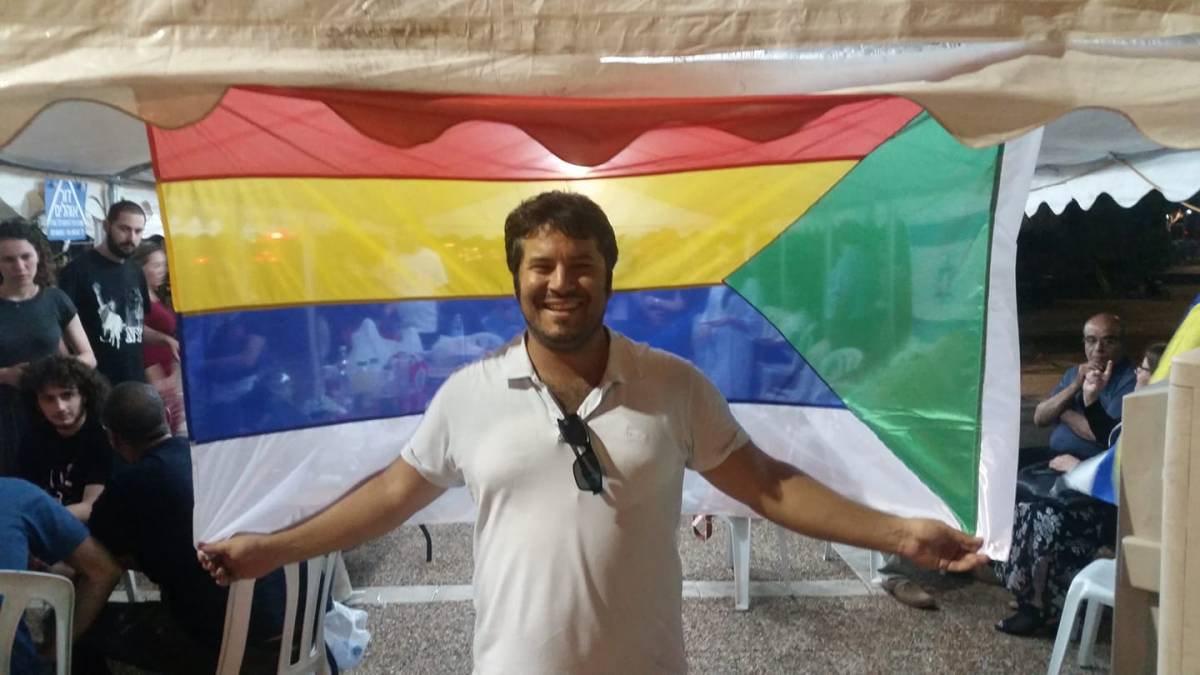
p.s.- the cover photo is of me with a Druze flag.  Which looks a lot like a pride flag.  So that’s awesome 🙂

Tribes gone wild

This blog might sound a bit strange after I just wrote one celebrating my first year in Israel.  The reality of being in Israel, though, is that I find my emotions yo-yo on a daily, often hourly basis.  Things go from very bad to very good to bad again- sometimes minute to minute.  The shifts in mood are palpable- and far more frequent than I experience in any other country I’ve visited.

In the past week, Israel has experienced multiple earthquakes, hundreds of Hamas rocket attacks, Syrian refugees crowding the northern border desperately trying to escape their own government, settlers attacking Israeli soldiers, Haredim attacking young women for being “immodest”, the increasingly psychotic government refusing to give gay men the right to surrogacy.  And trying to pass a law that would allow communities to bar members of the basis of religion, race, sexuality, or any of a number of identities.  It was subsequently watered down, but still pretty bigoted, and now is successfully winding its way through the Knesset.

Through all of this, I’ve tried to speak out, mostly in Hebrew.  One, because that’s what most people speak here- people who follow these events and can influence them.  Also, because there’s a problem.  The far-left in America and Europe has made it nearly impossible for left-wing and centrist Israelis to successfully rally support for their causes or criticism.

Why?  Because there are people who are committed to our destruction.  Who are unceasingly and at times irrationally critical of Israel.  In a way they aren’t of other countries- or sometimes even their own.  One can even view the recent shenanigans of IfNotNow in this light.  A far-left American Jewish group who, in the face of serious global challenges like the Syrian Civil War or Hamas rocket attacks, has instead decided to disrupt Birthright trips for not being left-wing enough.  Ruining the Israel experiences of other young people because the trips aren’t tailored exactly to their tastes like the SweetGreen salads they custom order at lunch for $15.  Excuse my cynicism- I just don’t think that just because someone has come to political conclusions about the situation here (which is their right), that means they get to force an entire organization to adopt their stance.  No one is forcing them to take a free trip to Israel.  If you want to see Palestinian and Arab perspectives, all you have to do is extend your ticket and hop on a bus to Bethlehem.  It’s not complicated and it’s way less confrontational than aggravating a bunch of young people on a trip with an explicit purpose that they simply don’t like.  Stop acting like entitled children.  If you’re really serious about your beliefs, you can buy your own plane tickets.

When people like IfNotNow or groups even more extremist dedicated to destroying Israel harm us, it makes it much harder for those of us on the inside to enact beneficial change.  Because when we speak out about discrimination against gays, Arabs, foreign workers, or refugees- some of these extremists use it as an opportunity to say everyone here is rotten.  Which then gives ammunition to the far right here to silence us- we must be traitors, just like those troublemakers abroad.  It’s not true- but it has resonance in a country under attack with little taste for nuance.

So I’m going to try to offer some criticism of Israel- but understand it’s with the purpose of actually making change.  To help steer this community in a stronger direction.  Not simply to make noise and masturbate my ideology.  I can’t control if you’ll take my words and use them to hurt me.  Just know that I will use every bit of my being to stomp you out and protect us- with the same level of passion that I use to fix what’s wrong here.

So what is wrong here?  A lot.  The earthquakes I can’t do much about- God, stop punishing us, we’ve had enough.  The Hamas rockets- I’m exhausted with our patience.  The world sits silently, mostly unaware as the media ignores our fate.  If Western Liberals showed one tenth of the passion for our lives as they do for immigrant children (which is justified), then the rocket fire would be condemned from wall to wall.  And maybe even pressure Hamas to stop.  Now would be the time to speak up.  For moral reasons.  For Israeli lives.  Frankly, also for Palestinian lives- they’re going to suffer increasing pain as they pay the price for Hamas’s games.  And if you want to get practical, 300,000 American citizens live in Israel.  And we vote.  So if you want our support, show that you give a shit.

Now on to our idiotic government.  I’m not a reactionary far-left voter.  At times in the past, I frequented this space.  I still find some of the ideas important.  And I’d say, while I don’t fit into a box, I’m somewhere left-of-center or centrist in Israeli politics.  And I appreciate some ideas that come from the right- I’m not orthodox in my politics.  Nor in my synagogue, though I have davvened in Bnei Brak.

But this government is leading Israel off a cliff.  The latest Nationality Law seeks to enshrine discrimination in Israel’s Basic Laws- laws that are not exactly a constitution, but are incredibly hard to repeal.  While the law did innocuous things like recognize national holidays, the controversial aspects surrounded a downgrading of the status of Arabic, restrictions on where people can live, and antagonistic attitudes towards Reform and Conservative Jews abroad and at home.  With strong implications for Arabs, LGBTs, and other minority communities.  Until the text was altered, I had to live with the idea that I could be denied residence in a community for being Reform or gay- an almost unthinkable legal reality.  If sadly, the unspoken truth in many places in the world, even democracies.  Enshrining it in law certainly would have given malignant social practice a dangerous boost.

The saddest thing about this law is not the text itself.  Nor is it the future it could portend.  It is that it describes an existing reality.  I’ve traveled extensively in Israel- over 100 different communities in one year.  From every single possible linguistic, ethnic, and religious background.  Places few Israelis visit- Israelis who’ve lived here all their lives in insidious narcissistic bubbles.  Bubbles sometimes created by fear- sometimes even understandable because of that fear.  Bubbles nonetheless.

This is the greatest problem with the law- it makes explicit existing social practice.  Israel is a tribalistic nightmare.  It is filled with rich ancient cultures.  Cultures preserved through insistence on maintaining community and tradition.  In ways unseen in the West, where cultures meld into creative fusions and, if we’re honest, mostly oblivion.  I’ve met rather few Irish-Americans who speak Irish, and not a small number of 3rd generation Latinos who can’t speak Spanish.  The gift of America is its vibrant churn.  Its curse is the evaporation of cultural heritage.

In Israel, that heritage is preserved.  To shocking degrees.  There are Christians in the north who pray in Aramaic- some actually speak it.  Just like the Kurdish Jews in Jerusalem.  And every day Hasidic Jews study 2,000 year old texts in the very same language.  That Jesus spoke.

The problem is that this preservation, this conservation comes at a price: social understanding.  Israel is divided into tribes: secular, traditional, Orthodox, Haredi, Druze, Christian Arab, Muslim Arab.  Left-wing, right-wing, center.  With lines that occasionally are breached, for example by my friends who grew up Orthodox and are now Reform.  But this is by far the exception.  When people plant themselves here, they leave themselves little room to wiggle.  And often little curiosity to explore other pastures.

This is the greatest problem with Israel.  One I recognized half a year ago.  And I have even more evidence for now.  This isn’t a society.  It is a collection of societies.  That mostly don’t talk to each other and are largely content to avoid each other.  From every possible direction, lest someone pretend their tribe doesn’t follow this pattern.  I’ve met Druze who say they keep their Muslim minorities “under control”.  I’ve met Christians who say they keep their Muslim neighbors “in line”- and if there are problems, they’ll “take care of them”.  Muslims have used religion as a wedge against Christians in Nazareth, of all places.  It’s safe to say almost no Muslim villages here would be thrilled to see Jews moving in.  With the exception of welcoming Abu Ghosh, where a woman wanted to know why I didn’t want an apartment there.  Unfortunately, a woman from there was beaten by Jewish girls in Jerusalem for being Arab this week.  When it rains, it pours.   You can extrapolate the same patterns of voluntary segregation among all types of Jews- among themselves and towards Arabs.  Lest you think it’s only right-wing Jews who feel this way, I’ve never ever met an Arab who was allowed to live on a Kibbutz.  And they largely understand they won’t be allowed on a moshav, or village.  I’ve yet to see my wealthy friends in North Tel Aviv show interest in setting up an African refugee community in their neighborhood.

People here are generous- about giving directions, about hosting strangers, about feeding you, about giving advice.  And they are utterly selfish when it comes to defending the interests of their community above the dignity of the individual or, for that matter, the well-being of the nation.

If America is far too individualistic, Israel is far too communal.  With pluses and minuses in both directions.  I’ve noticed that not all societies are so extreme- my travels in the Mediterranean and Eastern Europe have revealed places somewhere in the middle.

Preserving a Jewish majority in Israel is what allows it to be a Jewish state.  The reckless, gung-ho attitude of its early pioneers, the native-born Sabras, is what allowed the state to get on its feet.

But those very pioneers contained a fatal contradiction.  Their disregard for rules, their utter contempt for the Diaspora and all things foreign- it has become limiting.  Because if you look at who can best contribute to the cultural dialogue here that could strengthen bonds and ease tensions- it’s people like me and thousands of olim who’ve chosen to make Israel our home.  People who, at our best, have the sensitivity of having been a minority, as well as the pride of choosing to make this our home.  People who know how to navigate various cultures and come with less preconceptions about different communities.  More often than not, understanding the value of pluralism, or at least the power of listening.  Something sabras struggle to do as they lecture us about how we’re wrong and they know better.  As the country they built rages with fire- fire from the outside, and fire kindled from within.

It’s high time the sabra realized he’s not the only fruit in the field.

p.s.- the cover photo is from a Druze village.  It says: “it’s my fault that I love my sect”.  A kind of Middle Eastern “sorry not sorry”.

One year as an Israeli

Today, July 4th, marks my aliyahversary- one year since I hopped on a plane from New York to Tel Aviv and became an Israeli citizen.

It’s a day that will always be filled with great importance for me.  Making aliyah was not an experience- it was a life choice.  To tie my future to the future of the Jewish people in our homeland.  Fraught and fun, stressful and meaningful- that’s what it means.  It’s not to immigrate- I returned to my ancestors’ home.  To live amongst my people.  As the norm, as the majority, in the only place like it on the planet.  Not as a tolerated (or persecuted) minority- but as the people steering the ship.  With all the empowerment and responsibility that entails.  There’s really no other process like it in the world.

There are many ways I could have lived this year in Israel.  I looked into getting a full-time job here, I looked into grad school and rabbinical school, I looked into living on a kibbutz, I looked into living up North, I even considered doing some shepherding (I think I’m still gonna make that happen 😉 ).  Ultimately, I decided to continue doing my digital public relations freelancing.  Which gave me the opportunity to work from home (and the challenge of building a social network without in-country colleagues).

One of the best aspects of this was that I could travel.  One of the reasons I made aliyah was to see the world, and my homeland.  And boy did I.  I saw over 100 different Israeli cities, towns, and national parks.  All via public transit or hitchhiking.  While people abroad only see my country in terms of conflict, they are sorely missing out.  It’s by far the most gorgeous place on the planet.  Prettier than some Israelis even recognize.  Naturally beautiful, accessible by public transit, filled with ancient cultures and history, and one more very important thing: deep generosity.

Traveling in Israel, the way I travel, can be challenging.  I love it.  You have to navigate all sorts of cultures and politics- not to mention fluid schedules (this ain’t Switzerland) and new terrain.  I’ve gotten growled at by wild boars in the Galilee at midnight, I was chased around the Arab village of Tira by a crazy man only to get a ride to the bus stop from a basketball player who’s friends with a Jewish lawyer in Baltimore, I got evangelized in Spanish by a Mexican missionary who said I was going to hell for being Jewish, I tripped and fell in a forest and with a broken sandal and my knee bleeding hobbled on one shoe to a bus.  Only to have an awesome bus driver and 20 year old Arab law student chatter with me in Arabic as we drove through the mountains.

For every challenge here, there are been countless blessings.  When I was in the Druze village of Sajur, I visited an ancient rabbi’s tomb.  There were dozens of Hasidim praying.  The rabbi, a Vizhnitz Hasid, chatted with me.  Then gave me two beautiful books- one siddur and one book of songs for Shabbat.  The other day I was in the Christian village of Eilaboun.  And on two separate occasions, when I asked for water, old men in their 70s simply handed me gigantic bottles of their own.  In Tarshiha, an Arab village in the North, I stared at a house’s beautiful door.  The Bedouin woman comes out, gestures to me to come in, and plies me with coffee and sweets while she folds her laundry.  Her preferring to speak in Hebrew, me in Arabic.

I have been hosted- for free- countless times in Israel.  Sometimes by people I had never met.  Both overnight and for numerous Shabbat meals.  I was once on the bus from Jerusalem to Tel Aviv and a young woman wondered aloud what she’d do if she missed the train to Haifa.  And the woman next to her said: “you’ll stay with me”.  They had never met.  I was heading to Haifa once for a trip and I had met a rabbi up there.  Literally for 20 minutes at a Shabbat in Tel Aviv.  I asked if I could crash with her- because that’s normal here- and she said: “I’m sorry I can’t host you because we made plans, would it be ok for you to stay with my parents?”  Would it be ok…yes. 🙂  And I did, and got fed incredible Iraqi food and awesome stories by her mom.

This blog would be endless if I recounted every act of incredible generosity in my country.  Druze who helped me hitchhike to a Christian village.  Where then I knocked on someone’s door to get into a church.  But the key was nowhere to be found.  So they invited me in to watch Christian prayers from Lebanon on TV and eat eat eat.  Or the Jewish man I met in a parking lot in Beit Jann, asked him where Rameh was, and simply told me to get in the car.  And took me.  I can’t even count how many times Christian Arabs have opened their village churches just for me.  Or how many mosques have let me film their prayers- from Abu Ghosh to Kfar Qasem to Kababir in Haifa.  And how many dozens of others I’ve visited in Tel Aviv, Yaffo, Akko, Nazareth, Jerusalem, Jisr Al-Zarqa, and more.  I know now proper etiquette in a mosque- from visiting them 🙂  I enjoy the call to prayer while I eat Georgian food in Yaffo.  It’s part of my life.

There are people here who look after me.  My Hasidic friend Yisrael in Bnei Brak who asked for my phone number to see how I’m doing.  Who always gives me a huge hug when I come to see him.  My Reform rabbis- all of them women- who nudge me, love me, and gently guilt me like good surrogate Jewish mothers.  And whose services (and mine- because here I lead them) fill me with song and love.  My Orthodox gay friend and his secular partner whose house I invite myself to for Shabbat.  Just like I do to my Iraqi neighbors.  Because not only is that acceptable here- it’s the norm.  Love is the norm.  Personal space and boundaries- that’s not how we do things here.  And you find, after some acclimating, that it’s better.  It fills you with warmth.  That sacrificing a little autonomy gets you a whole lot of community.

There are incredibly difficult moments in Israel.  Whoever wants to be Israeli- to choose to become Israeli- should think hard before doing so.  This year, I heard an air raid siren on my first day in my new apartment.  I stood in the stairwell and googled: “what to do in an air raid?”  On two separate occasions I had to deal with suspicious objects.  In one case, I was locked inside the library while it was diffused.  In another, the street was closed off.  And in both cases, the police, God bless them, were extraordinarily calm and professional.  Thank you for your service.

I’ve been racially profiled as Arab (which was awful- and I also understand why it’s not such a simple question).  I once took the bus to Jerusalem, heard about a terrorist attack along the way, and looked out the window to the see the name of the town it had just happened in.  I’ve witnessed the burnt fields of Sderot- crisped to blackness by Hamas terrorist fires.  And then got sushi with a friend who lives even closer to Gaza.  On Kibbutz Nahal Oz which has seen dozens of Hamas attacks recently.  And where she’s studying for final exams that will determine her professional future.

If you add to this the personal, bureaucratic, and cultural transition of building a life in a new country as a new citizen- boy it can be hard.  Especially arriving alone with no family.  If you’ve made aliyah and never cried, I don’t think you really did it.

But what you need to understand is that there’s a reason I live here.  And that, for the wild prejudice (in all directions), the terrorism, the predatory real estate market, the ideologies which sometimes spin out of control, and the very real tensions in my own neighborhood between refugees and veteran residents- the fact is Israel is where I feel at home.  People here exhibit an incredible generosity I have never seen anywhere else.  A sense of caring, responsibility, and even cohesion.  Much greater than you might expect from reading CNN.  People here- we- have a certain toughness to be able to get through the challenges of living in the most difficult neighborhood in the world.

And we also have an incredible ability to take those hardships and turn them into sweet sweet baklava.  This country is a country of survivors- of the Holocaust, of Arab expulsions of Jews, of the Soviet Union.  Arabs and Jews who’ve lived through many wars, cultural and familial separations, terror, and economic recessions.

What you find- and what I identify with as an abuse survivor healing from PTSD- is that people here know better than anywhere else how to move forward.  How to not only survive, but to take that pain endured and manage to build something.  To become sweet in spite of it all.  So that unlike in America where every tweet becomes a news story for a week, in Israel, we just don’t have the time or care.  We’re too busy living our lives and being in the moment to stew in it.

And living in such a generous and warm culture has fostered my own compassion.  So that when I see a woman eating grapes off the ground, I give her thirty shekels and tell her to get a real meal.  When I see a 15 year old Filipina girl working day and night, I tell her I’m going to take her on an excursion to relax.  And she lights up with excitement.  When I meet a lone soldier on a bus who was celebrating his birthday alone, I take him out to baklava and invite him to spend the night.  When I meet an American Christian in Jerusalem who’s coming to visit Tel Aviv, I invited him to do likewise.  The same day.  And last night, when I saw a homeless man in my neighborhood sleeping on a bench, I bought him rugelach and sat it next to him.

Because living in Israel is not always sweet- but you can choose to be.  And I find most Israelis do.  Once you peel back the tough exterior- the gentleness, kindness, and warmth beneath far exceeds anything I had ever experienced before.  Becoming Israeli has given me a place to be more generous, has taught me to appreciate people from all walks of life and ways of thinking, and has helped me grow into a stronger and balanced person.

I’d like to thank everyone who has helped me make this transition and grow.  My friends I made on the plane while making aliyah- who I’m still friends with.  My Reform community.  My neighbors.  My friends at my local Kosher sushi restaurant, who have become like family.  The people of every background who have supported me, fed me, and encouraged me.  Who’ve given me countless opportunities to speak the beautiful languages of this land.  My American friends who from many times zones away made an effort to keep in touch and showed they cared.  Nefesh B’Nefesh, which facilitates American aliyah, for making the process as smooth as possible.  For answering dozens of questions.  For being there both before and after my landing.  For helping me feel like I had a place to call on when I needed help.  Like when my AirBnB fell through, I got food poisoning, and you showed up on my doorstep with food 🙂 .  Ein aleychem- you rock.  Misrad Haklitah and the Israelis whose tax dollars funded my transition- thank you.  I’m absorbed- by your kindness and by our country.  Especially my fabulous aliyah counselor Lauren who talks with me about everything from bureaucracy to cute guys- and always puts a smile on my face.

Aliyah, for those who don’t know, is the Hebrew word that describes when a Jew like me returns to Israel and becomes a citizen.  It literally means “rising up”.  The idea being that moving back to Israel elevates your spirit and is a process by which you grow.

Nothing could be more true.  While I feel I’m quite thoroughly absorbed into Israeli society, I will always keep rising.  There are new places to go, people to meet, experiences to have.  You can never finish exploring this country- or loving it.

What I can say is I arrived as an oleh, and now I’m Israeli.  Because today when I met a young American and helped him find the right bus, he said: “you have really good English”.

I made it.

The main difference between Israel and America

No it’s not the fried chicken (everywhere in America, ehhh in Israel).  Nor the hummus (America’s is a joke).  Nor the Middle East conflict (yeah, America doesn’t have one of those, at least not at home).  Nor our dancing skills (sorry Israel, Americans are pretty good).

It’s one word: generosity.

Before I dig in, of course Americans can be generous.  Many are.  Americans have high levels of volunteerism and some have done truly heroic acts of altruism.

But there is a difference.  America is a society founded on individualism.  Individual aspirations trump almost all other considerations.  The realization of your dreams- your career, your family, your you- that takes first priority.  In America, people ask kids: “what do you want to be when you grow up?”  Not “how do you want to be?”

While some groups have found safe haven in America- Catholics in colonial Maryland, Jews fleeing pogroms, Syrians and Iraqis fleeing war- the overarching theme of migration is the American Dream.  And the American Dream is $$$.  It is to strike gold, to build a career, to win the lottery, to work hard, to buy a house with a nice lawn.  Even to send money back to the motherland.  Whatever the shape it takes, money- even when understandable- plays a huge role in the American psyche.  As the largest and most powerful country in the world, with the most capital, how could it not.

It’s worth reminding Americans that this is not how most of the world thinks.  While I hardly begrudge someone their success- and I admire the dynamism of American entrepreneurs- I’ve learned in Israel that this is hardly the most important thing in life.

In Israel, you can flip almost every American social norm on its head.  Here, you can go into any restaurant and charge your phone and get free water- the latter, by law.  And without buying a thing.  In a desert country with water shortages.  In fact, the offer to pay for it would be seen as strange, unnecessary, maybe even insulting.  Why would you give me 5 shekels to charge your phone?  Do you think I’m stingy?  Israelis love to help and the idea that help should come at a financial cost, as a transaction, is disturbing to us.  It’s not that we never charge for things- we have a dynamic if not as wealthy economy.  It’s just that this business-like approach to life starts and stops at the office.  One of the reasons we don’t say “please” and “thank you thank you thank you” all the time is because it’s not necessary.  Help is not given because it deserves beatification.  It’s given because that’s how we live.

Before my American friends get defensive, let me give some concrete examples.  My friend Yarden worked at American Jewish summer camps.  She noticed that when a kid opened a bag of chips, the chips were for him.  If someone else wanted one, they had to ask- it was understood that he bought the chips, he received them, they were his.  In Israel, I worked at a summer camp years ago.  I remember being astonished that a group of 10 kids would share one water bottle.  Eww!  This is unsanitary.  Sure enough, the kids did get sick.  But guess what?  They also learned to share.  In Israel, when a kid opens a bag of chips, the chips are everyone’s.  And they dig in.

On the bus, people have asked me for my candy- and I’ve given it without second thought.  And on the train last week, a guy was trying to give his girlfriend candy, which she refused.  So I turned to him and said: “if she won’t have it, I will”.  And he happily gave me it.

My friend Dalia is a Reform rabbi in Haifa.  I met her at a Shabbat service in Tel Aviv, we talked for about 20 minutes.  A good chat 🙂  Days later, I was headed to Haifa and asked if I could stay with her.  Because that’s how things work here.  She apologized: “I wish I could host you, but my husband and I have plans.  Would it be okay if you stayed with my parents?”  Would it be okay?  Yes.  It was quite fine- her mom force-fed me homemade Iraqi kubbeh, talked with me about her Arabic class, and shared with me all her thoughts on Israeli politics.  I then went to my private air conditioned room.  I had never met her before and I felt totally at home.

I could tell you story after story- but I have thousands of them.  These are not unique stories- not to me, and not to other Israelis.  Generosity and a sense of community are paramount here- no one would even think to question them.  The idea that your self takes precedence over the well-being of your family- your nation- is a strange one here.  In America, there’s a sense that by realizing your aspirations, you are strengthening everyone.  Here, there’s a sense that your aspiration is never above the well-being of your neighbor.  Jew and Arab- this is the norm.  I’ve traveled to one hundred cities and towns here in a year- of every religion and culture- I would know.

While America was founded on rugged individualism (which has its advantages when it comes to individual rights), Israel was founded on community first.  The kibbutz, the original style of Israeli settlement, was a commune.  And to this day, even on the ones that have left the socialist model for a hybrid privatized one, the sense of communal identity is strong.  People in Israel of all backgrounds are very proud of their communities.  Many think the idea of moving an hour away is ridiculous.  They’d be too far from their friends and family.  The idea of moving from New York to California is an absurd one for most Israelis.  You’re going to see your family twice a year?  Here, that’s not a relationship.  I once met a Bedouin woman who lived 20 minutes from her brother in another village, and she hated visiting there, because it was far and not as nice.  20 minutes.  Pride of place.

Here the sense of community attracts people from all over the world.  It’s worth noting most Jews end up here as refugees.  Quite a different dream than a picket fence and a thick wallet.  As they say, if you want to make a small fortune in Israel, arrive with a large one.  Until the past two decades, the Israeli economy was a lot more third world than first.  And even now, salaries are much lower than America despite being quite an expensive place to live.  In short, nobody comes to Israel to get rich.

And the ethos reflects this.  The dream, at least as far as Jews go, is to live in a state where we control our destiny.  Our self-realization comes about by way of communal self-realization.  And whatever we do- whether it’s high tech or working with kids- we are taught that giving back is not really giving back.  It’s giving to ourselves, to each other, to us.  It’s a mitzvah.

I remember a friend in middle school saying there was no such thing as altruism because people still did it for some sort of personal satisfaction or gain.  Even if it was praise from someone.  While we can debate the merits of this (I just met with Sderot firefighters fighting Hamas blazes- I can’t imagine their salaries compensate for the fact they might lose their lives any day), I’d argue even if she’s right, she’s wrong.  Because in Israel, by making self-realization and communal realization synonymous, everything we do here benefits us both as individuals and as a society.  And it blurs the lines between those distinctions.  I once had a lawyer, a friend of my rabbi, who I had never met and still never have, review 3-4 long leases for me for free.  And other than a thank you, expected nothing.  It could have cost hundreds of dollars.  But what to most Americans would seem like an extreme act of generosity worthy of praise and praise (and reminders of how much it cost), to an Israeli seems so normal that such over-the-top exclamations seem excessive, even fake.  As I had to explain to a German guy who came to Israel to apologize to his forlorn lover- and wanted to give him money as an apology.  Not going to work here…

In other words, when an Israeli is generous, it doesn’t have to be self-less because it is helping our entire people.  In fact, by definition it is self-full- but not self-ish.  By pursuing our dreams, by sharing with one another, by loving each other- we are lifting all of us up including ourselves, for we are part of a collective.  Which succeeds when all its members, like a kibbutz, contribute in a sense of communal caring.

The other day I met the most fantastic Americans.  My friend Harry is a lone soldier from New Jersey.  He’s an an American Jew- now Israeli- who volunteered for the Israeli military with no family here and under no obligation to do so.  I met him on a bus a few months ago while he was trying to pick up a girl in his American-accented Hebrew.  Turns out it was his birthday, so I took him out to baklava and let him stay with me- that night.  And whenever the hell he wants.

He then invited me to stay in his room at a kibbutz up north, where he and other lone soldiers from the States stay when they’re off duty.  Which I did this past week.  Harry was not there, but his friends were.  Young, 20-something American Jews who made aliyah like me.  And volunteered to serve in our defense forces.  To work crazy hours, to sleep on beds without linens, to charge up hills, to barely sleep, to get yelled at in Hebrew- and to put their lives on the line for my ability, for our ability, to live safely as Israelis.  Surrounded as we are by Islamic terrorists of all sorts of stripes.

Maybe there’s no such thing as pure altruism, as my friend suggested.  My soldier friends get a sense of purpose, a great work out, life skills, and more from their experience.  And they also get from me a room in Tel Aviv and a fun night of food touring whenever the hell they want.  Because they are my brothers and sisters.  Like all Israelis.  Especially them.  Because the point is the benefit they’re getting from this experience benefits all of us- and shows courage, kindness, and a willingness to sacrifice.  Things you can’t quantify, but you can feel as my heart pulsates at the joy of seeing them laugh.  Even as I know they may go to war all too soon, just to keep our dream alive.

In Israel, we don’t really debate the nature of altruism nor of self-realization.  We don’t really have time.  We’ve got bigger things to care about.  We simply try to do what’s right.  Whether it’s to our individual advantage or not.  Towards a Jew or not, towards an Israeli or not.  It’s how we live.

When I made aliyah, I left America behind.  Especially living in Washington, D.C., perhaps the least altruistic place in America, I felt angry and ready to leave.  Unsure if I’d even come back and visit.

What I didn’t expect was to find my favorite Americans here.  Young people, like me or like the lone soldiers, who ventured out and tried something new.  Something not for your resume or your mortgage application.  Not for you- but for us.  For good.  To serve in the military, to build a new life, to explore.  As I’ve done with my blog which now helps thousands of people, from Saudi Arabia to Indonesia to experience and understand Israel.  And I love writing and exploring- I feel satisfied and I help my community.  We grow and appreciate the hope that surrounds us.

Maybe the reason Americans live in angst about their futures is because they’re asking themselves the wrong question.

It’s not “what do you want to be when you grow up?”  It’s “Amir- share your potato chips”.

p.s.- the cover photo is from a store I found in Italy that sold American junk food.  I bought special Skittles we don’t have in Israel 😉

Israeli lives matter

Today, I took the train south to Sderot.  Sderot is a city in southern Israel, spitting distance from Gaza.  As of November 2007, 6311 Palestinian rockets have fallen on the town.  At that time, 75% of children suffered from PTSD.  By the beginning of June, Palestinian terrorists had set 3,000 separate fires, destroying 2,500 acres of Israeli farmland and parks.  And there have been both rocket and fire kite attacks since.

I wanted to see things with my own eyes.  Knowing that there are still fires- and the risk that I could get caught in one- I went.  I went with the best knowledge available, consulting with locals.  Ultimately embracing what one person said when I asked if there were fires today: “you can’t know”.

Living in Tel Aviv, you don’t feel this at all.  The beach, the nightclubs, the hummus- the buzz.  You’d have no idea radical Islamic terrorists are trying to breach our border- and have launched rockets and flammables at us.  Tel Aviv feels utterly normal, like most of the country.

As I walked from the Sderot train station, nothing seemed strange.  The people seemed normal, there were trees and businesses.  Is it possible I went to the wrong city?  Maybe the fires were elsewhere?  A cabbie told me otherwise, but maybe he was wrong.

I walked closer to the border.  Sderot is .62 miles from Gaza.  A kibbutz next to it, Nir Am, is 800 meters from Hamas territory.  I physically stood one mile from Gaza today.

I asked around the kibbutz to find where the scorched land was.  Admittedly an odd question, but because Israelis are always willing to help, a man actually gave me a ride to the burnt fields.  Before picking up his daughter from school.

I asked him how it was living there and he said: “I don’t know the right word, it’s not that we’re used to it because you never really can be.  The fires happen.  We survive.”

He told me how he has to explain Palestinian terrorism to his 5 year old.  His two year old doesn’t yet have the words to understand it.

My heart broke.

I dare any of my “enlightened” left-wing friends in America who have more often than not heaped meaningless bile at my country.  I dare them to look that 5 year old in the face and call her an occupier.  That somehow she deserves to have her playground melted, her trees burnt, her childhood robbed.  While you sit pretty on Native American land you know literally nothing about.  But feel utterly entitled to.  While we are actually from here.

I bid the man goodbye and told him my heart is with him.  I could tell he was moved- not many Tel Avivis come visit this part of Israel.  Especially now- though they should.

I headed towards a high point.  He said I could see the burnt fields.  To me, the fields just looked kind of like the Great Plains in America, but with shorter grass.  I didn’t really understand what was so grave.  Until I noticed the color.  The ground was dark- a charcoal black.  And I looked on a map and realized- this wasn’t the Great Plains.  This used to be a forest.

An almost completely leveled forest.  But for a few trees bravely peeking out, embarrassed at their nakedness.  Surrounded by slivers of their former friends.  Burnt to a crisp.  Like an onion on a grill, but with all the water sucked out, and a dry carcass left to rot.

This scene was as far as the eye could see.  I was probably looking at Gaza without realizing it.

What was astonishing was how normal the rest of the kibbutz was.  If you didn’t really know what had happened, you’d think it looked quite pretty.  And it is.  And the people there, quite typical for an Israeli town.

Then you look at the ground.  You notice the dirt is light brown.  Except in certain large patches, where it is pitch black.  I leaned down and grabbed a handful.  There was nothing soil-like about it.  It was soot.  Ash.  The cremated remnants of a forest once planted there.  A place with picnics and fun.  Now destroyed in the name of greed, fanaticism, and violence.

What I also didn’t realize until writing this blog, is that Hamas actually buries tunnels under this kibbutz.  Probably under my feet.  To smuggle weapons and to kill Israelis like me.

Some people on the far-left like Jeremy Corbyn call Hamas his “friends”.  Others think it’s some sort of peaceful liberation movement- that calls to “liberate Palestine” (from me) are somehow equivalent to women’s liberation or gay liberation.  The delusional Chicago Dyke March, which last year kicked Jews out for waving a Star of David pride flag, this year waved dozens of Palestinian flags.  And said “all anti-racist work must inherently be anti-Zionist“, without recognizing the irony of becoming anti-Semites themselves.  And aligning themselves with a nationalistic movement that’s utterly homophobic.

The reality is Hamas is anything but progressive.  In Gaza, it bans women from smoking, Palestinian hip-hop concerts, dog walking (yes), and women’s TV channels.  It’s a professional murder machine.  Its goal is to massacre me.  That’s not a metaphor- it’s its practice.  It spends millions of dollars burrowing under the earth to harm me instead of feeding its own people.  Who lack sufficient electricity, food, and job opportunities.  I hardly believe it’s solely one party’s fault- the Egyptians, the Israeli government, Hamas, and the Palestinian Authority are twisted in a confusing knot.  Not easy to get out of.  But let’s stop pretending the Hamas government is an innocent teen playing with matches.  It’s manipulating its people and putting countless lives in danger.

Recently, I was in Rome.  I visited the Jewish ghetto- the second ghetto established in Europe.  For the purpose of corralling my people.  Every entrance was marked by churches on either side.  Where popes made Jews listen to sermons upon entering and leaving the ghetto.  To try to convert us to his devil worship.  And by devil worship, I don’t mean Catholicism- though the religion has more than a bit of reckoning left to do with its anti-Semitic past.  And still-locked Holocaust archives.  By devil worship I mean torturing religious text in order to demean a near-powerless minority.  Who thrive or die at your whim.

Rome is the oldest Jewish community of Europe.  And Judaism the oldest religion of Italy.  Having survived the Roman Empire who destroyed Jerusalem, countless anti-Semitic popes, Italian fascism, and Nazism- they’re still around.  And have amazing food, history, synagogues, and culture.  A testament to the resilience of my people.  They have a keen sense of who they are- and a pride in being Italian, Jewish, and quite Zionist.  They don’t live with the American Jewish sense of privilege and stability.  They are, numbering just a few thousand and only decades separated from actual fascism, quite aware of the importance of a Jewish homeland.  They don’t take it for granted.  As the golden bricks on the street, indicating Holocaust victims everywhere, make quite clear.  Never again isn’t a cute phrase to say once a year- it’s the Roman Jewish community’s personal story.

As I write this blog, I’m getting tired.  I’ve had a meaningful and exhausting day.  I slept very little last night, and I’m up late writing this blog because I think it’s important.  And it offers me some solace, even as my electricity just went out for some reason.  Meaning no air conditioning on a hot Middle Eastern night.

Life in Israel is unpredictable in some ways.  Although you can always count on warmth and deep kindness, much more frequently than I’ve experienced in American culture.  Quite similar to Italy, Cyprus, Spain, France, Romania, and Hungary where I’ve visited this year.  Begging the question are we the weirdos or are Americans far too individualistic for their own good?  Even today, as I grabbed sushi after my adventure, I met a young man who lived in Sderot.  Who, when I asked him how he felt about the recent situation, said: “I grew up near Hebron, with attacks my whole childhood, the situation here has been good the past few years.  It’s gorgeous here, come back and visit.”  We chatted, smiled, cracked some jokes.  And I ate delicious sushi- some of the best in Israel.  It’s by the train- go visit.

In short, yes my air conditioning just went out.  I could be like the French Jewish tourists who visited my tiny synagogue for Pride and complain about the water temperature at dinner.  Or I could be a human being and say: “mah laasot?  Nistader.”  What can you do?  We’ll roll with it.

Despite the incessant provocations of left-wing “do gooders” boycotting us and ridiculing our country, we’re actually really good at something they lack.  While large swaths of the American Left I once called home repeat over and over again the word “resistance”, I think they need another R word: “resilience”.

From afar I see every tweet and every sad news story turn into a 4 day mourning period (or battle), I see Israelis all the time just living.  Fully.  The guy at the sushi place who, rather than dwelling on rockets and fires, tells me about the gorgeous sites in his town.  The dad who tells his 5 year old about terrorism with a hug.  And the 5 year old who goes to school, maybe scared and also singing.  And the American oleh who visits Sderot by himself and makes a truly meaningful experience out of it.  Joking with the bus driver all the way home.  While fields nearby are burning.

Israelis know how to squeeze every last drop out of life.  Like our delicious juices, we come out sweet despite it all.  A sweetness few places can compare with, especially places that just haven’t suffered so much.  That have it a bit easier than they really understand.  So they don’t put their own issues into perspective.  And live in a constant state of chaos- some of which is perpetuated by their own lack of self-awareness.  Or of the problems facing others.  Like the 50,000 Syrian refugees crowding the Israeli border in fear or the brave Iranians protesting their dictatorship today.  My neighbors.

If there’s something I could wish for America, it’s that you had a few more problems.  Real problems.  Not problems you’re fighting about on behalf of other people, but problems you have to face.  I know- that sounds a bit harsh.  Perhaps it’s my Israeli bluntness.  But having some real toughness in your life can give you the chance to overcome it, to master, to learn to roll with the punches.  So that next time something bad happens, you’re not spending hours on Facebook.  You’re acknowledging it, moving on, and living.  Like my friend who lives in Nahal Oz, walking distance from Gaza, fields burning, studying for her exams and planning a pub night for friends.  It’s harder than seeing a racist tweet and she also turns out happier.  I think it’s no accident that Israelis turn up as some of the happiest people in the world on survey after survey.  Because if you can manage to find joy while your town is on fire, you can pretty much handle everything.

As I left Nir Am, I looked at a desolate field.  Burnt, brown, empty.  And I noticed one little green plant.  Just making its way above the decay.  Blossoming.  A source of new hope.

This plant is like Israel, like the Jewish people.  Every time someone comes to destroy us, a little remnant stubbornly survives, keeps our people going.  Even when those around us decry our “tribalism”, its our very sense of identity that keeps us alive.  Which is why there’s a Jewish state but no Akkadian one.  We live our heritage.

As someone who is a PTSD survivor, like a lot of Sderot and a lot of Israel- I feel at home here.  We are people who know how to survive- and actually turn it into an advantage because we can thrive anywhere we’re planted.

I’m proud of the Israeli Defense Forces for keeping us safe.  And we’re not about to give up our arms to satisfy a bunch of wealthy self-indulgent critics sipping fair-trade coffee in Seattle.  Living in the labyrinth of confusion about why anyone could possibly disagree with the Editorial Board of the New York Times or the latest NPR story.  A fragile and self-reinforcing bubble much in need of a gentle pop.  For the sake of America itself.

If you want to know why I visited Nir Am and Sderot today, it’s because I love my fellow man.  I love my people.  I care about others- I love my friends.  The Jewish people is a story of resilience.  Our anthem is hope.  Join us, help us sing it, so that one day, instead of fiery balloons, maybe our neighbors will play with the normal kind.  At a bilingual fair.  A future of dreams and love.

In the meantime, we’re standing guard.  We won’t be sent to the fire again.