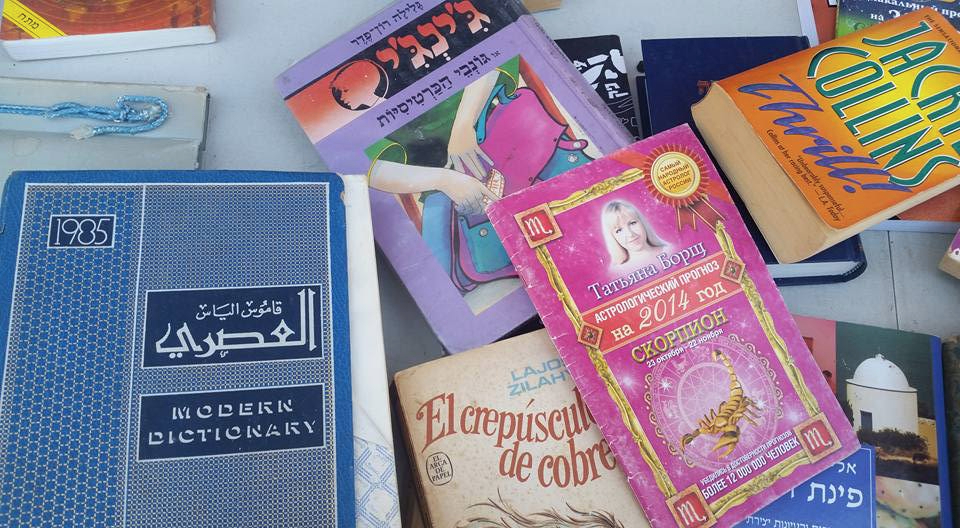
When you bump into a high school friend in your neighborhood

For those of you who’ve been reading my blog, you’ll know my neighborhood is a bit off the beaten path for American immigrants to Israel.  It’s off the beaten path for most Israelis.  My particular street is quite quiet, kind of like a Mizrachi kibbutz, but a two minute walk away finds you in the poorest neighborhood of Tel Aviv.  And one of the most interesting.  Filled with Moroccans and Iraqis and Eritreans and Bedouin (still figuring that one out) and Yemenites and Russians.  And me.

The first reason I moved to my neighborhood was financial.  The rest of Tel Aviv was too expensive for me to find a place by myself.  Tired of living with roommates and not willing to spend exorbitant amounts of money, I looked where less people “like me” look.

I happened upon a great apartment and snatched it up.  The price was right, it came mostly furnished, it included most utilities, and I was able to negotiate a good lease.  A lot of hard work went into that- I saw easily 40 different apartments in person before finding this one.  You can read about my process here.

One of the downsides to my neighborhood is it’s far from…everyone.  Well, not everyone.  Certainly not my Iraqi neighbor downstairs who likes to “role play” Abu Mazen in Arabic yelling at Israel (my neighborhood is many things but boring is not one of them).  But it is far from other young professionals- some of whom flat out told me they’d be scared to visit me.  Fortunately, I have many friends who feel otherwise and have come to my park for picnics.  But as we say in Jewish English “it’s a schlep“.

That can make me feel lonely sometimes.  Especially on Shabbat when there is no public transit and people are even less willing to make the trek.  And it also becomes hard for me to visit them.  I’ve spent more than a few Shabbat afternoons alone and bored.

My neighborhood has a lot of amazing things.  It’s amazingly diverse, it has great food, it’s cheaper, it’s authentic.  The owner of the Mizrachi music store around the corner was Zohar Argov‘s producer.  It’s a place where almost all aspects of the conflict in this country come together and somehow things manage to stick together.

At night, better than anywhere in North Tel Aviv, you can truly see the stars.  The moon calls out to you.  It calms me to look towards the heavens after a hectic day, no skyscrapers around, and to just breathe.

Tonight, the most unexpected thing happened: I bumped into a friend.  Feeling kind of lonely, I left my apartment and headed towards “the city”.  “The city” because my neighborhood doesn’t feel like the rest of Tel Aviv.  You wouldn’t know it was the same city if you visited here.

On my way there, I saw a group of young people.  I was a bit surprised.  I knew there were a few in the neighborhood, often living with their families, but rarely in large groups.  As I got closer, a bearded man gave me a huge hug.

I was in shock.  Who was this guy??

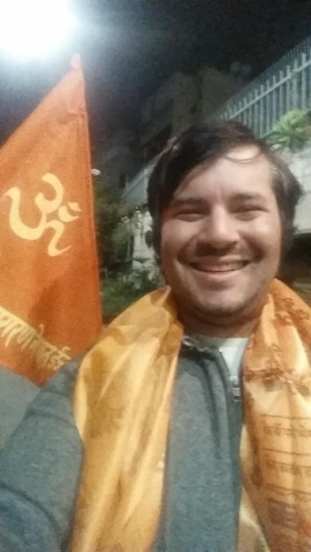
After a look at his sheyne punim, I knew: it was Omer!  Holy crap!  Omer is an Israeli friend from Beit Shemesh, a suburb of Jerusalem.  We met in high school because his city was paired with my hometown of Washington, D.C. for an exchange program.  We hung out in D.C., I believe I saw him when I came several years later to visit Beit Shemesh, and then reconnected on Facebook.  Once I made aliyah, we got to see each other again in person.

Omer is an avid board games player.  Turns out, so is someone in my neighborhood who was hosting a board games event!  Delighted to bump into someone who knew me, someone who hugged me- spontaneously- in my neighborhood, I immediately asked him to invite me to the next event.

Living alone in a foreign country can be hard.  And I don’t just live here, I immigrated here.  I’m a citizen.  I have no particular plans to move back to the U.S. although as a dual citizen I legally can.  And since my work happens to be done remotely, I can bounce between countries, which is great.  It’s also true that it feels different to live here as opposed to visiting or being on a program.  Washington, D.C. will always be one of my homes.  And what I’m starting to realize, to whatever extent I choose to stay here short or long term, Israel has become one of my homes too.

A place where I bump into an old friend on an unexpected street who cheers me up.  A place where, just twenty minutes later, I bumped into another friend I met outside a nightclub weeks ago.

A place where for all its insanity and its toughness, I guess I just don’t feel like as much of a stranger as when I stepped off the plane on the Fourth of July almost a year ago.  Hopeful, confused, anxious, and inspired.  Jet-lagged and later coping with food poisoning and being stalked by toxic relatives and being yelled at daily by Sabras for no particular reason and being racially profiled as Arab and waking up to 3 A.M. air raid sirens and all sorts of traumas big and small.

Israel is whack.  That’s how I’d say it in American.  And Israel, I’m just not sure I can entirely live without you.  And if you don’t think that’s the most Israeli way of saying “I love you”, then you’re probably not one of us 🙂

p.s.- my cover photo is a picture of teddy bears from the Arab village of Tira because this is a feel good story 🙂

A Tale of Two Orthodox

Ok it’s really four Orthodox Jews, but you’ll get my point.

Last night, I was at a rally for refugee lives in Tel Aviv.  It was exhilarating- over 20,000 people.  Some estimate 30,000.  Considering Israel has only 8 million people, it’s quite sizable.  Although being from Washington, D.C., the capital of rallies, it still feels small 🙂 .

On my way home, I wore my yarmulke (head covering).  Foremost, because last time I walked home from a rally I got shouted down and followed by hateful people in my neighborhood, which was scary.  I have met neighbors for refugee rights and it’s probably a minority position where I live.  Since Judaism is a source of privilege here, I felt wearing a yarmulke might afford me a sense of safety from some people who might otherwise be angry at me.  People who can’t imagine why a religious Jew would even be at a refugee rally.  I suppose once I decided to put it on, I was glad to do so because it made me feel a little bit connected to a religion I increasingly feel distant from.  To put my yarmulke to good use for human and Jewish values.

Before I get to what happened on the way home, I’d like to share what happened the other day.

On my way to get kebabs, I heard English in my neighborhood.  I was so astounded- I am definitely the only American for several blocks around my house- that I asked the people in Hebrew what language they were speaking.

Turns out, they were Americans from nearby neighborhoods coming for food.  Both of them Orthodox Jews.  We bantered a bit, they made some uncouth remark about refugees, but honestly nothing too grave considering what I hear in Israel.  And other than that, it was fine.  I told them I was gay and a Reform Jew, which aroused curiosity- but really nothing beyond that.  When I said I was a religious Reform Jew- they simply pondered, asked a few questions, and said “OK cool, do you want to join us for dinner?”

Which brings us back to yesterday.  On the way back from the rally, wearing my yarmulke, two Orthodox men approached me to say they didn’t like my signs.  They said it was great there was a rally because finally there were enough police to keep the streets safe.  They told me: “it’s so hard to raise children here with these Eritreans around.”  Right in front of the Eritreans standing next to me.

I told them this: “I grew up with Eritreans in the U.S. and we get along fine.  Unlike in Israel, where everyone lives in their little bubble, I’m glad I have friends of different backgrounds.  That we learn and play together.  Here you have four separate school systems based on religion and race.  How many Reform Jews do you even know?”

And the man closest to me says: “None- thank God.”

My heart sunk- and I can’t say I was the least bit surprised because in Israel, I’ve heard this a lot.  I said “well you’re talking to one now.  I am disappointed by your hatred.  In the U.S. I have friends who are secular, Reform, Conservative, Orthodox, and Hasidic.”

He said: “I’m not hateful.  Anyways, all of your mixing in the U.S. is why American Jewry is disappearing.”

At this point, I felt the discussion was useless and went to talk to some absolutely lovely Eritreans who exchanged numbers with me.  We live down the street from each other and are going to hang out.  Our values are infinitely more intertwined than those of the Israeli I just finished speaking with.

If you want to understand in one anecdote the major difference between American and Israeli Jewry- it’s this.  Are there open-minded Israeli Orthodox Jews (or Israeli Jews in general)- yes.  I regularly do Shabbat with a gay Orthodox Israeli Jew who loves to learn about Reform Judaism.

And are there bigoted American Orthodox Jews (or American Jews in general)?  For sure.

Do I believe there is a substantial difference between the two groups’ attitudes?  Yes.

In America, by and large, Jews get along.  Perhaps better than American Jews even realize.  Only by being here in Israel have I realized the degree to which Judaism is different here- and far more divisive.  And far too often hateful.

Where two American Orthodox Jews saw my queer and Reform identities as nothing more than curiosity and an entree to a dinner invite, two Israeli Orthodox Jews couldn’t even stand the thought of befriending me.  To thank God for not knowing a Reform Jew (let alone an Eritrean)- that’s a true perversion of religion.

It’s important to remember people come in all shapes and sizes, both here and in Israel.  I could have turned this blog into an opportunity to hate Orthodox Jews.  And believe me, I was very angry last night and felt some of that hatred.  Instead, my cover photo is my picture of a Hasidic kids book- based on Elsa from the Disney movie “Frozen“.  Because I like to look for the unexpected and to try to speak with nuance and understanding.

For many American Jews, pluralism, diversity, and respect are key values- regardless of religious affiliation.  And for many Israeli Jews, the idea of a school where an Eritrean, a Reform Jew, and an Orthodox Jew could learn together is so out of the norm, it can barely be imagined.  Even if they agree with it.

And that’s exactly the kind of school I grew up at.  Eastern Middle School is where I spent my teenage years in Silver Spring, MD.  To this day, I remember an Eritrean friend of mine there teaching me about Tigre.  And I remember an Orthodox friend who was one of the popular girls bouncing to Backstreet Boys- and who now lives in a Haredi community in London.

And it’s not only “not a big deal”- it’s cool.  Living together is nice.  It can be challenging and mostly, it’s just interesting.  And fun.  And enriching.  And I personally pray for the day when God will soften the hearts of the two Orthodox men who berated me.  So that instead of complaining about their Eritrean neighbors, they might see they have something in common with them.  Or even to learn from them.

May it be so.  May it be soon.

When you’ve sat at every table at the Eritrean restaurant

Tonight, I tried to make plans to go out.  Thursday is the start of the weekend in Israel, but unfortunately my friends were busy.  After talking with an American friend on the phone, I headed home.

As I walked around Shchunat Hatikva, I heard something strange: English.  I literally did a double take and was so unsure what language they were speaking, I asked the two young men – in Hebrew – what they were speaking.  Sure enough, they were American-Israelis!

You have to understand my neighborhood is nothing like the glitzy boulevards of North Tel Aviv.  And it’s really not much like the hipster neighborhood of Florentin in South Tel Aviv.  My Tel Aviv is a low-income cultural melting pot.  Sometimes a bit too loud and always interesting.  Very very rarely do I hear English.  The only other languages I hear besides Hebrew are Russian, varying dialects of Judeo-Arabic and Palestinian Arabic, Tigre, Tigrinya, Amharic, and Bukharan.

I got excited and talked to the two young men.  It was strange speaking English in my neighborhood and quite fun.  Unfortunately, the guys were not my cup of tea.  They made some rude remarks about refugees and were rather brusque with the nice guys at my shwarma stand.  I didn’t want to spend my night with them.  So I politely bid them adieu and walked down the street.

On Etzel Street, there’s an amazing Eritrean restaurant.  I’m giving a tour of my neighborhood tomorrow so I wanted to see what time they’d be open.

After I talked with the owner, I saw another man eating.  Woldu invites me to sit with him.  I grab a chair and we start talking.  Turns out he met me the other day when I brought an American friend there for dinner.  We talked about the refugee crisis, demonstrations, the importance of humanity, racism, and of course Eritrean music and dance.  Of which I’m a fan 🙂 .  He showed me his favorite artists, Helen Meles and Tesfalem Arefaine.

I want to highlight one very specific and important thing that happened tonight.  When I sat with Woldu, he insisted I eat with him.  As in, eat his food.  I felt a little awkward- I know people in this part of the world are very hospitable, but Woldu is a very low-income refugee and I had already just stuffed my face with kebabs.  I didn’t want to take advantage of him and frankly, I wasn’t that hungry.  I was very moved by the gesture.  Doesn’t get much more humble and loving than that.

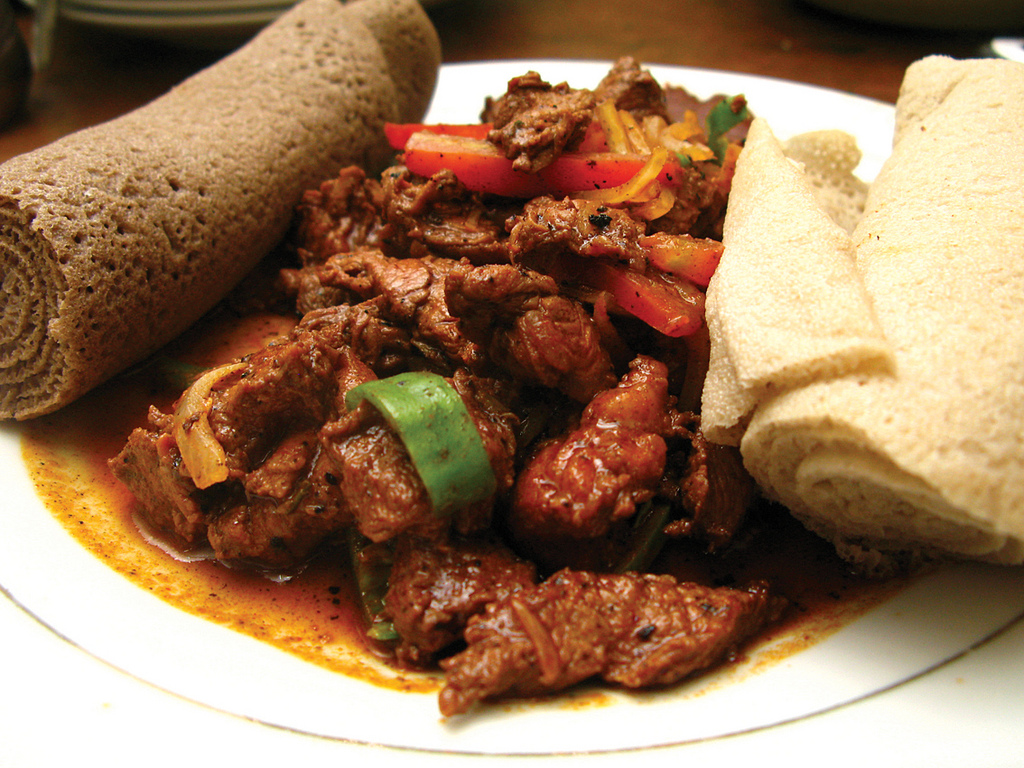
What I came to realize, however, was this wasn’t just a gesture.  It was an order.  Like a top-notch Jewish mother, he gently scolded me for not eating enough.  Over and over again.  And even though I wasn’t that hungry, I gave in because frankly tibs are delicious.

Besides being utterly hospitable and kind, Woldu said something very important to me: “I’m not just asking you to eat- when I come here after a long day and have to eat alone, I want to eat with someone.  A friend.  So sit and eat with me.”

Wow.  I’m at a loss for words.  We weren’t just chatting or breaking bread together.  We were keeping each other company.  Because I like him.  And he likes me.  And I like this restaurant.  Not just because of the delicious food, but because of the beautiful people that work and eat there.  I identified with Woldu’s statement because I’m alone here too.  Thank God I have more legal protections than him and I hope he gets the justice he deserves.  When it comes down to it, we’re just two human beings, from opposite sides of the earth who met halfway in Tel Aviv.  And now are friends.  That is love.

Demonstrations are important.  I’ll be protesting Saturday night- please join me.  Supporting refugees is the right thing to do.

If Israel deports Woldu, I’ll be sad to see his pain, I’ll be furious at my government.  And I’ll feel lonely.  I’ll have one less friend here.  Refugees aren’t a news item for me.  I hang out with them.  They make me happy.  And in their struggle, I see a piece of mine too.  Newcomers in a faraway land.  Who don’t want to eat alone.

You know you love your Eritrean friends when you laugh with them because you realize you’ve sat at every table in their restaurant.

Cover photo: Daniele Bora

What I (still) like about Israel

Lately I’ve been writing some pretty critical posts about Israel.  I think they are necessary and true.

It’s been making me reflect on what I still like about Israel.  To be honest, I like a lot less about Israel than I did when I first came here.  The racism, aggression, sectarian hatred, and ignorance make my daily life here quite hard.  And hard for pretty much everyone here.  Not everyone embodies these problems and a lot of people do- more than I expected.  In every religious, political, and ethnic group here.  It’s sad to see the Holy Land so filled with hate.

So it got me thinking- what do I like about Israel?

I like the healthcare system.  Israeli healthcare is light years ahead of America, something I noticed when first arriving here.  Treatment is almost always cheaper and more often than not, free.  Even for going to specialists like allergists, sleep labs, and psychiatrists who are part of your kupah, or health network.  Dental work costs a miniscule amount of what it does in the States and there are no deductibles.  You don’t have to guess whether you’ll be covered.  All your records are digitized and you can make appointments on an app.  The system has varying degrees of access in Hebrew, Arabic, Russian, English, and French.

I like that you can talk to random people here and it’s not “weird”.  At least in Washington, D.C., where I lived before making aliyah, when I tried to help someone or make small talk, I often felt like I was imposing.  Or that the other person wanted to know what I wanted out of them.  As if a conversation itself wasn’t sufficient- there must be some other motive.  Here, you can talk with almost anyone, Jewish or Arab, sometimes for hours without having met before.  Things are a lot less formal.

The produce is absolutely fantastic and cheap.  And unlike in Washington, D.C., you don’t need to go to an expensive farmers’ market to get delicious vegetables.  In D.C., the veggies at the grocery store are kind of watery- most of them probably sent from warmer climes like California.  According to my friends in Cali the produce is great there.  But if you live in D.C., by the time they get to you, they don’t taste so great.  Unless you’re willing to shell out money to go to Whole Foods.  The market and shops near my house in Tel Aviv have affordable delicious produce all year round.  It keeps you feeling healthful and biting into one of those yummy carrots just makes me happier.

If you need help here, you just ask for it.  There’s no shame in asking for help and people- both Jewish and Arab- more often than not are willing to help.  I’ve been given a free room to stay in a number of times- sometimes by people I had just met- or never met.  In the U.S., I of course have crashed with friends but it felt like a much bigger “ask” than here.  I once saw a woman on the bus from Jerusalem to Tel Aviv offer to host someone who was worried she wouldn’t be able to catch the train home to Haifa.  They had just met 20 minutes beforehand.

There are also a series of things I both like and dislike depending on how they’re used.  For instance, I’m less worried about offending someone here when I say something that doesn’t come out right or they disagree with.  At times, I don’t feel like I have to “walk on eggshells”, which can be a relief- we all say things that we regret.  The downside is that I find Israelis much less empathetic than Americans.  So when you are actually offended, people more often than not tell you to stop being upset, rather than acknowledging your pain.

The same goes for rules and formality.  In Israel, I have never worn a dress shirt, tie, or suit.  Thank God- other than an occasional celebration, I hate these clothes!  Here jeans and a t-shirt are totally fine most of the time, even in synagogue.  Israelis generally don’t like rules- this is a place where you ask for forgiveness rather than permission.  That can be helpful in working out creative solutions for business, plans, or even activism.  D.C. often felt rigid to me and stifled my creativity at times.  The flip side is that Israelis’ lack of rules often results in less protections.  Renters here are regularly scammed by landlords- much more than anything I saw in the States.  I’ve been taken advantage of many times here- and it’s even a societal value.  Rather than be the “freier” or “sucker”, Israelis often prefer to strike first and take advantage of you before you them.  It’s a vicious cycle that explains a lot of the problems here.  Israelis often struggle when I say the word “no”.  Rules often have a purpose- boundaries need to be respected to treat each other with dignity.  So the informality and lack of rules that I like can also a problem.

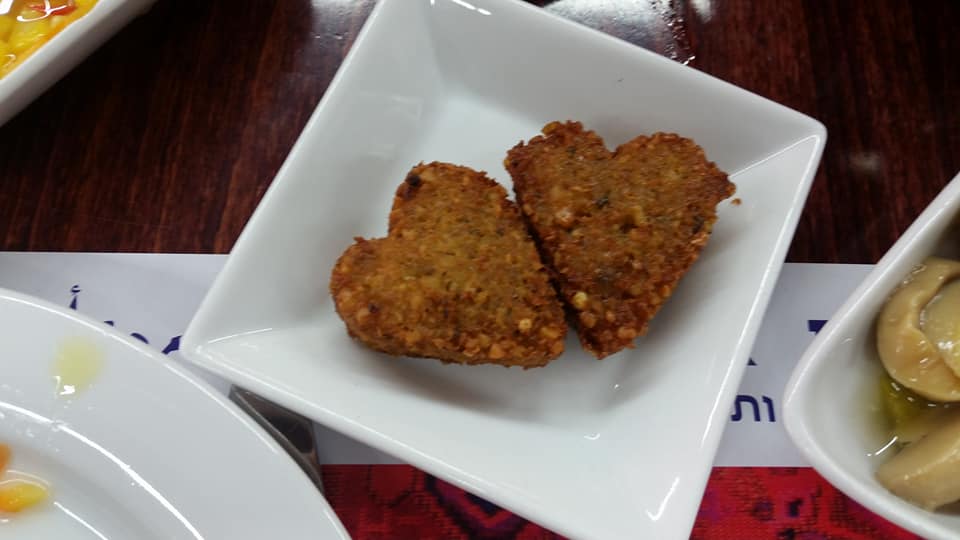
The cultural diversity is amazing here and threatened.  I’ve met Jews from places I never expected- India, Norway, Switzerland, Morocco, Tunisia, Turkey, Ethiopia- and so many other places.  With unique languages, traditions, and cuisine.  And non-Jews such as Druze (whose heart shaped falafel is in my cover photo), Arab Catholics, Arab Greek Orthodox, Arab Greek Catholics, Maronites, Alawites, Muslims, Armenian Orthodox, Armenian Catholics, and Circassians.  Darfuris, Ertireans, Sudanese, Nepalis, and Chinese.  I speak all eight of my languages here- regularly.  This beauty that I love is what the government threatens by shaming Jews for speaking other languages, by discriminating against Arabs, and by expelling refugees.  It pains to me to see such a beautiful gift under attack.

In short, it’s complicated.  There are good things in Israel.  The nature is also gorgeous, the weather is better than anywhere in the Northeast U.S. or most of Europe.  The location is ideal for traveling the world.

Once the Israeli people do the hard work of pulling themselves away from the toxic ideologies that gave birth to their country, they might find themselves feeling freer.  Freer for a secular Jew to be friends with a Hasidic Jew.  For an Orthodox Jew to acknowledge Palestinian Arab history.  For a Mizrachi Jew to dance to Eritrean refugees’ music.  For a secular Ashkenazi to raise his kids in Yiddish.  Or an Iraqi Jew to do so in Judeo-Arabic.  For a Haredi Jew to see the good in Reform Judaism.  For a Palestinian refugee in Lebanon to return home to my neighborhood and for me to help renovate her mosque.  For a Christian to marry a Jew.  For a Jew to convert to Islam.  In short, to be the complex beautiful human beings hiding beneath the divisiveness.

For Hasidic Jews, tikkun olam or “repairing the world” begins within.  I couldn’t agree more.  To make the world a better place, we must start with ourselves.  So see the good things I wrote?  Grow them.  And where we find barriers in our souls towards our fellow human beings, join me in tearing them down.  Inside and radiating out towards the heavens.

Israelis often like to think of themselves as a “light unto the nations”.  The thing is to see a candle best, you must first turn off the lights.  Scary and necessary.  Flip the switch.  It’s time for a reset.  Let the flame illuminate our path.

I found my people

Today was Friday.  Friday in Israel is the weekend, so I had the whole day to relax.  The problem was I couldn’t get myself to leave the house.  This has been a pattern lately.  Granted there isn’t a whole lot to do on a Friday afternoon because most things close for the Sabbath, but it’s best to get out of the house a bit.

After several hours of hemming and hawing I realized why I didn’t want to go out.  I was afraid of Israelis and don’t like spending time with them.  I am tired of being yelled at for no reason.  Or being told not to feel my feelings.  Or being cheated.  Or being lectured at about why Israel is great and being lectured at about why Israel is terrible.  Being told Americans are fake, Arabs are terrorists, Haredim are leeches, and on and on and on and on.  It’s just exhausting and I’m over it.  There are reasons for it and it doesn’t justify the behavior.  Some Israelis like to say they treat it each other “like family” which is why they’re so hard on each other.  To which I say if that’s how you treat your family, you need a therapist.  Take it from someone who has one.  It’s messed up.  And it’s only here.

So after looking at flights to Cyprus (they’re cheap!) and almost booking a flight, I realized I was just too tired to get everything ready.  If I wanted to hang out with non-Israelis, I needed another plan.

Remembering a few pleasant visits to Neve Sha’anan, an immigrant neighborhood, I headed that way.  When I say immigrant, I mean non-Jews.  Name a nationality and they’re there.  Just tonight, with minimal effort, I met a Moldovan, a Tibetan, Turkish Muslims, Hindu Nepalis, an Eritrean, a Gujarati, and yes- one Israeli, a Kavkazi Jew.  He was the only Israeli I talked to all night- and it felt great.

I started the night off at a Nepali restaurant eating the best momos I’ve had in Israel.  Momos are Nepalese dumplings, but quite different from the Chinese variety most people know.  They have intriguing spices and a spicy red sauce and are delightful.  I used to eat them all the time in D.C., which has a large Nepalese community and some fantastic restaurants.  At $5 for 10 dumplings, they were a steal and infinitely better than the shit momos I have eaten in Israeli Tel Aviv for at least twice the cost.

I chatted with some nice Turkish Muslim men about Tarkan (one of my favorite Turkish singers, in their words a “superstar”).  I pulled out my few Turkish words and between them, English, and Hebrew, we had a fun conversation.  I then noticed the chef was wearing a Tibet shirt.  Tibet is a place and cause dear to my heart.  Tibetans are persecuted much the way Jews have been over the centuries.  They have a beautiful culture and I admire Tibetan Buddhism.  Plus the amazing food.  When I lived in D.C., I would visit the International Campaign for Tibet headquarters and camp out in their basement library and read.  I also participated in their Tibet Lobby Day a few years ago alongside Tibetan-Americans to convince Congress to support human rights.

Turns out the chef is actually Tibetan.  I didn’t expect to meet a Tibetan in Tel Aviv, but here he was!  We talked about khatas, his excellent momos, and my favorite Tibetan singer, Ani Choying Drolma, who I saw in concert in D.C.  I first got to know her music via the Tibet Store in D.C. and grew even closer to her as I discovered she’s a fellow abuse survivor and just a beautiful human being.

The Tibetan guy, the Kavkazi Jew, and I took a cute selfie (probably the first time that sentence has ever been said!):

19030766_10101683699749032_2711488817479200980_n

As I left the restaurant, I heard the most beautiful music.  I saw a light and some signs and headed down a ramp.  Next thing I knew, I was in Nepal!  Surrounded by beautiful saris and offerings and chatter in Nepalese, I felt at ease.  People were so kind.  They let me take pictures of their shrine and to pray at it.  Which I did.  Because my Judaism- and frankly my spirituality- extends to the best of all faiths.  Why limit myself with such beauty at my doorstep?

The only non-Nepali in the room, I aroused some curiosity.  Most of which resulted in huge smiles, a ton of free food, and some great conversation.  More than any other time in Israel, I felt treated like a human being.  There wasn’t one raised voice, aside from an occasional emphatic part of the priest’s sermon, when everyone raised their hands in enthusiasm.  Like a Baptist church, but a little calmer, and full of the smell of incense.

Everyone spoke Nepalese, English, and Hebrew.  English far, far better than the average Israeli, with a beautiful accent.  While for some people this might be an exotic experience (and certainly finding it in Tel Aviv was a surprise), for me it reminded me of home.  Back in D.C. I spent a lot of time exploring the Nepali community.  Every weekend, I would tune in to the local MHz program “Nepal Darshan Television”.  It’s a program produced in the Washington area for Nepalis (and me).  The beautiful scenery of the country enchanted me.  I will visit that place before I die.  Lumbini in particular calls to me, the birthplace of Lord Buddha.

In addition, my friend Kristle and I for several years would go to Lhochar, the Tamang New Year celebration.  The Tamang in America are a minority within a minority (like me, as a queer Jew).  An ethnically Tibetan group in Nepal, they speak their own language in addition to Nepalese.  And they are Buddhist whereas most of the country is Hindu.  Although they frequently go to each other’s festivals, in a good example for the people of this region.

Kristle is a black Caribbean-American and I’m a queer Jewish-American.  We became friends on the Obama campaign in 2008 in Florida, where she was my intern.  And then became my friend 🙂 .  We would get tickets to Lhochar through our friend who owned a Nepalese restaurant.  And it was amazing.  Buddhist priests would bless us.  Dancers would perform.  A people preserving their culture within a culture in a foreign land.  It warms my heart- they’re my people.  And I pray for their success.

Going back to the Nepalese event, I met a guy named Padam.  We got to chatting and he asked if I spoke Hebrew.  I said yes and he said he also spoke Arabic (along with Japanese and Korean).  I asked how.  He said he learned it in Kuwait.  Probably as a migrant worker- I’m not an expert, but I’ve heard the working conditions can be pretty terrible.  Then I surprised him by responding in Arabic.  And here we were- in the most sacred moment I’ve had in this land- a Jewish American and a Nepali speaking Arabic.  We had a belly laugh about it.  It’s worthy of a shehecheyanu– the blessing Jews say for the first time something happens.  Because if you know another Jew and Nepali who speak in Arabic, feel free to let me know 🙂

As I headed out, I noticed music playing from a cell phone store.  I recognized the melodies but couldn’t place it.  I listened and listened and then approached the salesman.  “This is Vietnamese music, isn’t it?”  “Yes!  How did you know?”  I just smiled.  I know Vietnamese music- I listen to it.  I’ve bought many CD’s in Annandale, Virginia- Little Saigon.

Next to his Arab coworker was a sign.  I had to read it twice to make sure I could believe my eyes.  Here it is:

27336919_10101683698935662_1692337626540181976_n

That’s right- in Tel Aviv, there is a Tamang association.  Even as I write it, I feel it is a miracle.  If God speaks, this was how.  And through the magic we make between each other- the improbable.  The Nepali who speaks Arabic with me and the Arab store owner who has a Tamang sign in his doorway.

With an enthusiasm that words cannot describe, I asked him to give my phone number to the organization.  I even explained to him a bit in Arabic about the Tamang- almost certainly a first in this land.  He gave me a nice smile and we said ma3 asaalameh.

This is only a taste of this night.  I danced with an Eritrean guy to Tigrinya music in a supermarket while I bought Thai sauces for pad see ew.  I told a Moldovan woman my great-grandmother was born in Bucharest and she eagerly told her co-workers in Romanian.  Her smile grew when I asked if she was from Chisinau- her hometown.

People often ask “what I do” with my languages and my knowledge of culture.  People tell me to work for the CIA or the Mossad.  That wouldn’t work so well since I’m pretty much a pacifist- but people insist nonetheless as if they know what’s best for me.  Better than I do.  This is all you have to know- what I did tonight, that’s what I do with my languages.  I explore cultures, I make friends, I learn, I bring joy.  I’m the multilingual Ba’al Shem Tov so while you dream about how much money I could make helping the government, I’m going to be hanging out with my neighbors eating momos as the sounds of Hindu prayer fill the air.  Smiling as we connect heart to heart.  Because that’s what life’s about.  It’s not about your paycheck or your business card or the size of your apartment.

It’s about the size of your heart.

One of the reasons I came to Israel was to live with my people.  What I’ve come to realize is that I don’t have one.  I have many.  God leaves little miracles waiting for you where you least expect it.  Keep your eyes open and your heart warm and who knows what- or who- awaits you.

27331731_10101683698641252_4662140754374208990_n

Why social justice isn’t just economic

When it comes to economics, I believe the more equal we can make our society, the better.  Ideally, that’d mean less state and corporate control and more resources in the hands of the people.  And as we work towards that goal, I believe in a strong safety net- universal healthcare, guaranteed housing, access to healthful food, free public transportation, and more.

What I’ve come to realize, particularly due to my stay in Israel, is that economic justice is not enough.

What does that mean?  What I mean is economic justice is crucial- it helps people survive.  If you look at Maslow’s hierarchy of needs, economic justice provides people with the foundation in order to reach higher goals in life.  It provides for your physiological needs (air, water, food, shelter) and safety needs (financial security, health, safety).

If you look at the pyramid below, you’ll notice that more emotional needs, like love and esteem are built upon the foundation of the needs addressed by economic justice:maslow.jpg
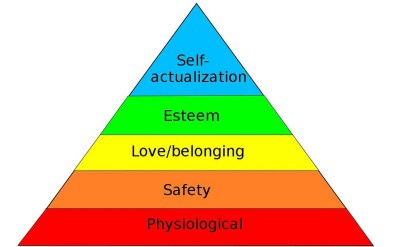
In other words, you need economic justice to give people the opportunity to build their self confidence, to be able to focus on their love life, and to realize their dreams.

And yet, what’s also clear is that economic justice alone will not help someone achieve these higher needs in life.  Having a good salary certainly can make me feel happy and secure, but it won’t in and of itself make me feel loved.

Which is where we come to culture.  First, let’s define culture.  Culture, as I see it, is art, music, language, food, religion, customs, clothing, and so much more.  In short, it is a series of practices that gives life meaning.  It helps us feel rooted.  It doesn’t mean that culture stays stagnant- it always changes.  Yet if we don’t have some reference point for how we interact with the world, our self-esteem suffers and we can feel devalued.  Especially when the surrounding society demands we abandon our culture.

Incidentally, when I did a Google search on the psychological benefits of culture, an Israeli researcher appeared.  Dr. Carmit Tadmor studies the role of multiculturalism as it relates to conflicts in Israeli society.  Both she and the American Dr. Francois Grosjean, whose article helped me find her, argue that biculturalism is a benefit.  That people with more than one culture tend to be more creative, more flexible, more able to wrestle with ambiguity, and more professionally successful.  And quite important for Israel- they are more willing to acknowledge different perspectives and consider their merit.

Considering all the benefits of culture, one can imagine the great harm involved in destroying it.  If access to your culture (and the ability to add new ones) gives people confidence and creativity, stripping people of their culture causes psychological harm.  When a Yemenite child is forced by his Kibbutz to cut off his peyos, his sidelocks, one does not need a great deal of imagination to fathom the psychological harm.  Or, in the case of America, when newspapers advertised jobs saying “No Irish Need Apply“.

This last example is particularly illustrative.  Professor Richard J. Jensen at University of Illinois-Chicago published a book entitled “No Irish Need Apply: A Myth of Victimization”.  He claims discrimination against Irish-Americans was exaggerated.  I’m pretty much always suspicious of someone who uses the phrase “myth of victimization” because it’s used to tell people their pain isn’t real.  To invalidate them.  Perhaps to invalidate themselves.

This attitude, unfortunately, is quite common in the U.S.  I once met a man of Irish ancestry- actually proud of his ancestry but not engaging with directly.  That is to say, he read books, he visited the country, but on a day-to-day basis, the food was cheese dip, the language was English, the music was Sweet Home Alabama- and that’s about it.  When I once asked him about his prejudices towards immigrants- why Latinos, for instance, couldn’t continue to speak Spanish- his answer was telling.

“When my grandparents came to America, they spoke Irish Gaelic.  But they never taught it to us because they were in America.  And here we speak English.  And I’m glad they never taught it to us because that’s not what you’re supposed to do here.”

In other words, he justifies his current prejudice towards immigrants who strive to maintain their culture by citing his own family’s pain- and even justifying that pain.  Invalidating the suffering his family endured.  That continues to leave his family rather rootless today.  And voting for politicians to expel his immigrant neighbors who suffer the same fate his family did.

Which brings us back to Prof. Jensen’s book.  As an American Jew and a Washingtonian, what I discovered made me so proud.  A 14 year old girl, Rebecca Fried, a student at D.C.’s Sidwell Friends School, wrote a thesis disproving Prof. Jensen’s claims.  It started with a simple Google search and she found tons of examples of discrimination, including racist job postings.  Prof. Jensen’s work was a sham- as other professors then began to discover he had an anti-Irish and anti-Catholic ideology.  It’s also sad because his last name is Scandinavian- he clearly has immigrant roots himself that maybe his own family was torn away from.  That he continues to inflict on others.

What makes me particularly proud about this?  First off, she’s a fellow Washingtonian.  We come from one of the most diverse metropolitan areas in the world and it definitely helped me become the multicultural person I am today.  It’s basically impossible for you to live in the D.C. area and not interact with people of different backgrounds and like Dr. Tadmor’s research indicates, this changes your mentality for the better.

Secondly, I’m going to make an assumption – hopefully correct – that Rebecca Fried, daughter of lawyer Michael Fried – is probably Jewish or at least of Jewish ancestry.  The name is so so American Jewish that I’d be surprised if she wasn’t somehow connected to our tradition.  Although America always finds ways to surprise you 🙂

Working off this assumption, a 14 year old girl of Jewish ancestry helped Irish Americans reclaim their cultural identity.  And unravel a hateful argument against them.

Why does this not surprise me?  Because American Jews- perhaps all Jews outside Israel- understand what it means to be a minority.  And- most importantly- if we continue to identify as Jewish in any way we are in fact maintaining our culture.  All American Jews are bicultural.  And therefore we enjoy the benefits of this identity- and understand the challenges.  While we faced (and continue to face) pressure to assimilate in the U.S., our resilience helps explain why American Jews “earn like Episcopalians and vote like Puerto Ricans.”  Which is to say that because we’ve maintained our culture, even though our economics should push us to vote Republican, we voted 71% Democrat in 2016.

Not to say people of different parties can’t be empathetic to immigrants, but in the current climate I think it’s fair to say Democrats are more open to multiculturalism.

I believe our biculturality helps explain why American Jews tend to be more empathetic to refugees and more open to diversity when compared with their Sabra counterparts in Israel.

When Jews came to Israel, they had their cultures ripped from their bosom by the Sabras who already lived here.  Yiddish, Judeo-Iraqi, Ladino- thousands of years of Jewish history were thrown out the window.  Kids were shamed for speaking Jewish languages!  Within just a few generations, many of these languages had become extinct or endangered.  Not because of anti-Semitism in another country, but rather because of other Jews who denied them the right to maintain their culture.  Because of bullies deeply insecure about their own cultural identity.

So how does this relate to social justice?  First off, we started by talking about economic justice.  The Israeli state- especially in its early years- did actually have quite a focus on economic justice.  The social safety net that developed far outpaced anything we have in America.  The government was pretty socialist- this is the origin of the Kibbutz- a commune.  There was (and is) a communist party in Israel- in the Knesset.

And yet there was a blind spot.  Racism.  Culture.  The government may have thought that if it simply erased Diaspora Judaism- the “icky” Moroccan superstitions, the “grating” noise of Yiddish- that it could entice people with money.  With jobs, with education, with healthcare.  To switch their identities.  Not to have both- for example- Moroccan and Israeli identities.  But rather “Israel #1 only amazing awesome nothing better”- that’s it.

Well guess what?  That has never worked in history.  Because what happens when you strip someone of their identity?  Let’s say they have their physiological and safety needs taken care of (not always the case here, but roll with me)- what’s missing?

What’s missing is culture.  Something to root you, to comfort you, to enrich your life.  Because Sabra culture is not a culture- by design.  Sabras when creating the State of Israel wanted to be the “anti-culture”.  That by negating their roots, they were making something new.  True- but the issue is you can’t create something out of nothing.  Your mentality, your traditions, no matter how much you hate them, impact the way you see the world.  And simply by telling yourself that that’s not OK turns you into a monster.  Into someone who hates both herself and- in particular- her neighbors who continue to hold on to the traditions she despises.

I think this explains why in Israel, and in the U.S., the people who tend to be most anti-minority and anti-diversity are the people who had their culture stripped from them.  Who continue to operate in a vacuum of Palestinian falafel they call Israeli and pizza they call American.

The reason Jews have been- and in some cases continue to be- hated in the Diaspora is because of our tenacity.  Our desire to hold on to our evolving traditions even when they’re not the norm.  To celebrate our holidays, to embrace our sense of humor, to learn about our history, to wear a yarmulke, to want to pass these traditions down to the next generation.

Our willingness to remain different while enjoying the best society has to offer, our biculturality, is what makes us queer.  It’s what makes us more complex than economic justice.  Because you can give me bread, but I want roses too.  I want a sense of identity.  And so do Mizrachi Jews and Sudanese refugees and Latinos and Black Americans and religious Jews and Yiddish-speaking Ashkenazim.  As do many people alienated from their cultures- take this opportunity to learn!

In short, the right to a cultural identity not only makes you a happier person, it makes you more empathetic to others, it makes society more progressive, and it makes for less bitter people for the state to rally to hate others.

This new secular year, let’s make it our mission to realize that economic justice is crucial and not enough.  Our cultural identity changes the way we see the world and when we have the right to exercise it, it can help us be better people and make our society one worth living in.

May it be so.
Who’s the Jew now?

This week, something odd happened.  In both my home country of America and my new country Israel the same thing happened.  In America, Donald Trump called African countries and Haiti “sh*thole countries“.  All while he is preparing to deport 200,000 Salvadorans given Temporary Protected Status- to a country plagued with gang violence.  Meanwhile, the Israeli government has decided to deport 40,000 African refugees.  Many of whom live in my neighborhood and I’ve become friends with- from Eritrea, Somalia, even Darfur- the place where so many Jews organized around stopping genocide.  But now- near silence.

In the case of the resident of the Oval Office, I feel absolute fury.  I am disgusted by his behavior and he does not represent me.  This man is filled with hate.  I’m not talking Republican vs. Democrat, liberal vs. conservative- I’m talking sane and humane versus unstable and hateful.  I think back to my Haitian friends who I grew up with, learning West African dance in college, my Ethiopian birthday parties in DC, so much culture.  So much history.  And so much friendship.  And I am sad and angry that the man sitting on Pennsylvania Avenue feels nothing but disgust for it.  It is of course a huge insult to all my African, Haitian, and Black friends.  It is also a shame that he lives such a narrow life.

In particular, there’s not an adequate word to describe my fury and my unbearable sadness at the President’s decision to deport Salvadorans.  They are the largest immigrant group in D.C. and the largest group amongst Hispanics.  I grew up with countless Salvadoran friends- playing soccer, going to school, eating their delicious pupusas, and working together at immigrant advocacy NGO’s.  To be from Washington is to be a little bit Salvadoran.  Salvadorans are not a “they”, they are one of us.  Why a billionaire white dude in a gigantic free house in D.C. gets to decide to violently uproot my friends and send them to a dangerous country- I don’t know.  But I do hope God is keeping score.

Now to Israel.  This is where it gets very emotional.  I’m privileged- even blessed- as a Jew to have a homeland dedicated to my people for the first time in 2,000 years.  I’m grateful for the people who sacrificed so much to build this opportunity for me.  And as problematic as it is to build a new country- and a lot of people Jewish and non-Jewish have been hurt by it- our refuge has kept millions of Jews alive when nobody else cared.  Here’s where the problem begins.  The modern state – not just Israel – almost universally protects certain people more than others.  Some states do this more than others- but do not kid yourself- what we’re seeing in Israel and the U.S. is happening around the world.  Some groups get more and some get less.  And generally, the rich get richer while everyone else is fighting.

Here’s what really kills me about the debate in Israel: I expected more.  I’m angry at the American government and I’m a student of history- I know this is only the most recent in a long string of xenophobic moments.  In Israel, almost every Jew here is a refugee or descendant of refugees.  Indeed Jews- including my ancestors who fled Eastern Europe for America- have been perhaps the most consistently expelled group for the past 2,000 years.  The phrase “wandering Jew” isn’t for nothing.

So what is hard for me to understand is how a people dispersed across the world, banished by force time and again, would not welcome refugees.  I understand the State of Israel privileges its Jewish population (which presents its own series of problems vis-a-vis Arabs, worthy of its own blog).  I’m glad I can move here and become a citizen by virtue of the fact that I’m Jewish.  And I’m deeply disturbed when I meet a refugee from Darfur, a genocide survivor, who has lived here for 20 years and since then hasn’t seen his own family.  And is not even allowed to drive here.  And is about to be sent home to his death by a cruel and unforgiving government.  Why can’t he stay too?

This isn’t just racism.  It’s not just privilege (although I’ll say I’m finally starting to understand how White Christians with a conscience feel in the U.S.).  It’s about heart.

How does Prime Minister Netanyahu and his cronies- and the 65% of Israelis who don’t think we need to care for refugees- justify their cruelty?  Judaism is a religion filled with compassion for the stranger, for the oppressed, for the dispersed.  It is a religion that values life.  It is an ethic that impels Jews around the world to fight for immigrants rights and the environment and healthcare and peace.  We are some of the best progressive activists the world has known.  And yet here I am in the supposedly most Jewish place on Earth and I feel like this government has reduced Judaism to mechanics.  To lighting Shabbat candles, to partying on Purim, to separating milk from meat, to standing in silence on Holocaust Remembrance Day.

But the ethics?  Where are the ethics?  The whole point of religion, as I see it, is to make you a better person.  More empathetic.  Kind.  The rituals guide us towards a more ethical life.  They help us preserve traditions- and help us develop new ones.  All with the goal of being a good human being.

This is the Judaism- and the humanity- that I know and love.  If your love only extends to someone else of your faith or your face- I am hurt by your hate.

Can a modern state- Israel, the U.S., Egypt, Hungary, France, Mexico- anywhere.  Can it really ever be a source of equality?  Will it ever treat its residents equally?  I’m not so sure.  I don’t have a solution yet, but that doesn’t mean I won’t try.  What I can say is the way it is now is not working.  And I’m going to do what I can to make it better.

Tonight I headed to Reform services.  I had been thinking lately about what I could do to support refugees in my neighborhood.  There have fortunately been other Israelis organizing around the issue.  I’m not alone.  I just needed to find a way that fit me.

The other day I found an amazing Ghanaian store near me.  I had a great time chatting with the owner about foufou, batik, the Twi language, and more.  He was quite impressed.  He even said I was Ghanaian 🙂  I bought a beautiful hand sewn shirt from him, as seen in my cover photo.

So on my way to services, I decided to wear it.  I walked through an area crowded with African refugees and one-by-one the West African folks gave me the biggest friggin’ smiles I’ve ever seen.  Parading through South Tel Aviv in African clothes is a statement.  And without saying a single word, they knew exactly what I meant and loved it.

Each time I smiled back.  And my heart grew.  My posture straightened.  My joy increased.

I don’t have the keys to the Knesset or the White House.  I’m not even sure I want them.  But I do have the keys to my heart.  And heart is what I gave tonight.  To people who needed it.

Calling politicians can help.  So can showing some kindness to your neighbors- in any country.

It’s time to stop calling them “refugees”.  Or “the Africans”.  Or people from “sh*thole countries”.

Because first and foremost they are children of God.  No less than anyone else.  Treat them as such and, more often than not, you’ll find a hand stretched out ready to grasp yours.  In friendship.  In love.  In hope.

Be a human.

Wherever I stand, I stand with refugees

As some of my long-time friends know, I’ve always been an advocate for refugees.  My very first internship in college was with Jews United for Justice, a DC organization promoting economic and civil rights.  I personally lobbied my boss to make our Summer “Labor on the Bimah” workers rights event about immigrants rights.  The year was 2006 and Republican Congressmen were pushing a horrific law that would’ve even punished Americans who helped undocumented immigrants.  Even pastors that fed them.

My boss agreed and we organized 30 events around the D.C. area on Labor Day to mobilize Jews- alongside Christians and Muslims- to support immigrants rights.

Part of my job was to find Jewish texts to explain why our tradition asks us to speak out on this issue.  This is what I compiled.

You may be familiar with the verse from Exodus 12:49: “There shall be one law for the citizen and the stranger who dwells among you.”  Or “you shall not abuse a needy and destitute laborer, whether a fellow Israelite or a stranger.” (Deut. 24:14)  Or any of dozens of similar commandments.

I spent much of my career in the U.S. fighting for immigrant and refugee rights.  In the government, at NGO’s, and as a private citizen.  The struggle there continues.  Even this month hundreds of thousands of immigrants and refugees may be deported if the DREAM Act isn’t passed and TPS isn’t renewed.  When I left for Israel, Donald Trump was pushing to ban refugees (and even entire countries’ citizens from visiting).  Not by coincidence, these countries were largely Muslim and the refugees increasingly Syrian.

I rallied and rallied for humanity.  I screamed till my voice was lost.  I was invigorated but also scared and exhausted.  In my favorite moment from one of the rallies by the White House, I met up with a Syrian refugee friend Remi who I had met on Facebook months before and we fought for justice together.

rally pic

This picture is what I believe.  All of us have suffered.  Few peoples more than the Jews.  Having been banished from country after country for over 2,000 years- and butchered along the way- we should be the most compassionate towards those fleeing suffering.  It’s a biblical mandate and it’s rooted in our history.

Many of the Jews living in Israel are refugees themselves- from the Holocaust, from Arab governments who expelled them, from the Soviet Union, from war and famine and anti-Semitism.  Sometimes when people experience trauma, it can be hard to empathize with others.  And there are some people who, after putting in a great deal of effort to heal, are able to see the humanity of the other.  To realize that the Jewish story, while unique, is not the only story of suffering.  And that our own pain must become a source of compassion towards others.

One of the reasons I made aliyah frankly was to get away from the refugee rights struggle.  I was tired.  It’s painful and the American government is eagerly attacking both the foundations of our democracy and of my friends’ human rights.  Since making aliyah, I’ve continued to talk to Syrian refugees in Arabic via Skype through a fantastic program called Natakallam.  Since moving to Israel, it’s now easier to schedule since I’m in the same time zone as my Skype partner Shadi in Iraq 🙂 .  One day, inshallah, we’ll be able to visit each other in peace, as we both want to do.

In the meantime, I thought I had escaped.  And then I met Sadiq.  Sadiq is a Darfur refugee living in Tel Aviv.  I had signed up to tutor refugees in English, but as a newly arrived oleh with my own stress, I didn’t realize just how hard it would be.  Sadiq was sweet and wanted to party at the beach and improve his English.  He worked twelve hour days every day of the week.  And he hadn’t seen his family in 20 years.  I heard about the relatives killed, the homes abandoned, and the pain.  He had survived a genocide.

Yet somehow he had a positive attitude and a beautiful smile.  And a willingness to learn.  I enjoyed learning some Sudanese Arabic from him.  I was just too overwhelmed to continue tutoring.  So I explained to him why I needed to pause our work together and I took some time to reflect and get my life in order.  He understood and I focused on finding an apartment and adjusting to life here.

About two months ago, I found some more stability when I got my own apartment.  I took advantage of some cheap flights and took my first post-aliyah vacation to Cyprus.  Cyprus is amazing and for all its historical problems, the area I was in was peaceful and relaxing.  I was away from the Middle East, from loud Israelis, and from conflict.

Then I saw a woman in a hijab trying to ask a Greek-speaker something.  I went up and talked to her in Arabic.  She was looking for a grocery store.  With my Arabic and my nascent Greek, I helped her communicate with some locals to find it.

We then started chatting.  She asked where I was from, I said Israel.  Turns out Fatima and her family are from Idlib.  They were excited to hear my Syrian accent.  She had a son Muhammad and I chatted with him for a bit.  And another woman, Jamilah, stood beside them.

After they thanked me for directing them to the grocery store, I asked if they were all family.  That’s when Jamilah started crying.  She told me, as she bawled, that she had lost all her family in a bombing in Idlib.  She came to Cyprus from Syria with Fatima and her son, family friends.  And they arrived two weeks ago.

Then everyone started crying.  And telling me about their injuries.  I didn’t know what to do.  I was sad for these people- my neighbors.  And angry at the people who had harmed them.

I did my best to offer words of comfort and gave them information for aid organizations.  Then I handed them a bunch of Euros and got their contact info to pass on to my friends in the field.

In an astonishing act of gratitude, they asked for my phone number because they wanted to invite me to dinner.  Refugees fleeing war, only 2 weeks in Cyprus.  From Syria.  Inviting an Israeli to their house for a meal.  I tear up when I think of the incredible kindness.  What utterly generous human beings, an example for us all.

If our interaction brings some peace and understanding between our peoples, I’m all the happier for it.  And I hope with all my heart they get the help they deserve.  And a future their boy Muhammad can enjoy.

Because in the end, we are all people.  I was recently at a Shabbat dinner and I told a Sabra that I was upset when someone here made a racist comment about African Americans.  She said: “aval zeh lo pogea becha.”  But it doesn’t hurt you.  To which I said: “of course it does.  African Americans are my friends, my classmates, my neighbors.  We are all Americans.”

Which is the point.  We’re all Americans and we’re all humans.  It davka does pogea bi.  The question shouldn’t be “why does this offend you?” it should be “why doesn’t it?”

I live in South Tel Aviv.  Not Florentin, Real South Tel Aviv.  And in my neighborhood, there are a lot of refugees.  From Eritrea, from Sudan, from all over the world.  And despite the hubbub you hear in the news, not only is this neighborhood safer than any major city I’ve lived in in the U.S., but a lot of local residents get along fine.

I’ve met a Sabra girl who only hangs out with African friends.  I’ve met Filipino and Eritrean kids who speak Hebrew fluently- and to my dismay, not their families’ languages.  My elderly neighbors with pictures of Rav Ovadia all over there house love their non-Jewish caretaker.  I’ve met Sudanese Christians who could quote the Torah better than most Jews (in a know-it-all kind of way that suits them as Israelis).

So whether it’s Donald Trump or Benjamin Netanyahu trying to oppress refugees and migrants.  When they’re ignoring our Torah and abusing people fleeing tyranny.  And when the Prime Minister, in the name of my country and my people, is prepared to spend 504 million shekels* to deport refugees.

There is only one answer: no.  Refugees are the world’s problem.  I can’t explain human suffering.  I just know that when someone in is pain, when someone is fleeing death, we should open our hearts and help them.

Your Judaism may be only about helping Jews.  If someone insults or harms another group, you may not see it as your problem.  But my Judaism and my Israeli identity is about helping my people and helping my non-Jewish neighbors.

My own suffering and the suffering of my people is part of why I care so deeply about helping vulnerable people in need.  My Judaism doesn’t stop at the doors of my synagogue nor the borders of my country.


*The government announced a budget that will allot $3,500 dollars to each refugee deported.  And it’s about 3.6 shekels to the dollar.  There are about 40,000 refugees.


A New Year’s Resolution for Israel

Today is the secular new year.  In Israel, fittingly but quite strange for me, they say “shanah tovah”, the typical Jewish greeting for Rosh Hashanah- the Jewish New Year.  It’s a fun night of celebration and also a chance to think of what’s ahead.

For me, this week marks my 6 month anniversary of arriving in Israel.  I’ve learned so much in such a little amount of time.  I’ve visited over 35 cities.  I’ve been to Hasidic dance parties, Mizrachi concerts, dabke dancing, Israeli folk dancing, Yiddish theater, a Russian puppet show, and a Yemenite concert.  I’ve eaten Bukharian, Moroccan, Persian, Ashkenazi, Romanian, Druze, Arab, Kavkazi, Georgian, Indian, Iraqi, Lebanese, Eritrean, Filipino, and so many other types of food.  I’ve davvened with Haredim, Reform Jews, Chabad, and hippie vegan Jews.  I visited a Druze shrine and a Karaite synagogue.  I got to watch Islamic prayer up close and personal in a mosque and I went to an LGBT Orthodox Torah study group.

Not bad for the half year mark!  I’m quite proud of all my accomplishments- moving across the ocean alone, making friends, finding an apartment, adjusting to a new culture, and using all nine of my languages and starting to add Greek!

There has been a lot of stress along the way.  Israel is an extraordinarily hard place to live- or so say Sabras who grew up here.  And while sometimes they exaggerate because whining here is kind of a national sport (and they don’t know much about the challenges faced by people elsewhere), the truth is in many ways they’re right.  And it’s all the more difficult for someone like me who moved here at 31 without an extensive support network.

What’s hardest about life in Israel is also the source of my New Year’s resolution.  The hardest part of life in Israel is the people.  More specifically, the intense and mean-spirited prejudice I experience on almost a daily basis.  Towards me as an American and towards other cultures- especially within Israel.  Don’t get me wrong- there are some fantastic people here, who mostly join me in complaining about the awful ones.  But boy- there is a mean streak to Israeli culture that I haven’t seen elsewhere in the world.  It’s not because I haven’t seen prejudice elsewhere- I’ve experienced it in places like Spain (anti-Semitism), Argentina (homophobia), and the U.S. (all of the above).

The difference in Israel is the intensity and the degree to which many people here celebrate judging others.  I’m someone who deeply values multiculturalism.  I’m well aware that there are limits to it and questions about how far it should extend.  But the basic principle of respecting- at times embracing- parts of every culture to me is second nature and a fundamental way I live in the world.  The good news is Israel is chock full of interesting cultures.  Sadly, that most Israelis know nothing about- and don’t care to appreciate.  While some Israelis are curious about Berlin or America, few are particularly curious about their neighbors who look or talk differently from them.  Let alone their own roots.

The truth is when the State of Israel was being built, its founders despised (and that is not too strong a word) multiculturalism.  Yiddish, Ladino, Judeo-Arabic- these languages were vigorously and shamefully repressed by the state.  Kids grew up with shame about their roots.  And sadly some 2,000 year old beautiful Jewish cultures are going extinct as a result.

The un-rootedness of many Sabras fosters insecurity and prejudice towards those who maintain their heritage.  Just ask many a Sabra what they think of French Jews or Russians who continue to speak their languages here.

There has been somewhat of a resurgence in interest in cultural diversity, but it needs to be nourished.  And that’s where I- and you- come in.  There are Israelis like me who are proud of our origins.  There are Israelis- I’ve met them- who realize you can speak fluent Hebrew and still maintain (or re-learn) your French or Russian or Arabic or Romanian.  There are many who don’t realize that because they’ve been trained to revile the Diaspora.  And that’s very sad.

But in the end, I believe in multiculturalism and I’m convinced there are some people here who are ready to join me in this movement.  I want to celebrate the incredible cultural richness here- of Jews, of Arabs, of refugees, of everyone.  It is a gift that must be cherished to be protected.

It is no longer acceptable to me that when I tell my Sabra friends that I met Aramaic-speaking Christians or Samaritans who speak Ancient Hebrew or Eritreans with an awesome juice bar that their reaction is: “wow I didn’t know that was there- you’ve seen more here in 6 months than I’ve seen in a lifetime!”

Bullshit.  Time to get off your hummus-filled tuchus and get to know the richness of your country.  No- not the high-tech.  The cultural treasures right underneath your nose waiting to be discovered.

It’s time to leave behind the old-fashioned Zionist concept of the “effeminate”, “decadent”, “overly pious”, “cosmopolitan”, “weak” Diaspora Jew.  It’s 2018, time for a change.  It’s time to realize the “Diaspora” is The World.  And lucky for us, a whole bunch of people from all over the world have made this country their home.

Now it’s time to realize that if we understand where we came from, our cultures, our heritage- it doesn’t negate our Israeli identity.  It thoroughly enriches it.  Just like my delicious cover photo of Pringles, Russian sweets, Korean seaweed, and Israeli Bissli that co-exist at my neighborhood store.  Pluralism that begins with culture can increase respect between all sectors of society.  And instead of Jew hating Arab hating Zionist Orthodox hating Haredi hating Secular hating Mizrachi hating Ashkenazi- maybe, just maybe, we build just a little bit more understanding and a lot less hate.

Ken yehi ratzon – may it be God’s will.  Inshallah.  Ojalá.  Mirtsashem.

Let’s do this y’all. 🙂

The most diverse Israeli day ever

Today, I did too many things to write a story.  So I’m going to list them:

-I spent a train ride talking in French with an Orthodox Jew of Moroccan origins who immigrated from France.

-I hung out in an underground pool with arches built in 789 by the Abbasid Caliphate in a boat.  And then I wrote an Arabic poem while inside!

-I met Peruvian (Jews?) and talked in Spanish about my friend Claudia who did Peace Corps in Peru.

-I visited a church from the 1200’s with a super hot Arab security guard whose smile and kindness melted my heart.  Can you say “return visit”?

-I bought a CD of Iraqi music in Arabic sung by an Iraqi-Israeli Jew back in the day who was born in Iraq- for 10 shekels!

-I talked about Ethiopian music and Sigd in a store covered in Amharic and Hebrew signs.

-I watched Karaite Jews pray Ma’ariv evening prayers.  Most of them are of Egyptian origin, so I chatted with them in Syrian and they responded in Egyptian Arabic.

-I made friends with an Israeli soldier when our trains got messed up and delayed and we had to switch lines.

-I did dinner in a mixture of Hebrew, English, and French with a Sabra and a French non-Jewish PhD student…whose family is from Guadeloupe!   We talked about our shared love of Zouk.

-I danced dabke for easily three hours with young Arab students.  A German exchange student came and I helped a talented dancer in a hijab translate dabke instructions into English (and a little Yiddish, which he can largely understand!).

-I then hung out with said wonderful German exchange student for another three hours walking around Tel Aviv and talking about life here.  He is one of the most open-minded, non-judgmental, kind people I’ve met here.  He’s not Jewish and I couldn’t imagine that a non-Jewish German would make my night…in Tel Aviv!

-Thinking no more cultural richness was possible, I hopped into a cab.  The Israeli man turned on the music (without lyrics) and asked me to guess where it was from.  Within 5 seconds I said “Thailand!”  I love Thai music and used to buy it at the Thai grocery store back home.  He was shocked.  His wife is Thai and he lives in Thailand with his children, only coming back to Israel to care for his parents.  He speaks fluent Thai- as do his biracial children.  He was mightily impressed that my favorite Thai dish is Pad See Ew- he says everyone says Pad Thai!

This is what I have to say- today I spoke English, Hebrew, Arabic, Spanish, French, and Yiddish.  Just last week I also spoke Catalan, Portuguese, and Farsi (with both Persians and Bukharans).  If you have the curiosity, the passion, and the will- you can experience more cultures here than you can count.  I live in a neighborhood where I regularly meet Iraqis and Moroccans and Syrians (Jews) and Burmese and Sudanese and Eritreans (non-Jews)- I even had someone tell me her friend is half Ghanaian half Filipina.

When people find out I’m a polyglot, they often tell me “what do you do with your languages?”  Sometimes it feels accusatory- “why aren’t you making a ton of money off of them?  Why aren’t you working for the government or the military or the CIA?”

You know what?  What I do with my languages is what I did today.  I explored ancient civilizations, made new friends, learned about other cultures, danced, sang, wrote poetry, and built bridges of peace.  I felt happy 🙂

If you can show me something more valuable or enriching than that, be my guest.

In the meantime, I’m just happy to live in one of the most diverse countries on the planet.  Where the combination of things I did today is only possible here.  One person today said to me “but honestly what is there to see in Ramle?”- one of today’s destinations.

The answer: “everything, if you’d just open your mind.”