How an Arab saved my Shabbat

Shabbat shalom!  I don’t typically blog on Shabbat.  I usually go to shul, have a meal, and chill with friends.  But tonight, I had a very unique night.

First, I started off at Reform services.  They were musical and fun.  They start at 6 so that ended pretty early, leaving me with an empty evening alone.

To avoid feeling lonely (aliyah is hard and this has been a hard week), I did something I don’t typically do on Shabbat which was to go to a movie!  It was my first time in a movie theater in Israel, so I said a Shehecheyanu and watched Logan Lucky, a film starring Channing Tatum (mmmm!) about some rednecks in West Virginia robbing a Nascar race.  Dudn’t get more ‘Murrican than that!  Honestly, I probably wouldn’t have seen it in the U.S. (although, Channing Tatum), but here it felt perfect.  I laughed at all sorts of things the audience didn’t get and I relished hearing some southern accents, which you don’t hear much around here.

After I left the theater, my friend invited me to Arisa, a gay Mizrachi music dance party.  I love Mizrachi music (it’s my favorite music in the world) and have been aching for months to go to this event.  My friend was running later than me, so I showed up alone.  The security guard patted me down and then asked me to empty my pockets.  I’ve been to a lot of clubs around the world and I appreciate the need for security, especially in Israel, so I did as I was told.

He then noticed my circular pill case.  Without my permission, he tried to open it.  He was opening it the wrong way so that all the pills would fall out if he succeeded.  I told him to stop and that I would open it for him.  Again, I was already feeling really uncomfortable with this invasiveness, but I understand the need to avoid drugs getting into the club.  I explained to him what the medications were for and the names of the prescriptions.  There is also some writing on the pills, as is typical for prescription medication.  At this point, the guard and his colleague, without my permission, start thumbing through my medications and grabbing the actual pills.  I told them to stop but they ignored me.  Meanwhile, I was having to explain my medical issues in front of other patrons who were waiting behind me.  A female guard even told me that I couldn’t enter the club with my pills.  Eventually they let me in, but I was so angry, embarrassed, and humiliated that I just left.  This is a disgraceful way to treat a customer and to handle someone’s medical needs.  If you can’t distinguish a prescription from ecstasy, you probably shouldn’t work club security.  I plan on contacting them through their Facebook page because I was so insulted.  I won’t complain if you join me 🙂 .

Feeling blue, I headed to Yafo, perhaps my favorite part of Tel Aviv.  My friend got tired so we didn’t end up meeting up.  I was just exhausted.  After a long week, the last thing I needed was some random guy grabbing my very personal medications.

I headed to my favorite baklava shop to see my friend Seger, an Arab from East Jerusalem.  He’s a wonderful, fun-loving guy in his early 20s.  And when I entered the shop, by coincidence, he was blasting Mizrachi music- the same music I was supposed to hear at Arisa.  He gave me free knafeh and we talked in Arabic and caught up.  He showed me his favorite Arab singers and I taught him some English.  I even came out to him and his immediate reaction was to show me on Facebook his gay Arab friend.  I had been nervous about coming out to him, but not a split second passed before I felt comfortable again.  It’s good to feel like you can be your full self.

The night was coming to an end as he closed up shop.  As this is Israel, things went from sour to sweet.  And not just because of the heavily discounted baklava he gave me.

Seger put on Sarit Hadad, whose first CD was my first CD when I was 13, and blasted the music.  We started to dance.  Then, people walking by start dancing.  And before you know it, I’m having my own gay Mizrachi dance party.

I gave Seger a hug and we wished each other Shabbat Shalom.  I told him my night really sucked before I walked into his store and that he made me feel happy.  Since we’re now Facebook friends, he might even be reading this blog.  Thanks man 🙂

Would it have been fun to dance in a room of 500 beautiful Israeli men singing to my favorite Mizrachi songs?  I think so.  And maybe I will find out one day if I’m treated with dignity there.

In the meantime, screw Arisa.  I don’t need to pay 120 shekels to have a gay Mizrachi dance party on Shabbat.  I just need to hang out with an Arab friend at a baklava shop.

You know you’re in Israel when an Arab saves your Shabbat.  Eid Mubarak indeed.

Kosher Curry in Ramle

This morning, I felt like crap.  Making aliyah is hard.  I’m far away from my friends and my D.C. Jewish community.  I’m alone.  I’m adapting to a new culture and country.

To shake off the blues, I decided to go on a tiyyul (trip) to Ramle (which can also be spelled Ramla).  A small and fairly poor town, it’s not usually on Israeli or foreign tourist maps.  I went several hours without seeing a single tourist.  And that’s exactly what I needed- somewhere a little quieter and off the beaten path to unwind from the hectic and exciting energy that is Tel Aviv.

First off, Ramle reminds me of the D.C. suburbs where I grew up.  It’s quiet, has about 70,000 residents (almost identical to where I lived before Israel), it’s calm, and it’s diverse.  Much like Montgomery County where I’m from, there are mosques, synagogues, and lots of churches.  I kind of miss seeing churches sometimes.  Ramle is a “mixed city”, meaning there are significant Jewish and Arab populations (and even Karaites!).

20170824_150201

I started my adventure at what American Jews might call a “tchotchke store”- odds and ends.  What immediately caught my eye were tons of cheap CD’s- of music I adore.  For 10 NIS a piece ($2.80), I bought Jewish music from Iraq, Tunisia, and Morocco.  As I paid for my CD’s, I noticed all sorts of amulets knows as hamsas.  Some were in Hebrew, obviously for Jews.  Yet I noticed some in Arabic.  I asked the store owners, who themselves were Russian Jews, whether the Arabic hamsas were for Arabs or Mizrachi Jews or both.  They gave the most beautiful answer: “they’re for everyone.  Jews, Muslims, and Christians all need protection from the evil eye.”

I then made my way to an Indian restaurant owned by Indian Jews.  It’s vegetarian and closed on Shabbat, which makes it Kosher in my book, but I’m not sure if it has a teudat kashrut.  I badly miss the ethnic cuisines of America- especially Thai (no, the Thai food in Tel Aviv is not that great), Chinese (cheap, delicious Chinese food of Rockville Pike), and Indian.  As soon as I entered the place, I knew I had made the right decision.  The smells wafted over me as I began to smile.  I sat down by myself and ordered pakora, palak paneer, and naan.  The waiter’s Hebrew wasn’t strong so I spoke to him in English.

20170824_155807

At this point, a woman came over to me and asked if I was American.  Turns out, not only is she American too, she’s a half-Persian half-Indian Jew from…Bethesda, Maryland!  Exactly where I lived before making aliyah!  And she knows one of my rabbis from D.C.  The odds of this happening are infinitesimally small.  She’s a tourist, I don’t even live in Ramle.  There are 6 million American Jews and over 326 million Americans spread across 50 states.  What are the odds!  Reminds me of that famous Hebrew school song “Wherever You Go, There’s Always Someone Jewish“.  It’s cool to be part of an international 3,000 year old club.

20170824_174556

After this amazing coincidence, I walked through a bustling marketplace, where unlike in Jerusalem or Tel Aviv there are no tourist traps.  Just lots of grapes and candy and tomatoes.  I stumbled upon a Turkish synagogue and then a Tunisian one.  Without asking permission (because that’s how we do in Israel), I just walked in and talked to the janitor who is also a congregant.  His name is Zion and he grew up in the synagogue.  He made aliyah from Tunisia at age 5.  He showed me an original Torah scroll, hundreds of years old, brought from Tunisia.  He also handed me a book which had all the traditional Tunisian Jewish piyyutim (liturgical poems).  Everything in the synagogue was handcrafted and beautiful, including the stained glass.  I told him maybe I’d come pray with them some day.  What a treat.

20170824_181218

As I walked by a Crusader monastery, I heard a car blasting Middle Eastern music.  I thought it was Arabic music, since the town is 20% Arab.  But as I listened more closely, I realized it was Mizrachi music, the music of Middle Eastern Jews.  That’s Ramle for you- a town where you don’t know exactly whose culture the music belongs to.  Where ethnic boundaries are blurred and mixed.  Where Russians sell Arabic amulets, where Tunisian Jews pray next to Turkish Jews, where mosques and churches dot the landscape next to synagogues.  Where Indian Jews prepare American olim kosher curry.

Some people might say there’s not a lot to see in Ramle.  To which I’d say I suppose it depends on what you want to see.

As my bus headed back, all I know is my eyes gazed more towards the fields around the town than towards the skyscrapers awaiting me on the coast.


One Night in Jerusalem

Tonight in Jerusalem was the most jam-packed, exciting night I’ve had in Israel.

It all started with an act of startling generosity.  I was checking out some artists’ studios in Jerusalem and found this particularly beautiful one.  I talked with the artist about her work- including this amazing painting where at first you don’t notice there are people built into the painting and then as soon as she pointed them out, it became obvious.  She said she was inspired by the Exodus from Egypt.  When I told her I was an oleh chadash (new immigrant), she congratulated me and told me “you’ve already made your Exodus”, perhaps the nicest thing anyone has said to me about my aliyah.  She told me she made aliyah from Russia when she was six years old and I felt an instant bond.

We talked about art- I told her I was a poet and a singer and we connected on Facebook so she can see my work.  She asked if I drew and I said I have done a little bit but nothing serious because I hadn’t been taught the techniques.  She said one of the most beautiful things I’ve ever heard.  She said when you’re looking for an art teacher, don’t look for technique.  Look for someone who can help you deliver a child.  That sounds strange in English but beautiful in Hebrew.   “Leyaled” in Hebrew means “to midwife”.  Her point was that the person who teaches you art is supposed to help bring something out that already lies within you and needs to be discovered and nourished.  To help you give birth to a new sense of creativity.  I love it!

On my way out, she gave me a free handmade notebook she had created so I could write my poetry.  I made a new friend in the course of 20 minutes in a way that could take literally years in the U.S.  If you’re reading this Dina, thanks for making my night great 🙂

Then, I asked for directions to the central bus station, but I noticed there were lots of police cars.  I asked the security woman what was going on and she said there was a concert.  I asked who and she said “Shlomi Shabat“, one of my all-time favorite Mizrachi singers.  I bought a ticket immediately and headed to the concert with a new sense of energy and excitement.  Also, the concert was held in a stadium inside a 2,000 year old pool called Breychat Hasultan (The Sultan’s Pool).  So it pretty much doesn’t get any better than that.

Except it does.  On the way to the concert, you have to walk downhill.  On the way, I discovered there was some sort of international festival going on.  There were vendors from all over the world- just off the top of my head, I saw artisans from Panama, Uzbekistan, Zimbabwe, Mexico, the Czech Republic, and so much more.  I made a special point of stopping at the Spanish-speaking countries’ booths because I miss speaking Spanish and Latin culture.

I spent a good 15 minutes speaking with a Chilean woman who was really amazed at the cohesiveness of Israeli society.  This is interesting because a lot of Israelis feel we have a very divided society.  She pointed out that a lot of countries in Latin America feel unstable and on the brink of civil war.  She talked about Venezuela and how she feared the country would descend into further chaos (a conflict Americans know little about even though it’s in their own hemisphere).  That she felt there wasn’t any glue that bound that society together.  It’s an interesting thought- that for all the conflict here, there is most definitely a strong social connection here that keeps things together despite the tensions.  I think the United States would benefit from such a glue right now, because I had the distinct feeling when I lived there that there wasn’t really anything that united us.  There are sociological reasons for it, but I hope that Americans can learn something from Israel which is that a sense of social solidarity- even with people you don’t always agree with- can help you overcome difficult moments in history.

Then, I headed to the concert.  It was amazing!  Thousands of people singing and cheering.  Israeli flags waving.  Song after song that I’ve sung- some of which I remember listening to on a CD in my living room as a 13-year-old- 18 years ago!  Some Israelis like to hate on Mizrachi music.  I can understand that everyone has different tastes, but for me it is literally the best music on the planet.  It’s danceable, it’s full of religious imagery, it’s fun, it’s upbeat, and it’s full of emotion.  Here’s a song I like by the artist I saw tonight to give you an idea of what it sounds like.

After the concert, I grabbed a cab to the Central Bus Station.  The driver was Arab, so I spoke to him in Arabic, which made him very happy.  Ahmed and I talked about dialect differences between Yafo and Jerusalem, his relationship with Jews (pleasant but not very deep because their neighborhoods are so separate in the city), and the importance of language in building relationships (he decided to learn Hebrew to learn about his neighbors).  We talked about how crappy politicians are and that the real key to building peace is what we were doing- talking to each other.  I tried to give him a tip but he wouldn’t let me.  A truly kind and open-minded person.

Before getting on the bus to Tel Aviv, I heard loud music.  Sure enough, behind me were a bunch of Breslover Hasidim dancing to techno music about their patron rabbi, Nachman of Uman.  I started filming them and then just joined in.  Because life is fun if you jump in!

I then headed to the bus.  Now this part sucked at first.  The ticket people oversold the bus- and this ride is over an hour long- so some people were standing or sitting in the aisle.  I was one of those unlucky people.  The bus was bumpy and it felt really unsafe.  Frankly, it was the most unsafe I’ve felt in Israel.  Which is interesting consider how the news media obsessively cover the Israeli-Palestinian conflict when really bad drivers are a way bigger threat to security.

Things in Israel often rapidly shift from amazing to awful and back to amazing again.  My evening had been going great and then BOOM this was my plummet downwards.  Once I got tired of my head banging against the seats as I sat, I stood up and started talking to the people in front of me.  I chatted with one woman who, when I told her I was an oleh, told me her niece just moved here from New York.  She said she is a soccer player and doesn’t know anyone here.  Turns out she lives around the corner from me and I offered to show her around.  A new potential friend.  The woman also told me I had great Hebrew, which helped lift my spirits.  Meanwhile, the young woman next to her was worried about missing her train back to Haifa at 1am, so the woman I was speaking with simply offered her a place to stay.  They literally just met on the bus.

And just like that, my spirits began to lift as we approached the bus station.  Any time I feel down in Israel (which, to be honest, happens almost every day at some point), I remember that things here turn on a dime.  And that if I’m feeling sad or angry, things will turn for the better quickly and suddenly.  And it works.  It really happens.

This is a place with some serious sense of social solidarity, generosity, and kindness.  Not words you’d typically associate with the Middle East, but they are absolutely true so please stop reading the New York Times and just come and experience it yourself.

A free notebook.  A Mizrachi concert.  Chileans.  An Arab cab driver learning Hebrew.  Dancing Hasidim.  And new friends on a bumpy bus.

One night in Jerusalem.

Dancing on Roman ruins

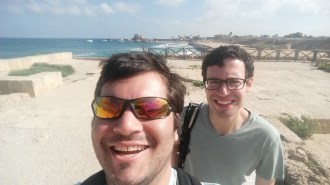
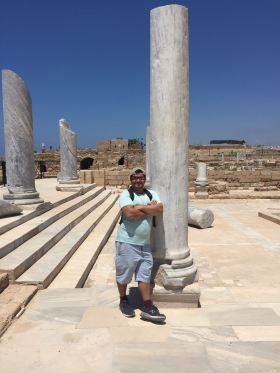
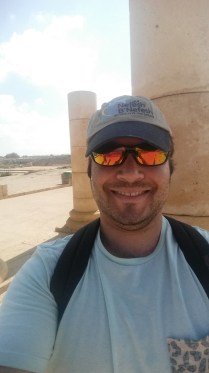
Wednesday I went to Caesarea, a beautiful seaside town of fourth century Roman ruins.

On my flight to Israel, I met a fellow oleh chadash (new immigrant) named Ari. We’ve become fast friends and recently he made the wise observation that I’ve spent almost all of my time in Tel Aviv and that we should go explore other parts of the country. Since he has a British accent and all things sound wiser that way, I obliged him.

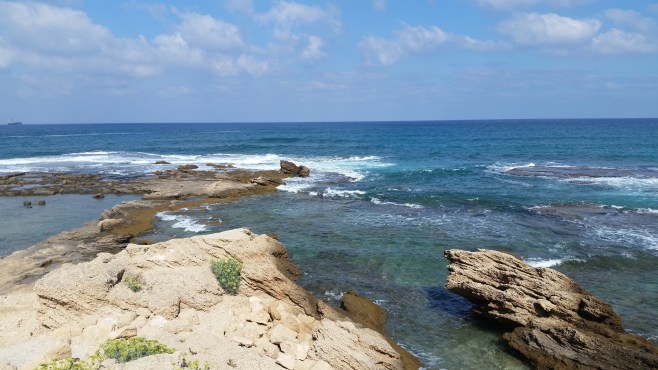
I could spend this blog telling you about the amazing Roman, Byzantine, and Ottoman ruins. Or the crystal blue sea. Or the snorkeling Ari and I did.

Instead, I’d like to tell you about our cab driver, Akiva. Before I get to that, look at the cool pictures below of our trip!

20170802_09160220170802_092206.jpgIMG-20170803-WA000120170802_092233

When Ari and I got off the train, we had trouble finding the right bus. Caesarea is the opposite of Tel Aviv- it is completely in the middle of nowhere, so it is hard to get around.

Instead of waiting for buses, I ran and hailed a cab dropping someone off and we got in.

The driver’s name was Akiva. Akiva is a Persian Kurdish Jew. He speaks some Farsi and fluent Kurdish. His mom made such good Kurdish food that he said he’d pay $500 just to taste her food again (she passed away at 82).

Before dropping us off at Caesarea, Akiva tells us he can show us the graves of ancient rabbis if we call him for a ride back.

After a day of fun and exploring and a little bit of sunburn, I called Akiva.

Twenty minutes later, Akiva comes walking down the street and tells us to follow him. He said the guards wouldn’t let him bring in his car.

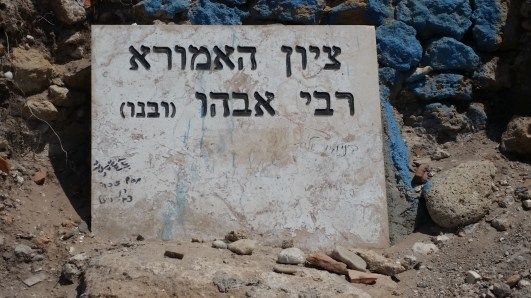
We walk 10 minutes down the road and he motions for us to literally climb with him down a cliff. We make our way down and there is the grave of Rabbi Abahu, one of the Amoraim (great scholars of old- and by old I mean 1700 years old). Rabbi Abahu was actually from 3rd century Caesarea- something people who deny Jewish history in this land would be wise to remember. Our cab driver was not bullshitting us- there’s an actual sign and little books of Psalms that you’re supposed to recite. We leave stones on the grave in the rabbi’s memory.

20170802_141808.jpg

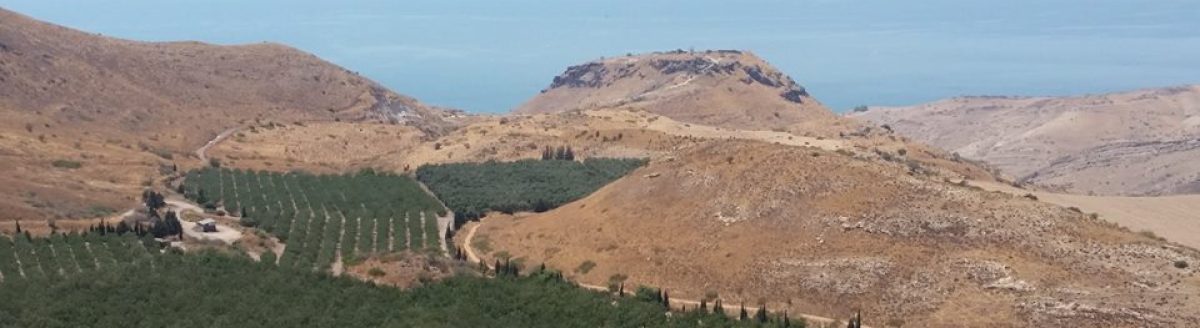
It’s customary to pray for something when visiting the grave of a great rabbi. I prayed for our driver Akiva, my friend Ari, for me, for the Jewish people, for the whole region, for the victims of the war in Syria, and for the soul of the rabbi himself. I’ve never prayed at the grave of a rabbi- it was quite a moving experience, especially with the beautiful sea breeze and sound of the waves crashing behind us. Could Rabbi Abahu have ever imagined that his people would return to their homeland 2,000 years after the Romans brutally forced them into exile? I wonder if he prayed that one day his descendants (us) would visit his tomb.

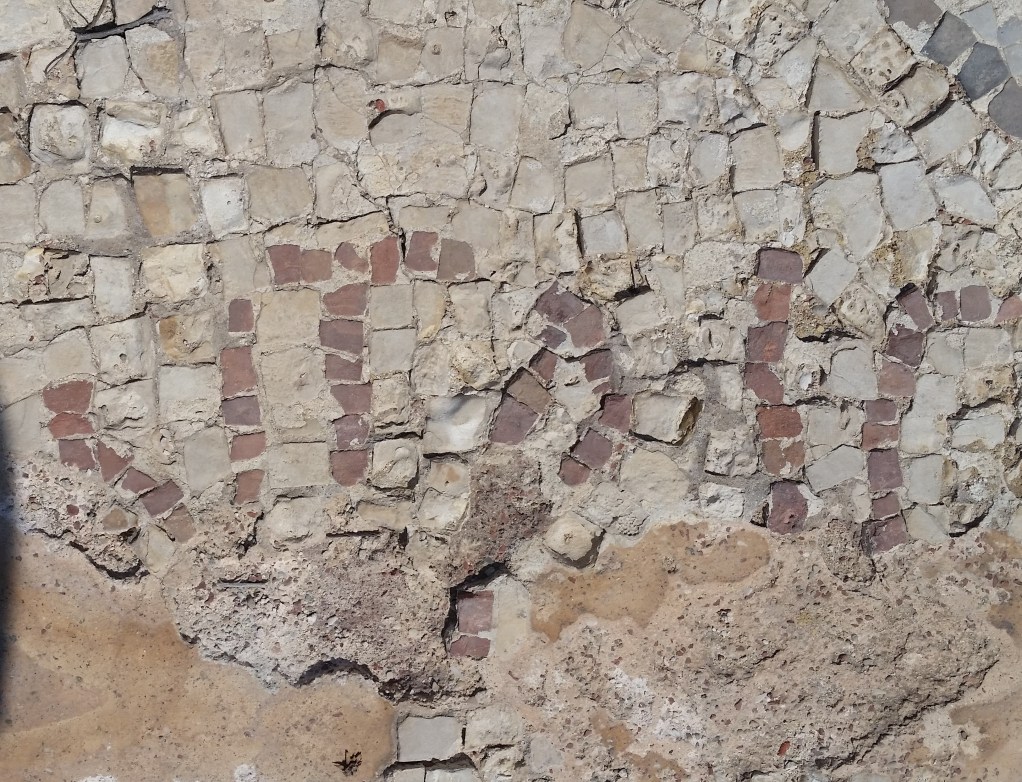
Akiva walked us back up the cliff (it’s worth pointing out that Akiva is probably 70 years old and there’s no cab meter running- this is just out of the generosity of his heart). Then he walked us to another site- an ancient synagogue mosaic. You could even see some Hebrew writing among the tiles. According to (our) Akiva, the famed Rabbi Akiva (1st century C.E.) was buried there as well after he was mercilessly tortured by Roman soldiers.

20170802_143842-e1501711832736.jpg

First off, I’ve never felt more connected to the land of Israel. Not just because of the stunning scenery that constantly keeps me in awe that I actually live here. But also because my ancestors walked this land. They defended our faith and kept our culture alive so that I can reap the benefits today and pass on that tradition to future generations.

Akiva, our wonderful cab driver, is the epitome of the best of Israeli society. After spending a good 20-30 minutes with us exploring these historic sites, he asks us to follow him again. This time, we headed towards the car. It was another 15 minutes down the road.

This 70-year-old man took an hour out of his day in pummeling heat to show us our heritage. Not because he had to, just because he is kind and he is proud of his people. There is a depth of generosity here- true, unrewarded, and authentic- towards strangers that I have never seen in any other place in the world.

Perhaps that is because we’re not strangers. Akiva, Ari, and I- as different as we might be- our stories are intertwined. We are not strangers. We’re more like long lost family getting reacquainted after a long and painful absence.

There is nothing sweeter in the world than for three Jews to dance on Roman ruins.