Hope

A quick glance at the news is enough to make your stomach turn.

Today over 20 Iraqis were massacred by their government.  Hezbollah thugs attacked peaceful protestors in Beirut.  Donald Trump continues to abandon Kurdish allies to Turkish aggression in northern Syria.  Settlers attacked IDF soldiers in the West Bank.

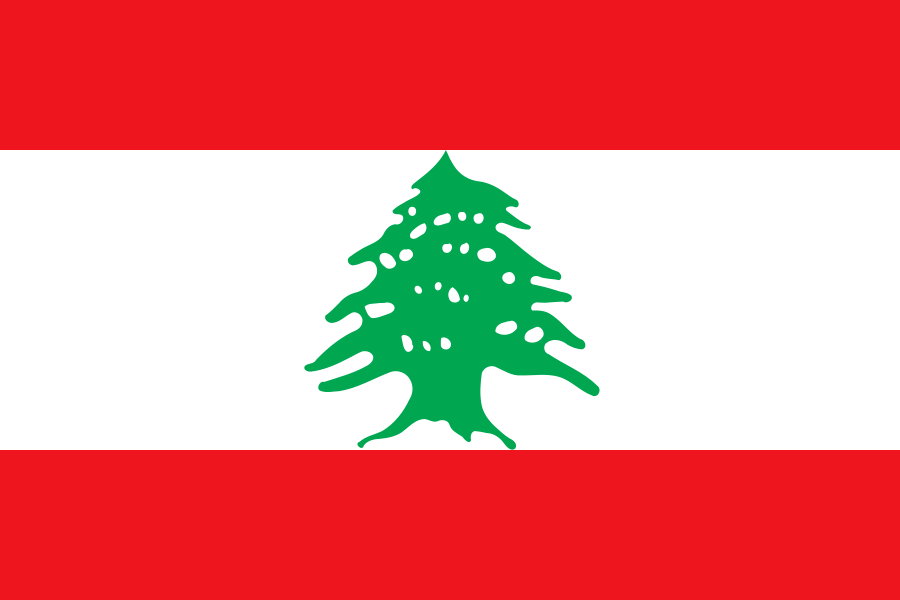
And yet there are rays of hope.  The protestors in Beirut, in particular, inspire me.  Fed up with ineffective government, they have put aside their (numerous and strong) sectarian affiliations to push for a clean house.  Sunnis are protesting Sunni politicians.  Shiiites, Shiites.  Christians, Christian leaders.  The rallying cry of these protestors is beautiful: “kullun ya3ni kullun”.  All of them means all of them.  Meaning not a single politician is being spared the anger of these idealistic protestors.  People brave enough to speak out as the country experiences a severe economic crisis and in a place where politicians don’t take kindly to criticism.  A place that has known Civil War.

They are a role model for what we should all be doing.  Instead of engaging in ceaseless blaming of one group against another, we should realize that the people up top enjoy this conflict.  While we tear each other to shreds because we pray or speak or look differently, our basic needs go unmet.  Patients die because of lack of care, trash goes uncollected, jobs become more scarce, and the rent continues to skyrocket as if none of it was happening at all.

It’s time to unite against the few who control our fate and yet care so little about it.  Israel could learn a lot from the Lebanese protests, especially as Benny Gantz is now charged with trying to form a government.  If he doesn’t, we will see a third round of elections in a country already fed up with voting over and over again.

Much like its neighbor to the north, Israel’s political parties are almost entirely divided by ethnicity and sect.  There’s the Sephardic ultra-Orthodox, the Ashkenazi ones, the secular left, the secular center, the secular center-right, the modern Orthodox, the Russians, and the Arabs.  In Lebanon, the names are different, but the concept the same.  A gaggle of Christian sects, Sunnis, Shiites, and Druze jockey for power based on group labels.  An entire bloody civil war was fought over it.  It’s depressing.

And yet there is this ray of hope coming from the north that sometimes people can put aside their partisan and sectarian labels and come together for the common good.  My hope is one day Israelis will be able to do the same, as they briefly did when they protested against rising house prices.  Perhaps the most salient issue in Israel today, yet one repeatedly shunted aside in favor of endless ethnic conflict both within and externally.

This is not easy.  But my hope is that the fervor gripping young Lebanese people can inspire Israelis to follow suit.  Only by putting human interests first will we be able to make the difference we need to see in the world.  And perhaps one day, God willing, we’ll see Lebanese and Israelis joining together in protesting for justice.  In one straight line from Beirut to Tel Aviv, like the British colonial trains used to run.  If you will it, it is not a dream.

Shabbat shalom.


Repose

One of the things I’ve been thinking about lately is the concept of rest.  And with it, the concept of work.  Shabbat, after all, is about ceasing to work.  And yet we do all sorts of things on Shabbat even in the most Orthodox setting- walking, eating, drinking, chopping fruits and veggies, talking, and more.  Sometimes these activities require real effort- conversation doesn’t always come easy, especially with certain guests at your table.  And inevitably, walking to synagogue or a friend’s house could be quite a shlep depending on where you live.  Shabbat is about ceasing to work- but it’s not about ceasing to do.

Which leaves open the question of what is work?  The traditional understanding of the concept is that one should not be productive on Shabbat.  In other words, no cooking, no receiving money, nothing that involves creating new things.  From this point, new laws evolved that today are deeply contentious among various types of observant Jews- Reform, Conservative, Orthodox, and otherwise.  For example, Reform and Conservative Jews typically use electricity whereas Orthodox Jews do not believe this is Shabbat-appropriate behavior.  This is related to the concept of kindling a flame, which in olden times was typically used to cook.  Most liberal Jews would say Orthodox observance takes the concept too far and many Orthodox Jews feel it is simply religious law taken to its logical next step.

So let’s work from the premise that while we have differing interpretations of productivity, the concept of work in Judaism derives from this fraught word.  In the modern world, being “productive” is sometimes valued above concepts clearly more important.  And more critically, productivity is defined according to a certain sliding scale where certain professions and courses of work are valued above others.  After all, why does a banker or lawyer make many times the salary of a teacher?  Is an unemployed person firing off resumes every day less productive than the career coach being paid to help her?  And finally, do we sometimes come to a juncture in life where certain other goals, be it health, relationships, or something else unmonetized should take priority over productivity?  Are these other paths of living less worthy because they are unpaid?

The answer is no.  Sometimes the doing we do isn’t work in the traditional sense.  Reconnecting with a long lost friend, apologizing to someone you’ve hurt, going to the doctor to get a scary lump checked.  These are all things that require courage, action, and perseverance.  And yet our society doesn’t monetize them so the people doing these brave activities often go unnoticed.  Especially in such a heavily capitalist culture like the United States.

This Shabbat, I propose we redefine work and productivity.  Sometimes the work we do is personal in nature or is unpaid.  That’s OK- it counts as effort too.  And if you’ve created something new in the process, you’ve been productive.  If you’ve gotten new answers to important questions, you’ve been productive.  If you’ve helped someone in need, you’ve been productive.  It’s time to let go of our calculators and realize there are many ways to make a difference and to create.  Sometimes intangible things that last a lifetime.

Shabbat teaches us to take a break from productivity.  It’s not enough to simply not go to an office.  It’s about creating an intentionality dividing the hard work you do during the week- whatever it may be and however you define it- and cultivating the inner self.  Finding a time for repose, relaxation, song, meals with loved ones, and a deep breath before the cycle begins anew.

This Shabbat, I wish you the courage to acknowledge all the ways you’ve been productive this week, even if they aren’t written on a pay stub.  And to allow yourself also to breathe, to take a break, and recharge.  We aren’t robots- we have to recline from time to time and let ourselves enjoy.  Let ourselves smile.  And let ourselves rest.

Shabbat shalom!

A good example of why I’m a Reform Jew

This week’s Torah portion is Ki Tetzei.  It is filled with lots of rules, more mitzvot (commandments) than any other portion- about a tenth of the 613 listed in the Torah.  Some of them are truly amazing, such as not gleaning your fields- designating part of your harvest “for the stranger, for the fatherless, and for the widow.”  It’s a reminder that we can’t do everything on our own.  When we farm, we benefit from soil, from rain, from other people’s labor and efforts- and a whole series of factors outside our control.  So harvesting grapes or any other plant is an intensive process that relies on a mix of luck, God’s good Earth, and hard work.  In acknowledgement that not all of this is in our control, we give back to the community and leave part of our fields for their benefit.  It’s an incredibly progressive concept and one we should continue to keep in mind today as we consider ways to give back to the community and people in need.

There are a series of other commandments in this portion that fit into a category which I find personally meaningful and contribute to society.  There are others, such as the need to wear tsitsit (the knotted fringes you might see some Jews wearing to this day) that seem either neutral or potentially positive depending on how you utilize the tradition.

And then there are those that are abhorrent and morally repulsive.

This portion includes a verse commanding men to wear men’s clothing and women to only wear women’s clothing – which some Jews to this day interpret as meaning women can’t wear pants and of course against the concept of men in any sort of “feminine” clothing or drag.  It’s something I consider personally offensive, retrogressive, and repressive of individual freedom of expression and identity.  If you consider the time it was written, we can perhaps dismiss it as a vestige of ancient ways of thinking about gender.  Ways we’re glad are being reformulated today in a more open society.

Where does this portion get really rough for the liberal-minded reader?  As Rabbi Suzanne Singer points out, there are some violently sexist portions of this text, including commandments that say:

A soldier may possess a captive woman and forcibly marry her (Deut. 21:10-14)

A bride accused of not being a virgin sullies her father’s honor, so proof of her virginity must be brought forth (Deut. 22:13-21)

A woman who is raped in a town is presumed to have given her consent if she did not scream (Deut 22:23-27)

A rapist must marry his victim; adultery involves a married woman with a man other than her husband, whether he is married or not, as the crime involved is messing with a husband’s property (Deut. 22:28-19)

A widow who has not produced a male heir must marry her dead husband’s brother to produce a son who can carry on the name of the deceased (Deut. 25:5-10)

These are verses so aggressive that I can barely read them and consider them a part of my tradition.  And yet they are.

So what do we do when our sacred text not only doesn’t match our values, not only offends, but also intrinsically opposes our most basic human ethics?

There are a variety of possible responses.  Some people prefer to interpret literally- which scares me.  Some people prefer to reinterpret- a route I sometimes find valid and other times find to be too much of a stretch.  And some people, like me in this case, prefer to say it’s just not right or relevant.

Some people would argue that I’m picking and choosing my Judaism.  It’s a criticism you’ll hear of Reform Jews by both religious fundamentalists and some hardcore atheists.  Aren’t I just molding Judaism into the value system I want, instead of reading the text for what it is?

The answer is yes.  To a degree, I am taking the text and adapting it to my values system.  Which simultaneously stems from the same text and the multigenerational tradition of which I am a part.  Otherwise, we’d still be stoning people for adultery.  In reality, every stream of Judaism (and every human being) picks and chooses the values that she or he finds meaningful and uses that wisdom to live wisely and happily.  So while one can absolutely reinterpret this text (as almost all Jews do with or without acknowledging it), the reason I’m a Reform Jew is that I accept and embrace the fact that I’m discarding part of the text.  With the insights of the modern world, sometimes there are verses that just don’t fit anymore- in fact, they never really were ethical.

None of this is to say Conservative or Orthodox or any other types of Jews are in favor of these punishments- that’s not true.  Although perhaps some rare and extremely fanatical flavors of Judaism might be.  The difference here is in approach to the text.  I am making a choice to disregard part of our tradition in favor of what I feel is an evolving, modern Judaism- one in which I could dress in drag, a woman has full rights as a human and not property, and in which rape is (or should be) properly criminalized regardless of gender.  A choice made with pride, not guilt or equivocation because a man-written text is sometimes erroneous.

Whatever branch of Judaism we come from, whatever our faith tradition, I think we can find common ground, perhaps ironically around the harshest parts of our heritage.  However we come to the appropriate conclusion that these gender-based punishments are sexist and immoral, let us find ways as Jews and as human beings to work towards a world which is more egalitarian for all.

My cover photo is of a gay rights rally I went to in Tel Aviv.  The sign says: “everyone deserves a family.”  Because the biblical prohibition on gay sex is bogus too 🙂


An Israel contingent on justice

This week’s Torah portion is Shoftim, or “judges”.  The word, when used as a verb, also means “they judge”.  You can read the text here.

In this portion, the famous quote “justice, justice shall you pursue” makes an appearance.  What stands out to me, though, is the rest of the quote.  Few people disagree with the concept of justice, even if we might have radically different concepts of what it means.  It is the rest of the quote which particularly intrigues me.

In the Reform translation, it reads: “justice, justice shall you pursue, that you may thrive and occupy the land that the Eternal your God is giving you.”  The Jewish Publication Society’s version reads: “Justice, justice shalt thou follow, that thou mayest live, and inherit the land which the LORD thy God giveth thee.”

In today’s political climate, the difference between the word “inherit” and “occupy” is everything.  For now, I’ll leave it at that, but the verse clearly complicates your point of view no matter where you stand politically.  “Inherit” is a gentle word.  When someone passes away, you may find yourself with a “yerusha” or inheritance, the same root as the word used in this famous Torah quote.  It is something passive, something that comes to you- that you do not conquer.

Occupy, on the other hand, is a very different way to put things.  And without delving too deep in the morass that is Middle Eastern politics, if you’re on the progressive side of the spectrum, this biblical dictate certainly complicates our relationship with the Divine.  And our engagement with Torah itself.

And yet what intrigues me the most about this particular verse is the connection made between pursuing justice and receiving political autonomy.  In other words, the Land of Israel isn’t simply given to the Jewish people in the Bible.  This verse makes abundantly clear that it rests on the pursuit of justice for it to be fully realized.  After all, one could simply say “justice, justice shall you pursue” without any mention of the Land of Israel.  But this verse makes the connection explicit.  That our gift of self-determination is contingent, indeed dependent, on doing the right thing.

The implications are enormous.  The Bible, after all, is an incredibly political document.  To pretend otherwise is to ignore the text itself.  And the text has enormous implications for today’s world.  After all, the early Zionist movement explored other locations for a Jewish homeland, including in Africa.  But the heart pulled us in the direction of our ancestral land.  A land which did not lay empty- which is still precariously shared between two peoples.  If the text of the Torah did not include verse after verse promising the Jewish people this sliver of territory, today’s politics would be quite different.  And we might be eating yams instead of hummus.

The implications also extend to how we engage as a people in this Land.  It is, in my view, not enough that we are simply promised a piece of territory by an ancient document.  This ancient document, filled with wisdom (if sometimes in need of an update), makes clear that any society which is to flourish, to “thrive” in this Land must pursue justice.  It is far from a free pass to do as we will without regard to humanity- both our own and that of other peoples in the region.  The humanity of the poor, the humanity of refugees both Jewish and not, the humanity of Palestinians, the humanity of olim, the humanity of the stranger among us.  The humanity of every person in need.  That is the mandate we are given to pursue over and over again in the Torah.

So where does that leave us today?  It might be enough for me to suggest it as an interesting lesson for our personal lives.  To be good people, and to seek out justice however we can as individuals on a daily basis.  Something I absolutely believe in and strive to pursue.

Yet we can’t ignore the fact that Israeli elections are around the corner.  On September 17, the Israeli public will decide the next chapter of our history.  Far be it from me to endorse a particular political party, I will simply suggest that justice be a metric for our decision-making process.  Does this political party stand for the greater good of society?  Does this party seek peace and pursue it?  Does this party balance our need for security with our need to treat all humans with kindness and humaneness?

That is the barometer our Torah sets out.  There is no more repeated commandment than that which asks us to welcome the stranger.  So this election season, as frustrating as it can be, let us find an opportunity to search our hearts for compassion and wisdom.  So that Israel, the Jewish people, and all humankind can progress in a fashion worthy of the justice we must build.  And to use our self-determination responsibly, on foundations of truth and hope.

The cover photo is of me and an African refugee in Tel Aviv at a rally to support their human rights.

The liberal bias of the Torah

This week’s Torah portion is R’eih.  The word in Hebrew means “see”.  It is a command.  Enjoined upon the Jewish people to observe both the blessings and curses that life can contain.  The portion outlines a series of laws for the people to observe, with reward and punishment accordingly.  You can read the portion here.

Usually when talking about the portion for the week, we focus on the Torah.  But I propose that we actually look to the Haftarah, or accompanying prophetic reading, to understand what this portion is really about.

This week’s Haftarah portion comes from Isaiah.  Chapter 55 Verse 1 reads: “Ho, every one that thirsteth, come ye for water, and he that hath no money; come ye, buy, and eat; yea, come, buy wine and milk without money and without price.”  Whether rich or poor, come and get your fill.  In a highly capitalistic world, this verse is an interesting affirmation of human worth regardless of wallet size.

Many think of the safety net as consisting of basic needs: food, water, and shelter.  In the verse above, though, Isaiah follows basic needs (water and food) with items that seem more optional: wine and milk.  While the prophet seem to indicate an understanding that basic needs are important, why add these seemingly superfluous or luxurious items?  After all, we hardly need wine or milk to survive, items especially precious in the ancient times in which this portion was written.

Perhaps anticipating this question, Isaiah says in the next verse: “Wherefore do ye spend money for that which is not bread?  And your gain for that which satisfieth not? Hearken diligently unto Me, and eat ye that which is good, and let your soul delight itself in fatness.”  He reminds us that not by bread alone do we live.  To paraphrase the famous workers hymn, we want both bread and roses.  That satisfaction, contentment, wholeness, and pleasure are worthy goals in and of themselves, even foundational.  That once you have your basic needs filled, you can and should have the blessing to enjoy these joys as well.  They are not, then, luxuries.  But rather simply the higher steps on Maslow’s Hierarchy of Needs.  Perhaps tellingly, a psychological model shaped like a pyramid, like the ones our ancestors were forced to build in bondage in Egypt.  That pursuing self actualization can free us of the unfair burdens placed on us in society.

If the Torah portion is about rules, then the Haftarah seems to contradict it with a focus on fulfillment above payment.

Today I noticed something at an American public library that puts this Torah and Haftarah portion in perspective- and into conversation.

I had reserved a computer to use and a man, seemingly someone who might be living on the street, was struggling to get up from his chair.  The librarian asked if he needed an ambulance, and he said no.  He asked if he could use the bathroom, but the guard gently escorted him towards the exit.  He looked tired and thirsty.

While I didn’t catch the whole exchange, I couldn’t help but think about the struggle between rules and compassion.  I don’t think the security guard or librarian meant harm.  After all, they are tasked with enforcing the rules of the library for the good of the public.  And the library is not equipped to be a homeless shelter, which requires special expertise.  I volunteered at one in high school.

And yet you have to wonder whether sometimes rules should take a back seat to compassion.  Would it really hurt to allow someone to use a bathroom?  Especially at a public institution built for the social good?  The good of learning, the higher pursuits in life?  Rules have a purpose, but sometimes need to be broken for our well-being.

This scenario doesn’t present easy answers.  And despite the title of my blog, I think that there is value to law and order in certain scenarios.  That while I usually read the Torah with a liberal lens, someone could read the same text and come to different conclusions.  That’s what being a pluralist means.

And yet, this incident demonstrates why we should read both the Torah and Haftarah portions.  Because you could very easily come away thinking that rules rule all if you only read the former.  When our prophetic tradition reminds us of the important of joy, of fulfillment, of satisfaction as deep Jewish values that belong to everyone, not just the wealthy.

If we shouldn’t have to pay for wine or milk, then can’t we let someone use the restroom?  Or build more public restrooms so you don’t have to pay (or beg for entrance) every time you need pee?

Not every society functions this way.  In Israel, everyone can use almost any restroom and get free water at any restaurant or café, even without buying anything.  Perhaps a remnant of the socialist kibbutz ethos that built the country.

My hope is that we can find a better balance of rules and the kind of compassion that allows anyone, no matter her or his wealth, to enjoy life.  May the Torah- and Haftarah- be a light towards a more just society.  Ken yehi ratzon- may it be so.


What Reform and Orthodox Jews can learn from each other

First, a little background.  I was raised a Reform Jew and have been involved in the community since I was a young child.  I served on my Temple’s youth group board, was on the NFTY-MAR Social Justice Committee, traveled with Kesher to Argentina, led my college’s Reform Chavurah, and represented my movement as part of my Federation’s dialogue program with Reform, Conservative, and Orthodox youth.  I’ve led services in St. Louis, Washington, D.C., and Tel Aviv.  I’ve visited Reform communities in at least eight different countries.  And I believe that social justice and tikkun olam should be integral parts of Jewish practice.

In addition to my ongoing involvement in the Reform world, I am also a member of an Orthodox synagogue and have on various occasions over the past six months prayed regularly at three different Modern Orthodox synagogues.  I’ve been to Orthodox weddings.  I’ve davvened with Hasidim in Bnei Brak.  I’ve wandered the Haredi bookstores of Me’ah She’arim and Crown Heights and done Sukkot with a Chabad family in Montreal.  I’ve visited the ultra-Orthodox community in Antwerp and eaten gefilte fish in a  Satmar restaurant in Williamsburg.  I’ve spent countless Shabbats eating and laughing and counting on my Orthodox friends to both provide joy in my life, and to be there for them when they needed a sympathetic ear.  These are deep relationships I’ve developed and am proud to have, including with Modern Orthodox rabbis who I’m out of the closet to as a gay man.  I’m a member of Eshel, an amazing organization of LGBTQ+ Jews who’ve spent (or spend) time in Orthodox spaces.

I find myself in the unique position of loving both communities and finding something beautiful in each space.  Theologically I still define myself as a Reform Jew, albeit one whose practices lean more traditional than the average member of our communities.  And I think both communities, often at loggerheads and in political conflict in Israel and around the world, should learn from one another.

Let’s start with the concept of community.  Orthodox Jews are brilliant community builders.  Study after study shows that if you want to make friends, you need to see them regularly, organically, and often spontaneously.  Last Shabbat I went to synagogue for kiddush and without even asking, a friend invited me to lunch, where I happened to be joined by a new member of the congregation who I had been talking with on WhatsApp for months answering his questions.  He’s new to town and until Saturday, I had never even met him face-to-face.  I didn’t even view it as a favor, I just felt it was part of the ethos of my community.  Countless people had stepped up and included me in their lives, I would of course do the same for a new member of the synagogue.  Warmth, kindness, and inclusion of new members is interwoven organically into the fabric of the Orthodox communities I’m a part of.  It’s not a special initiative or program- it’s an integral part of the lifestyle.

When you add to this mix the fact that many Orthodox Jews feel an obligation to regularly go to synagogue, it is a potent way to build links between people.  I know that any given week, without having to make plans, I will see most of my friends in the same two or three synagogues.  And sometimes more than once a week if there are weddings, additional holidays, and sometimes even Shrek viewings!  There’s a tightknittedness that one rarely sees in the modern world.  And leads to a rich spiritual, social, and communal life.

In short, consistent obligation creates community in a way that progressive synagogues have rarely succeeded in doing.

So what, then, can Orthodox Jews learn from their Reform brethren?  A few things.  One, that tightknittedness need not come at the expense of concern for the “other”.  In a world that is increasingly polarized and in which we are witnessing political cruelty at the highest levels, Jews cannot remain silent.  Even if it does not always directly affect “us”.  In other words, it requires great effort to ensure that communal solidarity and tightknittedness doesn’t come at the expense of caring for those not in the community.  Reform Jews are incredible at tikkun olam and social justice work that ensures that Judaism is also part of a broader societal “we”.  Politics is often hushed in Orthodox communities that I’ve been a part of, and while this can be a reprieve from the news cycle, I believe religion is inherently political.  Being quiet for the sake of internal cohesion can come at the expense of speaking out on the issues of the day like the Prophets of old.  We come from a tradition of speaking in the here and now.  While respecting diversity of opinion within the Jewish community is important, so is mobilizing to protect the rights of others.

Another thing Orthodox Jews could learn from Reform Jews is to let go of some of the guilt they feel for making non-halachic decisions.  In other words, because Orthodox Judaism views Jewish law as binding, when individuals (inevitably) make personal decisions about the nature of their religious observance, it is often accompanied by a sense of feeling “less” observant than their peers.  With accompanying guilt, or a sense of inhabiting a lower spiritual plane.  Reform Jews, precisely because they celebrate rational, educated choice as the gateway to religious practice, don’t feel as much guilt about not keeping the same “level” of kashrut or traditional Sabbath observance.  For Reform Jews, Judaism is an evolving tradition.  So if we accept that even the most strictly Orthodox Jews make individual decisions about religious practice, perhaps it’d be beneficial to simply label this as “difference” rather than “levels” of observance.  You are not more or less Jewish than someone else simply because of the time of night you light Shabbat candles.  Rather, it’s because of the light you feel from their warmth in your heart, inspiring acts of kindness.

Reform Jews could use some more religious obligation, ritual, and communal warmth.  Orthodox Jews could use less guilt, more openness to change, and more concern for people outside their community’s borders.

And we could all use a deep breath.  There are enough crazy people in the world who are happy to persecute us for being Jewish, for being different.  Do we really need to add to the masses of fanatics by hating each other too?  After all, it’s hardly as if anti-Semites are clamoring to persecute only one kind of Jew.  Kindness is the path forward for the Jewish community- both internally and our relationship with the rest of the world.

The importance of community

These days you can truly can almost anything you “need” through convenient apps.  I personally get my groceries delivered, and living without a car in a major city, it’s a blessing.

Yet there are certain things an app can’t deliver.  I’ve often talked about this in terms of skill sets, such as language learning.  I can’t tell you how many people I know who tell me (since I’m a polyglot) “oh I’m trying to learn Arabic on DuoLingo but it’s not really working”.  With a despairing, frustrated look.

That’s because language learning requires communication to become truly proficient.  So while apps can aid, it doesn’t remove the need for old-school conversation, immersion, and instruction from a skilled teacher.

Much like apps can’t “teach you” Arabic or Chinese as if they were a product in a grocery store to put in your online cart, they can’t substitute the need for community.

That isn’t to say online communities aren’t real- they are and should be appreciated.  I am able to keep in touch with friends across continents in ways unimaginable just 10 years ago.  If we can agree that tools like social media can facilitate connection, then perhaps it’s a matter of the type of connection you’re building- and how.

One of the things that has become apparent to me over the past few years is the importance of deep-seated and authentic community.  Where you share your troubles and your joys- and are there to listen to others and show gratitude for their friendship.

For me, that community has often centered around Judaism.  In particular, Israeli folk dancing, synagogue, language practice groups, and young professional spaces (such as Moishe House).  When you see the same people over and over again on a regular basis, you’re bound to make friends of all types.  It’s natural- it’s the kind of friendships many of us miss from our college days when you could bump into people spontaneously on campus.

What I’ve found is that these friendships can be supplemented by online communication, whether it’s inviting people to Facebook events, talking on messenger to stay in touch or make plans, etc.  The internet can also help you find new groups to get involved in, such as MeetUp.com or various organizations’ social media pages.  What seems clear to me is that, generally speaking, if digital media is used to connect to other people in “real life”- or to keep in touch with friends you’ve met face-to-face, then it is a net plus.  The key is that there be some component that connects you to a face-to-face interaction- past, present, or future.

What I can say is that I’m very grateful for the communities I’m a part of.  It’s the dozens and dozens of times I’ve been invited to Shabbat meals, to crash on someone’s couch, to hop in someone’s car to Israeli dancing, and more.  It makes me feel cared for, part of something bigger.  And it gives added meaning to life in a sometimes harsh and hyper-individualistic world.

Communalism is, perhaps for that reason, making a bit of a comeback.  Sometimes it takes an ugly tone, when its extreme forms lead to exclusion or racism.  Sometimes it takes a political tone, such as a resurgence of interest in socialist politics.  Sometimes it is simply reflected in individuals bucking the “apps solve life” trend and pitching in and helping another human.

Perhaps more than anything else, it’s a series of mini rebellions against the idea of the “self-made man”.  The idea that one individual can do it all on his or her own, just given the right smartphone and bank account.  Because even if you can do many things with greater convenience, it can’t replace the warmth of a hug nor singing Israeli folk songs in the car with my friends Yisrael and Penina.

It’s a rebellion against loneliness, against isolation and hyper self-sufficiency.  And a step towards a recognition that we are dependent on each other and even if we do so imperfectly, it’s better to be part of a community than stand in purity without one.

It’s a lesson I’ve learned and incorporated into my life.  If you’re one of the many people who’ve welcomed me into their homes, their cars, their meals, their lives- I’m grateful for you.  Whether it was last week or last decade.

Because humans are social animals (yes, we are animals).  And we’re meant to spend time together.  And even if there’s a lot we can do on our own, and sometimes should, life is easier and richer when you can count on others.  And when they can reach out to you.

Wishing you a strong sense of togetherness with people who bring you enrichment, love, and kindness.  And grateful for all my blog readers who have made my journey more beautiful and hopeful.  L’shalom – towards peace, Matt.

My mysterious new identity

As some of my readers know, I’m really into genealogy.  I’ve done lots of research on my family’s roots and have even created a Google Map showing the various villages in Europe they lived in.  I’ve done a DNA test and am about 93% Ashkenazi Jewish, which squares with the Lithuanian, Latvian, Polish, Hungarian, Ukrainian, and Romanian locations I was able to piece together on my family tree.  I did extensive research, including using Ancestry.com, FamilySearch.org, Ellis Island records, and more.  Technically speaking, this project really started in my childhood Hebrew school class when we did family trees.  Jews love knowing where we’re from.  And as the name of my site suggests, roots matter to me- big time.

Roots place us in a moment in time.  Ultimately, all people are from the same creation, from the same roots.  But there’s something about knowing where your ancestors lived, breathed, ate, cried, laughed, and lived that puts things in context.

And this week I got a new piece of information that totally scrambles my sense of self.

As confirmed by a relative, my great-grandmother (father’s mother’s side) Baila/Beile/various spellings of “B” names, was descended from Romanian gypsies.  The more correct term (which I’ll use from now on): Roma.

Not familiar with this group of people?  You might have heard someone “gypped” you.  It’s a degrading colloquial expression (not coincidentally synonymous with “to Jew” someone) that means to rip someone off.  And is based off the word gypsy.  Maybe you’ve seen countless bands or stores or brands use the word “gypsy” (considered a slur by many in the community) to market their products.  Anything wandering, mysterious, unsettled, and filled with smells of the East.  A metaphor for something exotic, not from here.

I’ve met Roma.  Other than the fortune tellers I’ve sometimes seen in American cities, I met Roma when studying immigrant students in Spain.  Parts of Spain (as well as apparently Hungary according to a friend from there) actually have separate schools for Roma- both Spain-born and migrants from elsewhere in Europe.  While in Spain this is billed as a “progressive” tactic for “integration” into the marketplace (instead of presumably wandering into a life of crime), in Hungary my friend explained it was simply a racist tactic.  One with which we’re familiar in the American public school system.

I’ve also met Roma in Romania.  For my frequent blog readers, you may have noticed I’ve been to Romania three times.  More than any other country in the past two years other than Israel.  It’s a country that has intrigued me for over a decade.  When I was 21, I first discovered the magic that is manele music.  This Romanian gypsy pop is infectious, and you can see I actually wrote a blog about it years ago on my previous website, Culturally Curious.  To this date, people continue to read the post to get an introduction to this unique style of music.

I fell in love with this music before I really knew about my Romanian roots.  I have 15 hours of it on my iTunes and another 4 hours on my phone.  It’s fun and ingrained into my soul, like somehow this rather obscure style of music was perhaps meant to be a part of my life.  Or blood.

Something drew and continues to draw me to Romania.  Its music, its mamaliga, its incredible Jewish history and civilization.  Its gorgeous mountains, some of the most beautiful I’ve ever seen.  It’s a complicated place worth visiting and I highly recommend it for a more raw, authentic view of Europe than going up the Eiffel Tower.

What threw me for a loop, then, was that my Romanian roots aren’t just Jewish.  In fact, they may not be Jewish at all.

Beile D. (as most of her records show her name) was born in Bucharest.  One of her parents was from Galicia (a highly Jewish region of Eastern Europe) and one was from Romania.  She spoke Romanian according to American Census records.  Nowhere have I been able to find her last name or birth records.  Given her possibly nomadic, highly oppressed background, this is less surprising.  Roma are known for being wanderers in many cultures and for being highly discriminated against, even today.  So 1880s birth records for this community may be scarce, although I’ll continue to look now that I realize the papers may not be in Jewish community archives.

Now my grandmother on this side of the family grew up speaking Yiddish, so her father was clearly Jewish.  And perhaps her mother was of a mixed Roma-Jewish marriage, or a Roma who converted to Judaism- it’s not clear.  What is clear is that if Beile D. was in fact Roma and *not* Jewish, then technically my entire dad’s branch of my family tree is not Jewish by Orthodox standards.  In Judaism, with the notable exception of my own branch (Reform), Judaism is matrilineal, meaning it is passed down exclusively by your mother.

For me personally, it doesn’t matter according to Jewish law.  My mother’s family is 100% Jewish (though really, after learning about this revelation, should we really assume anyone is?  Haven’t we been a mixed people since the time of Ruth’s conversion?), which means by even the strictest standards I’m a Jew.  And certainly culturally both sides of my family are Jews by both self-definition and practice for generations.

On some level, the question is a bit irrelevant.  For the reasons above, I’m Jewish no matter what my genealogical research has revealed this week.  And yet something gnaws at me.  That DNA survey I did showed I was 93% Ashkenazi Jewish.  What about that extra 7%?  As much as it excites me to be part of a new ethnic group, does it make me less Jewish?  Does it explain why when I was a kid someone at my synagogue teased me for not looking Jewish?  Does it explain my caramel skin- or is that simply a function of my Mediterranean genes going back 2,000 years?  Or both?

When I did several further analyses on GEDMatch.com, it was clear that most of my ancestry was in fact Mediterranean.  That my Ashkenazi DNA was most similar to that of Syrians, Lebanese, Sicilians, Greeks, and yes, Palestinians.

What was also strange at the time, but makes more sense now, is why “South Asian” and “Anatolian” kept coming up as well.  Which matched with what my FamilyTreeDNA.com results showed for 6% of the non-Ashkenazi component.  The remaining 1% being “other European”, whatever that might mean.

At first, I thought this was statistical noise.  After all, while I love bhangra music and mango lassis, I couldn’t be South Asian.  And while people have always noted my darker skin and facial features (I’m usually confused for Hispanic in the U.S.), I thought this test must have just been a bit off the mark.

And yet, while I have a lot more research to do about this new revelation, most experts agree that the Roma originally come from Punjab and northern India.

Furthermore, if in fact one of my great-grandmother’s parents was Roma, that person would account for approximately 6.25% of my own DNA.  Which matches starkly well with the 6-7% figure of non-Ashkenazi material detected by the test I did.

Some of this is conjecture.  I can’t know for sure because my great-grandmother isn’t alive, a reminder to all to do this kind of research while you can talk to the living, not just research the dead.

Yet the numbers seem to add up.  Beyond the metaphysical element of me liking Romanian Gypsy pop and then turning out to have precisely this descent (does feel a bit bashert, right?), family folklore, my own research, and my DNA test seem to match up.

Where does that leave me?  On a new journey.  That ties me to a new people, to a new culture, to a new part of me.  To the shared struggles and cultural heritage of Roma and Jews, including musical traditions that apparently led to more than a few musicians intermarrying.

I hope it leads me to love even more my olive skin, to wonder exactly when and where it came from, and to embrace who I am as a full person.  And as a unique mix of human cultures.  And to want to explore my difference.

So who am I?  I’m Matt.  I’m Matah.  I’m a Jew.  Like the Russian Jews in Israel, like the Ethiopian Jews, like the many others who have mixed heritage- or heritage viewed with suspicion by the Israeli Rabbinate.  It leaves me more empathetic to people who’ve been excluded from our people for looking differently or intermingling with their neighbors.  Nobody is pure-bred anything- we’re all from Africa after all.  A poignant reminder in a time of rising nationalism around the world.

So perhaps that’s part of the message I take away.  While I’m no less Jewish (who knows, maybe Beile even converted!), a part of me feels a bit “lesser”.  And that’s a part I want to work on and understand.

Because in the end, Roma, Jewish, or both- I’m a person.  Just like everyone reading this.  And if the Jewish people (including myself) can focus a little less on who looks “like one of us” and more on what makes us a great people, then that’ll be a positive influence on humanity.

In the meantime, I’ll be wandering.  It’s something both Jews and Roma have been doing for years.  For all our roots are, in the end, portable.  Even as their shape changes with each bit of new soil they seep their foundations into.  Deeper and deeper until the new generation of seedlings flock to far flung pastures.  Keeping some of the old and integrating the new.  Like my ancestors at Ellis Island, me at Ben Gurion Airport, or anywhere in between.
The biggest difference between Israeli and American Jews

Over the past few years, the gap between American and Israeli Jews seems to have widened considerably.  Debates have included religious conversion, access to the Western Wall, and the degree to which each party should be allowed to exert influence in the other’s political sphere.  It’s given more than a few Jewish leaders headaches and heart break to see the world’s two largest Jewish communities at each other’s throats.  And personally, I find it disturbing for the future of the Jewish people.  Compromise and understanding, coupled with a healthy dose of empathy and intercultural understanding, could do a lot to repair this relationship.

While this deepening rift poses a threat to the Jewish people, I think the greatest difference between Israeli and American Jewry is systemic and structural more than (what I hope is) a temporary rift.

That difference is positioning.

To be a Diaspora Jew is always to be a minority.  Even if you happen to live in one of the heavily Jewish areas of the world (Crown Heights, Boro Park, Williamsburg, and not a small number of suburbs and towns across France, the U.S., the U.K., and elsewhere), you are exceedingly aware of the fact that you are a minority.  While you may feel more comfortable being visibly Jewish and have a great reservoir of community to call upon to foment your identity, not a single person would doubt their minority status.  Jews form 2% of the American population and an even smaller percentage in other countries.

As I’ve written before, this creates a certain ethnic solidarity that often blurs or softens boundaries between different types of Jewish communities.  I noticed this when traveling in Antwerp, where I found the local Hasidic community quite warm to me.  I have traveled a lot in Haredi communities around the world, but there was something about doing it in the Diaspora that felt different.  Despite our own differences, we have a certain sense of being in it “together”.  Against a rising (or perhaps never disappearing) anti-Semitism, and for Jewish peoplehood.  We know that ultimately someone seeking our destruction won’t ask whether we’re Reform, Conservative, or Orthodox.  What they’ll care is whether we’re a Jew.

While that doesn’t mean to suggest there aren’t conflicts between different Jewish communities outside Israel, the conflicts tend to play second fiddle.  Our first priority is Jewish survival- against prejudice, against violence, and for a stronger Jewish community which can navigate the complicated territory of assimilation.  This has been more or less the modus operandi of Jewish communities for about 2,000 years since exile from Jerusalem.

On the other hand, Israel was built to ensure Jewish survival in a very different fashion.  While Diaspora communities have to focus on building interfaith partnerships, innovative programming, and lobbying local governments, Israelis have a very different approach.  As the only country in the world with a Jewish majority, Israelis have the right and responsibility to protect themselves with arms.  And because Jews are the majority, the rifts which take a back seat in the Diaspora become the flame wars we see in the Knesset.

Because while Israel faces threats (ISIS, Hamas, the Iranian regime, Hezbollah, etc.), it has developed an astonishing military capacity to handle them.  Therefore, in some ways (contrary to what you might see in the news), some of the most intense conflicts in Israel are between different types of Jews.

While some would argue these enemies of Israel are capable of exterminating it, I feel confident that the IDF and security apparatus of the state are in capable hands and able to deal with existential threats.  Some might disagree, and certainly the greater the external threat, the less prominent the internal debate about the nature of Judaism becomes in Israel.  In other words, a high degree of external threat (perhaps a reflex of 2,000 years of brutal anti-Semitism) can actually decrease Israeli internal societal debates.  Our survival instinct, after all, is part of why we’re here and Akkadians only occupy chapters of history books.

When the external threats seem under control, the Israeli internal debate truly rages- among Jews.  You can even see this in the most recent unprecedented call for second elections in Israel.  Prime Minister Netanyahu found himself unable to form a coalition not because of the Arab-Israeli conflict nor economic issues.  He found himself unable to form a coalition because parliamentarian Avigdor Lieberman refused to agree to the demands of Haredi (ultra-Orthodox) political parties.  Despite having sat with those parties in multiple coalitions in prior times.  Perhaps an indication of Israel’s position of relative strength vis-a-vis external threats relative to past elections.  Otherwise, such internal debate would probably be less of a priority.

Which leads us to the original point.  In Israel, socio-religious debates about public transit on Shabbat, religious family law, and the role of non-Orthodox Judaism in public life are only possible because Israel is a Jewish majority country.  While various types of Jews certainly debate Jewish philosophy in the Diaspora, it doesn’t have the practical impact of necessitating a change in government policy.  Not even the most strident Satmar Hasid in Kiryas Yoel, New York would propose the state close the subway on Shabbat.  It’s a laughable suggestion because as a minority, we would never even think to ask such a thing.  And our priorities are radically different given our positioning.  The average Satmar Hasid in New York is more concerned with his or her family’s continuation of Jewish tradition and how the state interacts with their educational system.  The idea of exerting control over other Jews’ behavior through government policy doesn’t even really figure into the agenda.

In Israel, Jews freed from the need to focus on Jewish continuity have the great responsibility of debating the future of Judaism itself in the only place on the planet where its existence is secure.  And Jews in the Diaspora, freed from the need to debate the role of Judaism in public governance, are able to find greater common ground and develop a more pluralistic tradition.  And have the great responsibility of finding ways to make sure such a community can continue to exist within the context of being a tiny minority.

One Judaism is not necessarily better or worse than the other, but they are most certainly different.  And when we view today’s challenges through the prism of minority and majority status, perhaps it can give us the necessary context and empathy to resolve the rifts driving our people apart.  Israeli and American Jews will never be the same, but perhaps we can use the tension of our different identities for the kind of creativity that has spurred our people’s success across generations.  Instead of letting things degenerate.

May it be so.

The Birthright to be Jewish

Recently I had the blessing to lead a Birthright trip.  When I was 18, I went on my first trip to Israel.  At age 13, after my Bar Mitzvah, I decided to learn Modern Hebrew with a private tutor.  It’s not a step most teenagers take, let alone on their own initiative.

I fell in love with the country.  A country I had not yet been to, but a culture so alluring, so filled with life that I went by myself to a Sarit Hadad concert in suburban Maryland as a high schooler.  And loved it.

My own Birthright experience as a participant was mixed.  My tour guide was pretty right-wing and the group of people on my trip were so wild that they hooked up in front of the rest of the group…multiple times.  It was not my scene.

What I did love was Israel itself.  The landscapes, the history, the smells, the food, the Judaism, the curious nature of a country halfway around the planet somehow tied to those Hebrew lessons I took every week for three years in Maryland.

This time, the tables were flipped.  Whereas once I was an engaged participant, this time I was a leader.  While as a teenager and college student I had been an avid community organizer and counselor at various summer camps and activist institutes, it had been a long time since I had led a group of people.  I work in communications and public relations, but corralling a group of 50 college students with only two other staffers is a challenge.  At age 33.

The first few days were exhausting.  Between the jet lag, the hectic pace, being in a completely new social structure with nobody I knew, and the heavy responsibility of watching out for dozens of people’s lives, I was exhausted.  And frankly, not having a very good time.

All that changed with Shabbat.  The trip came to a slow, gentle pause as we joined the country in resting and reflecting.  As I had many times before in other places, I led the group in Kabbalat Shabbat services, a challenging and exciting opportunity given the very diverse backgrounds of the participants.  Some of them had never observed Shabbat before.

But what was so amazing, and indeed is the magic of Jewish wisdom and tradition, is how it completely transformed both the group and the trip for me.  Physically, we had a chance to practice the self care our bodies desperately needed.  No hikes, no bus rides, no planes.  Just rest.

Spiritually, we had a chance to come together as a new community.

One thing I mentioned to my participants at the end of our trip (by which time we really had become a loving, kind, tight-knit group of people who I really miss) was the difference between an experience and a community.  An experience is something that ignites, that binds people together in a moment.  Birthright is definitely that and I highly recommend going if you haven’t had the chance to yet.

IMG-20190624-WA0028.jpg

A community, however, is something deeper and more long-term.  It is a valley filled with overlapping emotions, care, and responsibility.

It’s something that only happened for me once we had a chance to celebrate Shabbat.

Because Shabbat is not a place, is not an attraction, is not a sight to see.  It is a time to behold the spirit and to feel its presence in our selves and in those around us.

That is what I saw happen on Shabbat.  A group of 50 thoughtful college students started to share their inner feelings and ideas with each other.  They started to look more at each other than at their phones.  And I started to feel more connected to them as they made themselves vulnerable talking about their families, the complexity of intermarriage, their Jewish values, and so much more.

What started as a moment in time became the seed of a growing community.  A community that initially I felt I was responsible for.  But eventually stood in awe as it became responsible for itself.  For each other.  Even for me.

This is the magic of Judaism.  Judaism is not a thing you can touch nor buy.  It is something you can practice anywhere at any time.  Even just by sharing an act of kindness.

It is something you have to do to make real.

At least if you live outside Israel.

What is so special about Israel is that by experiencing life in a majority-Jewish country, you don’t have to do Jewish.  You can simply be Jewish.  The nature of the place is that the street signs carry the names of famous rabbis, the boulevards of Jewish heroes.  The Hebrew language is plastered on every pizzeria and we hold our fate in our own hands with the ability and responsibility of having an army to protect ourselves.

That is the nature of Judaism in Israel.  You don’t need to do anything to feel Jewish- it’s just around you all the time.  The degree to which you engage it is up to you, but the holidays and culture will happen whether you participate or not.  It’s a miracle of the complicated and sometimes fraught ideology we call Zionism.  That for all its varying shades, victories, and failures is ultimately the only ideology that successfully found a way for people to simply exist as a Jew by virtue of being one.  And to succeed to passing that unique state of being on to future generations.

If my words are unclear, think about it this way.  If you want to be Jewish in America, you can certainly choose to identify as a Jew and do nothing to actively pursue that identity.  However, that identity will ultimately not find any manifestation in your day-to-day life unless you act on it.  Lighting Shabbat candles, learning about the Holocaust, studying Jewish texts, having Jewish friends- these are some of a myriad of ways in which you can “do Jewish” in the Diaspora.  And if you don’t find some way to do so, Judaism as a faith, tradition, and culture will not be a visible part of your life.

So the gift (and challenge) of Israel (and of Birthright) is the uniqueness of Judaism in this place.  Israel allows Jews to exist as Jews while doing nothing (consciously) Jewish.  It is the only place on the planet where all schools shut down for Jewish holidays and you feel the presence of Shabbat by the absence of buses on the roads every Friday night.  Whether you like it or not, or whether you pray or not.  You’re a Jew.

So I want to share a special message with my Birthright participants (Bus 354 woo woo olé!) and with the secular Israelis who move to the States and with Jews in America looking for a way to engage.

My message is you have to do Jewish to be Jewish.  Unless you live in Israel, Judaism won’t happen for us the way it did on Birthright.  It’s something I’m sure you’ll miss when you go back home and it’s truly a special experience to walk the streets of Jerusalem emptied of cars on a Saturday afternoon.

The good news is your Judaism doesn’t have to stop there.  Obviously it’s great to go back to Israel and there are many ways to do so, including subsidized programs through MASA.  Explore in more depth.  Learn about the complexity of Israel, including its diverse non-Jewish communities such as the Druze, Arab Christians, Arab Muslims, Circassians, Bedouin, and more.  The tent we stayed at in the desert is only a meager taste of what these amazing communities have to offer.

But also take Judaism with you in your own way.  It could be choosing to put your phone on airplane mode for a few hours on Shabbat to get that feeling of mindfulness you got during our trip.  It could be taking a stroll with a friend in nature.  It could be finding time to catch up with friends from the trip, keeping our newfound community alive.  It could be learning about Jewish history or music or news or visiting a museum.

It also could mean plugging into your local Jewish community.  Places like Hillel on campus, Moishe House after you graduate, or the dozens of organizations and synagogues in your local Jewish Federation– these are places where you can find fellow Jews to connect with wherever you are.  And get that feeling of togetherness we had on our trip.

My greatest hope for you and for all Jews outside Israel is to see that the magic of Judaism doesn’t have to stop at Israel’s borders.  Although it will never be exactly the same and there is something so unique and special about the spontaneous Judaism that happens there.

The spirit of Shabbat and of Jewish life that you experienced is all around us if you access it.

Take the moment, take the experience, and build it into a community.  A community of our bus, of our friends, of our people.  And let it nourish you now and for many years to come.

Amen.  Miss you guys 🙂