What I (still) like about Israel

Lately I’ve been writing some pretty critical posts about Israel.  I think they are necessary and true.

It’s been making me reflect on what I still like about Israel.  To be honest, I like a lot less about Israel than I did when I first came here.  The racism, aggression, sectarian hatred, and ignorance make my daily life here quite hard.  And hard for pretty much everyone here.  Not everyone embodies these problems and a lot of people do- more than I expected.  In every religious, political, and ethnic group here.  It’s sad to see the Holy Land so filled with hate.

So it got me thinking- what do I like about Israel?

I like the healthcare system.  Israeli healthcare is light years ahead of America, something I noticed when first arriving here.  Treatment is almost always cheaper and more often than not, free.  Even for going to specialists like allergists, sleep labs, and psychiatrists who are part of your kupah, or health network.  Dental work costs a miniscule amount of what it does in the States and there are no deductibles.  You don’t have to guess whether you’ll be covered.  All your records are digitized and you can make appointments on an app.  The system has varying degrees of access in Hebrew, Arabic, Russian, English, and French.

I like that you can talk to random people here and it’s not “weird”.  At least in Washington, D.C., where I lived before making aliyah, when I tried to help someone or make small talk, I often felt like I was imposing.  Or that the other person wanted to know what I wanted out of them.  As if a conversation itself wasn’t sufficient- there must be some other motive.  Here, you can talk with almost anyone, Jewish or Arab, sometimes for hours without having met before.  Things are a lot less formal.

The produce is absolutely fantastic and cheap.  And unlike in Washington, D.C., you don’t need to go to an expensive farmers’ market to get delicious vegetables.  In D.C., the veggies at the grocery store are kind of watery- most of them probably sent from warmer climes like California.  According to my friends in Cali the produce is great there.  But if you live in D.C., by the time they get to you, they don’t taste so great.  Unless you’re willing to shell out money to go to Whole Foods.  The market and shops near my house in Tel Aviv have affordable delicious produce all year round.  It keeps you feeling healthful and biting into one of those yummy carrots just makes me happier.

If you need help here, you just ask for it.  There’s no shame in asking for help and people- both Jewish and Arab- more often than not are willing to help.  I’ve been given a free room to stay in a number of times- sometimes by people I had just met- or never met.  In the U.S., I of course have crashed with friends but it felt like a much bigger “ask” than here.  I once saw a woman on the bus from Jerusalem to Tel Aviv offer to host someone who was worried she wouldn’t be able to catch the train home to Haifa.  They had just met 20 minutes beforehand.

There are also a series of things I both like and dislike depending on how they’re used.  For instance, I’m less worried about offending someone here when I say something that doesn’t come out right or they disagree with.  At times, I don’t feel like I have to “walk on eggshells”, which can be a relief- we all say things that we regret.  The downside is that I find Israelis much less empathetic than Americans.  So when you are actually offended, people more often than not tell you to stop being upset, rather than acknowledging your pain.

The same goes for rules and formality.  In Israel, I have never worn a dress shirt, tie, or suit.  Thank God- other than an occasional celebration, I hate these clothes!  Here jeans and a t-shirt are totally fine most of the time, even in synagogue.  Israelis generally don’t like rules- this is a place where you ask for forgiveness rather than permission.  That can be helpful in working out creative solutions for business, plans, or even activism.  D.C. often felt rigid to me and stifled my creativity at times.  The flip side is that Israelis’ lack of rules often results in less protections.  Renters here are regularly scammed by landlords- much more than anything I saw in the States.  I’ve been taken advantage of many times here- and it’s even a societal value.  Rather than be the “freier” or “sucker”, Israelis often prefer to strike first and take advantage of you before you them.  It’s a vicious cycle that explains a lot of the problems here.  Israelis often struggle when I say the word “no”.  Rules often have a purpose- boundaries need to be respected to treat each other with dignity.  So the informality and lack of rules that I like can also a problem.

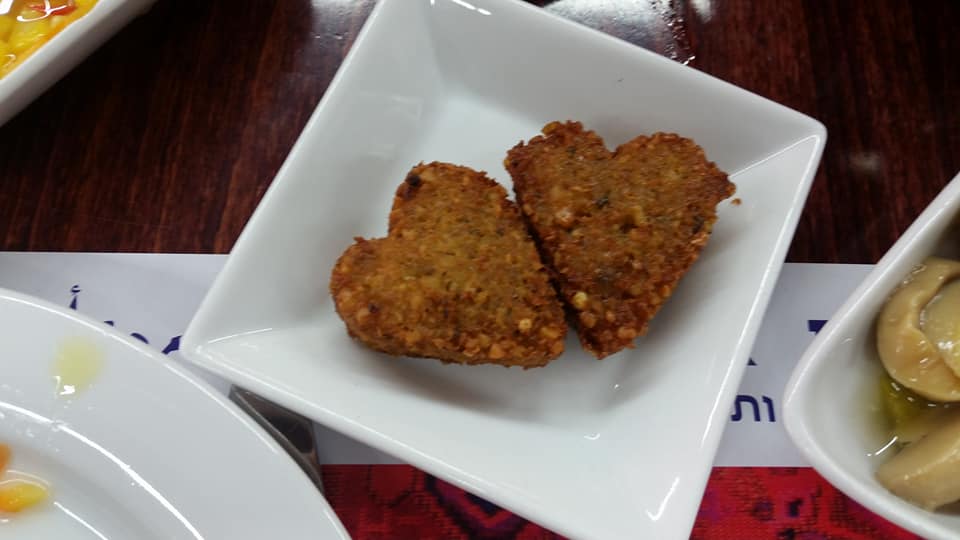
The cultural diversity is amazing here and threatened.  I’ve met Jews from places I never expected- India, Norway, Switzerland, Morocco, Tunisia, Turkey, Ethiopia- and so many other places.  With unique languages, traditions, and cuisine.  And non-Jews such as Druze (whose heart shaped falafel is in my cover photo), Arab Catholics, Arab Greek Orthodox, Arab Greek Catholics, Maronites, Alawites, Muslims, Armenian Orthodox, Armenian Catholics, and Circassians.  Darfuris, Ertireans, Sudanese, Nepalis, and Chinese.  I speak all eight of my languages here- regularly.  This beauty that I love is what the government threatens by shaming Jews for speaking other languages, by discriminating against Arabs, and by expelling refugees.  It pains to me to see such a beautiful gift under attack.

In short, it’s complicated.  There are good things in Israel.  The nature is also gorgeous, the weather is better than anywhere in the Northeast U.S. or most of Europe.  The location is ideal for traveling the world.

Once the Israeli people do the hard work of pulling themselves away from the toxic ideologies that gave birth to their country, they might find themselves feeling freer.  Freer for a secular Jew to be friends with a Hasidic Jew.  For an Orthodox Jew to acknowledge Palestinian Arab history.  For a Mizrachi Jew to dance to Eritrean refugees’ music.  For a secular Ashkenazi to raise his kids in Yiddish.  Or an Iraqi Jew to do so in Judeo-Arabic.  For a Haredi Jew to see the good in Reform Judaism.  For a Palestinian refugee in Lebanon to return home to my neighborhood and for me to help renovate her mosque.  For a Christian to marry a Jew.  For a Jew to convert to Islam.  In short, to be the complex beautiful human beings hiding beneath the divisiveness.

For Hasidic Jews, tikkun olam or “repairing the world” begins within.  I couldn’t agree more.  To make the world a better place, we must start with ourselves.  So see the good things I wrote?  Grow them.  And where we find barriers in our souls towards our fellow human beings, join me in tearing them down.  Inside and radiating out towards the heavens.

Israelis often like to think of themselves as a “light unto the nations”.  The thing is to see a candle best, you must first turn off the lights.  Scary and necessary.  Flip the switch.  It’s time for a reset.  Let the flame illuminate our path.

I found my people

Today was Friday.  Friday in Israel is the weekend, so I had the whole day to relax.  The problem was I couldn’t get myself to leave the house.  This has been a pattern lately.  Granted there isn’t a whole lot to do on a Friday afternoon because most things close for the Sabbath, but it’s best to get out of the house a bit.

After several hours of hemming and hawing I realized why I didn’t want to go out.  I was afraid of Israelis and don’t like spending time with them.  I am tired of being yelled at for no reason.  Or being told not to feel my feelings.  Or being cheated.  Or being lectured at about why Israel is great and being lectured at about why Israel is terrible.  Being told Americans are fake, Arabs are terrorists, Haredim are leeches, and on and on and on and on.  It’s just exhausting and I’m over it.  There are reasons for it and it doesn’t justify the behavior.  Some Israelis like to say they treat it each other “like family” which is why they’re so hard on each other.  To which I say if that’s how you treat your family, you need a therapist.  Take it from someone who has one.  It’s messed up.  And it’s only here.

So after looking at flights to Cyprus (they’re cheap!) and almost booking a flight, I realized I was just too tired to get everything ready.  If I wanted to hang out with non-Israelis, I needed another plan.

Remembering a few pleasant visits to Neve Sha’anan, an immigrant neighborhood, I headed that way.  When I say immigrant, I mean non-Jews.  Name a nationality and they’re there.  Just tonight, with minimal effort, I met a Moldovan, a Tibetan, Turkish Muslims, Hindu Nepalis, an Eritrean, a Gujarati, and yes- one Israeli, a Kavkazi Jew.  He was the only Israeli I talked to all night- and it felt great.

I started the night off at a Nepali restaurant eating the best momos I’ve had in Israel.  Momos are Nepalese dumplings, but quite different from the Chinese variety most people know.  They have intriguing spices and a spicy red sauce and are delightful.  I used to eat them all the time in D.C., which has a large Nepalese community and some fantastic restaurants.  At $5 for 10 dumplings, they were a steal and infinitely better than the shit momos I have eaten in Israeli Tel Aviv for at least twice the cost.

I chatted with some nice Turkish Muslim men about Tarkan (one of my favorite Turkish singers, in their words a “superstar”).  I pulled out my few Turkish words and between them, English, and Hebrew, we had a fun conversation.  I then noticed the chef was wearing a Tibet shirt.  Tibet is a place and cause dear to my heart.  Tibetans are persecuted much the way Jews have been over the centuries.  They have a beautiful culture and I admire Tibetan Buddhism.  Plus the amazing food.  When I lived in D.C., I would visit the International Campaign for Tibet headquarters and camp out in their basement library and read.  I also participated in their Tibet Lobby Day a few years ago alongside Tibetan-Americans to convince Congress to support human rights.

Turns out the chef is actually Tibetan.  I didn’t expect to meet a Tibetan in Tel Aviv, but here he was!  We talked about khatas, his excellent momos, and my favorite Tibetan singer, Ani Choying Drolma, who I saw in concert in D.C.  I first got to know her music via the Tibet Store in D.C. and grew even closer to her as I discovered she’s a fellow abuse survivor and just a beautiful human being.

The Tibetan guy, the Kavkazi Jew, and I took a cute selfie (probably the first time that sentence has ever been said!):

19030766_10101683699749032_2711488817479200980_n

As I left the restaurant, I heard the most beautiful music.  I saw a light and some signs and headed down a ramp.  Next thing I knew, I was in Nepal!  Surrounded by beautiful saris and offerings and chatter in Nepalese, I felt at ease.  People were so kind.  They let me take pictures of their shrine and to pray at it.  Which I did.  Because my Judaism- and frankly my spirituality- extends to the best of all faiths.  Why limit myself with such beauty at my doorstep?

The only non-Nepali in the room, I aroused some curiosity.  Most of which resulted in huge smiles, a ton of free food, and some great conversation.  More than any other time in Israel, I felt treated like a human being.  There wasn’t one raised voice, aside from an occasional emphatic part of the priest’s sermon, when everyone raised their hands in enthusiasm.  Like a Baptist church, but a little calmer, and full of the smell of incense.

Everyone spoke Nepalese, English, and Hebrew.  English far, far better than the average Israeli, with a beautiful accent.  While for some people this might be an exotic experience (and certainly finding it in Tel Aviv was a surprise), for me it reminded me of home.  Back in D.C. I spent a lot of time exploring the Nepali community.  Every weekend, I would tune in to the local MHz program “Nepal Darshan Television”.  It’s a program produced in the Washington area for Nepalis (and me).  The beautiful scenery of the country enchanted me.  I will visit that place before I die.  Lumbini in particular calls to me, the birthplace of Lord Buddha.

In addition, my friend Kristle and I for several years would go to Lhochar, the Tamang New Year celebration.  The Tamang in America are a minority within a minority (like me, as a queer Jew).  An ethnically Tibetan group in Nepal, they speak their own language in addition to Nepalese.  And they are Buddhist whereas most of the country is Hindu.  Although they frequently go to each other’s festivals, in a good example for the people of this region.

Kristle is a black Caribbean-American and I’m a queer Jewish-American.  We became friends on the Obama campaign in 2008 in Florida, where she was my intern.  And then became my friend 🙂 .  We would get tickets to Lhochar through our friend who owned a Nepalese restaurant.  And it was amazing.  Buddhist priests would bless us.  Dancers would perform.  A people preserving their culture within a culture in a foreign land.  It warms my heart- they’re my people.  And I pray for their success.

Going back to the Nepalese event, I met a guy named Padam.  We got to chatting and he asked if I spoke Hebrew.  I said yes and he said he also spoke Arabic (along with Japanese and Korean).  I asked how.  He said he learned it in Kuwait.  Probably as a migrant worker- I’m not an expert, but I’ve heard the working conditions can be pretty terrible.  Then I surprised him by responding in Arabic.  And here we were- in the most sacred moment I’ve had in this land- a Jewish American and a Nepali speaking Arabic.  We had a belly laugh about it.  It’s worthy of a shehecheyanu– the blessing Jews say for the first time something happens.  Because if you know another Jew and Nepali who speak in Arabic, feel free to let me know 🙂

As I headed out, I noticed music playing from a cell phone store.  I recognized the melodies but couldn’t place it.  I listened and listened and then approached the salesman.  “This is Vietnamese music, isn’t it?”  “Yes!  How did you know?”  I just smiled.  I know Vietnamese music- I listen to it.  I’ve bought many CD’s in Annandale, Virginia- Little Saigon.

Next to his Arab coworker was a sign.  I had to read it twice to make sure I could believe my eyes.  Here it is:

27336919_10101683698935662_1692337626540181976_n

That’s right- in Tel Aviv, there is a Tamang association.  Even as I write it, I feel it is a miracle.  If God speaks, this was how.  And through the magic we make between each other- the improbable.  The Nepali who speaks Arabic with me and the Arab store owner who has a Tamang sign in his doorway.

With an enthusiasm that words cannot describe, I asked him to give my phone number to the organization.  I even explained to him a bit in Arabic about the Tamang- almost certainly a first in this land.  He gave me a nice smile and we said ma3 asaalameh.

This is only a taste of this night.  I danced with an Eritrean guy to Tigrinya music in a supermarket while I bought Thai sauces for pad see ew.  I told a Moldovan woman my great-grandmother was born in Bucharest and she eagerly told her co-workers in Romanian.  Her smile grew when I asked if she was from Chisinau- her hometown.

People often ask “what I do” with my languages and my knowledge of culture.  People tell me to work for the CIA or the Mossad.  That wouldn’t work so well since I’m pretty much a pacifist- but people insist nonetheless as if they know what’s best for me.  Better than I do.  This is all you have to know- what I did tonight, that’s what I do with my languages.  I explore cultures, I make friends, I learn, I bring joy.  I’m the multilingual Ba’al Shem Tov so while you dream about how much money I could make helping the government, I’m going to be hanging out with my neighbors eating momos as the sounds of Hindu prayer fill the air.  Smiling as we connect heart to heart.  Because that’s what life’s about.  It’s not about your paycheck or your business card or the size of your apartment.

It’s about the size of your heart.

One of the reasons I came to Israel was to live with my people.  What I’ve come to realize is that I don’t have one.  I have many.  God leaves little miracles waiting for you where you least expect it.  Keep your eyes open and your heart warm and who knows what- or who- awaits you.

27331731_10101683698641252_4662140754374208990_n

A Jew, a German, and an Italian walk into a bar

No, this isn’t a punchline.  It’s exactly what I did tonight.

Tonight I was helping people practice their English at an event in Tel Aviv.  I love going there to speak other languages and what I’ve realized is sometimes I want to speak my native tongue.  And teach people about my culture.

It’s so nice to be validated as an American, an American Jew, and an English speaker in a place where these identities regularly lead people to discriminate against me.  To try to take advantage of me.  Or to tell me to leave my identities “in the Diaspora”.

So when I sit at the English table to help people practice, it’s nice to meet folks who are genuinely interested in where I’m from.

Tonight, after having fun at the Arabic table, I walk over to the English table.  A young woman, Mara, is sitting smiling at me.  Nothing reminds me of the world outside Israel more than a welcoming smile.  We start talking and it turns out she’s from Sardinia.  Sardinia is a fascinating island that’s part of Italy with its own unique history and languages.  I’ve learned some about it before, I’m very eager to visit, and I was thrilled to meet my first Sardinian!

We talked all about the language of her island– sometimes so distinct from Modern Italian that other Italians can’t understand.  She said she and her husband will speak in their dialects when they don’t want anyone in Tel Aviv to catch on.  Something a great many American Jews may recall about their grandparents and Yiddish.

Shortly thereafter, another woman joins us.  Corinna is German so I launched into a bit of Yiddish which made her smile 🙂  I love doing this with Germans.  It’s a friendly way to show something we have in common- the languages are distinct but share many words- and it’s also a way of showing pride that my identity survives.

Turns out Corinna is fascinated by Yiddish.  We talked about Germanic words in Yiddish and Yiddish words like meshugga and kosher that are in German.  We even had a good laugh at the word “blitzpost”.  In Yiddish, it means “email”.  In German, it’s a phrase you’d say if your snail mail arrived quickly.  Hence the connection.  But really neat to learn from my new German friend about our shared and different identities.  Really cool 🙂

Sometimes it can be hard to see progress when you’re living in the Middle East or watching the absolute catastrophe going on in my homeland right now where the government is literally shut down.

And sometimes you experience little miracles that make your spirits fly.  Who could’ve imagined, just 72 years after the worst genocide in Jewish history, that a Jew, a German and an Italian would be sitting in Israel speaking English?  At a bar?  Laughing?  Exchanging phone numbers.

And Mara and Corinna aren’t just ordinary Italians and Germans- Mara’s husband works at the Italian Embassy and Corinna interns at the German one.  They literally work for their governments.

From a Jewish perspective, you have to understand that if my grandparents met people from the German or Italian governments in Europe, they would’ve been dead.

And here we are.  Sharing a beautiful moment, a quotidian moment, a peaceful moment.  Making friends with each other.

I’d like to remember this experience for the days when I feel really sad.  There are things I see and experience here that are depressing.  I don’t think many Israelis or Palestinians or Syrians or really many people in the region right now feel optimism.  It just seems to be getting worse by the day.  And given the wars, the terrorism, the displacements, the cutthroat politics- I can understand it.  Trauma here is real- and in every group imaginable.

I would like to share a bit of hope.  If you were to ask someone in 1945, just after the Axis powers murdered 6 million Jews, if they could envision a day in which a Jew, a German, and an Italian would be hanging out in a Jewish homeland- they would say you’re fucking nuts.

And they’d be wrong.  Because that’s what happened tonight.  Because progress sometimes passes under our noses unnoticed.  I feel it is a real blessing to have met Mara and Corinna tonight.  We’ve buried the old Axis and made a new one- one that will hopefully be filled with visits to Sardinia, with learning about the German language, with visiting Yiddish libraries and concerts.

Because the seemingly impossible does happen sometimes.  When you lose hope, open up this blog or find something around you that makes you look in awe.

Don’t give up.

Why social justice isn’t just economic

When it comes to economics, I believe the more equal we can make our society, the better.  Ideally, that’d mean less state and corporate control and more resources in the hands of the people.  And as we work towards that goal, I believe in a strong safety net- universal healthcare, guaranteed housing, access to healthful food, free public transportation, and more.

What I’ve come to realize, particularly due to my stay in Israel, is that economic justice is not enough.

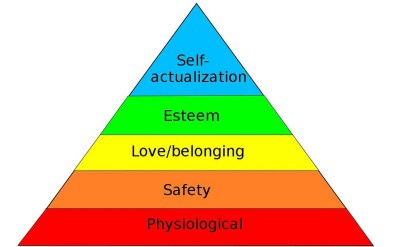
What does that mean?  What I mean is economic justice is crucial- it helps people survive.  If you look at Maslow’s hierarchy of needs, economic justice provides people with the foundation in order to reach higher goals in life.  It provides for your physiological needs (air, water, food, shelter) and safety needs (financial security, health, safety).

If you look at the pyramid below, you’ll notice that more emotional needs, like love and esteem are built upon the foundation of the needs addressed by economic justice:maslow.jpg

In other words, you need economic justice to give people the opportunity to build their self confidence, to be able to focus on their love life, and to realize their dreams.

And yet, what’s also clear is that economic justice alone will not help someone achieve these higher needs in life.  Having a good salary certainly can make me feel happy and secure, but it won’t in and of itself make me feel loved.

Which is where we come to culture.  First, let’s define culture.  Culture, as I see it, is art, music, language, food, religion, customs, clothing, and so much more.  In short, it is a series of practices that gives life meaning.  It helps us feel rooted.  It doesn’t mean that culture stays stagnant- it always changes.  Yet if we don’t have some reference point for how we interact with the world, our self-esteem suffers and we can feel devalued.  Especially when the surrounding society demands we abandon our culture.

Incidentally, when I did a Google search on the psychological benefits of culture, an Israeli researcher appeared.  Dr. Carmit Tadmor studies the role of multiculturalism as it relates to conflicts in Israeli society.  Both she and the American Dr. Francois Grosjean, whose article helped me find her, argue that biculturalism is a benefit.  That people with more than one culture tend to be more creative, more flexible, more able to wrestle with ambiguity, and more professionally successful.  And quite important for Israel- they are more willing to acknowledge different perspectives and consider their merit.

Considering all the benefits of culture, one can imagine the great harm involved in destroying it.  If access to your culture (and the ability to add new ones) gives people confidence and creativity, stripping people of their culture causes psychological harm.  When a Yemenite child is forced by his Kibbutz to cut off his peyos, his sidelocks, one does not need a great deal of imagination to fathom the psychological harm.  Or, in the case of America, when newspapers advertised jobs saying “No Irish Need Apply“.

This last example is particularly illustrative.  Professor Richard J. Jensen at University of Illinois-Chicago published a book entitled “No Irish Need Apply: A Myth of Victimization”.  He claims discrimination against Irish-Americans was exaggerated.  I’m pretty much always suspicious of someone who uses the phrase “myth of victimization” because it’s used to tell people their pain isn’t real.  To invalidate them.  Perhaps to invalidate themselves.

This attitude, unfortunately, is quite common in the U.S.  I once met a man of Irish ancestry- actually proud of his ancestry but not engaging with directly.  That is to say, he read books, he visited the country, but on a day-to-day basis, the food was cheese dip, the language was English, the music was Sweet Home Alabama- and that’s about it.  When I once asked him about his prejudices towards immigrants- why Latinos, for instance, couldn’t continue to speak Spanish- his answer was telling.

“When my grandparents came to America, they spoke Irish Gaelic.  But they never taught it to us because they were in America.  And here we speak English.  And I’m glad they never taught it to us because that’s not what you’re supposed to do here.”

In other words, he justifies his current prejudice towards immigrants who strive to maintain their culture by citing his own family’s pain- and even justifying that pain.  Invalidating the suffering his family endured.  That continues to leave his family rather rootless today.  And voting for politicians to expel his immigrant neighbors who suffer the same fate his family did.

Which brings us back to Prof. Jensen’s book.  As an American Jew and a Washingtonian, what I discovered made me so proud.  A 14 year old girl, Rebecca Fried, a student at D.C.’s Sidwell Friends School, wrote a thesis disproving Prof. Jensen’s claims.  It started with a simple Google search and she found tons of examples of discrimination, including racist job postings.  Prof. Jensen’s work was a sham- as other professors then began to discover he had an anti-Irish and anti-Catholic ideology.  It’s also sad because his last name is Scandinavian- he clearly has immigrant roots himself that maybe his own family was torn away from.  That he continues to inflict on others.

What makes me particularly proud about this?  First off, she’s a fellow Washingtonian.  We come from one of the most diverse metropolitan areas in the world and it definitely helped me become the multicultural person I am today.  It’s basically impossible for you to live in the D.C. area and not interact with people of different backgrounds and like Dr. Tadmor’s research indicates, this changes your mentality for the better.

Secondly, I’m going to make an assumption – hopefully correct – that Rebecca Fried, daughter of lawyer Michael Fried – is probably Jewish or at least of Jewish ancestry.  The name is so so American Jewish that I’d be surprised if she wasn’t somehow connected to our tradition.  Although America always finds ways to surprise you 🙂

Working off this assumption, a 14 year old girl of Jewish ancestry helped Irish Americans reclaim their cultural identity.  And unravel a hateful argument against them.

Why does this not surprise me?  Because American Jews- perhaps all Jews outside Israel- understand what it means to be a minority.  And- most importantly- if we continue to identify as Jewish in any way we are in fact maintaining our culture.  All American Jews are bicultural.  And therefore we enjoy the benefits of this identity- and understand the challenges.  While we faced (and continue to face) pressure to assimilate in the U.S., our resilience helps explain why American Jews “earn like Episcopalians and vote like Puerto Ricans.”  Which is to say that because we’ve maintained our culture, even though our economics should push us to vote Republican, we voted 71% Democrat in 2016.

Not to say people of different parties can’t be empathetic to immigrants, but in the current climate I think it’s fair to say Democrats are more open to multiculturalism.

I believe our biculturality helps explain why American Jews tend to be more empathetic to refugees and more open to diversity when compared with their Sabra counterparts in Israel.

When Jews came to Israel, they had their cultures ripped from their bosom by the Sabras who already lived here.  Yiddish, Judeo-Iraqi, Ladino- thousands of years of Jewish history were thrown out the window.  Kids were shamed for speaking Jewish languages!  Within just a few generations, many of these languages had become extinct or endangered.  Not because of anti-Semitism in another country, but rather because of other Jews who denied them the right to maintain their culture.  Because of bullies deeply insecure about their own cultural identity.

So how does this relate to social justice?  First off, we started by talking about economic justice.  The Israeli state- especially in its early years- did actually have quite a focus on economic justice.  The social safety net that developed far outpaced anything we have in America.  The government was pretty socialist- this is the origin of the Kibbutz- a commune.  There was (and is) a communist party in Israel- in the Knesset.

And yet there was a blind spot.  Racism.  Culture.  The government may have thought that if it simply erased Diaspora Judaism- the “icky” Moroccan superstitions, the “grating” noise of Yiddish- that it could entice people with money.  With jobs, with education, with healthcare.  To switch their identities.  Not to have both- for example- Moroccan and Israeli identities.  But rather “Israel #1 only amazing awesome nothing better”- that’s it.

Well guess what?  That has never worked in history.  Because what happens when you strip someone of their identity?  Let’s say they have their physiological and safety needs taken care of (not always the case here, but roll with me)- what’s missing?

What’s missing is culture.  Something to root you, to comfort you, to enrich your life.  Because Sabra culture is not a culture- by design.  Sabras when creating the State of Israel wanted to be the “anti-culture”.  That by negating their roots, they were making something new.  True- but the issue is you can’t create something out of nothing.  Your mentality, your traditions, no matter how much you hate them, impact the way you see the world.  And simply by telling yourself that that’s not OK turns you into a monster.  Into someone who hates both herself and- in particular- her neighbors who continue to hold on to the traditions she despises.

I think this explains why in Israel, and in the U.S., the people who tend to be most anti-minority and anti-diversity are the people who had their culture stripped from them.  Who continue to operate in a vacuum of Palestinian falafel they call Israeli and pizza they call American.

The reason Jews have been- and in some cases continue to be- hated in the Diaspora is because of our tenacity.  Our desire to hold on to our evolving traditions even when they’re not the norm.  To celebrate our holidays, to embrace our sense of humor, to learn about our history, to wear a yarmulke, to want to pass these traditions down to the next generation.

Our willingness to remain different while enjoying the best society has to offer, our biculturality, is what makes us queer.  It’s what makes us more complex than economic justice.  Because you can give me bread, but I want roses too.  I want a sense of identity.  And so do Mizrachi Jews and Sudanese refugees and Latinos and Black Americans and religious Jews and Yiddish-speaking Ashkenazim.  As do many people alienated from their cultures- take this opportunity to learn!

In short, the right to a cultural identity not only makes you a happier person, it makes you more empathetic to others, it makes society more progressive, and it makes for less bitter people for the state to rally to hate others.

This new secular year, let’s make it our mission to realize that economic justice is crucial and not enough.  Our cultural identity changes the way we see the world and when we have the right to exercise it, it can help us be better people and make our society one worth living in.

May it be so.

A bisl Hassidus a bisl queerus – a gay Hasidic day

In a playful way, my title means “A little Hasidism a little queerness”.  And that’s exactly what I did today.

My day started with a trip to Bnei Brak.  A Haredi city of about 200,000 people just a bus ride away from my house in Tel Aviv.  I’ve been many times and now know my way around, which is pretty cool.

I started my day by buying a 5 shekel siddur (prayer book) from Gur Hasidim.  In Bnei Brak I’ve seen on multiple occasions dozens of beautiful books left outside with nothing but a collection tin where you put in some very token amount of money and get delightful books.  I happened to choose an old little siddur because I thought it was neat.  For the same price (about $1.50) I could gotten an almost mint-condition book of the Talmud or the writings of Rabbi Elimelech.  Jews are truly people of the book 🙂  And I’m adding some amazing volumes to an already killer library.

I needed some change so I walked across the street and talked to Shlomo.  Shlomo was excited that I was American.  He was born in Israel and used to live in New York where he was a mashgiach– a kosher certifier.  I learned from him about how he apprenticed and then got into the profession.  He had been to my hometown of DC several times which is awesome.  I asked him what he really misses about America and he said: “sesame chicken- I can’t find it good and cheap anywhere in Israel!”  Amen brother!

I then popped into the Ponevezh yeshiva.  What I didn’t realize until writing this article is that Ponevezh is actually a Litvish yeshiva.  In other words, they are Haredi (ultra-Orthodox) but not Hasidic.  In fact, back in the day the groups were intense rivals, but now there’s more overlap.

There I found something interesting amongst all the religious books and pamphlets- an ad for American e-cigarettes haha.

I then headed to the Breslov yeshiva around the corner.  I asked a man if I could take photos and, as is often the case in Israel, he said sure and then invited me in to learn with him.  For those who need some context- I have studied Torah as a Reform Jew.  I have never studied Torah in a Hasidic yeshiva.  Such a thing doesn’t exist in Washington, D.C. and even if it did, most people from my background probably wouldn’t step inside.  So basically, I’m brave and I strive to be open-minded.

Shlomo (a different Shlomo from Shlomo #1) sat with me and we studied Gemara.  Basically a foundational text of rabbinic commentary and part of the Talmud.

This is far outside the wheelhouse of even the most educated Reform Jews unless you’re studying to become a rabbi.  I’ve grown up in the movement and participated in almost every program imaginable and I can’t say I’ve ever taken an in-depth look at this aspect of Judaism.  We tend to focus on other very important aspects like social justice and the personal spiritual experience.  I do wonder if we lose something by not engaging some with these texts too.

Shlomo was a funny guy.  First off, he asked about my Jewish background.  Keep in mind I’m in the middle of a Hasidic yeshiva in Bnei Brak with hundreds of men around me I don’t know.  The image of Hasidim in the media here is anything but positive.  Violence and extremism are pretty much all secular Israelis know about their Hasidic neighbors.

So how did I answer his question?  I said: “I come from a somewhat traditional Reform home.”  BOOM.  Please re-read that absolutely everyone who tells me that if only Hasidim in Bnei Brak knew more about me, they wouldn’t accept me.  For sure I’ve had difficult experiences here and heard negative remarks about Reform Jews.  And I’ve also had moments like today when this guy didn’t bat an eye.  In fact, his follow up question was hilarious.  Trying to connect with me via the ancient tradition of Jewish geography, he asked if I knew his cousin in Monsey, NY!  This carries an extra level of funniness because Monsey Jews are very Hasidic and I can’t imagine many Reform Jews have ever stepped foot there.  But I appreciated his effort to connect with me- even after I said I was Reform.

As we’re studying Gemara, an old man came up and asked for money.  I forget exactly how it came up, but at some point he said about me in Yiddish, “he’s not a Vizhnitz Hasid!”  To which I responded in Yiddish: “that’s right, I’m not a Vizhnitz Hasid, but here take some change!”  He nearly fell on the floor in shock.  His smile grew and he starts telling everyone that I speak Yiddish with a look of intense naches- of pride 🙂  You have to keep in mind everyone there knows I’m not from the community- I’m wearing jeans and a green sweatshirt.  We had a good laugh together and shmoozed a bisl.

He then puts his hand on my head and blesses me.  Wow.  It gives me shivers and made me feel so loved.  I don’t know the last time someone blessed me.

Walking around Bnei Brak, I got hungry.  I stopped for some cookies and found a delicious bakery that even had shockingly good whole wheat cookies.

Still hungry, I continue walking and even helped some cute kids cross the street.  Each one wanted me to tell him that he did a good job crossing 🙂

Then something bashert happened.  Bashert is a word Hebrew wished it had.  In Yiddish (and Jewish English) it means something predestined, meant to be.  Either a person you fall in love with or connect with.  Or an event.

Some of you might remember Yisrael.  He’s my friend who gave me my first Haredi hug.  By chance, I happened upon his restaurant.  The past few times I was in Bnei Brak I tried to find it but I forgot where it was.  And this time my tummy- and perhaps a greater force- led me to him.

He instantly recognized me, even though it had been months.  He gave me a huge hug, told me I looked great, and asked me how I was doing.  We caught up, he of course gave me extra food for free, and I sat down to delicious gefilte fish and kugel.  Heimish, delicious Jewish food.

While I was sitting, I heard an interesting- and incredibly respectful- debate between a Chabad guy who claimed the Lubavitch rabbi was the messiah and the other Hasidim who disagreed.  This was absolutely fascinating.  And what is more- no blood was shed.  No blows were thrown.  In fact, Yisrael ended the debate by calling the rabbi a tzadik, or saint, and everyone went back to eating and asking me about America (they love to practice their English with me).

Hardly a story you’ll read in Haaretz or see on CNN, but it was real.  And it’s how many people live their lives here.

Heading out the door, I thought to myself that sometimes I wish I could be a part of this community.  Due to my queerness and my Reform identity and progressive values, I don’t know to what degree I could find acceptance as my full self.  It can make exploring Bnei Brak hard at times.

And yet it’s precisely because of these identities that I’m intrigued by this community.  And truth be told- I’m a part of it.  Just in a way that works for me.  Where I can participate in a way where I am learning the best this place has to offer and staying true to who I am.

Due to the Holocaust, Soviet anti-Semitism, American pressure to assimilate, and the Israeli government’s repression of Jewish cultures, my heritage suffered greatly the past 100 years.  An entire civilization, Ashkenazi Judaism, was nearly wiped out.  Yiddish almost forgotten.

When I made aliyah to Israel, I hoped to reconnect with my roots.  Sadly, this state doesn’t believe in Jewish culture.  Whatever remnants of my roots that are here exist in spite of a state that has shamed people for being Jewishly different.

The one group that more than any other has held on to their yiddishkayt- their Jewish roots- is Hasidim.  These Jews continue to speak the language of my ancestors for the past 2,000 years- Yiddish.  A language I now speak as well.  They maintain customs and wear clothing that are anathema to the society that surrounds them- to the state that wishes they’d just forget the Diaspora.

As I headed to a bar to meet a bunch of LGBTQ olim like me in Tel Aviv, I couldn’t help but think of what we have in common.  To hold onto your identity is a daily challenge.  When people around you ridicule you for your difference, for standing out, for being “out of the norm”- you have to find ways to cope.  So perhaps to the chagrin of some homophobic Haredim (not all) and some anti-religious gay people (not all)- we’re dealing with a much more similar problem than they’d like to believe.

Recently I saw a post in a Facebook group about Ramat Gan, a suburb that is squished between Tel Aviv and Bnei Brak.  There are political and religious tensions there between secular and Haredi Jews.  One particularly harsh post by a secular gay guy said: “Ramat Gan- we need to choose between Bnei Brak or Tel Aviv.”

That’s how he chooses to live his life.  Black and white.  Yes or no.  Secular or Orthodox.  Tel Aviv or Bnei Brak.

I have no doubt something caused this mentality and I hope he finds healing.

Because given the choice between Bnei Brak and Tel Aviv- I choose both.

The Bnei Brak of free Gemara lessons, kugel, sesame chicken fans, e-cigarettes, and whole wheat cookies.  The Tel Aviv of queer olim parties, hot guys on the beach, Reform synagogues, and Arab college students.

In short- gam vegam.  Both this and that.


Jesus and Jerusalem

Jerusalem, despite what Tel Avivis say, is an absolutely fascinating city.  This week I hopped on a bus for a day trip.  My dear friend from college was coming into town from New York.  And I’ve been itching to get to know a side of Jerusalem few people here talk about: the Christian one.

I love churches.  The more beautifully decorated and historic, the better.  In a foreign language?  Gold.  Some of the prettiest art I’ve seen has been in cathedrals and churches.  And I love learning about other faiths.

Jerusalem is a great place to visit churches.  While much of the world (and this country) likes to bicker about Jews vs. Muslims and Muslims vs. Jews and endless news clips that only feed the narcissism of both groups, the fact is this is a Holy Land for many peoples.  Including Christians, whose religion also comes from here.

Here’s how one day in Jerusalem went down.  Walking towards the Old City, I popped into a bookstore.  I LOVE books and especially used books in different languages and this store had exactly that.  I met a 15 year old Hasidic kid named Shmuel who was browsing the books.  An extremely friendly guy, we chatted as we perused.  Shmuel loves nature and knows every park in Jerusalem.  He loves hisboydedus (Modern Hebrew: hitbodedut)- going into nature and talking to God.  Something I find spiritual too.

He struggled with whether he should go to such a bookstore or not, since some of the books would be forbidden in his community.  I tried to show him some kindness and encouragement.  I hope he keeps reading 🙂

Then I came across a tall black man in a black robe with a cross.  Knowing a bit about Orthodox Christianity, my guess was he was an Ethiopian Orthodox priest.  And I was right 🙂  His name was Zion and we walked together to his favorite coffee shop.  Run by a very cute English guy with an Irish accent- with coffee from all over the world.  For those who don’t know, coffee was invented in Ethiopia/Yemen.  After a nice chat, I got info about an Ethiopian church I can visit next time, and I headed towards the Old City.

Jerusalem’s Old City has four quarters: Jewish, Muslim, Armenian, and Christian.  Armenians are Christian, so not sure about how that distinction came about, but that’s the way it is.  I’ve visited much of the Old City but hadn’t spent much time in the Christian Quarter.

I wandered around asking shopkeepers in Arabic where the churches were.  I made my way to a Catholic church…in the middle of a mass.  The church was immaculate.  Catholics know how to decorate 🙂  And the mass- the sermon, the music, the prayers- were all in Arabic.  At a time when much of the Western World couldn’t imagine anything Christian being in Arabic, it’s a useful reminder that this language belongs to many people.  And this perhaps can shatter some preconceived notions about the Middle East- and about Christianity itself.

The prayers were beautiful- the priest even quoted the Talmud.  I can’t say my Fusha (Modern Standard Arabic) is at a level where I can know word-for-word what he was quoting in his sermon (I’m not a Talmud expert either and it was echoey), but it was clear he was telling a story from Jewish religious literature.  The sermon was something about all the latest news regarding sexual harassment- a rather forward topic for a Middle Eastern church based on my own preconceptions.  I preferred, though, to look at the art and soak in the music.  What a unique experience.  Every religion has beauty to share.

Then I walked around the outside of a Greek Orthodox Church- closed but will visit next time.  I did get to use the Greek I’ve been learning to read the signs- there’s a lot of Greek in Jerusalem!  I wonder if the dad in My Big Fat Greek Wedding can prove that the word “Jerusalem” comes from Greek too 😉

I then used my Spanish to help two lost Christian pilgrims from Colombia find the Church of the Holy Sepulchre.  According to Christian tradition, this site is where Jesus was crucified and where he was buried and resurrected.  What’s unique about it is that the church is actually multiple churches.  Every section of the building is controlled by a different denomination.  There are Armenian, Greek Orthodox, Catholic, Coptic, Ethiopian, and Syriac Orthodox areas.  Each decorated according to the traditions of the group and filled with beautiful artwork and quotes in their respective languages.

This slideshow requires JavaScript.

In the course of an hour or two, I talked with a Coptic priest, Armenian priests, and Catholic pilgrims from Chicago.  What a beautiful and awe-inspiring place.

On my way up the hill to meet my friend from college- who’s Modern Orthodox (kind of completing a day of almost every religious denomination imaginable)- I heard people speaking Spanish.  They were from Costa Rica!  Costa Rica is a very small country- I grew up with neighbors from there and my high school organized trips there.  What’s even more crazy is that the Costa Ricans…had bumped into other Costa Ricans.  In Jerusalem.  Add in one Brazilian guy and an Arab shopkeeper with a few words of Spanish, and all of us were chatting and having a good time.  I love Spanish- it was my major and I’ve used it in every job I’ve had since college, including as a Spanish teacher.  I love going back and forth between languages so speaking Arabic, Spanish, and Portuguese was pretty neat 🙂

We even took a picture together:

26805280_10101665043795712_5460163890706108422_n

After a heartwarming and laughter-filled dinner with my friends, I headed back to Tel Aviv.

The Holy Land is nothing if not complex.  There is such a richness here- a density of meaning- that is hard to find anywhere else.  It can lead to great strife.  And it can lead to absolutely miraculous days where you realize you’ve spoken six languages and met people from all over the world.

Jerusalem in Hebrew means “city of peace” and in Arabic it means “the holy one”.  In Tel Aviv, it’s used as a slur.

For me, Jerusalem is a fantastic place.  It’s a place where with a little imagination, you can hear Muhammad riding on his Buraq, you can hear the Jewish priests on the Temple Mount, and you can hear Jesus’s footsteps.

Where you can hear a priest talking in Armenian and then find Dutch tourists dancing to techno in the shuk.

Jerusalem- leave your assumptions at home 🙂

Who’s the Jew now?

This week, something odd happened.  In both my home country of America and my new country Israel the same thing happened.  In America, Donald Trump called African countries and Haiti “sh*thole countries“.  All while he is preparing to deport 200,000 Salvadorans given Temporary Protected Status- to a country plagued with gang violence.  Meanwhile, the Israeli government has decided to deport 40,000 African refugees.  Many of whom live in my neighborhood and I’ve become friends with- from Eritrea, Somalia, even Darfur- the place where so many Jews organized around stopping genocide.  But now- near silence.

In the case of the resident of the Oval Office, I feel absolute fury.  I am disgusted by his behavior and he does not represent me.  This man is filled with hate.  I’m not talking Republican vs. Democrat, liberal vs. conservative- I’m talking sane and humane versus unstable and hateful.  I think back to my Haitian friends who I grew up with, learning West African dance in college, my Ethiopian birthday parties in DC, so much culture.  So much history.  And so much friendship.  And I am sad and angry that the man sitting on Pennsylvania Avenue feels nothing but disgust for it.  It is of course a huge insult to all my African, Haitian, and Black friends.  It is also a shame that he lives such a narrow life.

In particular, there’s not an adequate word to describe my fury and my unbearable sadness at the President’s decision to deport Salvadorans.  They are the largest immigrant group in D.C. and the largest group amongst Hispanics.  I grew up with countless Salvadoran friends- playing soccer, going to school, eating their delicious pupusas, and working together at immigrant advocacy NGO’s.  To be from Washington is to be a little bit Salvadoran.  Salvadorans are not a “they”, they are one of us.  Why a billionaire white dude in a gigantic free house in D.C. gets to decide to violently uproot my friends and send them to a dangerous country- I don’t know.  But I do hope God is keeping score.

Now to Israel.  This is where it gets very emotional.  I’m privileged- even blessed- as a Jew to have a homeland dedicated to my people for the first time in 2,000 years.  I’m grateful for the people who sacrificed so much to build this opportunity for me.  And as problematic as it is to build a new country- and a lot of people Jewish and non-Jewish have been hurt by it- our refuge has kept millions of Jews alive when nobody else cared.  Here’s where the problem begins.  The modern state – not just Israel – almost universally protects certain people more than others.  Some states do this more than others- but do not kid yourself- what we’re seeing in Israel and the U.S. is happening around the world.  Some groups get more and some get less.  And generally, the rich get richer while everyone else is fighting.

Here’s what really kills me about the debate in Israel: I expected more.  I’m angry at the American government and I’m a student of history- I know this is only the most recent in a long string of xenophobic moments.  In Israel, almost every Jew here is a refugee or descendant of refugees.  Indeed Jews- including my ancestors who fled Eastern Europe for America- have been perhaps the most consistently expelled group for the past 2,000 years.  The phrase “wandering Jew” isn’t for nothing.

So what is hard for me to understand is how a people dispersed across the world, banished by force time and again, would not welcome refugees.  I understand the State of Israel privileges its Jewish population (which presents its own series of problems vis-a-vis Arabs, worthy of its own blog).  I’m glad I can move here and become a citizen by virtue of the fact that I’m Jewish.  And I’m deeply disturbed when I meet a refugee from Darfur, a genocide survivor, who has lived here for 20 years and since then hasn’t seen his own family.  And is not even allowed to drive here.  And is about to be sent home to his death by a cruel and unforgiving government.  Why can’t he stay too?

This isn’t just racism.  It’s not just privilege (although I’ll say I’m finally starting to understand how White Christians with a conscience feel in the U.S.).  It’s about heart.

How does Prime Minister Netanyahu and his cronies- and the 65% of Israelis who don’t think we need to care for refugees- justify their cruelty?  Judaism is a religion filled with compassion for the stranger, for the oppressed, for the dispersed.  It is a religion that values life.  It is an ethic that impels Jews around the world to fight for immigrants rights and the environment and healthcare and peace.  We are some of the best progressive activists the world has known.  And yet here I am in the supposedly most Jewish place on Earth and I feel like this government has reduced Judaism to mechanics.  To lighting Shabbat candles, to partying on Purim, to separating milk from meat, to standing in silence on Holocaust Remembrance Day.

But the ethics?  Where are the ethics?  The whole point of religion, as I see it, is to make you a better person.  More empathetic.  Kind.  The rituals guide us towards a more ethical life.  They help us preserve traditions- and help us develop new ones.  All with the goal of being a good human being.

This is the Judaism- and the humanity- that I know and love.  If your love only extends to someone else of your faith or your face- I am hurt by your hate.

Can a modern state- Israel, the U.S., Egypt, Hungary, France, Mexico- anywhere.  Can it really ever be a source of equality?  Will it ever treat its residents equally?  I’m not so sure.  I don’t have a solution yet, but that doesn’t mean I won’t try.  What I can say is the way it is now is not working.  And I’m going to do what I can to make it better.

Tonight I headed to Reform services.  I had been thinking lately about what I could do to support refugees in my neighborhood.  There have fortunately been other Israelis organizing around the issue.  I’m not alone.  I just needed to find a way that fit me.

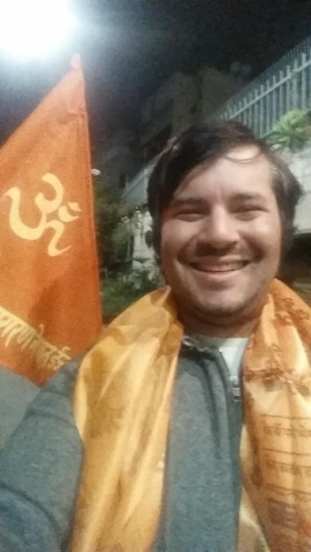
The other day I found an amazing Ghanaian store near me.  I had a great time chatting with the owner about foufou, batik, the Twi language, and more.  He was quite impressed.  He even said I was Ghanaian 🙂  I bought a beautiful hand sewn shirt from him, as seen in my cover photo.

So on my way to services, I decided to wear it.  I walked through an area crowded with African refugees and one-by-one the West African folks gave me the biggest friggin’ smiles I’ve ever seen.  Parading through South Tel Aviv in African clothes is a statement.  And without saying a single word, they knew exactly what I meant and loved it.

Each time I smiled back.  And my heart grew.  My posture straightened.  My joy increased.

I don’t have the keys to the Knesset or the White House.  I’m not even sure I want them.  But I do have the keys to my heart.  And heart is what I gave tonight.  To people who needed it.

Calling politicians can help.  So can showing some kindness to your neighbors- in any country.

It’s time to stop calling them “refugees”.  Or “the Africans”.  Or people from “sh*thole countries”.

Because first and foremost they are children of God.  No less than anyone else.  Treat them as such and, more often than not, you’ll find a hand stretched out ready to grasp yours.  In friendship.  In love.  In hope.

Be a human.

Bedouin Yiddish

Yes, you read that right.  We’ll get to it- read the whole way through 🙂

Today I went South.  I’ve explored a lot of Israel’s Center and North- with plenty more to discover.  And I’ve ventured a little south since making Aliyah to Ashdod.  Now was the time to learn about another region.

I hopped on the train and headed to Be’er Sheva.  It is a city actually mentioned in the Torah and there is a well there that according to tradition was dug by Abraham himself.  I wanted to visit but it’s one of the very few places in Israel you need to call in advance!

I visited the city market which was cool.  An amazing diversity of cultures that reminded me a lot of my neighborhood in Tel Aviv.  Just with less traffic and yelling 🙂

I went into an electronics store and asked in Arabic where I could buy Bedouin music.  For those who are wondering, Bedouin are substantially different in culture, language, and religiosity from many other Arabs in Israel.  Therefore, their music is different as well.

The young man made me a deal and custom burned me a CD with MP3’s of dahiyye music.  It’s basically happy Bedouin dance music- take a look.  Somewhat reminiscent of the dabke I’ve learned- but in the words of the Bedouin man: “that’s fellahi music”.  Fellahin were the villagers and farmers of the region- as opposed to the nomadic Bedouin.  Most Arabs in Israel today are descendants of Fellahin and have distinct dialects from the Bedouin, who speak a bit more like Fusha, the standard Arabic which was likely modeled after them.

I was then peppered with questions about why I wasn’t married.  Lest you think this is only a Bedouin phenomenon, it has been a frequent first question amongst Jews, other Arabs, even Samaritans here.  It is extremely difficult for me- as a queer person, as an American (where this is considered invasive), and a survivor of partner abuse.

Eventually I shrugged it off by saying I was new to the country and needed time to settle in.  Having gotten my Bedouin music, I decided to keep exploring.

I then came upon a bona fide music shack.  A shack because it looks like one.  And bona fide because this man knew his music.  No CD burning here.  He had hundreds of CDs.

I felt much more at ease here- Ahmed, also Bedouin, was gentle and friendly.  And never asked me about my marital status.  We bonded over Arabic music as he showed me tons of options.  Eventually I bought an Israeli Bedouin CD (with songs from both the North and the South), Syrian dialect music (that’s the one I speak!), and another Bedouin CD from a town near Be’er Sheva.  I personally find it miraculous to find Syrian-dialect music in a Bedouin shop in Be’er Sheva.  First off, most Arabic music is not recorded in Syrian, even when the artists are from there.  Egyptian tends to dominate.  In addition, ten years ago when I took my Syrian dialect class, I could never have imagined this scenario.  And I love it.  When the stars align, language and culture bring me closer to good people like Ahmed.

Be’er Sheva’s Jewish community is also very diverse.  Walking around, I found several Indian and Ethiopian Jewish stores.  There were tons of Russian signs.  I even found a sign publicizing a concert at a Tunisian synagogue from the famed isle of Djerba.  Around the corner from the beautiful mural in my cover photo- showing how the ancient and modern co-exist and feed off each other in this beautiful land.

I toured a bit of the Old City, which I hope to return to- in particular to see the Grand Mosque/Museum of Islamic and Near Eastern Cultures.  Like nearly everything in Israel, this place is not without its controversy.  An Ottoman-era building, the mosque is no longer used for prayer, although local Muslims would like to do so.  Instead, the city of Be’er Sheva wanted to turn it into a general museum.  The Israeli Supreme Court, perhaps weaving between the two, decided it could be a museum but it had to be dedicated to Islamic history.  I’m looking forward to visiting, being a fan of Islamic art and history, and would be happy to see it peacefully resume its role as a house of prayer.

Having the desire to see more Bedouin culture, I hopped on a bus and went to Rahat.  An entirely Bedouin city, it is a fantastic place to go to experience their culture.  Since it was already dark and my transportation options were dwindling to go back home (this can be a stressful part of spontaneous travel), I focused on my goal: food.  Before I sat down to eat, though, I met a wonderful young man named Mohammed who is studying English.  I had asked him for directions, one thing led to another, and we decided to stay in touch and exchange languages.  In particular, I’m dying to learn his Bedouin dialect.  And I can help him with English 🙂

I sat down to eat a feast.  This is not an exaggeration.  For 25 shekels, approximately $7.30, I got to eat this:

26230280_10101661718958712_5056984918498805516_n

The picture doesn’t really do it justice- it’s huge.  I didn’t finish half the rice (chicken is buried in it)- and I was very hungry.  The bread is delightful- kind of like Druze pita i.e. nothing like the pita you’d find in a grocery store.  The full bowl of soup that came with it was tomato-ey, a little spicy, and delicious.  The rice kind of tasted like Biryani, for any of my fellow South Asian food fans.  And it was covered in peanuts, peas, veggies, and delicious sauce.  My doggy bag was enormous.

The people there were so kind.  I have to paint this picture for you- there are 0 Jews anywhere.  I can’t imagine many Jews come to Rahat to dine in one of the Arab restaurants that often sit at the footsteps of their villages for Jews to eat at without going “too far in”.  I could be wrong, maybe some come.  All I can say for sure is that when I was there, I was the only one around.  And a totally novel figure.

People were so curious to talk to me.  I was asked a million questions (fortunately nothing about marriage).  All of them kind and welcoming.  We mostly spoke in Arabic.  I asked them to teach me some Bedouin- they said I spoke fellahi! 🙂  We used a few Hebrew words but they truly loved to practice their English 🙂  People knew I was American, Jewish, and Israeli.  And I have to say, and this repeatedly shocks me, being American has been a huge plus to my travels in the Middle East.  Despite the fact that the American government has a very long history of bullying other countries, so many people here still love America.  Jews, Arabs- doesn’t matter.  It’s fascinating and frankly really encouraging.  It’s also a great way to disarm the people who are, in fact, suspicious of you, because I can play the innocent stranger.  To be fair, I pretty much am one 🙂

Before my sated self headed to the bus (and then an exceedingly long train ride because I missed the more direct train- note to self for next trip), a man grabs my phone and insists we take a selfie.  Apparently some concepts are universal:

26230795_10101661718878872_1056055190934410030_n

As I headed to the bus, a man asked me what languages I spoke.  One of them is Yiddish.  And in a moment that you couldn’t even dream of in the wildest of scenarios, the Bedouin man tells me there’s a guy in their town…who speaks Yiddish.  In shock and amazement, I asked why.  He said that the man, back in the day when Yiddish was more widely spoken here, learned it just as he did every common tongue in the area.  My grin, inside and out, could not have been bigger.

In pure cultural ecstasy, I headed home on a very slow train.  With a lot of time to digest a rich and exciting day.

Intercultural exploration and communication can be very challenging.  One does not come out of the womb with the skills necessary to make it happen- even if you may have some characteristics that help.  I’ve spent my whole life communicating across cultures.  From the my early years in Japan to my schooling in Maryland with so many immigrant friends to my work for refugee rights to the dozen or so languages I’ve studied (8 or 9 of which I can currently speak).  None of this happened by osmosis nor just because I have “an ear” for it.  I do have an ear for it- but just like a concert violinist doesn’t magically pick up a bow and play a concerto, I have honed these skills over years of practice and joy.

Today is the kind of day I’m proud to call myself a cultural explorer.  One who learns, who tries new things, who makes people smile, who grows, who creates, who makes the world a better place.

If you’re looking for new adventure, the world is your backyard.  And your backyard just may have a Bedouin Yiddish speaker.

Russian Jews 101

Depending on how you count, there are about 900,000-1.5 million Russians in Israel.  I’ve explored many cultures in Israel and this one is next on the list.  I was initially hesitant to explore Russian culture in Israel.  First of all, I felt it was not particularly Jewish or Middle Eastern (we’ll explore how I’ve changed my mind).  Second of all, I felt Russian was a language of oppression.  I remember stories told in my family of ancestors who fled from there (because- and this is a crucial point- I’m also a Russian Jew just several generations back).  Ancestors who felt the Russian language, Russian rule, and Russian anti-Semitism was forced on them.  Because it often was.  Most Russian Jews, several generations back, were Yiddish speakers- just like in the U.S.

So on some level I felt guilt about learning Russian.  I knew that in fact Russian had become one of the most widely spoken languages amongst Jews – I grew up with many Russian Jewish friends.  As a teen, I learned a bunch of their slang and unique sense of humor.  My suburb of Washington accepted thousands of post-Soviet refugees.  I also felt that Russian was a harsh language, a language of stern people with no smiles.  And one with not so great cuisine.

These stereotypes are rooted in fact or personal experience.  Russia has an exceedingly bad record when it comes to anti-Semitism, which is why many more Russian Jews live outside Russia than in.  I also can’t help but wonder if the Cold War – which technically was still going on when I was a young child (I remember maps with the Soviet Union) – influences the way I perceive Russia.  To this day, the U.S. and Russia are embroiled in conflict and it is actually one of the few countries where it is easier for me to travel on an Israeli passport than an American one.

So the conundrum of me learning Russian is this- the 1.5 million Israelis (largely Jewish or married to Jews, though some not) who speak it are the ones who also fled these problems.  In other words, if I want to explore this culture (which is so rich- for many years I enjoyed exploring Russian art in D.C.), I need to learn the language that many of our persecutors spoke.  And that many Russian Jews today speak as well.  It’s the language of anti-Semites, it’s a language of Communist Jews (who were quite prominent), it’s the language of Tolstoy, it’s the language that influenced so much Yiddish and even Israeli folk songs.  And it’s the language of millions of people I don’t know yet- and who maybe aren’t all as prejudiced today as I’ve been taught.

In other words, complex.  So how did I get to a point where I want to learn Russian – and about Russian culture (here and in the Motherland)?

Oddly enough, Greek.  Over Christmas, I went to Cyprus.  I’ve long been a fan of Greek language, music, history, and food.  So I started learning the language.  And interestingly enough, once you can read Greek, you’re well on your way to reading Russian.  You can thank Saint Cyril for that 🙂 .  So when I got back to Israel and I noticed several identical letters in Russian on signs (because Russian is everywhere here), I started learning the alphabet.

Once I’m hooked on a language, everything else falls into place.  I’ve started listening to Russian music, buying Russian books (there are a lot of them in Israel!), and ultimately meeting Russians 🙂  And it turns out, some of them smile, some of them are Jews, some of them are really cute!, some of them like to dance (like the woman in the bookstore who put on a CD for me and started wiggling!).  In other words, the stern babushka who scolds and never smiles- I’m sure someone is like that, but like most images, this is merely a snapshot and not daily reality.

Which gets us to the word Russian.  In Israel, what exactly does that mean?  Well, it’s a bit complex (which will also bring us to the food question!).  As Israeli Sabras are not known for their nuance, “Russian” here tends to mean anyone who speaks Russian or whose family came from a post-Soviet republic.  Well, guess what?  That’s Belorussians, Lithuanians, Georgians, Bukharians (Central Asia), Latvians, Ukrainians- and so many more.  In some cases, Jews who have completely different cultures and delightfully delicious cuisines.  In some cases, Jews who only speak Russian as a second language.  In some cases, people who the Israeli government doesn’t even consider Jewish.  And in some cases, people who the Russian government wouldn’t consider ethnically Russian.  In short, the word “Russian” in Israel doesn’t tell you much.  Which is why it’s important to learn about this community in more depth.

Much like Russian Israelis are actually an incredibly diverse array of cultures, so too is Russia.  There are 25 *official* languages in Russia.  Most people are Orthodox Christians or secular.  And there are also about 10-14 million Muslims.  700,000 Buddhists.  And 1.7 million are pagans or shamans!  The latter a word I might associate with Native Americans more than Russians.

And importantly for me- there are a ton of direct flights to Russia from Tel Aviv.  I hope to take one one day, perhaps with a new Russian-Israeli friend.

My ancestors who came to America from today’s Lithuania and Latvia/Belarus- they were listed often as Russian because it was part of the Russian Empire.  Their relationship with the predominant culture and language were complex- sometimes a source of incredible hardship and also a source of richness.

What I’ve come to realize about Russian Jews in Israel (and I define the term broadly unlike the bureaucrats in the Chief Rabbinate) is that when I’m learning about their culture, I’m not learning about China or India or Bolivia.  All places I love where my ancestors probably never stepped foot.  When someone recently asked me if I was Russian, I paused for a second and said “yes”!  Because I am.  It’s just that my family had the good fortune of escaping to America.  But we are from the same place.  When I speak to a Russian Jew here, I’m speaking to a long lost cousin.

When I arrived to Israel and discovered the dearth of Jewish food I was raised on, I scrambled to find whitefish salad.  In a land filled with falafel stands being eaten by people whose grandparents largely didn’t know what the food was, I couldn’t find a bona fide Jewish spread!  Someone suggested I go to a Russian grocery store.  I did- and the woman behind the counter smiled.  She was Russian and her Polish grandma would prepare such a salad.  She walked around the counter and brought it to me.

It looked like whitefish salad, with the same texture, yet it had a bit of a tang to it.  Interesting- not quite what I was hoping for, but a good find.  Similar, yet not quite the same.

This is how I feel about Russian Jews.  We come from the same place, our foods are similar, our cultures are similar.  And we’ve spent some time apart- them in the Soviet Union, me in America.  And now we’re back together here in Israel.  Getting to know each other.  Sometimes over whitefish, sometimes over kebabs, sometimes at a Yiddish musical in Tel Aviv reminiscing about our shared civilization.

Perhaps to the chagrin of Israel’s founders, many of whom fled Russia and their Russian identities, coming to Israel is reconnecting me with mine.  And who knows the amazing places it’ll take me spiritually, culturally, and physically.

My cover photo is of a 1986 book- from the year I was born – “A Dictionary of Cybernetics and Applied Mathematics”.  Published in Communist Russia at a time when our countries were still at odds, it’s a bilingual book to help Russians learn English vocabulary.  I bought it (for 3 shekels!) because of what it represents.  Sometimes, changes are happening that you could never imagine.  And someone, somewhere, is learning about you in a place you’d least expect.  That conflict is neither interminable nor inevitable.

And that one day, an American Jew would renew his hope via an old book in a Tel Aviv bus station because he’s starting to learn the Russian his ancestors spoke.  And that his neighbors speak now.

To recall a phrase an old Russian friend from the U.S. taught me: Отлично.  Awesome 🙂

Straight talk about Israel

This may be my most dugri blog ever.  We need to talk about Israel and Jewish culture.

After 2,000 years of exile, idealistic pioneers started to resettle the land.  There had already been some Jews here – even some with continuous presence since the destruction of the Temple – but they were a small percentage of world Jewry.

The new pioneers, eventually called Zionists, set up all sort of agriculture and economic development and cultural enterprises.  For the latter, one of their best known accomplishments was the revival of spoken Hebrew.  It is an enterprise unmatched by any other linguistic revival movement.

A great deal of the pioneers’ energy was motivated by a desire to escape the “Diaspora” i.e. Jewish life anywhere outside of the Land of Israel.  It wasn’t just a physical escape (which is quite understandable- life was pretty rough for Jews being butchered across the world for 2,000 years).  It was also a psychological and cultural one.

In their minds, especially the Sabras (i.e. the pioneers’ Israeli-born children), the Diaspora Jew was weak, effeminate, overly polite, wordy, deferential, and too religious.  All words which if said by a non-Jew would probably be considered anti-Semitic.

Clearly they had been through trauma across generations and perhaps instead of resolving their pain, they passed it on to others.  In this case, other Jews (although perhaps in another blog I’ll explore how this affected relations with Arabs).

Sabras were largely of Ashkenazi extraction (i.e. their families immigrated from Europe), but their culture was not.  Over time, they rejected Yiddish, the Jewish religion, even changing their Ashkenazi pronunciation of Hebrew.  These were the blunt, masculine, secular pioneers building a state.

When it comes to meeting their goals, one cannot deny their effectiveness.  They established a safe haven for Jews for the first time in 2,000 years.  They won war after war after war- at great cost.  They changed Jewish culture not only in Israel, but also across the world.

The question is at what expense?

When Jews came to Israel from across the world (and continue to do so), they were often escaping anti-Semitism, economic devastation, and war.  From Morocco to Yemen, from Poland to India.

Jews in most of the world are quite accustomed to being persecuted by non-Jews.  Coming to Israel, we thought, would finally protect our Jewish identity.

But the sad truth of it is that when many Jews arrived (and indeed, arrive) to Israel, Sabras greeted them with hatred.  Iraqi Jews were shamed for speaking Judeo-Arabic.  Ashkenazi Holocaust survivors were not only attacked for speaking Yiddish, they were also called “sabonim” or “soap”…because of the rumor that Hitler made soap out of their families’ bodies.  To many Sabras, Ashkenazi Holocaust survivors were weak Diaspora Jews who went “like sheep to the slaughter“.  Religious Jews arrived to Israel and some Sabras even cut off their peyos– their side locks.  I’ve seen videos of this from the 1930s…in Germany.  Did not expect that to have happened here.

While respect for diversity has certainly increased since the early years of the State, it is still an enormous problem.

For example, I live in a largely Mizrachi neighborhood- Jews who came to Israel from the Middle East.  There’s an Iraqi bakery and the Jewish woman there and I speak in Arabic.  Which is pretty friggin awesome.

A young man comes up, also presumably Mizrachi, and talks to the woman because they know each other.  She tells him: “look he’s American and he speaks Arabic better than me!”.  He gets a puzzled and angry look on his face and says: “What do you mean Arabic?  You’re Iraqi.”  The woman then explains to him that when her parents moved to Israel, they spoke Judeo-Arabic.  He wasn’t interested in the details: “Iraqis aren’t Arab.”  He bought his pitas and he left.

This is a guy who presumably has a similar story in his family.  With Judeo-Arabic, with Persian, with Bukharian- with something.  With his roots.  That he doesn’t understand.

When a person becomes un-rooted- as the Sabras did- they lose their sense of self.  One need only look to many million of Americans whose ancestors were shamed for speaking Irish, German, etc.- and now have no cultural bearings.  And take that hatred out on immigrants who keep them.

Culture evolves- that’s fine.  In fact, it can be good.  Not all of the Sabras’ ideas were bad.  God, YHVH, in Hebrew is a verb.  Spirituality and culture need to change but they also need a starting point.  You don’t need to throw the baby out with the bathwater.

The sad thing is that the Sabras’ initial behaviors have became Israeli cultural norms.  While Sabra once meant the first generation of Jewish pioneers born here, it now applies to any Jew born in Israel.  The ideology of the first generation of Sabras has now became fairly mainstream and so with each passing generation, the new cohort of Sabras passes the pain along.  And the pressure to conform.

I can’t tell you how many times I’ve heard “French olim are so annoying with their ‘hon hon hon’, in my neighborhood you’d think we’re in France!  Why do they come here?”  Or “Russians are lazy and don’t learn Hebrew.  Most of them aren’t Jewish anyways.”  Or “You speak Hebrew great!  Not like those Americans who live here 20 years with their terrible accents and can’t get a word out in our language.”

Are all Sabras like this?  No.  I’ve met some people here with a great respect for cultural diversity and a curiosity about the world.  Even their own roots, despite what they’ve been taught about them.

But is it more prevalent here?  It is more rooted in the ideology?  It is in fact a cultural value?

Yes.

And it’s not only from my observations.  As a barometer, let’s talk intermarriage.  Not because you have to marry someone from a different background to not be prejudiced, bur rather it’s a question of whether it’s accepted.  It’s a reasonable point of data for understanding tolerance for diversity.

In the U.S., which has its own extensive history of racism (which sadly continues), only 9% of the public disapproves of interracial marriage.  To the folks who say this is simply a product of American “PC” culture and unwillingness to tell the truth, they’re wrong.  Three times as many elderly Americans are against interracial marriage as young Americans.  There is a definitive positive trend as time goes on.  Thank God.

Now let’s look at Israel.  Let’s put aside interracial marriage- upwards of 80% of both Arabs and Jews disapprove.   Every single sector of Jewish society here disapproves- by alarmingly high margins- of their children marrying someone from at least one other Jewish community.  Secular Jews, Hilonim, have almost identically high opposition to the phenomenon as their “menace”- Haredim.

pew

How does this connect?  Diversity.  The predominant Sabra ideology (which by the way is not uniform and there are many alternate visions of Zionism- I’ve personally taken a recent interest in Judah Magnes) is vehemently against it- at least when it comes to Jews.  This helps explain both Israel’s struggle to accept cultural/linguistic diversity and to accept religious pluralism (or religion at all).

The sad thing is that Israel is one of the most diverse places on the planet.  Just in my neighborhood, I hear (or speak) Arabic, Tagalog, Cameroonian French, Turkish, Tigre, Amharic, Chinese, Bukharian, Russian, and so much more.  In the right neighborhood, Israel is a polyglot’s paradise.  Which is part of what I love about it.

It’s hard because what I love most about Israel is what the system itself tries to annihilate.  While I’m accustomed to Jews being diminished by non-Jews, I’m alarmed by Jews doing it to our own people.

Jews have arrived to Israel with the riches of thousands of years of civilization.  Culture, music, traditions, languages, religion.  So much unique richness- some of which cannot be found anywhere else.

And I’m glad that Sabras built a place to save Jewish lives.  Because no one else has.

The question is what does it mean to save a Jewish life if you can’t live Jewishly?  Why can’t someone be Israeli and speak fluent Hebrew and also insist on teaching their kids Yiddish or Kavkazi or Haketia?  And their grand kids.  And insisting these languages be taught in the public schools we fund?  And preserving multiple identities in addition to being Israeli?

I’m grateful Israel has amazing archives which I plow to learn about these ancient and precious communities.  But I’m not interested in being archived.  I’m interested in living as a free Jew in my land.  According to my traditions- evolving and ancient.

Because every time an Israeli sings Hatikvah, they’re singing a Romanian folk song in the Hebrew cadence of my forefathers in Poland.

That’s the thing about roots- they’re hard to undo.