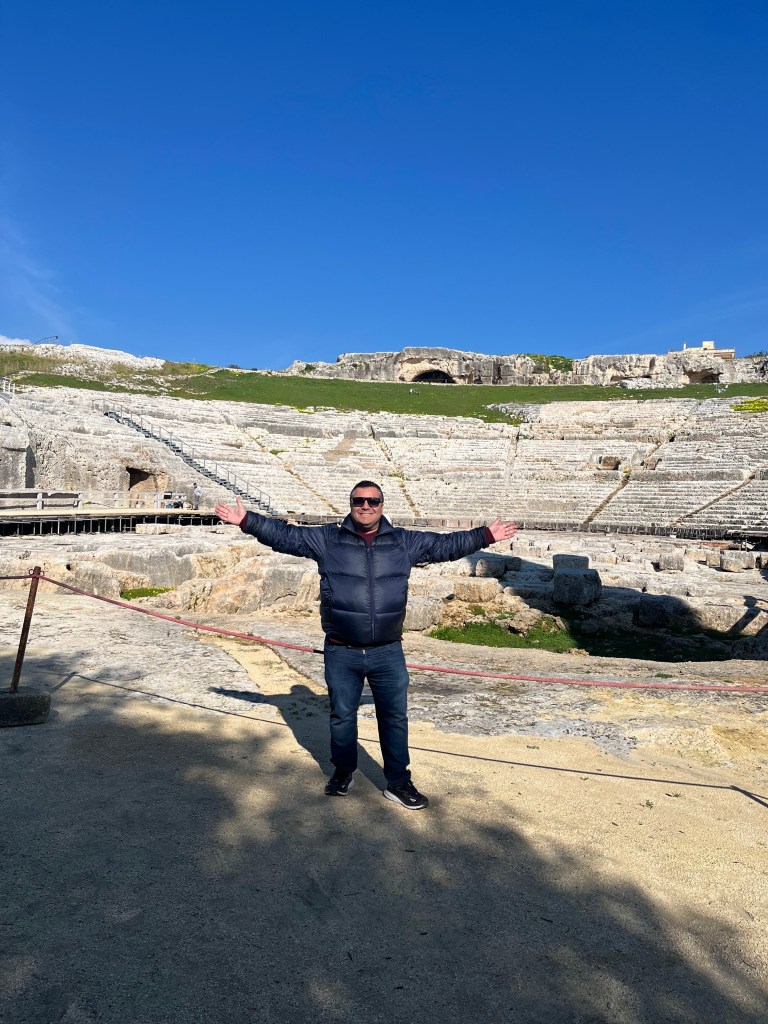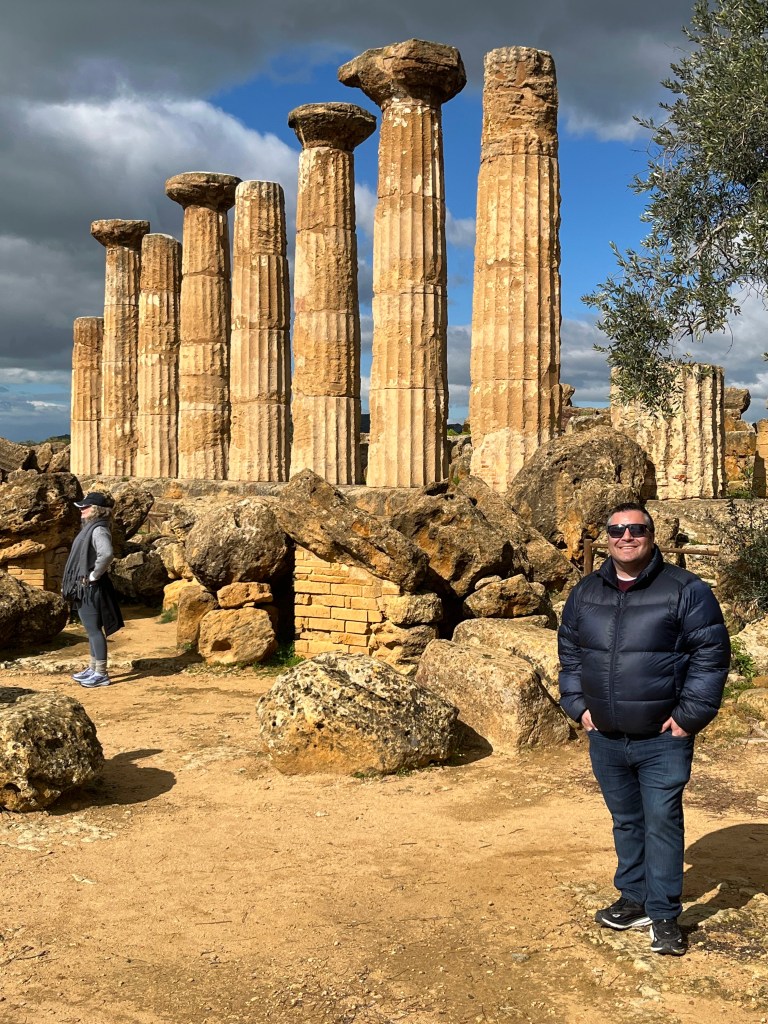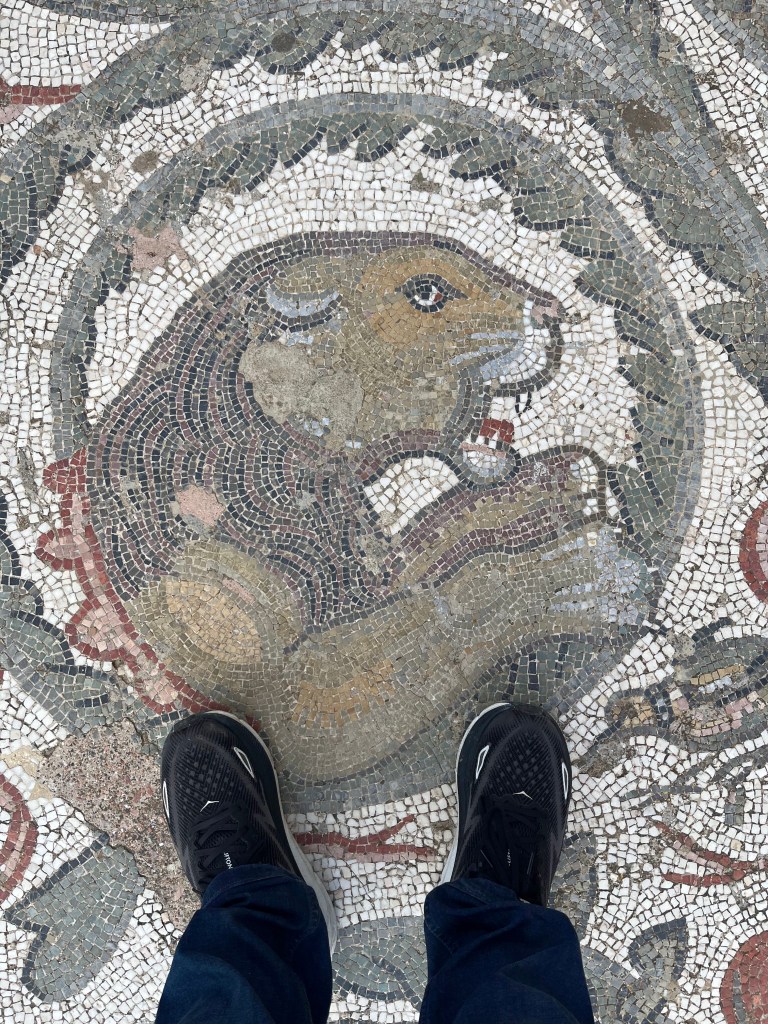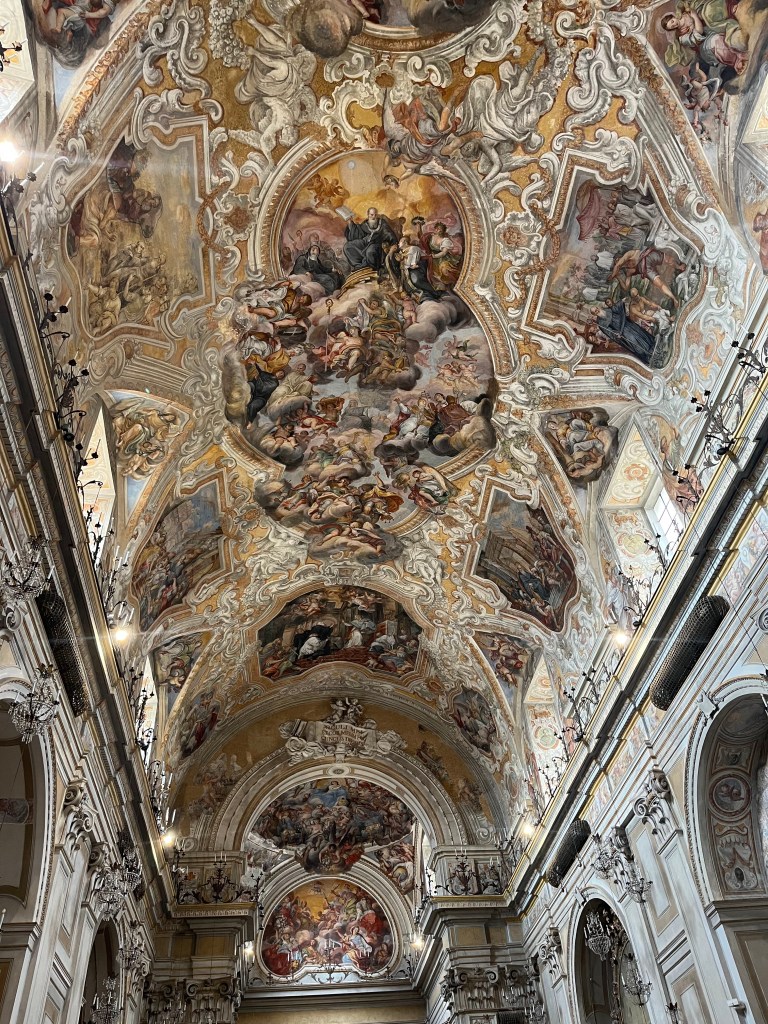
Jewish, Christian, and Islamic Córdoba

Spain has an incredibly long history of co-existence (and discord) between Jews, Muslims, and Christians.  Few cities offer a more beautiful way of seeing this interaction than Córdoba.

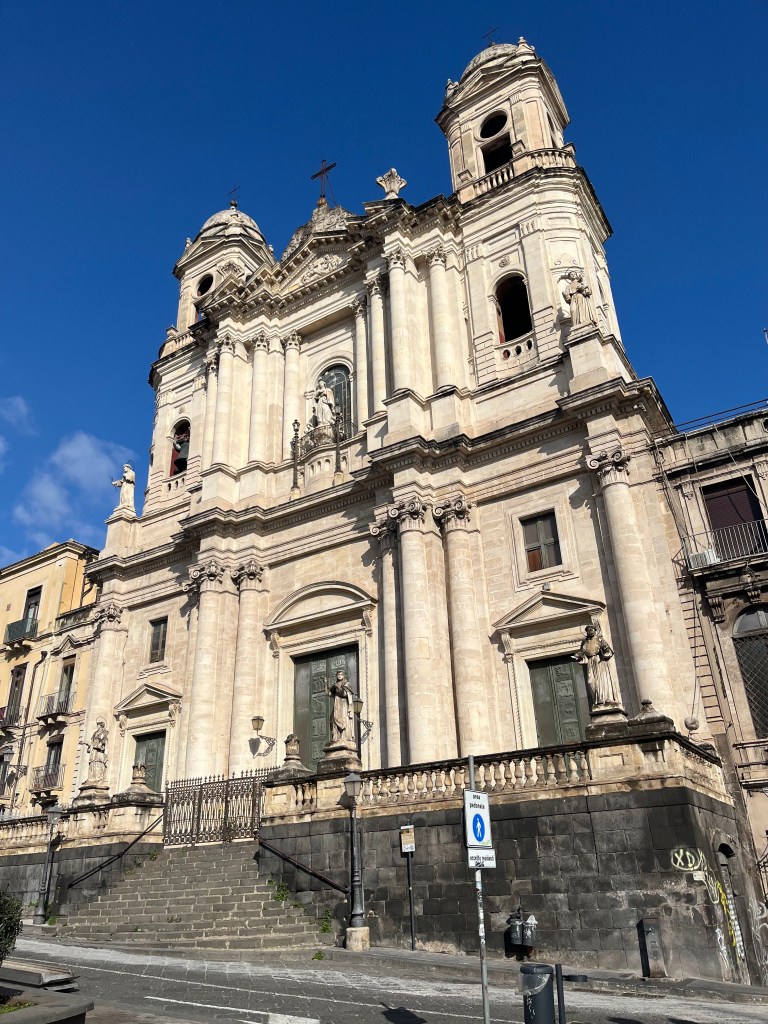
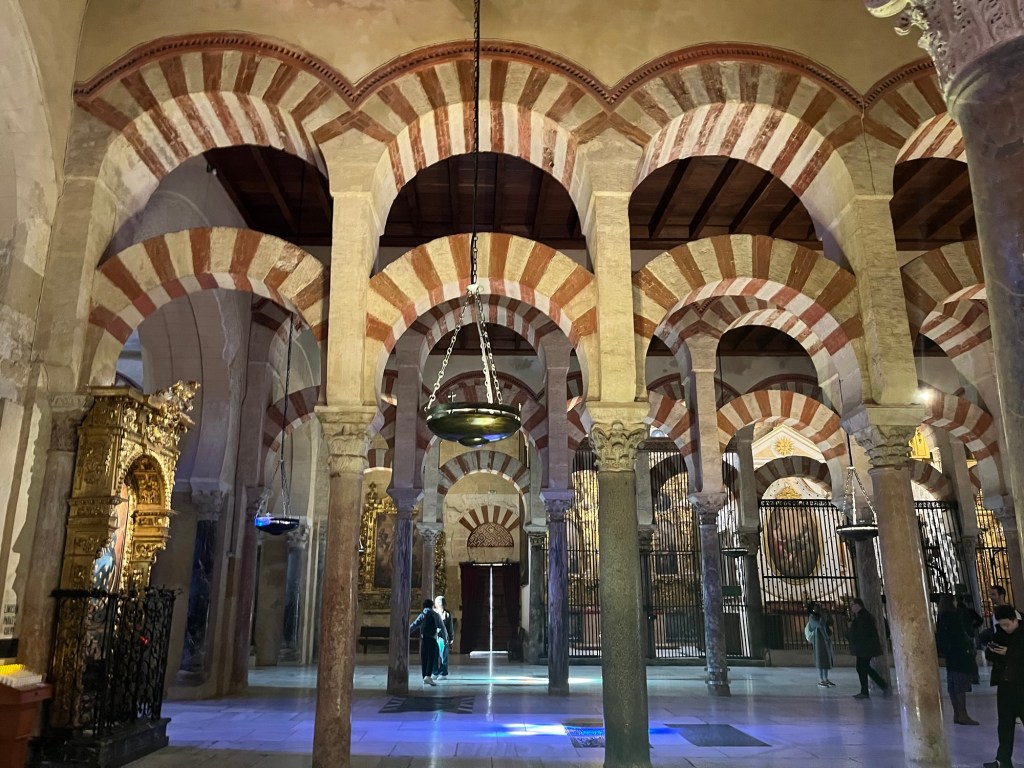
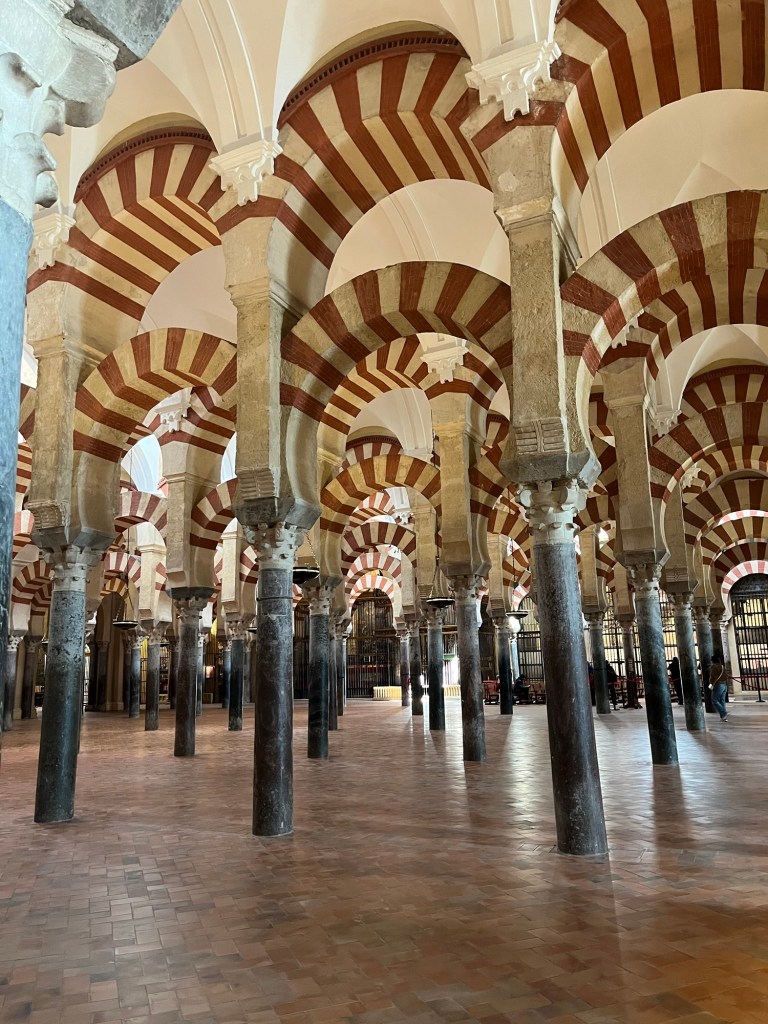
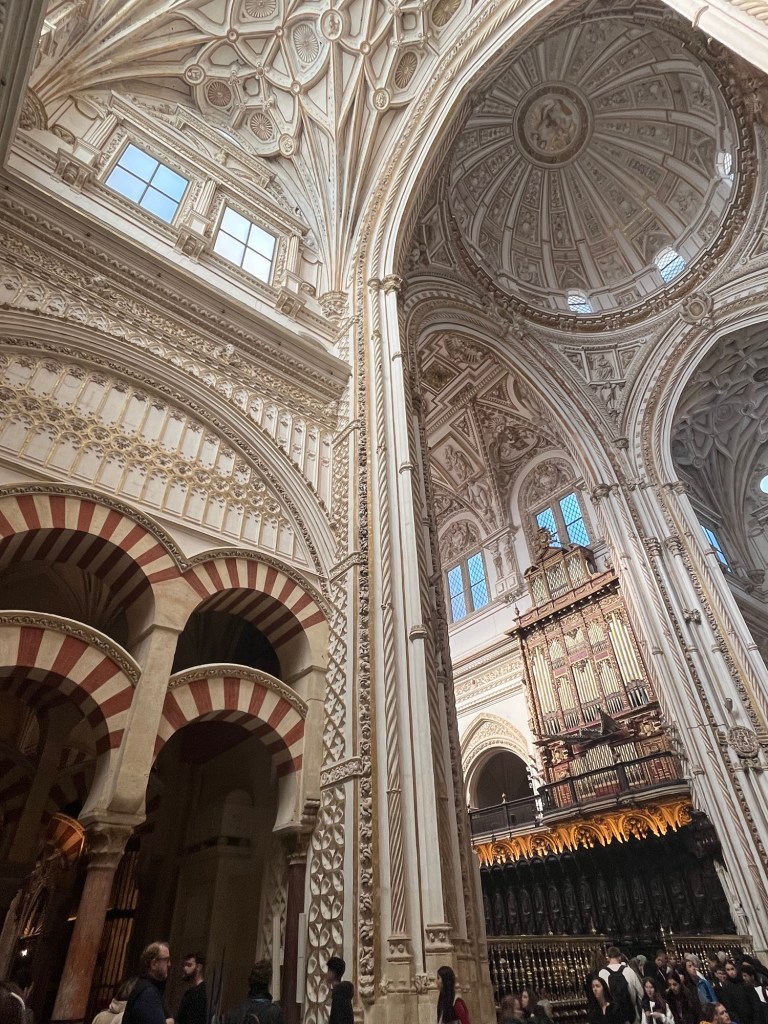
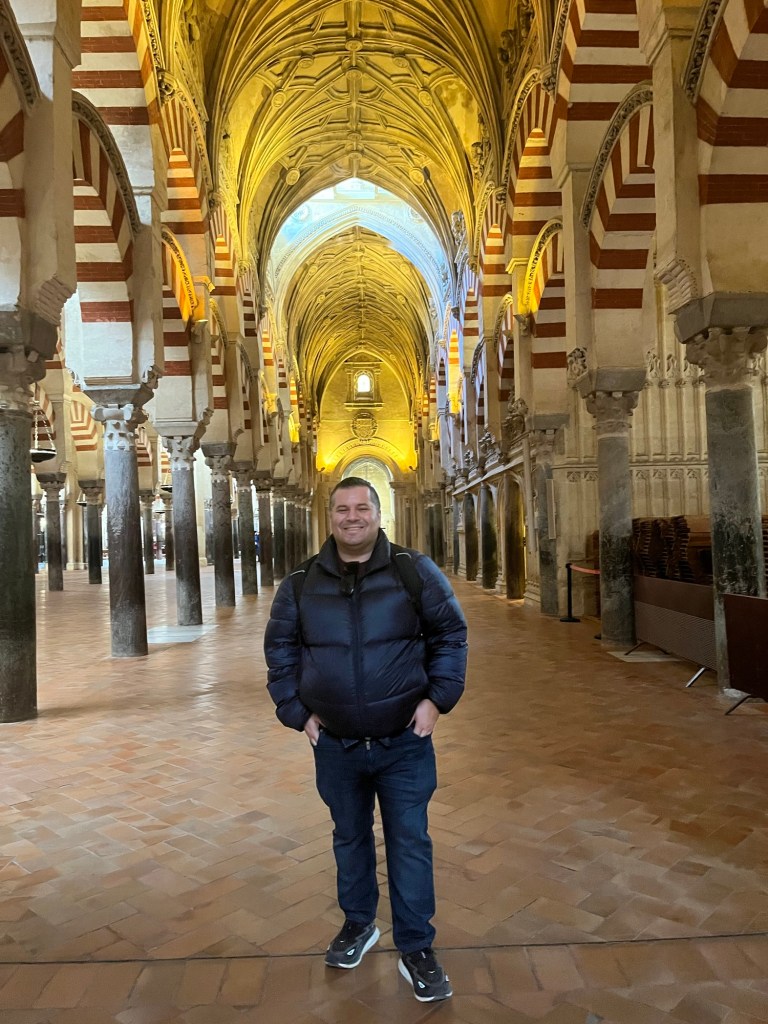
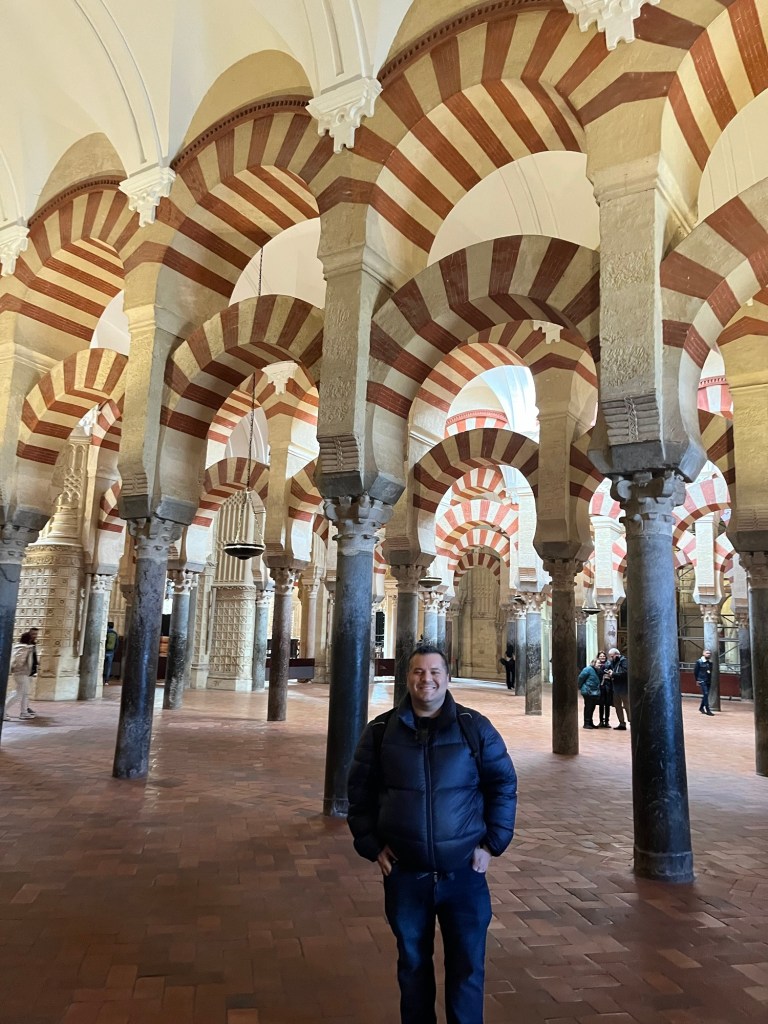
I started my visit off in the Mosque-Cathedral.  Yes, it is a mosque and a cathedral, although actively only a cathedral these days.  Built originally as a basilica by the Visigoths in the 6th century, it was destroyed and then built as a mosque by Muslim conquerors in the 7th century and then dedicated as a cathedral in 1146.  You can see a timeline of the Mosque-Cathedral’s construction here.

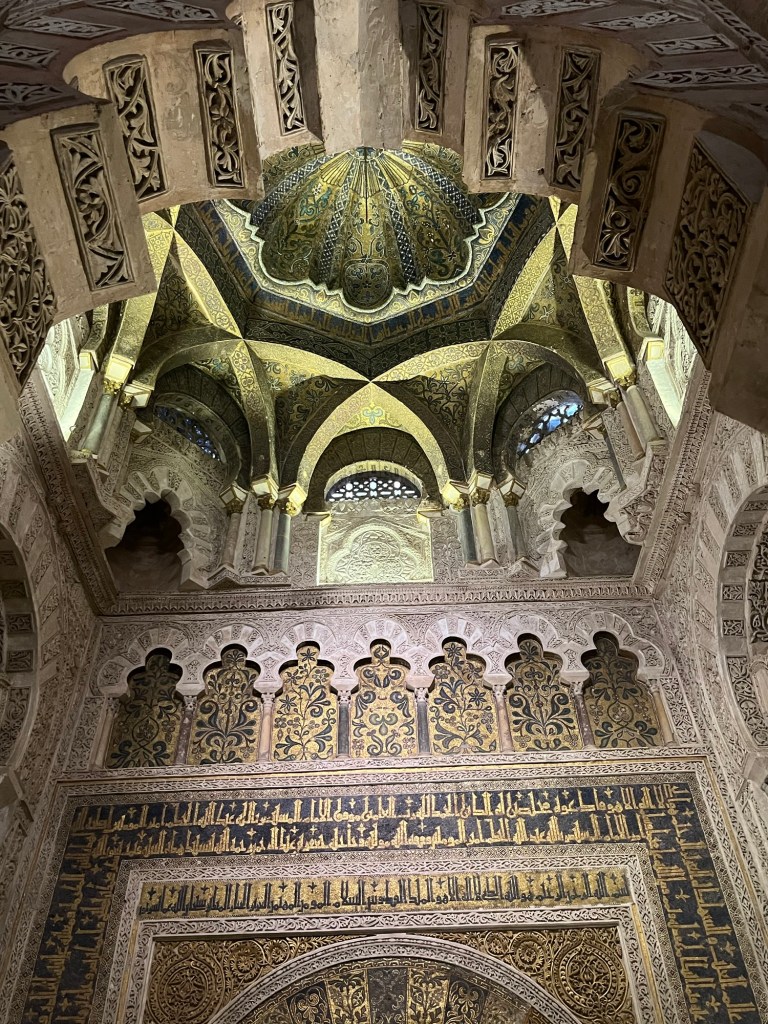
The back-and-forth conquest of the area by Muslims and Christians left its mark on the Mosque-Cathedral.  There are clearly Islamic archways throughout the 23,400 square meter building (that’s about 250,000 square feet!).  There’s even a beautifully restored mihrab, which showed Muslim worshippers the direction of Mecca for prayer.

And then smack dab in the middle of the enormous mosque complex, there’s a cathedral!  And from the middle of the cathedral you can still see the Islamic archways that dot the entire campus.  It’s like one civilization couldn’t escape the other.
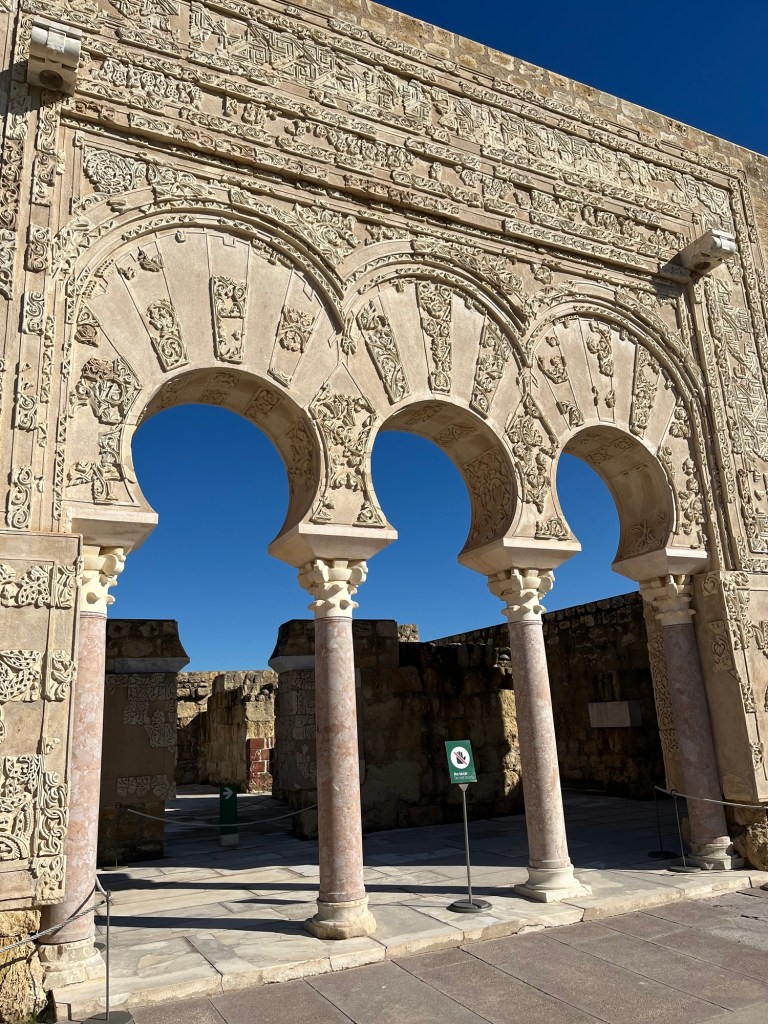
If you have the chance to go to Córdoba, this building is an absolute marvel and alongside the Alhambra, one of the most impressive pieces of architecture I’ve seen in Spain – indeed, perhaps all of Europe.

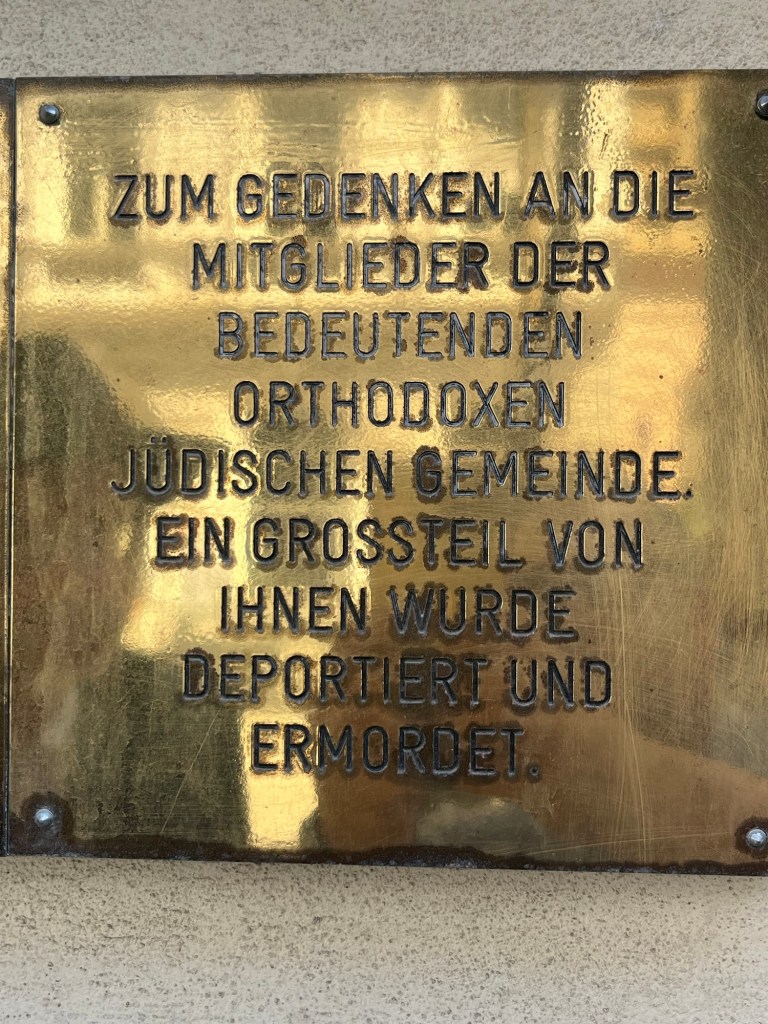
After my tour of the Mosque-Cathedral and eating some delicious gelato, I decided to explore the Judería, or Jewish quarter, of Córdoba.  Because Jews also called this place home for many centuries, including the famous Maimonides who was born in Córdoba in 1135.

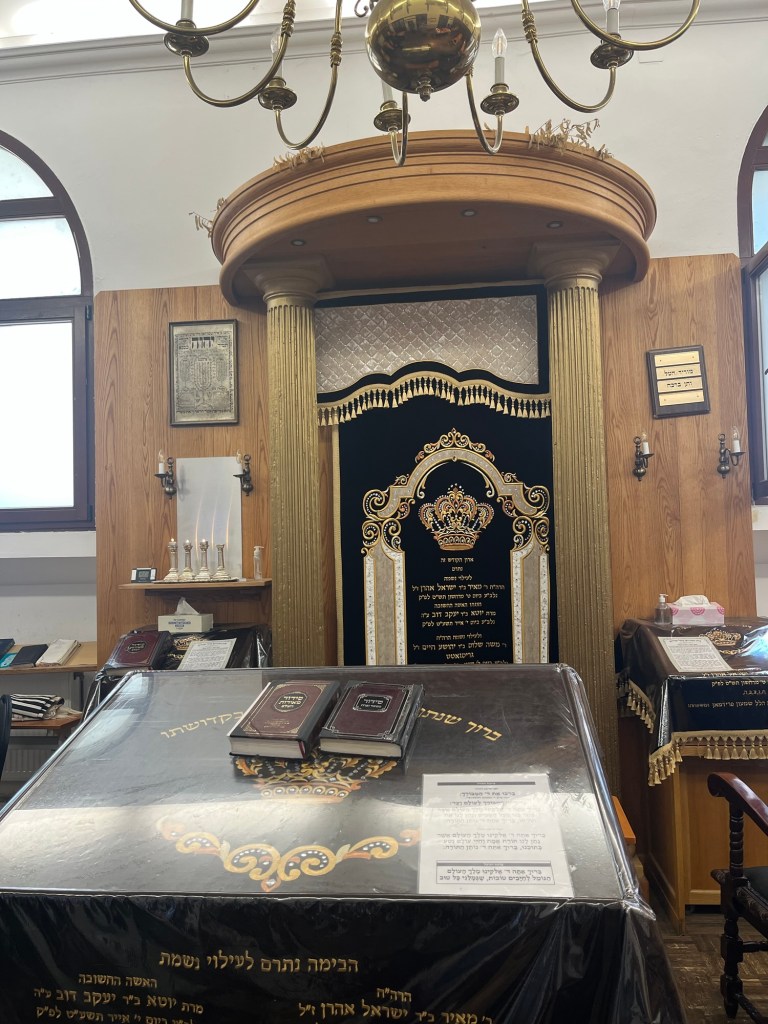
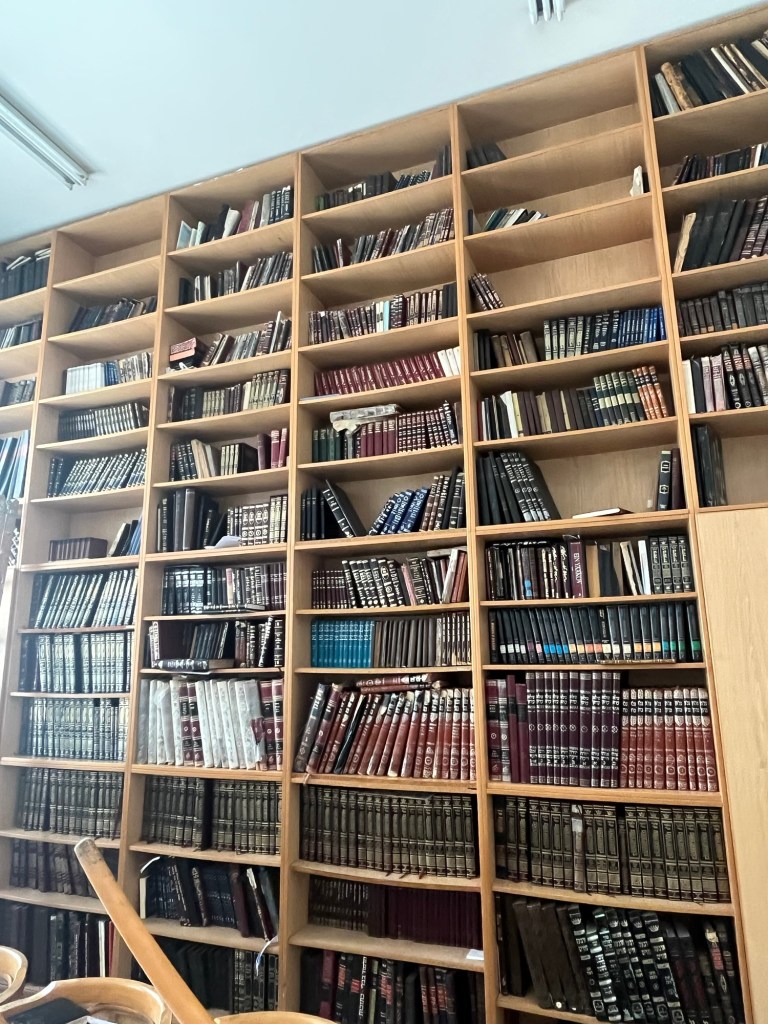
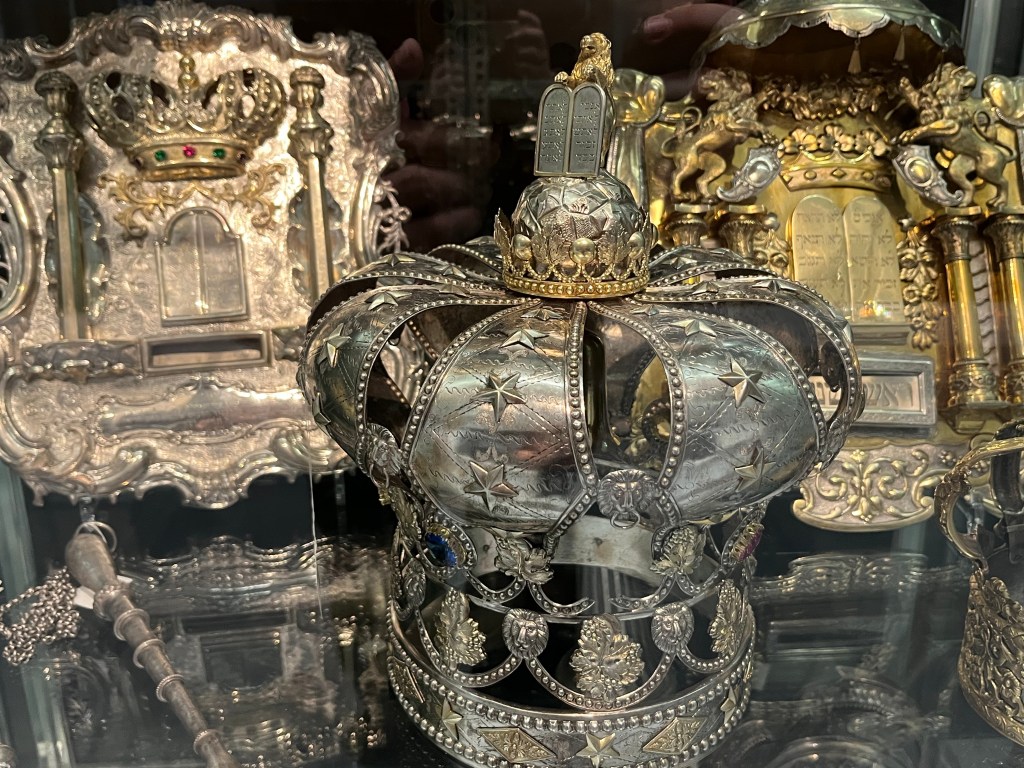
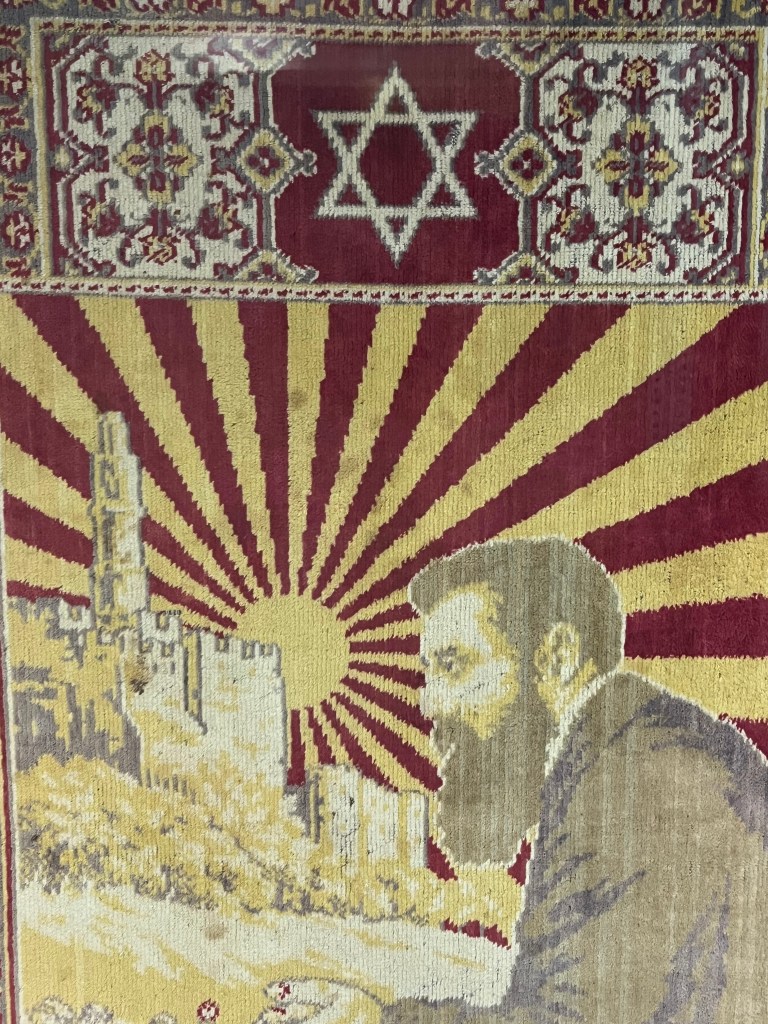
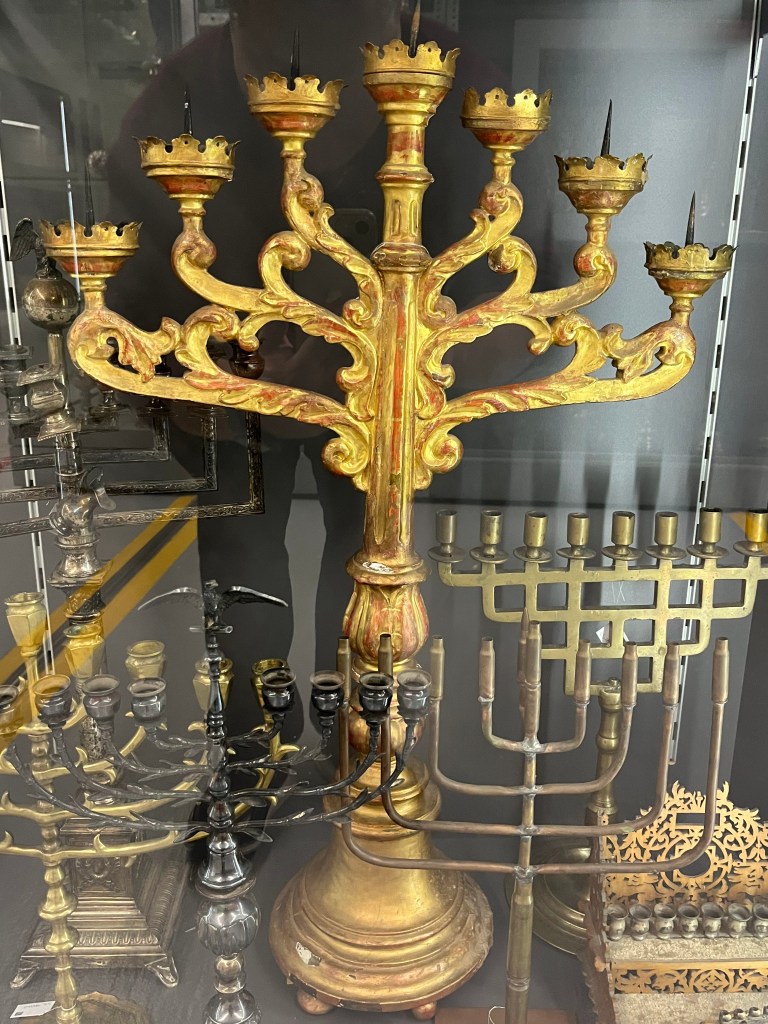
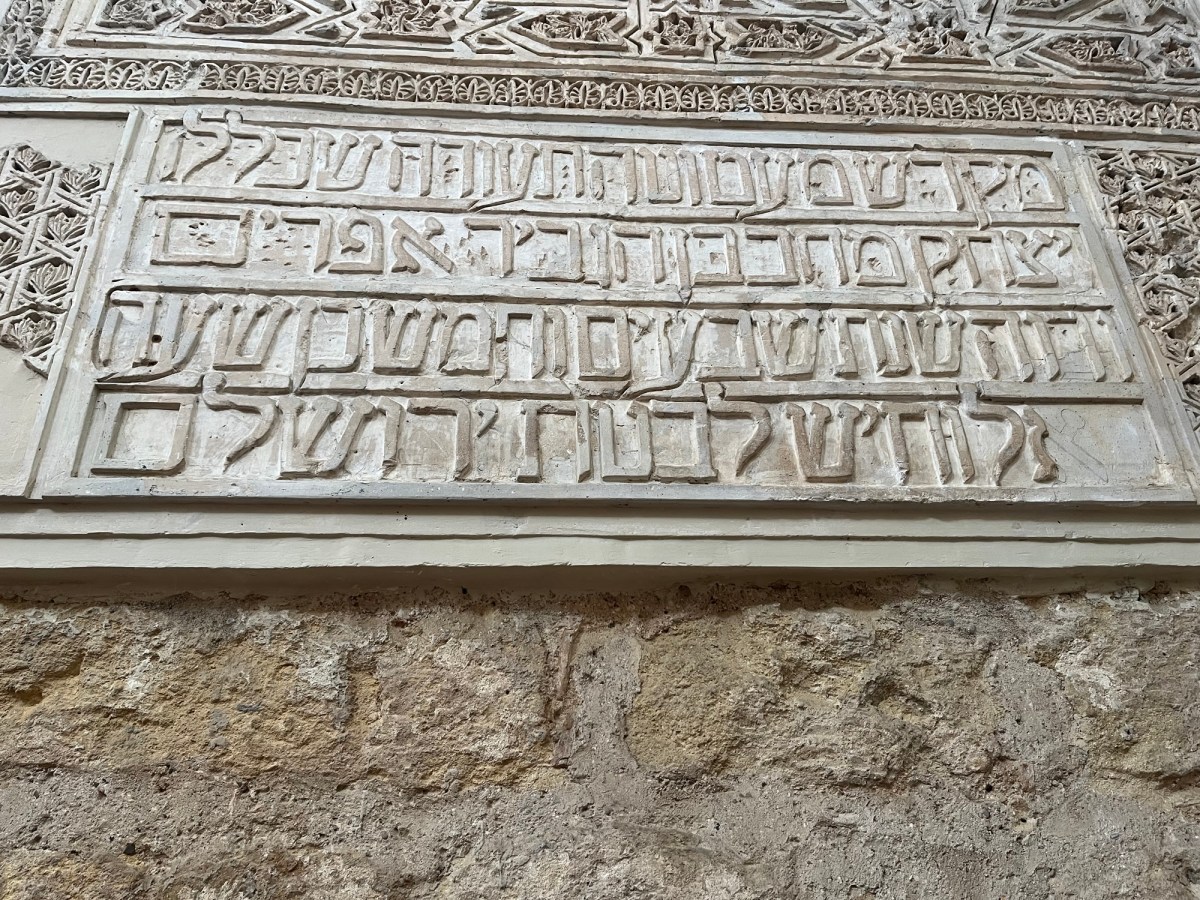
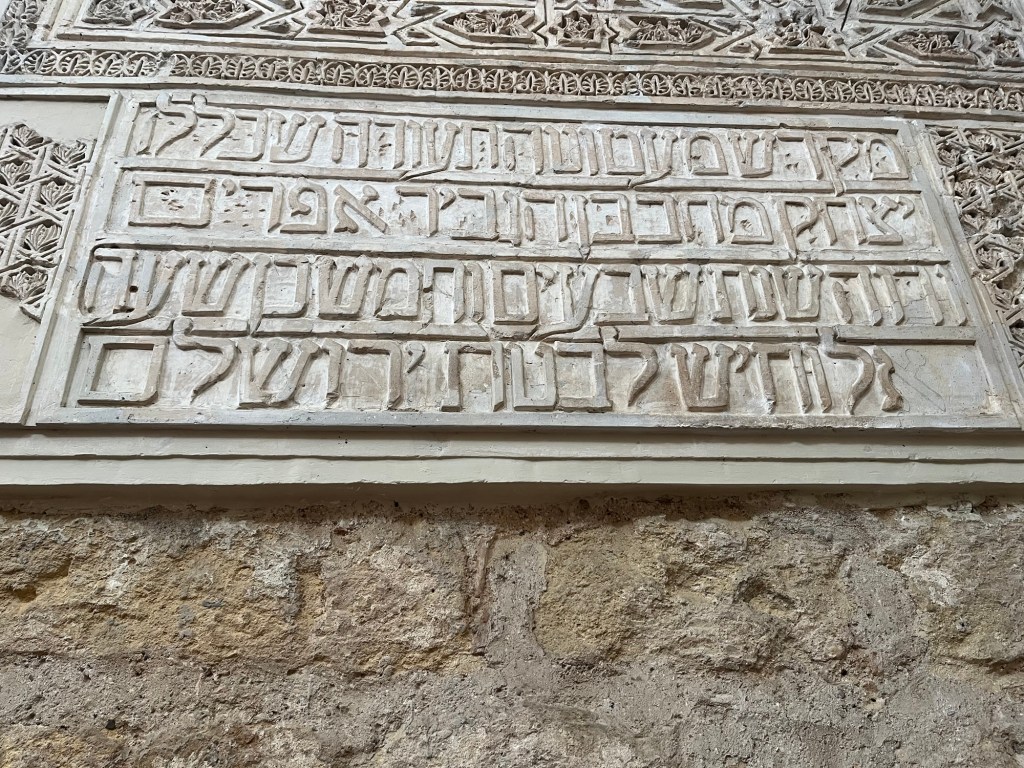
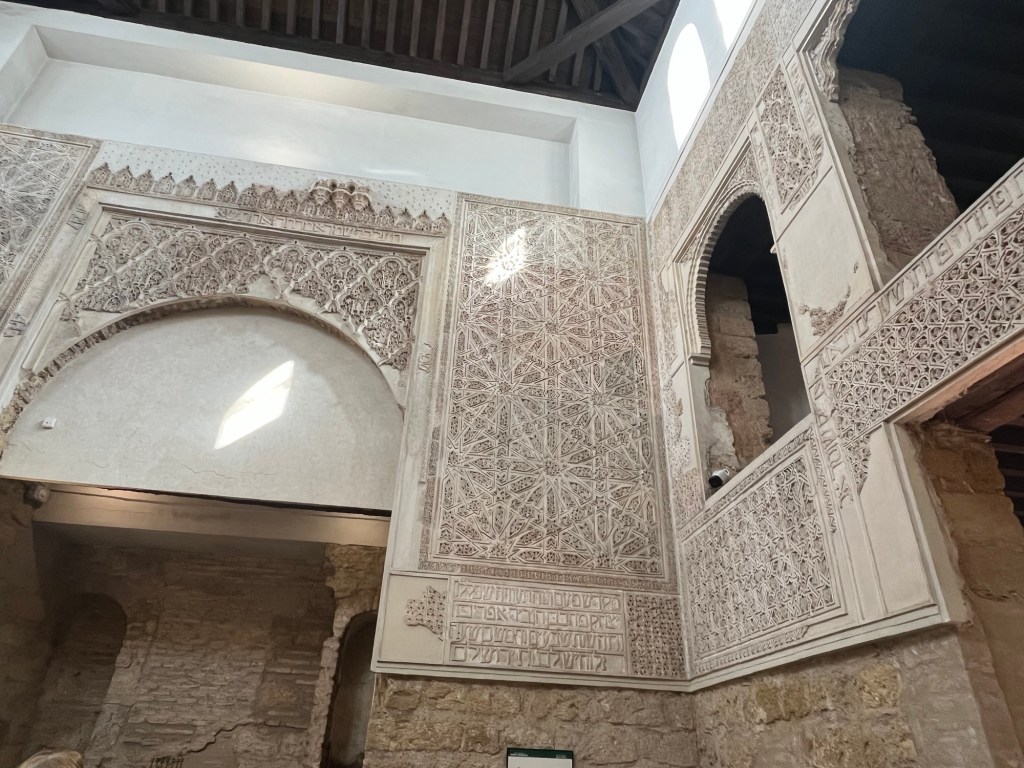
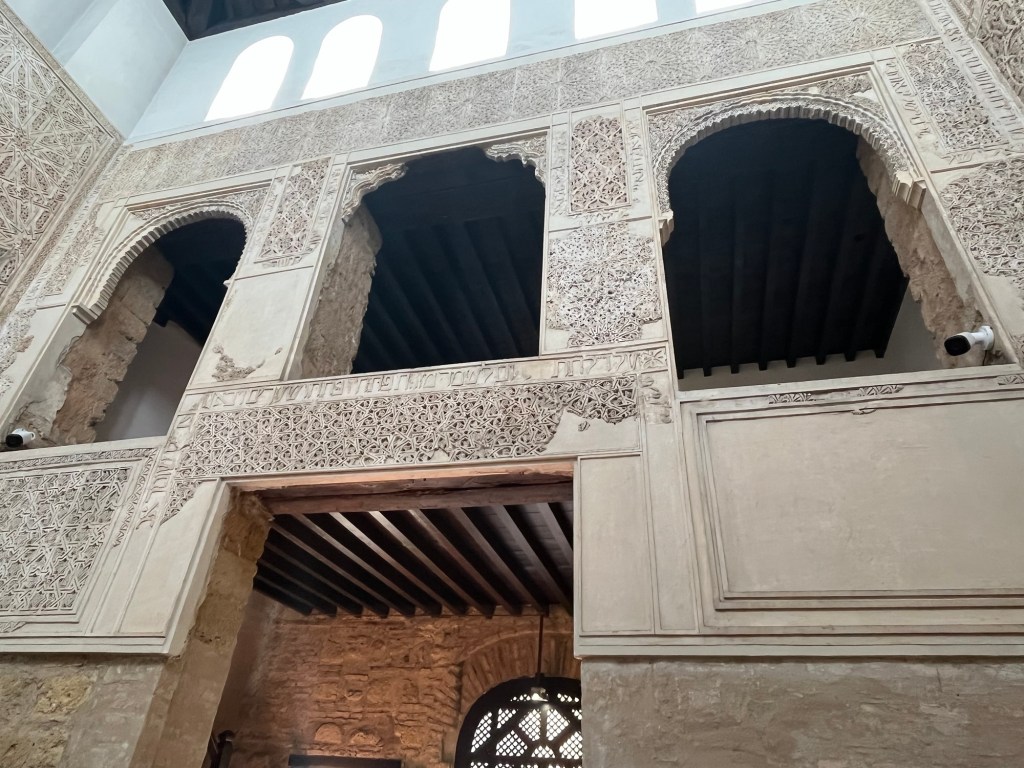
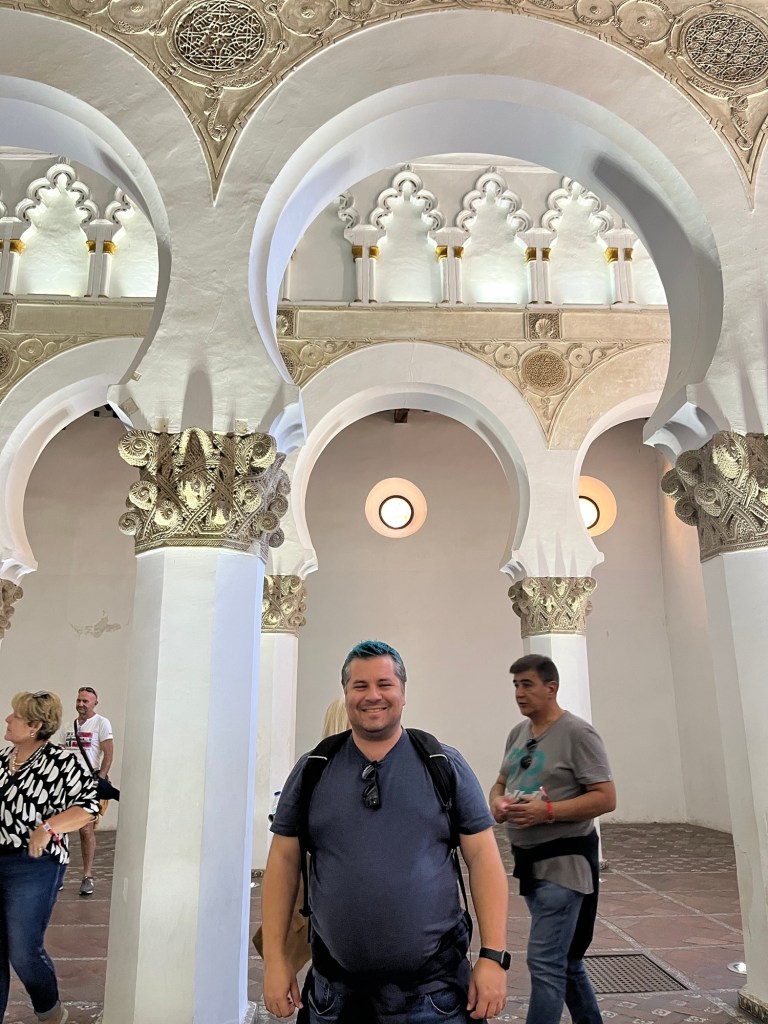
In the Jewish quarter, there is one of three remaining well-preserved medieval synagogues in Spain.  It was built in 1314 and has beautiful Moorish-style architecture and you can still clearly see the Hebrew engraving on the walls.  You can learn more about its history here.

The Hebrew on the walls particularly caught my attention and spiritual energy.  The fact that I could read some of it really moved me.  Jewish history is so often erased.  Our connection to our ancestral homeland of Israel, where Hebrew comes from, is so often denied.  Yet here in Spain, many miles from our home, there stood a synagogue, over 700 years old, with engravings in the same language I pray in.  The same language I use to write to my Israeli friends on WhatsApp. Jewish history is real and the chain of our existence is unbroken by the conquerors of the day.  I’m grateful to Spanish activists like Red de Juderías de España who have preserved Jewish heritage for us to enjoy despite all the pain our people have endured in this country.

I also stopped by Casa de Sefarad, a Jewish history museum housed in a 14th century Jewish home with a lovely and friendly woman at the front desk who was very proud of the city’s connection to Maimonides.  It’s a beautiful museum and worth a visit.

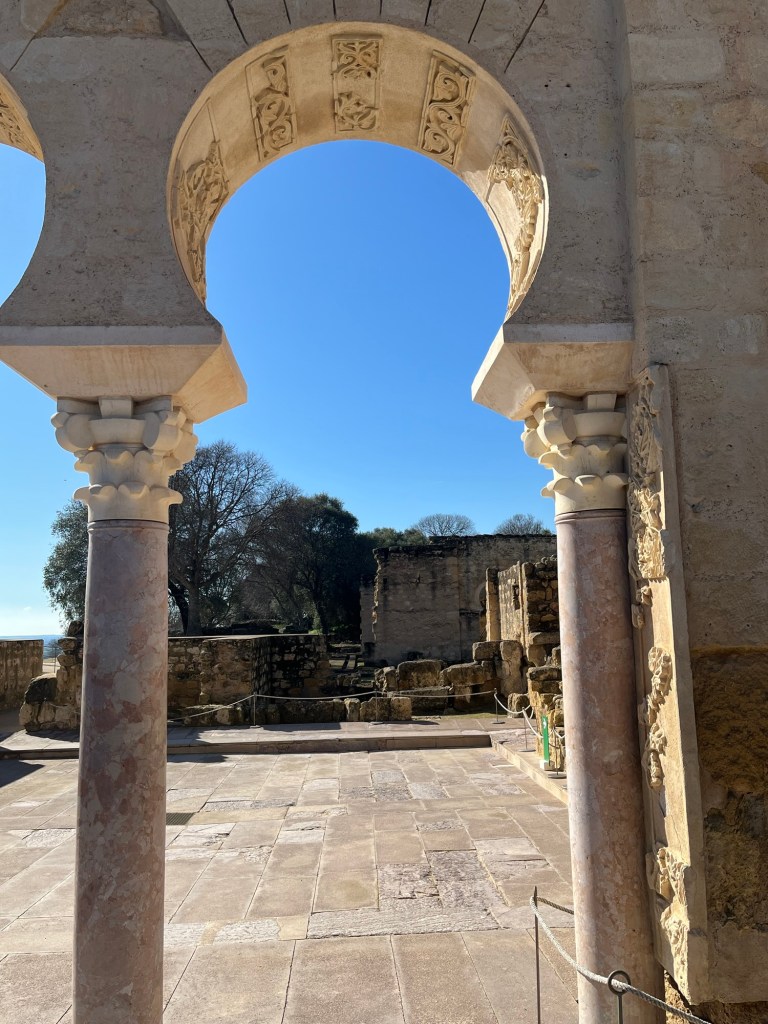
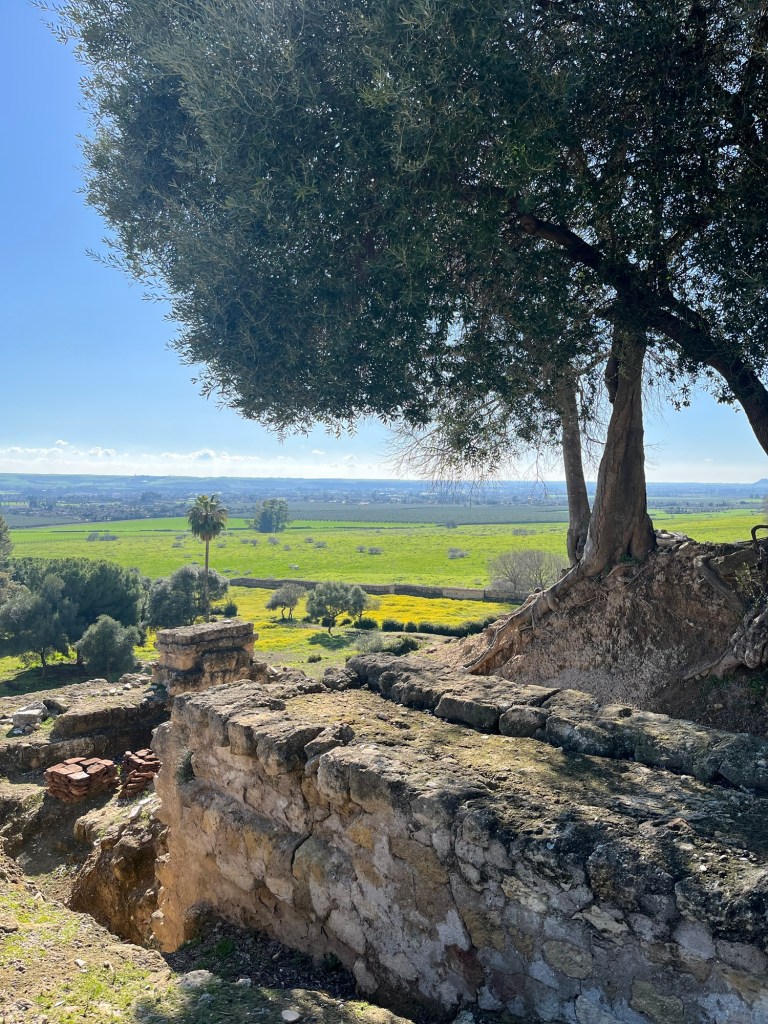
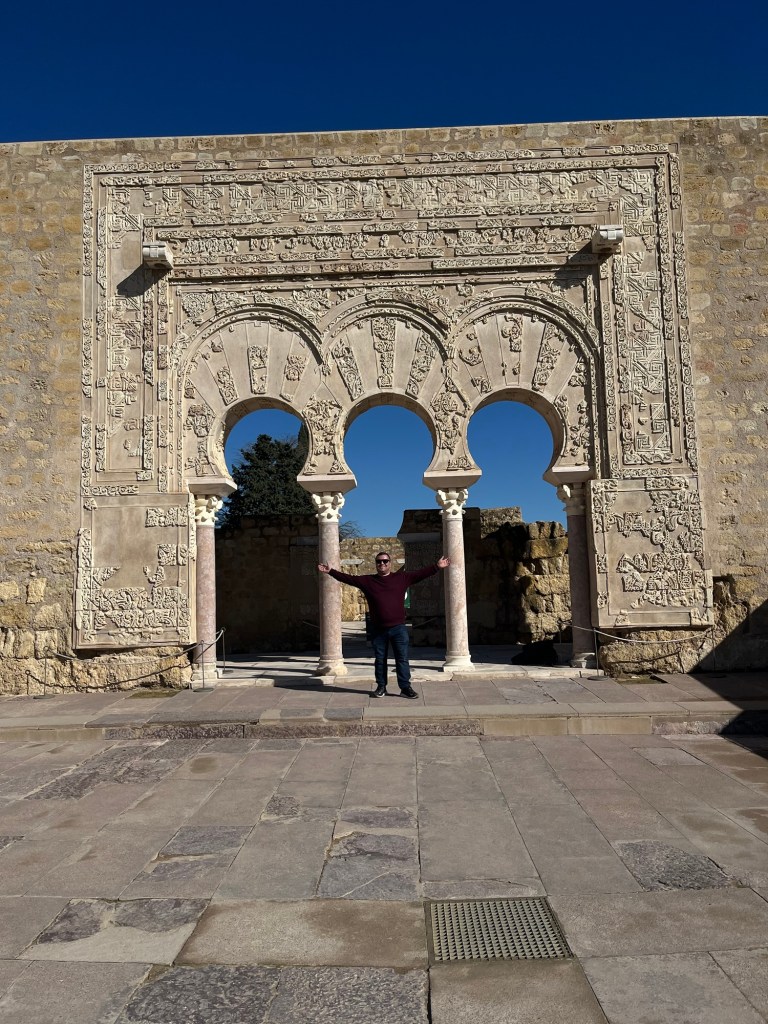
From the Jewish quarter, I decided to go a little outside Córdoba to Islamic ruins known as Medina Azahara.  These ruins date from the mid-10th century and are absolutely stunning.  This former city is now an archeological park and is set in a gorgeous rural area just a 15-minute drive outside of Córdoba.  If you have the chance, you must go.  You can still see archways and columns and elaborate Islamic architecture.  And far fewer crowds than the center of Córdoba.

It’s a place where you can really meditate on the meaning of these three cultures – Jewish, Islamic, and Christian – which have been, and in some cases continue to be, living in contention with each other.  But also influencing each other and at times even co-existing.  Whether it’s the Islamic arches in a Catholic cathedral, the Moorish décor surrounding Hebrew in a synagogue, or the Jewish scholars like Maimonides who crafted wisdom while living amongst these civilizations- one thing is clear.  We are interdependent.  And nothing, perhaps nowhere, shows that better than Córdoba.  So grab a salmorejo (feel free to hold the pork!) and enjoy this marvelous city of three cultures.

The spirit of Andalucía

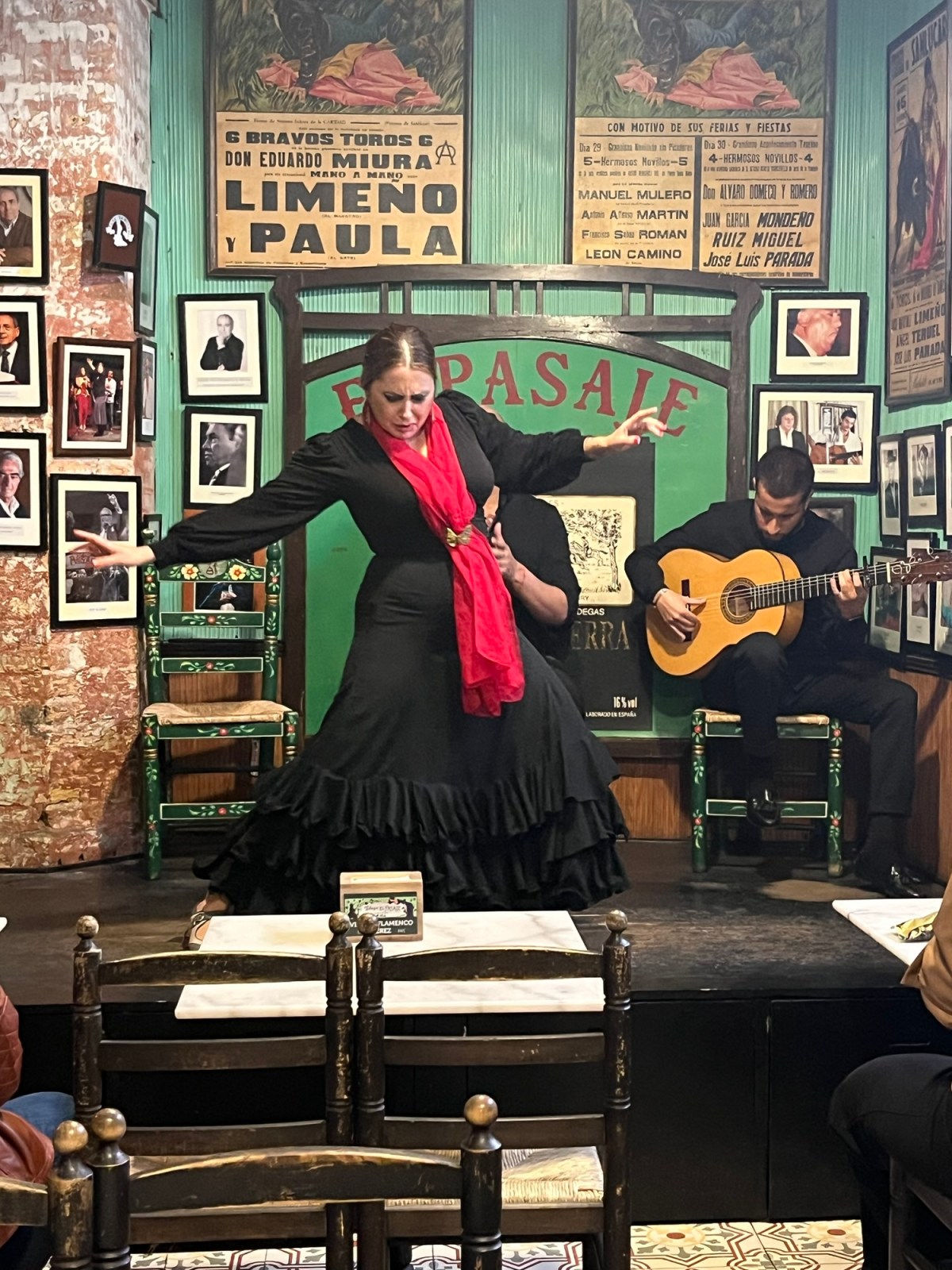
After watching a typical tourist flamenco show, I found myself wandering around Triana, the neighborhood where flamenco’s heart beats in Sevilla.  I Googled other spots to check out and came across a flamenco bar.

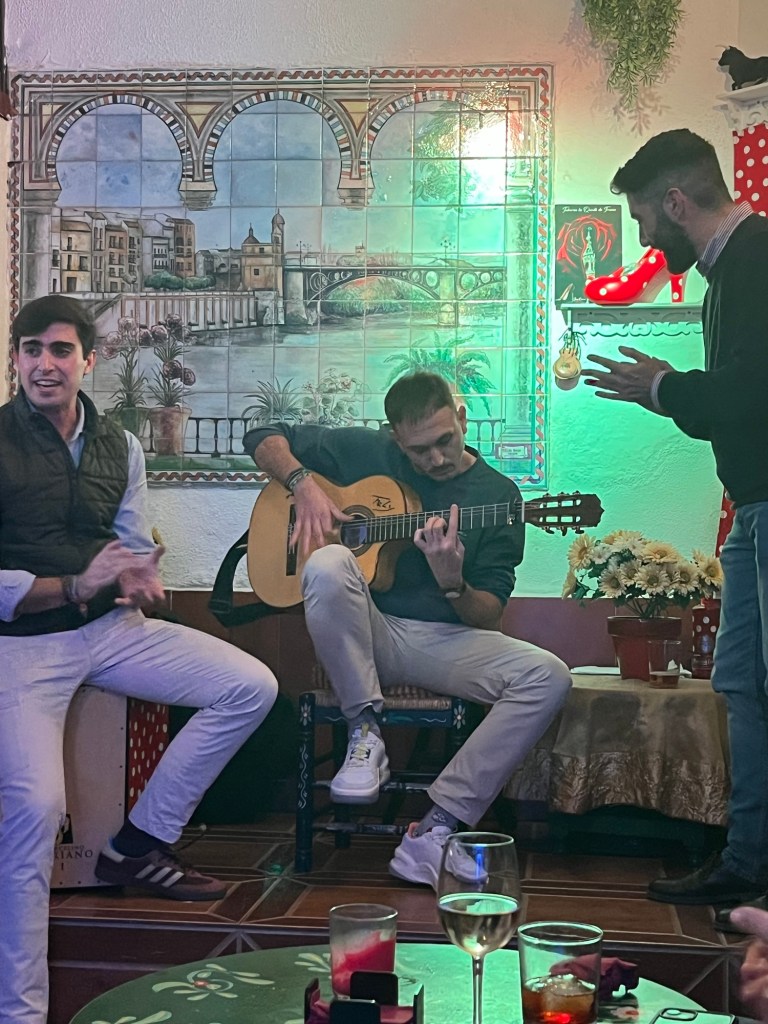
Yes, a flamenco bar!  It had amazing reviews, but wasn’t too crowded.  At first.  I wasn’t sure what to expect.  I love flamenco music and I didn’t see any dancers on stage.
Instead, I saw a man playing guitar and singing.  And then two people from the audience simply got up and danced flamenco in front of him.

Then, a group of hot presumably straight guys next to me started requesting songs.  And then the guitarist gave the guitar to the hottest guy in the group, who then serenaded the bar with his friend.

It was part flamenco show, part karaoke, part sing-a-long – everyone was singing in the bar!

Flamenco has been a part of my life ever since I visited Spain as a teenager.  My Spanish host family in eighth grade gave me my first flamenco CD – “Mahareta” by Siempre Así.  It’s light, popular flamenco and so much fun.

One of my favorite songs on the CD is “Para volver a volver”.  It means “to return, to return”.  And it’s a song that resonates with me.  Since visiting Spain in eighth grade, I’ve been back another seven times.  I’ve spent more time there than anywhere besides the U.S. and Israel.

When I first heard that song, I was in a rough situation.  I had an abusive father waiting for me in the U.S.  There was constant fighting, shouting, and manipulation at home.  Going to Spain was a welcome escape and did nothing short of change my life.  It helped me fall in love with Spanish, with languages, with travel.  Ever since I first visited, I’ve been wanting “to return, to return”.  And that’s exactly what I’ve done – and never been disappointed.

So I decided to request the song from the guitarist.  I figured, like in the States, that he’d perform – that he’d sing it for me.  And he did start to sing the chorus and everyone joined in, until he lowered the volume of his voice and guitar and looked straight at me as he asked me to sing the verses!

There I was, decades after I first fell in love with flamenco, singing to a now-full bar of Spaniards my love song for Spain.  A place that has always given me such joy and let my spirit sing.

After I sang each verse, people applauded.  And it’s not because I’m a professional singer.  It’s because that’s Andalucía’s vibe.  It’s a place where instead of internalizing our problems and anxieties, we sing them loudly and proudly – laughing, crying, sometimes at the same time.

Andaluces do the opposite of many Americans, at least in Washington, D.C. where I’m from.  Andaluces externalize their emotions- good, bad, and ugly.

Several days later I took a flamenco dance lesson, in which my teacher taught me that the relationship between the singer and the dancer is a dialogue – each has to make space for the other and take turns “speaking” through music or their dance moves.

That dialogue is something sorely missing in the U.S. right now.  Coming back to D.C. after the life-changing and emotionally-open Andalucía has been hard.  People in my hometown are suffering – countless have lost jobs including dear friends.  And I can see people on all sides retreating to their ideological cocoons instead of engaging in the difficult work of back-and-forth conversation.  This obviously includes the President, who could use a flamenco lesson about dialogue and taking turns speaking.

First, it needs to be said that my hearts go out to everyone suffering right now, including my friends who have lost their jobs.  Everyone has a right to feel pain, sadness, and anxiety as we face an uncertain future.

What I would encourage us all to do is to learn from the spirit of Andalucía.  It’s a place, as one cab driver laughed and told me, “where nobody has money but everyone is happy”.  That’s not to suggest we should never stress about paying bills, but rather that we should remember that there are more important things in life.

As people on different sides of the political spectrum get angrier, rather than bottling it up inside and passive-aggressively attacking friends and relatives who disagree, maybe they should “flamenco” the situation.  Don’t sit and watch the show.  Join in like I did.  Request your song and get up there and sing.  Sing through the words in your heart and share it with those you love and maybe even those you don’t.  In a way that garners empathy and respect.

Maybe it won’t work.  Maybe our country is beyond dialogue.  But if Andalucía can live through a civil war, a dictatorship, centuries of conquest and reconquest, and poverty and still find room for joy – maybe we can give something new a try.

Para volver a volver.  To return, to return. I’ll keep returning to Spain for inspiration, hope, and a smile on my face no matter what I’m facing.

How Portugal breathed life into my Judaism

I don’t know what I think about God.  For those of you who know me well, you know I lost two parents to cancer within five months of each other two years ago.  Beforehand, I had a rich Jewish spiritual life to the point of almost becoming a rabbi.  I was actually accepted into rabbinical school at the time.  The shock of the losses was too great for me to absorb and still believe wholeheartedly in an all-knowing, all-powerful being.  Because where was it when I needed it most?

After losing my parents, I decided to travel and travel a lot.  One of the first places I went to was Portugal.  I speak Portuguese and was curious to see more of the world.  I traveled first and foremost for my self – my exploration and my healing.  And also because one of my mom’s regrets in her final days was that she wished she had seen more of the world.

My previous trip to Portugal was fabulous, but I still wasn’t in a state of mind where I wanted to “touch” my Judaism much.  I did buy some books about Portuguese Jewish history in Portuguese – which have been super interesting to read.  And Jewish history has remained a tie that has kept me feeling Jewish even when the religious dimension was evolving.

This trip to Lisbon, I decided to do something different.  Feeling a bit lonely on the first Friday of my month-long solo trip which I did this February across the Mediterranean, I decided to do something I hadn’t done in several years: go to Shabbat services.  It’s something I did growing up almost every week but had been absent from my life as I coped with loss.

Ohel Jacob is the progressive synagogue in Lisbon.  Founded by Ashkenazi pogrom victims later joined by Holocaust refugees, it is now a largely Portuguese community.  It includes many descendants of conversos who were forced to convert to Catholicism by the Inquisition and who have since returned to Judaism.  Which is utterly inspiring.

I chatted with members of the congregation who made me feel at home.  I even met a group of young people (and queer Jews!) who showed real dedication to their spiritual lives and to their community.  And just seemed like a fun group of people!

I sat down and got nervous as the prayers began to be sung.  Some prayers I was fine saying.  Other times I struggled to say “Adonai” (“my Lord”).  If I believe in a spiritual force, I’m not sure I believe in it lording above me.

Then, we got to the end of the service and the most incredible and moving thing happened.

First, let’s rewind a bit.

During my previous trip to Portugal, I went to Coimbra, a beautiful college town.  In one of the town squares, a group of college students asked for volunteers to be serenaded.  A bunch of women stepped forward and I raised my hand too, not sure what was about to happen but excited to experience Portuguese Fado music up close!

It turns out the song they were about to sing was aboutserenading a woman (hence me being the only man in the group, but who cares, I rolled with it).  It’s the most beautiful tune.  It’s called Menina estás à janela (“Girl you are at the window”).

As the students sang, a foreign tourist next to me started crying.  I don’t think she understood the words, but it was just so moving that she couldn’t control her tears.  And then I started thinking about my mom and I can’t explain it in rational words but I could feel her spirit guiding me.

Ever since, I’ve quietly and privately associated the song with my mom.  And I get emotional every time I hear it, like just now when I played it and started crying.

So, fast-forward to the end of the service at Ohel Jacob.  We get to end of the service and it’s time for the prayer “Adon Olam”.  It follows a metric that allows many tunes to be used to sing it.  Growing up, Cantor Sue Roemer, of blessed memory, would use many secular melodies – even patriotic ones on the Shabbat of the Fourth of July!

But instead of using a traditional melody, Ohel Jakob that night decided to use “Menina estás à janela” to sing it.  It took every fiber of my being not to start bawling in the middle of the synagogue.  But I did allow myself to feel what the Portuguese call “saudade”, loosely translated as “longing”.  Longing for my mom, someone who loved me very much and who would’ve been thrilled to see me praying with a Jewish community in a foreign land – something she knew I lived for.

My mom would often look for signs.  I often somewhat dismissed it as superstition.  For example, she would follow cars that had my grandmother’s initials on the license plate for a few minutes.  Just to see where they were going.  That it was a sign of my grandmother’s presence even after she had passed away.

I don’t know what to make of the fact that this beautiful Jewish community chose a song I deeply associate with my mom for Adon Olam at the first Shabbat service I’ve attended in years.  Is it a sign that my mom was with me that night in spirit?  Perhaps.  I think so.  Is it a coincidence?  Who knows, but it was such a beautiful moment that it almost doesn’t matter if it was just chance.

All I know for sure is that it is a sign that her love lives on in me.  And in my love for others and their love for me.   In community.  In relationships.  In feeling part of something great.

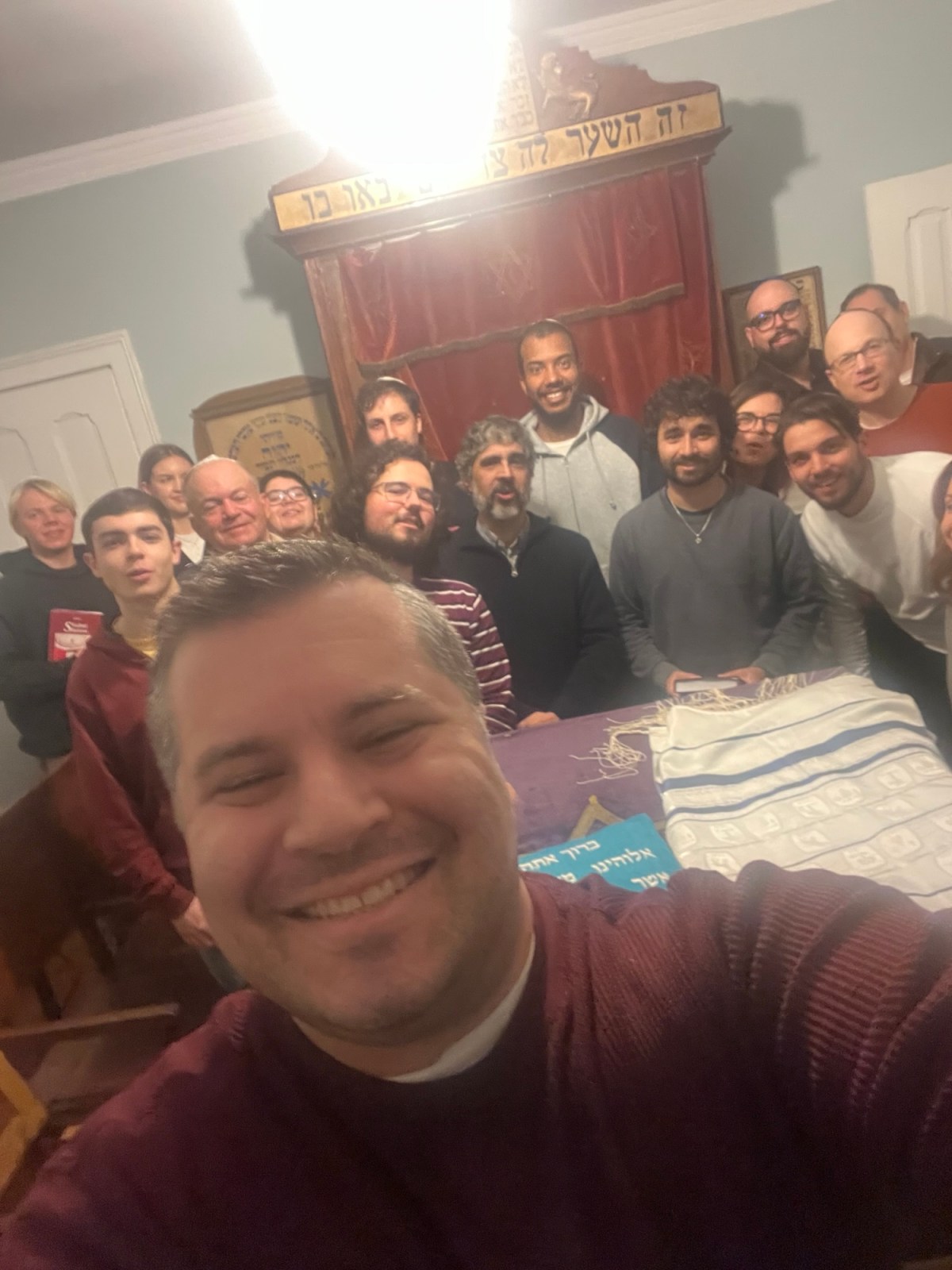
Ohel Jacob community (the folks on the cover photo of this blog) – you have no idea what that night meant to me.  Although now that you’ve read this blog, hopefully you do.

Keep doing all the beautiful things you’re doing to revive Judaism in Portugal.  And who knows, maybe you breathed a little life into the Judaism of an unsuspecting American who walked in your doors, um menino à sinagoga por primera vez em muitos anos.  I have a feeling I’ll be back soon.

The Emerald Isle and the United Kingdom

 I was originally supposed to visit Ireland and Wales, but I ended up getting to see England and Northern Ireland as well!  While my stereotype of northern Europe is frigid, distant people, I was pleasantly surprised by how warm and welcoming the people I met were.

I started my trip in Ireland.  Dublin is great as a home base for exploring other parts of the country, but is kind of overrun with tourists (even during off season) and is not the most beautiful of cities.  Even the Irish people I met in Ireland were the first to admit Dublin was not the crown jewel of the country.

 That being said, if you go just a half hour outside of the capital city, you’ll find lush green countryside and adorable seaside villages.  I spent a day in Malahide (where there’s a castle that had been owned by a gay Earl!) and Howth.  The tour of Malahide Castle was lovely and the guide was full of interesting information.  A small tour group – just me and a couple of Irish tourists from near Cork – we bantered and had a great time together.  Then I wanted to go to Howth.  I had wanted to see the views from the top of the cliffs or from a boat ride I was supposed to take but got cancelled due to the weather.  But neither panned out.

 My cab driver from Malahide to Howth was an elderly gentleman and was extremely friendly.  He offered to take me to the top of a mountain overlooking the sea for some photographs.  He kept apologizing since it would cost a few extra Euros – he was extremely polite – but the views were worth every penny.  He then took me into the village to drop me off at the restaurant where I ate, but not before I got a chance to walk the pier towards the ocean and hear the rushing waves and see gorgeous views of the cliffs above.

One thing that I did really enjoy in Dublin was the Irish Jewish Museum.  This gem, just two rooms in a small row house that I believe used to be a synagogue, is not so much in its artifacts (although there were some really cool ones, including a Yiddish theater poster for a production in Dublin!).  It is in the volunteer tour guides who explain the artifacts to you.  For free.  For two hours!  Irish people and Jews love to talk, so when you meet an Irish Jew, prepare for long, engaging, and free flowing stories.

I learned so much – about the relationship between Jews and Catholics (the latter having a long and storied history of anti-Semitism that continues to this day but is NOT universal), about the Lithuanian ancestry of most Dublin Jews (I am part Litvak so this was cool!), and about the ways in which Jews played a pivotal role in the development of modern Ireland.  Far beyond their small numbers.

Given the modern-day anti-Semitism emanating from the Irish government, it gave me hope to hear that the museum offers tours to Irish schools to learn more about Jewish culture and civilization in their own country.  I can’t recommend a visit to this museum highly enough – it may be small but it is worth every minute you spend here.

Having spent a couple days in the Dublin area, it was time to get out to the countryside.  One thing few people know about me is that I LOVE rural areas.  Although I grew up in the suburbs of Washington, D.C. and live in that city now, I cherish green space, animals, and fresh air.

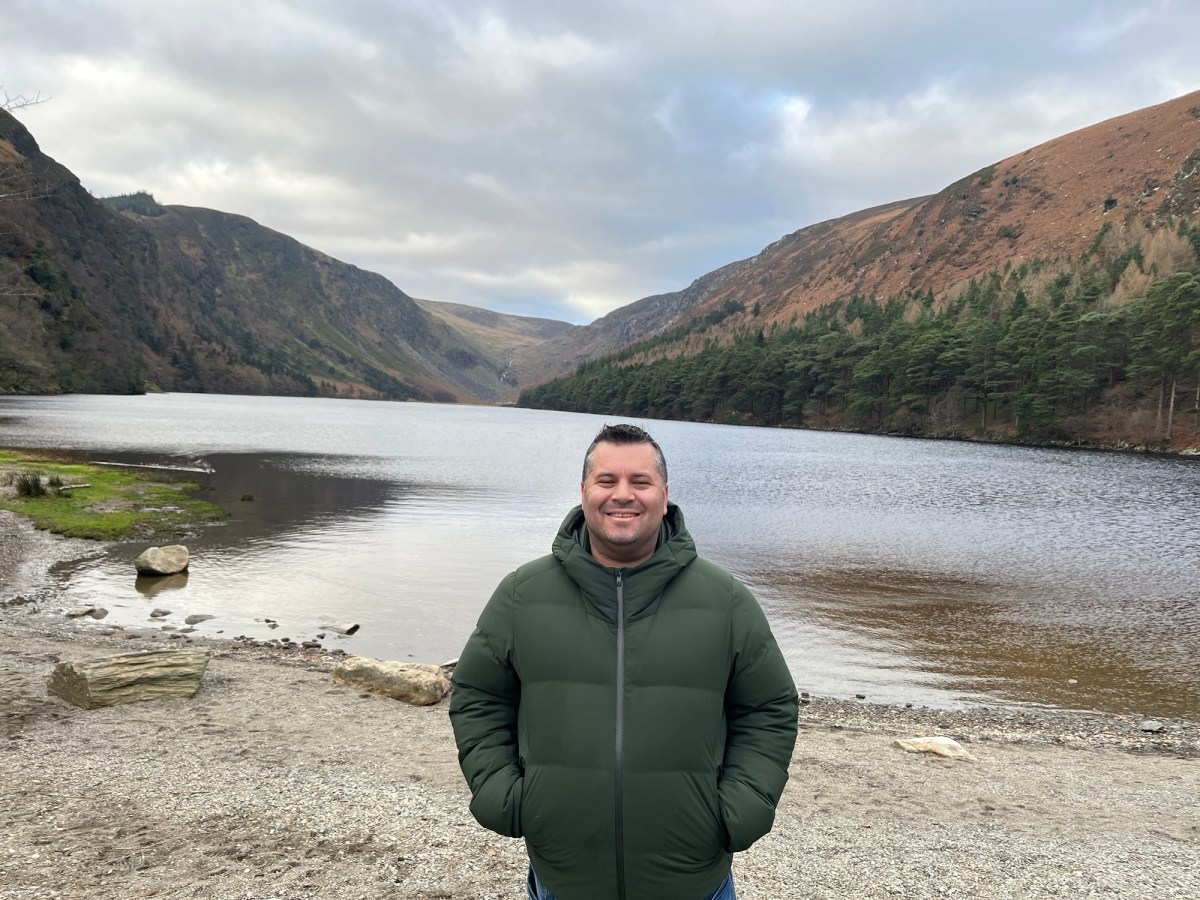
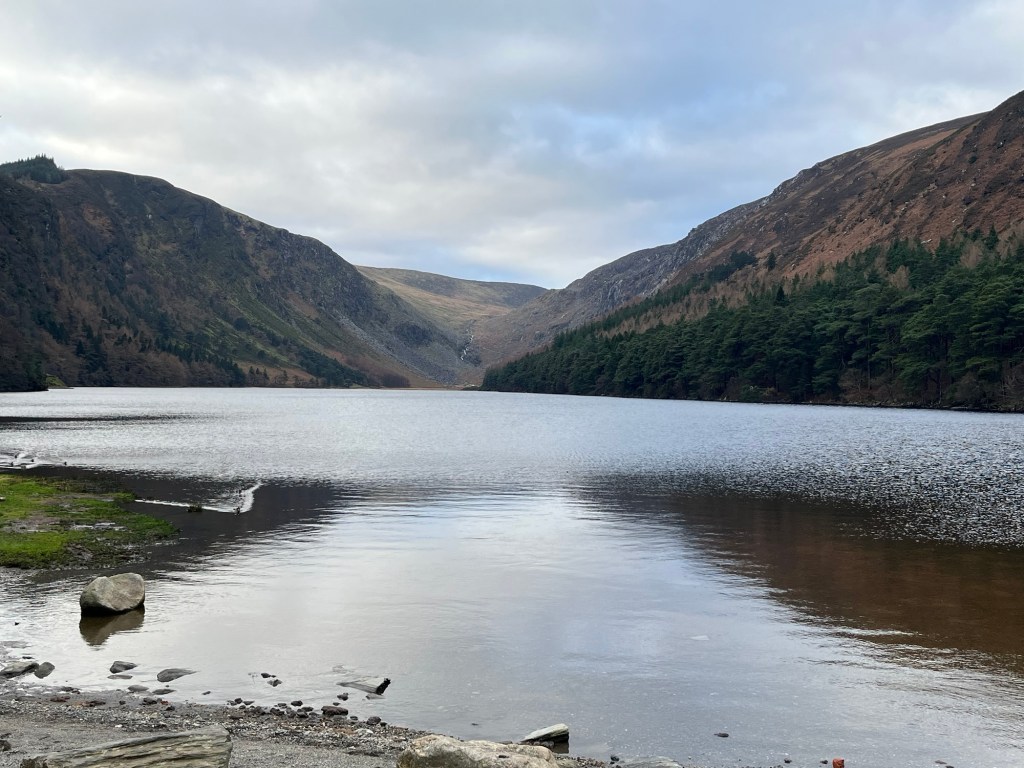
I did an organized day trip to Glendalough, the Wicklow Mountains, and Kilkenny.  Glendalough is the site of a 6th century montastic settlement and cemetery, which are absolutely stunning.  The nearby lakes and mountains form a spectacular backdrop for an Ireland few see.  I even met some nice fellow travelers in my group, which made it more fun to explore and experience the country together.

Near Glendalough we also visited a sheep farm and learned the tricks of the trade from the Irish shepherd and his adorable sheep dog, who moved the sheep along in various patterns and formations.  The highlight of this experience, without a doubt, was getting to hold a baby lamb in my arms.  Needless to say, I will NOT be eating lamb anymore.  When I held that lamb, my heart was full.  These animals are just too cute!

Kilkenny, our last stop on the trip, is a beautiful medieval town, a 1500-year-old city.  There, I saw a castle and a beautiful church.  I also got a Kilkenny Gaelic Football jersey.  It’s a sport I knew nothing about before this trip, but was founded in Ireland, and I look forward to learning more about now that I’m back.

Having had a great few days in Ireland, I headed back to Dublin to get ready to visit Wales, my other destination.  My plan was to travel via ferry to Holyhead, but I got a notification that the ferry wouldn’t be running that morning.  Apparently the Holyhead port had been damaged in a storm.  Trips are never perfect and this would require some problem solving, as North Wales doesn’t have an airport.

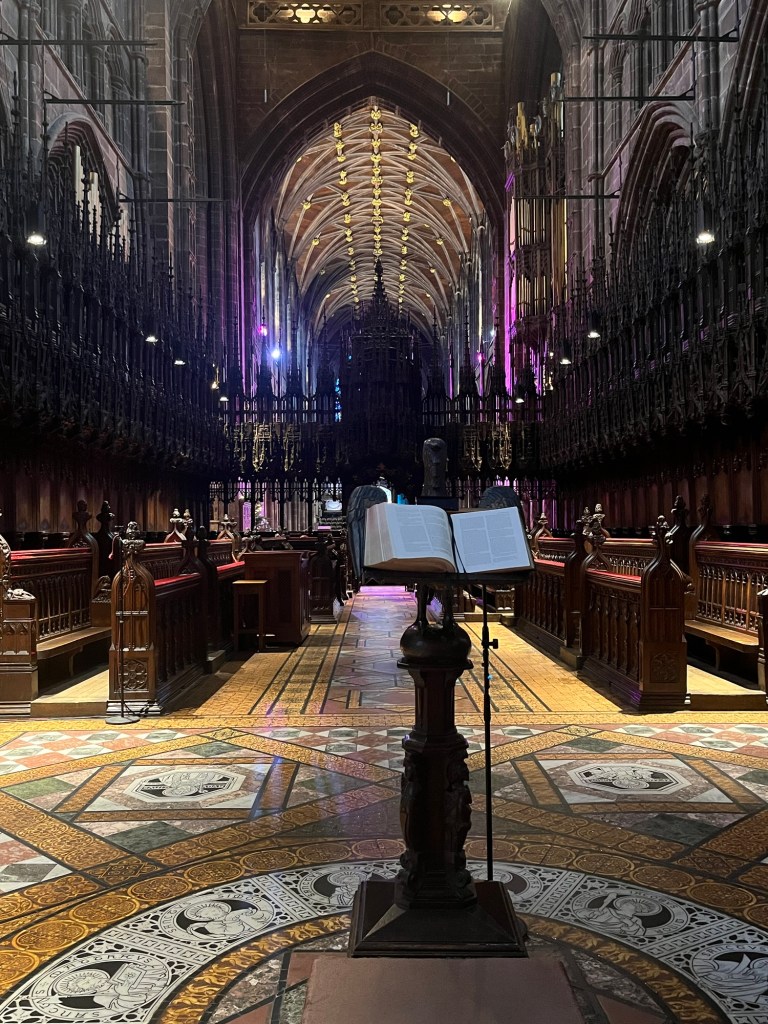
I decided to fly into Manchester and then head to Chester, a city dating back to Roman times on the border of England and Wales.  I spent a night there and then headed towards Caernarfon, Wales, where I’d be staying for a few days.  Chester was beautiful both by day and by night (and had surprisingly good sushi!).  The streets are lined with quaint shops and cafes and the cathedral is absolutely stunning.  It was my first time in England and it didn’t disappoint.

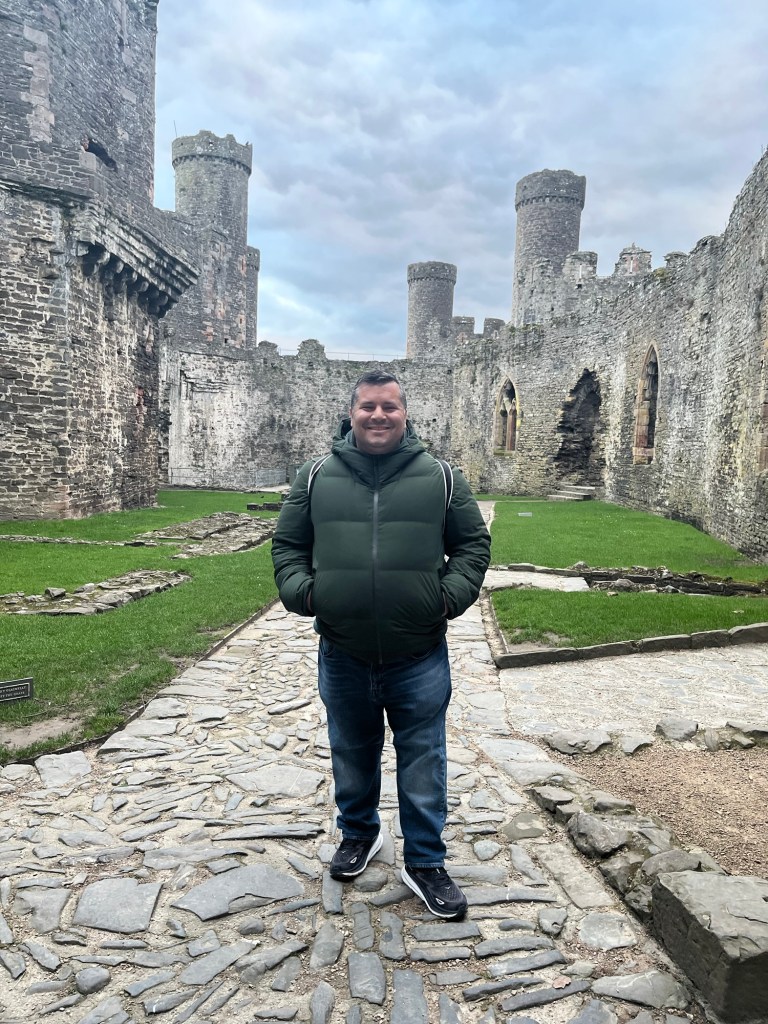
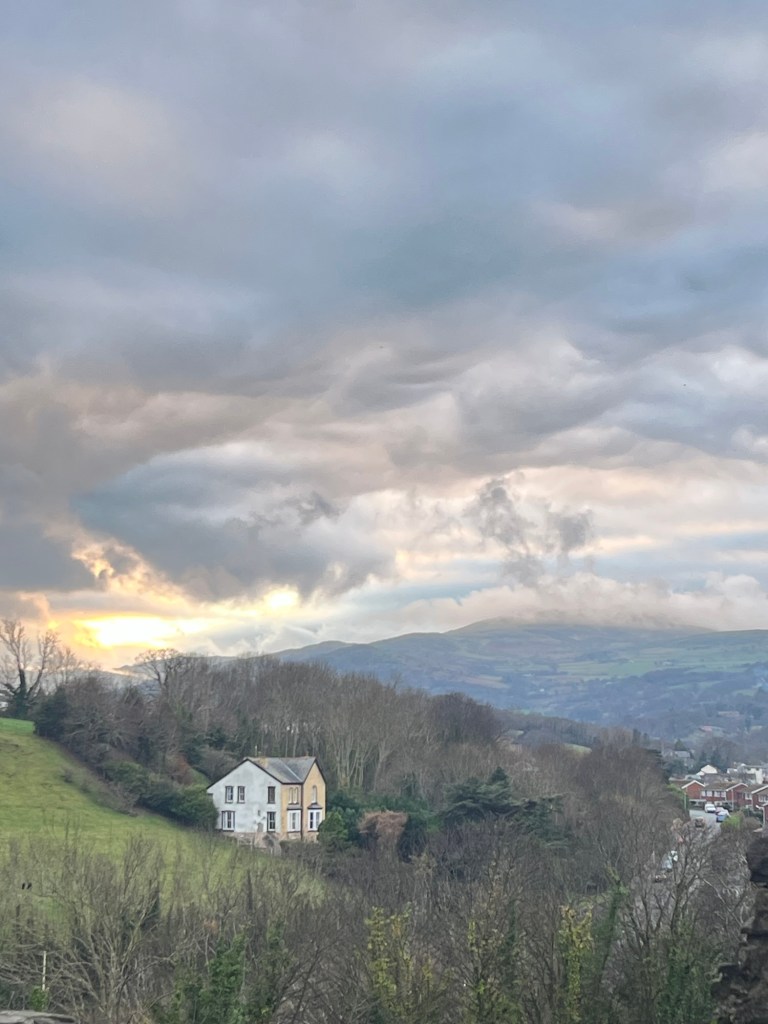
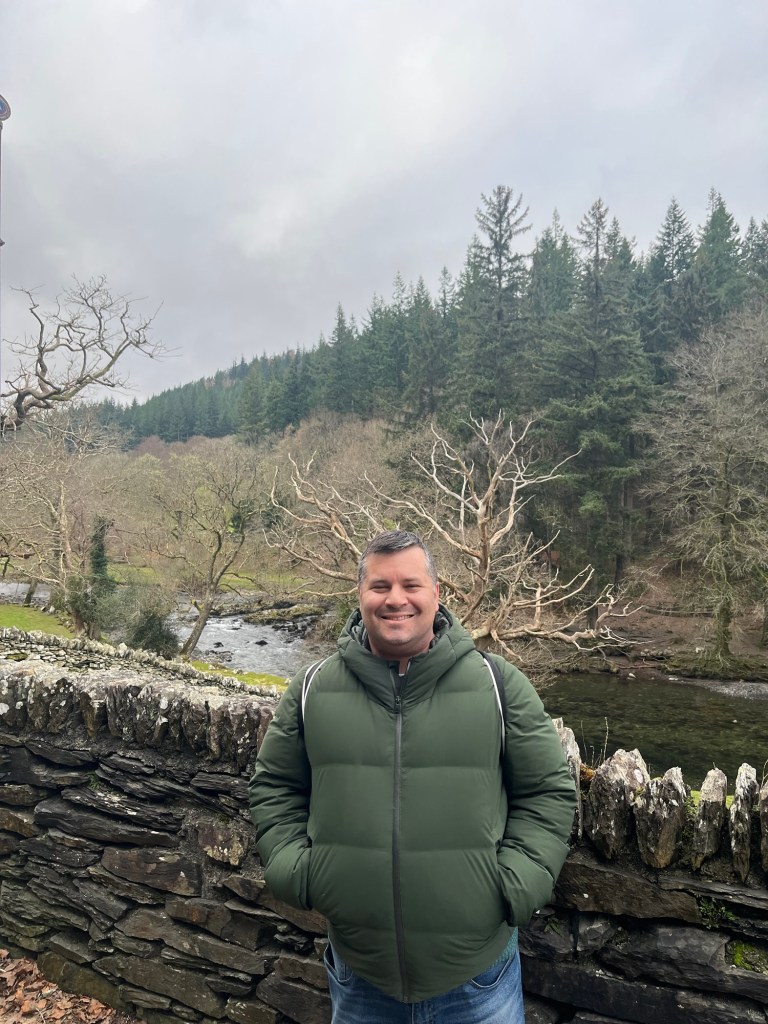
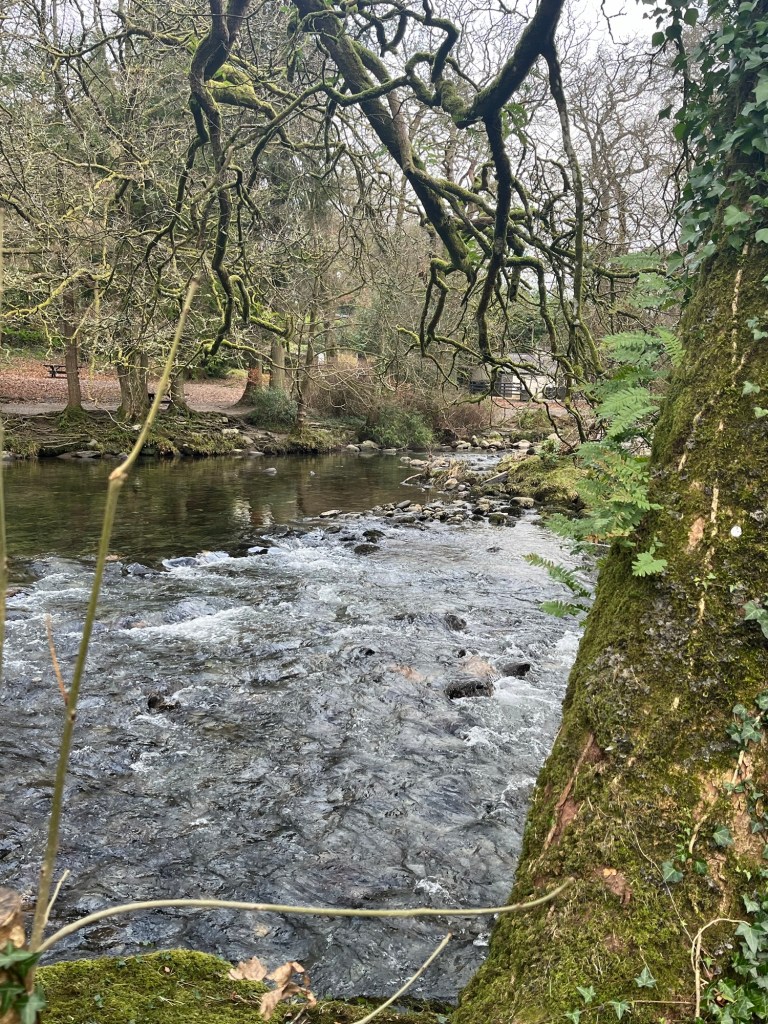
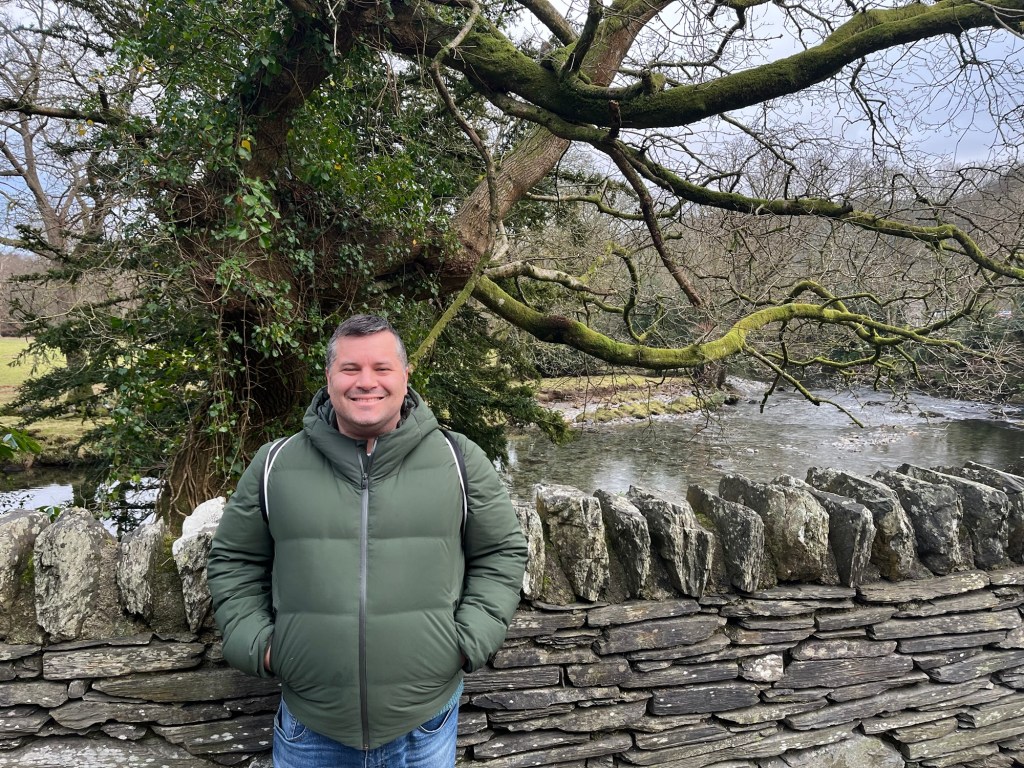
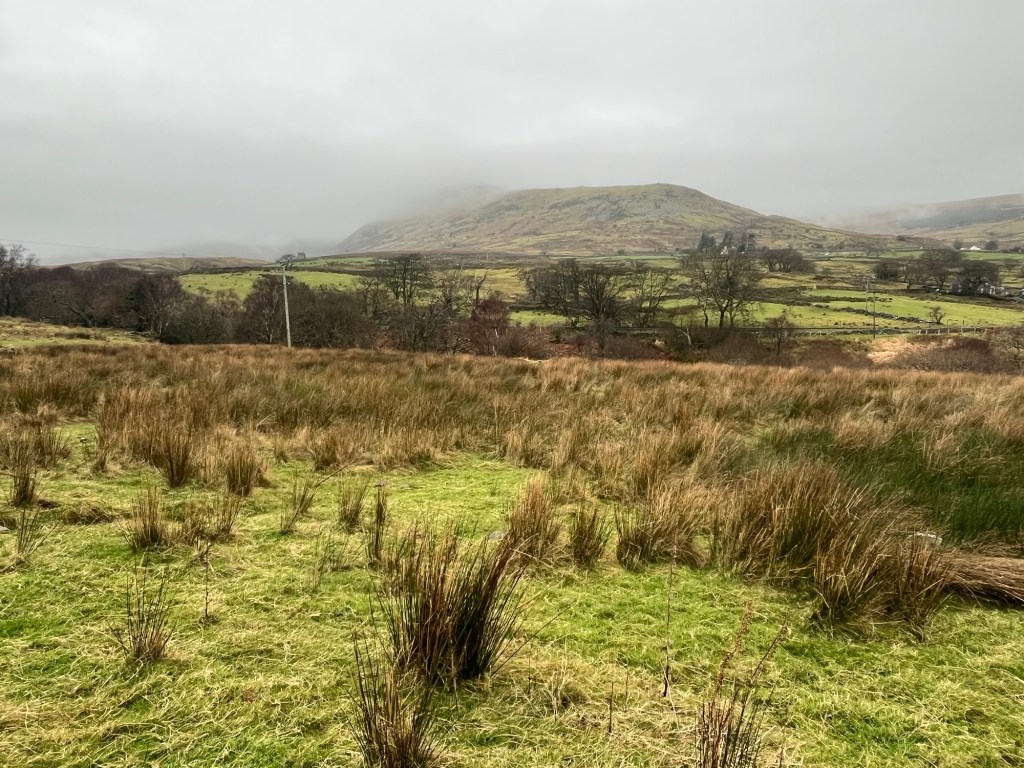
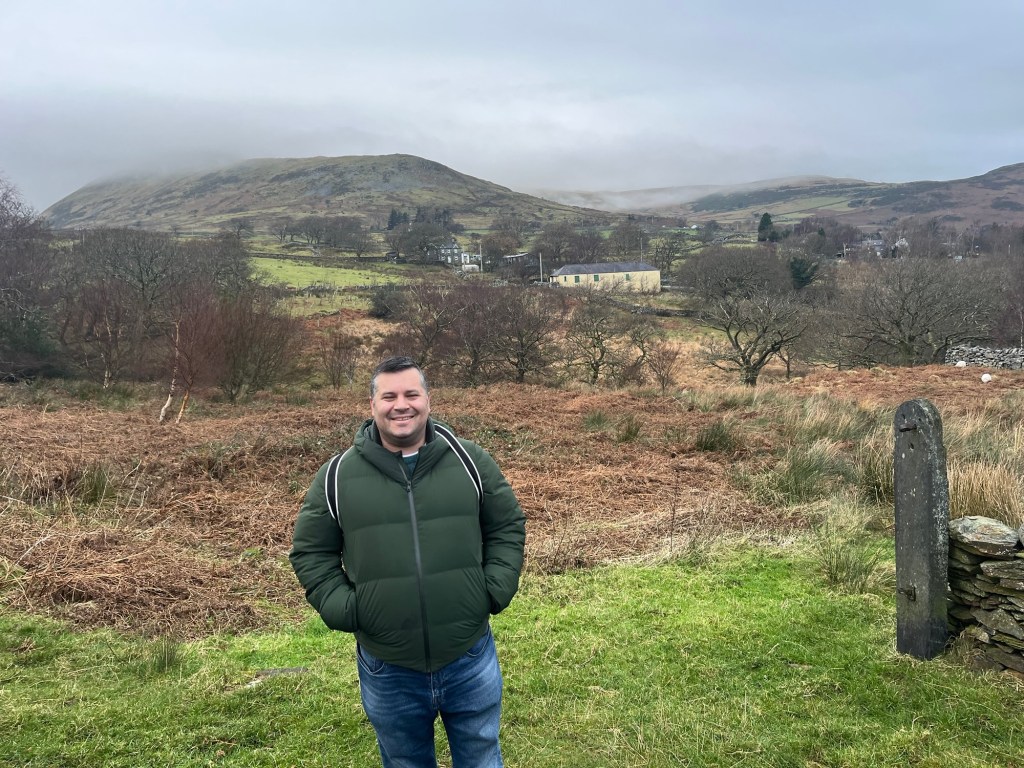
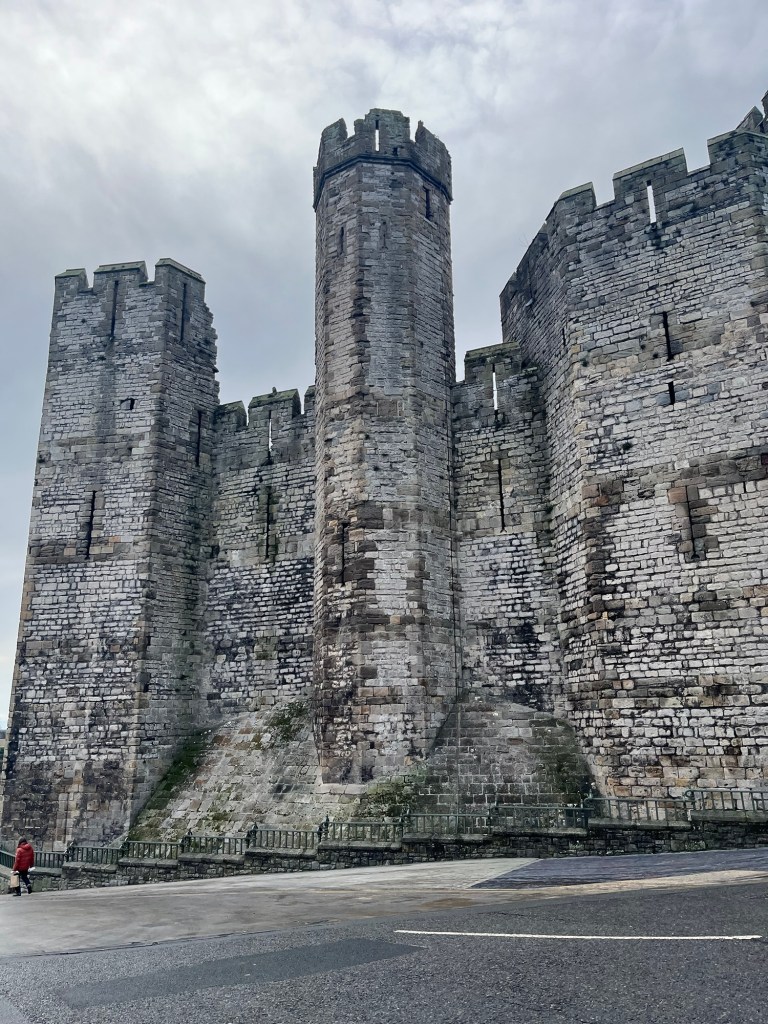
From Chester, I headed to North Wales. There, I visited Caernarfon, Llanberis, Betys-a-Coed, Pen-y-Pass, and Conwy.  It is a land dotted with castles and mountains.  The people are incredibly friendly.  While the people, if I had to generalize, were a bit more distant in Chester, just across the border in Wales, people had a similar warmth and talkativity to the Irish.

The towns are also largely Welsh speaking.  And people are proud of their language and culture. After all, theirs is the most widely-spoken Celtic language in the world.  A surprising number of Irish people did tell me they spoke Irish, contrary to the popular belief that nobody speaks it in Ireland anymore.  That being said, Welsh is dominant in North Wales in a way the local language is not in Ireland and is not even in South Wales.  I had taken a few lessons and the people were appreciative of my efforts to speak the language, with one woman even giving me a pin that indicated I spoke Welsh!  I even said “thank you very much” in Welsh to one shopkeeper and she stood silently.  I asked her coworker if I had said it right and she said “yes, she’s just in shock that you said it in Welsh!”

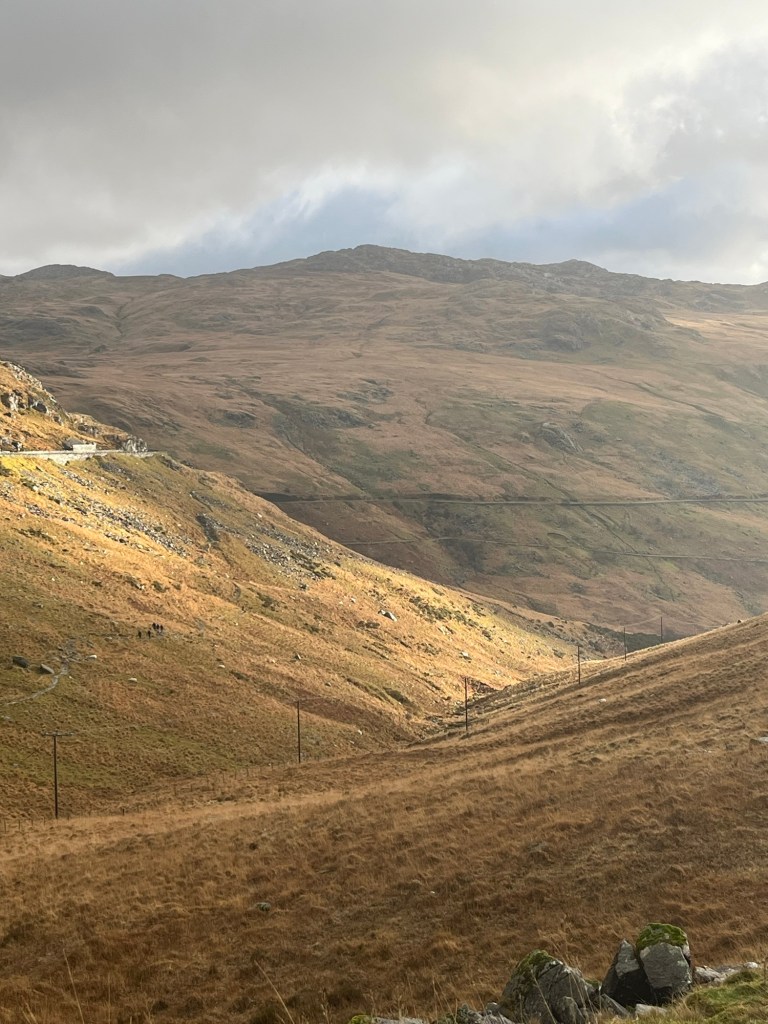
I did some hiking in Wales too on Mount Snowdon and its environs.  The scenery is stunning and I managed to walk a bit at a pretty significant altitude despite my fear of heights.  I was very proud of myself and I would like to make even more progress on this front so I can enjoy more and more of what nature has to offer.

While hiking, I even got to meet a lovely man named Stefan who runs a little traveler’s café near Llanberis.  We talked in his café for an hour or two over a pot of tea and bara brith, the traditional sweet raisin bread.  Turns out, Stefan is also gay and his partner and dog live with him up on the top of the mountain.  He told me that he feels well accepted in the villages and rural areas.  Just goes to show that we are truly everywhere, even in rural Wales!

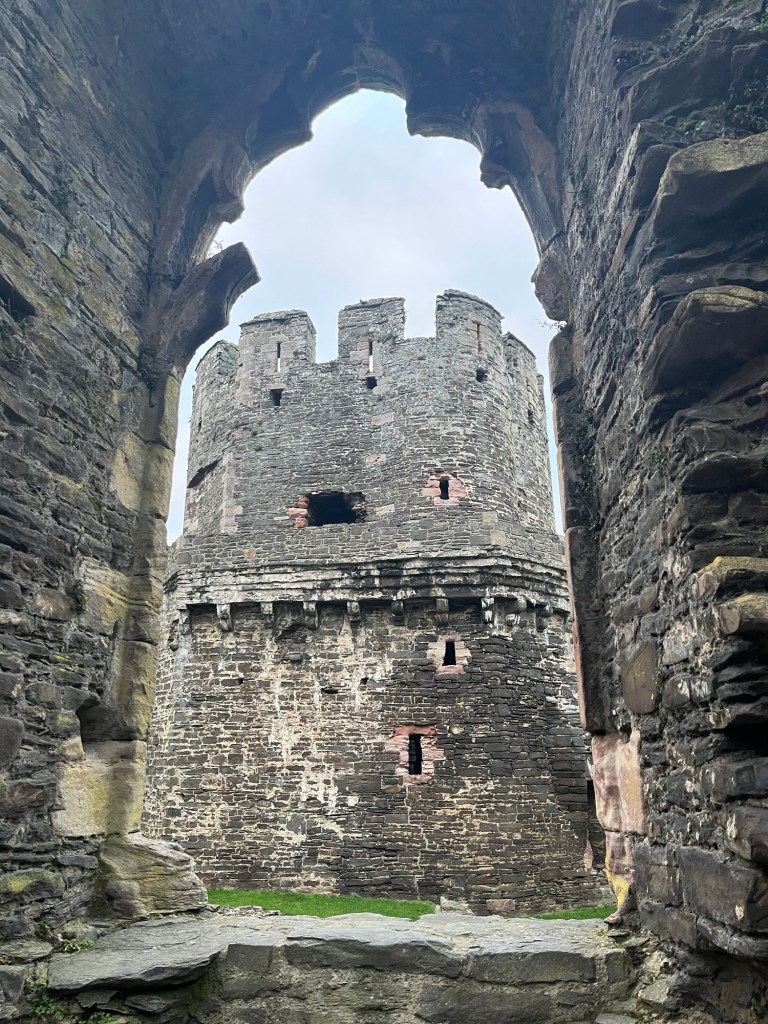
Wales also has stunning castles dating back to the English campaigns to subdue their culture, language, and way of life.  The castles are stunning – and the Welsh are still here! One cab driver, who was kind enough to give me his rundown of Welsh history, played a folk song for me that has become popular at sporting events – “Yma o Hyd”.  It means “we are still here”.  Seeing the castles and the vibrant Welsh culture – its language on every street sign and on the lips of hundreds of thousands of its inhabitants – is a reminder of the importance of preserving our heritage.  It rang true for me as a Jew as well at a time when so many would try to erase us.  Much like the message of the Chanukah season we are currently enjoying.

While I had planned to take the ferry back from Wales to Ireland, the port was still broken, so I decided to spend a night in Liverpool and fly from there to Dublin.  I had never been there before and it is such a cool town!  I got to take a picture with The Beatles and see the outside of the Cavern Club where they gained popularity.  I got to see a bombed-out church.  Liverpool had amazing sushi – remember, this is a seaside port so good fish abounds!  And, most excitingly, I got to visit the Everton Football Club’s Goodison Park and do a tour.  I grew up playing soccer and this is my new favorite team – one I had watched a documentary about on the plane – so it was “beshert” or “meant to be” that I got to visit their stadium!  I look forward to following them and my favorite player, Séamus Coleman, in the years to come.

Interesting side note – Liverpudlians are extremely friendly.  Contrary, again, to the stereotype of uptight English people, Liverpool is filled with talkative, outgoing people.  Their accent is fascinating – with a lot of final “k” sounds becoming like a Hebrew “ch”.  I would love to visit this city again!

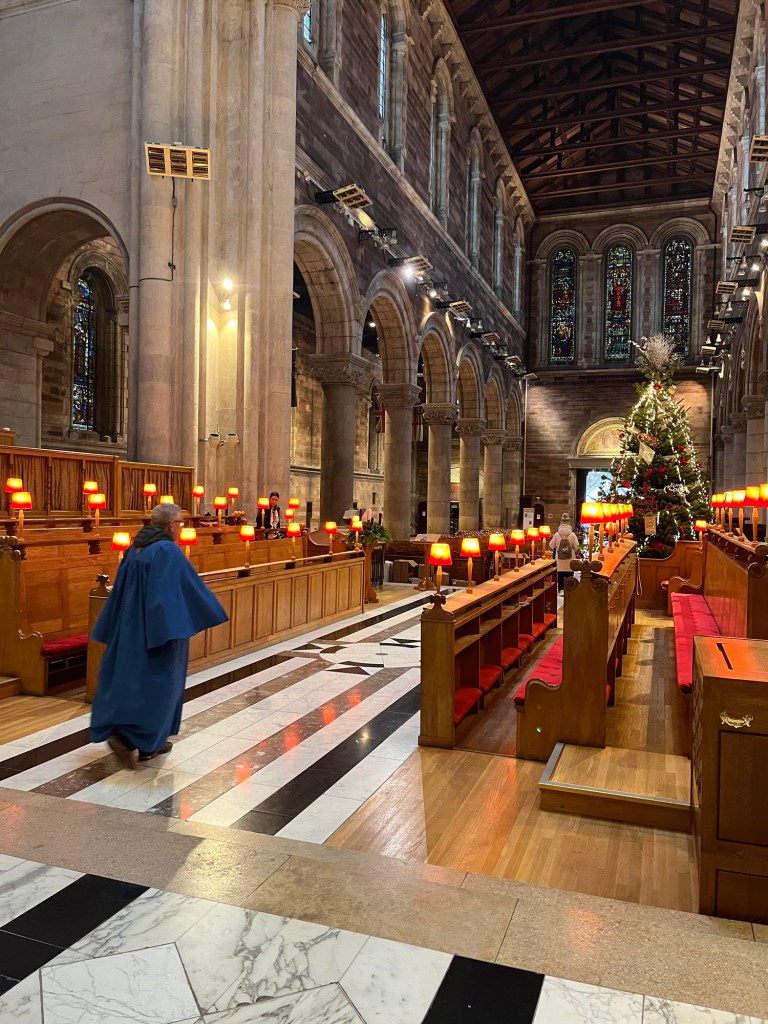
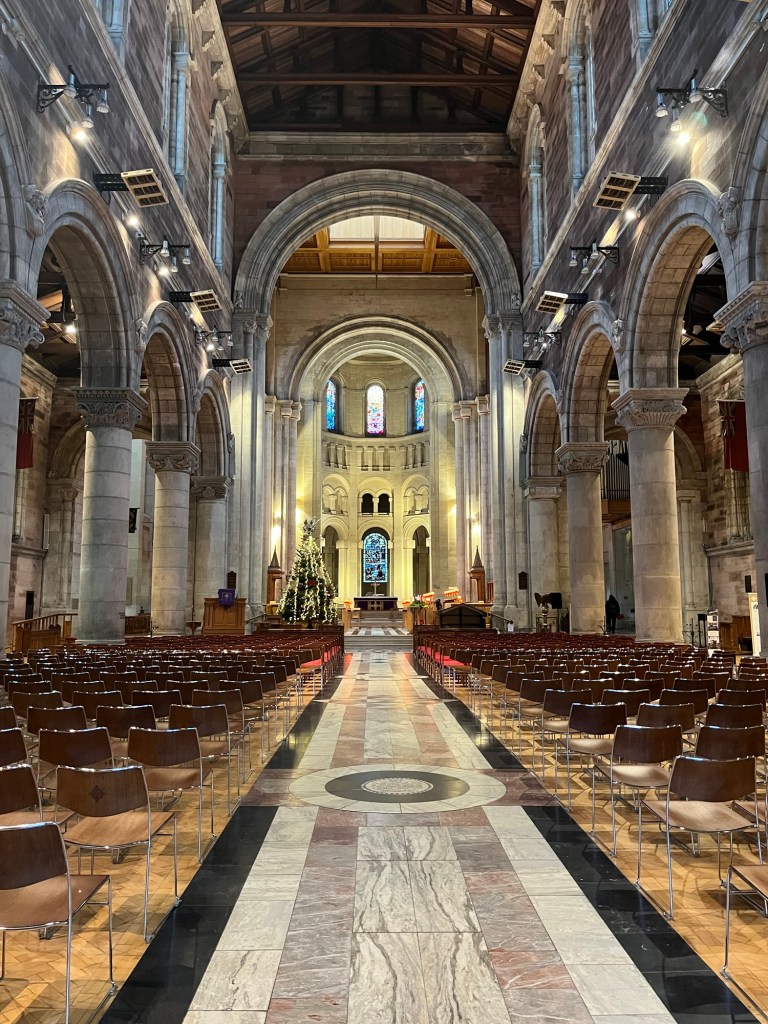
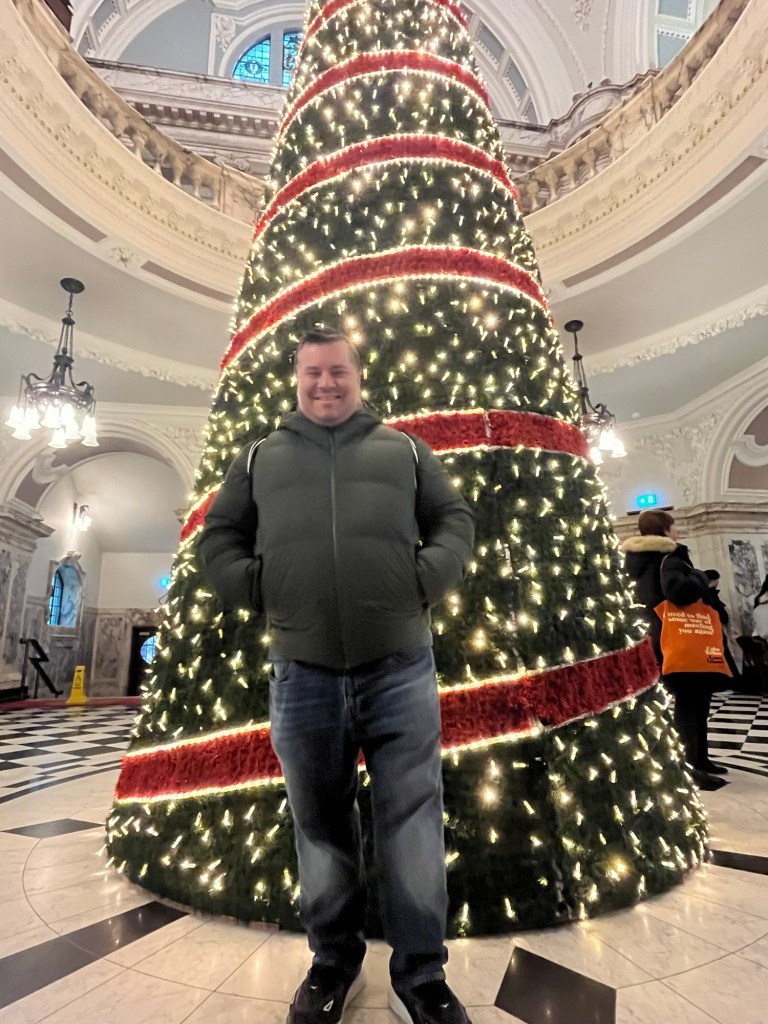
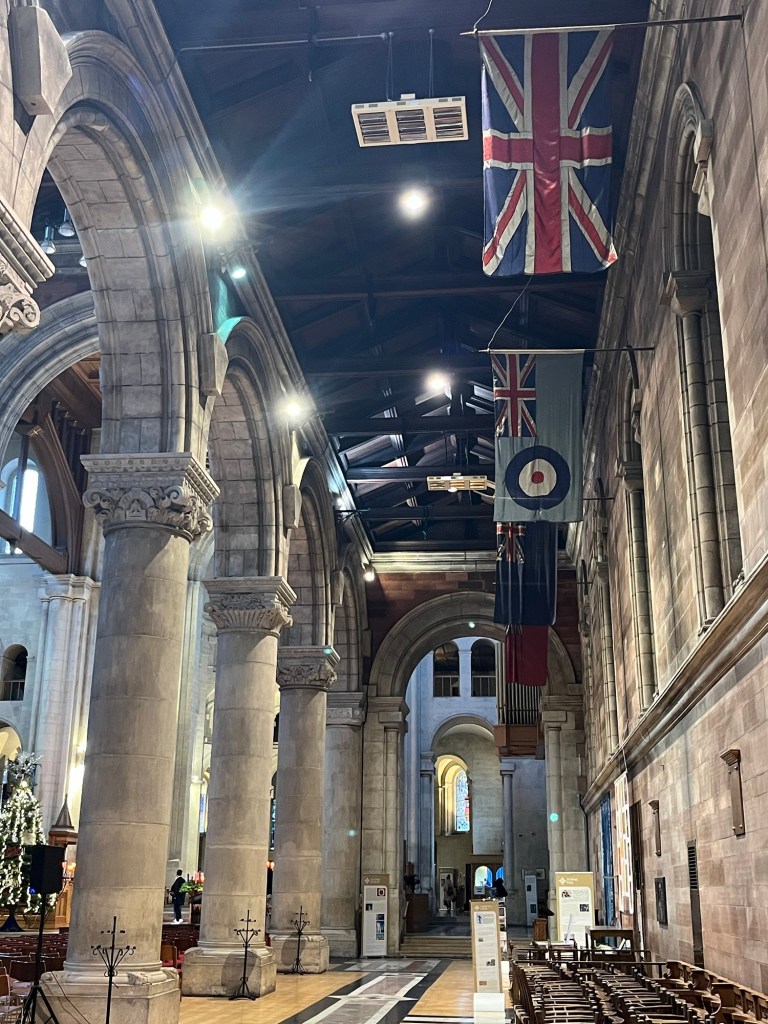
Last but not least, after arriving back in Dublin, I had one last day to explore.  I visited Belfast.  I only spent a half a day there (I’d really like to go back!), but I visited the Cathedral, an amazing used bookstore, Belfast City Hall, ate more sushi (sense a theme?), and visited the Discover Ulster-Scots Centre, where I even met a docent from Baltimore!  There is so much to experience in this fabulous city (which, yes, is more fabulous than Dublin, sorry!) – and not just conflict tourism.

All in all, no trip is perfect.  There was rain every single day.  It was chilly.  My ferry was cancelled in both directions.  Of course sometimes you meet people who aren’t as friendly or fail to meet your expectations for hospitality.  And yet, overall, this trip was fabulous.  Over ninety percent of the people I met were friendly and kind.  The sights were incredible.  The nature was stunning.  The history was palpable and ancient.

If you haven’t yet had the chance to go, I highly recommend a trip to this part of the world.  You might just be surprised at how at ease you’ll feel and find yourself sipping tea with in a café on a Welsh mountaintop with a gay man just as I did.  In this Celtic and British wonderland.

American anti-Semitism

           Tonight, I went to an LGBTQ+ dinner outing.  Our organization was partnering with another one to put on the event.  I sat down outside Union Market across the table from someone from the other organization named Ezra.  We were talking about healthcare in the U.S. and I mentioned that I loved my healthcare in Tel Aviv because of the digitized medical records.

            Ezra glared at me and then said: “Americans fund your healthcare system so you can bomb everyone to pieces.”

            I promptly excused myself and said, “that was rude” as I walked towards the other end of the table to escape extreme discomfort from Ezra’s anti-Semitism.

            It was an awful way to spend my evening. Ezra knows nothing about me.  Ezra had talked to me for all of five minutes.  He didn’t know anything about me, let alone what my political views are.  Nothing.  All Ezra knew was I lived in Tel Aviv and that I liked Israeli digitized medical records and that was enough for his anti-Semitic floodgates to open.

            A few nights before, I was sitting in my favorite Thai restaurant when an Uber Eats deliveryman walked through the door talking loudly on speakerphone.  Shouting in the middle of the restaurant, he said: “Israel is disgusting.”  He then went on a ten-minute diatribe about the evils of Israel.  When I asked him to please turn off his speakerphone so my friend and I could eat a pleasant dinner, he glared at me and even yelled into his speaker “these people at the restaurant want me to turn off the speakerphone.”  And he continued to spout venom as my friend and I tried to tune him out.

            These two examples are on the progressive end of the spectrum.  But progressives are not the only people trying to box Jews in and caricature us.

            I recently met a far-right conservative gay man.  After telling me that trans people were disgusting (which is a disgusting comment in and of itself), he asked me “why don’t you vote Republican?  The Democrats hate Israel.  Republicans love Israel.”  To which I responded: “yes, many Republicans support Israel – perhaps more so than some Democrats.  But many Democrats support Israel too.  I also vote for a candidate based on many issues and see whose values align best with mine.”  His lecturing continued unabated as he then tried to teach me about Judaism!  He claimed all Jews believed sex should only be between a man and a woman (he clearly hasn’t heard of Reform and Conservative Judaism) and that God controls everything (again, depends on the Jew and the interpretation of Judaism).  The irony of a Catholic guy trying to explain Judaism to me was not lost on me and I decided to disengage from the conversation.

            Donald Trump himself has repeatedly goaded Jews by saying that if he loses, it’ll be their fault.  That Israel “won’t exist in two years” if he’s not elected.  All the while, he praises the leader of Qatar and hosts him at his estate in Mar-a-Lago- the same Qatar that hosts Hamas leadership.

            Democrats are no better.  The Squad and their allies regularly trade in anti-Semitic rhetoric about Israel “hypnotizing the world” and unfounded claims that Israel is “committing genocide”, rather than fighting an incredibly complicated war in the face of the worst terrorist attack in Israeli history.  They berate Israel for defending itself while trying to deny it funds for the Iron Dome which protects its civilians from Hamas and Hezbollah rocket fire.

            America has always been home to anti-Semites. Just like many countries in the Western World.  But American Jews, particularly the generation of my grandparents and parents, enjoyed a kind of cultural, economic, and political renaissance.  We have achieved must that we can be proud of in this Goldene Medine – the Golden Land.

            The question is what next?  What, if any, future do we have in a country where from left and right we get grilled, stereotyped, yelled at, boxed in, and denigrated?  Where we can’t go to a LGBTQ+ dinner or a Thai restaurant in peace?  Where we are told which party we “have” to vote for based on how someone else perceives our interests, rather than what we feel is in our own best interest?

            As my mom would say, “enough already!” Jews – American, Israeli, French, Russian, Moroccan, Turkish, Ethiopian – from any and everywhere.  We are one of the oldest civilizations on earth.  We founded the modern day miracle of the State of Israel, imperfect as she can be sometimes.  We have gotten elected to office, built innovative businesses, and founded incredible institutions of learning.  All while preserving and evolving our traditions in an increasingly complex world.

            We will not give in to anti-Semitism.  From any person.  From any gender or sexuality.  From any ethnicity.  From any political party.  For every anti-Semitic anecdote I’ve shared in this blog, I can provide 100 others.  The time has come for us to raise our heads up high because we are God’s chosen people.  That phrase may mean different things to different people, but I personally believe it should be a source of pride that our very essence is infused with holiness, and of course great responsibility as well.  A responsibility to the planet, to the other peoples of the world, and yes, to ourselves.

            May we find the little blessings along the way, the allies who make our lives better, and may we always pray for the peace of Jerusalem.  May better days come our way.  And soon.  Amen.

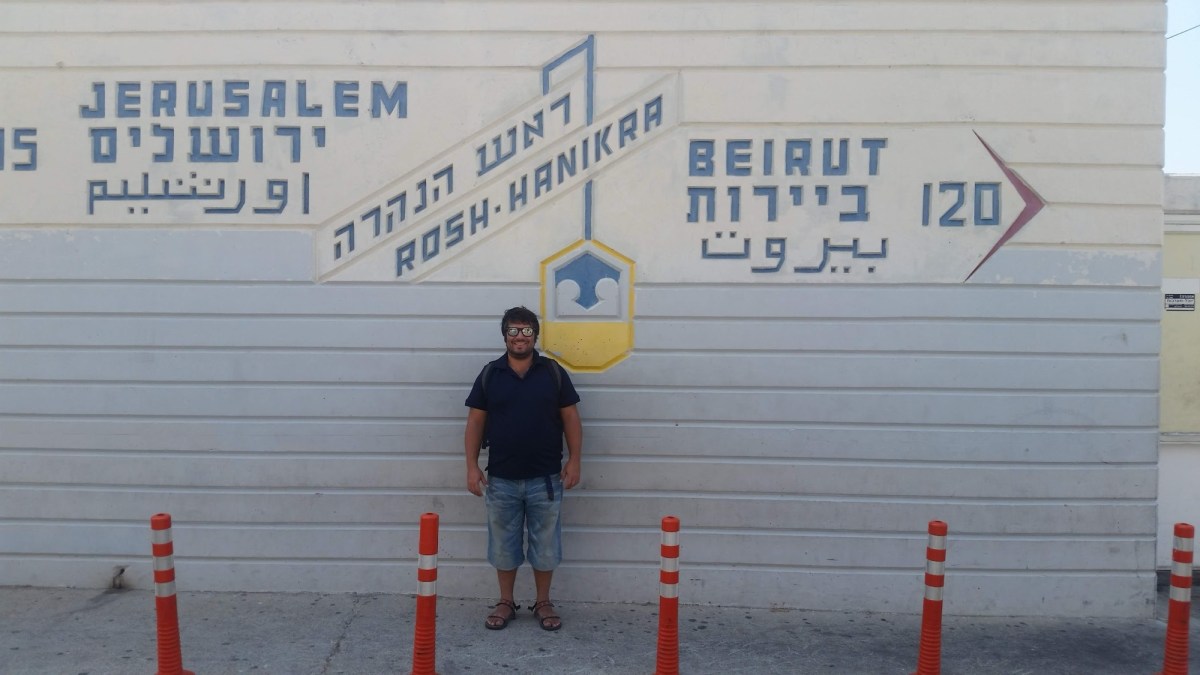
p.s.- my cover photo is of me at Rosh Hanikra, Israel’s border with Lebanon.  My prayers go out to Israel’s north and the civilians suffering in Lebanon because of Hezbollah’s reign of terror.  May we one day all know peace.

Spain is where my soul breathes

Spain is where my soul breathes.  It is full of life.  Of laughter.  Of stunning views.  And of kind, generous people who make every moment worthwhile.

This trip was my sixth to Spain, dating back to when I was 13 and went on a school trip.  Other than the U.S. and Israel, where I am a citizen, it is the single country where I have traveled most.

I started my trip in Madrid.  Madrid is a city that holds a special place in my heart.  Besides being where I first went to Spain as a teenager, it is also where I studied abroad a summer in college with my college roommate Ben who is one of my best friends.  We had a wild summer.  This trip was definitely less wild (I’m 38!) but was so much fun!

Fresh off the plane, I started hitting up the sights.  And walking around the gorgeous neighborhood I stayed in, El Barrio de las Letras, named as such because famous writers such as Cervantes spent time there.  The sidewalks are lined with quotes of Spanish authors and it is full of one of my favorite things – bookstores!  I was also lucky to find that the time I spent in Madrid overlapped with the antiquarian book festival, where I got some real gems, including a hundred-year-old book in Spanish teaching people how to read Hebrew!

Madrid has some pretty churches and of course, the Royal Palace (it was booked up by the time I got there so I admired it from the outside – I had been many years ago and next time I will get a ticket in advance!).  It also has some world-renowned museums.  I went to the Reina Sofia, the modern art museum.  I did this on the second leg of my Madrid trip.  I started and ended my travels in Madrid.  It was nice to see something modern and creative. I love cathedrals and history.  I also enjoy modern, creative artwork that shows a different side of Spain.  It was really nice to see everything from Dalí to the famous Guernica work by Picasso.

I also went to two tablaos to see Flamenco shows while in Madrid.  Flamenco is an art form that I have always enjoyed.  And the performers didn’t disappoint.  The footwork, the passion, it was all there.  And most importantly, being from a dull city such as Washington that is full of bureaucracy, the performers were all smiling.  Improvising.  Being creative.

That is the spirit of Spain.  Of Madrid.  Its people are full of life.  Whether it was the cab drivers over sharing about their love life, the Flamenco dancers hugging me telling me that my Gypsy blood explained why I loved the music so much, the woman who insisted on giving me extra ice cream flavors just to make sure I chose the right one.  This is how Spain lives.  It is the two-hour lunches.  It’s the waitress who laughed with me at how many times I ate her restaurant’s salmorejo soup (four times) and told me I was “in love with it”.  I am!  It’s the best soup and makes its otherwise delicious cousin gazpacho look like Campbell’s.

Another great thing about Madrid is how central it is.  It is so easy to get to other parts of Spain.  It has long been my dream to visit Zaragoza.  And I was not disappointed.  Only one hour and change on the high-speed rail system, I did a day trip.  Keep in mind this would’ve been a three and a half hour car ride.  Spain’s rail system is fucking incredible.  And surprisingly affordable.  Amtrak blows.  I have no idea what we’re doing with rail in the U.S but we are decades behind Spain.

Back to Zaragoza.  The city has one of the most incredible churches I’ve seen in my life: Cathedral-Basilica of Our Lady of the Pillar.  You can’t take photos inside the magnificently and tastefully adorned interior.  But I took some pictures from the outside to give you a sense of the magnitude of this thing.

In addition to seeing a bunch of beautiful historic streets and museums, I got to visit a bookstore, opened just for me!  I had asked a man passing by whether this antiquarian bookstore was open.  He said he wasn’t sure, then asked a man down the street whether he would open it.  The kind man came by and opened the place.  Just for me.  This is how Spain (and a lot of the Mediterranean) works.  There are no set hours for many places.  It’s just when the owner feels like opening up.  And he was kind enough to do so for me.

I found some gems!  I bought books in Aragonese. It is a very old language, on the verge of extinction, that was spoken throughout the Kingdom of Aragon. I’m hoping that with my Spanish and Catalan (a closely-related language), I can understand some of what I bought.  The bookstore owner kept bringing me new books to read and to check out.  He never, I mean never, rushed me.  This is the spirit of Spain – take your time, enjoy, peruse, explore.  Never, never rush someone.  It’s a lesson I wish many parts of the U.S. would take to heart.

Zaragoza was incredible and it inspired me to do two other day trips.  One I actually did before Zaragoza and that was Toledo.  Having not visited since I was 13, I wasn’t sure what to expect.  Boy was I happy to see what I did!  As a Jew, Toledo holds special importance.  It was a city with a large and active Jewish Quarter before the expulsion of Jews from Spain.  It has two Jewish museums – both former synagogues.  Both of which are adorned like mosques, were converted to churches, and then reconverted into Jewish museums.

The cityscape was full of churches and a stunning cathedral and tons and tons of marzipan! Everywhere.  I must’ve tried 10 different types of marzipan and it was all delicious and never going to make it into my packed suitcase (full of books!) unfortunately.  But boy did I enjoy it!  It’s a local specialty and I highly recommend eating lots of it while you’re there.

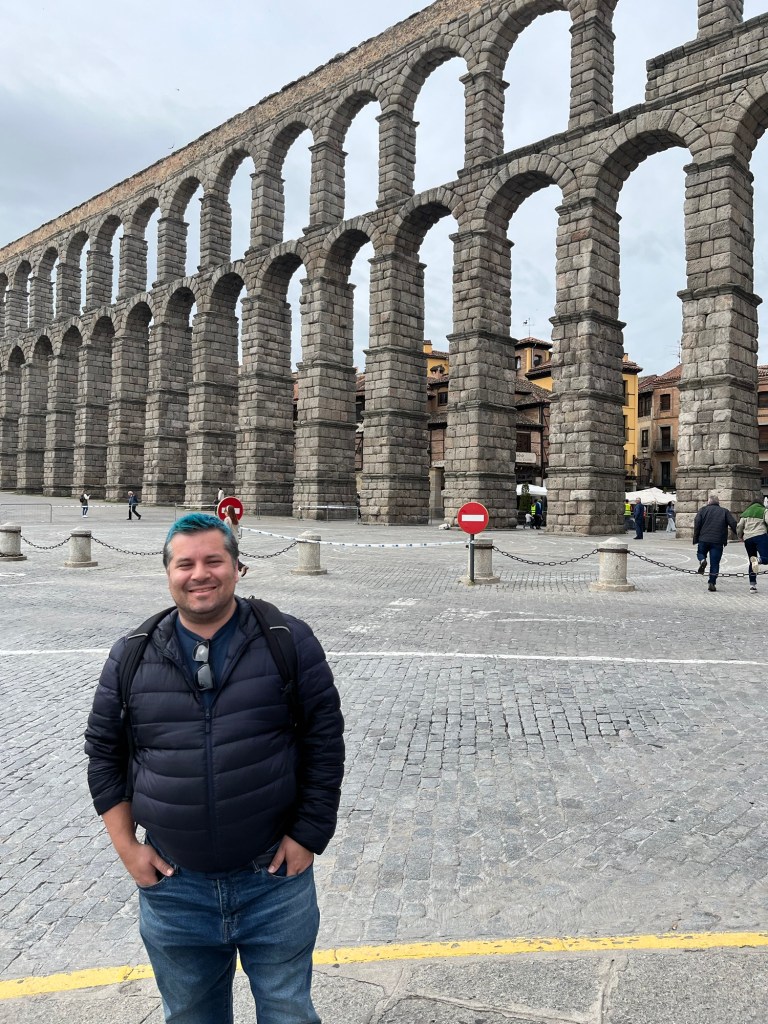
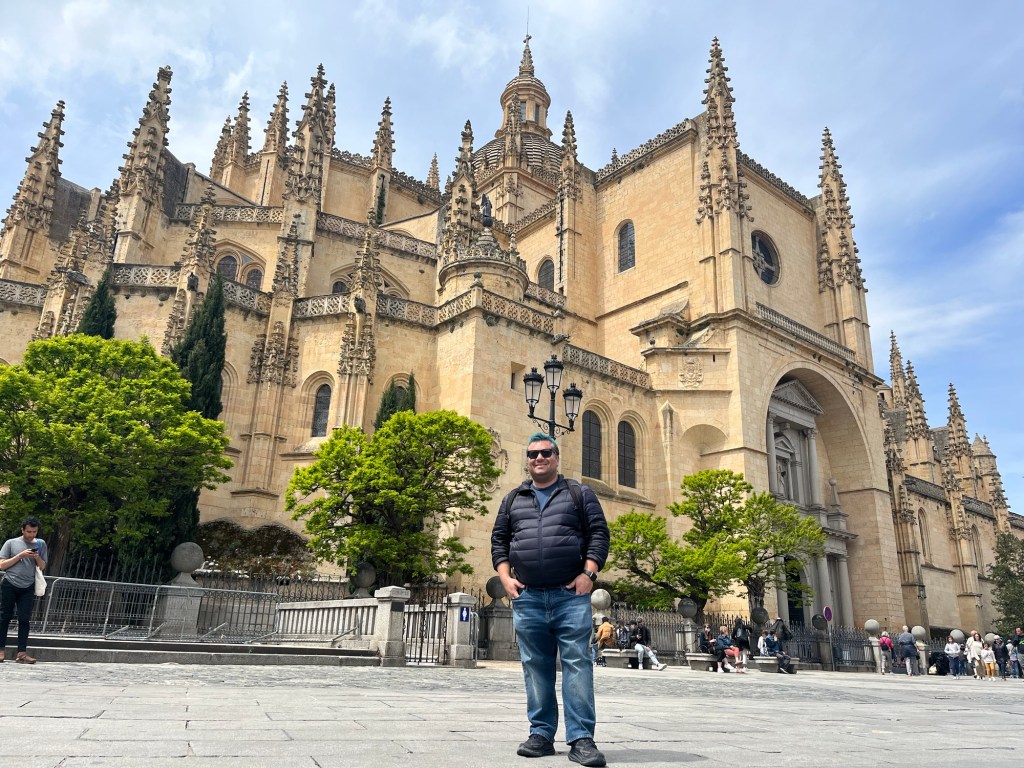
The other day trip I did from Madrid was Segovia.  Most known for its ancient Roman aqueduct (it’s absolutely stunning), it also has a beautiful cathedral and a Jewish museum!  It has been inspiring to see Spain caring for its Jewish heritage in ways that even a few decades ago was not happening.

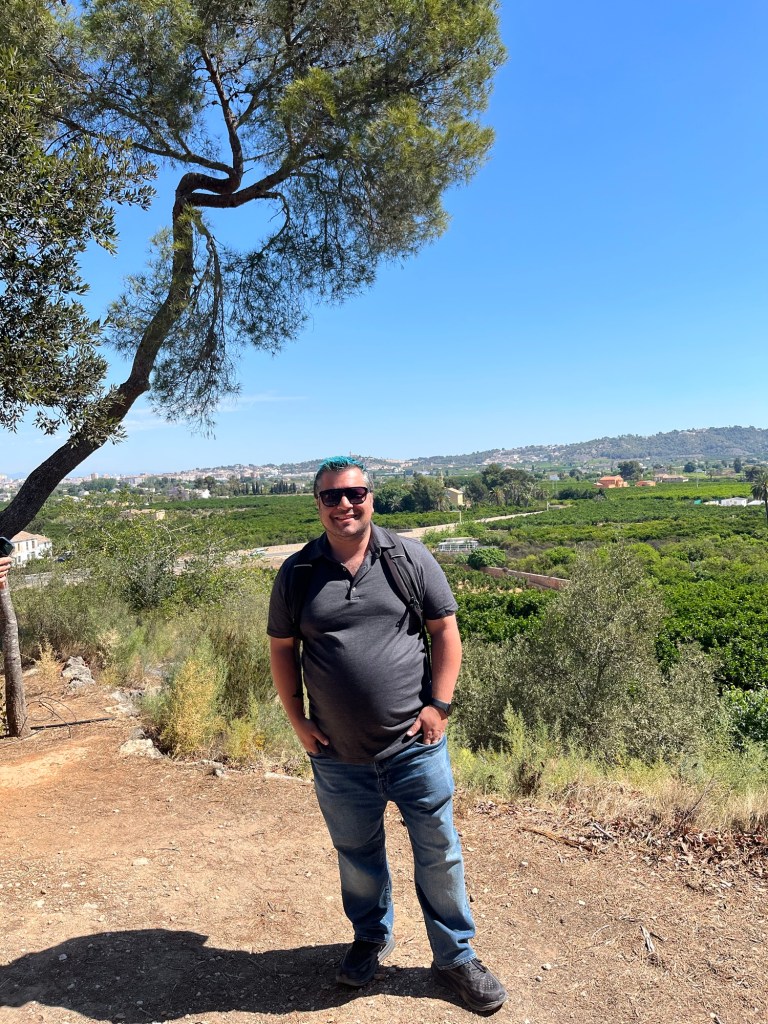
The other half of my time in Spain was spent in Valencia.  While I had visited parts of Castilla-La Mancha before (albeit many years ago), I had never been to Valencia!  I was attracted to the warm weather (it was sunny every single day), the Mediterranean, the Valencian language (a dialect of the Catalan which I speak), and the landscapes.

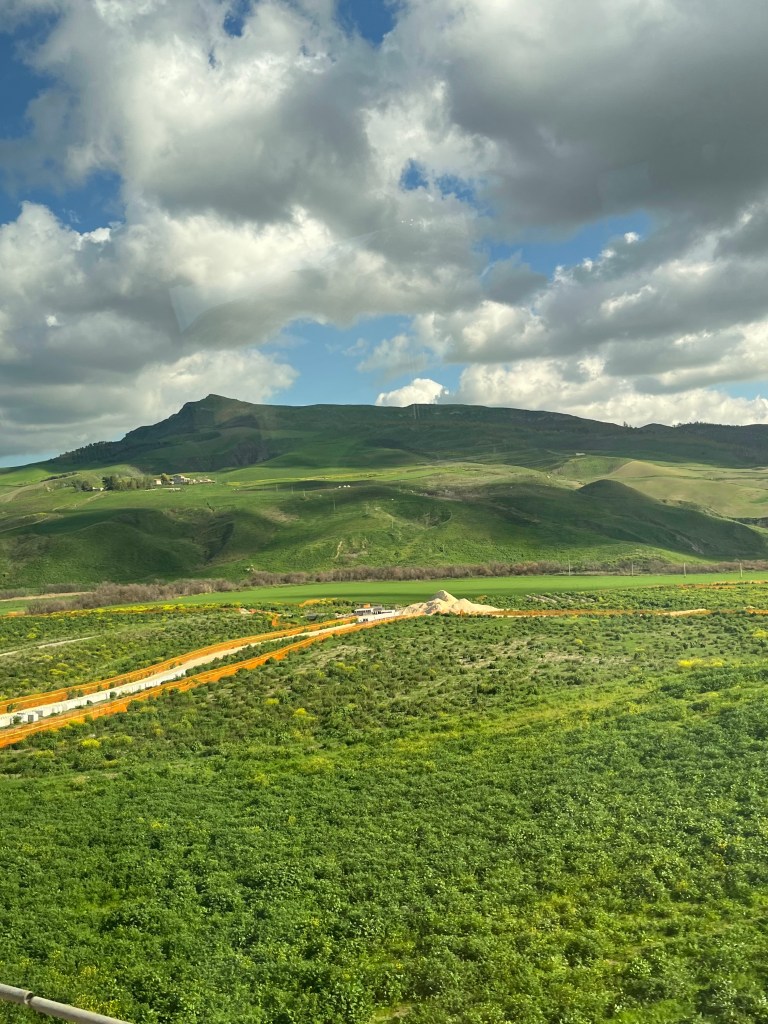
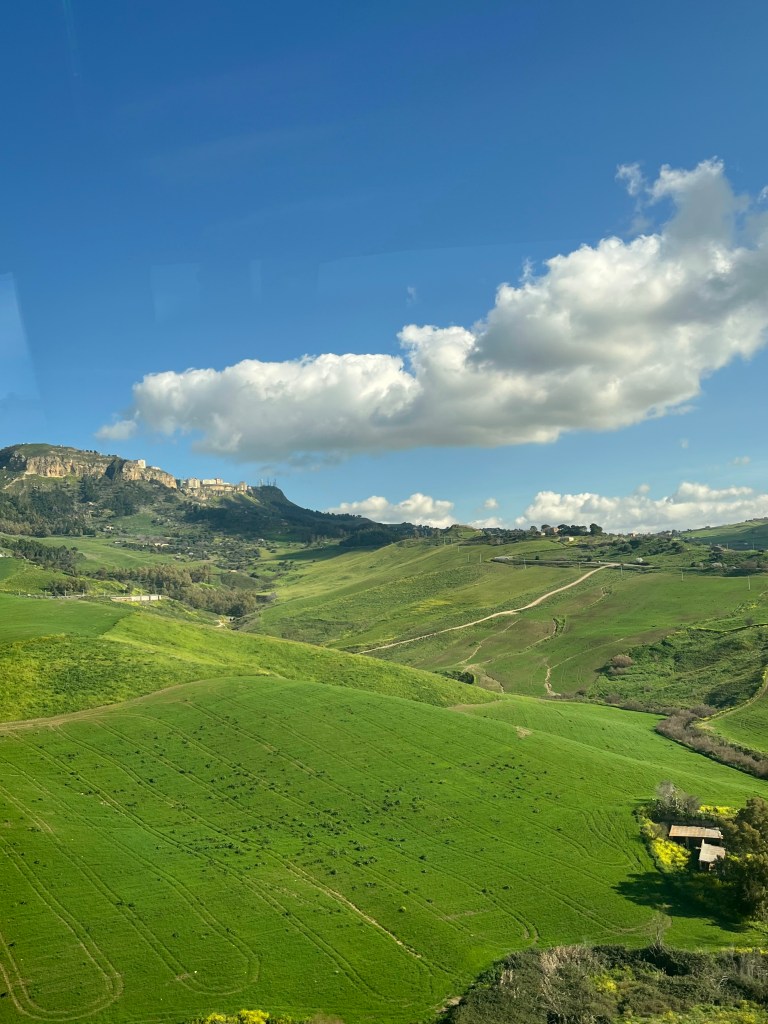
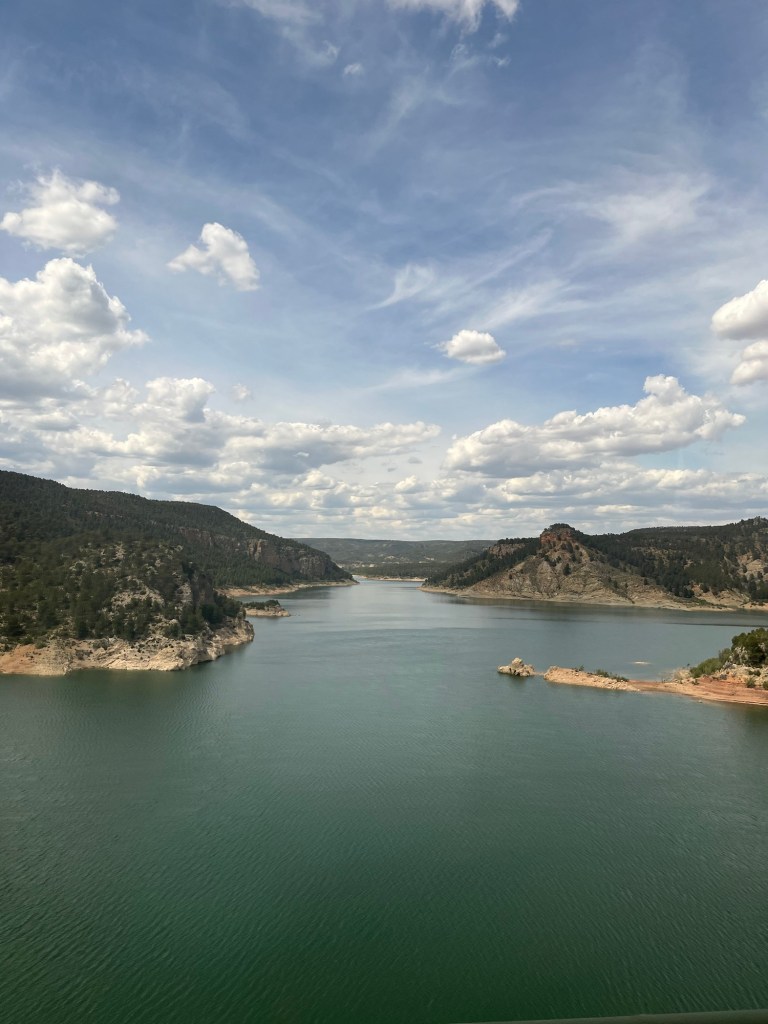
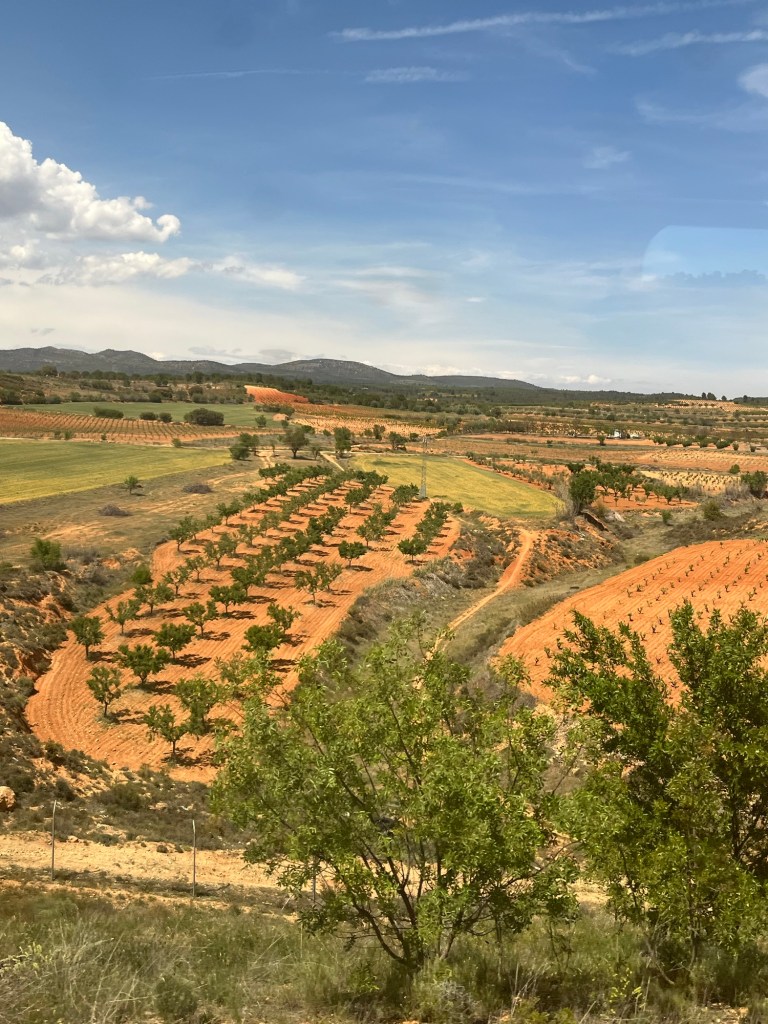
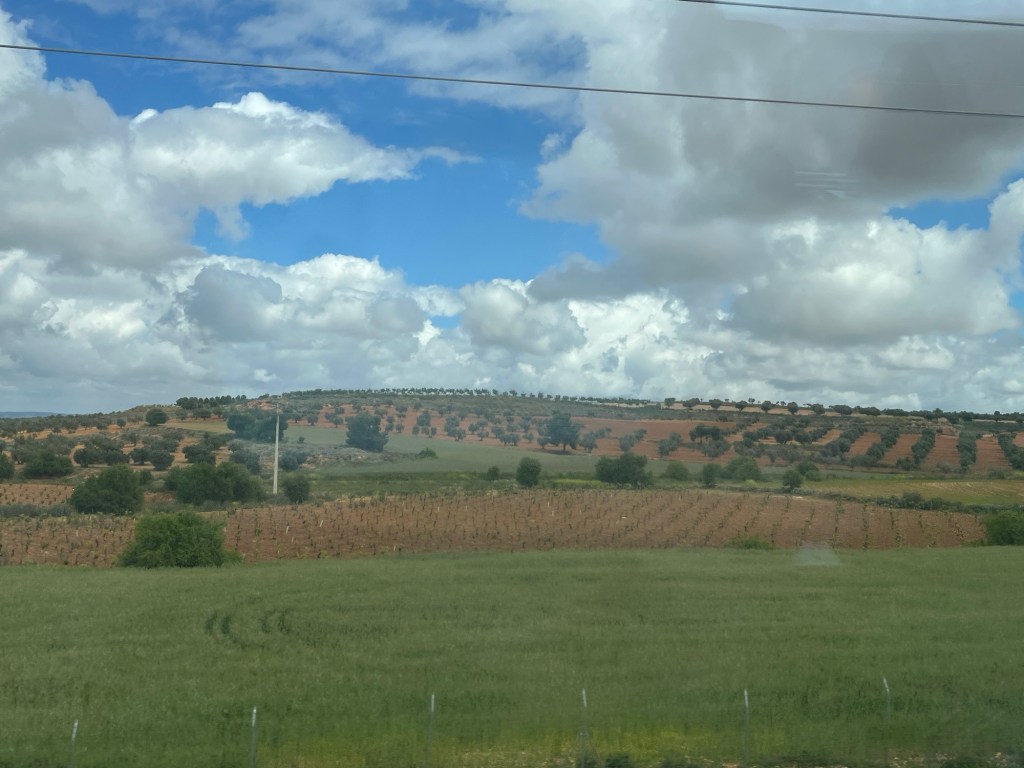
The train rides to and from Valencia (which interestingly enough took different routes I believe) were almost worth the trip itself.  Here’s some of the scenery:

Valencia is where I started to engage more with people, not just sights.  I had, of course, met very kind people in the cities I had visited before.  Now that I was over my jet lag and wanting some more in-depth contact with folks, I decided to do some planned activities.  In my experience, every good solo trip is a mix of individual exploring and meeting other fellow travelers (and locals!).

Before I get into some of those experiences (city tours, paella making, a flamenco lesson, and a visit to an orange orchard!), I want to share a couple stories about some villages I visited.

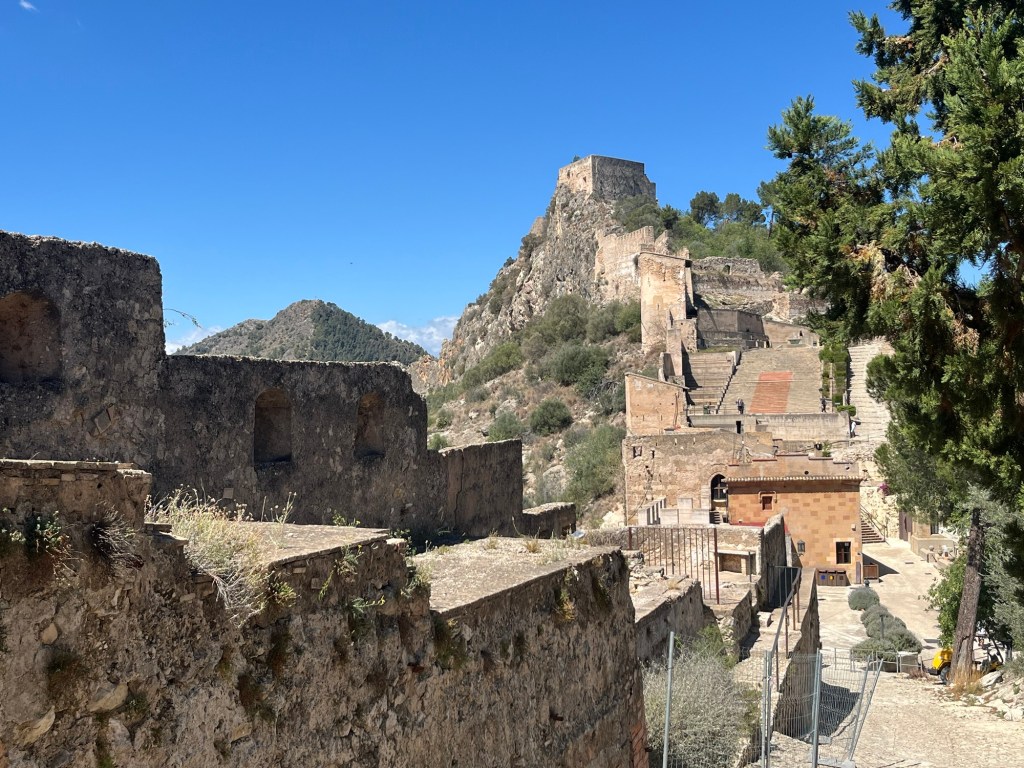
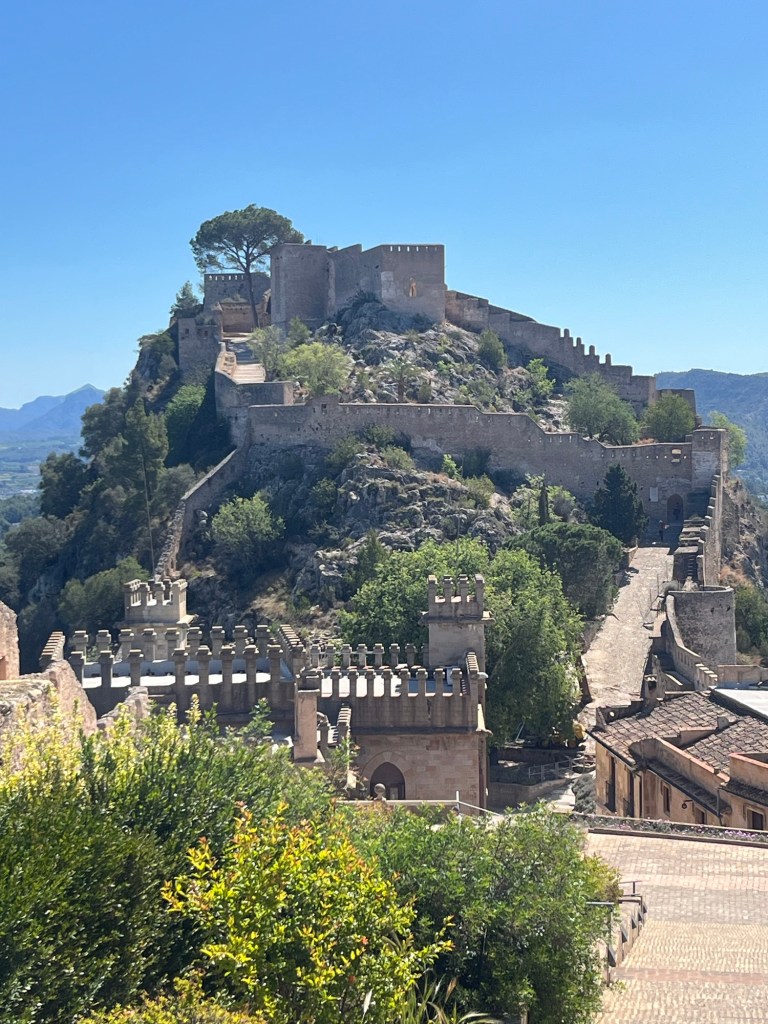
During my stay in Valencia, I made sure to get out of the city and see some of the countryside.  The first place I visited was Xàtiva.  Xàtiva is famous for its castle.  And wow it is stunning.  Perched atop a mountain, it actually contains two castles connected by a wall surrounding the area.  Pictures are worth a thousand words so here are some:

Instead of hiking up the mountain, I took a cab.  I got as close as the cab could get to the entrance to the castle, but there was still some way to go to get to the ticket office.  And the pathway was partially open.  Meaning, there was a steep cliff to the side as you walked by.  For those of you who know me well, I am not into steep cliffs or in certain circumstances, heights.  So I mustered up a ton of courage to walk into the castle.  And I did it!  I’m very proud of the steps I took.  The bravery I showed myself.  And I will always remember Xàtiva not only for the gorgeous views, but also for the relationship of trust I built with myself there.

Other towns I visited included Port Saplaya (a little Venice by the Mediterranean), Buñol (home of the tomatina tomato throwing festival and a very delayed bus driver who was super kind to me), Sagunt (home to a beautiful castle and Jewish quarter), and Puçol.

Sagunt’s medieval Jewish Quarter

Puçol is where my online Catalan/Valencian tutor lives!  It is not on anyone’s tourist itinerary because it is quite simply a place where people live.  There are no “sights to see” (although the church is quite nice).  It is just a place where we walked around, finally met in person, and ate the best white chocolate-filled croissant of my life.

Now let’s come back to some of the experiences I had with other tourists and locals in Valencia.  First off, I had a private flamenco lesson!  The teacher was kind, patient, and kept telling me I learn the dance quicker than others (thanks!).  It was so much fun.  We kept doing this move she called “un, dos, tres, cuatro, patada!”  Which just sounds so fun to stay in Spanish.  A “patada” is a kick.  And I got a kick out of this lesson.

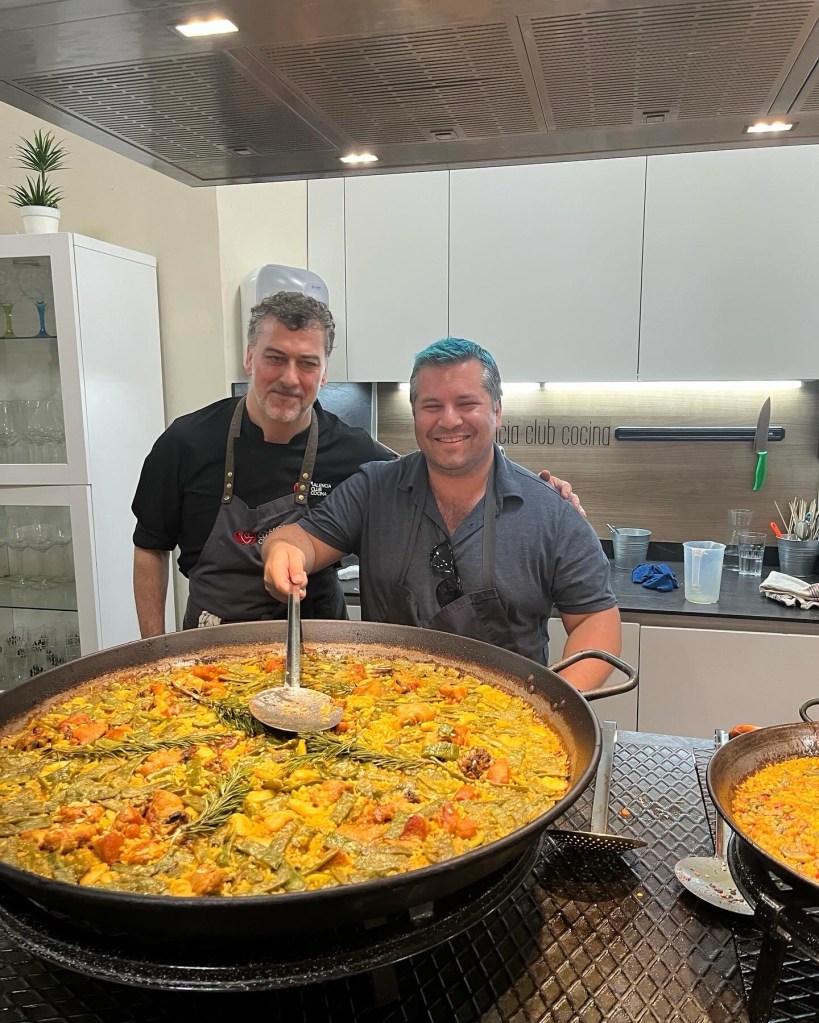
I also took a paella making class with a wonderful group of tourists from the U.S., Germany, the Netherlands, Kuwait, Costa Rica, and more!  The chef was a riot.  He was so funny.  And we all got to contribute to making the paella (and Spanish “tortilla” omelet) together.  The paella was hands-down the best paella of my life.  The crap that I had eaten in the States (or even at other otherwise-good restaurants in Valencia or Madrid) did not compare.  It was fresh and delicious.  For those of you who didn’t know, paella comes from Valencia and maybe that’s what it made it so yummy.

After paella class, one of the German guys asked me if I wanted to go watch the Real Madrid soccer game.  I said sure!  We talked for hours.  Deniz is from Hamburg, incidentally the port where some of my ancestors passed through to get to the U.S. from Eastern Europe.  He is also of Turkish descent and Muslim.  And married to a Ukrainian Jewish woman.  We had such a nice time together.  I hid nothing about myself.  Although given all the news that has come out of Europe (and the Middle East) this past year, I was hesitant to reveal too much, I felt comfortable with him.  And he did with me.  We learned a lot about each other.  I shared what it’s like to be gay.  And Jewish.  And some of my experience in Israel.  And his experience as a man of Turkish descent in Germany, where he is not always accepted for who he is.  It was heartwarming and one of the best nights of my trip.  Traveling solo is not always traveling alone.

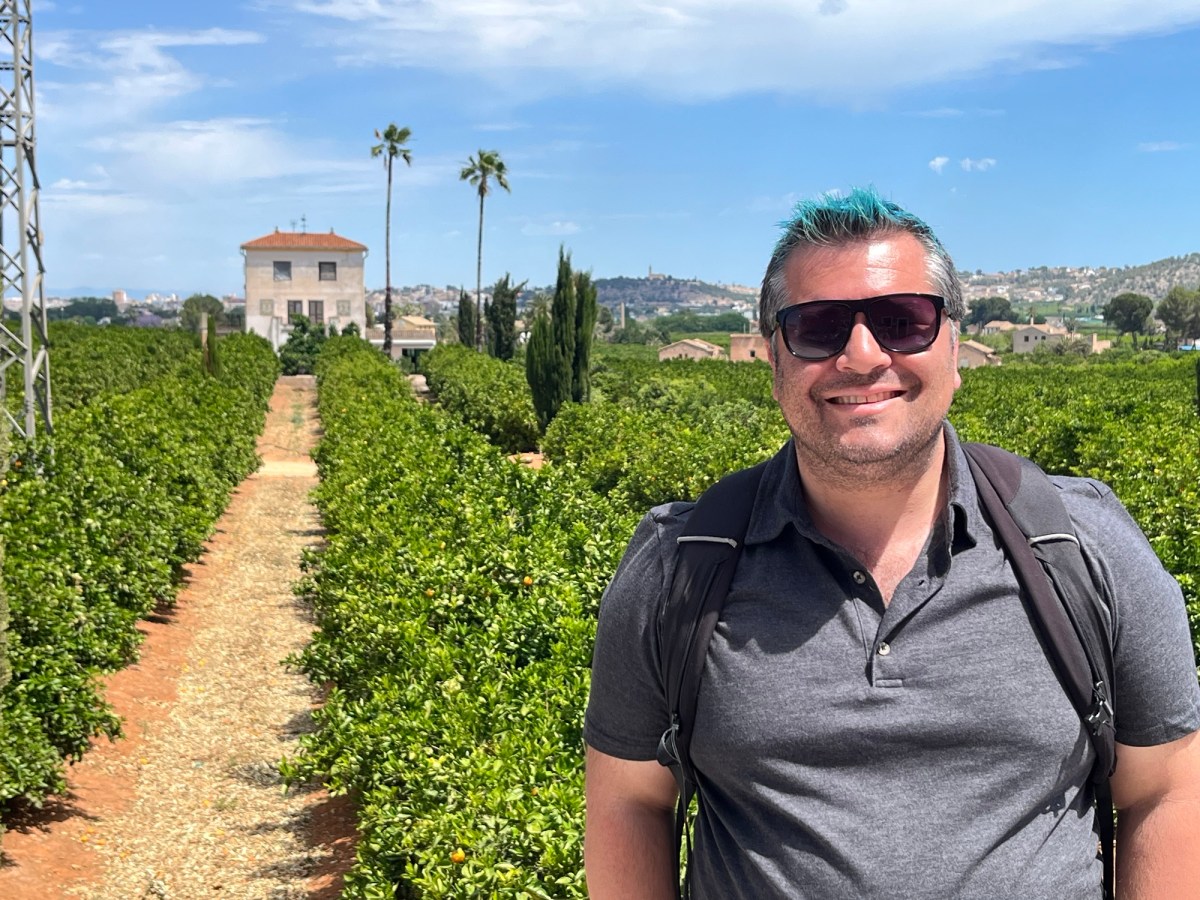
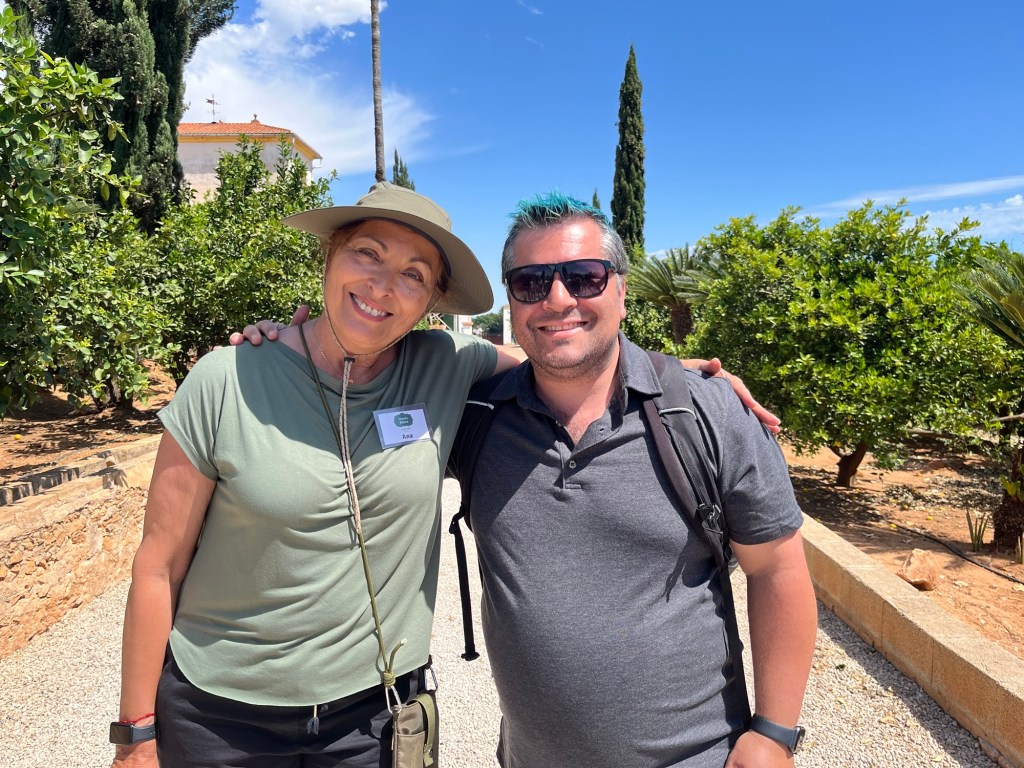
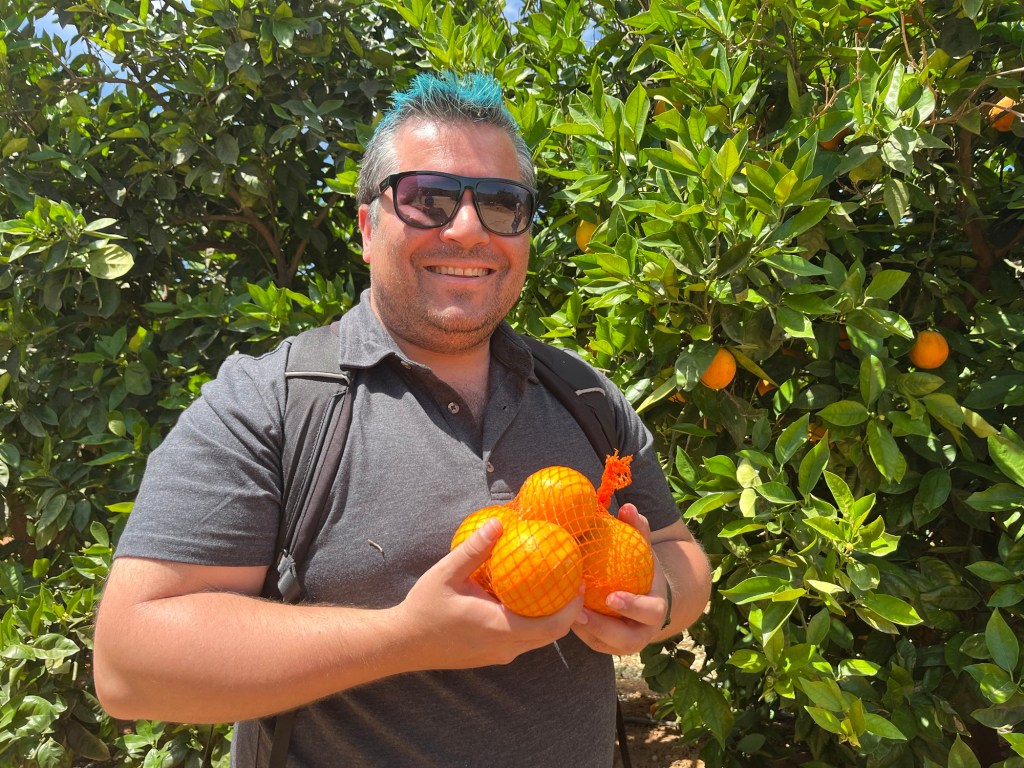
Perhaps my favorite tour experience of the trip was a visit to Huerto Ribera.  It’s an orange orchard in Carcaixent, about 40 minutes outside of Valencia.  I asked one of the tour guides what languages she spoke, since she was speaking some French to these Quebecois tourists and a group of French twentysomethings.  Her native language, it turns out, was Valencian.  She was thrilled when I started speaking to her in Catalan (which is mutually intelligible).  Since there were so many French-speaking tourists, she sent the English-speakers to the other guide and took the French-speakers (and me!) with her.  Since I speak French and Valencian (and she had only taken three months of French), she asked me to help her translate along the way.  It was a challenge but a fun one!  Frankly, it’s not one I may ever get again.  These are two languages that don’t come into contact very often, especially not in Washington, D.C.

Ana was an incredible, warm, friendly tour guide.  We learned all about the different types of oranges (which taste incredible!) and got to try them.  We even got to taste orange blossom honey made right there on the orchard.  And learn the history of the place.  We even got to pick some ourselves!  I wish I could bring those rich, citrusy flavors home with me.

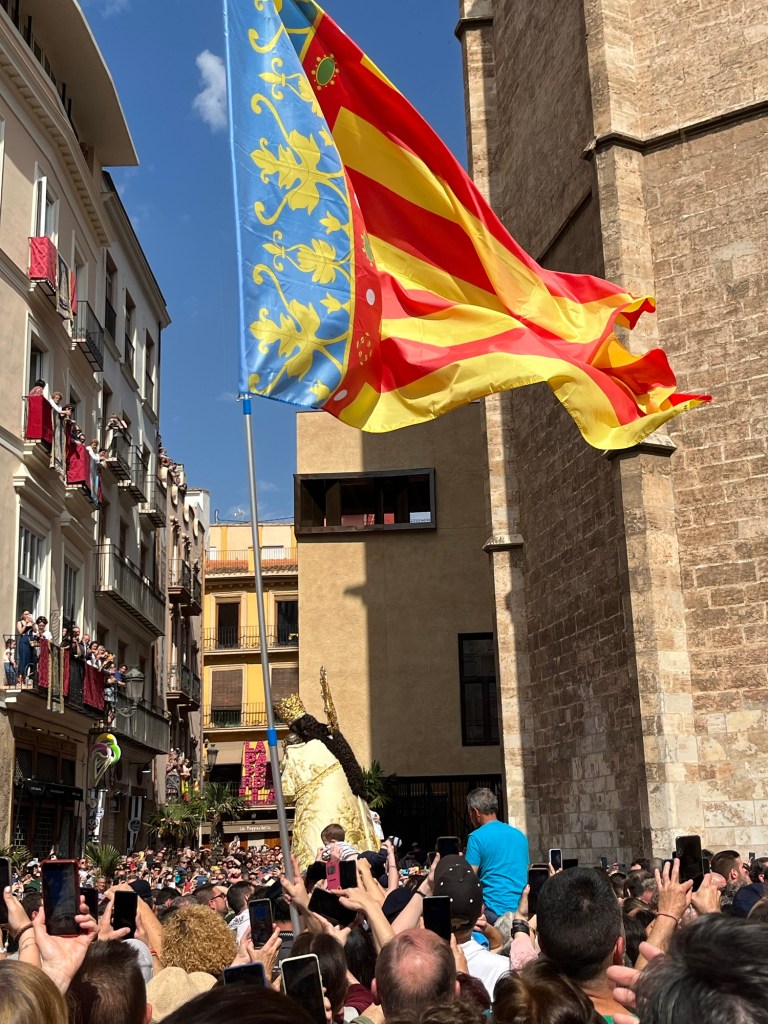
Before I left Valencia, I got to see something truly special.  Spain has many holidays.  In fact, there were two while I was in Madrid, one on either end of my trip.  And one in Valencia.  In Valencia it was called the festivity of “la verge dels desamparats”.  The Virgin of the Helpless.  It was packed.  Thousands of people filled the streets.  An incredibly generous woman next to me explained every step of the celebration.  They brought the Virgin’s statue through the streets as people threw flower petals from their balconies.  It was a dream.

The woman next to me was with an older woman.  Maybe her mother.  And the woman started to cry.  She said “it’s very moving” in Spanish.  And I agreed.

This is the spirit of Spain.  It is a place where your emotions are free to flow.  Where people are generous.  Where quality time is the most precious commodity.  Where, rather than keeping everything bottled up inside, you can simply stomp it out like a flamenco dancer or give a “patada” kick like I learned in Valencia.  Because Spaniards live well.  They aren’t always wealthy and they don’t necessarily wear all the designer brands, but they know their neighbors’ names and they’ll invite you over for dinner.

If you haven’t been, go.  If you’ve been, go again.  Spain always has something to offer and no matter how long you travel there solo, you’ll never be alone.

What my mom continues to teach me

A few months into the grieving process after my mom passed away April 18, 2023 and I could already hear a voice in my head telling me to “move on”.  That somehow if I buried the memory of my mother further and further in the depths of my psyche, that if I only let myself be happy, then her memory would fade and I could go on with living my life.

Obviously this wasn’t the only voice I heard.  I experienced a lot of sadness, anger, guilt- you name it.  And the further I tried to suppress the feelings, the more potent they would get.  Because without release, they just forced me to twist my emotions in a way that didn’t reflect the reality I was living in.  I had lost my mom and my best friend when I was 37 years old.  And nothing – no dissociation, no amount of throwing myself into other things could change that.

On top of the loss of my stepfather five months before my mom passed away, I had to numb my feelings.  I couldn’t let myself feel the depth of sadness I truly felt because I had to clean out and sell my childhood home, get through the funeral and shiva, deal with the estate and death bureaucracy (an ongoing pain in the ass), design and pay for a tombstone, and more.  There was so much to “do” that I couldn’t just “be”.

On top of that, I was working in a toxic professional environment where my boss told me point blank: “Matt, when you started this job, you were so enthusiastic.  Then you lost your parents and you lost your motivation.”  As if somehow losing motivation after losing two parents in five months was unreasonable or irrational.

I made one of the best decisions of my life the day my boss told me such utter and cruel nonsense.  I walked into her office and I quit.

Since late October 2023, I have worked part-time doing my communications consulting business that I’ve had for over a decade.  But mostly, I took time to focus on myself.  I focused on my health, increasing my exercise and working with a nutritionist to improve my diet.  I’ve lost fifteen pounds and more importantly, I am starting to feel better.

In addition, I’ve built strong friendships and relationships.  That’s something my mom really emphasized to me in her waning days on this planet.  It’s the people who matter.  And I’m truly blessed to be surrounded by a tremendous group of empathetic and supportive friends who’ve made this year so much more bearable and even at times, fun.

I did important therapeutic work, using both art and talk modalities to express conscious and subconscious emotions.  I even look forward to my art therapy, as I can use my creativity to work on issues in an almost playful way.

I joined a bereavement group for young people who had lost parents.  This allows me to connect with other people in my circumstance who get things viscerally and personally.  It gives me the chance to feel accepted and acknowledged in community with others who are going through incredibly tough times and making it through it despite it all.

I started dancing again!  As a little kid, I used to prance around the living room to the soundtrack of Phantom of the Opera.  In college, I joined and choreographer for an Israeli dance troupe and performed in Latino, West African, and Indian pieces.  Since my parents passed away, I couldn’t find the joy in movement anymore.  That is, until recently, when I picked up Latin dance classes and started reconnecting with the DC Israeli dance community.

While I’ve spent the better part of my mom’s three and a half year cancer battle angry at God and disconnected and confused about my own spirituality, I now feel an itch again to explore.  Being angry at God won’t bring my mom back.  And while I may not believe in a God that actively makes decisions or works in the world, I do feel a desire to live in community as a Jew and rediscover what that means to be.

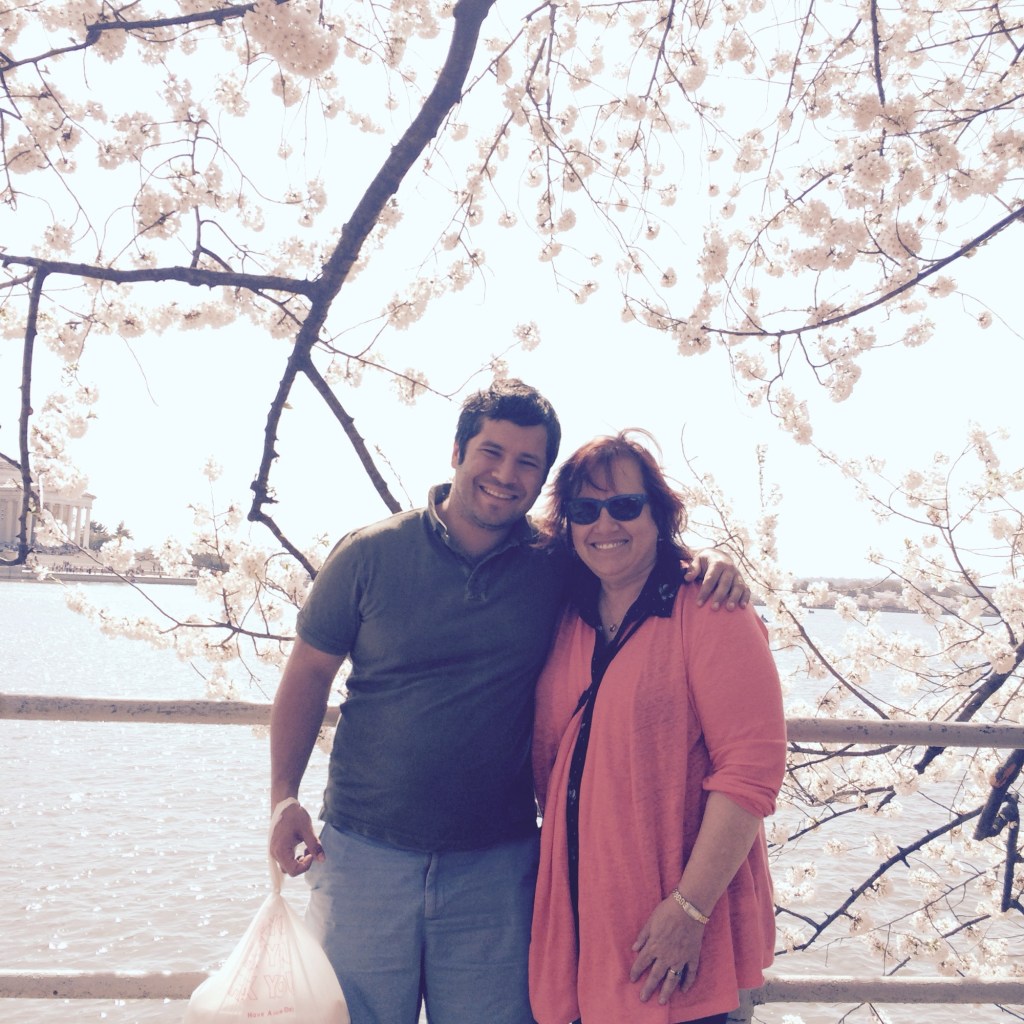
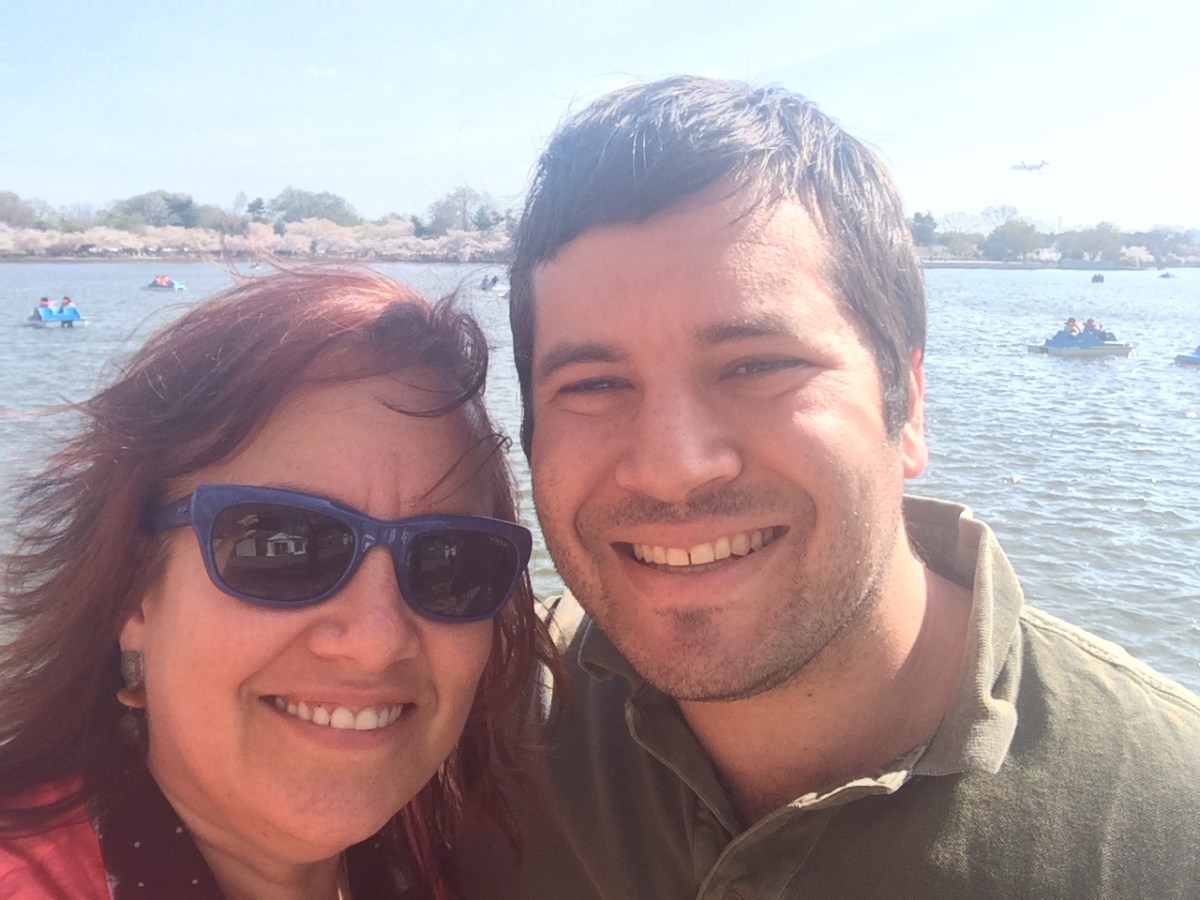
Today I went to see the cherry blossoms in Washington, D.C. where I live.  They were beautiful.  I went with a friend.  We took pictures and smiled and played “tourist”.  Just like me and my mom would do every single year since I was a little kid.

Mom- they were gorgeous.  I remember you asking me, in the last few weeks of your life, to go down to the Tidal Basin and to take pictures with them to send to you as you were stuck on your deathbed.  To give you perhaps a sense of joy and freedom from the awful, painful, isolating monotony you had to endure at the end of your life.

I hoped at the time those pictures would bring you some relief.  Not only that I would carry on our tradition of visiting the beautiful cherry trees we so adored.  But also because it meant I would move forward with my life.  Not “move on”.  Not leaving your memory behind.  But forward.  One. Step. At. A. Time.

That is the meaning I’ll always hold on to when I see these beautiful trees.  Your kindness, your love, the many fond memories we had together.  And my commitment to take care of myself and move forward.  To let myself feel both sadness and joy.  To let myself feel all of the spectrum of emotions.  To slowly and carefully let go of some of the numbness I needed to get through those first few months.  To give myself the freedom to live a good life.  Even though I know you can’t be in it in the way I wish.

Because that is what your death means to me.  It means the fact that I’m crying right now is ok.  In fact, it’s healthy.  I cry because I love you and always will.  I weep because you’re someone that I miss.

Grief never goes away.  It evolves.  My hope for the year ahead is that my mom’s memory can serve as inspiration for living a good, healthy, happy life.  Exactly what she has always wanted for me.  And I believe somewhere, somehow, she still wants it for me today.

Miss you now and always, mom.

Love,

Matt

Magical Nashville

This holiday season has been rough. This whole fall has been filled with “firsts”: my mom’s birthday, my step-dad’s yahrzeit, Rosh Hashanah and Yom Kippur, Thanksgiving, Chanukah, and now Christmas/New Year’s. All without my mom and step-dad for the first time.

I’ve frankly felt lonely lately. I’m working on it – I have great friends and am picking up some new hobbies like getting back into dance. It also comes with the time of year – lord knows I get the winter blues. It’s just hard to spend time with family that’s gone – while your friends spend time with the ones they still have.

So I decided to go to Nashville! Nashville? Why go to Nashville? Isn’t that just for bachelorette parties? Well, to get a break from the loneliness of the holiday season, I turned to the best medicine I’ve ever found for the blues: travel. And as an avid fan of country and bluegrass music, Nashville has long been on my list.

I certainly bumped into the bachelorettes and drunk middle aged women thronging Broadway’s honkey tonk bars. But then I quickly realized that my scene was elsewhere.

My first night in Nashville, I made my way to a local bluegrass jam session away from the center of the city. It was everything I wanted and more. I sat in a heavenly daze for over an hour and a half and just soaked in the amazing tunes. As more than a dozen different fiddles, banjos, mandolins, guitars, and other instruments plucked away and made my ears melt with joy. Santa Claus even made an appearance and played some bluegrass tunes! If I did nothing else in Nashville, dayenu– this would’ve been enough.

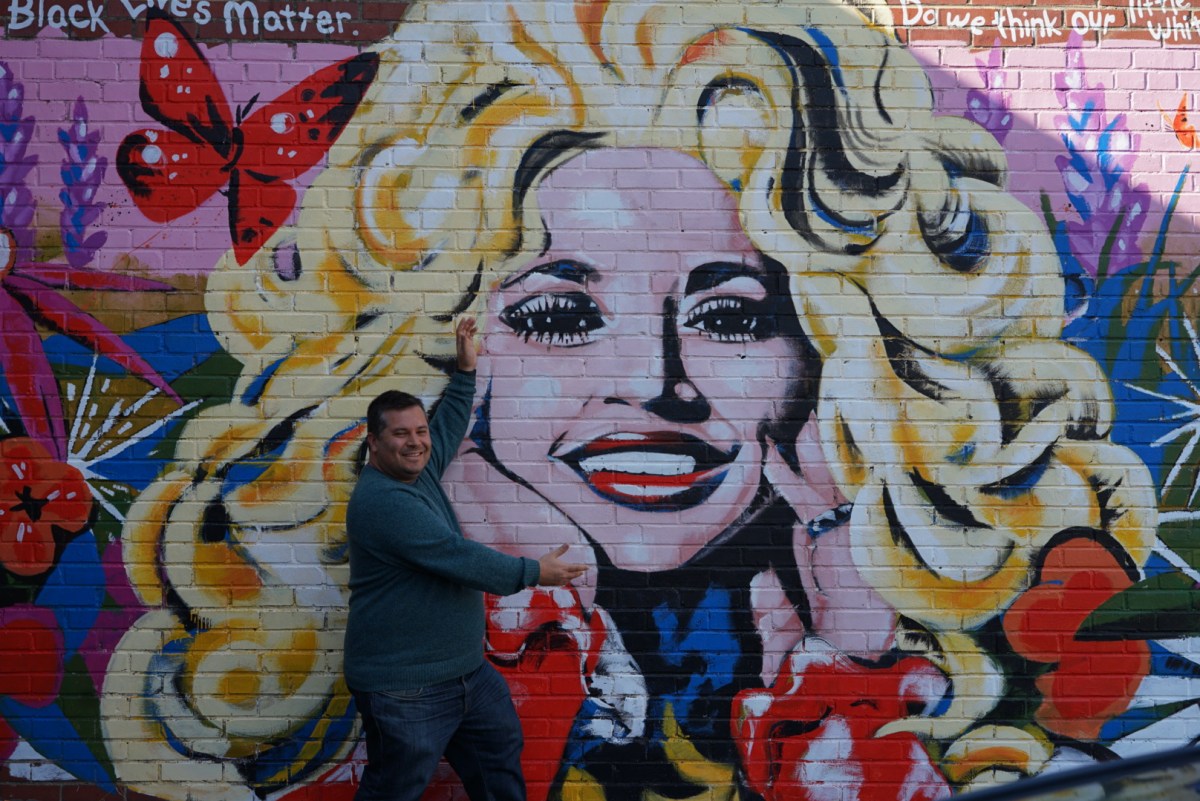
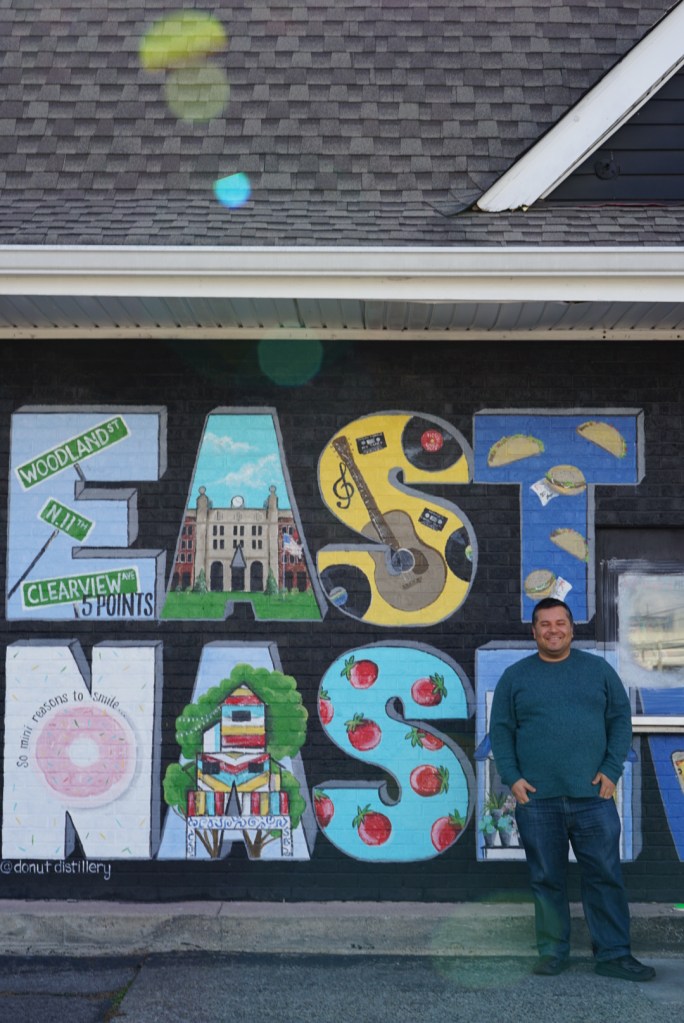
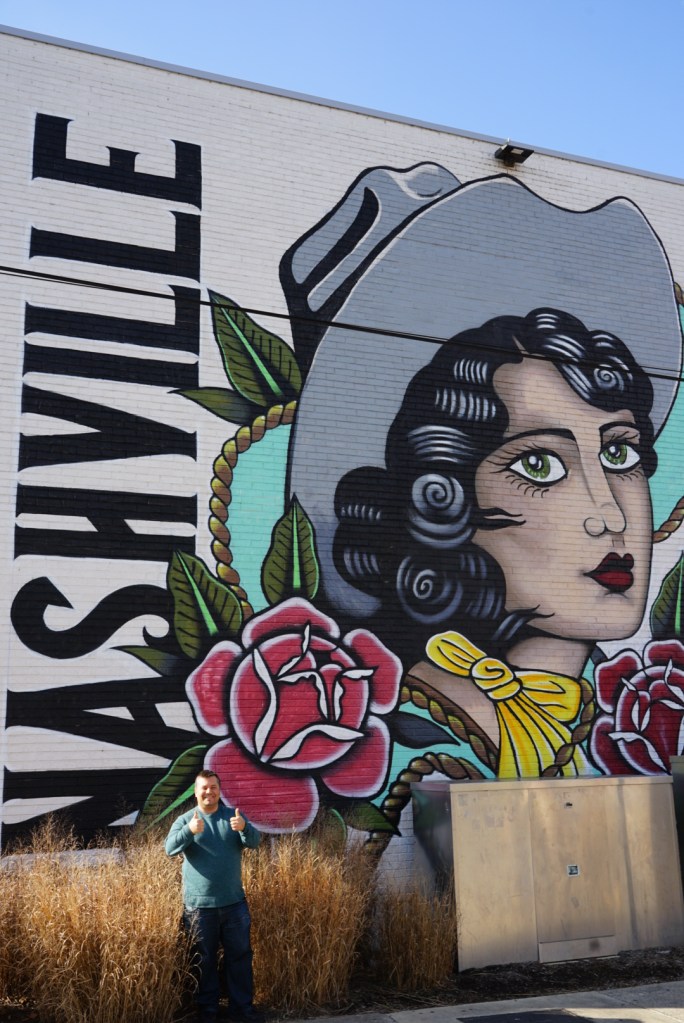
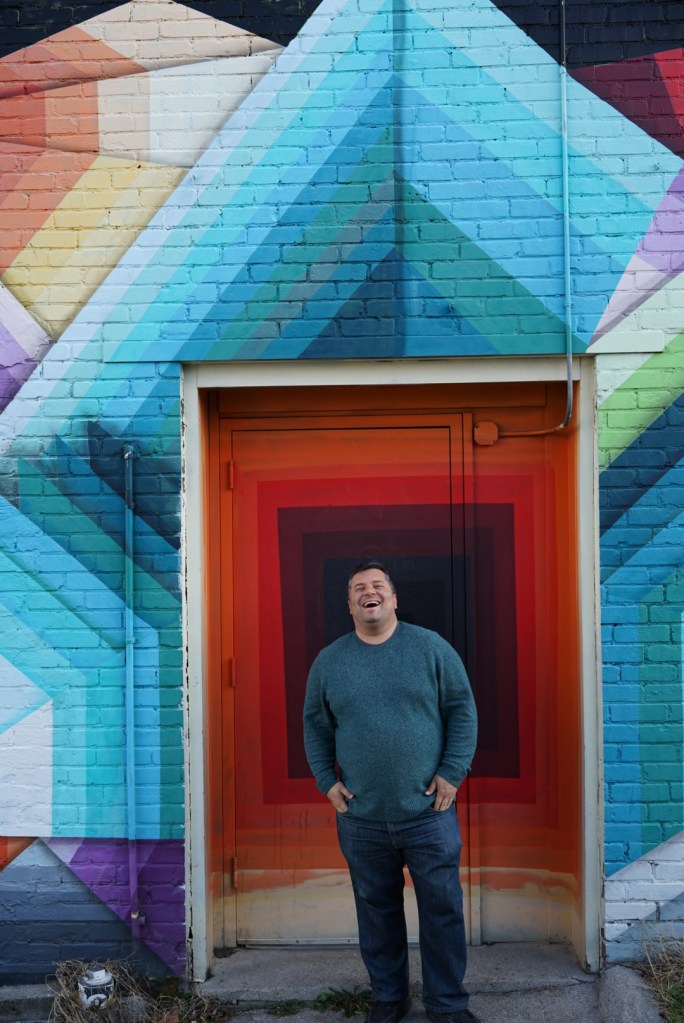
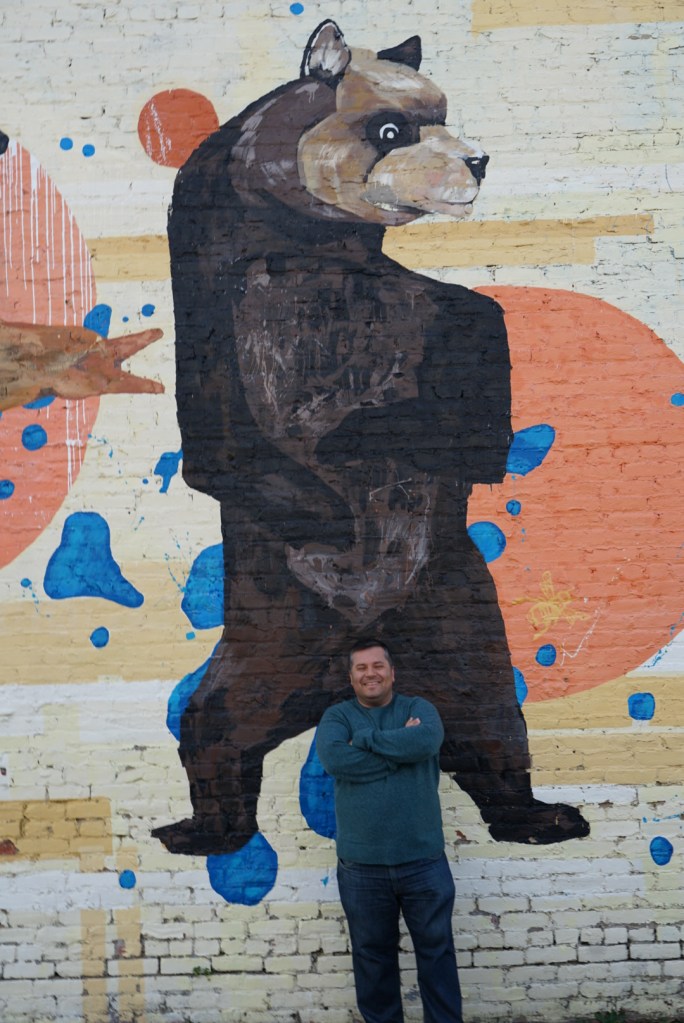
The next day I woke up energized and headed to East Nashville for a mural tour and photo shoot. My guide Aidan was one of the kindest, funniest, and most engaging people I’ve met in my travels. I immediately felt at ease and felt I had found a kindred spirit. We took some great photos, including this post’s cover photo of a Dolly Parton mural. My mom would’ve loved to see it- she was a huge fan. Here are some of my pics:

I then headed to a country line dancing lesson on the main strip on Broadway. I was joined by a Canadian bachelorette party and a 15-year-old girl’s birthday crew. It was a riot. While not exactly my scene socially, the dancing was so much fun and the instructor was really patient and engaging. I’m going to get a video in my email later this week so we’ll see how I did! It reminds me of the good old days in college when I used to go to Wild Country bar outside of St. Louis and go line dancing with friends. And boy was it a workout – I had really worked up a sweat by the end and was having a great time. Plus, I got to dance to one of my favorite country songs- “Save a Horse, Ride a Cowboy”. I’m hoping the meaning was lost on the 15-year-old haha.

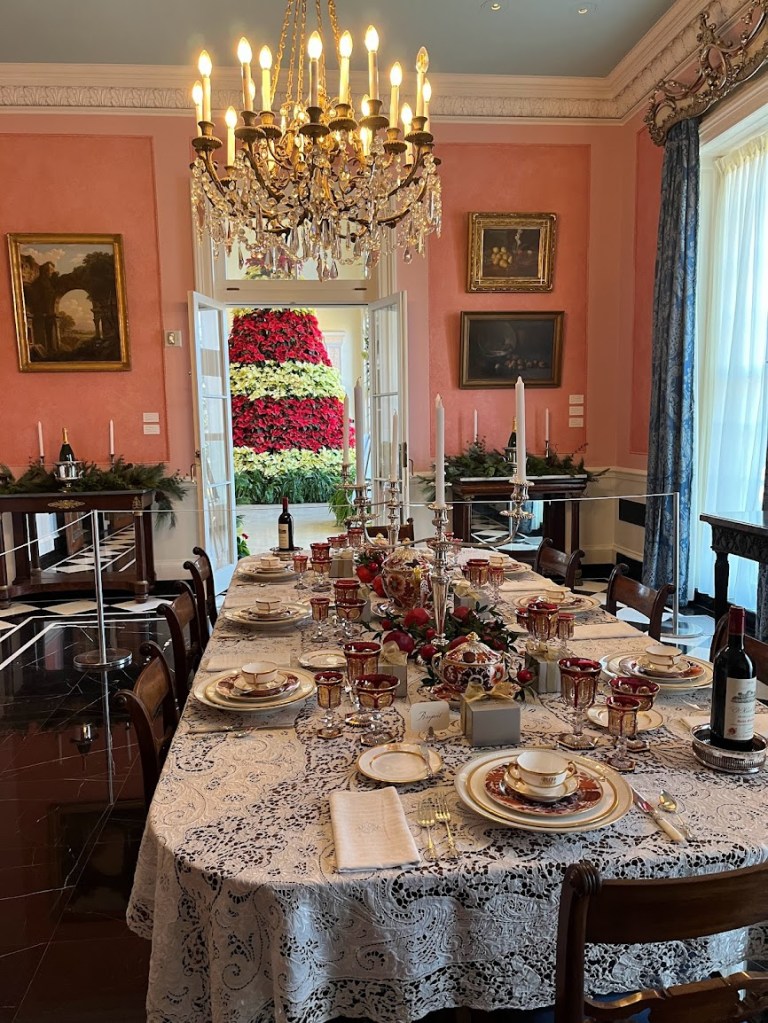
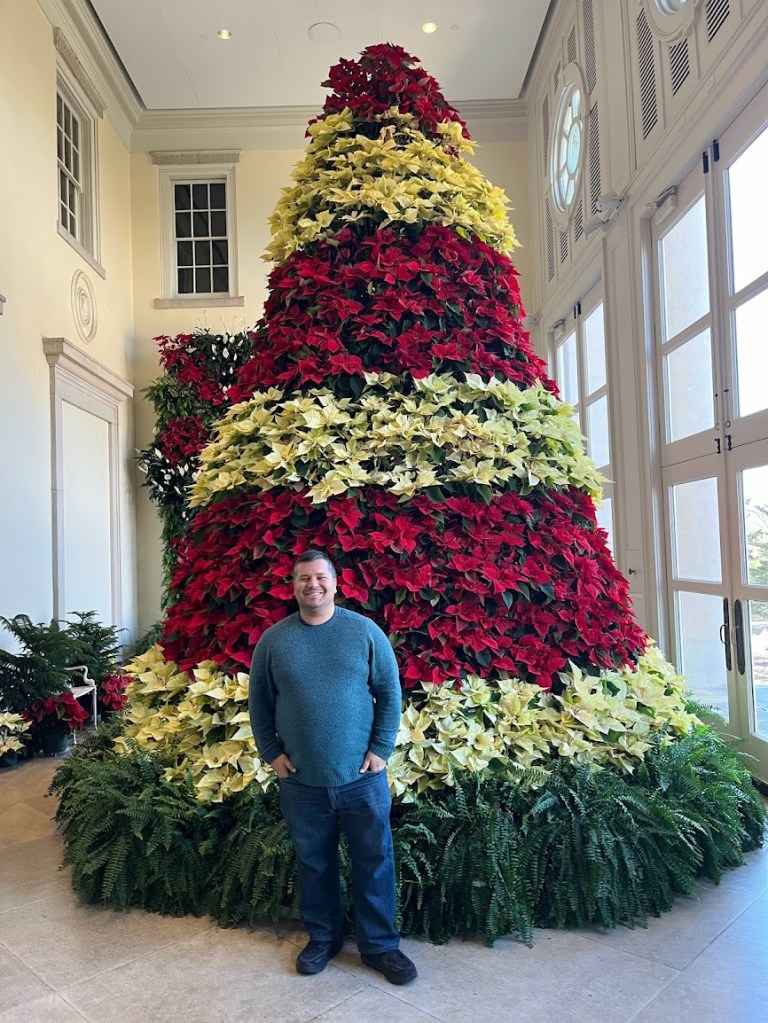
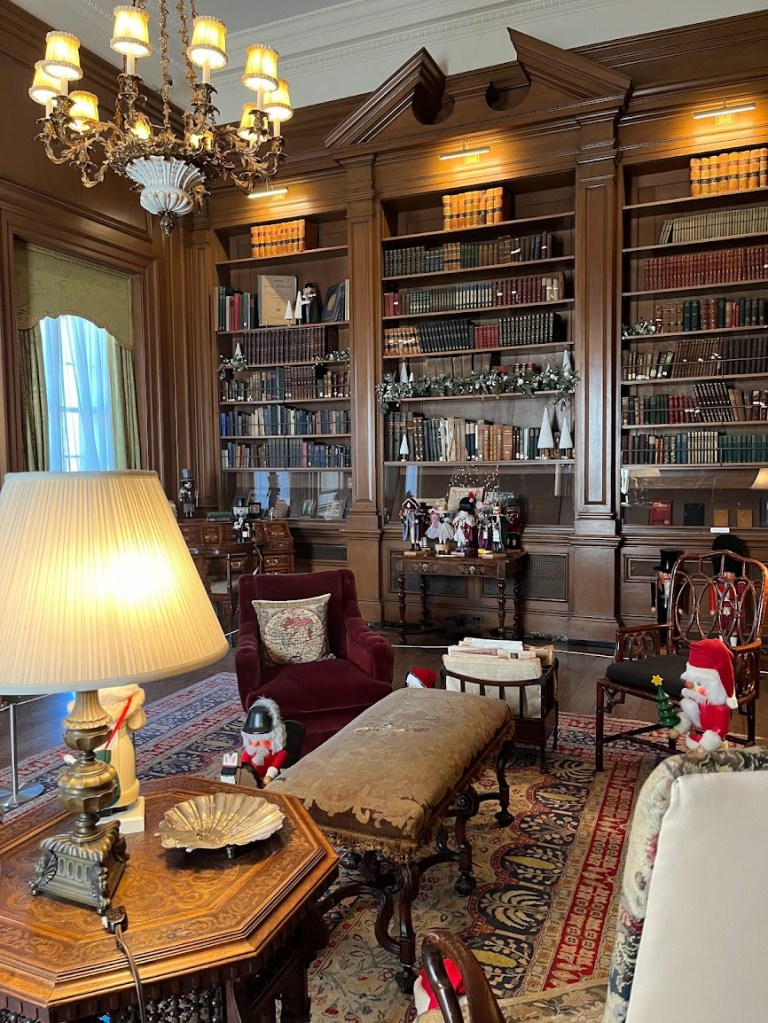
Tuesday I hit up a historic mansion outside the city that was beautifully decorated for Christmas.

During my stay, I got to visit several museums documenting music history, including the National Museum of African American Music and the Country Music Hall of Fame. I learned how so many bluegrass and country music stars drew inspiration from black artists in their communities and often learned their instruments with them. Latino acts such as Los Lobos drew from and influences country music styles. Jazz, the blues, ragtime, bluegrass, country, and folk music are inextricably connected and all make this town pulsate with life.

On that note (pun intended!), I got to hear a truly wonderful concert at one of America’s most famous venues, the Grand Ole Opry. A live radio show in front of a several-thousand-person studio audience that has been running for almost a century, the Grand Ole Opry was so much fun. I got to hear some amazing bluegrass, country, and soul artists and get exposed to new sources of musical inspiration.

An Israeli friend once told me to guess which part of the United States most resembled Israel. At the time, I hadn’t lived in Israel yet and had only visited twice. I wasn’t sure where she meant. But she told me – “the South. There, life is simple. People aren’t as materialistic. They are warm and friendly.”

Having spent a lot of time in the South (where I went to summer camp growing up) and in Israel, I think she’s on to something. While the South (much like the Middle East) can suffer from conflict and racism and misogyny, it also is the place where I’ve encountered the warmest people in the U.S. Of all races and religions. Whether they’re hipsters, locals, transplants, conservative, liberal, white, black, or none of the above, I’ve found in my travels to the South that people just have an extra soft spot for helping others feel welcome. It’s social lubricant that frankly my hometown of Washington, D.C. sometimes lacks.

Nashville is a creative place. It’s artsy, it’s musical, it’s filled with murals and the dreams of hundreds of songwriters and guitar players. Of fiddlers and of new residents coming to its communities from around the country and around the world.

They know something that not everyone else has discovered and I hope remains somewhat of a secret for the sake of keeping the magic of this city alive. Nashville isn’t just bachelorette parties. Far from it. It is the people who live there who make it so special.

For now, I live in Washington, D.C. and I don’t know if I would move to Nashville or somewhere like it. Kinda hard to live there without a car. But maybe one day there’ll be more public transportation or I’ll simply come back to spend some more time there. Because one thing’s for sure- Nashville’s got a hold on my heart. And if that doesn’t sound like the beginnings of a country song, then I’m not sure what does!

Internalized antisemitism

As a gay man, I’ve fought for years to live with pride as who I am. It has also offered me a unique vantage point from which to experience and explain internalized antisemitism – and its antidote.

First, let’s start with some definitions. Internalized homophobia – something I experienced quite a bit of especially before and during my coming out process – is vile. It is when the surrounding prejudices and bigotry of others force LGBTQ+ people to unwittingly adopt some of the hateful viewpoints directed at them.

I can remember my first real run-in with internalized homophobia. I was dating a guy named Matt my freshman year of college. He was my very first male kiss. We had had a wonderful night together and I woke up in the morning feeling great. I got down off my bed after he had left and all of a sudden I felt a wave of disgust fall over me. “Why was I so disgusting? What was wrong with me?” I felt a sense of panic. Anxiety. Dismay. It was almost an out-of-body experience and I had no words to describe it.

Once my therapist explained to me the concept of internalized homophobia, it all started to make sense how I could love being gay and yet the very act of gay intimacy could arouse such self-hatred. It was the classmates who called me faggot. It was my dad telling me he was proud of me for dating women in high school – he said he was glad I wasn’t gay. It was the “health” book I was given by my family to read as a teenager that said if I had feelings about another man, it didn’t mean I was gay. It was my soccer team in high school that had a team “fag” – a guy who we pretended was gay and laughed at. It was my grandfather writing me out of his will all while making comments about my “lifestyle”.

And that’s the tip of the iceberg.

Victims of abuse often internalize aspects of their abusers’ behavior without realizing it. And I had my own prejudices towards LGBTQ+ people that started with my self. While a part of me loved kissing this cute boyfriend, a part of me couldn’t bear to break with all the hatred that I had digested over the years. That I had been conditioned to obey. Or pay the price.

The antidote to this homophobia was a curious one. It wasn’t just to accept myself. It was to actively seek out opportunities to be loud and proud. And to do so regularly. Because coming out is a process that never ends. If you don’t actively fight against the forces pushing you back into the closet, you will continue to lean on those prejudices internalized deep within and you will falter. You will become miserable and silent.

So I became an activist. I led rallies against conversion therapy. I marched in Pride parades in Madrid and Washington D.C. and Tel Aviv. I went back to my high school to speak with the timid yet brave students who went to the Gay-Straight Alliance meetings. Meetings that when I was a high schooler, were not even allowed to use the word “gay” in their title. Because the principal thought it was too controversial.

In Israel, I visited Arab communities and spoke openly about my gay identity in places many people still fear to be out. I subsequently wrote a book about my experiences, allowing my gay and Jewish and Zionist identities to merge. There’s something therapeutic about writing that allows the singed seams of my past traumas to heal and to bring some connection between the different parts of me.

Which brings us to the title of this blog: internalized antisemitism. Have I experienced antisemitism? Oh yes. I’ve been thrown out of a Lyft for being a gay Jew. I was told by one of my college Arabic professors that there were “good Jews” who opposed Israel. I was told by a high school classmate that Jews were stingy and she was “proud of her Cossack ancestry”. Yeah, the Cossacks who murdered my ancestors and forced us to come to America. I was told by another classmate that “Matt, you’re not like the other Jews. You’re not a big mouth.” I can’t tell you how many times I’ve been told “the Jews are rich”. At a Brazilian Portuguese meet up in D.C., by a soccer teammate of mine, and at my YMCA summer camp. I was told countless times that I supported the “Holocaust” of the Palestinian people. I was even told by my own father, the most prescient example of an internalized antisemite, that it wasn’t “normal” for me to want to go to synagogue. Who would threaten me and my mom for taking me to Hebrew lessons. Because I should do what “normal” kids do. Not Judaism.

These are but a few examples of the antisemitism I’ve experienced in my life. In a country that’s getting worse. There has been a nearly 400% increase in antisemitic events after Hamas’s terrorist attack on October 7th. And believe me, Europe and the Middle East are even worse.

The antisemitism I experienced has at times led me to lean on the very prejudices I experienced, much in the way internalized homophobia works. While under great pressure from a number of antisemitic professors in college, I twisted and turned my Judaism until I found myself publicly and repeatedly condemning Israel in an effort to seek their approval. I would even email articles about me slamming Israel in the student newspaper to these professors, these authority figures who taught me to be a “good Jew”. And they would praise me. And it felt good and disgusting at the same time. Much like that kiss with Matt.

How have I fought back against this internalized prejudice? What is the antidote to internalized antisemitism? When we see Jews attacking police officers while calling for “ceasefires” with a terrorist group that knows no respect for humanity. The Jews who condemn Israel for committing a genocide that is quite simply not happening. While they remain silent about the 130+ innocent Israeli civilians kidnapped by Hamas. Who allow themselves to be tokenized by antisemites on the Left as the “good Jews”. Much like my Arabic professor thought of me.

The antidote for internalized antisemitism is Zionism. It is Jewish pride. It is the liberation movement of the Jewish people. Living in Israel and making aliyah (even though I returned) changed my life. I can no longer stay silent in the face of antisemitism whether it emanates from Hamas or IfNotNow or Alexandria Ocasio-Cortez. Because I am a proud gay Jew. I have learned from my experience as a gay man how to liberate myself as a Jew. And I would suggest that other Jews consider the ways in which antisemites have silenced them – and how it might be impacting their behavior towards their brethren in Israel now.

Because you don’t have to be a non-Jew to be an antisemite. And you don’t have to live this way forever.

I learned to love to kiss men and to be proud of who I am. And I learned to drape myself in the blue and white of my people with pride despite all the haters who would have me shy away from my ancestry and identity.

I’m a gay Jewish Zionist Israeli and American. And I will not silence any one of those identities to make someone feel comfortable in their prejudice. Am yisrael pride.

The peace that is Portugal

In September, I took a trip I had been wanting to do for a long time. Portugal and a slice of Galicia, a region in northwest Spain.

In college, I took a course called “Portuguese for Spanish-speakers”. It was the second Romance language I ever learned. And it challenged me. I only took it for a semester, but I learned quickly. The two languages are similar, but are pronounced very differently and have some different vocabulary and grammar. I kept wanting Portuguese to follow Spanish rules. But it refused! So I adapted, learned the new way of communicating this Latinate language, and expanded my mind in the process.

Other than a short jaunt to Lisbon when I was transient homeless between Israel and the U.S., I had never been to a Portuguese-speaking country. I could speak pretty well, but I didn’t have much of an outlet for using the language.

Until this past fall! I went for 10 days to Portugal. I started in Lisbon. What a beautiful, authentic city. The summer crowds had faded (though it was still pretty full!). I toured around on my own. I met some of the kindest people. From the people who worked at my hotel to the restaurant owner who shook my hand and congratulated me on my Portuguese, the folks I met were almost universally kind and friendly. And very, very appreciative of the fact that I communicated with them in their language. Here are some photos from Lisbon, including the end of my trip when I circled back to the city and went on a sailboat cruise!

After a couple nights in Lisbon, including a Fado show (I love this kind of music!), I headed up north to Coimbra. Coimbra is a hidden gem and I won’t tell you everything I experienced there because it’s just too special for me!! All I can say is it’s worth visiting. A medieval university town, it is filled with young college students in Harry-Potter-esque robes wandering around the city singing and gently hazing their freshmen classmates by making them march and shout slogans about their academic fraternities. It was so cool!

Coimbra also has Roman ruins nearby in Conímbriga. It was so neat to see thousands of years of history! Coimbra has a unique Fado music style that I got to experience up close as well. It is the polar opposite of crowded Lisbon – it is quiet, it is peaceful, it is the most relaxing place you could imagine. Here are some photos, though no picture can capture the pure tranquility and easygoing nature of this city:

The generosity of people really rubs off on you here, much like it did to me in Israel. Frequently when I would go to bakeries, the employees would give me extra pastries! So when I found myself at a cafe listening to Fado music and I saw a couple (who I later discovered were part-German part-Brazilian) looking for a place to sit, I invited them to sit with me. We ended up talking for hours and it was so lovely. The spirit of the Portuguese people and their kindness inspired me to do likewise and it felt great. This part of the world – the Mediterranean and its adjacent countries like Portugal – they bring out my soft and generous side and it fits. It feels right.

After saying a sad goodbye to Coimbra, I headed further north to Porto. Porto is somehow even more crowded than Lisbon with tourists. To a point where it was actually unpleasant at times. But I found my niche. I found some cool bookstores, some outer neighborhoods where locals frequent, and most importantly, I used it as a home base for exploring other cities in northern Portugal.

While staying in Porto, I visited Braga, Guimarães, Valença, and the Galician city of Tui! These cities are so gorgeous and laid-back. Here are some views, none of which truly do justice to these gorgeous places:

I learned a lot by visiting these off-the-beaten-path destinations. Guimarães and Braga apparently have an athletic rivalry that parallels a general rivalry between the cities, including politically. I found both to be charming. But many people are “team Guimarães” or “team Braga”. I guess I’m team both!

Valença and Tui are right across from each other on the same river. Valença is the Portuguese town and Tui is the Galician/Spanish town. Both were fascinating and despite being so close to each other geographically, were quite culturally different.

Tui attracts pilgrims on the Camino Portugues de Santiago. I met some on the way and they were super friendly, including a woman from Brazil who basically did a photoshoot for me while carrying her heavy hiking backpack.

The food in Tui is distinctly Spanish and the Galician soup is delicious! In addition to Spanish, people speak Gallego, a form of medieval Portuguese (actually its original dialect) mixed with some Spanish phonology and vocabulary. I can understand 99% of it with my Spanish and Portuguese and it is so cool! I’m incredibly glad I made it to this part of the world that I had spent a long time dreaming about visiting.

In Braga, I met Pedro, my new Instagram friend, who was my Uber driver. And coincidentally, also gay! He’s Brazilian with Portuguese parents and took me all around Braga all the way to Porto, making extra stops for me to see special sites. Like many Portuguese immigrants, he comes from a former Portuguese colony. I got to experience some of this diaspora culture in Lisbon when I went to a Mozambican restaurant. The owner was so kind. I offered to tip and he refused saying, in Portuguese, “it’s like you’re eating in my home. I can’t accept a tip.”

If I had to summarize this incredible, life-changing trip, it is that Portugal’s people are what make it so special. The architecture is stunning, the weather is great, the scenery is relaxing. But what made this trip so heartwarming were the people I met along the way and their incredible kindness.

At a time when the world is spinning. When my other homeland of Israel is under attack. When innocent civilians have been kidnapped. When war is on our minds. I think back to the joys of visiting Portugal and hope, with that ever-present Portuguese feeling of “saudade” or “longing”, that one day we’ll get back to this state of mind. A state of tranquility and peace.

May it be so.