I was asked the most outrageous question by a rabbi I had just met. “Are you Sephardic or just a tan Ashkenazi Jew?” I answered: “I’m Ashkenazi and am also 1/8th Romani.” She responded: “oh yeah, I can see that you’re Romani. You know my synagogue once hosted an Israeli girl of Moroccan descent but she was the fairest skinned girl you could’ve ever imagined.”
Seeing as how I was at a party, I felt like it wouldn’t be appropriate for me to make a scene. So instead I just sat with feelings of otherness, of an interrogation of my identity and my skin color. Do I think the rabbi was coming from a malicious place? Unlikely. It probably was just ignorance. And yet something within me began to stir and I became very, very angry on my way home.
After all, besides feeling demeaned by the whole conversation, I thought to myself – what if I had been a Jew by Choice, a convert? What if I was raised as a Christian in Puerto Rico or Mexico, with similarly brown skin, and had converted to Judaism? Would it have been appropriate for a rabbi to ask if I was a tan Ashkenazi or “just” a Sephardic Jew? What if the answer was “neither”?
What struck me most about the conversation was the casual questioning of my identity. I don’t even think the rabbi knew my last name – I don’t know hers for that matter. Why it’d be remotely appropriate to ask about my ethnicity and skin color at a party is beyond me.
The thing is it tapped into something much deeper within my American Jewish experience. As a kid, I remember going on a synagogue volunteer trip and another child asked me if I was Jewish. I said I was and the kid responded: “but you don’t look Jewish”. My heart broke. Judaism meant everything to me. If this kid didn’t think I looked Jewish, perhaps I didn’t belong in this community. Perhaps I should find a sense of belonging elsewhere.
While the rabbi’s comments never questioned my Jewishness per se, they certainly questioned how an Ashkenazi Jew could possibly look so brown. And how her Moroccan-Israeli acquaintance could be so light-skinned. I felt like I somehow had to justify my skin color to a stranger, as if all Ashkenazi Jews looked the same – looked like her.
There’s a reason my Judaism flourished in Israel. The warm people, the varied expressions of faith and culture, and perhaps because I felt I fit in. Physically. A lot more Israelis look like me than Ashkenazi Jews do in the U.S. (although note to the rabbi- there are other olive-skinned Ashkenazim like me). I blend in. I never once had my Judaism questioned for how I looked in a place as ethnically diverse as Israel. After all, what does an Israeli Jew look like? There are endless ways to “look Jewish” in Israel, in fact there are so many ways it’s hard to pinpoint what it even means to “look Jewish” there. Which is the beauty of the country I miss so much.
An American rabbi who studied for five years and has worked in the field for many more should know better. The Reform Movement, which I proudly grew up in and she is a part of, strives to include Jews of all different backgrounds in its social fabric.
And clearly work remains to be done. Do I think this rabbi is racist? I don’t know. I don’t think she was being malicious and there are plenty of times that I’ve put my foot in my mouth after saying something. That being said, it’s not an excuse for egregious behavior that centers light-skinned Ashkenazi American Jews at the expense of people who look different.
May we all find ways to explore the beautiful kaleidoscope of Jewish communities and cultures, avoiding othering and finding new ways to engage our diverse people.
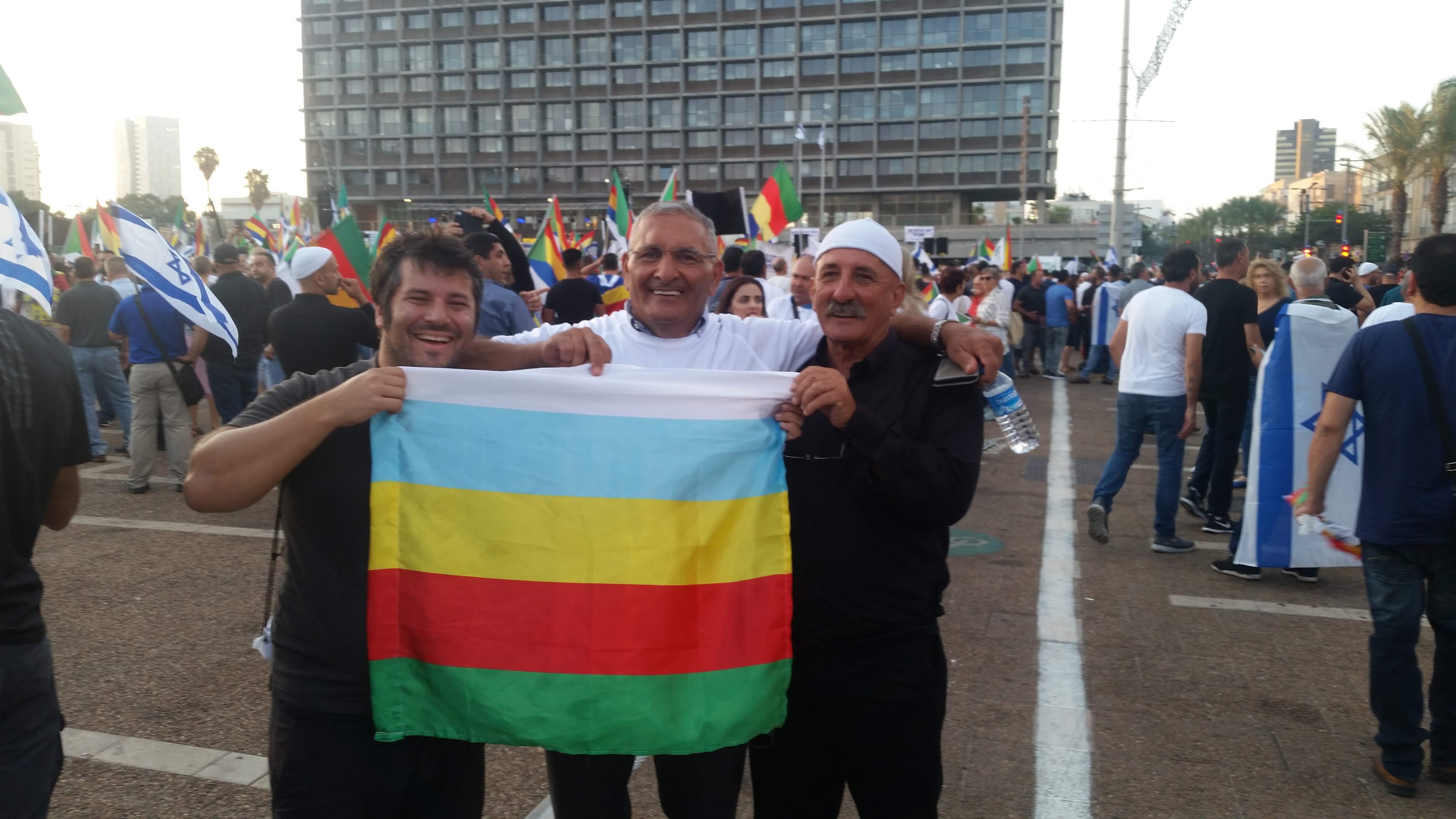
This is beautiful, olive-skinned, Ashkenazi, part-Romani me with some of my Druze friends in Israel! And I love myself just the way I am. As my cover photo from Israel says in Hebrew and Arabic: “the ‘other’ is me”.
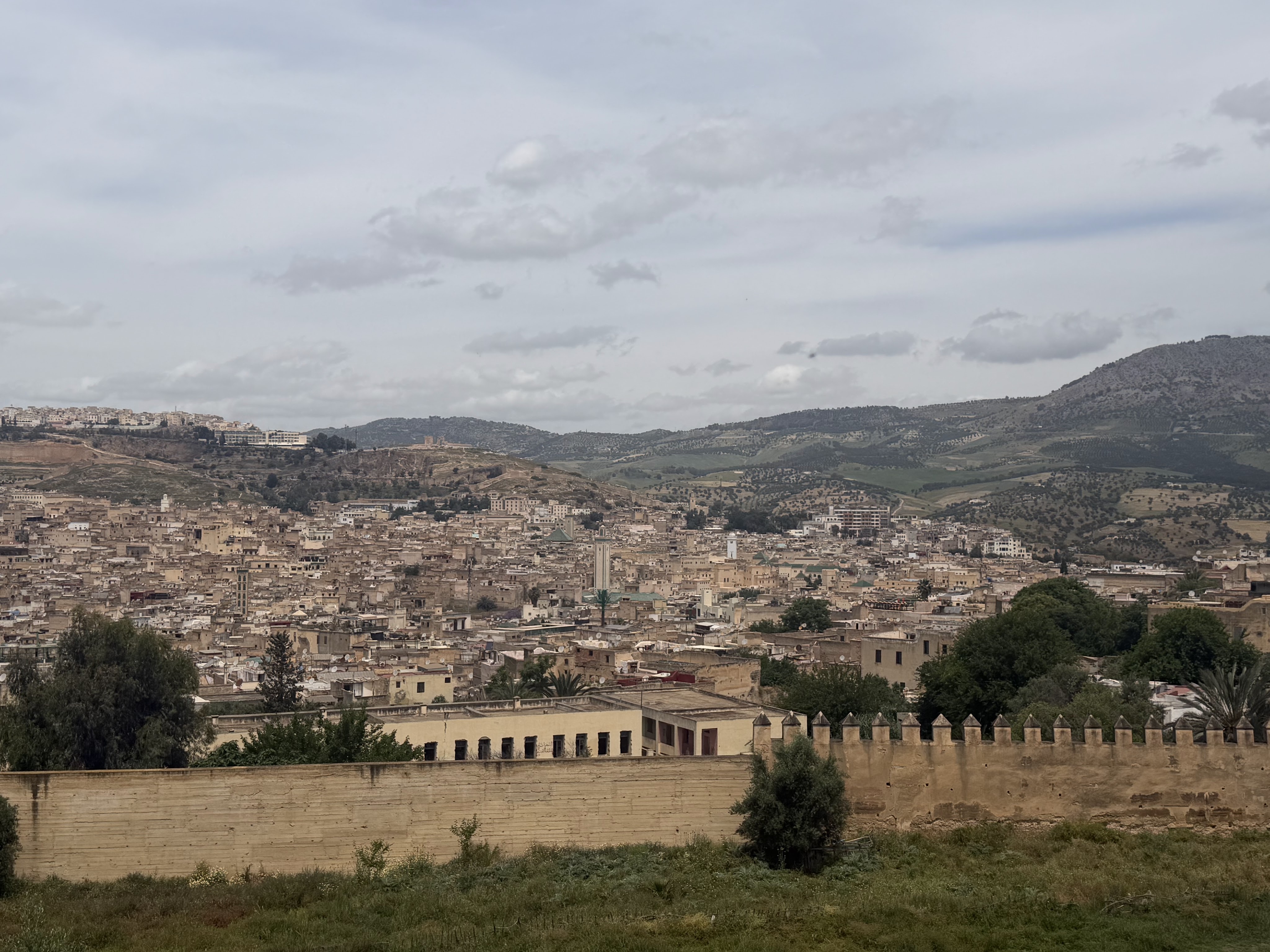
Fes is a wild city. Its medina, or old city, is an overwhelming mix of scents, smells, and screams. Just outside this chaos, however, is a place where things calm down considerably – Fes El Jdid (“New Fes”). I went there on a tour with my guide Abdellatif.
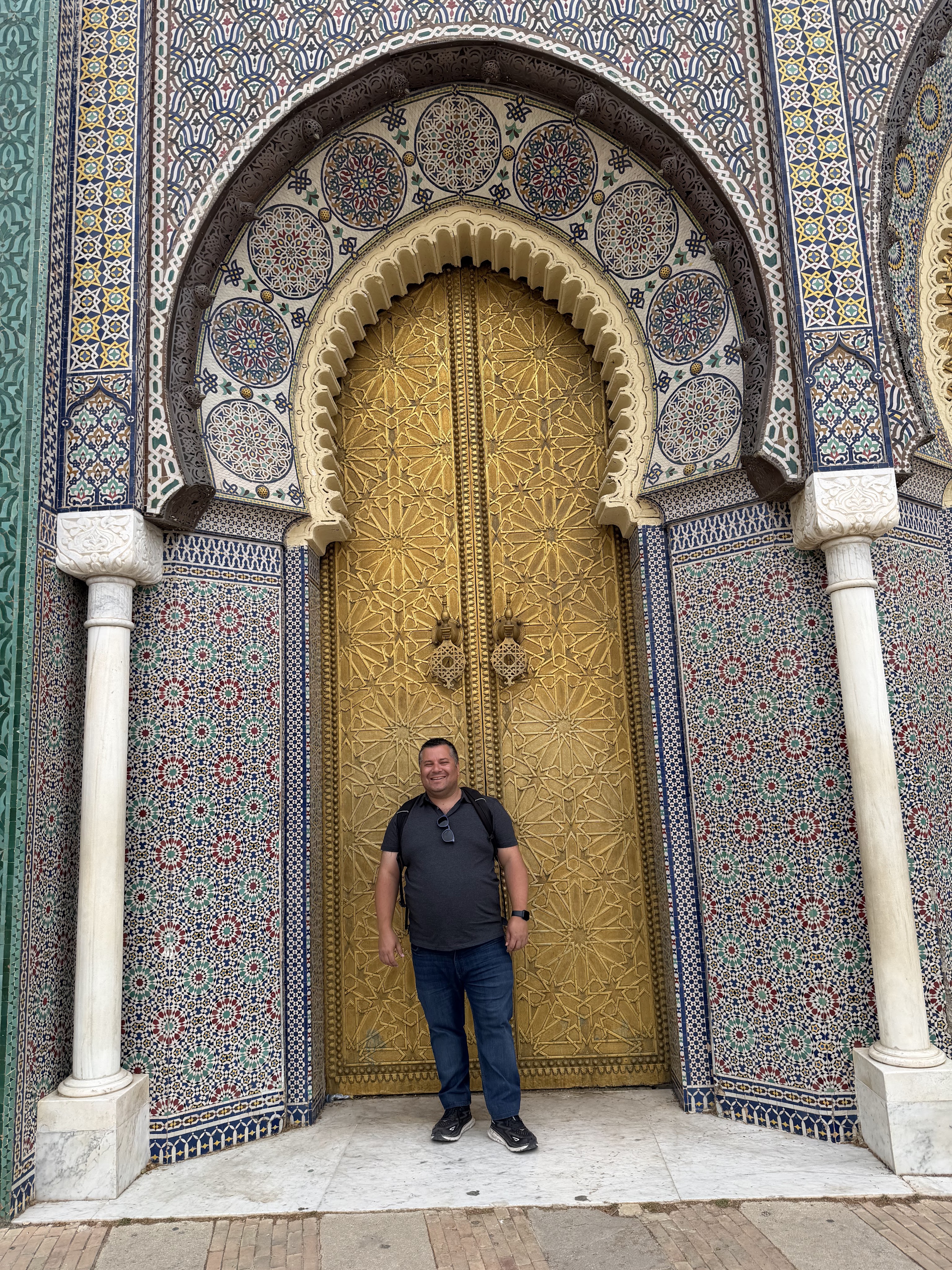
There, you’ll find a beautiful entrance to the royal palace and a pleasant historic vibe.
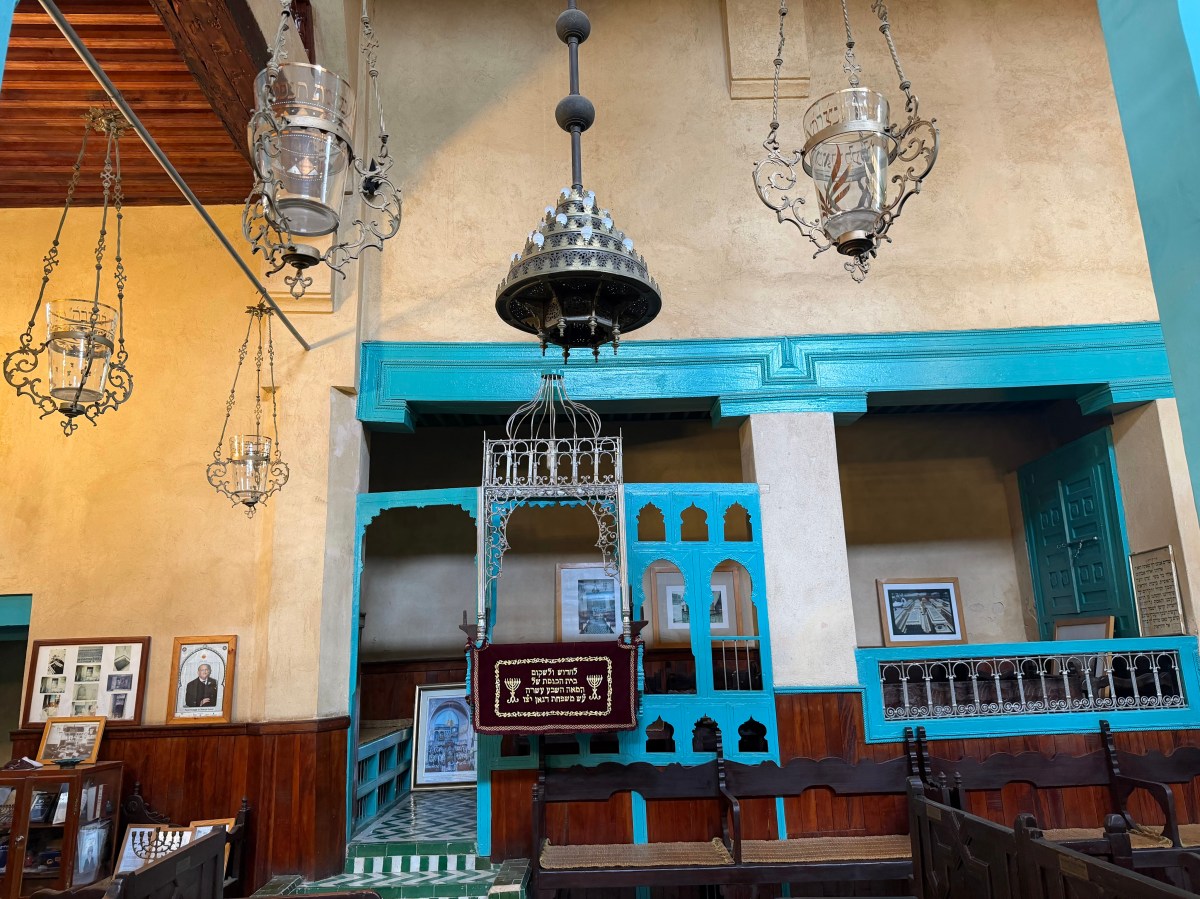
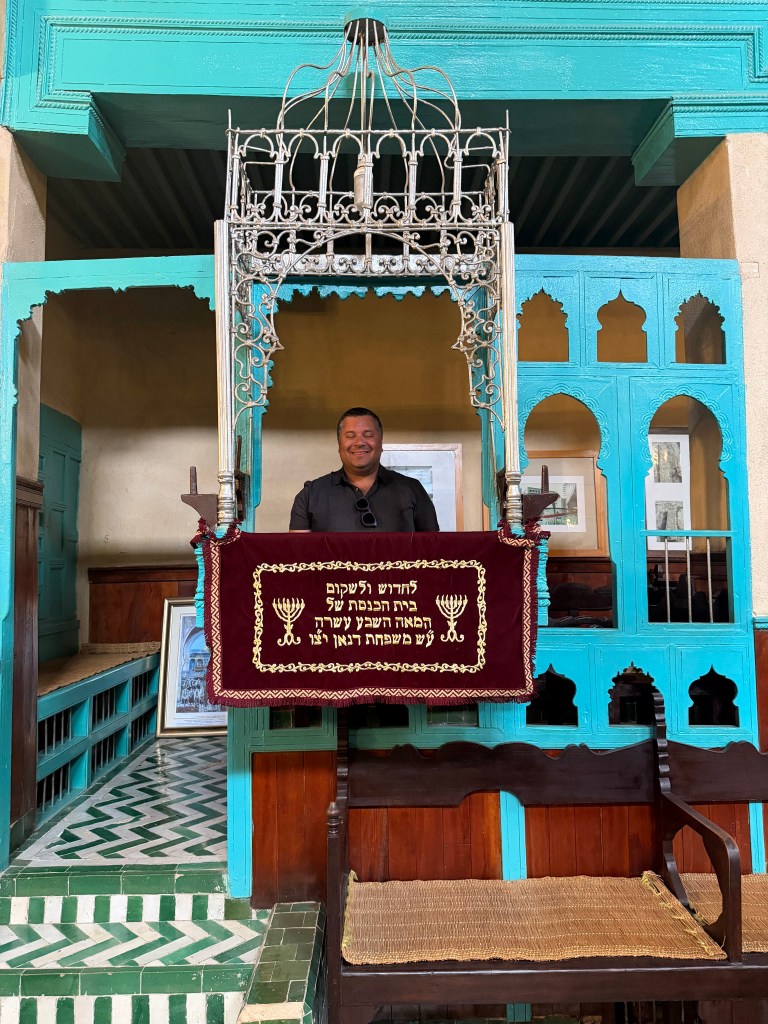
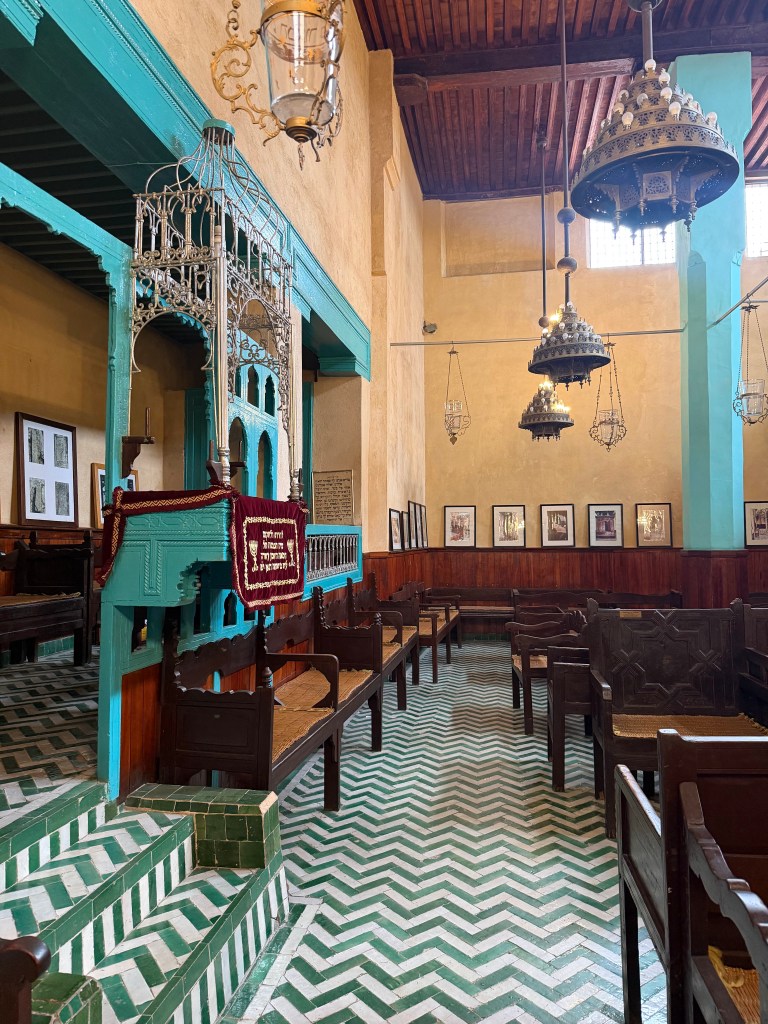
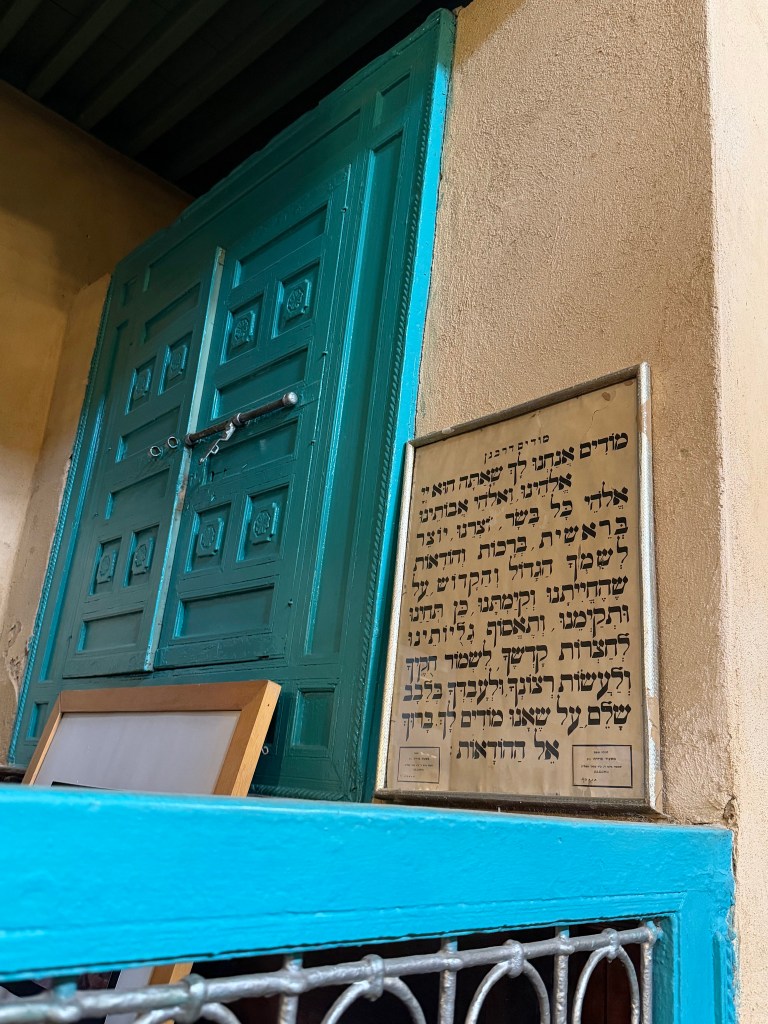
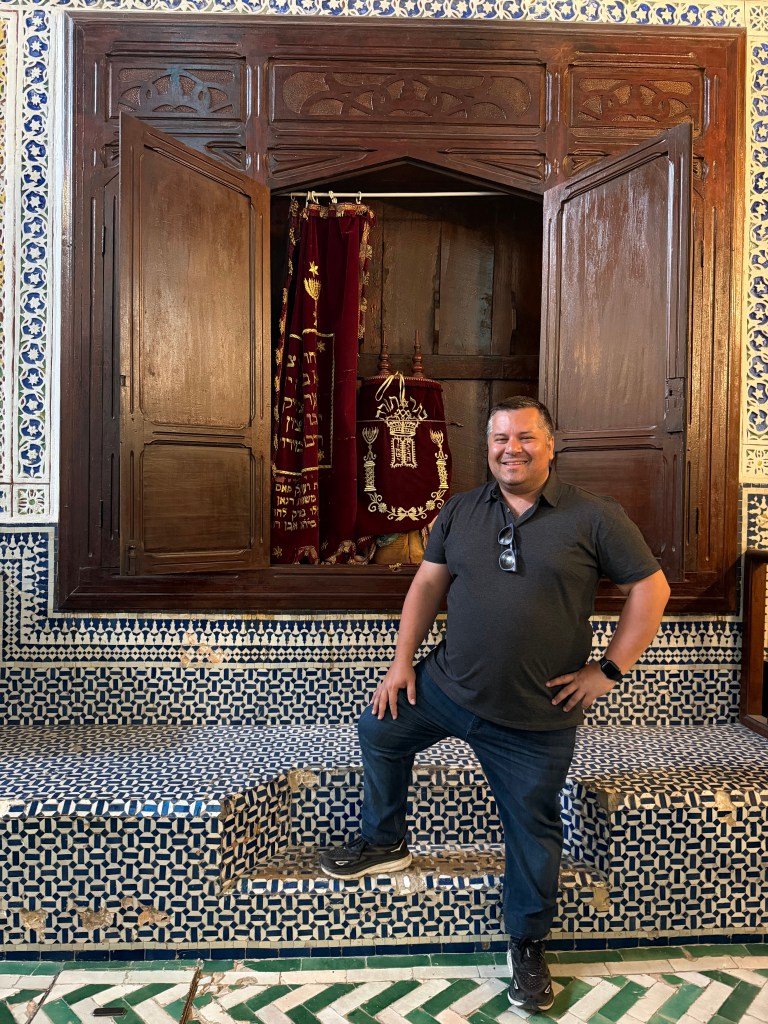
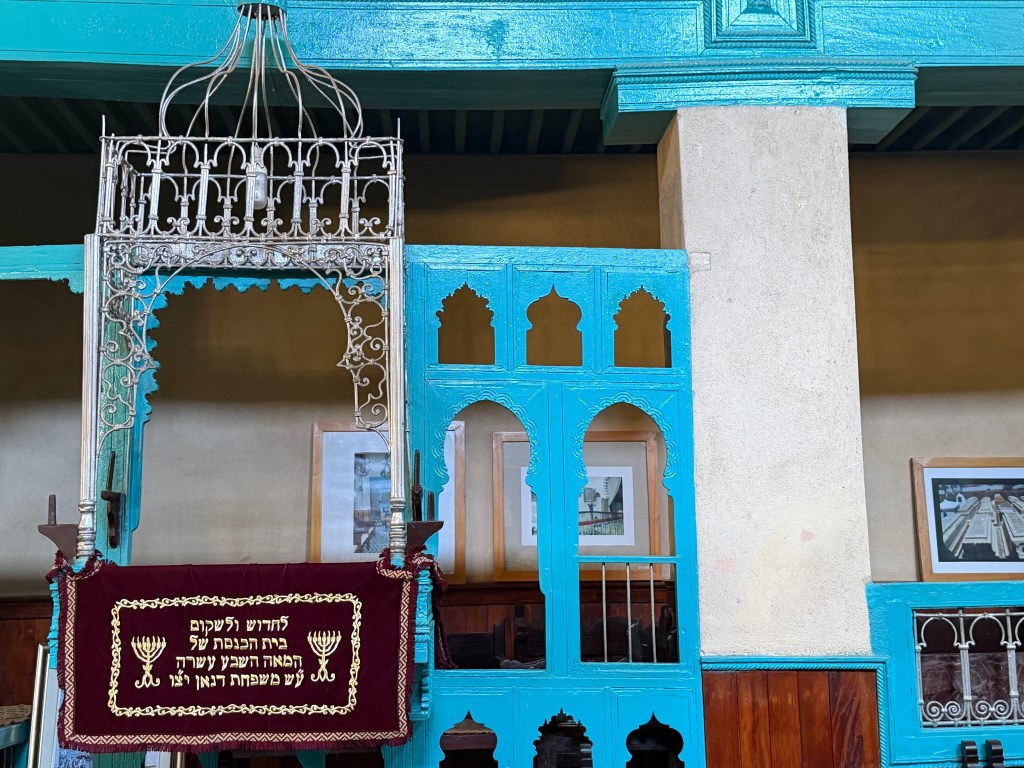
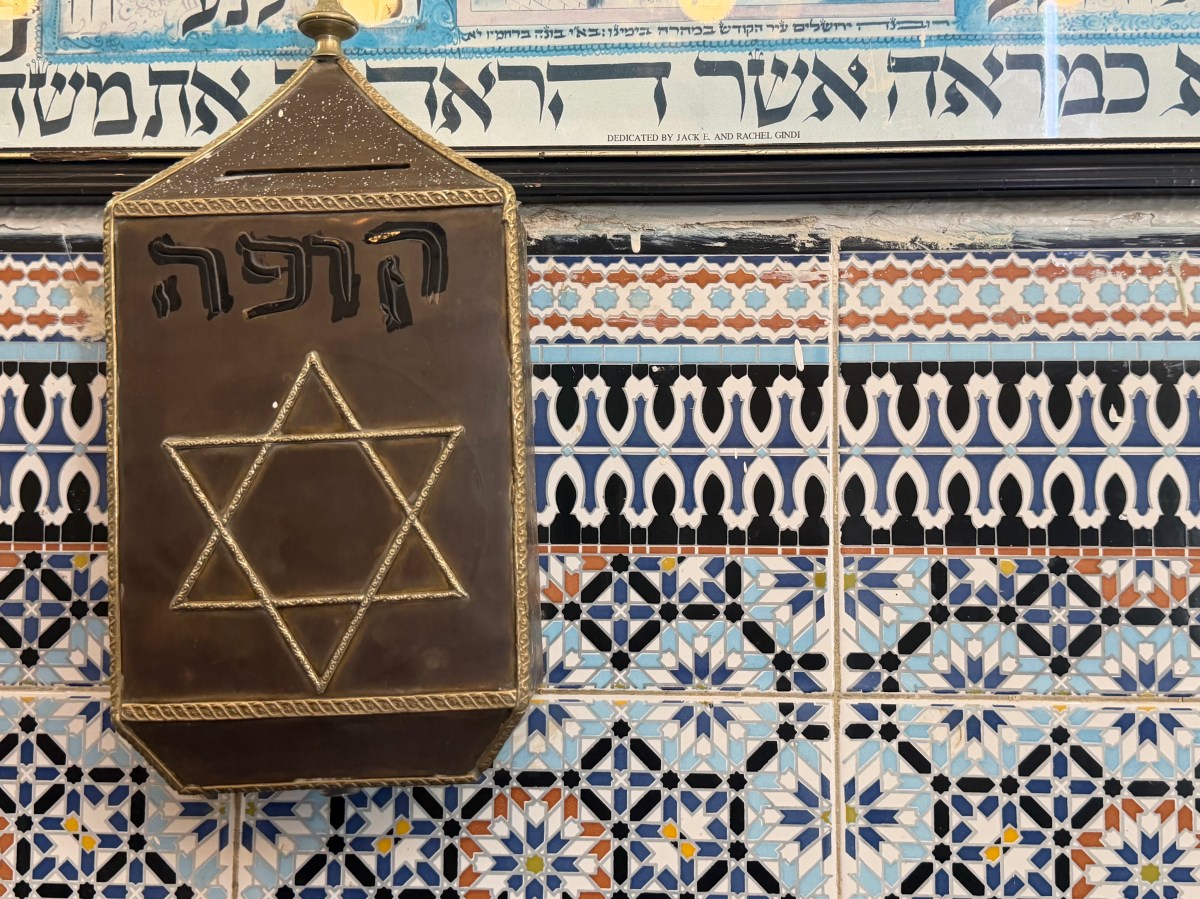
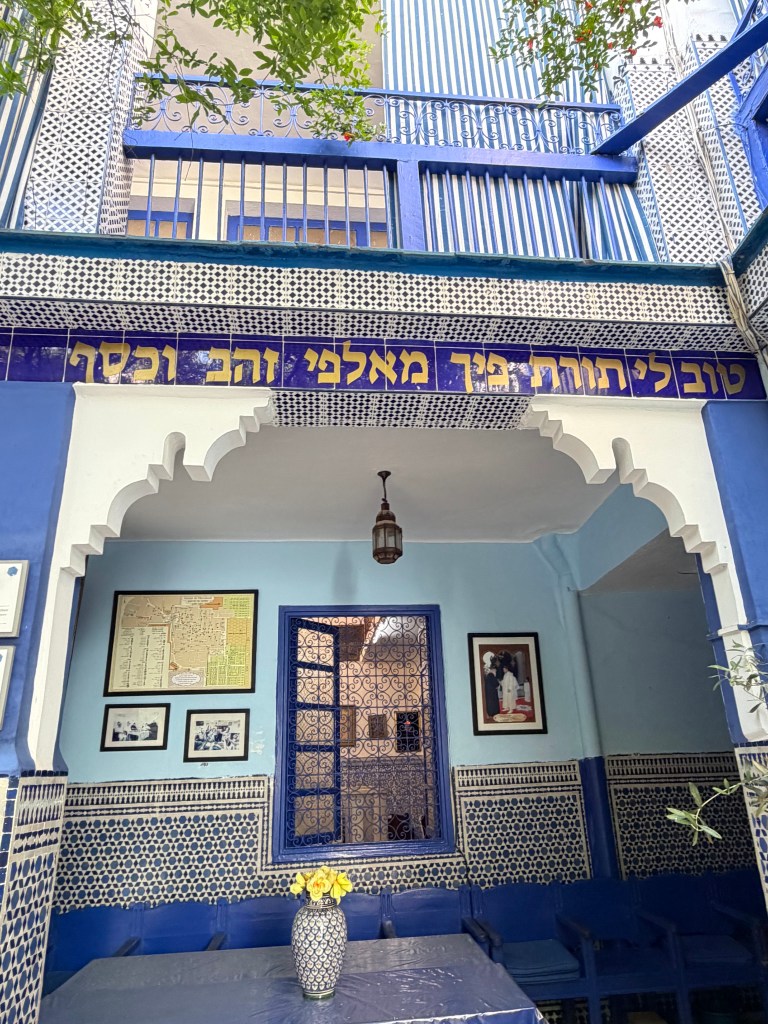
What you’ll also find in Fes El Jdid are synagogues. This area contains the mellah, or old Jewish quarter. One synagogue that I was able to visit was the Ibn Danan Synagogue, dating from the 17th century. It was filled with beautiful blues, teal (my favorite color!), and white. Here are some pictures:
While I was touring the synagogue, the most fascinating thing happened. A Moroccan tour guide walked in with two foreign tourists. I asked the guide in Arabic if he could take a picture of me on the bimah, or pulpit. He was happy to help and then asked what I did for work. I said I was studying to become a rabbi.
He let out a big smile and asked if I would be able to explain the synagogue to his tour group. I was thrilled! It’s for moments like this that I want to become a rabbi.
I spent about 20 minutes walking his European tourists through the structure of the synagogue, the meaning of the Torah, the intriguing mikvah (ritual bath) beneath the floor of the synagogue, and more.
Afterwards, the guide said he had learned a lot himself. He brings tourists to this spot often but he didn’t know much about it. I felt like I had done a mitzvah, a good deed.
The word rabbi means “my teacher”. First and foremost, I see my role as a future rabbi as being someone who brings light into the world. Through education, through engagement, through understanding.
All those years of sitting through both Hebrew school and Arabic classes in college really paid off in this moment. If I hadn’t spoken Arabic, I may not have even asked the guide to take my picture. In fact, I probably wouldn’t have been in Morocco in the first place. And if I hadn’t learned Jewishly for so many years, I couldn’t have explained the synagogue to this tour group and tour guide.
It was this combination of learning about the Jewish and Arab worlds that allowed this moment to happen. And at a time when so many of us are frustrated with conflict, with misunderstandings, with hatred – perhaps it is a sign of hope that a Jew, a Muslim, and a group of Christians could come together and have a thoughtful conversation.
We often look for big solutions to big problems. But if there’s one thing Jewish tradition teaches us, it’s that in small steps we can tackle big problems. According to rabbinic tradition, Nahshon parted the entire Red Sea for the Israelites fleeing slavery in Egypt. Rather than waiting for someone else or even God to act, Nahshon simply took a few steps forward into the water. We can wait for big solutions, or we can be like Nahshon and, one step at a time, move our world forward with acts of kindness.
Fes is indeed sometimes a chaotic city. But it is also the place where I started to find my rabbinic voice by bringing together people of different nationalities, religions, and languages. I’m excited to see what we can accomplish by all chipping in and doing acts of kindness to make the world feel more at peace.
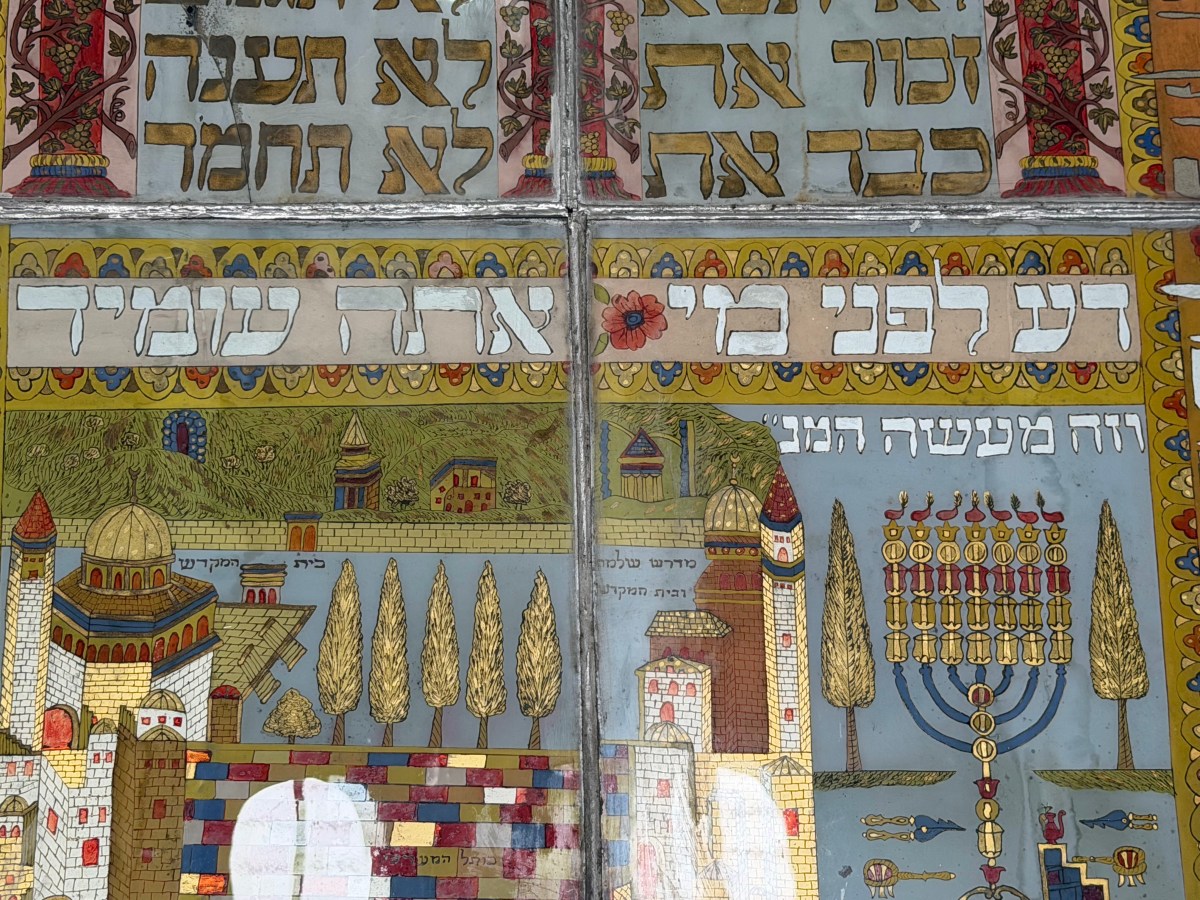
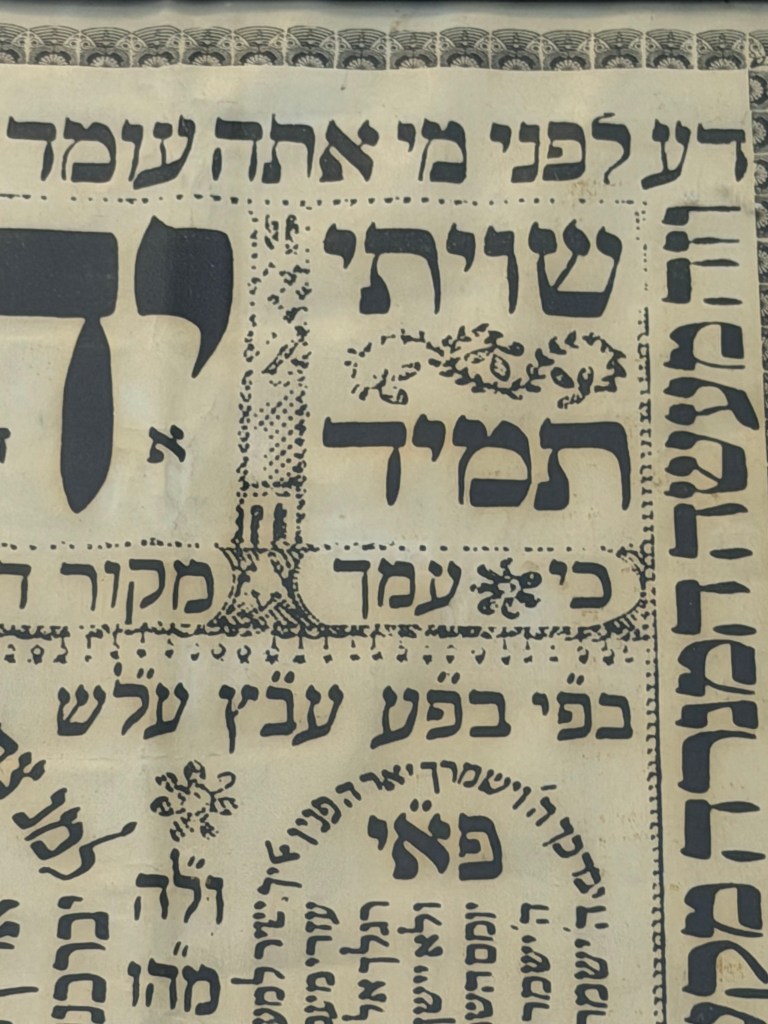
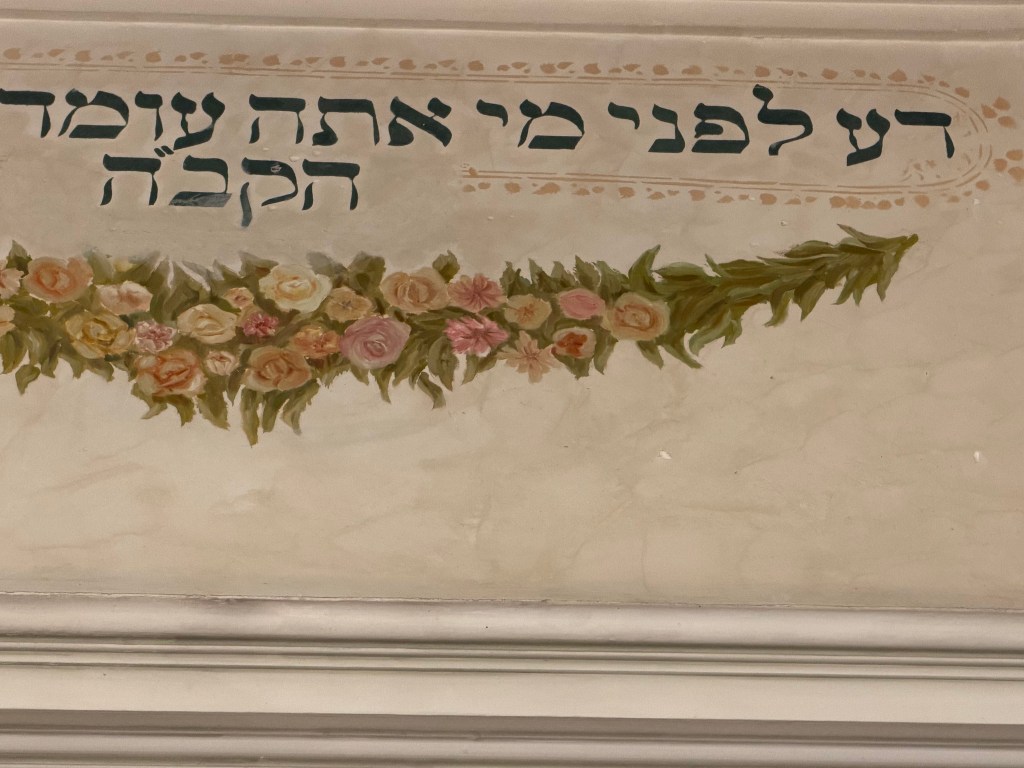
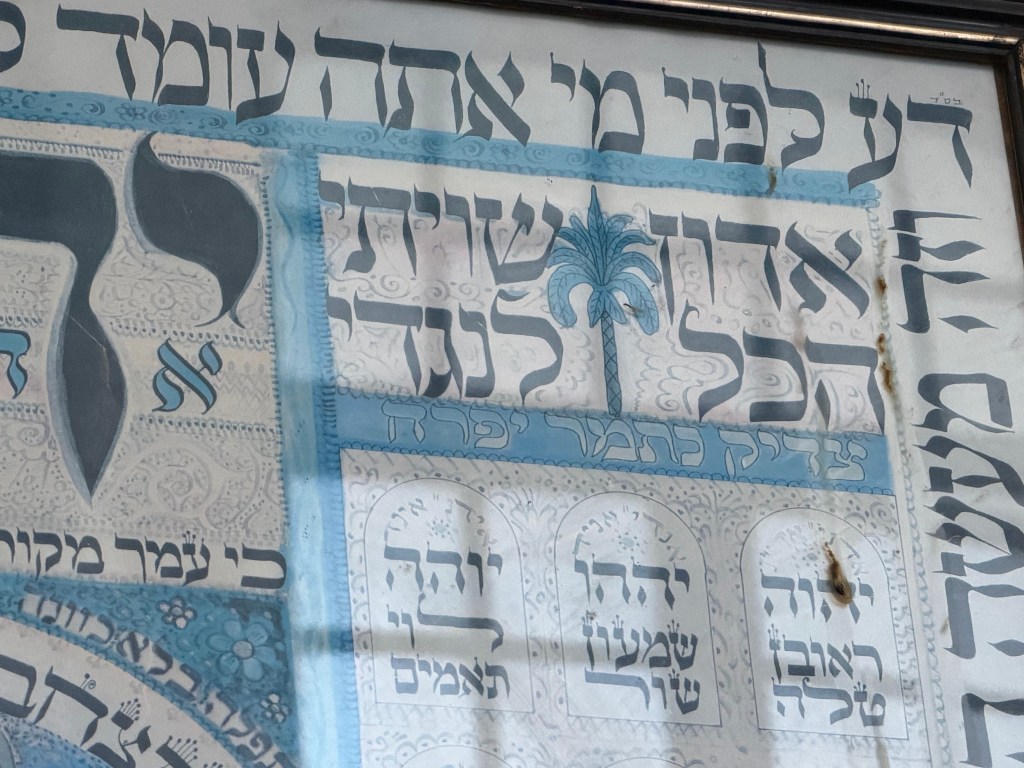
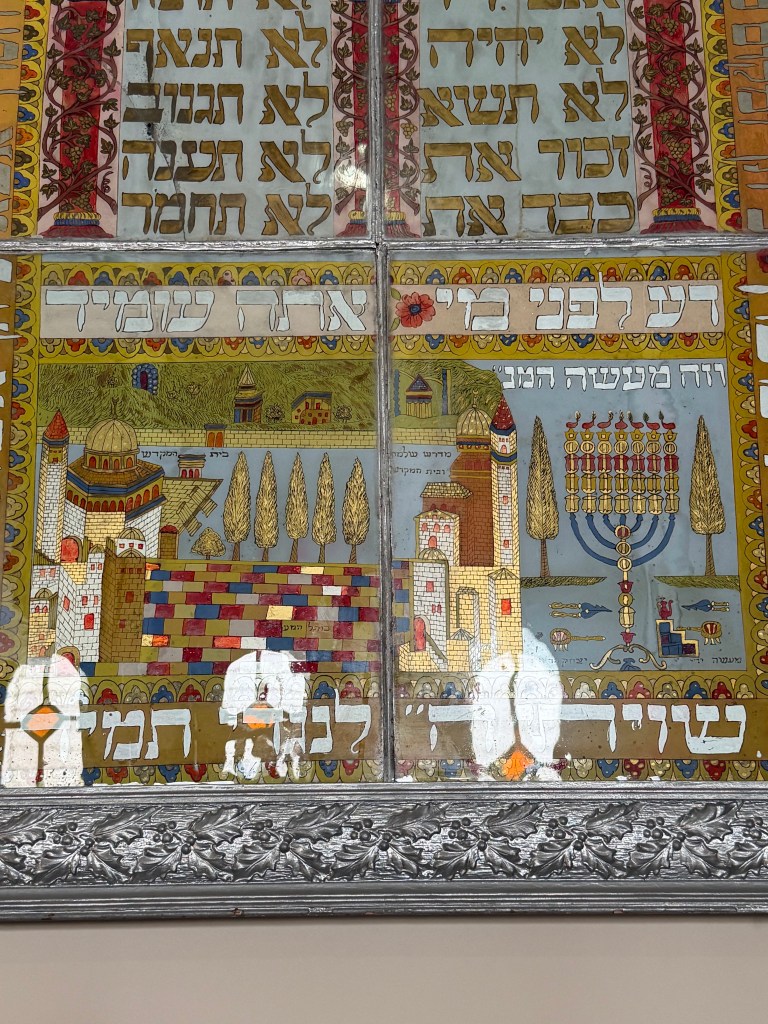
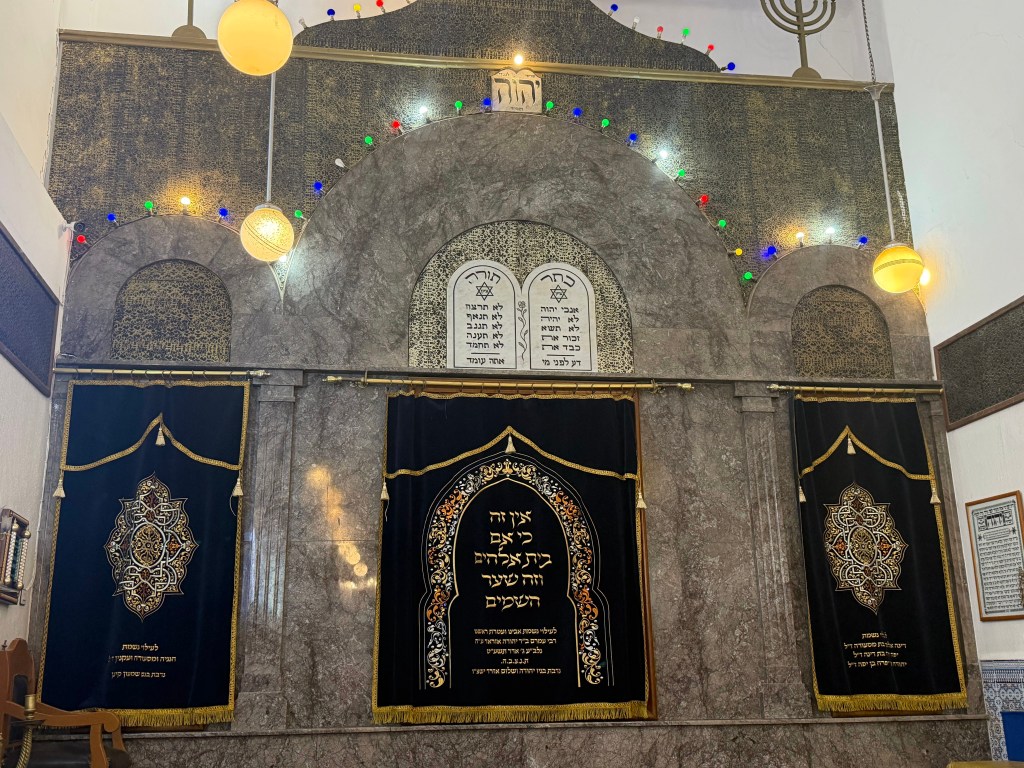
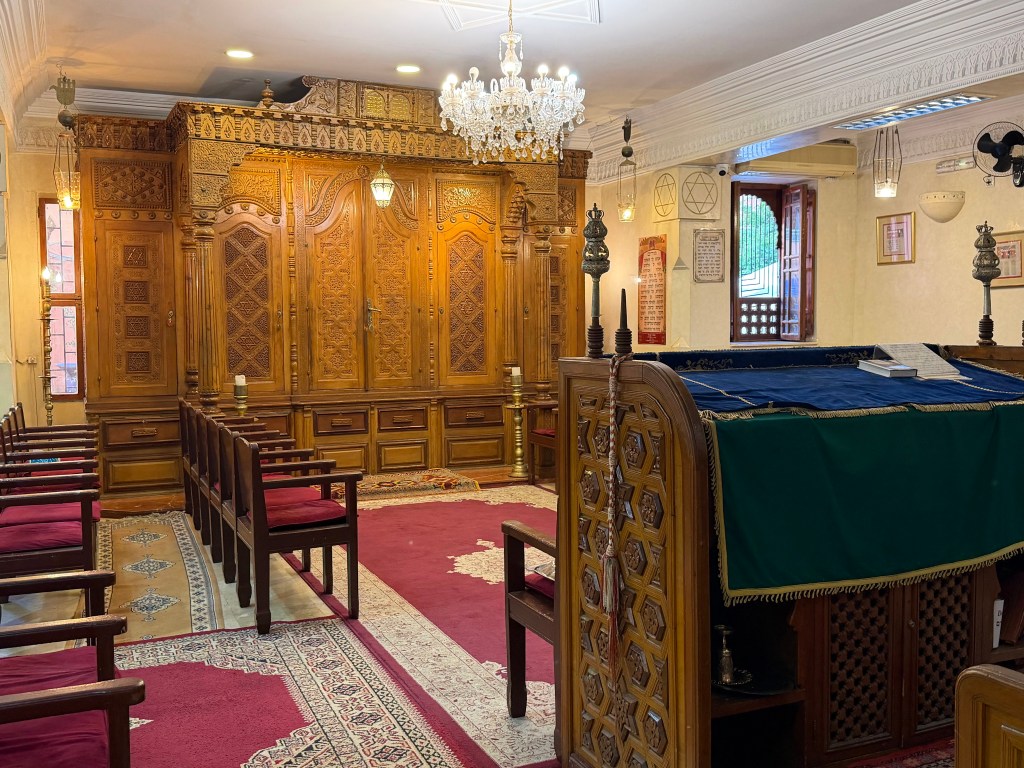
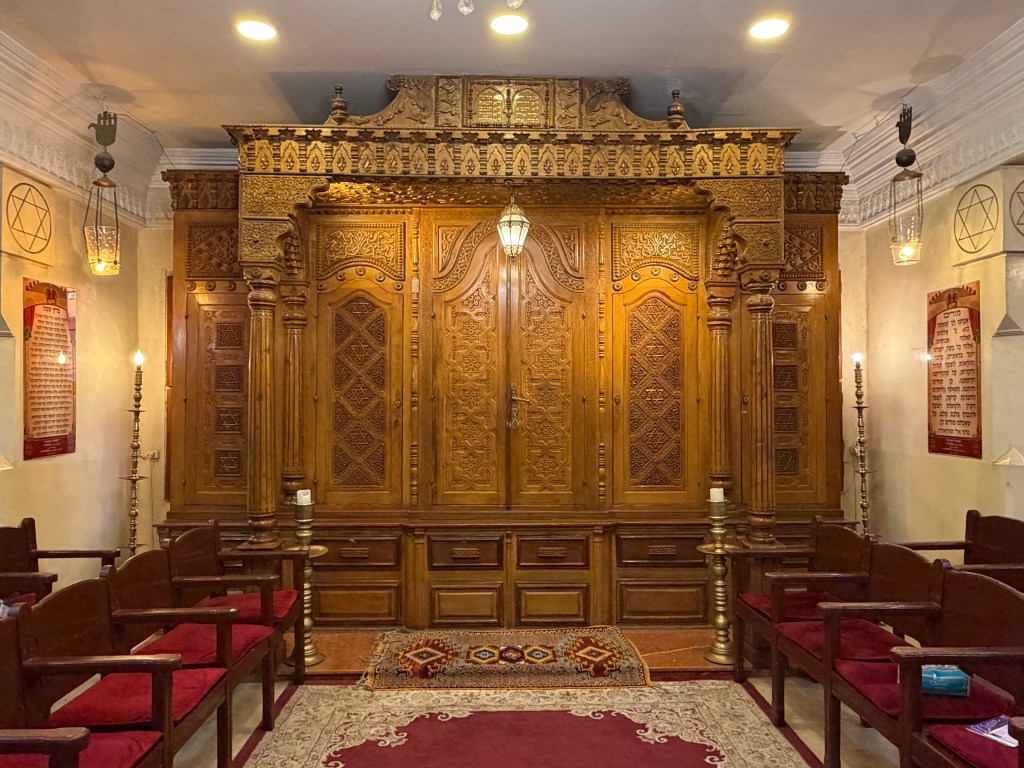
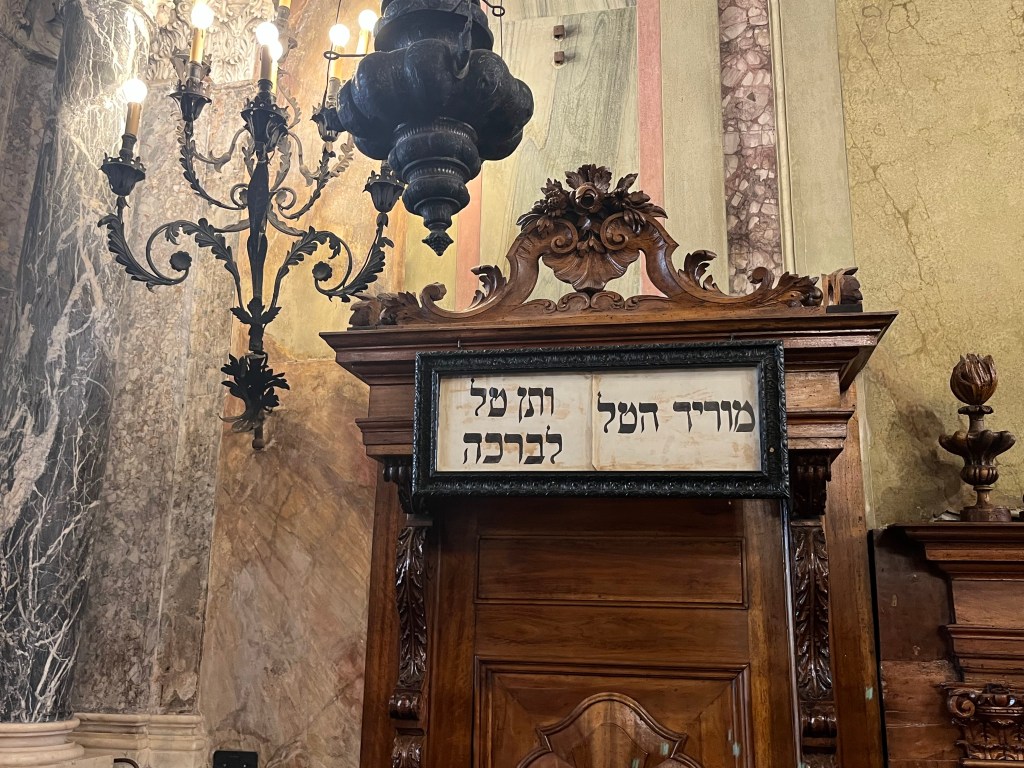
When I was a child, I grew up going to Temple Beth Ami in Rockville, MD. As many synagogues do, a Hebrew phrase is often placed atop the aron hakodesh where the Torah sits. At my synagogue growing up, it said: “da lifney mi atah omed” – “know before whom you stand”. At every single synagogue in Morocco and in the Jewish Museum in Casablanca, I saw this phrase over and over again. It’s not that it’s an entirely uncommon phrase to see, but it’s hardly the only one used in synagogues and it brought me back to my childhood, when my mom and I used to go to services every week. Where I used to lead services. And where she was President and on the Board for many years.
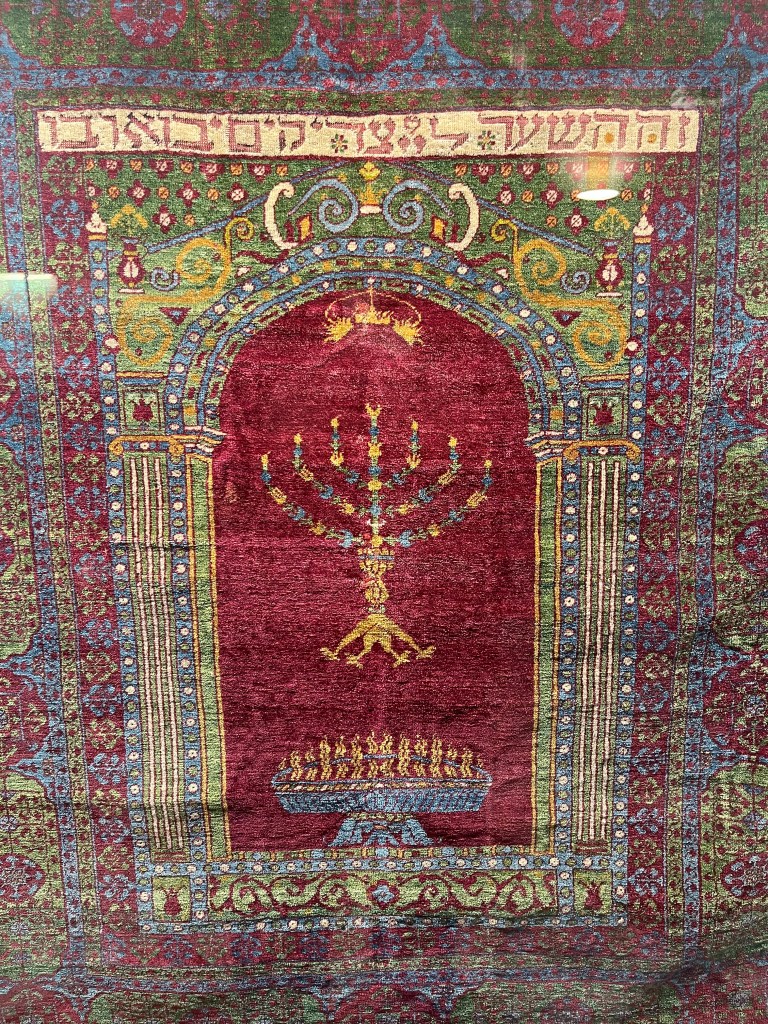
Here are some of the beautiful places I saw this phrase in Moroccan Jewish spaces, in every city I visited:
Every time I noticed the phrase, I gasped. How could it be that this particular Hebrew sentence was following me around a country halfway around the world that I had never visited and yet somehow was connected to? And I couldn’t help but think that this ability of Jews to traverse cultures and to connect around the world was something I learned from a young age and something my mom would be excited to see me pursue.
I often feel my mom’s spirit, especially when I travel. For example, I could feel her nudging me back towards my Jewish spirituality in Lisbon after losing my faith when she and my step-dad passed away. Looking back on it, that moment in Lisbon helped lead me to the rabbinical school program I’m in today. And to many other Jewish travel adventures.
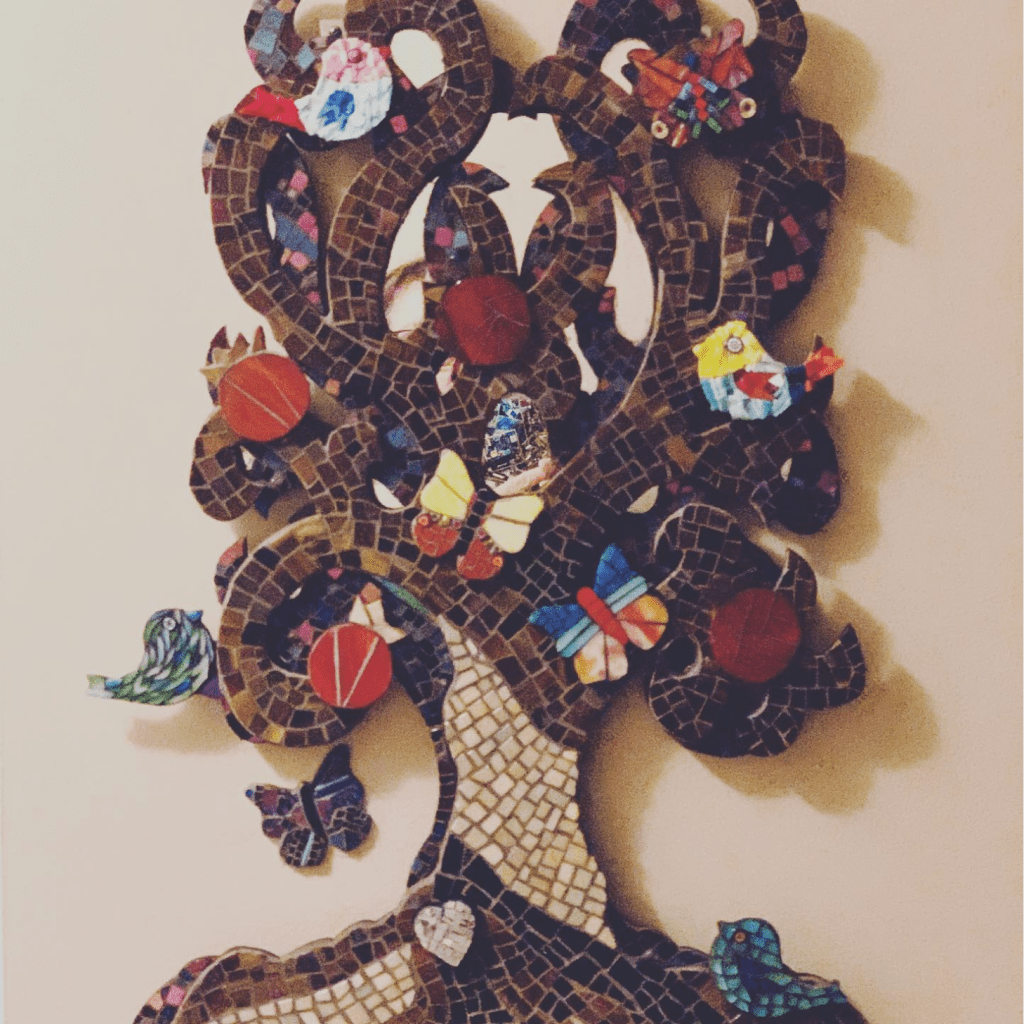
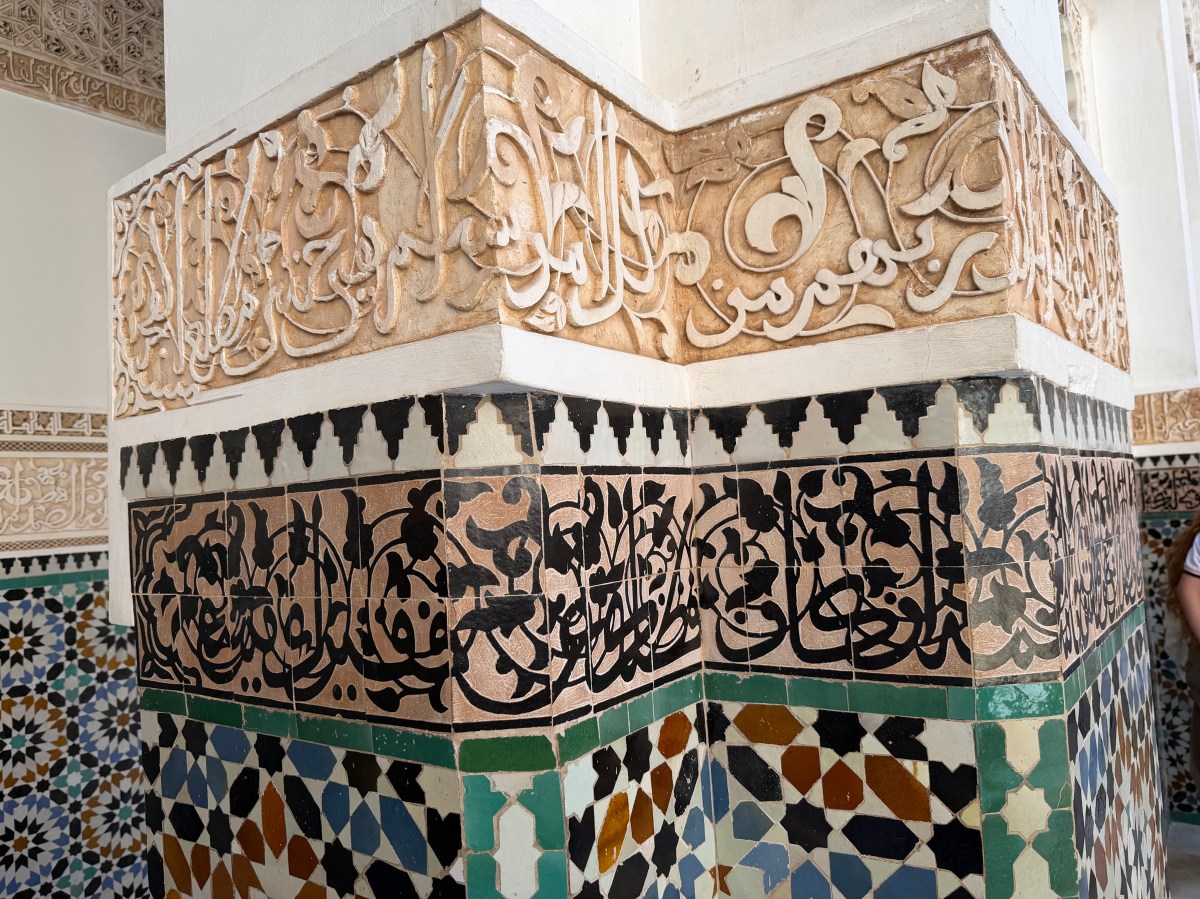
There was another example on my trip that was possibly much more directly connected to my mom than even the words on the Torah Ark. One of my amazing tour guides, an elderly man, brought me to a zellij factory. Zellij is mosaic tile work. My mom was an avid mosaic artist. One of her most beautiful pieces which she left to me was called “The Tree of Life”. This is what it looks like:
Walking around the factory, the mosaics spoke to me. If my mom had been with me, she would’ve been in heaven, but not the one upstairs where she is now. I wished so badly she could’ve been there with me, enjoying the beautiful art work.
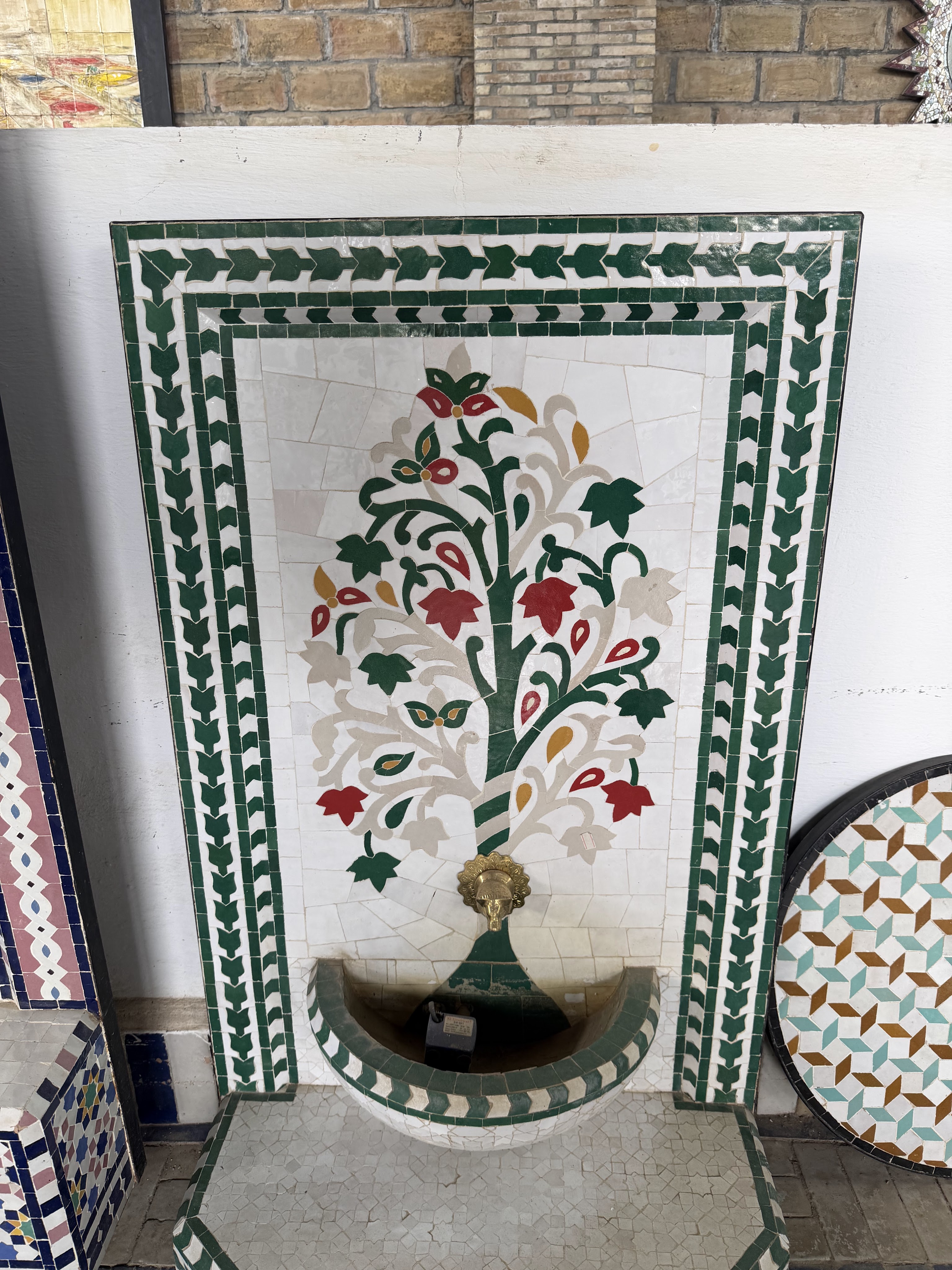
And then my guide brought me to a special piece. It was a tree. And its name was “The Tree of Life”. My jaw almost dropped. Here it is:
I explained in Arabic to the guide about my mom and mosaics and her piece with the very same name. I couldn’t quite capture the myriad feelings going through my heart. The sadness and anger that she couldn’t be there with me. The ecstasy of finding this deep connection to my mom and her legacy. The spirituality of the moment. And the possibility that my mom really was accompanying me on my journey. And on all my journeys.
I think back to the phrase on my childhood Torah Ark and apparently all over Moroccan synagogues. “Know before whom you stand”. Usually we think of this as God. When you rise to pray in a synagogue, you should know the majesty of God standing in front of you. But I would argue, in addition to that, perhaps the message my mom was sending was to know the Godliness of everyone who stands in front of you. My tour guide, the person working at my hotel, the fellow tourists I befriended, the local Jewish community members I met, the shopkeeper I had tea with for two hours. These are people created in the image of God who stood before me. Not just in a synagogue, but in everyday life. That’s what my mom taught me. To love your neighbor as yourself.
As a young kid, I remember my mom and I would drive around following cars whose license plates had her mom’s initials on them. Just to see where they were driving. Some people today might call that crazy. But she just wanted a connection. A sign from her mom that despite the cancer, the death, the sadness, that she was still with her in some way. And I think I finally understand why. Because everywhere you look, you can choose to see signs of your loved ones who are no longer with us. You can choose to see before whom you stand. Or not. I could’ve chosen to ignore the signs around me that my mom was with me. And it would’ve just made me feel lonelier. But instead, I choose to believe her spirit lives on around me and most importantly, inside me and the actions I take to honor her memory.
Thank you Morocco for helping me feel close to my mom and introducing me to so many incredible people to stand before.
Morocco is an enchanting, chaotic, and peaceful land all at the same time. Its Jewish community dates back over 2,000 years and is the largest in the Arab world. Over one million Jews of Moroccan descent live in Israel, France, Canada, the U.S., Spain, and Latin America.
My first exposure to Moroccan Jewish culture was by way of friends in an exchange program between Bet Shemesh, Israel and Washington, D.C. Before it became a predominantly Haredi (ultra-Orthodox) city, Bet Shemesh was heavily Moroccan. My friends there introduced me to the foods, traditions, and sounds of the community such as Lehakat Sfatayyim, a Moroccan-Israeli band.
Growing up in the U.S., I had limited exposure to Moroccan Jewry since the U.S. Jewish community is predominantly Ashkenazi. I attended various Mimouna celebrations in the U.S. and Israel, though, which has always been a load of fun. It’s a way of ending the bread-free week of Passover with loads of carbs and greetings from neighbors. In Morocco, this traditionally meant Jewish and Muslim neighbors celebrating together.
I love exploring diverse Jewish communities, so I was thrilled to arrive to Morocco to learn more and to use my Arabic and French. I’ll be totally honest – I was equally parts nervous and excited. On my recent travels, especially after October 7th, I had experienced a lot of antisemitism, especially on my fall trip to Italy. Morocco is 99% Muslim and let’s just be honest – the relations between Jews and Muslims hasn’t been great recently, or for that matter in the past 100 years or so.
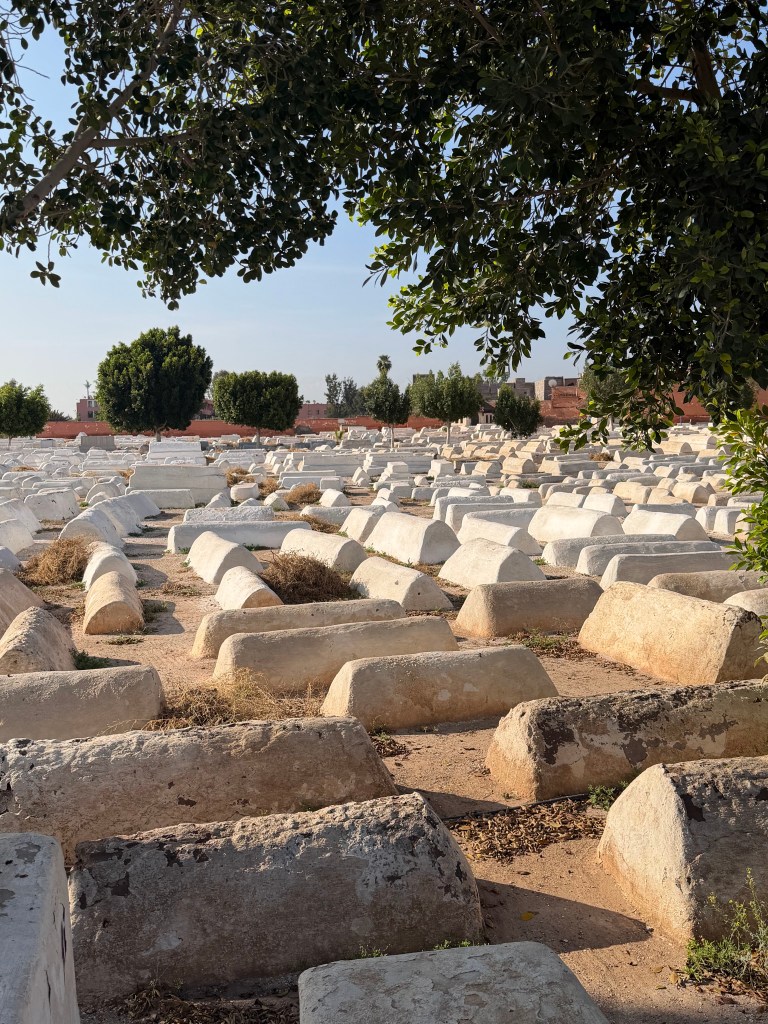
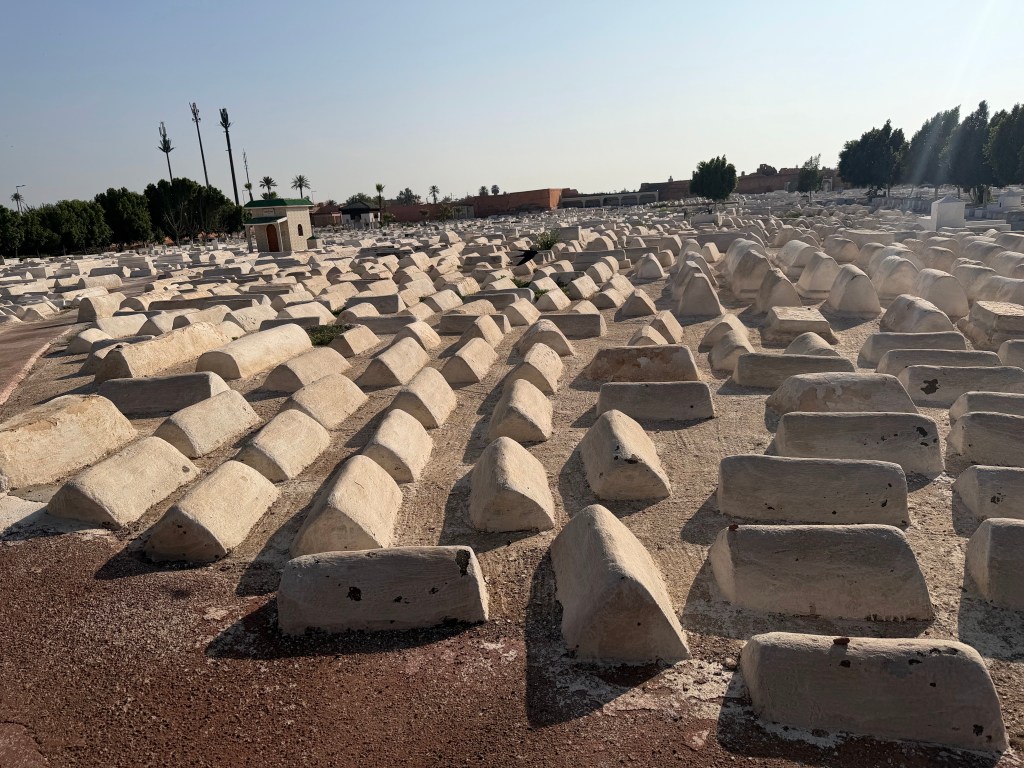
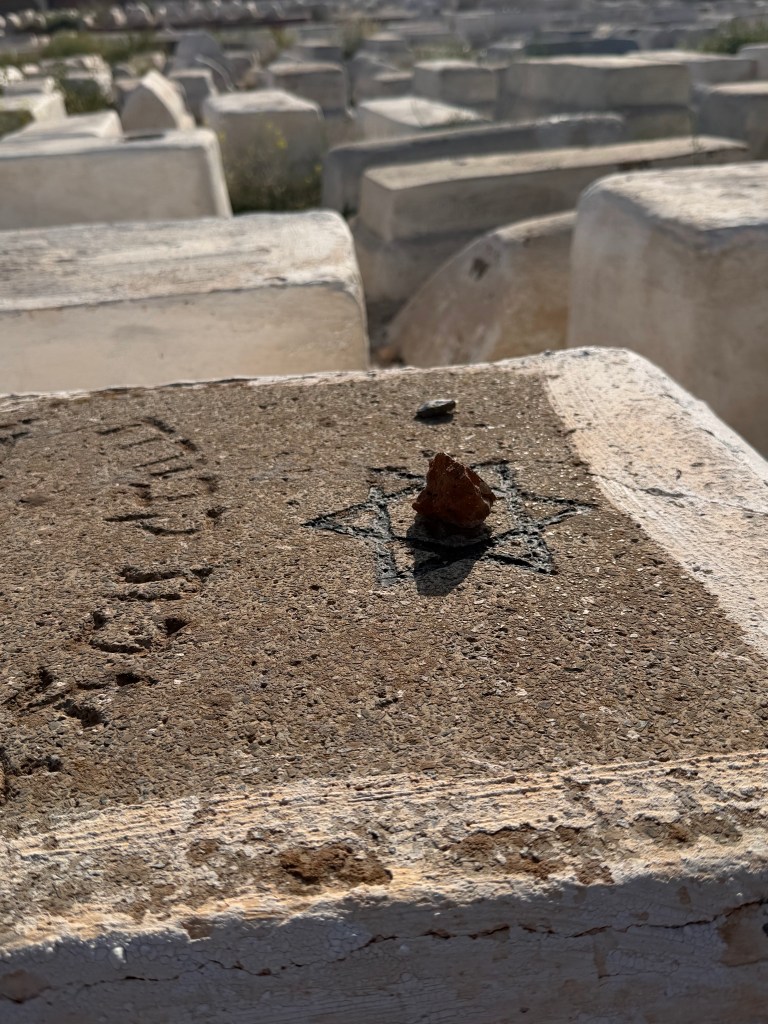
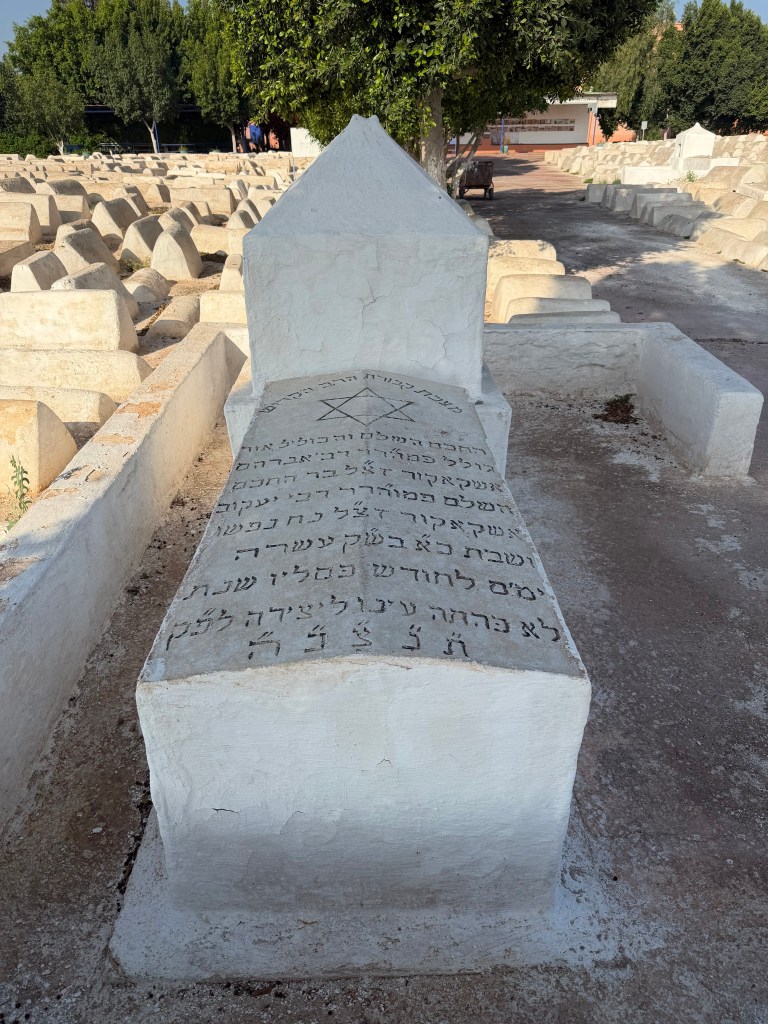
I started in Marrakesh. It’s a fascinating and beautiful city and overwhelms the senses. I stayed in the Mellah, or Jewish Quarter. I started by visiting the absolutely massive Jewish cemetery, filled with 20,000 graves, almost all marked by long white stones. It looks completely different from an Ashkenazi cemetery that I’d be accustomed to. It is the largest Jewish cemetery in the country. I followed the Jewish tradition of putting small stones on some of the graves to honor the dead. Here are some photos from the stunning site:
From there, I practically ran to the Slat Al Azama synagogue, built by Jewish refugees from the Spanish Inquisition and expulsion in 1492. I was so excited to get in and so were some Jewish tourists from Brazil. I got a chance to use my Portuguese with them as we talked about how excited we were to visit the synagogue. Once we got in, the father asked me to explain to him and his son some of the prayers that dotted the synagogue walls. It was amazing to have an instant Jewish connection with someone from so far away in a foreign land.
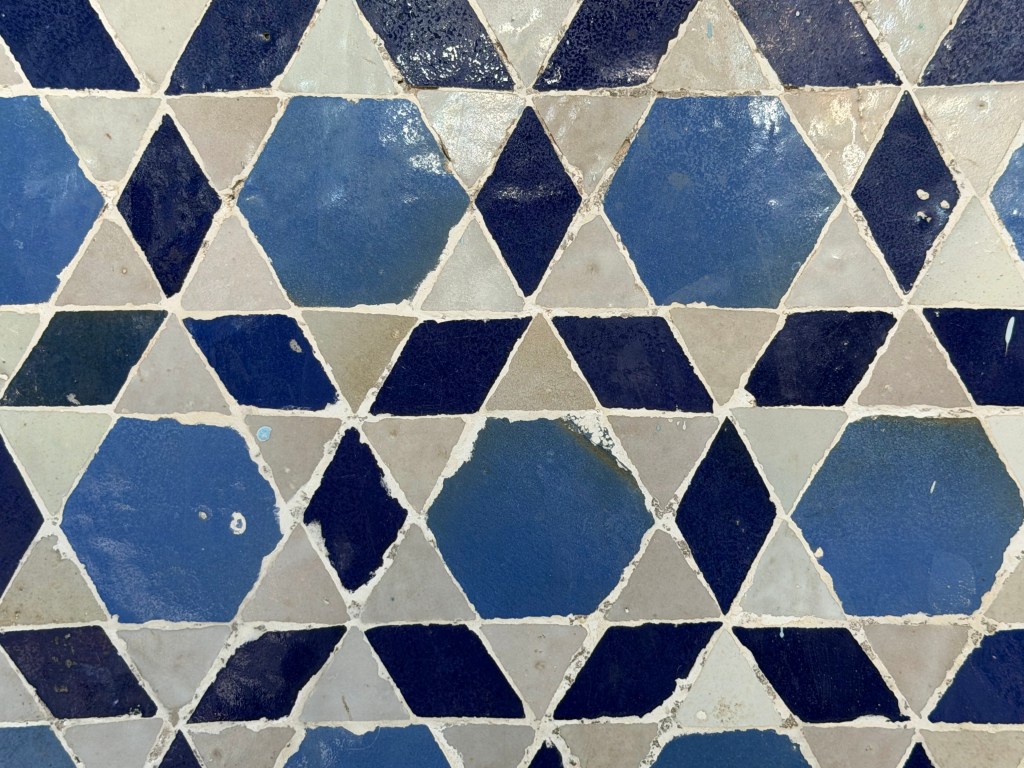
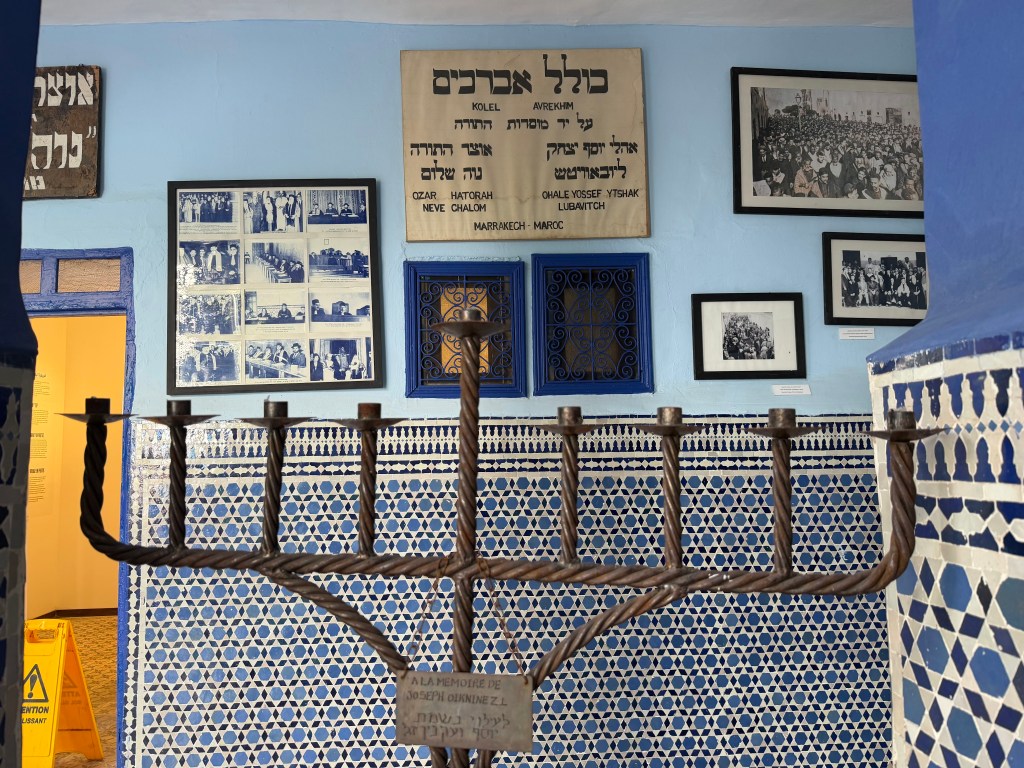
The synagogue itself is absolutely stunning, filled with mosaics, including blue and white Jewish stars all over the courtyard. There is a small but meaningful museum next to the sanctuary as well that documents Moroccan Jewish history. The place is well guarded and I felt safer there than in many European or American synagogues these days.
Here are some photos of the synagogue:
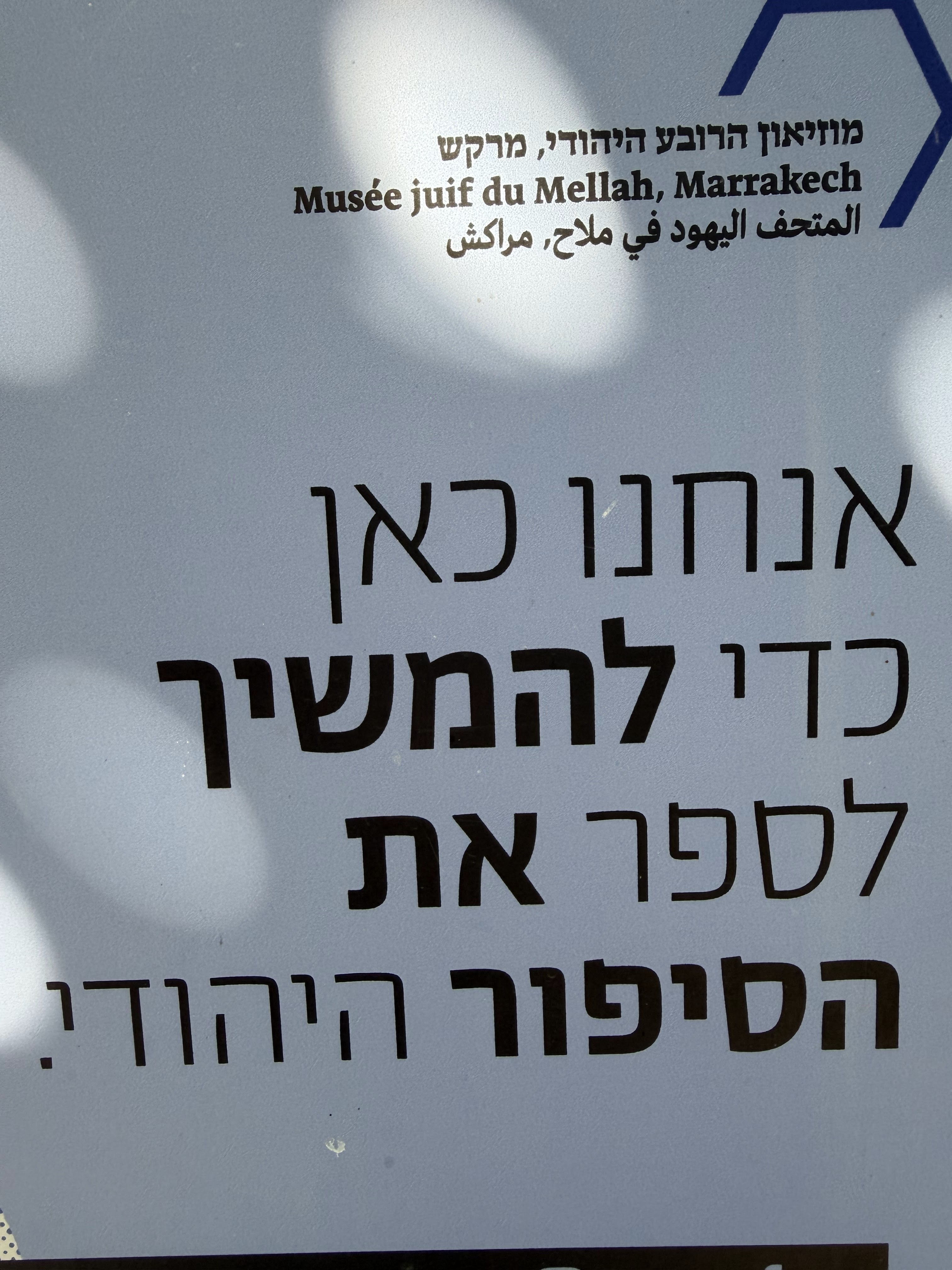
The synagogue had signage in Modern Hebrew, clearly geared towards Israeli tourists (yes, they come to Morocco too and offered many helpful travel tips via several Israeli Facebook groups I’m in). In fact one of the signs said in Hebrew: “we are here to continue to tell the Jewish story”:
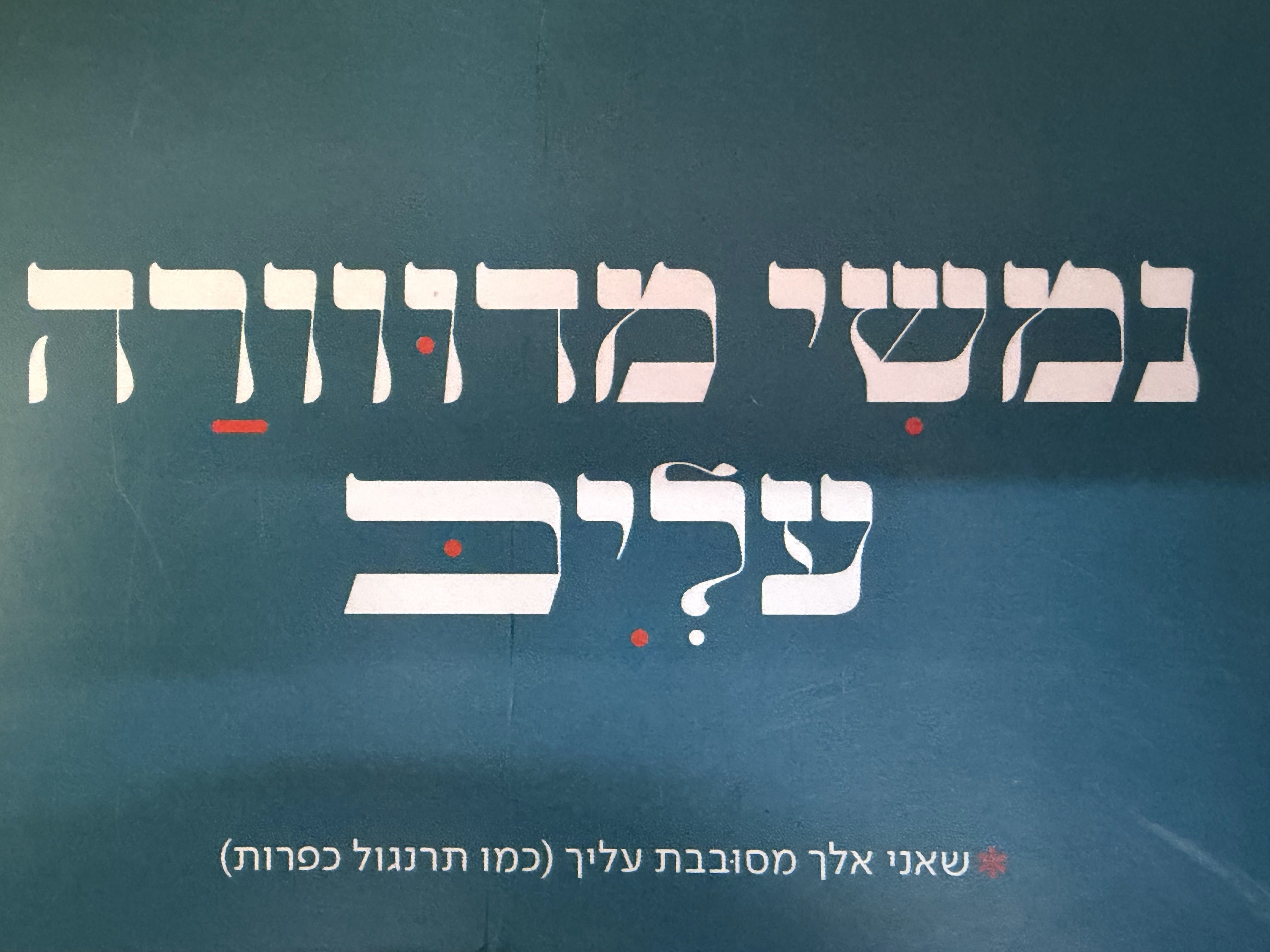
They even had Judeo-Arabic postcards, such as this one which says “I will go around you” (like a kaparot rooster):
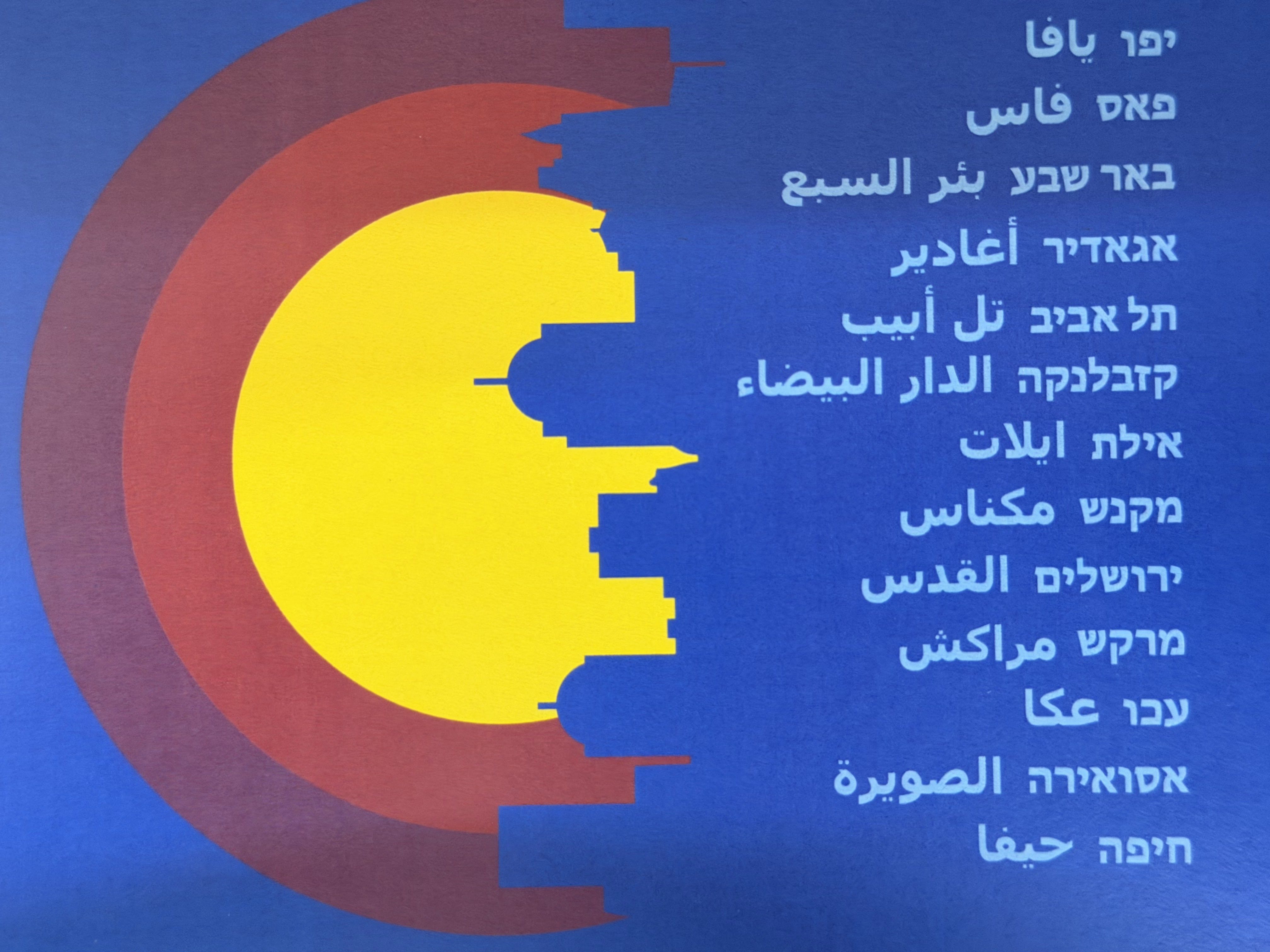
What was absolutely stunning to me (in the best way possible) was this bilingual Hebrew-Arabic postcard the museum was selling that listed cities in Israel and Morocco one after the other:
It was a beautiful token of co-existence at a time of great hatred in the world. Keep in mind this museum is an official organization in Morocco. Everything in the country happens with the blessing of the King. It was designed to send a message of acceptance and welcoming Jews, not an accident.
After having visited the synagogue and the cemetery, I decided to go to Friday night Kabbalat Shabbat services. I met the most eclectic group of Jews possible. A Persian-Israeli who spoke fluent Moroccan Arabic. What I think was a gay French-Moroccan Jewish couple with a young child in the Orthodox synagogue. A couple of Moroccan-Israeli bakers from Ashdod. And a Spanish-speaking Sephardic man from Panama!
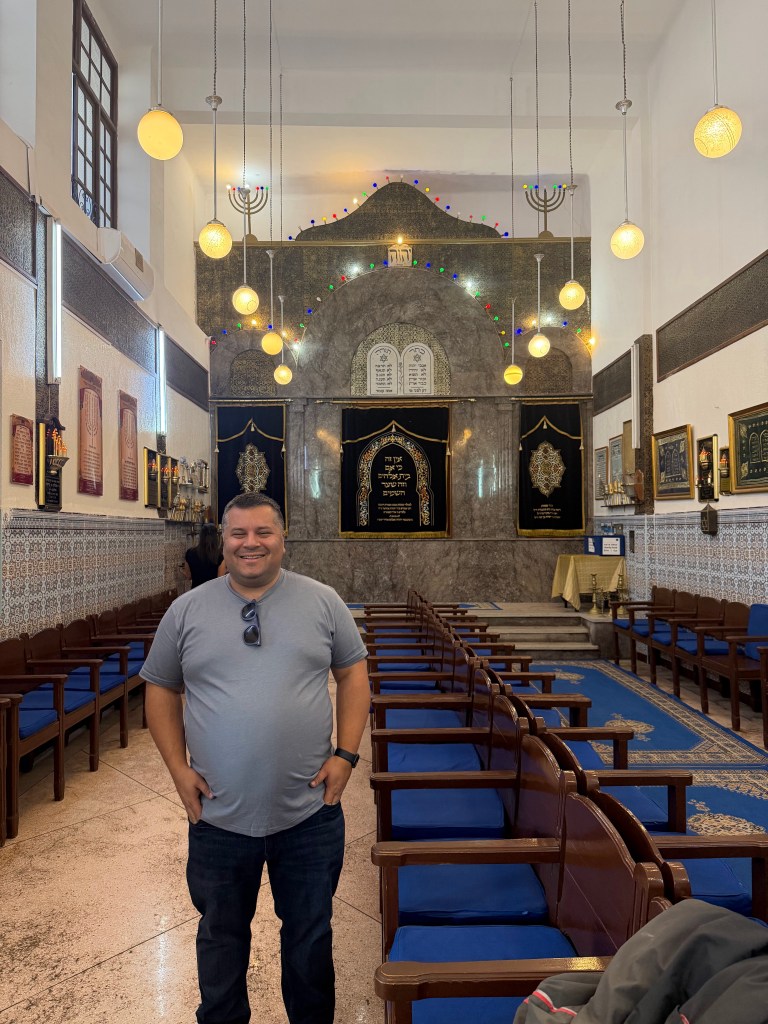
The synagogue was also beautiful:
The services were quite an experience. I have gone to a couple Sephardic synagogues before in Israel and each one is unique in its rituals as well as melodies. But of course, I’m much more accustomed to predominantly Ashkenazi rituals in the U.S. I was almost completely lost during the service, both because I didn’t know the melodies (except for one or two!) and because the Hebrew text is also slightly different. The North African melodies were enchanting and I also felt like a bit of a spectator more than an active participant because it was both familiar and new to me. Not a bad thing at all, it just was a unique experience for me, like having one foot in and one foot out. It felt Jewish and so different from what I knew.
What was also striking about the synagogue is that it is currently run by Chabad! Chabad was founded in Lithuania, where some of my ancestors are from. It is a Hasidic movement geared towards outreach to other Jews to perform traditional rituals and mitzvot. It is not remotely something I expected to experience in Morocco, especially on Moroccan terms. What I mean is that if I went to Chabad in most countries, I would be able to follow the service more easily because the rituals are Ashkenazi i.e. Eastern European. However, the Chabad in Morocco follows the local customs and has to be one of the few in the world that is deeply, deeply Sephardic and Mediterranean.
After a few days of exploring Jewish Marrakesh, I took a day trip out to the countryside to see Amazigh (i.e. “Berber” – the less-accepted term) life. The Amazigh are the natives of Morocco and what I didn’t realize is that they have a 2,000+ year history of welcoming and building relationships with Jews!
I met multiple Amazigh people during my trip and got to see the remaining houses in a remote, formerly-Jewish village about an hour and a half outside Marrakesh. I even bought some pretty Judaica from an Amazigh man who told me the objects were from the neighboring village. He also said many Jewish tourists of Moroccan descent come to visit, including from Israel. Yes, he said “Israel”. It’s a word that’s so charged these days, but for many Moroccans I met, it was totally normal to say. To acknowledge. To allow to exist. May more people around the world follow their tolerant and open-minded example.
My Jewish experiences in Morocco were so rich and varied that I couldn’t possibly fit them into one blog post. That says something about the diversity and wonderful heritage of this beautiful country. Keep your eyes peeled for more stories from my adventure. It was a truly life-changing experience.
And next time you want a safe place to visit as a Jew, I can’t help but recommend Morocco over Florence. Travel is an incredible way to dispense with stereotypes and preconceptions.
The answer for many Moroccans is “no”. How could that be? Arabic is an official language of the country. It is taught in schools, used by Muslims of all backgrounds in prayer, and is spoken on the streets. I used Modern Standard Arabic, Syrian Arabic, and French to get around the country even though I didn’t speak the local variety called Darija.
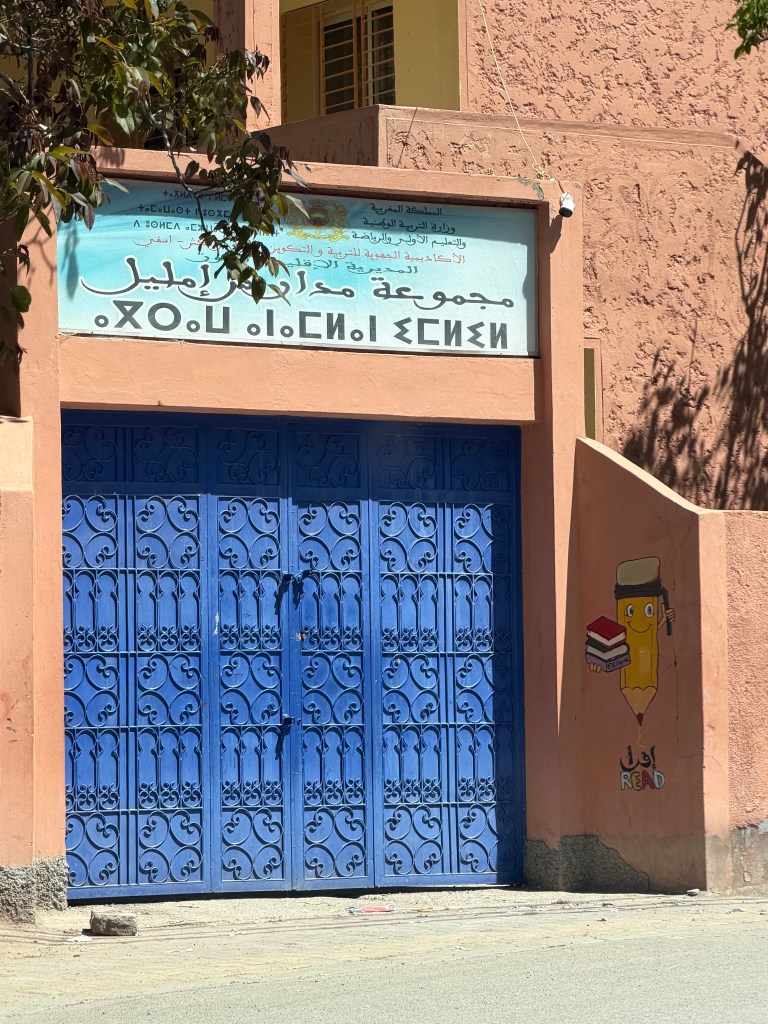
And yet, Morocco has another official language and no, it’s not French despite its widespread use. It’s Amazigh! Amazigh is the native language of Morocco and wide swaths of North Africa. In fact, it has many dialects within the country and across the region, some of which are not very mutually intelligible.
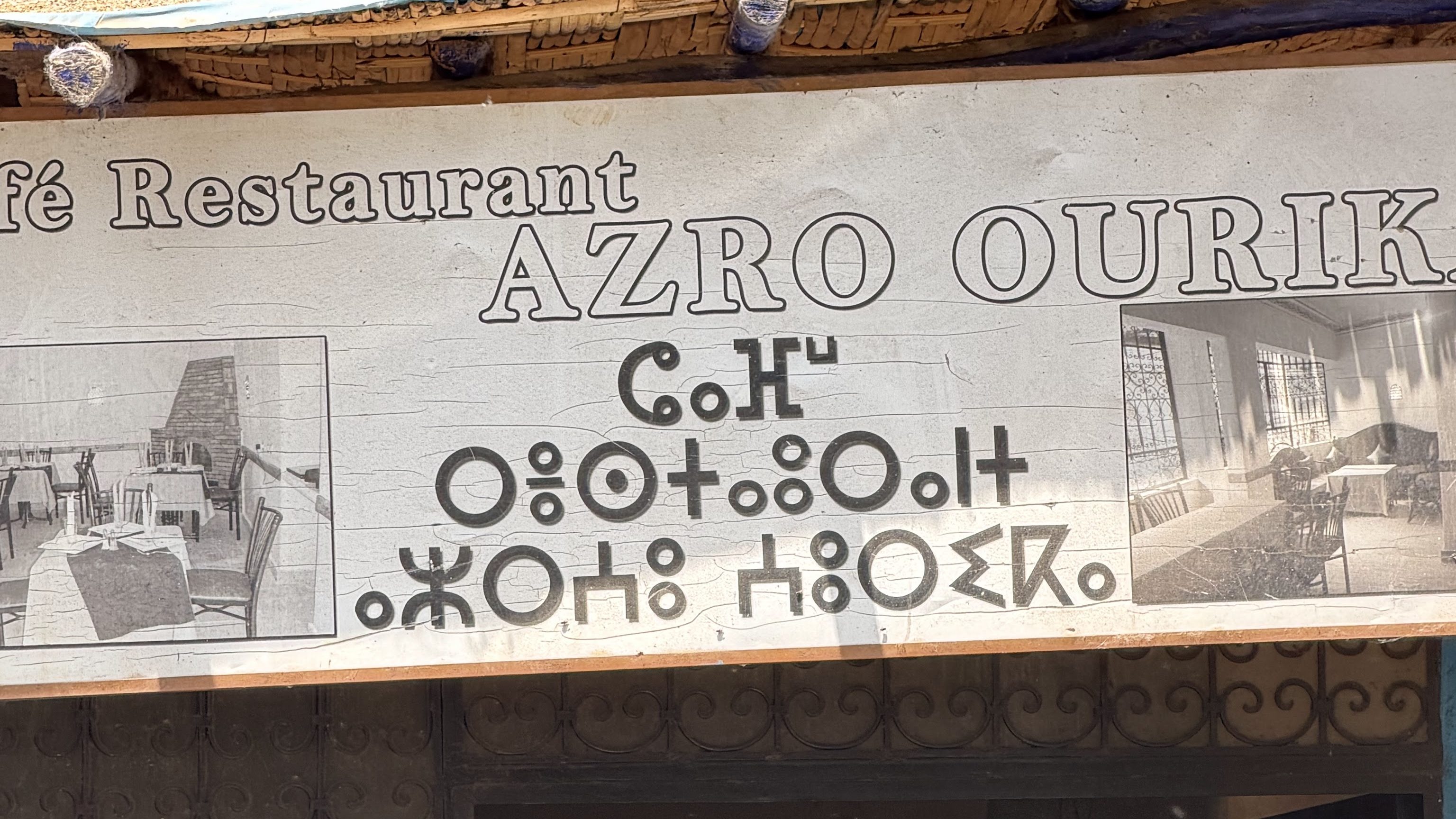
This is what the Amazigh script looks like (though some speakers in North Africa may use Latin-based or Arabic scripts):
It looks nothing like Arabic, sounds nothing like Arabic, and its vocabulary is unrelated to Arabic. In other words, it is the native language of Morocco because it existed there before the arrival of Arabs and Islam in the seventh century. And to this day, it is the mother tongue of 24.8% of Moroccans and is understood by many people as a second language. As far as ancestry, studies range wildly from 35% to 70% of Moroccans having some Amazigh roots.
When I visited Morocco recently, I met Amazigh people both in the major cities and in the countryside, where their numbers are even greater. My first interaction was at the riyadh (traditional bed and breakfast) I stayed at in Marrakesh. One of the staff members was named Muhammad and when I started to speak with him in Arabic, he told me: “I prefer to speak in English and not in Arabic because I am Amazigh.” It hadn’t even occurred to me that someone in Morocco would prefer English over Arabic for reasons of cultural identity, but from then on, I respected his wishes and he taught me a few Amazigh words each day.
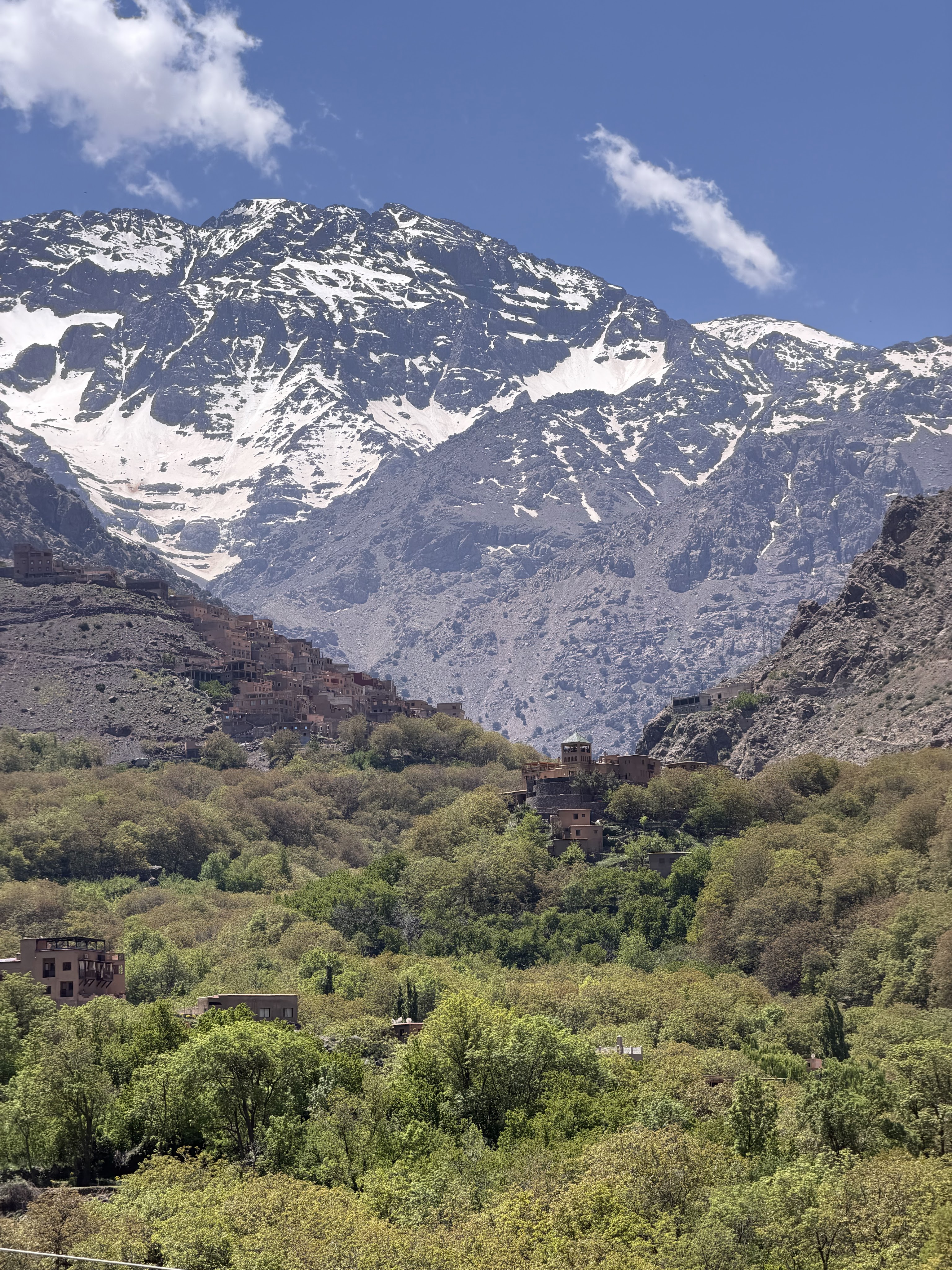
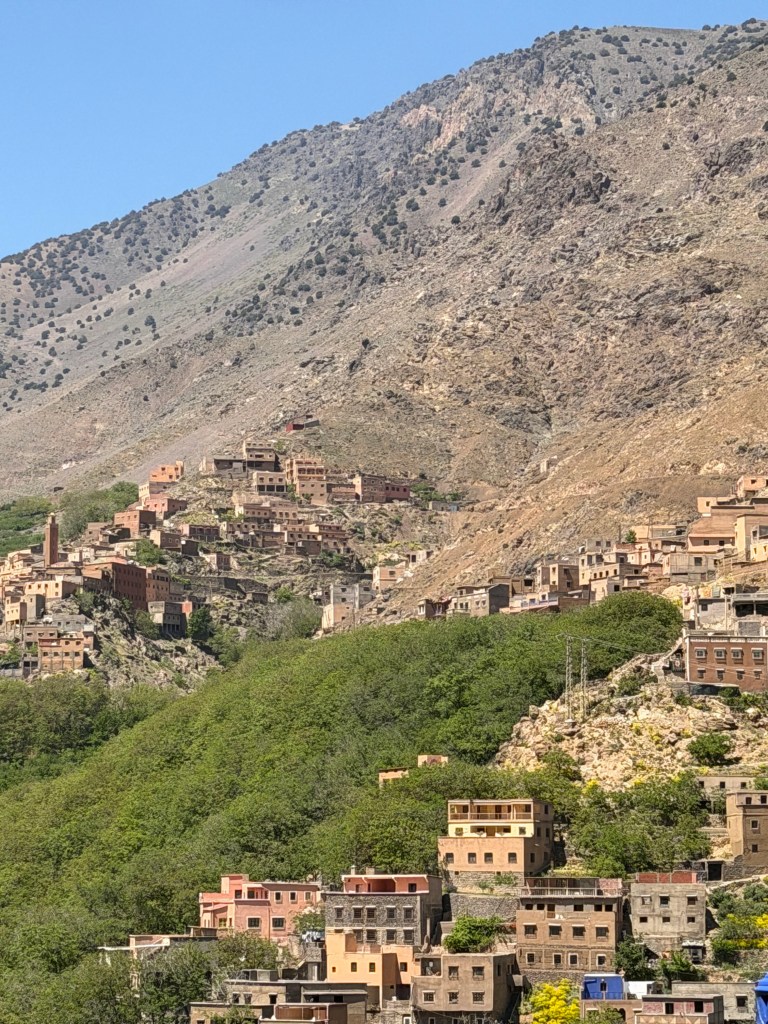
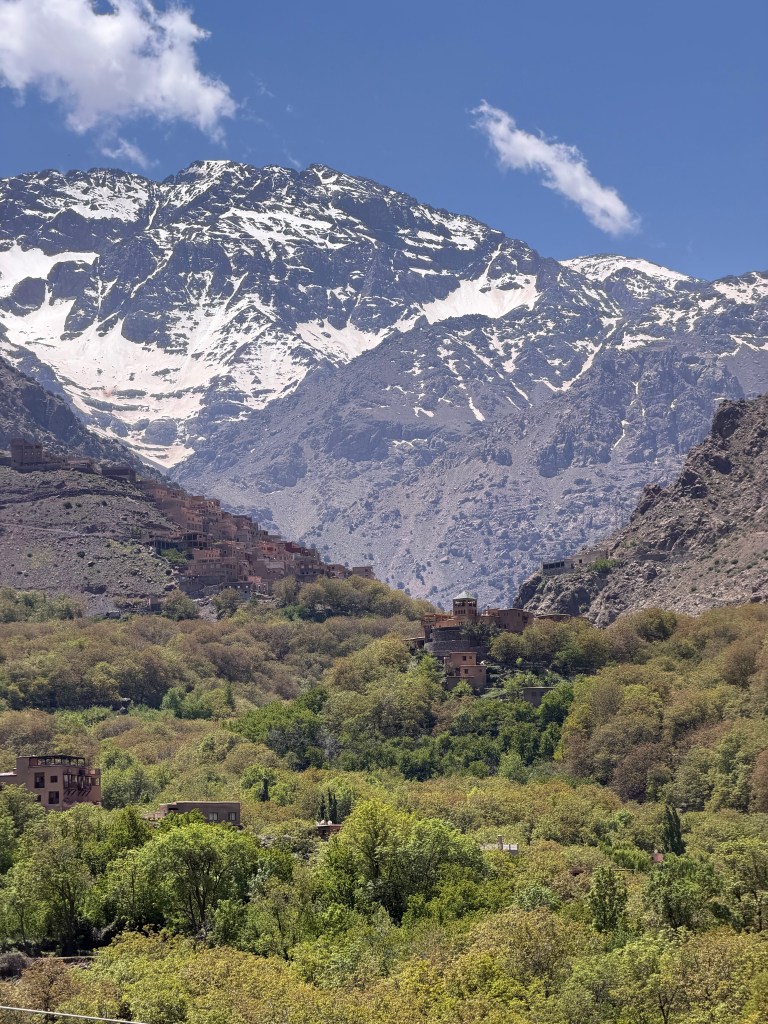
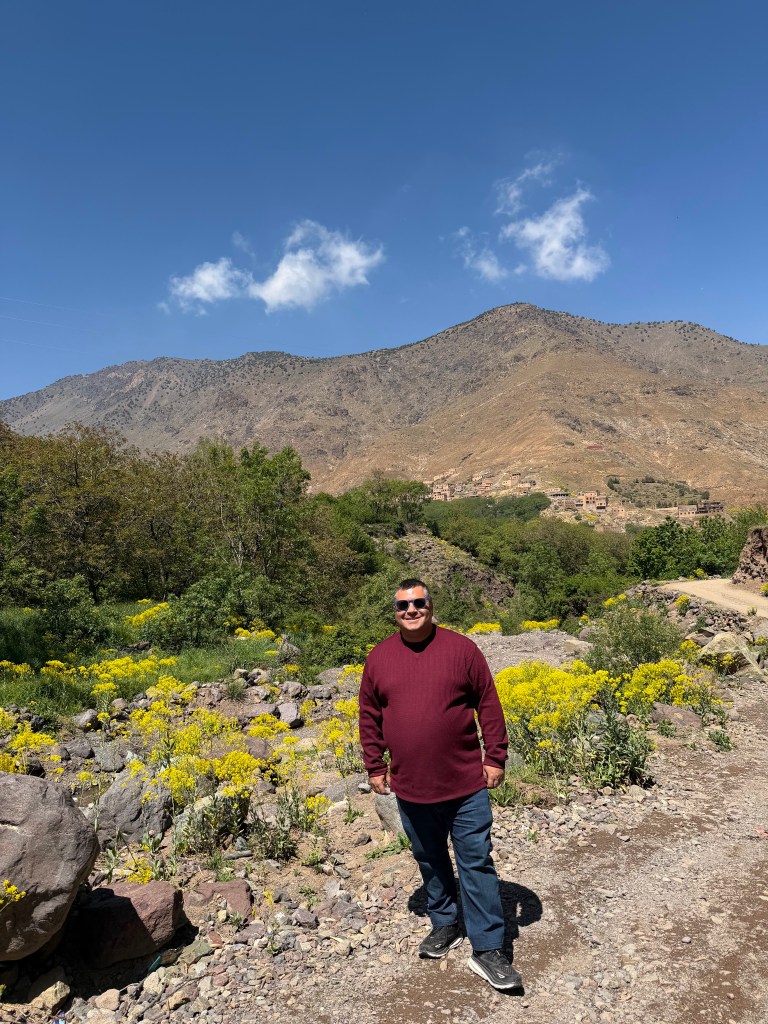
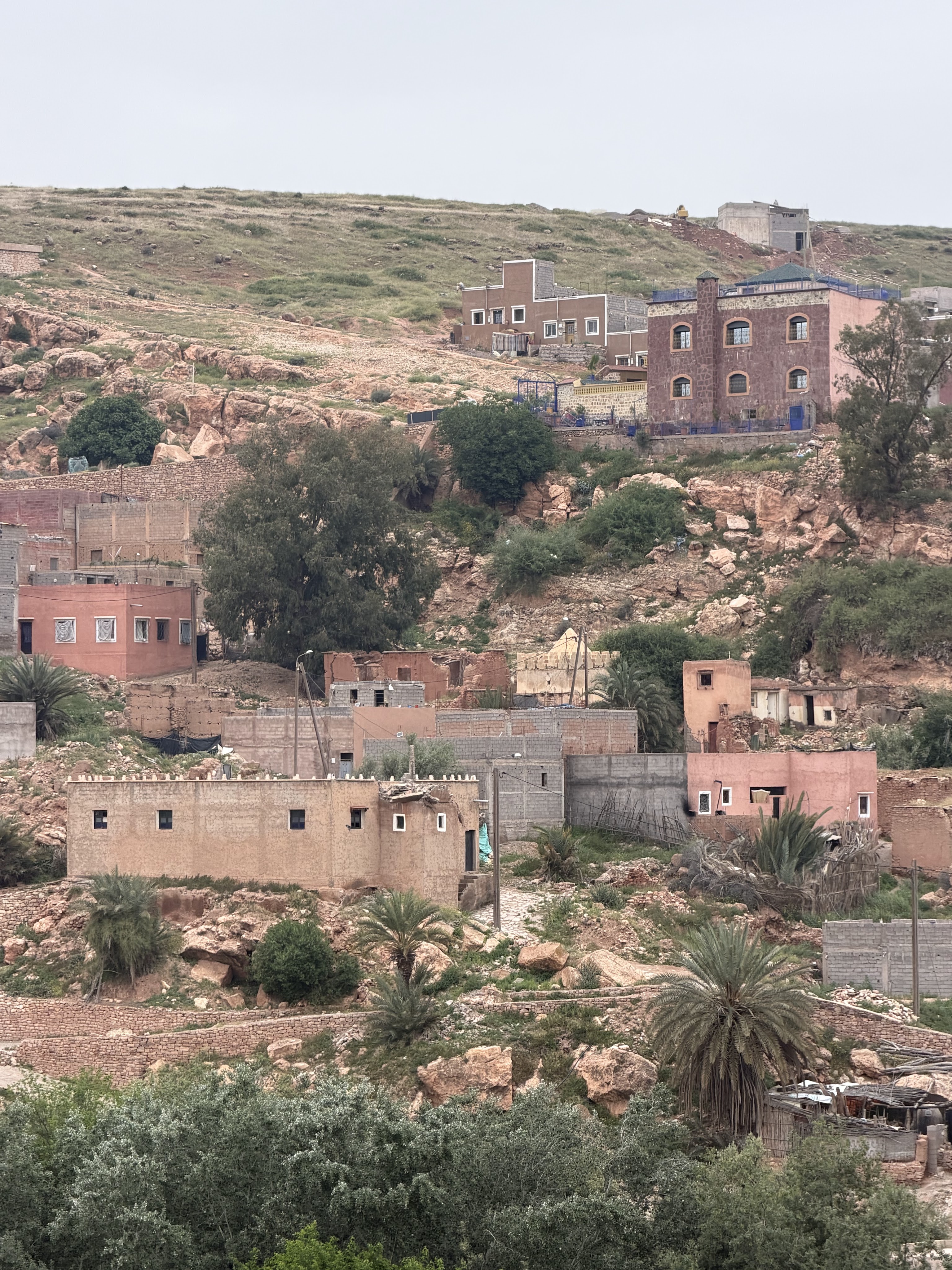
The Marrakesh medina (or “old city”) is fun but deeply chaotic with donkeys and mopeds and people running all over the place. I decided to take a break and head to the countryside for a day trip. I visited Amazigh villages on the way to (and in) Imlil. The mountains are deep green and sometimes snowcapped. The streams are beautiful. And the people are incredibly hospitable.
Along the way to Imlil, in the middle of rural Morocco, I spotted a shop in Tanahout with a sign that said the houses on the other side of the hill were the remains of a Jewish village named Azro. My eyes nearly popped out of my head. These are the remains of the village:
While some Jews in Morocco escaped there following the Christian Reconquista of Spain (and the subsequent Inquisition), others had already been living in the country for 2,000+ years. According to the shop owner, this village and its Amazigh Muslim neighbors had very good relations for many, many generations. He even sold some Judaica supposedly from the village (I have no way to verify its origins but I did buy some).
I frankly didn’t know much about Amazigh-Jewish relations before visiting Morocco but apparently they are deep and continue to this day, with descendants of Amazigh Jews coming back to visit frequently from France, Israel, and around the world. I’ll have a lot more to say about Morocco’s Jewish community in an upcoming blog, but I loved getting to know its history on my trip. While I encountered perhaps two or three instances of antisemitism, for the most part I found people incredibly friendly and welcoming when I mentioned I was Jewish. I felt safer as a Jew in Morocco than I have in parts of Europe and even parts of the U.S.
If Amazigh people have been in Morocco for 10,000-12,000 years and Jews for 2500 years and Arabs for 1300 years, what does that make Morocco? I mean even Moroccan Arabic is an eclectic mix of standard Arabic vocabulary, French, Spanish, and yes – Amazigh words. It is deeply incomprehensible when spoken at a normal pace to Arabic-speakers from countries such as Syria, Egypt, and Saudi Arabia.
There is an important word in Arabic that explains what happened (and is happening) in Morocco: استعرب (ista3raba). This word means to “Arabize”. To become Arab by adopting the language and customs of the culture. In other words, while some Moroccans are descendants of Arab tribes that migrated to the country over the centuries, many are Amazigh people who became Arabs. Some perhaps by choice and others due to social pressure and stigma.
This phenomenon is not unique to Morocco and it partially explains part of the wild diversity of Arabic dialects (or perhaps better put, languages) of the Middle East and North Africa. In the Levant, for example, the Arabic is layered over Aramaic and Hebrew influences from the civilizations that existed in the region before the Arab conquest.
The King of Morocco has, in an important step, started to honor this complex cultural diversity rather than suppressing it in contrast with what some leaders in North Africa have done in the past. The 2011 Constitution states that Morocco is: “A sovereign Moslem State, committed to the ideals of openness, moderation, tolerance and dialogue to foster mutual understanding among all civilizations; A Nation whose unity is based on the fully endorsed diversity of its constituents: Arabic, Amazigh, Hassani, Sub-Saharan, African, Andalusian, Jewish and Mediterranean components.” The bold text is my addition to make this point: Morocco is now officially a multicultural country, with Amazigh as a co-official language with Arabic. And its Jewish community is recognized by the ruler of the land as essential to its history and essence.
Morocco is an Arab country. But as my travels there (and Muhammad at my hotel) taught me, it is not only an Arab country. Its layers of Amazigh and Jewish history run deep, and even its Jewish community has used many languages and embraced different identities throughout its history.
In an era where people are looking for black and white answers to complex problems, Morocco is a welcome bit of gray space. It is a place full of diverse and sometimes competing identities that still manage to co-exist better than in many countries around the world.
I’ll have a lot more to say about this fascinating country. Until next post, bslama, ar tufat, lehitra’ot – see you soon!
Recently, I went to my first gay Jewish wedding. It was a wonderful experience to see friends coming together to build a loving future. And while I’ve been to many wonderful weddings, there was something special about seeing queer Jewish joy in action, in reality. A joy I hope to share someday with someone special.
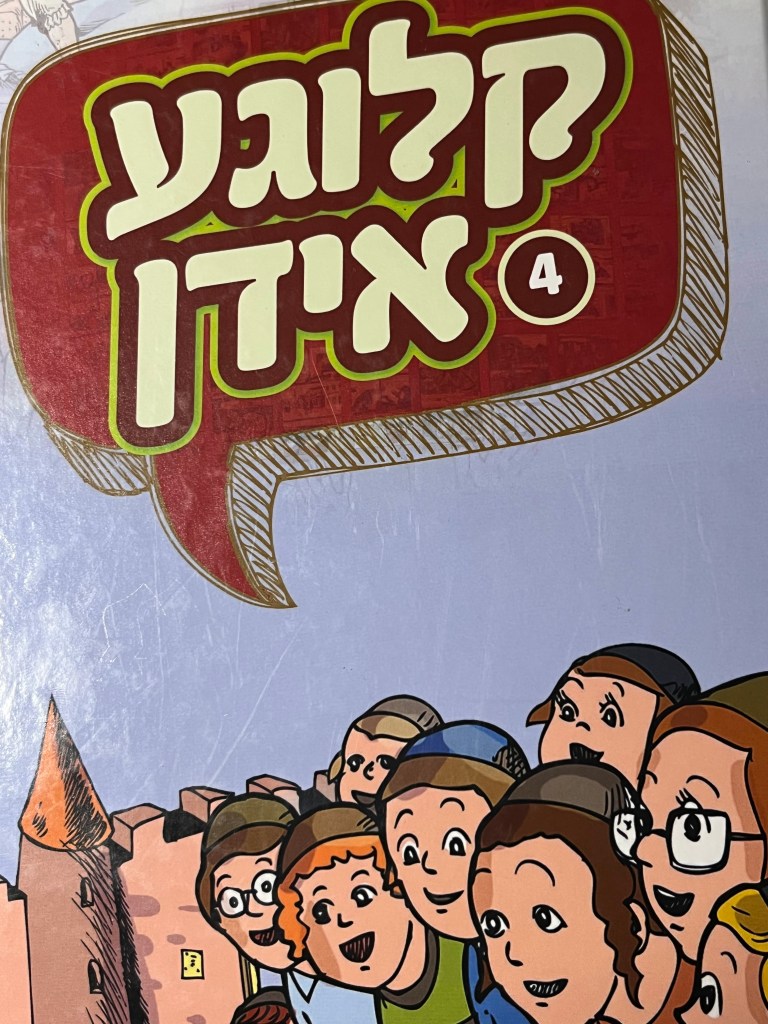
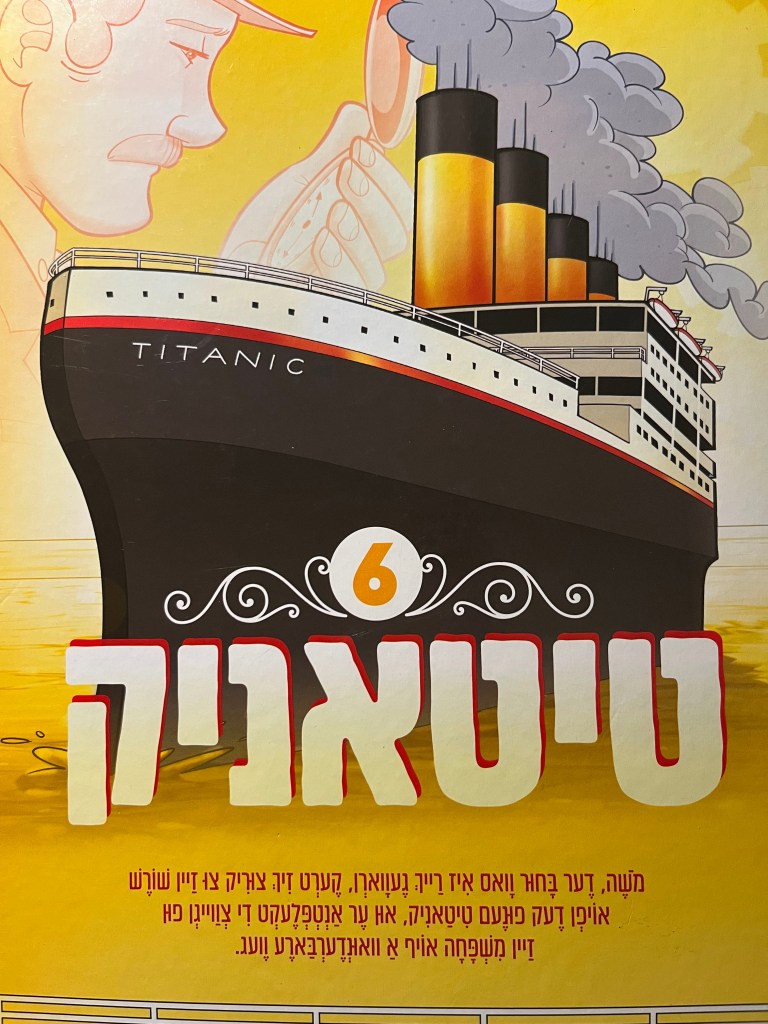
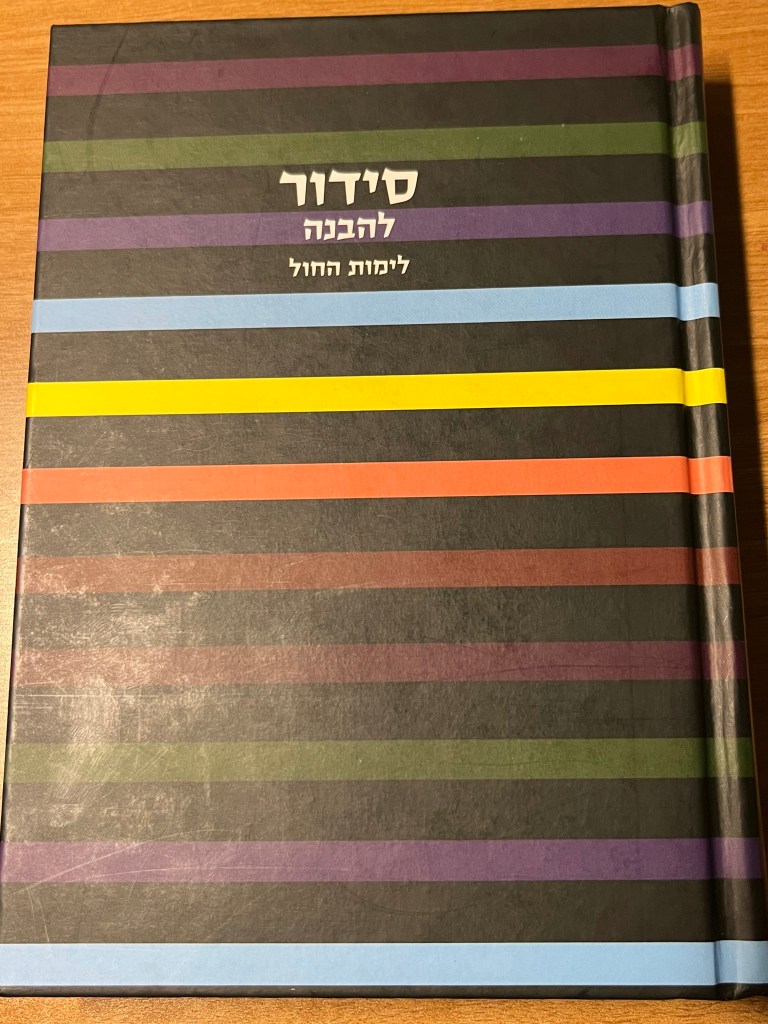
While in New York, I relished the opportunity between wedding festivities to visit Hasidic Brooklyn and practice my Yiddish. After buying a black yarmulke, I visited Hasidic bookstores in Williamsburg and bought some books in Yiddish, including a kids book called “Smart Jews”, a book about the Titanic, and a prayer book with Yiddish translations of the traditional Hebrew.
I love speaking Yiddish and I surprised the bookstore employees by speaking it while wearing decidedly non-Hasidic clothes. While some people looked at me with an almost suspicious curiosity, others were incredibly warm and hospitable and thrilled to hear me speaking Yiddish.
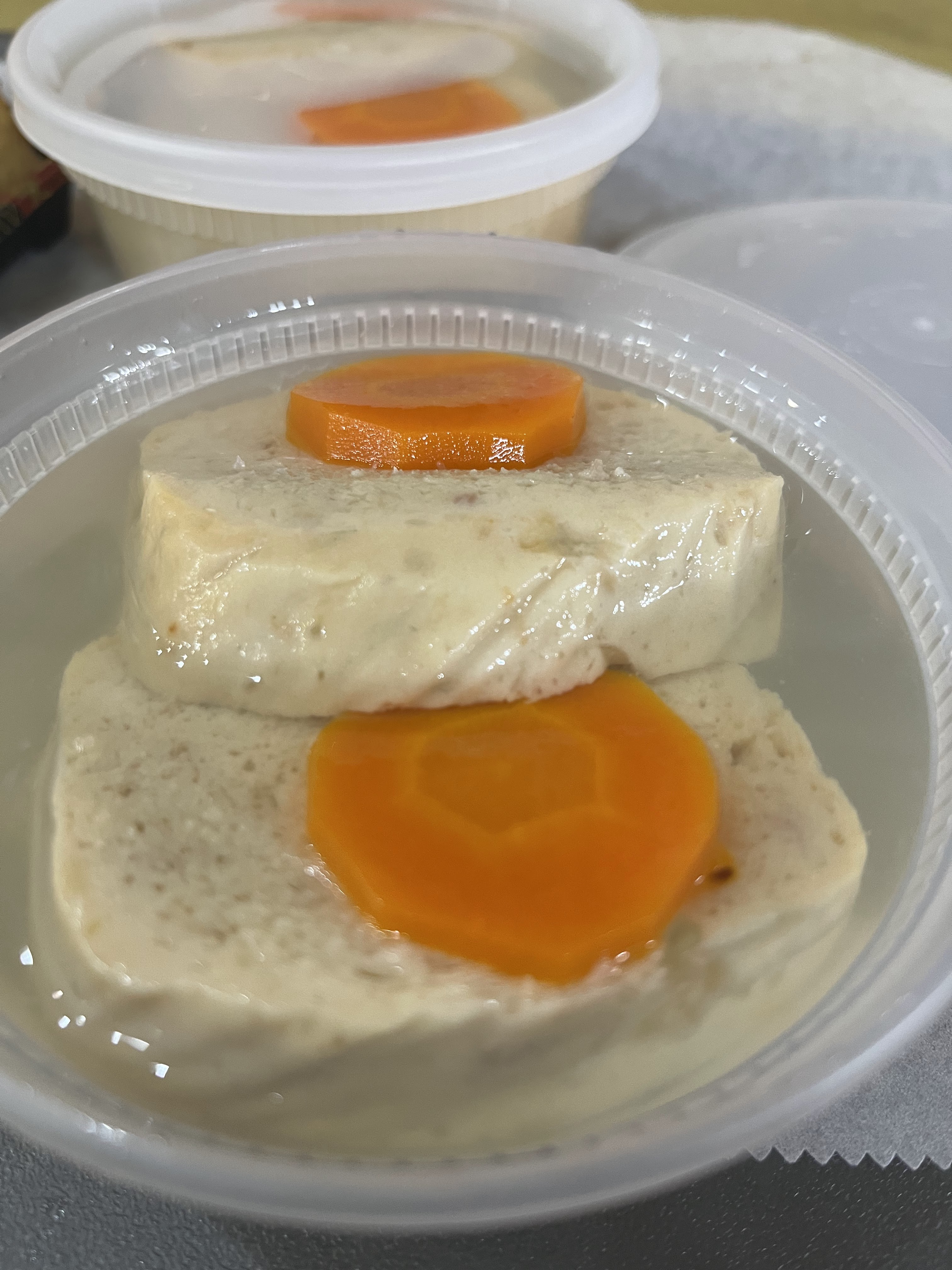
Next, I got the good stuff – gefilte fish! Yes, I love gefilte fish. It is a delight and while it’s true that maybe you need to grow up with it to love it, I absolutely adore this dish, especially when made fresh (not in a jar!).
I sat next to a rabbi in the restaurant and he was very welcoming and kind.
Near the restaurant, I walked through Williamsburg and saw a crowd of Hasidic Jews gathered outside an apartment, where a rabbi was preaching in Yiddish as hundreds listened attentively on the street. It was an amazing sight. At a time when we’re being persecuted yet again, this community is preserving our Jewish traditions despite it all. It was like a scene out of a shtetl.
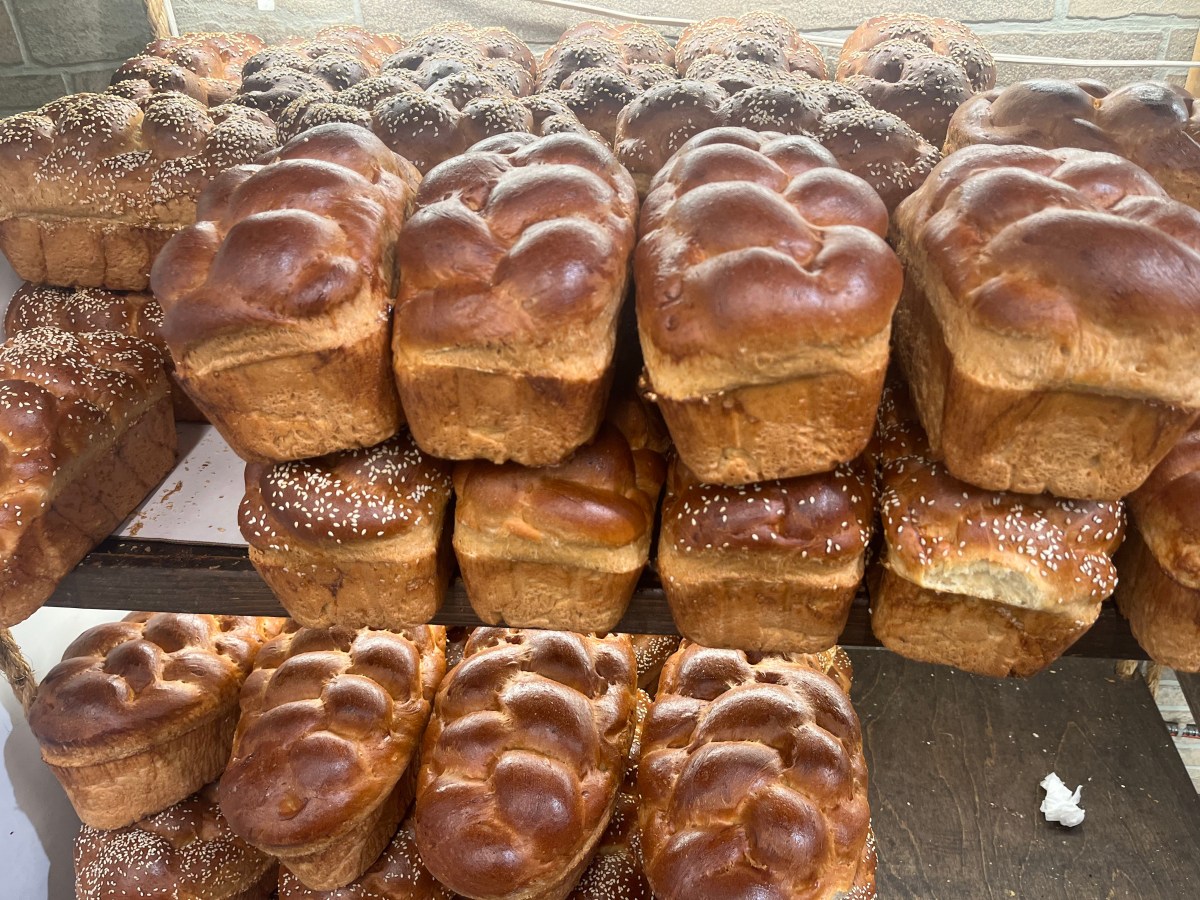
After exploring Hasidic Williamsburg, I made sure to stop at a late night Kosher bakery and get some sweet cheese rugelach, a novel combination that was a true delight. They also had tons of challahs of various sizes, like the ones in this blog post’s cover photo. Even some local hipsters came in for a taste of the bakery’s delicious food.
Over the next two days I met up with other friends in New York, ranging from Yiddishists to a Modern Orthodox college friend on the Upper West Side, and of course got a bagel with whitefish salad. None of this was particularly Hasidic, nor in Brooklyn, but it just shows the incredible diversity of New York Jewish life that I was able to slip in and out of these different communities plus a gay Jewish wedding in the course of a long weekend.
After the wedding, I decided to go to Crown Heights. Williamsburg is heavily Hasidic, but predominantly populated by communities that are a bit more insular in their approach to preserving Jewish tradition. Crown Heights, while also Hasidic, is predominantly a Chabad area. Chabad is a group committed to outreach within the Jewish community, making it a little easier to get to know people even as a semi-outsider.
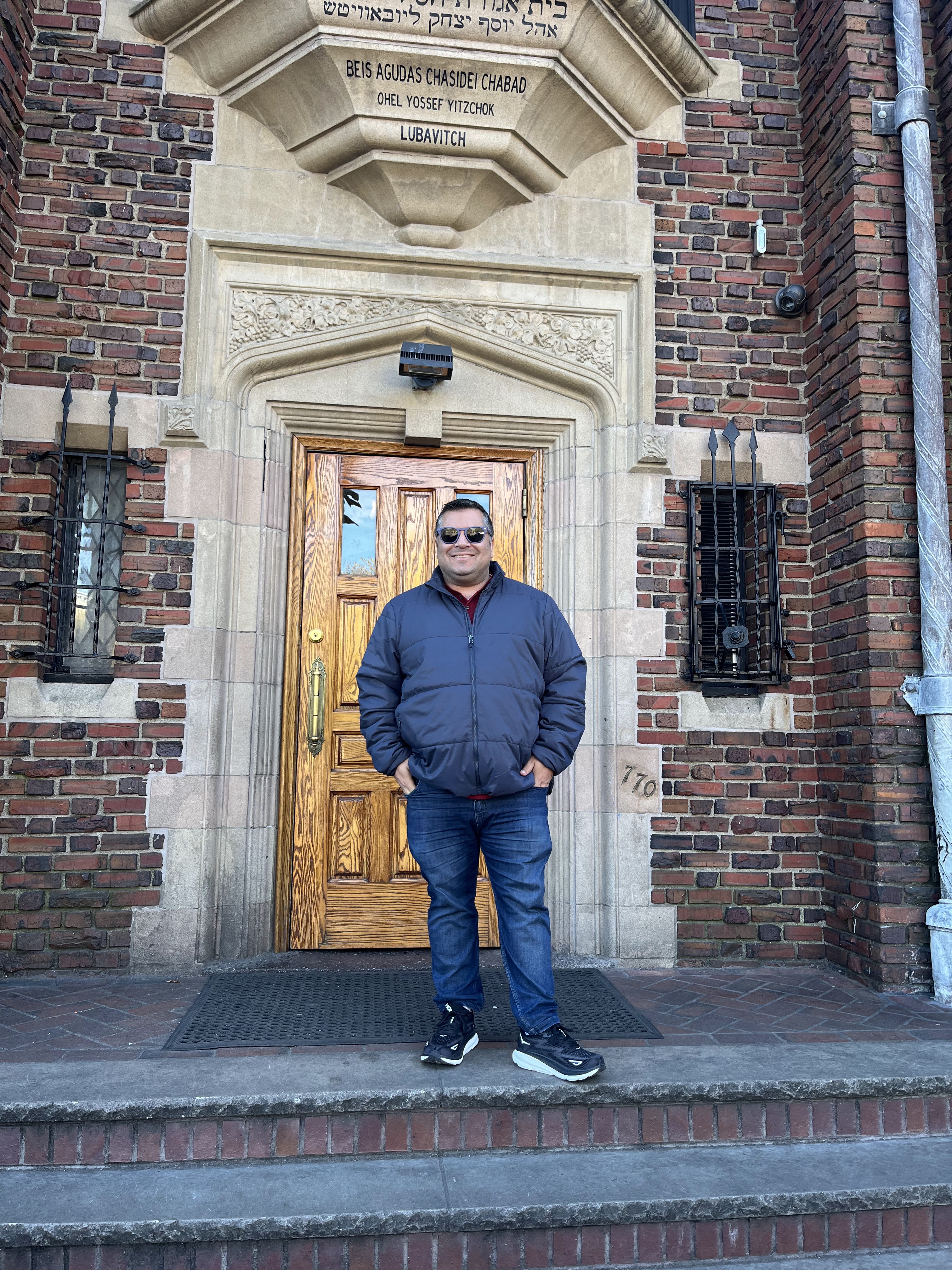
I visited 770, the house of the former Chabad Rebbe, a deeply revered leader.
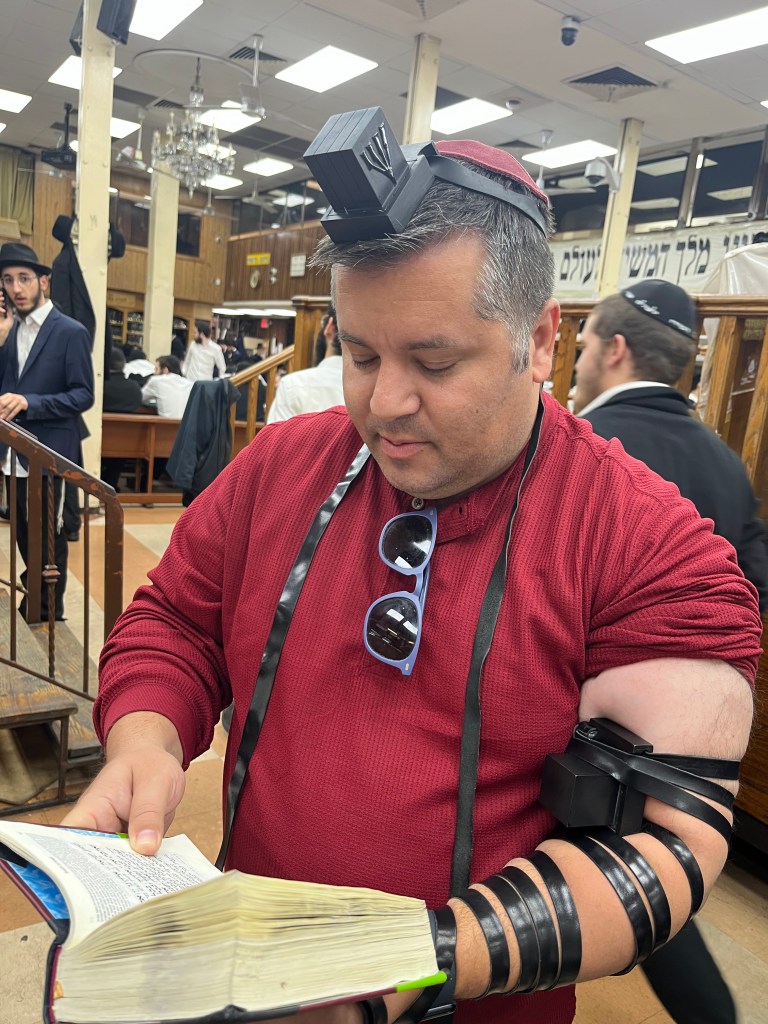
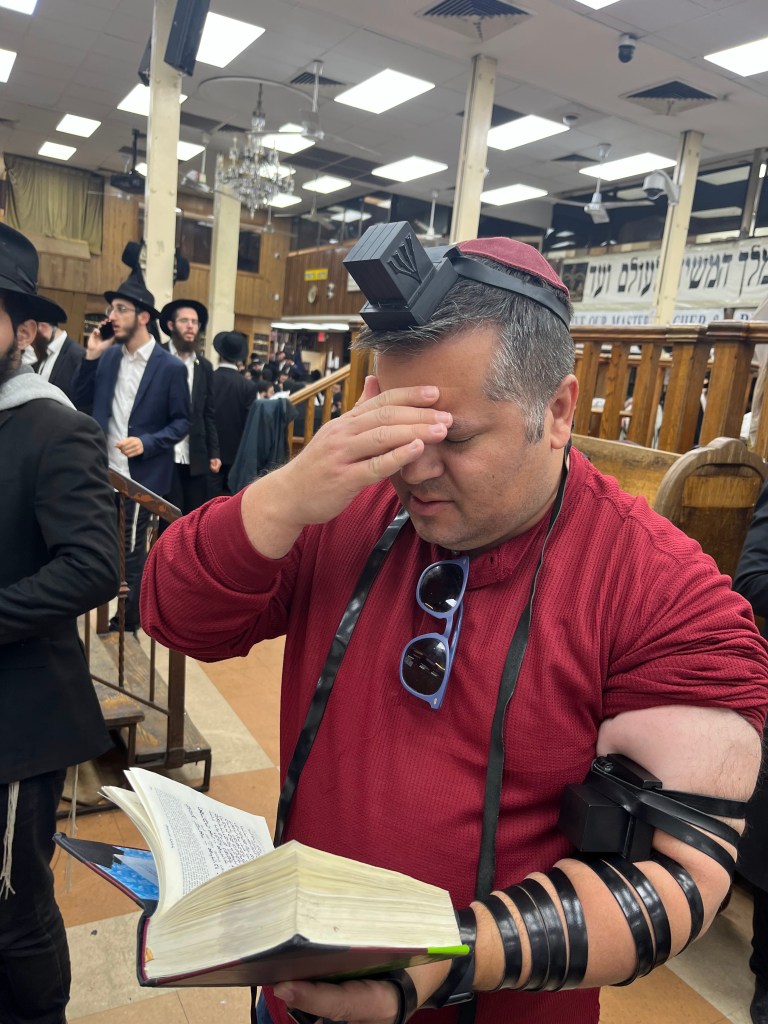
I then decided to do something I had never done when visiting Crown Heights years ago: I went inside the synagogue next door to the Rebbe’s house. I decided to lay tefillin, an ancient Jewish ritual, with the help of a young man. It didn’t matter that every other man in the building was dressed in the traditional black and white suits and I was in jeans and a red shirt. Chabad doesn’t care- they just want you to fulfill mitzvot, commandments from G-d that Jews are instructed to follow. It was a really nice experience.
Laying tefillin is a truly embodied ritual that made me feel connected to Jews everywhere and to thousands of years of our history. At a time when it seems we can control so little, it helps me feel grounded and secure in my faith.
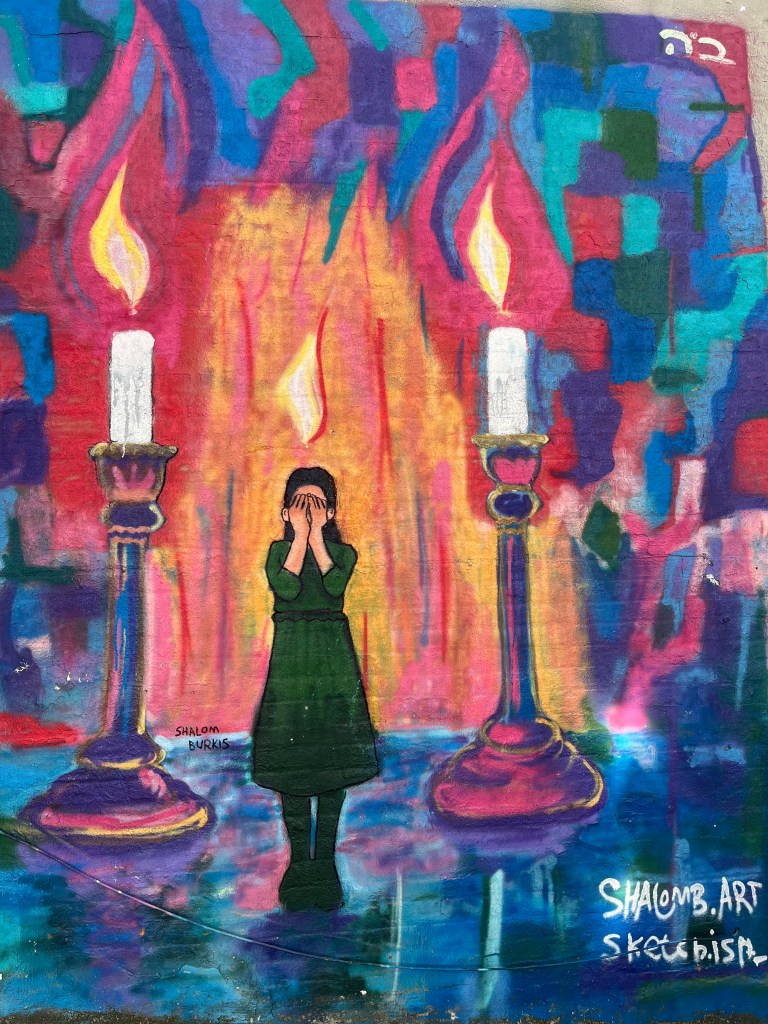
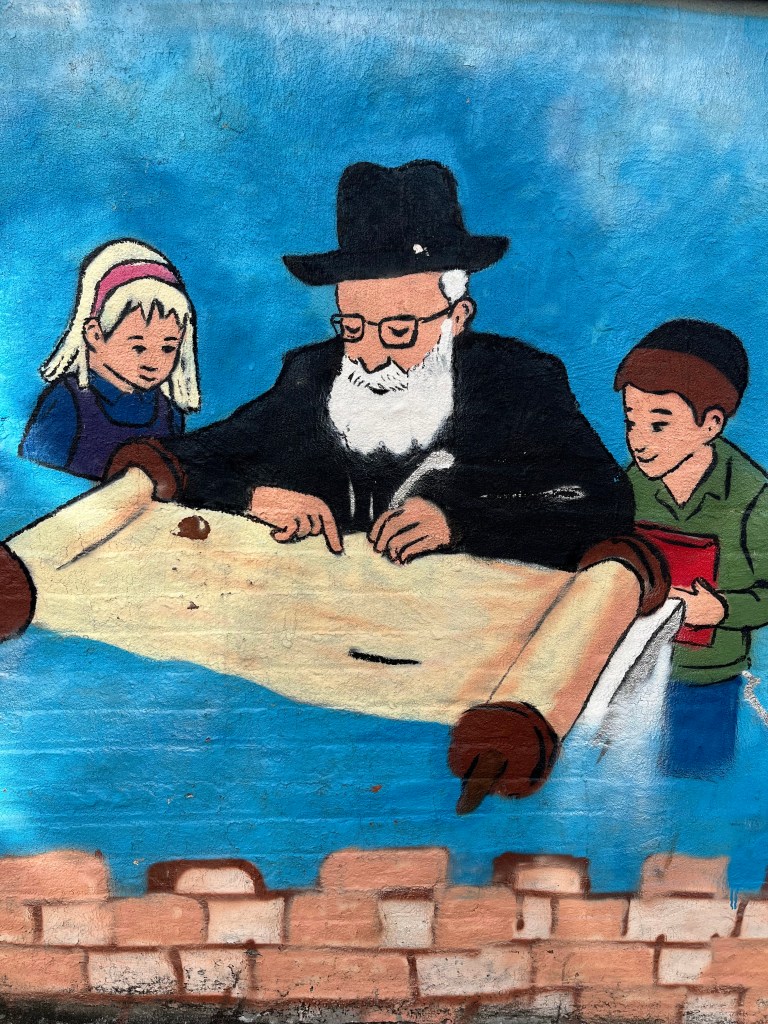
In addition to laying tefillin, I found some interesting Jewish street art in the neighborhood.
I love seeing murals whenever I travel, and to find Jewish ones was especially heartwarming and exciting.
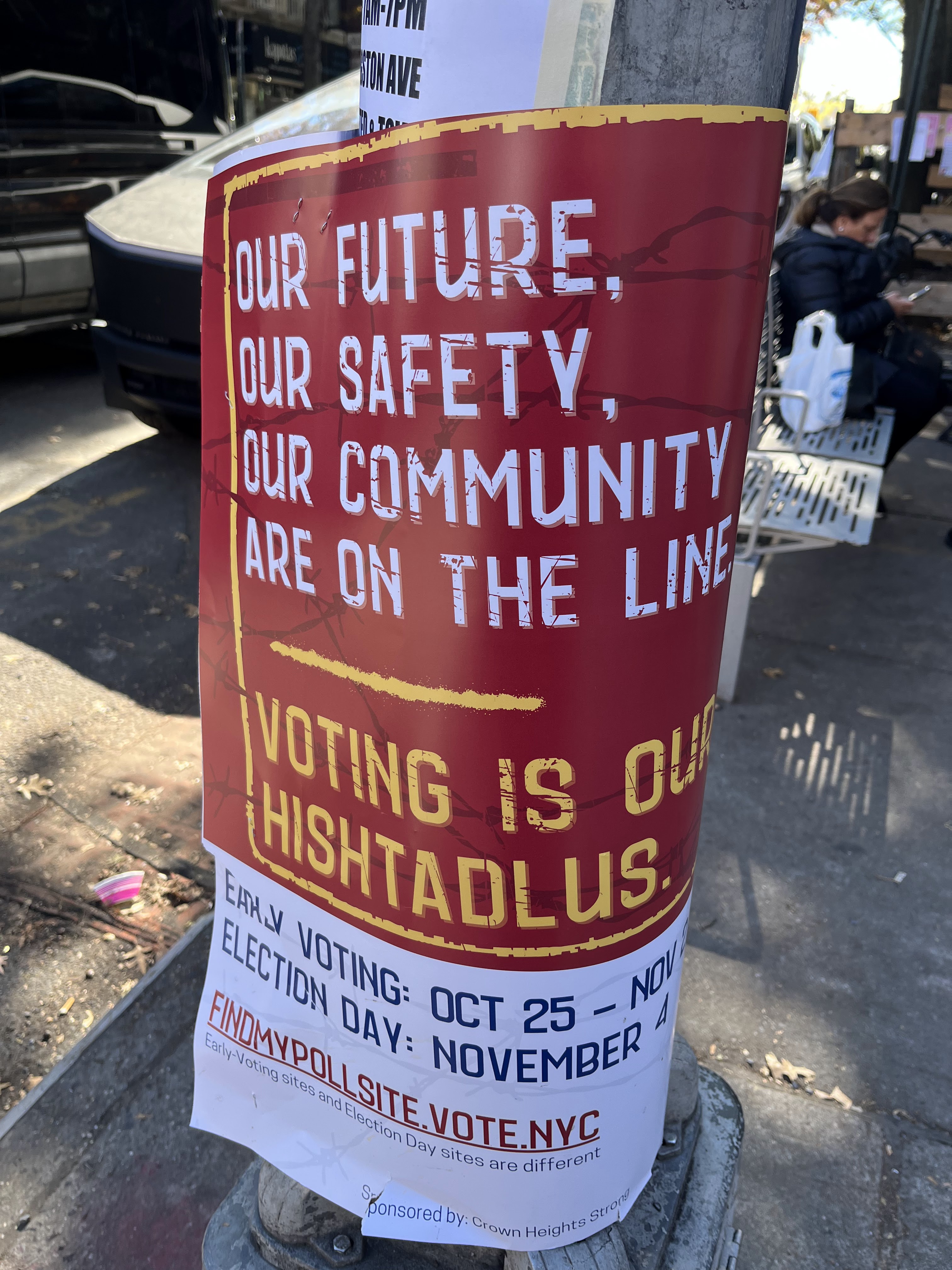
Lastly, it was not lost on me that I was in New York the last weekend before the fateful election that led to antisemite Zohran Mamdani becoming elected mayor of the city. I’ve already written my thoughts about him here.
The feeling that the community was slipping through our fingers, as Jews, was palpable in Hasidic Brooklyn. I saw election turnout signs like this one that were as clear as day:
Seeing Hasidic Brooklyn was amazing. I highly recommend a visit. Go see this beautiful community before the coming storm. Let us hope and pray that we will weather it together.
Because in the end, the people who hate Jews won’t distinguish between the gay ones or the Hasidic ones, the secular ones or the Modern Orthodox. They will come for us all. Which is why it’s so important we show solidarity with each other. We don’t need to agree on everything. I’m gay, I’m aware of the challenges that would face me living in a Hasidic community. And I’m also aware of prejudice and judgment that Hasidic Jews face in progressive Jewish circles.
Let’s come together in our time of need. So if there’s a storm ahead, let’s grab each other’s hands and dance in the rain and make it through as one strong community. Ken yehi ratzon. May it be so.
I was born in Washington, D.C. and grew up in suburban Maryland. As an adult, I’ve lived in Tel Aviv, St. Louis, Florida, Philadelphia, and now Atlanta. I’ve experienced different cultures in each place and tried to absorb the best of each into my life.
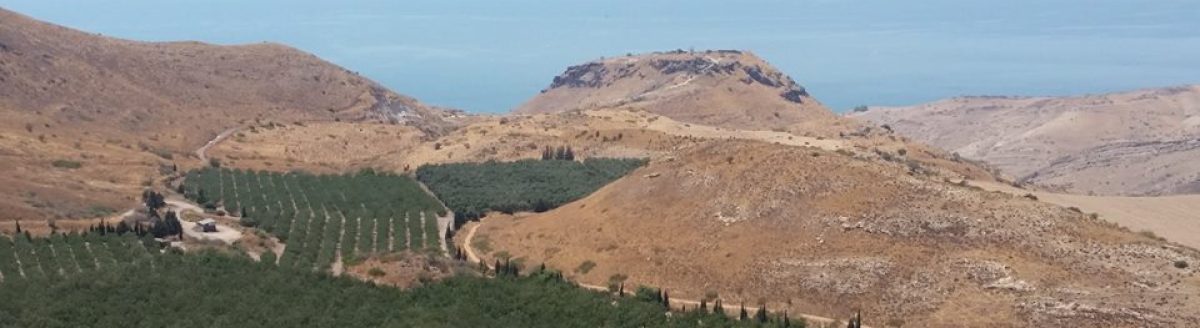
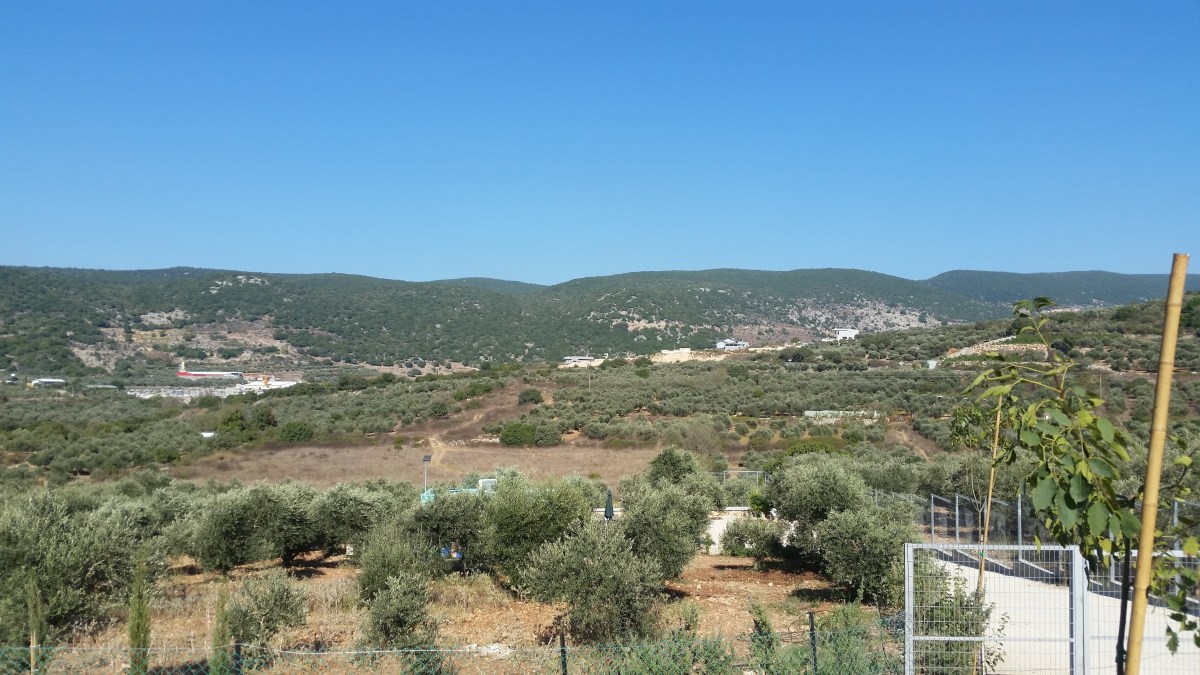
When I made aliyah to Israel, I chose to Hebraicize my name Matt but I did it in a unique way. I chose the name “Matah” (מטע) which sounds like Matt but comes from a different root. It means “orchard”, as in an olive orchard, like the one in the cover photo for this blog post near Rehaniya. The idea was to plant roots in Israel- ones that would bear fruits. Just like the name of this blog.
I would say that even though I returned to the U.S., I did plant roots in Israel and feel deeply connected to my homeland. And they certainly bore fruits – new friendships, mature social and political perspectives, stronger Hebrew and Arabic, and even publishing a book about my adventures! I’m extremely excited to go back this April (inshallah!) for a month and visit again. I miss my friends and favorite places and am thrilled to see what new adventures are in store for me.
While I’ve lived in many places, I’ve called the D.C. area home for most of my life. I grew up there, came back soon after college, and returned there after living in Tel Aviv to be closer to family. My relationship with D.C. could take up multiple blog posts, but let’s put it this way – it’s complicated. I love my friends and remaining family there and I relished the chance to see many of them recently when I visited. And D.C. is also a place of deep pain – one where both of my parents struggled through and died from cancer, one where I experienced a life-threatening manic episode in my 20s that led to my diagnosis with Bipolar Disorder, one where I experienced the loneliness of the pandemic. It’s somewhere where I have many loved ones but it is bittersweet because frankly it’s never been my vibe. While it’s full of beautiful museums, culture, bookstores, cafes, and restaurants, it is overly focused on work and networking with an intense atmosphere that used to stress me out.
“Used to stress me out” because I don’t live there anymore. And while I will certainly be back to visit D.C. again, it is not my home right now. I now live in Atlanta. And frankly I feel so much more relaxed here. It’s been a fresh start for me full of new friends, new experiences, and a less intense way of living. It’s a vibe and it’s peaceful. I sometimes wish I could import my friends and family down here so it’d feel a bit more like home and more quickly. It’s where I live and I’m enjoying it, but it’s maybe not quite home yet. After all, I’ve only been here about four months. But it’s starting to feel more and more like home by the day. When I travel to other cities or abroad, I feel relieved and happy to come back to Atlanta. It’ll take time to see how this place will figure in my life, but it has a lot of promise. Yet inevitably there are those tough days when after moving to a new place when I wonder what I’m doing here. It’s a kind of imposter syndrome perhaps, because I feel pretty content here. Hopefully with time I’ll feel even more at ease.
Perhaps instead of thinking where is “home” and where is not, it’s more useful to return to my Israeli name “Matah”. Orchard. Roots. Planting. Rather than debating which place I’ve called home is most “home” to me, it’s better to think about where I’ve planted roots and what fruits they have borne or may yet bear.
Put that way, I can say that in D.C. I created lifelong friendships and honored my parents by supporting them through their cancer diagnoses and passing away.
In Tel Aviv, I learned to explore the world, from tiny villages in the Galilee to rural Cyprus. I regained my confidence to engage with different cultures and put that passport to use. I visited 120 different municipalities in Israel and met people from every religious, linguistic, and ethnic background imaginable. I connected with my Jewish identity and homeland. And I became a writer reaching 100,000 views on this blog site!
In Atlanta, the story is yet to be written. I’ve met some wonderful people here. And it has been good for is my mental health. I feel better here psychologically. Having a fresh start in a relaxed place has allowed me to have some space from the traumas I experienced in D.C. and redefine myself for the next stage of my life.
So I will refuse to answer the title of this blog post. Because rather than one home, we can have many. And we can plant roots wherever the soil is fertile.
On my trip to Italy, I encountered a beautiful country, intense antisemitism, and a 2,000+ year old Jewish community that continues to survive it all.
My trip started in Padova, a bit off the beaten path. A historic college town, it was beautiful and not overrun by tourists, but also had frequent anti-Israel graffiti and regular demonstrations, as has been the case at American universities as well. Situated in the more conservative Veneto region, it was certainly less antisemitic than far-left places I visited like Bologna. But nonetheless, at times I felt uncomfortable as a Jew.
For instance, my food tour guide in Padova was a welcoming Italian man named Davide. He was well-traveled and intellectually curious. When I was brave enough to share that I was Jewish and an Israeli citizen, he had many questions. He was on the left side of the political spectrum in Italy, which in Europe sadly correlates with increased antisemitism and anti-Israel bias. He had never heard of Arab Israelis (i.e. Arab citizens of Israel with full legal rights) – he was curious enough to say he’d Google the topic. He had not heard that Arab parties existed in the Knesset (Israeli parliament). When I told him I felt that Italian culture was quite similar to Israeli culture, he was shocked. He also had no idea that LGBTQ+ people were persecuted in many Arab countries including the incredibly repressive one he’s visiting next – Saudi Arabia!
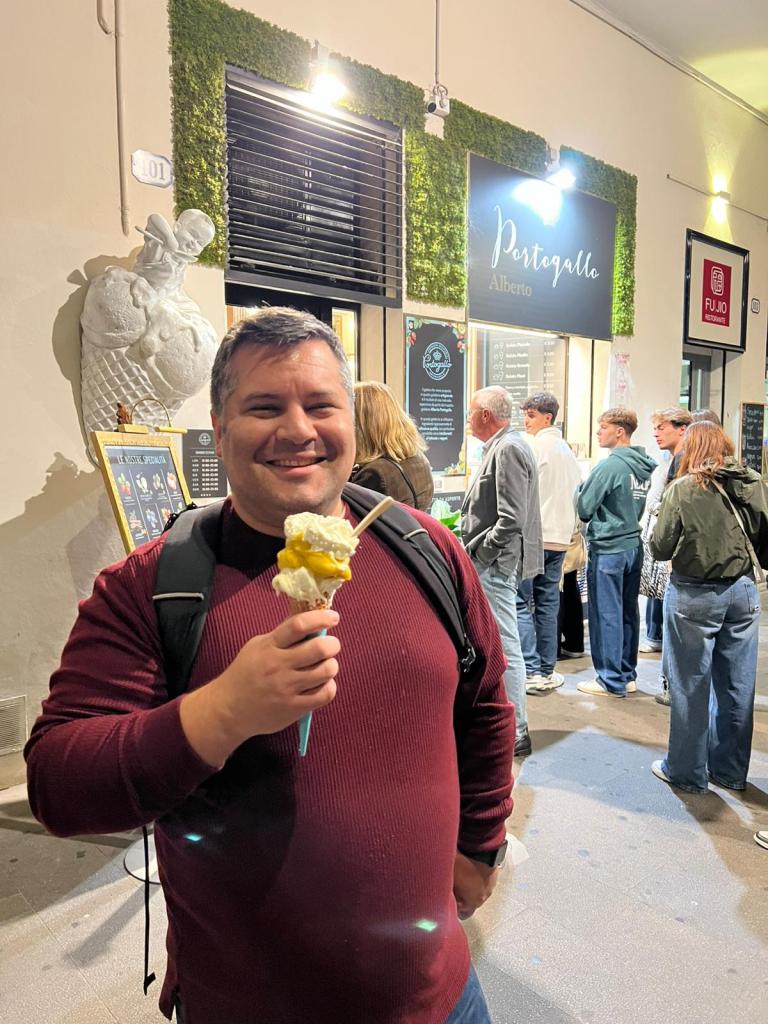
It was hard for me to go on that tour. Not because of the delicious food and gelato (man, the mango gelato in Padova was out of this world!). But rather, because I felt like I had to be an ambassador for my people. This guy wasn’t a bad guy. He just didn’t have many facts. And to his credit, he was willing to learn and grow. I just didn’t have the energy on vacation to play teacher. I hope he continues to delve into Middle Eastern history and culture – with my people included. It’s important for me to remember people like him – people who may largely disagree with Israel or are rather naïve, but are not necessarily malicious. We must engage with these people more gently and with more understanding than with some of the other instigators and criminals who persecute Jews these days.
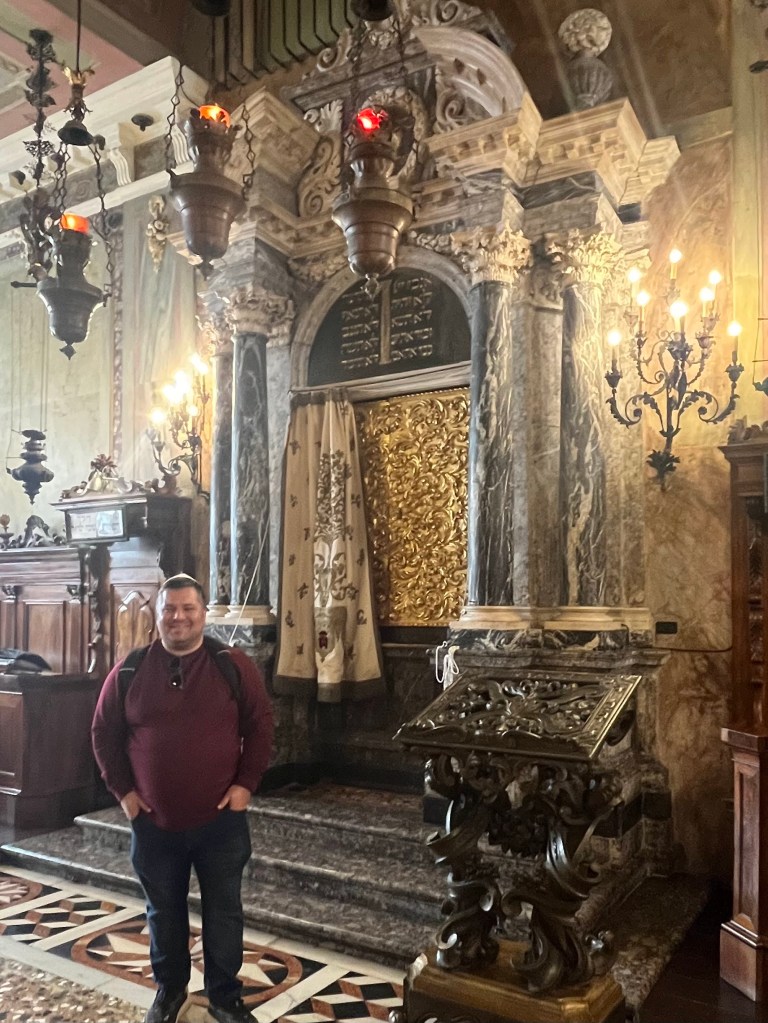
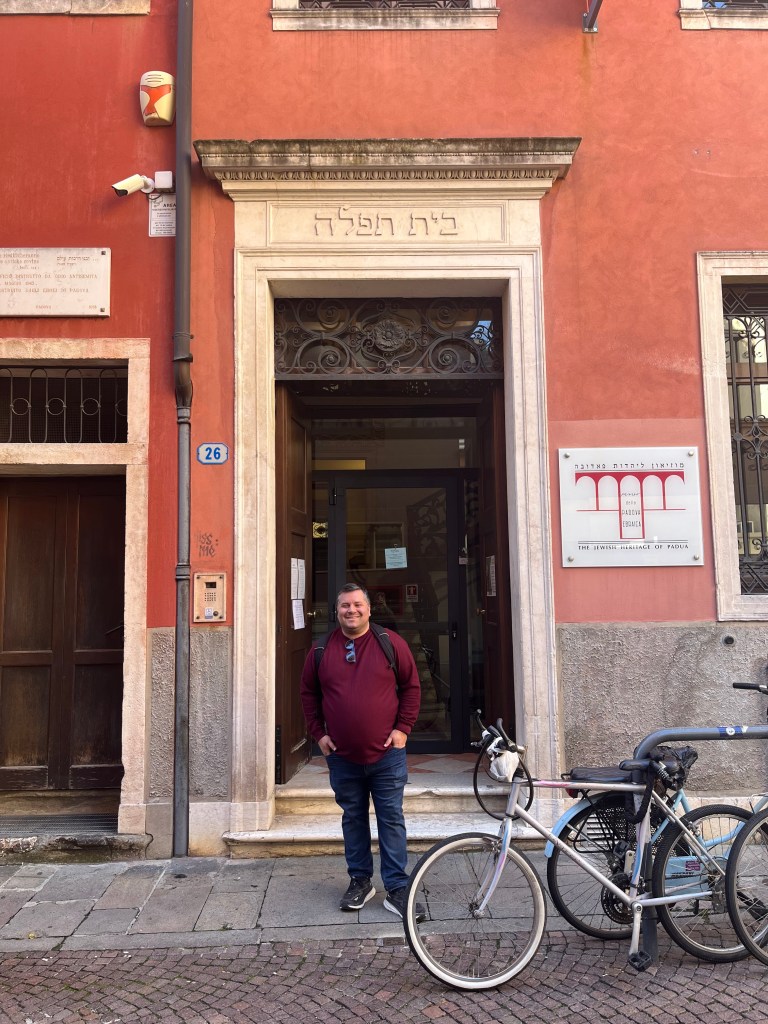
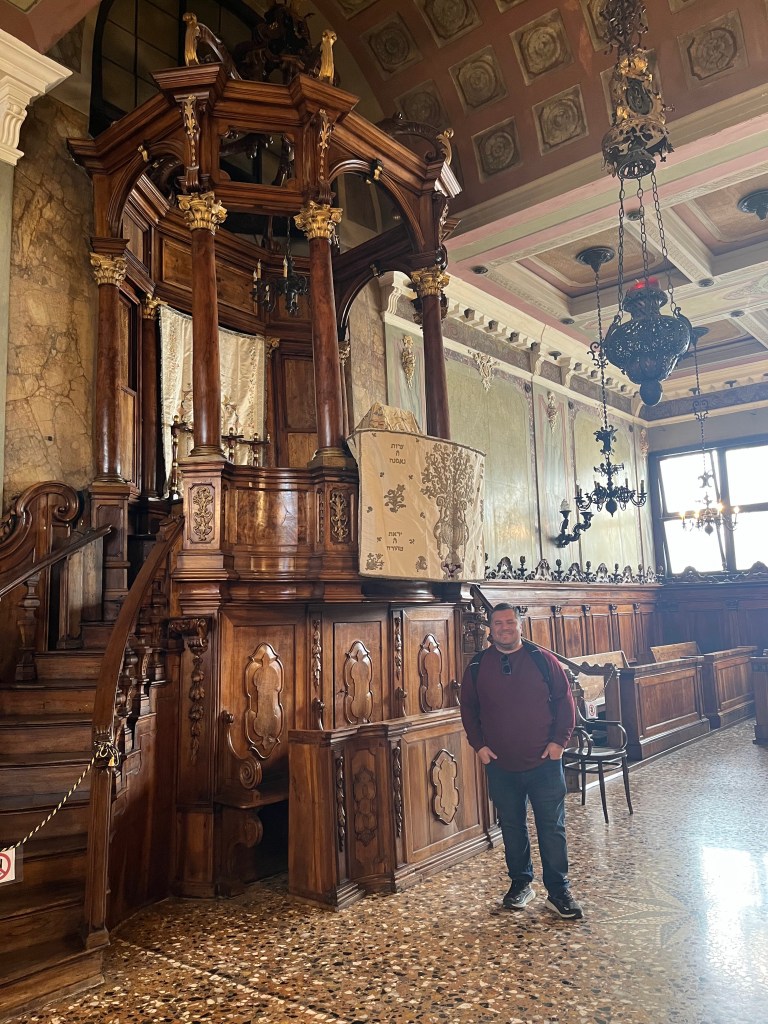
I had the great privilege of visiting the Jewish Museum of Padova, including a visit to the historic synagogue, which is still in use to this day. I highly recommend this museum and synagogue. Not only did I learn so much about this historic community, I got to visit the 477-year-old synagogue all by myself! Here are some pictures:
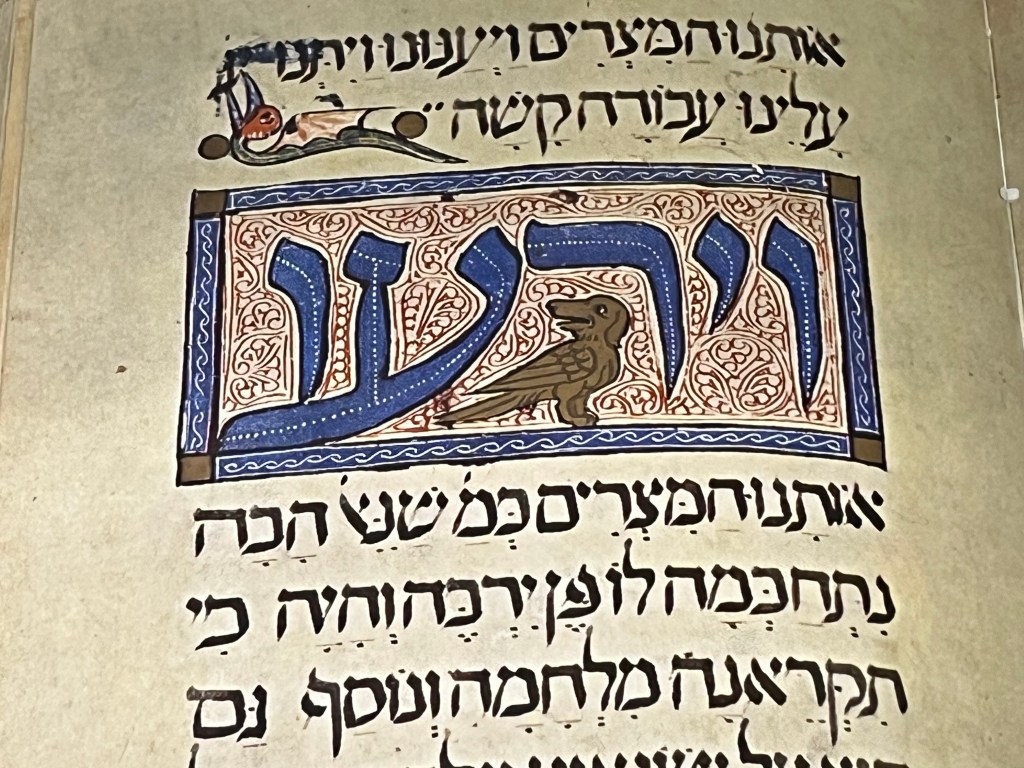
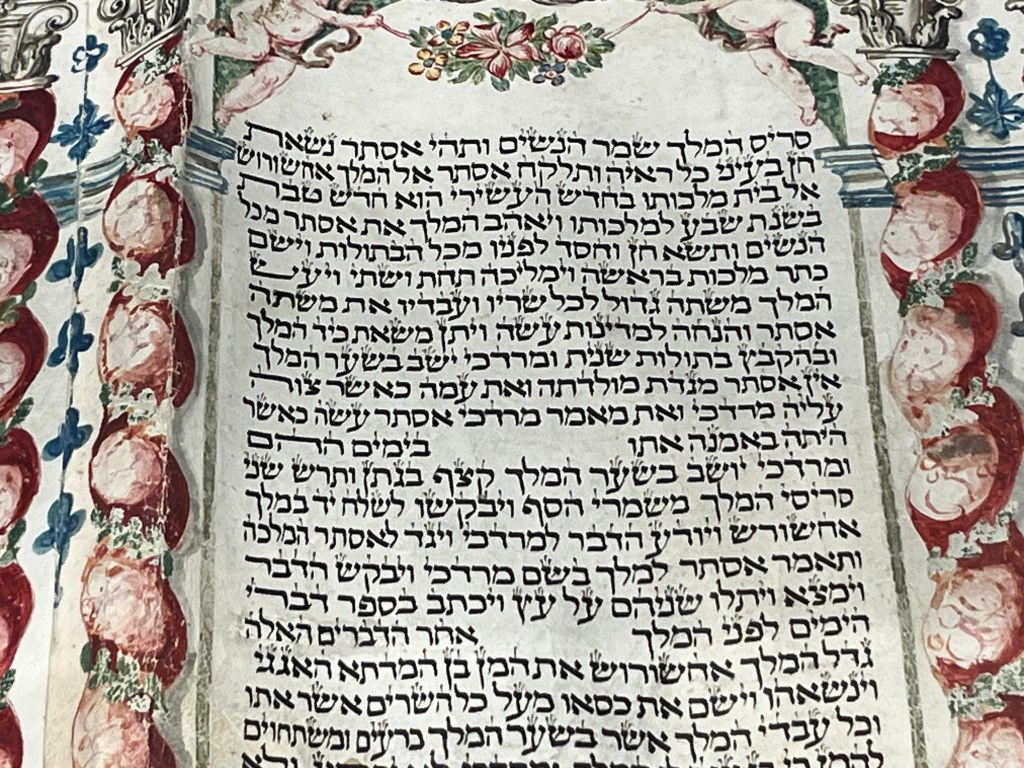
The museum tells the story of Padova’s Jews and some Italian Jewish history as well. For those who don’t know, many different types of Jews have lived in Italy, including Ashkenazim (yes, Yiddish was spoken in Venice and parts of northern Italy!), Sephardic Jews, Levantine Jews (Sephardic Jews who migrated to the eastern Mediterranean and came back towards Italy), and Italian-rite Jews who have been in the country for over 2,000 years! There are many beautiful artifacts such as the ones below dating back hundreds of years:
The beautiful Baroque synagogue miraculously survived Italian fascism and the Holocaust and is absolutely worth a visit. The employee working the front desk was not Jewish but was very knowledgeable about the community and charmed me with her Italian-accented Hebrew as she explained the different parts of the sanctuary to me.
Before I move on to my next Italian Jewish destination, I want to share a quick disclaimer. From Padova, I did a quick day trip to Bologna. While Padova certainly had some antisemitism, it was largely calm and pleasant and I’m glad I stayed there for a few days. Bologna, on the other hand, is not a pleasant place if you are Jewish. It is covered in antisemitic graffiti (i.e. “death to Israel”). It is called the “red city” in part because historically it has been the bastion of the Italian Communist Party. I felt deeply uncomfortable there and decided to leave earlier than expected to head back towards Padova. Of course not everyone in Bologna is a communist. When I asked my cab driver to the train station in Italian whether it was a political city he said “troppo!” Too much. He found the anti-Israel graffiti disturbing and disruptive and an unfortunate stain on the beauty of the city itself.
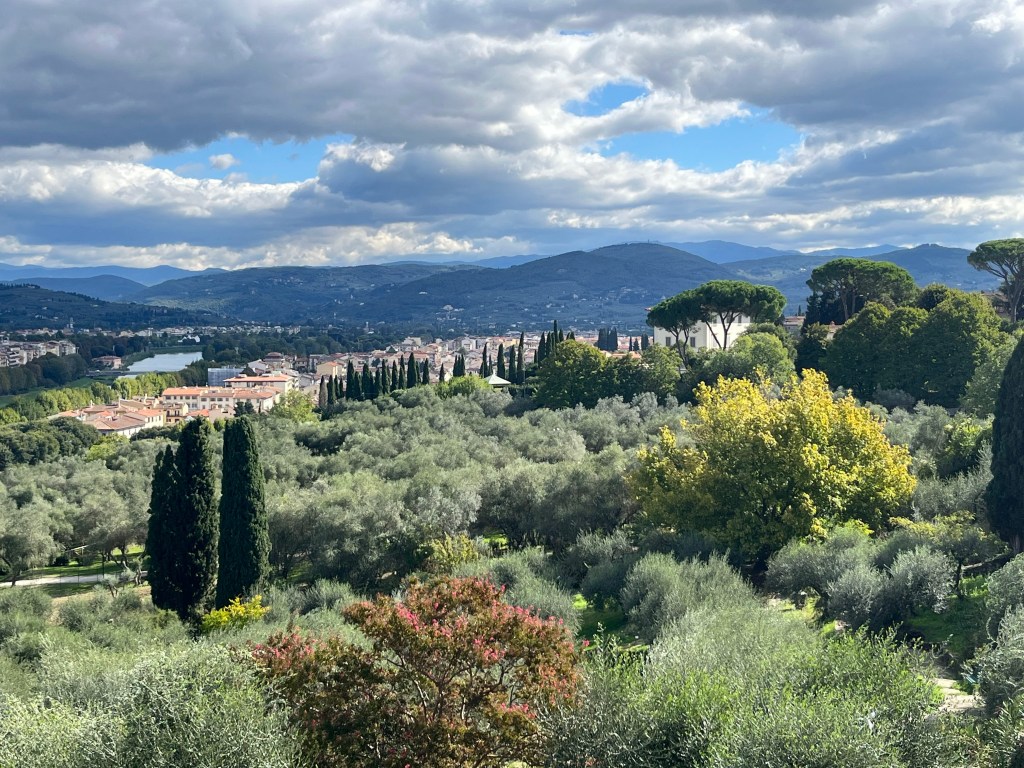
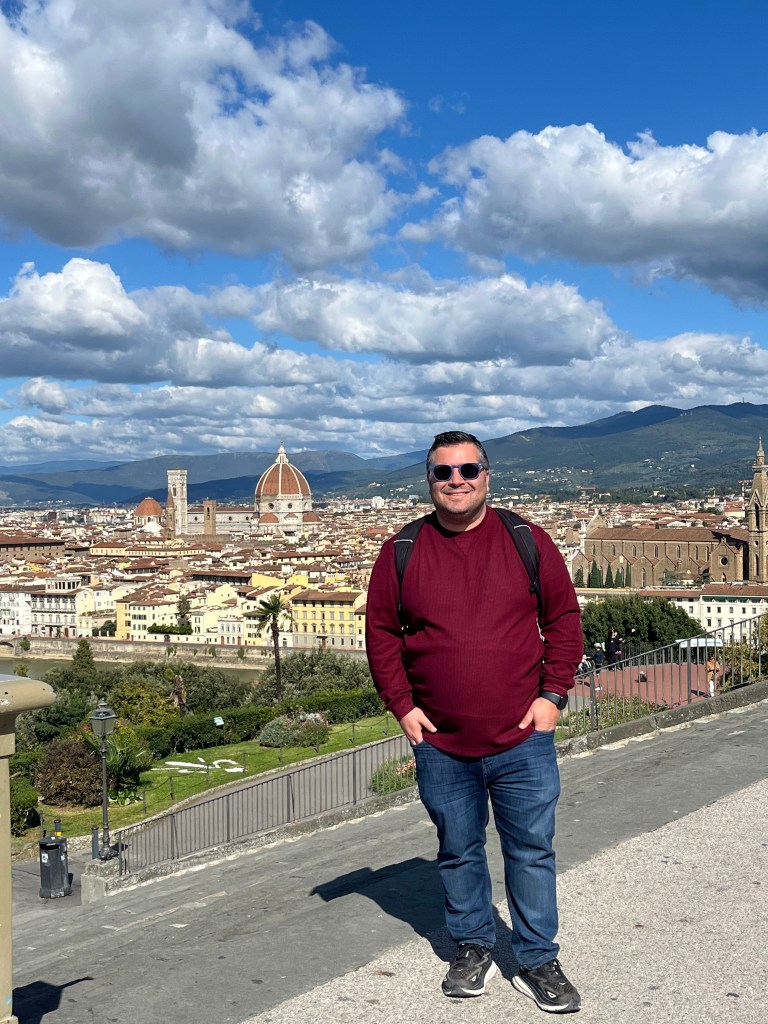
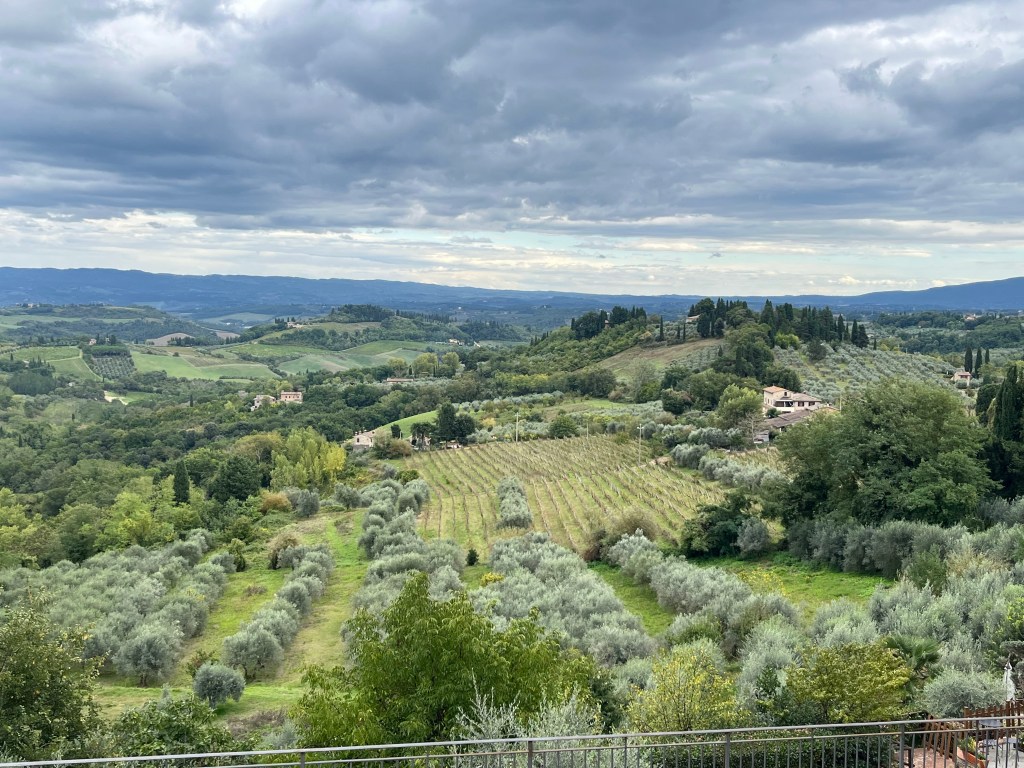
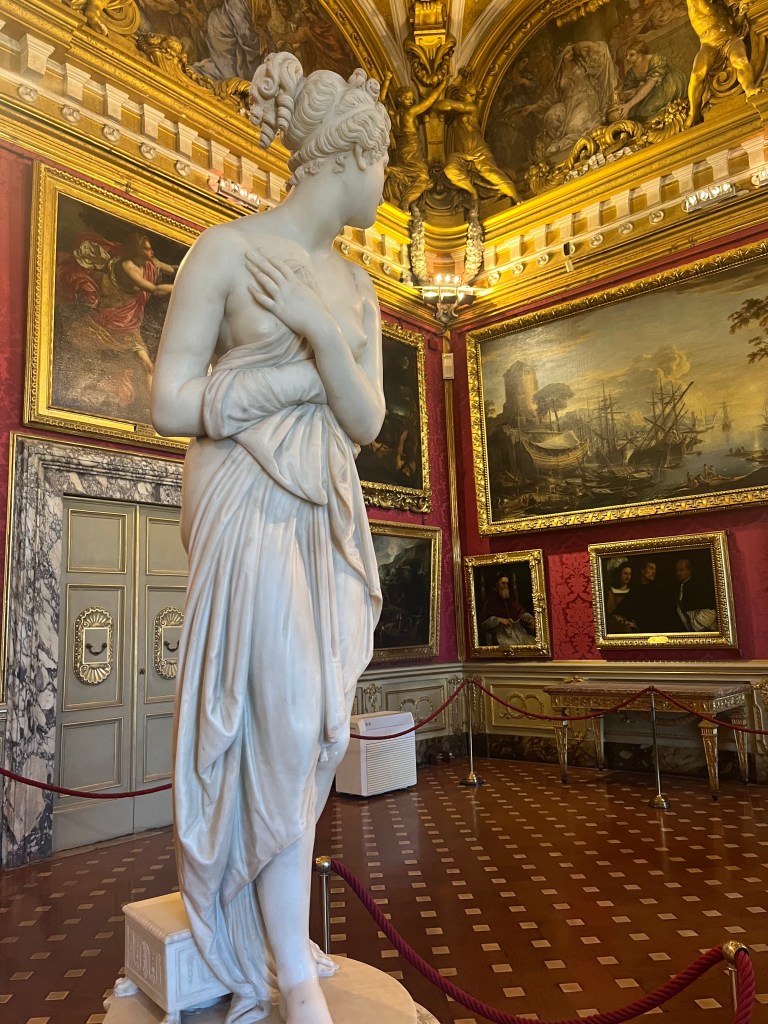
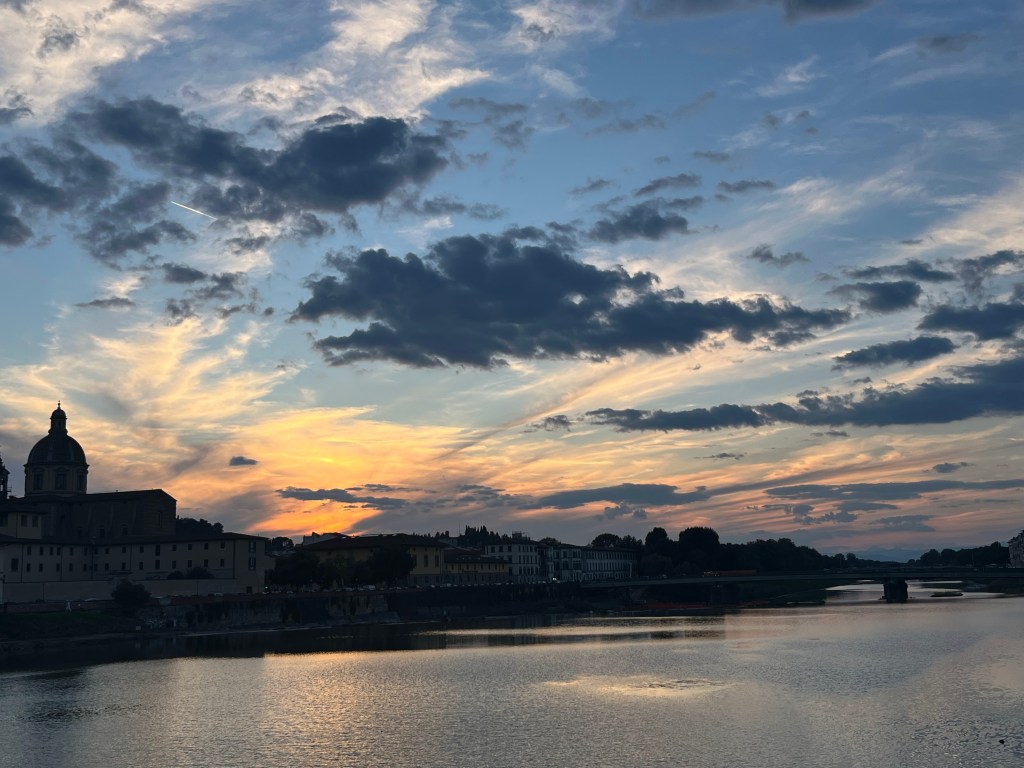
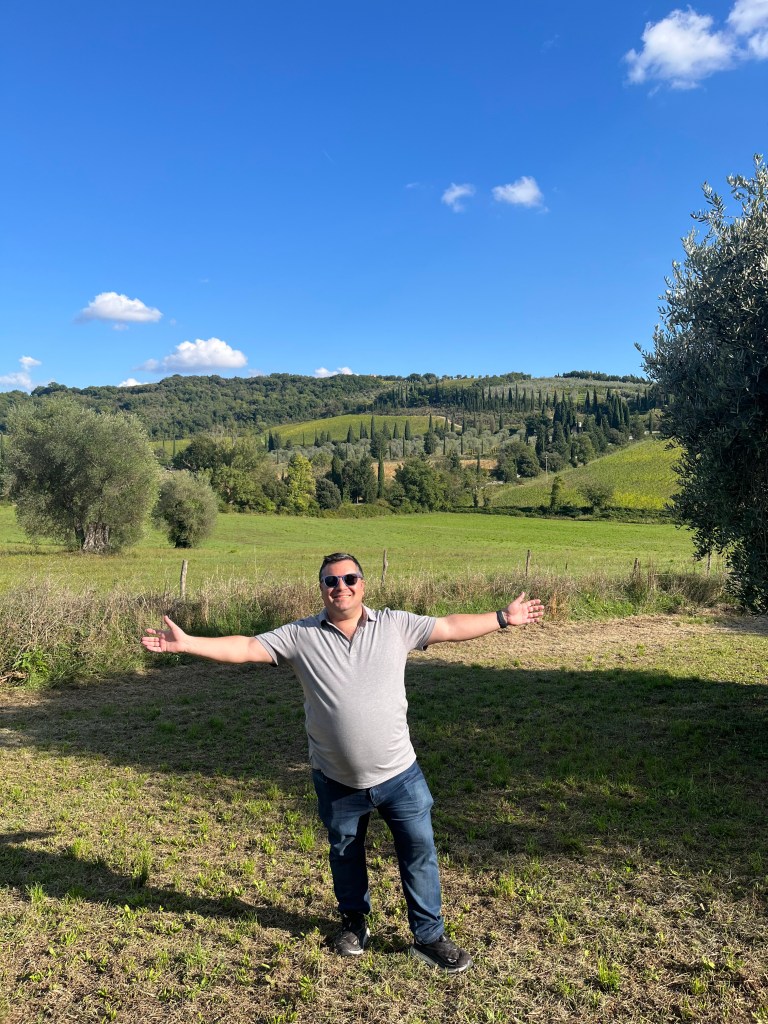
Feeling more buoyant after my visit to the Great Synagogue of Padova and the Jewish museum, I headed south to Florence for a few days. Florence, like Bologna, is generally rather lefty and occasionally graffiti-filled. But to its credit, it’s pretty damn beautiful. Not only the art and architecture of the city, but also its stunning countryside. The countryside in particular was soothing, as the medieval villages were clean and not filled with graffiti and fortunately trees can’t hate Jews. Here are some pictures from my travels in the area:
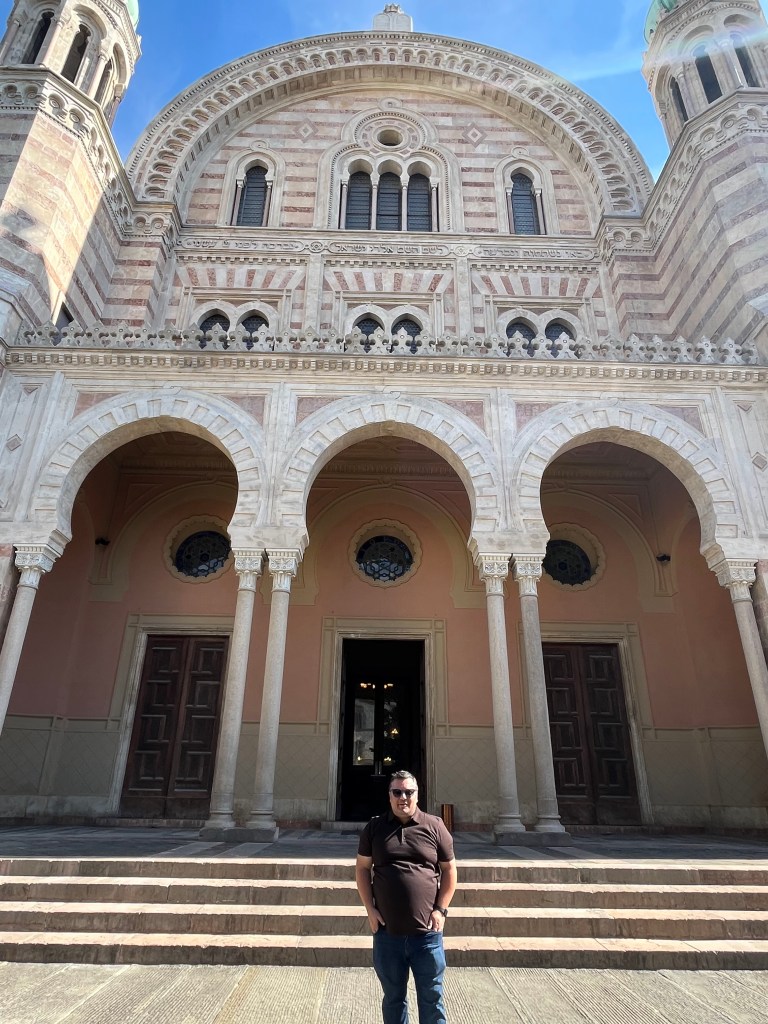
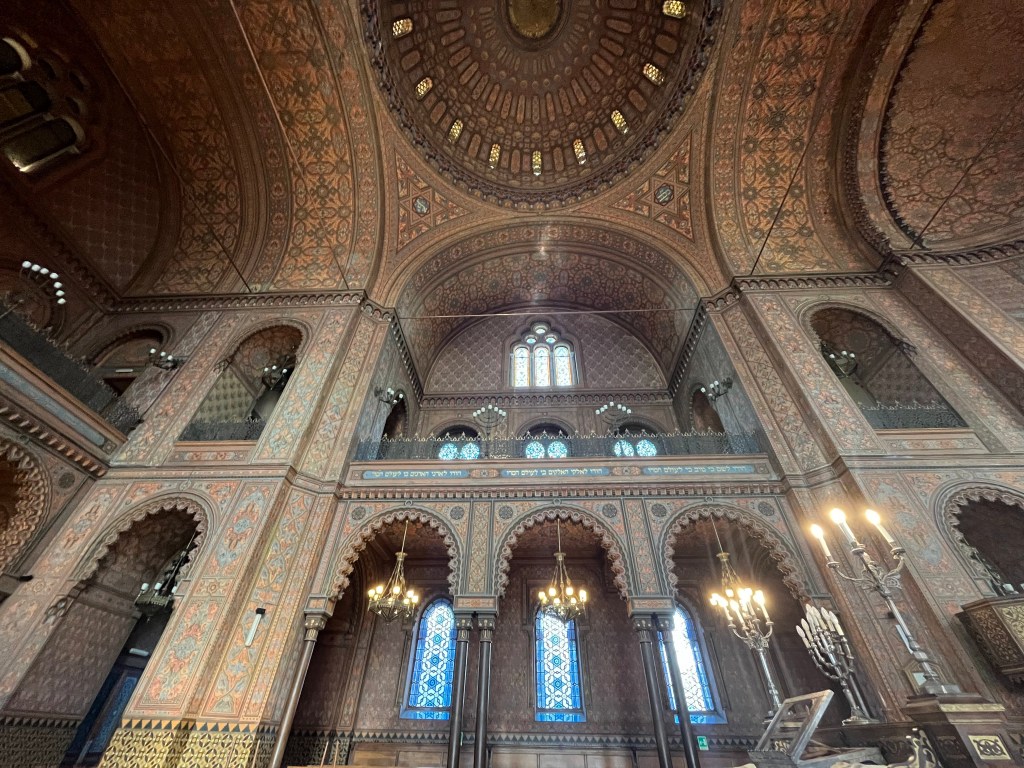
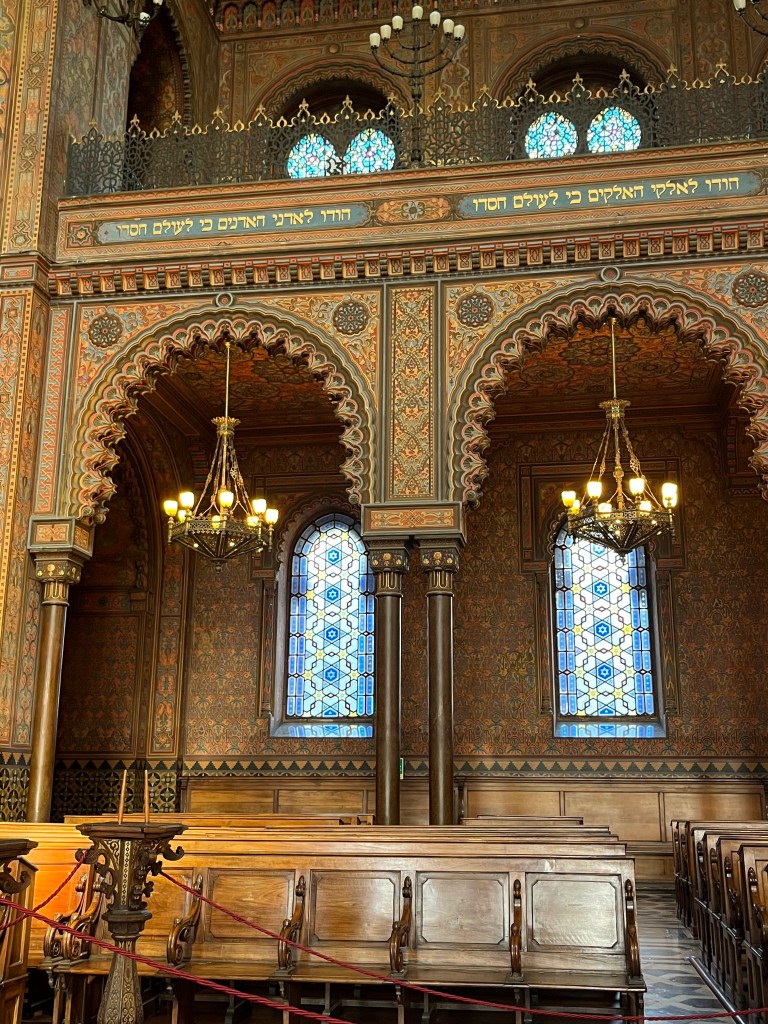
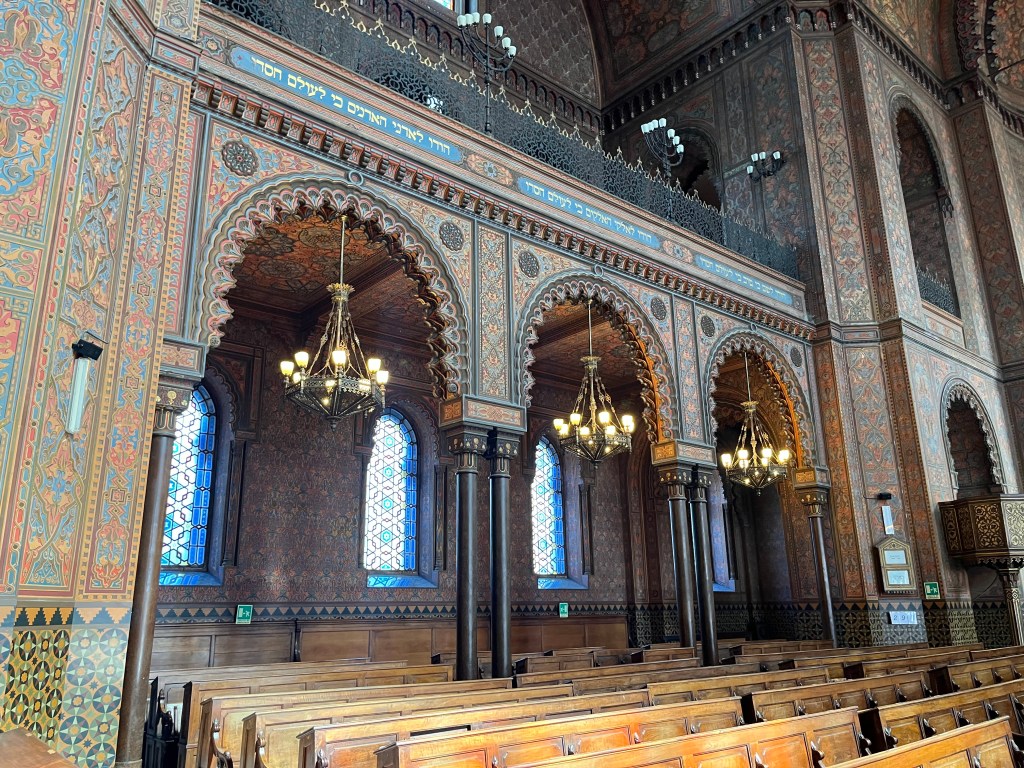
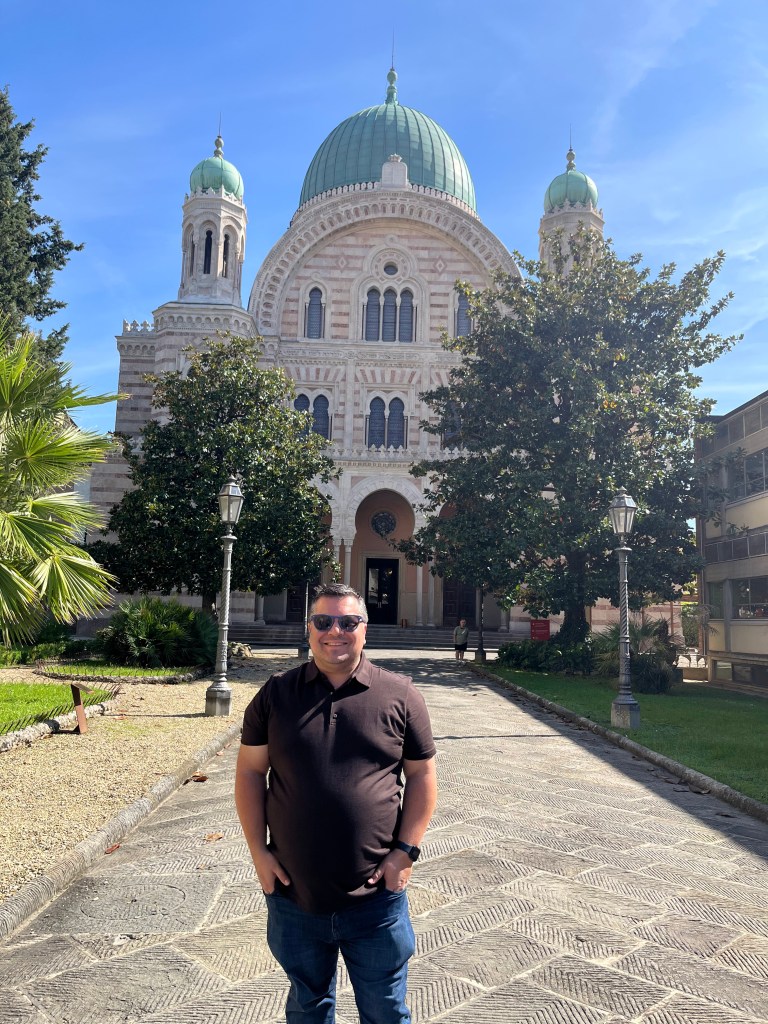
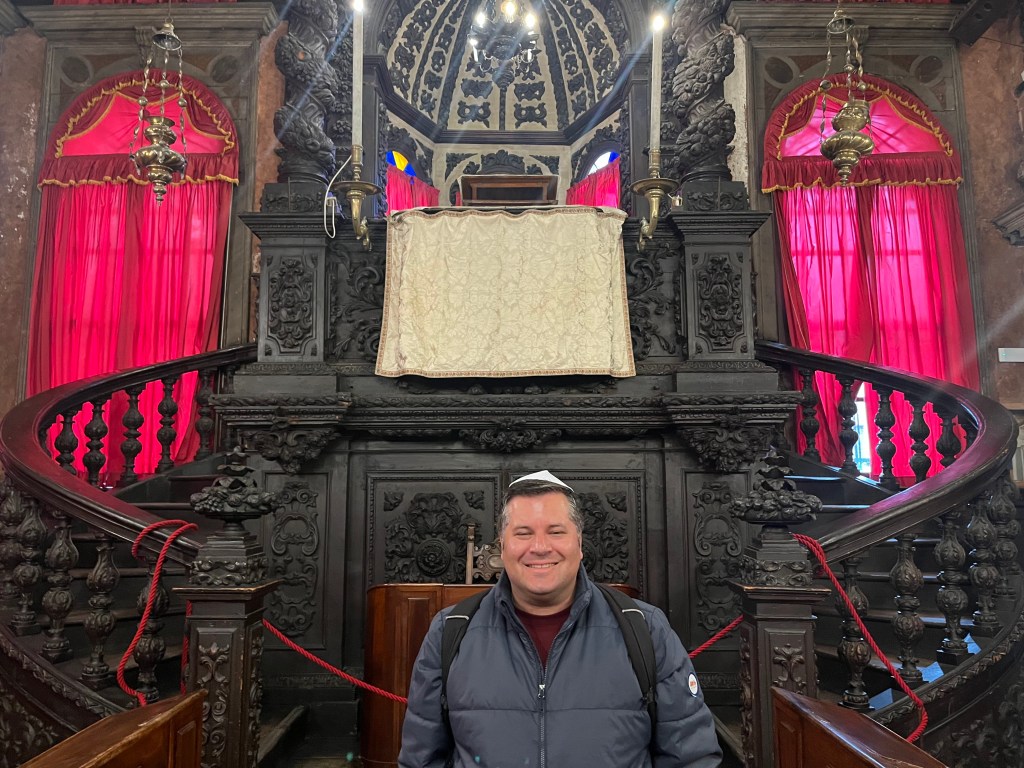
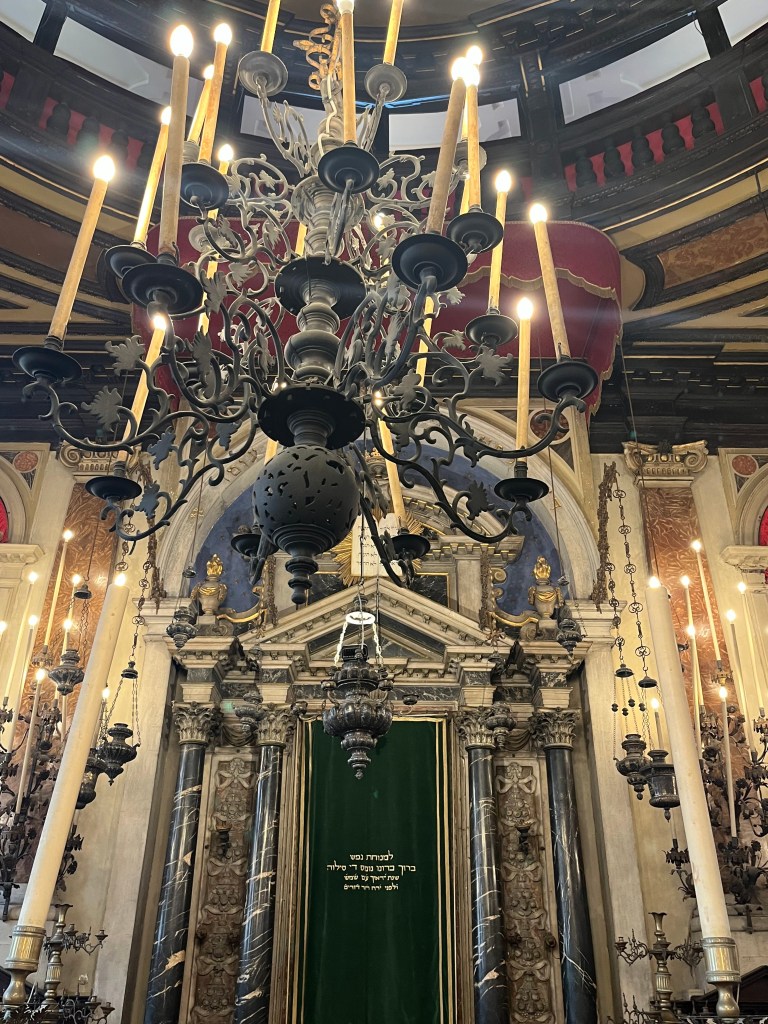
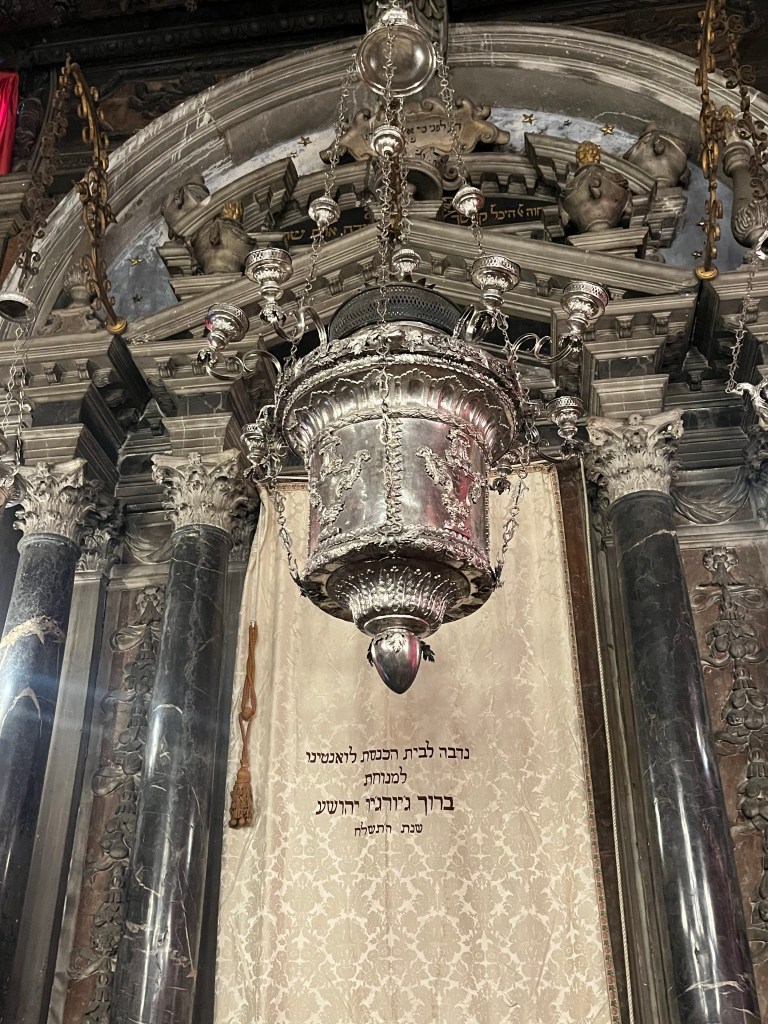
Florence and its Jews have a long history of ups and downs. The famous Medici family at times was very welcoming of Jews and helped them build quite a spectacular community. I got the chance to take a Jewish tour of Florence and learned a lot about the history of the community. The community, many hundreds of years old, lost half its members in the Holocaust between Italian fascist persecution and the Nazi invasion of the country. Its Great Synagogue and museum are absolutely worth a visit as well. Here are some pictures of the synagogue:
Perhaps my favorite part of visiting the synagogue besides the architecture was the chance to chat in Italian with the non-Jewish cashier and her friend in the museum bookstore. I speak intermediate Italian (with an occasional Spanish word thrown in) and they loved it! They were really touched that a non-Italian would learn their language, especially since among Romance languages it’s certainly less popular than Spanish or French, for example. We had a great conversation about Jewish life in Italy and Florence in particular. It was a beautiful moment that reminded me of the good in people. That while graffiti may be irritating and uncomfortable, it doesn’t represent everyone.
My last major stop on my trip was Venice. I had never been before and boy was it stunning. I stayed in Cannareggio, a historic area near the Jewish Ghetto and much quieter than the main touristic parts of the city, which was a true blessing.
Sadly, my travel plans to Venice got disrupted by a massive, 24-hour countrywide anti-Israel train strike and I lost about 700 Euros in having to change hotels and getting a new train ticket at the last minute from Florence. This train strike took place on Yom Kippur, making it even more offensive. I told my hotel manager that this was a real pain to deal with and his response was “pray for peace in Palestine”. Why a train strike in Italy would bring peace to Palestinians (or Israelis for that matter – not that they were included in the hotel manager’s prayers apparently) is beyond me. All it did was make me angry and not want to come back to Italy any time soon. Train strikes are frequent there, which I suppose is just part of the culture. Why it needed to be about Middle East politics was beyond me. Unfortunately the train strike was accompanied by a massive two-million-person national demonstration in every major city, complete with kuffiyehs, violence against police and property, and malicious anti-Israel signs. I can’t imagine what it’s like to live in Western Europe as a Jew. It unfortunately calls on the resilience of the oldest Jewish community of Europe to withstand such ridiculous bigotry and hatred. An ancient hatred renewed in modern times.
Once the rallies died down and the strike was over, I got to enjoy Venice. I traveled with a friend from the States who was also Jewish which was really comforting during this challenging part of the trip. My friend, perhaps a bit scarred by our experience with the anti-Israel strike and protestors, asked for a pseudonym to be used for this piece, which is understandable and incredibly sad. He was concerned that anti-Israel protestors might find him online and harass him. He was comfortable with me using the name “David” instead of his actual name.
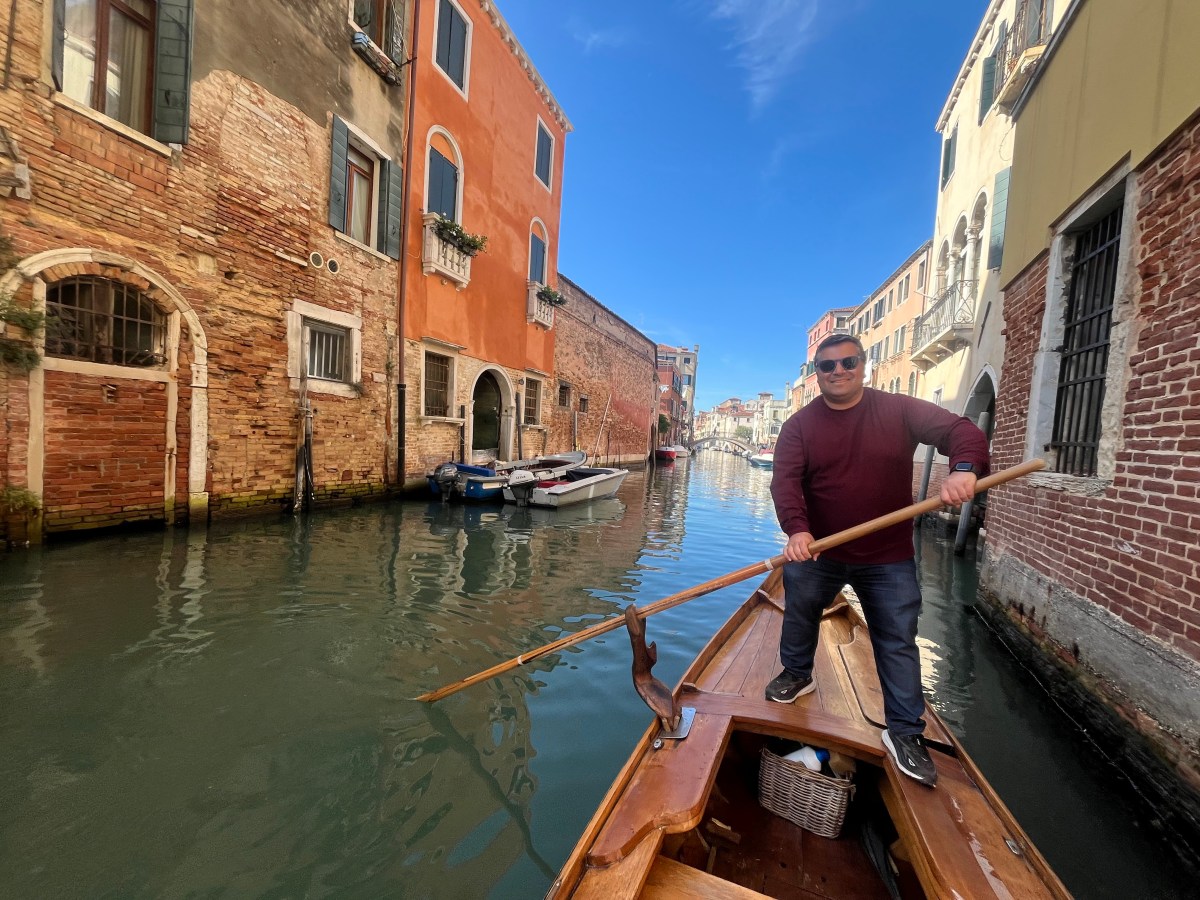
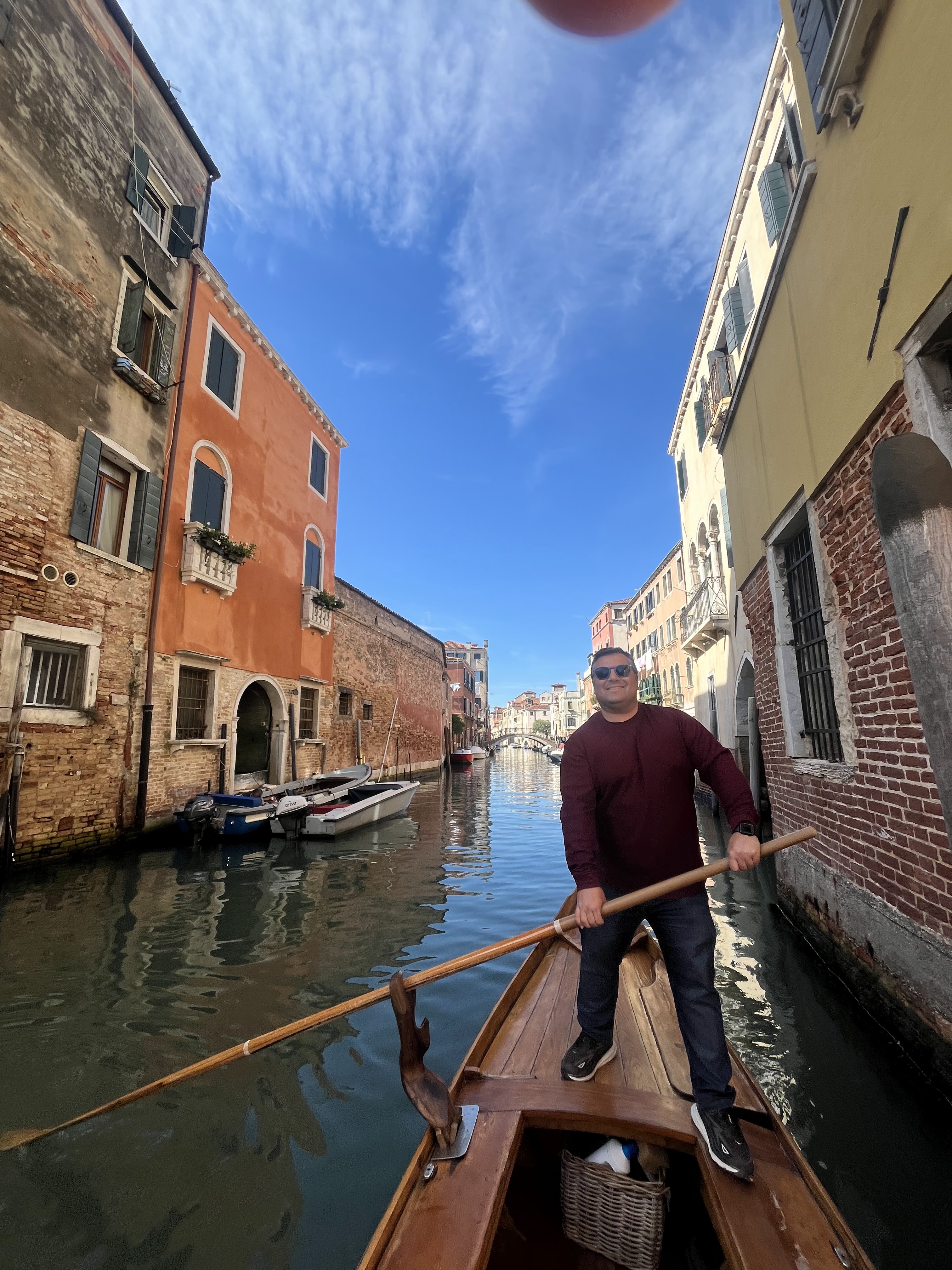
David and I did a lot of fun stuff. Venice is a city of the sea. I love being on the water. While David was busy doing some other stuff, I actually had the chance to take a gondola rowing class with Row Venice! It was a fabulous way to see the city and the teacher taught me some of the history too.
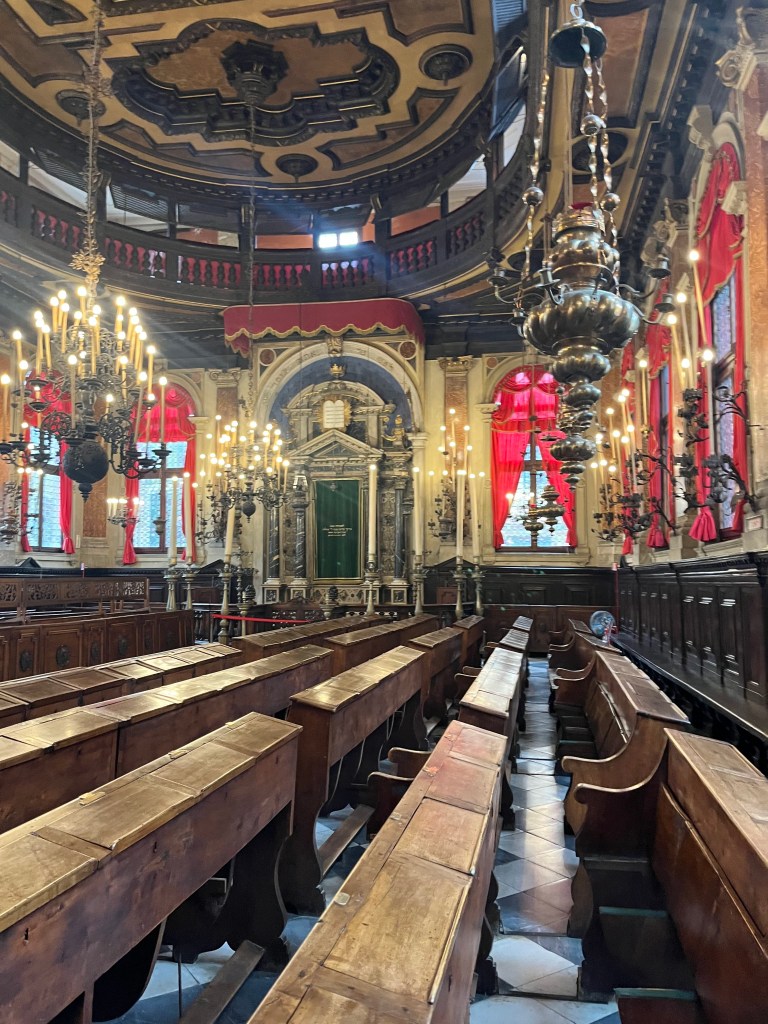
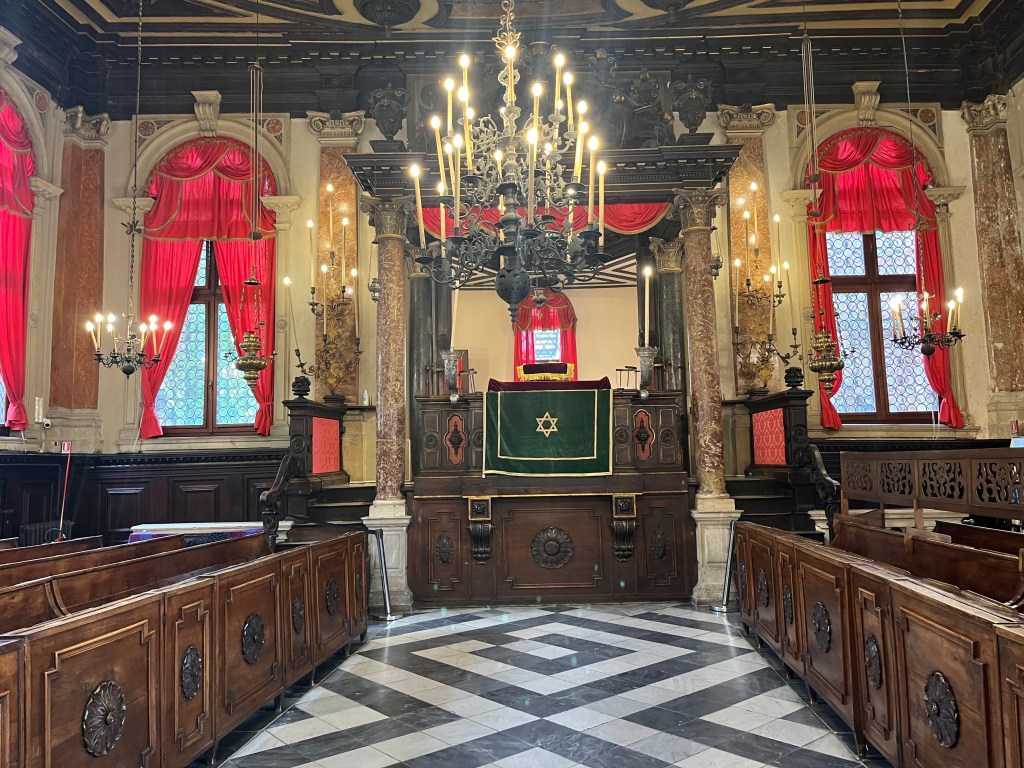
In addition to the typical Venetian tourist activities (I highly highly highly recommend a visit to the exquisite Doge’s Palace!), we got a chance to take a guided tour of the Jewish Ghetto. We loved our tour guide! You can book it here. The two synagogues we got to see were stunning. Learn more about the community’s storied history here. And here are some pictures below too!
One of the highlights of visiting the Venetian Jewish Ghetto (where the word “ghetto” actually comes from) was meeting members of the local community. I always love meeting Jewish brothers and sisters around the world and Venice was no exception. First, I went to the bookstore of the currently renovating Jewish Museum of Venice. The woman behind the counter was a member of the tiny Venetian Jewish community. She was so kind. I ended up buying a book about the Judeo-Venetian dialect (so cool!) and a book about Ashkenazi and Sephardic music from Venice. It was refreshing to talk to a Jew after seeing so much hatred on this trip. Perhaps finding community with our brothers and sisters and allies is a way of coping, a way towards resilience in these challenging times for our community around the world.
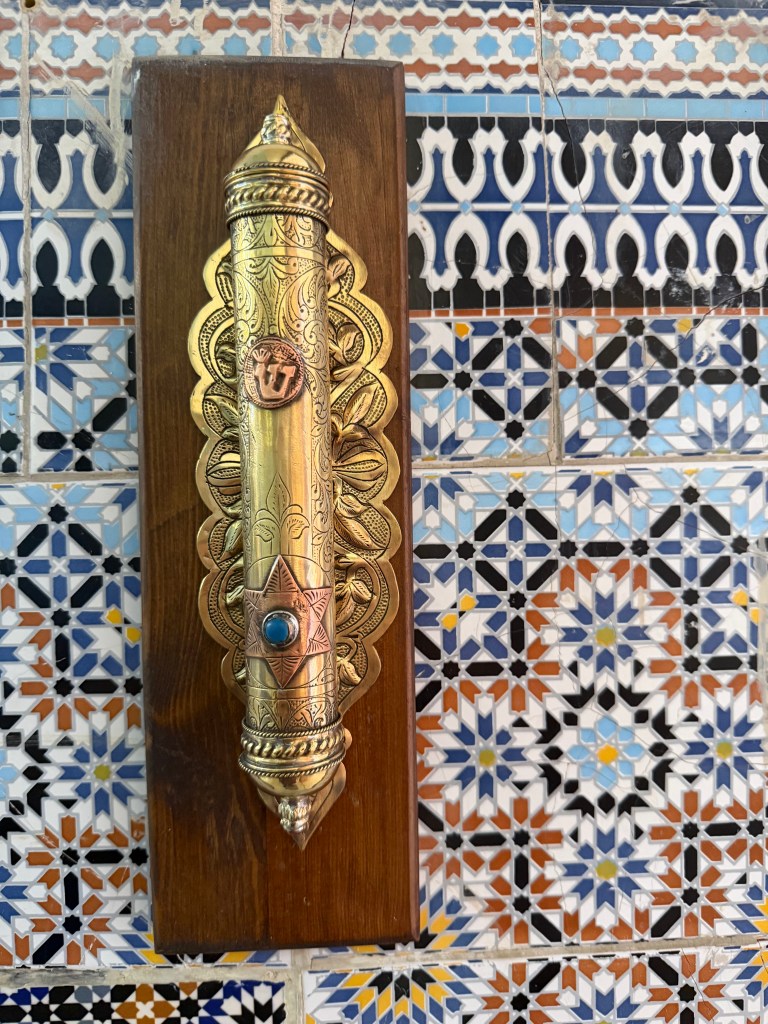
After the bookstore, I got some Judaica from a local store called Shalom. It was beautiful. For those of you who know me well, you might know that I recently moved to Atlanta. I’m excited to put up my new Murano glass mezuzahs I got at Shalom in my brand new apartment as a reminder of the fragility and beauty of Jewish life.
After a fun, challenging, and beauty-filled trip to Italy, I was ready to board my plane to Atlanta. I had many fond memories of the Jewish communities, museums, rural villages, and canals I had visited. But most of all, I wanted to go home. Not because I dislike Italy. But because Atlanta is a safer place to be myself, a gay Jew, than Florence, Padova, Bologna, Verona, Venice – any of these stunning places. They are fabulous to visit and I’m so glad I got to experience new things on this trip. But there is a reason I moved from D.C. to Atlanta besides the rats in my old apartment. It is because in these days of polarization, Atlanta is a haven. It is a moderate and open-minded city where nine times out of ten, I feel like I can just be myself. I’m not surrounded by the hate-filled graffiti and protests of D.C. or certain parts of Italy. I’m surrounded by acceptance and love.
I’ll put up my new mezuzahs soon and will always carry a piece of Italy in my heart – the kind people who opened up to me, both Jewish and non-Jewish. And let the mean folks float away like a piece of driftwood floating down a Venetian canal towards the great lagoon. Far away from my life.
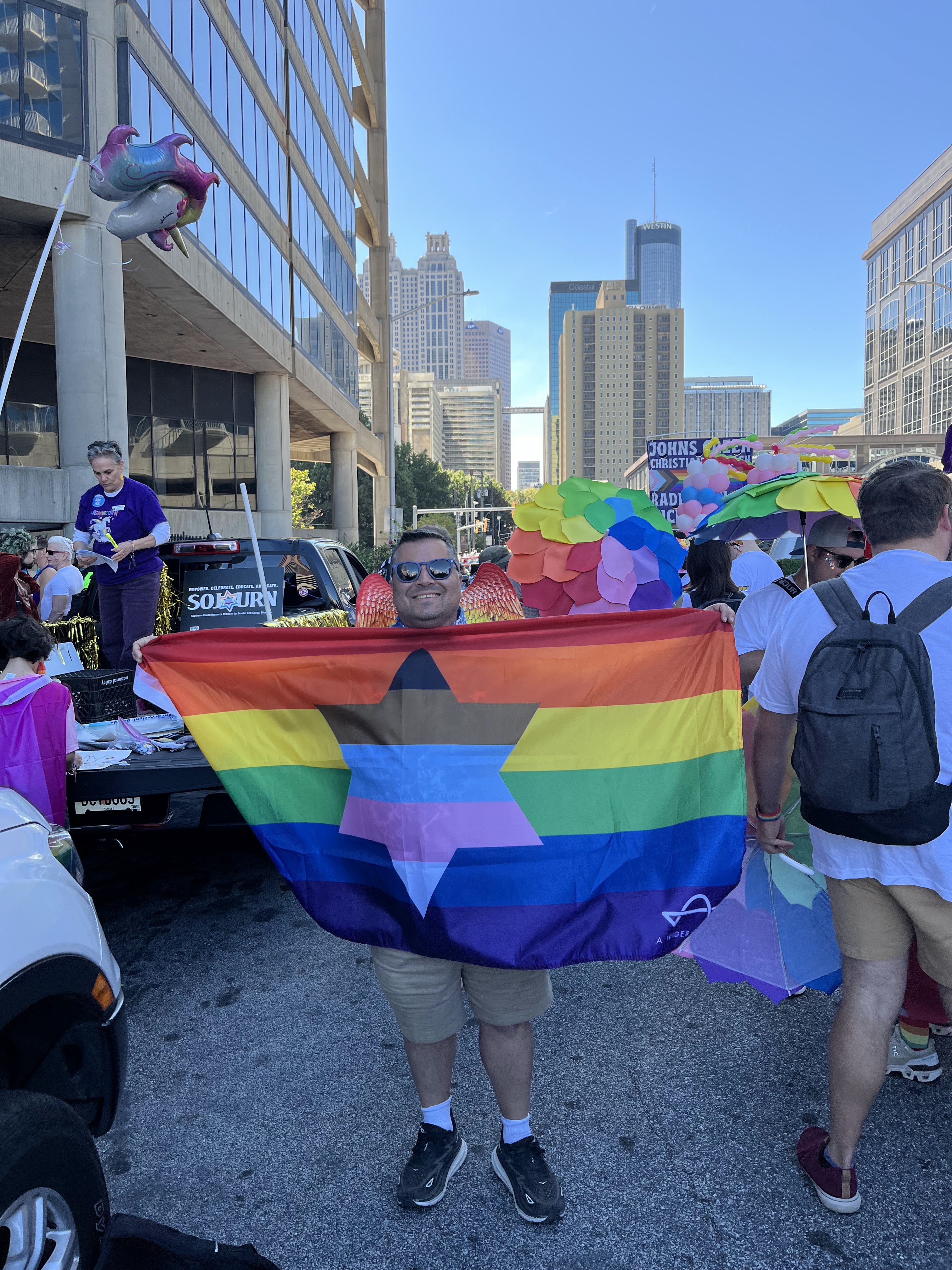
I’ll end with a picture of me marching proud with the LGBTQ+ Jewish community of Atlanta the weekend after I got back. Because there is no better antidote to hate than loving who you are. May we all get to know that acceptance and I hope for a better future for us all. Shanah tovah!
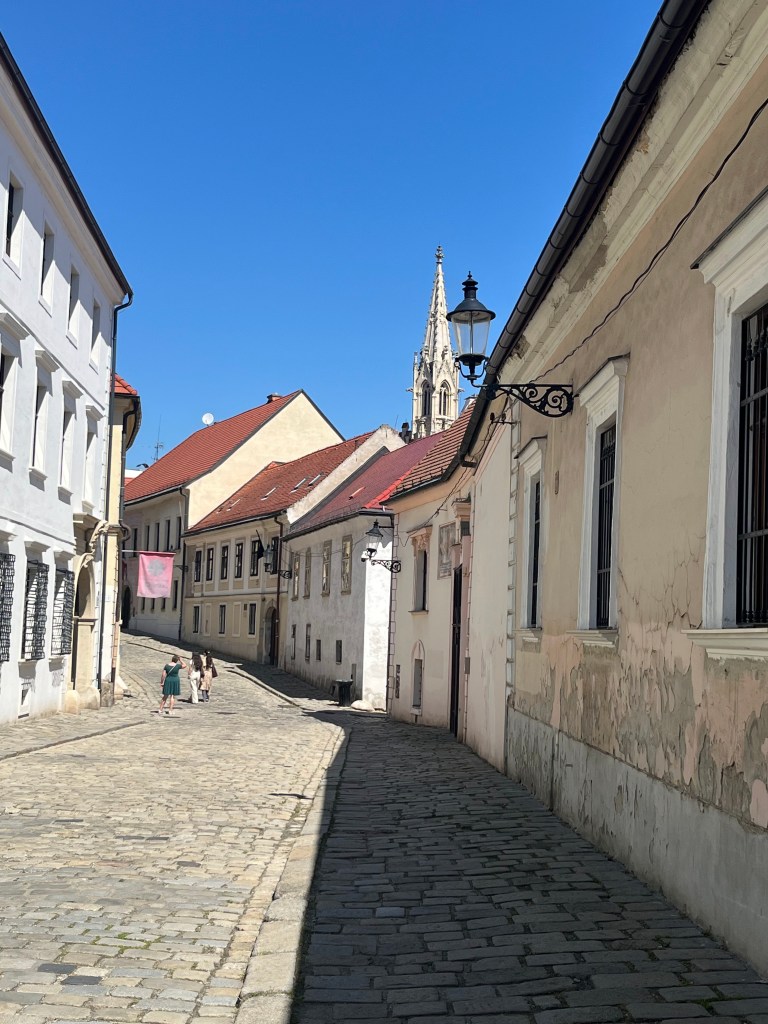
First off, Bratislava is a beautiful city. I had never been to Slovakia and wasn’t sure what to expect, but its cafes were cute, its churches elegant, and its vibe very chill. It makes for a great day trip from Vienna, where I was staying.
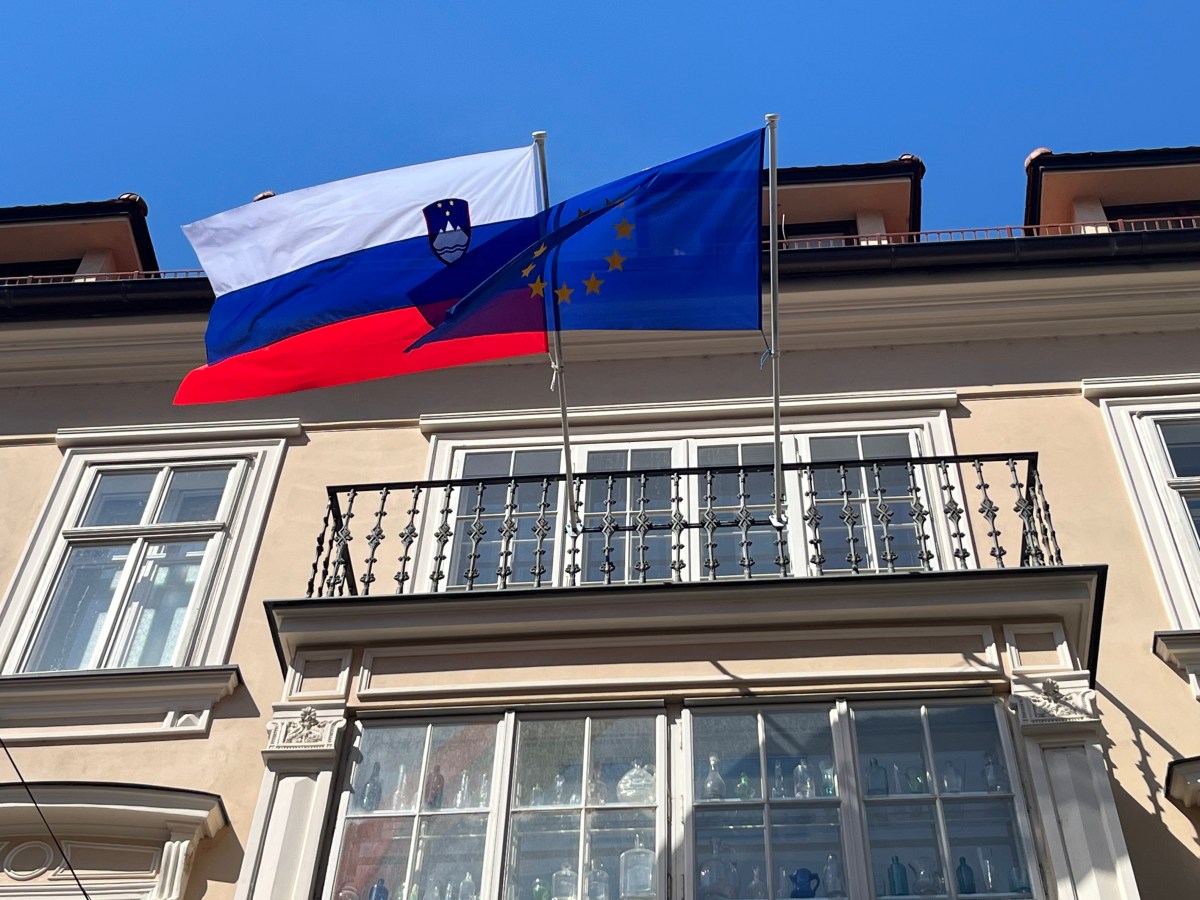
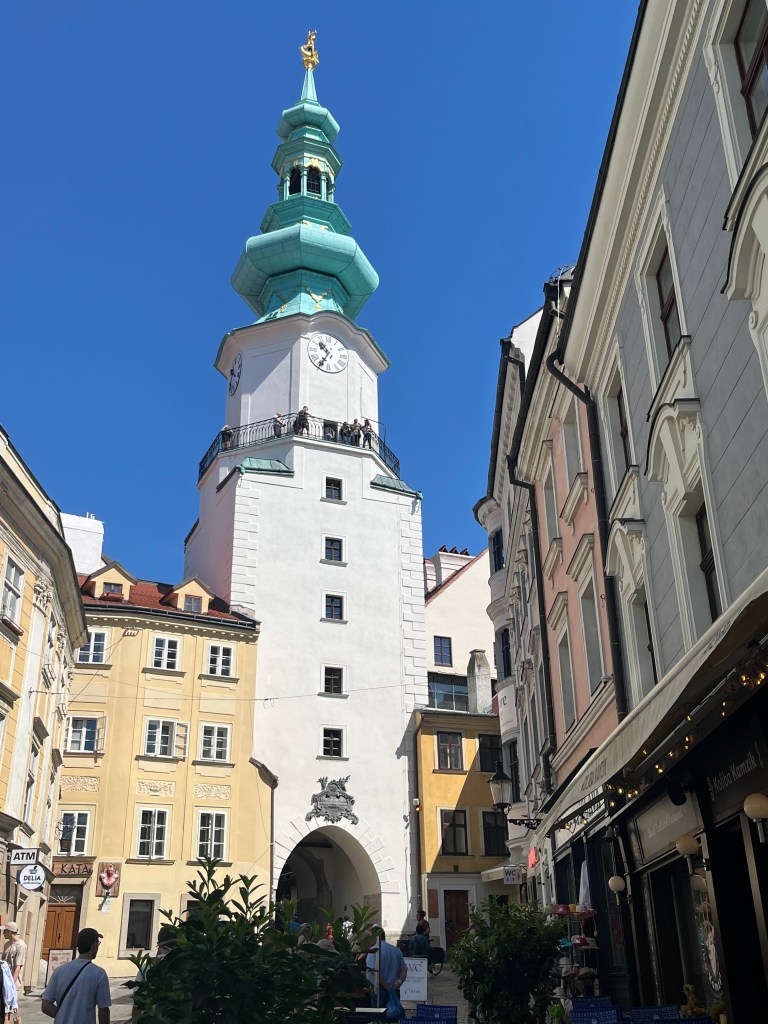
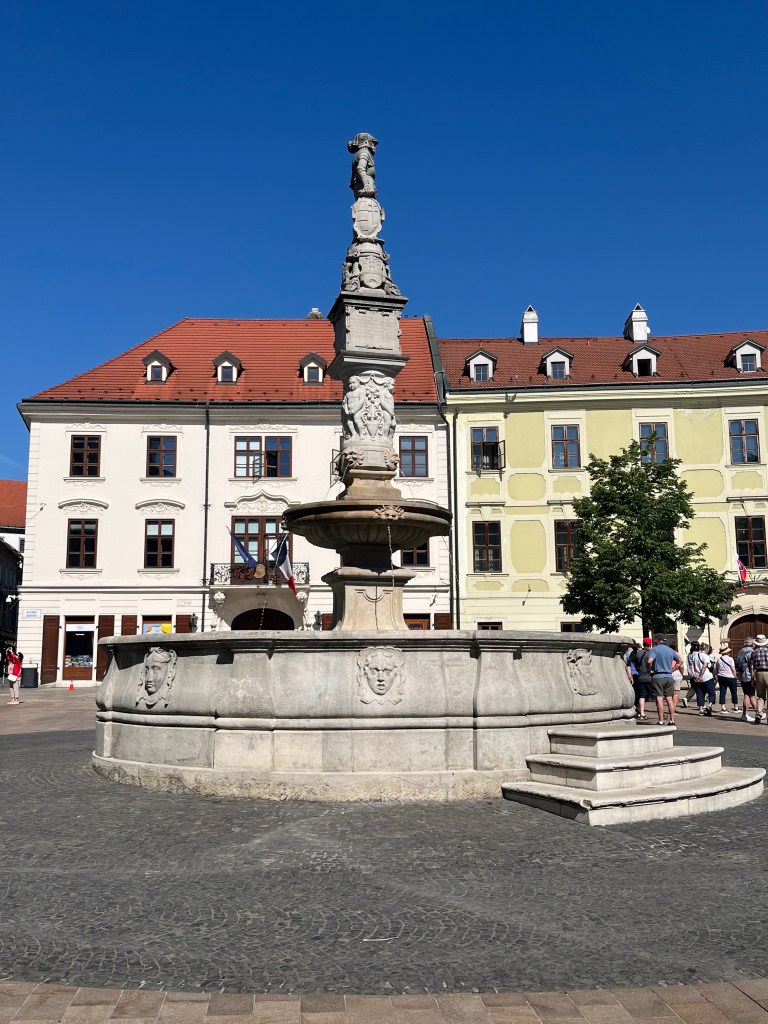
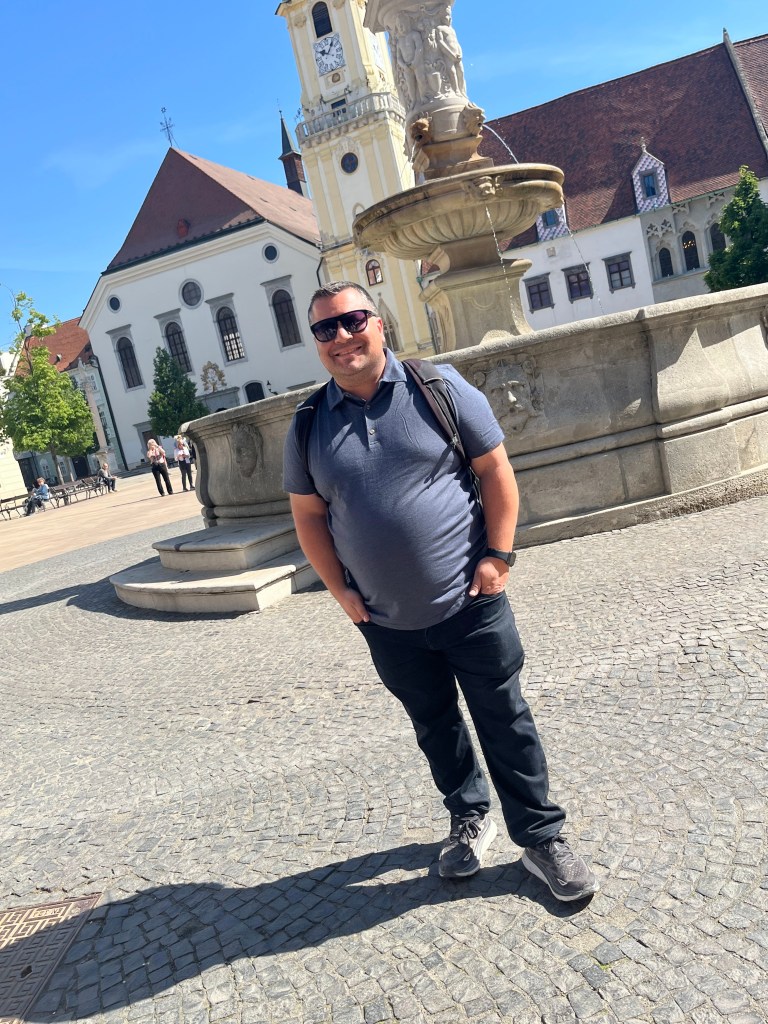
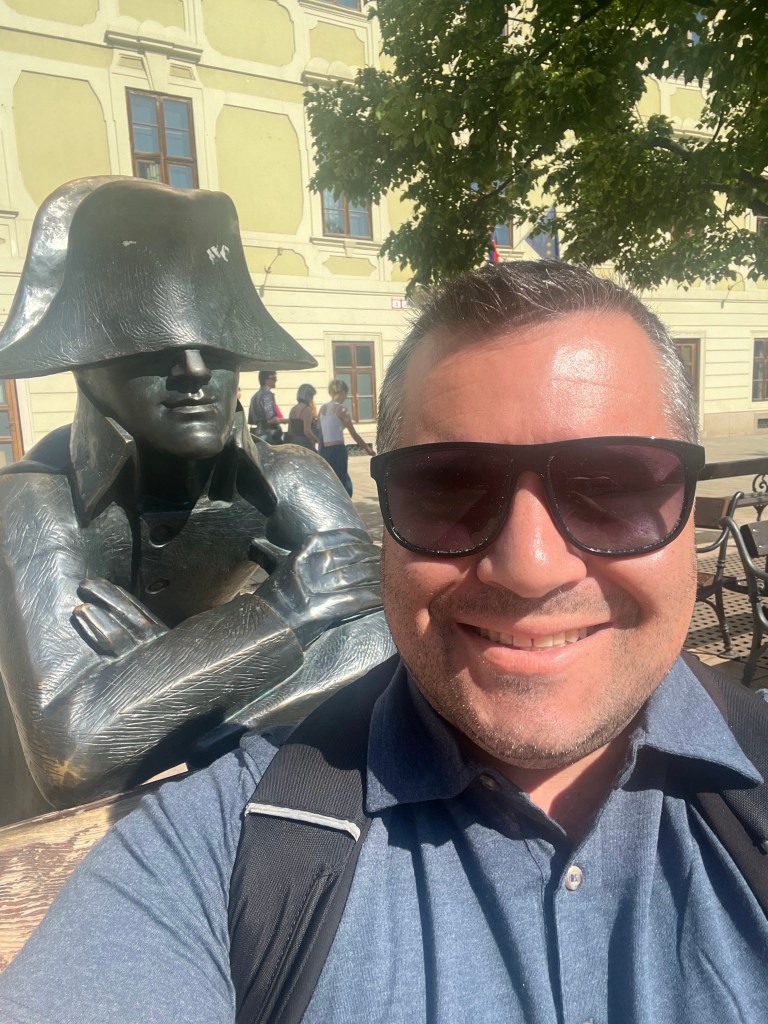
Here are some photos to give you an idea of what it looks like:
One of my favorite ways to get to know a new city is through its bookstores! I love books. They’re the only physical possession I care about and I love reading and collecting them! As was the case with a bookstore in Salzburg, the bookstores in Bratislava led me to some interesting discoveries.
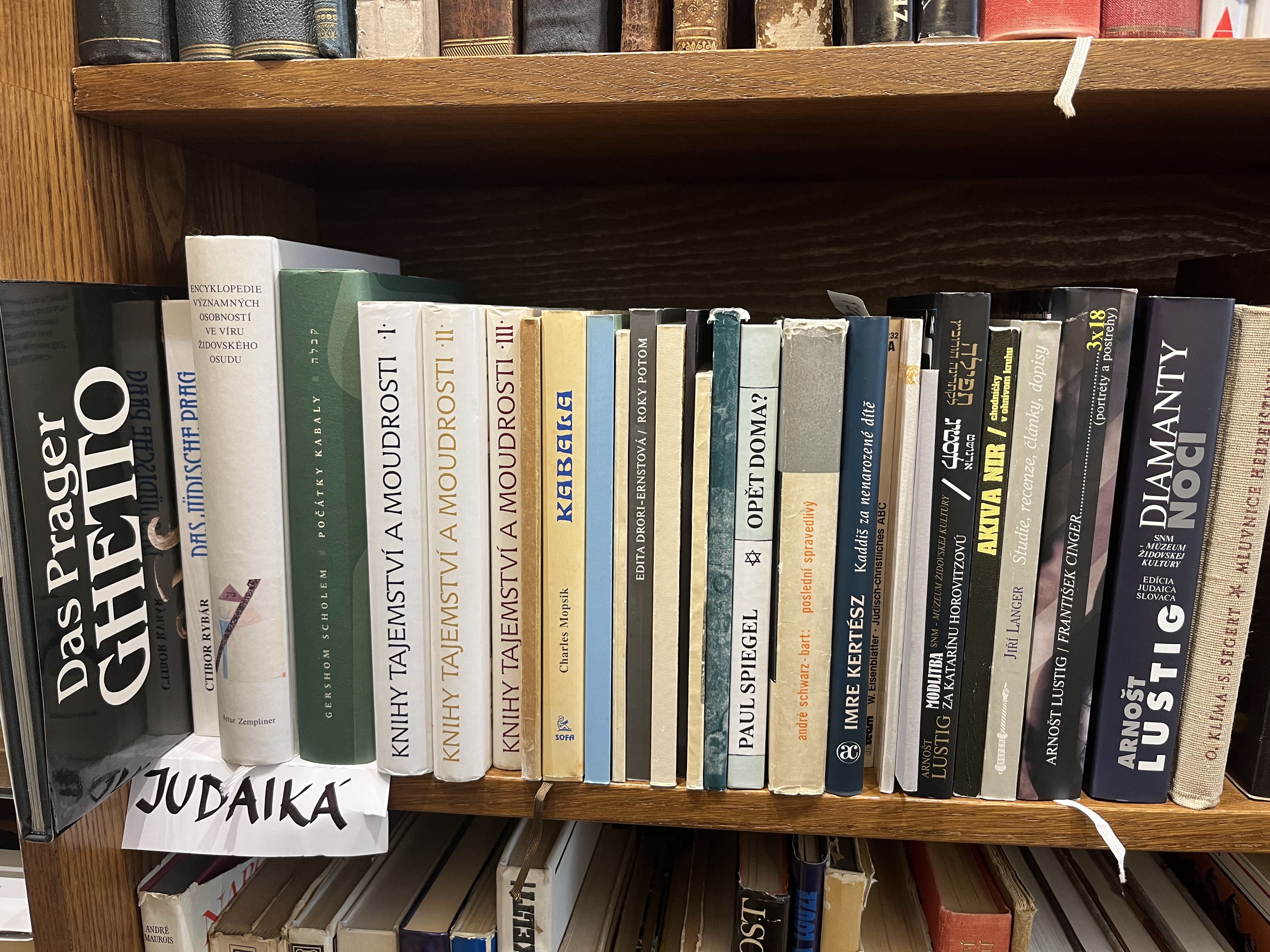
The first store I went to primarily sold new books. I got some Slovakian gay poetry and then asked where I might find Jewish books. I was able to find a book of Psalms written in Hebrew and Slovak! And one of the coolest parts about it was that it was new – meaning Jewish life still breathes in this part of the world. Sadly, the Jewish museum was closed on the day I visited, but apparently Bratislava has quite a significant Jewish past. In 1880, 16% of the city was Jewish– a higher percentage than today’s New York City! Today only 1,000 Jews live in Bratislava, from a pre-Holocaust population of 15,000. I’ll definitely want to come back and get to know the community more!
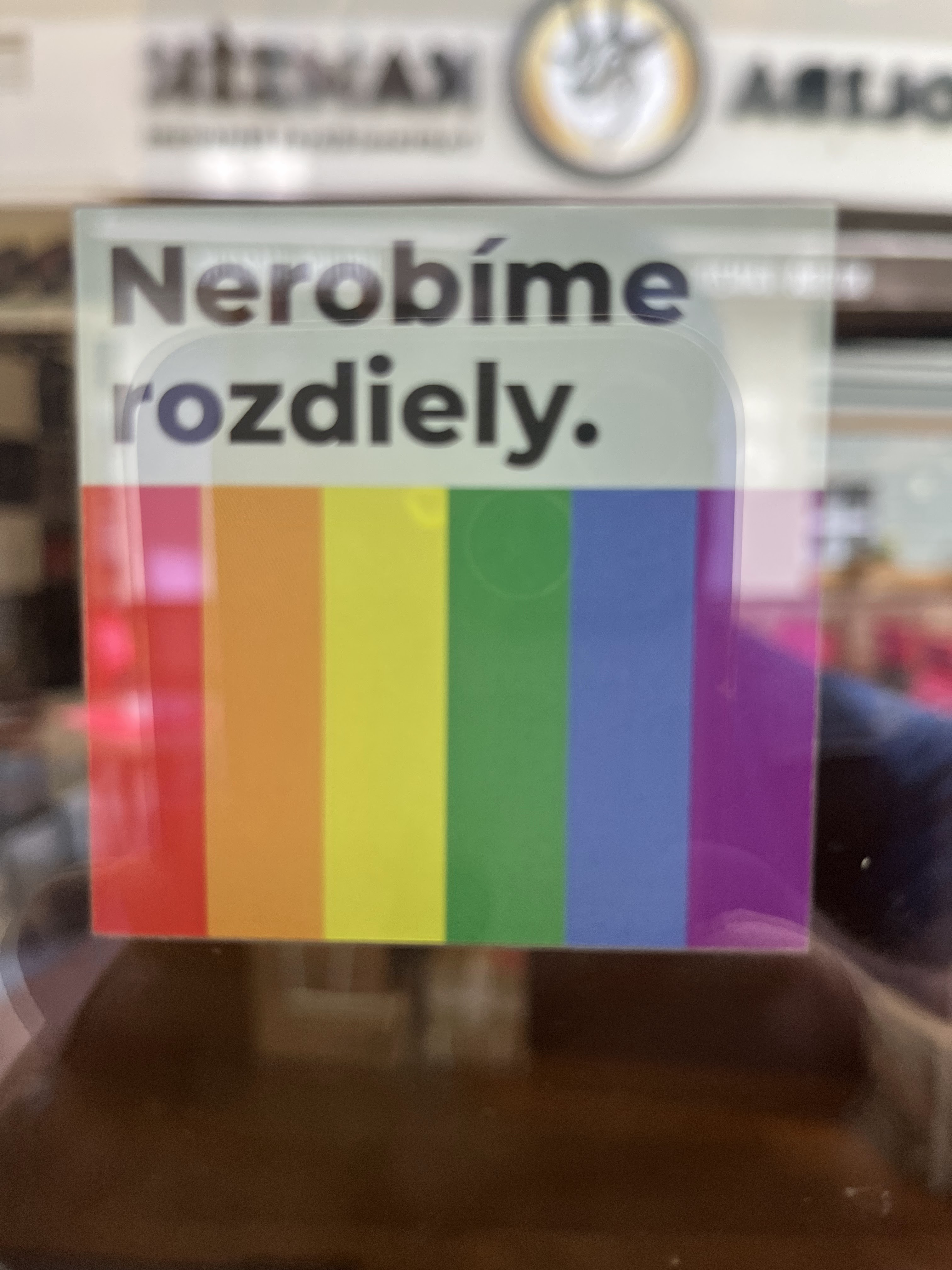
I had a meaningful conversation with the bookstore employee about LGBTQ+ rights in Slovakia, where she said it can be quite hard to come out. I was happy to see both of my identities validated – Jewish and gay – in this cute store. On the door to the store was a Pride sticker that said “we don’t differentiate (i.e. discriminate)”.
After visiting this cute spot, I found a used bookstore around the corner- Antikvariát Steiner. This bookstore is a treasure trove of old books! It was owned by a Jewish family before the Holocaust and I immediately asked to be pointed towards the Jewish books.
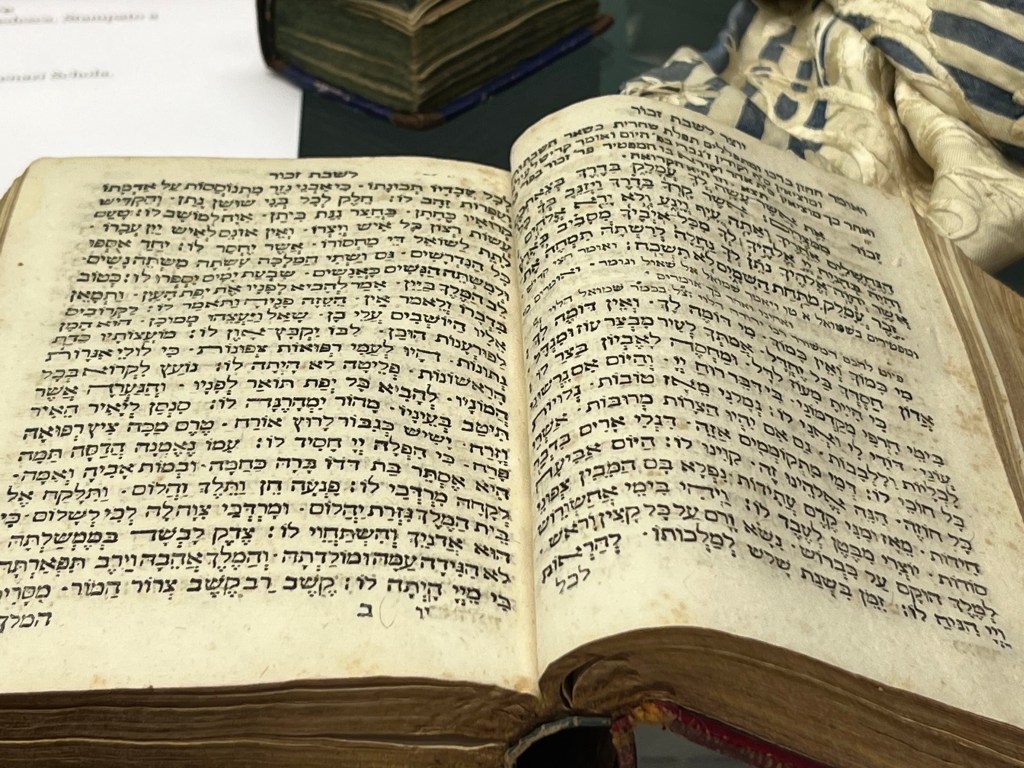
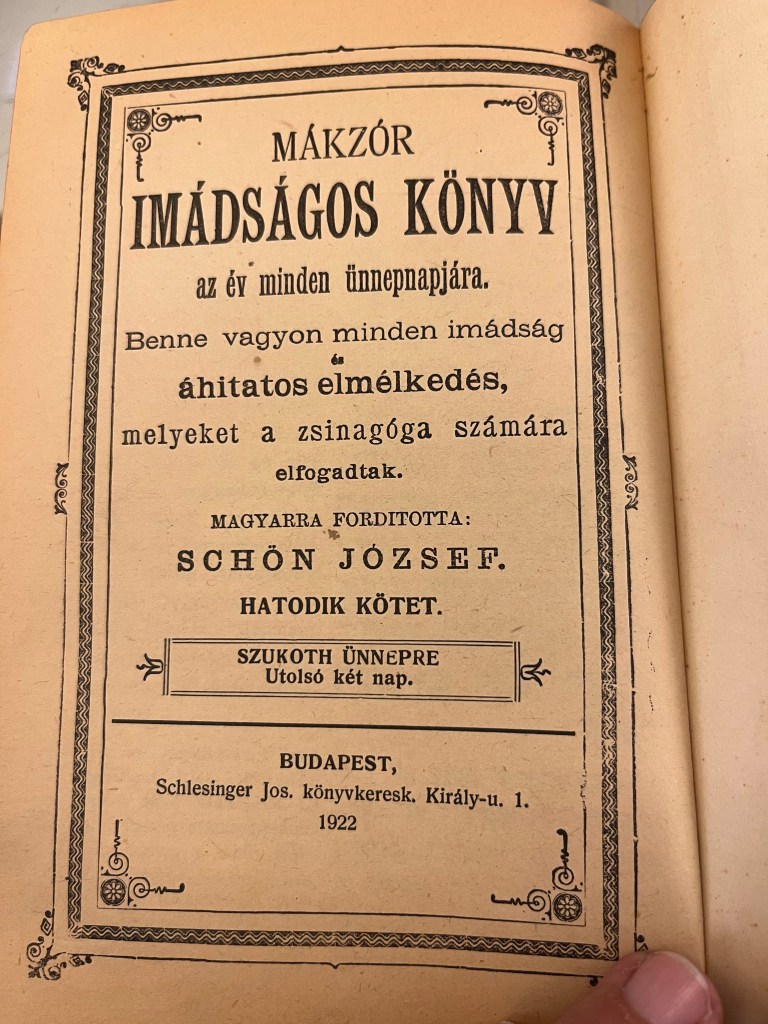
Perhaps because I am part Hungarian-Jewish, my eye was drawn to a machzor, a High Holiday prayer book in Hungarian. It was from 1922 and printed in Budapest, only a few hours away these days by train:
What was a Hungarian-language prayer book doing in Bratislava, Slovakia? Well, the answer is that this city used to be pretty diverse. Besides having a large historic Jewish population, the city was in 1910 40% Hungarian! And it wouldn’t surprise me if a number of the local Jews spoke Hungarian, just like my great-grandparents who immigrated to the U.S.
In fact, this visit to Slovakia could very well have been a homecoming for me. I know that my great-grandparents were from a town called Pacza (sometimes spelled Pacsa) in the former Hungarian Empire. However, the genealogists at the Jewish Museum in Budapest said it could be several different places, perhaps Pacsa (near Lake Balaton). But one of the villages mentioned was Pača in present-day Slovakia.
Perhaps I’ll continue doing some genealogy to find out exactly which village it is. But on some level, I am comfortable with the ambiguity. Much like Bratislava, I’m a mix. Bratislava was ethnically German, it was Hungarian, it was Jewish, it was Slovakian, it was Romani. And like Central Europe as a whole, I’m a bit of everything.
In days in which the world is so polarized between “this” or “that”, perhaps we can all strive to be a bit more like Bratislava and embrace our mixed heritage. Nuance. And diversity of thought and culture.
If you haven’t had the chance to visit this gem on the Danube, I highly recommend it and who knows what its books and history will lead you to discover!






You must be logged in to post a comment.