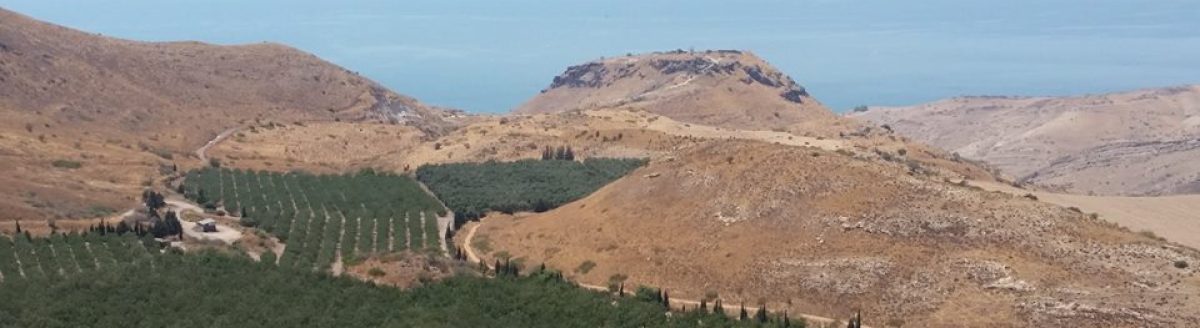
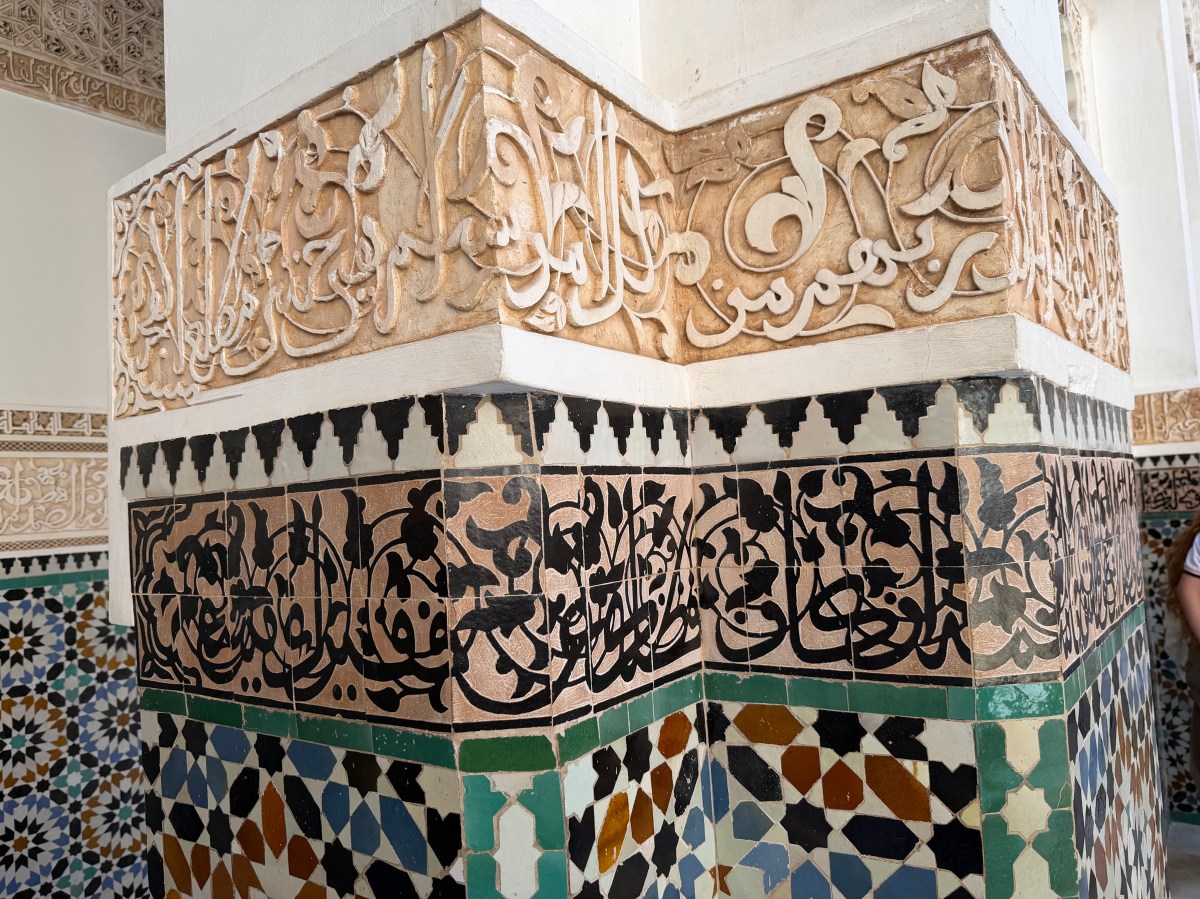
The answer for many Moroccans is “no”. How could that be? Arabic is an official language of the country. It is taught in schools, used by Muslims of all backgrounds in prayer, and is spoken on the streets. I used Modern Standard Arabic, Syrian Arabic, and French to get around the country even though I didn’t speak the local variety called Darija.
And yet, Morocco has another official language and no, it’s not French despite its widespread use. It’s Amazigh! Amazigh is the native language of Morocco and wide swaths of North Africa. In fact, it has many dialects within the country and across the region, some of which are not very mutually intelligible.
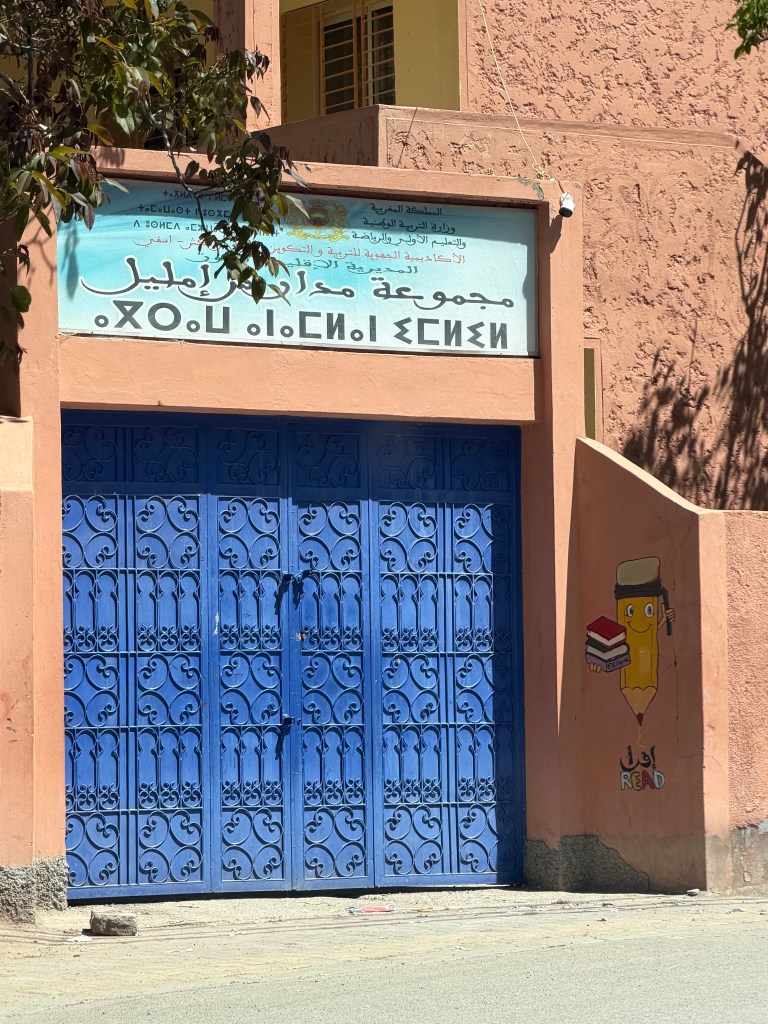
This is what the Amazigh script looks like (though some speakers in North Africa may use Latin-based or Arabic scripts):
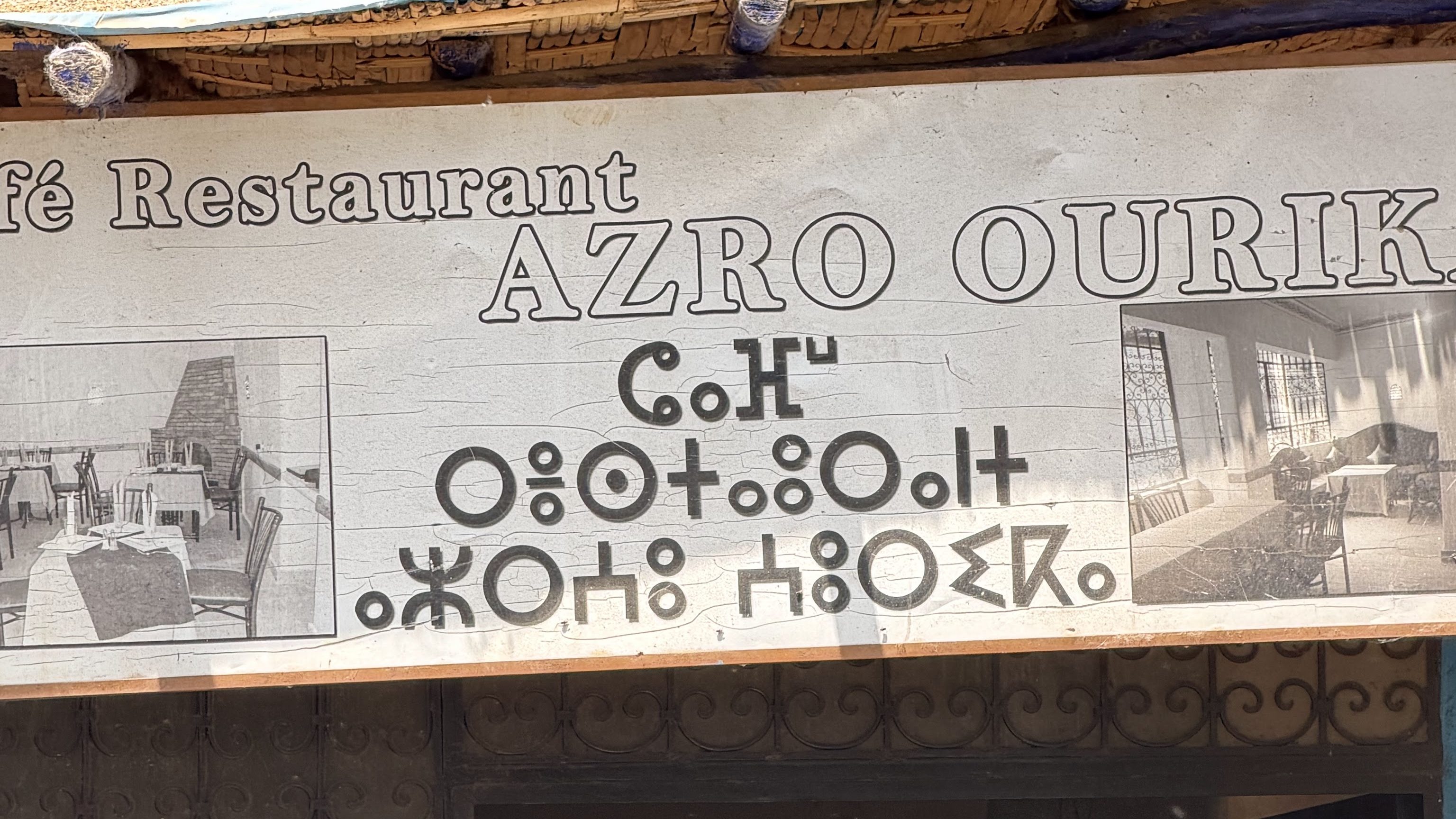
It looks nothing like Arabic, sounds nothing like Arabic, and its vocabulary is unrelated to Arabic. In other words, it is the native language of Morocco because it existed there before the arrival of Arabs and Islam in the seventh century. And to this day, it is the mother tongue of 24.8% of Moroccans and is understood by many people as a second language. As far as ancestry, studies range wildly from 35% to 70% of Moroccans having some Amazigh roots.
When I visited Morocco recently, I met Amazigh people both in the major cities and in the countryside, where their numbers are even greater. My first interaction was at the riyadh (traditional bed and breakfast) I stayed at in Marrakesh. One of the staff members was named Muhammad and when I started to speak with him in Arabic, he told me: “I prefer to speak in English and not in Arabic because I am Amazigh.” It hadn’t even occurred to me that someone in Morocco would prefer English over Arabic for reasons of cultural identity, but from then on, I respected his wishes and he taught me a few Amazigh words each day.
The Marrakesh medina (or “old city”) is fun but deeply chaotic with donkeys and mopeds and people running all over the place. I decided to take a break and head to the countryside for a day trip. I visited Amazigh villages on the way to (and in) Imlil. The mountains are deep green and sometimes snowcapped. The streams are beautiful. And the people are incredibly hospitable.
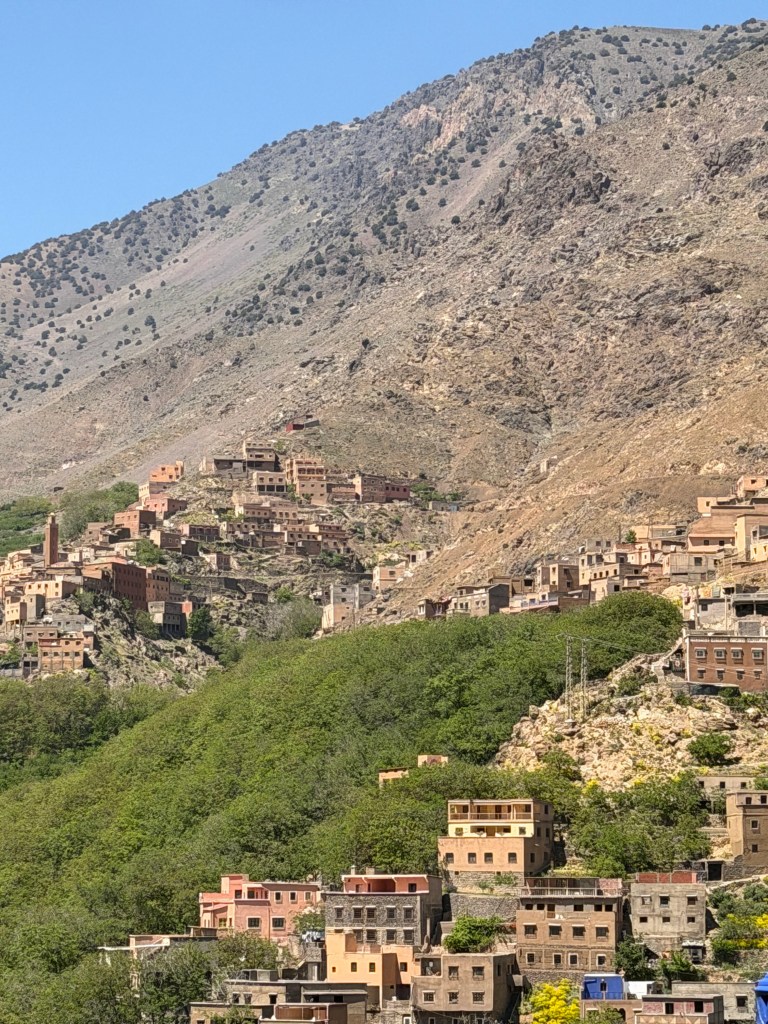
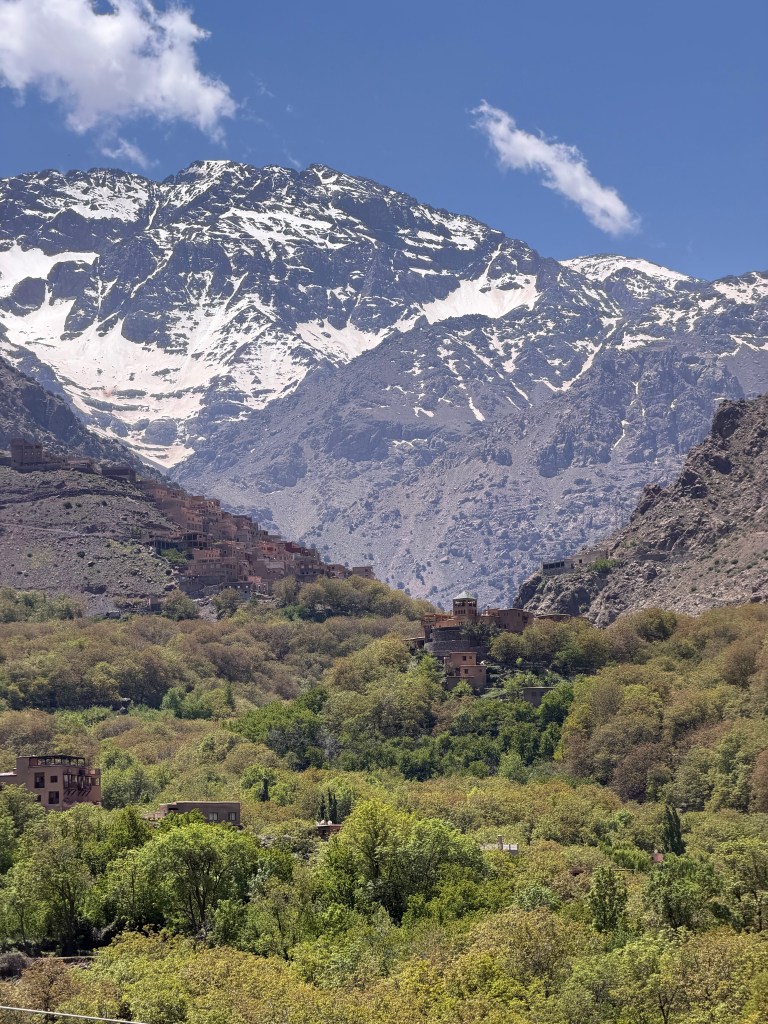
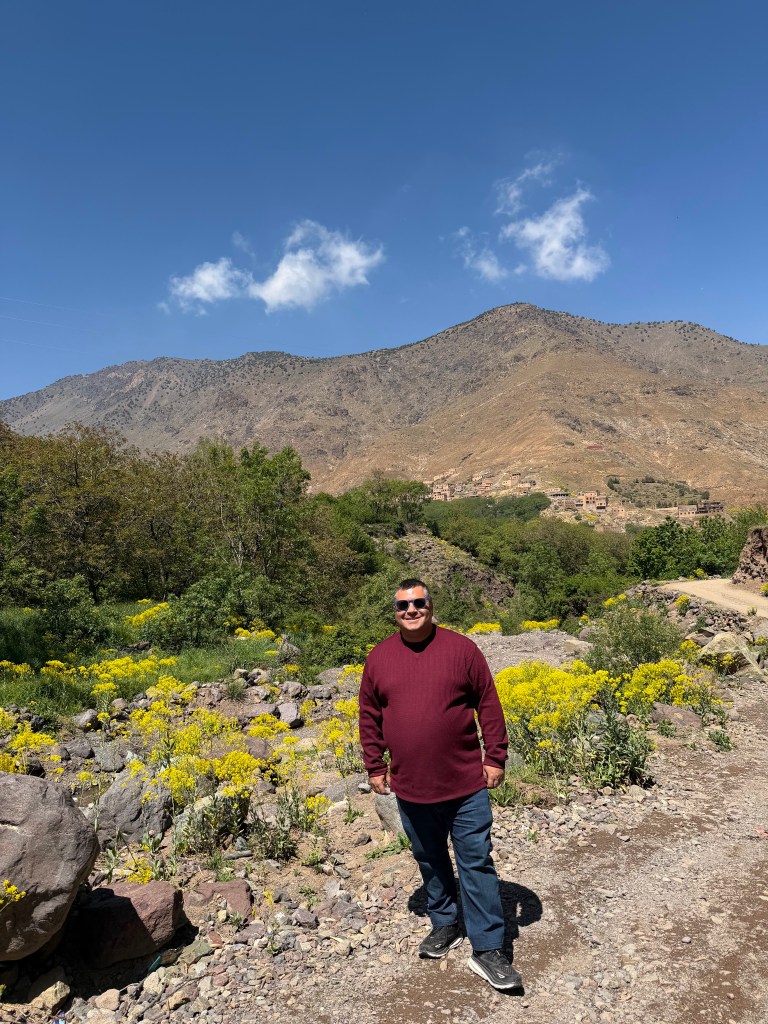
Along the way to Imlil, in the middle of rural Morocco, I spotted a shop in Tanahout with a sign that said the houses on the other side of the hill were the remains of a Jewish village named Azro. My eyes nearly popped out of my head. These are the remains of the village:
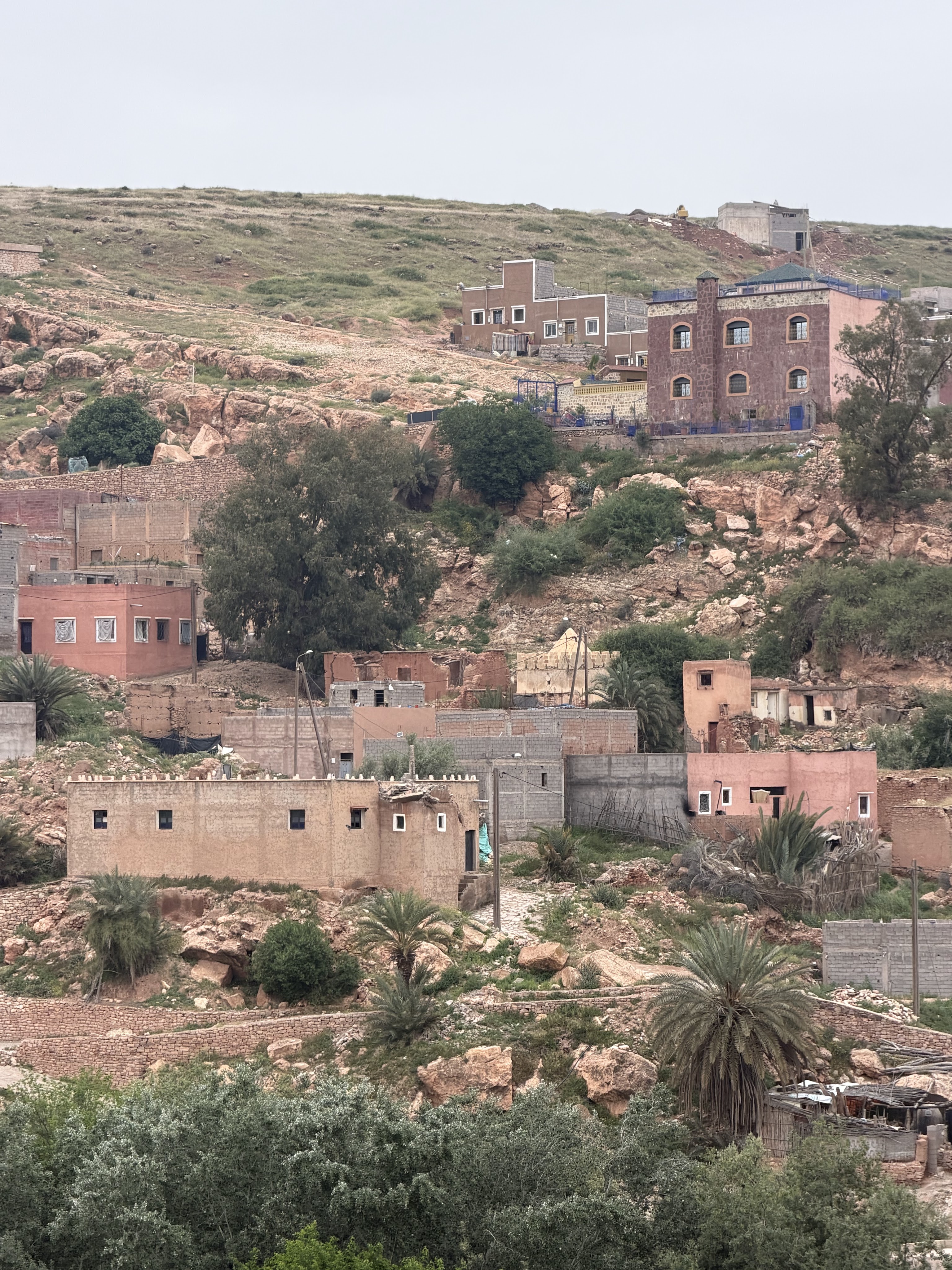
While some Jews in Morocco escaped there following the Christian Reconquista of Spain (and the subsequent Inquisition), others had already been living in the country for 2,000+ years. According to the shop owner, this village and its Amazigh Muslim neighbors had very good relations for many, many generations. He even sold some Judaica supposedly from the village (I have no way to verify its origins but I did buy some).
I frankly didn’t know much about Amazigh-Jewish relations before visiting Morocco but apparently they are deep and continue to this day, with descendants of Amazigh Jews coming back to visit frequently from France, Israel, and around the world. I’ll have a lot more to say about Morocco’s Jewish community in an upcoming blog, but I loved getting to know its history on my trip. While I encountered perhaps two or three instances of antisemitism, for the most part I found people incredibly friendly and welcoming when I mentioned I was Jewish. I felt safer as a Jew in Morocco than I have in parts of Europe and even parts of the U.S.
If Amazigh people have been in Morocco for 10,000-12,000 years and Jews for 2500 years and Arabs for 1300 years, what does that make Morocco? I mean even Moroccan Arabic is an eclectic mix of standard Arabic vocabulary, French, Spanish, and yes – Amazigh words. It is deeply incomprehensible when spoken at a normal pace to Arabic-speakers from countries such as Syria, Egypt, and Saudi Arabia.
There is an important word in Arabic that explains what happened (and is happening) in Morocco: استعرب (ista3raba). This word means to “Arabize”. To become Arab by adopting the language and customs of the culture. In other words, while some Moroccans are descendants of Arab tribes that migrated to the country over the centuries, many are Amazigh people who became Arabs. Some perhaps by choice and others due to social pressure and stigma.
This phenomenon is not unique to Morocco and it partially explains part of the wild diversity of Arabic dialects (or perhaps better put, languages) of the Middle East and North Africa. In the Levant, for example, the Arabic is layered over Aramaic and Hebrew influences from the civilizations that existed in the region before the Arab conquest.
The King of Morocco has, in an important step, started to honor this complex cultural diversity rather than suppressing it in contrast with what some leaders in North Africa have done in the past. The 2011 Constitution states that Morocco is: “A sovereign Moslem State, committed to the ideals of openness, moderation, tolerance and dialogue to foster mutual understanding among all civilizations; A Nation whose unity is based on the fully endorsed diversity of its constituents: Arabic, Amazigh, Hassani, Sub-Saharan, African, Andalusian, Jewish and Mediterranean components.” The bold text is my addition to make this point: Morocco is now officially a multicultural country, with Amazigh as a co-official language with Arabic. And its Jewish community is recognized by the ruler of the land as essential to its history and essence.
Morocco is an Arab country. But as my travels there (and Muhammad at my hotel) taught me, it is not only an Arab country. Its layers of Amazigh and Jewish history run deep, and even its Jewish community has used many languages and embraced different identities throughout its history.
In an era where people are looking for black and white answers to complex problems, Morocco is a welcome bit of gray space. It is a place full of diverse and sometimes competing identities that still manage to co-exist better than in many countries around the world.
I’ll have a lot more to say about this fascinating country. Until next post, bslama, ar tufat, lehitra’ot – see you soon!


You must be logged in to post a comment.