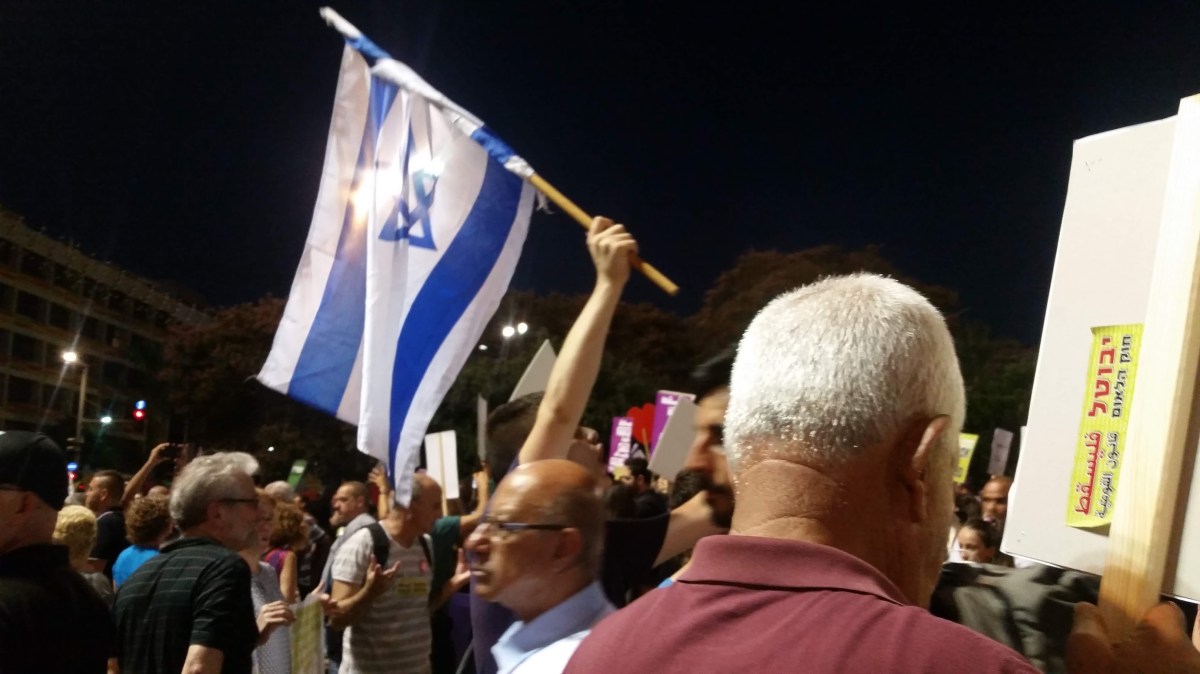
Today an airplane full of almost 200 people, almost all of them Israelis, was almost successfully hijacked by a terrorist. Were it not for the bravery of the Indian pilot, Smit Machchhar, and his fellow passengers, the plane would’ve crashed and we’d be counting and mourning the dead as we speak.
I’m in awe, but not surprised, by the actions of the Israelis on board. They banded together to ensure a safe landing, subduing the terrorist and providing medical care to the pilot who the terrorist had stabbed. I’m in awe because I admire these brave actions. But I’m not surprised because I’ve seen Israelis in action. I know that their belief in the collective know-how of the group when combined with individual creative initiative can achieve almost anything. Israelis are the ultimate survivors. It was a beautiful day for the Jewish people and our friends.
It also explains a lot of why I’ve been drawn to Judaism and to Israel from a very young age. I am a survivor of many years of intense, horrific, and vicious child abuse which has resulted in diagnosed complex PTSD. That diagnosis is one which I share with many Israelis – be they Holocaust survivors, refugees from Arab lands, victims of terror attacks, and more.
From a young age, I used to read Israeli news, I chose to learn Modern Hebrew with a tutor, I served on the board of my synagogue youth group, I hopped on the first Birthright trip I could find at age 18. The same age I was old enough to control more of my destiny.
Why did I do these things? After all, the average American Hebrew school student doesn’t tend to reach for a prayer book and pray in his room on a Friday night. He doesn’t pray for redemption, for freedom. He doesn’t go up to his Hebrew school teacher and say “I want to learn the language of my people” at age 13. And he doesn’t tend to make aliyah years later, moving halfway around the globe at age 31 for the life-changing adventure of a lifetime.
The reason is simple. I love my Judaism and I love being a proud Jew. I haven’t always been taught that- certainly not by some of the people who abused me who tried to cut me off from my Judaism. Screaming at me in public for wanting to go to synagogue or to youth group events because I wasn’t “normal”.
To be a Jew is to struggle. As the Yiddish expression says “s’iz shver tzu zayn a yid” – it’s hard to be a Jew. Nothing comes easy to our people. Even our own liberation from Egypt was followed by 40 years of wandering in a desert. The Holocaust was followed by the establishment of the beloved State of Israel, which immediately found itself attacked on all sides by Arab armies aiming for its destruction. Resulting in thousands of Israeli deaths, including many Holocaust survivors fighting for freedom and a better life.
This is part of why I’ve always identified with Judaism. My mom used to say that 99% of us stay the religion we’re born into. And while that may be true for some people, it doesn’t explain why I love my Judaism so much. So much that I’m studying to become a rabbi.
The reason is that to be a Jew is to know pain. And to turn that pain into happiness. As Psalm 30 says “hafachta mispedi lemachol” – you turned my mourning into joy. Our mission, as survivors of abuse, of trauma, of antisemitic hate, of hijackings, of terrorist attacks – it is all the same. Yes, we are victims and we must acknowledge that first and foremost. We are also survivors and we must honor our resilience and our refusal to give up in the face of great odds.
Before those 40 years of wandering in the desert, the Jewish people first had to escape our Egyptian slave masters. When our people found ourselves facing the Sea of Reeds, with Egyptian soldiers coming ever closer to butcher us, one brave soul took a step into the sea to make it part.
Nachshon didn’t wait for the sea to part on its own. Nachshon took his destiny into his own hands as best he could. And he simply walked into the water and one might say his act of faith and bravery inspired God to part the sea for us to find our way to freedom.
There are many religions in the world and every one has a bit of truth to share with the others. But there is only one I call home. While there are many reasons I love my community, one reason is that Judaism gives me space as an abuse survivor to live with complexity, pain, and gratitude for my freedom today. And to use my freedom to make the world a better place for my people and all people. I survived so I can thrive.
That is my calling as a future rabbi. To empower, to strengthen, to lift up the voices of those in need. Our world is too precious for us to allow it to wither away. For another innocent person to suffer. Thank you to all the Israelis on board the flight today for being true Nachshons and taking fate into their own hands instead of the terrorist’s. And thank you from the bottom of my heart to the teachers, clergy, friends, and more who helped me survive my own life’s near hijacking. Because Nachshon and I are cut from the same resilient cloth and I intend to live life to the fullest. Not every day is great, but I’m grateful to God for a good headline today and for the lives our Creator saved.
—
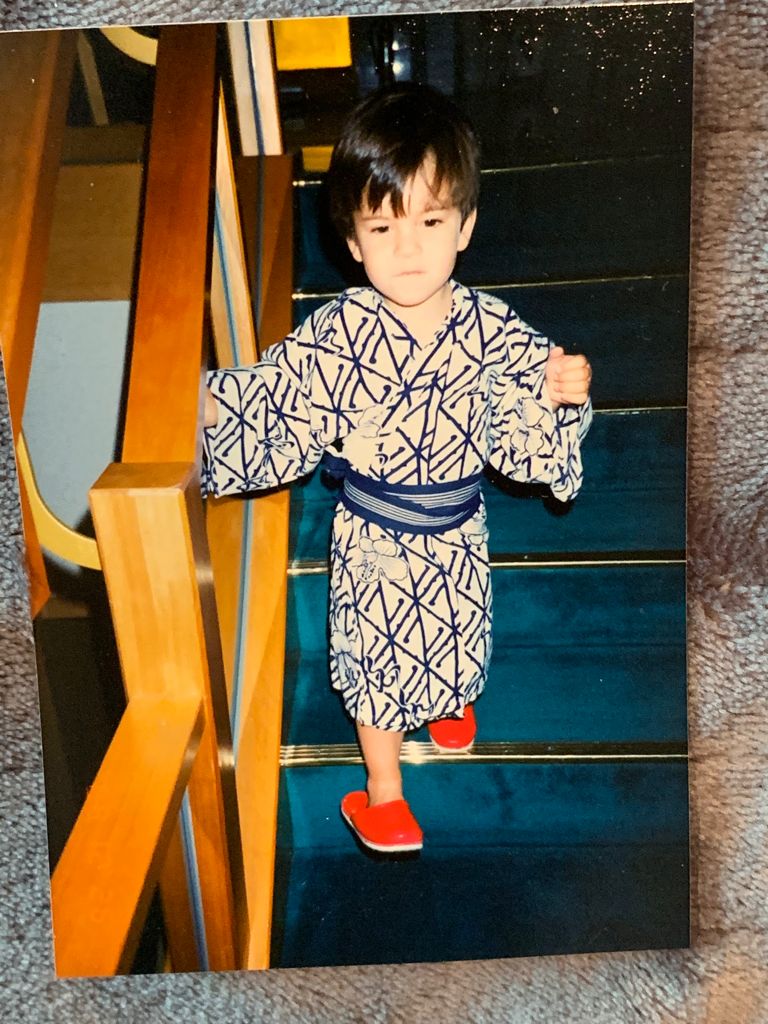
My cover photo is of me as a little kid in Japan. Despite all the terrible things I had to live through as a child, I still managed to look pretty damn cute!