Playing rabbi in Fes

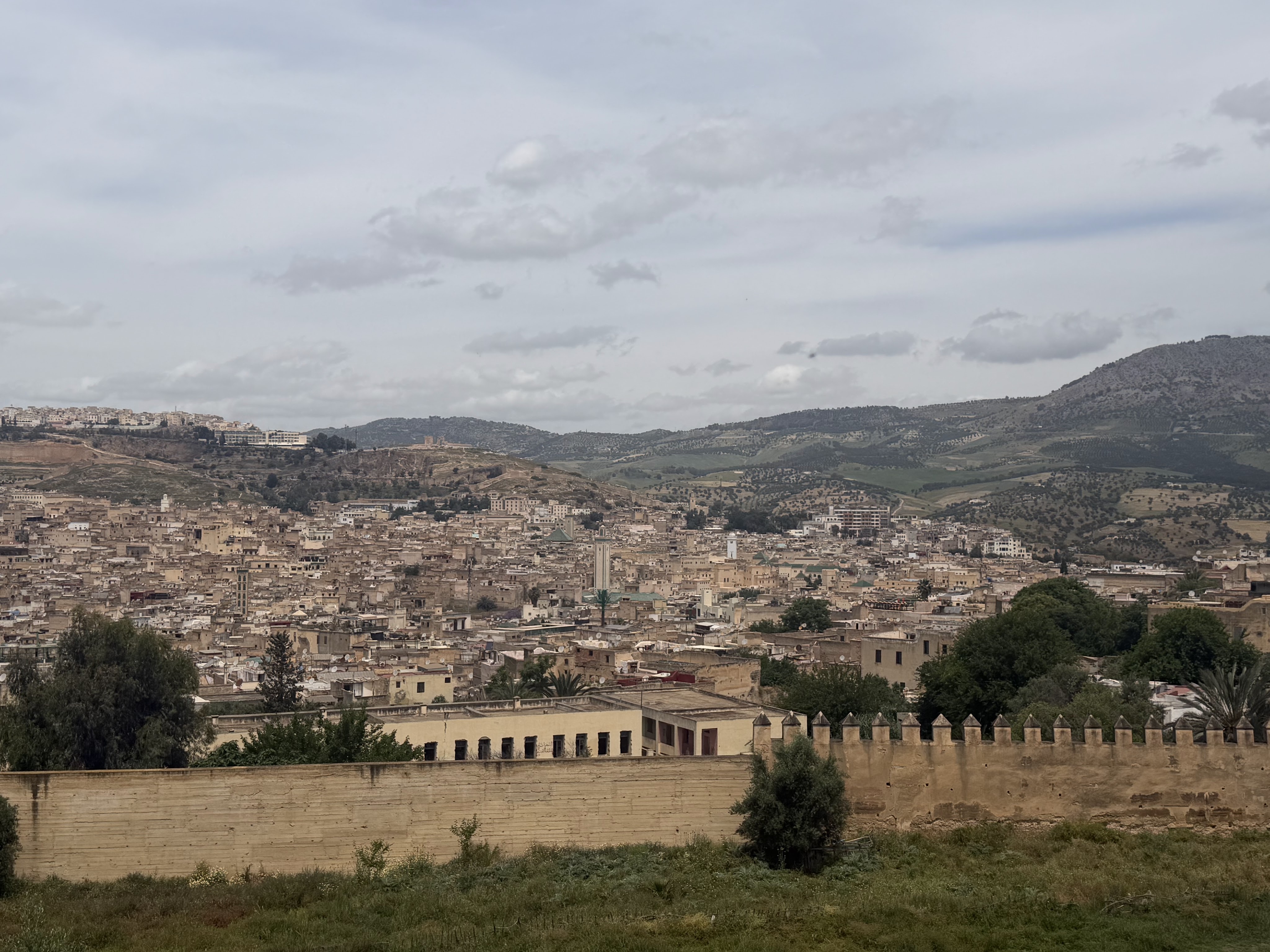
Fes is a wild city. Its medina, or old city, is an overwhelming mix of scents, smells, and screams. Just outside this chaos, however, is a place where things calm down considerably – Fes El Jdid (“New Fes”). I went there on a tour with my guide Abdellatif.

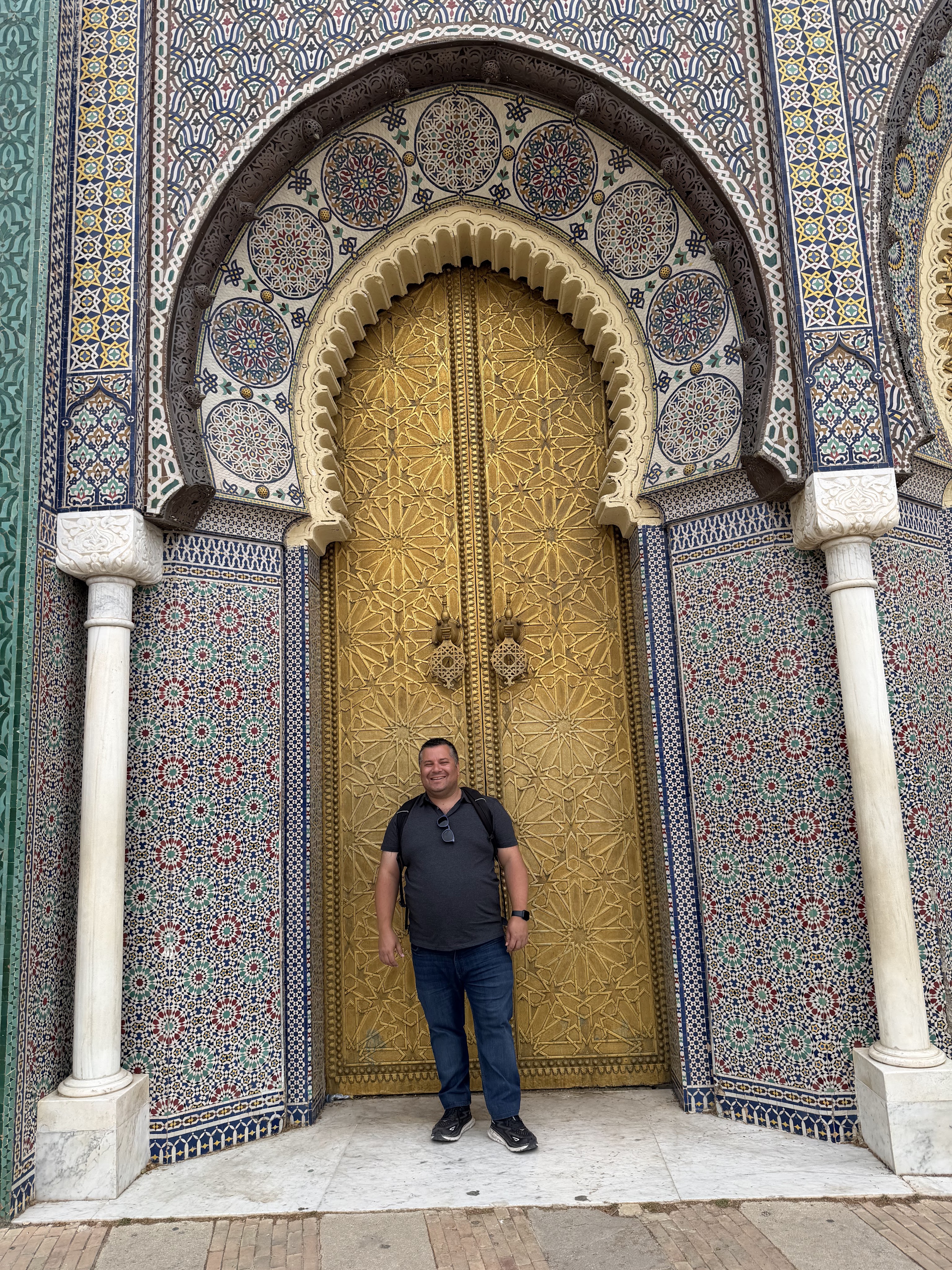
There, you’ll find a beautiful entrance to the royal palace and a pleasant historic vibe.
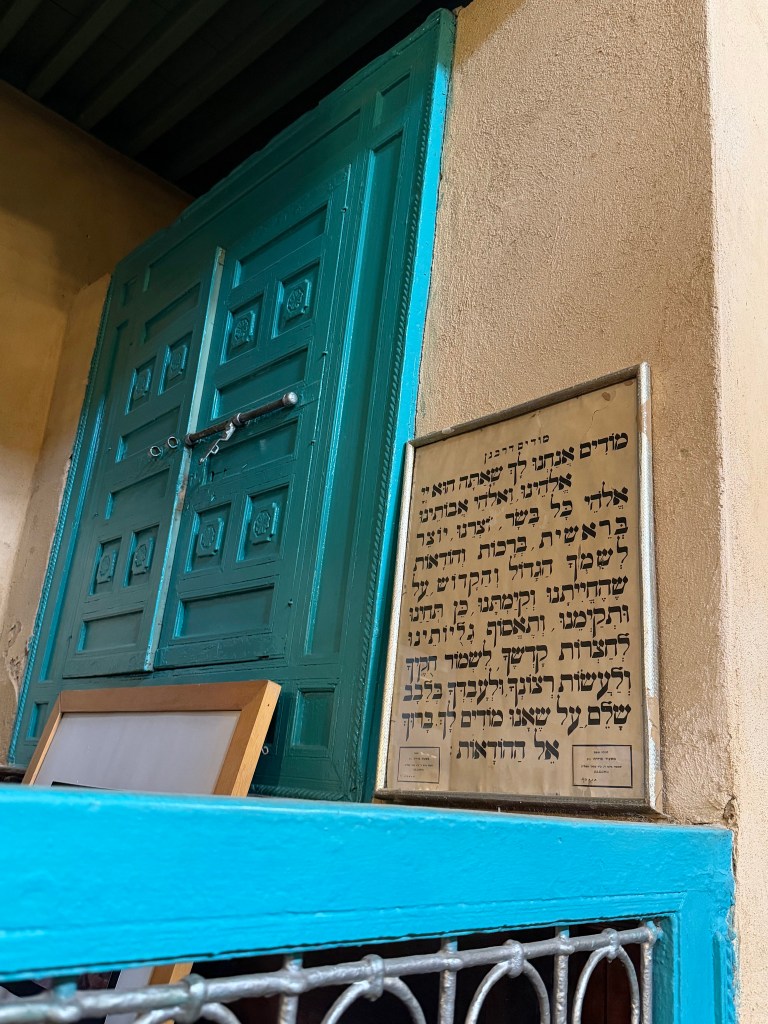
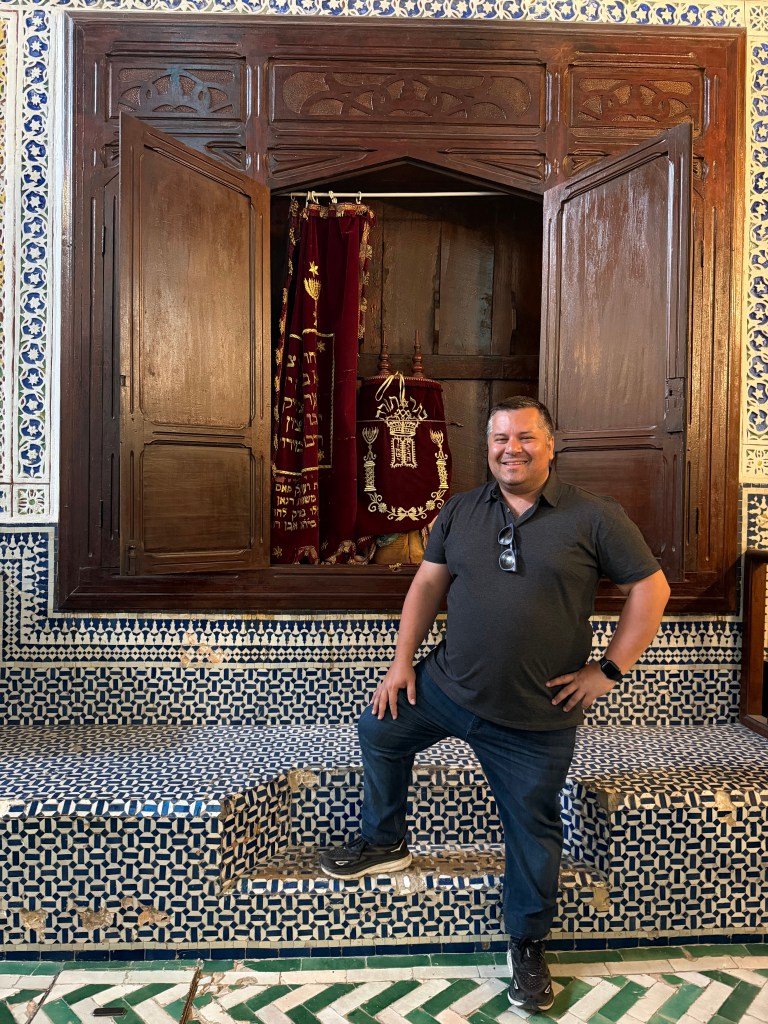
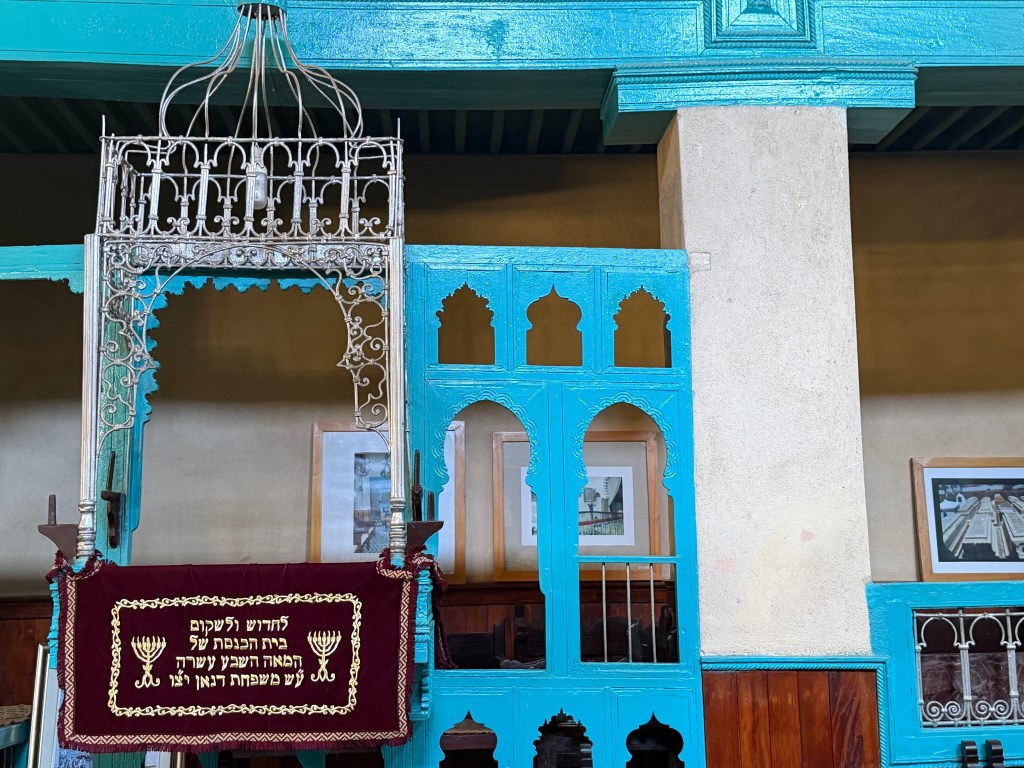
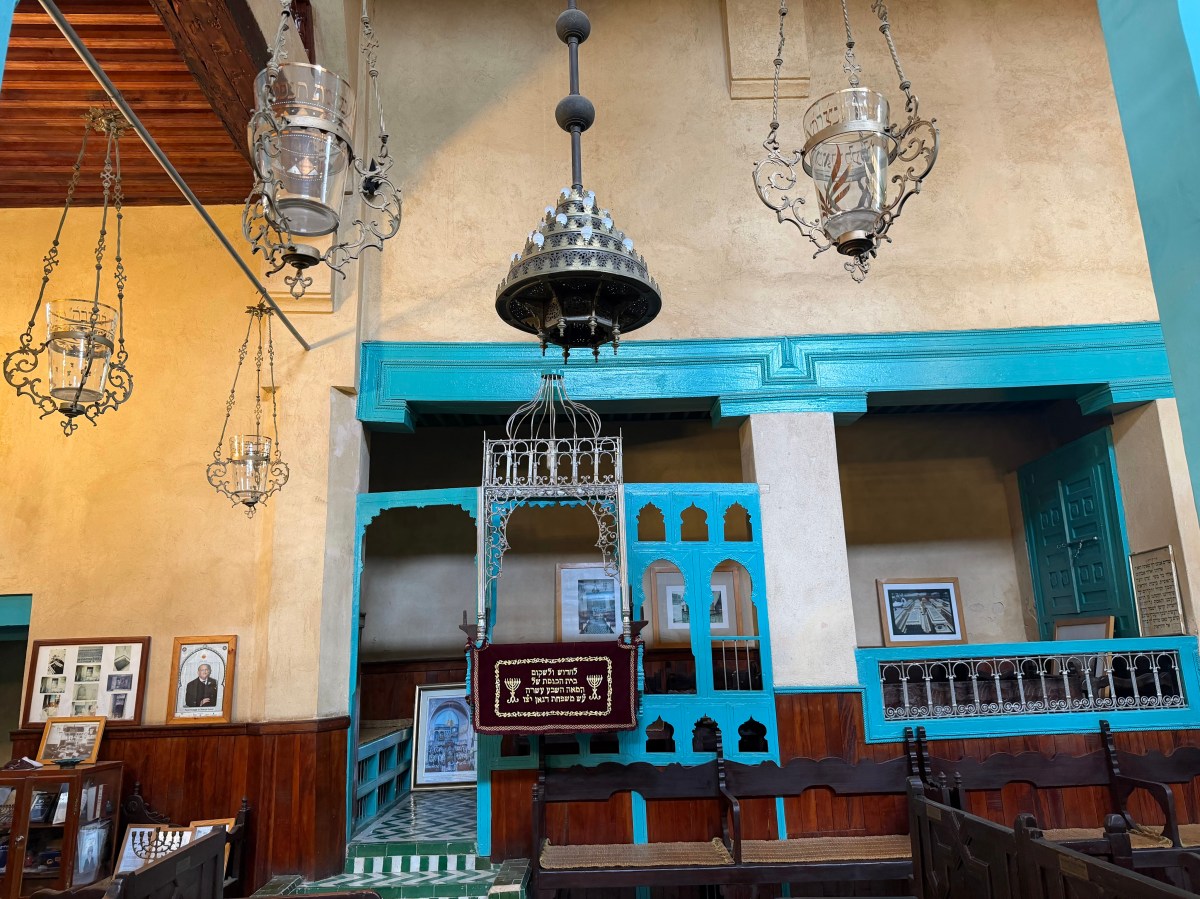
What you’ll also find in Fes El Jdid are synagogues. This area contains the mellah, or old Jewish quarter. One synagogue that I was able to visit was the Ibn Danan Synagogue, dating from the 17th century. It was filled with beautiful blues, teal (my favorite color!), and white. Here are some pictures:
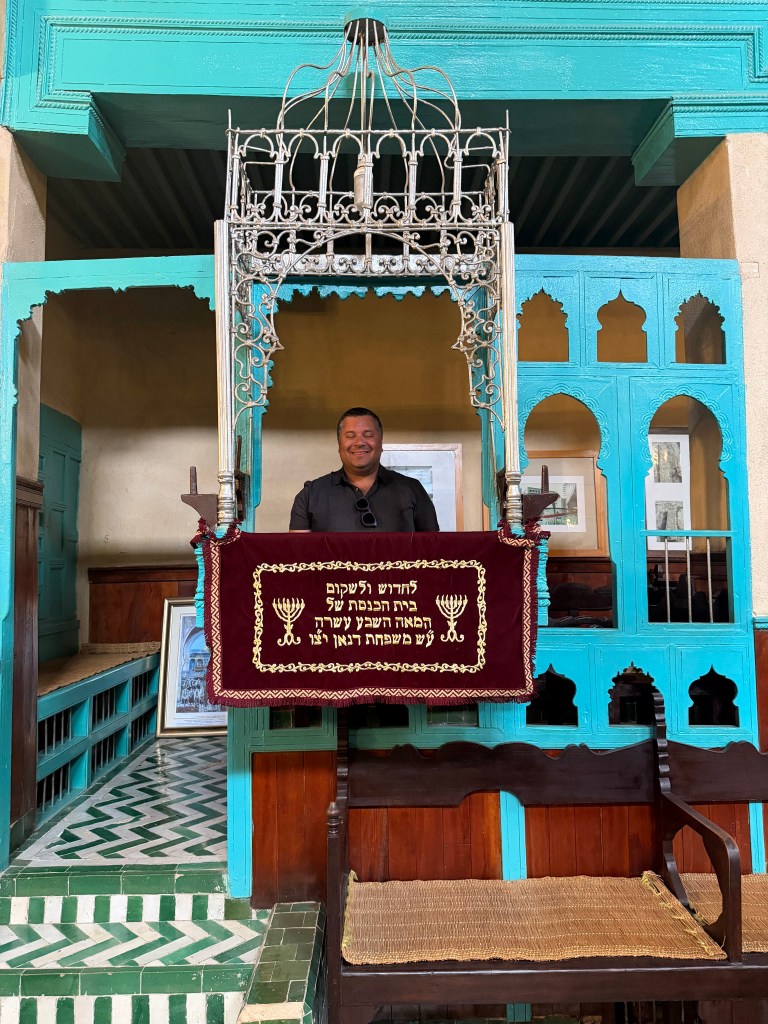
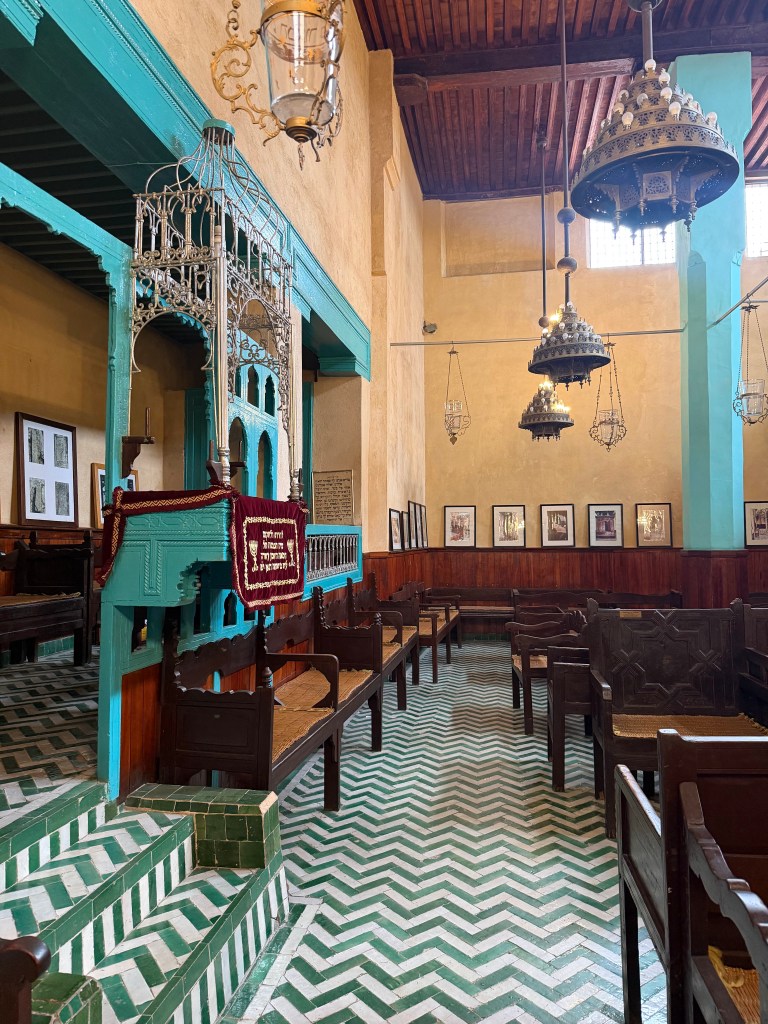
While I was touring the synagogue, the most fascinating thing happened. A Moroccan tour guide walked in with two foreign tourists. I asked the guide in Arabic if he could take a picture of me on the bimah, or pulpit. He was happy to help and then asked what I did for work. I said I was studying to become a rabbi.

He let out a big smile and asked if I would be able to explain the synagogue to his tour group. I was thrilled! It’s for moments like this that I want to become a rabbi.

I spent about 20 minutes walking his European tourists through the structure of the synagogue, the meaning of the Torah, the intriguing mikvah (ritual bath) beneath the floor of the synagogue, and more.

Afterwards, the guide said he had learned a lot himself. He brings tourists to this spot often but he didn’t know much about it. I felt like I had done a mitzvah, a good deed.

The word rabbi means “my teacher”. First and foremost, I see my role as a future rabbi as being someone who brings light into the world. Through education, through engagement, through understanding.

All those years of sitting through both Hebrew school and Arabic classes in college really paid off in this moment. If I hadn’t spoken Arabic, I may not have even asked the guide to take my picture. In fact, I probably wouldn’t have been in Morocco in the first place. And if I hadn’t learned Jewishly for so many years, I couldn’t have explained the synagogue to this tour group and tour guide.

It was this combination of learning about the Jewish and Arab worlds that allowed this moment to happen. And at a time when so many of us are frustrated with conflict, with misunderstandings, with hatred – perhaps it is a sign of hope that a Jew, a Muslim, and a group of Christians could come together and have a thoughtful conversation.

We often look for big solutions to big problems. But if there’s one thing Jewish tradition teaches us, it’s that in small steps we can tackle big problems. According to rabbinic tradition, Nahshon parted the entire Red Sea for the Israelites fleeing slavery in Egypt. Rather than waiting for someone else or even God to act, Nahshon simply took a few steps forward into the water. We can wait for big solutions, or we can be like Nahshon and, one step at a time, move our world forward with acts of kindness.

Fes is indeed sometimes a chaotic city. But it is also the place where I started to find my rabbinic voice by bringing together people of different nationalities, religions, and languages. I’m excited to see what we can accomplish by all chipping in and doing acts of kindness to make the world feel more at peace.
Making Peace With Arabic

My journey with Arabic started at the local Jewish Community Center, where I took a class in high school. I then studied the language for four years in college and with Syrian refugees on Skype. My studies were helped by my passion for languages and my love for Hebrew, its very similar sister language.

Why Arabic? It all started when I was sitting in my Lebanese friend Jad Zakhour’s (z”l) car hearing my first sounds of Arabic music. It was those tantalizing sounds, plus the delicious food and warm welcome I always received in his house, that caused me to become curious about this language. After all, Arabs and Jews are cousins. If we’re ever going to make peace with each other, we need to understand each other.

As with many other Jews and Israelis, I felt the pain of October 7th deeply and personally. In addition to the horrific results of the attack, the subsequent war has involved my friends risking their lives by serving in the military, going through countless rocket attacks, and a friend’s nephew being injured in the vile Hezbollah terrorist attack on Druze kids playing soccer in Majdal Shams.

I lost friends over the past couple years who showed their antisemitic (or at best, deeply ignorant) sides to me. I was discriminated against in the LGBTQ+ community, including being screamed at in public for being Israeli. I would walk by my local synagogue only to find antisemitic graffiti daily across the street.

All of this caused me to distance myself from Arabic. Anything that sounded like Hamas, like terrorism, like antisemitism, made me feel disgusted and frankly, scared. This was not an easy thing for me to reject. I had written an entire book about my relationship with Arabic as a gay Jew. Arabic is in my veins, it is part of what motivates me to make the world a better place for everyone. Yet the pain was so raw I just couldn’t do it. I couldn’t even listen to Arabic music for over a year.

Something changed for me recently. Because of the Syrian government’s attacks on its Druze minority, Arabic’s spirit has reawakened in me. Why? I’m not entirely sure. But I think it’s because I remembered – Arabic is not just Hamas. Arabic is not just Hezbollah and the wretched Syrian government. It is also the language of the my friends. It is the language of 20% of Israelis. Yes, it is a language of many Muslims – and also Christians, Alawites, Druze, and Jews! It has been a Jewish language, with specific Jewish dialects, for many hundreds of years across the Middle East. Some of which were spoken by my Iraqi Jewish neighbors in Tel Aviv.

Terrorists don’t get to “own” a language. Neither do antisemites. Arabic can and should be for all, just like any other language. It is a way to communicate, it is a way to build bridges, it is a way to make peace. I don’t know how to make peace in the Middle East, but I do know I’m in the process of making peace with Arabic. And maybe, here as I sit writing and soaking in the sounds of the Arabic music that got me interested in the first place, making that peace internally is the first step to making a more peaceful world for everyone.

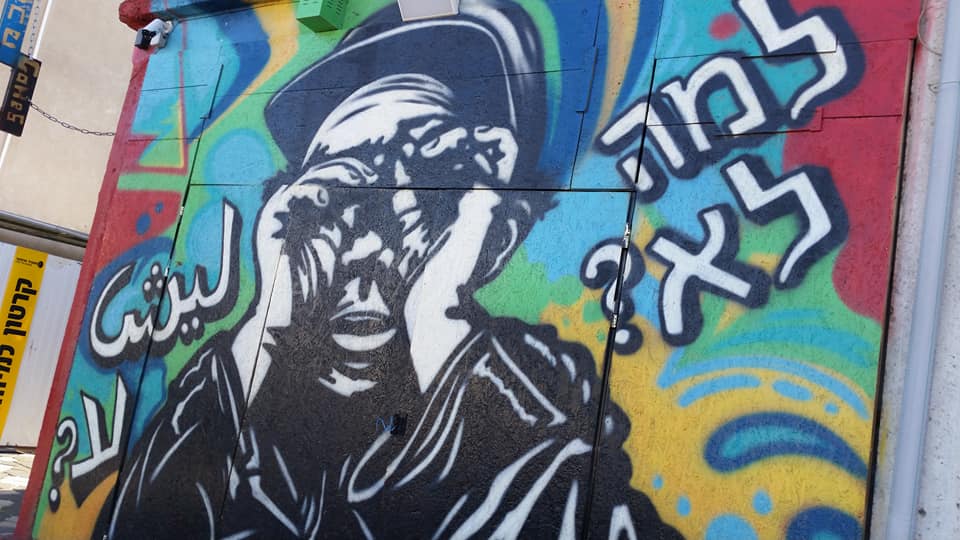
As my blog banner photo from Majdal Shams says in Hebrew and Arabic: “why not?” The time to heal, to build, and to grow is now. Make your internal peace and then maybe one day all sides can reach out their hands to create a safer, more peaceful world. Ken yehi ratzon, inshallah, may it be so.