A Preview of a Terrorist Attack

Israel is an exceeding loud country.  I’ve lived in big cities for most of my life and I speak 8 languages, so I’ve traveled.  And nothing- I repeat nothing- comes close to the noise of this place.

I live in South Tel Aviv, perhaps the single loudest part of Israel.  When people greet each other here, standing inches apart, they shout “shaloooooom!” as if they were down the street.  I go to Shuk Hatikvah, my local market, and it is super loud.  I’ve gotten used to it.  People are simply hawking their goods- cucumbers, dates, you name it.

One day, I heard screaming so loud in front of the market that I actually didn’t cross the street.  I was afraid something was “going down”.  And to be fair, if there’s one neighborhood of Tel Aviv where that’s likely to happen, it’s mine.

I paused for about 30 seconds looking anxiously.  The man was selling tomatoes.

Add to this that I live on the flight path to Ben Gurion Airport, with planes flying at all hours of the night.  And the fact that my neighbors blast Mizrachi music every morning (which I actually like to wake up to).  And basically, I’m used to loud noise.  It’s my home.

I’m also now a bit more accustomed to the idea of terrorism.  In America, terrorism is a far fetched concept.  Unless you lived in Lower Manhattan on 9/11, you haven’t really experienced a massive attack.  There have been smaller, very deadly shootings for sure.  Sadly, even last week at Google.  But not on the scale of what Israel has experienced.

According to one source, Palestinian terrorists have killed 3,759 IsraelisHere’s a list of the major attacks since the 1990s.  Adjusting for population, this would be the equivalent of 740,227 Americans.  More than all the American soldiers who died in World War I and World War II combined.  There continue to be terrorist attacks on a regular basis, mostly ignored by the Western media bent on a simplistic black-and-white view of the region.  That does Israelis and Palestinians a disservice.

This is, by the way, not an attempt to downplay the death and sadness experienced by Palestinians.  There’s enough tears to drown both sides here- to the extent that you can really boil this conflict down to two sides.  Which I don’t really agree with.

My point is simply that it can be stressful to be an Israeli.  The other day I was locked in my neighborhood library for 20 minutes while police neutralized a suspicious item outside.  It was scary, which I suppose is the point of terrorism.  It’s not just the killing, it’s that the way it is done is meant to inflict maximum psychological harm.

Today, I was relaxing at a neighborhood cafe.  While checking my loads of WhatsApp messages like a good Israeli, I heard the single loudest and most explosive noise I’ve heard in this land.  And it wasn’t just me.  Everyone- I mean everyone- immediately turned towards the sound, eyes wide open, and hearts skipping a beat.  You could just feel it.  Israelis are not easily phased.  You know that a noise isn’t a problem in Israel if no one is looking.  And you know it is if people drop what they’re doing and all start to stare.

Luckily, people started talking within a minute or two and realized someone’s tire on a motorcycle had blown out.  Everyone started smiling and let out a sigh of relief.  Mine was audible.

After recuperating for a moment, I did what people here do- I went on.  I went to the bathroom, I got some water, and I headed to a pizza place where I called a few friends and told the guy working there about my favorite American hip-hop.

And then went home on a very crowded bus where a small fight broke out and there was more screaming.  I guess on some level I was relieved it was the usual Hatikvah screaming.  And not that of people wailing over bodies spilling blood.

I’m grateful to be here writing this blog.  Thousands of Israelis weren’t so lucky over the past 70 years.  That’s right, my country has made it to 70.  The golden years, if it were an elderly Jew retiring in Florida.

I’m proud to be an Israeli.  I’m not always proud of what my government does or how all of our people act- just like I was when I lived in America.  Being proud of your country also means speaking out for what you believe- that’s democracy.

Yom Ha’atzmaut, Israeli Independence Day, is around the corner.  The decorations are up in my neighborhood and around the city.

I have a simple message for my friends abroad, especially my progressive friends in Europe and the U.S.  Empathize with us.  Don’t stop empathizing with Palestinians.  Just also empathize with us.

If you had bombs going off, attacks for 70 years, wars, and such a fear of these things that a loud tire bursting is enough to startle you- then you’d be a lot like us.

We don’t have the luxury of having massive rallies like they did in Barcelona after the 2017 bombings.  Because if we had such rallies every time someone’s child was split into pieces, we’d be doing nothing but rallying every day.

We have lives to live.  Understand that even the most eccentric Israeli behavior- or politics- has reasons behind it.  Whether it’s the right path or not, there is something that causes people to behave the way they do.  The way we do.

I’ve met some Americans here truly open to listening and to exploring all the good and bad of the cultures of this region.  Kudos.  I’ve met other foreigners who come and lecture me about my own people, my own religion, my own history.  Even flat out anti-Semites.

If you’re the latter- start your work at home.  With yourself, with your community, with your own country.  Americans have little to stand on when heaping sometimes aimless anger on Israel.  Every inch of your country was inhabited by Native Americans and you take it for granted that it now belongs to you.  I can personally say I know next to nothing about the Potomac Indians who inhabited the town I was born in.  And I’m at least aware enough to know they exist.

If you don’t think Jews are from here- you’re wrong.  Both we and Palestinians are connected to this land.  And we’re both a lot more connected to here than you are to Boston or Minnesota or California.  Because you’re not from there- you’re from Germany, France, Scotland, or Ireland.

And to the Europeans nodding right now- who do you think caused all of that?  Or even most of the problems in Israel and Palestine?  It’s you guys!  Who stole Jewish land, money, and lives on every inch of your soil for 2000 years. Who colonized the Middle East and stole its resources.  Me and my Palestinian friends are living with the consequences of your imperialism.  So stop munching on your free-range Swedish meatballs with an air of self-righteous “neutrality”.  Because the German Volkswagen you’re driving was built with the blood of my people.  And your British Petroleum is paid for with the blood of 405,000 Iraqi Arab lives.

In the end, none of us are entirely innocent and few are entirely guilty.  The effect of terror, at least on me, is that once the fear fades and my safety returns, the anger builds up.  Which is what I’ve shared with you today.  So try to understand what it must feel like on a national scale- when the explosion really happens.

I feel blessed to be an Israeli, and as I continue to settle in here, I’m not quite sure what it means to be an American going forward.  We’ll have to see.  I do know that I just want peace.

The kind of peace where I can live in my Jewish homeland without thinking that a blown out tire is going to be the last sound I hear.

Gaza, Indian Christians, and Passover

A whole lot more happened today, but that’s what I could fit in a title.

Last night was Passover.  Passover in Tel Aviv was amazing.  It was my first time celebrating it in the Holy Land and I loved it.  As a child, Passover was my favorite holiday (though this year’s Purim in Tel Aviv is giving it a run for its money).  It’s a holiday about freedom and especially growing up with abusive relatives, it always had a special meaning for me.  About my own potential for freedom one day and all the other oppressed people in the world who I would make that journey with.

Here in Tel Aviv, I went to two seders: one Reform and one LGBTQ.  Perhaps one of the few places in the world where you can genuinely “Seder hop”, I walked from one to the other in 10 minutes.

At the first Seder, I met a fellow gay Jew, Oscar, who was Spanish and Swiss and spoke French, Spanish, Gallego, English, and some Hebrew.  Pretty amazing to kind of meet a European me!  We agreed to meet the next day for lunch in my neighborhood, the “other side” of Tel Aviv.

I had planned on walking him through the refugee and foreign worker neighborhood of Neve Sha’anan, which we started to do.  Then we looked at the Central Bus Station, arguably one of the grittier buildings in the world, and he said “ugh, it’s so ugly!  I hate that place.”

I quickly changed our itinerary to show him the hidden beauty of this chaotic space.  Since it was Passover and Shabbat, most things were closed.  The most interesting things were still open.  An entire area of Filipino restaurants, cafes, and grocery stores was open.  Homemade food filled the air with delicious smells.  We sat and got some food, including my first-ever Halo Halo, a delightful dessert drink with a million types of toppings and fruit.  The woman behind the counter, like most Filipinos here, speaks amazing English and opened her Halo Halo machine just for us 🙂

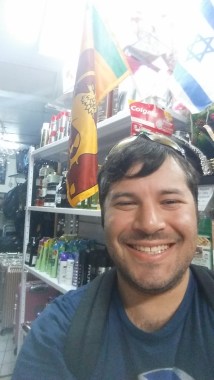
Passing by a store, I noticed something curious.  Inside was a Sri Lankan flag!!!  I know this flag because in Washington, D.C., once a year, they open all the embassies for visitors.  I had been to the Sri Lankan one and eaten this delicious coconut rice with spicy red sauce.  Turns out the woman inside was indeed Sri Lankan!  And she told me the name of this delicious dish was Miris and Hal Bat, a name I’d been searching for for years!

The woman was so kind.  She’s thinking of opening her own Sri Lankan restaurant in Tel Aviv (friends- keep your eyes pealed!).  She grew up Buddhist and then converted to Christianity in Israel.  Her husband is from Darfur and I presume Christian (perhaps explaining her conversion).  He was super nice and we talked about my favorite Sudanese music.

20180331_150222

Heading out, I let Oscar go on his way and I strolled towards Yaffo.  There, I bumped into some lost tourists from Belgium.  One of whom was exceedingly gorgeous.  I gave them a free tour of Florentin and we decided to sit down to coffee.   They have two weeks in Israel so I chatted with them for a couple hours and helped them plan their trip.  We spoke in a mixture of French and English.

After being so kind as to treat me to my tea, they headed to their hostel and I walked home.  On my way home, I saw women…dressed in saris.  While this might not be such a strange sight in Suburban Maryland where I grew up (with a lot of Indian friends), it felt kind of random in Tel Aviv.  I’ve met Indian Jews here, but there aren’t many in Tel Aviv and I haven’t seen many in traditional clothing.

Because it’s not weird to talk to random people here (like it is in much of America), I went up and asked where they were from.  They said they were Indian Christians.  They were in Yaffo celebrating Easter.  I wished them a Hag Sameach, definitely the first time I’ve used that phrase to wish someone a blessed Easter.

Arriving back in my neighborhood, I saw something strange.  A clean store.  For those of you who’ve spent time near Hatikvah, you’ll know that my neighborhood has many virtues.  Delicious ethnic food, cultural diversity, rare Jewish languages, and a certain warmth to the people.  But nobody would say the virtue of my neighborhood is its cleanliness.  When I come back from a trip abroad, it takes me a day or two just to get used to the smell again.

I walked up to the store and saw beautifully arranged fruits and vegetables.  Seeing as how I was hungry and most restaurants were closed for Passover, I decided to buy some produce.

Turns out it’s a brand new store.  Owned by Sudanese Muslims- from Darfur.  It’s probably rare for someone in the U.S. (or pretty much anywhere outside of Darfur) to bump into both a Darfuri Christian and a Darfuri Muslim in the same day, blocks apart.  Unless they happened to be working with refugees.

I was blessed with the chance to speak Arabic with them, for a few reasons.  One, because I love languages and the chance to hear Sudanese Arabic outside of Sudan is pretty rare.  It’s a really neat dialect.  Also, I wanted to share a message.

I told him: “batmanna inno al-pesakh al-jay, ra7 itkoon 3ankoon 7urriyeh.  3eid al-fisi7 huwwe 3eid al-7urriyeh.”  That I hope that next Passover, they will have freedom, because Passover is the Holiday of Freedom.  We talked about how I’m working with other olim here to support refugees.  And you could see his smile grow by the second.  I know where I’ll be shopping more- and it’s a 5 minute walk down the street.

On my way home, I couldn’t help but think about my fantastic Pesach experience.  This was undoubtedly the most diverse Passover I’ve ever had.  And I grew up in a county that has 4 of the 10 most diverse cities in America.  I’m starting to wonder if in some ways, my corner of Tel Aviv is even more diverse.

I’m incredibly grateful for the opportunity to celebrate this Passover in freedom.  Freedom to do it how I want, with whom I want, and where I want.  Freedom is a blessing every day you can enjoy it.

I pray and will work for the freedom of the Darfuri men I met today and all refugees.  Here and around the world.  There are few causes more dear to my heart or so morally clear.  Whether these refugees continue to live in Israel, are blessed with a secure country to return to, or move elsewhere, I pray that they are able to live in safety.  Nobody- nobody- should be sent to their death.  I hope that next year I won’t need to write this blog again because refugees will be given what they need: refuge.

And now to return to the title of this blog.  As you may have noticed in the news, many thousands of Gazans, along with some Palestinians in Israel, the West Bank, and Lebanon are protesting.  Are they doing it to coincide with Passover, due to its message of freedom?  I don’t know, though it would represent perhaps a welcome recognition of our shared existence, even if the timing might serve to stiffen Israelis’ spines rather than inspire empathy.  Even if the cause is just, I’m not sure I would choose Ramadan as a time to protest Islamic anti-Semitism.  Just like if I’m angry at a friend, I wouldn’t yell at him while he’s studying for a stressful test.  Part of communicating is understand when the other person is ready to listen.

I’m not suggesting there’s a particularly ideal time to make the powers that be listen.  I’m just saying that if any part of your goal is to reach the Israeli heart, making a Jewish religious holiday a time for protest is going to backfire.  Especially when I remember as a teenager, a Palestinian terrorist blew up a Passover seder killing 30 people and injuring 140 more.  Even I felt angry about the timing of these protests and I’m rather empathetic to the cause.

I have little doubt that it is miserable to live in Gaza.  Unemployment in Gaza, as of 2016, was 42%.  For youth, 58%.  Child labor is on the rise.  The Hamas government is an abysmal filth pit of extreme religious conservatism.  At various times, it has banned Palestinian women from dancing, from riding behind men on motor scooters, from smoking in public, from getting haircuts from male barbers, from running in marathons.  It even banned New Year’s Eve celebrations in the name of Islam.  It has banned Palestinians from reading certain books, from holding hip-hop concerts, and from going to the water park.  Already feeling geographically penned-in on both the Israeli and Egyptian borders, I have to imagine that Hamas’s extremist steps only escalate the tension that Gazans feel on a daily basis.

What’s the solution?  I’m not honestly sure.  Marching to the border with names of their former villages and demanding to “liberate Palestine” is only going to make most Israelis angry.  And scared.  I’m personally scared for what is happening and what may yet happen.  The loss of life, which has already begun, will likely continue on both sides.

I empathize with the anger of many Gazans.  Their life sounds suffocating and if we’re totally honest, no government in the region is totally innocent here.  People, including children, are suffering.

I also feel that the Palestinians striving for their own freedom need to remember that I, along with my fellow Israelis, have worked hard for our own.  We’re not going anywhere.  You can come back to Salameh, the Arab village I live on top of, and maybe we can build a life together.  That’d be a miracle and maybe it’s not possible due to the hatred all around.

What you cannot do- or at least what I will stop you from doing- is kicking me out.  The Palestine of 1947 doesn’t exist anymore.  Pieces of it, perhaps.  Just like the many Jewish communities around the world destroyed or cleansed by both Muslims and Christians.  Which is why we’re here.  Just this week, a Muslim man in France stabbed an 85 year old Holocaust survivor to death while shouting “Allahu Akbar”.  Stabbed 11 times.

Does this man represent all Muslims?  Of course not- and to suggest so is bigoted.  But the thing it doesn’t need to be all Muslims for Jews to feel scared.  We’re scared.

You’re scared.  You don’t like it when Israeli jets bomb your houses.  To get terrorists, but ultimately killing innocent Gazans along the way.  Inevitable.  And sad.  And how does the average Palestinian, who only knows Israelis in an army uniform, build a relationship with our culture beyond warfare?

And for Israeli Jews, while we’re blessed with having Arab neighbors in our own country (who frankly we should get to know better), the only image we have these days of a Palestinian is of a terrorist.  Or of a more “peaceful” person waving a flag, storming the border fence, claiming to liberate Palestine.  From us.  Presumably, to kick us out.  Back to the world that murdered us over and over and over again.

This blog could continue endlessly.  The torment of people here, on all sides, is so, so sad.  My friend Hekmet teaches me dabke, a Palestinian and Levantine folk dance.  The other day I told him how sad it was to learn about how some Zionist militias destroyed Arab villages.  He told me something that both eased my conscience and gave me hope: “Matt, it is sad.  And it’s also sad that Jews were kicked out of Middle Eastern countries.  In the end, we just have to live together.  We can’t only focus on the past.”

The past matters.  And so does the present.  My sincerest hope is that while knowing our past- as Jews, as refugees, as Israelis, as Arabs, as Palestinians- we can live together in peace.  Because re-litigating or liberating or invalidating or denying on any side will just kill and kill.

I don’t want a war here this summer.  I’ve come to a point where I like living in Israel.  And I want to meet Palestinians who want to build a future of hope together.

If I can take away one message from my Passover today, it’s that it’s possible.  Today I spent my holiday with Muslims, Christians, and Jews.  And I had a blast.

And not the kind that kills innocent people.

My cover photo is me eating Filipino chicken wings.  One day maybe me, refugees, and Palestinians can all eat them together and make a delicious mess 🙂


Why Israel doesn’t always suck (and is sometimes good at things)

This is perhaps my most Israeli blog title yet.

I’m writing you from a hostel in Barcelona, an absolutely stunning city.  It’s my first visit back in Catalonia in 10 years, and unlike my last visit, I also speak Catalan in addition to Spanish.

My experience here has been fantastic.  I visited the medieval city of Girona, the absolutely phenomenal and peaceful gem of Perpignan in southern France, and am now in the throbbing yet relaxed metropolis.

The best parts of my visit here have been the nature, the serenity, the smiles at strangers, the cleanliness, the general respect for boundaries, and not having to answer millions of deeply personal questions only to be judged for your answers.  Speaking languages I love.  And the delicious food on every corner.

It’s also nice to take my air raid and terrorism alert apps off my phone for a while and not see 18 year old soldiers carrying guns in the street.  It’s just more peaceful.

For the first time in a while, I found myself missing things about Israel.  If you’ve read my recent blogs, you might find that as surprising as I did.  Israel is pretty awful when it comes to human rights, to respecting diversity, to preserving Jewish culture, to living up to Jewish values, to treating people with respect, and to pursuing peace both within society and with our neighbors.

And there are some things Israel does well.  One is helping each other.  Today I found myself sick in Barcelona.  Both physically sick and feeling lonely.  I messaged a few Israeli friends and within seconds they were helping me figure out my insurance, cheering me up, and taking care of me.  Thankfully I didn’t need a full hospital visit, but if I had, my travel insurance would have covered every expense above $50.  Which brings me to something else.  Israeli healthcare is leaps and bounds better than anything I experienced in America.  Health is not just wealth- it’s survival.  Everything else is details if you can’t live.  Israel is a super stressful place to live and one stress I don’t have is that I’ll go bankrupt because I’m sick.

It speaks to a certain social(ist) value in Israel.  And when I say Israel, I mean both Jews and Arabs.  In Israel, anywhere you go you can charge your phone or refill your water bottle.  For free- you often don’t even need to buy anything.  In the places I’ve visited in Spain and France (and much of the U.S.) you need to buy something to charge up or you need to buy actual (expensive and wasteful) bottles of water.  These examples are not anecdotal- when combined with Israeli willingness to host guests (and sometimes strangers) for long periods of time, you sense a pattern.  When it comes to certain things, Israelis display a generosity found in few places.

While in Spain/Catalonia/France, I’ve met some people who reminded me why some Israelis are so nationalistic and racist.  There’s the Dutch guy who told me he could probably understand Yiddish because “it’s just fucked up German.”  There’s the researcher in France studying medieval Jewry who, instead of dialoguing with me, started lecturing me about my own people’s history.  I appreciate his work and would prefer someone not pin me in a corner and try to teach me about…myself.  There are also the formerly Jewish houses in Girona where you can see where the mezuzahs once hung.  And the historic synagogue that now houses an architectural firm.  I think I can understand how Palestinian refugees must feel about the remnants of their village in my neighborhood.

This is not to say that most people here are bigoted.  Most people when I say I’m Jewish or live in Tel Aviv are either neutral, polite, or even show great interest.  I’m grateful to cities like Girona that are preserving my heritage.  And to their archives for preserving Judeo-Catalan documents I got to see first hand.  And many of them were improperly labeled.  To the archivist’s credit, I submitted some corrections and she gladly marked them down.  It’s just an apt metaphor that even when some people are trying to get Jewish history right, it can feel uncomfortable.  I don’t want to impose or discourage them and I also find it irritating that most of their archived documents are upside down.  The documents of the people they expelled.  Some of whom live in their veins.

That’s the complexity of Judaism in Europe.  For 2000 years, we’ve called it home.  To this day.  And not just during the Holocaust, but over and over again throughout that time, we’ve been mercilessly expelled, burned, and murdered.  Property robbed and now turned into moneymaking tourist attractions.  That keep bits of our heritage on the map.  When I visit the Jewish quarter of Girona, I’m not just visiting a tourist attraction, I’m a Cherokee visiting the Trail of Tears.  It’s complicated, to recall the words of a Palestinian friend I talked with before moving to Israel.

Which brings me to what else Israel does well- it gives me a place where if people are ignorant about my tradition, they can learn on my terms.  It gives me a place where I’m in a position of power- as fraught as that is.  A place where if people want to expel us or lecture us or deride us, we don’t have to grit our teeth and put up with it.  Some people take this power a bit too far- and spending a bit of time outside of Israel reminded me why they do so.  Even if it’s not justified.

While in Barcelona, I went to Reform services.  I’ve been pretty fed up with God lately, tired of Zionism, and not even really sure if I feel Jewish anymore.  So I decided to see if maybe Diaspora Judaism, the Judaism I grew up with, still fit.  The services were wonderful.  They were in Catalan, Spanish, Hebrew, and English- a polyglot like me couldn’t be happier.  And it adds a spiritual dimension to share our hopes in different languages.  Hebrew alone bores me.  The people of all ages were warm and welcoming and treated me to a free meal.  As good Jews, there was tons of food.

I can’t say every part of the service spoke to me.  There are problems with Jewish liturgy I’ve only fully understood while living in Israel.  The idea that we’re the “Chosen People” or asking God to bless “His people”- that doesn’t work for me any more.  It feels racist.  I’m tired of the idea that religion should be supremacist- as pretty much every Western religion is in some sense or another.  Our prophet is the best.  Only our people go to heaven.  God chose us above all other peoples.  Try reading the words of your Friday night Kiddush in English.

And it’s my capacity to read Hebrew and my living in Israel that has shed light on these problems.  Judaism is due for a new reformation.  It has beautiful sparks as evidenced by the parts of the service and the dinner that lit my spirit again.  The music, the poetry, the community, the evolving tradition.

Much like Israel, Judaism needs a revamp.  No need to throw everything out, but the way it’s going isn’t working- at least not for me.  As I watched two Israelis living in Barcelona learn the Reform liturgy Friday night- and engage in gentler, more peaceful ways than I usually see in Israel- I see a bit of light.  Jews outside of Israel need Israel.  Yes, it’s a deeply f*cked place and I would rather the world not have states at all.  And I’ll keep fighting for that.  And the reality is we don’t know the next time anti-Semitism will strike.  Israel is the only state on earth, for better or worse, that cares about my healthcare- about my ability to live- simply because I’m a Jew.  That formula is problematic and perhaps sometimes necessary.  While we can’t live in paranoia that everyone is out to get us, the fact is some people are.  And because we’re a minority easy to scapegoat, some people always will be.

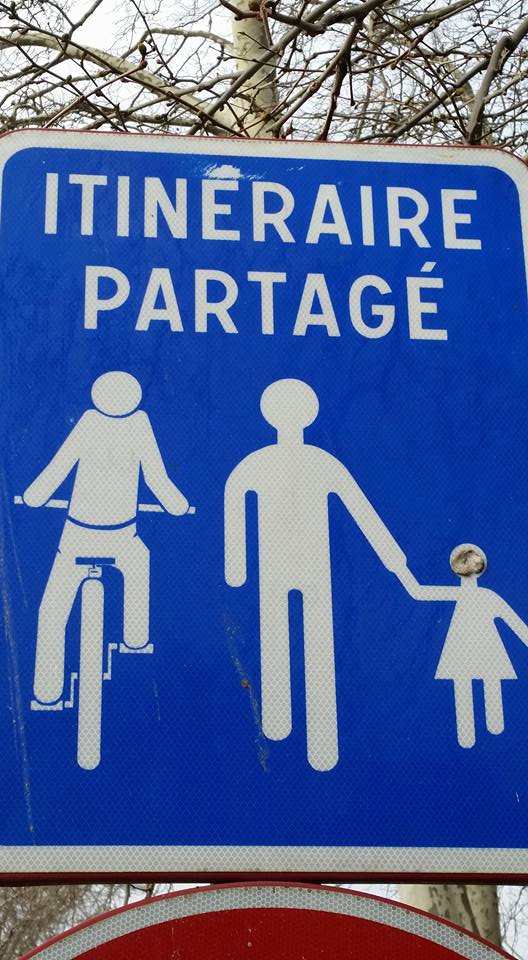
At the same time, to return to the Israelis I met in Barcelona, Israel needs Jews (and non-Jews) outside of Israel.  Judaism outside Israel is gentler.  It’s more spiritual than secular Israelis and softer than much of the religiosity I see there.  It can offer Israelis an escape valve.  A reminder than life in the Diaspora can be hard due to prejudice and it can be enriching when it engages with the society surrounding it.  It can remind us of our roots and the need to be sensitive and compassionate towards minorities.  Including in Israel itself.  As my cover photo says in French: “shared route”.  Let’s lift each other up, Jew and non-Jew, Israeli or not.

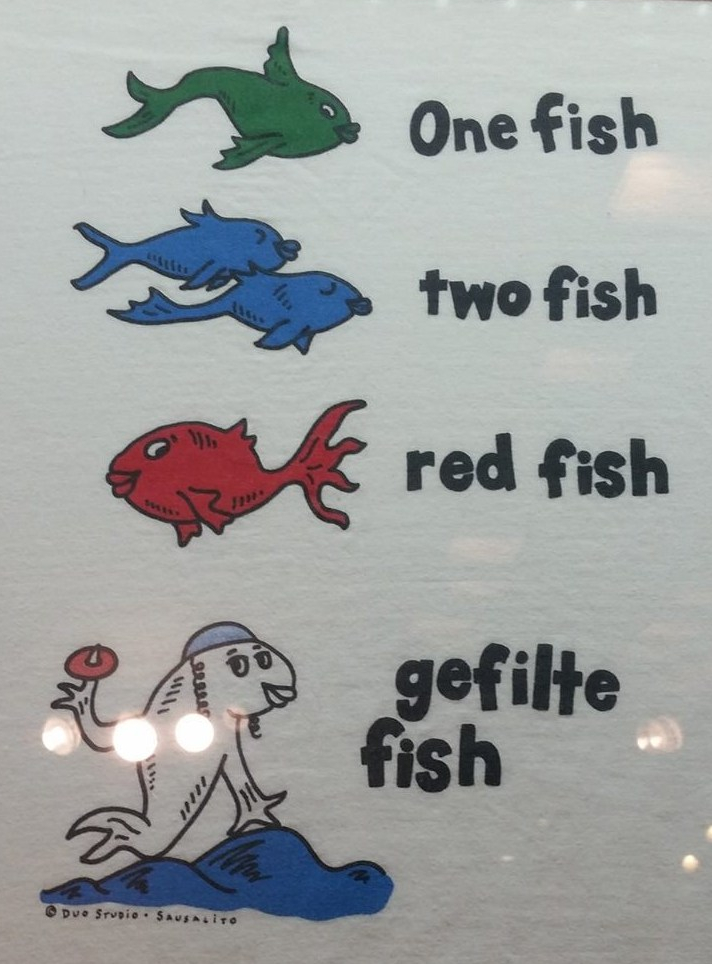
When you go on a trip, you can buy one of those souvenirs that says “I went to Barcelona and all I got was this shirt”.  I went to Barcelona and all I got was a complex textured view of the pluses and minuses of having a Jewish state- and Diaspora life.

More than I expected on a birthday trip abroad?  You bet.  But don’t worry, I’ll be having some chicken paella too 😉

Yiddish softens the heart?

Two weeks ago, I approached my friends at FluenTLV about starting a Yiddish table.  FluenTLV is a fabulous event (my favorite in Tel Aviv) where people get together to exchange languages.  I offered to represent the language and they were thrilled.

Last week, the first week we did Yiddish, probably 3 or 4 people came and it went well.  One German guy, a couple Jewish Americans, and an Israeli.  Given how stigmatized my heritage language is in Israel, I was pretty happy.

Last night, Yiddish came to life.  At the beginning of the night, an Israeli came in and tried to take one of the three chairs at my tiny table.  I said: “actually that chair is for Yiddish.”  He said “well, nobody is going to come anyways, so I’ll take it.”  I said: “nope, this chair belongs here, you can leave now.”  I asked him if he wanted to learn something and he said “sure, teach me a word.”  I did, he laughed, gave me one of those “everything is OK dude” Israeli high fives and left.  Probably without a further thought about what he had said.

The best part of the evening is that this guy was totally wrong.  Group after group came over to my table.  We didn’t have enough chairs.  When all was said and done, about 15-20 people had visited my table.  A German guy and two Dutch men explained how Yiddish had made its way into their languages!  A Brazilian Jew talked about Yiddish in her family.  I met Israelis whose parents or grandparents spoke the language and remembered some phrases.  Together, we read my copy of “Der Blat”, a Satmar Hasidic newspaper.  And I could see the glow in their eyes when they realized they could understand some of it.

What was also astonishing was how willing people were to learn.  I often find Israeli culture frustrating because of the bravado.  So many people here feel the need to be right trumps all.  Hence often endless debate, even when the facts used are minimal.  I’ve even had Israelis try to correct my English- knowing I’m American.  We often laugh that off, but after a while it wears on you.  It’s tiring having to constantly defend yourself.  Humility is not an Israeli value.

Yet at the Yiddish table, Israelis came to learn from me.  And subsequently shared about themselves.  Their families, their stories, their grandparents’ Yiddish phrases.  For the first time, I actually felt in dialogue with Israeli Jews rather than a lecture.  Or an argument.  There was a softness to our conversation that made me happy.  It warmed my heart and it gave me hope.

In a society where, as I see it, traumatized Jews faced 2,000 years of violent persecution with few options for safety and survival.  Sadly, some of these Jews ended up traumatizing and displacing Palestinian Arabs in a bid for a homeland.  Some of these traumatized Palestinians subsequently re-traumatized the Israelis.  And now we’re stuck in a seemingly endless cycle of violence.

That’s how I see it on regel aches- or “one on leg” as we say in Yiddish.  My Tweet-length version of the conflict here.  The saddest part is the trauma on both sides continues.  Anti-Semitism is not just the Holocaust.  It’s a two-millennia phenomenon that continues to this day from America to France to Iran.  I’ve personally experienced it in the liberal suburbs of Washington, D.C.  When Jews are persecuted, we often have nowhere to go, which is why some people believe in a Jewish state.  I’m not sure it’s the best solution and I completely understand why people feel we need it.  It’s not by accident that there’s a lot of French people in Israel- they’re Jews fleeing violence and bigotry.  Palestinian terrorist attacks on pizza shops and buses and schools only feed this narrative as we feel under attack yet again.  Trauma piled upon trauma.

And for the Palestinians, you have those who are citizens of Israel yet continue to face discrimination, racism, and often poverty.  Whose lands were robbed of them- and are still in the hands of the Israeli state 70 years later.  You have those in the West Bank and Gaza Strip who live in immense poverty, have little right to travel, have few if any civil liberties, and often face violence from the Israeli military.  And even some settlers who burn their trees, deface their houses of worship, and physically assault them.  And you have Palestinian refugees in Lebanon, Syria, Jordan, and elsewhere who can’t even come back to the land they once called home.  Who have no rights in the villages they come from and whose host states often extensively discriminate against them.

Sometimes its enough to just make you cry and cry and weep for humanity.  With no end in sight.  Ya Allah, God please send us all healing.

So in the face of all this sadness, what gives me hope?  Yiddish.  Because tonight, I saw the softer side of Israeli Jews.  When they don’t have to be “tough”- not against Arabs, not against other Jews, not against their own heritage.  Rather, by connecting to their roots- roots violently uprooted both by European anti-Semites and the Israeli state– they felt warmth.

I hope politicians can figure out a solution to this problem.  Given their proclivity for narcissism and greed, I’m not sure what they’ll do.  In the meantime, perhaps part of the solution is culture.  When you feel connected to something bigger- especially something a part of your heritage- it puts things in perspective.  Rather than having to show how “Israeli” you are, you can be the multifaceted Jew beneath the uniform.  The Jew whose family was persecuted by Polish Nazi collaborators, the Jew whose family escaped to Israel, the Jew who lives on Palestinian land, the Jew who wishes to reconnect with his heritage.  A complex one, of persecution and co-existence.  Of perseverance and of trauma.

A little less prickly sabra and a little more soft kneydlach.  Those fluffy yet durable matzah balls that comfort you when you feel sick.

Cover photo by Jonathunder – Own work, GFDL 1.2, https://commons.wikimedia.org/w/index.php?curid=31812266

A Jew, a German, and an Italian walk into a bar

No, this isn’t a punchline.  It’s exactly what I did tonight.

Tonight I was helping people practice their English at an event in Tel Aviv.  I love going there to speak other languages and what I’ve realized is sometimes I want to speak my native tongue.  And teach people about my culture.

It’s so nice to be validated as an American, an American Jew, and an English speaker in a place where these identities regularly lead people to discriminate against me.  To try to take advantage of me.  Or to tell me to leave my identities “in the Diaspora”.

So when I sit at the English table to help people practice, it’s nice to meet folks who are genuinely interested in where I’m from.

Tonight, after having fun at the Arabic table, I walk over to the English table.  A young woman, Mara, is sitting smiling at me.  Nothing reminds me of the world outside Israel more than a welcoming smile.  We start talking and it turns out she’s from Sardinia.  Sardinia is a fascinating island that’s part of Italy with its own unique history and languages.  I’ve learned some about it before, I’m very eager to visit, and I was thrilled to meet my first Sardinian!

We talked all about the language of her island– sometimes so distinct from Modern Italian that other Italians can’t understand.  She said she and her husband will speak in their dialects when they don’t want anyone in Tel Aviv to catch on.  Something a great many American Jews may recall about their grandparents and Yiddish.

Shortly thereafter, another woman joins us.  Corinna is German so I launched into a bit of Yiddish which made her smile 🙂  I love doing this with Germans.  It’s a friendly way to show something we have in common- the languages are distinct but share many words- and it’s also a way of showing pride that my identity survives.

Turns out Corinna is fascinated by Yiddish.  We talked about Germanic words in Yiddish and Yiddish words like meshugga and kosher that are in German.  We even had a good laugh at the word “blitzpost”.  In Yiddish, it means “email”.  In German, it’s a phrase you’d say if your snail mail arrived quickly.  Hence the connection.  But really neat to learn from my new German friend about our shared and different identities.  Really cool 🙂

Sometimes it can be hard to see progress when you’re living in the Middle East or watching the absolute catastrophe going on in my homeland right now where the government is literally shut down.

And sometimes you experience little miracles that make your spirits fly.  Who could’ve imagined, just 72 years after the worst genocide in Jewish history, that a Jew, a German and an Italian would be sitting in Israel speaking English?  At a bar?  Laughing?  Exchanging phone numbers.

And Mara and Corinna aren’t just ordinary Italians and Germans- Mara’s husband works at the Italian Embassy and Corinna interns at the German one.  They literally work for their governments.

From a Jewish perspective, you have to understand that if my grandparents met people from the German or Italian governments in Europe, they would’ve been dead.

And here we are.  Sharing a beautiful moment, a quotidian moment, a peaceful moment.  Making friends with each other.

I’d like to remember this experience for the days when I feel really sad.  There are things I see and experience here that are depressing.  I don’t think many Israelis or Palestinians or Syrians or really many people in the region right now feel optimism.  It just seems to be getting worse by the day.  And given the wars, the terrorism, the displacements, the cutthroat politics- I can understand it.  Trauma here is real- and in every group imaginable.

I would like to share a bit of hope.  If you were to ask someone in 1945, just after the Axis powers murdered 6 million Jews, if they could envision a day in which a Jew, a German, and an Italian would be hanging out in a Jewish homeland- they would say you’re fucking nuts.

And they’d be wrong.  Because that’s what happened tonight.  Because progress sometimes passes under our noses unnoticed.  I feel it is a real blessing to have met Mara and Corinna tonight.  We’ve buried the old Axis and made a new one- one that will hopefully be filled with visits to Sardinia, with learning about the German language, with visiting Yiddish libraries and concerts.

Because the seemingly impossible does happen sometimes.  When you lose hope, open up this blog or find something around you that makes you look in awe.

Don’t give up.

Why social justice isn’t just economic

When it comes to economics, I believe the more equal we can make our society, the better.  Ideally, that’d mean less state and corporate control and more resources in the hands of the people.  And as we work towards that goal, I believe in a strong safety net- universal healthcare, guaranteed housing, access to healthful food, free public transportation, and more.

What I’ve come to realize, particularly due to my stay in Israel, is that economic justice is not enough.

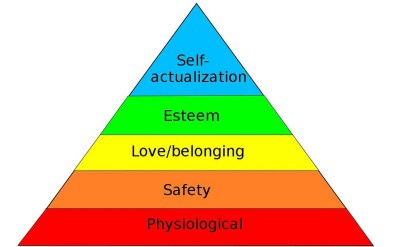
What does that mean?  What I mean is economic justice is crucial- it helps people survive.  If you look at Maslow’s hierarchy of needs, economic justice provides people with the foundation in order to reach higher goals in life.  It provides for your physiological needs (air, water, food, shelter) and safety needs (financial security, health, safety).

If you look at the pyramid below, you’ll notice that more emotional needs, like love and esteem are built upon the foundation of the needs addressed by economic justice:maslow.jpg

In other words, you need economic justice to give people the opportunity to build their self confidence, to be able to focus on their love life, and to realize their dreams.

And yet, what’s also clear is that economic justice alone will not help someone achieve these higher needs in life.  Having a good salary certainly can make me feel happy and secure, but it won’t in and of itself make me feel loved.

Which is where we come to culture.  First, let’s define culture.  Culture, as I see it, is art, music, language, food, religion, customs, clothing, and so much more.  In short, it is a series of practices that gives life meaning.  It helps us feel rooted.  It doesn’t mean that culture stays stagnant- it always changes.  Yet if we don’t have some reference point for how we interact with the world, our self-esteem suffers and we can feel devalued.  Especially when the surrounding society demands we abandon our culture.

Incidentally, when I did a Google search on the psychological benefits of culture, an Israeli researcher appeared.  Dr. Carmit Tadmor studies the role of multiculturalism as it relates to conflicts in Israeli society.  Both she and the American Dr. Francois Grosjean, whose article helped me find her, argue that biculturalism is a benefit.  That people with more than one culture tend to be more creative, more flexible, more able to wrestle with ambiguity, and more professionally successful.  And quite important for Israel- they are more willing to acknowledge different perspectives and consider their merit.

Considering all the benefits of culture, one can imagine the great harm involved in destroying it.  If access to your culture (and the ability to add new ones) gives people confidence and creativity, stripping people of their culture causes psychological harm.  When a Yemenite child is forced by his Kibbutz to cut off his peyos, his sidelocks, one does not need a great deal of imagination to fathom the psychological harm.  Or, in the case of America, when newspapers advertised jobs saying “No Irish Need Apply“.

This last example is particularly illustrative.  Professor Richard J. Jensen at University of Illinois-Chicago published a book entitled “No Irish Need Apply: A Myth of Victimization”.  He claims discrimination against Irish-Americans was exaggerated.  I’m pretty much always suspicious of someone who uses the phrase “myth of victimization” because it’s used to tell people their pain isn’t real.  To invalidate them.  Perhaps to invalidate themselves.

This attitude, unfortunately, is quite common in the U.S.  I once met a man of Irish ancestry- actually proud of his ancestry but not engaging with directly.  That is to say, he read books, he visited the country, but on a day-to-day basis, the food was cheese dip, the language was English, the music was Sweet Home Alabama- and that’s about it.  When I once asked him about his prejudices towards immigrants- why Latinos, for instance, couldn’t continue to speak Spanish- his answer was telling.

“When my grandparents came to America, they spoke Irish Gaelic.  But they never taught it to us because they were in America.  And here we speak English.  And I’m glad they never taught it to us because that’s not what you’re supposed to do here.”

In other words, he justifies his current prejudice towards immigrants who strive to maintain their culture by citing his own family’s pain- and even justifying that pain.  Invalidating the suffering his family endured.  That continues to leave his family rather rootless today.  And voting for politicians to expel his immigrant neighbors who suffer the same fate his family did.

Which brings us back to Prof. Jensen’s book.  As an American Jew and a Washingtonian, what I discovered made me so proud.  A 14 year old girl, Rebecca Fried, a student at D.C.’s Sidwell Friends School, wrote a thesis disproving Prof. Jensen’s claims.  It started with a simple Google search and she found tons of examples of discrimination, including racist job postings.  Prof. Jensen’s work was a sham- as other professors then began to discover he had an anti-Irish and anti-Catholic ideology.  It’s also sad because his last name is Scandinavian- he clearly has immigrant roots himself that maybe his own family was torn away from.  That he continues to inflict on others.

What makes me particularly proud about this?  First off, she’s a fellow Washingtonian.  We come from one of the most diverse metropolitan areas in the world and it definitely helped me become the multicultural person I am today.  It’s basically impossible for you to live in the D.C. area and not interact with people of different backgrounds and like Dr. Tadmor’s research indicates, this changes your mentality for the better.

Secondly, I’m going to make an assumption – hopefully correct – that Rebecca Fried, daughter of lawyer Michael Fried – is probably Jewish or at least of Jewish ancestry.  The name is so so American Jewish that I’d be surprised if she wasn’t somehow connected to our tradition.  Although America always finds ways to surprise you 🙂

Working off this assumption, a 14 year old girl of Jewish ancestry helped Irish Americans reclaim their cultural identity.  And unravel a hateful argument against them.

Why does this not surprise me?  Because American Jews- perhaps all Jews outside Israel- understand what it means to be a minority.  And- most importantly- if we continue to identify as Jewish in any way we are in fact maintaining our culture.  All American Jews are bicultural.  And therefore we enjoy the benefits of this identity- and understand the challenges.  While we faced (and continue to face) pressure to assimilate in the U.S., our resilience helps explain why American Jews “earn like Episcopalians and vote like Puerto Ricans.”  Which is to say that because we’ve maintained our culture, even though our economics should push us to vote Republican, we voted 71% Democrat in 2016.

Not to say people of different parties can’t be empathetic to immigrants, but in the current climate I think it’s fair to say Democrats are more open to multiculturalism.

I believe our biculturality helps explain why American Jews tend to be more empathetic to refugees and more open to diversity when compared with their Sabra counterparts in Israel.

When Jews came to Israel, they had their cultures ripped from their bosom by the Sabras who already lived here.  Yiddish, Judeo-Iraqi, Ladino- thousands of years of Jewish history were thrown out the window.  Kids were shamed for speaking Jewish languages!  Within just a few generations, many of these languages had become extinct or endangered.  Not because of anti-Semitism in another country, but rather because of other Jews who denied them the right to maintain their culture.  Because of bullies deeply insecure about their own cultural identity.

So how does this relate to social justice?  First off, we started by talking about economic justice.  The Israeli state- especially in its early years- did actually have quite a focus on economic justice.  The social safety net that developed far outpaced anything we have in America.  The government was pretty socialist- this is the origin of the Kibbutz- a commune.  There was (and is) a communist party in Israel- in the Knesset.

And yet there was a blind spot.  Racism.  Culture.  The government may have thought that if it simply erased Diaspora Judaism- the “icky” Moroccan superstitions, the “grating” noise of Yiddish- that it could entice people with money.  With jobs, with education, with healthcare.  To switch their identities.  Not to have both- for example- Moroccan and Israeli identities.  But rather “Israel #1 only amazing awesome nothing better”- that’s it.

Well guess what?  That has never worked in history.  Because what happens when you strip someone of their identity?  Let’s say they have their physiological and safety needs taken care of (not always the case here, but roll with me)- what’s missing?

What’s missing is culture.  Something to root you, to comfort you, to enrich your life.  Because Sabra culture is not a culture- by design.  Sabras when creating the State of Israel wanted to be the “anti-culture”.  That by negating their roots, they were making something new.  True- but the issue is you can’t create something out of nothing.  Your mentality, your traditions, no matter how much you hate them, impact the way you see the world.  And simply by telling yourself that that’s not OK turns you into a monster.  Into someone who hates both herself and- in particular- her neighbors who continue to hold on to the traditions she despises.

I think this explains why in Israel, and in the U.S., the people who tend to be most anti-minority and anti-diversity are the people who had their culture stripped from them.  Who continue to operate in a vacuum of Palestinian falafel they call Israeli and pizza they call American.

The reason Jews have been- and in some cases continue to be- hated in the Diaspora is because of our tenacity.  Our desire to hold on to our evolving traditions even when they’re not the norm.  To celebrate our holidays, to embrace our sense of humor, to learn about our history, to wear a yarmulke, to want to pass these traditions down to the next generation.

Our willingness to remain different while enjoying the best society has to offer, our biculturality, is what makes us queer.  It’s what makes us more complex than economic justice.  Because you can give me bread, but I want roses too.  I want a sense of identity.  And so do Mizrachi Jews and Sudanese refugees and Latinos and Black Americans and religious Jews and Yiddish-speaking Ashkenazim.  As do many people alienated from their cultures- take this opportunity to learn!

In short, the right to a cultural identity not only makes you a happier person, it makes you more empathetic to others, it makes society more progressive, and it makes for less bitter people for the state to rally to hate others.

This new secular year, let’s make it our mission to realize that economic justice is crucial and not enough.  Our cultural identity changes the way we see the world and when we have the right to exercise it, it can help us be better people and make our society one worth living in.

May it be so.

Wherever I stand, I stand with refugees

As some of my long-time friends know, I’ve always been an advocate for refugees.  My very first internship in college was with Jews United for Justice, a DC organization promoting economic and civil rights.  I personally lobbied my boss to make our Summer “Labor on the Bimah” workers rights event about immigrants rights.  The year was 2006 and Republican Congressmen were pushing a horrific law that would’ve even punished Americans who helped undocumented immigrants.  Even pastors that fed them.

My boss agreed and we organized 30 events around the D.C. area on Labor Day to mobilize Jews- alongside Christians and Muslims- to support immigrants rights.

Part of my job was to find Jewish texts to explain why our tradition asks us to speak out on this issue.  This is what I compiled.

You may be familiar with the verse from Exodus 12:49: “There shall be one law for the citizen and the stranger who dwells among you.”  Or “you shall not abuse a needy and destitute laborer, whether a fellow Israelite or a stranger.” (Deut. 24:14)  Or any of dozens of similar commandments.

I spent much of my career in the U.S. fighting for immigrant and refugee rights.  In the government, at NGO’s, and as a private citizen.  The struggle there continues.  Even this month hundreds of thousands of immigrants and refugees may be deported if the DREAM Act isn’t passed and TPS isn’t renewed.  When I left for Israel, Donald Trump was pushing to ban refugees (and even entire countries’ citizens from visiting).  Not by coincidence, these countries were largely Muslim and the refugees increasingly Syrian.

I rallied and rallied for humanity.  I screamed till my voice was lost.  I was invigorated but also scared and exhausted.  In my favorite moment from one of the rallies by the White House, I met up with a Syrian refugee friend Remi who I had met on Facebook months before and we fought for justice together.

rally pic

This picture is what I believe.  All of us have suffered.  Few peoples more than the Jews.  Having been banished from country after country for over 2,000 years- and butchered along the way- we should be the most compassionate towards those fleeing suffering.  It’s a biblical mandate and it’s rooted in our history.

Many of the Jews living in Israel are refugees themselves- from the Holocaust, from Arab governments who expelled them, from the Soviet Union, from war and famine and anti-Semitism.  Sometimes when people experience trauma, it can be hard to empathize with others.  And there are some people who, after putting in a great deal of effort to heal, are able to see the humanity of the other.  To realize that the Jewish story, while unique, is not the only story of suffering.  And that our own pain must become a source of compassion towards others.

One of the reasons I made aliyah frankly was to get away from the refugee rights struggle.  I was tired.  It’s painful and the American government is eagerly attacking both the foundations of our democracy and of my friends’ human rights.  Since making aliyah, I’ve continued to talk to Syrian refugees in Arabic via Skype through a fantastic program called Natakallam.  Since moving to Israel, it’s now easier to schedule since I’m in the same time zone as my Skype partner Shadi in Iraq 🙂 .  One day, inshallah, we’ll be able to visit each other in peace, as we both want to do.

In the meantime, I thought I had escaped.  And then I met Sadiq.  Sadiq is a Darfur refugee living in Tel Aviv.  I had signed up to tutor refugees in English, but as a newly arrived oleh with my own stress, I didn’t realize just how hard it would be.  Sadiq was sweet and wanted to party at the beach and improve his English.  He worked twelve hour days every day of the week.  And he hadn’t seen his family in 20 years.  I heard about the relatives killed, the homes abandoned, and the pain.  He had survived a genocide.

Yet somehow he had a positive attitude and a beautiful smile.  And a willingness to learn.  I enjoyed learning some Sudanese Arabic from him.  I was just too overwhelmed to continue tutoring.  So I explained to him why I needed to pause our work together and I took some time to reflect and get my life in order.  He understood and I focused on finding an apartment and adjusting to life here.

About two months ago, I found some more stability when I got my own apartment.  I took advantage of some cheap flights and took my first post-aliyah vacation to Cyprus.  Cyprus is amazing and for all its historical problems, the area I was in was peaceful and relaxing.  I was away from the Middle East, from loud Israelis, and from conflict.

Then I saw a woman in a hijab trying to ask a Greek-speaker something.  I went up and talked to her in Arabic.  She was looking for a grocery store.  With my Arabic and my nascent Greek, I helped her communicate with some locals to find it.

We then started chatting.  She asked where I was from, I said Israel.  Turns out Fatima and her family are from Idlib.  They were excited to hear my Syrian accent.  She had a son Muhammad and I chatted with him for a bit.  And another woman, Jamilah, stood beside them.

After they thanked me for directing them to the grocery store, I asked if they were all family.  That’s when Jamilah started crying.  She told me, as she bawled, that she had lost all her family in a bombing in Idlib.  She came to Cyprus from Syria with Fatima and her son, family friends.  And they arrived two weeks ago.

Then everyone started crying.  And telling me about their injuries.  I didn’t know what to do.  I was sad for these people- my neighbors.  And angry at the people who had harmed them.

I did my best to offer words of comfort and gave them information for aid organizations.  Then I handed them a bunch of Euros and got their contact info to pass on to my friends in the field.

In an astonishing act of gratitude, they asked for my phone number because they wanted to invite me to dinner.  Refugees fleeing war, only 2 weeks in Cyprus.  From Syria.  Inviting an Israeli to their house for a meal.  I tear up when I think of the incredible kindness.  What utterly generous human beings, an example for us all.

If our interaction brings some peace and understanding between our peoples, I’m all the happier for it.  And I hope with all my heart they get the help they deserve.  And a future their boy Muhammad can enjoy.

Because in the end, we are all people.  I was recently at a Shabbat dinner and I told a Sabra that I was upset when someone here made a racist comment about African Americans.  She said: “aval zeh lo pogea becha.”  But it doesn’t hurt you.  To which I said: “of course it does.  African Americans are my friends, my classmates, my neighbors.  We are all Americans.”

Which is the point.  We’re all Americans and we’re all humans.  It davka does pogea bi.  The question shouldn’t be “why does this offend you?” it should be “why doesn’t it?”

I live in South Tel Aviv.  Not Florentin, Real South Tel Aviv.  And in my neighborhood, there are a lot of refugees.  From Eritrea, from Sudan, from all over the world.  And despite the hubbub you hear in the news, not only is this neighborhood safer than any major city I’ve lived in in the U.S., but a lot of local residents get along fine.

I’ve met a Sabra girl who only hangs out with African friends.  I’ve met Filipino and Eritrean kids who speak Hebrew fluently- and to my dismay, not their families’ languages.  My elderly neighbors with pictures of Rav Ovadia all over there house love their non-Jewish caretaker.  I’ve met Sudanese Christians who could quote the Torah better than most Jews (in a know-it-all kind of way that suits them as Israelis).

So whether it’s Donald Trump or Benjamin Netanyahu trying to oppress refugees and migrants.  When they’re ignoring our Torah and abusing people fleeing tyranny.  And when the Prime Minister, in the name of my country and my people, is prepared to spend 504 million shekels* to deport refugees.

There is only one answer: no.  Refugees are the world’s problem.  I can’t explain human suffering.  I just know that when someone in is pain, when someone is fleeing death, we should open our hearts and help them.

Your Judaism may be only about helping Jews.  If someone insults or harms another group, you may not see it as your problem.  But my Judaism and my Israeli identity is about helping my people and helping my non-Jewish neighbors.

My own suffering and the suffering of my people is part of why I care so deeply about helping vulnerable people in need.  My Judaism doesn’t stop at the doors of my synagogue nor the borders of my country.


*The government announced a budget that will allot $3,500 dollars to each refugee deported.  And it’s about 3.6 shekels to the dollar.  There are about 40,000 refugees.


A New Year’s Resolution for Israel

Today is the secular new year.  In Israel, fittingly but quite strange for me, they say “shanah tovah”, the typical Jewish greeting for Rosh Hashanah- the Jewish New Year.  It’s a fun night of celebration and also a chance to think of what’s ahead.

For me, this week marks my 6 month anniversary of arriving in Israel.  I’ve learned so much in such a little amount of time.  I’ve visited over 35 cities.  I’ve been to Hasidic dance parties, Mizrachi concerts, dabke dancing, Israeli folk dancing, Yiddish theater, a Russian puppet show, and a Yemenite concert.  I’ve eaten Bukharian, Moroccan, Persian, Ashkenazi, Romanian, Druze, Arab, Kavkazi, Georgian, Indian, Iraqi, Lebanese, Eritrean, Filipino, and so many other types of food.  I’ve davvened with Haredim, Reform Jews, Chabad, and hippie vegan Jews.  I visited a Druze shrine and a Karaite synagogue.  I got to watch Islamic prayer up close and personal in a mosque and I went to an LGBT Orthodox Torah study group.

Not bad for the half year mark!  I’m quite proud of all my accomplishments- moving across the ocean alone, making friends, finding an apartment, adjusting to a new culture, and using all nine of my languages and starting to add Greek!

There has been a lot of stress along the way.  Israel is an extraordinarily hard place to live- or so say Sabras who grew up here.  And while sometimes they exaggerate because whining here is kind of a national sport (and they don’t know much about the challenges faced by people elsewhere), the truth is in many ways they’re right.  And it’s all the more difficult for someone like me who moved here at 31 without an extensive support network.

What’s hardest about life in Israel is also the source of my New Year’s resolution.  The hardest part of life in Israel is the people.  More specifically, the intense and mean-spirited prejudice I experience on almost a daily basis.  Towards me as an American and towards other cultures- especially within Israel.  Don’t get me wrong- there are some fantastic people here, who mostly join me in complaining about the awful ones.  But boy- there is a mean streak to Israeli culture that I haven’t seen elsewhere in the world.  It’s not because I haven’t seen prejudice elsewhere- I’ve experienced it in places like Spain (anti-Semitism), Argentina (homophobia), and the U.S. (all of the above).

The difference in Israel is the intensity and the degree to which many people here celebrate judging others.  I’m someone who deeply values multiculturalism.  I’m well aware that there are limits to it and questions about how far it should extend.  But the basic principle of respecting- at times embracing- parts of every culture to me is second nature and a fundamental way I live in the world.  The good news is Israel is chock full of interesting cultures.  Sadly, that most Israelis know nothing about- and don’t care to appreciate.  While some Israelis are curious about Berlin or America, few are particularly curious about their neighbors who look or talk differently from them.  Let alone their own roots.

The truth is when the State of Israel was being built, its founders despised (and that is not too strong a word) multiculturalism.  Yiddish, Ladino, Judeo-Arabic- these languages were vigorously and shamefully repressed by the state.  Kids grew up with shame about their roots.  And sadly some 2,000 year old beautiful Jewish cultures are going extinct as a result.

The un-rootedness of many Sabras fosters insecurity and prejudice towards those who maintain their heritage.  Just ask many a Sabra what they think of French Jews or Russians who continue to speak their languages here.

There has been somewhat of a resurgence in interest in cultural diversity, but it needs to be nourished.  And that’s where I- and you- come in.  There are Israelis like me who are proud of our origins.  There are Israelis- I’ve met them- who realize you can speak fluent Hebrew and still maintain (or re-learn) your French or Russian or Arabic or Romanian.  There are many who don’t realize that because they’ve been trained to revile the Diaspora.  And that’s very sad.

But in the end, I believe in multiculturalism and I’m convinced there are some people here who are ready to join me in this movement.  I want to celebrate the incredible cultural richness here- of Jews, of Arabs, of refugees, of everyone.  It is a gift that must be cherished to be protected.

It is no longer acceptable to me that when I tell my Sabra friends that I met Aramaic-speaking Christians or Samaritans who speak Ancient Hebrew or Eritreans with an awesome juice bar that their reaction is: “wow I didn’t know that was there- you’ve seen more here in 6 months than I’ve seen in a lifetime!”

Bullshit.  Time to get off your hummus-filled tuchus and get to know the richness of your country.  No- not the high-tech.  The cultural treasures right underneath your nose waiting to be discovered.

It’s time to leave behind the old-fashioned Zionist concept of the “effeminate”, “decadent”, “overly pious”, “cosmopolitan”, “weak” Diaspora Jew.  It’s 2018, time for a change.  It’s time to realize the “Diaspora” is The World.  And lucky for us, a whole bunch of people from all over the world have made this country their home.

Now it’s time to realize that if we understand where we came from, our cultures, our heritage- it doesn’t negate our Israeli identity.  It thoroughly enriches it.  Just like my delicious cover photo of Pringles, Russian sweets, Korean seaweed, and Israeli Bissli that co-exist at my neighborhood store.  Pluralism that begins with culture can increase respect between all sectors of society.  And instead of Jew hating Arab hating Zionist Orthodox hating Haredi hating Secular hating Mizrachi hating Ashkenazi- maybe, just maybe, we build just a little bit more understanding and a lot less hate.

Ken yehi ratzon – may it be God’s will.  Inshallah.  Ojalá.  Mirtsashem.

Let’s do this y’all. 🙂

The biggest threat to Israel

There are many threats to Israel- terrorism, nuclear weapons, earthquakes, poverty, diminishing water resources.  You name it.  But for me, the biggest threat facing Israel is one word: invalidation.

First, let’s start with what the word validation means.  Validation does not mean agreement and it doesn’t mean love.  Validation means showing empathy and understanding where someone else is coming from.  How the conditions of their life have informed their views and even if you see the world differently, you can get a glimpse of why they are the way they are.  Even if, in the end, they may be too difficult for you to be friends with.  It’s a difficult skill and an extremely useful one for living an effective life.

Validation is useful for building healthy relationships.  And its opposite, invalidation, is how you destroy them.  All of us invalidate sometimes- we judge, we mock, we belittle.  Maybe other than Buddha himself, I don’t think there’s a single human being who never judges.  However, there are degrees of invalidation.  Invalidation is when we say harmful, hurtful things to (or about) people.  She’s ugly.  I’m fat.  My neighbor’s a dumb ars.  That Orthodox woman is frumpy.  That gay guy must be a pill-popping slut.  That Haredi man is a fanatical homophobe.  That Arab is only good for making falafel- he probably wants to throw us into the sea.

Israelis have a serious problem when it comes to judging both themselves and others.  Judging has been a part of Jewish culture since the Torah- the Bible isn’t exactly Zen Buddhism.  But I remain fairly convinced that the sometimes mind-numbingly intense judgments that I hear here are also a product of trauma.  When someone is traumatized or experiences intense pain, unless and until that person heals, it is common for people to pass that trauma onto others.  That is why it is so common to see families- generation after generation- experiencing abuse.  It’s also why I distanced myself from toxic relatives and broke a chain of toxicity to build a better life.

If you think of the Jews who’ve come to this land, it hasn’t usually been for happy reasons.  Ashkenazim escaping pogroms.  More Ashkenazim escaping the Holocaust.  Holocaust survivors escaping post-war pogroms (yes, you read that right- Europeans continued butchering Holocaust survivors after the war).  A huge percentage of Ashkenazim here are descendants of Holocaust survivors- including almost every Hasidic Jew.

Mizrachim escaped their own pogroms from Morocco to Yemen- only to find their property confiscated by Arab governments.  And then, upon arriving in Israel, they were put into impoverished refugee camps.  Russian Jews fled the Soviet Union (where their religion was banned) and its chaotic aftermath.  The U.S.S.R. was a government so antisemitic it literally has its own Wikipedia article about how antisemitic it was.  Persian Jews fled the Ayatollah, French Jews fled (and still flee) antisemitic terror and discrimination, and even today there are American Jews like me escaping rising antisemitism and white supremacy in the United States.  The list goes on and on and on and on.  And it has a 2,000 year old antisemitic backstory.

And when these Jews arrived in Israel, while many were grateful for a safe haven, their cultures were often decimated in the name of Jewish cohesion in the nascent state.  Ashkenazim were told to stop speaking Yiddish (police even raided Yiddish theaters- an unforgivable thought when you think that the spectators were likely Holocaust survivors).  I even remember a survivor telling me that when she arrived to Israel from Poland after the Holocaust, Sabras would call her and her mom “sabonim”- “soap”.  That was to make fun of the “weak” Diaspora Jews who the Nazis reportedly turned into bars of soap.  Mizrachim were also pressured to give up their languages, their music, their culture- which to many Sabras seemed a bit too much like the (Arab) enemy.  To this day, they continue to have significantly lower average incomes than Ashkenazim.  And every single Israeli Prime Minister has been Ashkenazi, unless you count some recently discovered Sephardic genes in Bibi’s DNA.

With these examples, we’re literally just scratching the surface with Jews.  And it’s worth saying that the Arab population here has suffered its own traumas- of wars, of discrimination, of terrorism (yes, Israeli Arabs are also attacked by terrorists), of families divided across borders, and more.

Add to this 70 years of on-and-off warfare, and you can understand why Israel has three times the rate of PTSD as the United States.

So when a fellow Israeli is harsh to me.  When they say something mean and judgmental- about me, about another community, about themselves- I understand.  I don’t by any means justify it- I think it’s harmful and if we’re going to thrive as a society, this must change.  And sometimes I frankly have to protect myself by distancing myself from their toxicity.  And I get it.  Israelis have been through a lot.  And not everyone is healing.  It took me a while to get to this understanding- but this is the ultimate validation.  I don’t personally agree with being racist or hateful- I just know that if someone got to that point, there’s something causing it and I hope they choose a different path.

Many Israelis complain to me about American “politeness”.  They think Americans are fake- when they smile, when they say thank you, when they do a whole variety of quotidian acts that make up American culture.  On the one hand, I get it- there are times when Americans can be exceedingly formal.  It can be hard to gauge if someone really likes you- or what they think.

At the same time, I remember what one Israeli friend said to me: “I don’t like that in America they’re all the time worried about whether they’re hurting you.”  To this I say- you’re not talking about politeness anymore.  You’re talking about consideration.  You’re talking about kindness.  You’re talking about someone caring how you feel- and trying to respect your boundaries.  In a way that you never got growing up in a society filled with people whose boundaries have been crossed over and over again against their will.  Who have endured but in many cases, not healed.  And who all too often pass their hurt along to others.

To this I say- enough.  All Israelis, in fact all people, deserve the right to heal from their traumas.  And to not have new pain heaped upon them.  As a society, we can still keep our bluntness and our assertiveness without the spite and without the cruelty.  Find one way to heal yourself this week- and find one way to encourage a friend.  I’m not a psychiatrist or a PTSD expert, nor do I have the power to stop violence.  But I think that if we each find a way to bring some healing into our society, it will do us all a lot of good.

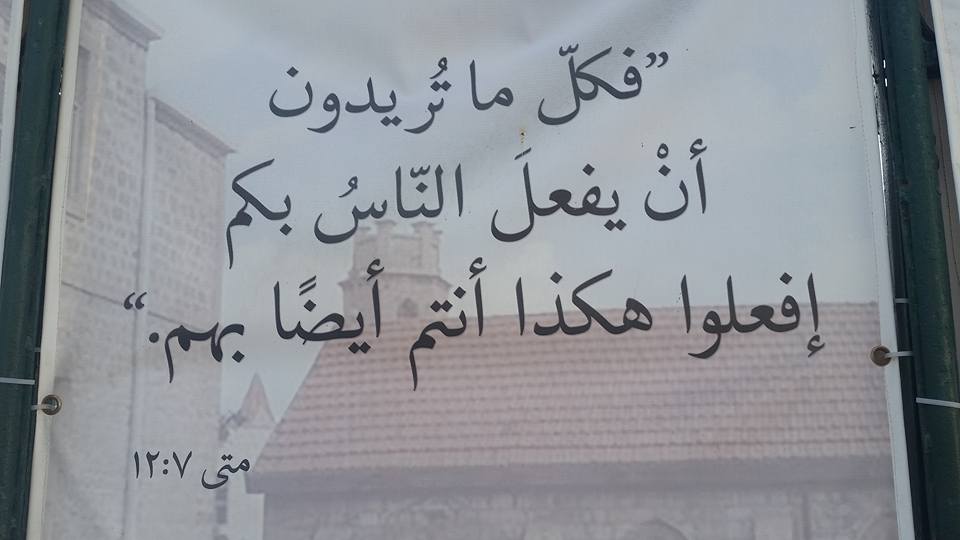
To borrow a bit from our Christian neighbors, my cover photo is from an Arab church in Haifa.  It says: “Do unto others as you would have them do unto you“.  Amen.

Reform is a verb

I grew up as a Reform Jew active in every possible aspect of the movement.  When I made aliyah, I was certain to connect with Reform communities- I would never live in a city without one.

Another reason I chose to live in Tel Aviv was because of the queer community.  It is a city that is arguably gayer than anywhere I’ve ever lived- and I’ve lived in Washington, D.C., Fort Lauderdale, Madrid, and Barcelona.

Oftentimes, I felt like my sexual identity and my Jewish identity had to be separate.  When I was in one community, I was almost always still a minority due to my other identity.  While Reform Jews are largely accepting of LGBT people (in particular the NFTY youth group), I faced sometimes intense homophobia in my community.  I once had a Reform clergy person tell me bisexual people don’t exist and a Hebrew school teacher who giggled about which person was the “real man” in a gay relationship.  I even had another Hebrew school teacher posit that there was something strange that caused more Jews to be gay than non-Jews.  When visiting a Reform synagogue in another city, a 30-something rabbi told me all about how he likes gays to help with his fashion because that’s what we’re good at.  Not to mention my toxic relatives.  And all of this isn’t even including those among the more conservative elements of the Jewish community who twist texts to guilt and harm people like me.

And in the gay community, I also at times faced anti-Semitism or felt excluded.  I remember going on several dates with a non-Jew and everything seemed to be going well and then suddenly he broke off the relationship because I didn’t eat pork.  At the time I didn’t really care if he ate pork, so it seemed rather odd and when I pressed him on it, it was clear there was an anti-Jewish sentiment behind it.  One guy implied he couldn’t date me because I was “really Jewish”.  A non-Jewish ex-partner’s father – to my face – defended the KKK as an organization supporting Confederate soldiers, not racism and anti-Semitism.  His son, my ex’s brother, dressed up as a Hasidic Jew for a college Halloween party- peyos and all.  In addition to the more recent political anti-Semitism in the LGBTQ community, I think it’s just hard to be a minority within a minority.  Oftentimes LGBT events are scheduled without regards to Jewish holidays and people don’t necessarily know about Jewish culture.  It’s not necessarily malicious, but it does make it hard.  And sometimes, I felt like the gay community really prized white “straight-acting” gay men above other members of the community, including physically.  Above blacks, Latinos, bisexuals, trans, and- in my experience- Jews.  While I strongly believe that most LGBT people in the U.S. are not anti-Semitic, I can’t deny that at times I felt uncomfortable or out of place in the community.

Which brings us to tonight.  Tonight, as usual, I went to Reform Shabbat services which were lovely.  We had a communal dinner and then I went home.  When I got home I realized it was only 9:15pm and I was bored as hell.  It can be hard to make plans for Shabbat when you’re new to Israel and don’t know a lot of people.  And it can feel lonely.

I found a friend going to a gay pop music party.  I usually just chill with friends and eat on Shabbat and walk around.  But having no great alternative tonight and having the itch to get out of the house, I made a move and I went.

What a great decision.  First of all, it was my first Tel Aviv gay party.  And it was fun.  The music was also great.  Hearing a bit of American pop music was a nice escape from the stress (even the interesting stress) of everyday life here.  Also there were some cute guys- not the super muscle-y ones you see on the beach, more like cute nice Jewish boys.  It felt comfortable.  Also, pretty much everyone was Jewish- a completely unique experience.  I really felt this when the music switched from Britney Spears to Israeli pop.  Even to the first Israeli singer I ever got a CD from at age 13- Sarit Hadad.  That felt powerful.

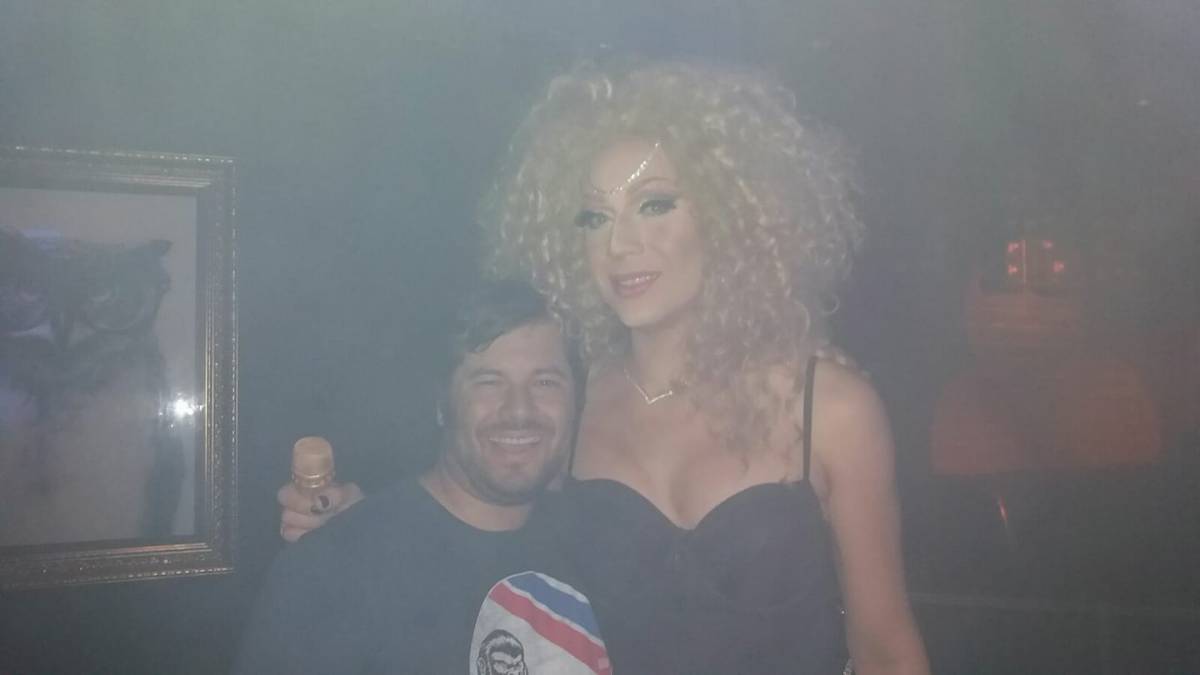
For Sabras – Israelis who grew up here – there is absolutely nothing novel about what I just said (which in and of itself is kind of cool).  But I’d like to remind them of something.  There is nowhere else in the world where a queer Jew can hear Hebrew on the dance floor all around him.  There is nowhere else in the world where every weekend there are gay dance parties and most of the people in the room are Jewish.  There is nowhere else in the world where when you take a picture with a drag queen (my cover photo) you say to them “todah”.

Only in Israel – only in Tel Aviv – do I feel my queer and Jewish identities meld.  Not at a conference, not at an event, but rather in my day-to-day life.  I don’t have to compromise on either important aspect of my self to live here.  And that is a gift – one that I hope I can inspire my Sabra friends to recognize and my American Jewish friends to respect.

There are some beautiful things about being a minority.  The solidarity, the awareness, the empathy you can develop for others.  The secret codes we use to find each other and protect our culture.  But honestly, a lot of the time it sucks.  And being a double minority makes it that much harder to feel at ease.

On a Friday night, I’m almost always at Reform services.  And oftentimes at a dinner afterwards, sometimes even with Orthodox friends.  Frankly, I feel more at ease at a Modern Orthodox Shabbat meal than with a lot of secular Jews.  I love zemiros and I love the many hours of chatter and fun.  As I see myself, I’m an “all-Israel Jew”.  I like to find the beauty in every community of the People Israel (and even the non-Jewish communities of the State of Israel).

And tonight I added a new community.  The queer Tel Avivi community is also my community- and also a part of my spirituality.  It’s a place I feel affirmed in every way and it’s a fun way to blow off steam after a long week.

I’m a Reform Jew because reform is a verb.  When Judaism or any religion becomes too static, its vitality withers.  Today I reformed my Judaism.  And I realized that while some Shabbats I’ll want to do long meals with singing and just be in the moment, sometimes, after a good hearty sing at services, I might just want to slip out at one in the morning and dance my heart out till the sun comes out.

That’s my Judaism too.