Goodbye Eastern Europe

This may end up being a shorter blog because I have a flight to catch tomorrow, but I felt it was important to put a few things down in writing before I forget.

I’ve spent the last three weeks in the East.  Romania, Hungary, and Slovenia.  Countries rarely on the tourist radar of Americans, slightly more on the radar of Israelis.  But hardly London or Paris.

I’ve learned a lot.  I’ve seen gorgeous mountains, I’ve learned about wild stray dogs firsthand, I’ve eaten delicious food, I’ve experienced European anti-Semitism from the Left and Right.  I’ve seen green forests, beautiful libraries, and enjoyed the rather reasonable prices.  Especially compared to the aggressive gougefest that is Tel Aviv.

These places are, on the whole, more polite and less aggressive than Israel.  It was nice to have to re-conform to the ideas of consideration and rules.  Even when it struck me as bizarre at first, like when a Romanian guy stood silently waiting for the crosswalk to say “go” at 11pm with no cars coming.  I actually laughed out loud at that one- he said it was because “it’s important to be fair.”  If only Israelis could just take one iota of that respect and apply it to their lives, the world would be a better place.  Even if it feels sometimes a big exaggerated here.

If I had to make a few broad generalizations, here they are.  Hungarians are super rude and xenophobic.  I’ve never been stared at so much (perhaps outside of Israel).  My caramel skin perhaps?  My Jewish complexion?  I’m not sure.  But there is a deep aggression to a lot of people in Budapest.  Maybe they’re still weary of communism or hate tourists, but I’ve never, not even in Israel, had so many people chuck my change or plastic bags at me in stores.  For absolutely no reason.

Overall, all three countries are rather xenophobic.  Anti-Semitism is definitely still present, despite the paucity of Jews, showing just how utterly illogical the whole concept is.  And a great deal of the energy that has historically been used against Jews is now being used against other minorities such as Roma and Syrian refugees.  There is a lot of angry graffiti to be found- occasionally countered by progressive forces.  Though some of those forces have said pretty nasty things to me about Israel.  It’s not easy to be a gay, open-minded Jew in this part of the world, squeezed in all directions.

The nature here is absolutely stunning.  Perhaps because this part of the world industrialized later and isn’t as densely populated as Western Europe, the mountains and forests are so much prettier.  If you like raw green space, Eastern Europe has a lot of it.  Especially Slovenia, the 2nd greenest country on the planet.  The public transit isn’t great, so if you really want mountain time, find some hostels or lodging deep in the hills and enjoy.  I had a lot of stomach-turning van rides in Romania- this region is not for the feint of heart.  But once you get a sense of it, the surroundings are quite gorgeous  And the stars are brighter than almost anywhere.

Slovenians, while perhaps just as xenophobic as Romanians and Hungarians as a whole (it should be noted I met people in all places who resisted this mentality, but it is a phenomenon), are much friendlier than Hungarians.  Again, generalizations, but I had a lot of interactions with people.  Because I’m friendly and because my phone had next to no data here, so I was always asking for directions.  The average Hungarian looked distraught and irritated to answer my questions.  While Slovenians almost always were happy to guide me.  Before someone blames this on communism, Slovenians also lived under communism and somehow turned out gentler, so who knows.  Maybe it’s just a long-standing part of the culture of a product of Slovenia’s greater economic success.  But it is a thing.

Romanians are by far the most religious of the three countries, with new churches being built everywhere despite some fairly grinding rural poverty.  I can’t help but think what an intense waste of money this is at a time when people are suffering and millions of Romanians go abroad in search of work.  Everyone’s entitled to their beliefs, but should the government really be funding religious institutions at this rate when people can’t earn a living?  There are Romanians who agree with me, but they are an embattled minority.

Slovenians are the least religious and, perhaps not surprisingly, the most gay friendly.  Or at least tolerant of our existence.  While there are neo-Nazis here (I saw my first Nazi salute during a tour), gay rights legislation is fairly advanced and I never felt threatened.  I can’t say that anything in Slovenia remotely approaches the tolerance of a major city in Western Europe, but for this region, it’s quite chill.  Romanians, as a whole, are pretty conservative and you feel it.  Some of the major urban student centers like Cluj are more open, but I feel they are perhaps the exception more than the rule.  It must be quite hard to be gay and grow up in this part of the world.

Jews.  Jews in this part of the world are more likely to be dead than alive.  While a few brave non-Jewish souls, sometimes in partnership with the few living Jews, take care of our few remaining historical relics, this is overall a graveyard for my people.  While you can see aspects of our culture (or shared culture) everywhere- from the folk music to the food- the Jewish graveyards and empty synagogues far outnumber living communities.  I’m frankly tired of seeing our ruins and want to see some living members of my tribe.  It is certainly interesting and moving to see sometimes (though sad to see that only Jewish cemeteries have to be walled off to prevent desecration), but I prefer my Jews alive, thank you very much.  I will say that I wish more Israelis (and American Jews) visited this part of the world, because it is an important part of our heritage- 2,000 years old- that explains a lot of our behavior and our traditions.  The food here tastes a lot like home.

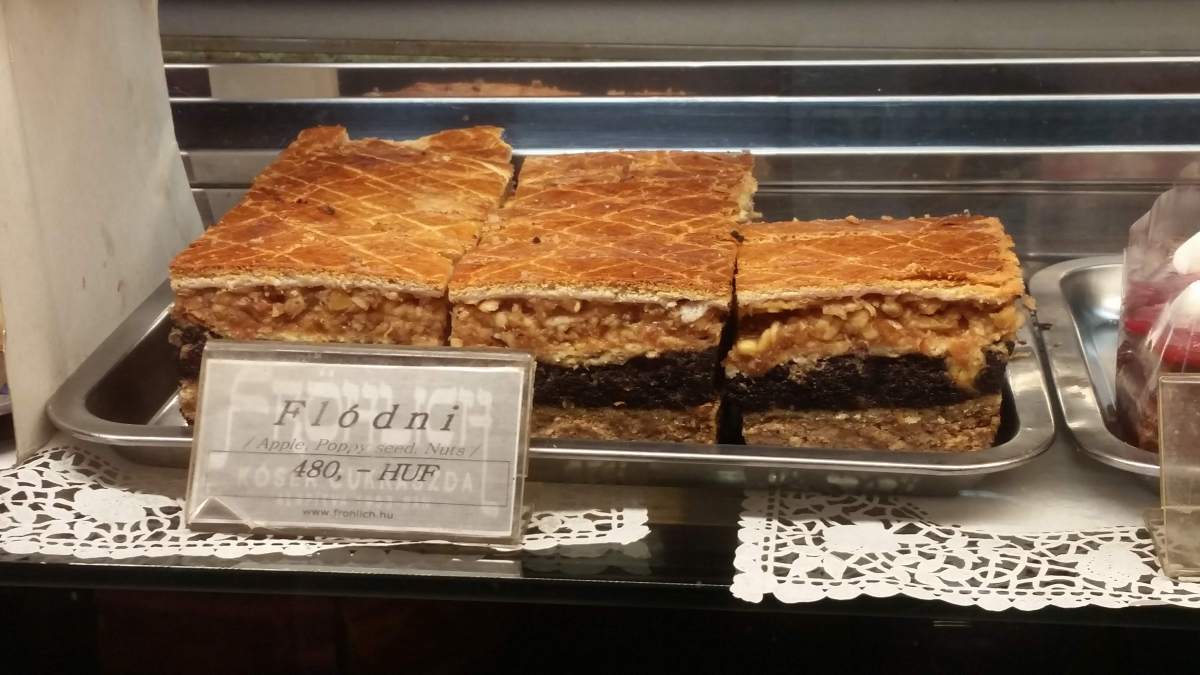
The living Jews I met here are pretty cool overall.  I really admire them keeping our culture alive in the belly of the beast.  In a place that gave birth to so much of our civilization today.  And I learned a lot about my own heritage.  Whether it was the delicious flodni dessert that tastes like charoset, the intensely personal Holocaust survivor stories, or the surprisingly old history of Reform Judaism in this part of the world, a lot of my previous understandings changed.  Even of Israelis themselves- I understand a bit more why they are they way they are.   I am more knowledgeable about my ancestry and my origins than I was before, and I’m proud to have reconnected to places important in my identity.  And through meaningful conversations I had with both Jews and non-Jews, hopefully contributed something to this place’s future.

I met some really interesting people here- whether it was Syrian refugees, a Jordan queer girl, or a Polish guy deeply interested in visiting Israel and learning about Jews.  I met some ambivalent people- young Germans who preached tolerance and reconciliation after the Holocaust.  Who seemed genuinely interested in my identity as a Jew and Israeli.  Who then made the odd suggestion that I *must* visit Chemnitz, the East German city now erupting in neo-Nazi riots, to see that these are just frustrated protest voters who wouldn’t actually hurt me.  A serious twist of tolerance shifting into victim blaming that I’m still digesting and may write about further later.  It’s not my job to see the wonders of this city- it’s the responsibility of Germans to make it safe for me to visit.  “Never again” doesn’t mean it’s my job to do their work in building a more tolerant society.  I’m curious to visit Germany one day, but I’ll only go to places I feel safe.  As most tourists would do in any country.

And Slovenians.  Most Slovenians I met were quite friendly and had little if anything bad to say about Israel or the U.S.  And a few were pretty rotten.  There’s this one place up in the mountains where you can take a stunning cable car ride.  I visited it and met some young people who worked there, one of whom gave me a ride to the local village.

Both she and her colleague, at completely different points in time and in different conversations, took pains to tell me how Israelis steal from their resort.  That they’re too demanding and rude.  As if I’m some sort of ambassador for the Israeli tourist hordes.

It was quite odd.  Because the way they phrased it, they said: “what are people like there?”  As if a few dozen poorly behaved tourists represented a country of 8 million people.  Admittedly a rather impolite country, but one that is hardly so barbaric as to be the only one to produce bad tourists.  I saw more than a few clueless tourists from around the world, especially in Budapest where it seems all people do is take selfies.

Perhaps Israelis are more aggressive, and I tried to show some nuance, but I got tired of it.  At first, I thought I was being too hard on them.  Maybe their stories of missing forks and bedsheets were true.  Although I have to say if you have the money to travel to Slovenia, you’re probably not that desperate for a new fork.

But I soon understood that it was anti-Semitism.  For in the same conversation, the cute, blond-haired, blue-eyed guy who I resisted sleeping with (I’m pretty sure he was gay- what a cute smile!) kept saying how lazy and irritating Albanians and Bosnians were.  Those southern immigrants were just too stupid to be as successful as Slovenians.  A trope I heard a lot, not much different than how some white Americans talk about blacks or Latinos.

The oddest thing about it all is that when I pointed out that maybe some people have mistaken stereotypes about Slovenians too, the hot guy said: “no, we are polite.”  Just after he asked me to defend rude Israelis and made racist comments against (often Muslim) immigrants in his country.

Here’s one thing I’ll give Israelis credit for: if they’re racist, they tell you so.  I do feel that Israelis on a whole are a pretty racist bunch.  More than the average American and more than a lot of countries.  But this trip goes to show they’re perhaps not as unique as we think.

That perhaps we’re simply, on some level, holding on to the cultural norms of the part of the world where a lot of us come from.  A place where Slavs bemoan gypsies, where a Romanian used the word n*gger in the car with me, a place where the brown and the black are derided alongside the Jew.

So if Israelis are too racist, at least it’s not shrouded in a bunch of bullshit.  Because there’s nothing polite about prejudice.  Not against Israelis, not against immigrants, not against refugees.  You can have your neatly queued lines and your politely folded napkins, but that doesn’t make you polite, that makes you neat.

I hardly begrudge this neatness- it’s quite nice after the sometimes overwhelmingly crude Israeli norms that make you feel like your feelings don’t matter at all.  A gentle, if prejudiced, silence is sometimes better than shouting for no good reason.

But perhaps next time a Slovenian complains about the Jews stealing his forks and napkins, I’ll ask him to return our synagogues held by his government.  The decrepit cemeteries holding our dead, turned into casinos and nightclubs.  And the Jewish homes and gardens turned into restaurants and simply stolen by average citizens.  With not so much as a thank you.  To this day, Romania has paid a paltry amount to Holocaust survivors who used to live on its soil.  Survivors often living in poverty, 70 years after they were stripped of everything.

So I don’t mind your politeness, I kind of like it.  But all I’m asking is if you’re going to criticize my countrymen for taking something that isn’t theirs, then give us back what is ours.  We’re not immigrants, we’re not foreigners, we’ve been living on shared soil for 2,000 years and I’m tired of you treating us like the “other”.

Eastern Europe- I’ve learned a lot here.  Maybe I won’t spend so much time here next visit, whenever or if that might be.  Perhaps next visit I’ll be spending more time with existing Jewish communities or documenting our heritage.  Or maybe teaching the more open-minded among your folk about what it means to be a Jew.  To build a better, shared future.

In the meantime, I’m going to places with more living people who get me.  Living Jews, living gay people, living in better conditions.  Because as much as I needed some space to try new things and understand myself as an individual, not just a member of a collective, I really feel I need a bit of that community now.

I’m a human being above all else.  A living thing.  And living things need sustenance.  The kind of sustenance where even if you barely agree on anything at all, when you see the challah on the Friday night table, you know on some level you’re in this together.

So if I’m a bit tired of tribalism, I suppose I’m not opposed to a little teamwork.

Chag sameach, wishing you a happy Sukkot.  And may this itinerant holiday remind you that the journey is never-ending.  May your journey bring you to health, safety, and satisfaction.

Amen.

Slovenia

After having escaped Romania, I headed to Hungary, which was a better experience. Not fantastic- there’s a lot of anti-Semitism, xenophobia, and surprisingly unfriendly people.  But definitely easier to live in as a gay man than anywhere in Romania I’ve been.  And, unlike Romania, has actual living Jews to commiserate/celebrate with- which makes all the difference.  Plus some gorgeous synagogues.

After having experienced Budapest, I hopped on a bus to Slovenia.  Slovenia- what do you know about Slovenia?  Slovenia is a tiny, tiny country.  Population of about 2 million people.  And, after Finland, the greenest country in the world.  Forests are everywhere, the air feels clean, and, as a major plus, it is much friendlier than Hungary.  Which kind of puts to bed the idea that all post communist countries need to be filled with rude people.  Because Slovenia was not only communist, it survived the semi-apocalyptic breakup of Yugoslavia- and the people are much nicer on average than the women chucking my change back at me in Hungarian grocery stores.

Slovenia is naturally beautiful- the mountains are obscenely gorgeous.  Some, deep green, are similar to mountains in Israel.  Others, so high, have no vegetation and even when it’s not cold, look like they have snow on top.  The contrast between the lower, wooded mountains and the grey/white tops of the Alps is stunning.

More consistently than anywhere else on my travels, I have been able to find relaxing moments.  To sleep.  And to hear my voice.  Not overwhelmed by dogs chasing me in Romania or homophobes or crowds of anti-Semites, Slovenia is a lot more chill.  Which has been healing.

Slovenia certainly has its problems.  I was on a guided tour- on Yom Kippur- in Ljubljana.  The super-environmentally-friendly capital whose old town is entirely pedestrian walkways.  Not a car in sight.  For an avid walker like me, this is paradise.

On the tour, the guide was describing artwork on the cathedral.  It included depictions of the Crusades.  For those who don’t know, the Crusades largely consisted of Christian soldiers butchering Jews on their way to the Holy Land, where they then engaged in a mutual bloodbath with Muslims over the same strip of land people continue to fight for today.  It was not a pleasant time to be a Jew.

The guide said: “the Crusaders are celebrated on this Cathedral- a new piece of artwork- because they built hospitals and schools here.  Some people don’t like the religion and warfare aspect- I think it’s subjective.”

The Crusades may be many things, but their benefits are not particularly subjective.  Murdering thousands of people in the name of an invisible God is not what I’d call anything other than horrifying.  And you can certainly find some other artwork for your cathedral that doesn’t involve mass murderers.

At the end of the tour- by the way, the guide’s English was fantastic and most young people here speak the language quite well- I asked about the Jewish quarter.  While Slovenian Jews are few in number, their history is quite old.  And there is a medieval Jewish quarter, along with remnants of a community mostly butchered in the Holocaust.

The guide had failed to mention Jews at all when talking about the Second World War, so I was curious to hear her response, which was underwhelming: “here in Ljubljana, the Jews lived freely in the war, there was no ghetto.”

While the situation was complex here- in fact Slovene partisans suffered heavy losses and managed to carve out some hold outs despite the fascist invasion- the Jewish community never lived here freely.  And under German occupation, almost all of them were annihilated. When I pointed this out to her, she said “yes, some died.”  Understatement of the century doesn’t quite do it justice.

In the middle of the tour, a teenage boy walked by- seemingly perturbed.  A few times during the tour, locals harassed our tour guide.  Xenophobia is real here- as are neo-Nazis.  And perhaps because she was speaking in English or because we’re foreigners, or who knows what- some people didn’t like it.  And the boy, looking at our group, shouts in an angry voice something in Slovenian.  As he lifts his arm in a recognizably, crystal clear Heil Hitler salute.

I have never in my life seen a Nazi salute.  Europe, if I’m totally honest, is not a great place to be a Jew.  It’s had its moments- we’ve been here for over 2,000 years with some great successes.  But do not kid yourself- most European Jewish communities now define safety as absence of violent attacks the likes of which are rocking France.  Rabid societal hatred is seen as an unfortunate and growing norm.

The strange thing about Slovenia is there have never been many Jews here- and aren’t many now.  Making the hatred all the stranger, and for me this emphasizes the Christian roots of anti-Semitism here.  Because if we’re not even here, what else explains the depth of hatred?  I’ve never heard of Buddhists or Hindus persecuting Jews because nothing in their holy books condemns us.  Sociology and context matter- but so does ideology.  And if you’re fed a lie for generations in church, at home, in school- it infects your brain and society.  And it is not so easily dislodged- many don’t even want to remove it.

Tonight, I was asking for directions on the train.  Lately, I’ve been using my phone a lot less, I’ve totally disconnected from social media, and I’m finding myself increasingly connecting to people around me.  And to feel present in my surroundings.  It really impacts my day- and causes me to interact with more people.  And make different decisions about where to spend my time.

On the train, a nice young woman gave me a ton of advice about Slovenia.  Places to visit, food, everything.  She even walked with me to a restaurant to get a burek- a kind of savory pastry that we eat in Israel too.  This woman, let’s call her Alenka, was so nice.  Bubbly, friendly- warm.  She reminded me a bit of myself when I helped tourists in Israel.  It felt great.

Alenka is in a church choir.  Catholic.  As you’ll see from my previous blogs, I’m rather fearful of religious people at this point.  Certainly I have friends who are.  But when meeting someone new, unfortunately religiosity is often a sign that I should back away.  Especially in this part of the world, the more religious you are, the more likely you are to hate gays and Jews- i.e. me.  That’s not a theory- it’s reflected in public opinion polling in almost every European country (oddly enough, I believe the Netherlands or somewhere in Scandinavia is the only place where occasionally religious people polled as *more* tolerant).

Alenka asked if I was Catholic.  And I said: “no, I’m Jewish.”  She said: “oh, we have a Jewish community in the north east of the country.”  So simple.  No hate, no commentary, it was as if she was describing where the North Pole was.  And, compared to the brutal comments I heard in Budapest and my tour guide’s decided revisionist history, it felt great.

It’s a reminder that people are complex.  Yes, religious people are more likely to hate me.  And, some are pretty cool.  This is what makes life hard.  I want to protect myself and if I completely shut out a group of people based on a characteristic- then I might miss out on moments like tonight.  When I’m laughing my way through Ljubljana with a new friend.

On the bus to Slovenia, I met a young Polish guy named Greg.  A neuroscientist from Warsaw.  Poland, in case you didn’t know, has pretty much the worst record of Jew hatred of any country.  In a part of the world where it has quite a few competitors.

So, again, I was feeling nervous.  When I mentioned I was from Washington, D.C., he made some odd remark about how the city was “empty of people”.  And then he went to sleep.

I was prepping myself mentally for keeping my distance.  If that’s how he reacted to Washington, D.C., I can’t imagine what he would say about Tel Aviv.

Later on the bus ride, after he took a nice nap, we talked again.  Turns out he was exhausted from a 16 hour bus ride, explaining the earlier grumpiness.  When I mentioned Israel, he actually showed curiosity.  Apparently, he wants to visit.  I told him some exciting and harrowing stories and also about my Polish ancestors.

He loved it.  In fact, we shared a lot in common- just as people.  We’re adventurous, spontaneous, like to travel solo, and are intellectually curious.  I really liked him.  And after I told him some Israel stories, he said one of the nicest things someone has said to me this whole trip.  Possibly that someone has said to me in longer than I can remember.

“Your stories of Israel make me want to visit.”

The world is losing its mind.  Especially if you read the cherry-picked, profit-driven clips in the news.  That show the worst of humanity.  Not outright lies- there are a lot of nutsy people in the world and to pretend we’re all great is just as dangerous as saying we’re all terrible.

Nationalism, including in Slovenia, in Israel, in America, everywhere- is on the rise.  Nationalism, in my view, is a kind of collective narcissism which says our group is the best- because we happen to be here.  Together.  It doesn’t really hold up to much logic.  There are certainly differences between countries, but it hardly justifies pretending the place you happen to live is the best in the world.  It’s not a gentle or benign concept- it literally leads to killing people.  I’m frankly baffled that I should have to explain this in a part of the world that saw an actual genocide in my lifetime.  Which I remember watching on TV.

But it’s happening.

And so I offer you Greg and Alenka.  Not because they invalidate other people’s hatred.  Nor should we ignore signs of danger- there are dangerous people out there.  And their power is growing.  I recently read a story about Indian tourists in Slovenia being chased by neo-Nazis yelling “white power” as the police looked on indifferently.  Being different here is hard- and frankly, unlike in the Mediterranean, I sometimes feel my caramel skin stands out here.  In ways that could make me a target.

I’m glad people like Greg and Alenka are out there being kind to complete strangers.  I try to do the same.  It helps put the news in perspective so we can remember that if 27% of Slovenians are die-hard anti-Semites (that’s an actual statistic from the ADL)- that means the vast majority of the country is not so bad.  Maybe even some ignorant people who are persuadable.

We have a right and responsibility to protect ourselves and I will never forget seeing a Hitler salute in the middle of downtown Ljubljana.

We also have to do the nearly-impossible balancing act of remembering the good people.  The people trying for something kinder, more open, compassionate, and welcoming.  The people who go out of their way to smile and guide you when your phone is turned off, you don’t speak the language, and you need directions.  And you end up eating bureks together and laughing in the street.

Traveling as a Jew- as a gay Jew- is not easy.  In this part of the world, harder than I expected.  And I’ve traveled to some pretty hardcore places.

I suppose what helps me feel a little safer, a little more loved is when people who I least expect make an effort to make me feel at home.  Walking to a mountain today, as I bought fresh yogurt from a farm’s vending machine (that’s a thing!), I saw a sign:

“Home is not a place.  It’s a feeling.”

For someone who grew up in an abusive family, who is wandering as a nomad, who doesn’t always feel welcomed.  Not in this part of the world, sometimes not anywhere.  Being so many different minorities is hard.  Rewarding, and sometimes kind of scary and frustrating.

This message was for me.  This Yom Kippur I didn’t fast, in fact I haven’t fasted in years.  And, for the first time since I can remember, I didn’t go to synagogue.  And I didn’t pray the liturgy.

I’m calling this my first Un-Kippur.  The holiday still matters to me because I’m a Jew.  It’s part of my me.  Even if I don’t go to shul, I’m no less a Jew than someone else.  Something I had to say myself to a man wearing a yarmulke harassing me to go to synagogue in the middle of Ljubljana.  Proof that simply wishing someone a meaningful holiday can bring on a load of coercion- not just in downtown Jerusalem.

This was an un-Kippur but not a fun-Kippur. It was a chill Kippur.  I relaxed, I explored, I learned, I shared, I smiled.  If that’s not in a prayer book, then I don’t want to read it.

If religion makes you act like Alenka and causes you to perform acts of kindness, do what you’ve got to do.  For me, I suppose I don’t think I should bottle up all of my apologies for one day a year and pour them out.  Perhaps next year I’ll want to spend the holiday with some secular or open-minded religious Jews.  Just for community.  Maybe I’ll apologize to some people this week- maybe I’ll just apologize when I hurt someone.  I can’t say having a particular day to do so is a bad idea.  Just that you don’t need a particular day to do it.  Consideration of others’ feelings should be built into our ordinary experiences.

Writing a blog about your personal experiences, ideas, challenges, pains, joys- is hard.  It’s super rewarding and, because I’m the kind of person who is open to changing my ideas- it can be tricky.  Sometimes, people will like one blog because it validates their opinion, only to find me sharing something quite different a week later.  And they get angry.

I will never claim to be a one-stop-shop for cookie-cutter ideology.  There are many news outlets out there for you if that’s what you want.

What I will do is share.  Reflect, observe, remark.  Build.  Paint.  A picture that continues to develop.  Like the photos from my disposable camera I’m using.  Another one of my new life experiences- or at least the first time since I was 12.  It’s cool- it forces you to stop and think when you really want to take a picture.  And it keeps me away from the temptations of my smartphone.

This new year- or even if you don’t feel it’s a new year- this is my hope for you and for us.  To try to new things, to keep the good stuff that works, to dare to be different.  And to accept when you’re the same.  To live in a world where rigid thinking is overrated.  To fight for what’s right- and sometimes to take a break or consider other views.

Jewish, Muslim, atheist, Slovenian, communist, Zionist, Palestinian, etc.  These are words we use to describe ourselves.  But I tend to think that their utility is limited.  Not irrelevant, but certainly stunted.  Because the deep meanings we attach to these words could never possibly describe the depth of our experiences.

So while we need to protect ourselves- and labels can help us do that- it’s important to describe.  Not in one word, but in full thoughts.  Who we are, what we hope for, what we want.

If your identity, your ideology, can fit in one word- perhaps the best gift to give yourself this Rosh Hashanah is the freedom to speak your truth in more than 140 characters.

Because if all I knew about Greg and Alenka is that they’re Slavic, then I might never have opened myself up to knowing them.

I can’t say I’ll stay much longer in this part of Europe.  I am happy that I saw it with my own two eyes.  No article, no travel guide, not even my blog is a replacement for human experience.


The Jewish conundrum

I’m currently traveling through Romania.  Romania, for all its current and past political problems, is today a much, much more peaceful place in Israel.  You can’t really compare a 50,000 person demonstration in Bucharest with hundreds of rockets, racist legislation, land appropriations, occupation, and creeping fascism of Israel.  A state once semi-democratic but now plunging into the totalitarian fiesta that is the Middle East.  And once was Eastern Europe.  With vestiges creeping back today.  Perhaps it’s no wonder that the increasingly psychotic right-wing leaders of the former communist bloc have found themselves in bed with Benjamin Netanyahu.  Even as they spew anti-Semitism and racism in their own countries.  I suppose bullies attract bullies.

Before we dive in, here are some pretty pictures of my other homeland.  My great-grandmother was born in Bucharest and I’ve loved traveling here.  This is my third visit this year- I’m the first member of my family to step on its soil since she left 130 years ago for the golden shores of America.

Romania is gorgeous.  Or in the case of Cheile Turzii, “gorges” 🙂 .  I’ve been to Cluj, the silicon valley of Romania.  Literally- both a valley surrounded by hills and also the high-tech hub of the country.  Filled with lots of young, progressive people working in high tech.  But with way less pent up aggression than people in Tel Aviv.

I’ve been to historic Transylvanian cities, old synagogues, beautiful mountains.  Romania is stunning.  My ancestors must’ve really been struggling to want to leave here.  (Turns out they were- the government passed anti-Semitic legislation and had various state-sponsored pogroms the years my family left)

And for those of you still living in Israel, the other day I bought ice cream, a large bag of oatmeal, apples, bananas, milk, several yogurts, almonds, tomatoes, cucumbers, a Romanian home-made candy, cascaval cheese, turkey, whole-grain bread, and I forget how many other things.  For a total of $10.  Israel is stupidly expensive and the quality of food is definitely not better than here- but I suppose that’s what you get when your country is ruled by a bunch of nepotistic politicians whose rabbi friends make an extra buck off of every piece of food by deciding God approves of it.  Nationalism costs money- I suppose if you pour every ounce of your being into conflict and the idea that your country is super awesome, then people can take advantage of your distraction and charge you money for the things you actually need to survive.  But keep believing that patriotism is awesome.

Romania also knows a thing or two about ethno-nationalism.  It’s a country where, to this day, there’s actually a political party calling for outlawing the Hungarian minority’s party.  Because they claim the Hungarians want to hand over Transylvania to Hungary again.  Does this sound familiar, Israel?

It’s also a place with a long, storied history of anti-Semitism.  One which, thankfully, is much, much better today.  As I have never felt physically threatened and have never even faced an aggressive comment here.  Frankly, Romanians are way more polite and respectful than Israelis.  I feel emotionally safer with the average Romanian than a Jew in Israel.  And not just because they say “please” and “thank you”- although that’s nice too.

And Romania does have a mixed record on its Jews.  As I’ve been here, I have seen a little bit of anti-Semitic graffiti, I’ve heard some yearnings for right-wing politics, I even saw a billboard promoting some sort of Mein Kampf theater production.  Hopefully with the goal of educating people, but I’m honestly not sure.  And I was rather shocked to see the words on a billboard.

I also visited a synagogue.  I was hesitant to- I’m here partially to get space from Israel.  But I was in Sighisoara and I just wanted to take a peek.  Perhaps it was partially because when I asked a young woman where it was, she said there was none.  Even as Romanian nearly-Klezmer-sounding music blared out of her store (which was awesome- she said she’d check out Jewish music after).  I don’t think she was ignorant out of hatred.  I think she simply didn’t know there was a synagogue.  In a town of 20,000 people.  Sad.

I have to note that I’ve mentioned to many people here I’m Jewish.  And sometimes I’ve noticed feelings of guilt.  One guy, when I said my family was killed in the Holocaust, said it gave “shivers down his spine” and he told me about an Israeli he’s met who actually moved to Romania.  And to return to the synagogue in Sighisoara, the non-Jewish custodian of the synagogue was so, so proud to show it to me.  She even hummed the tune to “Tzadik Katamar”, a Jewish prayer written on the wall of the synagogue.  As we both motioned the steps to the Israeli folk dance.  For those of you who think, as I was basically taught at home and at synagogue, that Eastern Europeans are just a bunch of lousy bigots- you’re wrong.  The lousy bigots would be the people who taught you this lie- and the idea that you can generalize about tens of millions of people.  Many decades of evolution after most of our persecution took place.  Things have undoubtedly changed here for the better.  I feel much safer in Cluj Napoca than in Tel Aviv or London.

And there are problems.  Today I was at some sort of folk festival and I met a guy who spoke Spanish.  I was ordering food and having trouble conveying how many grams of meat I wanted (that’s a thing here- everyone should pick up on this.  You don’t have to guess how big your food will be, or be disappointed!).  He, like many Romanians, has worked abroad.  In his case, Spain.  In many others’, Italy or elsewhere.  Part of the reason things are so cheap here for me is that their economy isn’t so great.  Sending thousands of young people abroad in search of work.  Sometimes, to return.  Sometimes, not.

He starts talking politics with me.  One of the things I *love* about Romania is how un-invasive people are.  When I say I’m American or Jewish or tall or short or religious or not religious- people don’t dig.  In Israel, you can say you dislike tomatoes and enter into a 15 minute argument about a fucking fruit. (or vegetable- again, keep arguing).  Israelis like to pretend that respecting people is such an American concept, that “politeness” is fake.  But actually, my experience is Eastern Europeans are way, way more polite than Israelis.  So their barbaric habits must have other roots, because it sure ain’t from here.  I tried to cross the road the other day at 10pm, with no cars coming, and my friend said we should wait.  I asked why and he said: “because we have to respect the rules.  And be fair.”  As he returned me the fifty cents I overpaid for our meal.  I actually laughed out loud because no one has treated me with such dignity in a long time.  Then he gave me hand-picked apples from his family’s farm.  You can be generous and polite- it’s not that hard.

Now to return to the first guy talking politics.  He starts telling me about Romania’s corrupt politics and economic woes.  And how things were *better* under former dictator Nicolae Ceausescu.  While I can understand the former, the latter is a bit absurd.  While perhaps there was more economic stability under the communist dictatorship, this is a man who was executed by his own people for committing genocide and heinous war crimes.  Even Queen Elizabeth hid from him in bushes once.  A story so silly it has to be true.

What really irked me, besides the Middle East-style hijacking of the conversation to lecture me about politics, is that this dictator was a real ass to the Jewish people.  He confiscated over 1000 cemeteries and synagogues.  Jews had to *pay* to make aliyah, to leave the country.  While Jewish issues are hardly at the top of Romanians’ list of woes, to not even think about how this man made my people’s- any people’s- lives miserable is just abysmal.  And cruel.

I’m glad your pocketbook was better under your former dictator, but I’m not particularly happy he shat on my family’s heritage either.  Nor are the political prisoners he killed and tortured.

In the end, what I have to say is this: religion is a sham.  Judaism, Christianity, Islam, Buddhism, Hinduism- it’s all frankly an overcharged book club where everyone thinks their book is the best.  Nationalism, to me, is just another type of religion.  My flag, my country, my people are awesome, and everyone else comes next.  If at all.  Because all of these philosophies aren’t provable.  Like, frankly, the existence of God.  What evidence do you have for God existing?  If God was so self-evident, why do you have to teach children about it to believe in it?  And why do you need organized religion to enforce its tenants?

Religion, like all philosophies, can contain grains of truth.  It’s just that for me, they don’t come from an invisible deity who you’ve personally never met or seen.  But somehow miraculously spoke to a human being you don’t know thousands of years ago to tell you exactly how to live your life.  I presume among clergy there are some good people, but their profession lends itself to charlatans because they are selling something they cannot prove.  While not all things can be easily proven, I want the antibiotic I take to fix my stomach bug to have FDA approval.  And our societal ethics should be no different- based on facts or at least rational arguments.

When you’re convinced that your book is the best, you have to constantly beat people over the head with it.  Since, ironically, it is not self-evident that you are the best (which would go against the idea that you’re inherently awesome), you have to remind people over and over again.  Why would you need to evangelize something so blatantly obvious?

For example, did you know Unitarianism was born in Transylvania?  This is perhaps the most surprising thing I’ve learned in Romania.  I went one of their first churches.  Unitarianism, for those who don’t know, is today largely a peacenik left-wing church centered around social justice.  I even once went to a Ska concert at one in high school- pretty much anything goes.

Yet apparently, the first Unitarians were lunatics.  My tour guide told me they would go into churches and just start tearing down artwork and “idols” and burning shit.  Far from the birkenstock-wearing vegans that I know today.

So when I visited a Unitarian church here- one of the first- the pastor did exactly what every lunatic clergy in Israel did.  Tell me how they were the first, the best.

I had mentioned how I had Unitarian friends in America, that they would be thrilled to see I visited.  He smiled.  Genuinely.  And also proceeded to tell me how young the American church was and that the Hungarians were the first Unitarians.  Implication- the real Unitarians.  Unitarians!  Even the friggin Unitarians have to argue about who is the first in their book club.  And they are probably the most relaxed readers.

This kind of stupid narcissism is inherent to any ideology which believes it is perfect, the best, superior.  The 10 minute interaction with the Unitarian pastor was mostly harmful because it reminded me of much longer, more aggressive interactions with the brilliant Jewish, Muslim, and Christian faith-peddlers of Israel.  Romanians, even at their worst, are still way less intense than the average Israeli.

I once posted an Arabic video in a Facebook group to have a guy from Yaffo randomly message me on Facebook voice notes of him saying “that’s great you want to learn Arabic.  Here’s the call to prayer.”  As he Allahu-Akbar’ed the hell out of my phone.  Many Muslims are shocked that I’ve read the Quran and not converted to Islam- because it’s such a perfect book I must have “seen the light”.  And claimed their religion has never persecuted Jews- despite centuries of evidence.  I had a Jewish guy ask me for money to buy food for Shabbat- and then tell me how awful the Sudanese “leeches” were in South Tel Aviv where I lived.  I even had a Jew tell me once that the worst Jew is better than the best goy.  And another Jew told me- knowing I was Reform- that Reform Jews are Christians (why is that an insult?).  Somehow Christians are stupid enough to get into this battle when they are 2% of the population.  I’ve met Orthodox Christians tell me they are the “original Christians”.  Not like those Catholics…  I’ve even had Aramaic-speaking Jerusalem Christians say they are the real Arameans, not the Arameans in Northern Israel.  Christian priests literally get into fist-fights in Jerusalem every year over who gets to light some sort of flame in the Church of the Holy Sepulchre.  Literally coming to blows over a fucking match.

In the end, I have religious friends and not religious friends.  I’m not religious- I used to identify as religious and am not anymore.  If this blog was hard for you to read as a religious person, I can understand.  I also feel it’s important to share my truth.  What I hope is that even if you read a different book from me (frankly, I’m a fan of reading everything), what I hope is you take from it kindness and generosity.  I personally have found it detrimental to limit myself to one book, one ideology in informing my world view.  And that the idea of a deity above me, rather than the human beings beside me, has led me to feel small and to make some poor choices.  And now, I feel more empowered and happy.

So in the end, when it comes to Romania, I’m not a Jew because I believe in God or because I think we are the best.  I’m not a nationalist.  I’m a Jew sometimes because people force me to be one.  When I see a desecrated cemetery, like I did in Cluj, my inner Jewish spirit arises.  My empathy for my people, for my ancestors, wells up.  My desire to protect.  Just like if I saw a Muslim cemetery being turned into an apartment building in Yaffo.  That is a true story.

What I believe in, then, is humanity.  Is treating each other with respect.  When someone yearns for an anti-Semitic dictator to my face, I am a Jew.  When someone bulldozes an Arab home, I’m an Arab.  When someone throws coffee in someone’s face for wearing a hijab, I’m a Muslim.  When ISIS butchers Christians in Iraq, I’m one of them too.

It’s not because of God or any book.  It’s because I’m against suffering.

So this Rosh Hashanah, I won’t be asking God for forgiveness or beating my chest or dressing in a suit to impress a congregation half-asleep as a rabbi preaches.  Sometimes a good message, sometimes not.  Always one which includes an appeal for donations.

What I will be doing this Rosh Hashanah is exactly what I try to do every day.  Be kind, give a smile to someone who needs it, explore, reflect, enjoy.

Because I’m not a religious leader, I won’t tell you how to spend your holiday- if you observe it at all.  Instead, I’ll hope that you follow the path that brings you joy and understanding.  Nuance and hope.  And the ability to feel sad and angry at hatred, compassion for those being hurt, and the realization that we make choices each day. Which can bring light into our lives and into the lives of those around us.

Instead of fighting over a flame, let’s grow its light.

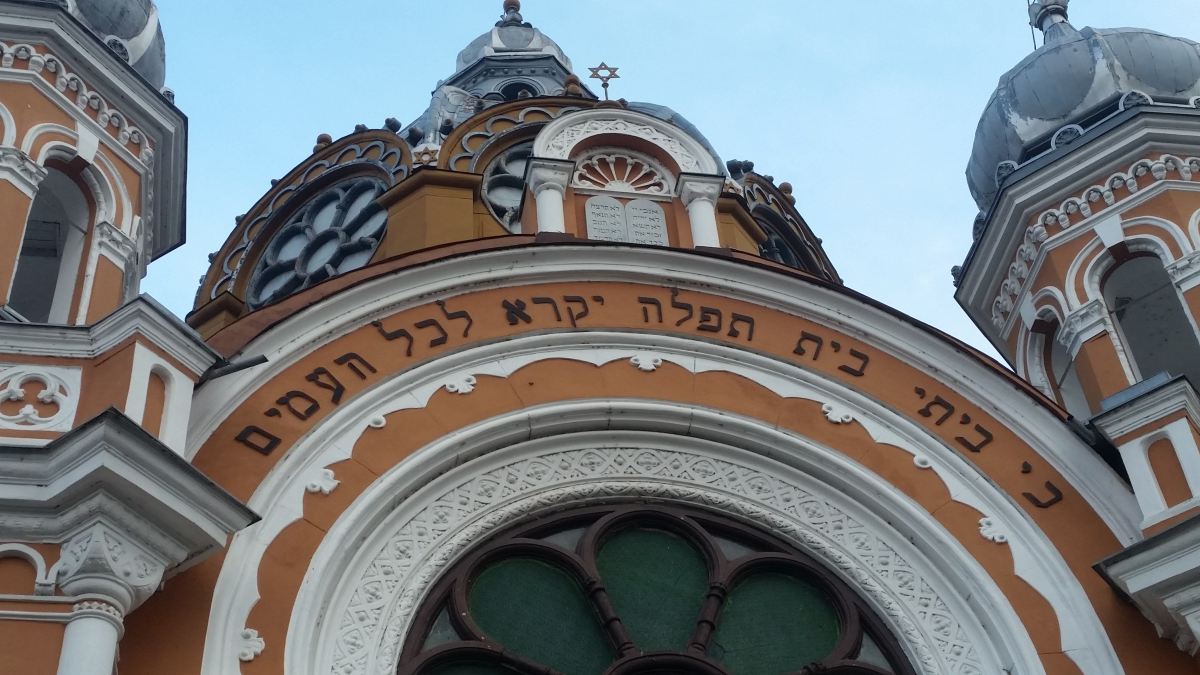
p.s.- the cover photo is a synagogue in Targu Mures.  Because there are good people in Romania and around the world working to preserve Jewish heritage, even as others wish to destroy it.  I am grateful to them and honored to visit.

What’s God got to do with it?

For those of you who don’t watch the news regularly, Israel has been super stressful.  Between Hamas’s rocket launches, the Syrian refugee crisis brewing on our border, the Syrian civil war which you can hear from Israel’s north, plus earthquakes and the usual backdrop of yelling and frenetic bargaining.  There’s cool stuff here and beautiful nature, but let’s not kid ourselves- between all these problems plus recent homophobic and racist legislation, living in Israel is “lo pashut”.  It ain’t simple.

So many times people come here to “solve the conflict”.  The first question to them should be “what conflict?”  As in which one.  Between secular and Orthodox Jews?  Between Ashkenazim and Mizrachim?  Between LGBTs and the conservative religious establishment?  Between Arabs and Jews in Israel?  Between Israelis and Palestinians?  Between Druze and Muslims and Christians and Jews?  The religious conflicts or the ethnic ones?  The wealthy and the poor?  These are not “stam”, as we say in Hebrew.  They are not just the conflicts of every country.  They are a blend unique to here.  Israel has the widest gap in wealth among developed countries with the exception of the United States.  And a much higher rate of political violence and terrorism than any Western nation.

When I arrived to Israel, I came as a deeply religious Reform Jew.  I would never have called myself deeply religious (although some friends having jokingly called me ReFrum, a pun on the Yiddish word for “pious”), but most of my friends would say I’m pretty Jewish.  I’ve lived and loved Judaism since I was a young kid and discovered its heritage and magic.  And through many tough times, I’ve used that magic to try to pull me through and give me hope.  And many times, it did give me hope and a sense of community when I lacked one at home.

Although it’s taken me experiencing Israel to understand the limitations, even the disadvantages of religion.  Judaism and all faiths.  For religion to me is not something inherently bad (or inherently good).  The way you interpret religious text says at least as much about you as it does about the text itself.  Someone can look at the Bible, Torah, or Quran and come to radically different conclusions, some much more humane than others.

It’s also true that not all conflicts are about religion.  The Soviet Union was an atheist government (Russians today are still disproportionately not religious compared to the rest of the world).  And it still managed to butcher millions of people.  Atheists can manage to be quite violent and extremist- even orthodox in their rejection of faith.  A kind of new religion to supplant their old one.

What I’ve noticed in Israel is that religion is quite often a force for evil.  Not because religion itself has to be evil (although by definition it leaves some people in and some out).  It’s because in practice, it often leads to conflict.  While sociological factors often underlie what appear to be purely religious strife, it would be naive to pretend religious dogma plays no role.

Look at the main faiths here- the monotheists- Judaism, Islam, and Christian.  Each one has elements of humaneness and kindness.  Tzedakah, Sadaqa, charity.  Compassion for the weak, the stranger.  Even at times calls for varying degrees of religious pluralism.  And a repeated emphasis on being morally upright and treating your neighbor with respect.

At the same time, we need to be intellectually honest and recognize each of these faiths’ proclivity for exclusivity and superiority.  In Christianity and Islam, this revolves around recognizing the holiness of the main prophet (Jesus or Muhammad) and pursuing the conversion of all nonbelievers.  Sometimes this was done by sword, other times by incentive, but the final goal, even among the most pacifistic believers, is for everyone to believe in your religion.

In Judaism, the superiority plays out differently.  We are God’s “chosen people”.  Israel, our promised land.  These are birth rights.  For being Jewish.  If you want to join us, you can, but it’s quite hard.  It has always been.  And is increasingly so in Israel where the rabbinate veers far to the right of the Jewish mainstream.

In other words, the superiority argument in Judaism is an exclusive one.  It’s not that we want everyone to be like us- we’re explicitly not an evangelical religion (which I like).  The flip side, however, is that we’re quite an exclusive club.  It’s hard to join and harder to be accepted.  And we have a sense, at least among the religiously inclined, that God chose us, our language, our beliefs above all other peoples.  If you think I’m making this up, simply look at the aleynu prayer or Friday night kiddush.

There are progressive religious Jews who have, to varying degrees, changed the liturgy and how it’s taught to be more inclusive.  That’s cool.  The same could be said with certain Christian sects and a small but emerging community of Muslims.

Overall the same problem continues though.  These progressive-minded communities are, without a doubt, small small minorities in the scheme of world religions.  The vast majority of the world’s religions and religious people are against gay marriage.  Even progressive traditions struggle to incorporate women equally in religious leadership.  While you could say that there are cultural factors at work (understood), it’s also true that on these and other issues, “nonbelievers” far outperform their religious peers.

In the United States, the only religious group that is more supportive of gay marriage than non-theists is Buddhists.  Jews, interestingly, are not far behind, perhaps owing to their decidedly progressive religious tendencies compared to their Israeli brethren, where only 40% of the public believes we should accept homosexuality at all.  It’s worth noting that a large portion of American Jews are not religiously Jewish as well.

When I think of specific examples here, I have too many to choose from.  The Muslims who looked at me in disbelief when I said I had read the Quran (and not converted to Islam).  The Muslims who told me Arabic was the first language and all languages come from it (an absurd claim to make to a polyglot- that’s sacrilegious).  The Muslims who laughed at the idea that Jews had ever lived here.  The Muslims whose Facebook profiles were adorned with Palestinian flags, the Al-Aqsa mosque, and Islamist iconography.  Not to mention the one guy who had written Arabic posts mocking Holocaust Remembrance Day- that was a difficult one for me to confront, but confront it I did.  This Jew speaks Arabic.

Before you indulge yourself in bashing Muslims, let me tell you about the Jews who said the Torah *justifies* expelling refugees, even Arabs.  The Christians who told me not to waste time dialoguing with Muslims because they could give me a more “realistic” picture of what’s going on here.  Or the Christians who said Muslims are animals who breed entire tribes of children to take over the land.  Or the Druze man who cut off all contact with me when I told him I was gay- he threatened that if I didn’t do so, he’d cause me “problems”.  Not sure what those would be, but considering I travel a lot in Druze country, I wasn’t ready to take the risk to my safety.

Are secular or atheist people just as capable of hatred?  Perhaps- depends on the individual, religious or not.  In fact, some atheists can be just as orthodox in their certainty and thinking as any religious extremist.  Herein lies the danger.

It’s just that most of the world’s extremism and orthodox thinking is concentrated in religion and perhaps hardcore nationalism.  Of which there is a potent mix here among so many elements of society in many different directions.  Solving Israeli and Jewish nationalism by way of Palestinian nationalism, for instance, will do nothing but create more conflict and bloodshed.  And I do believe that in the end, most people, religious or not, really do want a good life.  Even if some of their beliefs are getting in the way of that.  Humans are nothing if not complex.  But I do have hope.

The point is religiosity is in the eye of the beholder.  We could argue that the examples I gave of egregious hatred are based on a selective reading of religious texts.  True.  But so is reading texts only looking for acts of kindness.  Conquest is written into the Bible, Torah, and Quran.  It is not a new phenomenon, nor one that religious people need to invent today.  The Crusades, the Islamic conquest of the Middle East and parts of Europe, and Isreal’s expansion into the depths of the West Bank (in some respects, its founding)- these are all rooted in long religious traditions.  We can say distorted, complex, for sure.  But eminently present.

In the end, religion can provide comfort, community, and hope.  It can, and does, mobilize some people for good.  Do I personally think it’s worth all the conflict it contributes to?  Maybe not.  What good is the continuation of Judaism if it becomes nothing more than a series of rituals devoid of ethical meaning?  What does Christianity mean when it is used to force gay youngsters into “conversion therapy”, and often suicide?  Why is Islam ultimately beneficial when it is used to massacre Yezidis, Christians, Jews, and others?  Even other Muslims who don’t agree with them?

It’s not because all religious people are like this.  Or that atheists are saints.  I’m not exactly sure where I fall myself.  I’d say that as I write this, perhaps I just don’t believe in God.  I believe in what uplifts the human spirit.  I believe in kindness.  And I don’t believe in divine retribution nor in the sacrosanct nature of a document so clearly written by humans thousands of years ago.  Which may contain some wisdom, but not exclusive authority nor the right to use it to butcher other human beings.

My overall point is that orthodox thinking, the idea that one set of value is always right- that is a problem.  Even if not all religious people end up overly protective of their sect’s interests (as opposed to those of humanity as a whole), the idea behind it is problematic.  When put into practice, religion more often than not divides people who could share other things in common.

Even though Judaism today in Israel is becoming more and more nationalistic and, with the state’s help, more uniform, it was not always this way.  What’s most perplexing about the degradation of religion in Israel is that Judaism was once the playground of questioners.  Of people who debated and divided and built energy off diversity.  So that whether you believed in the God of Abraham or not, the process itself was unique for its depth of heterodoxy.  And at times, its willingness to make room for dissent.  Moreso than any other religion of its time.

So one of the greatest casualties of religious conflict in Israel is not just the Filipino kids who will never get citizenship.  Nor the Sudanese refugees who will be deported.  Nor the Reform Jews who can’t pray together at the Western Wall.

It’s Judaism itself.  And perhaps, perhaps my belief in it.

The universe is full of possibility and I’m exploring.

The Aramaic-speaking gay Iraqi in Tel Aviv

Lately, living in Israel has kind of sucked.  My government has turned into some sort of slimy festering poop mobile, spurting out nothing but shit whenever it opens its mouth.  A law against gay surrogacy, a law against the Arabic language, a law against non-Jewish minorities, arresting a liberal rabbi for performing a marriage, the list is almost endless.  Also, there’s something about pollution in the Mediterranean which I haven’t had the time to read about.  Plus the normal pressures of life here- like Hamas rockets and Iran threatening to obliterate us.  Not to mention thousands of Syrian refugees crowding our border trying to escape their murderous government.  A government that makes ours look like sheep.

When things suck here (yes, they sometimes really do- and if you’re considering moving here, you should be ready for that), I try to think of what I like about this place.  Am I just insane or did I find something here that makes me stand in awe despite all the idiocy that surrounds me?

And a story came to mind.  A few months ago, I went clubbing.  I love to dance and need to more often, but I don’t go clubbing that much.  I’m 32, I don’t have a lot of friends who like to club, and it’s not like I feel up for it every weekend.  It’s energizing and it takes a lot of energy.

But one weekend I went.  In the club, I was very friendly.  It was a gay night and there were tons of cute guys!  I’ve been so busy doing everything here- learning about Israeli culture, making friends, exploring identity, finding housing, getting important healthcare, and sweating a lot- that I haven’t dedicated a lot of time to men.  Although I am single- so if you’re cute and smart and like an adventure, hit me up 😀

But this night I did go out.  And in the club there is this very cute guy.  Very typically Jewish looking- yes we come in all shapes and sizes, but I mean that kind of “I know you’re a Jew from a mile away” look.  Typically Semitic.

I go over to him and start dancing with him.  Turns out he’s from Germany.  Surprise number one.  Because I speak Yiddish, I could communicate with him.  I wondered if he was a German Jew.

But as I got to talking to him, the surprises kept coming.  He’s German, but actually Iraqi.  His family became refugees after the absurd American war in 2003.

What’s particularly strange is why he was in Tel Aviv.  At a gay club.

Iraq and Israel have no diplomatic relations, so I presume he entered on a German passport.

But why did he look so Semitic?  I mean Arabs are Semites, so I spoke to him in Arabic and he said he understood a little.  Huh.  So maybe because he was born in Germany?

No.  He was born in Iraq.  I asked what languages he spoke.  German, some English, and- prepare to be in awe- Aramaic.

Aramaic.  The language of the ancient Middle East, the Talmud, many Jewish prayers, Jesus Christ, yeah.  Aramaic.

I was so turned on.  Intellectually and yeah, the other kind too.

And guess what?

He’s gay!!!!

GAY!!!  An Aramaic-speaking Iraqi Christian German GAYYYYYYY.  The cute guy who looks like a Jew looks like a Jew because we’re from the same neck of the woods.  And boy would I like to be in HIS neck of the woods.

You might be thinking, well duh, he’s at a gay club.  But many straight people in Tel Aviv go to gay parties.  And all of his German friends with him were straight.  In fact he wasn’t even out to them, which is why I’ll use the Aramaic pseudonym Michel when talking about him.

It was simply some sort of Semitic gaydar that allowed me to connect with him.

He loves Tel Aviv and actually came back for Pride.  It’s probably the closest Michel can get to a queer Semitic vibe, as his homeland is plagued with homophobic violence.

For me, this story is nothing but romantic.  Ancient cultures, beautiful languages, the unexpected- combining in one thrilling moment in Tel Aviv.  You couldn’t have written a sexier story if you tried.  Israeli independent film doesn’t even have the imagination to concoct such a scenario.

And there we were.  One gay Aramean Christian, one gay American-Israeli Jew.  But at a certain point, the labels didn’t matter.  He was cute and we liked to dance.

So that night in Tel Aviv reminds me of the unexpected surprises and glorious nuggets of hope that lie in this land.  A land tortured by fanatical power-hungry idiots who unfortunately run it.  And the psychotic neighboring powers who torture us and their own peoples.

For one moment that night, all of that didn’t matter.  Because I was dancing at a gay club in Aramaic.  And the 21 year old Matt who downloaded his first Iraqi Aramaic song a decade ago was smiling ear to ear.

Sometimes I yearn for a calmer life- in America, abroad, traveling, or even elsewhere in Israel.  Who knows where I will roam.  What I know is this kind of night- that’s what makes this place special.

p.s.- the cover photo is a Syriac church in Jerusalem.  If you can’t read it, it’s because it’s in Aramaic 🙂

One year as an Israeli

Today, July 4th, marks my aliyahversary- one year since I hopped on a plane from New York to Tel Aviv and became an Israeli citizen.

It’s a day that will always be filled with great importance for me.  Making aliyah was not an experience- it was a life choice.  To tie my future to the future of the Jewish people in our homeland.  Fraught and fun, stressful and meaningful- that’s what it means.  It’s not to immigrate- I returned to my ancestors’ home.  To live amongst my people.  As the norm, as the majority, in the only place like it on the planet.  Not as a tolerated (or persecuted) minority- but as the people steering the ship.  With all the empowerment and responsibility that entails.  There’s really no other process like it in the world.

There are many ways I could have lived this year in Israel.  I looked into getting a full-time job here, I looked into grad school and rabbinical school, I looked into living on a kibbutz, I looked into living up North, I even considered doing some shepherding (I think I’m still gonna make that happen 😉 ).  Ultimately, I decided to continue doing my digital public relations freelancing.  Which gave me the opportunity to work from home (and the challenge of building a social network without in-country colleagues).

One of the best aspects of this was that I could travel.  One of the reasons I made aliyah was to see the world, and my homeland.  And boy did I.  I saw over 100 different Israeli cities, towns, and national parks.  All via public transit or hitchhiking.  While people abroad only see my country in terms of conflict, they are sorely missing out.  It’s by far the most gorgeous place on the planet.  Prettier than some Israelis even recognize.  Naturally beautiful, accessible by public transit, filled with ancient cultures and history, and one more very important thing: deep generosity.

Traveling in Israel, the way I travel, can be challenging.  I love it.  You have to navigate all sorts of cultures and politics- not to mention fluid schedules (this ain’t Switzerland) and new terrain.  I’ve gotten growled at by wild boars in the Galilee at midnight, I was chased around the Arab village of Tira by a crazy man only to get a ride to the bus stop from a basketball player who’s friends with a Jewish lawyer in Baltimore, I got evangelized in Spanish by a Mexican missionary who said I was going to hell for being Jewish, I tripped and fell in a forest and with a broken sandal and my knee bleeding hobbled on one shoe to a bus.  Only to have an awesome bus driver and 20 year old Arab law student chatter with me in Arabic as we drove through the mountains.

For every challenge here, there are been countless blessings.  When I was in the Druze village of Sajur, I visited an ancient rabbi’s tomb.  There were dozens of Hasidim praying.  The rabbi, a Vizhnitz Hasid, chatted with me.  Then gave me two beautiful books- one siddur and one book of songs for Shabbat.  The other day I was in the Christian village of Eilaboun.  And on two separate occasions, when I asked for water, old men in their 70s simply handed me gigantic bottles of their own.  In Tarshiha, an Arab village in the North, I stared at a house’s beautiful door.  The Bedouin woman comes out, gestures to me to come in, and plies me with coffee and sweets while she folds her laundry.  Her preferring to speak in Hebrew, me in Arabic.

I have been hosted- for free- countless times in Israel.  Sometimes by people I had never met.  Both overnight and for numerous Shabbat meals.  I was once on the bus from Jerusalem to Tel Aviv and a young woman wondered aloud what she’d do if she missed the train to Haifa.  And the woman next to her said: “you’ll stay with me”.  They had never met.  I was heading to Haifa once for a trip and I had met a rabbi up there.  Literally for 20 minutes at a Shabbat in Tel Aviv.  I asked if I could crash with her- because that’s normal here- and she said: “I’m sorry I can’t host you because we made plans, would it be ok for you to stay with my parents?”  Would it be ok…yes. 🙂  And I did, and got fed incredible Iraqi food and awesome stories by her mom.

This blog would be endless if I recounted every act of incredible generosity in my country.  Druze who helped me hitchhike to a Christian village.  Where then I knocked on someone’s door to get into a church.  But the key was nowhere to be found.  So they invited me in to watch Christian prayers from Lebanon on TV and eat eat eat.  Or the Jewish man I met in a parking lot in Beit Jann, asked him where Rameh was, and simply told me to get in the car.  And took me.  I can’t even count how many times Christian Arabs have opened their village churches just for me.  Or how many mosques have let me film their prayers- from Abu Ghosh to Kfar Qasem to Kababir in Haifa.  And how many dozens of others I’ve visited in Tel Aviv, Yaffo, Akko, Nazareth, Jerusalem, Jisr Al-Zarqa, and more.  I know now proper etiquette in a mosque- from visiting them 🙂  I enjoy the call to prayer while I eat Georgian food in Yaffo.  It’s part of my life.

There are people here who look after me.  My Hasidic friend Yisrael in Bnei Brak who asked for my phone number to see how I’m doing.  Who always gives me a huge hug when I come to see him.  My Reform rabbis- all of them women- who nudge me, love me, and gently guilt me like good surrogate Jewish mothers.  And whose services (and mine- because here I lead them) fill me with song and love.  My Orthodox gay friend and his secular partner whose house I invite myself to for Shabbat.  Just like I do to my Iraqi neighbors.  Because not only is that acceptable here- it’s the norm.  Love is the norm.  Personal space and boundaries- that’s not how we do things here.  And you find, after some acclimating, that it’s better.  It fills you with warmth.  That sacrificing a little autonomy gets you a whole lot of community.

There are incredibly difficult moments in Israel.  Whoever wants to be Israeli- to choose to become Israeli- should think hard before doing so.  This year, I heard an air raid siren on my first day in my new apartment.  I stood in the stairwell and googled: “what to do in an air raid?”  On two separate occasions I had to deal with suspicious objects.  In one case, I was locked inside the library while it was diffused.  In another, the street was closed off.  And in both cases, the police, God bless them, were extraordinarily calm and professional.  Thank you for your service.

I’ve been racially profiled as Arab (which was awful- and I also understand why it’s not such a simple question).  I once took the bus to Jerusalem, heard about a terrorist attack along the way, and looked out the window to the see the name of the town it had just happened in.  I’ve witnessed the burnt fields of Sderot- crisped to blackness by Hamas terrorist fires.  And then got sushi with a friend who lives even closer to Gaza.  On Kibbutz Nahal Oz which has seen dozens of Hamas attacks recently.  And where she’s studying for final exams that will determine her professional future.

If you add to this the personal, bureaucratic, and cultural transition of building a life in a new country as a new citizen- boy it can be hard.  Especially arriving alone with no family.  If you’ve made aliyah and never cried, I don’t think you really did it.

But what you need to understand is that there’s a reason I live here.  And that, for the wild prejudice (in all directions), the terrorism, the predatory real estate market, the ideologies which sometimes spin out of control, and the very real tensions in my own neighborhood between refugees and veteran residents- the fact is Israel is where I feel at home.  People here exhibit an incredible generosity I have never seen anywhere else.  A sense of caring, responsibility, and even cohesion.  Much greater than you might expect from reading CNN.  People here- we- have a certain toughness to be able to get through the challenges of living in the most difficult neighborhood in the world.

And we also have an incredible ability to take those hardships and turn them into sweet sweet baklava.  This country is a country of survivors- of the Holocaust, of Arab expulsions of Jews, of the Soviet Union.  Arabs and Jews who’ve lived through many wars, cultural and familial separations, terror, and economic recessions.

What you find- and what I identify with as an abuse survivor healing from PTSD- is that people here know better than anywhere else how to move forward.  How to not only survive, but to take that pain endured and manage to build something.  To become sweet in spite of it all.  So that unlike in America where every tweet becomes a news story for a week, in Israel, we just don’t have the time or care.  We’re too busy living our lives and being in the moment to stew in it.

And living in such a generous and warm culture has fostered my own compassion.  So that when I see a woman eating grapes off the ground, I give her thirty shekels and tell her to get a real meal.  When I see a 15 year old Filipina girl working day and night, I tell her I’m going to take her on an excursion to relax.  And she lights up with excitement.  When I meet a lone soldier on a bus who was celebrating his birthday alone, I take him out to baklava and invite him to spend the night.  When I meet an American Christian in Jerusalem who’s coming to visit Tel Aviv, I invited him to do likewise.  The same day.  And last night, when I saw a homeless man in my neighborhood sleeping on a bench, I bought him rugelach and sat it next to him.

Because living in Israel is not always sweet- but you can choose to be.  And I find most Israelis do.  Once you peel back the tough exterior- the gentleness, kindness, and warmth beneath far exceeds anything I had ever experienced before.  Becoming Israeli has given me a place to be more generous, has taught me to appreciate people from all walks of life and ways of thinking, and has helped me grow into a stronger and balanced person.

I’d like to thank everyone who has helped me make this transition and grow.  My friends I made on the plane while making aliyah- who I’m still friends with.  My Reform community.  My neighbors.  My friends at my local Kosher sushi restaurant, who have become like family.  The people of every background who have supported me, fed me, and encouraged me.  Who’ve given me countless opportunities to speak the beautiful languages of this land.  My American friends who from many times zones away made an effort to keep in touch and showed they cared.  Nefesh B’Nefesh, which facilitates American aliyah, for making the process as smooth as possible.  For answering dozens of questions.  For being there both before and after my landing.  For helping me feel like I had a place to call on when I needed help.  Like when my AirBnB fell through, I got food poisoning, and you showed up on my doorstep with food 🙂 .  Ein aleychem- you rock.  Misrad Haklitah and the Israelis whose tax dollars funded my transition- thank you.  I’m absorbed- by your kindness and by our country.  Especially my fabulous aliyah counselor Lauren who talks with me about everything from bureaucracy to cute guys- and always puts a smile on my face.

Aliyah, for those who don’t know, is the Hebrew word that describes when a Jew like me returns to Israel and becomes a citizen.  It literally means “rising up”.  The idea being that moving back to Israel elevates your spirit and is a process by which you grow.

Nothing could be more true.  While I feel I’m quite thoroughly absorbed into Israeli society, I will always keep rising.  There are new places to go, people to meet, experiences to have.  You can never finish exploring this country- or loving it.

What I can say is I arrived as an oleh, and now I’m Israeli.  Because today when I met a young American and helped him find the right bus, he said: “you have really good English”.

I made it.

The texture of letting go of “easy answers”

I come from a progressive background.  I grew up being taught to vote Democrat (and when I threatened not to do so as an 18 year old, got a series of heavy-handed lectures).  My DC suburban life was pretty liberal.  I knew Republicans- and they were a smaller minority than any ethnic or religious group I knew.  And decidedly quieter, for they knew the social consequences of being open about their identity.

I can imagine one could say the same thing in reverse about many other places in America.  I not know not a small number of liberal people who grew up in rural or conservative areas and faced bullying for their identity or beliefs.

When I worked for a variety of political and non-profit organizations, the rhetoric was quite clear: progressive=good, conservative=bad.  Even with regards to the moral standing of the person himself, not just the validity of her views.

One of the famous sayings of the labor movement, a movement that successfully improved living conditions for workers across America and the world, is: “which side are you on?”  There is even a catchy folk tune about it.  The idea was, politically speaking, to force people to choose between management (bad) and workers (good).  I can understand the need for rallying cries and I think the underlying ideology is problematic.

When you ask someone to choose between one human being and another, you set up a dynamic where someone will lose.  And while in some cases that might be necessary, it’s pretty black-and-white thinking that I think gets us into some trouble.  And perhaps gratifies our desire to feel right and just more than providing real solutions.  To the extent that solutions can be found- and they aren’t always so readily available.

Living in Israel and traveling the region has taught me some things.  For one, I’ve spent a lot more time with conservative people.  While I did go to college in the Midwest and summer camp in the South, I can’t really say I had deep relationships over many years with conservative Americans.  Here, my neighbors have pictures of ultra-Orthodox rabbis in their house.  As does almost every restaurant.  I do not live in the Tel Aviv of beach high rises.  I live in a place that loves Benjamin Netanyahu- it’s not on your Birthright itinerary.  Although it should be.

I have friends- not in the metaphorical sense- but actual friends, who have my phone number.  Who are Hasidic, who are Sephardic ultra-Orthodox, who are Druze, who are Arab Christians, who are Arab Muslims, who are Modern Orthodox settlers.  The kind of people, in many cases, that I was taught to fear as an American Reform Jew.  Some of whom know I’m gay and/or Reform and are fine with it.  Some of whom don’t know- or don’t know yet- and it doesn’t particularly matter for me.

The point is I feel at home with these friends and I feel at home at queer parties in Tel Aviv.  Or leading Reform services.  Or going to pride parades.  Or vegan hippie Shabbats.  In fact, I sometimes feel more comfortable in my traditional Mizrachi neighborhood than I do at those vegan Shabbats.  But I try to find something to enjoy everywhere.  I also find it amusing to meet some vegans here who are just as “Orthodox” about their diet as any Haredi rabbi is about his Judaism.  Israel is an interesting place full of passion, contradictions, love, and curiosity.  I would never live anywhere else.

Which brings me back to my original point.  Living in Israel has opened my eyes- not only to insights about life here, but also about my former homeland.  America is increasingly polarized.  I see this also with regards to the absolute nonsense all too many progressives are spouting about Israel.  I met a young man the other day who goes to Williams College.  He told me, over some pasta in Tel Aviv, that activists on his campus put up an “Israeli apartheid wall” every year.  And then naively link the Israeli security fence to the American wall on the Mexican border.  Two rather different issues, but with one common thread: seeing the world through an American lens rather than understanding the nuances of other societies.  Like the fact that for all its complexities (including land disputes with Palestinian villages), the fence between Israel and the West Bank drastically reduced suicide bombings.  Saving who knows how many lives.

Israelis loved to tell me when I made aliyah that living here is “lo pashut”- it’s not simple.  Nothing could be more true.  The more you get to know this beautiful land, the more you see the struggle of the soldier, the identity see-saw of being Arab and Israeli, the hardship of checkpoints, the necessity of checkpoints, the suffering of refugees, the suffering of their neighbors who’ve been neglected for years.  The snobbery of wealthy “left-wing” white people, the identity void those people face because their own Yiddish-infused Ashkenazi identity was torn from them.  The anger of Mizrachim towards Arabs.  Because they are perceived as them by those same Ashkenazim who purport to advocate for them.  And because Arabs kicked them out of their countries.  And because the state suppressed their Arab-infused cultures when they arrived.  And because Palestinians mock them for being Arab- without understanding that Mizrachi Jews have lived in the Middle East long before Arabic was even spoken here.

In the end, if you really experience the full breadth of Israel, you understand there are no easy solutions.  Anyone who tells you there are is selling snake oil or perhaps listening to a little bit too much NPR.  Here’s the reality: if Israel simply “pulls out” of the entire West Bank, it will become militarized and extremists will use it as a launching point for terrorist attacks.  Just like what has happened in Gaza since Israel exited 13 years ago.  Many Palestinians simply want to make a living and too many Palestinians aren’t willing to let go of the past and move on.  And instead turn to violence, threatening Israeli lives and their own neighbors’ ability to provide for their families in peace.

There are groups out there that would like you to think there are simple solutions to the conflict here.  Or that there are simply “two sides” when there are as many opinions amongst both Israelis and Palestinians as there are stars in the sky.

IfNotNow is one of those groups.  I actually went to one of their events in the States because I was curious.  I’m open to hearing what pretty much anyone has to say and I think every government or ideology should be open to critique.

The problem with this organization is that its entire mission is framed in the negative.  Besides the fact that I have yet to hear a single positive thing about Israel from this group- which is both a moral and practical issue if you’d like us to hear your message- the message is simplistic.  In their own words, they want to “end American Jewish support for the occupation“.  Regardless of the merit of the argument, the framing is entirely negative.  Rather than advocating for peace or for anything- it’s about what they’re against.  Without defining what “occupation” even means.

This is more than a semantic point.  There are Israelis (and even some Arabs) who don’t see Israel as an occupier.  Or even see Arabs as occupying Jewish land.  Most Palestinians who would argue East Jerusalem is occupied- and many who live there want to hold on to their Israeli ID cards even if there’s a Palestinian state.  There are Arabs within Israel who don’t even identify as Palestinian, let alone want to live in a Palestinian state.  And others who do view their land as occupied- in pre-1967 Israel.  Who have citizenship.  There are Palestinians who similarly believe all of Israel is occupied territory.  Some Israeli Jews view the West Bank as occupied, Gaza as Palestinian-controlled, and want a Palestinian state in those two areas.  And other Jews who disagree to varying degrees.  Many Jews also support land swaps which would allow Jewish settlements to be fully integrated into Israel while giving equivalent land from within Israel to the Palestinians.  Largely Arab villages- many of whom despite their sympathies for Palestinians, don’t actually want to be swapped into a Palestinian state.  Who fear it will become an autocracy like all of its Arab neighbors.

So let’s take another look at the platform of this organization as an example of what’s going wrong with certain streams of progressivism.  On the webpage linked to above, they write: “We do not take a unified stance on BDS, Zionism or the question of statehood. We work together to end American Jewish support for the occupation.”

So in essence, the group is against the occupation- which they won’t define.  They won’t say if they support Israel’s existence, whether it can be a Jewish state, or even if people should boycott the country.  The only thing uniting this group is “ending the occupation”.  What that means- not only do I not know, they don’t know.  I can’t have a rational argument- or even find room for agreement- if I don’t know what somebody believes.  And it seems evident to me that these people are struggling with their Jewish identity, which I can empathize with.  I’m not sure they’re doing it in a way that’s advancing peace.

This past weekend, I spent a lovely Shabbaton with the Israeli Reform Movement’s biennial convention.  Young and old came together to celebrate the growth of, yes, progressive Judaism in Israel.  I enjoy both liberal Judaism and Hasidic Judaism and everything in-between.  They all have their ups and downsides.  Haredim need to work on their homophobia and judgmental attitudes.  And Reform Jews need work on, well, their Haredi-phobia and at times, anti-Mizrachi racism.  Which I did hear quite distinctly from several leaders at the conference.  One of whom decried the “Judaism of the ghettos of Poland and Casablanca.”  Haredim and Reform Jews both have beautiful passion for our religion and people.  And I get something out of all types of Judaism.  I had a great time and made good friends.

As we left the conference to take a shuttle to Tel Aviv, my friend Yarden checked her phone.  We had such a good time, she hadn’t looked for a while.  Turns out, Hamas was shelling her Kibbutz near Gaza- 3 rockets had fallen just that day.  I of course offered to let her crash at my place in Tel Aviv, but she said: “I appreciate it, but I have to get back for class.  I’m used to it at this point.  I was just hoping.  Hoping it had stopped.”  A week after 100 Palestinian Hamas rockets had landed in her area.

I gave her a hug goodbye and told her I’m praying for her and always here if she needs a place to stay.  And I plan on visiting her as well.  I sent her a cute message too after we left.

Do these words alone fix the Middle East crisis?  A crisis brewing in various forms for thousands of years?

No.  But nothing can.  Or at least I’m not sure what can.  Because I’m willing to admit, in a fashion I would’ve struggled to just a few years ago, that I don’t have easy solutions.  I’m not even sure what solutions there are.  And I hope things calm down.

What I did offer my friend- and I try to offer people around me- Arab, Jewish, Christian- whatever.  Is empathy.  Is kindness.  Is a joke.  Is a smile.  Is love.  Is a visit.  Is a cute emoji.

Some people, including my former self, might mock what I just said.  In the face of rockets and “occupation”, of suffering of so many varieties and cultures and religions.  What Matt, Matah, has to offer is kindness?  A joke?  Hah!  Why doesn’t he just go to a rally and stop the occupation!  What a blind superficial hypocrite who’s just trying to blind us to the reality of oppression.

Which side are you on?

To which I say: you’re asking an impossible question.  I’m a proud Israeli Jew.  That’s my side.  And I care what happens to my Arab neighbors.  And I care about refugees.  And I care about my neighbors even if they don’t like them.

In short, I care.  Not about “one side”.  About people.

In the end, there are some things I believe can help make our country greater.  I say greater because it’s already really awesome- in ways you’ll never see on the news.  The relaxing beaches, the Jews and Arabs who are friends, the gorgeous parks, the nightclubs, the life.  The vibrancy of this place and its people that makes New York look like a dull dirty boring rat-infested overpriced city with no beach.  That, OK, has better bagels than here.  But 10% of the soul.

I’d love to see more Jews learn Arabic.  I love to see more Arabs and Palestinians learn Jewish history and recognize our peoplehood.  I like to see more Ashkenazim learning about Mizrachi history- and learning Yiddish to understand their own.  And Mizrachim connecting to their Arabic-infused cultures and languages to realize they share a lot more in common with Arabs than some might like to admit.  Which I get.

Rather than offer easy solutions, I try to embrace that we can’t fix everything and there might not even be solutions to everything.  That can be scary to people who need certainty- I’ve been there before.  Now I’m proud that I am increasingly able to live with that discomfort and treat people with kindness whenever possible.

My wish is that progressives like IfNotNow, even if they continue to advocate in ways I disagree with, can understand where people like me are coming from.  Where my country is coming from.  And to advocate with a little more understanding and love.  And a little less yelling.

Because the one thing every visitor to Israel can agree on is we are already have enough of that.  Even if it’s just the guy selling tomatoes in the shuk.

My Haredi, Tibetan, Baptist, Sudanese, Israeli baseball kind of day

As a child of the Washington D.C. area, I grew up in a very “progressive” environment.  In some senses, it was great.  There’s an extraordinary diversity of food, languages, and cultures that I think helped me keep an open mind about the world.  On the flip side, I think a lot of black-and-white thinking predominated.  While progressives- and I’ve spent most of my life being quite an active one- love to rail against right-wing conservatives, they sometimes hold just as harsh judgments.  About Mormons, about evangelicals, about religious people in general.  About country music and rural people and southern accents.

And these days, Israel.  Lately my Facebook feed and the news have looked like some sort of horror movie.  People abroad who I thought actually liked my country have come out of the woodwork with all sorts of hatred and ignorance.  Often in the name of “progressive values”.  There’s the non-Jewish guy who used to come to a Hebrew group in D.C.  We loved him and he said he loved Israel.  And then I saw such hateful and gruesome content on his Facebook that I just had to end it.  I won’t for a second deny the challenges nor the pain of the situation in Gaza- nor will I put the blame exclusively on Israel’s doorstep.  Not when Egypt maintains its own blockade, not when the Palestinian Authority stops paying its people there due to a feud with Hamas, and certainly not when Hamas plants bombs on our border so they can massacre us.  Or in the words of Hamas leader Yahya Sinwar, they will “eat the livers” of those besieging the Strip.  I assume he means us, because I haven’t seen a single protest against Egypt.  Jews love chopped liver, just not the kind that comes from our bodies.  We’ll protect ourselves, thank you.

The point is I was often taught progressivism=good.  Conservativism=bad.  That you could judge someone’s moral character by these two words.  And it’s wrong.

Living in Israel has helped me realize how textured people are.  That I love certain progressive values like economic fairness, LGBTQ rights, women’s empowerment, and protecting the environment.  And that when taken to an extreme, some progressivism becomes just as hateful as the far-right rhetoric it purports to combat.

I live in a rather conservative neighborhood.  By far the most conservative part of Tel Aviv.  A place where Benjamin Netanyahu’s Likud party is the left-wing, and Shas, the Sephardic ultra-Orthodox party, is the right.  And guess what?  I like it.  I have friends here- from Sudanese, Darfuri, and Eritrean refugees to a smattering of progressive young people to Haredi and traditional Mizrachi families.  Who lovingly host me for Shabbat.

Few things in life are black and white.  Even the people who wear those colors 😉

I like some things about conservative thought.  I enjoy the innovation and creativity of Tel Aviv’s street art and gay scene.  And I love seeing people saying Kaddish in a Yemenite accent on my street as they dedicate a new Torah scroll.  Which I eagerly join in on.  Preserving tradition is something I love.  Not for a museum, although there are some great ones here, but for me.  It’s my tradition and I understand why people feel strongly about their- our- heritage.  A Jewish ethno-religious state with religious courts for Jews, Druze, Christians, and Muslims might not sit well with the American Civil Liberties Union.  And I get it.  And Israelis have all sorts of thoughts about how to change it- or keep it the same.  But we’re here, and we’re not particularly thrilled with your lack of support.  We’re going to do what we want.  And I suppose if you don’t like each and every thing we do, we don’t really care.  Which is the reaction you’re going to keep getting if you single us out with no particular compassion.  Where have you been to protect us from Iranian rockets and Hamas terrorists?  Where are your rallies for our lives?  Is liberalism only good to Jews when we’re mild-mannered doctors and lawyers with no claim to independence or a right to self-defense?  I know you like Seinfeld, but what should Jerry do if he’s walking through Brooklyn and is beaten to a pulp by anti-Semites, like some Hasidim the other day?  We’re sick of being your punchline and we’re sick of being punched.  And many more conservatives- conservative Americans- support us than progressives.

In short, I’ve decided to just be me.  I’m not locked into being progressive or conservative, I’m going to live my life ethically and kindly and inclusively.  With respect and faith and pride as a Jew and as a human being.  Willing and eager to find that gray space people often overlook.  And to bring it to light.  Those aren’t liberal or right-wing values- they’re mine.

Which brings me to today.  Today, I was feeling really stressed.  I’m feeling less and less American and I even struggle to speak English sometimes.  I spend almost all my time here in Hebrew and Arabic (or other languages) and English is directly tied to 30 years of trauma I experienced.  I think, I feel better in Hebrew and Arabic oftentimes.  It’s where I feel healed and strong.  And can express myself as who I am today.

Today I wandered Bnei Brak, a Haredi city outside Tel Aviv.  Neighborhoods I had never seen before where it was totally fine for me to be in shorts and a t-shirt.  I found some gorgeous palm trees and a neat sign for a women’s shiur, or religious class.  Which I took home 😉  I then wanted to go to Oranit, a settlement in Judea and Samaria, but the traffic was terrible.  So I popped over to Petach Tikva and Givat Shmuel, an area with a large Modern Orthodox community.

Tired of the tall buildings, I went in search of green.

I ended up in the most curious of places.  Kfar Habaptistim.  The Baptist village.  While in America, old me would have been horrified to go to a Baptist village.  As would many of my “progressive” friends.  New me thought it’d be kind of interesting.

So I walked the windy, beautiful, rural road.  With fields that reminded me of the Midwest.  And then, I saw the most curious thing: a baseball field.

I haven’t seen one of those in a long time.  Baseball isn’t the most Middle Eastern sport.  And I had a rough time playing it as a kid- as it was forced on me by my family and I never fully jibed with the intense masculinity and sometimes homophobia that went along with sports then.  And I was quite good at some.

I walked towards the field and watched as the largely American-Israeli guys and gals played.  With a Baptist female pitcher.

I felt this sense of redemption.  Like God was giving me a little glimpse of what things could’ve looked like if my childhood wasn’t so rough.  And a sense of satisfaction to be able to see it in action in my homeland, my new home.

Hearing the people chatter back and forth in Hebrew and English, seeing the scores posted in both languages.  Seeing the Baptist literature and knowing that it was kind of benign in a country where we’re 80% of the population and nobody can coerce me.  Like the anti-abortion activists with ketchup-covered beheaded baby dolls at my Missouri polling location.  Here, we run things.  So I actually thought seeing the New Testament in Hebrew was kind of cool.

I don’t think I’ll get into baseball now.  I think God was just trying to help me close a chapter.  And help me embrace the one I get to live now.

The one where I ate Nepalese momos with a Tibetan chef after the Baptist village.  Around the corner from my apartment.  Where I played with his three year old kid who speaks Tigre because he studies in school with Eritrean kids.

The one where I was walking home from the momos and stopped by the Darfuri fruit stand and chatted with the owner in Hebrew and Arabic.  He told me about his business ventures and life while I picked up cucumbers.  This is where I do my shopping.  He lives down the street from me.

This isn’t an exotic visit.  It’s not a diversity day.  It’s not a beautiful exhibit or a rally or a trip to Thailand.  It’s where I live.  It’s my home.  It’s my day-to-day beautiful life.

Once, I was American.  That’s where I was born, that’s where I lived for many years.  Some really tough and some moments of real gold slipped in between the familial abuse and the prejudice I faced in society for being both queer and a Jew.  I treasure the Amazigh New Year I went to.  The Asian art museums.  The queer Passover seders.  The vast array of cultures and the pure sense of quiet and calm you feel in a park.

And now, I’m Israeli.  Not a progressive Israeli, not a conservative Israeli, not an American-Israeli (maybe sometimes).  An Israeli.  The kind that hangs with Hasidim, the kind that wakes up to his neighbors’ Mizrachi music, the kind that sings Yemenite music in the shower, the kind that hangs with Druze, the kind that goes to queer Sarit Hadad parties, the kind that leads Reform services, the kind that eats gefilte fish in Bnei Brak on Thursdays.  The kind that helps Arab guys push a dead car, the kind that pushes onto a bus- but gets up and insists that an older person sit down.  The kind that that gestures and yells and talks with passion.  And who puts people up for a night he met on the bus.  That day.

The kind who does Shabbat with an Orthodox Ashkenazi and a secular Mizrachi Jew- a gay couple.  Several times a month.  And who dances dabke with Arab college students.

I don’t do these things to write a blog about it.  Nor do I do them to check off boxes and to feel I’ve fulfilled a diversity quota.

I do these things because they bring me joy.  And I like these people.  They are my friends.  My Hasidic, Druze, Muslim, Christian, Secular, Gay, Straight, blah blah blah friends.  Friends!  These are not people I simply say “please” and “thank you” to at a store.

So perhaps the lesson I’ve learned from Israel is I don’t really care what party you vote for nor how liberal or conservative you are.  I’m not really even convinced that elections are the biggest way we make change.  I care about my neighbor.  If your kindness is limited to only those who agree with you on everything, or those you feel are “in your camp”, you’ll soon find yourself sitting alone at home.  Chanting: “no tolerance for intolerance!”  Like I once did.  But now I see what life has to offer when your heart is ready to see the best in what’s around you.  Even in a Baptist baseball field.

A Jew, 2 Druze, and a Christian walk onto a train…

nope, not a joke, just a regular afternoon 😉

Today was tiring, so I thought it’d be nice to remember a really hopeful story from my travels in Israel.

I had gone up to Haifa to explore and was taking the train back to Tel Aviv.  The train in Israel is not just a vehicle- it’s the town square.  People chat, gossip, exchange numbers- even make friends.  It’s a place that reflects the warmth of this country more than any other place on the planet I’ve visited.  You’re never really alone on the train.  Sometimes that means loud music and conversations, but it’s never boring and it just feels like home.

There was one seat left in a four seat area.  The three 20-something guys were talking in Arabic.

I sat down and after about a minute I chimed in in Arabic.  They were stunned.  I love sharing how I speak Arabic with Arabs here.  I recently made a video in Arabic about how and why I learned the language.  In short, I learned Syrian Arabic with a professor from Damascus in America and then with Syrian refugees on Skype.  Which you can do too.  For an Arab here to hear an American-Israeli Jew speaking Syrian Arabic is a bit like an American hearing a North Korean speaking like a native New Yorker.  People are often in amazement.  It’s great 🙂  I like melting hearts.

One guy was a Christian from Mi’ilya, one of my favorite villages in Israel.  It’s a Greek Catholic Arab village that I’ve visited twice.  They have a beautiful historic church and it’s near a Crusader castle I want to visit.  The people are so warm.  They even have a cool locally-made chocolate shop!  For the linguistically inclined among us, they also speak with a “qaf” or what we write in English as a “q”- usually a trait of Druze villages here.  It was really cool to find that out.

And to find out that one of the Druze guys comes from Yarka, a village that despite being Druze, actually doesn’t use the “qaf” but instead uses a hamza, or “hiccup” sound.  So for instance, the word “qalb” or “heart” in Arabic would be pronounced ‘alb.  In short, the Christian speaks like the Druze and the Druze like the Christian- at least on this train 😉

Except for the super hot Druze guy next to me.  See the Christian and the Druze guys across from me are in school together in the south of Israel.  It can be hard to tell with Arab men because they have very intimate male friendships, but I actually kind of wondered if they were a couple.  They’d make a cute one 😉  I noticed a lot of physical and emotional closeness.  It was sweet either way.

Back to the hot Druze guy.  He uses the “qaf” like most Druze 😉  He wasn’t in school, he was in the army.  He had a gorgeous, warm, inviting smile.  A beautiful laugh.  And a kind heart.  And an outside just as beautiful.

We talked a lot.  All of us.  Turns out each village even has its own kubbeh, a Middle Eastern food usually involving meat stuffed into a kind of fried covering.  What I didn’t know is that there are villages up north with RAW kubbeh.  Yes, the kubbeh meat isn’t cooked!  I joked with them that if they opened a restaurant in Tel Aviv and called it Arab Sushi, they’d make a million bucks.  We laughed 🙂

When they got off the train, I was sad to see them go.  I gave the Druze soldier my number and told him and his friends to be in touch when they come to Tel Aviv.

Then, the most curious and beautiful thing happened.

Two Sephardic Haredi men- also pretty young- moved over to my section.  They study in Yeshiva, seminary, in Ofakim.  They needed help figuring out possible routes home, so I opened my app.  They don’t have smartphones- a lot of ultra-Orthodox don’t.  In order to keep out unwanted internet content, etc.  They were really nice and I helped them find some ways home.

Both of them are of Moroccan origin.  We talked about their yeshiva- I was familiar with Shas yeshivas in that they tend to be modeled after Lithuanian ones.  The ones my ancestors prayed in 🙂  We talked about Sephardic culture- they didn’t know about Ladino!  Ladino was less of a Moroccan thing (although they had a dialect called Haketia which was similar), but they were astounded to learn about this Judeo-Spanish language!  And they’re going to search for Ladino music at home…because I think they have Youtube there.  I didn’t ask 😉

Then the best question came up: “so, what were you talking with those kids about in Arabic?”  I smiled.  But before I could answer, they said: “we think you were talking about food!”

And they were right!  I told them all about our conversation.  Their eyes lit up.  They were eager and willing to learn about all that we discussed.  And in a spirit of curiosity.  About their neighbors.

As I left the train, I couldn’t help but feel satisfied.  I was the bridge between 2 Druze, a Christian, and 2 ultra-Orthodox Sephardic Jews.  When people ask me what I do with my eight languages (expecting that I work for the military or make loads of money)- this is what I do.  If people want to work in other fields, that’s great.  We need multilingual people in intelligence.  The intelligence I’m doing is on how to bring people together.  I use my Hebrew, my Arabic, and other languages to live a happy, healthy, and fulfilling life.  That hopefully shares some of that joy with others.

I couldn’t have had this experience without speaking both Hebrew and Arabic.  One thing I’ve realized lately is that I can’t translate some of my feelings to English.  I’m thoroughly Israeli.  I think and feel in Hebrew- and in Arabic.  Often better than in English.  This is where my soul breathes and lives to the fullest.  America feels cold to me- distant, polite, dull, preoccupied with the self.

Israel is a place of great warmth.  Among every sector of society.  It’s astounding and a beautiful thing to be a part of.  I’m grateful for the dozens of people who host me for meals and to stay in their homes.  I pass that warmth on to the people around me.  Like when I met a lone soldier on the bus the other day from New Jersey, far from home on his birthday.  And took him out to baklava and Eritrean food and hosted him for the night.

Find me an American- in America- who does that.  It just doesn’t happen.  I’m sure there are sociological reasons, fear, crime, who knows.  There are reasons for everything, sometimes valid and sometimes that don’t match up with the facts.

All I know is that in Israel, we are direct, we are generous, we are honest.  I never have to guess what an Israeli is thinking.  Even if I don’t like what they say- I know they’ll speak their mind.  And I can say I don’t like it either.  We can be truthful.

And the honest truth is this: at a time when America is crumbling- when Republicans and Democrats struggle to even be friends.  When my liberal friends bash evangelicals.  And right-wingers pretend anything that doesn’t fit with their worldview is “fake news”.

In Israel, we have a glue that keeps us together.  Perhaps out of necessity, but also just because this is a special place with special people.  Who tend to have a real depth of kindness and a zest for life.

You might like to hate on us for what’s going on in Gaza or barely utter a peep when Iran launches missiles at the Golan.  But in the end, for all the conflict here, Israelis- we’re a hell of a lot better than Americans (or Europeans) at actually getting along.

That’s a sentence that might be hard to stomach- or maybe to believe.  If that’s the case, you’re probably not Israeli 😉  It’s true- there’s a lot of beef between all the sectors of society I spoke to on that train.  But you know what?  You’re never going to see my interaction on CNN.  Because they’ve decided that only dead bodies are sexy.

But guess what?  So are Druze soldiers talking, smiling at an American-Israeli whose life is now a whole lot more hummus than grilled cheese.

P.S.- that’s the Druze flag with a Magen David, the Star of David.  Because I love Druze 🙂

Why I can’t live anywhere in Israel

And it’s not for the reason you think 😉

Last night, after a day of doctor’s appointments (including randomly cancelled ones), I didn’t want to eat dinner alone.  I felt immense gratitude for the Israeli healthcare system- I didn’t pay a dime for my visits.  And also running from doctor’s office to doctor’s office isn’t the most relaxing experience, though I did get a solid hour at the beach in Herzliya, which is stunning.  Can’t say I ever got to watch the sea while hustling between meetings in Washington, D.C.

beach

I have a favorite (well, two favorite) restaurants in Bnei Brak, a Haredi (ultra-Othodox) city outside Tel Aviv.  I knew I wanted to see my friend Yisrael who works at one.  He always warms my heart.  The thing about Yisrael is he’s kind of a mystical Hasid- I keep forgetting the name of his restaurant but every month or two I manage to find my way there.  In the past month, I so wanted to see him that I started calling restaurants in Bnei Brak asking for Yisrael (a futile task- there are a lot of Yisraels in Bnei Brak).  I couldn’t find him!  But I knew he was there.

So last night I wandered.  I went to a shtiebl, a small synagogue (with a whole bunch of rooms).  Outside, they always have ridiculously cheap Jewish books.  Nice Jewish books.  I got an old, beautiful one for 5 shekels that has the Torah in Hebrew with Yiddish commentary.  That’s $1.39.  There’s nothing better in the world.  And nowhere better to be a Jew.

As I perused Hasidic CD’s at the store next door, a young man in a black hat asked me where the shtiebl was.  And I pointed him to the building to my right and said: “you’re here”.  Bnei Brak is not a tourist destination for me, it’s a part of my life.

I was getting hungry so I headed to what I *thought* was Yisrael’s restaurant, only to find a grumpy man.  When I asked for Yisreal’s whereabouts, he asked me: “what do you want, Mashiach?”  The messiah?  Eventually after some prodding, he did know about the restaurant (competition?) and I headed up the street.  As soon as I saw the sign, I knew I had arrived.  Some things you feel your way towards.

Yisrael greeted me with the biggest hug ever.  He is so so warm!  He overloaded my plate with salmon and kugel and pasta and I grabbed a seat.  Yisrael periodically chimes in when I talk with other people.  The people I sat down with were a Yemenite Jew and a 16 year old Litvak, or Lithuanian Jew.  I’m part Lithuanian- we’re probably cousins.  Not a metaphor- we probably are related.

Here’s the shocking thing- the kid doesn’t speak Yiddish.  Well, he understands some but his parents mostly speak it (and English) so he can’t understand.  Interestingly, Eliezer (pseudonym) also knows how to count in Arabic.  Pretty damn well.  He says he learned from undocumented Palestinian workers who live in the city.

Meanwhile, the Yemenite guy- he speaks astoundingly good Yiddish!  As does his father.  From living with Ashkenazi Hasidic friends.  He even understands the nuances of Litvish and southern Yiddish dialects.  We had a lot to talk about.  Including my love for Yemenite language and culture.  I just recently bought Yemenite Judeo-Arabic books and music from a store in Bnei Brak.  So we sat there, me and the Yemenite guy, helping to teach the Lithuanian Jew some Yiddish.  Find me that in another country.

The Yemenite guy had to go back to Jerusalem, so I sat with Eliezer.  Eliezer is a precocious kid.  He goes to yeshiva all day.  He has 10, yes 10, siblings.  And, he says, he likes it.  It’s fun.  When I asked if it’s ever quiet, he laughed and said “maybe around 2am”.

Eliezer was enchanted by something you might not expect.  I needed to charge my phone so I pulled out my brand new portable charger.  He was enamored.  Not because he had never seen one.  Lehefech, to the contrary, he knew it inside and out.  And he doesn’t even have a phone.  He grabs it from me and starts teaching me how to use it.  Things I didn’t even know about it.  So once he had found a new way to charge my phone, he asked me how much it was.  150 shekels.  Oy, I don’t have that kind of money.  And I bet he doesn’t- while his dad is the head of two yeshivas, 11 kids is a lot of mouths to feed.

But Eliezer is not easily deterred.  He wanted to see my smartphone.  I got a bit nervous- not just because generally I don’t like children browsing my cell phone- but also because I couldn’t remember exactly what was on it.  I was wearing a small black yarmulke and they knew I was from Tel Aviv and not Hasidic.  But the last thing I wanted was for little Eliezer to stumble upon a racy WhatsApp chat (yes he opened my WhatsApp) or something he’d find not so “kosher” and it might ruin my vibe in the restaurant.

I showed him pictures of my hiking in Haifa, which he loved.  But what he really wanted was to go to eBay.  Yes, eBay.  The kid who doesn’t have a phone, let alone a smartphone, knew what eBay was and that that would be where he could find a portable charger.  He browsed through the list of chargers with ease.  He knew the megahertz or whatever.  I don’t even know what he was talking about.  He spent a good minute or two looking, but nothing suited him.  He knows he doesn’t have the money now, but he wanted to see what was out there.  A curious kid, like I was.

I told him he could work a little on the side to make some money.  He said he already owed some friends money, including this restaurant.  His dad won’t let him work because the dad wants them to be “super strong” Haredim.  I told him people worked in the Torah, that Haredim work in Bnei Brak, like Yisrael.  He knows- in fact, he said if his father permitted it, he’d consider working.  But as a 16 year old, he doesn’t have much say in the matter and it’s his family.  What’s he supposed to do?

We had a good laugh about many things- he has a great sense of humor.  I told him he’d make a great stand-up comedian, and he smiled.

As the evening drew to a close (11pm on a weeknight- Bnei Brak is not a sleepy suburb), another Hasid asked Yisrael why I made aliyah.  Yisrael, who I met not long after I arrived here almost a year ago, recounted in perfect detail all the reasons I had told him.  9 months ago.  With a depth of emotion and appreciation that warmed my heart.  I know Yisrael is happy I’m here and I’m grateful he’s in my life.  The other Hasid, seeing how I talked and hearing my story said: “atah yehudi cham”.  You’re a warm Jew, a Jew with heart.

Knowing Eliezer owed the restaurant money and grateful for his companionship and his humor, I bought him dinner.  Before I left, Yisrael asked me for my phone number.  He wants to call me from time to time, see how I’m doing.  From his Kosher phone.

Before I left, I told Yisrael I missed him and I’d be back.  He knew.  And he said: “there’ll be two here waiting for you,” as Eliezer winked at me.

I headed back to Tel Aviv with a warm tummy.  Not just because of the delicious kugel, but because the people I spent my night with filled me with warmth and love.

When I was a kid, I was curious about Orthodox Judaism.  I wanted to go to a service.  My family wouldn’t let me because they said Orthodox Jews aren’t feminist.  While my family members abused me– which I don’t find particularly feminist either.

The fact is coming to Israel has allowed me to build a relationship with Hasidic Judaism.  In fact, all kinds of Judaism- Mizrachi, traditional, Israeli Reform, secular, Litvish- everything.  It’s the one place on the planet where we all come together.  And you’ll find a Yemenite speaking Yiddish.

Some people tell me it’s ludicrous for me to spend time with Hasidim.  I’m gay, I’m Reform, I’m progressive- they’d hate me if they knew who I was.  But they’re wrong.  There are times I feel uncomfortable as a gay man in Hasidic communities.  And there are times I feel uncomfortable as a gay man with secular people, and certainly times I feel uncomfortable as a religious person.  There are times I feel uncomfortable as a Jew with Arabs.  Or as an Arabic-speaker with Jews.

Should I live my life in a ghetto where I only go where no prejudice exists?  Where there’s no conflict?  Where everyone agrees with me?

Guess what?  No such place exists.  Anywhere.  Not in Tel Aviv, not in Bnei Brak, not in Ramallah.  The fact is we’re people.  And some places are more comfortable than others, for certain aspects of what I believe and how I am.  And, I get something out of pretty much everywhere I go.

Do I wish the Hasidic community was more gay-friendly?  Yes.  I’d probably spend more time there.  Do I think things are changing and that the community is not monolithic?  Absolutely, as I found earlier this week when I met a gay-friendly Hasid.

And I also believe that the fact that I’m gay isn’t a reason for me not to embrace my Hasidism.  Yeah, I’m kind of Hasidic.  And Haredi.  And Modern Orthodox.  And Reform.  I connect to all sorts of things.  So why should I give up what I love about Hasidic Judaism to satisfy a secular militant in Tel Aviv who believes my identity should be held hostage to their “tolerance”?

The point is we’re all entitled to enjoy what we enjoy.  I like Haredi Bnei Brak.  I like Druze villages.  And Christian ones and Muslim ones and gay pride parades in Tel Aviv.  I like my neighbors with Shas rabbis posted all over their house, who set me up with guys.  Each one of these communities, some more than others, poses challenges for me.  And has something unique to offer.

Lately I’ve been questioning if I want to keep living in Tel Aviv.  Do I want to move North?  I love Haifa and the Galilee and the Golan.  So peaceful, green, co-existency, Arabic-speaking.  That part of me flourishes there.  But what about Tel Aviv?  The convenience, the energy, the international vibe, the interesting cities like Bnei Brak that surround it?  Not to mention its gay life.  And Jerusalem- probably not going to live there, but don’t want to be too far.  Its history and spiritual vibe pulls me in and fills me with wonder.

In the end, what I’ve decided is where you live is not where you pay rent.  That’s an aspect.  Where you live is where you step, where you spend time, where you laugh, where you hike, where you pray.  Where you live is where you bring joy into the world and where you feel filled with wonder.  Even where you cry.

I can’t live anywhere in Israel.  Because I live everywhere.

p.s.- that’s me sticking my tongue out in Kiryat Tivon, the most non-Haredi place in Israel, because I’m going to have a good time wherever I go!