Samaritans, Russian Puppet Cabaret, and Hasidim

Today I heard or spoke Hebrew, ancient Samaritan Hebrew, Yiddish, Russian, English, Arabic, and Ukrainian.  Today I danced with Hasidim, watched a Russian man dance with life-sized puppets, and davvened in a messianic Chabad shul.

Here’s how it went down.

I wanted to get out of the house and explore.  Missing the fun of trekking up north, I decided to explore Gush Dan, or Central Israel (near Tel Aviv).  I went to the decidedly not-so-touristy Holon and Bat Yam, both a short bus ride away.

I had no plans and really no idea what to expect.

I got off the bus in Holon and noticed a sign pointing to the “Shomronim” neighborhood.  That’s the Hebrew word for “Samaritans“.  Maybe you learned about the “Good Samaritan” in your Bible class.  Yes, that’s them.  They claim descent from the tribes of Ephraim and Menashe, who are in turn tied to Samaria (Hebrew: Shomron).  Hence their name.

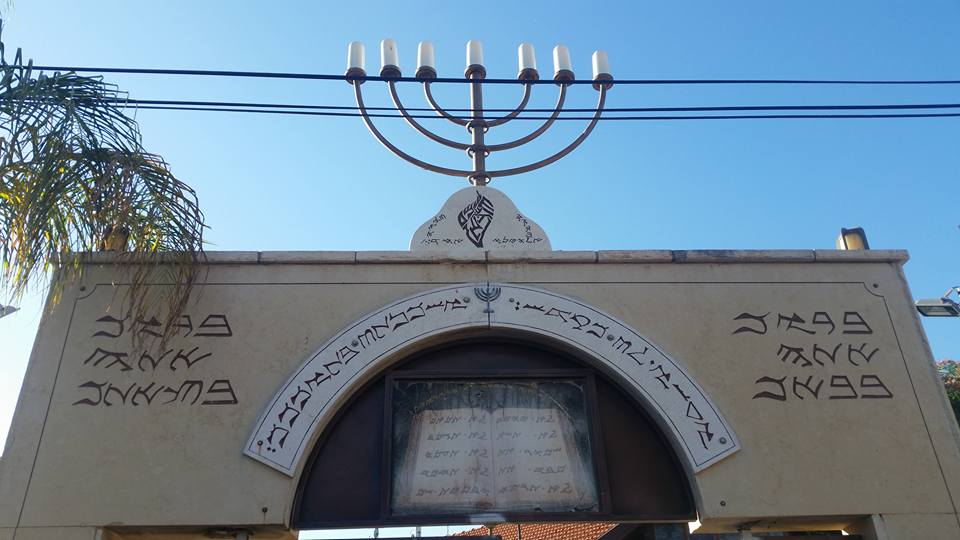
I immediately asked around and found my way to their neighborhood.  To give you an idea of how unique this is- there are 800 Samaritans in the entire world.  They are keepers of pre-rabbinic Judaism and they use an ancient form of Hebrew, including an alphabet much closer to the original since rabbinic Judaism adapted an alphabet based on Aramaic.

Here are some examples from today:

Because this is how I roll, after knocking on four or five doors (all of which had Samaritan Hebrew on them!), I got referred to Benny Tsedaka, a leader in the community.  He was sleeping, but his brother told me to walk in and wake him up.  So, to the horror of my friends in America, I walked into a total stranger’s home and basically kept talking and knocking on the door till the old man woke up.

He invited me in and gave me quite the lecture about the history of the Samaritans and their “original Judaism” (a phrase, incidentally, told to me several times by Haredim, but this guy might have them beat).  He, along with the other older men on the street, wore a white robe.  He showed me their prayer books, still written in the Samaritan script that I recognize from ancient Jewish tablets.  I almost asked him who their rabbi was, but caught myself 😉  It was like peering into the past, even as he told me to grab my smartphone and take pictures.

He chanted Torah for me using the Samaritan pronunciation and their trop, or cantillation system.  And he did it from memory.  Incidentally he chose the first day of Bereishit, or Genesis- the parashah I used to chant at synagogue on Rosh Hashanah.  The reason he could do it from memory is that unlike rabbinic Jews, like myself, they don’t read Torah in synagogue.  Instead, people pair off and go read in people’s homes- both men and women.  That way, he said, everyone learns to read.  A nice idea indeed.

He is very proud of his tradition and he has every right to- his community has survived conquest after conquest for thousands of years.  Before there were Christians or Muslims or Arabs or Byzantines or Persians here, Samaritans were here- and they managed to survive.  Or perhaps better put, since we are all Israelites, we managed to survive.  When I told him I was an oleh chadash- a newly minted Israeli- he made a point of saying “welcome home”.  A long delayed reunion, indeed.

He’s not a fan of Haredi Judaism because he feels it’s not traditional or authentic enough.  That it’s a product of Eastern Europe and interactions with Christians, unlike his authentic Judaism from here.  He also said he likes that in his community, women read Torah too and that if God didn’t want women to be front and center, why did Miriam sing as we crossed the sea?  An interesting point.  I won’t delve into the debate about what Judaism is best other than to say I think there’s something beautiful in all varieties.  I will say, though, that someone who wants to argue about what the most “original” form of Judaism is is going to have a tough time beating someone who prays in paleo-Hebrew script.

Still digesting my interaction with ancient Judaism, I hopped on a bus to Bat Yam to see the sunset.  I liked learning about Samaritan Judaism, but sometimes the conversation veered into (very) right-wing politics and religious debates that are less interesting to me.  Benny could certainly make Bibi (or a rabbi) blush.

As I made my way to the sea, I saw this ridiculous man dancing around with busty life-sized female puppets (and later, Jewish puppets with peyos!).  To disco music, to Russian music, to Mizrachi music, and even to Yiddish classics!  I can’t tell you how much this made me laugh and smile.  What a nice way to unwind after the meaningful but at times overwhelming experience I had in Holon.  Apparently his grandfather grew up with similar shows in the Soviet Union in the 50’s.  I was thoroughly entertained.  I gave him a nice tip and we exchanged words and smiles in Hebrew and a bisl Yiddish.  These are the people who make the world go round.

After some delicious kebabs, I grabbed a bus home.  Except that on the way, I heard Hasidic music blasting.  I hopped off the bus and ran and joined in dancing with a bunch of men in a circle.  Speakers blasted Hasidic hits (some of which I knew and are on my phone) as we oy yoy yoy’ed and danced.  Just when it couldn’t get any cooler, they started blasting Mizrachi music, including songs entirely in Arabic.  I swerved my queer Jewish hips and my hands suavely bounced around.  I felt a little out of place (I think some of the men just didn’t know what to think of me- it’s not every day someone like me is at a Hasidic street party in Bat Yam), but in the end, it’s my God too so I rolled with it.  And although I wish that the women and men could dance together, I had some fun.

Based on the signange, I knew it was Chabad that put on the event for Sukkot, the holiday currently being celebrated.  Chabad is a Hasidic group focused on kiruv, or outreach to other Judaism.  As Judaism is not evangelical, they only reach out to other Jews.  I don’t identify as Chabad, but I do appreciate some of the work they do.  Anywhere you go in the world, Chabad is there to give you a kosher meal, a place to pray, a place to do Jewish.  In my neighborhood, I frequently stop by to buy supplies for various Jewish holidays.  The best part about Chabad is whether it’s your style of Judaism or not, they’re always there.  And that is a mitzvah.

Now as my sweaty body prepared to hop back on the bus, a cute young Chabadnik asked me if I had davvened arvit (evening prayers).  I hadn’t (because that’s not usually how I approach Judaism), but I told him I’d join their minyan.  Jews are supposed to pray in groups of 10 (men only for Orthodox- men or women for progressive Jews).  I haven’t generally found the Orthodox prayer style meaningful for me (it feels too fast for what I’m used to), but I think it’s a mitzvah to help these people out so I joined in.

We went downstairs into a shtiebel (small synagogue) and prayed.  The cute guy helped me keep up with the pages (they move really fast!) and before you knew it, we were done.  By the way, when I say cute, he’s not a cute kid- he’s a cute adult.  He’s a “your kippah is super sexy I’d like to daven maariv and make a mitzvah” adult.

I digress.  As I’m leaving, another hot young Chabadnik starts talking with me.  He’s from Ukraine and the woman sitting next to us is half Georgian half Ukrainian.  They are both olim like me- new Israelis.  I’m starting to think I might want to learn Russian for an even richer Israeli experience.  I notice a sign in the synagogue about the former leader of Chabad, Rabbi Schneerson being the moshiach (messiah).  Not the typical generic “moshiach” signs, but much more direct and specific.  There are some Chabadniks who think he was just a great leader and others that veer into messianism, thinking this particular rabbi will come back as the moshiach.  Playing dumb, I ask the Ukrainian guy if the sign meant that the rebbe was the moshiach and he said yes.  I am far, far, far from an expert on Chabad, but I’m pretty sure I just prayed in a synagogue of the more messianic stream of the movement.

As I headed back to Tel Aviv, I couldn’t help but think what a messy, meaningful, and deeply satisfying day I had had.  I had been lectured about my progressive politics and rabbinic Judaism by a man who speaks ancient Hebrew.  I had felt kind of out of place as a Hasidic dance party as a queer person and a Reform Jew.  And I ended up praying with (maybe?) messianic Chabadniks when I absolutely never would have prayed with them if that’s what their synagogue was about.

And on the same day, I met an ancient relative of mine.  I saw ancient Hebrew script written on doors and flyers.  I danced to Hasidic music – for free – in public.  I saw a Russian guy dance around with ginormous puppets to Yiddish and Slavic dance music.  In short, I experienced thousands of years of history in the course of minutes.  I lived it up.

Sukkot is, in English, called the “Feast of Booths”.  It’s one of the few holidays that doesn’t commemorate an event.  Rather, by setting up sukkot, temporary structures, we remind ourselves of the fragility of life and of our wandering in the desert for 40 long years.  Wandering in search of a home, a more permanent structure than the ragtag hut of a sukkah.

This Sukkot, I’ve found my home.  A home where yes, things are sometimes complicated and messy and take a while to untangle.  And also a home filled with more meaning per square foot than anywhere else on the planet.

Some Israelis ask me if Americans make more money.  “You’re crazy!” some say, “you’d make so much more money there and have a bigger house!”.  So the f*ck what?  You can give me the biggest mansion on the highest hill with the best view, and I’m not interested one bit.  Because there’s no way in hell I’m going to spend Sukkot there with a Samaritan, a Russian puppet dancer, and Hasidim.

America has better air conditioning and cleaner toilets.  But I don’t really care.  I’ll be too busy out and about exploring thousands of years of history, dancing and laughing along the way.

Every sector of Israeli society in one day

Today, my day started with terrorism and ending with me and some Mizrachim singing Umm Kulthum.

I’m in the (very stressful) process of finding an apartment in Tel Aviv.  I’ve never had such a difficult time finding a place to live in any other city.  The loosely-regulated rental market here is super competitive with sketchy offers abounding.  I’ll find something, it’s just exhausting.

In need of a break, I did something most Tel Avivim would not do when in need of relaxation, and went to Jerusalem.

Having gotten a bit turned around, instead of taking a bus from the Central Bus Station, I actually ended up taking a bus to Kfar Chabad and then a second bus to Jerusalem.  I could detour here and tell you about the adventures of making a highly-improvised bathroom stop between bus rides, but I’ll save that for one-on-one conversations 😉  Israel constantly challenges your definitions of “gross”.

I hopped on the second bus, which incidentally took us partially through the West Bank/Samaria.

This particular route was gorgeous.  Unlike the main bus lines to Jerusalem, this was totally rural with no traffic whatsoever.  The scenes were idyllic.

I felt a bit nervous going through this area today as there was a terrorist attack this morning.  Three young men – an Ethiopian Jew, one (I believe) Mizrachi Jew, and one Israeli-Arab – were ruthlessly murdered as they did their job providing security for the community of Har Hadar.  Solomon, Yossef, and Or – may their memory be for a blessing.  I’m praying for their families.  And I was so sad this morning I was frankly at a loss for words- and I still am.

I almost didn’t go to Jerusalem, but in the end- fuck terrorism.  There’s only so much you can control in life and after taking reasonable precautions, I just want to live my life.  Just like these young people would’ve liked to.

Incidentally, we passed by a sign to Har Hadar on the way to Jerusalem.  It’s that small of a country.

I get to Jerusalem, a bit frazzled, and hop off the bus.  To my right is a sign with bunch of Hasidic posters, one of which was in Yiddish.  I approached two twenty-something Hasidim and asked in Yiddish for them to explain one of the signs.  Turns out, there is a Yiddish-language theater production being broadcast out of Brooklyn into movie-style screens in Jerusalem and Bnei Brak, which they invited me to.

The two young men were Belz Hasidim and for an hour and a half, we spoke in a mixture of Yiddish, Hebrew, and English.  One, Dovid, was born in London and the other, Yankev, grew up in Montreal, another one of my favorite cities.  Yankev was a bit shy, though we spoke a little French together since he learned some in Montreal (and so did I!).  Dovid was a real shmoozer and a sweet guy.  He told me all about yeshiva and how he lamented the lack of Kosher steak in Jerusalem.  He made a point of telling me he doesn’t go to political demonstrations, which reminded me of how I often felt in America having to show I wasn’t one of “those” people in my minority group.  We talked about our favorite Jewish texts.  They love the halachos of Shabbes and I shared with them my favorite Jewish teaching – which, much to my surprise, they didn’t know.  In fact, they asked me to translate it for them into Yiddish, which remarkably I did!

Before leaving, as some people are wont to do here, Dovid shared with me a little bit of prejudice.  He told me, in light of today’s attack, that Arabs aren’t very bright.  I of course challenged him on this and his response, while bigoted, was quintessentially Jewish and kind of funny: “The Arabs aren’t very good at terrorism.  Jews don’t do terrorist attacks but if we did, we’d be better at it.”  So basically, in a phrase that would make the alt-Right twist and squirm and vomit, he said that Jews would make better terrorists than Arabs.  As the father in My Big Greek Wedding would say “the Greeks invented everything.”  I couldn’t help but chuckle.

I headed towards the Old City as two Arab women stopped me.  They asked me in Arabic for directions (how cool is that??) – and surprisingly, thanks to my Arabic and the glory of modern transit apps, I helped them find their way!  In fact, I was headed in the same direction.

We hopped on the train and I froze.  I had walked with them 10 minutes speaking in Arabic but when I got on the train, I was scared to keep talking.  I looked around, and thinking about today’s terrorist attack, I was worried how people might react.  There are legitimate reasons I felt that way, as you can read about here.

As I got off the train, I walked towards the Old City.  I saw an Arab man selling sunglasses.  I approached him and I said I didn’t need any glasses, but I told him he was making me happy so I wanted to give him a gift and handed him some money.  He invited me to sit with him.  We spoke in Arabic (I felt more comfortable out in the open air instead of cramped public transit where, frankly, attacks are more likely so I can understand people’s fear).  Turns out he’s from Hebron in the West Bank/Samaria.  He comes to work in Jerusalem each day.  He doesn’t know any English, so I taught him some English words to help with his marketing.  The poor guy is 60, 70 years old with 10 kids and a two-hour commute each way.  I can’t imagine what today’s terror attack is going to do to his livelihood as transit will slow and work permits may be frozen.  I suppose the terrorist wasn’t thinking of his fellow Palestinians who need to make a living when he shot three people.

The man gave me a big smile and a warm handshake as I headed off to meet my friend Sarah, a Modern Orthodox/Traditional Jew from America.  We ate Kosher pizza and then wandered through the Armenian Quarter, where I had never been.  I love Armenians.  When I was in high school, a friend gave me an Armenian CD which I still have on my computer.  Armenians are so, so similar to Jews.  They are a Diaspora community that survived a genocide and manages to preserve their language and religion.  And they’re pretty cute!

We talked with several Armenian men about their visits to the homeland, their life in Jerusalem, the Armenian Church (they had strong opinions- and not positive ones!), and the Armenian-language schools down the street.  I even got to hear their Armenian-accented Arabic!  One man votes Meretz and his wife votes Likud.  I went to an Armenian restaurant and got a fascinating dessert made out of crushed grapes and walnuts with a string inside.  And, because this is how I roll, I got info on some Armenian tutors- because at some point, that would be fun.

On my bus back to Tel Aviv, I befriended a handsome American tourist named Nicolai.  Non-Jewish and from Wisconsin, we talked the entire hour-long trip about Israel, Judaism, America, Bernie Sanders (we’re fans), and so much more.  A truly open-minded fellow- which is not something to take for granted.  Too many people arrive to Israel with preconceived notions of what it is and isn’t.  He was pretty much an open book.

His phone didn’t have internet, so I walked him 20 minutes to his bus stop and got him on his way home.  Because that’s what we do in Israel- we go out of our way to help others.  I find the generosity that surrounds me here encourages me to be even kinder to people.

I hopped in a monit sherut cab and headed home.  What a day!  Hasidim, Modern Orthodox, Arab-Israelis, Palestinians, tourists, Reform Jews (that’s me!).  What else was missing?

As our Russian driver helped us wind through (largely) secular Tel Aviv, two Mizrachi guys up front started singing.  Koby Peretz, Sarit Hadad, Shimon Buskila- you name it.  Then, to their surprise, I made a request.

“Inta omri,” I said.

Pleasantly surprised that an Ashkenazi would request an Egyptian classic, they started to sing.  And to their delight- I joined in.

On a day when a deranged man tried to break the place I call home, I started the day with his hatred and I ended it by singing with Jews in Arabic.

And in-between, I hung out with every sector of Israeli society.

Want to write public policy papers about how to solve the Middle East conflict?  Go for it- maybe they could help.  Honestly, I don’t know.

What I do know is I probably won’t have time for your conference.  Because I’m going to be speaking Yiddish with Hasidim, training a Palestinian in marketing, and singing Mizrachi music in a cab.  I’ll be getting to know my neighbors.  Just like Solomon, Yossef, and Or would’ve wanted.

Norwegian-Persian Jews

I didn’t fully appreciate the diversity of Israeli Jews until I made aliyah.  Yes, I had visited on trips, but you don’t get to know people with the same degree of depth.  One of the things I love about American Jewry is the cultural cohesion and unity.  And one of the things I love about Israeli Judaism is how incredibly diverse it is.

Last week, I was in Jerusalem.  My friend and I went to a Thai restaurant.  We were joking around with the guy behind the counter.  Turns out, he’s a half Kurdish half Moroccan Jew.  We joked about him finding us a fourth person so we could all go on a double date.  He said he’d be happy to take us to a Kurdish restaurant down the street and then taught me some Kurdish.  Right, my Jewish Thai restaurant waiter offered to teach me the Kurdish his grandparents say around the dinner table.  Chew on that one for a while.

This past weekend, I hung out with a bunch of vegan hippie Jews at a commune in Tel Aviv.  As they munched on lentils and drank home-brewed Kombucha with shouts of “lechaim”, I met a half Norwegian half Persian Jewish filmmaker.  Yes, both halves are Jewish.  Apparently, her grandparents on either side only spoke their native language (Norwegian and Judeo-Persian), so they couldn’t communicate with each other!  Luckily, this talented young woman speaks both Norwegian and Farsi and even spent two years living in Norway.

Today I hung out in Bnei Brak.  While I was buying some books and music, I befriended the two salesmen.  One, who looked quite clearly Ashkenazi, was a Vizhnitzer Hasid and a Yiddish speaker.  We had fun shmoozing a bisl in the mamaloshn.  Turns out, he also understands Dutch- his mother’s family is from the Netherlands.  Oh and his father was born in Switzerland, where his parents were working for the Jewish Agency.  For people who know the politics of Hasidim and Zionism, take a moment to digest that one for a bit.

The other Hasid in the store looked more tan skinned, so I mistakenly assumed he was Mizrachi (there are Mizrachi Hasidim).  Turns out, he’s just like me- an Ashkenazi Jew who kept his Middle Eastern complexion even in the Diaspora 😉 .  Guess there isn’t just one “Ashkenazi look” after all.  Now brace yourselves for a real kicker.  His family made aliyah…from Mauritius.  Right, so basically his family escaped the Nazis but the British refused to let them into Mandatory Palestine.  So they sent them to a bunch of islands in the Indian Ocean.  To this day, his family likes to tell stories of what it was like there.

I could literally go on and on with examples- my friend who is half Serbian half Moroccan and works at a Kosher Georgian restaurant, my half Iraqi half Ashkenazi female rabbi, my half Italian half Ashkenazi friend married to a Cherokee Jew!  The diversity here is endless.  If your image of Israel is that everyone looks like Andy Samberg, you’re in for a major shock.  And I’m saying this as someone who would very much like a country of Andy Sambergs- what a cute Jewish boy!!

Israel is an incredible fusion of hundreds of Jewish cultures from around the world, preserved for 2,000 years and reuniting and reconfiguring meaning.  I definitely miss my American Yiddishkeit, a force that unites the 90% of American Jews who are Ashkenazi with a shared humor, cuisine, and dialect.  The good part about Israel is that in the absence of a unifying Judaism, there is the freedom to mix and match.  It’s truly a place where no one can say, as someone told me on a temple trip in 5th grade: “you don’t look Jewish.”


A Kavkazi soldier died in battle today

Tonight, after a delicious dinner of Kavkazi dumpling soup, I met Ruslan Yosifov.  Ruslan was killed 20 years ago today by a roadside bomb in Lebanon.

How did I get to meet this brave young man?  Let’s start from the beginning.

I was walking around exploring Ramat Gan, an interesting and diverse suburb of Tel Aviv.  I was feeling hungry after a day of trekking around so I got really excited when I saw the sign “Restaurant Uzbekistan”.  It’s a Kavkazi-owned restaurant that serves Kavkazi, Georgian, and Bukharan food.  I jumped in and ordered Dushpara.  Honestly, it kind of reminds me of a Central Asian wonton soup with a little vinegar.  De-licious!

I got to talking with a handsome young man who works in the restaurant.  His name is Adam and he’s half Kavkazi and half Russian.  He was born and raised in Israel but has relatives in Siberia and Vladivostok.

He just got back from a trip to Russia and he told how he had had an issue with his cell phone there but nobody in Russia would help him.  He spent an hour just trying to get someone to help him fix his phone before boarding a train to Siberia.  He told me this would never happen in Israel because we’re family here.  If you need something, you just ask for it and people help.

I told him I’ve had the exact same experience.  In the U.S., my experience is that people are more suspicious of each other.  If someone asks you for help, you often wonder what their motive is, especially if it’s a stranger.  To the contrary, today in Israel I hitchhiked for the first time in my life and it went…totally fine.  I had a great conversation too!  And to make things funnier, as Adam and I were talking about this, his phone charger wasn’t working so I simply took out mine and gave it to him.  We laughed about how our conversation became reality.

Adam is 17 which means next year, he’ll be drafted into the Israeli military.  Adam is an extremely fit guy- he trains twice a day (and if he could, he’d do more).  He told me he wants to be in a combat unit- the most prestigious and risky choice.  Prestigious because you’re serving your country with great honor.  Risky because you’re more likely to die.

He’s a sweet guy with a really optimistic attitude.  I noticed that everything he was wearing was made in America- his Billabong bracelet, his Adidas shoes, and his U.S. Marines t-shirt.  He asked me how cheap McDonald’s was in America and I told about him about bacon cheeseburgers (he doesn’t keep Kosher- he was fascinated by this American creation that doesn’t exist here).  He’s never been to America but wants to go one day, maybe after the army.

I was wrapping up my meal when another man walked in, a relative of Adam’s.  The man was showing Adam and another woman pictures and videos of something on his phone.  Because this is Israel and it’s perfectly acceptable to nose your way into something, I asked what it was all about.

That was when I met Ruslan.  Ruslan was Adam’s cousin.  Ruslan was also a Kavkazi Jew.  In 1997, at age 21, just one month before he was supposed to be released from the military, Ruslan was ambushed in South Lebanon and then killed by a roadside bomb.  20 years ago today.  I was overcome with sadness and shock.  Nothing like this has ever, ever happened to me in the U.S., especially not at a restaurant with people I just met.  People here are very open and I was honored to have his story shared with me.  I told them I would say Kaddish for Ruslan this week at synagogue and that I prayed his memory would be for a blessing.

I’m a fan of the teaching “pray as if everything depended on God and act as if everything depended on you”.  Which is to say, prayer is important and so are actions.

So now it’s time to act.  Ruslan was a brave soul who fought to keep Israel safe.  His cousin Adam, even in spite of this loss, wants to join a combat brigade and put his life on the line for me and my country- my family.

Please keep Ruslan’s memory alive by writing a message of hope, blessing, or encouragement below.  You can also check out his Facebook memorial page and post a note there.  If possible, write in Hebrew, but if not it’s ok, I will reply to your comment with a Hebrew translation so his family can understand.  I will share these hopeful sparks with his family on this tough day.

When I left the restaurant, Adam told me “we need more people like you here.”  After dozens of people giving me all sorts of grief about making aliyah- even some telling me to turn back and go to America- this is the nicest thing anyone has ever said to me.  It radiates kindness.

Let’s radiate some kindness back.  Adam- I’m glad there are people like you here to welcome me and keep me safe.  I’m glad your cousin was here and I’m sorry he’s not anymore.  We may have just met, but as far as I’m concerned we’re family.  We’re Israel.

How an Arab saved my Shabbat

Shabbat shalom!  I don’t typically blog on Shabbat.  I usually go to shul, have a meal, and chill with friends.  But tonight, I had a very unique night.

First, I started off at Reform services.  They were musical and fun.  They start at 6 so that ended pretty early, leaving me with an empty evening alone.

To avoid feeling lonely (aliyah is hard and this has been a hard week), I did something I don’t typically do on Shabbat which was to go to a movie!  It was my first time in a movie theater in Israel, so I said a Shehecheyanu and watched Logan Lucky, a film starring Channing Tatum (mmmm!) about some rednecks in West Virginia robbing a Nascar race.  Dudn’t get more ‘Murrican than that!  Honestly, I probably wouldn’t have seen it in the U.S. (although, Channing Tatum), but here it felt perfect.  I laughed at all sorts of things the audience didn’t get and I relished hearing some southern accents, which you don’t hear much around here.

After I left the theater, my friend invited me to Arisa, a gay Mizrachi music dance party.  I love Mizrachi music (it’s my favorite music in the world) and have been aching for months to go to this event.  My friend was running later than me, so I showed up alone.  The security guard patted me down and then asked me to empty my pockets.  I’ve been to a lot of clubs around the world and I appreciate the need for security, especially in Israel, so I did as I was told.

He then noticed my circular pill case.  Without my permission, he tried to open it.  He was opening it the wrong way so that all the pills would fall out if he succeeded.  I told him to stop and that I would open it for him.  Again, I was already feeling really uncomfortable with this invasiveness, but I understand the need to avoid drugs getting into the club.  I explained to him what the medications were for and the names of the prescriptions.  There is also some writing on the pills, as is typical for prescription medication.  At this point, the guard and his colleague, without my permission, start thumbing through my medications and grabbing the actual pills.  I told them to stop but they ignored me.  Meanwhile, I was having to explain my medical issues in front of other patrons who were waiting behind me.  A female guard even told me that I couldn’t enter the club with my pills.  Eventually they let me in, but I was so angry, embarrassed, and humiliated that I just left.  This is a disgraceful way to treat a customer and to handle someone’s medical needs.  If you can’t distinguish a prescription from ecstasy, you probably shouldn’t work club security.  I plan on contacting them through their Facebook page because I was so insulted.  I won’t complain if you join me 🙂 .

Feeling blue, I headed to Yafo, perhaps my favorite part of Tel Aviv.  My friend got tired so we didn’t end up meeting up.  I was just exhausted.  After a long week, the last thing I needed was some random guy grabbing my very personal medications.

I headed to my favorite baklava shop to see my friend Seger, an Arab from East Jerusalem.  He’s a wonderful, fun-loving guy in his early 20s.  And when I entered the shop, by coincidence, he was blasting Mizrachi music- the same music I was supposed to hear at Arisa.  He gave me free knafeh and we talked in Arabic and caught up.  He showed me his favorite Arab singers and I taught him some English.  I even came out to him and his immediate reaction was to show me on Facebook his gay Arab friend.  I had been nervous about coming out to him, but not a split second passed before I felt comfortable again.  It’s good to feel like you can be your full self.

The night was coming to an end as he closed up shop.  As this is Israel, things went from sour to sweet.  And not just because of the heavily discounted baklava he gave me.

Seger put on Sarit Hadad, whose first CD was my first CD when I was 13, and blasted the music.  We started to dance.  Then, people walking by start dancing.  And before you know it, I’m having my own gay Mizrachi dance party.

I gave Seger a hug and we wished each other Shabbat Shalom.  I told him my night really sucked before I walked into his store and that he made me feel happy.  Since we’re now Facebook friends, he might even be reading this blog.  Thanks man 🙂

Would it have been fun to dance in a room of 500 beautiful Israeli men singing to my favorite Mizrachi songs?  I think so.  And maybe I will find out one day if I’m treated with dignity there.

In the meantime, screw Arisa.  I don’t need to pay 120 shekels to have a gay Mizrachi dance party on Shabbat.  I just need to hang out with an Arab friend at a baklava shop.

You know you’re in Israel when an Arab saves your Shabbat.  Eid Mubarak indeed.

Kosher Curry in Ramle

This morning, I felt like crap.  Making aliyah is hard.  I’m far away from my friends and my D.C. Jewish community.  I’m alone.  I’m adapting to a new culture and country.

To shake off the blues, I decided to go on a tiyyul (trip) to Ramle (which can also be spelled Ramla).  A small and fairly poor town, it’s not usually on Israeli or foreign tourist maps.  I went several hours without seeing a single tourist.  And that’s exactly what I needed- somewhere a little quieter and off the beaten path to unwind from the hectic and exciting energy that is Tel Aviv.

First off, Ramle reminds me of the D.C. suburbs where I grew up.  It’s quiet, has about 70,000 residents (almost identical to where I lived before Israel), it’s calm, and it’s diverse.  Much like Montgomery County where I’m from, there are mosques, synagogues, and lots of churches.  I kind of miss seeing churches sometimes.  Ramle is a “mixed city”, meaning there are significant Jewish and Arab populations (and even Karaites!).

20170824_150201

I started my adventure at what American Jews might call a “tchotchke store”- odds and ends.  What immediately caught my eye were tons of cheap CD’s- of music I adore.  For 10 NIS a piece ($2.80), I bought Jewish music from Iraq, Tunisia, and Morocco.  As I paid for my CD’s, I noticed all sorts of amulets knows as hamsas.  Some were in Hebrew, obviously for Jews.  Yet I noticed some in Arabic.  I asked the store owners, who themselves were Russian Jews, whether the Arabic hamsas were for Arabs or Mizrachi Jews or both.  They gave the most beautiful answer: “they’re for everyone.  Jews, Muslims, and Christians all need protection from the evil eye.”

I then made my way to an Indian restaurant owned by Indian Jews.  It’s vegetarian and closed on Shabbat, which makes it Kosher in my book, but I’m not sure if it has a teudat kashrut.  I badly miss the ethnic cuisines of America- especially Thai (no, the Thai food in Tel Aviv is not that great), Chinese (cheap, delicious Chinese food of Rockville Pike), and Indian.  As soon as I entered the place, I knew I had made the right decision.  The smells wafted over me as I began to smile.  I sat down by myself and ordered pakora, palak paneer, and naan.  The waiter’s Hebrew wasn’t strong so I spoke to him in English.

20170824_155807

At this point, a woman came over to me and asked if I was American.  Turns out, not only is she American too, she’s a half-Persian half-Indian Jew from…Bethesda, Maryland!  Exactly where I lived before making aliyah!  And she knows one of my rabbis from D.C.  The odds of this happening are infinitesimally small.  She’s a tourist, I don’t even live in Ramle.  There are 6 million American Jews and over 326 million Americans spread across 50 states.  What are the odds!  Reminds me of that famous Hebrew school song “Wherever You Go, There’s Always Someone Jewish“.  It’s cool to be part of an international 3,000 year old club.

20170824_174556

After this amazing coincidence, I walked through a bustling marketplace, where unlike in Jerusalem or Tel Aviv there are no tourist traps.  Just lots of grapes and candy and tomatoes.  I stumbled upon a Turkish synagogue and then a Tunisian one.  Without asking permission (because that’s how we do in Israel), I just walked in and talked to the janitor who is also a congregant.  His name is Zion and he grew up in the synagogue.  He made aliyah from Tunisia at age 5.  He showed me an original Torah scroll, hundreds of years old, brought from Tunisia.  He also handed me a book which had all the traditional Tunisian Jewish piyyutim (liturgical poems).  Everything in the synagogue was handcrafted and beautiful, including the stained glass.  I told him maybe I’d come pray with them some day.  What a treat.

20170824_181218

As I walked by a Crusader monastery, I heard a car blasting Middle Eastern music.  I thought it was Arabic music, since the town is 20% Arab.  But as I listened more closely, I realized it was Mizrachi music, the music of Middle Eastern Jews.  That’s Ramle for you- a town where you don’t know exactly whose culture the music belongs to.  Where ethnic boundaries are blurred and mixed.  Where Russians sell Arabic amulets, where Tunisian Jews pray next to Turkish Jews, where mosques and churches dot the landscape next to synagogues.  Where Indian Jews prepare American olim kosher curry.

Some people might say there’s not a lot to see in Ramle.  To which I’d say I suppose it depends on what you want to see.

As my bus headed back, all I know is my eyes gazed more towards the fields around the town than towards the skyscrapers awaiting me on the coast.


One Night in Jerusalem

Tonight in Jerusalem was the most jam-packed, exciting night I’ve had in Israel.

It all started with an act of startling generosity.  I was checking out some artists’ studios in Jerusalem and found this particularly beautiful one.  I talked with the artist about her work- including this amazing painting where at first you don’t notice there are people built into the painting and then as soon as she pointed them out, it became obvious.  She said she was inspired by the Exodus from Egypt.  When I told her I was an oleh chadash (new immigrant), she congratulated me and told me “you’ve already made your Exodus”, perhaps the nicest thing anyone has said to me about my aliyah.  She told me she made aliyah from Russia when she was six years old and I felt an instant bond.

We talked about art- I told her I was a poet and a singer and we connected on Facebook so she can see my work.  She asked if I drew and I said I have done a little bit but nothing serious because I hadn’t been taught the techniques.  She said one of the most beautiful things I’ve ever heard.  She said when you’re looking for an art teacher, don’t look for technique.  Look for someone who can help you deliver a child.  That sounds strange in English but beautiful in Hebrew.   “Leyaled” in Hebrew means “to midwife”.  Her point was that the person who teaches you art is supposed to help bring something out that already lies within you and needs to be discovered and nourished.  To help you give birth to a new sense of creativity.  I love it!

On my way out, she gave me a free handmade notebook she had created so I could write my poetry.  I made a new friend in the course of 20 minutes in a way that could take literally years in the U.S.  If you’re reading this Dina, thanks for making my night great 🙂

Then, I asked for directions to the central bus station, but I noticed there were lots of police cars.  I asked the security woman what was going on and she said there was a concert.  I asked who and she said “Shlomi Shabat“, one of my all-time favorite Mizrachi singers.  I bought a ticket immediately and headed to the concert with a new sense of energy and excitement.  Also, the concert was held in a stadium inside a 2,000 year old pool called Breychat Hasultan (The Sultan’s Pool).  So it pretty much doesn’t get any better than that.

Except it does.  On the way to the concert, you have to walk downhill.  On the way, I discovered there was some sort of international festival going on.  There were vendors from all over the world- just off the top of my head, I saw artisans from Panama, Uzbekistan, Zimbabwe, Mexico, the Czech Republic, and so much more.  I made a special point of stopping at the Spanish-speaking countries’ booths because I miss speaking Spanish and Latin culture.

I spent a good 15 minutes speaking with a Chilean woman who was really amazed at the cohesiveness of Israeli society.  This is interesting because a lot of Israelis feel we have a very divided society.  She pointed out that a lot of countries in Latin America feel unstable and on the brink of civil war.  She talked about Venezuela and how she feared the country would descend into further chaos (a conflict Americans know little about even though it’s in their own hemisphere).  That she felt there wasn’t any glue that bound that society together.  It’s an interesting thought- that for all the conflict here, there is most definitely a strong social connection here that keeps things together despite the tensions.  I think the United States would benefit from such a glue right now, because I had the distinct feeling when I lived there that there wasn’t really anything that united us.  There are sociological reasons for it, but I hope that Americans can learn something from Israel which is that a sense of social solidarity- even with people you don’t always agree with- can help you overcome difficult moments in history.

Then, I headed to the concert.  It was amazing!  Thousands of people singing and cheering.  Israeli flags waving.  Song after song that I’ve sung- some of which I remember listening to on a CD in my living room as a 13-year-old- 18 years ago!  Some Israelis like to hate on Mizrachi music.  I can understand that everyone has different tastes, but for me it is literally the best music on the planet.  It’s danceable, it’s full of religious imagery, it’s fun, it’s upbeat, and it’s full of emotion.  Here’s a song I like by the artist I saw tonight to give you an idea of what it sounds like.

After the concert, I grabbed a cab to the Central Bus Station.  The driver was Arab, so I spoke to him in Arabic, which made him very happy.  Ahmed and I talked about dialect differences between Yafo and Jerusalem, his relationship with Jews (pleasant but not very deep because their neighborhoods are so separate in the city), and the importance of language in building relationships (he decided to learn Hebrew to learn about his neighbors).  We talked about how crappy politicians are and that the real key to building peace is what we were doing- talking to each other.  I tried to give him a tip but he wouldn’t let me.  A truly kind and open-minded person.

Before getting on the bus to Tel Aviv, I heard loud music.  Sure enough, behind me were a bunch of Breslover Hasidim dancing to techno music about their patron rabbi, Nachman of Uman.  I started filming them and then just joined in.  Because life is fun if you jump in!

I then headed to the bus.  Now this part sucked at first.  The ticket people oversold the bus- and this ride is over an hour long- so some people were standing or sitting in the aisle.  I was one of those unlucky people.  The bus was bumpy and it felt really unsafe.  Frankly, it was the most unsafe I’ve felt in Israel.  Which is interesting consider how the news media obsessively cover the Israeli-Palestinian conflict when really bad drivers are a way bigger threat to security.

Things in Israel often rapidly shift from amazing to awful and back to amazing again.  My evening had been going great and then BOOM this was my plummet downwards.  Once I got tired of my head banging against the seats as I sat, I stood up and started talking to the people in front of me.  I chatted with one woman who, when I told her I was an oleh, told me her niece just moved here from New York.  She said she is a soccer player and doesn’t know anyone here.  Turns out she lives around the corner from me and I offered to show her around.  A new potential friend.  The woman also told me I had great Hebrew, which helped lift my spirits.  Meanwhile, the young woman next to her was worried about missing her train back to Haifa at 1am, so the woman I was speaking with simply offered her a place to stay.  They literally just met on the bus.

And just like that, my spirits began to lift as we approached the bus station.  Any time I feel down in Israel (which, to be honest, happens almost every day at some point), I remember that things here turn on a dime.  And that if I’m feeling sad or angry, things will turn for the better quickly and suddenly.  And it works.  It really happens.

This is a place with some serious sense of social solidarity, generosity, and kindness.  Not words you’d typically associate with the Middle East, but they are absolutely true so please stop reading the New York Times and just come and experience it yourself.

A free notebook.  A Mizrachi concert.  Chileans.  An Arab cab driver learning Hebrew.  Dancing Hasidim.  And new friends on a bumpy bus.

One night in Jerusalem.

Dancing on Roman ruins

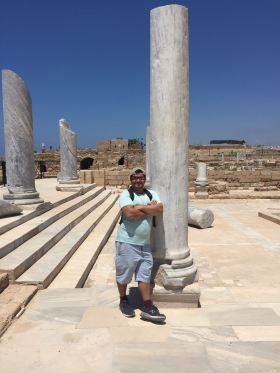
Wednesday I went to Caesarea, a beautiful seaside town of fourth century Roman ruins.

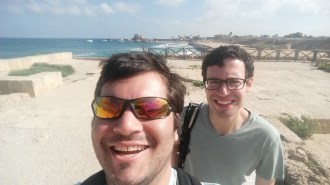
On my flight to Israel, I met a fellow oleh chadash (new immigrant) named Ari. We’ve become fast friends and recently he made the wise observation that I’ve spent almost all of my time in Tel Aviv and that we should go explore other parts of the country. Since he has a British accent and all things sound wiser that way, I obliged him.

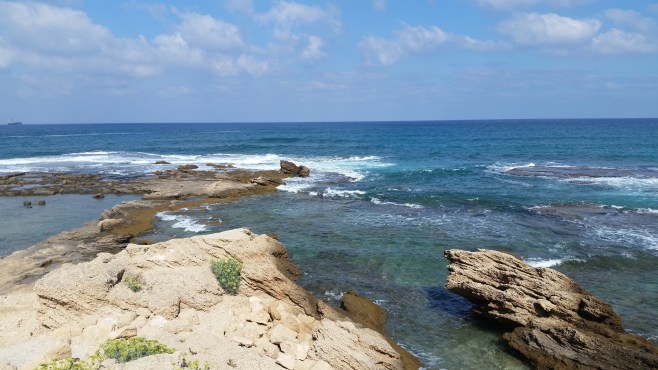
I could spend this blog telling you about the amazing Roman, Byzantine, and Ottoman ruins. Or the crystal blue sea. Or the snorkeling Ari and I did.

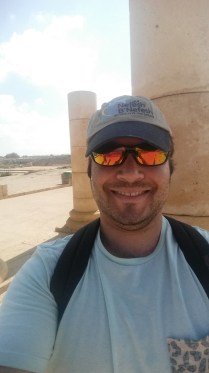
Instead, I’d like to tell you about our cab driver, Akiva. Before I get to that, look at the cool pictures below of our trip!

20170802_09160220170802_092206.jpgIMG-20170803-WA000120170802_092233

When Ari and I got off the train, we had trouble finding the right bus. Caesarea is the opposite of Tel Aviv- it is completely in the middle of nowhere, so it is hard to get around.

Instead of waiting for buses, I ran and hailed a cab dropping someone off and we got in.

The driver’s name was Akiva. Akiva is a Persian Kurdish Jew. He speaks some Farsi and fluent Kurdish. His mom made such good Kurdish food that he said he’d pay $500 just to taste her food again (she passed away at 82).

Before dropping us off at Caesarea, Akiva tells us he can show us the graves of ancient rabbis if we call him for a ride back.

After a day of fun and exploring and a little bit of sunburn, I called Akiva.

Twenty minutes later, Akiva comes walking down the street and tells us to follow him. He said the guards wouldn’t let him bring in his car.

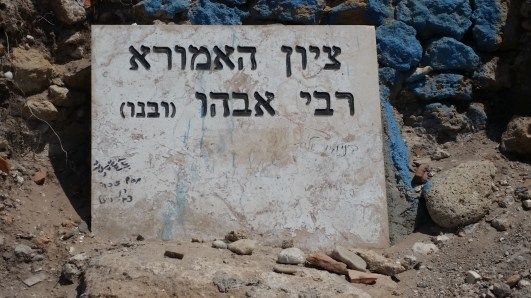
We walk 10 minutes down the road and he motions for us to literally climb with him down a cliff. We make our way down and there is the grave of Rabbi Abahu, one of the Amoraim (great scholars of old- and by old I mean 1700 years old). Rabbi Abahu was actually from 3rd century Caesarea- something people who deny Jewish history in this land would be wise to remember. Our cab driver was not bullshitting us- there’s an actual sign and little books of Psalms that you’re supposed to recite. We leave stones on the grave in the rabbi’s memory.

20170802_141808.jpg

It’s customary to pray for something when visiting the grave of a great rabbi. I prayed for our driver Akiva, my friend Ari, for me, for the Jewish people, for the whole region, for the victims of the war in Syria, and for the soul of the rabbi himself. I’ve never prayed at the grave of a rabbi- it was quite a moving experience, especially with the beautiful sea breeze and sound of the waves crashing behind us. Could Rabbi Abahu have ever imagined that his people would return to their homeland 2,000 years after the Romans brutally forced them into exile? I wonder if he prayed that one day his descendants (us) would visit his tomb.

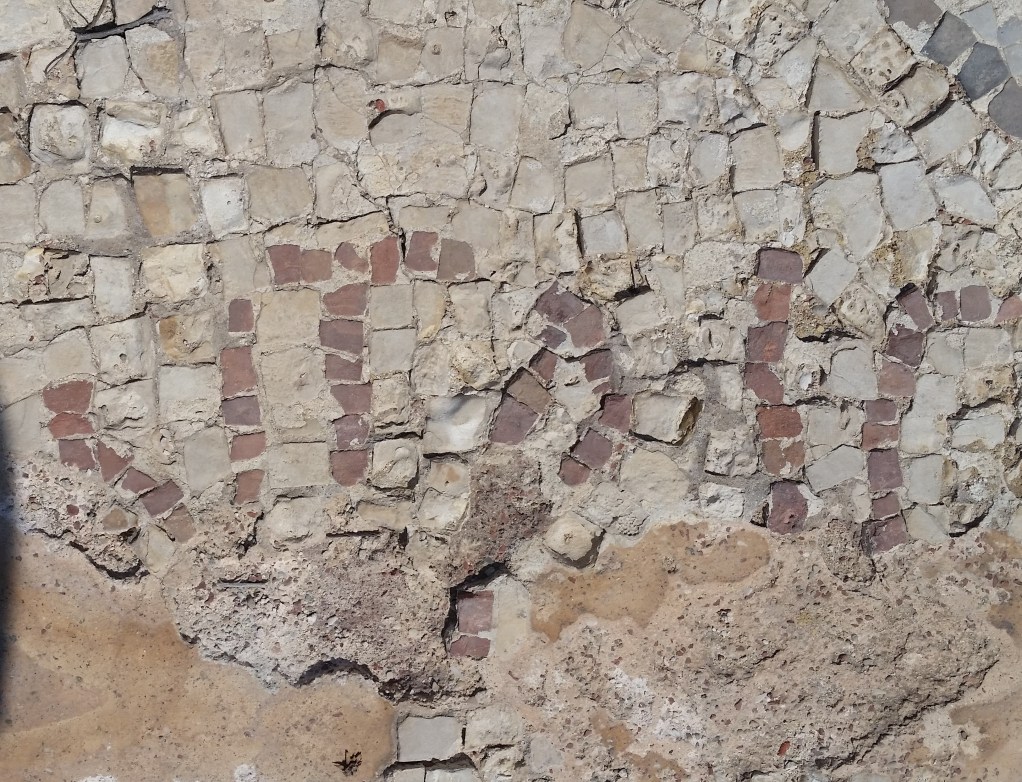
Akiva walked us back up the cliff (it’s worth pointing out that Akiva is probably 70 years old and there’s no cab meter running- this is just out of the generosity of his heart). Then he walked us to another site- an ancient synagogue mosaic. You could even see some Hebrew writing among the tiles. According to (our) Akiva, the famed Rabbi Akiva (1st century C.E.) was buried there as well after he was mercilessly tortured by Roman soldiers.

20170802_143842-e1501711832736.jpg

First off, I’ve never felt more connected to the land of Israel. Not just because of the stunning scenery that constantly keeps me in awe that I actually live here. But also because my ancestors walked this land. They defended our faith and kept our culture alive so that I can reap the benefits today and pass on that tradition to future generations.

Akiva, our wonderful cab driver, is the epitome of the best of Israeli society. After spending a good 20-30 minutes with us exploring these historic sites, he asks us to follow him again. This time, we headed towards the car. It was another 15 minutes down the road.

This 70-year-old man took an hour out of his day in pummeling heat to show us our heritage. Not because he had to, just because he is kind and he is proud of his people. There is a depth of generosity here- true, unrewarded, and authentic- towards strangers that I have never seen in any other place in the world.

Perhaps that is because we’re not strangers. Akiva, Ari, and I- as different as we might be- our stories are intertwined. We are not strangers. We’re more like long lost family getting reacquainted after a long and painful absence.

There is nothing sweeter in the world than for three Jews to dance on Roman ruins.