Jewish Vienna

Vienna packs in more Jewish culture, diversity, and vibrancy for a city of its size than anywhere I’ve ever visited. In just one week, I met an American-Israeli looking for a fresh start during wartime, a Hungarian-Austrian rediscovering his Jewish roots, a German Yiddish activist, a Haredi man and son of Holocaust survivors, an Austrian Yiddish poet, two Italian non-Jews exploring conversion, and an Argentinian Jewish immigrant. And there are only 8,000 Jews here! Less than in the suburb of D.C. I grew up in, but bursting with energy from all over the globe!

Read to the end of this blog. Because there’s a pretty amazing surprise towards the end.

Let’s start at the very beginning, a very good place to start. OK, I’ll save any further Sound of Music references for my blog on Salzburg, but I couldn’t resist!

Philip is a Yiddishist – an activist speaking, reading, writing, studying, and promoting the Yiddish language. He is originally from Germany but has studied the language all over the globe and actually knew Yiddish speakers who I’m friends with back in the States. It really is a small Jewish world!

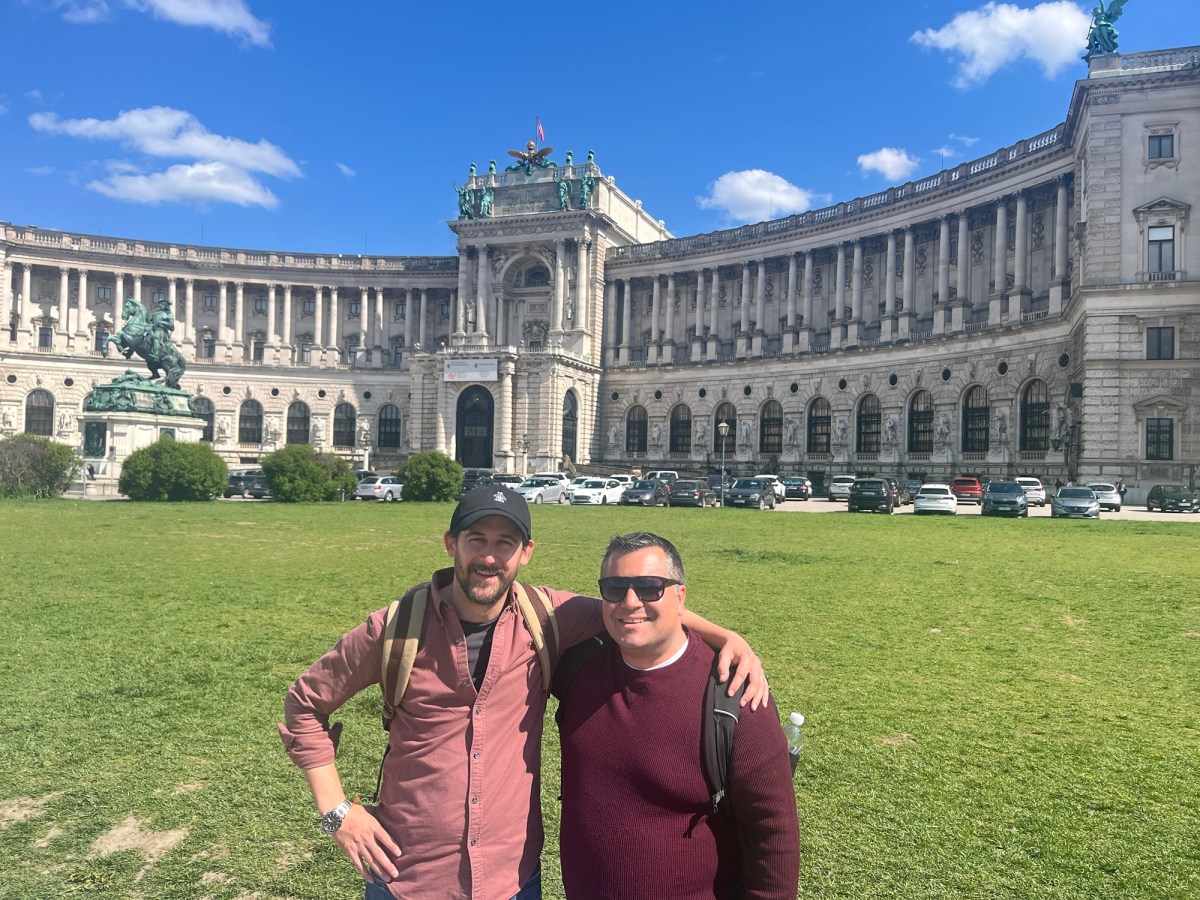
He was kind enough to take me on a walk through Leopoldstadt, the former principal Jewish Quarter of Vienna. Vienna used to have a massive 180,000+ person Jewish community before the Holocaust. To say its influence on the society was significant is a deep understatement. Musicians, psychologists, writers, composers, the list goes on and on. It includes world-renowned people like Sigmund Freud. And if you look at this list, not a small number of Adlers!

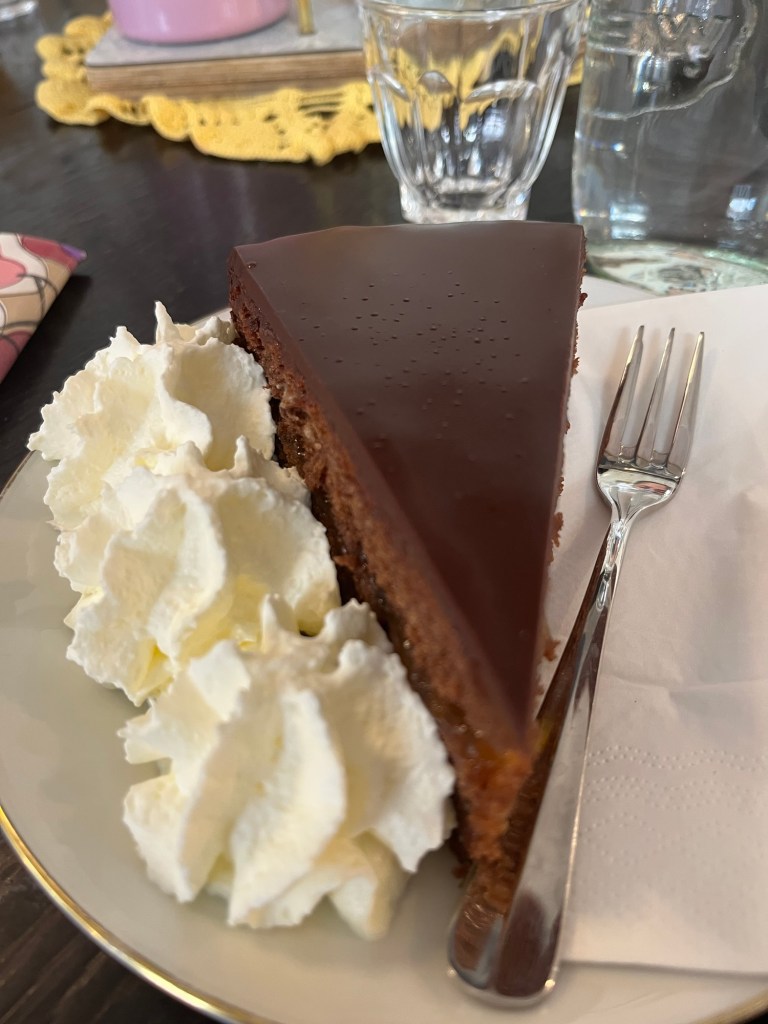
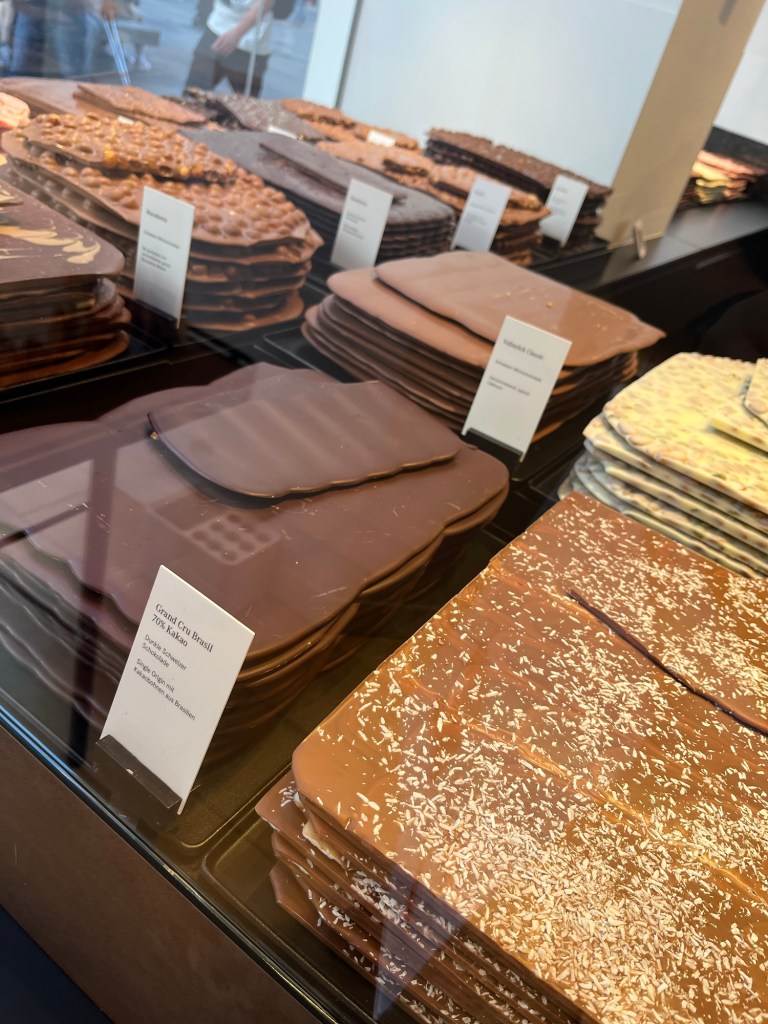
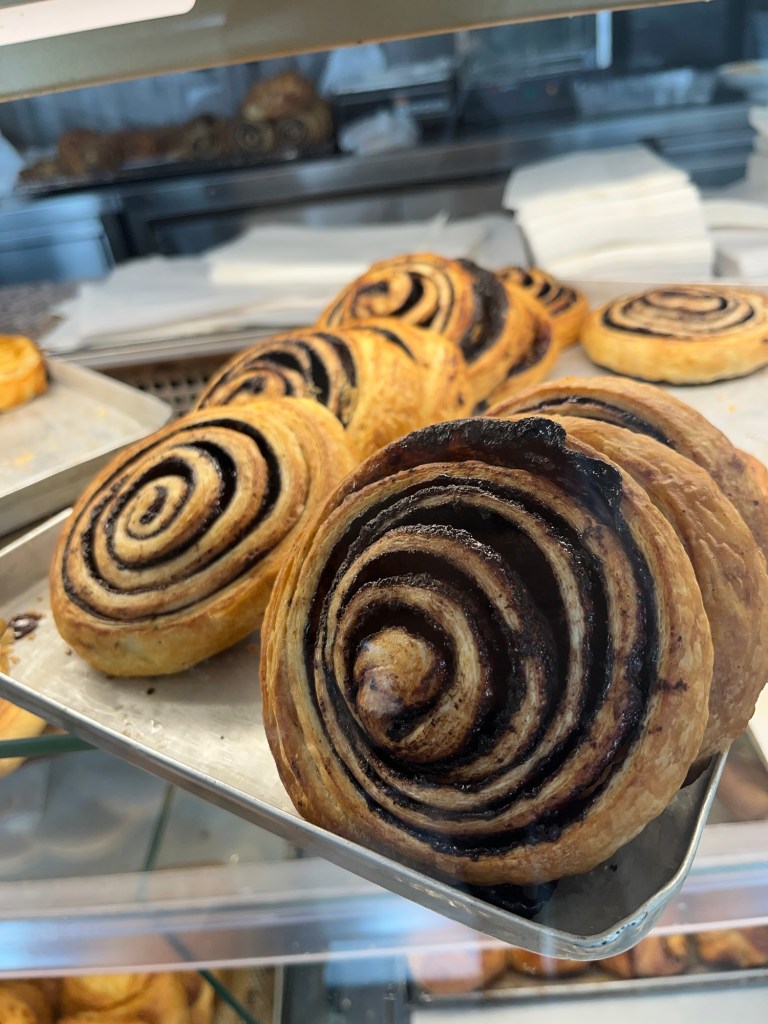
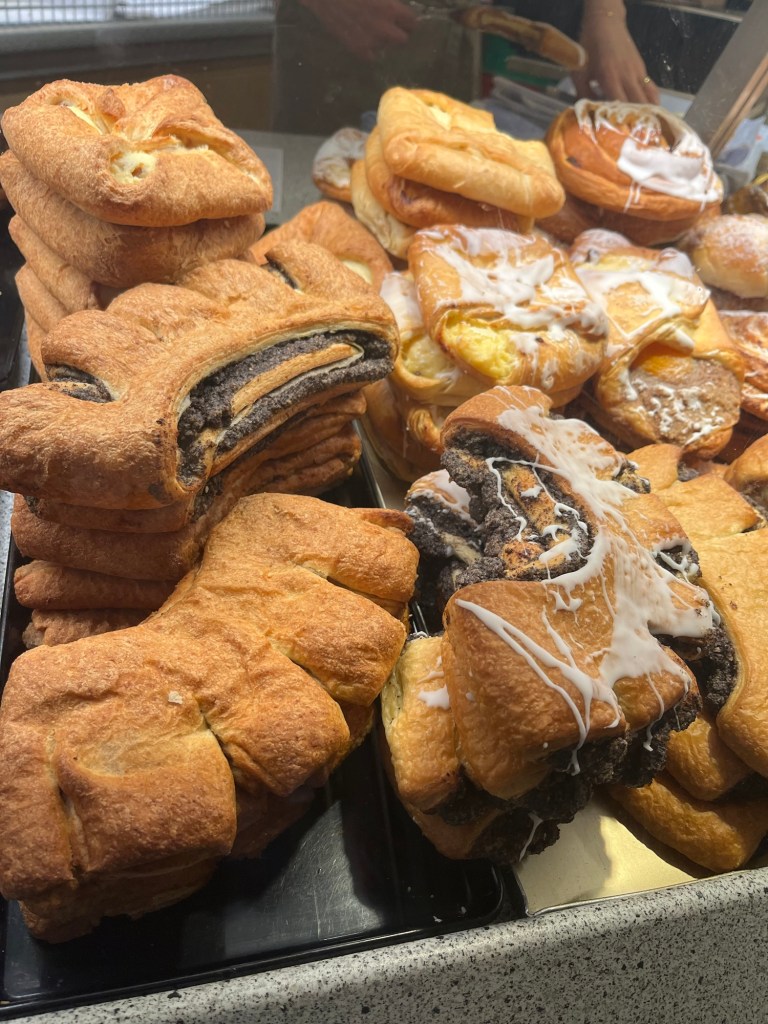
While in Leopoldstadt, Philip and I stopped at a Hasidic bakery for a quick sugar fix. Vienna is known for its sweets, such as its famous Sachertorte cake! The top left sweets are from the bakery and the rest from elsewhere, but I think it’s fair for Austria to show off a bit!
After leaving the bakery, we came across a Jewish man in a black hat. I greeted him in Yiddish and said I was a Jewish writer from the U.S. He immediately shook my hand and invited me and Philip to see his synagogue! It’s actually kind of two synagogues – one downstairs that was Hasidic and one upstairs that was Haredi (ultra-orthodox) but maybe not Hasidic. The historic building was called the Schiffschul, which you can read more about here.

After giving us a tour, he pointed us to the back of the synagogue. That’s where they’re building an addition to the synagogue including mikvahs (ritual baths) and more room for prayer. Nothing makes me happier. Despite our ideological differences, Hasidic and Haredi Jews are my brethren and to see Jewish life *growing* in a place where it was on life support after the Holocaust, was incredible. I’m proud of this community and wish it much success as it continues to grow and preserve so many Jewish traditions.

Here are some pictures from inside the Hasidic (downstairs) and Haredi (upstairs) of the synagogue:
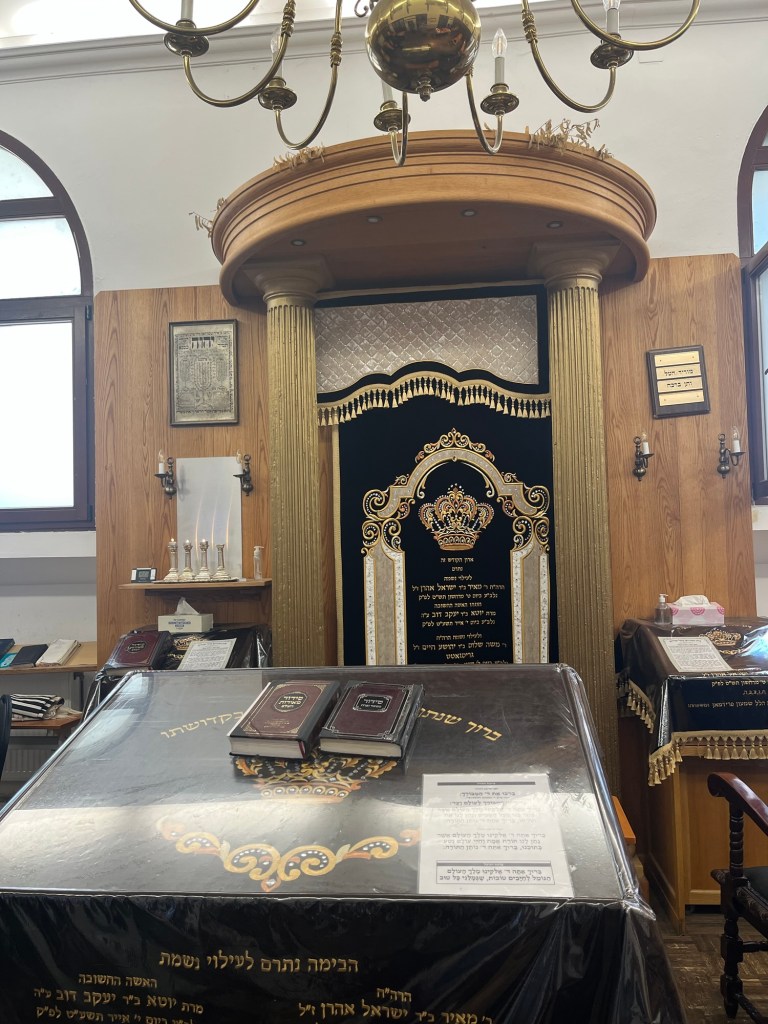
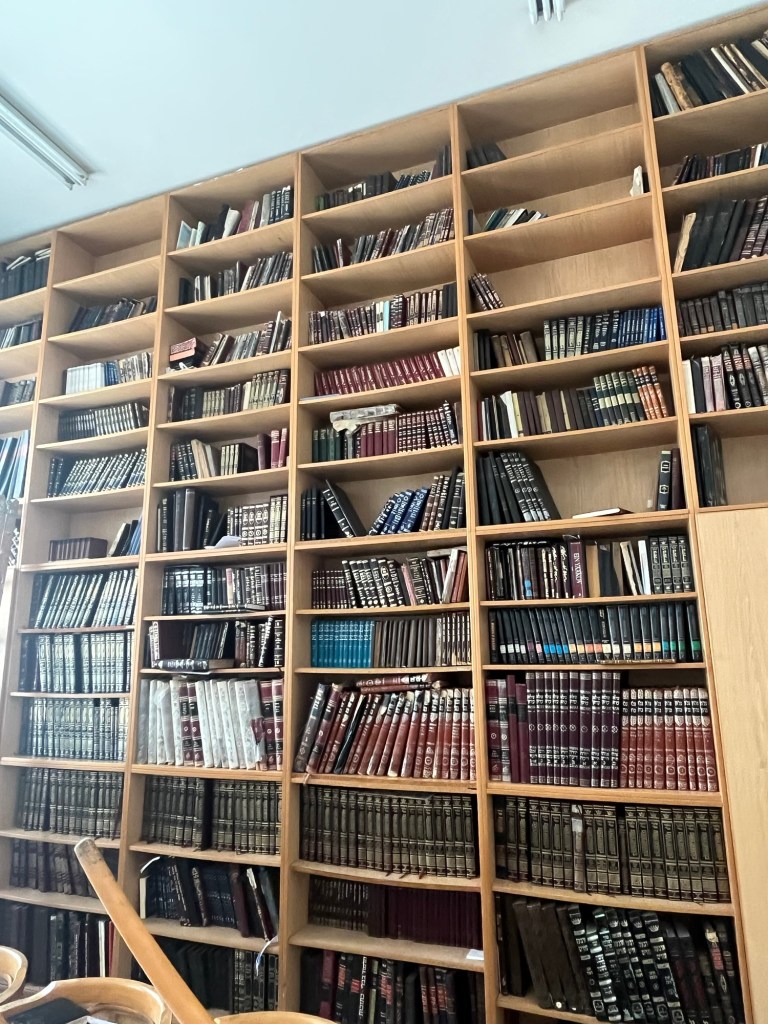
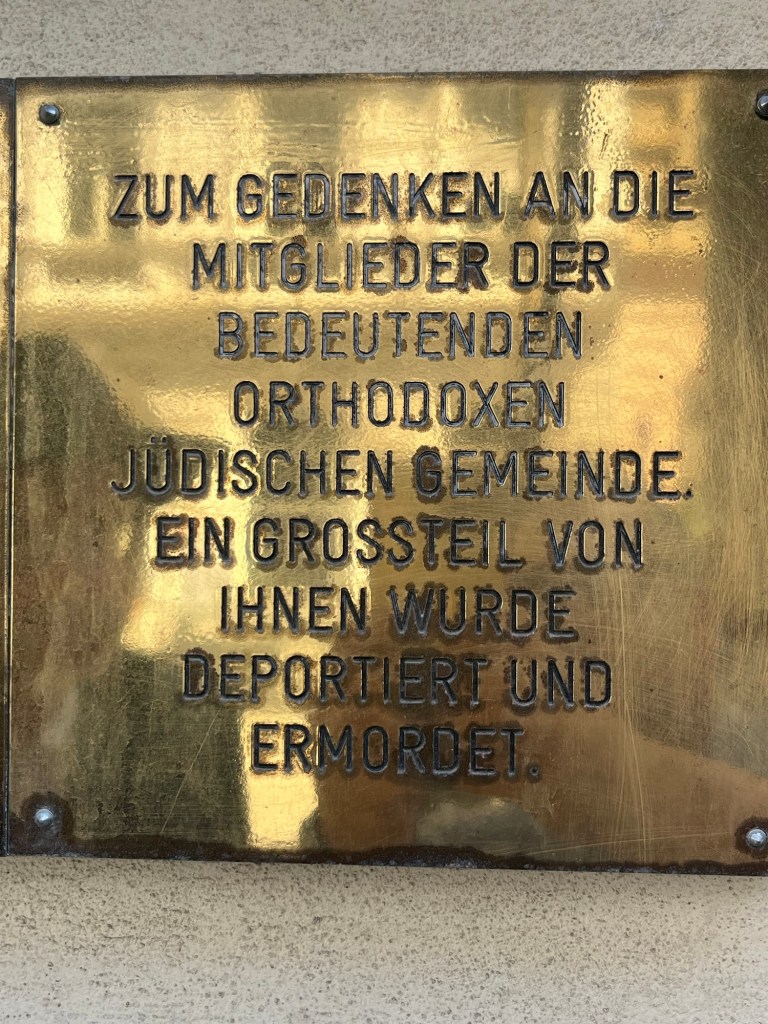
You’ll notice, besides the very beautiful interior and loads of Jewish books (nothing excites me more!), the gold plaque outside the synagogue. It commemorates the Jews sent to their murders in the concentration camps from this synagogue. The Holocaust is *never* more than one step away from the present here, where less than 3% of the original community returned to live after the Holocaust, the rest dead or in other countries.

Before we left, the man, named Yosef, asked us for a blessing for his ailing wife. Philip offered a beautiful Yiddish blessing for her health and we all parted ways – three very different people on paper, but all tied together by one beautiful yerushe, or “heritage”.

Philip was incredibly kind not only to show me around town, but also to connect me with Thomas Soxberger, a Yiddish poet and Jewish historian. You can read more about his background and poetry here. If you want to learn more about Jewish history in Vienna, he has also written the book “Gründen wir einen jiddischen Verlag!” or “Let’s start a Yiddish publishing house!” Philip also connected me with the Yung Yidish Vienna library + cultural organization, which unfortunately I couldn’t visit since I wasn’t feeling well. However, I know their sister organization in Tel Aviv very well and highly recommend all fans of Yiddish to check out their Vienna location!

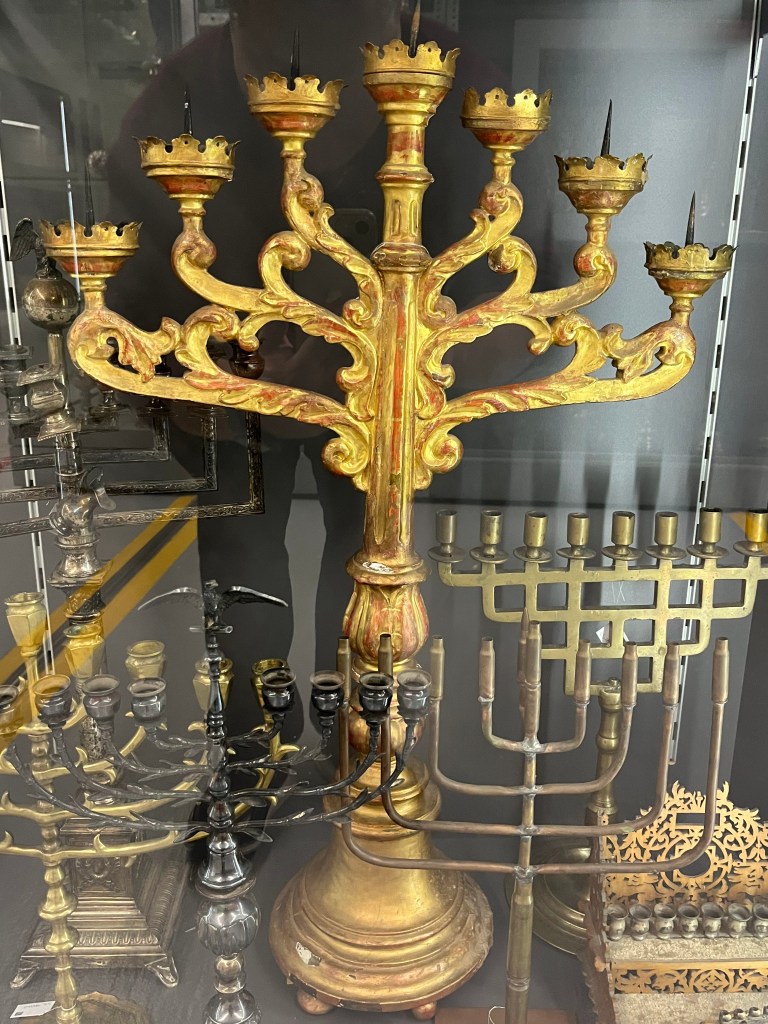
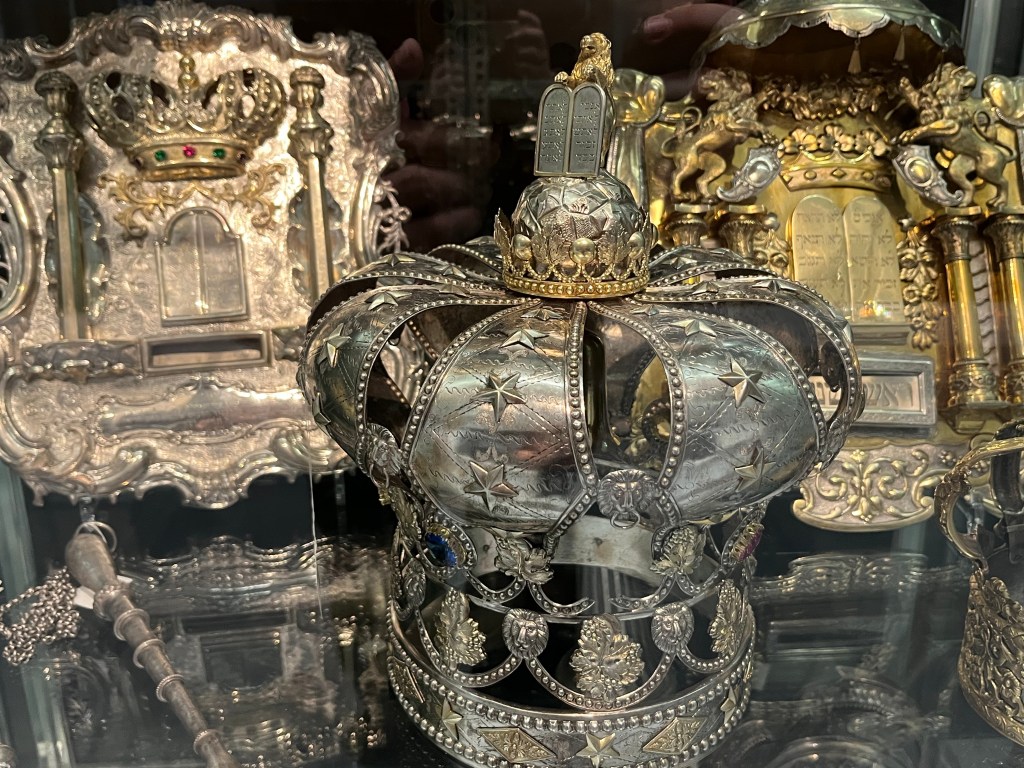
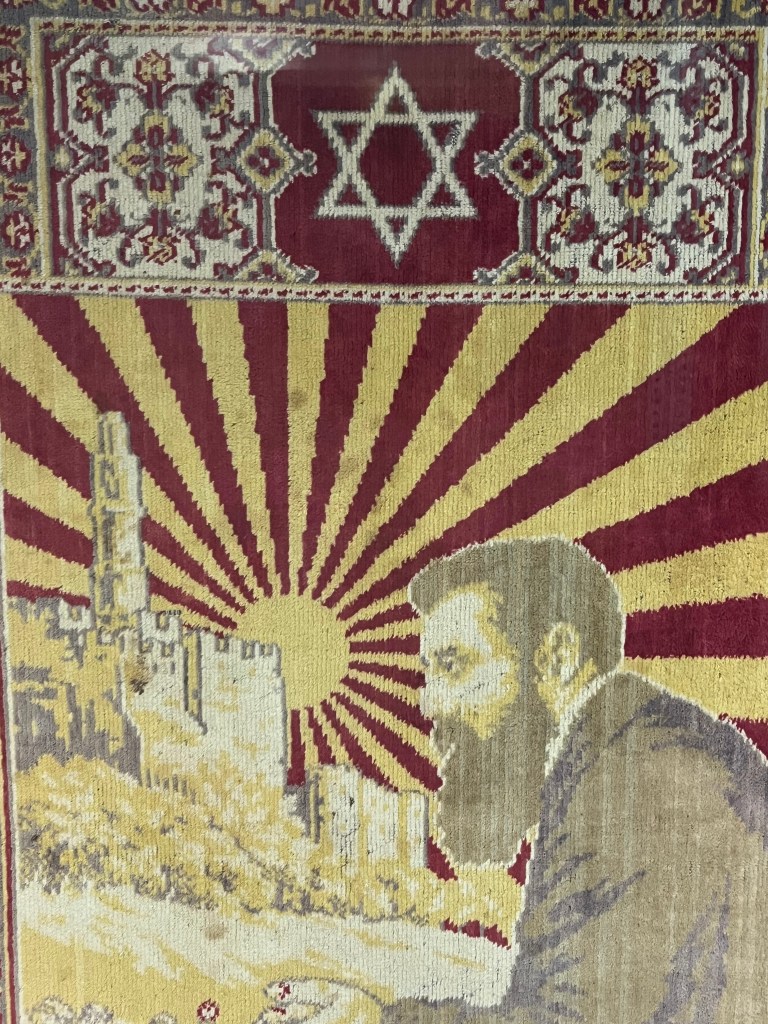
I also had the opportunity to visit the Jewish Museum Vienna and see some incredible Jewish artifacts – on Israeli Independence Day of all days. It was appropriate – the founder of modern Zionism, Theodore Herzl, lived in Vienna! The artifacts were from all over the Austrian Empire, including places whose Jewish communities I knew almost nothing about – like Bosnia!

The visit to the museum was one of the few times in Europe I have felt safe as a Jew. Jewish institutions are guarded by security – including Austrian police. And while it’s sad that that’s necessary, it made me feel more at ease than in some other places where the governments either fail to support local Jewish communities or actively create anti-Israel rhetoric in society. In Austria, I don’t know the politics well, but I definitely felt more protected.

Here are some pictures from the museum, then we’ll return to the stories of the incredible people I met:
After days of touring both Jewish and non-Jewish places (here, to be honest, the cultures are so historically intertwined that it’s hard to really distinguish between the two!), I decided to rest and go to Shabbat services at Ohr Chadasch, a Reform congregation in Vienna.

Longtime readers of this blog know that I have struggled with my Jewish identity in the past several years, as both of my parents died from cancer about two years ago. Such a shock to my system made me question a lot of things, especially God and Judaism, things that had been so central to my life.

So I was excited but also a bit nervous about going to service at Ohr Chadasch. Every prayer reminds me of my mom, who used to go to synagogue with me. Would I start crying in services?

What was magnificent to see is that my grief is evolving. I enjoyed the hell out of services. Ohr Chadasch, much like Ohel Jakob (the progressive synagogue in Lisbon), sings and sings loudly! Whereas I couldn’t have handled this even a year ago, now it brings me joy again. My Judaism was on life support and now it is supporting my life.

The people of Ohr Chadasch are who really bring it to life. There’s Natan, the friendly American-Israeli-Austrian building a new life in Vienna and immediately offered me a seat when I looked for one. There’s another man, whose Hungarian Jewish heritage was obscured by his family’s struggle with their identity after the Holocaust, but who now is reconnecting with his roots. There’s the man who was leading services while the rabbi was out of town – who is a Jew by Choice.

After services one night, Natan helped round up a group of people and we all went out to eat Asian food (how Jewish of us!). It was such a fabulous evening. Italian non-Jewish polyglots curious to explore what community means to them – and if Judaism might be a spiritual home for them. Several other community members of diverse backgrounds. And me and Natan – two American-Israelis.

It was a mix of languages, cultures, Judaisms (or potential Judaisms!). It’s just how I like to spent my Shabbats. Thank you to all these new friends and the Ohr Chadasch community for welcoming me with open arms and making my visit so special.

Speaking of special people, the second Friday night service I went to in Vienna at Ohr Chadasch, a different man offered me a seat. His name was Augusto. Augusto is an Argentinian Jew, a PhD in Philosophy, a former resident of Italy, and most importantly, a total mentsch (good guy!).

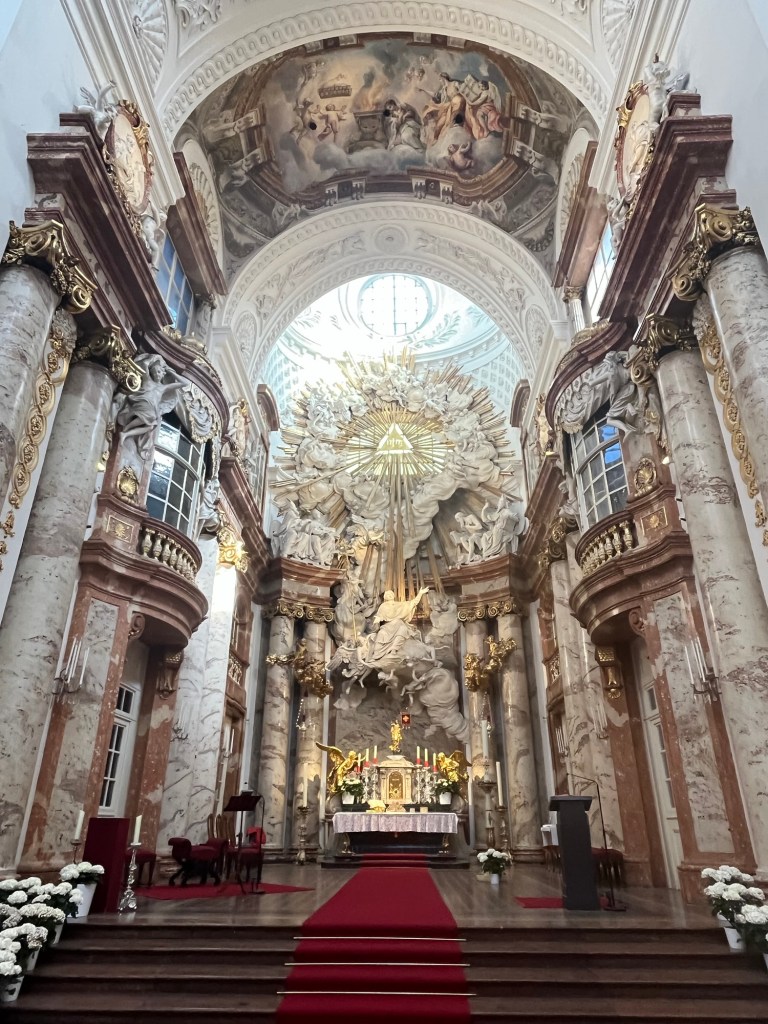
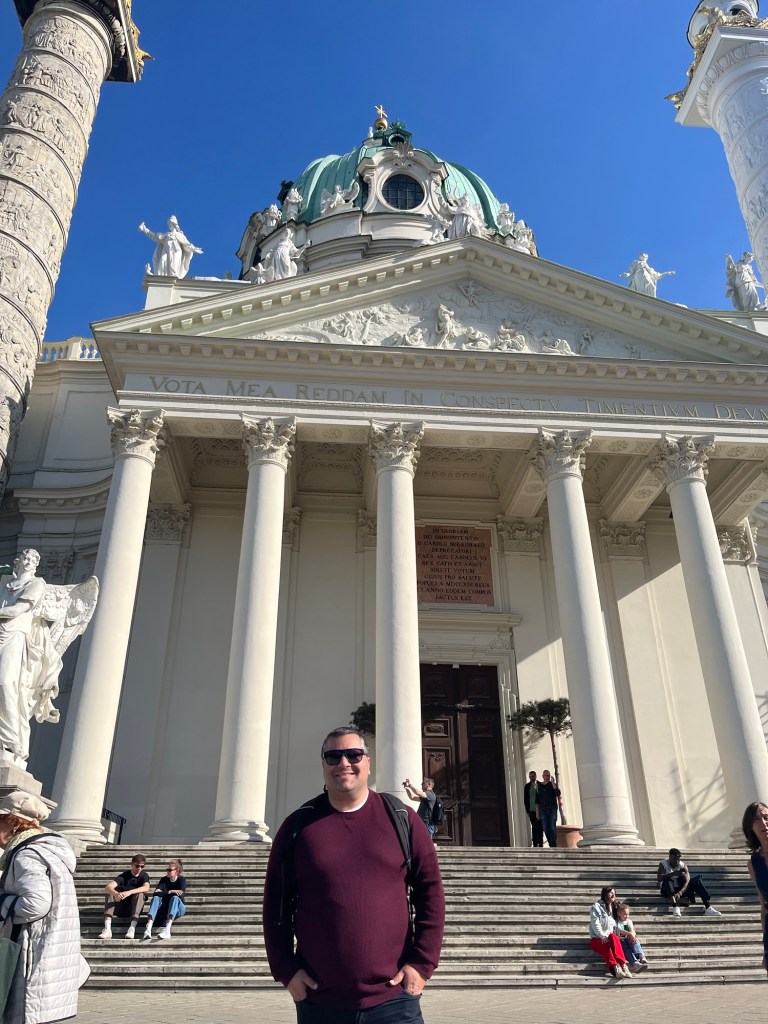
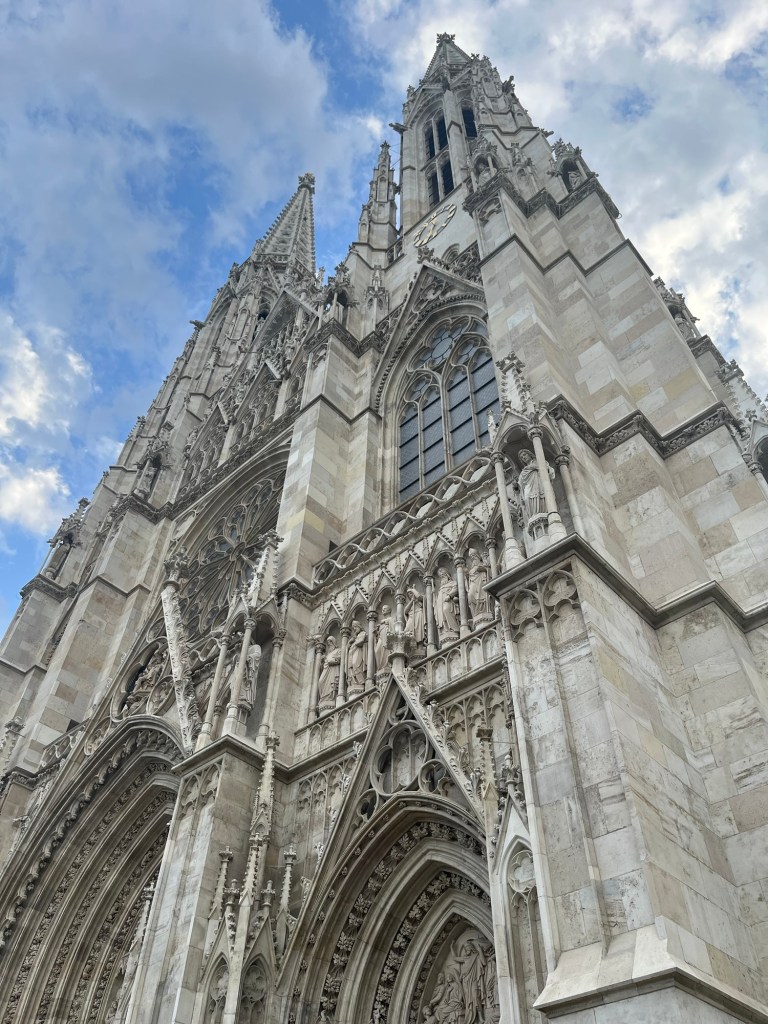
After connecting over our shared love of Spanish and Judaism, we decided to grab coffee a couple days later. For most Americans, coffee is maybe a 45 minute to an hour experience. But coffee in Vienna, and especially with a friendly Argentinian, is a six hour experience. Not only coffee and delicious pastries and lovely conversation, but also a whirlwind tour around the city. We visited the Cathedral, the Holocaust Memorial (which to the city’s great shame is almost hidden in a neighborhood tourists never visit), countless gorgeous buildings, and the MuseumsQuartier. He shared Jewish history with me along the way. The city is stunning and we’ve had influence everywhere. Even the beautiful Karlskirche which I loved was financed with money expropriated from Jews!

The history here is complicated and not always friendly to the Jews, who nonetheless contributed to it and with it extensively.

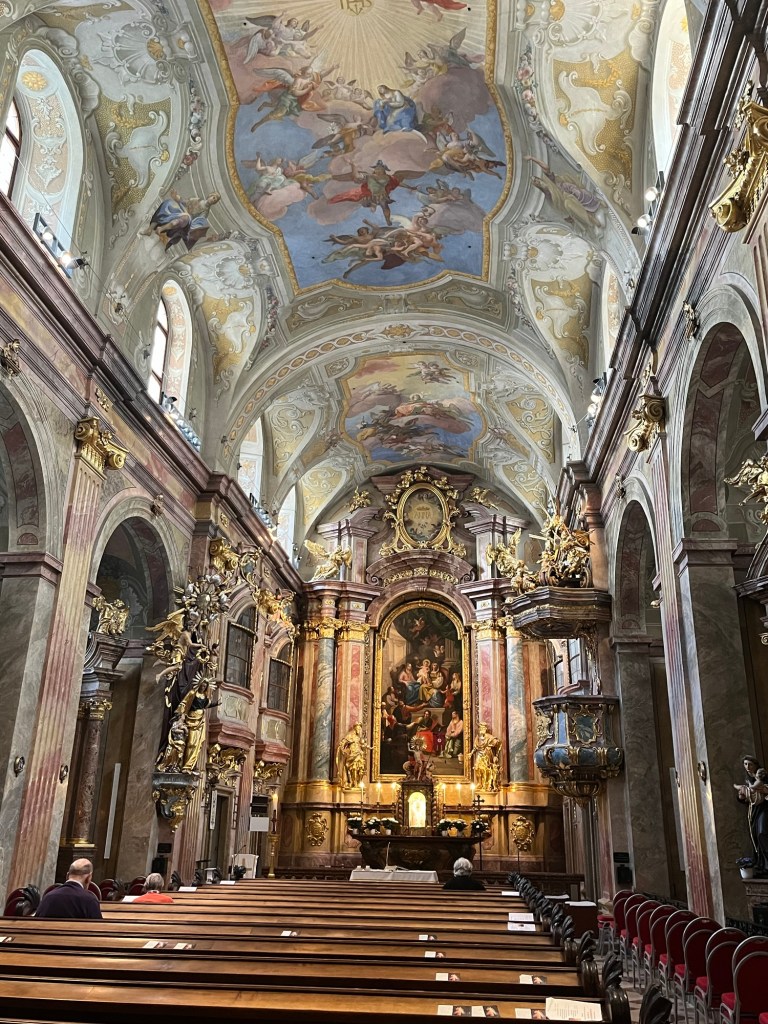
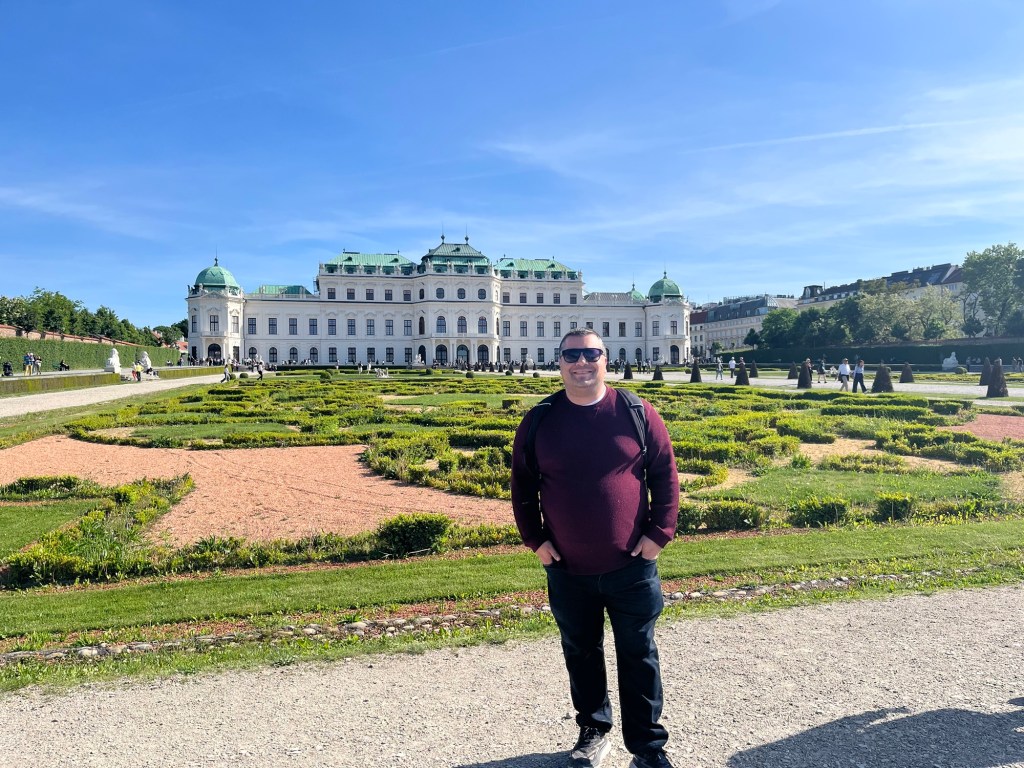
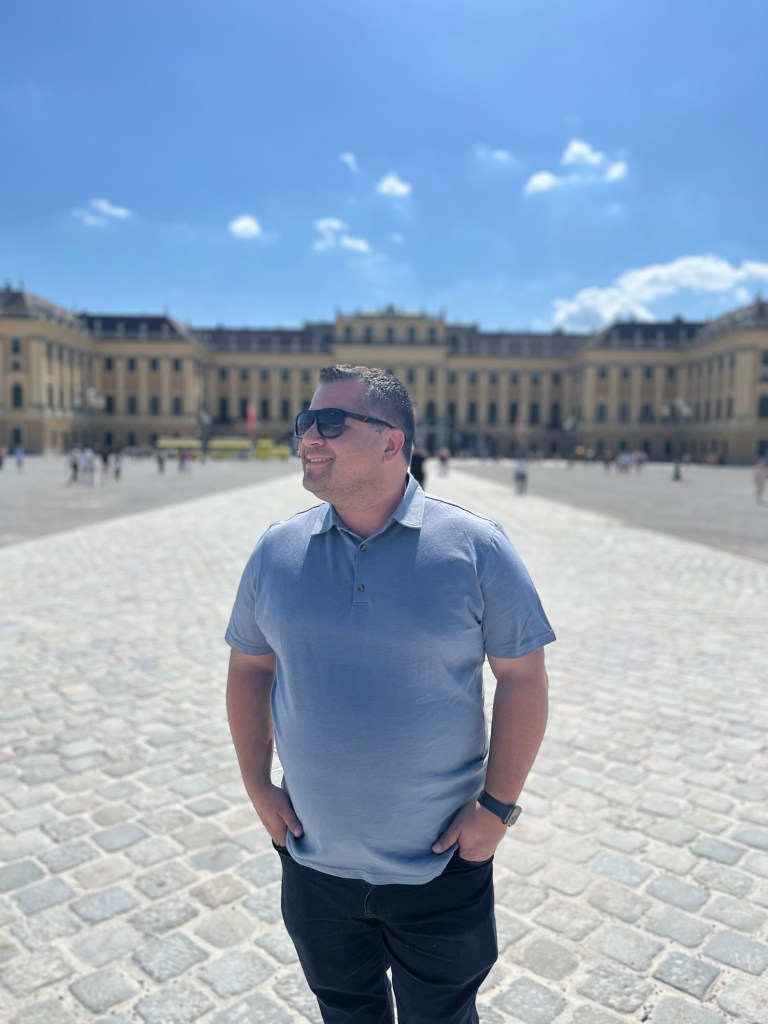
Just to show you how pretty a city this is, here are some photos of things Augusto and I saw together – and some places I went on my own:
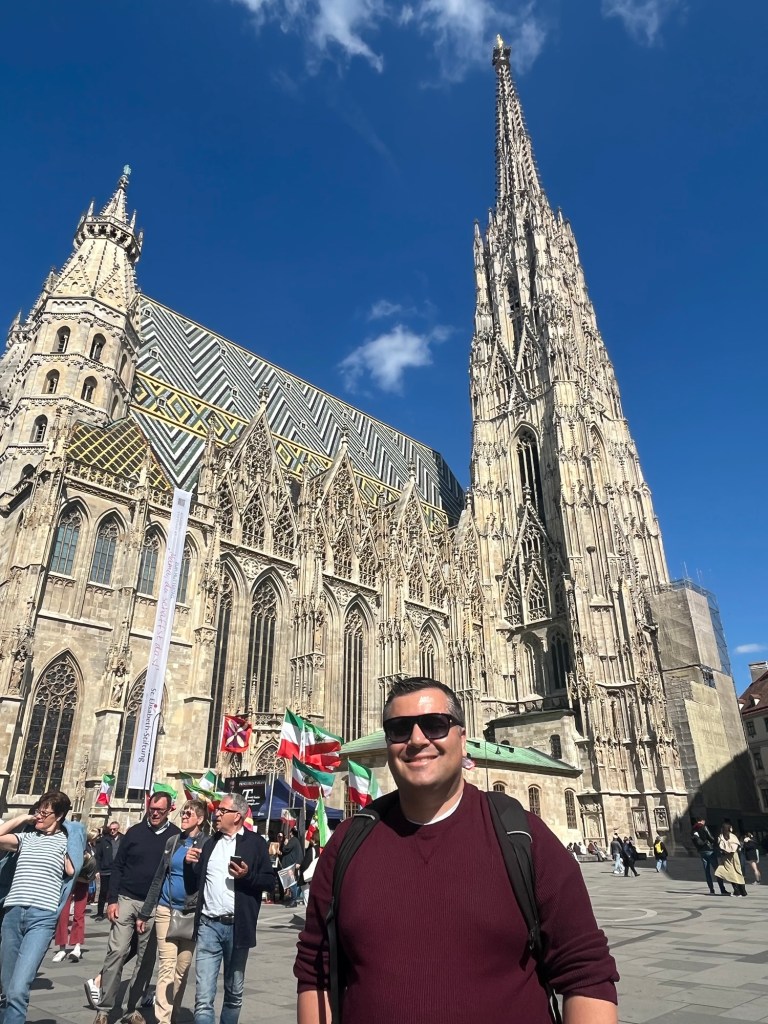
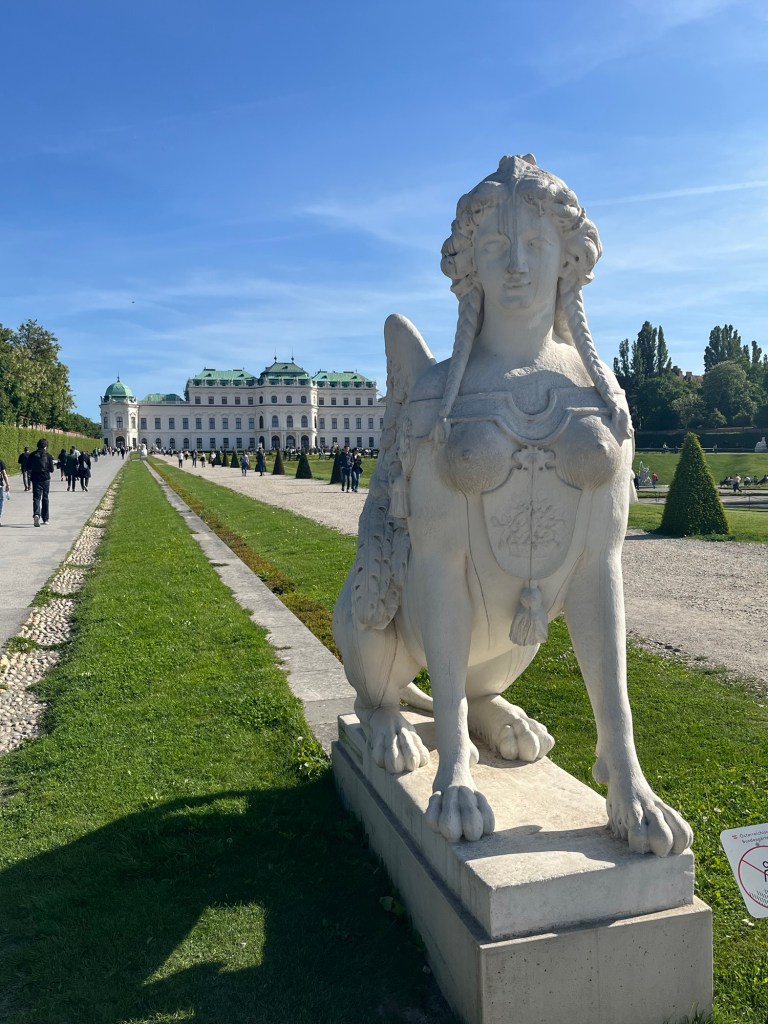
Not only did Augusto and his wonderful wife Sabrina show me so many sights around the city, they did it with great kindness and warmth. I didn’t feel like a visitor. I like I belonged.

I felt like I belonged because they made me feel happy, they made me feel loved. And on a difficult day – Mother’s Day. I know my mom was smiling looking down at me making new friends on my journeys. To travel solo is not to travel alone!

There’s another reason I think I felt I belonged. This is the surprise. As I sat down to write this blog, I remembered a genealogy project I did for Hebrew school at my synagogue growing up. I listed where all my ancestors were from. And I’ve done a good bit of genealogical research since then. I know I’m Jewish – from Lithuania and Ukraine on my mom’s side. And on my father’s side, part Romanian and Hungarian. I had the strangest flashback though to the poster with my Hebrew school genealogy project. It said Vienna, Austria.

And that’s because my great-grandfather Max Grossman, a Yiddish speaker, was born to two Austrian parents. He may have even been born in Austria – it’s not clear. It is he who was on my school poster and I verified it on my family tree. For people who don’t believe in spiritual energy – I’m sorry but this is too clear to be anything other than beshert. “Meant to be”. Min hashamayyim. From the Heavens.

I love Vienna. It has a horrific antisemitic history and also a lot of amazing intercultural cooperation and glory. And it has what has to be one of the most resilient Jewish communities in the world. That’s one of the places I draw my resilience from. It’s quite literally in my blood and I had no idea the whole time I was there.

Vienna- I’ll be back!
How Portugal breathed life into my Judaism

I don’t know what I think about God.  For those of you who know me well, you know I lost two parents to cancer within five months of each other two years ago.  Beforehand, I had a rich Jewish spiritual life to the point of almost becoming a rabbi.  I was actually accepted into rabbinical school at the time.  The shock of the losses was too great for me to absorb and still believe wholeheartedly in an all-knowing, all-powerful being.  Because where was it when I needed it most?

After losing my parents, I decided to travel and travel a lot.  One of the first places I went to was Portugal.  I speak Portuguese and was curious to see more of the world.  I traveled first and foremost for my self – my exploration and my healing.  And also because one of my mom’s regrets in her final days was that she wished she had seen more of the world.

My previous trip to Portugal was fabulous, but I still wasn’t in a state of mind where I wanted to “touch” my Judaism much.  I did buy some books about Portuguese Jewish history in Portuguese – which have been super interesting to read.  And Jewish history has remained a tie that has kept me feeling Jewish even when the religious dimension was evolving.

This trip to Lisbon, I decided to do something different.  Feeling a bit lonely on the first Friday of my month-long solo trip which I did this February across the Mediterranean, I decided to do something I hadn’t done in several years: go to Shabbat services.  It’s something I did growing up almost every week but had been absent from my life as I coped with loss.

Ohel Jacob is the progressive synagogue in Lisbon.  Founded by Ashkenazi pogrom victims later joined by Holocaust refugees, it is now a largely Portuguese community.  It includes many descendants of conversos who were forced to convert to Catholicism by the Inquisition and who have since returned to Judaism.  Which is utterly inspiring.

I chatted with members of the congregation who made me feel at home.  I even met a group of young people (and queer Jews!) who showed real dedication to their spiritual lives and to their community.  And just seemed like a fun group of people!

I sat down and got nervous as the prayers began to be sung.  Some prayers I was fine saying.  Other times I struggled to say “Adonai” (“my Lord”).  If I believe in a spiritual force, I’m not sure I believe in it lording above me.

Then, we got to the end of the service and the most incredible and moving thing happened.

First, let’s rewind a bit.

During my previous trip to Portugal, I went to Coimbra, a beautiful college town.  In one of the town squares, a group of college students asked for volunteers to be serenaded.  A bunch of women stepped forward and I raised my hand too, not sure what was about to happen but excited to experience Portuguese Fado music up close!

It turns out the song they were about to sing was aboutserenading a woman (hence me being the only man in the group, but who cares, I rolled with it).  It’s the most beautiful tune.  It’s called Menina estás à janela (“Girl you are at the window”).

As the students sang, a foreign tourist next to me started crying.  I don’t think she understood the words, but it was just so moving that she couldn’t control her tears.  And then I started thinking about my mom and I can’t explain it in rational words but I could feel her spirit guiding me.

Ever since, I’ve quietly and privately associated the song with my mom.  And I get emotional every time I hear it, like just now when I played it and started crying.

So, fast-forward to the end of the service at Ohel Jacob.  We get to end of the service and it’s time for the prayer “Adon Olam”.  It follows a metric that allows many tunes to be used to sing it.  Growing up, Cantor Sue Roemer, of blessed memory, would use many secular melodies – even patriotic ones on the Shabbat of the Fourth of July!

But instead of using a traditional melody, Ohel Jakob that night decided to use “Menina estás à janela” to sing it.  It took every fiber of my being not to start bawling in the middle of the synagogue.  But I did allow myself to feel what the Portuguese call “saudade”, loosely translated as “longing”.  Longing for my mom, someone who loved me very much and who would’ve been thrilled to see me praying with a Jewish community in a foreign land – something she knew I lived for.

My mom would often look for signs.  I often somewhat dismissed it as superstition.  For example, she would follow cars that had my grandmother’s initials on the license plate for a few minutes.  Just to see where they were going.  That it was a sign of my grandmother’s presence even after she had passed away.

I don’t know what to make of the fact that this beautiful Jewish community chose a song I deeply associate with my mom for Adon Olam at the first Shabbat service I’ve attended in years.  Is it a sign that my mom was with me that night in spirit?  Perhaps.  I think so.  Is it a coincidence?  Who knows, but it was such a beautiful moment that it almost doesn’t matter if it was just chance.

All I know for sure is that it is a sign that her love lives on in me.  And in my love for others and their love for me.   In community.  In relationships.  In feeling part of something great.

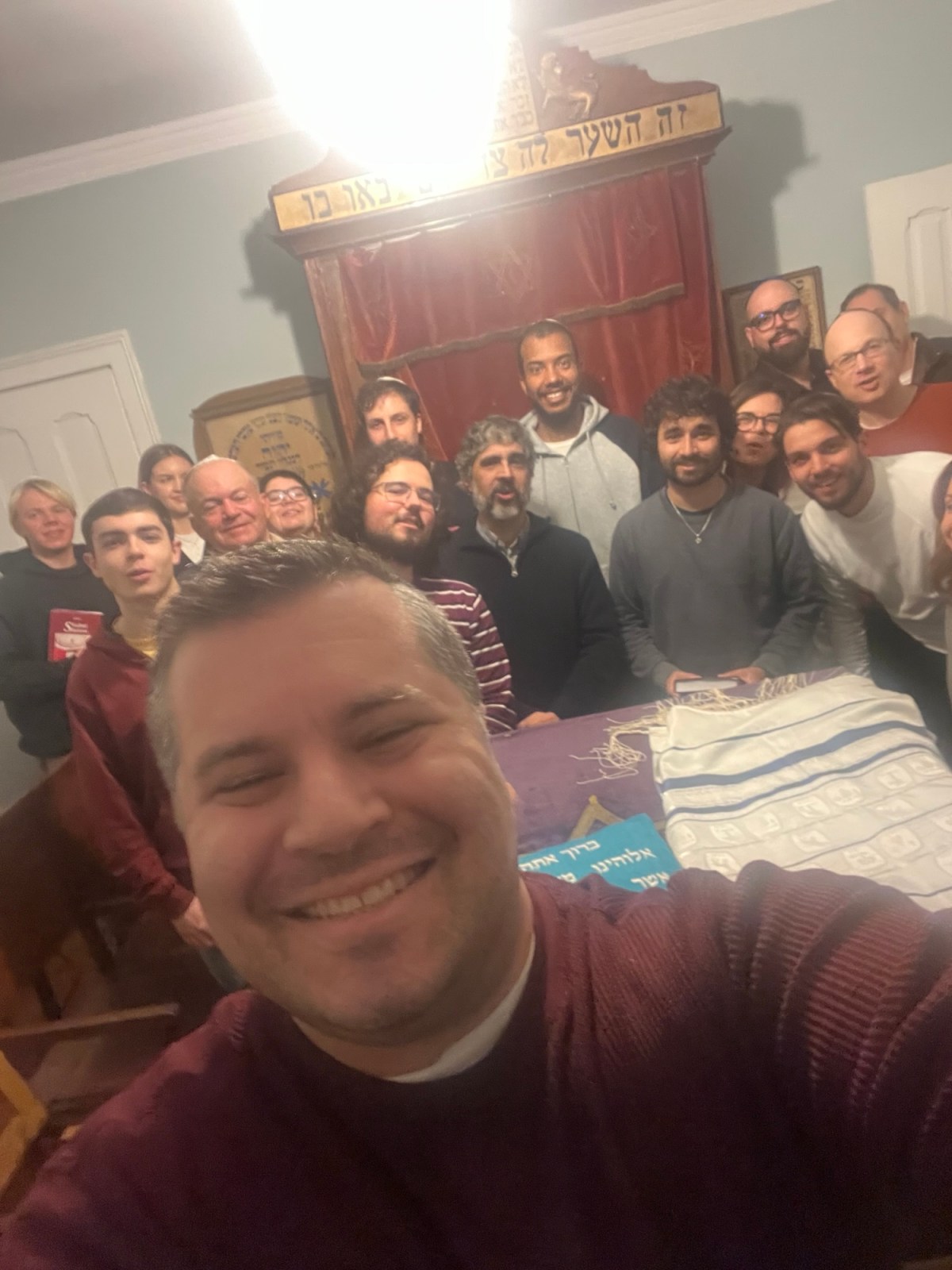
Ohel Jacob community (the folks on the cover photo of this blog) – you have no idea what that night meant to me.  Although now that you’ve read this blog, hopefully you do.

Keep doing all the beautiful things you’re doing to revive Judaism in Portugal.  And who knows, maybe you breathed a little life into the Judaism of an unsuspecting American who walked in your doors, um menino à sinagoga por primera vez em muitos anos.  I have a feeling I’ll be back soon.

להציל את היהדות

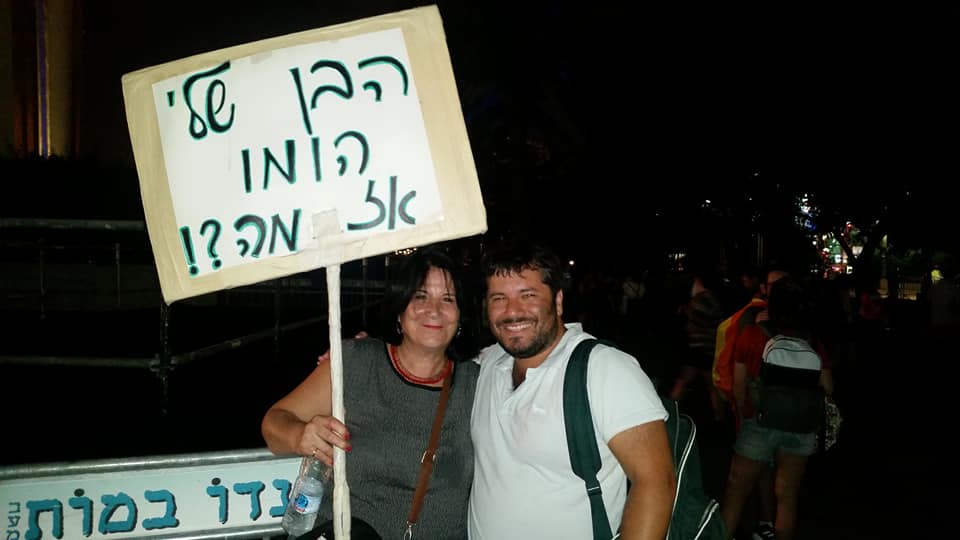
מזמן לא כתבתי בעברית. כנראה שאכתוב עם מלא טעויות. אבל אני מרגיש שכדאי לכתוב. כדאי לפרש את הרגשות שלי ברגע כל כך רגיש בהיסטוריה של עם ישראל ומדינת ישראל. הרבה אנשים שקוראים את הבלוג שלי יודעים שאחרי כמה שנים בארץ, אני חזרתי לארצות הברית, איפה שגדלתי. התכוונתי לחזור לארץ ללימודים בבית המדרש של הרבנות הרפורמית. אבל לא מעט זמן אחרי שחזרתי לארה”ב, אמא שלי חלתה בסרטן. אז הייתה מגפת הקוביד. אז נפטר אבא החורג שלי. ותוך קצת זמן, אמא שלי גם תלך לועלמה. בקיצור, הרבה דברים קשוחים התרחשו בחיי ופתאום לחזור לארץ לא הייתה בחירה הגיונית. לפחות כרגע.

אבל למרות שאני נמצא רחוק מהארץ פיזית, אני חושב עליה כל יום. אני מתגעגע לחברים שלי שם ואני מודאג מאוד לגבי המצב הפוליטי. לצערי, כאמריקאי, אני מכיר את הפאשיזם באופן מאוד אישי. אני גר בוושינגטון די סי. הייתי פה כאשר דונלד טראמפ השתדל לגנוב את הבחירות וכאשר הוא הסית נגד אזרחיו ב6 לינואר. הייתה תקופה מאוד מפחידה.

עד ה6 לינואר, הרבה חברים שלי בארץ או התלהבו מטראמפ או לא הבינו למה אמריקאים מבחינות פוליטיות שונות לא היו יכולים “להסתדר”. כלומר, אנחנו פשוט לא ידענו איך לדבר אחר עם השני. אבל אחרי ה6 לינואר, הרבה חברים שלי סוף-סוך הבינו שזה לא היה עניין פשוט ובעצם זה היה משבר פוליטי שחווינו בקפיטול.

לצערי הרב, כל ישראלי שפוי עכשיו מבין מה שקרה בארה”ב לאחרונה. שיש בשתי המדינות תנועות פוליטיות שרוצות להרוס. שרוצות לדכא מיעוטים, למחוק את “האחר”. זאת תנועה פוליטית בינלאומית- מרוסיה להונגריה, מארה”ב לאיראן, וכן לישראל.

מהנסיון שלי בארה”ב, אני רק יכול להדגיש כמה זה חשוב להמשיך להפגין ולתמוך בתנועות פולטיות שהן בעד הדמוקרטיה לכולםן. גם כן לפלסטינאים.

אין עתיד למדינת ישראל בלי דמוקרטיה. ואין דמוקרטיה בלי חרות לכל תושבי ישראל ופלסטין.

בסוף, כמו כל דבר במדינה היהודית, זה עניין של איזה סוג של יהדות תהיה חזקה יותר בישראל. ברור שצריך להיות מקום לגיוון- גם ליהדות השמרנית שאני לא מאמנין בה. אבל- בואו נגיד את זה בצורה ברורה- אנחנו רוצים עתיד של איסור חמץ בבתי חולים או אנחנו רוצים עתיד של יהדות שוויונית?

ליבי במזרח. לכל המפגינות והמפגינית האמיצים- תודה. אני איתכם בלב ואני אמשיך לדבר עם הממשלה שלי בארה”ב כדי לשכנע אותה להשתמש בכח שלה לשמור על הזכויות שלכם. כי בעצם, למרות שאנחנו רחוקים פיזית, האינטרסים שלנו דומים מאוד. אנחנו חייבים לתמוך אחד בשני בשוויון.

אני הפכתי אולי פחות דתי אחרי כל המוות והטרגדיות במשפחה שלי ובחברה שלי בשנים האחרונות. אבל אני כן מאמין שהגורל שלנו הוא משותף. ואף פעם לא אוותר על הקשר בינינו והחלום של שלום, של דמוקרטיה, ושל יהדיות שמייצגת את הערכים שלנו. מתגעגע המון- שנתראה בקרוב בע”ה עם חיוכים של הצלחה של המאבק.

When the sh*t hits the fan

This past week has been one of those crazy weeks you never forget. My step-dad has spent the week in the ICU due to two blood clots and after going into cardiac arrest. My mom, who is on her newest round of chemotherapy, is taking care of him. I’m just trying to keep my head above water. Trying to enjoy life’s little moments and joys to distract me. With some degree of success. Thank you to all my friends who’ve been there for me this week and are helping me get through this.

This week, the insanity of my life seemed to parallel that of Israel’s.

Just as my world seemed to be spinning, Israel voted in one of the most right-wing, ultra-religious governments in its history. As an Israeli citizen, I’m embarrassed to see the rise of fundamentalism in my other homeland. It just goes to show that what we’re seeing in the U.S. and Europe is spreading to other countries as well. We must rise or fall together. This is the moment for people who care about the future of Israel – and its Palestinian neighbors – to speak out for democracy.

Faced with adversity in Israel and my own home front, I’m faced with a choice. I could pray, I could sway, I could wait for others to act in my place.

I will do no such thing. First of all, I will be there for my immediate family. Secondly, I will be there for myself – allowing for moments of relief and even joy as I step away from the trauma I’m dealing with. I want to live my life, which is what my step-dad would want even as he struggles for his own.

And when it comes to my brethren across the ocean – Arab citizens of Israel, Palestinians, and Israeli Jews and Druze – I will step it up for you. As LGBTQ+ and Reform rights are also under attack, I will not sit by silently. The Israel and Palestine we want to build is possible. And we will not give up. Please consider a donation to Standing Together, my favorite Jewish-Arab activist organization, to promote solidarity and peace.

One of the things I learned while living in Israel was the power of embracing life and its fulfillment even in the darkest of moments. That’s why you’ll find Israelis partying on the beach as rockets fall down. It’s an extreme example, but a real one.

So as the rockets metaphorically fall on my own family and on Israel’s democracy, I will fight, but I will also dance. I will push when needed, rest my body to rejuvenate for the long haul, and I will enjoy the people and love that I get to experience each day.

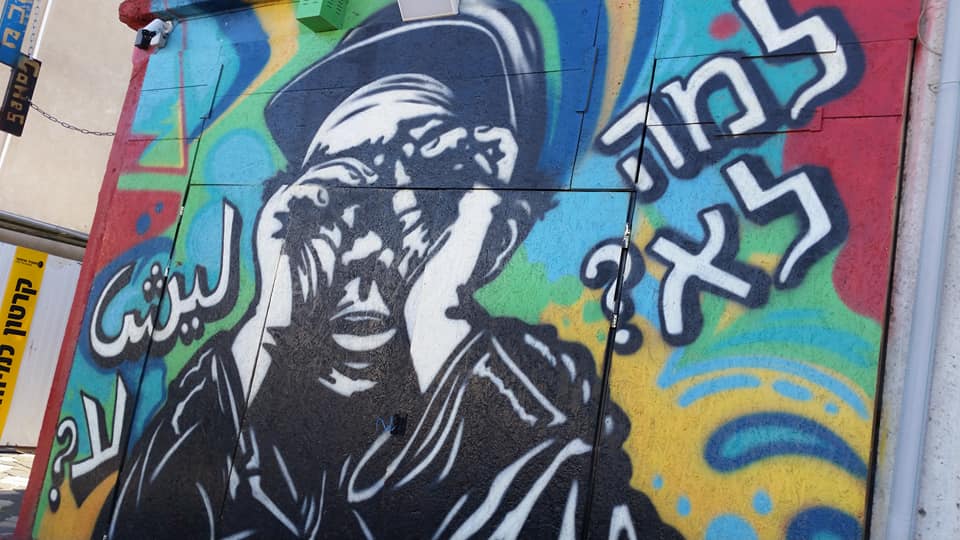
Because as my cover photo from Majdal Shams says in Hebrew and Arabic: “Why not?” Hope lives, always.

Am I an Agnostic Jew?

What is an agnostic? What is a Jew? These are questions I have been exploring in-depth lately.

As my previous blog post explained in more depth, my mother has a rare and aggressive form of cancer and my step-dad was recently diagnosed with an irregular heart beat as he collapsed on a treadmill. These events have led me in search of spirituality and more than anything, a sense of comfort.

For me, during hard times like my childhood when I was a victim of abuse, I searched for solace in Judaism. I remember as a teenager praying the words of the siddur alone in my bedroom, hoping against all hope for a solution to my pain.

Not only that, Judaism has given me a sense of community when I really needed it. In high school, I joined and eventually took a leadership role in my youth group. It gave me a largely supportive network as I came out of the closet as a teenager.

As a child in my synagogue, I felt cared for. And nurtured in a way that I wasn’t receiving in other parts of my life.

I showed my gratitude and excitement by leading monthly teen services and running the college chapter of the Reform Movement on my campus. I have led or attended Jewish services in at least seven different countries. I love Judaism.

So what’s leading me down this path of questioning, of doubt? It’s very simple. I see the pain and suffering in the world – the pandemic’s millions of victims, Syrian refugees, Ukraine, my mom’s cancer – and I wonder how a compassionate God would let such terrible things happen. And yet I’m not entirely sure that there isn’t some form of spiritual energy or being out there. Because certainly great kindness happens in the world too. And we have free will as human beings to practice compassion or to harm others.

I still find great spiritual energy in Jewish history, culture, music, and languages. And Jews have always been first and foremost a people more than a faith-centric religion like Christianity or Islam. There are even those people who consider themselves “agnostic theists” – or practicing Jews who are unsure of God’s existence. I would go so far as to argue that if you really polled most Reform, Reconstructionist, and Conservative Jews, a significant number of them would fall into this category. I have even met Orthodox Jews who say belief in God is not necessary for living a life following Jewish law, or halacha.

Must a Jew believe in God? No. I don’t believe a Jew must believe in God. And I think our tradition has a rich tradition of agnosticism, or uncertainty about the existence or nature of God. As the Yiddish expression goes – “two Jews, three opinions”. We are a people of debate, of pluralism, of deep and fragmented thought.

So if someone asks me if I believe in God, I don’t feel a compulsion to answer. Because this whole time I’ve been searching for a path back towards belief as defined by others. By the words on the page of a prayer book someone else wrote. The path that feels right is to allow myself a little doubt. A little uncertainty. A little agnosticism in my rich Jewish tapestry and to lean into that reality. Because someone who says he or she has perfect faith in God while a parent is struggling with cancer is frankly hard to believe.

I am an adult free to make my own decisions and my choice now is to live as a Jew on the edge. On the edge of questions bigger than I could ever have imagined when I started my Jewish journey. Where will it take me? I don’t know! And that’s a pretty agnostic answer.


Cover photo is from Sderot, Israel. A city of survivors, just like me and hopefully like my mom.

Whole Grain Judaism Part 2

Almost exactly three years ago, I wrote a blog post on a previous site of mine called “Whole Grain Judaism“.  I proposed some radical ideas that reflected both where I was politically and personally.  While some of the ideas have faded into my past subconscious, some seem relevant today.  In particular, the very title of the article.

The previous article focused a lot on the financial structure of Judaism and how it keeps us unnecessarily apart.  Some of the ideas no longer resonate as much with me, but some do.  There is a hyper-financialization of Judaism especially in the liberal settings I know best.  It’s one of the reasons that the Chabad financial model attracts so many Jews.  More Jews, less dues, more do’s, less inhibition to give on your own accord.

Nonetheless, acknowledging that life is more gray than black-and-white (liberal congregations are striving for financial stability, and I support their efforts), I’d like to focus on a different aspect of Whole Grain Judaism.

That aspect is our ability to cross the boundaries which keep us apart Jewishly.  Not financially, but socially and interpersonally and religiously.  Culturally.  How can we take our Judaism and make it a source of connection rather than isolation?

Isolation, as I define it, is when you keep to your own- exclusively.  Now everyone does this to a degree and if you never preferred one institution over another, you wouldn’t be telling the truth.  We all have our preferences and I think that’s healthy.  Different ideologies and life choices can strengthen the dynamism of the Jewish community and all religious and cultural groups.  Even sometimes when it creates tension.

However, when taken to an extreme, it can lead to the destruction of the Jewish people.  Or at a minimum, a severe exacerbation of the internal conflicts we experience.  Which, if left unchecked, stretch the creative tension to the kind of dissension and chaos that allows external threats to tear us apart.  It’s not a light subject- there have been multiple anti-Semitic attacks in the U.S. in recent months (not to mention in Europe, Israel, and around the world, where they are sadly more accustomed to them).  If we don’t manage to have a bare minimum of internal solidarity, how are we supposed to face such threats?  We are two percent of the U.S. population- on a good day.  There are times we need to put aside our differences and work for our common good.  It’s not as if an anti-Semitic shooter is going to distinguish us based on where we pray, how progressive (or not) we are, nor our belief in God itself.

That being understood, what does this mean in practical terms?

It’s not as if any of us have a magic wand and can magically rearrange the Jewish world to institutionally promote the kind of ahavat yisrael, love of your fellow Jew, that would be needed to build such solidarity on a national level.

And yet, we all do have the capacity to make a difference.

My theory is that while institutional change is necessary, that shouldn’t get in the way of the little daily actions that, when combined, can create the kind of safety net of kindness that can preserve our people for generations.

I grew up in a Reform community.  Not in a small way- I became incredibly involved on my own accord.  I taught Hebrew school, led teen services, was on my youth group board, went to synagogue almost every week, and even almost went to rabbinical school.  I’ve visited or led services at Reform congregations from St. Louis to Barcelona, Budapest to Tel Aviv, Buenos Aires to Washington, D.C.  The Reform Movement’s intense fervor for caring about the other, for inclusion, for ethical living, for fervent prayer (as best embodied by its youth group NFTY)- those values still resonate with me in many ways.

I go to an Orthodox synagogue.  Not in a small way- I’ve become incredibly involved.  Especially for someone who has absolutely no Orthodox upbringing, relatives, or anything of the like.  I go weekly to synagogue on Saturday mornings.  I almost always go to mincha and maariv and havdalah.  I am usually at a shul member’s house for Shabbat lunch.  I rarely use my phone and I usually walk.  I love the rabbi.  He knows I’m gay.  I feel largely accepted and welcomed and I go because I love the people there.  It is not out of rejection of my past nor of the Reform values I still identify with.  I would still say I am a Reform Jew.  And I’m kind of an Orthodox one too.

This seeming dichotomy is how I live.  I am a fully-out-of-the-closet gay man who loves marching in Pride parades (and has done so two or three times under the banner of Reform Judaism’s Religious Action Center).  I am the same gay man who savors every bite of gefilte fish at the restaurant Shtiesel in ultra-Orthodox Bnei Brak (the famous show is named after it!).  And who savors that gefilte fish at Chabad in the States.  Who speaks Yiddish at both a secular socialist summer camp and in Hasidic book stores in Williamsburg, Brooklyn.

If you can’t untangle where one part of my Judaism starts and another stops, good!  Because I’ve prayed in Reform, Reconstructionist, Conservative, Renewal, Modern Orthodox, Hasidic, and Litvish communities.  I am just as happy accepting my culturally-Jewish friends who may not believe in God as I am davvening at shul on a Saturday morning.  Not because we have the same preferences all the time- we don’t.  But because we share important things in common.  And out of a love for my fellow human being, not to mention my fellow Jew, I try to focus on those commonalities as a way to build connection.

I don’t run the American Jewish Committee nor the Jewish Federations of North America.  I don’t sit on a synagogue board and I am not a rabbi.  I am a writer.  I’m an adventurer, an explorer, and every-day Jew trying to make a difference through words and actions.  Just like you- wherever you work or play.

I’m grateful to all the Jewish professionals, lay leaders, and ordinary citizens who try to bridge the gaps on a daily basis.  Who, instead of bemoaning the news or incessantly refreshing the page of the Jerusalem Post or Ha’aretz (it’s tempting, I’ve done it!), decide to take some power into their own hands.  To be the moderate-tempered person willing to talk to reasonable people of different backgrounds.  So that if we don’t have to deny our differences, we shouldn’t be prisoner to them either.

Do you.  Live Jewishly in a way that lets you experience the best of all worlds- from Hillel to Chabad, from peaceful protests to quiet Shabbat reflection.  Or just some of the worlds, but with a desire to respect people who inhabit the others.  And if you’re not Jewish, try taking this idea and applying it to your own community.  After all, we’re all part of the human community.  And if we don’t find a way to explore other cultures and ways of thinking and be those bridges of sanity during this time of confusion, then we will collapse.  Bring the healing yourself, and find yourself both challenged and rewarded for it with the richness a textured understanding of life has to offer.

To conclude, I’ve seen a lot of signs in both America and Israel with the same gist: “ve’ahavta le’reacha kamocha”.  Love your neighbor, your companion, your colleague, your friend, your stranger, your person squishing over into your seat on the bus.  Love.

It’s not easy.  And sometimes, there are other emotions we should allow ourselves to feel.  I don’t love when people are cruel and I don’t love when people threaten innocent human beings or animals.  Love is a commandment, but not the only one.

And love we must.  Because if we don’t take it upon ourselves to get to know each other, it’s not as if our newspaper will do it for us.

Grab the only thing you can control, your self, and go for a ride somewhere you’ve never been.  And your open eyes are the best gift you can endow your soul, two little holes that let it breathe fresh air.  An air whose wisdom may eventually, God willing, come out of our mouths a little cooler than usual.  As kindness.  And whose spirit will allow us all to live Whole Grain lives.

What’s right with America

Recently, I took a trip to Berkeley.  Known as a hotbed of far-left activism and anti-Israel hatred, I wanted to see what was up.

While a friend of a friend had suggested there was no such thing as campus anti-Semitism there, I wanted to see what it was like first hand.

Going in with rather low expectations, I found a lot to like there.  Berkeley is a cute town.  I found my way to a delicious little restaurant that sold onigiri, or Japanese rice balls.  As a kid who lived in Japan (and then stayed connected to the culture back in the States), I grew up with this as comfort food.

In the restaurant, I chatted with a nice young man behind the counter.  I made a point of mentioning I was from Tel Aviv- a risky proposition in a city where not a small number of people boycott our existence.

Turns out, he was a Jew!  His father had volunteered on a kibbutz near Tel Aviv years ago.  And he told me he might go on Birthright!  I told him to check out my blog and contact me if he visits- if you’re reading this please message me!  I will hook you up 😉  It was a refreshing reminder of vibrant Jewish life here- a life that both as an American and an Israeli I support.  That I urge the Israeli government to back with full force- not just rhetoric.  Bibi- recognize progressive Judaism in Israel and abroad- as a living community which strengthens our state and our people.  If we’re Jewish enough to be shot by anti-Semites, we’re Jewish enough for the Jewish State.

As I headed to campus, I decided to visit Hillel, the Jewish campus organization.  I met some wonderful young students, who told me about the active Jewish life on campus.  About their trips to Israel- and their desire to return.  And unfortunately, some of the rabid anti-Israel and anti-Semitic students they have to deal with.  As they noshed on some pretty tasty looking shakshuka.

Frankly, I felt lucky to have graduated from college 10 years ago, where anti-Semitism was unheard of at my Hillel and where the scary rhetoric of today’s campus extremists was barely in its infant stages.

One particular story stood out to me.  Speaking with an Israeli, she told me about a non-Jewish student who came to a discussion about the various types of Zionism.  And, apparently innocently and sincerely, asked “but what does Zionism have to go with genocide?”

The Israeli thought she meant the Holocaust.  But apparently the student, having heard all sorts of inflated rhetoric on campus, thought Zionism was a form of genocide.  A blatant lie and a sad reflection on the rhetoric of the anti-Israel movement.  That does a disservice to Jewish and Israeli history, the complexity of the conflict, and to Palestinians themselves as these “activists” push our peoples further and further apart.

I stand in admiration of Israel educators and Jewish students who patiently answer such questions.  I have to say if someone asked me this question in earnest, I’d assume they were simply attacking me.  Because in some cases, they are.  But when you see someone so earnestly manipulated, it breaks the heart.  And I’m so proud of our Jewish activists and non-Jewish allies who are standing up for truth, for nuance, and for engagement in today’s increasingly toxic environment.

One student named Judith particularly stood out to me (hi Judith, if you’re reading!).  She is a Berkeley native so she is used to the screaming, often irrationally hateful activists who populate her campus.  Like the Christian minister I saw on a street corner shouting in a megaphone that “Jesus wasn’t afraid of the Jewish culture.”  As people walked by completely indifferent.

Her bravery and her ability to ignore such people remind me of Israelis.  She is used to it, and she lives her life despite it.  It reminds me of young Jews I met in Belgium who were used to having their synagogues under armed guard.  Where you submit your passports a week in advance to visit.  To get a background check.  A reality unthinkable in European cathedrals, open to the public without even a cursory glance.  It’s a reality American Jews will have to get used to.  After Pittsburgh, you can expect enhanced security at American synagogues.  Where, sadly, I think they will one day resemble the fortress-like congregations that dot the European continent my family once called home.

The age of American Jewish innocence- where we lived in security and prosperity- is evolving.  What was once the safest and most prosperous Diaspora community since medieval Spain is in the midst of a monumental change and I fear for its future.  I will not be surprised to see armed guards outside American synagogues next visit- and it will make me a bit sad.  One Jewish community advocate estimates it could cost $1 billion to secure American synagogues.

We once thought we were exceptional, that our bagels were as American as apple pie.  But as is often the case in Jewish history, if we ever forget who we are, the anti-Semites arise to remind us.  If you are a non-Jewish ally reading this, the hour is late and if you don’t mobilize with us now, American Jewry is at tremendous risk.  Speak up, show your solidarity, stand with us- lest we become the next France.  Where Jews fear to walk around with yarmulkes on and Jewish centers are regularly attacked.  Where Holocaust survivors are burned to death in their homes.  If you think this is alarmist, you don’t know much about Jewish history.  The ethnocentric view places this recent attack only in the context of American hate crimes like heinous attacks on black churches or immigrants.  But if you read Jewish history, you’ll realize this analogy is relevant but incomplete.  Violent anti-Semitism isn’t new- and it didn’t start with Donald Trump.  Although I’d invite him to stop complaining how attacks against us “slow” his political momentum.  We’ve been dealing with this for 2,000 years and counting and across dozens of countries.  I’m not a huge fan of the (seemingly endless) privilege discourse, but as a non-Jew, it’d benefit you to consider the ways you’re fortunate to not be one of us.  And to find ways to help.

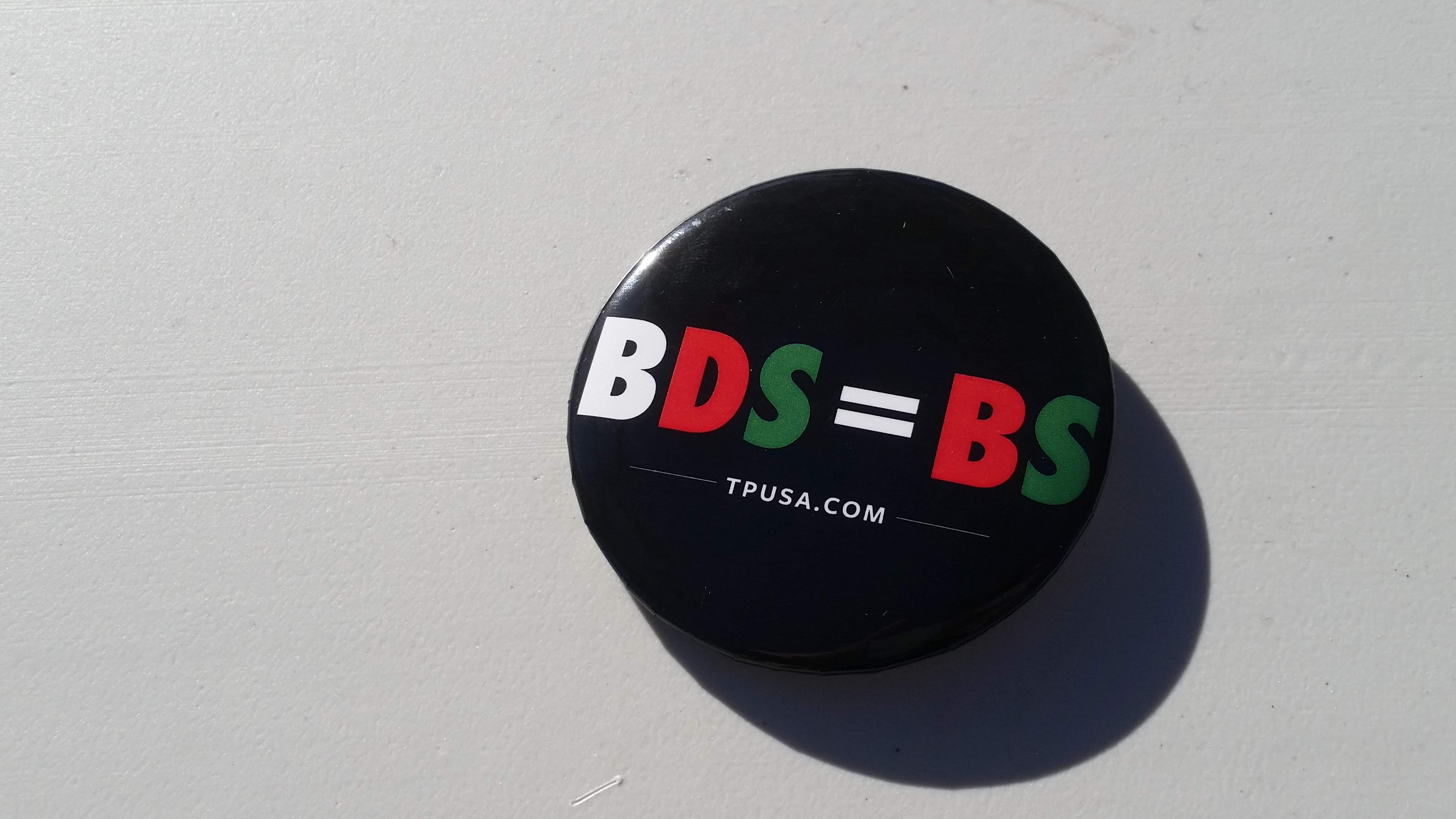
As I wandered around Berkeley’s campus, I felt more comfortable than I expected.  There is something about coming in with low expectations that gives you the freedom to be pleasantly surprised.  To have your preconceptions splendidly upended.  Like when I met pro-Israel libertarians with buttons that said “BDS=BS”!  So thankful to have you advocating for us in the belly of the beast 🙂 .

20181102_153142

Yet some expectations are based in reality.  I met a man tabling for a Muslim Student Association volunteer program- run in conjunction with an anti-Semitic professor.  Berkeley is about to host a Marxism conference.  With speakers on Palestinian liberation- likely predicated on the destruction of Israel.  A terrible false dichotomy that speaks more to their black-and-white destructive thinking than any sort of genuine attempt at dialogue or peacemaking.  Signs abounded about the “Trump-Pence Regime” and “resistance.”  As if our President, as narcissistic and callous as he may be, was somehow installed by a putsch.  As opposed to the democratic elections he won.  Someone you oppose becomes an illegitimate enemy of humanity rather than a candidate or ideology you want to defeat.  The former requires nothing but anger.  The latter requires organizing, analysis, and persuasion- real work that requires you to engage with people you disagree with.  You can tell what I think is more productive.

This kind of black-and-white thinking is something I’ve dabbled in, especially in college.  There’s something about this time in your life, free from obligations, where you can experiment with radical ideas.  And on some level it’s healthy.  Some ideas accepted as normal in our society need to be challenged and changed.  I also feel that my at times abusive chilhood pushed me into defensive and judgmental thinking as a way to protect myself and to make sense of inexplicable hatred.

And I’m proud to have worked hard to grow out of this mentality, as befits my age and my process of healing from abuse.  And my engagement with a wide range of cultures and political views.  So that when I meet an American-born Cambodian student whose parents fled the Khmer Rouge, but who is excited about the Marxism conference, I feel a mixture of emotions.  Anger, sadness, and pity.  It takes a lot of mental acrobatics to justify the way she thinks, but all I can say is that I hope she can one day escape the ideological labyrinth in which she wanders.

Because for me, resistance is not about slogans or yelling at people who disagree with you.  It’s about standing for your values while resisting the urge to do evil when it has been done to you.

As I prepared to leave Berkeley, I told Judith that I thought she was brave for having adjusted to life in her town.  As a proud Jew and a lover of Israel, to be surrounded by such political extremism can’t be easy.  And like Jews have done for centuries, she got used to it and lives her life.

And I left her with a warning: “Jews in Europe are now used to armed guards and soldiers protecting their synagogues.  Like fortresses.  They’ve gotten used to it to- it’s necessary and it’s sad.  So be careful- don’t get too used to it.  Because you deserve better.”

She nodded in agreement as she boarded the bus to a fun date with her boyfriend.  The kind of care-free evening that makes America so fun.  And makes Americans so lucky.  With all your problems, remember this is the wealthiest and one of the most stable countries on the planet.  And don’t forget it.  It’s a blessing.  Hamas fired 30 rockets on Southern Israel last week and Catalan political leaders sit in Spanish prison.  Even as you push for change, count your lucky stars and remember there are problems outside this country too.

At night, I headed into San Francisco.  Having seen the good, bad, and neutral of Berkeley (including some amazing burritos made by Asian students), I wanted Shabbat.

Shabbat is not something to take for granted.  It’s only a feeling that happens if you make it happen, especially outside of Israel.  On my travels, I found myself gravitating towards Jews when I wanted that feeling of community.  It wasn’t really about religion in the traditional sense of the word.  It was about being a Jew with people who understood me.  And sharing in our customs, food, and talk.

One organization that has brought this to life for me is Moishe House.  They organize communal houses for Jews across the world, which then hold programs for both Jews and non-Jews.  A pluralistic cultural space, it is a great complement or alternative to synagogue, as it doesn’t require a particular belief and all are welcome.

I’ve written before about how I visited Moishe Houses in Brussels and Barcelona.  And now it was San Francisco’s turn.

The folks at Moishe House Nob Hill put on an amazing Shabbat dinner.  There’s a special feeling when you’re with Jews.  To put it in the words of a man named Ben I met- it’s intangible.  You just feel at home.  You know something links you even if you’ve never met.

When I walked in the house, I was greeted with the smell of chicken shnitzel, of hummus, and I even made my own challah.  For the first time!

Turns out one of the housemates’ friends even read my blog about San Francisco!  It’s an amazing feeling of connection when you see just how small of a people we really are.  And I’m grateful to both Moishe House and its energetic residents for building this safe, vibrant space.

A space where for just one night, I can worry a little less about saying I’m Israeli.  Where I talk about Judaism without worrying about sounding “too Jewish”.  Where I can count on empathy after this week’s Pittsburgh terror attack.  An empathy I sometimes found lacking among non-Jewish folks I met in San Francisco.

It was interesting- I had actually forgotten about the attacks until the dinner.  The dinner was advertised as a Pittsburgh solidarity dinner, a great idea.  It’s just that as an Israeli, I had mourned, been angry, and moved on to the next thing.  A zen-like way of living in the moment that I learned to do more and more in the Jewish State, where hundreds of Pittsburghs have happened.

So where I expected just a Shabbat dinner, I got a lore more.  It was nice to see the tender side of American Jews.  Israelis, so accustomed to terror attacks, move on rather quickly out of necessity.  It was both heartbreaking and moving to see how the attacks affected the young Jews here.  The softness of American Jews is a real treasure- unique in Jewish history for having enjoyed so much freedom and safety.  And it’s something I fear will have to change.  As the country and the world increasingly scapegoats us, American Jewry would be wise to connect more with European Jews and Israel to learn coping skills.  It’s not easy- but the good (and bad) thing is we have a lot of experience dealing with terror.  And we can be there to support each other during this transition.  What I fear may be a new normal.

A curious thing happened at dinner.  A young man requested we do kiddush, the traditional blessing over wine or grape juice.

The Moishe House residents looked around, looking for volunteers.  Having led Reform services my whole life (including in Tel Aviv), I know the blessing by heart.

When I left Tel Aviv two months ago, I could barely utter it.  So disenchanted with both Judaism and Israel itself in such a tense region of the world, I wasn’t even sure if I was a Jew.  Although, as you’ll see with my previous blogs, Europe reminded me I was.

So I found myself with a choice.  Having gone from religious to atheist, to agnostic, to spiritual.  Where did I stand now?

I wasn’t sure.  But I sang.

And I sang with love.

And people joined in.

I hadn’t sung a kiddush in two months.  And it felt great.

As I write this blog, I think I do believe in God.  Maybe not the way others do, but who cares?  It’s my belief, and while I can’t find myself obsessing over details of Jewish law or ignoring the problems of literalism or religious tribalism, I believe.  I don’t know- I believe.  That’s why we use that word.  Because someone with perfect faith is a liar- and a demagogue.  Leaving room for doubt is the most Jewish thing in the world- and allows us to till the fertile gray space our minds can thrive in.

What inspired my faith this Friday?  A lot of things.  The human spirit, the need for connection, nature, change, my accomplishments, gratitude, and just a feeling.  A spiritual connection that complements, even creatively contradicts, my rational thought.  To make me who I am.

And what also inspired it are the great people I’ve met along the way.  Judith, Moishe House, Hillel, Israel educators, the young Jew making Japanese food.  Korean burritos, amazing taco chips, and the people who accept me as the Israeli I am.

This morning, I met a 70-something year old hippie at my hostel.  When she asked where I was from, I was nervous at first.  I’ve had some bad experiences with anti-Semites when I said I was Israeli.

But much to my surprise, like the young man making Japanese food, Lynn was Jewish.  A Reform Jew, like me 🙂 .  I don’t go to services as much now, but the synagogue I don’t go to is definitely Reform 😉 .  Lynn had been to Israel in 2006 and loved it.

We had a great conversation as I made delicious pancakes drenched in the kind of authentic maple syrup you only really find here.  It’s America’s hummus- something I just won’t eat in my other homeland.  It doesn’t taste right.

I gave Lynn my email and told her to come visit.  And I mean it- I hope she comes and I will set her up with whatever she needs.

Because I won’t give up on Jews anywhere.  And no matter who my Prime Minister is, no matter who attacks our people, no matter what- I believe in us.  And I want to be the progressive, open-minded Israeli who gives you pride in the Jewish State.  Who works tirelessly on the other side of the world to make space for people like us.  For a Jewish vision that supports LGBT rights, Arab empowerment, consideration for minorities, inclusion for refugees, and equality for progressive Judaism.  For a strong homeland that welcomes all of us.  Because there are Israelis like me who are your allies.  Forget the headlines and stand with us.  Because together we can strengthen the Israel and Diaspora community that makes us feel at home.  That lives out values we identify with.  And yes, that empathizes with people who disagree with us.

And in the meantime, I ask you to stand with us.  When you’re in Berkeley and people spout irrational, inaccurate hatred against Israel, to fight back.  To educate.  To realize that your fate depends as much on me as mine does on yours.  That Israel is your insurance policy- just as it has been for Moroccan and Polish and Ethiopian Jews forced from their homes for decades upon decades.

I need a strong America for a safe Israel.  And you need a strong Israel when you don’t have a safe America.

The world is changing, and who knows what will happen.  Enjoy this moment- who knows what tomorrow holds.  That’s the Jewish way.  And whether you’re Jewish or not, it can enrich your life to realize this basic fact.

Whatever you want to do, don’t wait.  There are no guarantees.  Dance in the streets, speak your mind, smile, cry, hug.  Like Lynn hugged me before she left- a precious gift for someone traveling alone.  Both on this trip, and in life.

What I’ve discovered is that what makes me feel less alone is finding empathetic people along the way who take you in.  Who make you feel loved and warmed.  Who feel your humanity.  Who share with you.

At a time when empathy is faltering, challenge yourself to show it.  And to find it where it appears to have disappeared.

Because next time I visit America, I want it strong.  This week, try to find a moment to talk to someone different, as hard as it might be.  Because Twitter and Facebook are great, but they won’t smile at a woman on the train.  And a news feed can’t feed a heart’s desire for acceptance.

America is a great country.  I hope its residents embrace the beautiful privilege of living there.  Despite it all, still one of the calmest and most prosperous places on the planet.

We are.  Black white, Jewish Muslim, gay bisexual, Republican Democrat, conservative centrist, straight and working class.  Christian, Native American.  Vegan and wealthy.

The next time your hand reaches for the screen.  Ready to type a comment on Facebook.  To agitate, to vent, to express.  Flip it like a pancake, fingers pointing ahead, thumb towards the sky.

Reach out and meet your neighbor.  Try.  It won’t always go well, but it’s worth it and it’s what we need.

This hand was made for you and me.

WhatsApp Image 2018-11-03 at 9.01.35 PMWhatsApp Image 2018-11-03 at 9.03.23 PM(1)

What it means to be Israeli

It was a Friday night in Barcelona.  Just hours before, I had spontaneously decided to board a train from Tortosa to Barcelona.  At 4:30pm, to be precise.  I had thought about visiting other medieval cities and Jewish quarters, but I felt that this Friday night, I wanted to be with living Jews.  Much how I felt in Belgium.

So I went to services.  Like I’ve mentioned recently, I don’t really feel religious.  I started my journey to Israel weeks away from starting Reform rabbinical school, only to pursue my exploring and blogging instead.  But I remained an active Reform Jew, even leading services regularly in Tel Aviv.  And to this day, even if I’m not religious in the textbook definition of the word, if I’m going to a synagogue, it’s going to be Reform.  It’s my flavor of religious Judaism.

While for a while I came pretty close to being an out-and-out atheist, I’d say at this point I’m secular and spiritual.  I have issues with organized religion (although I sometimes see its benefits both in motivating people to do good and in building community) and I don’t believe in the God of reward and punishment as written in the Torah or any religious text.

But I do believe in spirit, and while I value science and logic, I think some things are a bit beyond our comprehension.  And that feelings are also valid.  And sometimes hard to explain.  Perhaps representing bits of truth beyond our conscious recognition.  It is impossible to truly know everything, so with humility I bow to the unknown even as we pursue it.  In the meantime, I’ll be singing in the forest, poring through inspiring archival documents, and trying to cross cultural barriers to bring kindness into the world.  For me, culture, history, art, music, nature, dance, hope, the unexpected- these are all spirit.  And they ignite me in a way that gives life purpose.  As a Jew and generally, as a human being.

With this in mind, I headed to synagogue.  The prayers generally didn’t speak to me.  I don’t really like the idea of standing together, singing the exact same words, the choreography or the conformity of organized prayer.  Even so, I found myself sometimes bursting into song and some of the texts do speak to me.  Occasionally, I even tried to sing some of the prayers, replacing the word God with something that rhymed.  Sometimes the word God didn’t bother me.  I sometimes sang harmony- a way for me to retain my difference while being part of a community.  I can’t say it made me want to pray in the traditional way.  I even stepped outside for some of the prayers that I really don’t connect with.  I’m kind of a hippie and would rather be singing wordless melodies while strolling the beach.  Like I was in these photos.  But what’s clear now, after traveling in Europe, is that where I found myself questioning if I even felt Jewish two months ago, now I feel quite Jewish.  And have either rediscovered or found new ways of connecting to my spiritual, cultural, and political identities.

I came to Barcelona without any hotel reservation.  In Hebrew, I call myself “ben adam zorem”.  A guy who goes with the flow, who improvises, who’s in touch with his spirit, confident and willing to try new things.  Some of this confidence stems from my own skills and intuition.  Some of it comes from counting on others to help me along the way- being brave enough to reach out to them.  And being grateful for their support.

After services, there was a wonderful dinner and I found myself talking to the other community members.  Everyone was so kind- it really felt like a family meal.  The kind I never really got to have, where I felt respected and included.  Big hugs that made me feel loved and welcomed.

One person in particular made my night.  There was one other Israeli at services.  A young woman named Reut from Hod Hasharon, a city decidedly not on anyone’s tourist map, but I of course had visited 😉 .  We got to talking.  There’s something about being Jewish- especially being Israeli- where you just trust someone.  Maybe it’s a shared heritage, understood customs, experienced persecution.  Maybe it’s a feeling in your kishkes, as I shared with a wonderful, spirit-filled American named Anne sitting next to me.  Anne if you’re reading this your email didn’t go through, send it again! 🙂  We had so much in common yet had never met.  It’s a great feeling.  I even got to play Jewish geography- I met a Hungarian woman who knows a Hungarian friend of mine in Tel Aviv!  And I’m a quarter Hungarian.  How’s that for full circle?

So back to Reut.  We found ourselves outside in the rain.  I told her I didn’t have a hotel booked for the night, so without even prompting, she got to helping me.  That’s how Israelis are.

We walked around asking at hostels- everything was full or over 100 Euros.  After some funny moments (including this odd Moldovan guy working the front desk who seemed to be hitting on me but then didn’t want to go out with us the next night- wherever you are Iulian, you’re really cute and I hope you come to Israel!), we headed to the Metro.

It was very simple- Reut said I could stay with her.  Reut isn’t even from Barcelona- she’s just here doing some Israel education.  It needs to be said again for the benefit of my friends in other countries- we had never, ever met before.  No known friends in common.  Although we both happen to be Polish, Romanian, and Hungarian- so in all likelihood, we’re probably related several times over.

We stayed up all night talking, having a blast.  We had so much in common.  Sharing love stories, stories of loss, making our way through the Barcelona rain, trying not to slip.

When I got to her apartment, Reut got to setting up my bed.  Putting on a new sheet, feeding me, taking care of whatever I needed.  And because I’m a fellow Israeli, I understood that this is how we do things.  I’ve hosted people I’ve met the same day several times in Israel.  It’s something I rarely see in other countries (although it has happened to me in Barcelona incidentally).  There’s just a sort of trust and bond.  A deep generosity, hospitality, a sense that wherever you find one of your own, you’re home.

It’s not because all Israelis are great.  Some are pretty awful.  Every country has its good and bad, every culture too.

But there are certain overall cultural differences that really stand out.

Israelis, as a whole, are kind of lone travelers like me.  Or once were.  Holocaust survivors who sometimes lost their whole families only to start anew in a completely new country.  And build once again.  Jews kicked out from Arab lands thrown into the tumult of conflict, cultural loss, and war.  We’re survivors, we’re scrappy, and we use whatever we can to move forward and to make the best out of life.  In that sense, I’ve always been Israeli, even when I was across the ocean.  It’s just that moving to Israel, I found millions of other people like me who had overcome (or are striving to overcome) deep hardship and using every last skill to squeeze the sweetness out of life.

In this sense, I feel my personal story as an individual and a Jew parallels the experience of the Jewish people.  In particular, of Israel itself.  A scrappy start-up nation where, for the most part, people understand that a Shabbat meal with people you love is more important than the size of the home it takes place in.

Today I enjoyed a street fair with Reut and some of her friends from synagogue.  An Argentinian Jew and a Turkish Jew- themselves wanderers like me.  Here we were- at face value, nothing in common.  But in reality, everything.  Our Jewishness brought us together and if I’m honest with you, made us instant friends in a way no other identity can for me.  Although some come close.  It’s not that we’ll necessarily be best friends- thought we might.  It’s just that there’s a certain baseline comfort that’s beyond words that you can just feel with another Jew.  It’s in your kishkes.

My experience with Reut’s generosity- even as I write this, I don’t even know her last name- got me thinking.  This trip and my experience in Israel has tested my original thesis.  My first thought when coming to Israel, when starting this blog, was that one needs roots.  That’s why my chosen Hebrew name, Matah, means orchard.

Yet what I discovered is no single place, no single culture, can fully satisfy me.  In fact, I discovered I have roots all over the place.  Directly, in 8 different European countries.  Indirectly, basically all over Europe and the Mediterranean.  Renewed, in my appreciation of my American identity.  And kindled and rekindled in my Israeli one.  In addition to all these roots, my linguistic communities and my passions for art and music and nature and kindness connect me to all sorts of people, Jewish and not.  And I look forward to developing those connections as well.

So perhaps, in the end, I don’t need to be rooted in one place.  By virtue of my identities, my diversity, my curiosity, my past, my intellect, and my sense of adventure, I don’t think I ever will be.  Although we can never be quite sure what the future holds.

This thirst for a multifaceted life is my strength and my challenge.  I’m a wanderer, an explorer- as Jews have been for over 2,000 years.  This is who I am.

While I might not need roots, what I did discover is I need a home.  Traveling is amazing- I’ve been carrying only a small backpack (not even one of those big ones you buy for Nepal) for 2 months.  I have three t-shirts.  A sweater.  One pair of shorts.  A pair of shoresh sandals which an Israeli can spot from a mile away.  No sneakers.  One pair of socks.  My jeans got torn up, so I threw them out.  This is how I travel.  I love it.  It’s what I need, and I’d rather have a lighter backpack to explore more places.  I’m rugged, flexible, and I think I have my priorities straight.  For me, it’s about the journey, not the froufrou.  Although I will say I’ve learned to appreciate the value of a a once-in-a-while well-timed stay in a 3 star hotel.  Quiet is something frankly you have to buy.

Traveling this way has taught me a lot.  And the most stressful thing about traveling without a home to recharge in is the constant movement.  Adapting to new languages and cultures and emotional norms.  But also the transit, the not knowing what the city will be like, the not knowing how quiet your sleep will be- if you’ll be able to sleep at all.  The motion.  It’s sometimes exhilarating, sometimes exhausting, occasionally really stunning when you look out the window and see a gorgeous view of the Mediterranean on a 10 Euro bus ride taking you through the mountains.

So in the end, I’m sure I will keep traveling.  To be honest, each day is a bit of an adventure to me.  Whether it’s physically going to another city or chatting with people at the library, I find ways to engage in new and exciting directions.  Sometimes my friends ask me how these stories happen to me.  But they don’t- I am the kind of person who these stories were made for.  Sometimes I seek them out, sometimes they find me.  And I connect with people in a way, I reach for the kind of people and places that fill me with joy.  I search for understanding.  It can bring the unexpected, both good and bad.  I was made to discover.  Myself, others, and the world.  And I love sharing it with you.  And am inspired by what you share with me.

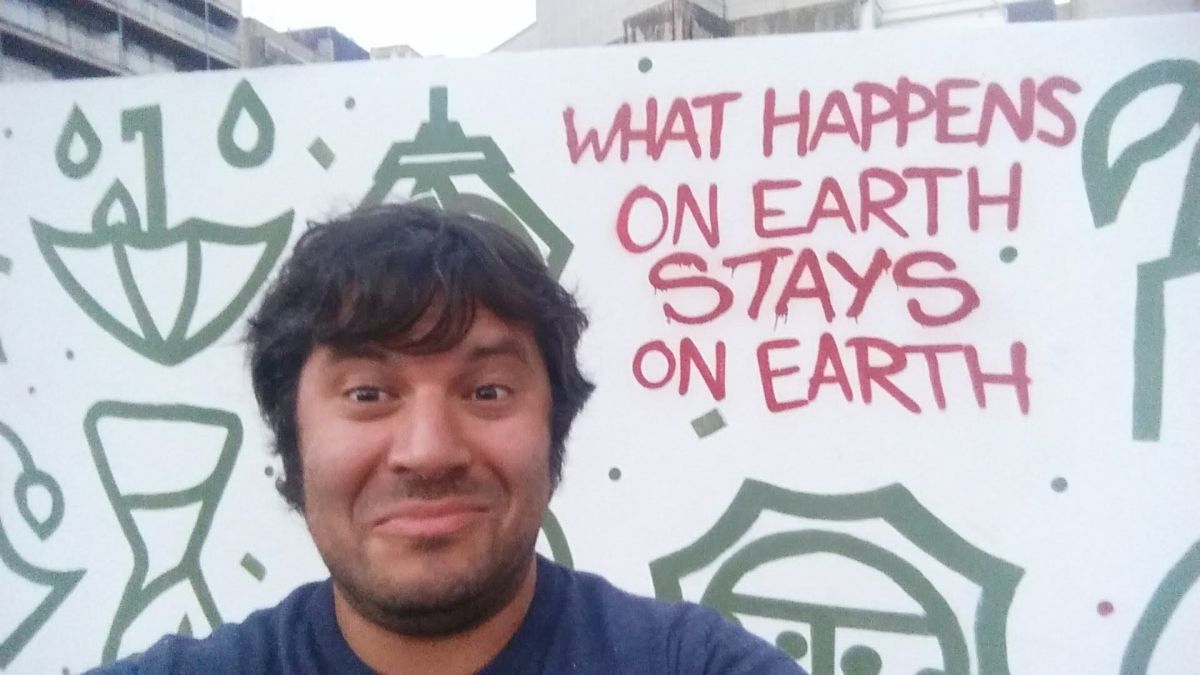
I hope you’ll continue to join me on my journey as I turn my blog into my career.  As my cover photo says, “what happens on Earth stays on Earth”, so I intend to make my mark.  By donating $20 now, you will get your first year’s subscription free.  Soon, the starting rate will go up to $36.

So I may not need roots that stick me to the ground and restrict my movement.  Some Zionist thinkers might not like this- that I choose not to give up my other identities, my Diasporic features.  But I’d rather be like Israeli poetess and fellow olah Leah Goldberg who speaks of the pain and joy of having two homelands.  I’m grateful to my friend Leora for sending me that poem when I needed it.

By understanding my varied roots around the world, I better understand myself, my people, my countries.  Israel itself.  An ongoing process and one in which I feel I’ve made great progress.

What does it mean to be Israeli?  That’s the title of this blog.  For me, after going several months without seeing another Israeli, Reut embodies what it means to be one.  In the best way.  It’s someone who after a short conversation, helps you find a hotel.  When you realize there is none, invites you to stay.  Who feeds you, who hugs you, who makes a bed for you.  And invites you out to hang with her friends the next day.

Roots can be tangled, messy.  But a home- you need one.  To venture out from, to explore from, to come back to at the end of the day or after a long and exciting trip.

The world is my oyster.  Who doesn’t like to taste a little treyf?  But most of the time, I don’t eat shellfish.  Which is why more and more, I feel Israel is my home.

The Jewish conundrum

I’m currently traveling through Romania.  Romania, for all its current and past political problems, is today a much, much more peaceful place in Israel.  You can’t really compare a 50,000 person demonstration in Bucharest with hundreds of rockets, racist legislation, land appropriations, occupation, and creeping fascism of Israel.  A state once semi-democratic but now plunging into the totalitarian fiesta that is the Middle East.  And once was Eastern Europe.  With vestiges creeping back today.  Perhaps it’s no wonder that the increasingly psychotic right-wing leaders of the former communist bloc have found themselves in bed with Benjamin Netanyahu.  Even as they spew anti-Semitism and racism in their own countries.  I suppose bullies attract bullies.

Before we dive in, here are some pretty pictures of my other homeland.  My great-grandmother was born in Bucharest and I’ve loved traveling here.  This is my third visit this year- I’m the first member of my family to step on its soil since she left 130 years ago for the golden shores of America.

Romania is gorgeous.  Or in the case of Cheile Turzii, “gorges” 🙂 .  I’ve been to Cluj, the silicon valley of Romania.  Literally- both a valley surrounded by hills and also the high-tech hub of the country.  Filled with lots of young, progressive people working in high tech.  But with way less pent up aggression than people in Tel Aviv.

I’ve been to historic Transylvanian cities, old synagogues, beautiful mountains.  Romania is stunning.  My ancestors must’ve really been struggling to want to leave here.  (Turns out they were- the government passed anti-Semitic legislation and had various state-sponsored pogroms the years my family left)

And for those of you still living in Israel, the other day I bought ice cream, a large bag of oatmeal, apples, bananas, milk, several yogurts, almonds, tomatoes, cucumbers, a Romanian home-made candy, cascaval cheese, turkey, whole-grain bread, and I forget how many other things.  For a total of $10.  Israel is stupidly expensive and the quality of food is definitely not better than here- but I suppose that’s what you get when your country is ruled by a bunch of nepotistic politicians whose rabbi friends make an extra buck off of every piece of food by deciding God approves of it.  Nationalism costs money- I suppose if you pour every ounce of your being into conflict and the idea that your country is super awesome, then people can take advantage of your distraction and charge you money for the things you actually need to survive.  But keep believing that patriotism is awesome.

Romania also knows a thing or two about ethno-nationalism.  It’s a country where, to this day, there’s actually a political party calling for outlawing the Hungarian minority’s party.  Because they claim the Hungarians want to hand over Transylvania to Hungary again.  Does this sound familiar, Israel?

It’s also a place with a long, storied history of anti-Semitism.  One which, thankfully, is much, much better today.  As I have never felt physically threatened and have never even faced an aggressive comment here.  Frankly, Romanians are way more polite and respectful than Israelis.  I feel emotionally safer with the average Romanian than a Jew in Israel.  And not just because they say “please” and “thank you”- although that’s nice too.

And Romania does have a mixed record on its Jews.  As I’ve been here, I have seen a little bit of anti-Semitic graffiti, I’ve heard some yearnings for right-wing politics, I even saw a billboard promoting some sort of Mein Kampf theater production.  Hopefully with the goal of educating people, but I’m honestly not sure.  And I was rather shocked to see the words on a billboard.

I also visited a synagogue.  I was hesitant to- I’m here partially to get space from Israel.  But I was in Sighisoara and I just wanted to take a peek.  Perhaps it was partially because when I asked a young woman where it was, she said there was none.  Even as Romanian nearly-Klezmer-sounding music blared out of her store (which was awesome- she said she’d check out Jewish music after).  I don’t think she was ignorant out of hatred.  I think she simply didn’t know there was a synagogue.  In a town of 20,000 people.  Sad.

I have to note that I’ve mentioned to many people here I’m Jewish.  And sometimes I’ve noticed feelings of guilt.  One guy, when I said my family was killed in the Holocaust, said it gave “shivers down his spine” and he told me about an Israeli he’s met who actually moved to Romania.  And to return to the synagogue in Sighisoara, the non-Jewish custodian of the synagogue was so, so proud to show it to me.  She even hummed the tune to “Tzadik Katamar”, a Jewish prayer written on the wall of the synagogue.  As we both motioned the steps to the Israeli folk dance.  For those of you who think, as I was basically taught at home and at synagogue, that Eastern Europeans are just a bunch of lousy bigots- you’re wrong.  The lousy bigots would be the people who taught you this lie- and the idea that you can generalize about tens of millions of people.  Many decades of evolution after most of our persecution took place.  Things have undoubtedly changed here for the better.  I feel much safer in Cluj Napoca than in Tel Aviv or London.

And there are problems.  Today I was at some sort of folk festival and I met a guy who spoke Spanish.  I was ordering food and having trouble conveying how many grams of meat I wanted (that’s a thing here- everyone should pick up on this.  You don’t have to guess how big your food will be, or be disappointed!).  He, like many Romanians, has worked abroad.  In his case, Spain.  In many others’, Italy or elsewhere.  Part of the reason things are so cheap here for me is that their economy isn’t so great.  Sending thousands of young people abroad in search of work.  Sometimes, to return.  Sometimes, not.

He starts talking politics with me.  One of the things I *love* about Romania is how un-invasive people are.  When I say I’m American or Jewish or tall or short or religious or not religious- people don’t dig.  In Israel, you can say you dislike tomatoes and enter into a 15 minute argument about a fucking fruit. (or vegetable- again, keep arguing).  Israelis like to pretend that respecting people is such an American concept, that “politeness” is fake.  But actually, my experience is Eastern Europeans are way, way more polite than Israelis.  So their barbaric habits must have other roots, because it sure ain’t from here.  I tried to cross the road the other day at 10pm, with no cars coming, and my friend said we should wait.  I asked why and he said: “because we have to respect the rules.  And be fair.”  As he returned me the fifty cents I overpaid for our meal.  I actually laughed out loud because no one has treated me with such dignity in a long time.  Then he gave me hand-picked apples from his family’s farm.  You can be generous and polite- it’s not that hard.

Now to return to the first guy talking politics.  He starts telling me about Romania’s corrupt politics and economic woes.  And how things were *better* under former dictator Nicolae Ceausescu.  While I can understand the former, the latter is a bit absurd.  While perhaps there was more economic stability under the communist dictatorship, this is a man who was executed by his own people for committing genocide and heinous war crimes.  Even Queen Elizabeth hid from him in bushes once.  A story so silly it has to be true.

What really irked me, besides the Middle East-style hijacking of the conversation to lecture me about politics, is that this dictator was a real ass to the Jewish people.  He confiscated over 1000 cemeteries and synagogues.  Jews had to *pay* to make aliyah, to leave the country.  While Jewish issues are hardly at the top of Romanians’ list of woes, to not even think about how this man made my people’s- any people’s- lives miserable is just abysmal.  And cruel.

I’m glad your pocketbook was better under your former dictator, but I’m not particularly happy he shat on my family’s heritage either.  Nor are the political prisoners he killed and tortured.

In the end, what I have to say is this: religion is a sham.  Judaism, Christianity, Islam, Buddhism, Hinduism- it’s all frankly an overcharged book club where everyone thinks their book is the best.  Nationalism, to me, is just another type of religion.  My flag, my country, my people are awesome, and everyone else comes next.  If at all.  Because all of these philosophies aren’t provable.  Like, frankly, the existence of God.  What evidence do you have for God existing?  If God was so self-evident, why do you have to teach children about it to believe in it?  And why do you need organized religion to enforce its tenants?

Religion, like all philosophies, can contain grains of truth.  It’s just that for me, they don’t come from an invisible deity who you’ve personally never met or seen.  But somehow miraculously spoke to a human being you don’t know thousands of years ago to tell you exactly how to live your life.  I presume among clergy there are some good people, but their profession lends itself to charlatans because they are selling something they cannot prove.  While not all things can be easily proven, I want the antibiotic I take to fix my stomach bug to have FDA approval.  And our societal ethics should be no different- based on facts or at least rational arguments.

When you’re convinced that your book is the best, you have to constantly beat people over the head with it.  Since, ironically, it is not self-evident that you are the best (which would go against the idea that you’re inherently awesome), you have to remind people over and over again.  Why would you need to evangelize something so blatantly obvious?

For example, did you know Unitarianism was born in Transylvania?  This is perhaps the most surprising thing I’ve learned in Romania.  I went one of their first churches.  Unitarianism, for those who don’t know, is today largely a peacenik left-wing church centered around social justice.  I even once went to a Ska concert at one in high school- pretty much anything goes.

Yet apparently, the first Unitarians were lunatics.  My tour guide told me they would go into churches and just start tearing down artwork and “idols” and burning shit.  Far from the birkenstock-wearing vegans that I know today.

So when I visited a Unitarian church here- one of the first- the pastor did exactly what every lunatic clergy in Israel did.  Tell me how they were the first, the best.

I had mentioned how I had Unitarian friends in America, that they would be thrilled to see I visited.  He smiled.  Genuinely.  And also proceeded to tell me how young the American church was and that the Hungarians were the first Unitarians.  Implication- the real Unitarians.  Unitarians!  Even the friggin Unitarians have to argue about who is the first in their book club.  And they are probably the most relaxed readers.

This kind of stupid narcissism is inherent to any ideology which believes it is perfect, the best, superior.  The 10 minute interaction with the Unitarian pastor was mostly harmful because it reminded me of much longer, more aggressive interactions with the brilliant Jewish, Muslim, and Christian faith-peddlers of Israel.  Romanians, even at their worst, are still way less intense than the average Israeli.

I once posted an Arabic video in a Facebook group to have a guy from Yaffo randomly message me on Facebook voice notes of him saying “that’s great you want to learn Arabic.  Here’s the call to prayer.”  As he Allahu-Akbar’ed the hell out of my phone.  Many Muslims are shocked that I’ve read the Quran and not converted to Islam- because it’s such a perfect book I must have “seen the light”.  And claimed their religion has never persecuted Jews- despite centuries of evidence.  I had a Jewish guy ask me for money to buy food for Shabbat- and then tell me how awful the Sudanese “leeches” were in South Tel Aviv where I lived.  I even had a Jew tell me once that the worst Jew is better than the best goy.  And another Jew told me- knowing I was Reform- that Reform Jews are Christians (why is that an insult?).  Somehow Christians are stupid enough to get into this battle when they are 2% of the population.  I’ve met Orthodox Christians tell me they are the “original Christians”.  Not like those Catholics…  I’ve even had Aramaic-speaking Jerusalem Christians say they are the real Arameans, not the Arameans in Northern Israel.  Christian priests literally get into fist-fights in Jerusalem every year over who gets to light some sort of flame in the Church of the Holy Sepulchre.  Literally coming to blows over a fucking match.

In the end, I have religious friends and not religious friends.  I’m not religious- I used to identify as religious and am not anymore.  If this blog was hard for you to read as a religious person, I can understand.  I also feel it’s important to share my truth.  What I hope is that even if you read a different book from me (frankly, I’m a fan of reading everything), what I hope is you take from it kindness and generosity.  I personally have found it detrimental to limit myself to one book, one ideology in informing my world view.  And that the idea of a deity above me, rather than the human beings beside me, has led me to feel small and to make some poor choices.  And now, I feel more empowered and happy.

So in the end, when it comes to Romania, I’m not a Jew because I believe in God or because I think we are the best.  I’m not a nationalist.  I’m a Jew sometimes because people force me to be one.  When I see a desecrated cemetery, like I did in Cluj, my inner Jewish spirit arises.  My empathy for my people, for my ancestors, wells up.  My desire to protect.  Just like if I saw a Muslim cemetery being turned into an apartment building in Yaffo.  That is a true story.

What I believe in, then, is humanity.  Is treating each other with respect.  When someone yearns for an anti-Semitic dictator to my face, I am a Jew.  When someone bulldozes an Arab home, I’m an Arab.  When someone throws coffee in someone’s face for wearing a hijab, I’m a Muslim.  When ISIS butchers Christians in Iraq, I’m one of them too.

It’s not because of God or any book.  It’s because I’m against suffering.

So this Rosh Hashanah, I won’t be asking God for forgiveness or beating my chest or dressing in a suit to impress a congregation half-asleep as a rabbi preaches.  Sometimes a good message, sometimes not.  Always one which includes an appeal for donations.

What I will be doing this Rosh Hashanah is exactly what I try to do every day.  Be kind, give a smile to someone who needs it, explore, reflect, enjoy.

Because I’m not a religious leader, I won’t tell you how to spend your holiday- if you observe it at all.  Instead, I’ll hope that you follow the path that brings you joy and understanding.  Nuance and hope.  And the ability to feel sad and angry at hatred, compassion for those being hurt, and the realization that we make choices each day. Which can bring light into our lives and into the lives of those around us.

Instead of fighting over a flame, let’s grow its light.

p.s.- the cover photo is a synagogue in Targu Mures.  Because there are good people in Romania and around the world working to preserve Jewish heritage, even as others wish to destroy it.  I am grateful to them and honored to visit.

What’s God got to do with it?

For those of you who don’t watch the news regularly, Israel has been super stressful.  Between Hamas’s rocket launches, the Syrian refugee crisis brewing on our border, the Syrian civil war which you can hear from Israel’s north, plus earthquakes and the usual backdrop of yelling and frenetic bargaining.  There’s cool stuff here and beautiful nature, but let’s not kid ourselves- between all these problems plus recent homophobic and racist legislation, living in Israel is “lo pashut”.  It ain’t simple.

So many times people come here to “solve the conflict”.  The first question to them should be “what conflict?”  As in which one.  Between secular and Orthodox Jews?  Between Ashkenazim and Mizrachim?  Between LGBTs and the conservative religious establishment?  Between Arabs and Jews in Israel?  Between Israelis and Palestinians?  Between Druze and Muslims and Christians and Jews?  The religious conflicts or the ethnic ones?  The wealthy and the poor?  These are not “stam”, as we say in Hebrew.  They are not just the conflicts of every country.  They are a blend unique to here.  Israel has the widest gap in wealth among developed countries with the exception of the United States.  And a much higher rate of political violence and terrorism than any Western nation.

When I arrived to Israel, I came as a deeply religious Reform Jew.  I would never have called myself deeply religious (although some friends having jokingly called me ReFrum, a pun on the Yiddish word for “pious”), but most of my friends would say I’m pretty Jewish.  I’ve lived and loved Judaism since I was a young kid and discovered its heritage and magic.  And through many tough times, I’ve used that magic to try to pull me through and give me hope.  And many times, it did give me hope and a sense of community when I lacked one at home.

Although it’s taken me experiencing Israel to understand the limitations, even the disadvantages of religion.  Judaism and all faiths.  For religion to me is not something inherently bad (or inherently good).  The way you interpret religious text says at least as much about you as it does about the text itself.  Someone can look at the Bible, Torah, or Quran and come to radically different conclusions, some much more humane than others.

It’s also true that not all conflicts are about religion.  The Soviet Union was an atheist government (Russians today are still disproportionately not religious compared to the rest of the world).  And it still managed to butcher millions of people.  Atheists can manage to be quite violent and extremist- even orthodox in their rejection of faith.  A kind of new religion to supplant their old one.

What I’ve noticed in Israel is that religion is quite often a force for evil.  Not because religion itself has to be evil (although by definition it leaves some people in and some out).  It’s because in practice, it often leads to conflict.  While sociological factors often underlie what appear to be purely religious strife, it would be naive to pretend religious dogma plays no role.

Look at the main faiths here- the monotheists- Judaism, Islam, and Christian.  Each one has elements of humaneness and kindness.  Tzedakah, Sadaqa, charity.  Compassion for the weak, the stranger.  Even at times calls for varying degrees of religious pluralism.  And a repeated emphasis on being morally upright and treating your neighbor with respect.

At the same time, we need to be intellectually honest and recognize each of these faiths’ proclivity for exclusivity and superiority.  In Christianity and Islam, this revolves around recognizing the holiness of the main prophet (Jesus or Muhammad) and pursuing the conversion of all nonbelievers.  Sometimes this was done by sword, other times by incentive, but the final goal, even among the most pacifistic believers, is for everyone to believe in your religion.

In Judaism, the superiority plays out differently.  We are God’s “chosen people”.  Israel, our promised land.  These are birth rights.  For being Jewish.  If you want to join us, you can, but it’s quite hard.  It has always been.  And is increasingly so in Israel where the rabbinate veers far to the right of the Jewish mainstream.

In other words, the superiority argument in Judaism is an exclusive one.  It’s not that we want everyone to be like us- we’re explicitly not an evangelical religion (which I like).  The flip side, however, is that we’re quite an exclusive club.  It’s hard to join and harder to be accepted.  And we have a sense, at least among the religiously inclined, that God chose us, our language, our beliefs above all other peoples.  If you think I’m making this up, simply look at the aleynu prayer or Friday night kiddush.

There are progressive religious Jews who have, to varying degrees, changed the liturgy and how it’s taught to be more inclusive.  That’s cool.  The same could be said with certain Christian sects and a small but emerging community of Muslims.

Overall the same problem continues though.  These progressive-minded communities are, without a doubt, small small minorities in the scheme of world religions.  The vast majority of the world’s religions and religious people are against gay marriage.  Even progressive traditions struggle to incorporate women equally in religious leadership.  While you could say that there are cultural factors at work (understood), it’s also true that on these and other issues, “nonbelievers” far outperform their religious peers.

In the United States, the only religious group that is more supportive of gay marriage than non-theists is Buddhists.  Jews, interestingly, are not far behind, perhaps owing to their decidedly progressive religious tendencies compared to their Israeli brethren, where only 40% of the public believes we should accept homosexuality at all.  It’s worth noting that a large portion of American Jews are not religiously Jewish as well.

When I think of specific examples here, I have too many to choose from.  The Muslims who looked at me in disbelief when I said I had read the Quran (and not converted to Islam).  The Muslims who told me Arabic was the first language and all languages come from it (an absurd claim to make to a polyglot- that’s sacrilegious).  The Muslims who laughed at the idea that Jews had ever lived here.  The Muslims whose Facebook profiles were adorned with Palestinian flags, the Al-Aqsa mosque, and Islamist iconography.  Not to mention the one guy who had written Arabic posts mocking Holocaust Remembrance Day- that was a difficult one for me to confront, but confront it I did.  This Jew speaks Arabic.

Before you indulge yourself in bashing Muslims, let me tell you about the Jews who said the Torah *justifies* expelling refugees, even Arabs.  The Christians who told me not to waste time dialoguing with Muslims because they could give me a more “realistic” picture of what’s going on here.  Or the Christians who said Muslims are animals who breed entire tribes of children to take over the land.  Or the Druze man who cut off all contact with me when I told him I was gay- he threatened that if I didn’t do so, he’d cause me “problems”.  Not sure what those would be, but considering I travel a lot in Druze country, I wasn’t ready to take the risk to my safety.

Are secular or atheist people just as capable of hatred?  Perhaps- depends on the individual, religious or not.  In fact, some atheists can be just as orthodox in their certainty and thinking as any religious extremist.  Herein lies the danger.

It’s just that most of the world’s extremism and orthodox thinking is concentrated in religion and perhaps hardcore nationalism.  Of which there is a potent mix here among so many elements of society in many different directions.  Solving Israeli and Jewish nationalism by way of Palestinian nationalism, for instance, will do nothing but create more conflict and bloodshed.  And I do believe that in the end, most people, religious or not, really do want a good life.  Even if some of their beliefs are getting in the way of that.  Humans are nothing if not complex.  But I do have hope.

The point is religiosity is in the eye of the beholder.  We could argue that the examples I gave of egregious hatred are based on a selective reading of religious texts.  True.  But so is reading texts only looking for acts of kindness.  Conquest is written into the Bible, Torah, and Quran.  It is not a new phenomenon, nor one that religious people need to invent today.  The Crusades, the Islamic conquest of the Middle East and parts of Europe, and Isreal’s expansion into the depths of the West Bank (in some respects, its founding)- these are all rooted in long religious traditions.  We can say distorted, complex, for sure.  But eminently present.

In the end, religion can provide comfort, community, and hope.  It can, and does, mobilize some people for good.  Do I personally think it’s worth all the conflict it contributes to?  Maybe not.  What good is the continuation of Judaism if it becomes nothing more than a series of rituals devoid of ethical meaning?  What does Christianity mean when it is used to force gay youngsters into “conversion therapy”, and often suicide?  Why is Islam ultimately beneficial when it is used to massacre Yezidis, Christians, Jews, and others?  Even other Muslims who don’t agree with them?

It’s not because all religious people are like this.  Or that atheists are saints.  I’m not exactly sure where I fall myself.  I’d say that as I write this, perhaps I just don’t believe in God.  I believe in what uplifts the human spirit.  I believe in kindness.  And I don’t believe in divine retribution nor in the sacrosanct nature of a document so clearly written by humans thousands of years ago.  Which may contain some wisdom, but not exclusive authority nor the right to use it to butcher other human beings.

My overall point is that orthodox thinking, the idea that one set of value is always right- that is a problem.  Even if not all religious people end up overly protective of their sect’s interests (as opposed to those of humanity as a whole), the idea behind it is problematic.  When put into practice, religion more often than not divides people who could share other things in common.

Even though Judaism today in Israel is becoming more and more nationalistic and, with the state’s help, more uniform, it was not always this way.  What’s most perplexing about the degradation of religion in Israel is that Judaism was once the playground of questioners.  Of people who debated and divided and built energy off diversity.  So that whether you believed in the God of Abraham or not, the process itself was unique for its depth of heterodoxy.  And at times, its willingness to make room for dissent.  Moreso than any other religion of its time.

So one of the greatest casualties of religious conflict in Israel is not just the Filipino kids who will never get citizenship.  Nor the Sudanese refugees who will be deported.  Nor the Reform Jews who can’t pray together at the Western Wall.

It’s Judaism itself.  And perhaps, perhaps my belief in it.

The universe is full of possibility and I’m exploring.