

Győr is not a place many tourists visit compared to Vienna, Budapest, and Bratislava. It is smaller and there aren’t as many great “sights”. That’s what attracted me to it. Everyone enjoys a beautiful castle or cathedral- myself included. But I also like seeing how people live their daily lives and escaping some of the tourist crowds I found myself in during other parts of my trip to Central Europe.
After hopping on a quick train from Vienna, where I had explored the past and present of the local Jewish community, I headed to Hungary for the day. A few things caught my eye when I arrived to Győr. First of all, there were no organized tour groups. Second, the town was clean and safe. Third, the baked goods and goulash were delicious. And fourth, it was a relaxed, affordable city with a slow pace of life.
The old town streets and churches were beautiful and had a lot of charm.
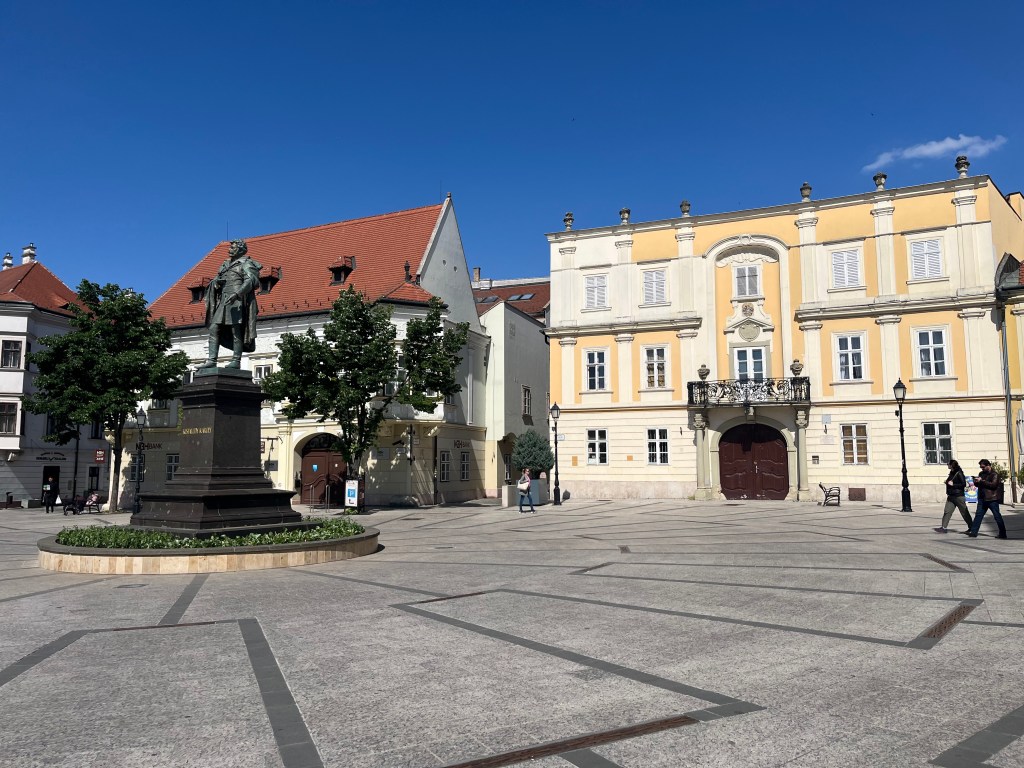
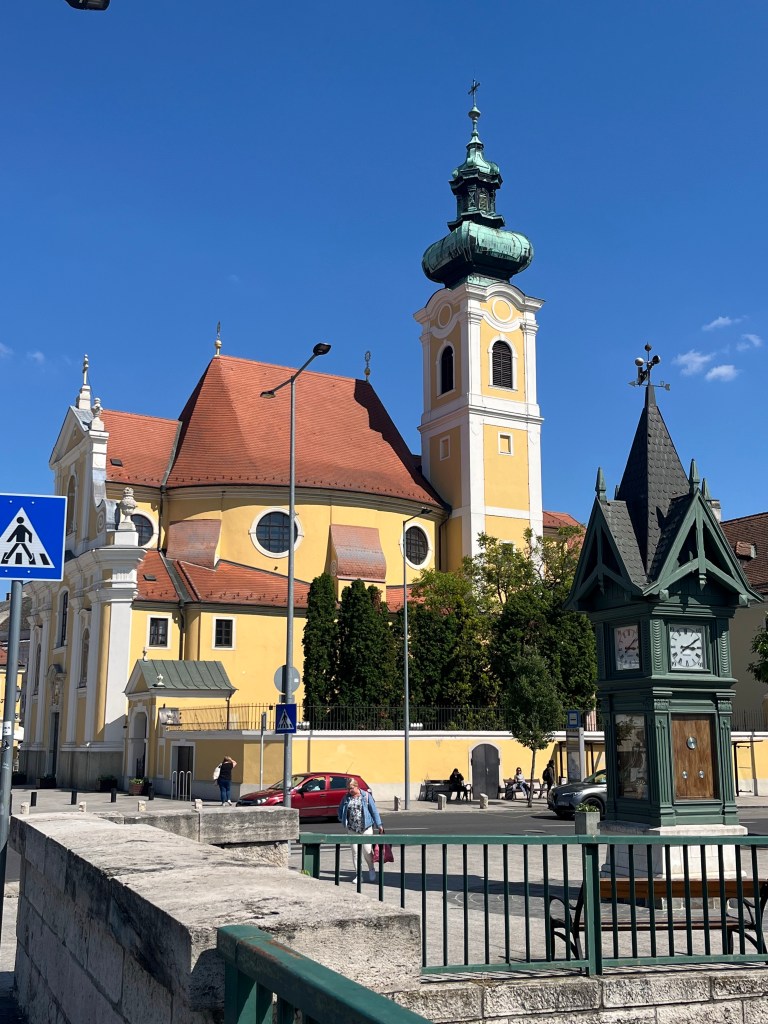
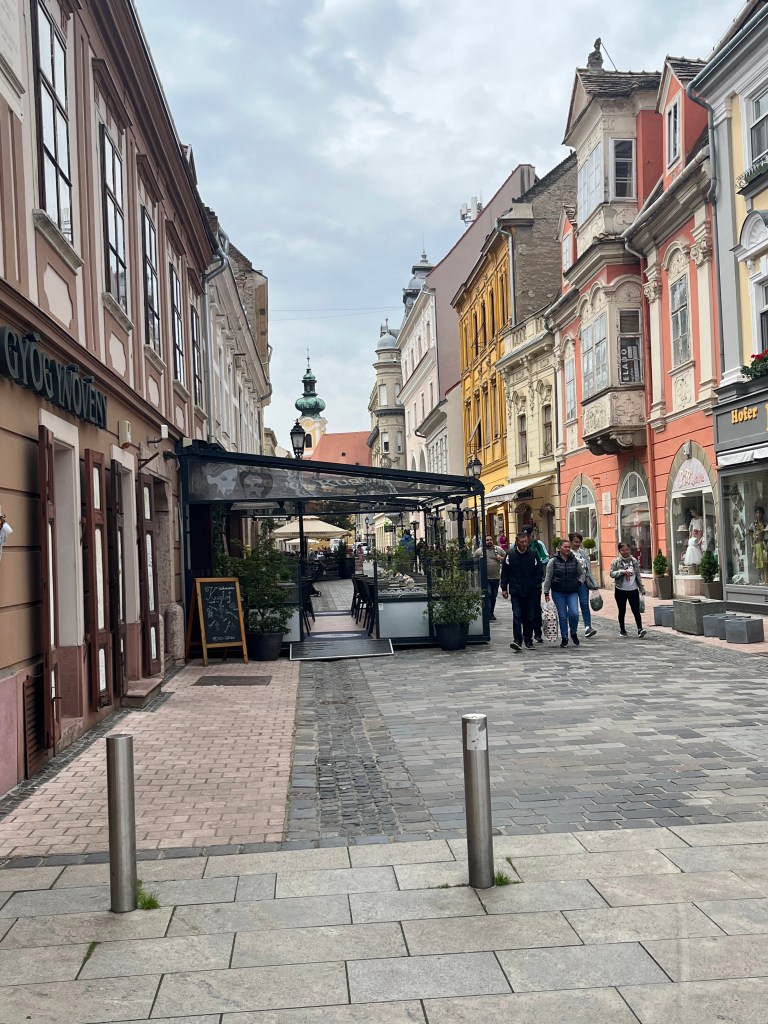
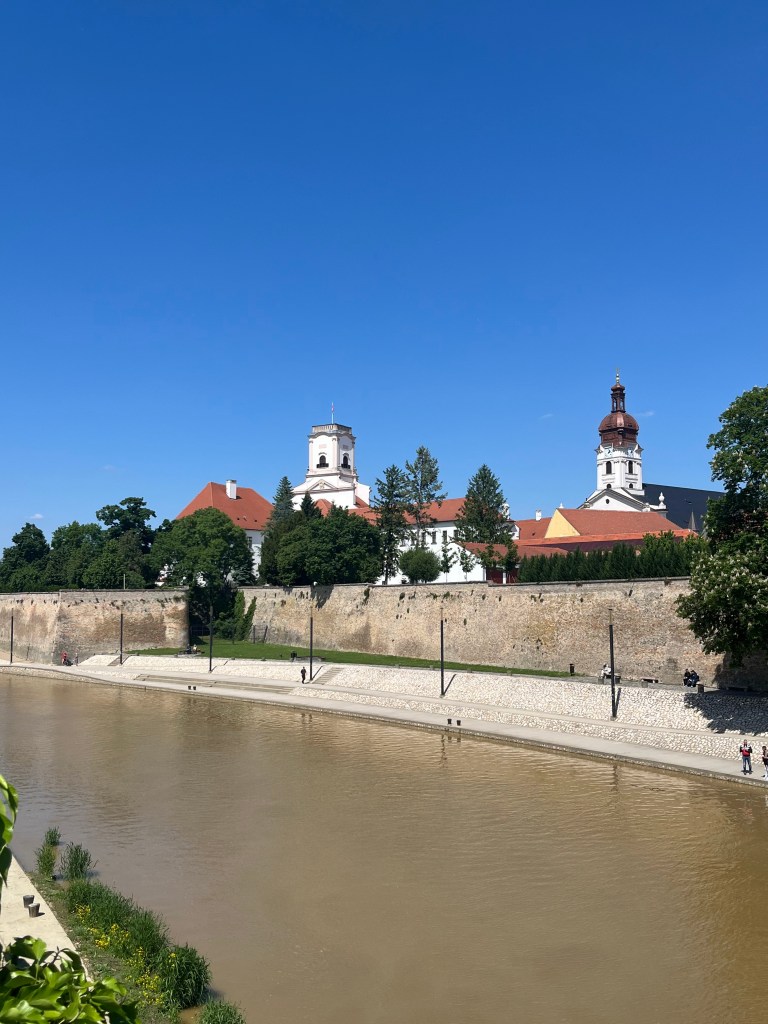
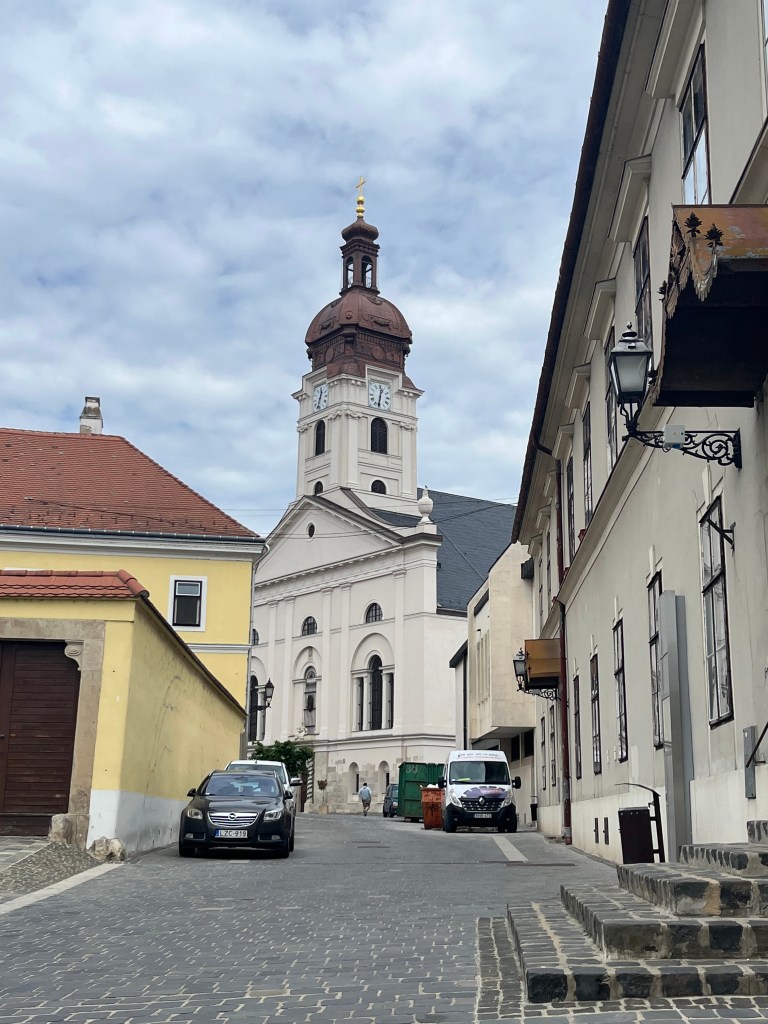
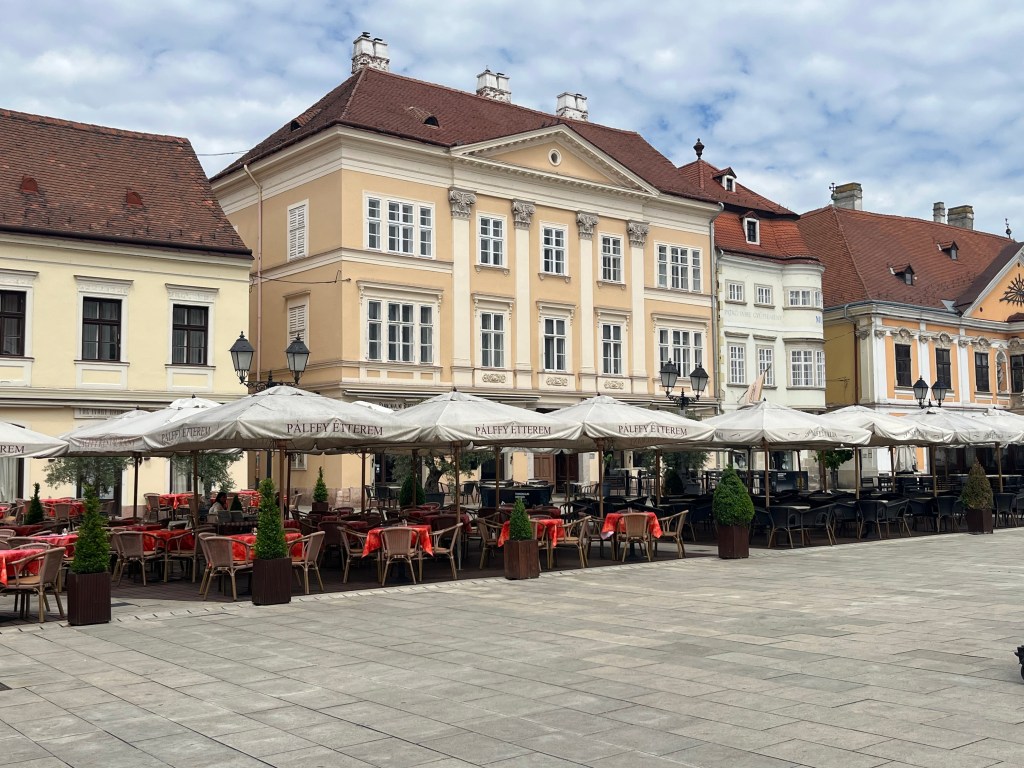
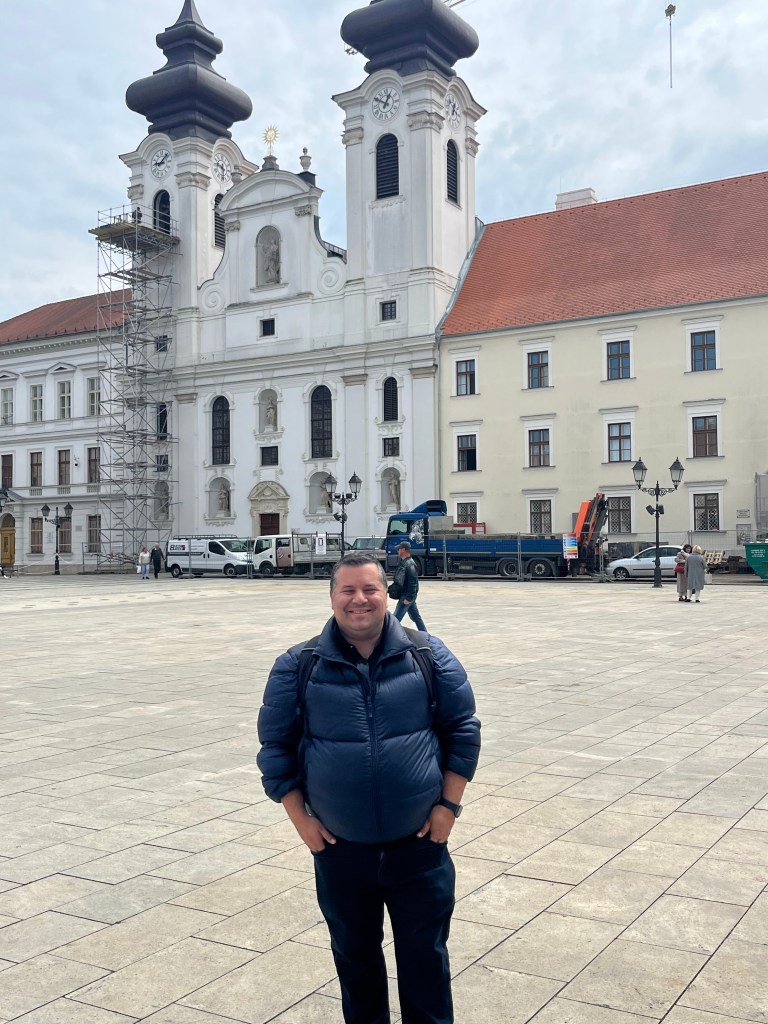
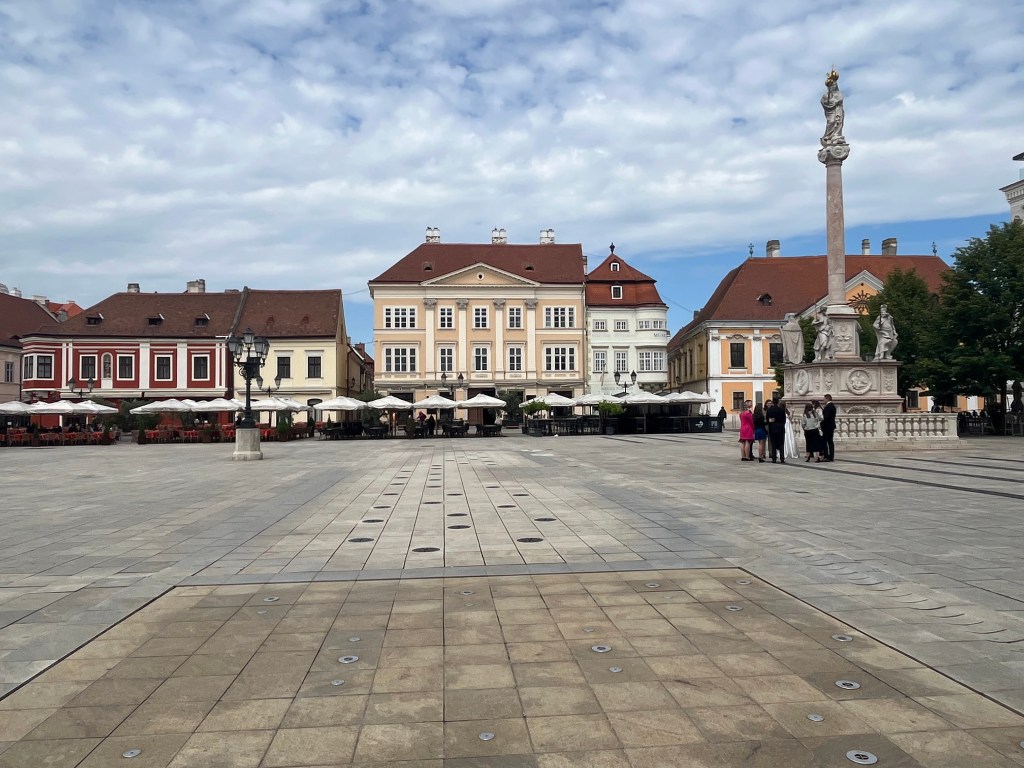
After a bowl of delicious goulash (I later learned that there are different styles of goulash depending on where in Hungary or Central Europe you are!), I headed to the main reason I wanted to visit Győr – its magnificent Old Synagogue.
Along the way, I stopped at a used bookstore and asked if they had any Jewish books. I found a bilingual Hungarian-Hebrew copy of Talmud commentary from 1937. You could still see the former owner’s notes inside – it was incredible. I felt connected to this history – my history – because I’m part Hungarian as well. I wonder what became of the owner of this book or their family. 1937 was an ominous year and the ones that followed were only worse for the Jewish community – of Hungary and of Europe as a whole. I felt I had saved a book and I plan to learn more about this treasure, a testament to my people’s history.
I finally made it to the Old Synagogue. It is a beautiful, beautiful building that dominates the part of the city across the river. Once home to a thriving Jewish community of almost 5,000 (8% of the population in 1941), few members survived the deportations to Auschwitz during the Holocaust. I encourage you to read more about the history of the community here.

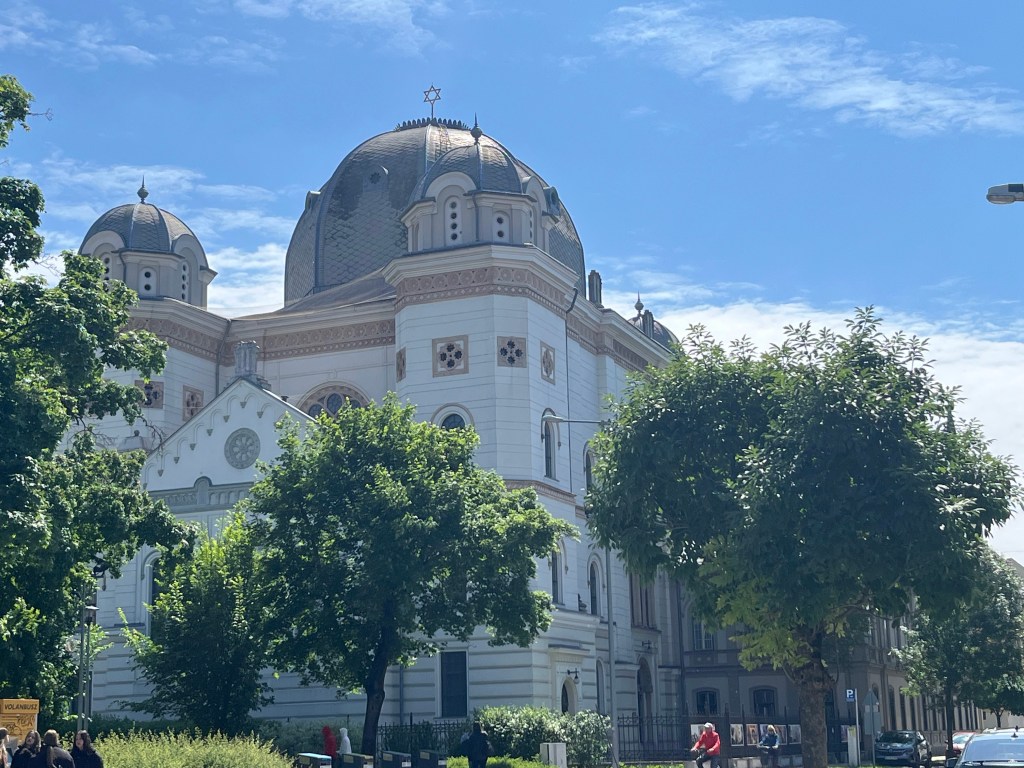

Before going inside, I bought a ticket – it’s now considered a museum. Sadly, the community does not appear to be large enough to have a regular, active presence there from what I could tell. It’s largely used as a historic site and a music school.
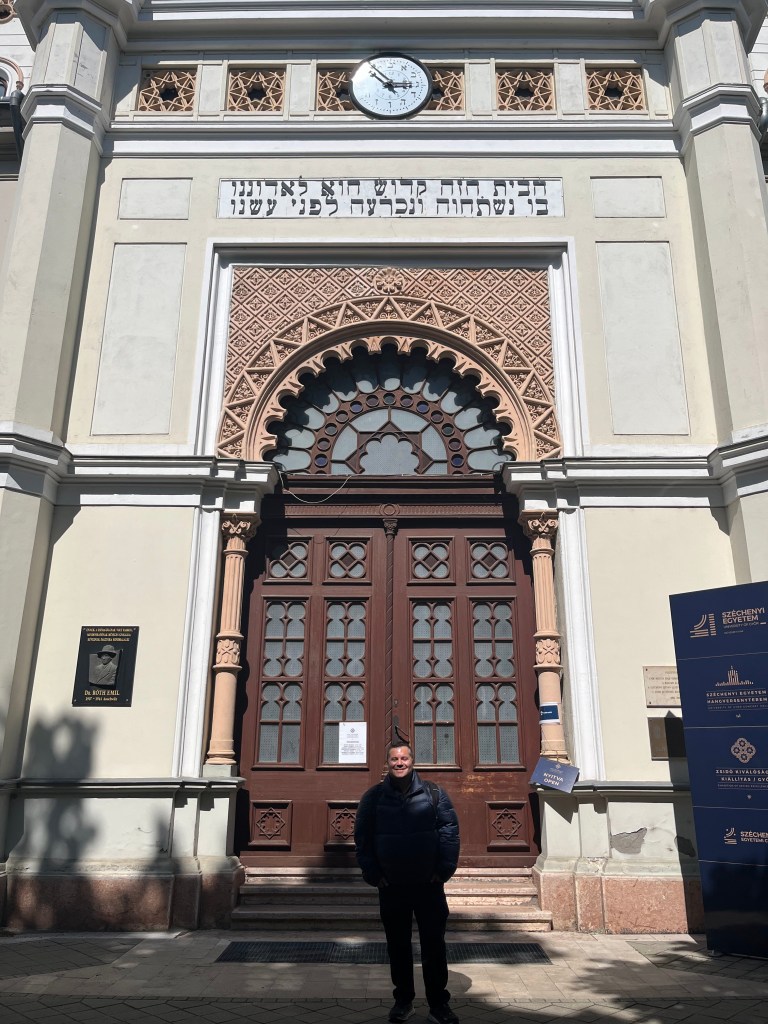
In fact, when I entered the synagogue, I heard a piano playing the most beautiful music. While it is sad that it is no longer an active synagogue, I am happy that it is being used to promote the arts, something that hopefully brings us some shared humanity during dark times. I met some of the music students who were kind enough to take a picture of me at the door to the synagogue.
Now comes the real treat. The inside of the synagogue is absolutely stunning. The architecture was inspiring. You can almost hear the cantor’s booming voice filling the room. The aron hakodesh, or ark where the Torah is placed, is almost Ottoman in style and gleamed as the lights shone down on the pianist and his teacher.
Here are some pictures:

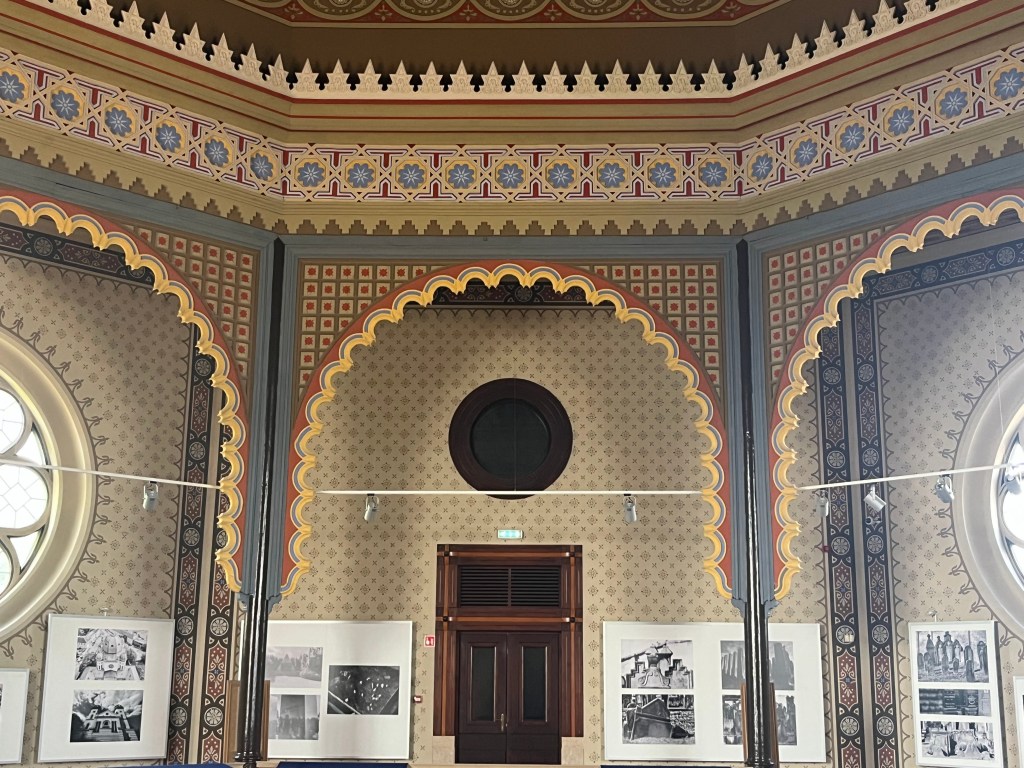
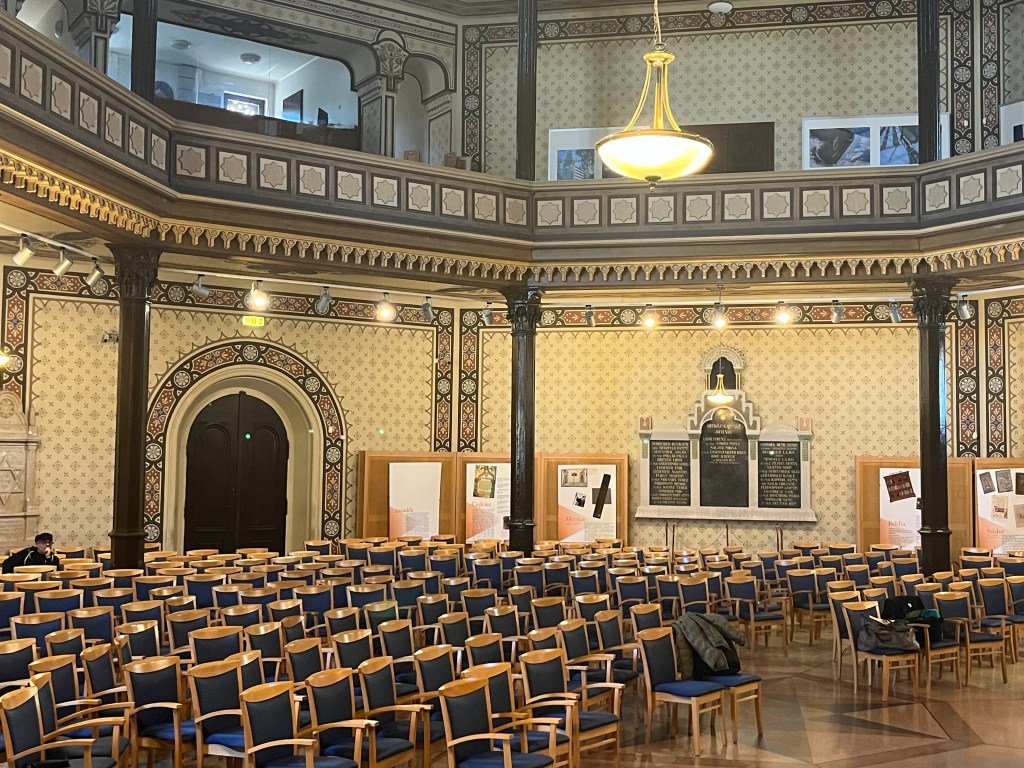
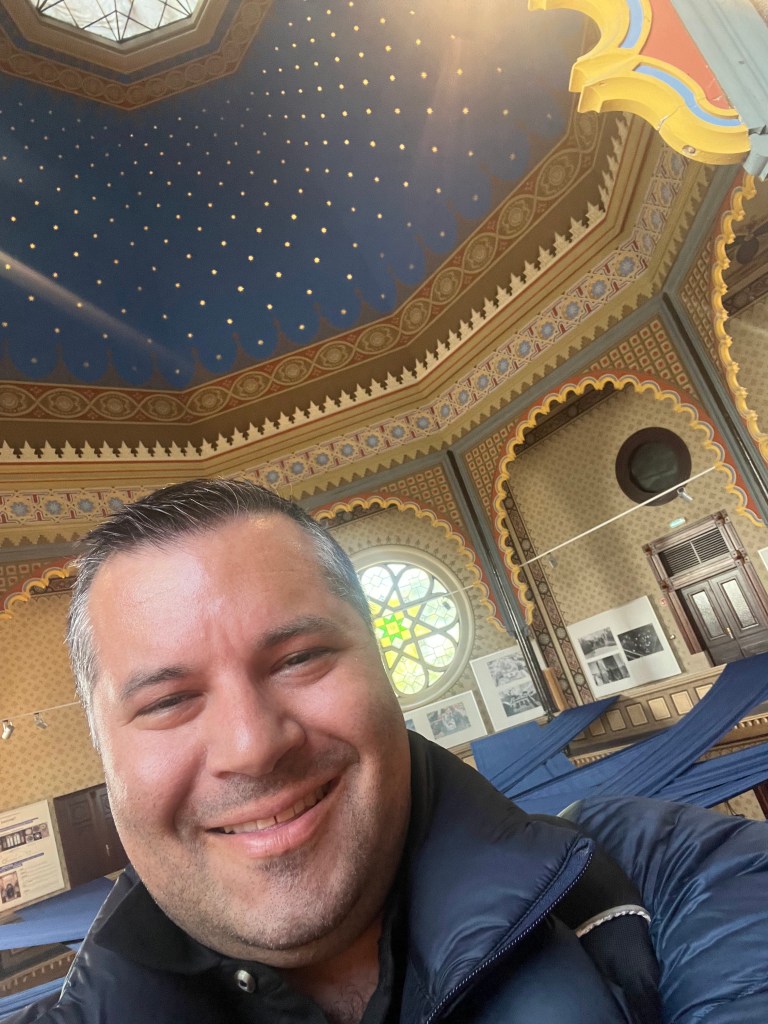
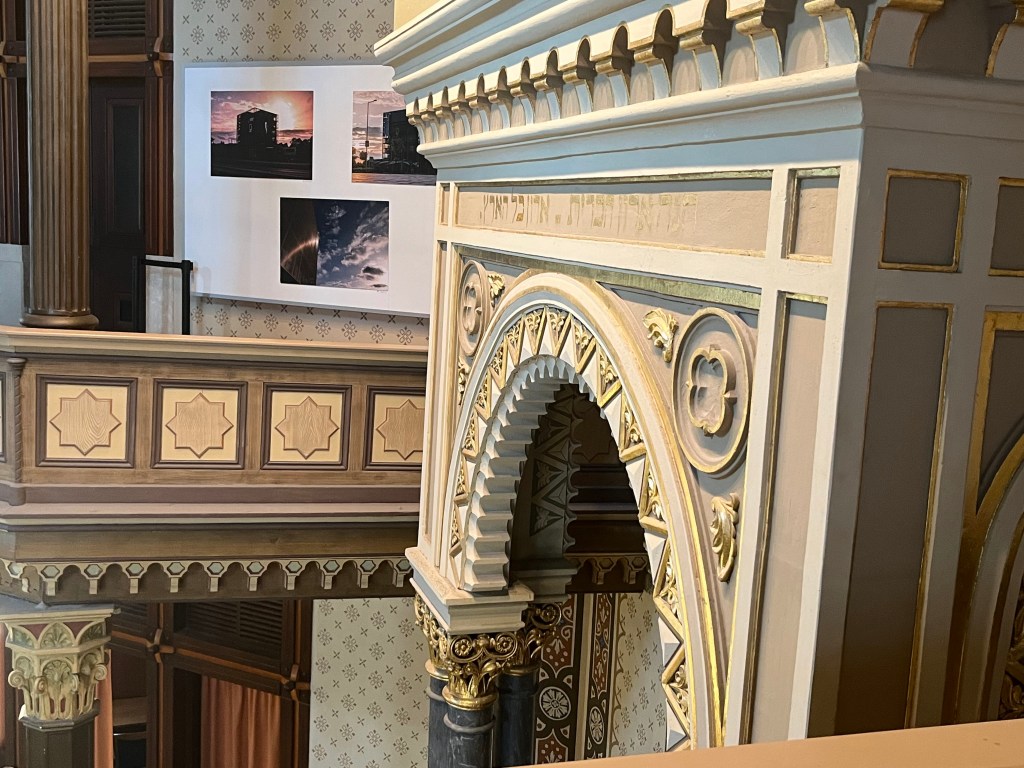
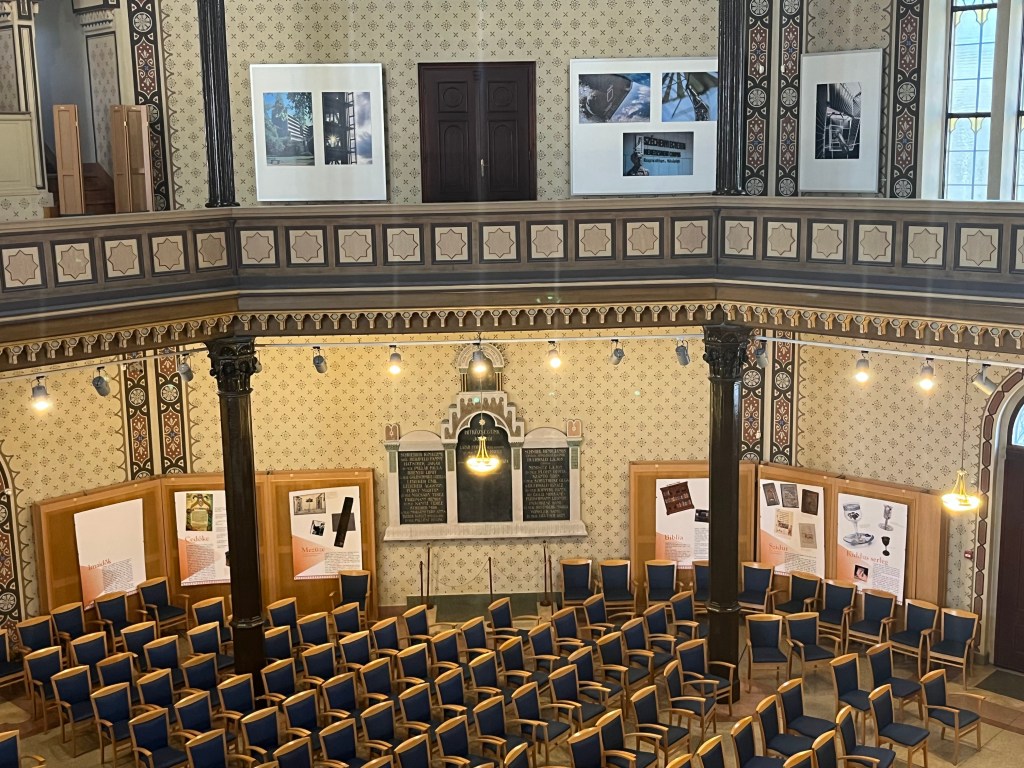
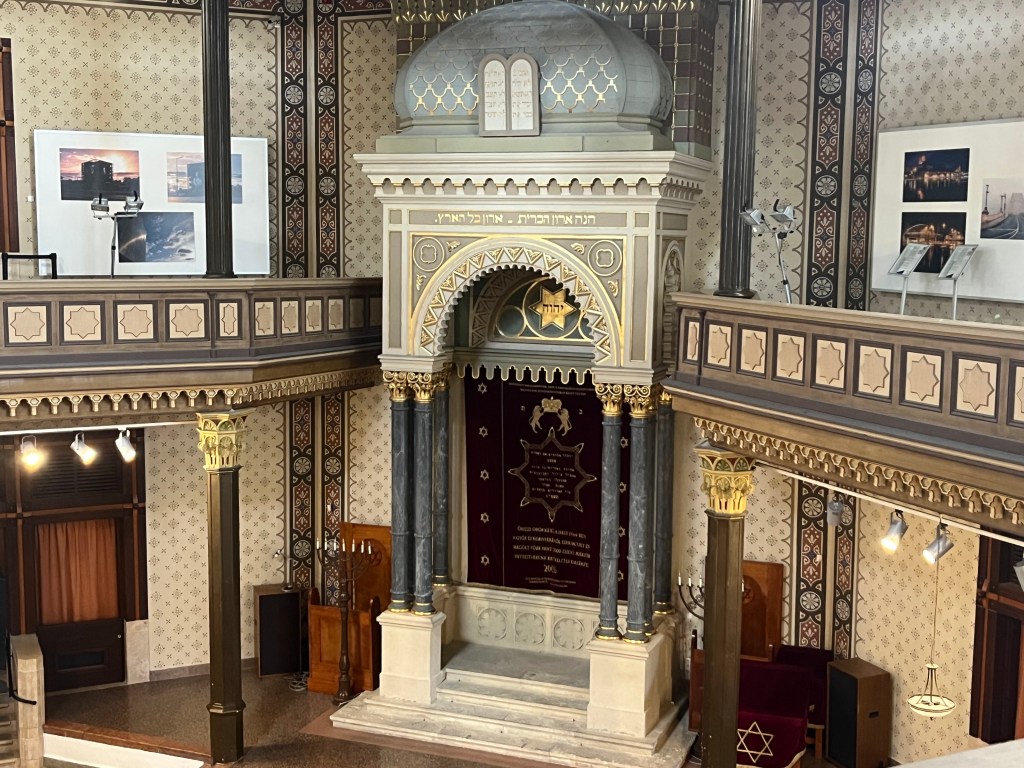

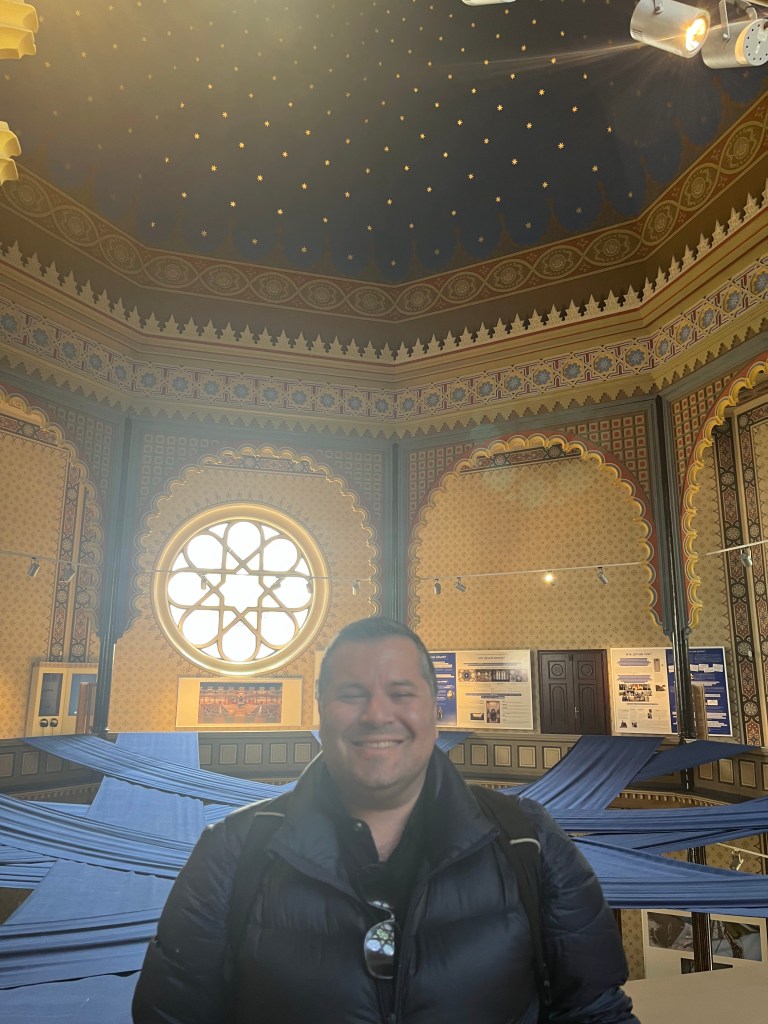
Other than the pianist and his teacher, who I smiled at and gave a thumbs up to (the music was gorgeous), I had almost the whole place to myself. What a treat.
I wish I was there with the Jews of Győr. Perhaps cousins of mine, fellow Hungarians who are no more. But I couldn’t be more grateful for the opportunity to explore my heritage in this beautiful city.
Hungary gets a bad rap for political reasons. And I think it’s blatantly unfair to judge a whole country because you may disagree with some of its leadership’s policies.
The fact is as a Jew, I felt safer in Hungary than I do in Washington, D.C. So for all of Hungary’s problems, I wish people would see the country with some more nuance and go visit to see it for themselves.
Because I, for one, love Győr. And I’m glad I made this detour from the more well-worn tourist path to explore a place of deep significance for my people and my Hungarian Jewish heritage.
 Planting Roots Bearing Fruits
You must be logged in to post a comment.