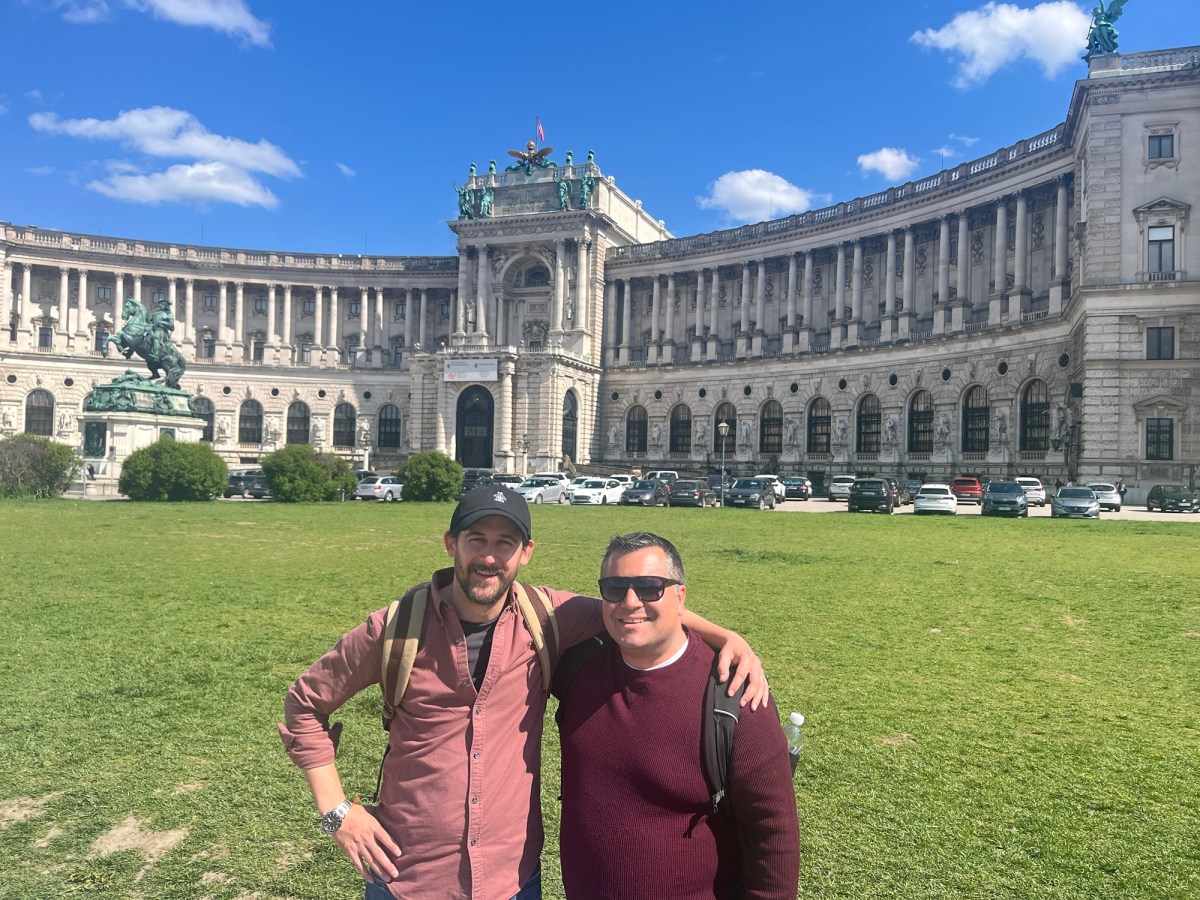
Vienna packs in more Jewish culture, diversity, and vibrancy for a city of its size than anywhere I’ve ever visited. In just one week, I met an American-Israeli looking for a fresh start during wartime, a Hungarian-Austrian rediscovering his Jewish roots, a German Yiddish activist, a Haredi man and son of Holocaust survivors, an Austrian Yiddish poet, two Italian non-Jews exploring conversion, and an Argentinian Jewish immigrant. And there are only 8,000 Jews here! Less than in the suburb of D.C. I grew up in, but bursting with energy from all over the globe!
Read to the end of this blog. Because there’s a pretty amazing surprise towards the end.
Let’s start at the very beginning, a very good place to start. OK, I’ll save any further Sound of Music references for my blog on Salzburg, but I couldn’t resist!
Philip is a Yiddishist – an activist speaking, reading, writing, studying, and promoting the Yiddish language. He is originally from Germany but has studied the language all over the globe and actually knew Yiddish speakers who I’m friends with back in the States. It really is a small Jewish world!
He was kind enough to take me on a walk through Leopoldstadt, the former principal Jewish Quarter of Vienna. Vienna used to have a massive 180,000+ person Jewish community before the Holocaust. To say its influence on the society was significant is a deep understatement. Musicians, psychologists, writers, composers, the list goes on and on. It includes world-renowned people like Sigmund Freud. And if you look at this list, not a small number of Adlers!
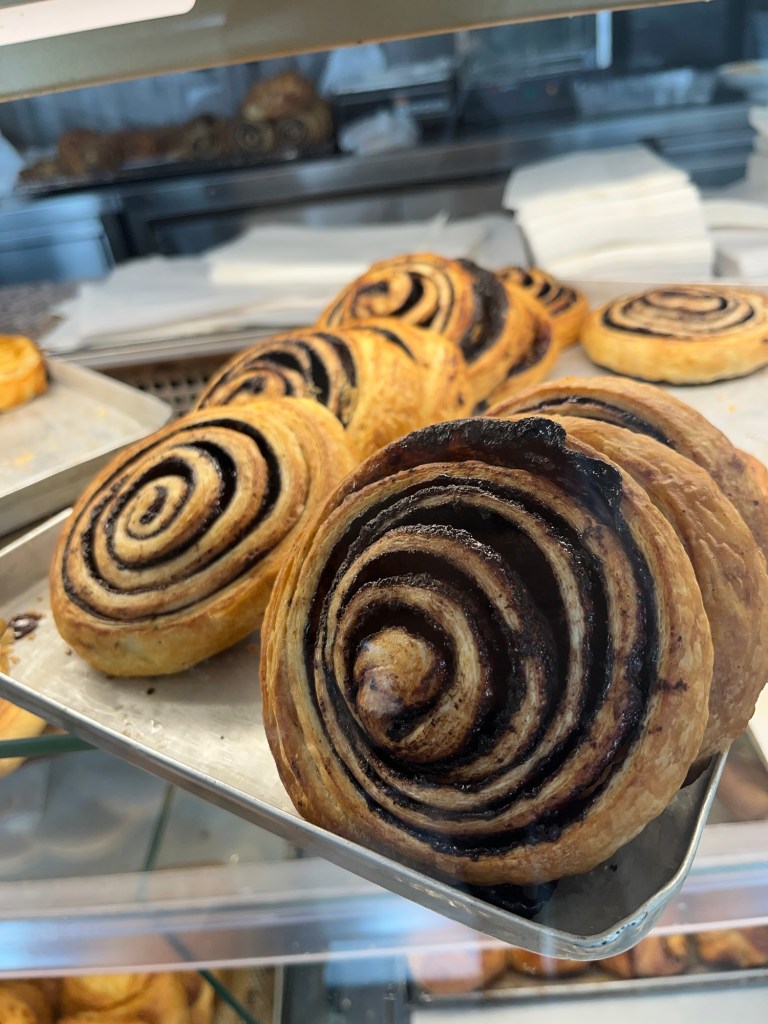
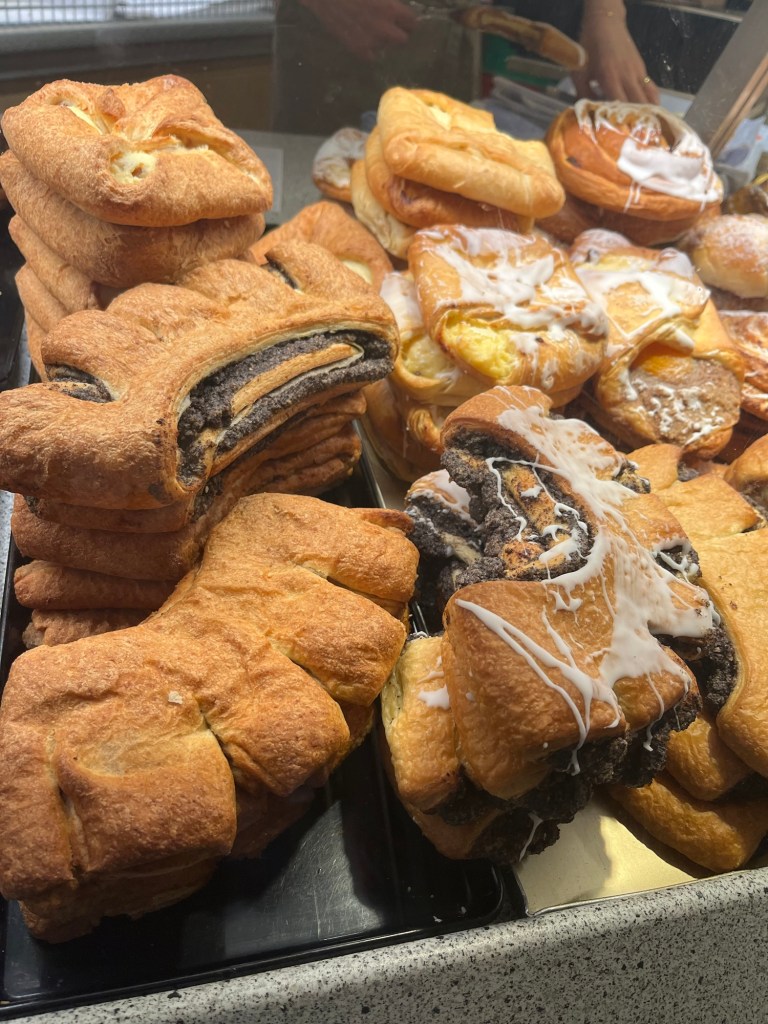
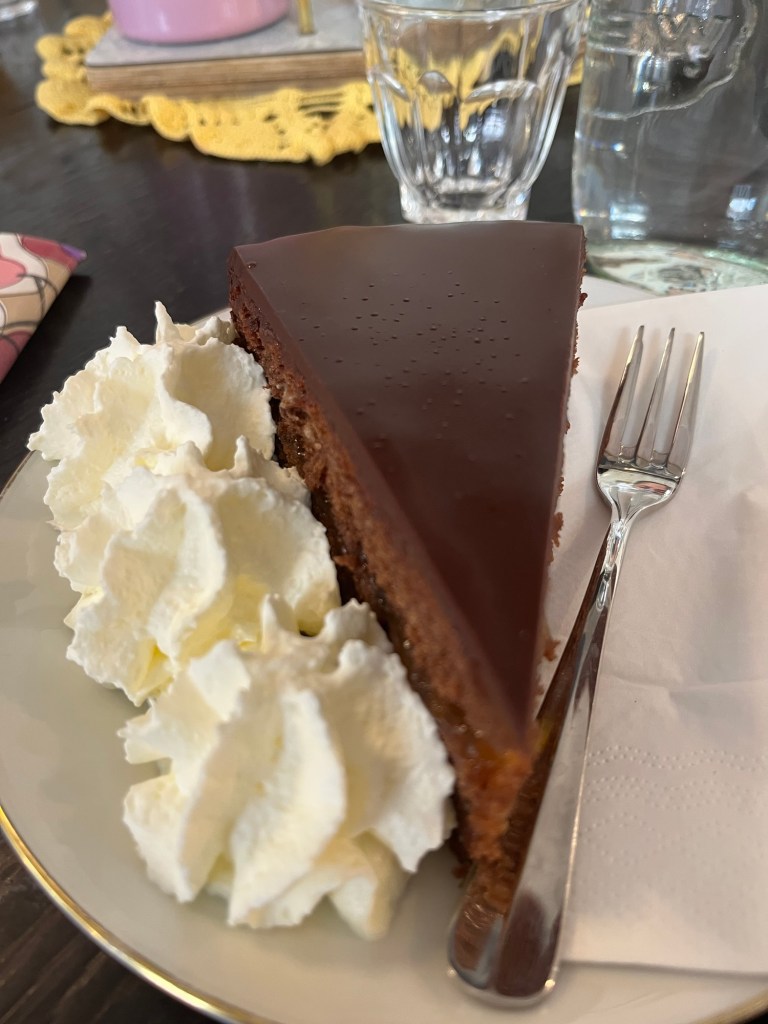
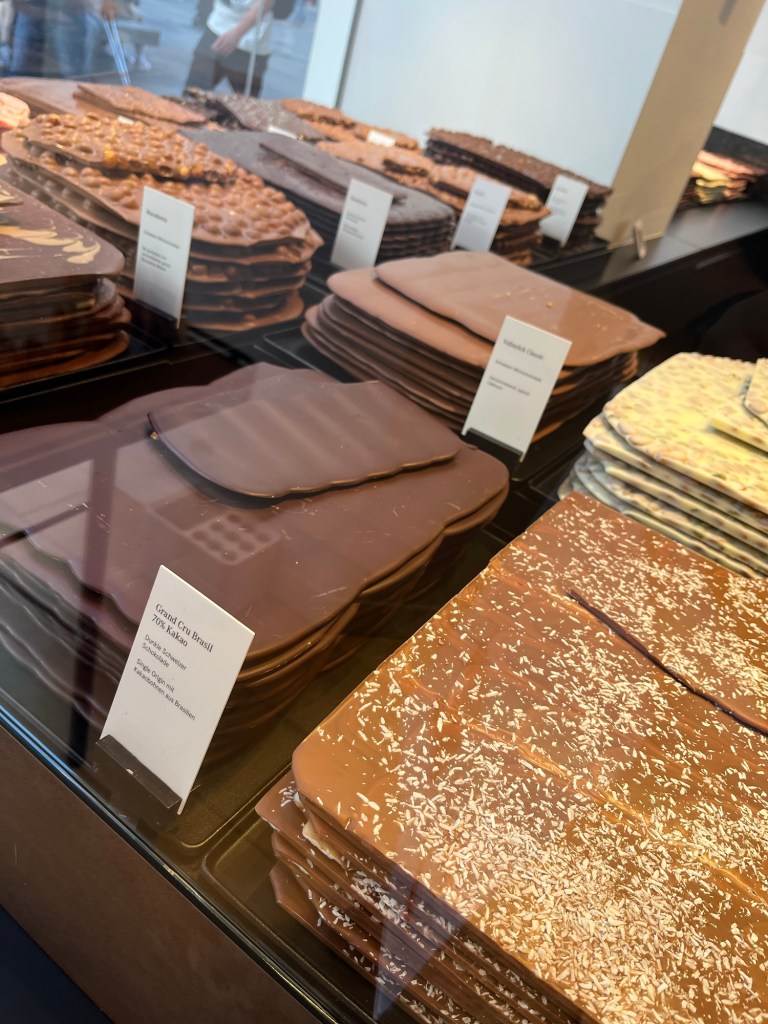
While in Leopoldstadt, Philip and I stopped at a Hasidic bakery for a quick sugar fix. Vienna is known for its sweets, such as its famous Sachertorte cake! The top left sweets are from the bakery and the rest from elsewhere, but I think it’s fair for Austria to show off a bit!
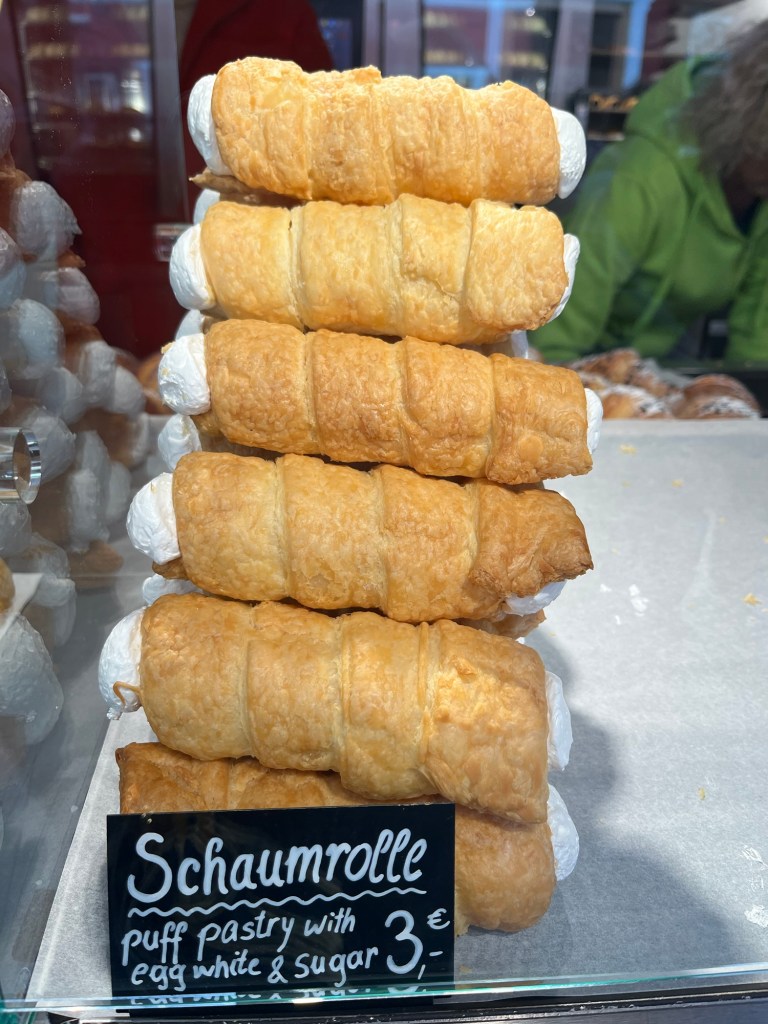
After leaving the bakery, we came across a Jewish man in a black hat. I greeted him in Yiddish and said I was a Jewish writer from the U.S. He immediately shook my hand and invited me and Philip to see his synagogue! It’s actually kind of two synagogues – one downstairs that was Hasidic and one upstairs that was Haredi (ultra-orthodox) but maybe not Hasidic. The historic building was called the Schiffschul, which you can read more about here.
After giving us a tour, he pointed us to the back of the synagogue. That’s where they’re building an addition to the synagogue including mikvahs (ritual baths) and more room for prayer. Nothing makes me happier. Despite our ideological differences, Hasidic and Haredi Jews are my brethren and to see Jewish life *growing* in a place where it was on life support after the Holocaust, was incredible. I’m proud of this community and wish it much success as it continues to grow and preserve so many Jewish traditions.
Here are some pictures from inside the Hasidic (downstairs) and Haredi (upstairs) of the synagogue:
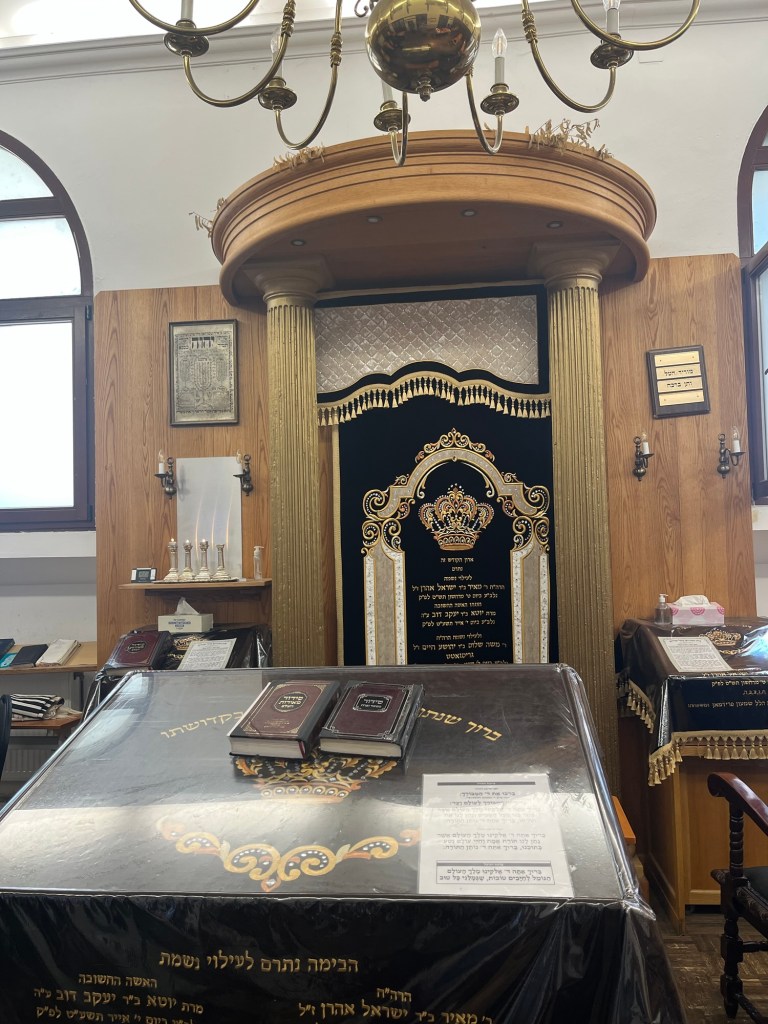
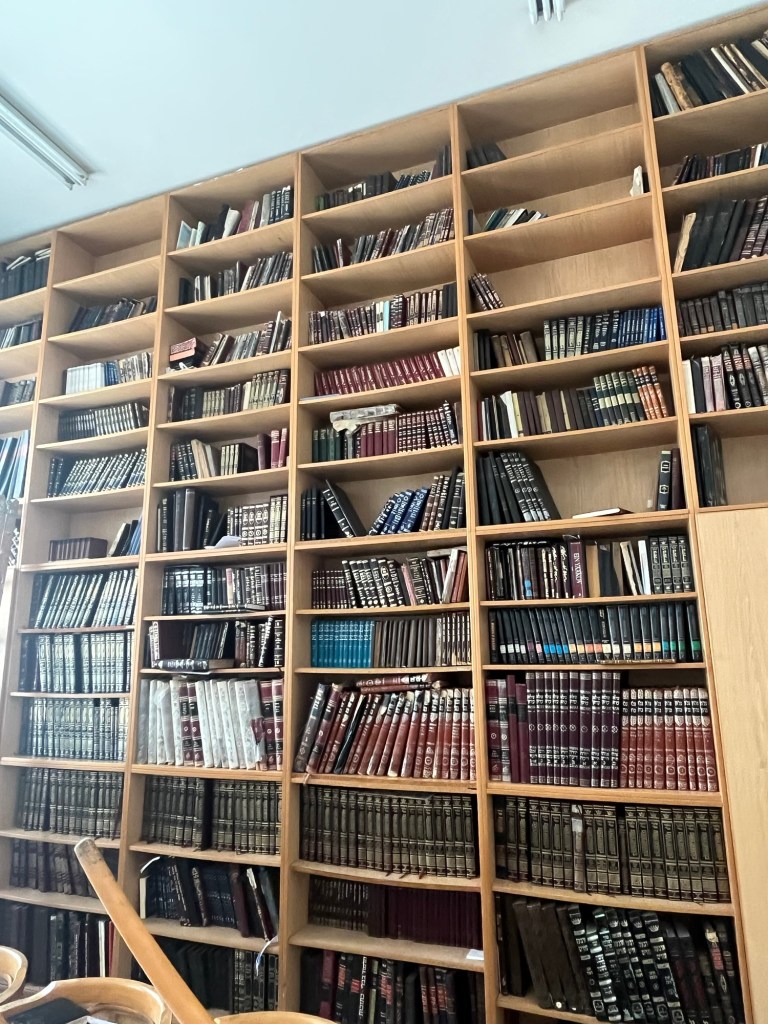
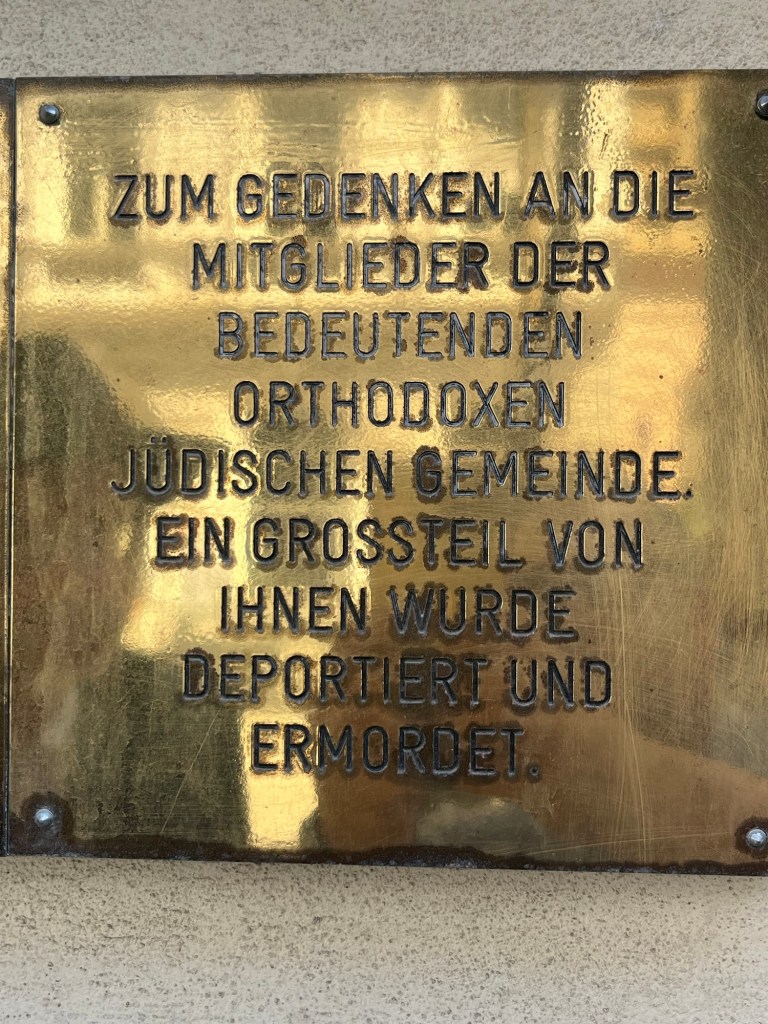
You’ll notice, besides the very beautiful interior and loads of Jewish books (nothing excites me more!), the gold plaque outside the synagogue. It commemorates the Jews sent to their murders in the concentration camps from this synagogue. The Holocaust is *never* more than one step away from the present here, where less than 3% of the original community returned to live after the Holocaust, the rest dead or in other countries.
Before we left, the man, named Yosef, asked us for a blessing for his ailing wife. Philip offered a beautiful Yiddish blessing for her health and we all parted ways – three very different people on paper, but all tied together by one beautiful yerushe, or “heritage”.
Philip was incredibly kind not only to show me around town, but also to connect me with Thomas Soxberger, a Yiddish poet and Jewish historian. You can read more about his background and poetry here. If you want to learn more about Jewish history in Vienna, he has also written the book “Gründen wir einen jiddischen Verlag!” or “Let’s start a Yiddish publishing house!” Philip also connected me with the Yung Yidish Vienna library + cultural organization, which unfortunately I couldn’t visit since I wasn’t feeling well. However, I know their sister organization in Tel Aviv very well and highly recommend all fans of Yiddish to check out their Vienna location!
I also had the opportunity to visit the Jewish Museum Vienna and see some incredible Jewish artifacts – on Israeli Independence Day of all days. It was appropriate – the founder of modern Zionism, Theodore Herzl, lived in Vienna! The artifacts were from all over the Austrian Empire, including places whose Jewish communities I knew almost nothing about – like Bosnia!
The visit to the museum was one of the few times in Europe I have felt safe as a Jew. Jewish institutions are guarded by security – including Austrian police. And while it’s sad that that’s necessary, it made me feel more at ease than in some other places where the governments either fail to support local Jewish communities or actively create anti-Israel rhetoric in society. In Austria, I don’t know the politics well, but I definitely felt more protected.
Here are some pictures from the museum, then we’ll return to the stories of the incredible people I met:
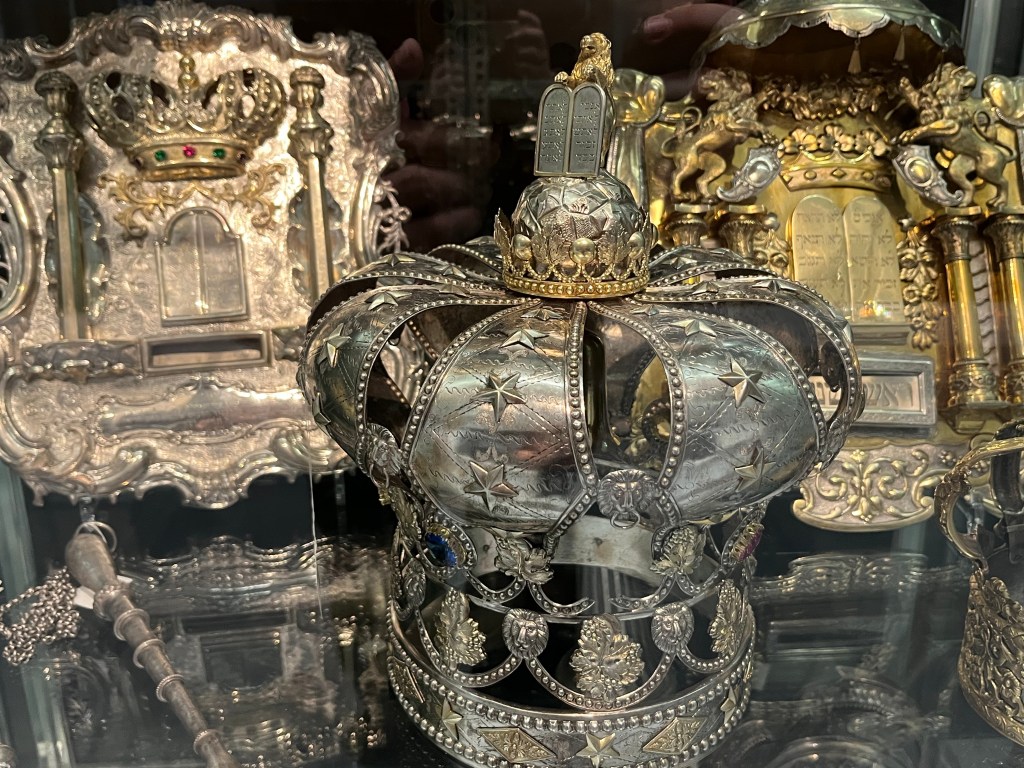
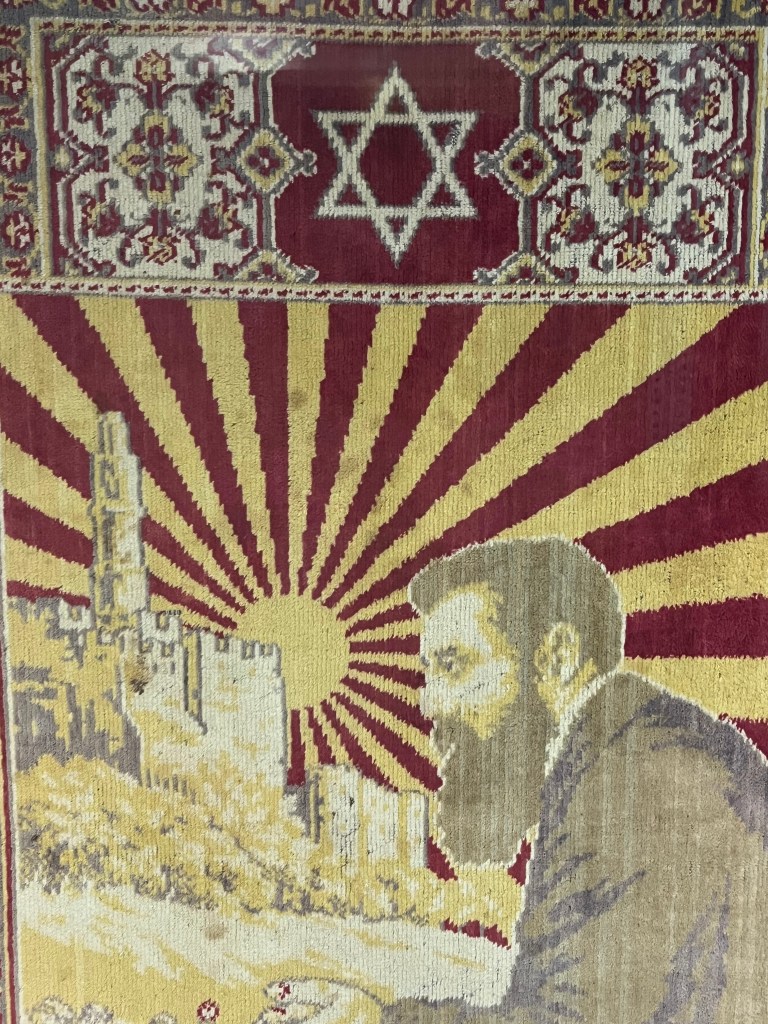
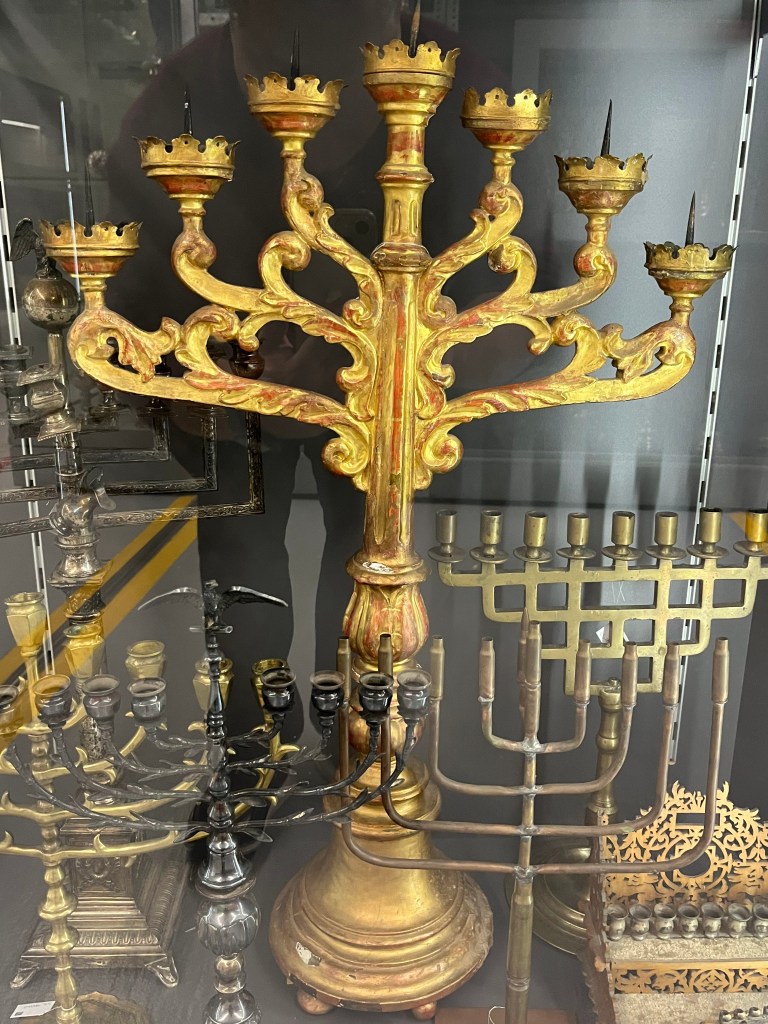
After days of touring both Jewish and non-Jewish places (here, to be honest, the cultures are so historically intertwined that it’s hard to really distinguish between the two!), I decided to rest and go to Shabbat services at Ohr Chadasch, a Reform congregation in Vienna.
Longtime readers of this blog know that I have struggled with my Jewish identity in the past several years, as both of my parents died from cancer about two years ago. Such a shock to my system made me question a lot of things, especially God and Judaism, things that had been so central to my life.
So I was excited but also a bit nervous about going to service at Ohr Chadasch. Every prayer reminds me of my mom, who used to go to synagogue with me. Would I start crying in services?
What was magnificent to see is that my grief is evolving. I enjoyed the hell out of services. Ohr Chadasch, much like Ohel Jakob (the progressive synagogue in Lisbon), sings and sings loudly! Whereas I couldn’t have handled this even a year ago, now it brings me joy again. My Judaism was on life support and now it is supporting my life.
The people of Ohr Chadasch are who really bring it to life. There’s Natan, the friendly American-Israeli-Austrian building a new life in Vienna and immediately offered me a seat when I looked for one. There’s another man, whose Hungarian Jewish heritage was obscured by his family’s struggle with their identity after the Holocaust, but who now is reconnecting with his roots. There’s the man who was leading services while the rabbi was out of town – who is a Jew by Choice.
After services one night, Natan helped round up a group of people and we all went out to eat Asian food (how Jewish of us!). It was such a fabulous evening. Italian non-Jewish polyglots curious to explore what community means to them – and if Judaism might be a spiritual home for them. Several other community members of diverse backgrounds. And me and Natan – two American-Israelis.
It was a mix of languages, cultures, Judaisms (or potential Judaisms!). It’s just how I like to spent my Shabbats. Thank you to all these new friends and the Ohr Chadasch community for welcoming me with open arms and making my visit so special.
Speaking of special people, the second Friday night service I went to in Vienna at Ohr Chadasch, a different man offered me a seat. His name was Augusto. Augusto is an Argentinian Jew, a PhD in Philosophy, a former resident of Italy, and most importantly, a total mentsch (good guy!).
After connecting over our shared love of Spanish and Judaism, we decided to grab coffee a couple days later. For most Americans, coffee is maybe a 45 minute to an hour experience. But coffee in Vienna, and especially with a friendly Argentinian, is a six hour experience. Not only coffee and delicious pastries and lovely conversation, but also a whirlwind tour around the city. We visited the Cathedral, the Holocaust Memorial (which to the city’s great shame is almost hidden in a neighborhood tourists never visit), countless gorgeous buildings, and the MuseumsQuartier. He shared Jewish history with me along the way. The city is stunning and we’ve had influence everywhere. Even the beautiful Karlskirche which I loved was financed with money expropriated from Jews!
The history here is complicated and not always friendly to the Jews, who nonetheless contributed to it and with it extensively.
Just to show you how pretty a city this is, here are some photos of things Augusto and I saw together – and some places I went on my own:
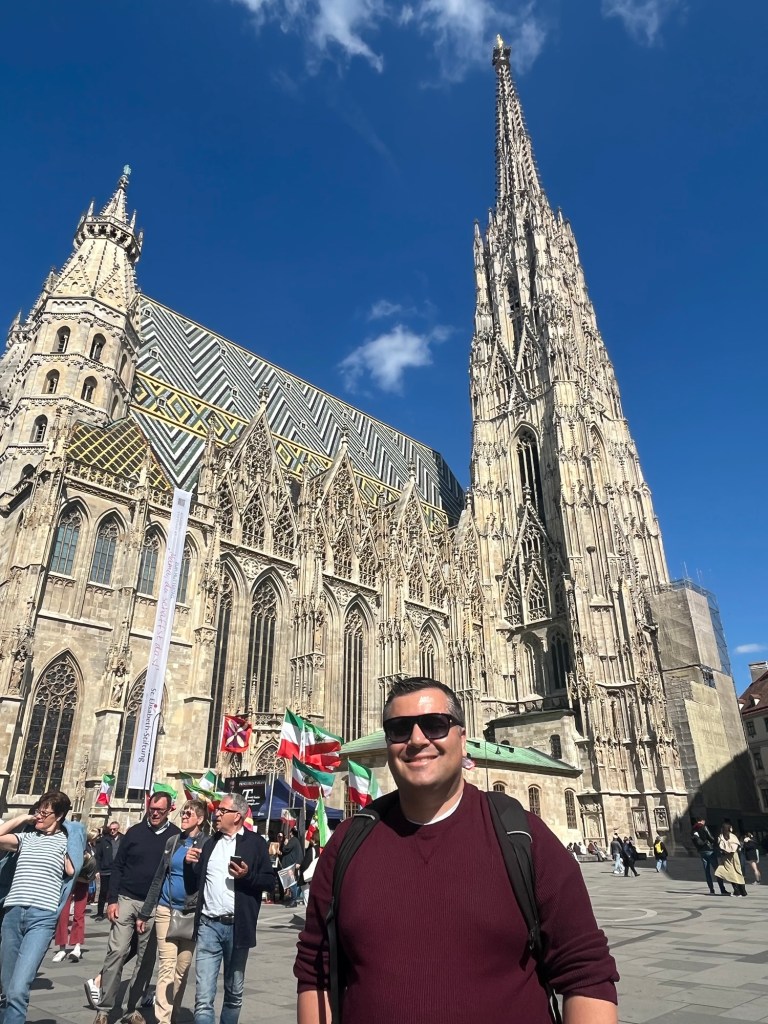
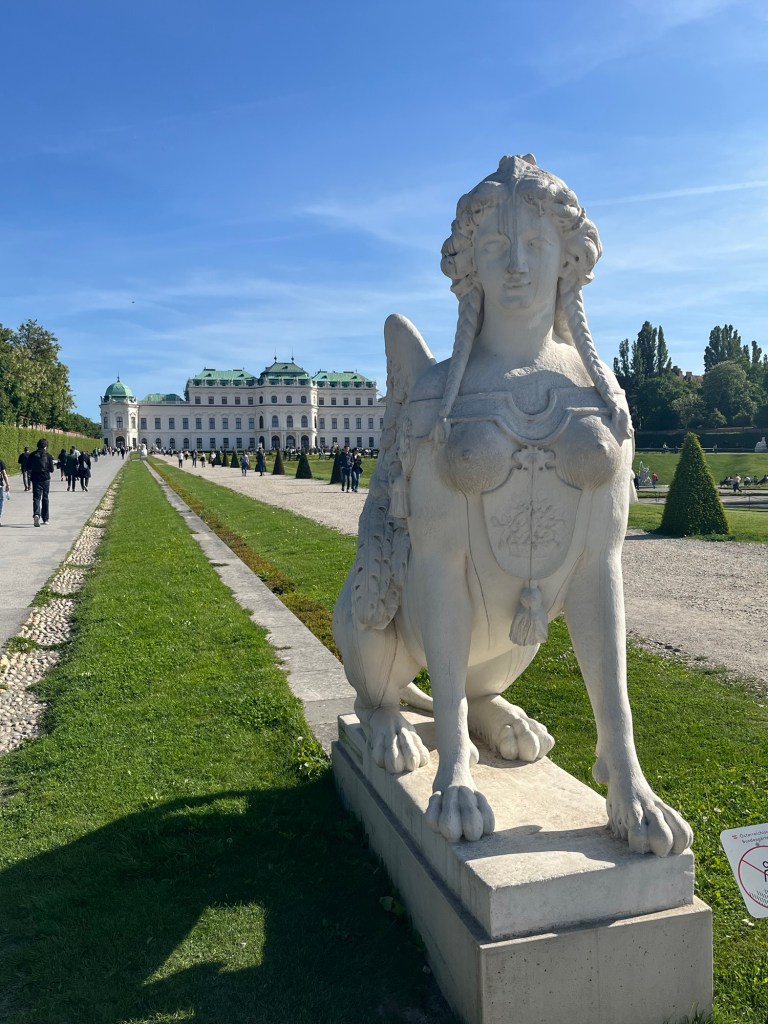
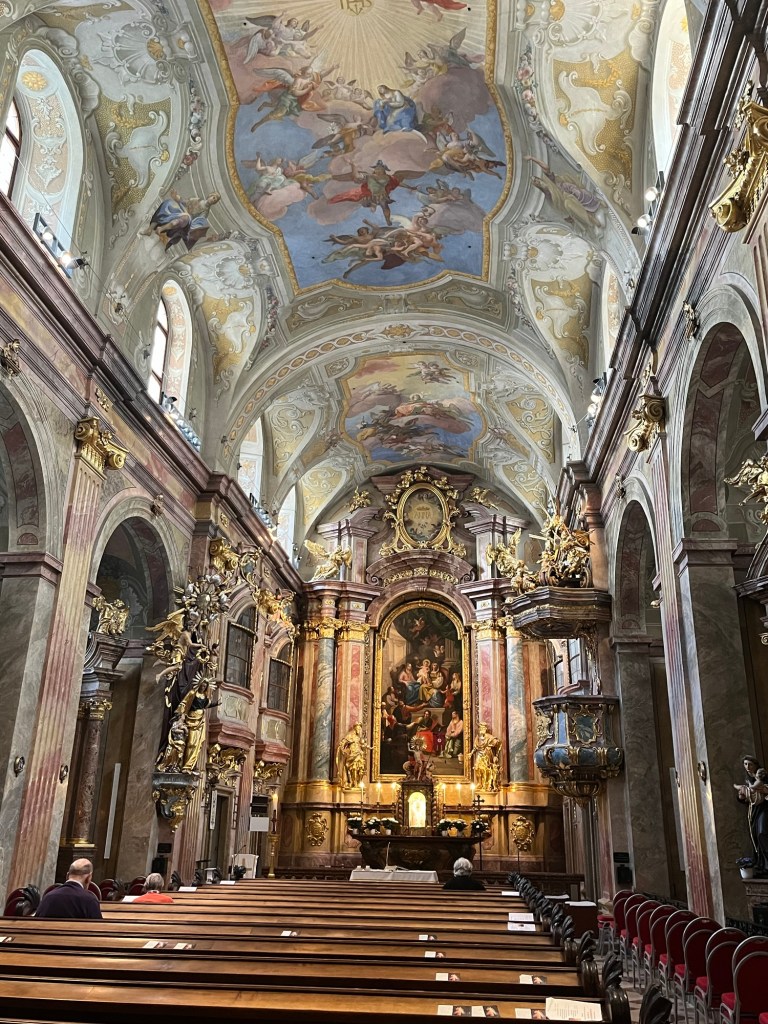
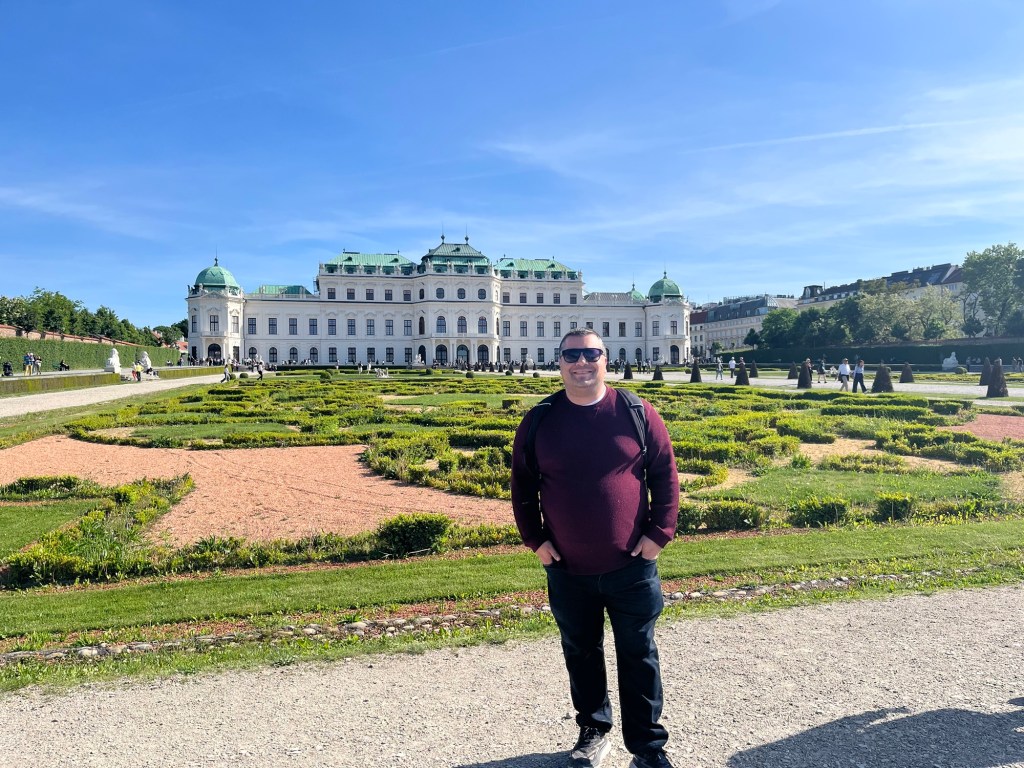
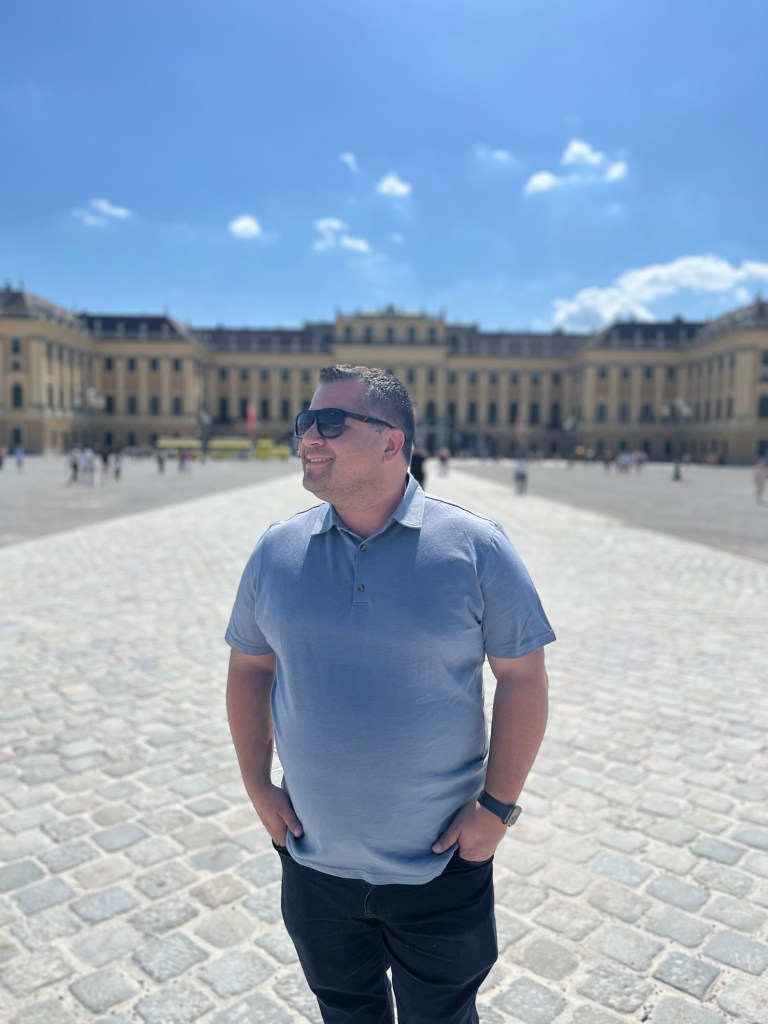
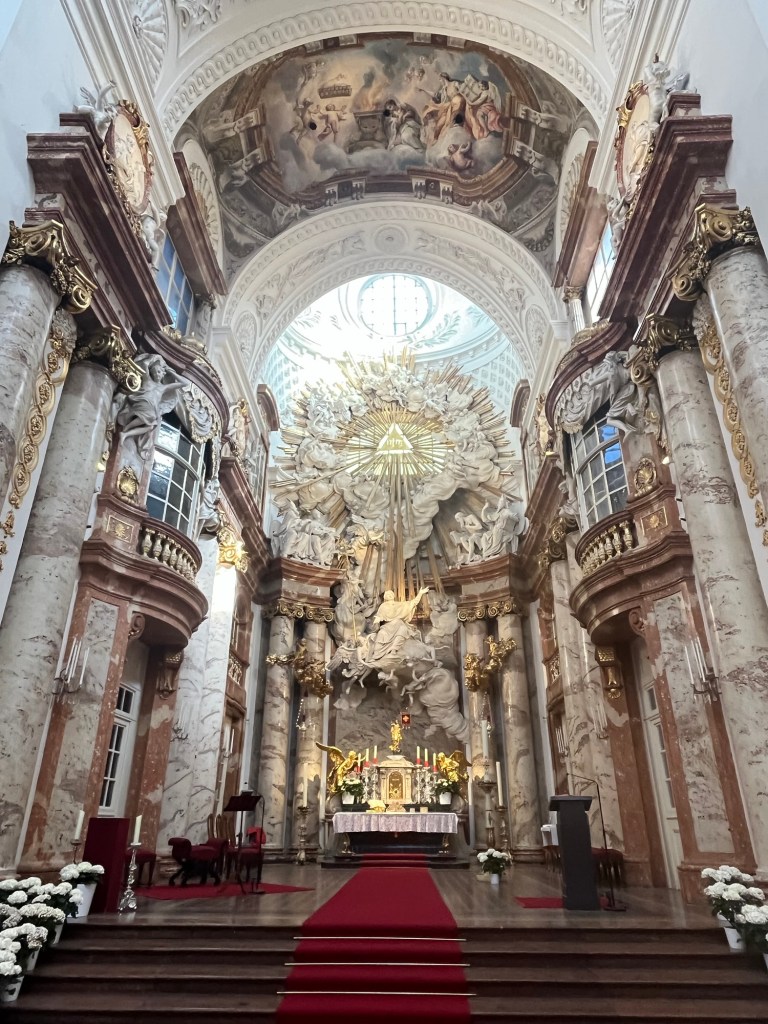
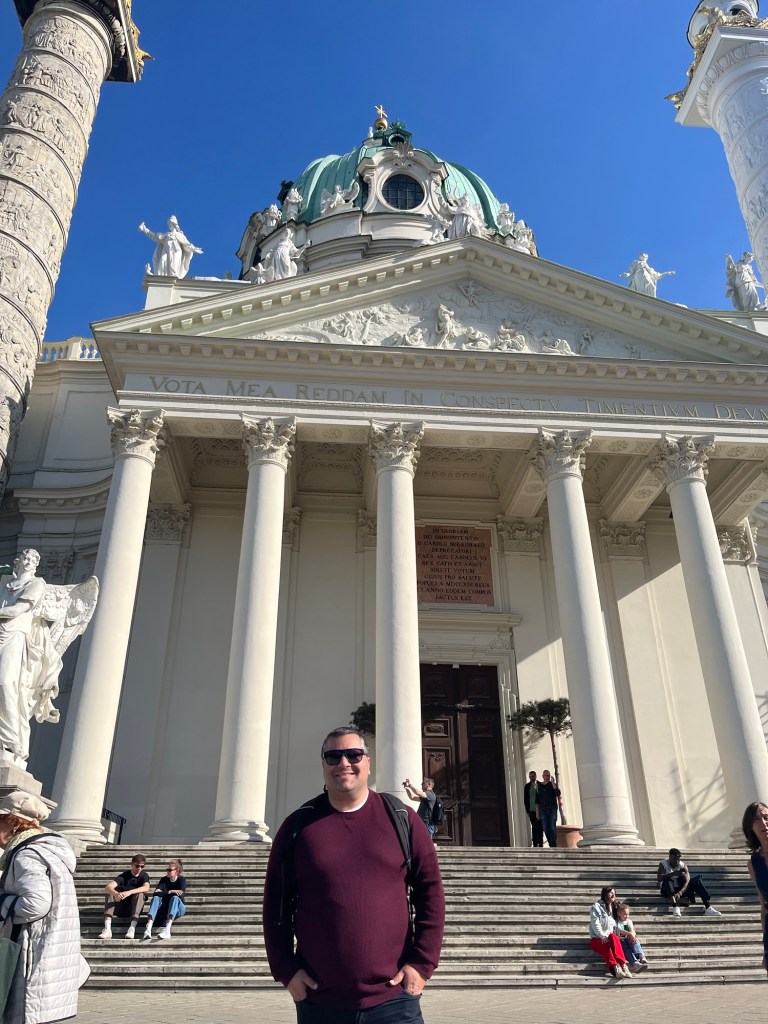
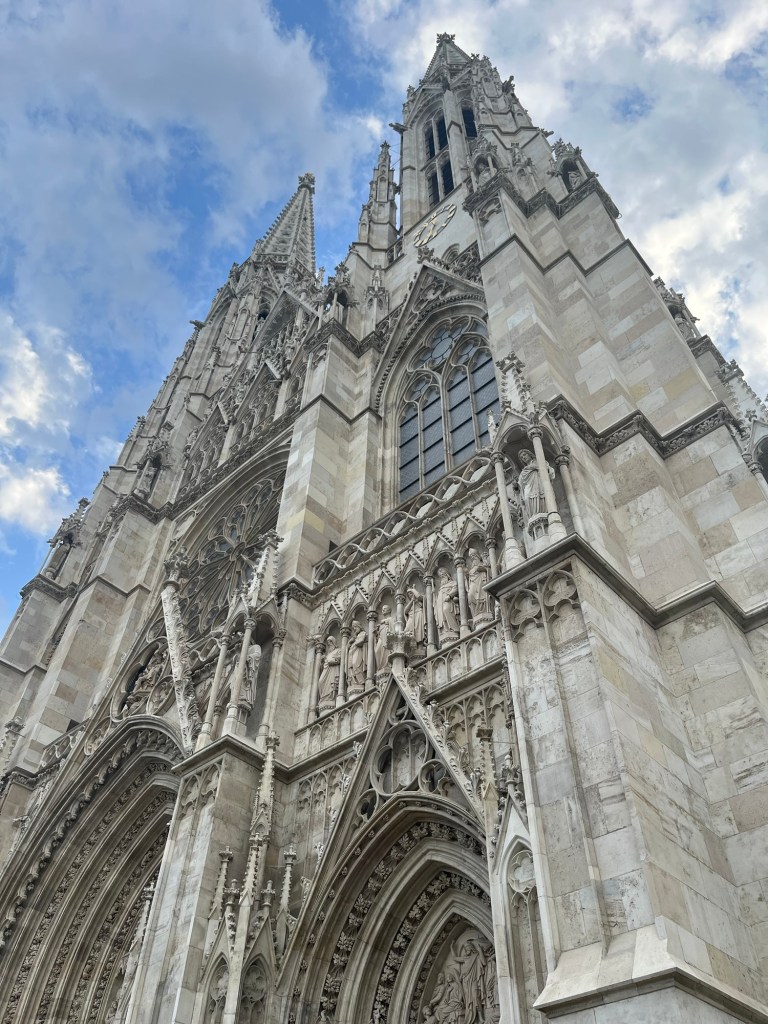
Not only did Augusto and his wonderful wife Sabrina show me so many sights around the city, they did it with great kindness and warmth. I didn’t feel like a visitor. I like I belonged.
I felt like I belonged because they made me feel happy, they made me feel loved. And on a difficult day – Mother’s Day. I know my mom was smiling looking down at me making new friends on my journeys. To travel solo is not to travel alone!
There’s another reason I think I felt I belonged. This is the surprise. As I sat down to write this blog, I remembered a genealogy project I did for Hebrew school at my synagogue growing up. I listed where all my ancestors were from. And I’ve done a good bit of genealogical research since then. I know I’m Jewish – from Lithuania and Ukraine on my mom’s side. And on my father’s side, part Romanian and Hungarian. I had the strangest flashback though to the poster with my Hebrew school genealogy project. It said Vienna, Austria.
And that’s because my great-grandfather Max Grossman, a Yiddish speaker, was born to two Austrian parents. He may have even been born in Austria – it’s not clear. It is he who was on my school poster and I verified it on my family tree. For people who don’t believe in spiritual energy – I’m sorry but this is too clear to be anything other than beshert. “Meant to be”. Min hashamayyim. From the Heavens.
I love Vienna. It has a horrific antisemitic history and also a lot of amazing intercultural cooperation and glory. And it has what has to be one of the most resilient Jewish communities in the world. That’s one of the places I draw my resilience from. It’s quite literally in my blood and I had no idea the whole time I was there.
Vienna- I’ll be back!
 Planting Roots Bearing Fruits
You must be logged in to post a comment.