Israeli lives matter

Today, I took the train south to Sderot.  Sderot is a city in southern Israel, spitting distance from Gaza.  As of November 2007, 6311 Palestinian rockets have fallen on the town.  At that time, 75% of children suffered from PTSD.  By the beginning of June, Palestinian terrorists had set 3,000 separate fires, destroying 2,500 acres of Israeli farmland and parks.  And there have been both rocket and fire kite attacks since.

I wanted to see things with my own eyes.  Knowing that there are still fires- and the risk that I could get caught in one- I went.  I went with the best knowledge available, consulting with locals.  Ultimately embracing what one person said when I asked if there were fires today: “you can’t know”.

Living in Tel Aviv, you don’t feel this at all.  The beach, the nightclubs, the hummus- the buzz.  You’d have no idea radical Islamic terrorists are trying to breach our border- and have launched rockets and flammables at us.  Tel Aviv feels utterly normal, like most of the country.

As I walked from the Sderot train station, nothing seemed strange.  The people seemed normal, there were trees and businesses.  Is it possible I went to the wrong city?  Maybe the fires were elsewhere?  A cabbie told me otherwise, but maybe he was wrong.

I walked closer to the border.  Sderot is .62 miles from Gaza.  A kibbutz next to it, Nir Am, is 800 meters from Hamas territory.  I physically stood one mile from Gaza today.

I asked around the kibbutz to find where the scorched land was.  Admittedly an odd question, but because Israelis are always willing to help, a man actually gave me a ride to the burnt fields.  Before picking up his daughter from school.

I asked him how it was living there and he said: “I don’t know the right word, it’s not that we’re used to it because you never really can be.  The fires happen.  We survive.”

He told me how he has to explain Palestinian terrorism to his 5 year old.  His two year old doesn’t yet have the words to understand it.

My heart broke.

I dare any of my “enlightened” left-wing friends in America who have more often than not heaped meaningless bile at my country.  I dare them to look that 5 year old in the face and call her an occupier.  That somehow she deserves to have her playground melted, her trees burnt, her childhood robbed.  While you sit pretty on Native American land you know literally nothing about.  But feel utterly entitled to.  While we are actually from here.

I bid the man goodbye and told him my heart is with him.  I could tell he was moved- not many Tel Avivis come visit this part of Israel.  Especially now- though they should.

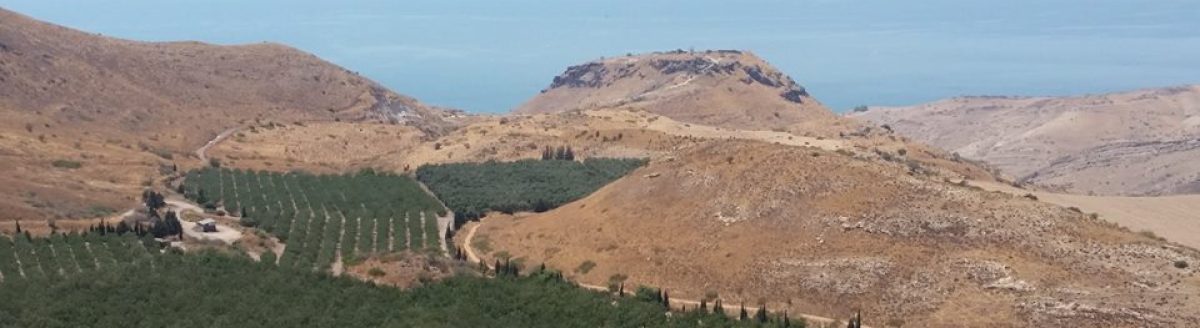
I headed towards a high point.  He said I could see the burnt fields.  To me, the fields just looked kind of like the Great Plains in America, but with shorter grass.  I didn’t really understand what was so grave.  Until I noticed the color.  The ground was dark- a charcoal black.  And I looked on a map and realized- this wasn’t the Great Plains.  This used to be a forest.

An almost completely leveled forest.  But for a few trees bravely peeking out, embarrassed at their nakedness.  Surrounded by slivers of their former friends.  Burnt to a crisp.  Like an onion on a grill, but with all the water sucked out, and a dry carcass left to rot.

This scene was as far as the eye could see.  I was probably looking at Gaza without realizing it.

What was astonishing was how normal the rest of the kibbutz was.  If you didn’t really know what had happened, you’d think it looked quite pretty.  And it is.  And the people there, quite typical for an Israeli town.

Then you look at the ground.  You notice the dirt is light brown.  Except in certain large patches, where it is pitch black.  I leaned down and grabbed a handful.  There was nothing soil-like about it.  It was soot.  Ash.  The cremated remnants of a forest once planted there.  A place with picnics and fun.  Now destroyed in the name of greed, fanaticism, and violence.

What I also didn’t realize until writing this blog, is that Hamas actually buries tunnels under this kibbutz.  Probably under my feet.  To smuggle weapons and to kill Israelis like me.

Some people on the far-left like Jeremy Corbyn call Hamas his “friends”.  Others think it’s some sort of peaceful liberation movement- that calls to “liberate Palestine” (from me) are somehow equivalent to women’s liberation or gay liberation.  The delusional Chicago Dyke March, which last year kicked Jews out for waving a Star of David pride flag, this year waved dozens of Palestinian flags.  And said “all anti-racist work must inherently be anti-Zionist“, without recognizing the irony of becoming anti-Semites themselves.  And aligning themselves with a nationalistic movement that’s utterly homophobic.

The reality is Hamas is anything but progressive.  In Gaza, it bans women from smoking, Palestinian hip-hop concerts, dog walking (yes), and women’s TV channels.  It’s a professional murder machine.  Its goal is to massacre me.  That’s not a metaphor- it’s its practice.  It spends millions of dollars burrowing under the earth to harm me instead of feeding its own people.  Who lack sufficient electricity, food, and job opportunities.  I hardly believe it’s solely one party’s fault- the Egyptians, the Israeli government, Hamas, and the Palestinian Authority are twisted in a confusing knot.  Not easy to get out of.  But let’s stop pretending the Hamas government is an innocent teen playing with matches.  It’s manipulating its people and putting countless lives in danger.

Recently, I was in Rome.  I visited the Jewish ghetto- the second ghetto established in Europe.  For the purpose of corralling my people.  Every entrance was marked by churches on either side.  Where popes made Jews listen to sermons upon entering and leaving the ghetto.  To try to convert us to his devil worship.  And by devil worship, I don’t mean Catholicism- though the religion has more than a bit of reckoning left to do with its anti-Semitic past.  And still-locked Holocaust archives.  By devil worship I mean torturing religious text in order to demean a near-powerless minority.  Who thrive or die at your whim.

Rome is the oldest Jewish community of Europe.  And Judaism the oldest religion of Italy.  Having survived the Roman Empire who destroyed Jerusalem, countless anti-Semitic popes, Italian fascism, and Nazism- they’re still around.  And have amazing food, history, synagogues, and culture.  A testament to the resilience of my people.  They have a keen sense of who they are- and a pride in being Italian, Jewish, and quite Zionist.  They don’t live with the American Jewish sense of privilege and stability.  They are, numbering just a few thousand and only decades separated from actual fascism, quite aware of the importance of a Jewish homeland.  They don’t take it for granted.  As the golden bricks on the street, indicating Holocaust victims everywhere, make quite clear.  Never again isn’t a cute phrase to say once a year- it’s the Roman Jewish community’s personal story.

As I write this blog, I’m getting tired.  I’ve had a meaningful and exhausting day.  I slept very little last night, and I’m up late writing this blog because I think it’s important.  And it offers me some solace, even as my electricity just went out for some reason.  Meaning no air conditioning on a hot Middle Eastern night.

Life in Israel is unpredictable in some ways.  Although you can always count on warmth and deep kindness, much more frequently than I’ve experienced in American culture.  Quite similar to Italy, Cyprus, Spain, France, Romania, and Hungary where I’ve visited this year.  Begging the question are we the weirdos or are Americans far too individualistic for their own good?  Even today, as I grabbed sushi after my adventure, I met a young man who lived in Sderot.  Who, when I asked him how he felt about the recent situation, said: “I grew up near Hebron, with attacks my whole childhood, the situation here has been good the past few years.  It’s gorgeous here, come back and visit.”  We chatted, smiled, cracked some jokes.  And I ate delicious sushi- some of the best in Israel.  It’s by the train- go visit.

In short, yes my air conditioning just went out.  I could be like the French Jewish tourists who visited my tiny synagogue for Pride and complain about the water temperature at dinner.  Or I could be a human being and say: “mah laasot?  Nistader.”  What can you do?  We’ll roll with it.

Despite the incessant provocations of left-wing “do gooders” boycotting us and ridiculing our country, we’re actually really good at something they lack.  While large swaths of the American Left I once called home repeat over and over again the word “resistance”, I think they need another R word: “resilience”.

From afar I see every tweet and every sad news story turn into a 4 day mourning period (or battle), I see Israelis all the time just living.  Fully.  The guy at the sushi place who, rather than dwelling on rockets and fires, tells me about the gorgeous sites in his town.  The dad who tells his 5 year old about terrorism with a hug.  And the 5 year old who goes to school, maybe scared and also singing.  And the American oleh who visits Sderot by himself and makes a truly meaningful experience out of it.  Joking with the bus driver all the way home.  While fields nearby are burning.

Israelis know how to squeeze every last drop out of life.  Like our delicious juices, we come out sweet despite it all.  A sweetness few places can compare with, especially places that just haven’t suffered so much.  That have it a bit easier than they really understand.  So they don’t put their own issues into perspective.  And live in a constant state of chaos- some of which is perpetuated by their own lack of self-awareness.  Or of the problems facing others.  Like the 50,000 Syrian refugees crowding the Israeli border in fear or the brave Iranians protesting their dictatorship today.  My neighbors.

If there’s something I could wish for America, it’s that you had a few more problems.  Real problems.  Not problems you’re fighting about on behalf of other people, but problems you have to face.  I know- that sounds a bit harsh.  Perhaps it’s my Israeli bluntness.  But having some real toughness in your life can give you the chance to overcome it, to master, to learn to roll with the punches.  So that next time something bad happens, you’re not spending hours on Facebook.  You’re acknowledging it, moving on, and living.  Like my friend who lives in Nahal Oz, walking distance from Gaza, fields burning, studying for her exams and planning a pub night for friends.  It’s harder than seeing a racist tweet and she also turns out happier.  I think it’s no accident that Israelis turn up as some of the happiest people in the world on survey after survey.  Because if you can manage to find joy while your town is on fire, you can pretty much handle everything.

As I left Nir Am, I looked at a desolate field.  Burnt, brown, empty.  And I noticed one little green plant.  Just making its way above the decay.  Blossoming.  A source of new hope.

This plant is like Israel, like the Jewish people.  Every time someone comes to destroy us, a little remnant stubbornly survives, keeps our people going.  Even when those around us decry our “tribalism”, its our very sense of identity that keeps us alive.  Which is why there’s a Jewish state but no Akkadian one.  We live our heritage.

As someone who is a PTSD survivor, like a lot of Sderot and a lot of Israel- I feel at home here.  We are people who know how to survive- and actually turn it into an advantage because we can thrive anywhere we’re planted.

I’m proud of the Israeli Defense Forces for keeping us safe.  And we’re not about to give up our arms to satisfy a bunch of wealthy self-indulgent critics sipping fair-trade coffee in Seattle.  Living in the labyrinth of confusion about why anyone could possibly disagree with the Editorial Board of the New York Times or the latest NPR story.  A fragile and self-reinforcing bubble much in need of a gentle pop.  For the sake of America itself.

If you want to know why I visited Nir Am and Sderot today, it’s because I love my fellow man.  I love my people.  I care about others- I love my friends.  The Jewish people is a story of resilience.  Our anthem is hope.  Join us, help us sing it, so that one day, instead of fiery balloons, maybe our neighbors will play with the normal kind.  At a bilingual fair.  A future of dreams and love.

In the meantime, we’re standing guard.  We won’t be sent to the fire again.


My last day as a Liberal

For those of you who haven’t been reading American news (which would be most of the world- America is 4.3% of the world’s population), it has been a politically charged week.  Immigrant families detained at the border have been separated- children from their parents.  This is incredibly sad– the journey to America was probably scary enough for these kids, and now they’re without their parents.  Even in jail.

What’s also sad is how the American Left, which I once called home, has been reacting to this news.  In opposing the President’s policy, I’ve seen friends on Facebook suggest moving to Canada (and that Canada should build a wall to keep Americans out) and that Trump is “pure evil destroying civilization itself”.  I’ve seen people pouring out rage, scolding others for being silent- saying silence is assent.  I’ve seen many- too many- Holocaust references.  One person wrote “it starts with 2,000 and ends with 6 million”.  Another person called the detention centers “concentration camps”.  I wrote to her that I also opposed the policy and wanted her to consider rephrasing because my family was murdered in concentration camps.  She wrote back “I’m sorry your family suffered that but…” and then quoted me a dictionary definition of concentration camps.

The American Left is sick.  Not sick like disgusting- sick like ill.  Perhaps partially in the face of an equally bombastic President unwilling to consider other points of view, they’ve become a mirror image of his rhetoric.  “Facts have a liberal bias”, “which side are you on?”, “silence is complicity”, “no tolerance for intolerance”.  Trigger-happy accusations of racism and any -ism which actually obscure when those isms are a true danger.  People are afraid- this is a confusing time for America.  Unfortunately, some people in the ideology I once called home are using it as an opportunity to engage in a witch hunt against anyone who disagrees with them.  Which only prolongs the conflict plaguing that land.

I grew up being taught liberal politics- at home and at school and at synagogue.  There are still values I identify with- diversity, gender and sexual empowerment, fairness, and others.  And there are some really problematic ones I’ve come to discover as I’ve embarked on my own journey of visiting communities I knew little about.  And in discovering the multifaceted texture of living in Israel, my home.

Some of the problems are that liberalism, progressivism, left-wing activism- when practiced in an orthodox fashion- promotes diversity, but not diversity of thought.  People who stray from the “path” are labeled as prejudiced and ignorant, in need of education.  Rather than understood as full human beings capable of disagreeing for reasons both based in fact and not.  I know what I’m talking about because I used to think this way.  Like the people in the Democratic party who rail against any elected official who strays from their views.  They are called “DINOs”- Democrats in Name Only.  While I think some politicians modify their views for insincere reasons, I don’t think we should call out every elected official (or private individual) who happens to have a different point of view.  Like a pro-life Democrat, or a pro-gay rights Republican.  Or an independent, like me at the moment, who doesn’t really care for party labels and rooting on Election Day like it’s a national sport.  Although it is kind of fun to watch the votes come in 😉

When I worked in progressive politics (for Obama twice, for several immigrant rights groups, on many Democratic campaigns), I noticed something problematic from the start.  Democrats and Republicans function as teams.  When one of yours is in power, the vast majority of voters and elected officials on your team don’t openly criticize him or her.  Obama, for instance, deported more immigrants than George W. Bush, one of the reasons I left his Administration.  There are complicated reasons for this- I disagreed with the policy and I also think (in retrospect) that governments have an obligation to secure borders and provide safety to those who reside within them.

At the time, even the Latino advocacy group I worked at mostly stayed silent.  While there weren’t the heart-wrenching pictures you’re seeing today on social media, Obama’s policy separated hundreds of thousands of families.  And I didn’t see any superstorm of rage on my social media or accusations of treason.  There are many reasons for this- for advocacy groups, they don’t want to bite the hand that feeds them (both elected officials and liberal foundations).  They want access, and the Administration told them (I recall specific conversations with other non-profit colleagues) that if they openly criticized the President, they’d be invited to fewer White House meetings.  The dynamics and economics of politics and non-profit organizations is a difficult one- people have reasons for acting the way they do.  And I feel it’s deeply hypocritical to only call out behavior you disagree with when the person in power is from the “other team”- in this case, Donald Trump.

The other day I was lucky to be on vacation in Italy.  I was on a train winding through the South when I happened to sit next to an American.  She was an Italian language professor in the States in Italy for a conference- paid for by her university.  Not bad.  We had some friendly chit chat- I often am nervous talking to Americans these days since so many on the progressive end of the spectrum hate Israel.  Often obscured by politeness  but never far beneath the surface.  Who love the beaches of Tel Aviv and then go build their “Israeli apartheid walls” on campus.

The professor’s face looked grave.  “It’s hard to teach in the humanities these days.  We should enjoy it while it lasts.  I don’t know if I’ll be able to come to the conference next year.”  She paused, an empty silence, waiting for my response.  And I let the silence stand.

Here’s some cold dark truth for you: you’re lucky to have a job where someone pays you to go to Italy.  Yes, funding for the humanities I’m sure is down and job opportunities are decreasing- I considered a PhD in Linguistics and the odds aren’t great.  And I live in a country where 50 rockets fell on my friend’s kibbutz while I was on vacation.  Where Iran fired missiles at our northern border a few weeks ago.  Where I live alongside Darfur genocide survivors and Jews expelled from Iraq and Syria.  I have a friend who’s a Burmese refugee who hasn’t been home in 20 years because of his country’s ruthless dictatorship.  I’ve personally lived through air raid sirens, being racially profiled at a checkpoint (which was awful and I think also protects people overall), rocket alerts on my phone, suspicious packages being disarmed in front of me, and I’ve actually watched bombs go off in the Syrian Civil War.  Meters away from where I stood.  A war which, by the way, the American Left practically ignores.  I can’t remember a single picture of my friends rallying for Syrian lives.  Because that doesn’t fit into a simple picture, a black-and-white world vision.  And because, let’s be honest, it’s not in America.  America’s problems come first for America, no matter how small they truly are in comparison with the rest of the world.  Just ask the 350,000 Syrians who can’t read this right now.

Despite the terror that Israelis, that Syrians, that Kurds, that so many people face- on a level Americans can’t even imagine- I don’t see any progressives rallying for us.  When hundreds of rockets fall on my country, I don’t see Facebook light up with support.  In fact, I don’t see anything at all.  The only time it does light up is with sympathy for Palestinians.  Which I think is totally fine- if you also sympathize with us.  With all human beings.  The problem is that’s not what’s happening.  Israeli lives don’t matter to large swaths of the American Left.  That’s how I feel as an Israeli who once called that community home.  Who voted and volunteered for Bernie Sanders, who was a pledged delegate to the Democratic National Convention that nominated Barack Obama.  Perhaps I partially left you, Left, but I think you know you also left me.  If my vote is up for grabs, you’ve got issues.

I understand the appeal of easy answers.  When I was struggling to find my steadiness, ideology helped me feel a sense of sturdiness.  I read with great passion anarchist, socialist, communist- any -ist- readings.  Some of the ideas I think are stimulating and I try to find something to learn from in every community or background.

And there is a dangerous, if comforting, continuity to these ideas.  If we just did A, B, & C, everything would be ok.  If we pulled out of trade deals, if we had open borders, if we passed Obamacare, if we removed all our military bases, if we (as people have suggested in rally signs this week) dismantled our border control.  If we, if we, if we.  Then everything would be great.

This is a lie.  It is a lie to make people feel stronger and I think it ends up inflaming conflict rather than softening people’s hearts and creating shared hope.  I used to feel quite confident in my prescriptions.  And now, I’ve learned to live in the space where I’m not sure there are solutions.  Or the solutions that exist require great empathy for all parties involved because they’re complex and people have reasons for their feelings.

The thing I most see as contributing to a healthy world is understanding.  Including of those who disagree with you.  So that even when you argue, like my Israeli atheist friend who studies with a Hasidic rabbi, you can pat each other on the back and say “see you next week”.  That’s not a fantasy- that’s everyday life for many, many Israelis.  Who sit on top of a gift that America would be wise to learn from.  Israelis, Jewish or Arab, secular or Orthodox, are not shy about their views.  We’re much blunter than Americans- we’re famous for it.  And I’ve noticed that Israelis, on a day-to-day basis, manage to interact with people of very different backgrounds with a lot less conflict than Americans.  And a lot less passive aggressive withdrawal.

Yes, that might sound shocking given what people see on CNN, but Israelis actually mostly get along.  Perhaps because we live with conflict, we know how to manage it better.  And live our lives in deeply fulfilling ways.  Appreciating each breath as a gift.  Without obsessing over every racist tweet or faux pas for days on end.  We might feel sad (or cheer) and move on.  If we took extended mourning periods for every loss or problem, we wouldn’t move.  So instead, we live our lives.  In a way that Americans could really learn from.  From us- we have something that can help you.  It’s not America’s job to wander the world lecturing other countries.  God’s voice is sprinkled all over this planet.

Barack Obama, whose first campaign I worked on, had a positive contribution to the national dialogue: hope.  Whether or not you agree with him (I’ve felt both ways at different times), he brought a certain optimism to the conversation.  He used to say “there’s nothing wrong in America that can’t be fixed with what’s right in America”.  A kind of brightness lacking in the activism I see in today’s progressive thought.

When I look at America from afar, in my homeland of Israel, I feel deep sadness and anger.  A distance.  Sadness because I see society falling apart.  People unable to get along with each other.  A poisoned conversation among people who barely seem to recognize the humanity of someone who thinks differently.  I know there are Americans who feel like I do, it’s just hard to find them when living in the Mediterranean now that I’ve come to this understanding.  I wish you luck in healing that place- you have a friend in me.

I feel anger when I see American leftists bashing my country, comparing every Donald Trump action to the Holocaust, pulling their hair out without even acknowledging drastic problems affecting the rest of the world.  Yes, problems worse than a racist Roseanne Barr tweet.

America- I don’t miss you.  Although your Thai noodles are superior to Israel’s.  This is my home.  And I do want you to find serenity.  A way forward that acknowledges the best in progressive and conservative thought.  Because both (and many other types of thinking) have value and deserve an honest debate.  Rather than, on both extremes, a hate fest worthy of the 1860s.  When Americans killed each other at the other end of a barrel.  Instead of at a polling booth.

The last thing your country- or the world- needs is another group of people peeling apart at the seams.  I don’t have the solution, just try to see each other as humans.  Each interaction throughout your day can bring a bit more hope to the world.  Love, even when it’s hard.

I’m rooting for you America, even if my heart is deep in the East.

p.s.- the cover photo is from a coexistence mural in the Israeli Bedouin village of Jisr Al-Zarqa.  Maybe it’s time to get painting on the other side of the ocean as well 😉

Israeli pride

Today was my first Tel Aviv Pride.  Every year, thousands of Israelis and tourists gather to celebrate the LGBTQ community here in Israel.  There are floats and sexy guys and it’s awesome.

For the first time in my life, I got to experience it.

In America, I marched in many pride parades- almost always with Jewish groups.  This time, the parade itself was Israeli, so the idea of a Jewish group marching is obsolete- we are the parade.

The parade itself was actually slightly more sexually conservative than in Washington, D.C., which may amaze my Israeli friends.  And its energy was amazing.  There was such a sense of community.

Rather than marching with organized floats, the parade was Israeli- everyone could join in.  There’s no “order”- it’s just splendid flowing chaos of hot guys (and gals).

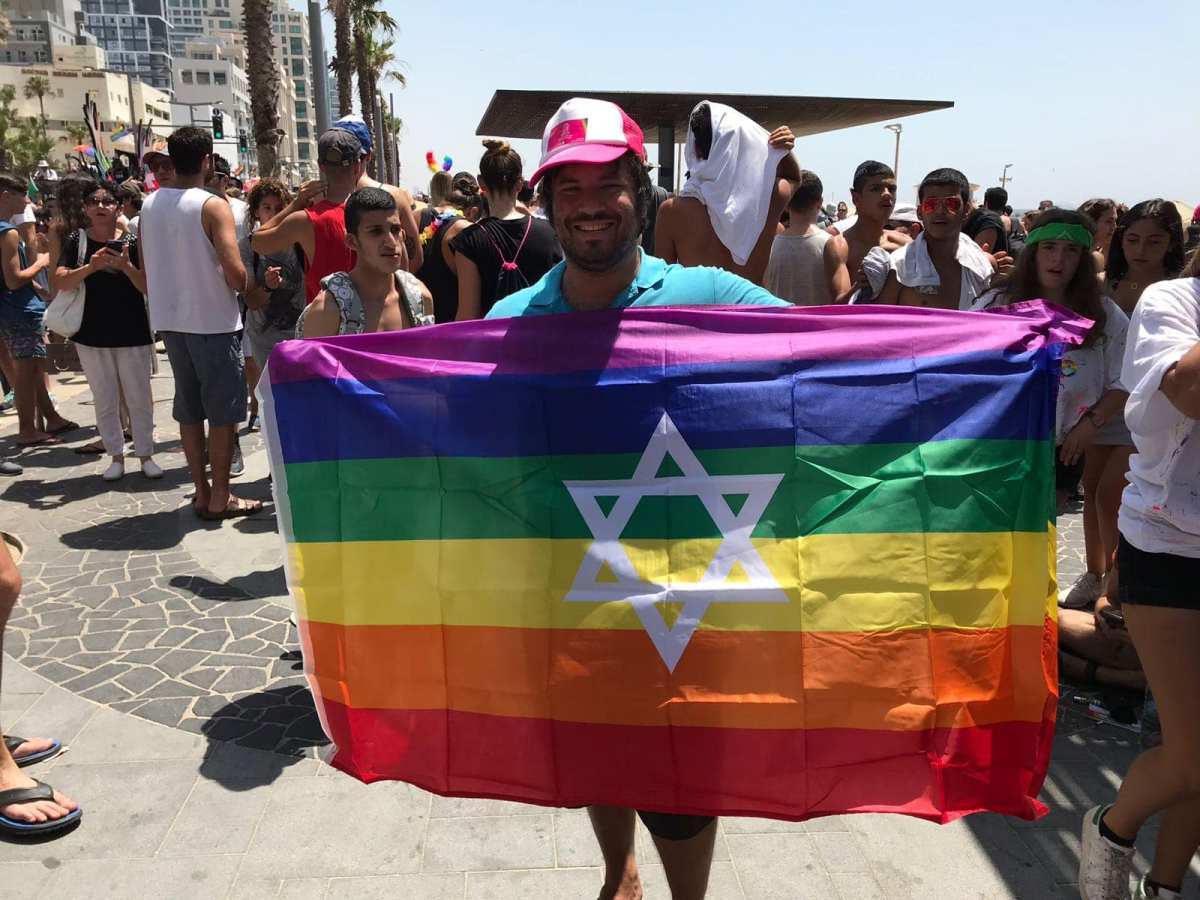
I came wearing an Israeli flag and ended up buying a Star of David pride flag along the way.  Because Israel is the only country in the world where it is totally safe- even blessed- to be a gay Jew.  And to be proud of it.  Without worrying if people will throw you out of the parade for liking Israel.  Which is a thing unfortunately abroad.

While Tel Aviv pride was smaller than Washington (although still quite large), it felt special.  First off, it went off smoothly and safely.  Not something to take for granted here.  I want to thank the brave policeman and policewomen who every day keep us safe.  Whether it’s some crazy person within Israel- or a terrorist coming from without- sadly too many people want to harm both Israelis and the LGBT community.  I’m grateful that I live in the *only* country in the Middle East where you can count on the police to protect the pride parade rather than break it up.  I hope one day my queer Arab neighbors fighting for their rights will be able to enjoy the same sense of security.

What was also incredible about today, other than the sunny weather, the post-parade swim at the beach, and the pride Shabbat services I went to, was who I went to pride with.

I first started by making plans with my friend Miriam.  A Spanish Jew who I befriended in D.C., she wisely followed me to Israel 😉  My friend Daniel was also in town from America, so we had a trio.  Then I got a message from Ezequiel, a gay Argentinian-Israeli friend of mine, so he and his Arab friend Ahmed joined us.  This was Ahmed’s (pseudonym) first pride parade- you could tell he was a bit nervous and perhaps somewhat closeted.  And wow am I proud of him for being brave and coming.  Being a gay Arab is not easy- as several friends of mine in their community have shared with me.  One Arab lesbian friend of mine stays in the closet for fear her family will kill her in an honor killing.  There are Arab families who do accept their children and unfortunately a lot who don’t.  Forcing queer Arabs into a difficult identity dance in both (largely Jewish) LGBTQ culture here and their background.  I’m glad Ahmed found a sense of belonging in the parade- you could see him flitting back and forth, often losing track of us as he made new friends.

We were joined by Kate, an Australian soon to be Israeli.  And along the way, we met a Ukrainian girl named Natasha (pseudonym).  Natasha is a lesbian from Haifa of Ukrainian background- this was her first pride.  She’s Jewish and not religious in the slightest.  Sadly, her Catholic girlfriend is still living with a lot of stigma so she wouldn’t attend.  She was alone- and I invited her to join us.

Later on, we were joined by an exceedingly hot Argentinian-Israeli named Ariel and his wife.

Kitzer, or “in short”, there we were: gay (me, Natasha, Ahmed, and Ezequiel) and straight (everyone else).  Australian, Argentinian, Spanish, Israeli, American, Ukrainian, Arab, Jewish and not.  A melting pot of newcomers and veterans (Miriam has marched with me on two continents!).  The beauty of Tel Aviv 2018.

There are people who reduce Israeli queer life, the most vibrant in all of Asia- the biggest continent on Earth- to “pinkwashing”.  This phrase is meant to say that when Israelis talk about their queer pride, they are simply using it to “cover up” the difficult reality facing Palestinians.  That we don’t deserve credit for our advances even if in other areas things aren’t so simple.

This is what I have to say: fuck you.  Do Palestinians face hardships?  Of course.  Some of those caused by Israel and not a small number caused by their own extremists or surrounding Arab nations.  And I pray for a day when they will be able to celebrate their own pride parades- and when their society will accept queer youth.  And when our two societies can live in peace.

Here’s the reality: while it’s true that the Israeli government uses gay rights as a promotional tool (often without giving us the full rights we deserve), our country is hands-down the most progressive one in the Middle East.  While some people want to turn our pride parade into a discussion about conflict, that doesn’t change some incontrovertible facts.  Palestinian society has harbored strong strains of homophobia long before the State of Israel even existed.  Homosexuality is illegal- sometimes punishable by death- in Syria, Egypt, Palestinian Authority/Gaza, Iran, Saudi Arabia, Qatar, Oman, United Arab Emirates, and Yemen.  If you really think this is because of Israel or Jews, it’s conspiratorial and anti-Semitic.  Believe it or not, other societies in the region sometimes have problems that have nothing to do with us.  And noticing that Israeli LGBT people openly serve in the military, enjoy anti-discrimination laws, and even serve as out-of-the-closet elected officials- that’s not pinkwashing- that’s the truth.

Some people are not capable of letting Israelis celebrate a single accomplishment without dragging us down.  We know- I know- that my country, like any other country, has things we need to change.  Guess what?  Your country does too.

While the far-left in Western countries continues to point the finger at us and tries to deny us even one day of enjoyment of our loving society, I’d like to point to an incontrovertible fact.

Today, I marched in pride with a Ukrainian lesbian and an Arab bisexual man- both citizens of Israel.  In their respective societies or homelands, their identity is often punished.  In Ukraine, by far-right thugs and in Arab society, sometimes even by your own family.

Israeli society isn’t perfect and the homophobia here exists as well.  Every society suffers this malignancy.

The main thing I want to point out is that despite the security risks today, the associated costs involved with putting it on, the rockets Hamas continues to rain down on us- Ahmed and Natasha could march in pride.  With me.  In peace and safety.

So rather than telling us how terrible Israel is, try asking yourself: “what have I done today to help people like Natasha and Ahmed?”  Because if you have the privilege of reading this from a nice laptop in a Western democracy, you’re pretty fucking lucky.  Because people like my friends don’t have many places to run.  And they don’t have the luxury of obsessing over every tweet.

They’re exploring their identity- and by the grace of the State of Israel- they can do without fear that this parade will be their first.  And last.

What’s beyond the hummus stand?

Today, I was supposed to go to Hacarmel Park for a hike to a Druze village.

The bus ended up taking foreverrrr so I decided to hop off and explore another adventure.

For a while, I’ve been Fureidis-curious.  The Arab village, decidedly not on any tourist map, is just north of Zichron Yaakov, one of my favorite scenic spots in Israel.

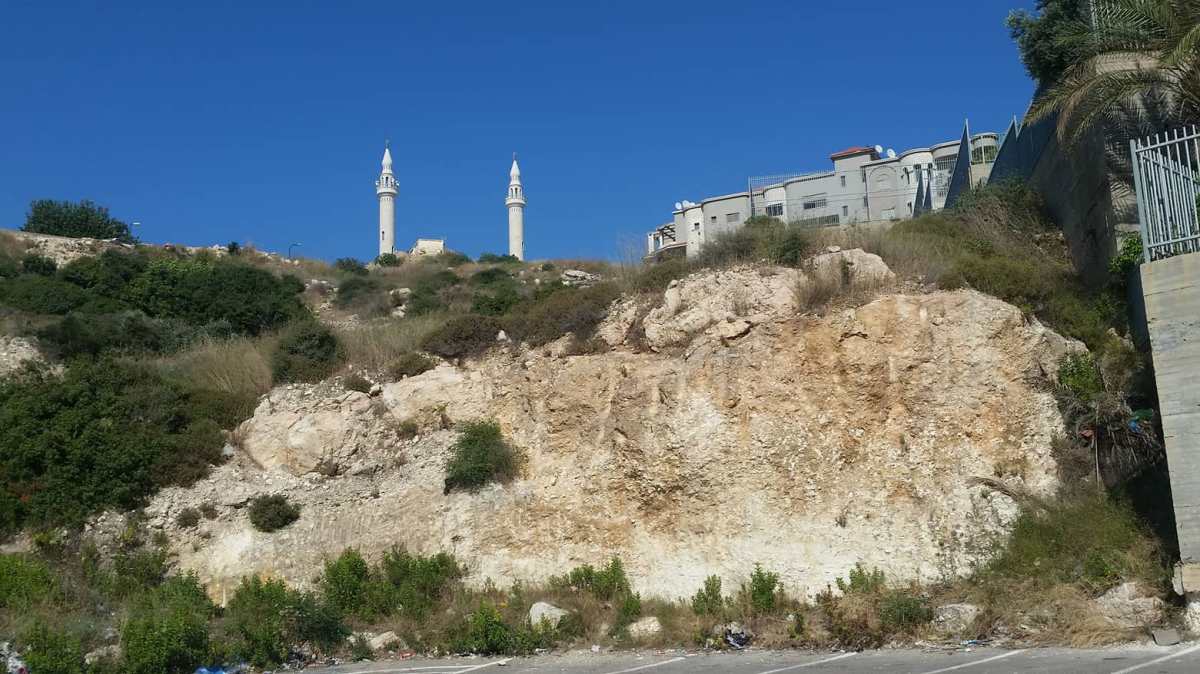
I’ve frequently gazed at Fureidis from there, at its beautiful gold-topped mosque, and wondered what was there.  After some very close calls in Muslim Arab villages, I have been hesitant to visit them alone.  While some places like Abu Ghosh are always safe, some of my more adventurous trips to Kafr Qasem and Tirah involved some scary situations.  Most people were awesome and I had a great time.  And for a few moments, I did worry about my safety.

Today, I felt the spirit was with me and decided to march up the hill.  Fureidis starts at sea level and goes all the way up a mountain.  It’s stunning.

This being a small village, especially from a segment of society where there’s a lack of trust of the government, people coming from the outside, and sometimes Jews- I knew what I had to do.  The first four or five people I talked to- I introduced myself, explained who I was, where I was from, and how I learned Arabic (important, because I speak Syrian which sounds out of the ordinary here).  As is the case in many villages, I had to explain why I wanted to take pictures and, in short, earn people’s trust.

In order to get into the mosque, I spoke with one man to get directions.  I bumped into him- perhaps not coincidentally, up by the mosque again, but this time on a tractor.  Samir was very friendly and took a picture of me smiling.  I would not be surprised if I’m in some village WhatsApp group now.  I understand what it means to build trust, so I welcomed it.  Samir then tells me he has called a man who can let me into the mosque.

While I was allowed to take pictures outside, pictures inside were not allowed.  This is the first time this has happened in Israel, and I wonder why.  I’ve even filmed prayers in many mosques- perhaps there is a dispute about land usage, building rights, who knows.  Maybe it’s just suspicion of an outsider- because it’s readily apparent so few Jews (or non-Muslims) visit here.

It was a very welcoming conversation- Muhammad, the other man, was a really warm person.  And as he saw my intentions were good, he opened up.  And we talked about Ramadan prayers, the history of the building, the delicious qamar al-din drink (which I didn’t realize was made from apricots!), and his own wild adventures in the nearby forest as a youth.

I then headed to the forest.  Every step of the way, I asked people for directions, even when I knew more or less where I was going.  This makes me known and builds trust.  Remember that the police, even Arab police, work throughout Israel, and don’t always have strong relationships with the local populace.  I was once told by a Druze boy- the Druze are solidly Zionist- that some people would be suspicious of me in the village not because I was Jewish, but because they thought I was a cop.  Even an undercover Druze cop.

I walked through the forest, which was amazing.  The trees stood still, the air was clear, the ground rough and clay-like in color.  Except when radiant bits of cream-colored stone poked through.

It was like a Middle Eastern fairy tale.

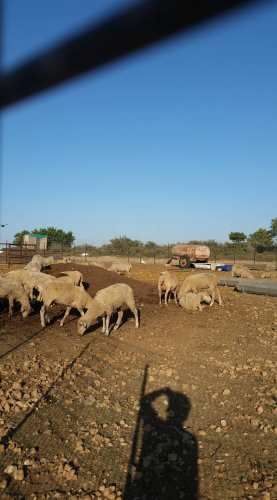
To my right, I noticed some sheep.  How cool!  How many places in the world can you take a single bus line from a metropolis and end up on a mountaintop with sheep?!

34631408_10101790225685202_4606934590597103616_o

Next to the adorable sheep was some sort of structure.  It looked vaguely like a trailer, an RV.  I suppose it was a house.  Perhaps one built without legal permission- I have no clue.  I do know that it’s a hot political issue, so I didn’t take any pictures.  I didn’t want people to think I was there to report them or cause trouble.

Two adorable kids, one 9 and one 15, came running over to me.  “Who are you?”  I told them I was from Tel Aviv (and America and was Jewish) and had studied Arabic in college.  I asked what they were doing.  They said they were picking vegetables.  There was a large garden, one might even say small farm, all around the house.

Without asking, they start handing me cucumbers.  Fresh, delicious, crisp cucumbers.  Straight from the garden.  Unwashed and unbeatable.

While I chowed down, we chatted.  One of the kids is a Barça fan.  He had a Messi shirt on and I told him it’s my team too 🙂  And that I visited there!  He was amazed.  Too bad the other kid like Real Madrid, we made fun of him 😀

It’s hard to describe to someone who doesn’t speak Arabic, but Arab kids here have a certain sweetness to them.  When I talk with them in Arabic, there’s a warmth- and it doesn’t matter if they’re Druze, Christian, or Muslim.  There’s a playfulness, a sense of fun, and kindhearted sincerity with laughter.  In a country where things can get rough around the edges, I find myself living in a deep deep smile when I talk to Arab young people.

Their father comes over and we talk in a mixture of Hebrew and Arabic about his farm.  All of the food is for his family.  He has five children.  And they live in the middle of the woods- it sounds absolutely fantastic.  Maybe I’ll do it one day.  All of his vegetables are organic and he has no desire to sell them- they simply feed his family.  Like I suppose all of us did back in the day.

Suddenly another son appeared with an injured lip.  I asked what happened- apparently their horses- because yes, they have horses- hurt him.  And he giggled.  While bringing me half a dozen more cucumbers.  Mmmmm.

We talked briefly about the lack of summer opportunities for kids (they mostly work) and how expensive schooling is (in Israel you have to pay for public school), but honestly I was more worked up about it than he was.  “Mah laasot?”- what can you do?  That was his response.  It was pretty clear to me he was more focused on living and not really interested in politics or complaining.  Just recognizing challenges and moving on to get the most out of things.

As I headed down the hill, I couldn’t help but think how important it was to share this story.

Personally, I’ve experienced this dozens of times in Israel.  Being invited into Bedouin, Druze, Christian- all sorts of Arabic-speaking homes.  Sitting sometimes for hours with people I had never met.  I never made plans with.  Just enjoying and talking and being with each other.

Very, very few Israeli Jews (or foreigners who come to visit- even to protest against my country) have had this experience.  And I’d like them to be able to enjoy it.

Because it is only with the power of language- and certainly a heavy dose of self-awareness and trust-building- that this happens.  This doesn’t happen because you read Ari Shavit or because you went to a political rally or because you ate hummus at an Arab diner or because you boycott Israel (good luck with that- this Arab town is in our country and the man who gave me a tour of the mosque used the phrase “Israeli Arabs” in Arabic).  Or any other of the multitude of superficial ways to engage with Arab culture- even when well-intentioned.

At a time when my country is under vicious attack by Hamas extremists, setting fire to thousands of acres of land and firing hundreds of rockets at my friends in the South, I built trust and had fun.  It was good for my heart, good for the people I befriended, and good for my country.  And I felt great.

To bring a little hope into the world, I speak Arabic.  I speak it because it’s beautiful, it’s related to Hebrew, it’s fun to mix them, it open hearts, it feels special to me.

I speak it so my 9 year old friend will grow up one day and remember, despite all the political tension, that a nice Jewish guy came around and joked with him about soccer teams in Arabic.  The only language he speaks.  That we, that I, care.  And maybe that will help bring a little more love and less conflict into the world.

It’s my firm belief that to learn a language you must fall in love with it.  Its sounds, its melody, its letters, its culture, its food, its history, its culture, its geography.  The grammar, the art, the calligraphy.  So that every chance you get to speak it- you do!  Not because you have to- this is the worst reason to learn a language.  But rather, because you want to.  You enjoy it, it brings you to a state of mind where you’re feeling good and passing that on to the interesting people you’re meeting.  Face to face, heart to heart.

None of my day would’ve been possible without Arabic.  If you had gone to the same village only knowing English or Hebrew (or for that matter, Arabic without Hebrew- our Arabic here is sprinkled with it)- you would’ve gotten as far as the hummus stand.  It just doesn’t build love here in the same way, to the same degree.

You want in on the fun?  To explore the real depth of this country, places few of your friends have even visited but are begging you to enjoy?

Here’s a unique opportunity.  I’m going to open an Adventure Arabic class.  We’ll learn together with the goal of going on a tiyyul, or trip, together at the end of the course.  To an Arabic-speaking village.  So that your Arabic won’t sit at home rusting, but rather get the chance to speak it in real life.

Because of the unique nature of Israeli Arabic, you need to already have a fairly strong command of Hebrew.  And besides that, a desire to learn and discover.

Come see what’s beyond the hummus stand 😉

The texture of letting go of “easy answers”

I come from a progressive background.  I grew up being taught to vote Democrat (and when I threatened not to do so as an 18 year old, got a series of heavy-handed lectures).  My DC suburban life was pretty liberal.  I knew Republicans- and they were a smaller minority than any ethnic or religious group I knew.  And decidedly quieter, for they knew the social consequences of being open about their identity.

I can imagine one could say the same thing in reverse about many other places in America.  I not know not a small number of liberal people who grew up in rural or conservative areas and faced bullying for their identity or beliefs.

When I worked for a variety of political and non-profit organizations, the rhetoric was quite clear: progressive=good, conservative=bad.  Even with regards to the moral standing of the person himself, not just the validity of her views.

One of the famous sayings of the labor movement, a movement that successfully improved living conditions for workers across America and the world, is: “which side are you on?”  There is even a catchy folk tune about it.  The idea was, politically speaking, to force people to choose between management (bad) and workers (good).  I can understand the need for rallying cries and I think the underlying ideology is problematic.

When you ask someone to choose between one human being and another, you set up a dynamic where someone will lose.  And while in some cases that might be necessary, it’s pretty black-and-white thinking that I think gets us into some trouble.  And perhaps gratifies our desire to feel right and just more than providing real solutions.  To the extent that solutions can be found- and they aren’t always so readily available.

Living in Israel and traveling the region has taught me some things.  For one, I’ve spent a lot more time with conservative people.  While I did go to college in the Midwest and summer camp in the South, I can’t really say I had deep relationships over many years with conservative Americans.  Here, my neighbors have pictures of ultra-Orthodox rabbis in their house.  As does almost every restaurant.  I do not live in the Tel Aviv of beach high rises.  I live in a place that loves Benjamin Netanyahu- it’s not on your Birthright itinerary.  Although it should be.

I have friends- not in the metaphorical sense- but actual friends, who have my phone number.  Who are Hasidic, who are Sephardic ultra-Orthodox, who are Druze, who are Arab Christians, who are Arab Muslims, who are Modern Orthodox settlers.  The kind of people, in many cases, that I was taught to fear as an American Reform Jew.  Some of whom know I’m gay and/or Reform and are fine with it.  Some of whom don’t know- or don’t know yet- and it doesn’t particularly matter for me.

The point is I feel at home with these friends and I feel at home at queer parties in Tel Aviv.  Or leading Reform services.  Or going to pride parades.  Or vegan hippie Shabbats.  In fact, I sometimes feel more comfortable in my traditional Mizrachi neighborhood than I do at those vegan Shabbats.  But I try to find something to enjoy everywhere.  I also find it amusing to meet some vegans here who are just as “Orthodox” about their diet as any Haredi rabbi is about his Judaism.  Israel is an interesting place full of passion, contradictions, love, and curiosity.  I would never live anywhere else.

Which brings me back to my original point.  Living in Israel has opened my eyes- not only to insights about life here, but also about my former homeland.  America is increasingly polarized.  I see this also with regards to the absolute nonsense all too many progressives are spouting about Israel.  I met a young man the other day who goes to Williams College.  He told me, over some pasta in Tel Aviv, that activists on his campus put up an “Israeli apartheid wall” every year.  And then naively link the Israeli security fence to the American wall on the Mexican border.  Two rather different issues, but with one common thread: seeing the world through an American lens rather than understanding the nuances of other societies.  Like the fact that for all its complexities (including land disputes with Palestinian villages), the fence between Israel and the West Bank drastically reduced suicide bombings.  Saving who knows how many lives.

Israelis loved to tell me when I made aliyah that living here is “lo pashut”- it’s not simple.  Nothing could be more true.  The more you get to know this beautiful land, the more you see the struggle of the soldier, the identity see-saw of being Arab and Israeli, the hardship of checkpoints, the necessity of checkpoints, the suffering of refugees, the suffering of their neighbors who’ve been neglected for years.  The snobbery of wealthy “left-wing” white people, the identity void those people face because their own Yiddish-infused Ashkenazi identity was torn from them.  The anger of Mizrachim towards Arabs.  Because they are perceived as them by those same Ashkenazim who purport to advocate for them.  And because Arabs kicked them out of their countries.  And because the state suppressed their Arab-infused cultures when they arrived.  And because Palestinians mock them for being Arab- without understanding that Mizrachi Jews have lived in the Middle East long before Arabic was even spoken here.

In the end, if you really experience the full breadth of Israel, you understand there are no easy solutions.  Anyone who tells you there are is selling snake oil or perhaps listening to a little bit too much NPR.  Here’s the reality: if Israel simply “pulls out” of the entire West Bank, it will become militarized and extremists will use it as a launching point for terrorist attacks.  Just like what has happened in Gaza since Israel exited 13 years ago.  Many Palestinians simply want to make a living and too many Palestinians aren’t willing to let go of the past and move on.  And instead turn to violence, threatening Israeli lives and their own neighbors’ ability to provide for their families in peace.

There are groups out there that would like you to think there are simple solutions to the conflict here.  Or that there are simply “two sides” when there are as many opinions amongst both Israelis and Palestinians as there are stars in the sky.

IfNotNow is one of those groups.  I actually went to one of their events in the States because I was curious.  I’m open to hearing what pretty much anyone has to say and I think every government or ideology should be open to critique.

The problem with this organization is that its entire mission is framed in the negative.  Besides the fact that I have yet to hear a single positive thing about Israel from this group- which is both a moral and practical issue if you’d like us to hear your message- the message is simplistic.  In their own words, they want to “end American Jewish support for the occupation“.  Regardless of the merit of the argument, the framing is entirely negative.  Rather than advocating for peace or for anything- it’s about what they’re against.  Without defining what “occupation” even means.

This is more than a semantic point.  There are Israelis (and even some Arabs) who don’t see Israel as an occupier.  Or even see Arabs as occupying Jewish land.  Most Palestinians who would argue East Jerusalem is occupied- and many who live there want to hold on to their Israeli ID cards even if there’s a Palestinian state.  There are Arabs within Israel who don’t even identify as Palestinian, let alone want to live in a Palestinian state.  And others who do view their land as occupied- in pre-1967 Israel.  Who have citizenship.  There are Palestinians who similarly believe all of Israel is occupied territory.  Some Israeli Jews view the West Bank as occupied, Gaza as Palestinian-controlled, and want a Palestinian state in those two areas.  And other Jews who disagree to varying degrees.  Many Jews also support land swaps which would allow Jewish settlements to be fully integrated into Israel while giving equivalent land from within Israel to the Palestinians.  Largely Arab villages- many of whom despite their sympathies for Palestinians, don’t actually want to be swapped into a Palestinian state.  Who fear it will become an autocracy like all of its Arab neighbors.

So let’s take another look at the platform of this organization as an example of what’s going wrong with certain streams of progressivism.  On the webpage linked to above, they write: “We do not take a unified stance on BDS, Zionism or the question of statehood. We work together to end American Jewish support for the occupation.”

So in essence, the group is against the occupation- which they won’t define.  They won’t say if they support Israel’s existence, whether it can be a Jewish state, or even if people should boycott the country.  The only thing uniting this group is “ending the occupation”.  What that means- not only do I not know, they don’t know.  I can’t have a rational argument- or even find room for agreement- if I don’t know what somebody believes.  And it seems evident to me that these people are struggling with their Jewish identity, which I can empathize with.  I’m not sure they’re doing it in a way that’s advancing peace.

This past weekend, I spent a lovely Shabbaton with the Israeli Reform Movement’s biennial convention.  Young and old came together to celebrate the growth of, yes, progressive Judaism in Israel.  I enjoy both liberal Judaism and Hasidic Judaism and everything in-between.  They all have their ups and downsides.  Haredim need to work on their homophobia and judgmental attitudes.  And Reform Jews need work on, well, their Haredi-phobia and at times, anti-Mizrachi racism.  Which I did hear quite distinctly from several leaders at the conference.  One of whom decried the “Judaism of the ghettos of Poland and Casablanca.”  Haredim and Reform Jews both have beautiful passion for our religion and people.  And I get something out of all types of Judaism.  I had a great time and made good friends.

As we left the conference to take a shuttle to Tel Aviv, my friend Yarden checked her phone.  We had such a good time, she hadn’t looked for a while.  Turns out, Hamas was shelling her Kibbutz near Gaza- 3 rockets had fallen just that day.  I of course offered to let her crash at my place in Tel Aviv, but she said: “I appreciate it, but I have to get back for class.  I’m used to it at this point.  I was just hoping.  Hoping it had stopped.”  A week after 100 Palestinian Hamas rockets had landed in her area.

I gave her a hug goodbye and told her I’m praying for her and always here if she needs a place to stay.  And I plan on visiting her as well.  I sent her a cute message too after we left.

Do these words alone fix the Middle East crisis?  A crisis brewing in various forms for thousands of years?

No.  But nothing can.  Or at least I’m not sure what can.  Because I’m willing to admit, in a fashion I would’ve struggled to just a few years ago, that I don’t have easy solutions.  I’m not even sure what solutions there are.  And I hope things calm down.

What I did offer my friend- and I try to offer people around me- Arab, Jewish, Christian- whatever.  Is empathy.  Is kindness.  Is a joke.  Is a smile.  Is love.  Is a visit.  Is a cute emoji.

Some people, including my former self, might mock what I just said.  In the face of rockets and “occupation”, of suffering of so many varieties and cultures and religions.  What Matt, Matah, has to offer is kindness?  A joke?  Hah!  Why doesn’t he just go to a rally and stop the occupation!  What a blind superficial hypocrite who’s just trying to blind us to the reality of oppression.

Which side are you on?

To which I say: you’re asking an impossible question.  I’m a proud Israeli Jew.  That’s my side.  And I care what happens to my Arab neighbors.  And I care about refugees.  And I care about my neighbors even if they don’t like them.

In short, I care.  Not about “one side”.  About people.

In the end, there are some things I believe can help make our country greater.  I say greater because it’s already really awesome- in ways you’ll never see on the news.  The relaxing beaches, the Jews and Arabs who are friends, the gorgeous parks, the nightclubs, the life.  The vibrancy of this place and its people that makes New York look like a dull dirty boring rat-infested overpriced city with no beach.  That, OK, has better bagels than here.  But 10% of the soul.

I’d love to see more Jews learn Arabic.  I love to see more Arabs and Palestinians learn Jewish history and recognize our peoplehood.  I like to see more Ashkenazim learning about Mizrachi history- and learning Yiddish to understand their own.  And Mizrachim connecting to their Arabic-infused cultures and languages to realize they share a lot more in common with Arabs than some might like to admit.  Which I get.

Rather than offer easy solutions, I try to embrace that we can’t fix everything and there might not even be solutions to everything.  That can be scary to people who need certainty- I’ve been there before.  Now I’m proud that I am increasingly able to live with that discomfort and treat people with kindness whenever possible.

My wish is that progressives like IfNotNow, even if they continue to advocate in ways I disagree with, can understand where people like me are coming from.  Where my country is coming from.  And to advocate with a little more understanding and love.  And a little less yelling.

Because the one thing every visitor to Israel can agree on is we are already have enough of that.  Even if it’s just the guy selling tomatoes in the shuk.