A Preview of a Terrorist Attack

Israel is an exceeding loud country.  I’ve lived in big cities for most of my life and I speak 8 languages, so I’ve traveled.  And nothing- I repeat nothing- comes close to the noise of this place.

I live in South Tel Aviv, perhaps the single loudest part of Israel.  When people greet each other here, standing inches apart, they shout “shaloooooom!” as if they were down the street.  I go to Shuk Hatikvah, my local market, and it is super loud.  I’ve gotten used to it.  People are simply hawking their goods- cucumbers, dates, you name it.

One day, I heard screaming so loud in front of the market that I actually didn’t cross the street.  I was afraid something was “going down”.  And to be fair, if there’s one neighborhood of Tel Aviv where that’s likely to happen, it’s mine.

I paused for about 30 seconds looking anxiously.  The man was selling tomatoes.

Add to this that I live on the flight path to Ben Gurion Airport, with planes flying at all hours of the night.  And the fact that my neighbors blast Mizrachi music every morning (which I actually like to wake up to).  And basically, I’m used to loud noise.  It’s my home.

I’m also now a bit more accustomed to the idea of terrorism.  In America, terrorism is a far fetched concept.  Unless you lived in Lower Manhattan on 9/11, you haven’t really experienced a massive attack.  There have been smaller, very deadly shootings for sure.  Sadly, even last week at Google.  But not on the scale of what Israel has experienced.

According to one source, Palestinian terrorists have killed 3,759 IsraelisHere’s a list of the major attacks since the 1990s.  Adjusting for population, this would be the equivalent of 740,227 Americans.  More than all the American soldiers who died in World War I and World War II combined.  There continue to be terrorist attacks on a regular basis, mostly ignored by the Western media bent on a simplistic black-and-white view of the region.  That does Israelis and Palestinians a disservice.

This is, by the way, not an attempt to downplay the death and sadness experienced by Palestinians.  There’s enough tears to drown both sides here- to the extent that you can really boil this conflict down to two sides.  Which I don’t really agree with.

My point is simply that it can be stressful to be an Israeli.  The other day I was locked in my neighborhood library for 20 minutes while police neutralized a suspicious item outside.  It was scary, which I suppose is the point of terrorism.  It’s not just the killing, it’s that the way it is done is meant to inflict maximum psychological harm.

Today, I was relaxing at a neighborhood cafe.  While checking my loads of WhatsApp messages like a good Israeli, I heard the single loudest and most explosive noise I’ve heard in this land.  And it wasn’t just me.  Everyone- I mean everyone- immediately turned towards the sound, eyes wide open, and hearts skipping a beat.  You could just feel it.  Israelis are not easily phased.  You know that a noise isn’t a problem in Israel if no one is looking.  And you know it is if people drop what they’re doing and all start to stare.

Luckily, people started talking within a minute or two and realized someone’s tire on a motorcycle had blown out.  Everyone started smiling and let out a sigh of relief.  Mine was audible.

After recuperating for a moment, I did what people here do- I went on.  I went to the bathroom, I got some water, and I headed to a pizza place where I called a few friends and told the guy working there about my favorite American hip-hop.

And then went home on a very crowded bus where a small fight broke out and there was more screaming.  I guess on some level I was relieved it was the usual Hatikvah screaming.  And not that of people wailing over bodies spilling blood.

I’m grateful to be here writing this blog.  Thousands of Israelis weren’t so lucky over the past 70 years.  That’s right, my country has made it to 70.  The golden years, if it were an elderly Jew retiring in Florida.

I’m proud to be an Israeli.  I’m not always proud of what my government does or how all of our people act- just like I was when I lived in America.  Being proud of your country also means speaking out for what you believe- that’s democracy.

Yom Ha’atzmaut, Israeli Independence Day, is around the corner.  The decorations are up in my neighborhood and around the city.

I have a simple message for my friends abroad, especially my progressive friends in Europe and the U.S.  Empathize with us.  Don’t stop empathizing with Palestinians.  Just also empathize with us.

If you had bombs going off, attacks for 70 years, wars, and such a fear of these things that a loud tire bursting is enough to startle you- then you’d be a lot like us.

We don’t have the luxury of having massive rallies like they did in Barcelona after the 2017 bombings.  Because if we had such rallies every time someone’s child was split into pieces, we’d be doing nothing but rallying every day.

We have lives to live.  Understand that even the most eccentric Israeli behavior- or politics- has reasons behind it.  Whether it’s the right path or not, there is something that causes people to behave the way they do.  The way we do.

I’ve met some Americans here truly open to listening and to exploring all the good and bad of the cultures of this region.  Kudos.  I’ve met other foreigners who come and lecture me about my own people, my own religion, my own history.  Even flat out anti-Semites.

If you’re the latter- start your work at home.  With yourself, with your community, with your own country.  Americans have little to stand on when heaping sometimes aimless anger on Israel.  Every inch of your country was inhabited by Native Americans and you take it for granted that it now belongs to you.  I can personally say I know next to nothing about the Potomac Indians who inhabited the town I was born in.  And I’m at least aware enough to know they exist.

If you don’t think Jews are from here- you’re wrong.  Both we and Palestinians are connected to this land.  And we’re both a lot more connected to here than you are to Boston or Minnesota or California.  Because you’re not from there- you’re from Germany, France, Scotland, or Ireland.

And to the Europeans nodding right now- who do you think caused all of that?  Or even most of the problems in Israel and Palestine?  It’s you guys!  Who stole Jewish land, money, and lives on every inch of your soil for 2000 years. Who colonized the Middle East and stole its resources.  Me and my Palestinian friends are living with the consequences of your imperialism.  So stop munching on your free-range Swedish meatballs with an air of self-righteous “neutrality”.  Because the German Volkswagen you’re driving was built with the blood of my people.  And your British Petroleum is paid for with the blood of 405,000 Iraqi Arab lives.

In the end, none of us are entirely innocent and few are entirely guilty.  The effect of terror, at least on me, is that once the fear fades and my safety returns, the anger builds up.  Which is what I’ve shared with you today.  So try to understand what it must feel like on a national scale- when the explosion really happens.

I feel blessed to be an Israeli, and as I continue to settle in here, I’m not quite sure what it means to be an American going forward.  We’ll have to see.  I do know that I just want peace.

The kind of peace where I can live in my Jewish homeland without thinking that a blown out tire is going to be the last sound I hear.

How to stay sane while living in the Holy Land

Recently, I was talking to an Arab friend in Arabic.  He said there are three groups of people here.  One, Arabs who think this whole land only belongs to them.  Two, Jews who think the same thing about themselves.  And three, Arabs and Jews in the “mushy middle” who want to live together.

I think I agree.

Today, I saw a good demonstration of how this plays out.

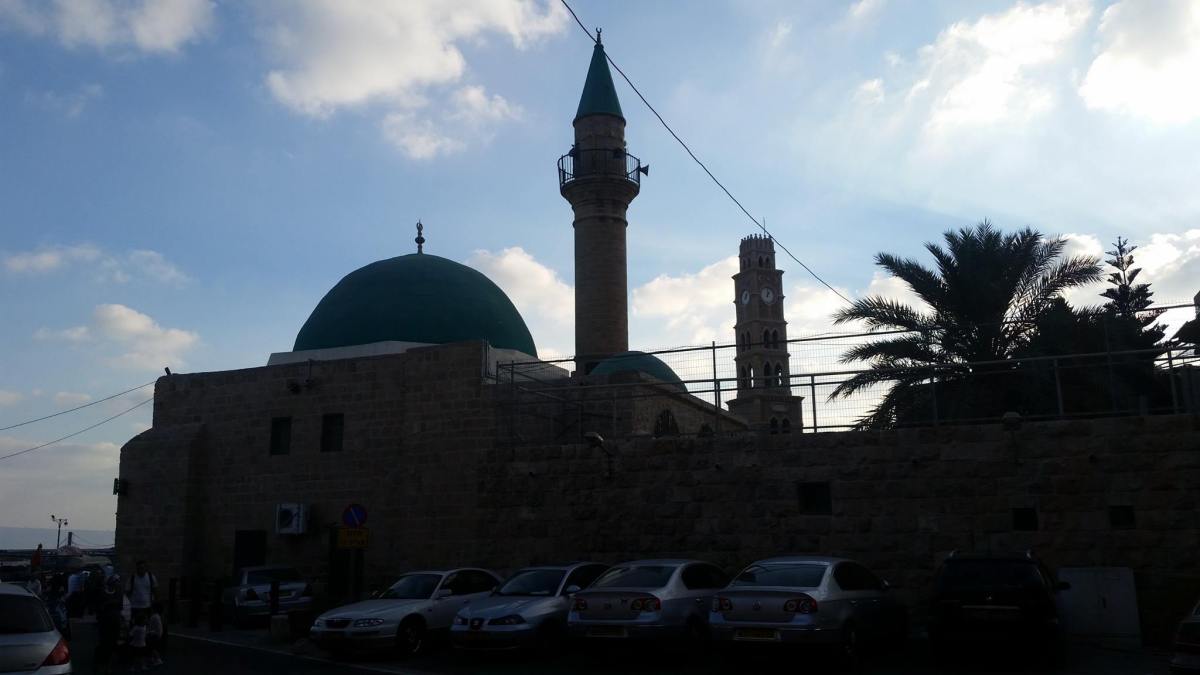
After lazing around on the beach on a gorgeous day, I had some extra time on my hands.  Because I live in by far the most fascinating country on the planet, I simply slipped my sandals on (and then off) and walked into a mosque.  The Hassan Bek Mosque is a historic building located in the middle of Tel Aviv.  It was built in 1916 and to this day is an active mosque.

According to what seems to be a pretty well-sourced Wikipedia article, the mosque was built on land that the Muslim governor of Yaffo confiscated from Arab Christians.  Later, it was used for Arab snipers shooting at Jews.  During the 1948 War of Independence, Israel captured the area.  The houses were largely razed and some troops wanted to demolish the mosque itself, which was vetoed by future Prime Minister Menachem Begin.

At various times it was going to be turned into real estate development (stopped by protests) and may have housed a suicide bomber, which led to some Jews throwing firebombs and some Arabs hurling rocks at the Jews from the mosque.  Arabs then threw rocks at Jewish motorists and some Jews threw a pig’s head into the mosque.

In short, a microcosm of the region’s conflict, some of which I didn’t know about until writing this blog.  Depressing and important to be aware of so you know where everyone is coming from.

If you go to the mosque itself, it’s just gorgeous.  You wouldn’t know any of that crap if you just enjoyed the beauty of the building itself.  Here are some pics:

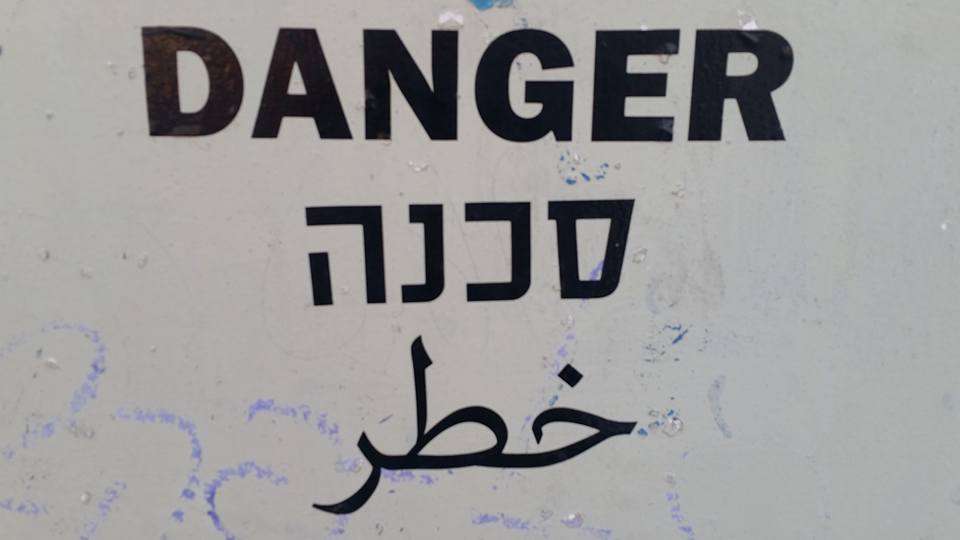
After some peaceful reflection, perusing the beautiful books (including Qurans from Egypt and…Saudi Arabia!), I talked with a man inside.  We chatted in Arabic because I wanted to know what a sign meant.  It said (in Arabic) “Tasu is in danger”.  I knew “is in danger” but didn’t know what the word “Tasu” was.

He explained it was the name of a cemetery in Yaffo (Yafa in Arabic).  A Muslim cemetery which, incidentally I had visited in previous adventures, that is now possibly going to be turned into…a hotel.  When you consider the long history of conquest and re-conquest and desecration this land has known, it’s just so, so sad.  I patiently listened as he explained the situation and I shared my sympathy.  It’s hard to imagine a Jewish cemetery becoming a hotel here- the government is excruciatingly diligent about not building on Jewish graves due to prohibitions in Jewish law.  So much so that even Secular Jews get peeved by it.

The man pointed me to pictures of the neighborhood (called Manshiyya before 1948) on one of the columns.  The pictures were sad and the descriptions in English were pretty brutal.  Here is a slideshow:

This slideshow requires JavaScript.

Occupation, nakba, bombing, demolition, ethnic cleansing- these are their words in English.  The sad part is there is some truth to what they’re saying.  As I’ve written about extensively on this blog, some Zionist militias forcibly expelled Arabs in 1948.  That’s not a theory, it’s a fact.  It’s also true that few things are black and white and the language used on these signs, in English for tourists, was as bombastic as possible.  Their existence perhaps evidence that Israel’s freedom of speech is a bit healthier than some expect.

No mention was made of the Christians whose land the mosque is built on nor the Jews who were shot at from its property.  I understand the anger of the worshipers especially in light of the recent cemetery controversy.  I also wonder if these signs are presented in a way that fosters knowledge of the past for the sake of building a better future.

Feeling sad and angry (both at the interjection of the painful past into my present and at the real estate developers who are about to turn a Muslim cemetery into a hotel), I walked back to the man.  I told him in Arabic: “I’m sorry for what’s happening.  I’ll pray that they don’t turn your cemetery into a hotel.  In the end, we must live together.”  He gave me a big smile and a handshake.

This man knew I was Jewish.  I can’t change the past- not the fact that this neighborhood was destroyed, nor the hateful acts committed on all sides in this place, nor the cemetery issue itself.  Although I plan on speaking out about it now.  What I did was just try to warm someone’s heart.  In a place where I feel quite helpless about convincing politicians, I just tried to be a human and reduce the hate in the world.

Feeling extremely tense, I walked towards Yaffo, where later I’d be celebrating the Moroccan Jewish holiday of Mimouna.  I stopped for some food at an Arab-owned restaurant.

The owner was hot.  Physically, for sure, and also just really nice.  Khalid had a beautiful smile and an infectious and kind personality.  We chatted on and off for hours.

An American woman walked in totally confused.  I helped her order and translate between her and Khalid.

Khalid noticed how I helped her and several other customers with the menu and I made some corrections to the English on their fliers.  He asked me if I would work with him.  I was surprised.  He basically said I had a nice connection with the customers, I knew public relations, and he needed help.

As I considered what had to be one of the kindest and most interesting job offers I’ve ever gotten, the American woman asked me about Gaza, about refugees, about pretty much everything that makes me cry a lot.  When the complexity and the sadness just overwhelm.

So instead of policy solutions (which Americans love), I gave a different answer.  I said: “If you want to live here, you need to know the past.  Insofar as the past helps you make a better future.  If you fixate only on the past, you’ll never see your way out and we’ll be stuck in a never-ending blame game.  We have to also live in the here and now and a better life together.”

Khalid then looked at me while the woman grabbed her purse.  He said: “Don’t pay for your food- we’re business partners.  You have to come work here.  I don’t see religion.  I see that when someone looks me in the eyes, I trust him.”

With a true feeling of gratitude, I headed to Mimouna.

What I wish for the Middle East and for my beloved country of Israel and the Palestinian people is this.  Know our past- and know the past of the other peoples of this land.  And don’t get stuck in the swamp of never-ending hatred, sadness, and guilt.  We don’t have time for it- we only get one life.  Know the past to learn from it and make a better future.  Let’s build it together.  Let’s live in the complicated space that is the Hassan Bek Mosque next to the serene park built on its neighborhood’s ruins next to the gorgeous beach we all enjoy.  Let’s live in the Mimouna party of Moroccan Jews who are my friends and whose families were expelled by Muslims in North Africa.  And who continue to celebrate the customs they once shared with them.

This place is messy.  It needs healing.  Put down the megaphones, put down the guns, and most importantly put down the sense of ultimate righteousness and purity.  Because we’re all a little dirty and wouldn’t it be better if we had someone to scrub our back and clean those hard-to-reach spots?

A Muslim pluralist

One of the great frustrations I’ve faced when dealing with dialogue here is that some people aren’t pluralists.  Being a pluralist, as I see it, is about saying “I have one way of doing things, you have another, let’s co-exist.”  It means legally allowing people to do things you don’t agree with.  It’s not about getting into a war of whose tradition is better, it’s just accepting that we’re all in this together with some right to autonomy.

In the Jewish World, this is a frequent dilemma.  There are Orthodox Jews who see Reform Jews as inadequately Jewish (hence why my movement is not recognized by the Israeli government).  There are secular Jews who think Orthodox Jews are overly superstitious, conservative, and backwards and should just modernize with the times.  While in the U.S. Jewish pluralism is stronger than Israel (perhaps because it’s not tied up with a government), there are still issues in places like Hillel and Hillel and Hillel.

That being said, you can’t even being to compare American pluralism with what goes on in Israel.  Here, there is no separation of Church/Synagogue/Mosque and State.  Which means progressive Jewish movements are put at a disadvantage financially, legally, and politically.  The same could be said for people who feel Jewish and aren’t recognized as such and also people who just aren’t religious at all.  Of any background.

I find that communities here struggle- on all sides- with the idea of letting someone else do something you disagree with.  You’ll find militant vegans protesting Hasidic kapores rituals but not protesting the hamburger joint on their block.  You’ll find Reform Jews railing against Hasidic intolerance, while making fun of their clothes, their language, and their religiosity.  If you replace Hasidic with Hispanic, I doubt my fellow Reform Jews would make fun of their culture.  Of course you also have the more well-known bigotry of Haredim who throw stones at cars and “immodest” women, etc etc.

These circles of intolerance extend to other religions here.  I’ve met Greek Orthodox Christians who claim they came before the Catholics.  I’ve met Catholics who railed against Evangelicals.  I’ve met Evangelicals who told me I’m not being a good Jew.  I’ve met Muslims who said Arabic was the world’s first language, as uttered by God.  And couldn’t believe I didn’t convert to Islam after reading the Quran.  I’ve met Arab Christians who don’t particularly like Muslims.  And Arab Muslims who don’t believe Jews have any connection to this place- and told me this to my face.  And I’ve met Arab Muslims who get ridiculed by other Arab Muslims for being half-Romanian or immodest or even for being Bedouin.

And of course, you have the Palestinians who want to wipe Israeli Jews off “their land”.  And the Israeli Jews who don’t recognize Palestinians even exist.

It’s enough to make your head spin.  Probably like yours is now.

So at times like these, when people here just fill you with sadness and anger, I like to think of strong counterexamples.  At a time when Islam is turning increasingly fundamentalist- or at least its fundamentalist elements are growing in prominence- I met the most unlikely Muslim pluralist.

I visited the Arab village of Tira, which you can read about here.  I briefly mentioned my interaction with Jamila.  Jamila is a high school student.  She works at a toy store.  I had never been to an Arab toy store, so I wanted to see what it looked like.

She was super sweet.  While I came in trying to show my deference to her culture, all she wanted to talk about was Israeli and American culture.  She really wants to visit Tel Aviv more.  She loves American movies.  Hebrew is her favorite subject, Harry Potter- not the Quran- her favorite book.  Nothing wrong with liking the Quran- I personally love parts of it.  Just that Jamila is not who you might expect to say this.

Because Jamila wears a hijab.  A headscarf.  Generally a sign of religious conservatism or perhaps devotion to tradition.  And a bone of serious contention in Western Europe.

When she kept talking about how much she liked Jewish culture here, I asked why.  Her answer contains a grain of truth we all should pay attention to.

She said: “what I really like is that when you go to the beach here, the Jewish women can wear whatever they want.”

Before you launch into a Western-style approbation of hijabs, that’s not what’s going on here.

I asked her: “so you mean you wish you didn’t have to wear a hijab?”  After all, I have met Arab girls here who have told me that.

She said: “no, I wear a hijab because that’s my tradition.  I’m Muslim.  What I like is that they don’t have to.  The Jewish women have the choice.  I like riding my bike, but some people here don’t approve because I’m a woman.”

In other words, Jamila is a pretty awesome example of a pluralist.  She wears a hijab- and would continue to do so- she just likes that Jews here tend to have more choice.  That she could wear a hijab but maybe her sister wouldn’t.  Or would change her mind according to her views over time.

Jamila, surprisingly, is a good example for all of us.  We do not have to agree on many things.  I admire the Hasidic community for keeping Yiddish alive, for preserving certain customs, and for their birthrate to be honest.  I see other things in the community, such as homophobia or gender politics, as quite problematic.  And people ask me: “well Matt, you’re a queer Reform Jew, how could you possibly like Hasidim?  They won’t accept you.”

To which I say: “I’m a pluralist.”  I can like what I like about certain communities and not like what I don’t like.  I can accept that both aspects exist.  And I’m entitled to my feelings on them.  Unlike some of the more militant secularists here, I don’t want Haredim to abandon their traditions because they’re “backwards”.  I do want more of a separation of religion and state.  And there are things I like about their community.  The things I don’t- well, sometimes you have to find other avenues for making your case rather than imposing laws.  And- this is the tough one for many people- sometimes you just acknowledge that it’s there, whether you agree or not.  And that it’s maybe not my role to change everything about how someone else lives.

Like Jamila and her hijab, I don’t want everyone to be like me.  I want people to be free to choose their own path, even when I don’t want to follow it.  It’s important to remember coercion can flow in all directions, left and right.  Muslim and Christian.  Orthodox, Reform, and Secular.  Israeli and Palestinian.  My respect for conservative traditions is not necessarily at the expense of my progressive values.

Lehefech, as we say in Hebrew.  “To the contrary”.  It is because of them.

Gaza, Indian Christians, and Passover

A whole lot more happened today, but that’s what I could fit in a title.

Last night was Passover.  Passover in Tel Aviv was amazing.  It was my first time celebrating it in the Holy Land and I loved it.  As a child, Passover was my favorite holiday (though this year’s Purim in Tel Aviv is giving it a run for its money).  It’s a holiday about freedom and especially growing up with abusive relatives, it always had a special meaning for me.  About my own potential for freedom one day and all the other oppressed people in the world who I would make that journey with.

Here in Tel Aviv, I went to two seders: one Reform and one LGBTQ.  Perhaps one of the few places in the world where you can genuinely “Seder hop”, I walked from one to the other in 10 minutes.

At the first Seder, I met a fellow gay Jew, Oscar, who was Spanish and Swiss and spoke French, Spanish, Gallego, English, and some Hebrew.  Pretty amazing to kind of meet a European me!  We agreed to meet the next day for lunch in my neighborhood, the “other side” of Tel Aviv.

I had planned on walking him through the refugee and foreign worker neighborhood of Neve Sha’anan, which we started to do.  Then we looked at the Central Bus Station, arguably one of the grittier buildings in the world, and he said “ugh, it’s so ugly!  I hate that place.”

I quickly changed our itinerary to show him the hidden beauty of this chaotic space.  Since it was Passover and Shabbat, most things were closed.  The most interesting things were still open.  An entire area of Filipino restaurants, cafes, and grocery stores was open.  Homemade food filled the air with delicious smells.  We sat and got some food, including my first-ever Halo Halo, a delightful dessert drink with a million types of toppings and fruit.  The woman behind the counter, like most Filipinos here, speaks amazing English and opened her Halo Halo machine just for us 🙂

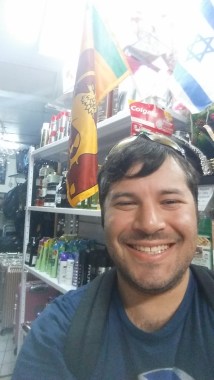
Passing by a store, I noticed something curious.  Inside was a Sri Lankan flag!!!  I know this flag because in Washington, D.C., once a year, they open all the embassies for visitors.  I had been to the Sri Lankan one and eaten this delicious coconut rice with spicy red sauce.  Turns out the woman inside was indeed Sri Lankan!  And she told me the name of this delicious dish was Miris and Hal Bat, a name I’d been searching for for years!

The woman was so kind.  She’s thinking of opening her own Sri Lankan restaurant in Tel Aviv (friends- keep your eyes pealed!).  She grew up Buddhist and then converted to Christianity in Israel.  Her husband is from Darfur and I presume Christian (perhaps explaining her conversion).  He was super nice and we talked about my favorite Sudanese music.

20180331_150222

Heading out, I let Oscar go on his way and I strolled towards Yaffo.  There, I bumped into some lost tourists from Belgium.  One of whom was exceedingly gorgeous.  I gave them a free tour of Florentin and we decided to sit down to coffee.   They have two weeks in Israel so I chatted with them for a couple hours and helped them plan their trip.  We spoke in a mixture of French and English.

After being so kind as to treat me to my tea, they headed to their hostel and I walked home.  On my way home, I saw women…dressed in saris.  While this might not be such a strange sight in Suburban Maryland where I grew up (with a lot of Indian friends), it felt kind of random in Tel Aviv.  I’ve met Indian Jews here, but there aren’t many in Tel Aviv and I haven’t seen many in traditional clothing.

Because it’s not weird to talk to random people here (like it is in much of America), I went up and asked where they were from.  They said they were Indian Christians.  They were in Yaffo celebrating Easter.  I wished them a Hag Sameach, definitely the first time I’ve used that phrase to wish someone a blessed Easter.

Arriving back in my neighborhood, I saw something strange.  A clean store.  For those of you who’ve spent time near Hatikvah, you’ll know that my neighborhood has many virtues.  Delicious ethnic food, cultural diversity, rare Jewish languages, and a certain warmth to the people.  But nobody would say the virtue of my neighborhood is its cleanliness.  When I come back from a trip abroad, it takes me a day or two just to get used to the smell again.

I walked up to the store and saw beautifully arranged fruits and vegetables.  Seeing as how I was hungry and most restaurants were closed for Passover, I decided to buy some produce.

Turns out it’s a brand new store.  Owned by Sudanese Muslims- from Darfur.  It’s probably rare for someone in the U.S. (or pretty much anywhere outside of Darfur) to bump into both a Darfuri Christian and a Darfuri Muslim in the same day, blocks apart.  Unless they happened to be working with refugees.

I was blessed with the chance to speak Arabic with them, for a few reasons.  One, because I love languages and the chance to hear Sudanese Arabic outside of Sudan is pretty rare.  It’s a really neat dialect.  Also, I wanted to share a message.

I told him: “batmanna inno al-pesakh al-jay, ra7 itkoon 3ankoon 7urriyeh.  3eid al-fisi7 huwwe 3eid al-7urriyeh.”  That I hope that next Passover, they will have freedom, because Passover is the Holiday of Freedom.  We talked about how I’m working with other olim here to support refugees.  And you could see his smile grow by the second.  I know where I’ll be shopping more- and it’s a 5 minute walk down the street.

On my way home, I couldn’t help but think about my fantastic Pesach experience.  This was undoubtedly the most diverse Passover I’ve ever had.  And I grew up in a county that has 4 of the 10 most diverse cities in America.  I’m starting to wonder if in some ways, my corner of Tel Aviv is even more diverse.

I’m incredibly grateful for the opportunity to celebrate this Passover in freedom.  Freedom to do it how I want, with whom I want, and where I want.  Freedom is a blessing every day you can enjoy it.

I pray and will work for the freedom of the Darfuri men I met today and all refugees.  Here and around the world.  There are few causes more dear to my heart or so morally clear.  Whether these refugees continue to live in Israel, are blessed with a secure country to return to, or move elsewhere, I pray that they are able to live in safety.  Nobody- nobody- should be sent to their death.  I hope that next year I won’t need to write this blog again because refugees will be given what they need: refuge.

And now to return to the title of this blog.  As you may have noticed in the news, many thousands of Gazans, along with some Palestinians in Israel, the West Bank, and Lebanon are protesting.  Are they doing it to coincide with Passover, due to its message of freedom?  I don’t know, though it would represent perhaps a welcome recognition of our shared existence, even if the timing might serve to stiffen Israelis’ spines rather than inspire empathy.  Even if the cause is just, I’m not sure I would choose Ramadan as a time to protest Islamic anti-Semitism.  Just like if I’m angry at a friend, I wouldn’t yell at him while he’s studying for a stressful test.  Part of communicating is understand when the other person is ready to listen.

I’m not suggesting there’s a particularly ideal time to make the powers that be listen.  I’m just saying that if any part of your goal is to reach the Israeli heart, making a Jewish religious holiday a time for protest is going to backfire.  Especially when I remember as a teenager, a Palestinian terrorist blew up a Passover seder killing 30 people and injuring 140 more.  Even I felt angry about the timing of these protests and I’m rather empathetic to the cause.

I have little doubt that it is miserable to live in Gaza.  Unemployment in Gaza, as of 2016, was 42%.  For youth, 58%.  Child labor is on the rise.  The Hamas government is an abysmal filth pit of extreme religious conservatism.  At various times, it has banned Palestinian women from dancing, from riding behind men on motor scooters, from smoking in public, from getting haircuts from male barbers, from running in marathons.  It even banned New Year’s Eve celebrations in the name of Islam.  It has banned Palestinians from reading certain books, from holding hip-hop concerts, and from going to the water park.  Already feeling geographically penned-in on both the Israeli and Egyptian borders, I have to imagine that Hamas’s extremist steps only escalate the tension that Gazans feel on a daily basis.

What’s the solution?  I’m not honestly sure.  Marching to the border with names of their former villages and demanding to “liberate Palestine” is only going to make most Israelis angry.  And scared.  I’m personally scared for what is happening and what may yet happen.  The loss of life, which has already begun, will likely continue on both sides.

I empathize with the anger of many Gazans.  Their life sounds suffocating and if we’re totally honest, no government in the region is totally innocent here.  People, including children, are suffering.

I also feel that the Palestinians striving for their own freedom need to remember that I, along with my fellow Israelis, have worked hard for our own.  We’re not going anywhere.  You can come back to Salameh, the Arab village I live on top of, and maybe we can build a life together.  That’d be a miracle and maybe it’s not possible due to the hatred all around.

What you cannot do- or at least what I will stop you from doing- is kicking me out.  The Palestine of 1947 doesn’t exist anymore.  Pieces of it, perhaps.  Just like the many Jewish communities around the world destroyed or cleansed by both Muslims and Christians.  Which is why we’re here.  Just this week, a Muslim man in France stabbed an 85 year old Holocaust survivor to death while shouting “Allahu Akbar”.  Stabbed 11 times.

Does this man represent all Muslims?  Of course not- and to suggest so is bigoted.  But the thing it doesn’t need to be all Muslims for Jews to feel scared.  We’re scared.

You’re scared.  You don’t like it when Israeli jets bomb your houses.  To get terrorists, but ultimately killing innocent Gazans along the way.  Inevitable.  And sad.  And how does the average Palestinian, who only knows Israelis in an army uniform, build a relationship with our culture beyond warfare?

And for Israeli Jews, while we’re blessed with having Arab neighbors in our own country (who frankly we should get to know better), the only image we have these days of a Palestinian is of a terrorist.  Or of a more “peaceful” person waving a flag, storming the border fence, claiming to liberate Palestine.  From us.  Presumably, to kick us out.  Back to the world that murdered us over and over and over again.

This blog could continue endlessly.  The torment of people here, on all sides, is so, so sad.  My friend Hekmet teaches me dabke, a Palestinian and Levantine folk dance.  The other day I told him how sad it was to learn about how some Zionist militias destroyed Arab villages.  He told me something that both eased my conscience and gave me hope: “Matt, it is sad.  And it’s also sad that Jews were kicked out of Middle Eastern countries.  In the end, we just have to live together.  We can’t only focus on the past.”

The past matters.  And so does the present.  My sincerest hope is that while knowing our past- as Jews, as refugees, as Israelis, as Arabs, as Palestinians- we can live together in peace.  Because re-litigating or liberating or invalidating or denying on any side will just kill and kill.

I don’t want a war here this summer.  I’ve come to a point where I like living in Israel.  And I want to meet Palestinians who want to build a future of hope together.

If I can take away one message from my Passover today, it’s that it’s possible.  Today I spent my holiday with Muslims, Christians, and Jews.  And I had a blast.

And not the kind that kills innocent people.

My cover photo is me eating Filipino chicken wings.  One day maybe me, refugees, and Palestinians can all eat them together and make a delicious mess 🙂


The day I learned to love Israeli security guards…and police

My experiences with security in Israel have not always been fun.  I’ve been racially profiled as an Arab.  Just last week on a trip up North, an American friend and I got pulled over at night by cops in Karmiel who interrogated me about my smoking habits (I have none) while perusing a bunch of data about me on a computer.  I’ve gotten ridiculed by security guards for being American.  I’ve gotten patted down many times, sometimes a little heavier than might be needed.  And I find it stressful and a constant reminder of the state of warfare in this region to have to get checked at every bus station, every mall, every public place.  It feels invasive and as an American who didn’t grow up here, it just feels overwhelming and harassing.

In the back of my head, I always knew there’s a reason for all of it.  Perhaps some of the excesses like racial profiling aren’t necessary, but that there were real genuine security reasons for this heavy duty security surrounding me.  I grew up reading the news about terrorism here and visiting the country itself.  So as much as I didn’t like it, I learned to adapt and accept it.  And to empathize with the low-income guards digging through my bags.

Today, I learned to love Israeli security guards and even the police.  As a broadly left-wing person, I’m not generally a fan of police nor of state interference in my life.  And sometimes maybe it can save your life.

I was at Beit Ariela, the main library in Tel Aviv.  I specifically go there because it’s one of the quietest, most peaceful places in the city.  In a place where people scream just to say “hello”, Beit Ariela is a tranquil island.  A place where the tiniest whisper will get you American-style death glares.  Where it’s clean and you can really focus and block out the noise and stress.

Today that changed.

Getting ready to take a work call from the States, I headed towards the exit.  Only to find it blocked off.  The entire square in front of my building was filled with police tape, a cop car, and police officers.

In a state of shock, I asked the librarian what was going on.  She said a phrase, later confirmed to me by an Israeli friend: “chafetz chashud”.  A suspicious object.  She tried to explain it to me in broken English because- thank God- I didn’t know the phrase.  Let’s just say you don’t learn that in Hebrew class as a 13 year old in the U.S.

The building was under lock down.  Nobody could enter or exit.  I felt suffocated.  I started to pray, not knowing what else to do.  Oddly, the Israelis around me were fairly unphased.  One woman even complained saying she just needed to get to an appointment.  I was scared shitless.  I couldn’t help but think back to when I heard an air raid siren go off a week after I moved into my apartment.  Life here can go from normal to scary in the course of seconds.

Not knowing what to do, I did perhaps the most Israeli thing of all, and just moved forward as I could.  I called my colleague in the U.S., told her what was going on, and then in the lobby of the library just had my business call.

Midway through the call, we were told all was clear and I took the brave step of going outside.  Brave because as well as these things can be cleared, you never know if there’s a second package waiting for you somewhere.  It’s a common terror technique to plant multiple objects or suicide bombers near each other.  So you get the maximum effect of piling one attack upon the clean-up of another.

Shivering inside and trying to stay functional on the outside, I walked across the street to Sarona Market while talking to my colleague.  I then recalled how when an Israeli friend living in D.C. visited me, she told me there was a terror attack there just two years ago.  Right in front of the Max Brenner store where I was supposed to meet a friend.

While I would never let it actually turn me into a hateful person, I finally understood why some Israelis hate Palestinians.  When you have the fear of death struck into your heart, when you wonder if it’s going to be your final moments, when every car or backpack or bus becomes a potential threat, how are you supposed to be empathic towards others?  I imagine many Israelis, like me, know that it sucks to be a Palestinian.  Occupied by Israeli troops, neglected and discriminated against by other Arab countries, impoverished, and governed by a corrupt Palestinian Authority- it must be hard to even breathe.

And I think most Israelis are just tired of it all.  What other people on the planet- even the most oppressed- slap on a belt of explosives and jump into a crowd of civilians?  Obviously most Palestinians don’t.  And more than a few do.  More than 40% of Palestinians support suicide bombings- more than any other Muslim country.  Until the past couple of years when terrorists started spreading to Western countries and other Muslim countries, I can’t think of another culture where this phenomenon happens so prominently.  I could be wrong.  I just can’t think of anything off hand.

Palestinian leaders have a culture of celebrating violence.  I’m familiar with the danger of cherry picking examples and that every NGO will have its slant, but here are some examples.  I wouldn’t remotely suggest that you couldn’t find incitement (or violence) on the Israeli side, just that it almost never ends with someone strapping a belt on, screaming Allahu Akbar, and exploding in a crowd of innocent people.

I suppose my point is this: I’m one of the most peace-oriented, fluently Arabic-speaking Israelis you’re going to find.  And if today is any indication, if I continue to experience the fear that is Palestinian terrorism, you’re going to find me changing my politics bit by bit.  Resisting at first, and then wondering what we’re supposed to do.  I hope we can find another way and I also deserve the right to live.  Like my Palestinian neighbors.

I hope I can manage to keep my heart open to the peace-loving Palestinians who just want to live side-by-side with me and make this place the best region in the world.  And it’s going to be hard if I’m scared to live my life for fear of being burst into pieces.  And to what degree can each of us, Palestinian or Israeli, influence the situation?  All it takes is a few seriously ill people to sink the ship and ultimately we can’t control what everyone will do on either side.

In conclusion, I’m glad I’m alive.  I hate being searched invasively day-in and day-out and I’m sure Palestinians hate it too in the West Bank.  I hope for the day when we can live like we’re in Minnesota, lie in the grass, have a picnic, and pretend all this killing was just a bad dream.

In the meantime, I’d like to thank the brave security guards and police officers who kept me safe today.  I’m not endorsing state policies nor am I saying the police are perfect.  I’m saying that I find it a miracle that these people can go home after neutralizing a suspicious object and feed their kids, read them a story, and tuck them in to bed.  I am in awe of your courage and your willingness to put your life on the line so I and other Israelis- both Jewish and Arab- can live to see another day.

After I decided to head into the market to meet my friend, I looked at the security guard.  I gently handed him my bag, looked him in the face, and said: “todah rabah chaver, sheyihyeh lecha yom tov.”  Thank you my friend, may you have a good day.

A good day indeed.  Because he’s going home to his family.  And I’m alive writing this blog to you tonight.

An amazing day that can only happen here

Today, I had the most fascinating and fabulous day.

I started the morning in Shefa’mr (Shefaram) in Hebrew.  Shefa’mr is the most pluralistic city in Israel.  A community with Druze, Muslims, and Christians, it is one of the rare places in Israel where people of different faiths live next door to each other.  As a matter of practice.  Not like Jerusalem, where there are different groups largely in different neighborhoods.  Literally side by side.

It’s one of the reasons I wanted to visit.  The other reason is it, like the North, is absolutely gorgeous.  Take a look at a slideshow of some of my pictures:

This slideshow requires JavaScript.

Before walking around town, I needed some breakfast and got delicious hummus and pita and falafel from a Druze restaurant.  According to the owner, apparently the town loves Argentina’s soccer team.  Someone even went to the World Cup in Brazil to cheer them on.  You’ll see from the pictures below I took today that he’s telling the truth, although you’ll also see there seems to be a (rival?) Brazilian fan club:

Not what I expected to find when I came to live in the Middle East.  Which makes it all the more interesting and fun to discover!  I love finding things that challenge my assumptions.

In the village, I visited churches, mosques, and a Druze holy site.  There’s even a synagogue.  There’s even an ice cream shop that sells KNAFE ICE CREAM!  If you don’t know what knafe is, it’s this.  And it’s delicious, even as ice cream.

I was the only tourist in town today.  Not sure how many come on other days, but I definitely didn’t meet another outsider- not even another Israeli Jew.  And by and large, people were really nice.  It’s important to remember there are toxic and kind people everywhere (and a whole lot of people somewhere in between).  I’ve learned that people of all backgrounds live in gray space and nuance- it has frankly allowed me to see Arabs as people.  Rather than exoticizing them as all good or all bad or “Christian ones are good and Muslims are bad” (as many, many Israeli Jews say)- I’ve worked really hard to get to the point where I just see them as people.  Complex, like me.  It has added a softness to my Arabic that makes the language gentler and even more fun to speak.

I met with all sorts of fascinating people today- the Muslim woman who keeps the keys to the synagogue, the zany ice cream store owner who couldn’t believe a Jew could speak Arabic like me, the Druze women who wanted me to explain Donald Trump to them.

There’s a gentleness to Shefa’mr.  It’s kind of a preview of how this place could look with more peace and harmony.  More mixing and less hatred.  Or perhaps a view into a past here that once was.  Like my cover photo of a Greek Catholic Cross in front of the mosque, Shefa’mr is about living together.  In the words of a Druze woman: “one of our neighbors is Christian, the other Muslim.  Yes there is racism like anywhere else.  But we share in our sorrows and we share in our joys together.”

Before I visited Shefa’mr, when I was deciding whether to go, a Jewish Israeli told me: “why would you go there?  What is there to see?”  When you meet someone like this, ignore them.  She’s missing out and it’s truly sad to live in such ignorance of the beauty at your doorstep.  Shefa’mr is gorgeous and I did some amazing peaceful thinking there today.

After a thoughtful and inspirational morning in Shefa’mr, I hopped on a bus and then a train back to Tel Aviv.  I hate coming back home to Tel Aviv these days.  The city is loud, the people are often rude, there is an intensity to life here that just sucks sometimes.

Luckily a friend had invited me out for Purim, today’s Jewish holiday.  In the U.S., we tend to eat hamantaschen, read the megillah, have carnivals for kids, dress up in costumes, and if you’re a young professional maybe go to a party.  It’s fun and it’s decidedly low-key compared to what I experienced today.

Tel Aviv Purim is Jewish Mardi Gras.  It’s Carnaval.  It’s Jewish Sao Paolo going nuts- and it’s amazing.  I don’t drink.  I do dance.  I do love to talk to random people, including shirtless Jewish boys who are feeling friendly.  Purim is party after party- in the street, in the club.  Everyone is happy.  I have never, ever seen so many Israeli Jews smile and laugh at once.  And it goes on for several days- today was just day one.

I’ve never been to a cooler Jewish party in my life.  It’s huge.  And fun.  And for this one moment in time, Israeli Jews let go of the stress and basically don’t give a f*ck.  They just relax and have fun.

I had such a great time.  I suppose the intensity I hate in Tel Aviv has its occasional advantages.  I can’t imagine a small town in Israel- Jewish or otherwise- putting together this level of festivity.  It’s amazing.

I haven’t yet experienced all the holidays in Israel.  I have experienced most of them.  Purim is now my favorite Israeli holiday.  It’s like New Orleans filled with cute Jewish boys, dance music, and silly (sometimes racist) costumes.

If I had it my way, every month, maybe even every week would be Purim.  Israeli Jews need release.  And perhaps if they had more of it, more of them would be nicer and relaxed.

My day started with Druze, Christians, and Muslims and ended with a street fair in Tel Aviv.  Few people here live like I do.  And I encourage more to do so in the way that they can.  Cross boundaries.  Speak Arabic in the morning in the hillsides and rock out to Britney Spears at night.  Discover the secret Argentinean fan club in an Arab village and then flirt with half naked men in Hebrew as the sun rises.

I’m happy I found my way today.  My way to a good day, a fantastic day.  A day that even ended with flirting with a non-Jewish German I met while walking home to my apartment- he’s a nurse at the hospital around the corner!

This place where I live is both terrible and full of magic.  As I drift to sleep after an incredible day, I’m glad I lived today the way I did.

May it inspire us to find the stars shining where we least expect them.

Yiddish softens the heart?

Two weeks ago, I approached my friends at FluenTLV about starting a Yiddish table.  FluenTLV is a fabulous event (my favorite in Tel Aviv) where people get together to exchange languages.  I offered to represent the language and they were thrilled.

Last week, the first week we did Yiddish, probably 3 or 4 people came and it went well.  One German guy, a couple Jewish Americans, and an Israeli.  Given how stigmatized my heritage language is in Israel, I was pretty happy.

Last night, Yiddish came to life.  At the beginning of the night, an Israeli came in and tried to take one of the three chairs at my tiny table.  I said: “actually that chair is for Yiddish.”  He said “well, nobody is going to come anyways, so I’ll take it.”  I said: “nope, this chair belongs here, you can leave now.”  I asked him if he wanted to learn something and he said “sure, teach me a word.”  I did, he laughed, gave me one of those “everything is OK dude” Israeli high fives and left.  Probably without a further thought about what he had said.

The best part of the evening is that this guy was totally wrong.  Group after group came over to my table.  We didn’t have enough chairs.  When all was said and done, about 15-20 people had visited my table.  A German guy and two Dutch men explained how Yiddish had made its way into their languages!  A Brazilian Jew talked about Yiddish in her family.  I met Israelis whose parents or grandparents spoke the language and remembered some phrases.  Together, we read my copy of “Der Blat”, a Satmar Hasidic newspaper.  And I could see the glow in their eyes when they realized they could understand some of it.

What was also astonishing was how willing people were to learn.  I often find Israeli culture frustrating because of the bravado.  So many people here feel the need to be right trumps all.  Hence often endless debate, even when the facts used are minimal.  I’ve even had Israelis try to correct my English- knowing I’m American.  We often laugh that off, but after a while it wears on you.  It’s tiring having to constantly defend yourself.  Humility is not an Israeli value.

Yet at the Yiddish table, Israelis came to learn from me.  And subsequently shared about themselves.  Their families, their stories, their grandparents’ Yiddish phrases.  For the first time, I actually felt in dialogue with Israeli Jews rather than a lecture.  Or an argument.  There was a softness to our conversation that made me happy.  It warmed my heart and it gave me hope.

In a society where, as I see it, traumatized Jews faced 2,000 years of violent persecution with few options for safety and survival.  Sadly, some of these Jews ended up traumatizing and displacing Palestinian Arabs in a bid for a homeland.  Some of these traumatized Palestinians subsequently re-traumatized the Israelis.  And now we’re stuck in a seemingly endless cycle of violence.

That’s how I see it on regel aches- or “one on leg” as we say in Yiddish.  My Tweet-length version of the conflict here.  The saddest part is the trauma on both sides continues.  Anti-Semitism is not just the Holocaust.  It’s a two-millennia phenomenon that continues to this day from America to France to Iran.  I’ve personally experienced it in the liberal suburbs of Washington, D.C.  When Jews are persecuted, we often have nowhere to go, which is why some people believe in a Jewish state.  I’m not sure it’s the best solution and I completely understand why people feel we need it.  It’s not by accident that there’s a lot of French people in Israel- they’re Jews fleeing violence and bigotry.  Palestinian terrorist attacks on pizza shops and buses and schools only feed this narrative as we feel under attack yet again.  Trauma piled upon trauma.

And for the Palestinians, you have those who are citizens of Israel yet continue to face discrimination, racism, and often poverty.  Whose lands were robbed of them- and are still in the hands of the Israeli state 70 years later.  You have those in the West Bank and Gaza Strip who live in immense poverty, have little right to travel, have few if any civil liberties, and often face violence from the Israeli military.  And even some settlers who burn their trees, deface their houses of worship, and physically assault them.  And you have Palestinian refugees in Lebanon, Syria, Jordan, and elsewhere who can’t even come back to the land they once called home.  Who have no rights in the villages they come from and whose host states often extensively discriminate against them.

Sometimes its enough to just make you cry and cry and weep for humanity.  With no end in sight.  Ya Allah, God please send us all healing.

So in the face of all this sadness, what gives me hope?  Yiddish.  Because tonight, I saw the softer side of Israeli Jews.  When they don’t have to be “tough”- not against Arabs, not against other Jews, not against their own heritage.  Rather, by connecting to their roots- roots violently uprooted both by European anti-Semites and the Israeli state– they felt warmth.

I hope politicians can figure out a solution to this problem.  Given their proclivity for narcissism and greed, I’m not sure what they’ll do.  In the meantime, perhaps part of the solution is culture.  When you feel connected to something bigger- especially something a part of your heritage- it puts things in perspective.  Rather than having to show how “Israeli” you are, you can be the multifaceted Jew beneath the uniform.  The Jew whose family was persecuted by Polish Nazi collaborators, the Jew whose family escaped to Israel, the Jew who lives on Palestinian land, the Jew who wishes to reconnect with his heritage.  A complex one, of persecution and co-existence.  Of perseverance and of trauma.

A little less prickly sabra and a little more soft kneydlach.  Those fluffy yet durable matzah balls that comfort you when you feel sick.

Cover photo by Jonathunder – Own work, GFDL 1.2, https://commons.wikimedia.org/w/index.php?curid=31812266

What I (still) like about Israel

Lately I’ve been writing some pretty critical posts about Israel.  I think they are necessary and true.

It’s been making me reflect on what I still like about Israel.  To be honest, I like a lot less about Israel than I did when I first came here.  The racism, aggression, sectarian hatred, and ignorance make my daily life here quite hard.  And hard for pretty much everyone here.  Not everyone embodies these problems and a lot of people do- more than I expected.  In every religious, political, and ethnic group here.  It’s sad to see the Holy Land so filled with hate.

So it got me thinking- what do I like about Israel?

I like the healthcare system.  Israeli healthcare is light years ahead of America, something I noticed when first arriving here.  Treatment is almost always cheaper and more often than not, free.  Even for going to specialists like allergists, sleep labs, and psychiatrists who are part of your kupah, or health network.  Dental work costs a miniscule amount of what it does in the States and there are no deductibles.  You don’t have to guess whether you’ll be covered.  All your records are digitized and you can make appointments on an app.  The system has varying degrees of access in Hebrew, Arabic, Russian, English, and French.

I like that you can talk to random people here and it’s not “weird”.  At least in Washington, D.C., where I lived before making aliyah, when I tried to help someone or make small talk, I often felt like I was imposing.  Or that the other person wanted to know what I wanted out of them.  As if a conversation itself wasn’t sufficient- there must be some other motive.  Here, you can talk with almost anyone, Jewish or Arab, sometimes for hours without having met before.  Things are a lot less formal.

The produce is absolutely fantastic and cheap.  And unlike in Washington, D.C., you don’t need to go to an expensive farmers’ market to get delicious vegetables.  In D.C., the veggies at the grocery store are kind of watery- most of them probably sent from warmer climes like California.  According to my friends in Cali the produce is great there.  But if you live in D.C., by the time they get to you, they don’t taste so great.  Unless you’re willing to shell out money to go to Whole Foods.  The market and shops near my house in Tel Aviv have affordable delicious produce all year round.  It keeps you feeling healthful and biting into one of those yummy carrots just makes me happier.

If you need help here, you just ask for it.  There’s no shame in asking for help and people- both Jewish and Arab- more often than not are willing to help.  I’ve been given a free room to stay in a number of times- sometimes by people I had just met- or never met.  In the U.S., I of course have crashed with friends but it felt like a much bigger “ask” than here.  I once saw a woman on the bus from Jerusalem to Tel Aviv offer to host someone who was worried she wouldn’t be able to catch the train home to Haifa.  They had just met 20 minutes beforehand.

There are also a series of things I both like and dislike depending on how they’re used.  For instance, I’m less worried about offending someone here when I say something that doesn’t come out right or they disagree with.  At times, I don’t feel like I have to “walk on eggshells”, which can be a relief- we all say things that we regret.  The downside is that I find Israelis much less empathetic than Americans.  So when you are actually offended, people more often than not tell you to stop being upset, rather than acknowledging your pain.

The same goes for rules and formality.  In Israel, I have never worn a dress shirt, tie, or suit.  Thank God- other than an occasional celebration, I hate these clothes!  Here jeans and a t-shirt are totally fine most of the time, even in synagogue.  Israelis generally don’t like rules- this is a place where you ask for forgiveness rather than permission.  That can be helpful in working out creative solutions for business, plans, or even activism.  D.C. often felt rigid to me and stifled my creativity at times.  The flip side is that Israelis’ lack of rules often results in less protections.  Renters here are regularly scammed by landlords- much more than anything I saw in the States.  I’ve been taken advantage of many times here- and it’s even a societal value.  Rather than be the “freier” or “sucker”, Israelis often prefer to strike first and take advantage of you before you them.  It’s a vicious cycle that explains a lot of the problems here.  Israelis often struggle when I say the word “no”.  Rules often have a purpose- boundaries need to be respected to treat each other with dignity.  So the informality and lack of rules that I like can also a problem.

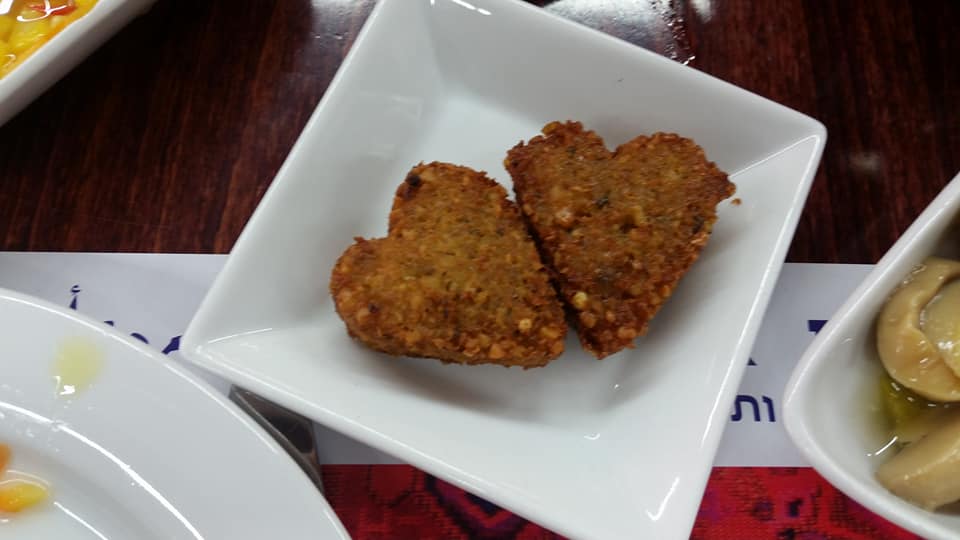
The cultural diversity is amazing here and threatened.  I’ve met Jews from places I never expected- India, Norway, Switzerland, Morocco, Tunisia, Turkey, Ethiopia- and so many other places.  With unique languages, traditions, and cuisine.  And non-Jews such as Druze (whose heart shaped falafel is in my cover photo), Arab Catholics, Arab Greek Orthodox, Arab Greek Catholics, Maronites, Alawites, Muslims, Armenian Orthodox, Armenian Catholics, and Circassians.  Darfuris, Ertireans, Sudanese, Nepalis, and Chinese.  I speak all eight of my languages here- regularly.  This beauty that I love is what the government threatens by shaming Jews for speaking other languages, by discriminating against Arabs, and by expelling refugees.  It pains to me to see such a beautiful gift under attack.

In short, it’s complicated.  There are good things in Israel.  The nature is also gorgeous, the weather is better than anywhere in the Northeast U.S. or most of Europe.  The location is ideal for traveling the world.

Once the Israeli people do the hard work of pulling themselves away from the toxic ideologies that gave birth to their country, they might find themselves feeling freer.  Freer for a secular Jew to be friends with a Hasidic Jew.  For an Orthodox Jew to acknowledge Palestinian Arab history.  For a Mizrachi Jew to dance to Eritrean refugees’ music.  For a secular Ashkenazi to raise his kids in Yiddish.  Or an Iraqi Jew to do so in Judeo-Arabic.  For a Haredi Jew to see the good in Reform Judaism.  For a Palestinian refugee in Lebanon to return home to my neighborhood and for me to help renovate her mosque.  For a Christian to marry a Jew.  For a Jew to convert to Islam.  In short, to be the complex beautiful human beings hiding beneath the divisiveness.

For Hasidic Jews, tikkun olam or “repairing the world” begins within.  I couldn’t agree more.  To make the world a better place, we must start with ourselves.  So see the good things I wrote?  Grow them.  And where we find barriers in our souls towards our fellow human beings, join me in tearing them down.  Inside and radiating out towards the heavens.

Israelis often like to think of themselves as a “light unto the nations”.  The thing is to see a candle best, you must first turn off the lights.  Scary and necessary.  Flip the switch.  It’s time for a reset.  Let the flame illuminate our path.

Jesus and Jerusalem

Jerusalem, despite what Tel Avivis say, is an absolutely fascinating city.  This week I hopped on a bus for a day trip.  My dear friend from college was coming into town from New York.  And I’ve been itching to get to know a side of Jerusalem few people here talk about: the Christian one.

I love churches.  The more beautifully decorated and historic, the better.  In a foreign language?  Gold.  Some of the prettiest art I’ve seen has been in cathedrals and churches.  And I love learning about other faiths.

Jerusalem is a great place to visit churches.  While much of the world (and this country) likes to bicker about Jews vs. Muslims and Muslims vs. Jews and endless news clips that only feed the narcissism of both groups, the fact is this is a Holy Land for many peoples.  Including Christians, whose religion also comes from here.

Here’s how one day in Jerusalem went down.  Walking towards the Old City, I popped into a bookstore.  I LOVE books and especially used books in different languages and this store had exactly that.  I met a 15 year old Hasidic kid named Shmuel who was browsing the books.  An extremely friendly guy, we chatted as we perused.  Shmuel loves nature and knows every park in Jerusalem.  He loves hisboydedus (Modern Hebrew: hitbodedut)- going into nature and talking to God.  Something I find spiritual too.

He struggled with whether he should go to such a bookstore or not, since some of the books would be forbidden in his community.  I tried to show him some kindness and encouragement.  I hope he keeps reading 🙂

Then I came across a tall black man in a black robe with a cross.  Knowing a bit about Orthodox Christianity, my guess was he was an Ethiopian Orthodox priest.  And I was right 🙂  His name was Zion and we walked together to his favorite coffee shop.  Run by a very cute English guy with an Irish accent- with coffee from all over the world.  For those who don’t know, coffee was invented in Ethiopia/Yemen.  After a nice chat, I got info about an Ethiopian church I can visit next time, and I headed towards the Old City.

Jerusalem’s Old City has four quarters: Jewish, Muslim, Armenian, and Christian.  Armenians are Christian, so not sure about how that distinction came about, but that’s the way it is.  I’ve visited much of the Old City but hadn’t spent much time in the Christian Quarter.

I wandered around asking shopkeepers in Arabic where the churches were.  I made my way to a Catholic church…in the middle of a mass.  The church was immaculate.  Catholics know how to decorate 🙂  And the mass- the sermon, the music, the prayers- were all in Arabic.  At a time when much of the Western World couldn’t imagine anything Christian being in Arabic, it’s a useful reminder that this language belongs to many people.  And this perhaps can shatter some preconceived notions about the Middle East- and about Christianity itself.

The prayers were beautiful- the priest even quoted the Talmud.  I can’t say my Fusha (Modern Standard Arabic) is at a level where I can know word-for-word what he was quoting in his sermon (I’m not a Talmud expert either and it was echoey), but it was clear he was telling a story from Jewish religious literature.  The sermon was something about all the latest news regarding sexual harassment- a rather forward topic for a Middle Eastern church based on my own preconceptions.  I preferred, though, to look at the art and soak in the music.  What a unique experience.  Every religion has beauty to share.

Then I walked around the outside of a Greek Orthodox Church- closed but will visit next time.  I did get to use the Greek I’ve been learning to read the signs- there’s a lot of Greek in Jerusalem!  I wonder if the dad in My Big Fat Greek Wedding can prove that the word “Jerusalem” comes from Greek too 😉

I then used my Spanish to help two lost Christian pilgrims from Colombia find the Church of the Holy Sepulchre.  According to Christian tradition, this site is where Jesus was crucified and where he was buried and resurrected.  What’s unique about it is that the church is actually multiple churches.  Every section of the building is controlled by a different denomination.  There are Armenian, Greek Orthodox, Catholic, Coptic, Ethiopian, and Syriac Orthodox areas.  Each decorated according to the traditions of the group and filled with beautiful artwork and quotes in their respective languages.

This slideshow requires JavaScript.

In the course of an hour or two, I talked with a Coptic priest, Armenian priests, and Catholic pilgrims from Chicago.  What a beautiful and awe-inspiring place.

On my way up the hill to meet my friend from college- who’s Modern Orthodox (kind of completing a day of almost every religious denomination imaginable)- I heard people speaking Spanish.  They were from Costa Rica!  Costa Rica is a very small country- I grew up with neighbors from there and my high school organized trips there.  What’s even more crazy is that the Costa Ricans…had bumped into other Costa Ricans.  In Jerusalem.  Add in one Brazilian guy and an Arab shopkeeper with a few words of Spanish, and all of us were chatting and having a good time.  I love Spanish- it was my major and I’ve used it in every job I’ve had since college, including as a Spanish teacher.  I love going back and forth between languages so speaking Arabic, Spanish, and Portuguese was pretty neat 🙂

We even took a picture together:

26805280_10101665043795712_5460163890706108422_n

After a heartwarming and laughter-filled dinner with my friends, I headed back to Tel Aviv.

The Holy Land is nothing if not complex.  There is such a richness here- a density of meaning- that is hard to find anywhere else.  It can lead to great strife.  And it can lead to absolutely miraculous days where you realize you’ve spoken six languages and met people from all over the world.

Jerusalem in Hebrew means “city of peace” and in Arabic it means “the holy one”.  In Tel Aviv, it’s used as a slur.

For me, Jerusalem is a fantastic place.  It’s a place where with a little imagination, you can hear Muhammad riding on his Buraq, you can hear the Jewish priests on the Temple Mount, and you can hear Jesus’s footsteps.

Where you can hear a priest talking in Armenian and then find Dutch tourists dancing to techno in the shuk.

Jerusalem- leave your assumptions at home 🙂

Bedouin Yiddish

Yes, you read that right.  We’ll get to it- read the whole way through 🙂

Today I went South.  I’ve explored a lot of Israel’s Center and North- with plenty more to discover.  And I’ve ventured a little south since making Aliyah to Ashdod.  Now was the time to learn about another region.

I hopped on the train and headed to Be’er Sheva.  It is a city actually mentioned in the Torah and there is a well there that according to tradition was dug by Abraham himself.  I wanted to visit but it’s one of the very few places in Israel you need to call in advance!

I visited the city market which was cool.  An amazing diversity of cultures that reminded me a lot of my neighborhood in Tel Aviv.  Just with less traffic and yelling 🙂

I went into an electronics store and asked in Arabic where I could buy Bedouin music.  For those who are wondering, Bedouin are substantially different in culture, language, and religiosity from many other Arabs in Israel.  Therefore, their music is different as well.

The young man made me a deal and custom burned me a CD with MP3’s of dahiyye music.  It’s basically happy Bedouin dance music- take a look.  Somewhat reminiscent of the dabke I’ve learned- but in the words of the Bedouin man: “that’s fellahi music”.  Fellahin were the villagers and farmers of the region- as opposed to the nomadic Bedouin.  Most Arabs in Israel today are descendants of Fellahin and have distinct dialects from the Bedouin, who speak a bit more like Fusha, the standard Arabic which was likely modeled after them.

I was then peppered with questions about why I wasn’t married.  Lest you think this is only a Bedouin phenomenon, it has been a frequent first question amongst Jews, other Arabs, even Samaritans here.  It is extremely difficult for me- as a queer person, as an American (where this is considered invasive), and a survivor of partner abuse.

Eventually I shrugged it off by saying I was new to the country and needed time to settle in.  Having gotten my Bedouin music, I decided to keep exploring.

I then came upon a bona fide music shack.  A shack because it looks like one.  And bona fide because this man knew his music.  No CD burning here.  He had hundreds of CDs.

I felt much more at ease here- Ahmed, also Bedouin, was gentle and friendly.  And never asked me about my marital status.  We bonded over Arabic music as he showed me tons of options.  Eventually I bought an Israeli Bedouin CD (with songs from both the North and the South), Syrian dialect music (that’s the one I speak!), and another Bedouin CD from a town near Be’er Sheva.  I personally find it miraculous to find Syrian-dialect music in a Bedouin shop in Be’er Sheva.  First off, most Arabic music is not recorded in Syrian, even when the artists are from there.  Egyptian tends to dominate.  In addition, ten years ago when I took my Syrian dialect class, I could never have imagined this scenario.  And I love it.  When the stars align, language and culture bring me closer to good people like Ahmed.

Be’er Sheva’s Jewish community is also very diverse.  Walking around, I found several Indian and Ethiopian Jewish stores.  There were tons of Russian signs.  I even found a sign publicizing a concert at a Tunisian synagogue from the famed isle of Djerba.  Around the corner from the beautiful mural in my cover photo- showing how the ancient and modern co-exist and feed off each other in this beautiful land.

I toured a bit of the Old City, which I hope to return to- in particular to see the Grand Mosque/Museum of Islamic and Near Eastern Cultures.  Like nearly everything in Israel, this place is not without its controversy.  An Ottoman-era building, the mosque is no longer used for prayer, although local Muslims would like to do so.  Instead, the city of Be’er Sheva wanted to turn it into a general museum.  The Israeli Supreme Court, perhaps weaving between the two, decided it could be a museum but it had to be dedicated to Islamic history.  I’m looking forward to visiting, being a fan of Islamic art and history, and would be happy to see it peacefully resume its role as a house of prayer.

Having the desire to see more Bedouin culture, I hopped on a bus and went to Rahat.  An entirely Bedouin city, it is a fantastic place to go to experience their culture.  Since it was already dark and my transportation options were dwindling to go back home (this can be a stressful part of spontaneous travel), I focused on my goal: food.  Before I sat down to eat, though, I met a wonderful young man named Mohammed who is studying English.  I had asked him for directions, one thing led to another, and we decided to stay in touch and exchange languages.  In particular, I’m dying to learn his Bedouin dialect.  And I can help him with English 🙂

I sat down to eat a feast.  This is not an exaggeration.  For 25 shekels, approximately $7.30, I got to eat this:

26230280_10101661718958712_5056984918498805516_n

The picture doesn’t really do it justice- it’s huge.  I didn’t finish half the rice (chicken is buried in it)- and I was very hungry.  The bread is delightful- kind of like Druze pita i.e. nothing like the pita you’d find in a grocery store.  The full bowl of soup that came with it was tomato-ey, a little spicy, and delicious.  The rice kind of tasted like Biryani, for any of my fellow South Asian food fans.  And it was covered in peanuts, peas, veggies, and delicious sauce.  My doggy bag was enormous.

The people there were so kind.  I have to paint this picture for you- there are 0 Jews anywhere.  I can’t imagine many Jews come to Rahat to dine in one of the Arab restaurants that often sit at the footsteps of their villages for Jews to eat at without going “too far in”.  I could be wrong, maybe some come.  All I can say for sure is that when I was there, I was the only one around.  And a totally novel figure.

People were so curious to talk to me.  I was asked a million questions (fortunately nothing about marriage).  All of them kind and welcoming.  We mostly spoke in Arabic.  I asked them to teach me some Bedouin- they said I spoke fellahi! 🙂  We used a few Hebrew words but they truly loved to practice their English 🙂  People knew I was American, Jewish, and Israeli.  And I have to say, and this repeatedly shocks me, being American has been a huge plus to my travels in the Middle East.  Despite the fact that the American government has a very long history of bullying other countries, so many people here still love America.  Jews, Arabs- doesn’t matter.  It’s fascinating and frankly really encouraging.  It’s also a great way to disarm the people who are, in fact, suspicious of you, because I can play the innocent stranger.  To be fair, I pretty much am one 🙂

Before my sated self headed to the bus (and then an exceedingly long train ride because I missed the more direct train- note to self for next trip), a man grabs my phone and insists we take a selfie.  Apparently some concepts are universal:

26230795_10101661718878872_1056055190934410030_n

As I headed to the bus, a man asked me what languages I spoke.  One of them is Yiddish.  And in a moment that you couldn’t even dream of in the wildest of scenarios, the Bedouin man tells me there’s a guy in their town…who speaks Yiddish.  In shock and amazement, I asked why.  He said that the man, back in the day when Yiddish was more widely spoken here, learned it just as he did every common tongue in the area.  My grin, inside and out, could not have been bigger.

In pure cultural ecstasy, I headed home on a very slow train.  With a lot of time to digest a rich and exciting day.

Intercultural exploration and communication can be very challenging.  One does not come out of the womb with the skills necessary to make it happen- even if you may have some characteristics that help.  I’ve spent my whole life communicating across cultures.  From the my early years in Japan to my schooling in Maryland with so many immigrant friends to my work for refugee rights to the dozen or so languages I’ve studied (8 or 9 of which I can currently speak).  None of this happened by osmosis nor just because I have “an ear” for it.  I do have an ear for it- but just like a concert violinist doesn’t magically pick up a bow and play a concerto, I have honed these skills over years of practice and joy.

Today is the kind of day I’m proud to call myself a cultural explorer.  One who learns, who tries new things, who makes people smile, who grows, who creates, who makes the world a better place.

If you’re looking for new adventure, the world is your backyard.  And your backyard just may have a Bedouin Yiddish speaker.