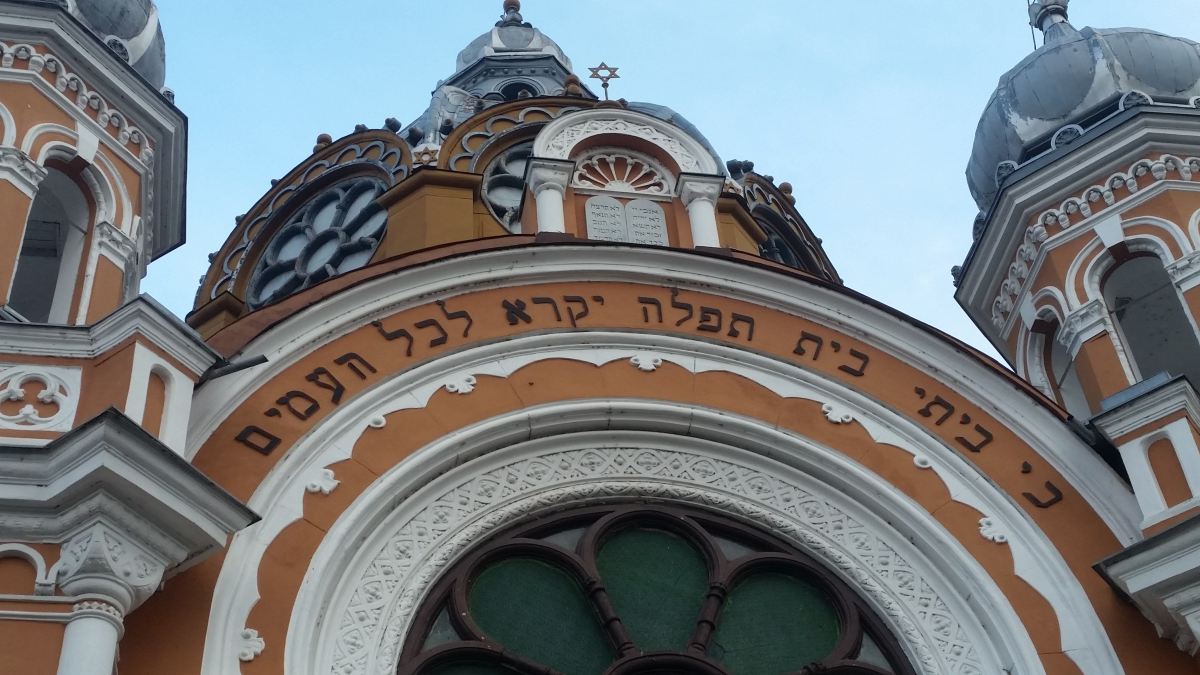
A gay Jew goes to Hasidic Brooklyn

Recently, I went to my first gay Jewish wedding. It was a wonderful experience to see friends coming together to build a loving future. And while I’ve been to many wonderful weddings, there was something special about seeing queer Jewish joy in action, in reality. A joy I hope to share someday with someone special.

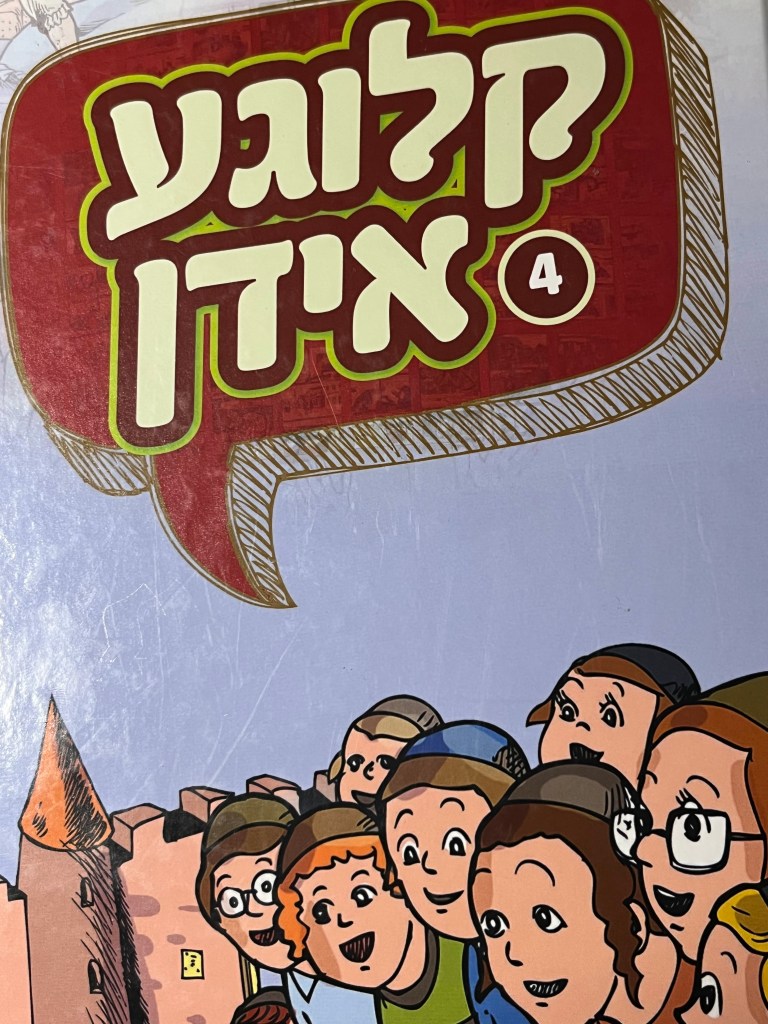
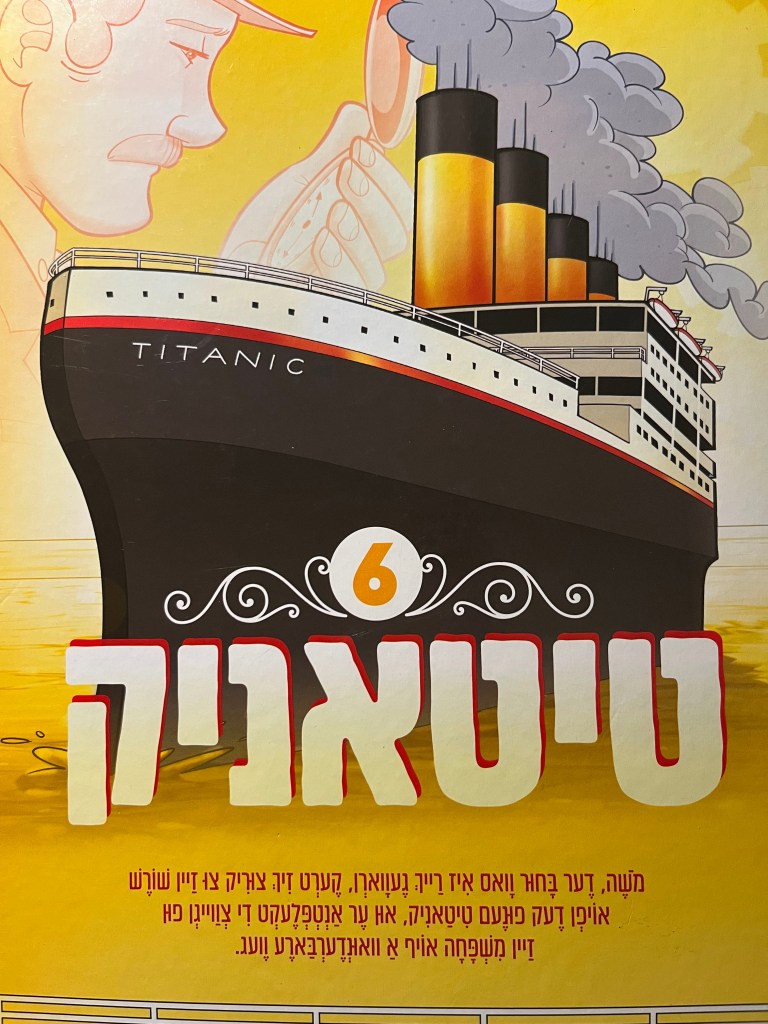
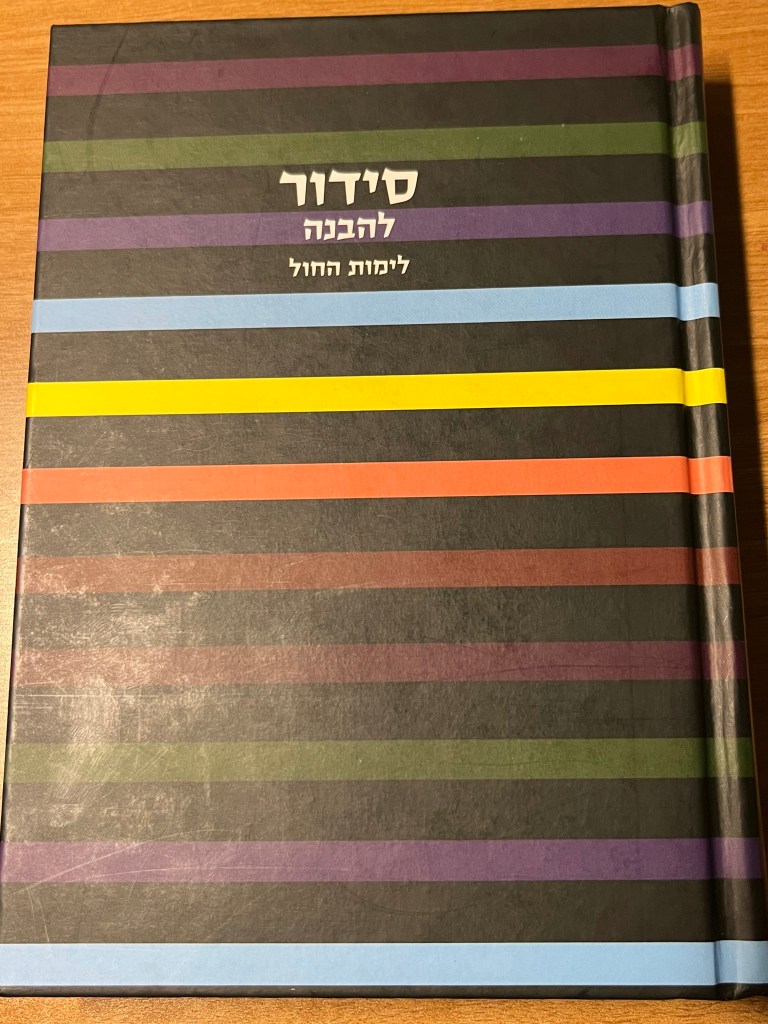
While in New York, I relished the opportunity between wedding festivities to visit Hasidic Brooklyn and practice my Yiddish. After buying a black yarmulke, I visited Hasidic bookstores in Williamsburg and bought some books in Yiddish, including a kids book called “Smart Jews”, a book about the Titanic, and a prayer book with Yiddish translations of the traditional Hebrew.

I love speaking Yiddish and I surprised the bookstore employees by speaking it while wearing decidedly non-Hasidic clothes. While some people looked at me with an almost suspicious curiosity, others were incredibly warm and hospitable and thrilled to hear me speaking Yiddish.

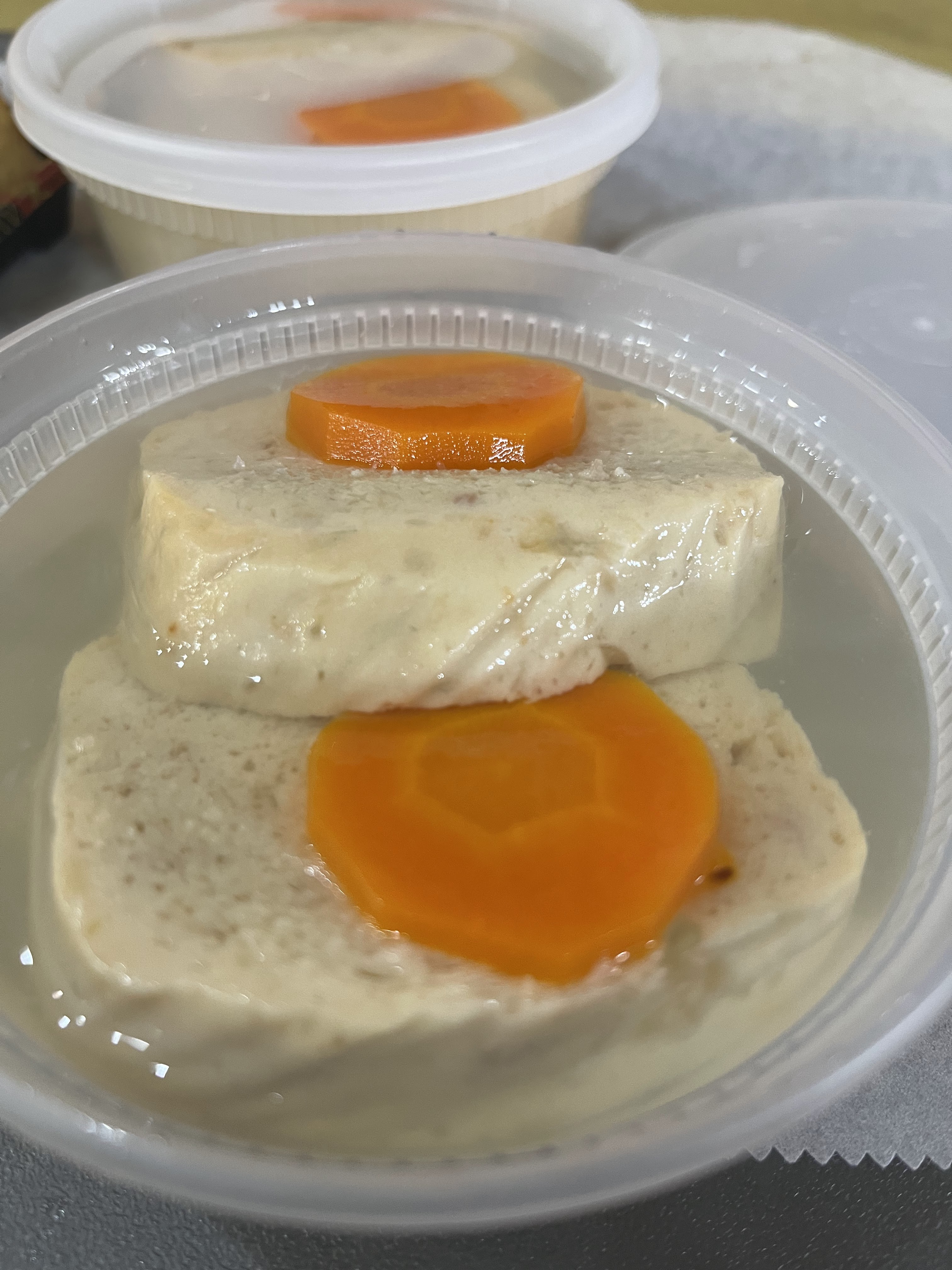
Next, I got the good stuff – gefilte fish! Yes, I love gefilte fish. It is a delight and while it’s true that maybe you need to grow up with it to love it, I absolutely adore this dish, especially when made fresh (not in a jar!).

I sat next to a rabbi in the restaurant and he was very welcoming and kind.

Near the restaurant, I walked through Williamsburg and saw a crowd of Hasidic Jews gathered outside an apartment, where a rabbi was preaching in Yiddish as hundreds listened attentively on the street. It was an amazing sight. At a time when we’re being persecuted yet again, this community is preserving our Jewish traditions despite it all. It was like a scene out of a shtetl.

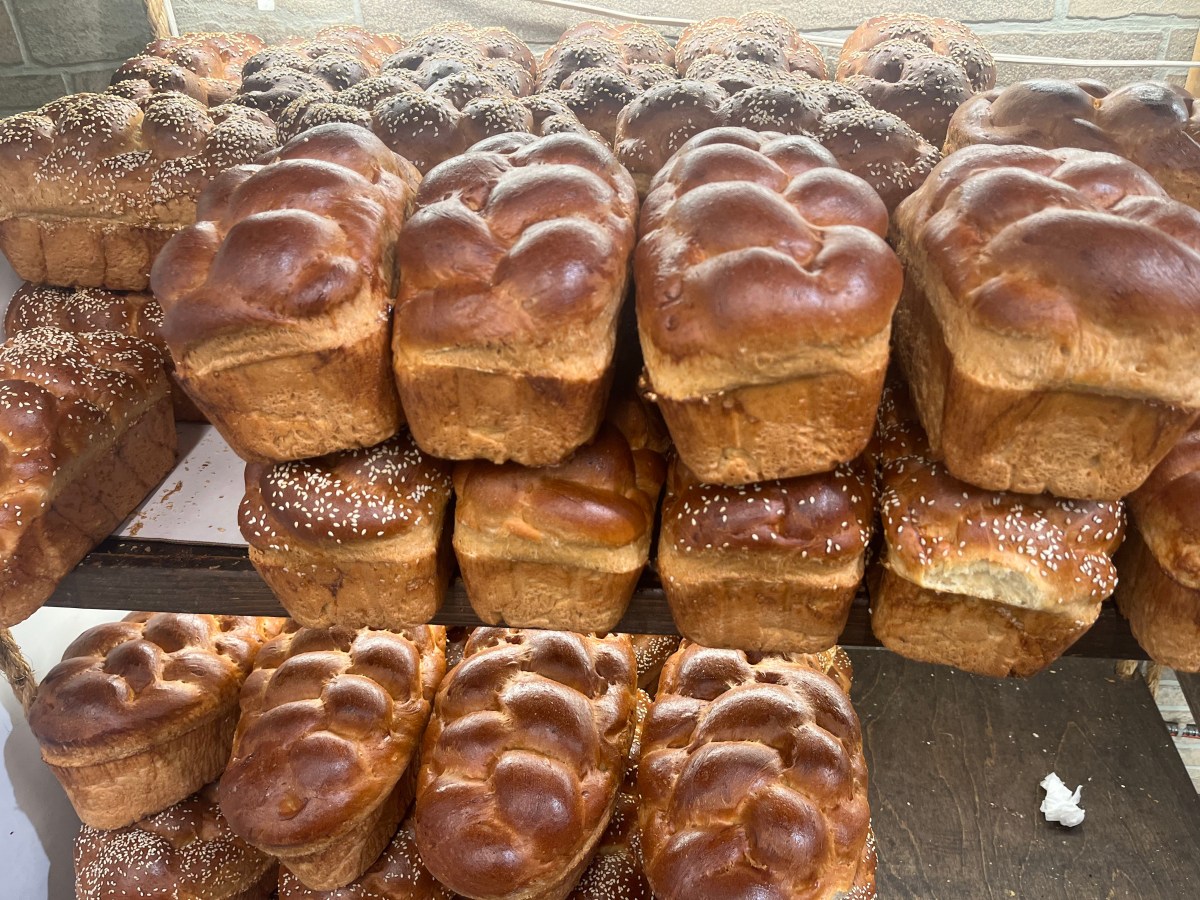
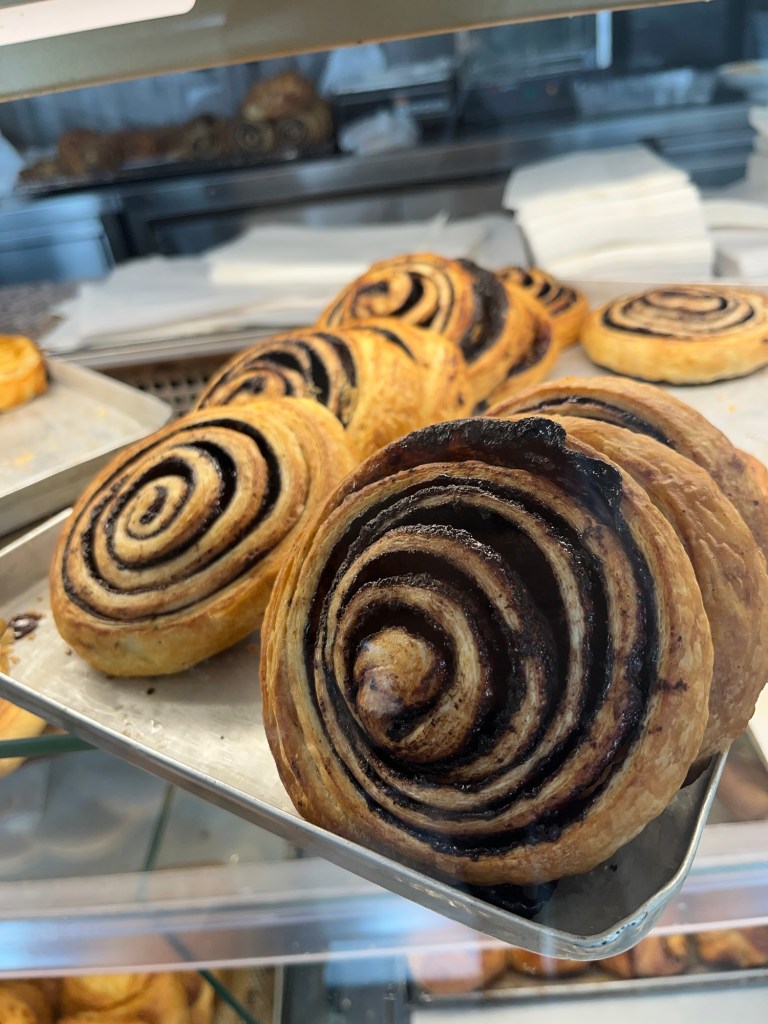
After exploring Hasidic Williamsburg, I made sure to stop at a late night Kosher bakery and get some sweet cheese rugelach, a novel combination that was a true delight. They also had tons of challahs of various sizes, like the ones in this blog post’s cover photo. Even some local hipsters came in for a taste of the bakery’s delicious food.

Over the next two days I met up with other friends in New York, ranging from Yiddishists to a Modern Orthodox college friend on the Upper West Side, and of course got a bagel with whitefish salad. None of this was particularly Hasidic, nor in Brooklyn, but it just shows the incredible diversity of New York Jewish life that I was able to slip in and out of these different communities plus a gay Jewish wedding in the course of a long weekend.

After the wedding, I decided to go to Crown Heights. Williamsburg is heavily Hasidic, but predominantly populated by communities that are a bit more insular in their approach to preserving Jewish tradition. Crown Heights, while also Hasidic, is predominantly a Chabad area. Chabad is a group committed to outreach within the Jewish community, making it a little easier to get to know people even as a semi-outsider.

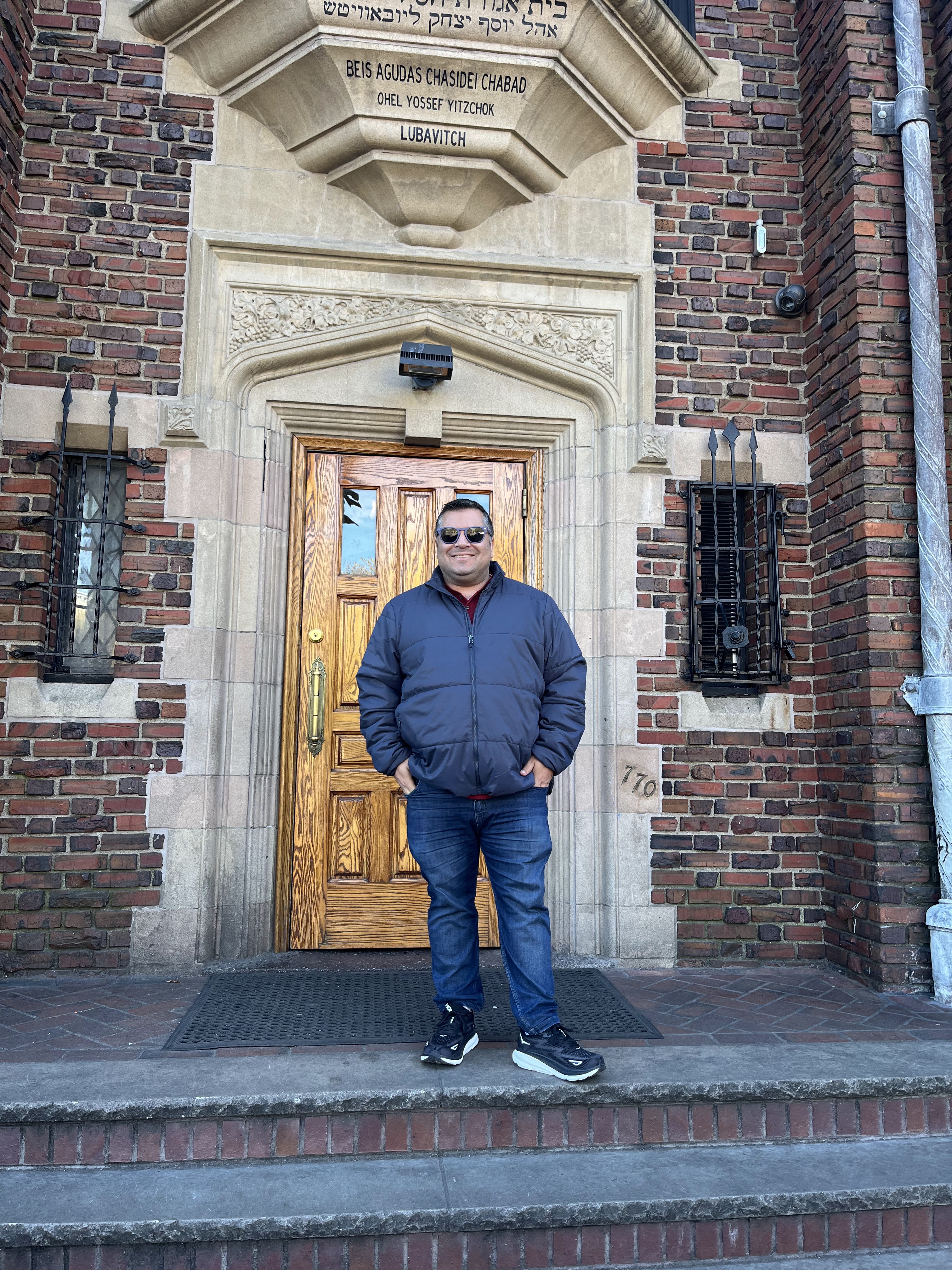
I visited 770, the house of the former Chabad Rebbe, a deeply revered leader.

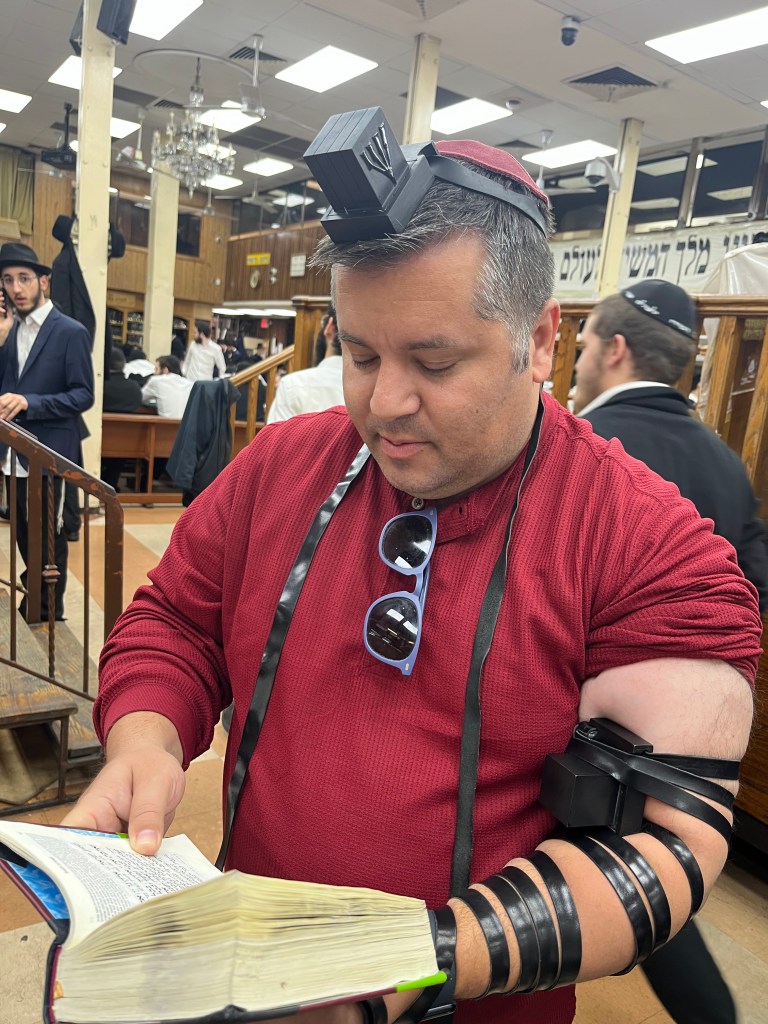
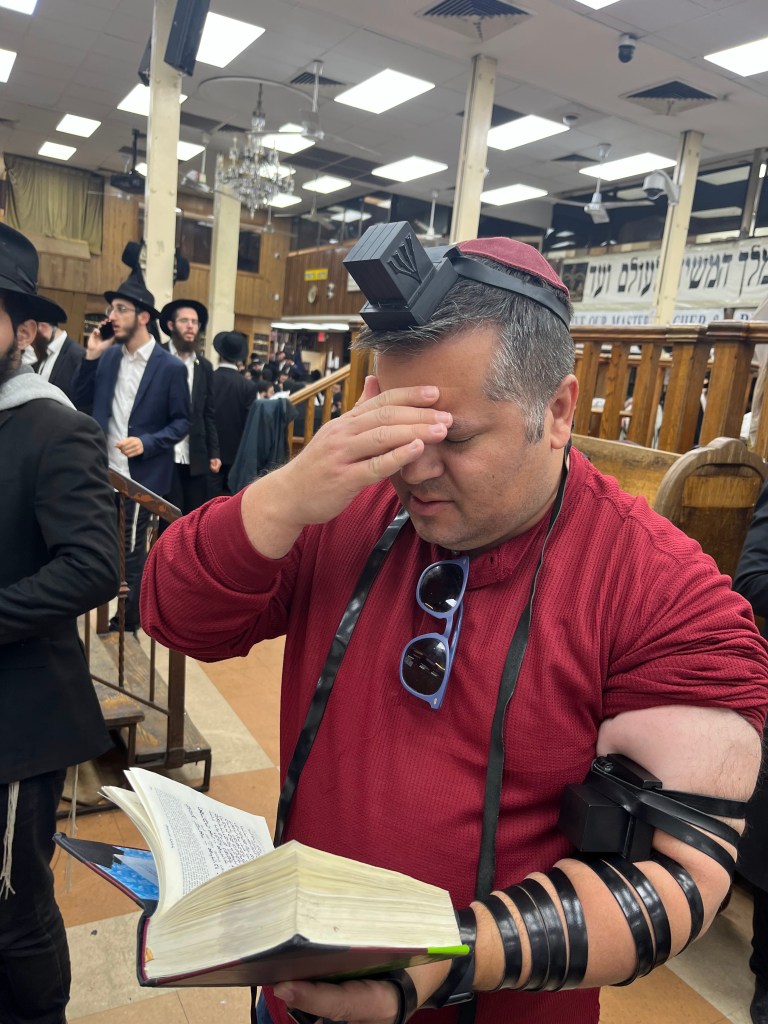
I then decided to do something I had never done when visiting Crown Heights years ago: I went inside the synagogue next door to the Rebbe’s house. I decided to lay tefillin, an ancient Jewish ritual, with the help of a young man. It didn’t matter that every other man in the building was dressed in the traditional black and white suits and I was in jeans and a red shirt. Chabad doesn’t care- they just want you to fulfill mitzvot, commandments from G-d that Jews are instructed to follow. It was a really nice experience.

Laying tefillin is a truly embodied ritual that made me feel connected to Jews everywhere and to thousands of years of our history. At a time when it seems we can control so little, it helps me feel grounded and secure in my faith.

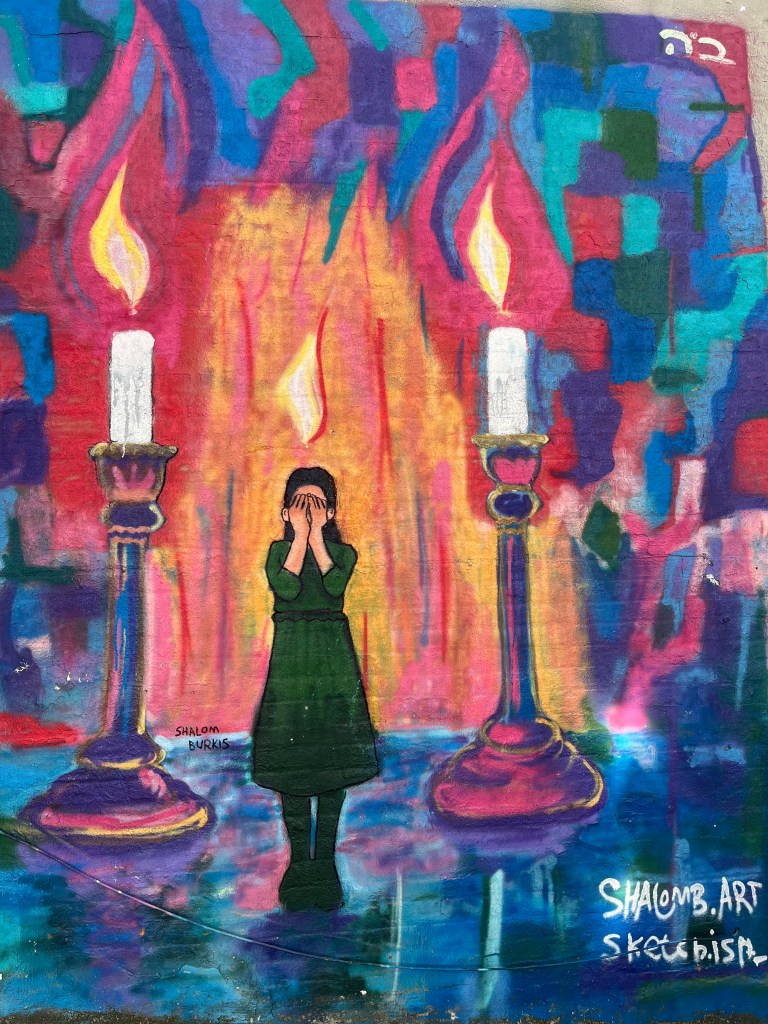
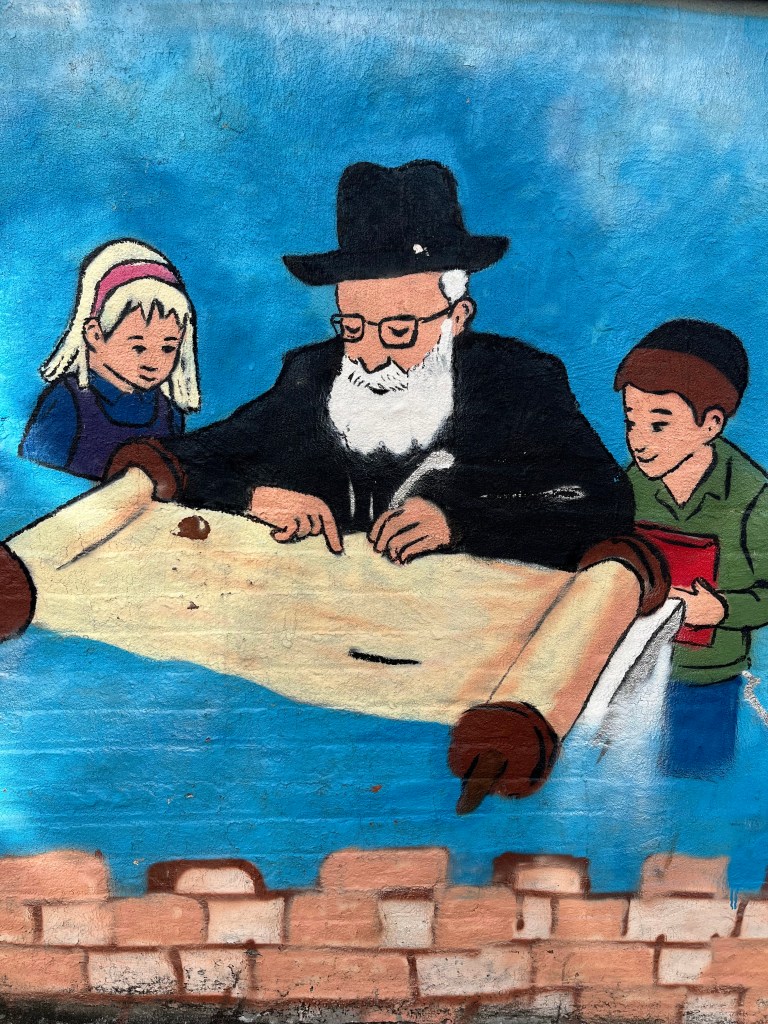
In addition to laying tefillin, I found some interesting Jewish street art in the neighborhood.

I love seeing murals whenever I travel, and to find Jewish ones was especially heartwarming and exciting.

Lastly, it was not lost on me that I was in New York the last weekend before the fateful election that led to antisemite Zohran Mamdani becoming elected mayor of the city. I’ve already written my thoughts about him here.

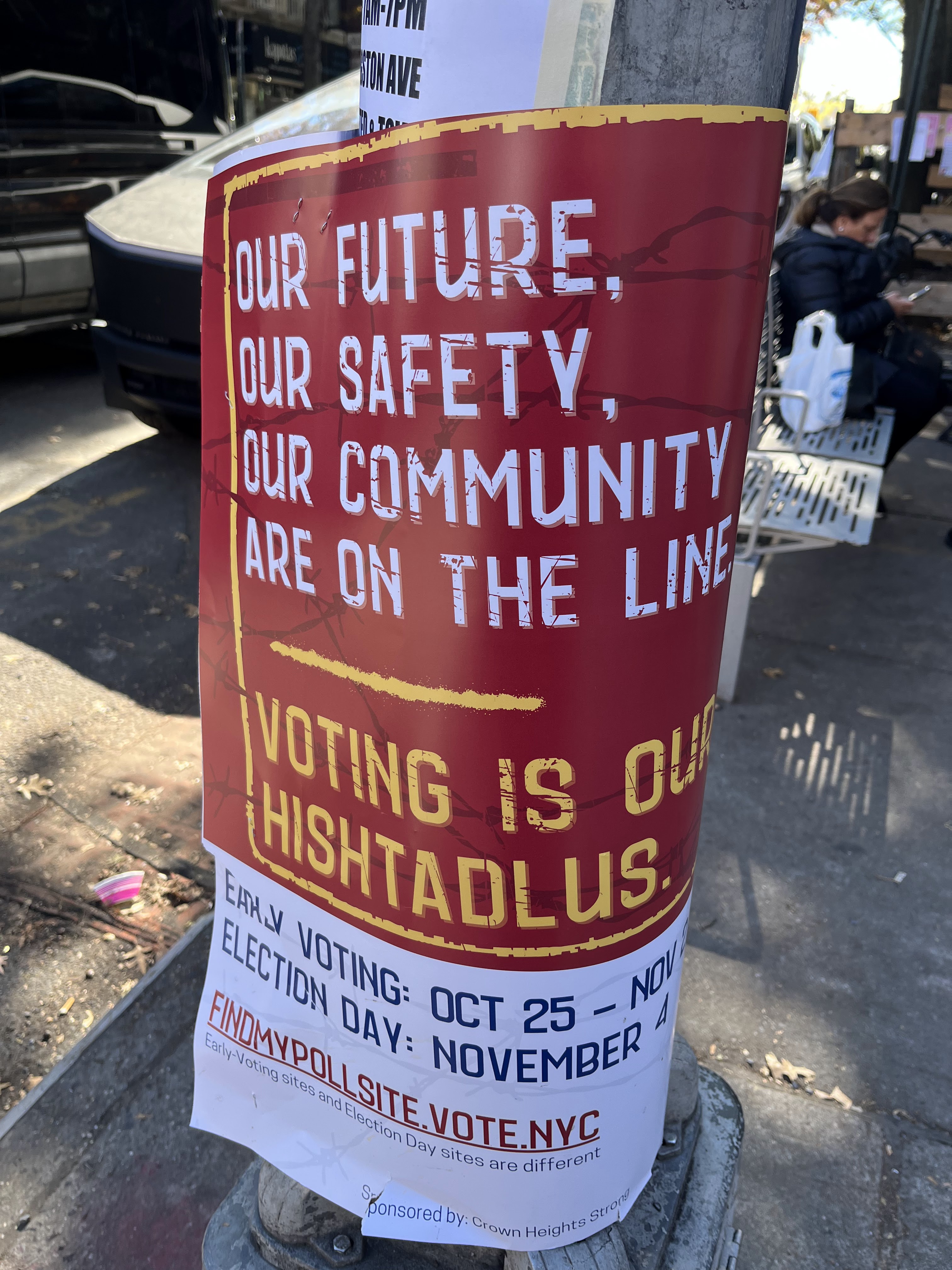
The feeling that the community was slipping through our fingers, as Jews, was palpable in Hasidic Brooklyn. I saw election turnout signs like this one that were as clear as day:

A week later, when election day came, the vast majority of Hasidic Jews voted against Mamdani. But it wasn’t enough to turn the tide of hatred gripping New York City.

Seeing Hasidic Brooklyn was amazing. I highly recommend a visit. Go see this beautiful community before the coming storm. Let us hope and pray that we will weather it together.

Because in the end, the people who hate Jews won’t distinguish between the gay ones or the Hasidic ones, the secular ones or the Modern Orthodox. They will come for us all. Which is why it’s so important we show solidarity with each other. We don’t need to agree on everything. I’m gay, I’m aware of the challenges that would face me living in a Hasidic community. And I’m also aware of prejudice and judgment that Hasidic Jews face in progressive Jewish circles.

Let’s come together in our time of need. So if there’s a storm ahead, let’s grab each other’s hands and dance in the rain and make it through as one strong community. Ken yehi ratzon. May it be so.

Jewish Vienna

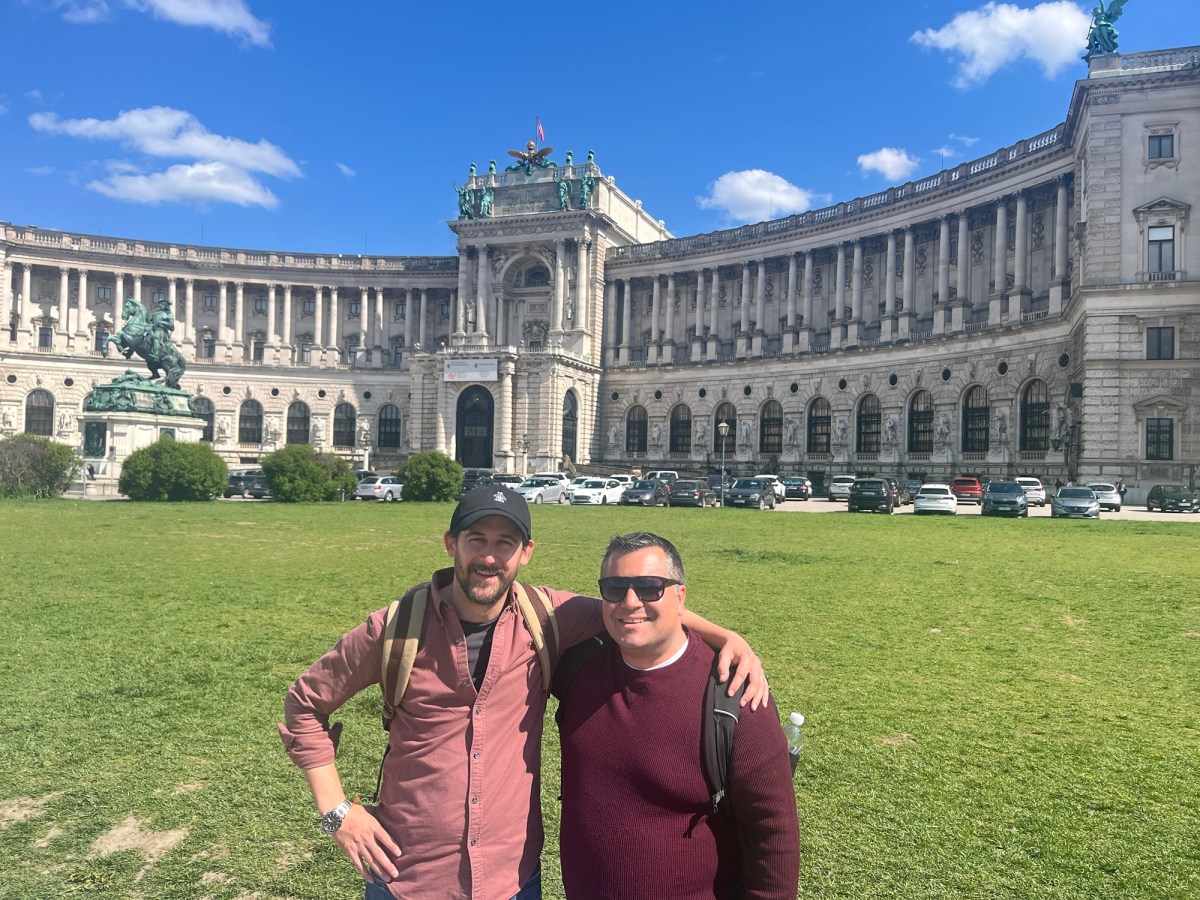
Vienna packs in more Jewish culture, diversity, and vibrancy for a city of its size than anywhere I’ve ever visited. In just one week, I met an American-Israeli looking for a fresh start during wartime, a Hungarian-Austrian rediscovering his Jewish roots, a German Yiddish activist, a Haredi man and son of Holocaust survivors, an Austrian Yiddish poet, two Italian non-Jews exploring conversion, and an Argentinian Jewish immigrant. And there are only 8,000 Jews here! Less than in the suburb of D.C. I grew up in, but bursting with energy from all over the globe!

Read to the end of this blog. Because there’s a pretty amazing surprise towards the end.

Let’s start at the very beginning, a very good place to start. OK, I’ll save any further Sound of Music references for my blog on Salzburg, but I couldn’t resist!

Philip is a Yiddishist – an activist speaking, reading, writing, studying, and promoting the Yiddish language. He is originally from Germany but has studied the language all over the globe and actually knew Yiddish speakers who I’m friends with back in the States. It really is a small Jewish world!

He was kind enough to take me on a walk through Leopoldstadt, the former principal Jewish Quarter of Vienna. Vienna used to have a massive 180,000+ person Jewish community before the Holocaust. To say its influence on the society was significant is a deep understatement. Musicians, psychologists, writers, composers, the list goes on and on. It includes world-renowned people like Sigmund Freud. And if you look at this list, not a small number of Adlers!

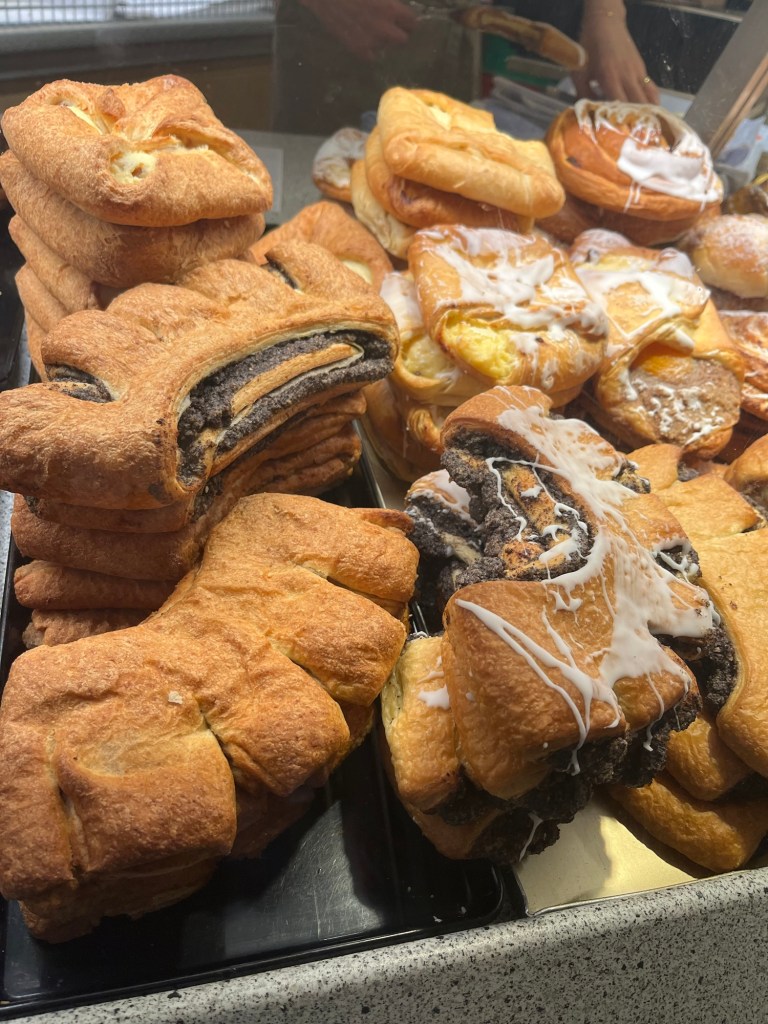
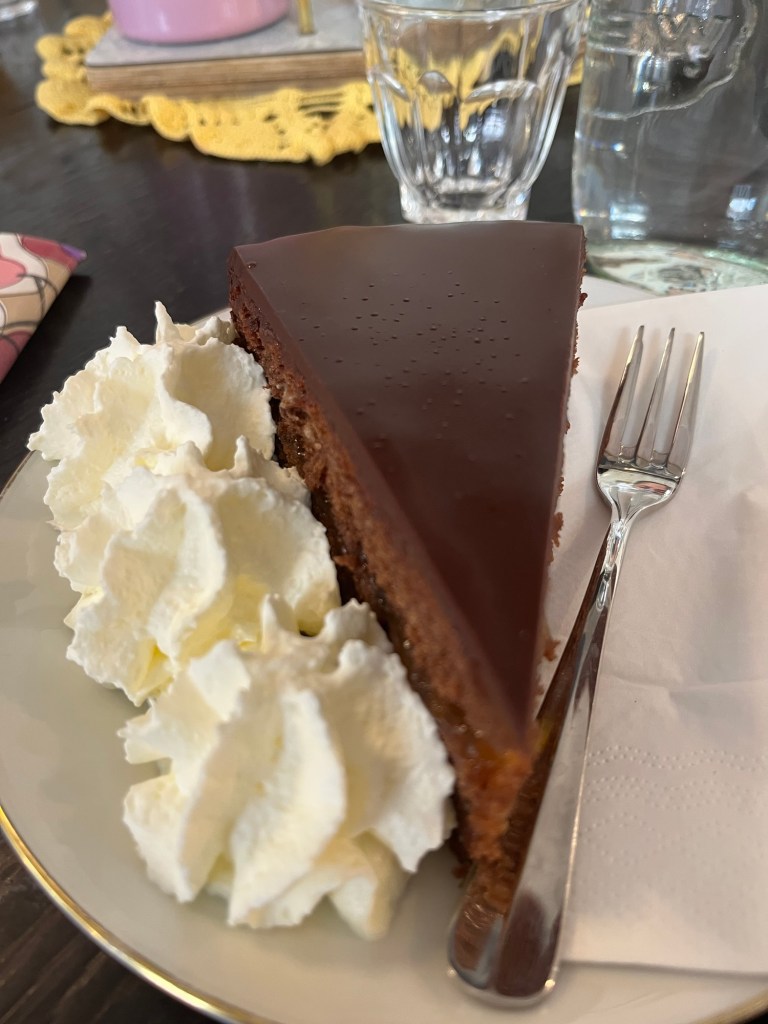
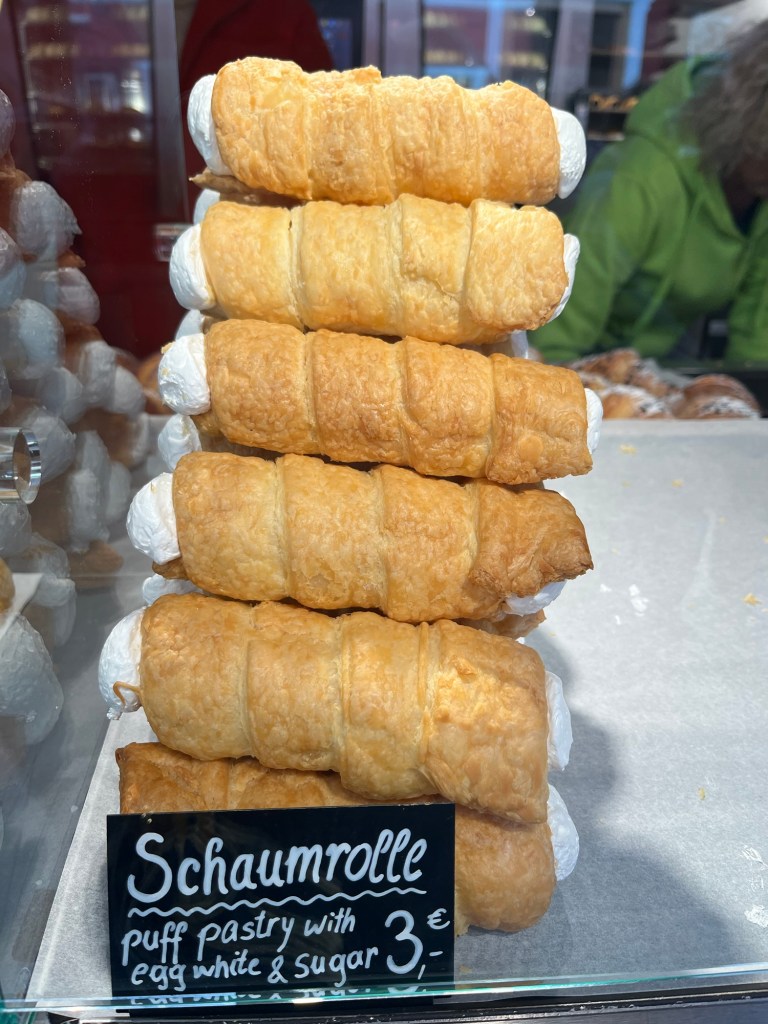
While in Leopoldstadt, Philip and I stopped at a Hasidic bakery for a quick sugar fix. Vienna is known for its sweets, such as its famous Sachertorte cake! The top left sweets are from the bakery and the rest from elsewhere, but I think it’s fair for Austria to show off a bit!

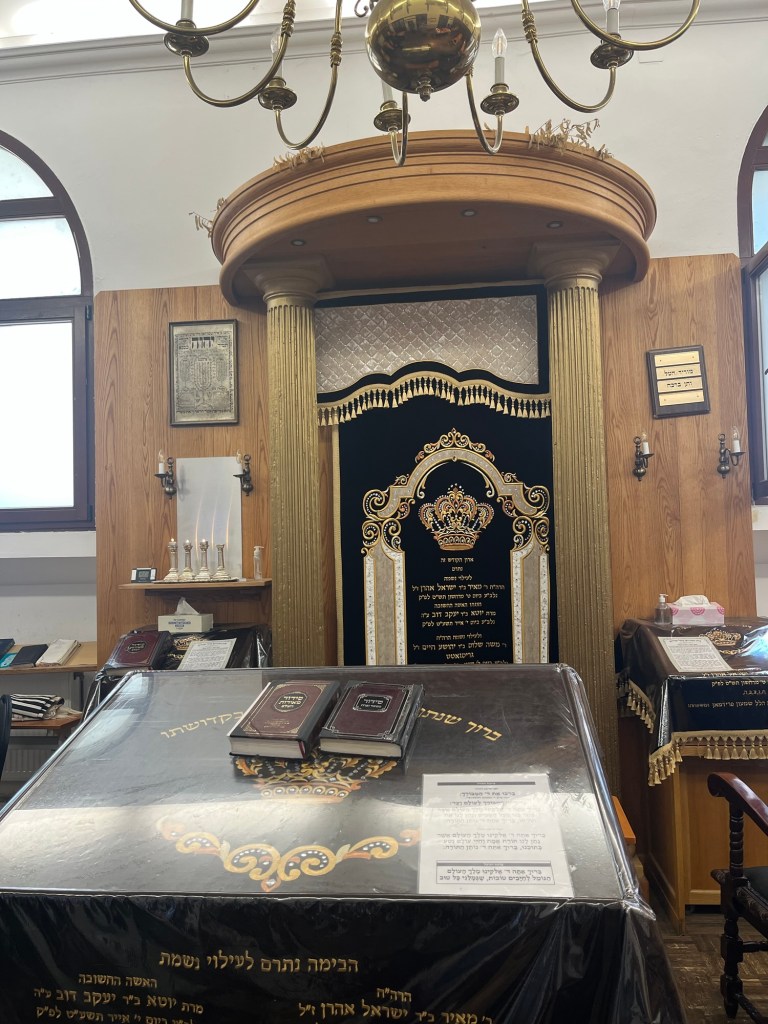
After leaving the bakery, we came across a Jewish man in a black hat. I greeted him in Yiddish and said I was a Jewish writer from the U.S. He immediately shook my hand and invited me and Philip to see his synagogue! It’s actually kind of two synagogues – one downstairs that was Hasidic and one upstairs that was Haredi (ultra-orthodox) but maybe not Hasidic. The historic building was called the Schiffschul, which you can read more about here.

After giving us a tour, he pointed us to the back of the synagogue. That’s where they’re building an addition to the synagogue including mikvahs (ritual baths) and more room for prayer. Nothing makes me happier. Despite our ideological differences, Hasidic and Haredi Jews are my brethren and to see Jewish life *growing* in a place where it was on life support after the Holocaust, was incredible. I’m proud of this community and wish it much success as it continues to grow and preserve so many Jewish traditions.

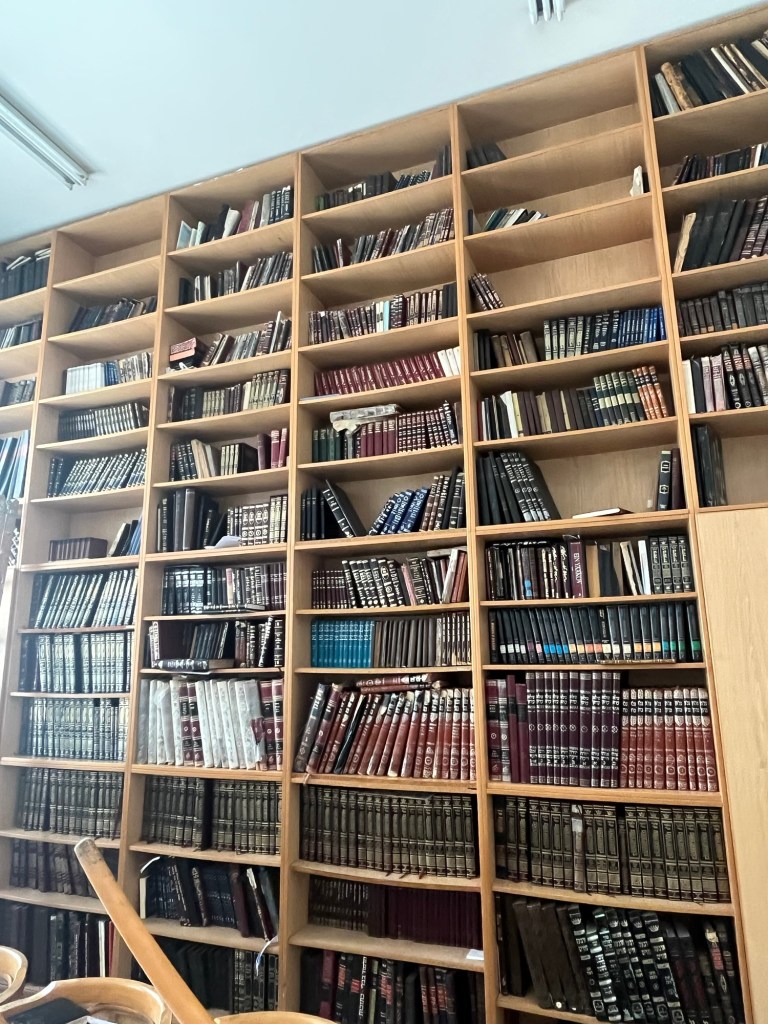
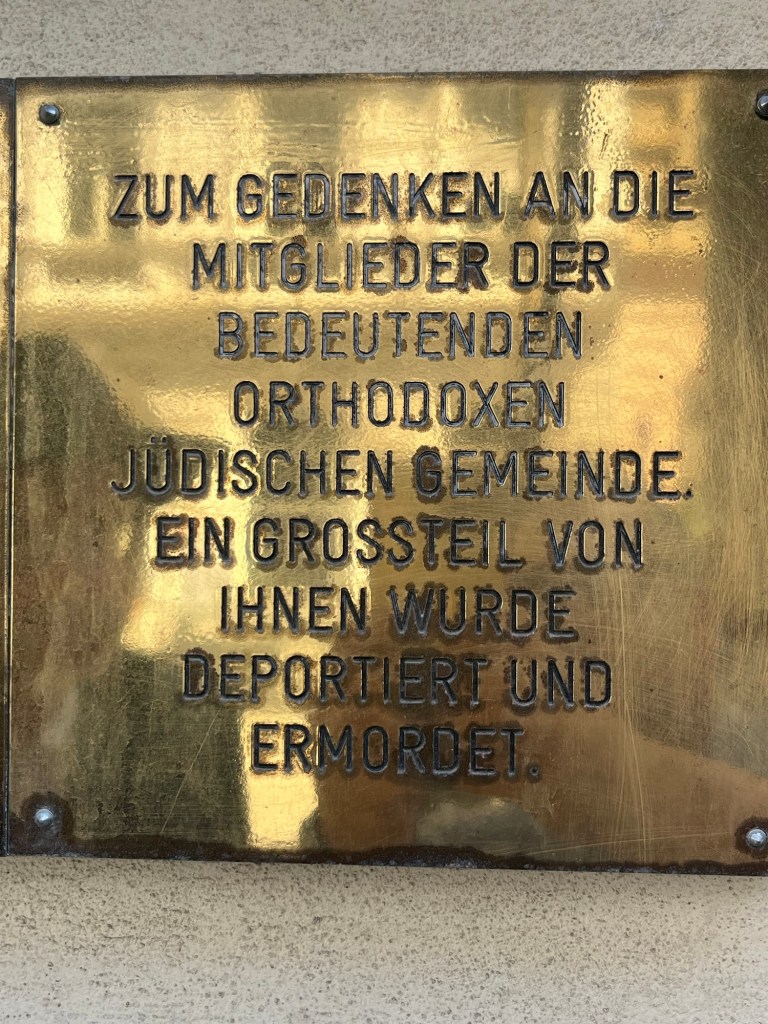
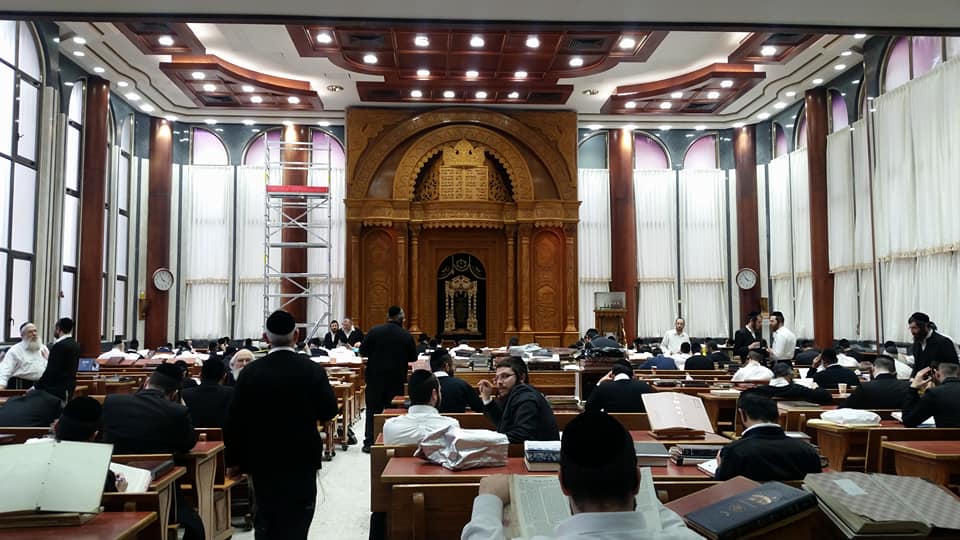
Here are some pictures from inside the Hasidic (downstairs) and Haredi (upstairs) of the synagogue:

You’ll notice, besides the very beautiful interior and loads of Jewish books (nothing excites me more!), the gold plaque outside the synagogue. It commemorates the Jews sent to their murders in the concentration camps from this synagogue. The Holocaust is *never* more than one step away from the present here, where less than 3% of the original community returned to live after the Holocaust, the rest dead or in other countries.

Before we left, the man, named Yosef, asked us for a blessing for his ailing wife. Philip offered a beautiful Yiddish blessing for her health and we all parted ways – three very different people on paper, but all tied together by one beautiful yerushe, or “heritage”.

Philip was incredibly kind not only to show me around town, but also to connect me with Thomas Soxberger, a Yiddish poet and Jewish historian. You can read more about his background and poetry here. If you want to learn more about Jewish history in Vienna, he has also written the book “Gründen wir einen jiddischen Verlag!” or “Let’s start a Yiddish publishing house!” Philip also connected me with the Yung Yidish Vienna library + cultural organization, which unfortunately I couldn’t visit since I wasn’t feeling well. However, I know their sister organization in Tel Aviv very well and highly recommend all fans of Yiddish to check out their Vienna location!

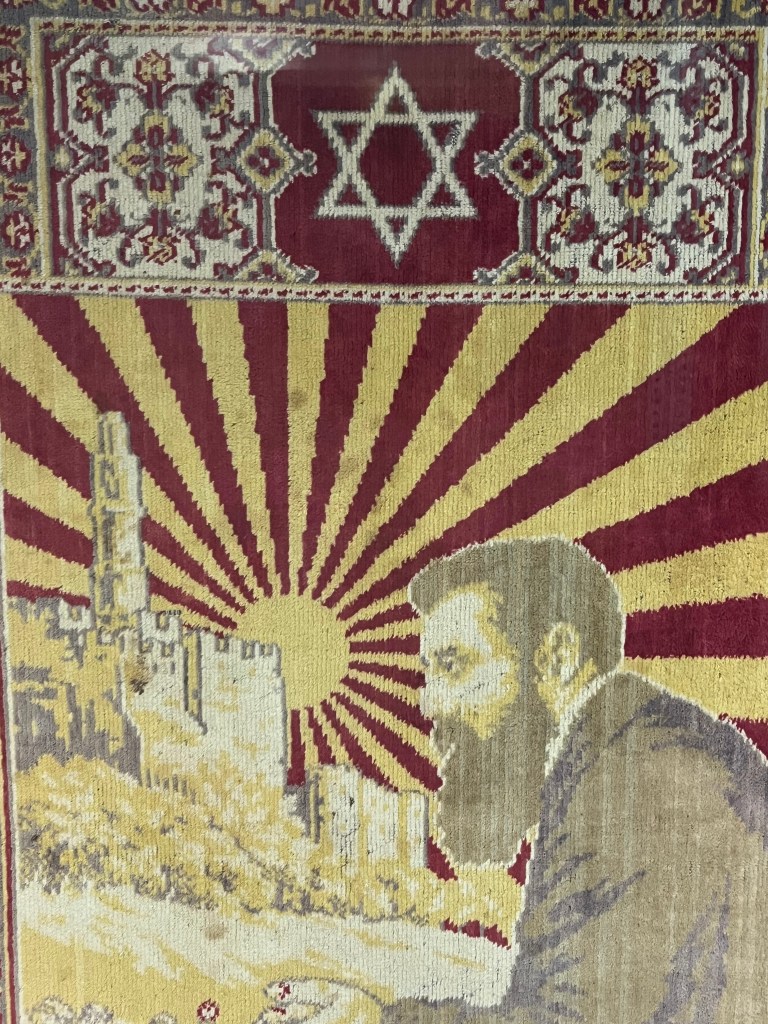
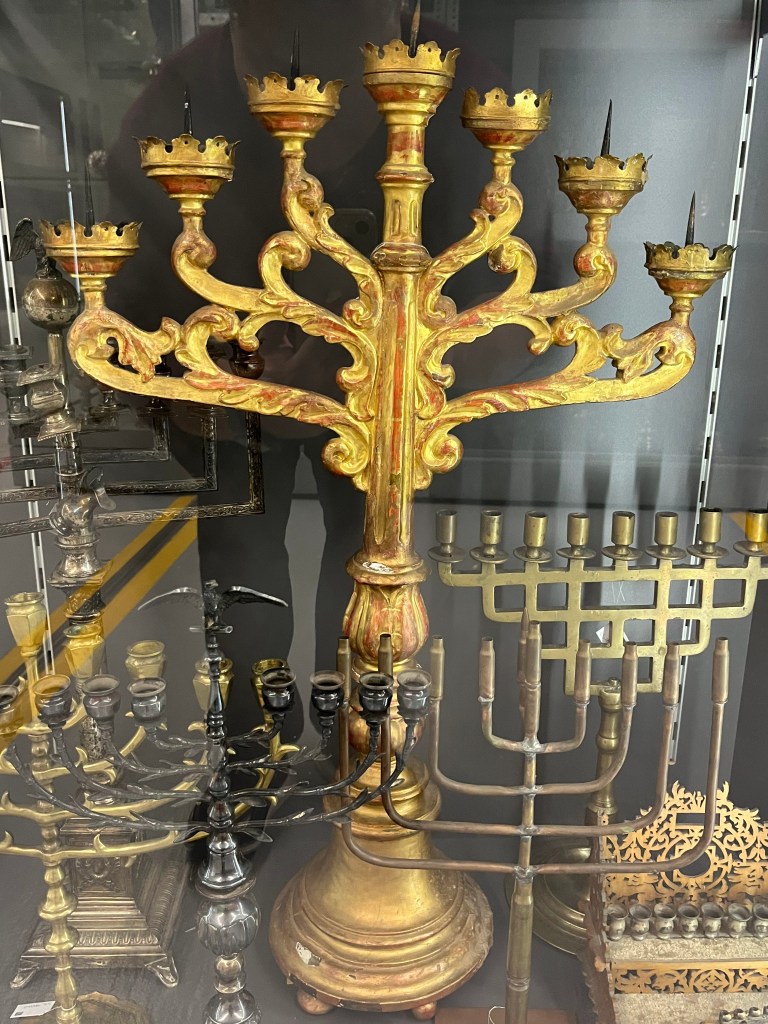
I also had the opportunity to visit the Jewish Museum Vienna and see some incredible Jewish artifacts – on Israeli Independence Day of all days. It was appropriate – the founder of modern Zionism, Theodore Herzl, lived in Vienna! The artifacts were from all over the Austrian Empire, including places whose Jewish communities I knew almost nothing about – like Bosnia!

The visit to the museum was one of the few times in Europe I have felt safe as a Jew. Jewish institutions are guarded by security – including Austrian police. And while it’s sad that that’s necessary, it made me feel more at ease than in some other places where the governments either fail to support local Jewish communities or actively create anti-Israel rhetoric in society. In Austria, I don’t know the politics well, but I definitely felt more protected.

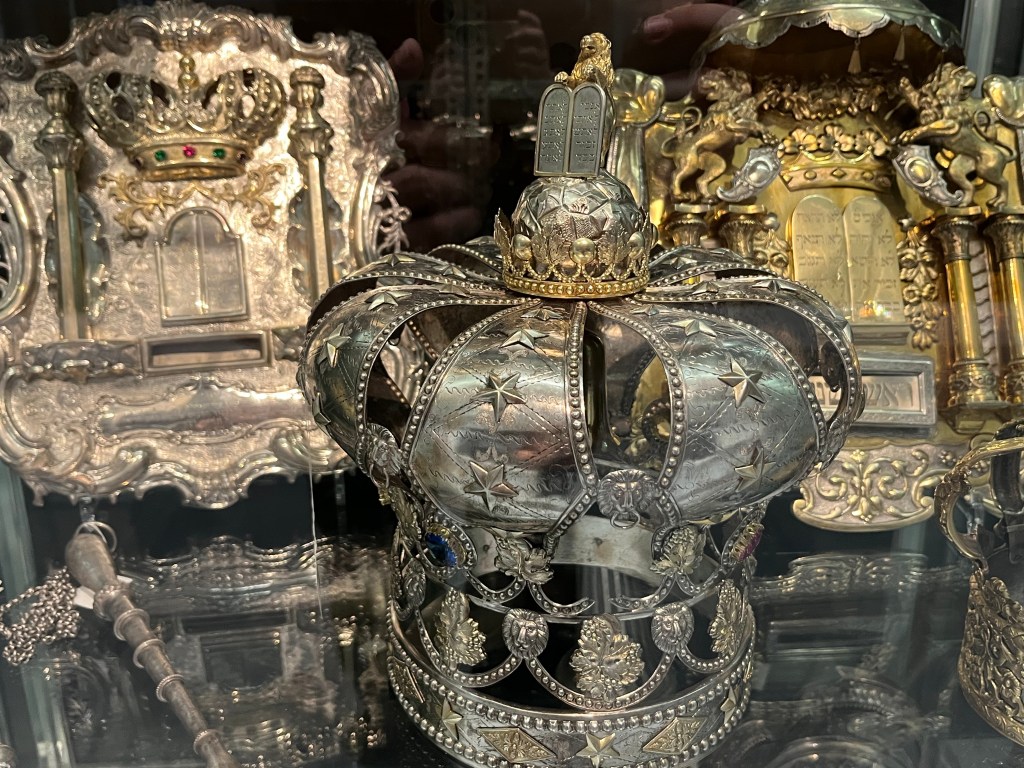
Here are some pictures from the museum, then we’ll return to the stories of the incredible people I met:

After days of touring both Jewish and non-Jewish places (here, to be honest, the cultures are so historically intertwined that it’s hard to really distinguish between the two!), I decided to rest and go to Shabbat services at Ohr Chadasch, a Reform congregation in Vienna.

Longtime readers of this blog know that I have struggled with my Jewish identity in the past several years, as both of my parents died from cancer about two years ago. Such a shock to my system made me question a lot of things, especially God and Judaism, things that had been so central to my life.

So I was excited but also a bit nervous about going to service at Ohr Chadasch. Every prayer reminds me of my mom, who used to go to synagogue with me. Would I start crying in services?

What was magnificent to see is that my grief is evolving. I enjoyed the hell out of services. Ohr Chadasch, much like Ohel Jakob (the progressive synagogue in Lisbon), sings and sings loudly! Whereas I couldn’t have handled this even a year ago, now it brings me joy again. My Judaism was on life support and now it is supporting my life.

The people of Ohr Chadasch are who really bring it to life. There’s Natan, the friendly American-Israeli-Austrian building a new life in Vienna and immediately offered me a seat when I looked for one. There’s another man, whose Hungarian Jewish heritage was obscured by his family’s struggle with their identity after the Holocaust, but who now is reconnecting with his roots. There’s the man who was leading services while the rabbi was out of town – who is a Jew by Choice.

After services one night, Natan helped round up a group of people and we all went out to eat Asian food (how Jewish of us!). It was such a fabulous evening. Italian non-Jewish polyglots curious to explore what community means to them – and if Judaism might be a spiritual home for them. Several other community members of diverse backgrounds. And me and Natan – two American-Israelis.

It was a mix of languages, cultures, Judaisms (or potential Judaisms!). It’s just how I like to spent my Shabbats. Thank you to all these new friends and the Ohr Chadasch community for welcoming me with open arms and making my visit so special.

Speaking of special people, the second Friday night service I went to in Vienna at Ohr Chadasch, a different man offered me a seat. His name was Augusto. Augusto is an Argentinian Jew, a PhD in Philosophy, a former resident of Italy, and most importantly, a total mentsch (good guy!).

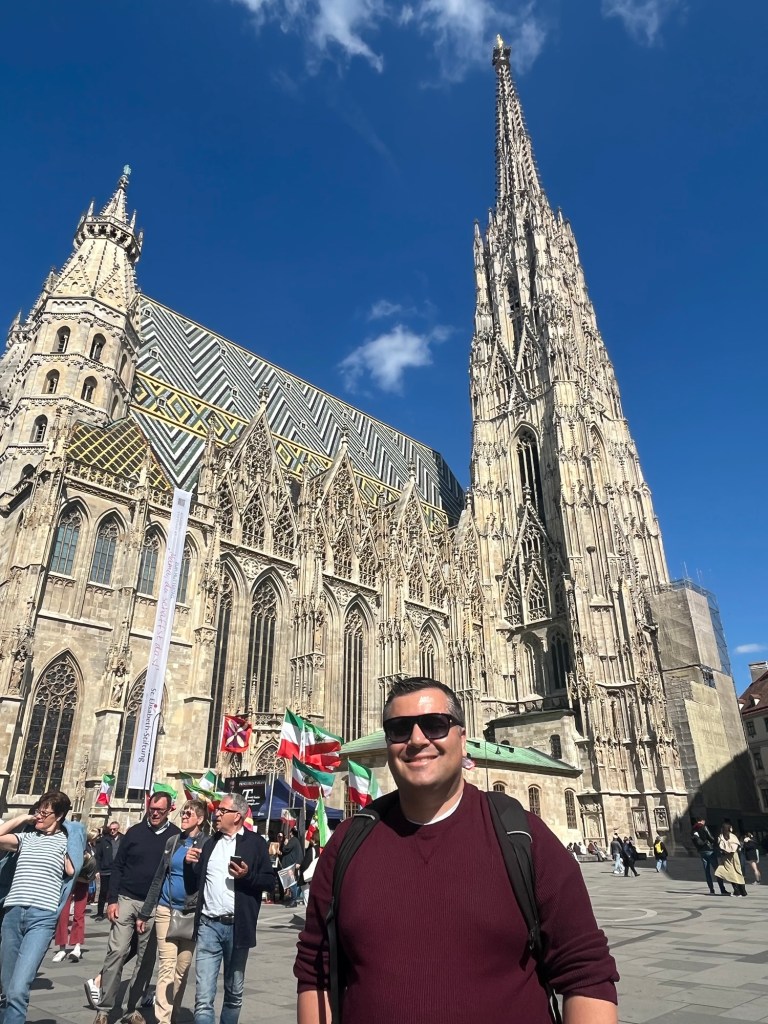
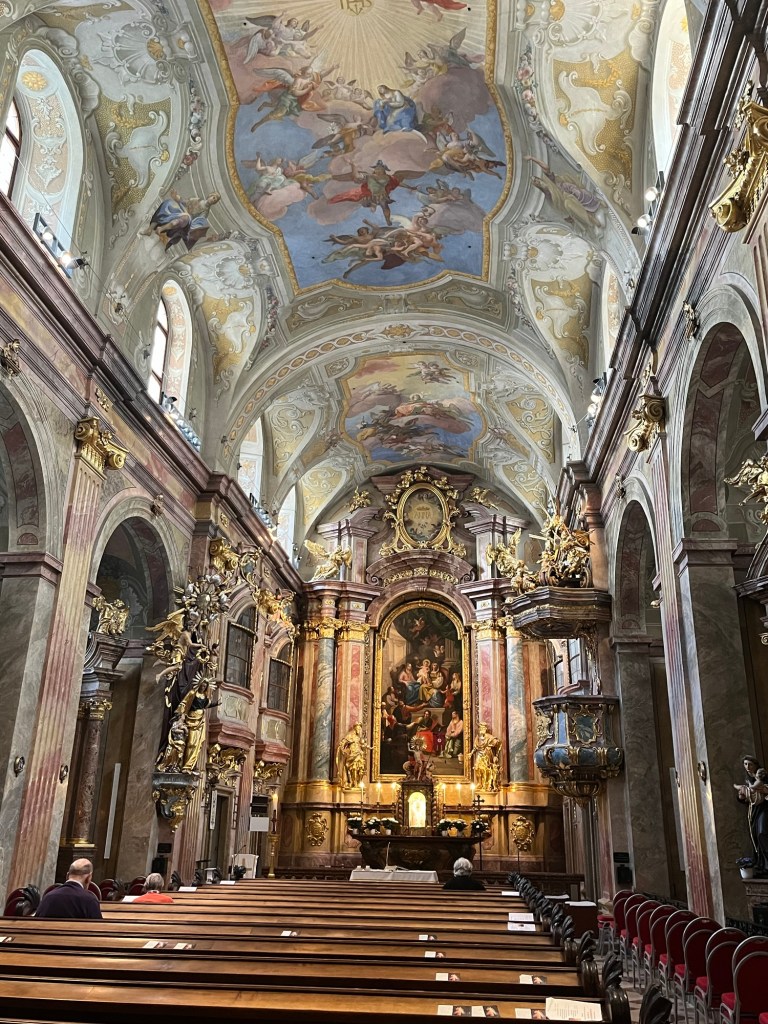
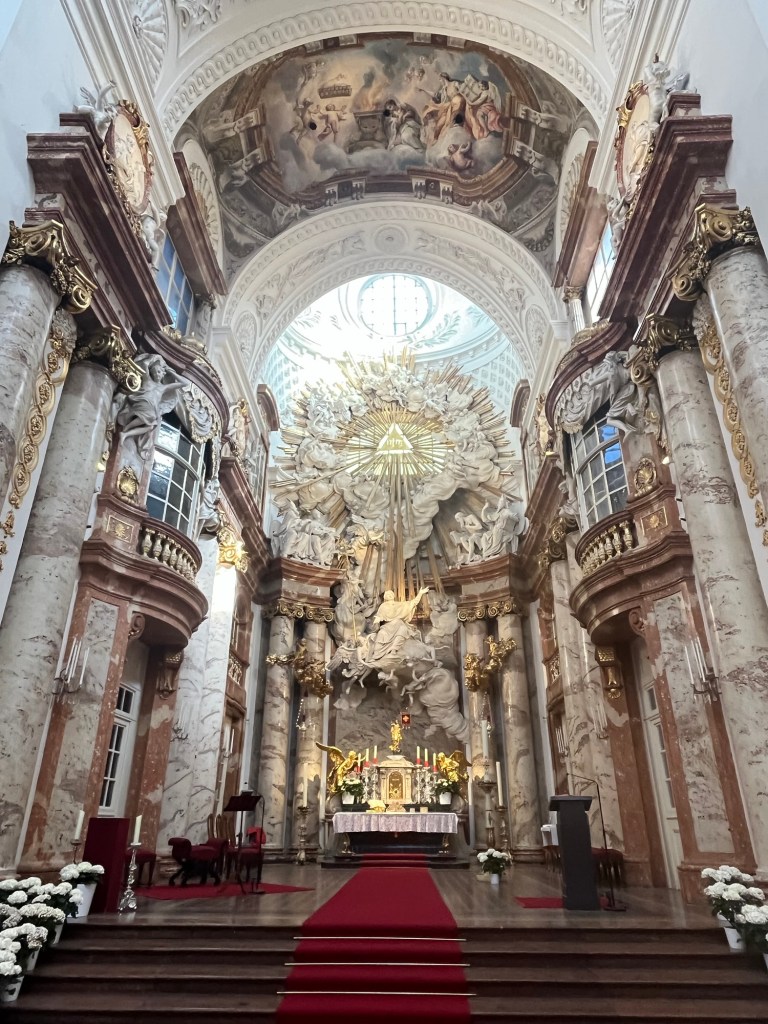
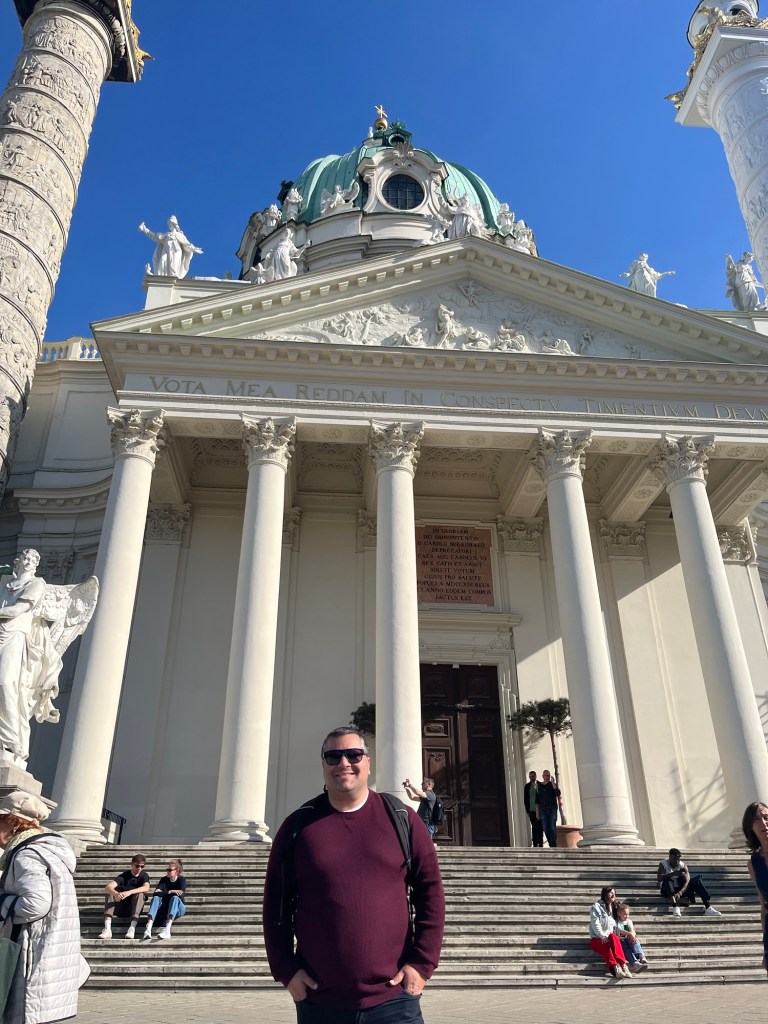
After connecting over our shared love of Spanish and Judaism, we decided to grab coffee a couple days later. For most Americans, coffee is maybe a 45 minute to an hour experience. But coffee in Vienna, and especially with a friendly Argentinian, is a six hour experience. Not only coffee and delicious pastries and lovely conversation, but also a whirlwind tour around the city. We visited the Cathedral, the Holocaust Memorial (which to the city’s great shame is almost hidden in a neighborhood tourists never visit), countless gorgeous buildings, and the MuseumsQuartier. He shared Jewish history with me along the way. The city is stunning and we’ve had influence everywhere. Even the beautiful Karlskirche which I loved was financed with money expropriated from Jews!

The history here is complicated and not always friendly to the Jews, who nonetheless contributed to it and with it extensively.

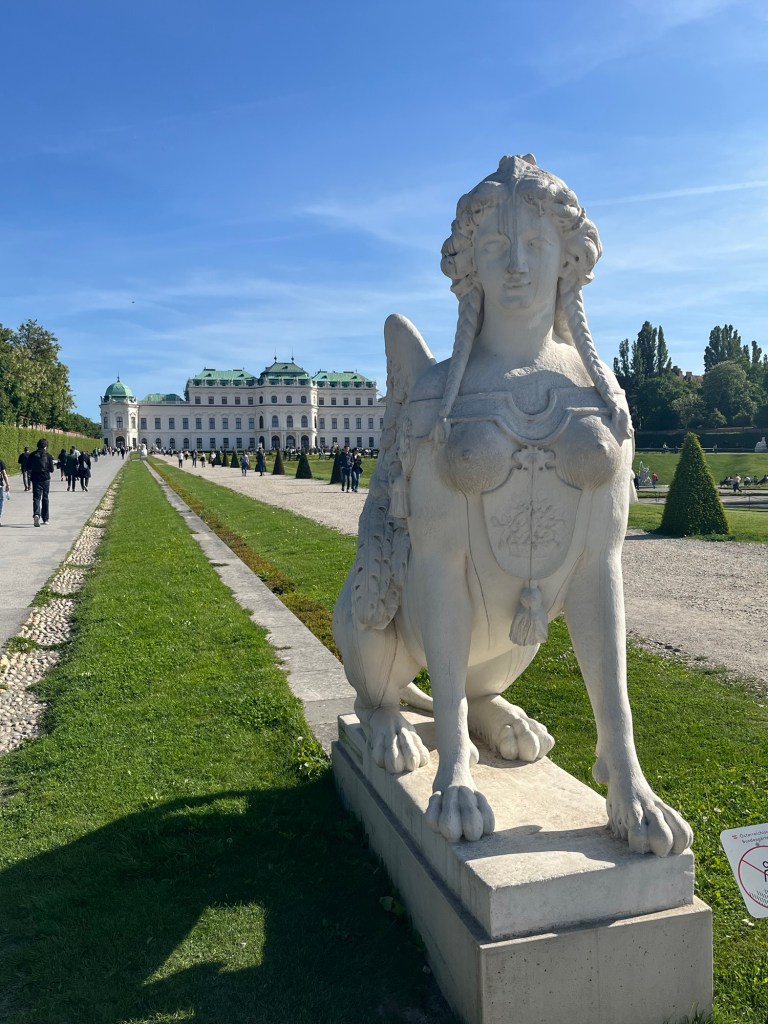
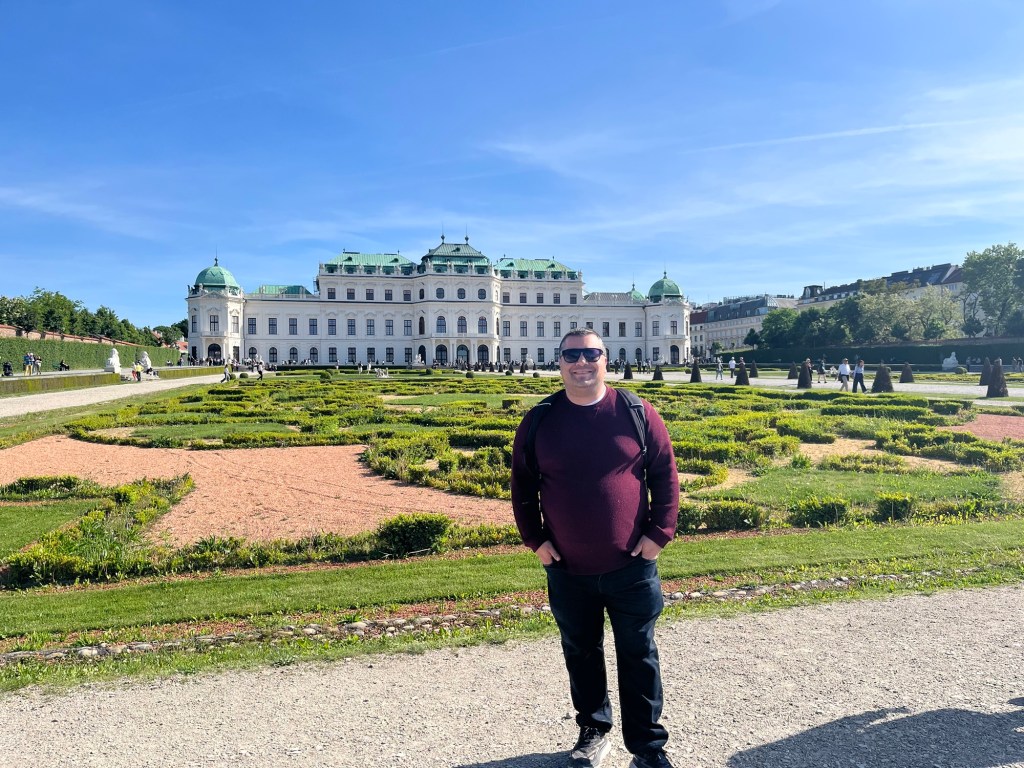
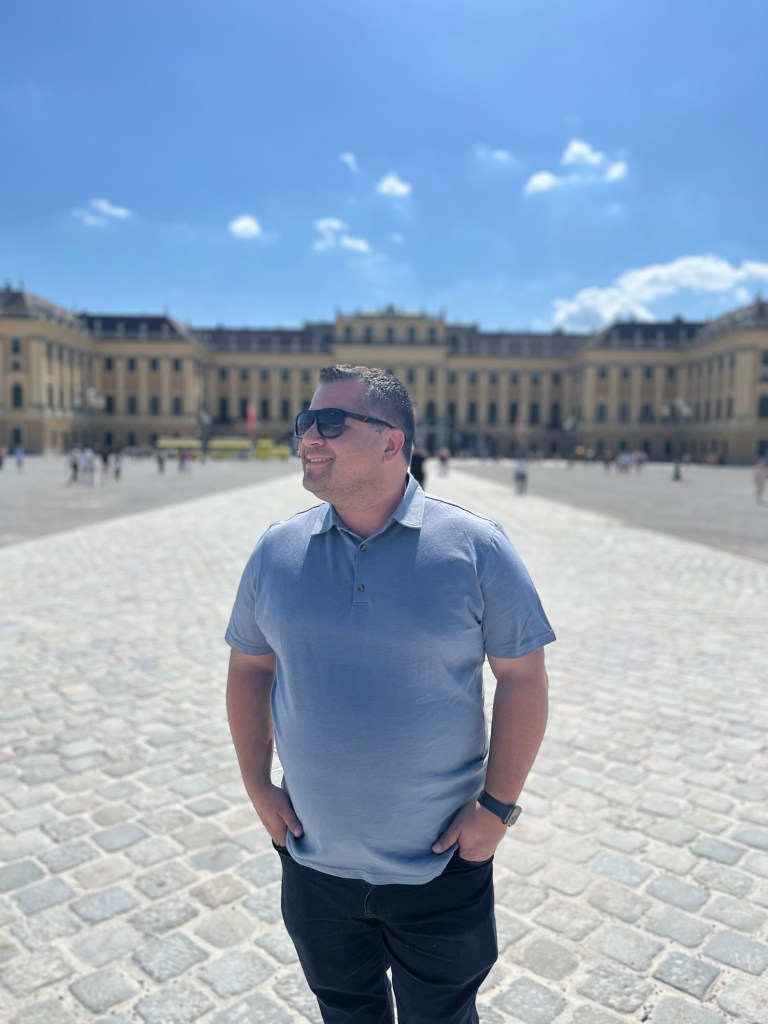
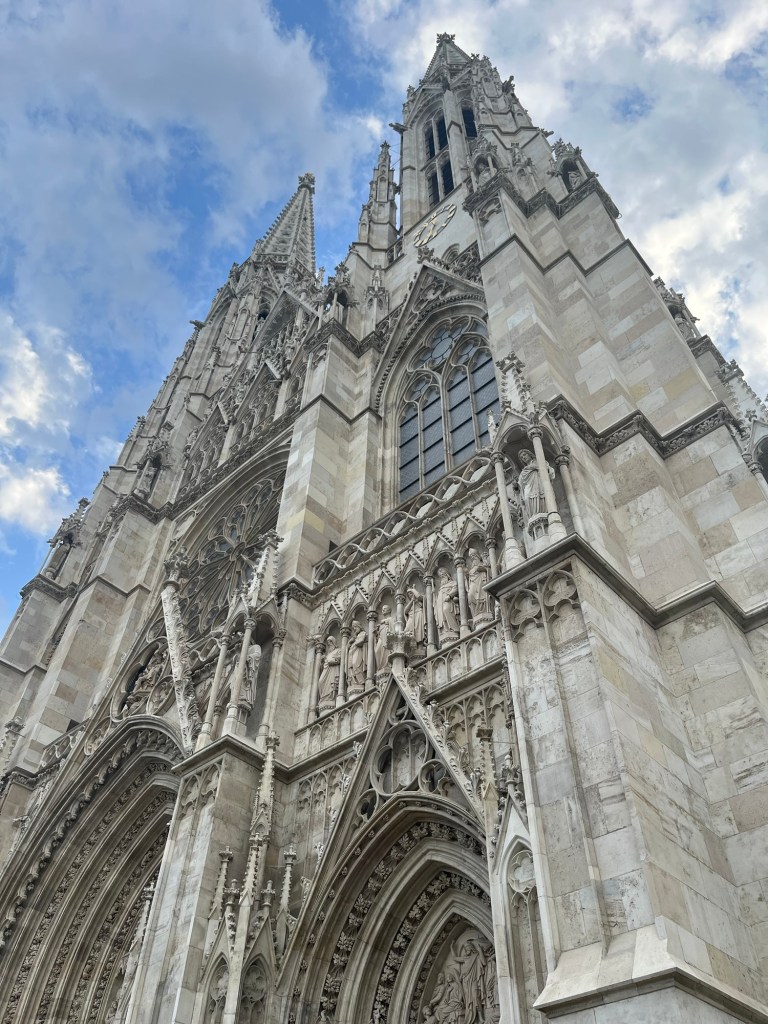
Just to show you how pretty a city this is, here are some photos of things Augusto and I saw together – and some places I went on my own:

Not only did Augusto and his wonderful wife Sabrina show me so many sights around the city, they did it with great kindness and warmth. I didn’t feel like a visitor. I like I belonged.

I felt like I belonged because they made me feel happy, they made me feel loved. And on a difficult day – Mother’s Day. I know my mom was smiling looking down at me making new friends on my journeys. To travel solo is not to travel alone!

There’s another reason I think I felt I belonged. This is the surprise. As I sat down to write this blog, I remembered a genealogy project I did for Hebrew school at my synagogue growing up. I listed where all my ancestors were from. And I’ve done a good bit of genealogical research since then. I know I’m Jewish – from Lithuania and Ukraine on my mom’s side. And on my father’s side, part Romanian and Hungarian. I had the strangest flashback though to the poster with my Hebrew school genealogy project. It said Vienna, Austria.

And that’s because my great-grandfather Max Grossman, a Yiddish speaker, was born to two Austrian parents. He may have even been born in Austria – it’s not clear. It is he who was on my school poster and I verified it on my family tree. For people who don’t believe in spiritual energy – I’m sorry but this is too clear to be anything other than beshert. “Meant to be”. Min hashamayyim. From the Heavens.

I love Vienna. It has a horrific antisemitic history and also a lot of amazing intercultural cooperation and glory. And it has what has to be one of the most resilient Jewish communities in the world. That’s one of the places I draw my resilience from. It’s quite literally in my blood and I had no idea the whole time I was there.

Vienna- I’ll be back!

How Montreal saved my Judaism

I just got back from the most amazing trip to Montreal. I had been before, but with groups of people who spoke only English. This time, I was going to do it in français. And on my own.

I found the past three years so difficult. I love to travel but because of Covid, I hadn’t been on a plane since I led a Birthright trip in Summer 2019. I had done some smaller trips to Philly, Richmond, Annapolis, Baltimore, and Charlottesville, all with friends. Which was great. I got to see new places and have a relaxing change of scenery. And rebuild my travel skills.

I spent the better part of two years traveling when I lived in Israel. I visited 120 Israeli municipalities and 10 European and Middle Eastern countries. And what was so amazing about this experience in Montreal was that with a little preparation, I was back in the game. Perhaps even better than before.

Montreal, for those who don’t know, is one of the most multicultural cities on the planet. It is home to large immigrant communities and diverse religious groups, including a significant Jewish presence dating back to the 1700’s. The Jewish presence is integral to the Montreal’s cultural identity. Of the three most famous Montreal foods, two are Jewish- bagels and smoked meat sandwiches. And these bagels, by the way, are in fact better than the best New York bagel I’ve ever had. They are cooked fresh 24/7 in wood-fired ovens and are absolutely delicious.

To be honest, as I’ve written about lately, I’ve felt distant from my Judaism. So I wasn’t sure how much I was going to engage with it on this trip. After all, I wanted to practice my French. Most Jews in Montreal are anglophones. And I was just tired of Judaism. I had signed up for a French-language Jewish culinary tour and if it hadn’t been in French (which excited me!), I’m not sure I would’ve gone.

But in French it was and something about the combination of French and Judaism works for me. It adds a layer of culture and interculturality to the experience. I found myself as the only Jew on the tour, including the guide, who was a non-Jewish woman from Quebec. The other participants were a French woman and a Quebecois man, both non-Jewish. While the guide was very knowledgeable, I ended up getting the chance to add my own commentary and knowledge to the tour! By the end, the French woman said the Museum of Jewish Montreal should hire me 🙂 . I was flattered.

The day before the tour, my connection to Judaism began to revive – or refashion itself – as well. I found myself in the Mile End, a heavily Haredi (ultra-Orthodox) neighborhood. It was Shabbat and even though I was wearing decidedly non-Orthodox attire (a bright polo and jeans), I couldn’t help but wish the people walking by a “git shabbes”. A good Sabbath. And for the most part I got smiles and a “git shabbes” back.

Solo travel can be hard but little moments like this when a gay Reform Jew is greeting Hasidic brethren in Yiddish – that just makes my heart warm. And they weren’t the only people making my heart feel full. I’m part of the Yiddish-language community in the U.S. A French Yiddish-speaking klezmer artist and friend Eleonore introduced me to her Syrian KLEZMER VIOLINIST FRIEND. Who lives in Montreal! Yes, you read that right. So Zafer, the Syrian klezmer artist, and I did Greek food and talked about all things Jewish and Middle Eastern and queer! Because our commonalities were incredible. It’s the kind of mix you really only find in few places on the planet. Montreal is definitely one of them.

Having done the Jewish food tour, spoken a ton of French, and met a Syrian klezmer violinist, I had arrived at my final day (I did a bunch of other non-Jewish stuff but this blog can only be so long!). My last day I could’ve just gone to a park and eaten cheese with a baguette. Which sounds really nice right about now. But instead, I went back to the Mile End, bought a t-shirt from my favorite bagel place and went to a Hasidic bookstore in search of Yiddish books. I even got a compliment on my Yiddish from a young Hasidic man on the street who I asked for directions from!

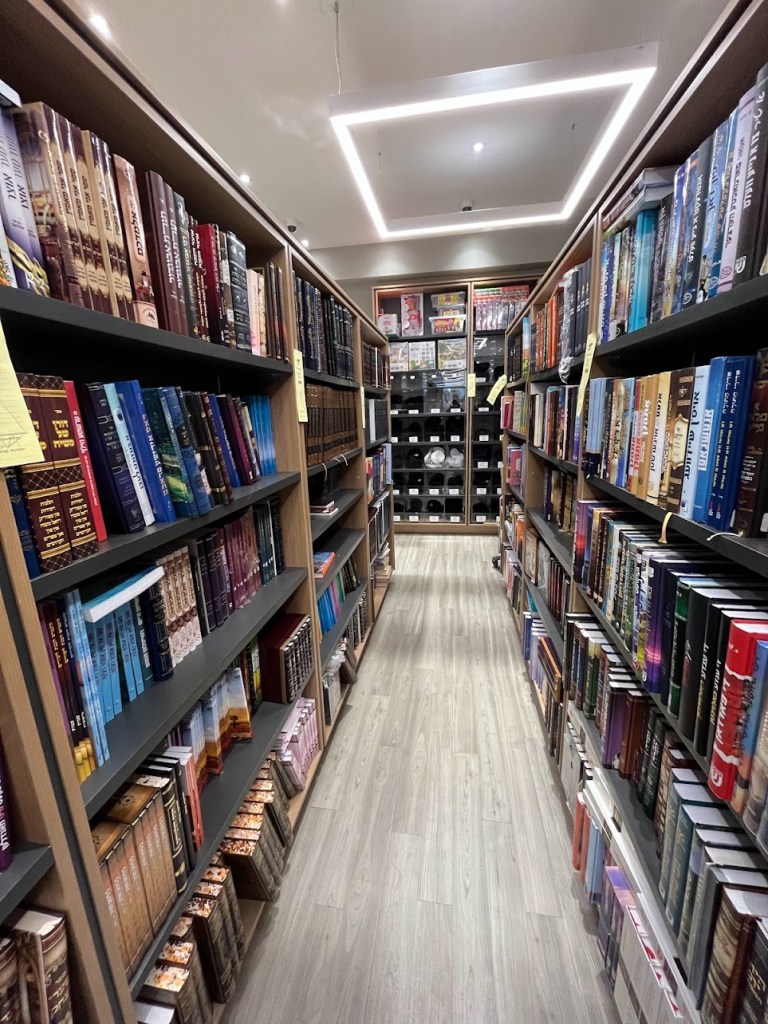
I found the bookstore and this entire section (and more) was just books in Yiddish:

The bookstore employee’s eyes lit up when I said I wanted Yiddish books. He showed me children’s books, Mishnah in Yiddish, and Siddurim with Yiddish translations of the prayers. I must’ve spent an hour and a half in there. I wanted to buy everything! And while my eyes initially drifted towards the children’s books (which are so cute!), I found myself surprisingly attracted to the religious books given my recent doubts about God. In addition to some children’s stories, I decided to buy a part of the Mishnah and, most importantly a Siddur, or prayerbook. Something about the Yiddish softens the prayers for me. So they don’t seem so scary or prescriptive. They feel a little queer. And I like it.

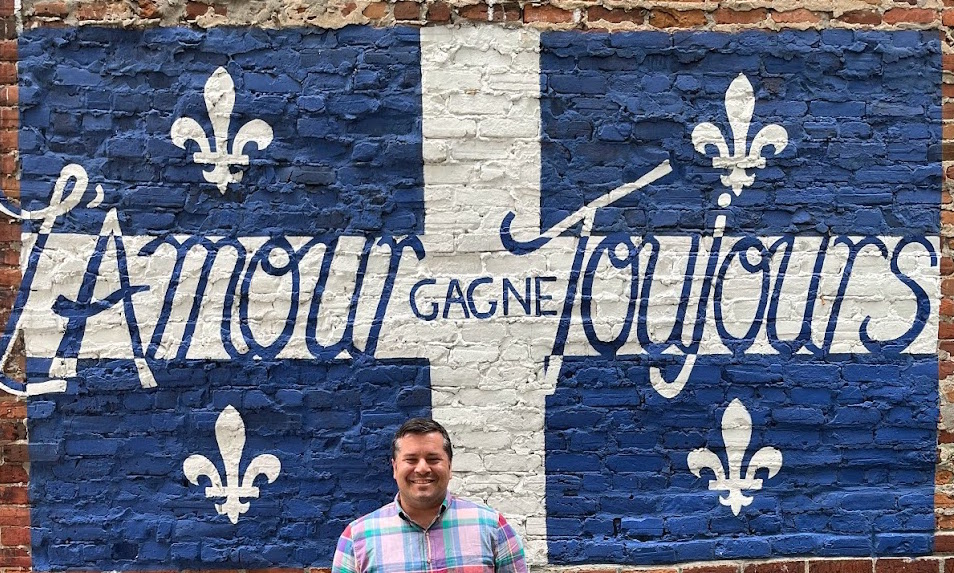
So to the province with a blue and white flag just like Israel, je t’aime. Ikh hob dikh lib. I love you! Because of you, I feel a renewed connection to my Judaism. It’s a Judaism that intersects with language. With Hassidism. With queerness. And even with Syria!

I’ll be back soon. Because to travel, to wander- that is to be a Jew.

A gay Reform ally for Haredim

To say my identity puts me on the other end of the Jewish spectrum from ultra-Orthodox (Haredi) communities is an understatement.  Reform Jews are seen by many in the Haredi world at best as misguided and at worst, ideological enemies.  And gay people, well, are seen as much worse.  Not every Haredi person is a homophobe.  I’ve met some, including through my blog, who see themselves as allies or in the case of one secret Facebook group I’m in, as gay themselves.  And yet a tremendous number of Haredi Jews condemn homosexuality in the most severe terms, making it nearly impossible for someone in their community to come out of the closet as a supporter of LGBTQ+ rights, let alone come out of the closet as queer.  Something which is slowly but hopefully changing for the better.

I share these observations not just from my intuition or news articles, but from lived experience.  Among all my progressive Jewish friends, I have by far spent the most time in Haredi communities.  To the extent where I have two “go-to” restaurants in Bnei Brak, including one where I get the greatest hugs.  I have explored the largest Haredi city in the world many times, and even found things to like.  I even met Hasidim who watch Game of Thrones and boxing on YouTube.  And more perplexingly, actually met Bedouin and chatted in Arabic on the streets of the world’s largest shtetl.

My adventures have taken me outside Bnei Brak as well, including to a cave of Lithuanian misnagdim in Tsfat, a conversation about marijuana and gay identity in Modi’in Illit,  I’ve visited Haredi communities in Boro Park, Crown Heights, Williamsburg, Antwerp, Me’ah Shearim, and more.

The adventures sometimes go well and sometimes don’t.  I once told a Breslover Hasid I was Reform and it didn’t register even the slightest expression of disapproval.  I once told a Yiddish teacher I was Reform and he berated me- during the lesson I was paying for.  I rarely have felt at ease as a gay person and often felt the need to be closeted when entering this community, which made me deeply uncomfortable.  And one Chabad rabbi’s wife I know identifies as an ally to the LGBTQ+ community.

All of this is to say that when we see attacks against our Haredi sisters and brothers on TV these days (of which there have been a lot), I understand why this is complicated.  Far too rarely do these communities stand in solidarity for my well being and human rights.  And yet- some do.  And furthermore, the philosophical question arises of whether we should only stand with those who stand with us.  Or whether we have an obligation regardless.  And perhaps, through some positive interactions, can even bring people together in new ways.

As a gay Reform Jew, I feel my tradition obligates me to stand with Haredi communities battling seemingly endless anti-Semitism.  Not just because it affects me as a fellow Jew (we should be realistic- hatred never stops at one community’s door), but because our tradition asks us to love our neighbor as ourselves.  To be brave.  To lock hands with someone different from you, and hopefully open all hearts involved in the process.

It is ideologically easy for liberal American Jews to stand with refugees, with immigrants, with the queer community, against climate change, and a whole series of other issues that fit neatly into our ideological profile.  Into my ideological profile as well.

It is much more challenging, and equally important, to push ourselves to extend our solidarity to our brethren whose politics, dress, and approach to faith differ from our own.

So in the end, that is my hope.  That liberal American Jews such as me can find it in our hearts to extend a hand to our Haredi brothers and sisters.  And that they will grasp it.  We both have much to gain from such a partnership.  And much to lose- for the people who hate us will hardly care how we pray or what we wear.  They care that we are different.  We are Jews.

The cover photo is one I took while visiting and learning at the Breslover Yeshiva in Bnei Brak, Israel.


The funny, silly, and strange side of traveling

Oftentimes, I use my blog therapeutically.  It’s first and foremost a place to express myself, my observations, some of my deepest feelings.  It’s also a place to share and to give you insight into my world and how I see it.  And I often get inspirational comments from readers, which brings everything full circle and truly makes blogging a rewarding experience.  Thank you for being a part of it.

I’d like to use this blog to talk about some sillier or more mundane parts of travel.  Because that’s a part of my experience too.

Let’s start with “bris”.  Here in Spain, I see almost everywhere, in huge letters, the word “bris”.  Graffitied on walls, like street art or a gang sign.

But what you need to know, if you haven’t already caught why this is funny for me, is that “bris” is the Hebrew word for circumcision.  So everywhere I turn in southern Spain, I see beautifully graffitied, street-smart bold letters proclaiming “cut penis”.  It’s a joke lost on the entirely un-Jewish populace, but they say Spaniards have a lot of Jewish DNA from the forced conversions of the Inquisition.  So maybe even though they haven’t had a bris, once upon a time, their ancestors did. 🙂

Here’s a strange observation from Europe.  Europeans can have some pretty strong stereotypes about Americans.  Mostly based on Hollywood- often without ever having visited.

I often think in some ways Europeans are truly superior to Americans when it comes to certain policies.  Like healthcare.

One thing they are rather behind on is water.  Something you’ll never hear about in a foreign policy magazine 🙂 .  Almost everywhere you go in Europe, you have to buy bottled water.  In restaurants, tap water is usually not an option, even though it is almost always safe.  What a waste of plastic!

Now I’ll share a bit of a funny story.  In Israel, water, despite being a precious commodity in a desert country, has to be given to anyone in any establishment for free.  Even if you’re not patronizing it or buying anything.  It’s great.  America, while not quite on that level, is a big fan of tap water.

So I was quite surprised when I visited the Jewish Museum of Budapest.  I had paid to get some genealogical research done and while I was waiting, I went to fill up my water bottle at the cooler.

The researcher said: “you didn’t ask.”

I responded: “oh, OK…can I have some water?”

And her reply: “yes, in our country you ask first.”

Whew!  Next time you’re in Budapest, think twice before pressing the water tap!

Another funny thing.  In Brussels, you can ride public transit without buying a ticket- but at the risk a conductor will ask for it, and fine you accordingly.  The Belgians developed a rather clever app.  It lets you check online for the last time someone spotted an inspector on a particular route.  So when I got on the bus- unable to find a local ticket vending machine- my new Spanish-Jewish friend said: “don’t worry, they haven’t checked on this line for 20 minutes.”  I thought Israelis were lawless, but Belgians have their own little ways of rebelling 🙂

Slovenia is known for its dairy products.  I was staying in a suburb of Ljubljana, an outlying neighborhood.  I walked towards a mountain.

On the way, I spotted the most curious device.  It was a vending machine- the type you’d usually see filled with Kit Kats, Twix, and cookies.  But with fresh dairy products from the local farm- which you could see right next to it.

So, feeling thirsty, I bought some milk.  And feeling hungry, I got some yogurt.  B9, A12.

That’s how you do breakfast in Slovenia!

Speaking of vending machines, I’ve seen some interesting ones.  In several countries, including Spain, I’ve seen condom vending machines!  On the street.  Even some that sold lube.

The other day, walking around in Spain, I noticed the vending machine as I saw old women walking by.  Who, if they noticed it all, seemed to care far less about it than about the latest gossip in the neighborhood.

In a place where 50 years ago, the public schools were Catholic.  With crosses hanging in every room.

Belgium is known for a few things.  Chocolate, fries (don’t call them French!), and beer.  Mostly, carbohydrates.  But what you may not know is Belgium is the home to the best rugelach I’ve ever eaten.  Rugelach, for those who don’t know, is a Jewish pastry.  In Israel, the form it takes is kind of like a fluffy sweet croissant with some sort of filling- fruit, chocolate, etc.

In Belgium, I was in Antwerp, in the diamond district.  The Jewish part of town.  Even the shopping area is called “Meir”, a Jewish name.  Golda’s surname.

I was hungry and knew there was Jewish food.  Unlike in Eastern Europe where the food was quite familiar, but the dead Jews outnumbered the living ones, in Belgium, there is still a living community.  With amazing bakeries.

I bought three cinnamon rugelach.  On the outside, they look the same as they do in Israel.  But on the inside- it tasted like French Toast.  Gooey, sticky, delightful.  Warm, lip-smacking good.

So good that after four steps away from the shop, I made hard turn back and bought three more.

Belgium- home of waffles and delightful food that will clog your system for days.  Including the world’s best rugelach!  And a lot of cell phones whose ringtones are the Islamic call to prayer, where for a moment I felt time-warped back to Yaffo.

Romania.  Aaaaaaaah Romania Romania Romaaaaania Romania!  Romania is a silly place.  One of the things I love about Romania are the Gypsies (more properly termed, “Roma”).

Frankly, in Romania I kind of look like one.  I started to appreciate this highly stigmatized group after a cute Roma kid kept winking at me on a bus.  Romania’s public transit doesn’t seem to have improved much since communism- it mostly relies on really bumpy van rides that take twice as long as a car.  But are still shorter than the even slower train.  Romania is a good place for a scenic ride…

So this kid winking and smiling at me made my ride a bit better.  I started to learn that it was pretty easy to spot Roma.  Not just physically (although yes, both their skin color and facial features are a lot more like my Semitic ones than those of the typical Transylvanian).  Also, they wear the most interesting clothes.  As if they are out of a Western movie.

Roma men tend to wear cowboy boots and cowboy hats!  The women dress in colorful skirts.

I hardly expected to see men in Romania who reminded me of Chicanos in the Southwest, but that’s exactly what they look like.  Caramel skin, nice leather shoes.  And some of them I hear make great salsa.  I wish- I can’t say Mexican is my favorite food, but I miss a good quesadilla once in a while.

Which they make in San José, Spain, a seaside resort.  In a restaurant next to which lies a bakery.  From which I heard the word “Maramureș” shouted out loud.

Maramureș is a region of northern Romania.  And one of the cooks is from there.

Europe is a large, diverse place.  But it’s one where these days, you’re as likely to hear Romanian in Andalusia as you are in Bucharest.  A place where I had some of the best sushi of my life in Slovenia- with a chef straight from Osaka.  A place where I found my favorite Indonesian instant noodles in an Asian grocery store in the Flemish city of Antwerp.  Where right down the street, you can find the best rugelach in the world.

Europe- once a continent, now a global village.

To explore is to see things for yourself.

You’re welcome, Belgium

My trip to Benelux, as I like to call it, has been interesting.  The series of low-lying small countries- Belgium, the Netherlands, and Luxembourg- has long been a destination I wanted to visit.

I like small countries.  They have unique character and frankly they’re cute!  Not so overwhelming and often overlooked- just the way I like things sometimes.  People tend to be more appreciative too when you visit places a bit off the beaten path.  Brussels isn’t a village in Latvia, but it’s certainly not Rome or Paris either.  It’s cute- not too big, not too showy, interesting.  And for me, a French-speaker and a lover of languages, this is a fascinating part of the world.  With languages bumping up side-by-side- Belgium a truly multilingual country.  With all the good and challenges that poses for its society.

While unfortunately I didn’t make it to the Netherlands, I did visit Belgium and Luxembourg.

The good thing about small countries is you can see a lot in a short amount of time.  And things do tend to change a bit from place to place.

After flying into Charleroi Airport and staying over in Jumet, I visited Namur and the Ardennes.  The Ardennes is the site of tons of World War history- from both wars.  With tremendous casualties, including many Americans who died to liberate this part of the world from fascism.

The Ardennes are green and peaceful.  Some pockets of poverty.  And some gorgeous medieval villages like Dinant and Bouvignes.  Take a look:


While I didn’t plan on coming to the Ardennes for its military history, it kind of found me.

When you go to the cute village of Bastogne, you can see the war everywhere.  There are graveyards for soldiers, American tanks, a museum.  And mostly Western tourists coming to see it- sometimes to meet their departed relatives.

I knew my great uncle Barney Marcus was killed here in the war- he was an American soldier.  But I didn’t know where- it could’ve been Asia or Europe.  And I didn’t know exactly when.

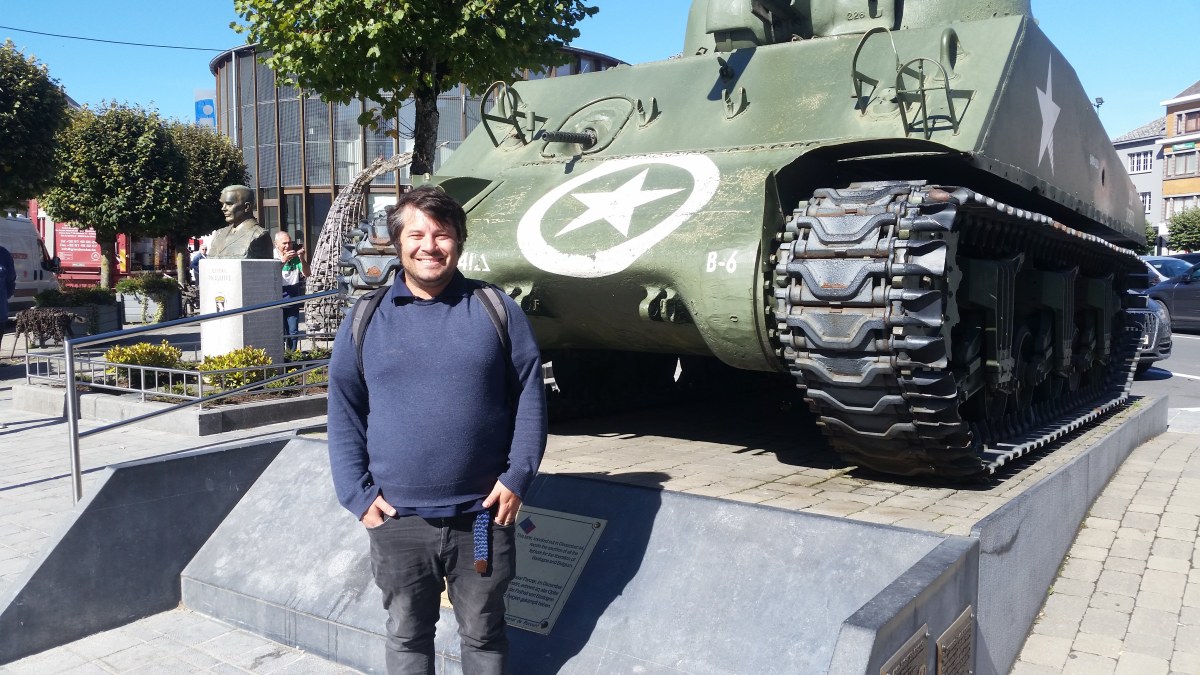
Without wanting to go into the war traumas or history (I think seeing the destroyed Jewish communities of Eastern Europe was enough), I didn’t visit much.  But I did take a picture with an American tank.  And I noticed that one older woman, initially standoffish, was quite warm to me in French when I said I was American.  I could feel her gratitude.  For something I didn’t even think of when planning this trip.  But nonetheless, it felt good.  After experiencing so much stigma in Eastern Europe, it was nice to see some people who liked me for who I was.  And to think about good things my country has done.  Like liberating this part of the world from fascism- twice.
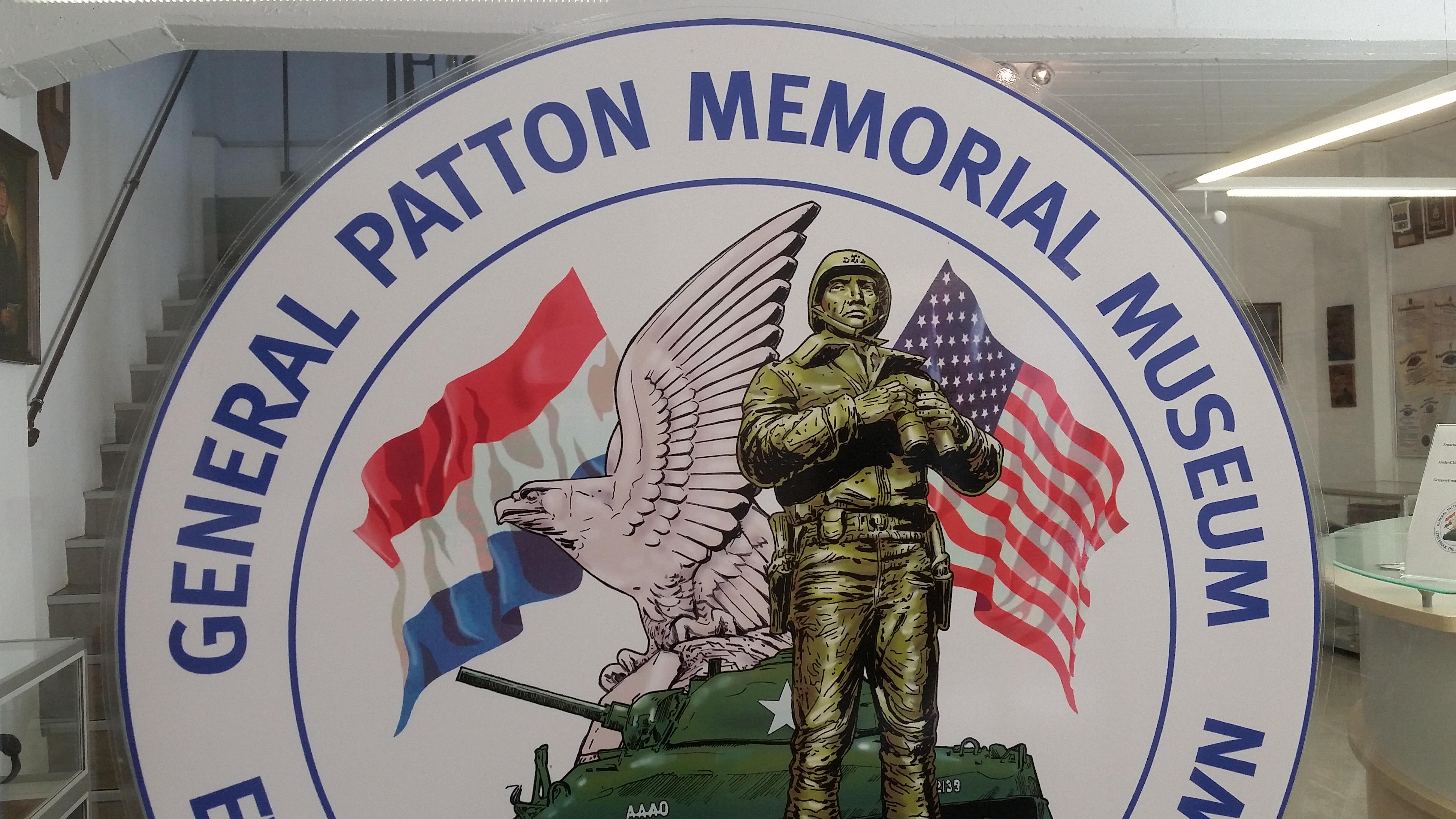
20180926_151940

I also made time to visit Luxembourg.  While so many Debbie Downers asked me over and over why I would go there, my answer is simple: it’s there.  It’s a tiny country, with something different, right at my doorstep.  It’s cute, quadrilingual (Luxembourgish is a language!), and I find it interesting.

From Bastogne, I hopped on a bus.  Now I’m going to sound pretty hipster when I say I didn’t even go to Luxembourg City.  I passed through towns and villages on the way to Ettelbruck, an even smaller city in a teeny tiny country.

My image of Luxembourg was wealth.  It is one of the richest places on the planet.

And I saw some of it- the native Luxembourgers (is that a word?) were readily recognizable, driving Mercedes and BMW’s.  Not all of them, but a lot.

What was shocking was that Ettelbruck is anything but wealthy.  The rest of the town is a melting pot of Portuguese, Chinese, Africans, Cape Verdeans- name a culture.  There to work, to somehow survive in the face of eye popping prices, to make a better life.  Ettelbruck isn’t scenic, but I did learn a lot.

What I learned is there’s a lot of racism here.  Europe, in general, feels really racist.  Not everyone, but it’s a deep feeling.

As someone with caramel, olive skin and Semitic features- I stand out.  To the people (usually on the far left) who claim all Jews are white- tell that to the Luxembourgers who looked at me like I was there to clean their houses.

Because of my appearance (and sometimes because I go to decidedly non-touristic spots), I often am approached with fear and suspicion.

I should say, by all those who aren’t themselves outsiders.

On multiple occasions, Arabs have approached me in Arabic here.  Confirming my thought that the white people around me also thought I was Arab.

In fact, one night, after a particularly miserable AirBnB I had to escape (like the wolf in the forest I had to run away from- that’s another story), I ended up at an expensive hotel in Bastogne.  The Arab employee comes up and starts speaking to me in Arabic.  I said I was American…needless to say that despite my bravery and pride, this was not the moment to say I was Israeli.  Just this week, a Jew was attacked in Germany.  Sometimes it’s neo-Nazis, and a lot of the times it’s Muslim extremists.  Europe isn’t as safe as I thought it would be.

The Arab man, from Tunisia (a cool accent I hadn’t heard much before outside of Jewish Tunisian music), immediately directed me to a Halal restaurant.  Assuming I was Muslim.  Not about to say “I respect everyone but actually I’m a secular Godless Jew”, I simply went to the shwarma restaurant.

There I met a Kurdish man, a Syrian refugee, and a Libyan guy.  We had a nice chat- again, they all pretty much assumed I was Muslim (whatever, I don’t really care, and the food was great).  At the end of the meal, they gave me a free dessert, namoura.  It was delightful.  Also, the Kurdish man gave me PKK literature.  That was a first.  Despite having lived in the Middle East, I have never been so generously offered terrorist literature after dinner.  I smiled, accepted the brochure, took a few pictures, and threw it in the trash in my hotel.  The last thing I need is more airport scrutiny.  I’ll take the flight over the flier.

To return a moment to Luxembourg, something really stunned me.  I found a synagogue!  Obviously, like most of Europe, an empty abandoned one.

It was an unexpected, somewhat invasive surprise.  I was hoping to get a break from seeing the ruins of my people (see my blogs about Eastern Europe), but here we were again.  The 47 families of Ettelbruck turned into ash.  According to the sign, by “villains”.  As if this were a murder mystery and we didn’t know that Nazis and their Luxembourger collaborators killed them.


It’s a reminder that our blood lies spilled over this entire continent, over centuries.  It’s depressing, although I’m glad something of our civilization here remains, in spite of so much continuing hatred.

While I tried to engage with some Luxembourgers (interestingly, Yiddish proves quite useful in talking to them), they mostly shied away or even laughed at me when I said I was Jewish.

Meanwhile, the Cape Verdean women loved talking to me.  We shared the Portuguese language- a reminder that my tribes include the languages I speak.  The foreign workers in Luxembourg, almost to a fault, were welcoming and kind to me.  Perhaps seeing me, on some level, as one of their own.  Or at a minimum, to not look down on others in need of directions or a laugh.  Poor people, at the risk of sounding tokenizing, tend to be a lot warmer than rich people.  In almost every place I visit.  I suppose it doesn’t cost anything to be nice.  And when you don’t have much, hopefully you have a bit more empathy for others in need.

One of the reasons I came to Belgium was that there are living Jews.  Unlike the communities in Eastern Europe where the headstones outnumber the heads, Belgium still manages to keep Jewish life alive.  Though not with ease, in particular because of rising anti-Semitism from many directions, including (though not exclusively) its Arab immigrants.

I had the pleasure of visiting Moishe House Brussels.  For those who don’t know this international institution, it’s a pluralistic, secular-minded communal house that Jews live in around the world.  I used to go in Washington and it’s great to have a place to meet other young Jews.  Which is exactly what I needed after a long dry spell the past few weeks.

It was so nice to talk to people who understood me.  Not because I love every Jew any more than you could say you love everyone in any group.  But because in the deepest sense, all Jews share something.  Especially those who take the time to cultivate it.  We share 4,000+ years of history, of food, of persecution, of cohesiveness.  Of survival.  Of humor.  Things you can’t just understand by taking a course or going to a Bar Mitzvah.  It’s in our shared experience.

And what was also awesome was that a few non-Jews joined us.  An Italian-Belgian guy, even an Azerbaijani woman studying Israel for her PhD!  Even the Jews were diverse- Spanish, Argentinian, Croatian, Algerian, Belgian, and me- Israeli.

It was so nice to make some new friends and to do Shabbat.  Not to pray, but to eat together.  That’s what nourished me.  The conversation, the togetherness.  The warmth.

One person who I particularly connected with was named Forster.  I don’t have his whole story yet- we’re hopefully hanging out again tomorrow.  Besides a shared sense of humor, a love of animals, and a strong passion for secular Jewish culture, I was moved to hear that he grew up on his family’s Holocaust survival stories.  I know my family was murdered in the Holocaust, but since I never knew them and they were across an ocean, it’s more of a puzzle I’m piecing together.  And one thing I notice about European Jews is that, with the exception of some Sephardic Jews who made their way here after the war, almost all are descendants of Holocaust survivors.  Or are survivors themselves.

After Brussels, I visited Antwerp.  While the Brussels Jewish community is quite secular (which is cool, and somewhat hard to find outside Israel these days), the Antwerp community is hard core Hasidic.

For those of you who’ve followed my blog, you know that the last time I stepped foot in Israel, I was pretty pissed off at this community.  A community, while diverse, whose leaders use religion to prevent me from building a family.  From adopting, from using surrogacy, from getting married.  Because I’m gay and the Torah blah blah.  Utter bullshit.  Even though I spent a lot of time in Bnei Brak, Mea Shearim, Modi’in Illit, and other Haredi areas, I stopped going once I saw how hated I really was.

Something about this trip changed that.  Not because I think Haredi parties are any different now than a month ago.  But perhaps because living in the Diaspora makes it a little warmer between us.

When the government isn’t tied to religion, we don’t have to fight about it as much.  And when our non-Jewish neighbors are so fixated on persecuting us for no apparent reason, it acts as a glue to bring us together.  I can’t say I enjoy persecution, but it feels kind of nice.

As I imagined the ruined Hasidic communities of Romania and Hungary, it felt nice to see living Hasidic Jews.  Speaking Yiddish, Hebrew, English, Flemish- name a language.  It’s a Diaspora chulent.  And it tastes good.  Almost as good as *the* best cinnamon rugelach I have ever eaten in my life from Heimishe Bakery.  Go!

I had a nice chat with the owners and a Hasidic man.  I wished them a gut yontif- it was Simchat Torah that night.  The day of celebrating our book.  I’m not always a fan of this book, but it’s definitely ours.  And it felt a bit like home to be among my people.  Alive.  It put a smile on my face when the baker told me she was from Israel.  With a broad smile of her own.  In this little shop, I didn’t have to lie.

As I pondered what to do tomorrow, I thought about how I will meet with Forster.  I want to know his family’s story- if he feels up to sharing it.  And it got me thinking about my own.

I’ve often told people on this trip that I’m the first member of my family back in this part of the world since the 1880s.  When we were kicked out.

But it’s not true.

As I discovered tonight, Barney Marcus, my great uncle, died liberating Europe.

Barney Marcus was drafted at age 22 from Pittsburgh, Pennsylvania.  With World War II raging, he enlisted in the 314th Regiment of the 79th Infantry Division.

Barney was a proud Jew.  He served as the secretary of the Phi Lambda Nu fraternity- an all-Jewish fraternity started in Pennsylvania when non-Jews didn’t accept us in their ranks.

His frat brothers held a going away party for him before he was drafted.

Barney’s regiment wasn’t any old regiment.  It freed Europe from fascism in the Battle of Normandy.  You can read the incredible story here and see a rough map of his experience:
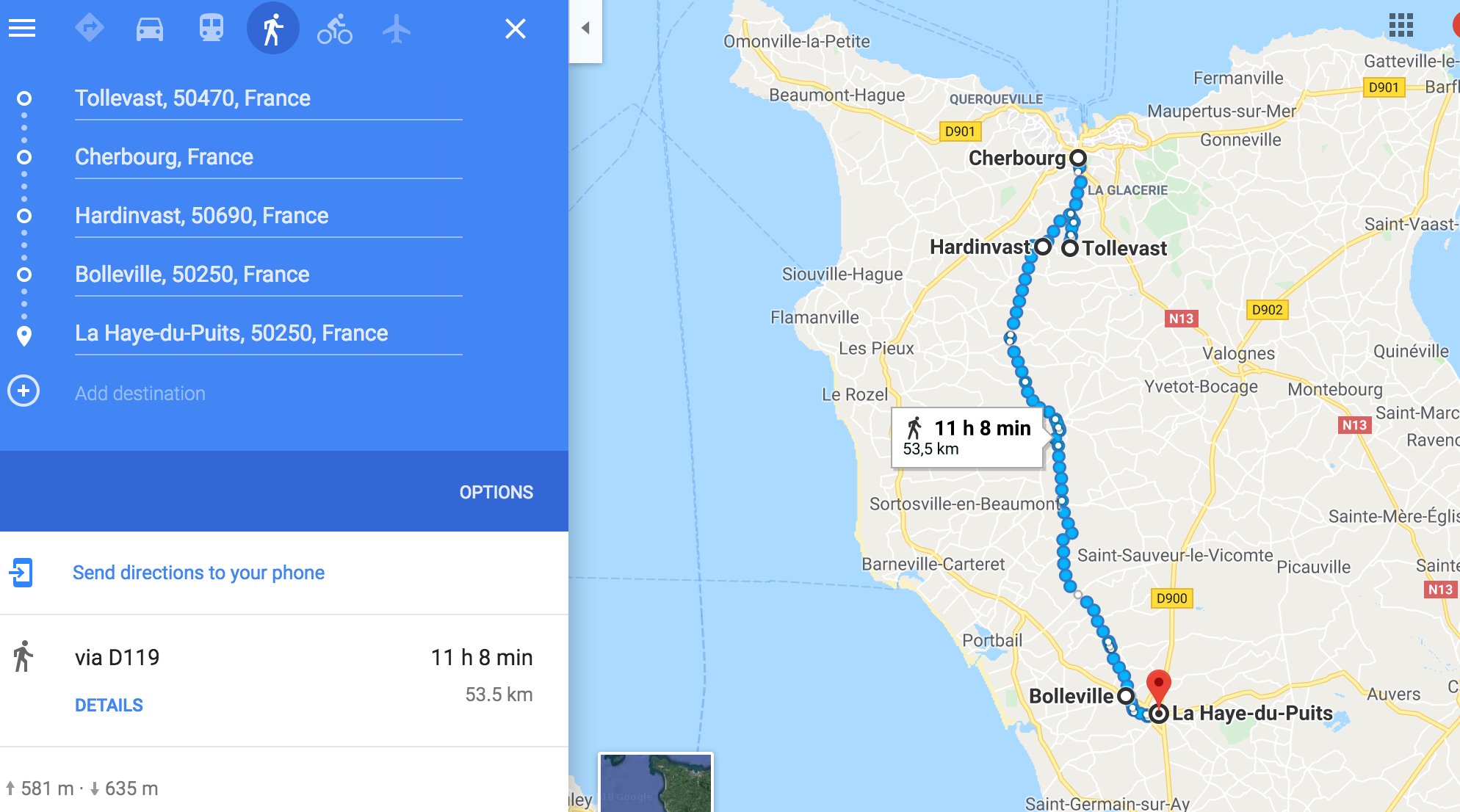
Screen Shot 2018-10-03 at 2.29.11 AM.png

His brothers in arms pushed the Germans out to clear the way for Allied Troops to free France, to free Belgium, to ultimately conquer Germany and put its demons to rest.

Unfortunately, Barney never made it to Germany.  He was gunned down by Germans and their sycophants in La Haye-du-Puits, France.  Not only that, he was awarded a Purple Heart and Silver Star posthumously for dying while trying to save a wounded friend.  His particular regiment was cited for “outstanding performance of duty” on July 7, 1944.  The very day he died.  Fighting his way through “artillery and mortar fire and across dense mine fields”.  I’m not bashful at all to say that his regiment took German soldiers prisoner- he came to Europe a soldier and died a victor.  An American, a Jew, a freedom fighter, and a Nazi crusher.

Barney’s regiment went on to liberate eastern France, close to the border with Luxembourg, then conquered Germany near Cologne, and ultimately ended up managing post-war chaos in Sudetenland, where German Nazi aggression started this war.  Including some displaced persons camps, perhaps with Jews in them.

I’ve noticed in my travels here that a lot of Western Europeans have forgotten.  A cab driver, when I asked him about the local history in the Ardennes, said the young people don’t want to learn it anymore.  Maybe some do, but when I hear anti-American sentiment or prejudices in this part of the world, it rubs me raw when I know that my family shed blood to keep here free.

As hard as all this genealogy has been, I think it’s been worth it.  I wish I had known my great uncle, Barney Marcus.  Because he sounds like someone pretty cool.  Someone proud of his Jewishness, a brave American, someone who sacrificed his very future to save another life.  Someone I am proud to call my own.

Europe- Jewish and non-Jewish- you’re welcome.  Barney and I have sacrificed for you to exist.  Like the library I visited today in Leuven, rebuilt twice by the Americans for the people of Belgium.

Jews here have a longer historical memory- though I can’t pretend I haven’t experienced some anti-Americanism from them too (or perhaps playful jealousy fed by delusional interpretations of Hollywood as reality).  But the non-Jews here, although there are some truly admirable ones like Alexis who actually lives in a Moishe House and worked for Jewish radio, they have forgotten.

They have forgotten that Belgium (not to mention France) exists because of the United States- twice.  That Jewish soldiers liberated their countries even as not a small number of their citizens helped deport our Jewish relatives.

Every city on this continent has a “Jew Street”, abandoned synagogue, or largely empty Jewish quarter.  And I’m tired of hearing people say they know nothing about it.

Or in the case of Germans I met, that I should visit Chemnitz, the site of recent neo-Nazi rallies, to realize that the people really are great and they’re just protest voters.

Enough.  Europe- anti-Semitism is your problem, not the Jewish people’s.  Just like racism is not black people’s responsibility to resolve.

I’m willing to pitch in and help educate- and even to learn from you.  Which is why I’m starting a new project, Nuance Israel, to bring together Jews and non-Jews, in Israel and abroad, to learn together.  To build connections between kind, open-minded people.  To help European non-Jews understand their Jewish neighbors- and Israelis.  For Israelis to understand their roots- and the importance of diversity.  For people across cultures to build a new tribe- a mindset of openness, tolerance, and moderation.  Join me.

In the end, I’m done hiding who I am.  Yes, I’m from Washington, D.C., but that’s not where I live now.  I’m Israeli.  And American.  And Jewish.  And gay.  And empathetic.  And a lot of things.  And I’m not a liar.

If you- whether you’re Moroccan or Belgian or whatever- can’t handle that, then too bad.  My family is part of the reason this continent isn’t called Germany.  And I’m tired of your worn-out excuses for why America or Israel are so terrible.

Your social safety net was set up by the Marshall Plan and your economies thrive in part because American tax dollars provide most of your defense.

I’m not suggesting America (or Israel) is perfect- it’s not.  We’re not a shining beacon of light for the rest of the world to emulate- we’re just another country.  But one that does some good.  And has things to learn from you too.

I thought about making a spontaneous trip to La Haye-du-Puits tomorrow to see where my uncle sacrificed himself for freedom.  For Europe, for its Jews, for tomorrow.  On some level, for me.  Thank you, Barney.  Today you gave me a little ray of hope- a connection to someone I’m proud to call my own.

Maybe one day I’ll visit- I’ve long been searching for specific places in Europe my family stepped foot on.  I have some I might visit one day, but I don’t know that I’ve reached them yet.

What I do know is tomorrow I’m hanging with Forster.  A living Jew.  A new friend.  Someone whose own destiny is tied up with my own.

Because even though we’ve barely met, I know we’re both survivors.  That when his family, wherever they were, were resisting Nazi fascism and anti-Semitism, holding on for dear life in the face of deep inhumanity.  My great uncle was working to set them free.  Because wherever we are, we don’t give up.

Which is why in the face of the deep inhumanity I’ve faced, especially from within my family, I choose life.  Am yisrael chai, the people Israel lives.

And if you don’t like it, I’m afraid you’ll never succeed in extinguishing our flame.  It burns as bright as the bombs my great uncle dashed between to set your country free.
Nuance Israel

Dear friends and readers-

Over the past year and a half, you’ve grown accustomed to seeing this space being used to tell stories.  You’ve seen me traveling Israel and Europe.  To places many people never visit- the Bedouin village of Al-Aramsha, Hasidic Bnei Brak, Modi’in Illit, Taibeh, Kiryat Gat, and almost every single Druze village.  And in Europe, places like Salerno, Italy; Debrecen, Hungary; and Sibiu, Romania.  Off the beaten path and exciting.
If you follow my blog, you know how much I like to talk to people.  About being Jewish, American, Israeli, gay.  In different languages and in different cultures.  And learning about the people I meet.

Sometimes, it goes great and sometimes it’s really hard.  On this blog, I’ve shared 137 posts and counting.  192,085 words.  Completely free of cost for you to explore.  Filled with my passion for life and learning and growth.  I have spent thousands of dollars and hours on this project- and it is so worth it.  I’m proud to have connected with 70,000 readers from Libya to Poland, Taiwan to Pakistan.  I even have 22 readers in Saudi Arabia!

Every story I hear from readers inspires me too.  The Libyan woman learning Hebrew on her own.  The Lebanese gay guy in Germany who loves Israel.  The Kurdish Muslim who wanted to serve in the IDF!  Where physical borders exist, technology sometimes helps us break down barriers and warm hearts.  In all directions.

My new project, Nuance Israel, is all about this.  I want to create travel, language, and cultural exchange programs to build human connections between Jews and non-Jews in Israel and around the world.  To show that Israel is not black-and-white.  My country is good, bad, and mundane.  It has beautiful texture, like life itself.  Together, we can grapple with the challenges and grow.

I’d be so grateful if you take the time to learn about my new venture and to consider making a donation.  If you’ve loved my blog, it’s more than fair to ask for a little help to keep things going 😉  Your donation will help me build infrastructure- a website, staff, volunteers, grant writing.  To be able to set up language classes, exchange programs, and more.  It’ll give me the time to start this important work.  Even $5 can help.

With your help, we can bring some nuance to the world’s understanding of Israel and promote the value of understanding in Israel itself.  At a time of increasing polarization, let’s cross boundaries, not each other.

Thank you for your support.  Join me in my next adventure 😉

-Matt

The Jewish conundrum

I’m currently traveling through Romania.  Romania, for all its current and past political problems, is today a much, much more peaceful place in Israel.  You can’t really compare a 50,000 person demonstration in Bucharest with hundreds of rockets, racist legislation, land appropriations, occupation, and creeping fascism of Israel.  A state once semi-democratic but now plunging into the totalitarian fiesta that is the Middle East.  And once was Eastern Europe.  With vestiges creeping back today.  Perhaps it’s no wonder that the increasingly psychotic right-wing leaders of the former communist bloc have found themselves in bed with Benjamin Netanyahu.  Even as they spew anti-Semitism and racism in their own countries.  I suppose bullies attract bullies.

Before we dive in, here are some pretty pictures of my other homeland.  My great-grandmother was born in Bucharest and I’ve loved traveling here.  This is my third visit this year- I’m the first member of my family to step on its soil since she left 130 years ago for the golden shores of America.

Romania is gorgeous.  Or in the case of Cheile Turzii, “gorges” 🙂 .  I’ve been to Cluj, the silicon valley of Romania.  Literally- both a valley surrounded by hills and also the high-tech hub of the country.  Filled with lots of young, progressive people working in high tech.  But with way less pent up aggression than people in Tel Aviv.

I’ve been to historic Transylvanian cities, old synagogues, beautiful mountains.  Romania is stunning.  My ancestors must’ve really been struggling to want to leave here.  (Turns out they were- the government passed anti-Semitic legislation and had various state-sponsored pogroms the years my family left)

And for those of you still living in Israel, the other day I bought ice cream, a large bag of oatmeal, apples, bananas, milk, several yogurts, almonds, tomatoes, cucumbers, a Romanian home-made candy, cascaval cheese, turkey, whole-grain bread, and I forget how many other things.  For a total of $10.  Israel is stupidly expensive and the quality of food is definitely not better than here- but I suppose that’s what you get when your country is ruled by a bunch of nepotistic politicians whose rabbi friends make an extra buck off of every piece of food by deciding God approves of it.  Nationalism costs money- I suppose if you pour every ounce of your being into conflict and the idea that your country is super awesome, then people can take advantage of your distraction and charge you money for the things you actually need to survive.  But keep believing that patriotism is awesome.

Romania also knows a thing or two about ethno-nationalism.  It’s a country where, to this day, there’s actually a political party calling for outlawing the Hungarian minority’s party.  Because they claim the Hungarians want to hand over Transylvania to Hungary again.  Does this sound familiar, Israel?

It’s also a place with a long, storied history of anti-Semitism.  One which, thankfully, is much, much better today.  As I have never felt physically threatened and have never even faced an aggressive comment here.  Frankly, Romanians are way more polite and respectful than Israelis.  I feel emotionally safer with the average Romanian than a Jew in Israel.  And not just because they say “please” and “thank you”- although that’s nice too.

And Romania does have a mixed record on its Jews.  As I’ve been here, I have seen a little bit of anti-Semitic graffiti, I’ve heard some yearnings for right-wing politics, I even saw a billboard promoting some sort of Mein Kampf theater production.  Hopefully with the goal of educating people, but I’m honestly not sure.  And I was rather shocked to see the words on a billboard.

I also visited a synagogue.  I was hesitant to- I’m here partially to get space from Israel.  But I was in Sighisoara and I just wanted to take a peek.  Perhaps it was partially because when I asked a young woman where it was, she said there was none.  Even as Romanian nearly-Klezmer-sounding music blared out of her store (which was awesome- she said she’d check out Jewish music after).  I don’t think she was ignorant out of hatred.  I think she simply didn’t know there was a synagogue.  In a town of 20,000 people.  Sad.

I have to note that I’ve mentioned to many people here I’m Jewish.  And sometimes I’ve noticed feelings of guilt.  One guy, when I said my family was killed in the Holocaust, said it gave “shivers down his spine” and he told me about an Israeli he’s met who actually moved to Romania.  And to return to the synagogue in Sighisoara, the non-Jewish custodian of the synagogue was so, so proud to show it to me.  She even hummed the tune to “Tzadik Katamar”, a Jewish prayer written on the wall of the synagogue.  As we both motioned the steps to the Israeli folk dance.  For those of you who think, as I was basically taught at home and at synagogue, that Eastern Europeans are just a bunch of lousy bigots- you’re wrong.  The lousy bigots would be the people who taught you this lie- and the idea that you can generalize about tens of millions of people.  Many decades of evolution after most of our persecution took place.  Things have undoubtedly changed here for the better.  I feel much safer in Cluj Napoca than in Tel Aviv or London.

And there are problems.  Today I was at some sort of folk festival and I met a guy who spoke Spanish.  I was ordering food and having trouble conveying how many grams of meat I wanted (that’s a thing here- everyone should pick up on this.  You don’t have to guess how big your food will be, or be disappointed!).  He, like many Romanians, has worked abroad.  In his case, Spain.  In many others’, Italy or elsewhere.  Part of the reason things are so cheap here for me is that their economy isn’t so great.  Sending thousands of young people abroad in search of work.  Sometimes, to return.  Sometimes, not.

He starts talking politics with me.  One of the things I *love* about Romania is how un-invasive people are.  When I say I’m American or Jewish or tall or short or religious or not religious- people don’t dig.  In Israel, you can say you dislike tomatoes and enter into a 15 minute argument about a fucking fruit. (or vegetable- again, keep arguing).  Israelis like to pretend that respecting people is such an American concept, that “politeness” is fake.  But actually, my experience is Eastern Europeans are way, way more polite than Israelis.  So their barbaric habits must have other roots, because it sure ain’t from here.  I tried to cross the road the other day at 10pm, with no cars coming, and my friend said we should wait.  I asked why and he said: “because we have to respect the rules.  And be fair.”  As he returned me the fifty cents I overpaid for our meal.  I actually laughed out loud because no one has treated me with such dignity in a long time.  Then he gave me hand-picked apples from his family’s farm.  You can be generous and polite- it’s not that hard.

Now to return to the first guy talking politics.  He starts telling me about Romania’s corrupt politics and economic woes.  And how things were *better* under former dictator Nicolae Ceausescu.  While I can understand the former, the latter is a bit absurd.  While perhaps there was more economic stability under the communist dictatorship, this is a man who was executed by his own people for committing genocide and heinous war crimes.  Even Queen Elizabeth hid from him in bushes once.  A story so silly it has to be true.

What really irked me, besides the Middle East-style hijacking of the conversation to lecture me about politics, is that this dictator was a real ass to the Jewish people.  He confiscated over 1000 cemeteries and synagogues.  Jews had to *pay* to make aliyah, to leave the country.  While Jewish issues are hardly at the top of Romanians’ list of woes, to not even think about how this man made my people’s- any people’s- lives miserable is just abysmal.  And cruel.

I’m glad your pocketbook was better under your former dictator, but I’m not particularly happy he shat on my family’s heritage either.  Nor are the political prisoners he killed and tortured.

In the end, what I have to say is this: religion is a sham.  Judaism, Christianity, Islam, Buddhism, Hinduism- it’s all frankly an overcharged book club where everyone thinks their book is the best.  Nationalism, to me, is just another type of religion.  My flag, my country, my people are awesome, and everyone else comes next.  If at all.  Because all of these philosophies aren’t provable.  Like, frankly, the existence of God.  What evidence do you have for God existing?  If God was so self-evident, why do you have to teach children about it to believe in it?  And why do you need organized religion to enforce its tenants?

Religion, like all philosophies, can contain grains of truth.  It’s just that for me, they don’t come from an invisible deity who you’ve personally never met or seen.  But somehow miraculously spoke to a human being you don’t know thousands of years ago to tell you exactly how to live your life.  I presume among clergy there are some good people, but their profession lends itself to charlatans because they are selling something they cannot prove.  While not all things can be easily proven, I want the antibiotic I take to fix my stomach bug to have FDA approval.  And our societal ethics should be no different- based on facts or at least rational arguments.

When you’re convinced that your book is the best, you have to constantly beat people over the head with it.  Since, ironically, it is not self-evident that you are the best (which would go against the idea that you’re inherently awesome), you have to remind people over and over again.  Why would you need to evangelize something so blatantly obvious?

For example, did you know Unitarianism was born in Transylvania?  This is perhaps the most surprising thing I’ve learned in Romania.  I went one of their first churches.  Unitarianism, for those who don’t know, is today largely a peacenik left-wing church centered around social justice.  I even once went to a Ska concert at one in high school- pretty much anything goes.

Yet apparently, the first Unitarians were lunatics.  My tour guide told me they would go into churches and just start tearing down artwork and “idols” and burning shit.  Far from the birkenstock-wearing vegans that I know today.

So when I visited a Unitarian church here- one of the first- the pastor did exactly what every lunatic clergy in Israel did.  Tell me how they were the first, the best.

I had mentioned how I had Unitarian friends in America, that they would be thrilled to see I visited.  He smiled.  Genuinely.  And also proceeded to tell me how young the American church was and that the Hungarians were the first Unitarians.  Implication- the real Unitarians.  Unitarians!  Even the friggin Unitarians have to argue about who is the first in their book club.  And they are probably the most relaxed readers.

This kind of stupid narcissism is inherent to any ideology which believes it is perfect, the best, superior.  The 10 minute interaction with the Unitarian pastor was mostly harmful because it reminded me of much longer, more aggressive interactions with the brilliant Jewish, Muslim, and Christian faith-peddlers of Israel.  Romanians, even at their worst, are still way less intense than the average Israeli.

I once posted an Arabic video in a Facebook group to have a guy from Yaffo randomly message me on Facebook voice notes of him saying “that’s great you want to learn Arabic.  Here’s the call to prayer.”  As he Allahu-Akbar’ed the hell out of my phone.  Many Muslims are shocked that I’ve read the Quran and not converted to Islam- because it’s such a perfect book I must have “seen the light”.  And claimed their religion has never persecuted Jews- despite centuries of evidence.  I had a Jewish guy ask me for money to buy food for Shabbat- and then tell me how awful the Sudanese “leeches” were in South Tel Aviv where I lived.  I even had a Jew tell me once that the worst Jew is better than the best goy.  And another Jew told me- knowing I was Reform- that Reform Jews are Christians (why is that an insult?).  Somehow Christians are stupid enough to get into this battle when they are 2% of the population.  I’ve met Orthodox Christians tell me they are the “original Christians”.  Not like those Catholics…  I’ve even had Aramaic-speaking Jerusalem Christians say they are the real Arameans, not the Arameans in Northern Israel.  Christian priests literally get into fist-fights in Jerusalem every year over who gets to light some sort of flame in the Church of the Holy Sepulchre.  Literally coming to blows over a fucking match.

In the end, I have religious friends and not religious friends.  I’m not religious- I used to identify as religious and am not anymore.  If this blog was hard for you to read as a religious person, I can understand.  I also feel it’s important to share my truth.  What I hope is that even if you read a different book from me (frankly, I’m a fan of reading everything), what I hope is you take from it kindness and generosity.  I personally have found it detrimental to limit myself to one book, one ideology in informing my world view.  And that the idea of a deity above me, rather than the human beings beside me, has led me to feel small and to make some poor choices.  And now, I feel more empowered and happy.

So in the end, when it comes to Romania, I’m not a Jew because I believe in God or because I think we are the best.  I’m not a nationalist.  I’m a Jew sometimes because people force me to be one.  When I see a desecrated cemetery, like I did in Cluj, my inner Jewish spirit arises.  My empathy for my people, for my ancestors, wells up.  My desire to protect.  Just like if I saw a Muslim cemetery being turned into an apartment building in Yaffo.  That is a true story.

What I believe in, then, is humanity.  Is treating each other with respect.  When someone yearns for an anti-Semitic dictator to my face, I am a Jew.  When someone bulldozes an Arab home, I’m an Arab.  When someone throws coffee in someone’s face for wearing a hijab, I’m a Muslim.  When ISIS butchers Christians in Iraq, I’m one of them too.

It’s not because of God or any book.  It’s because I’m against suffering.

So this Rosh Hashanah, I won’t be asking God for forgiveness or beating my chest or dressing in a suit to impress a congregation half-asleep as a rabbi preaches.  Sometimes a good message, sometimes not.  Always one which includes an appeal for donations.

What I will be doing this Rosh Hashanah is exactly what I try to do every day.  Be kind, give a smile to someone who needs it, explore, reflect, enjoy.

Because I’m not a religious leader, I won’t tell you how to spend your holiday- if you observe it at all.  Instead, I’ll hope that you follow the path that brings you joy and understanding.  Nuance and hope.  And the ability to feel sad and angry at hatred, compassion for those being hurt, and the realization that we make choices each day. Which can bring light into our lives and into the lives of those around us.

Instead of fighting over a flame, let’s grow its light.

p.s.- the cover photo is a synagogue in Targu Mures.  Because there are good people in Romania and around the world working to preserve Jewish heritage, even as others wish to destroy it.  I am grateful to them and honored to visit.

When life gives you lemons, find another fruit

The old adage is “when life gives you lemons, make lemonade.”  It’s sometimes a sweet sentiment- turn the difficult into the delightful.  The hard into the soft.  Swords into ploughshares.  Yada yada.

My experience living here has taught me this is mostly a bullshit philosophy.  There are some lemons so sour you simply can’t digest them- and shouldn’t try to.  When you bite in, the bitterness overwhelms your mouth and your taste buds go dead.

Like yesterday.  I’m walking in my neighborhood with a friend.  We sit down to eat and the men behind us start rambling on about gays taking over the neighborhood like they do “in London and Paris”.  Without even stopping to consider that I might be gay- or their neighbor.  Also ironic because almost no gay people live in my deeply conservative part of Tel Aviv- frankly if they had more, maybe it’d be a better place.  I wish I could turn their comments into some sophisticated commentary on gentrification, but I could tell from their tone that wasn’t all that was at work.

We then finished up our meal and headed to a bakery.  The man at the bakery indicated he was from Ramle, a city with a large Arab population I’ve visited several times.  I said “shoo akhbaarak?”  How are you?  He responded “fine, you speak Arabic?”  Aiwa, yes I do.

At this point in the conversation with many people, they get excited.  How did you learn Arabic?  Why do you speak with a Syrian accent?  Bravo, you speak great!

But instead, this man’s response was: “you’re not Arab so I think you just be who you (really) are.”

Like a sword through my heart.  A punch to the gut.  Rather than seeing my speech as a gesture of kindness, this man sought to put me in my place.  You’re not one of us, so stop trying to be.  He might as well have slapped me across the face instead because it might have stung less.

I’m not Arab, nor was I suggesting I am.  I happen to love Arabic and have been learning it since I was 17 years old– the only teenager in an Arabic class at my Jewish Community Center.  And then in college and with Syrian refugees on Skype and now in Israel- with Arabs in Israel, Israeli Jews, and Palestinians.  I love the language and am a firm believer that learning languages is a source of richness and communication.  That I have Arab friends now, that I listen to Arabic music, dance dabke, and travel to their villages- I may not *be* Arab but I love Arabs like I love all other people on this planet.  And I’m proud to be a fan and active participant in Arab culture.  A not insignificant statement about our shared humanity in a country where so many people hate each other.  It’s a statement most Arabs have told me they appreciate deeply.  And some, like this man, just choose to hate.

At times like this, I get really sad.  It’s hard to even hear or remember the positive experiences I’ve had when the hatred overwhelms and clouds the heart.  Because it really hurts to be profiled, to be discriminated against, to be hated simply for being who you are.

So I decided to look at the notes on my computer.  I keep a special place where I put positive comments on my blog.  People who’ve written on Facebook about how I’ve helped, healed, and contributed to their understanding and hope.

Here are some (last names redacted for privacy):

Orian: “I really like reading your posts and seeing all the beautiful places you visit in Israel.”

Jordan: “I know you are probably busy, but I just wanted to take a moment and say thank you so much for your beautiful writing. I relate to you so much more than I thought. Your experiences have been healing and have helped me feel like I wasn’t alone.  Your blog has also helped me out of the deep depression I am going through being in the USA in these strange times.”

Irene: “You were awesome with him btw, I wish I had someone to talk and guide me through these issues when I was younger.”

Debbie: “I’ve been in Israel for 30 years this September. It sounds as though you’ve broken barriers and understood this society in ways that other people don’t in a lifetime. Kol Hacavod! I remember my days in Israel as a single person, and how lonely and frustrating it can be. Please pm me if you’d like to be in touch.”

Max: “I love hearing the stories of your adventures in Israel thank you for posting.”

Elias: “As a Swede and an American, who’s studied Arabic for over a decade now, I wholeheartedly agree.”

Richard: “What a lovely, thoughtful article. Thank you so much for sharing your experience. I hope you have many, many more like it.”

David: “As an older, gay Jew who is planning on Aliyah I have much to learn from your writings. So I am very happy I found them.”

Nancy: “I have not heard Arabic music before but listening to this I’ve grown to love it! So, I’m listening to it over and over again in my car!!! Todah, Matt.”

Goldie: “When I hear of Haredi in Jerusalem, I think of the women blowing whistles, screaming and pounding on tables when Reform Jews are trying to pray at the Kotel. Thank you for giving me Yisroel, a better image of a Haredi.”

David: “Very interesting, especially as I gradually became more dugri after making aliyah (many years ago) – but I am more dugri when I am abroad, and more English-polite when I am at home in Israel.”

Jordan: “Great read! It brought context to things I was already feeling as well gave me entirely new insights. I’m a non-Jewish American living here with my Israeli partner, and even though I also lived and traveled extensively abroad before I came here, I still struggle with the communication style here quite a bit. Perhaps it’s time to become more sabra myself. :)”

Louise: “Very interesting from a sociolinguistic perspective. Thanks.”

Diego: “Great post, I had been waiting for another entry, missing your key insights into Israeli society and the mixture of culture and languages.”

Laura: “Matt, your posts are so honest and profound. Thanks for sharing them here.”

Ruth: “Hi Matt. Your blog posts are very moving to me.And I’m very impressed with you being ready to confront the ‘hard stuff’.  I’m an American Jew who saw your post in Jewish Spirit, although I don’t know think I’ve also seen them elsewhere.I just told a Palestinian friend of mine, Kefah who lives in Shu’fat, about your posts. I think they’ll please her.  I sent one of your posts to a Palestinian friend of mine (Palestinian – American, grew up in Jordan and Lebanon, now lives in Cyprus) and she said ‘Wow! Thank you for giving me heart.'”

Ann: “Very interesting. Your field research Matt Adler is invaluable. Kol Hakavod.”

Howard: “Thanks, Matt, for this powerful, and important, article.  You are a treat to know, and learn from.”

Joanne: “You brought me back in time to my grandmother’s Seder 55 years ago thank you so much for the precious remembrance of my very happy memories .”

Trond: “As always, your thoughts and commentary are amazing. Your observations, the conclusions you draw, and how they seem to inform you worldview and actions (if I may be so presumptuous) really give my hope for humanity a boost (and it isn’t high to begin with).”

Marilyn: “I don’t always agree with Matt Adler’s blog posts, but they are always worth reading. This balanced and poignant article deserves your attention!”

These comments give me a much-needed boost.  When people rain down on you, stop eating the lemon!  Maybe instead of struggling to make the lemon taste good by drowning it in sugar, pick up a new fruit.

People like the Arab guy in my neighborhood exist in every society.  There are Jews here who’ve made me feel like an enemy for liking Arabs or refugees.  There are refugees here who, after telling me how racist Israel is, tell me they like Donald Trump because he’s against Muslims.  There are Muslims here who try to convert me and say deeply anti-Semitic garbage.  And Jews who are just fine deporting Arabs or refugees, even to their deaths.  Homophobic Jews and Arabs, Arabophobic Druze, Druzophobic Arabs, LGBTs against refugees.  The list of hatred is not small here- so let’s stop pretending 99% of people in the world are great.  Because frankly, that’s a lie as dangerous as pretending 99% of the world is your enemy.

And if I’m totally honest, the level of hatred in Israel seems much higher to me than many places I’ve lived or traveled.  Every society has its problems, but here it burns with an intensity of a forest fire.  The trees, never consumed by the flames, simply pass on the burn and soon you find yourself surrounded by heat and ash, struggling to breathe.  Running to gasp for a breath of fresh air while your eyes stay alert for the next spark.  Deep rest is not something you’re likely to find here.

Faced with an unrelenting and increasingly powerful flame, I’ve realized I can’t exactly douse it.  I’ve most certainly put out a lot of ignorance and hatred here- the comments above show that I’ve been a source of hope.  And for every moment of joy and spirit I have been able to bring, I’m proud and glad.  And I hope you pass that understanding and kindness on so perhaps together we can keep a little oasis fresh with water.  Withstanding some of the heat, pushing it back sometimes, and keeping the tinder from catching on fire.

The Arab man told me to just “be who you are”.  To stop playing games.  To him and people who think like him I say: “you are being who you are.  Not Arab, not Jewish- callous.  Hard-hearted and mean.”

I’m not pretending to be Arab nor am I pretending to be anything.  I’m being exactly who I am.  A kind, 32-year-old human being who likes cultures, languages, and aims to improve himself and be generous to people around him.

Wherever I go, whatever I do.

My greatest accomplishment in Israel is that I’ve managed to maintain my humanity in a place where so many wish to rip it away.

Keep doctoring your lemons.  I’ll have some mango.

p.s.- that’s my mango, my friend Molly whose family owns my favorite sushi joint in Israel 🙂

What’s God got to do with it?

For those of you who don’t watch the news regularly, Israel has been super stressful.  Between Hamas’s rocket launches, the Syrian refugee crisis brewing on our border, the Syrian civil war which you can hear from Israel’s north, plus earthquakes and the usual backdrop of yelling and frenetic bargaining.  There’s cool stuff here and beautiful nature, but let’s not kid ourselves- between all these problems plus recent homophobic and racist legislation, living in Israel is “lo pashut”.  It ain’t simple.

So many times people come here to “solve the conflict”.  The first question to them should be “what conflict?”  As in which one.  Between secular and Orthodox Jews?  Between Ashkenazim and Mizrachim?  Between LGBTs and the conservative religious establishment?  Between Arabs and Jews in Israel?  Between Israelis and Palestinians?  Between Druze and Muslims and Christians and Jews?  The religious conflicts or the ethnic ones?  The wealthy and the poor?  These are not “stam”, as we say in Hebrew.  They are not just the conflicts of every country.  They are a blend unique to here.  Israel has the widest gap in wealth among developed countries with the exception of the United States.  And a much higher rate of political violence and terrorism than any Western nation.

When I arrived to Israel, I came as a deeply religious Reform Jew.  I would never have called myself deeply religious (although some friends having jokingly called me ReFrum, a pun on the Yiddish word for “pious”), but most of my friends would say I’m pretty Jewish.  I’ve lived and loved Judaism since I was a young kid and discovered its heritage and magic.  And through many tough times, I’ve used that magic to try to pull me through and give me hope.  And many times, it did give me hope and a sense of community when I lacked one at home.

Although it’s taken me experiencing Israel to understand the limitations, even the disadvantages of religion.  Judaism and all faiths.  For religion to me is not something inherently bad (or inherently good).  The way you interpret religious text says at least as much about you as it does about the text itself.  Someone can look at the Bible, Torah, or Quran and come to radically different conclusions, some much more humane than others.

It’s also true that not all conflicts are about religion.  The Soviet Union was an atheist government (Russians today are still disproportionately not religious compared to the rest of the world).  And it still managed to butcher millions of people.  Atheists can manage to be quite violent and extremist- even orthodox in their rejection of faith.  A kind of new religion to supplant their old one.

What I’ve noticed in Israel is that religion is quite often a force for evil.  Not because religion itself has to be evil (although by definition it leaves some people in and some out).  It’s because in practice, it often leads to conflict.  While sociological factors often underlie what appear to be purely religious strife, it would be naive to pretend religious dogma plays no role.

Look at the main faiths here- the monotheists- Judaism, Islam, and Christian.  Each one has elements of humaneness and kindness.  Tzedakah, Sadaqa, charity.  Compassion for the weak, the stranger.  Even at times calls for varying degrees of religious pluralism.  And a repeated emphasis on being morally upright and treating your neighbor with respect.

At the same time, we need to be intellectually honest and recognize each of these faiths’ proclivity for exclusivity and superiority.  In Christianity and Islam, this revolves around recognizing the holiness of the main prophet (Jesus or Muhammad) and pursuing the conversion of all nonbelievers.  Sometimes this was done by sword, other times by incentive, but the final goal, even among the most pacifistic believers, is for everyone to believe in your religion.

In Judaism, the superiority plays out differently.  We are God’s “chosen people”.  Israel, our promised land.  These are birth rights.  For being Jewish.  If you want to join us, you can, but it’s quite hard.  It has always been.  And is increasingly so in Israel where the rabbinate veers far to the right of the Jewish mainstream.

In other words, the superiority argument in Judaism is an exclusive one.  It’s not that we want everyone to be like us- we’re explicitly not an evangelical religion (which I like).  The flip side, however, is that we’re quite an exclusive club.  It’s hard to join and harder to be accepted.  And we have a sense, at least among the religiously inclined, that God chose us, our language, our beliefs above all other peoples.  If you think I’m making this up, simply look at the aleynu prayer or Friday night kiddush.

There are progressive religious Jews who have, to varying degrees, changed the liturgy and how it’s taught to be more inclusive.  That’s cool.  The same could be said with certain Christian sects and a small but emerging community of Muslims.

Overall the same problem continues though.  These progressive-minded communities are, without a doubt, small small minorities in the scheme of world religions.  The vast majority of the world’s religions and religious people are against gay marriage.  Even progressive traditions struggle to incorporate women equally in religious leadership.  While you could say that there are cultural factors at work (understood), it’s also true that on these and other issues, “nonbelievers” far outperform their religious peers.

In the United States, the only religious group that is more supportive of gay marriage than non-theists is Buddhists.  Jews, interestingly, are not far behind, perhaps owing to their decidedly progressive religious tendencies compared to their Israeli brethren, where only 40% of the public believes we should accept homosexuality at all.  It’s worth noting that a large portion of American Jews are not religiously Jewish as well.

When I think of specific examples here, I have too many to choose from.  The Muslims who looked at me in disbelief when I said I had read the Quran (and not converted to Islam).  The Muslims who told me Arabic was the first language and all languages come from it (an absurd claim to make to a polyglot- that’s sacrilegious).  The Muslims who laughed at the idea that Jews had ever lived here.  The Muslims whose Facebook profiles were adorned with Palestinian flags, the Al-Aqsa mosque, and Islamist iconography.  Not to mention the one guy who had written Arabic posts mocking Holocaust Remembrance Day- that was a difficult one for me to confront, but confront it I did.  This Jew speaks Arabic.

Before you indulge yourself in bashing Muslims, let me tell you about the Jews who said the Torah *justifies* expelling refugees, even Arabs.  The Christians who told me not to waste time dialoguing with Muslims because they could give me a more “realistic” picture of what’s going on here.  Or the Christians who said Muslims are animals who breed entire tribes of children to take over the land.  Or the Druze man who cut off all contact with me when I told him I was gay- he threatened that if I didn’t do so, he’d cause me “problems”.  Not sure what those would be, but considering I travel a lot in Druze country, I wasn’t ready to take the risk to my safety.

Are secular or atheist people just as capable of hatred?  Perhaps- depends on the individual, religious or not.  In fact, some atheists can be just as orthodox in their certainty and thinking as any religious extremist.  Herein lies the danger.

It’s just that most of the world’s extremism and orthodox thinking is concentrated in religion and perhaps hardcore nationalism.  Of which there is a potent mix here among so many elements of society in many different directions.  Solving Israeli and Jewish nationalism by way of Palestinian nationalism, for instance, will do nothing but create more conflict and bloodshed.  And I do believe that in the end, most people, religious or not, really do want a good life.  Even if some of their beliefs are getting in the way of that.  Humans are nothing if not complex.  But I do have hope.

The point is religiosity is in the eye of the beholder.  We could argue that the examples I gave of egregious hatred are based on a selective reading of religious texts.  True.  But so is reading texts only looking for acts of kindness.  Conquest is written into the Bible, Torah, and Quran.  It is not a new phenomenon, nor one that religious people need to invent today.  The Crusades, the Islamic conquest of the Middle East and parts of Europe, and Isreal’s expansion into the depths of the West Bank (in some respects, its founding)- these are all rooted in long religious traditions.  We can say distorted, complex, for sure.  But eminently present.

In the end, religion can provide comfort, community, and hope.  It can, and does, mobilize some people for good.  Do I personally think it’s worth all the conflict it contributes to?  Maybe not.  What good is the continuation of Judaism if it becomes nothing more than a series of rituals devoid of ethical meaning?  What does Christianity mean when it is used to force gay youngsters into “conversion therapy”, and often suicide?  Why is Islam ultimately beneficial when it is used to massacre Yezidis, Christians, Jews, and others?  Even other Muslims who don’t agree with them?

It’s not because all religious people are like this.  Or that atheists are saints.  I’m not exactly sure where I fall myself.  I’d say that as I write this, perhaps I just don’t believe in God.  I believe in what uplifts the human spirit.  I believe in kindness.  And I don’t believe in divine retribution nor in the sacrosanct nature of a document so clearly written by humans thousands of years ago.  Which may contain some wisdom, but not exclusive authority nor the right to use it to butcher other human beings.

My overall point is that orthodox thinking, the idea that one set of value is always right- that is a problem.  Even if not all religious people end up overly protective of their sect’s interests (as opposed to those of humanity as a whole), the idea behind it is problematic.  When put into practice, religion more often than not divides people who could share other things in common.

Even though Judaism today in Israel is becoming more and more nationalistic and, with the state’s help, more uniform, it was not always this way.  What’s most perplexing about the degradation of religion in Israel is that Judaism was once the playground of questioners.  Of people who debated and divided and built energy off diversity.  So that whether you believed in the God of Abraham or not, the process itself was unique for its depth of heterodoxy.  And at times, its willingness to make room for dissent.  Moreso than any other religion of its time.

So one of the greatest casualties of religious conflict in Israel is not just the Filipino kids who will never get citizenship.  Nor the Sudanese refugees who will be deported.  Nor the Reform Jews who can’t pray together at the Western Wall.

It’s Judaism itself.  And perhaps, perhaps my belief in it.

The universe is full of possibility and I’m exploring.