A gay Jew goes to Hasidic Brooklyn

Recently, I went to my first gay Jewish wedding. It was a wonderful experience to see friends coming together to build a loving future. And while I’ve been to many wonderful weddings, there was something special about seeing queer Jewish joy in action, in reality. A joy I hope to share someday with someone special.

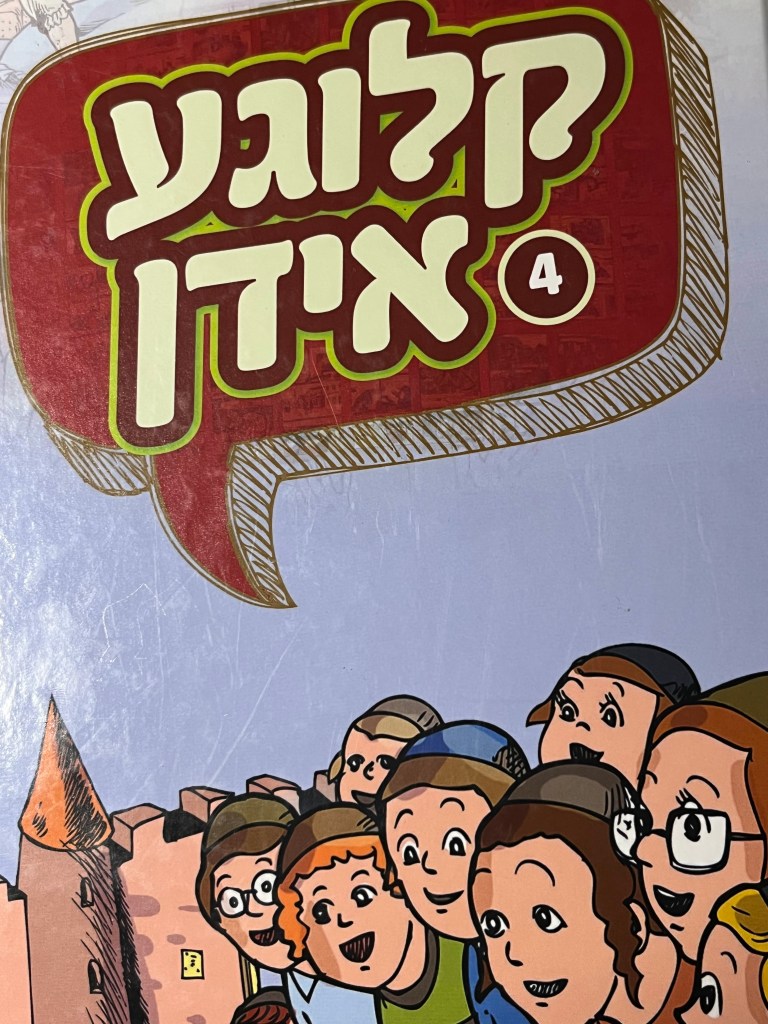
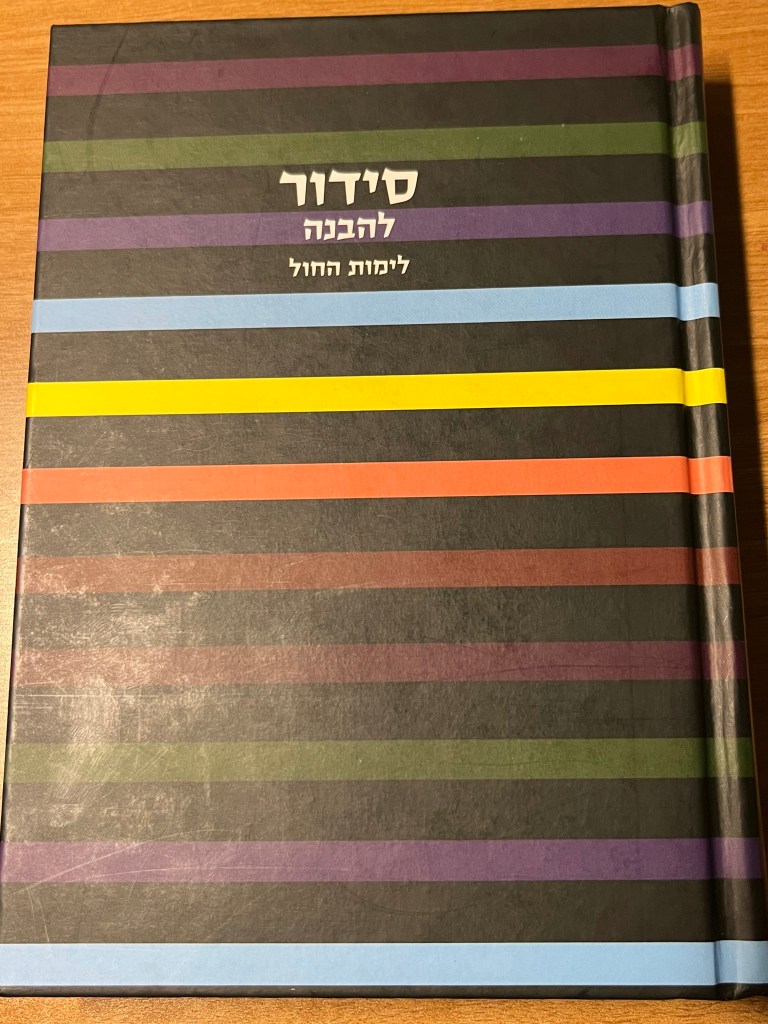
While in New York, I relished the opportunity between wedding festivities to visit Hasidic Brooklyn and practice my Yiddish. After buying a black yarmulke, I visited Hasidic bookstores in Williamsburg and bought some books in Yiddish, including a kids book called “Smart Jews”, a book about the Titanic, and a prayer book with Yiddish translations of the traditional Hebrew.

I love speaking Yiddish and I surprised the bookstore employees by speaking it while wearing decidedly non-Hasidic clothes. While some people looked at me with an almost suspicious curiosity, others were incredibly warm and hospitable and thrilled to hear me speaking Yiddish.

Next, I got the good stuff – gefilte fish! Yes, I love gefilte fish. It is a delight and while it’s true that maybe you need to grow up with it to love it, I absolutely adore this dish, especially when made fresh (not in a jar!).

I sat next to a rabbi in the restaurant and he was very welcoming and kind.

Near the restaurant, I walked through Williamsburg and saw a crowd of Hasidic Jews gathered outside an apartment, where a rabbi was preaching in Yiddish as hundreds listened attentively on the street. It was an amazing sight. At a time when we’re being persecuted yet again, this community is preserving our Jewish traditions despite it all. It was like a scene out of a shtetl.

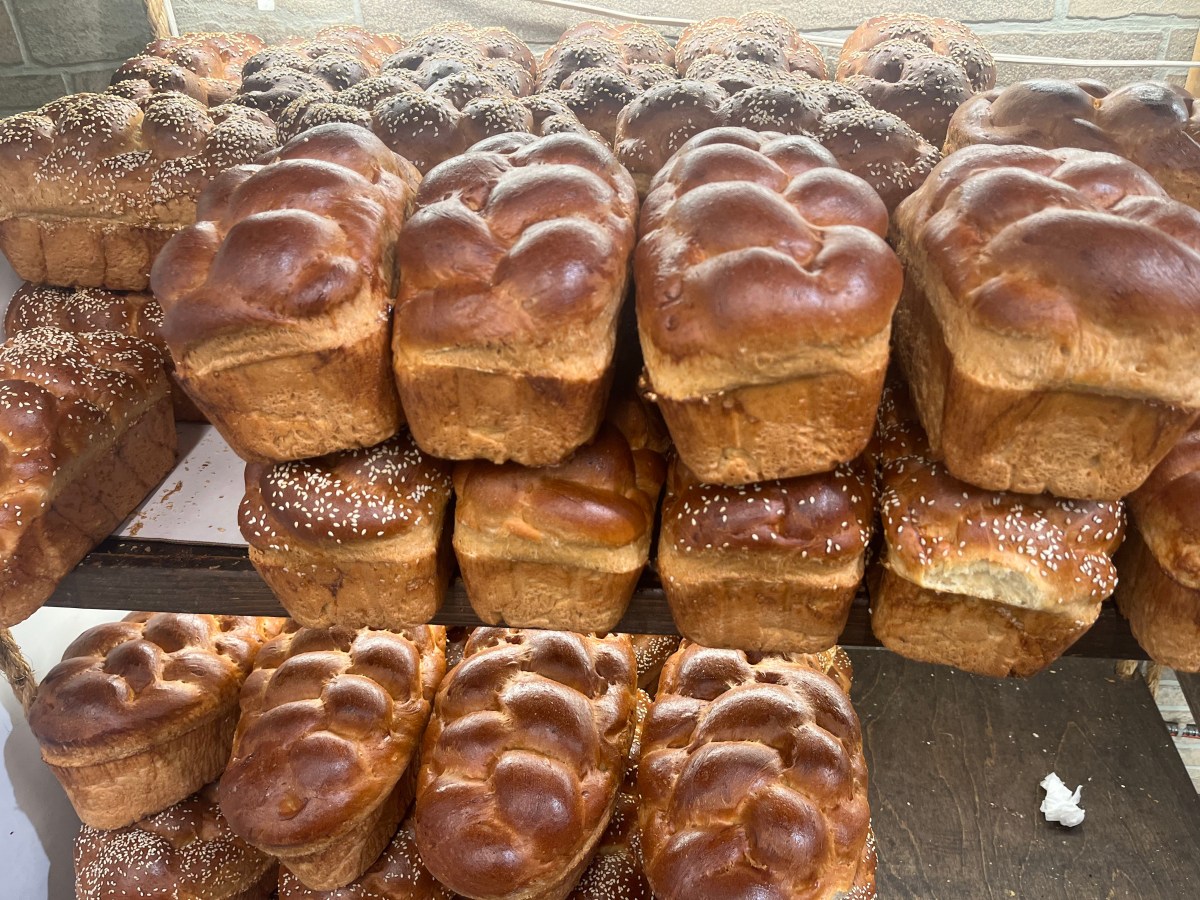
After exploring Hasidic Williamsburg, I made sure to stop at a late night Kosher bakery and get some sweet cheese rugelach, a novel combination that was a true delight. They also had tons of challahs of various sizes, like the ones in this blog post’s cover photo. Even some local hipsters came in for a taste of the bakery’s delicious food.

Over the next two days I met up with other friends in New York, ranging from Yiddishists to a Modern Orthodox college friend on the Upper West Side, and of course got a bagel with whitefish salad. None of this was particularly Hasidic, nor in Brooklyn, but it just shows the incredible diversity of New York Jewish life that I was able to slip in and out of these different communities plus a gay Jewish wedding in the course of a long weekend.

After the wedding, I decided to go to Crown Heights. Williamsburg is heavily Hasidic, but predominantly populated by communities that are a bit more insular in their approach to preserving Jewish tradition. Crown Heights, while also Hasidic, is predominantly a Chabad area. Chabad is a group committed to outreach within the Jewish community, making it a little easier to get to know people even as a semi-outsider.

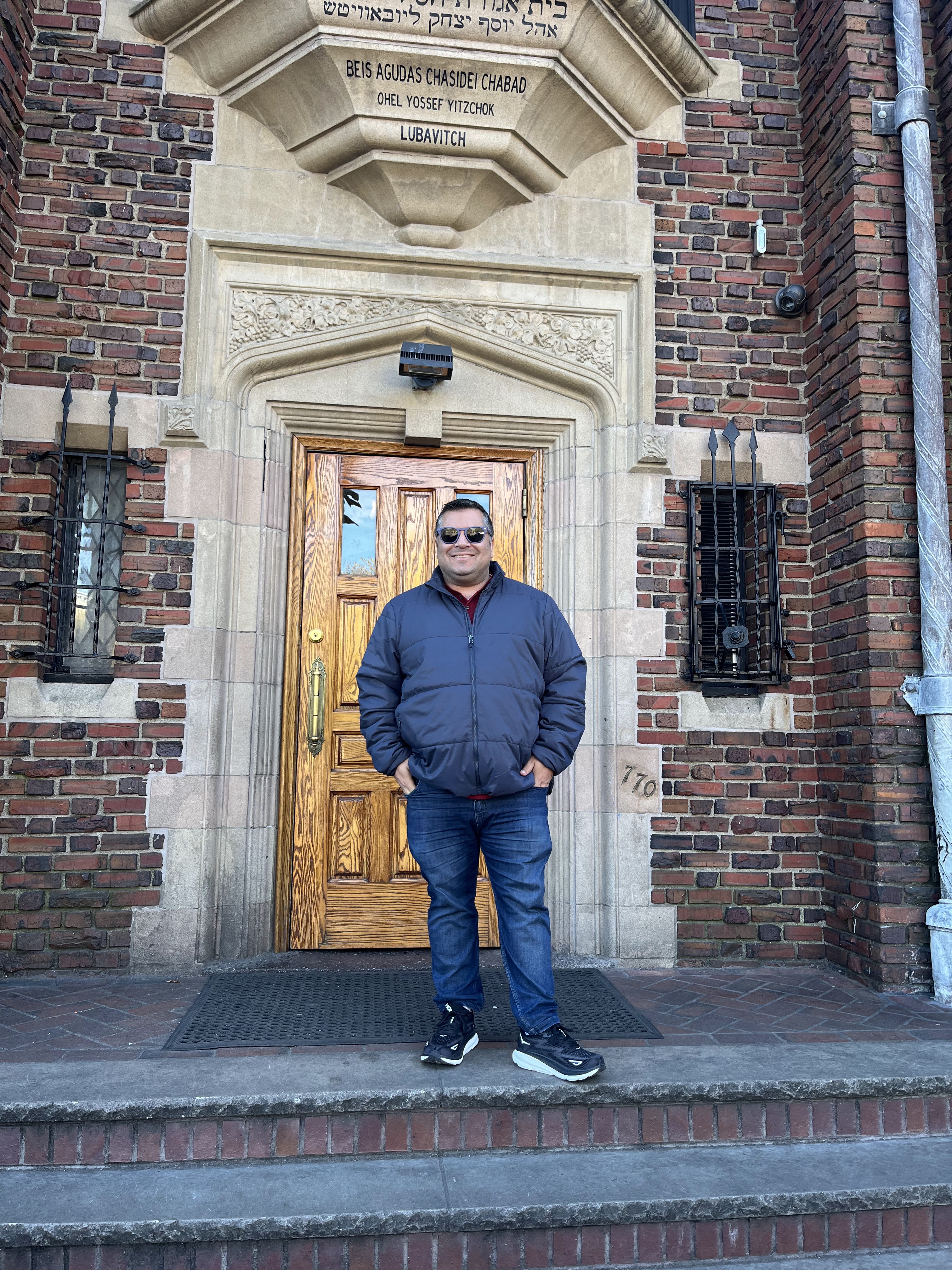
I visited 770, the house of the former Chabad Rebbe, a deeply revered leader.

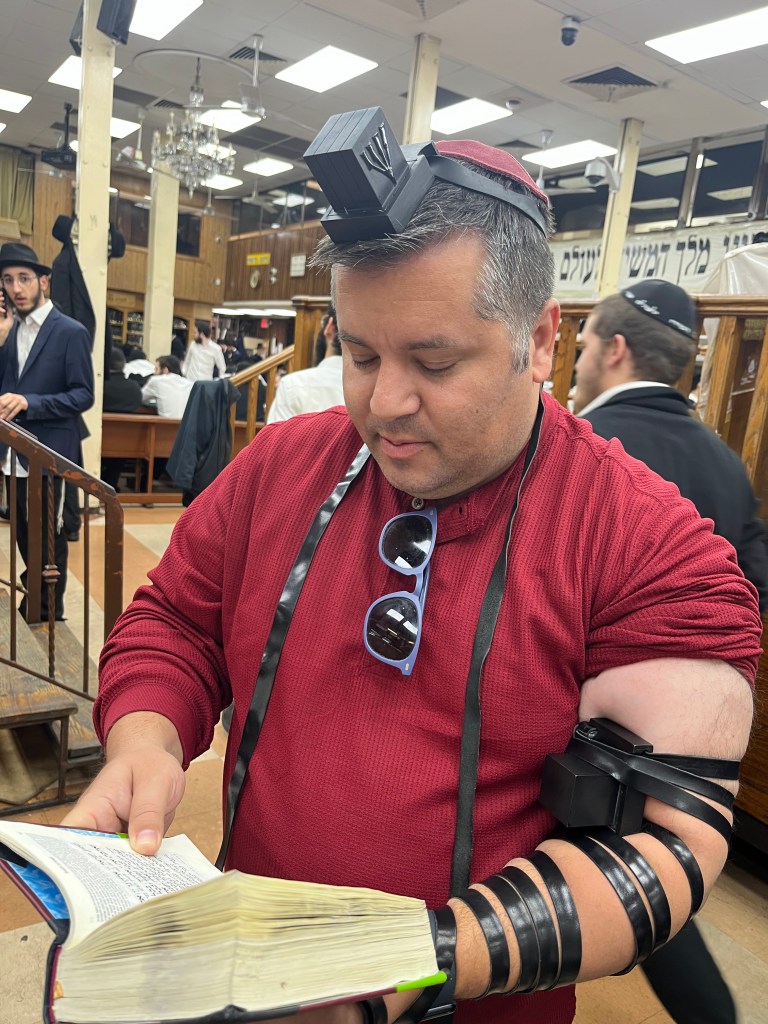
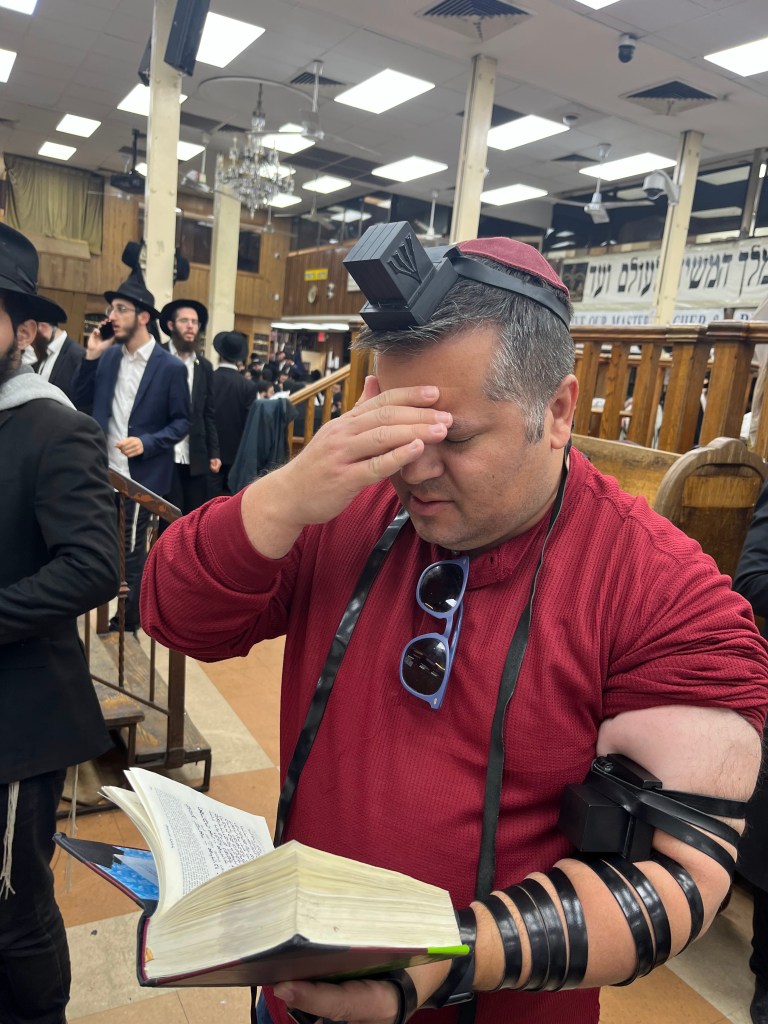
I then decided to do something I had never done when visiting Crown Heights years ago: I went inside the synagogue next door to the Rebbe’s house. I decided to lay tefillin, an ancient Jewish ritual, with the help of a young man. It didn’t matter that every other man in the building was dressed in the traditional black and white suits and I was in jeans and a red shirt. Chabad doesn’t care- they just want you to fulfill mitzvot, commandments from G-d that Jews are instructed to follow. It was a really nice experience.

Laying tefillin is a truly embodied ritual that made me feel connected to Jews everywhere and to thousands of years of our history. At a time when it seems we can control so little, it helps me feel grounded and secure in my faith.

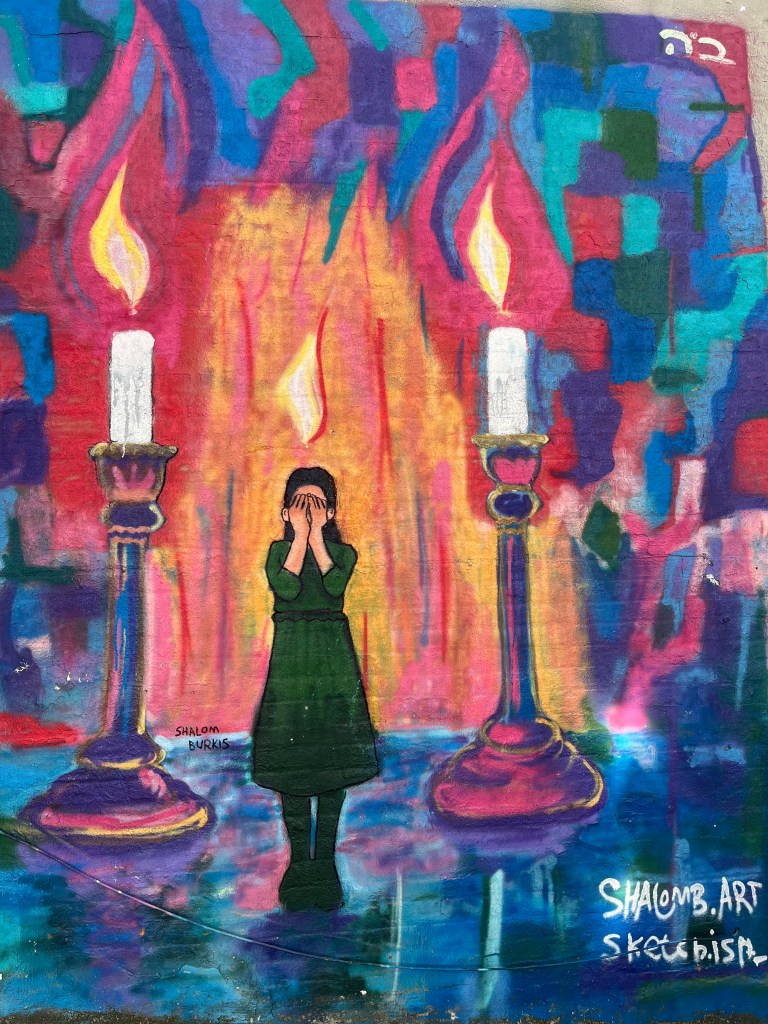
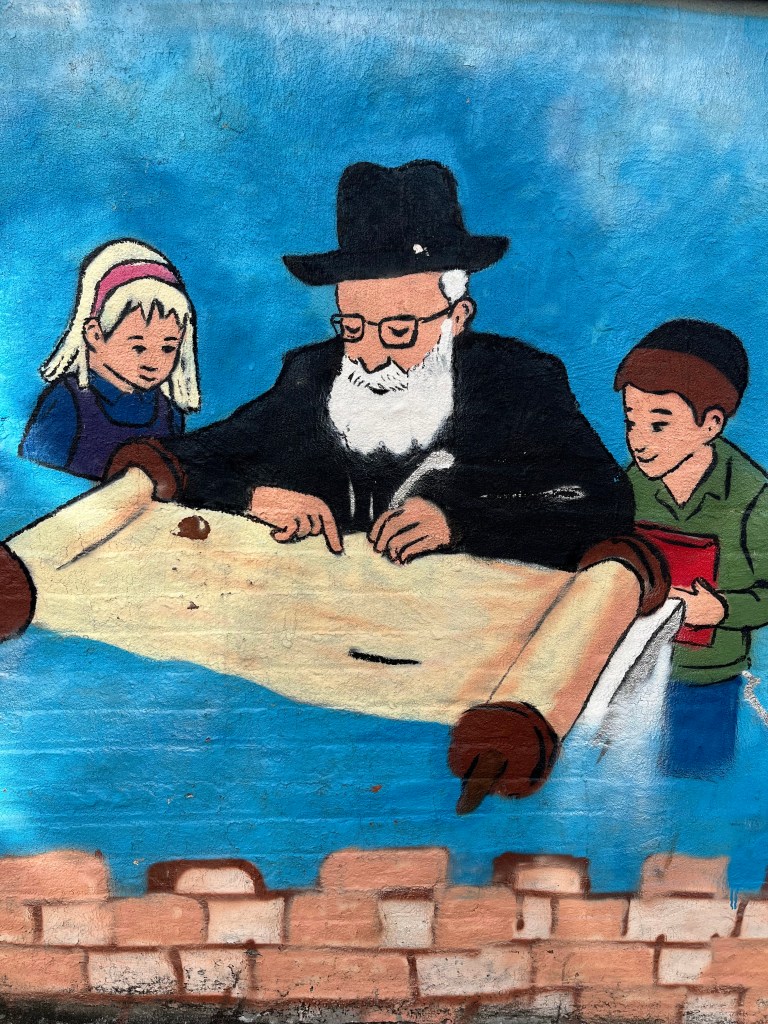
In addition to laying tefillin, I found some interesting Jewish street art in the neighborhood.

I love seeing murals whenever I travel, and to find Jewish ones was especially heartwarming and exciting.

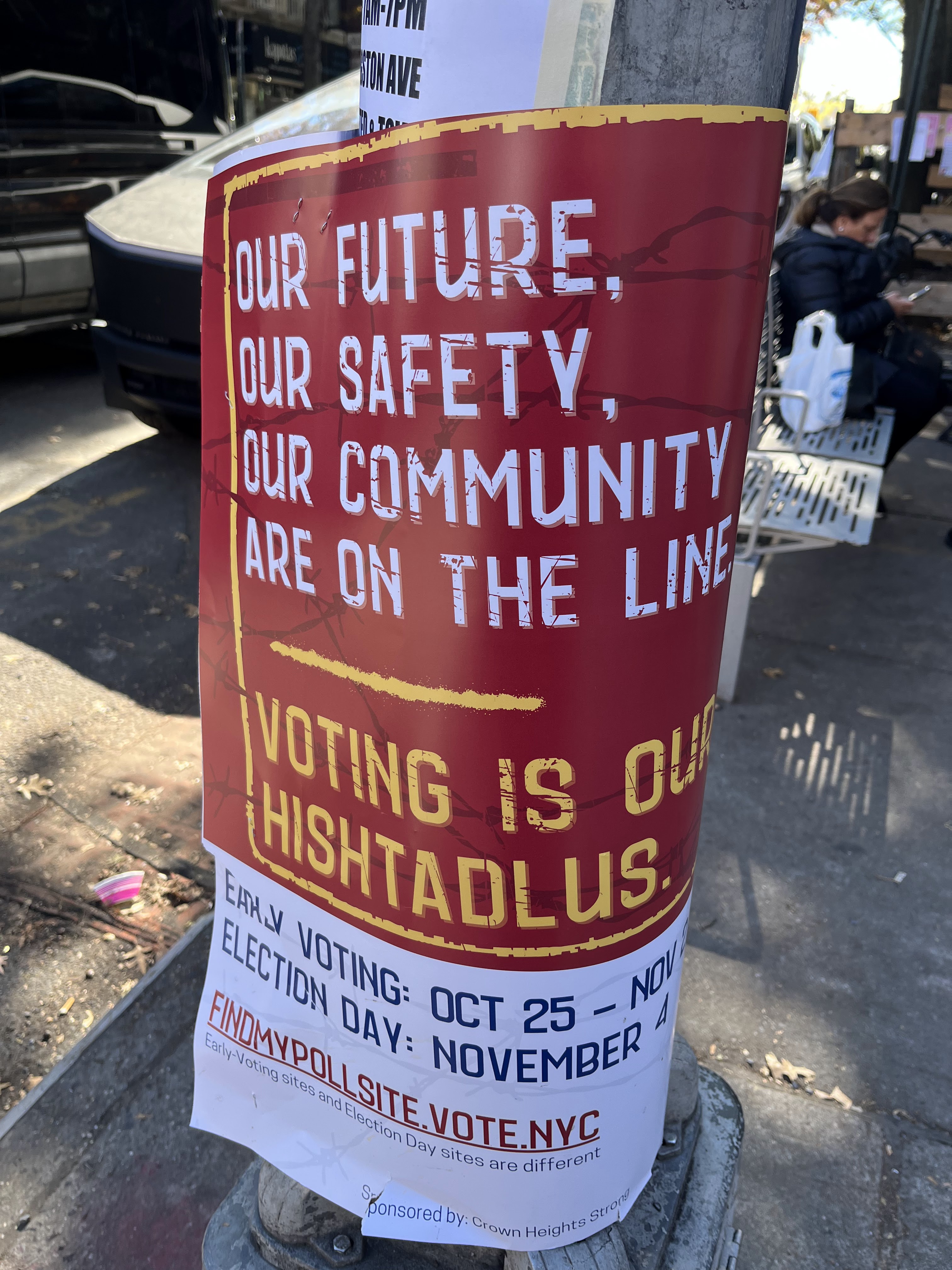
Lastly, it was not lost on me that I was in New York the last weekend before the fateful election that led to antisemite Zohran Mamdani becoming elected mayor of the city. I’ve already written my thoughts about him here.

The feeling that the community was slipping through our fingers, as Jews, was palpable in Hasidic Brooklyn. I saw election turnout signs like this one that were as clear as day:

A week later, when election day came, the vast majority of Hasidic Jews voted against Mamdani. But it wasn’t enough to turn the tide of hatred gripping New York City.

Seeing Hasidic Brooklyn was amazing. I highly recommend a visit. Go see this beautiful community before the coming storm. Let us hope and pray that we will weather it together.

Because in the end, the people who hate Jews won’t distinguish between the gay ones or the Hasidic ones, the secular ones or the Modern Orthodox. They will come for us all. Which is why it’s so important we show solidarity with each other. We don’t need to agree on everything. I’m gay, I’m aware of the challenges that would face me living in a Hasidic community. And I’m also aware of prejudice and judgment that Hasidic Jews face in progressive Jewish circles.

Let’s come together in our time of need. So if there’s a storm ahead, let’s grab each other’s hands and dance in the rain and make it through as one strong community. Ken yehi ratzon. May it be so.

A Jew in Italy

On my trip to Italy, I encountered a beautiful country, intense antisemitism, and a 2,000+ year old Jewish community that continues to survive it all.

My trip started in Padova, a bit off the beaten path. A historic college town, it was beautiful and not overrun by tourists, but also had frequent anti-Israel graffiti and regular demonstrations, as has been the case at American universities as well. Situated in the more conservative Veneto region, it was certainly less antisemitic than far-left places I visited like Bologna. But nonetheless, at times I felt uncomfortable as a Jew.

For instance, my food tour guide in Padova was a welcoming Italian man named Davide. He was well-traveled and intellectually curious. When I was brave enough to share that I was Jewish and an Israeli citizen, he had many questions. He was on the left side of the political spectrum in Italy, which in Europe sadly correlates with increased antisemitism and anti-Israel bias. He had never heard of Arab Israelis (i.e. Arab citizens of Israel with full legal rights) – he was curious enough to say he’d Google the topic. He had not heard that Arab parties existed in the Knesset (Israeli parliament). When I told him I felt that Italian culture was quite similar to Israeli culture, he was shocked. He also had no idea that LGBTQ+ people were persecuted in many Arab countries including the incredibly repressive one he’s visiting next – Saudi Arabia!

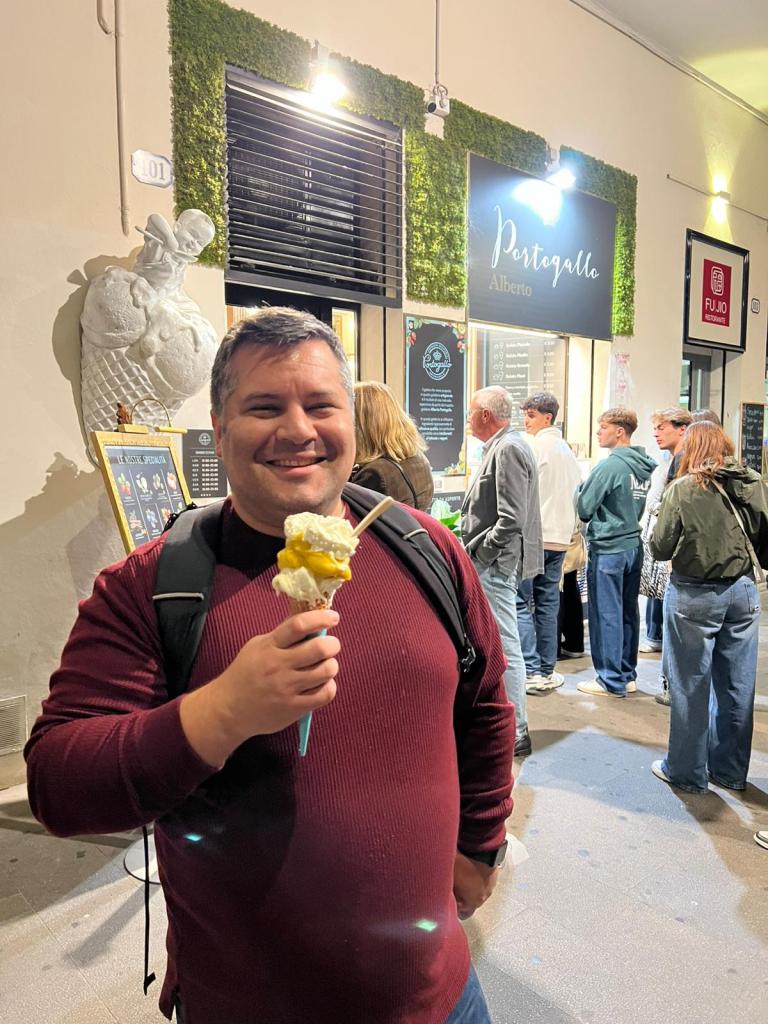
It was hard for me to go on that tour. Not because of the delicious food and gelato (man, the mango gelato in Padova was out of this world!). But rather, because I felt like I had to be an ambassador for my people. This guy wasn’t a bad guy. He just didn’t have many facts. And to his credit, he was willing to learn and grow. I just didn’t have the energy on vacation to play teacher. I hope he continues to delve into Middle Eastern history and culture – with my people included. It’s important for me to remember people like him – people who may largely disagree with Israel or are rather naïve, but are not necessarily malicious. We must engage with these people more gently and with more understanding than with some of the other instigators and criminals who persecute Jews these days.

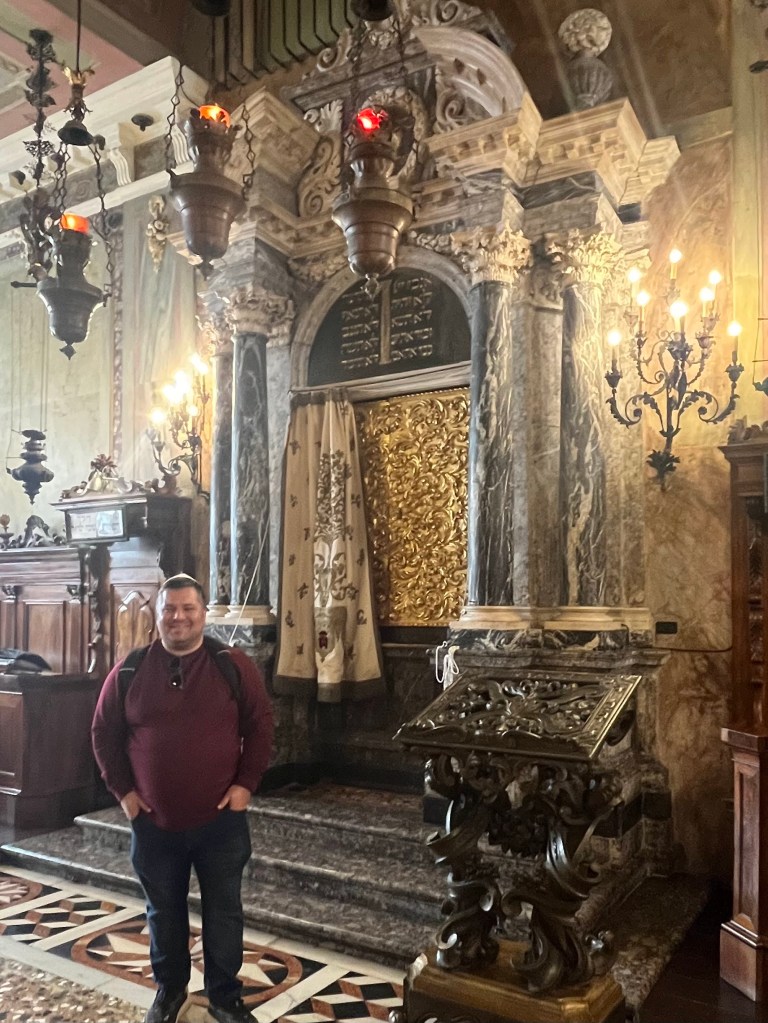
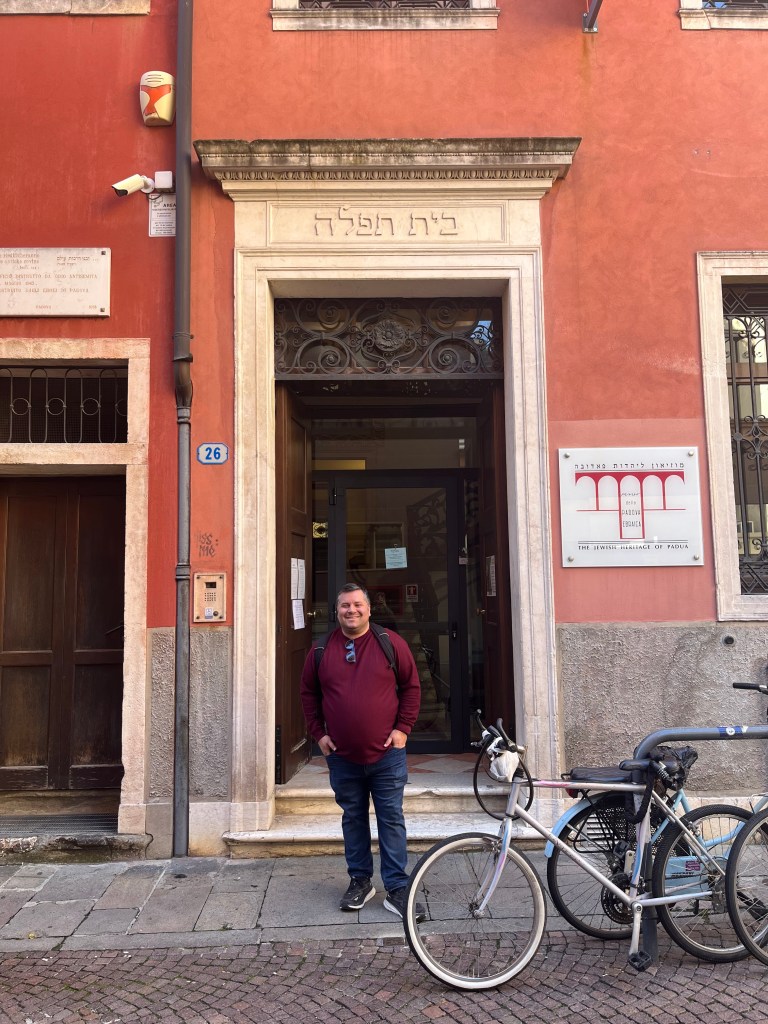
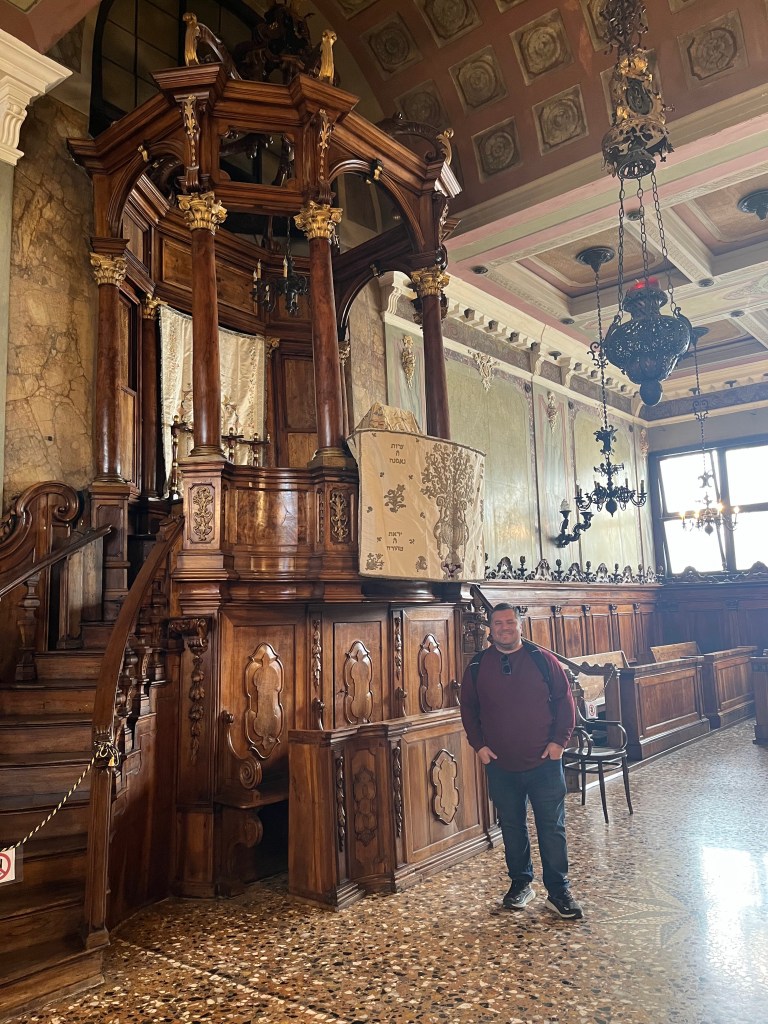
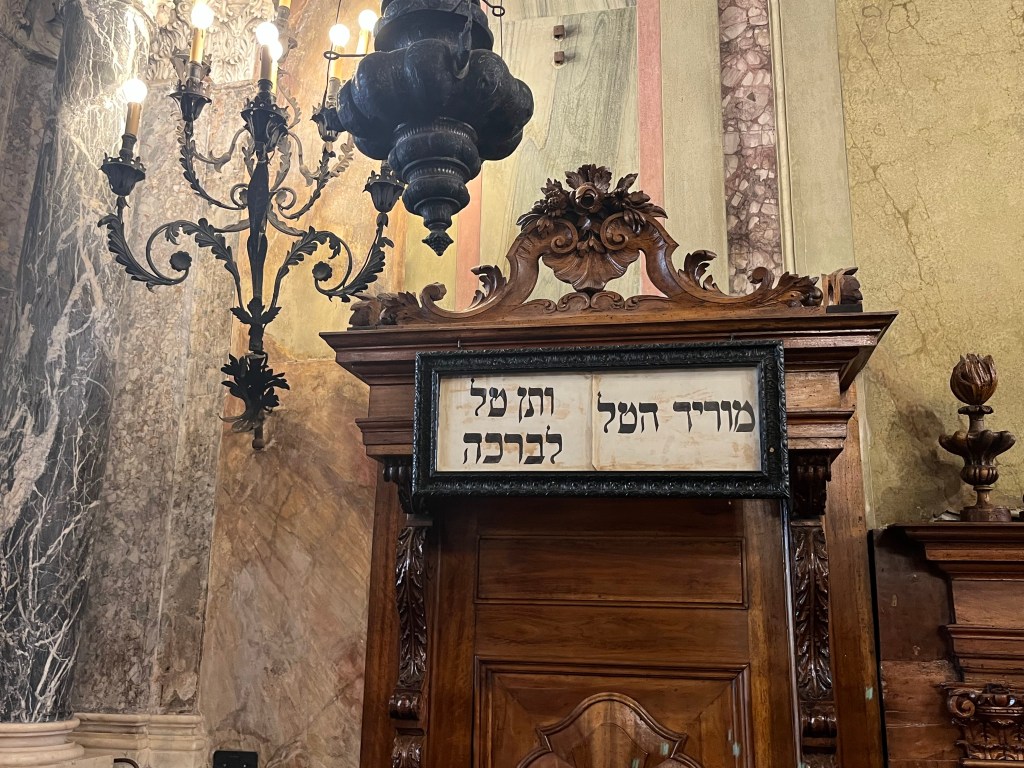
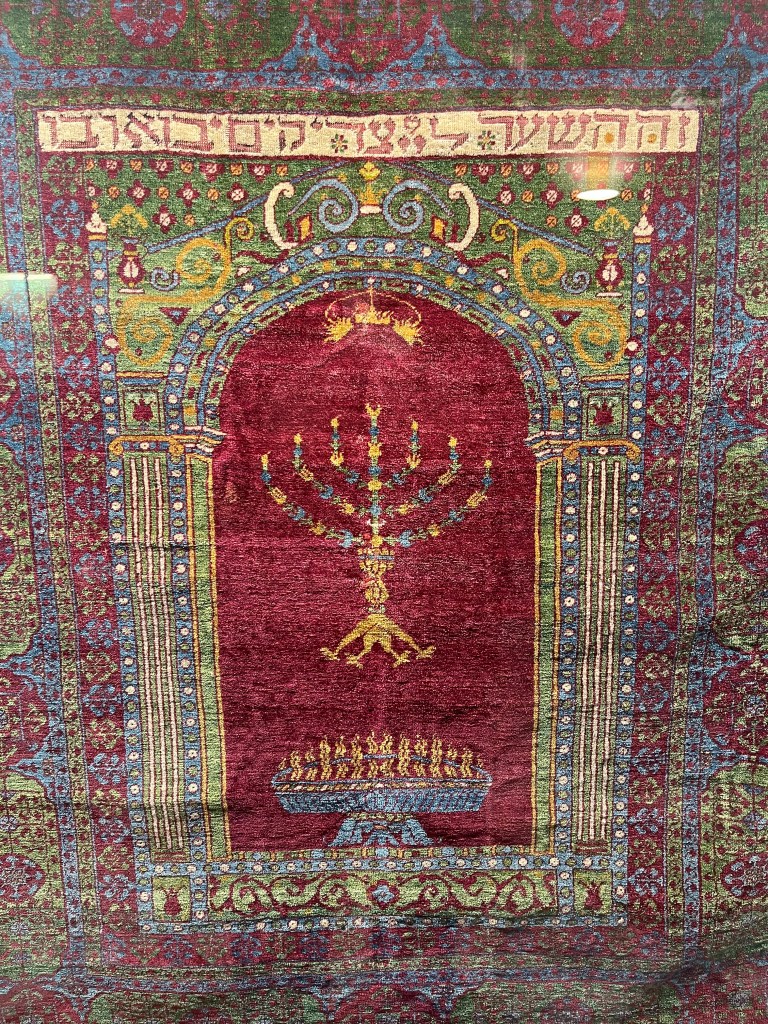
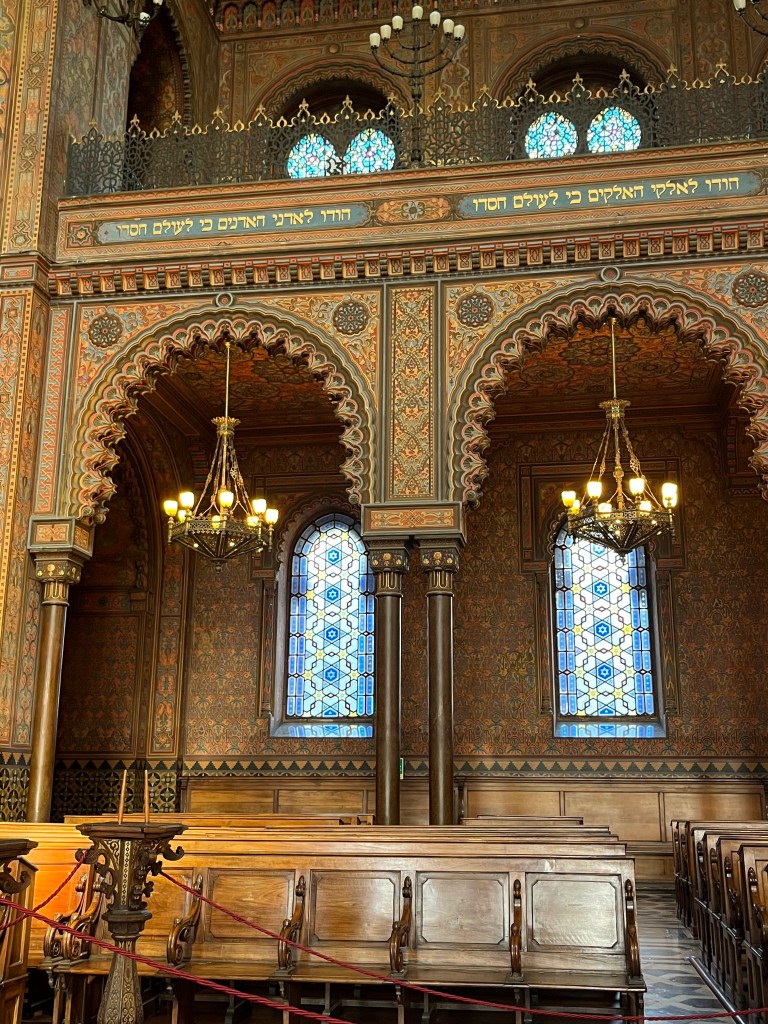
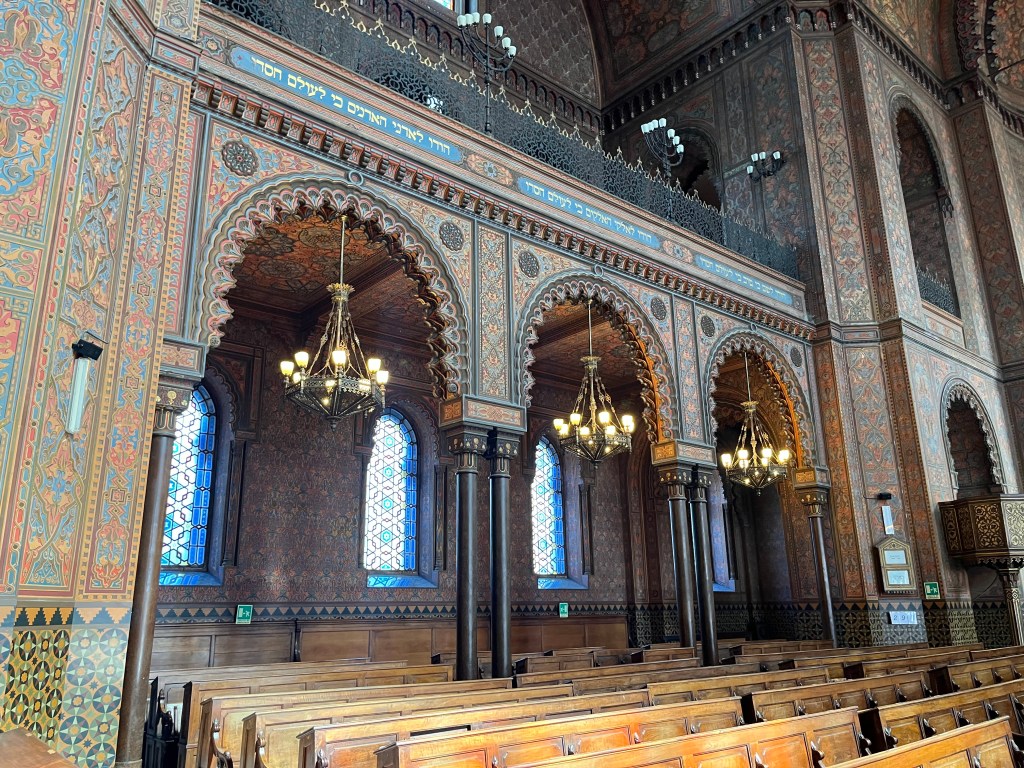
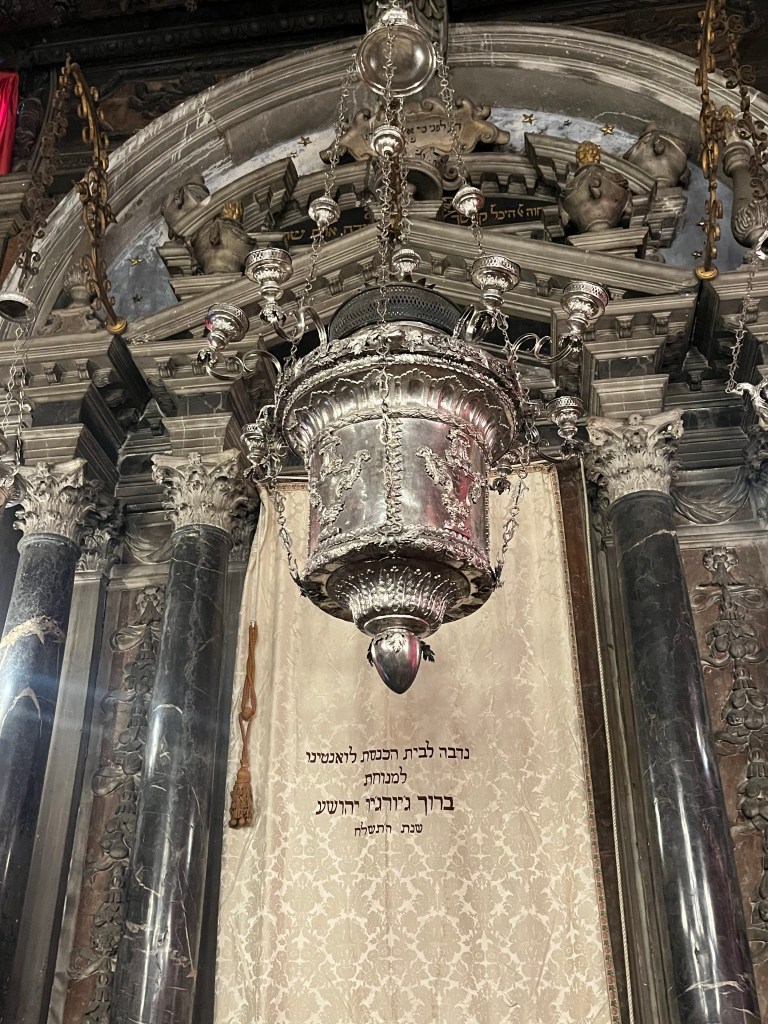
I had the great privilege of visiting the Jewish Museum of Padova, including a visit to the historic synagogue, which is still in use to this day. I highly recommend this museum and synagogue. Not only did I learn so much about this historic community, I got to visit the 477-year-old synagogue all by myself! Here are some pictures:

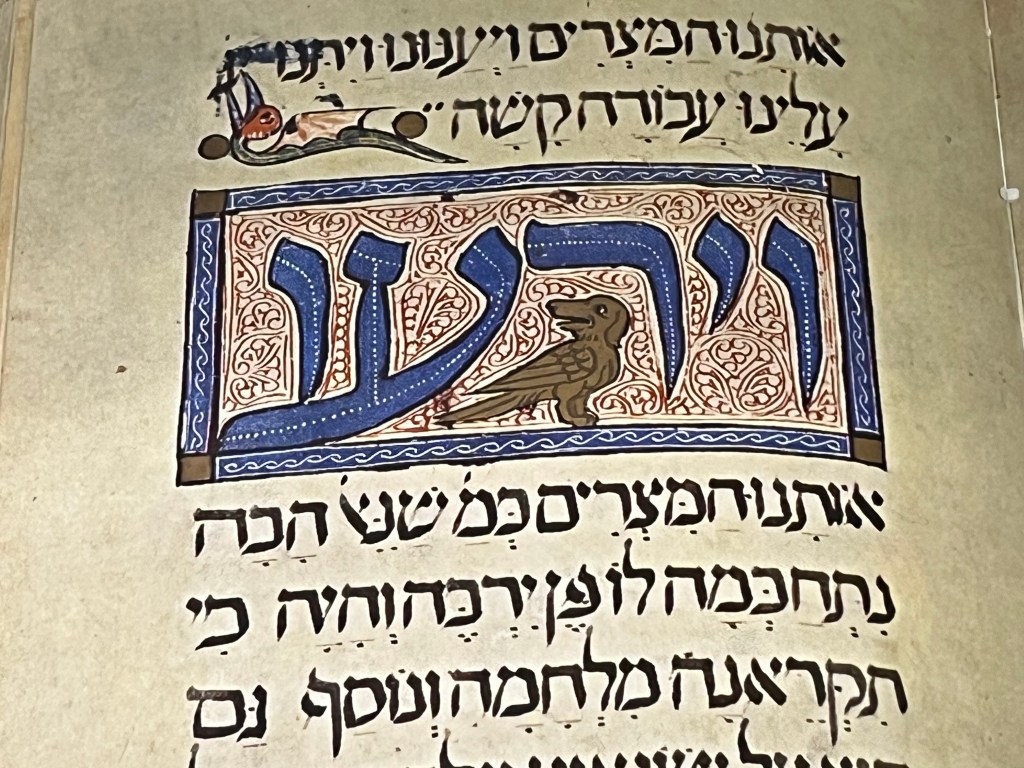
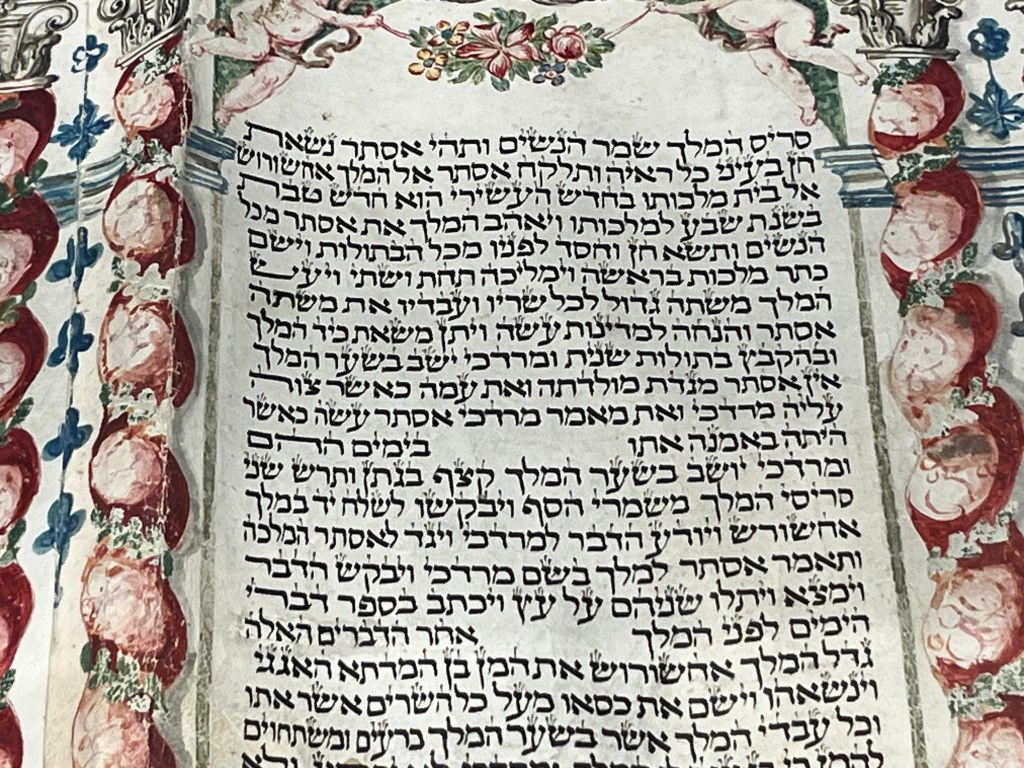
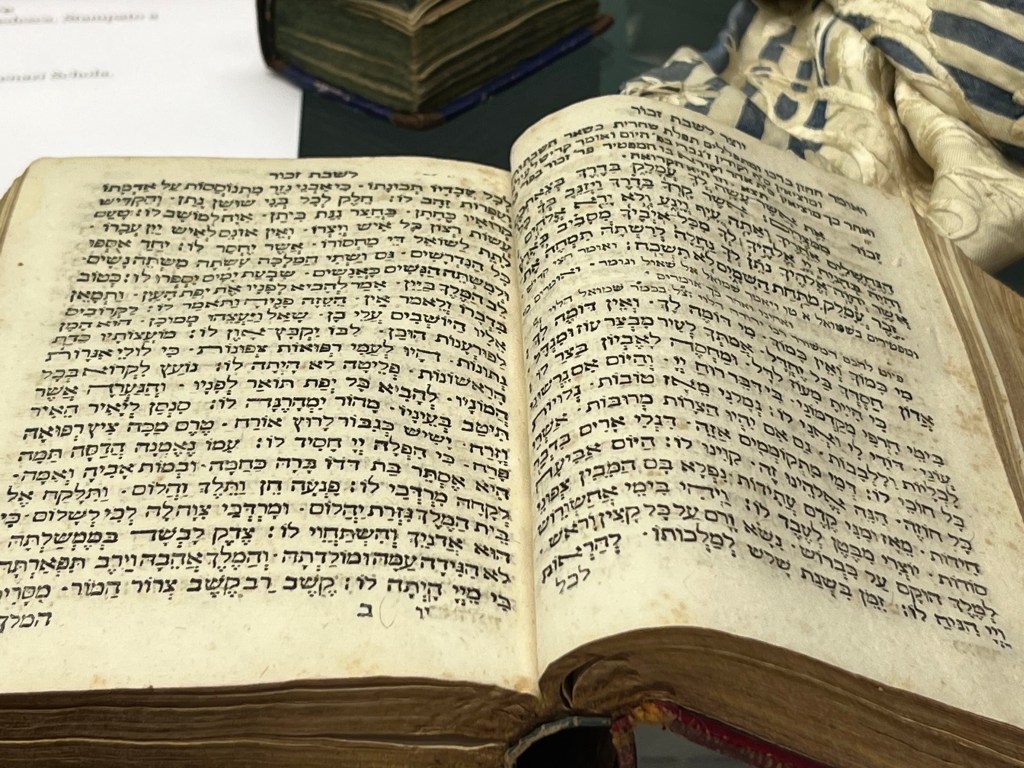
The museum tells the story of Padova’s Jews and some Italian Jewish history as well. For those who don’t know, many different types of Jews have lived in Italy, including Ashkenazim (yes, Yiddish was spoken in Venice and parts of northern Italy!), Sephardic Jews, Levantine Jews (Sephardic Jews who migrated to the eastern Mediterranean and came back towards Italy), and Italian-rite Jews who have been in the country for over 2,000 years! There are many beautiful artifacts such as the ones below dating back hundreds of years:

The beautiful Baroque synagogue miraculously survived Italian fascism and the Holocaust and is absolutely worth a visit. The employee working the front desk was not Jewish but was very knowledgeable about the community and charmed me with her Italian-accented Hebrew as she explained the different parts of the sanctuary to me.

Before I move on to my next Italian Jewish destination, I want to share a quick disclaimer. From Padova, I did a quick day trip to Bologna. While Padova certainly had some antisemitism, it was largely calm and pleasant and I’m glad I stayed there for a few days. Bologna, on the other hand, is not a pleasant place if you are Jewish. It is covered in antisemitic graffiti (i.e. “death to Israel”). It is called the “red city” in part because historically it has been the bastion of the Italian Communist Party. I felt deeply uncomfortable there and decided to leave earlier than expected to head back towards Padova. Of course not everyone in Bologna is a communist. When I asked my cab driver to the train station in Italian whether it was a political city he said “troppo!” Too much. He found the anti-Israel graffiti disturbing and disruptive and an unfortunate stain on the beauty of the city itself.

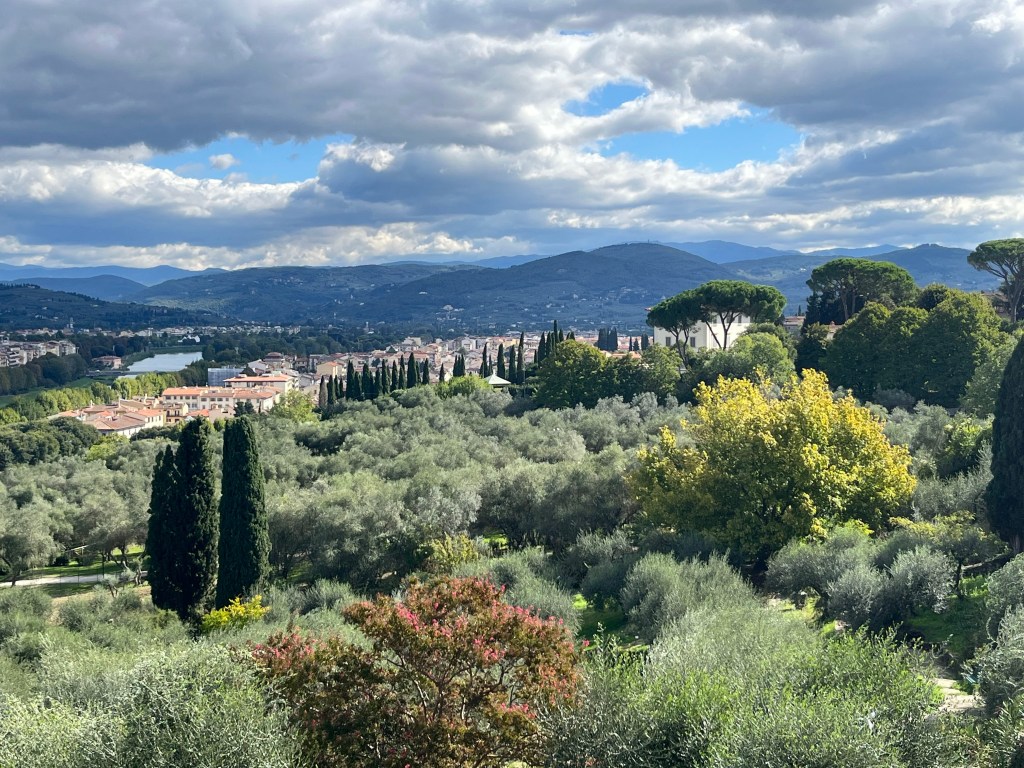
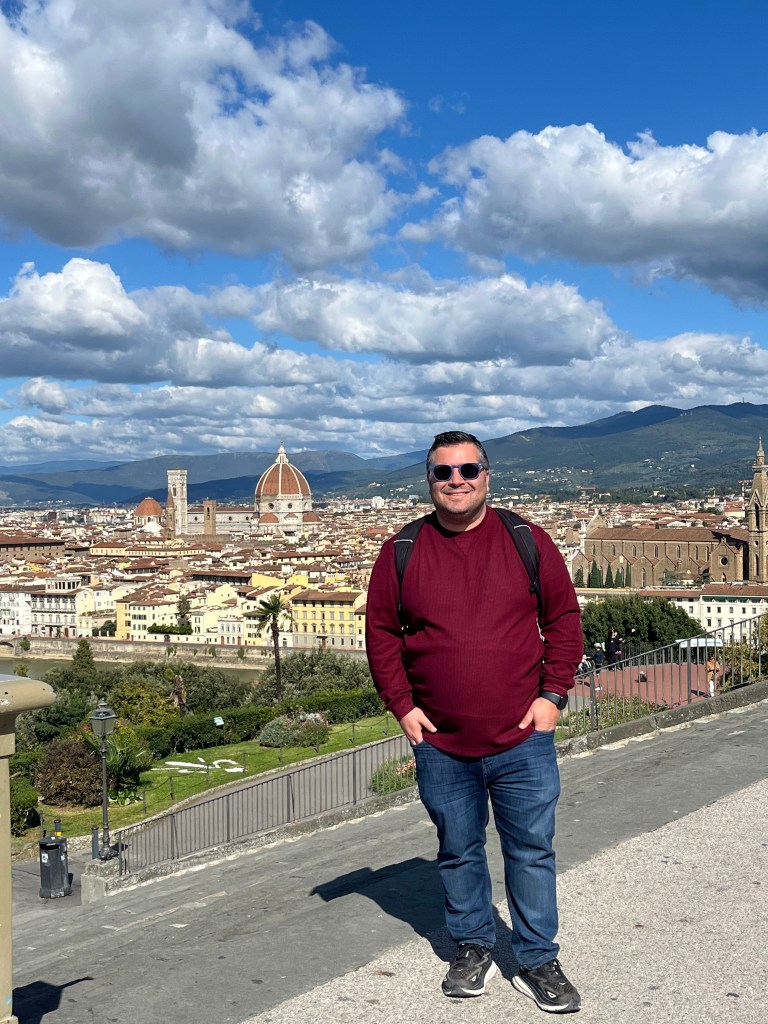
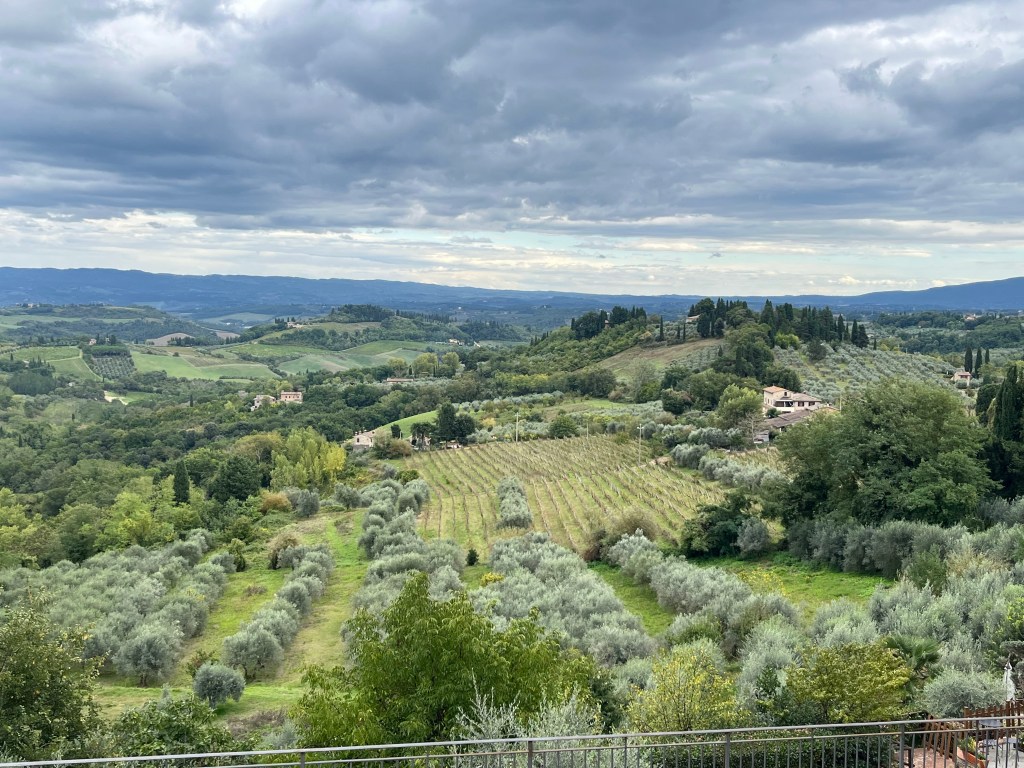
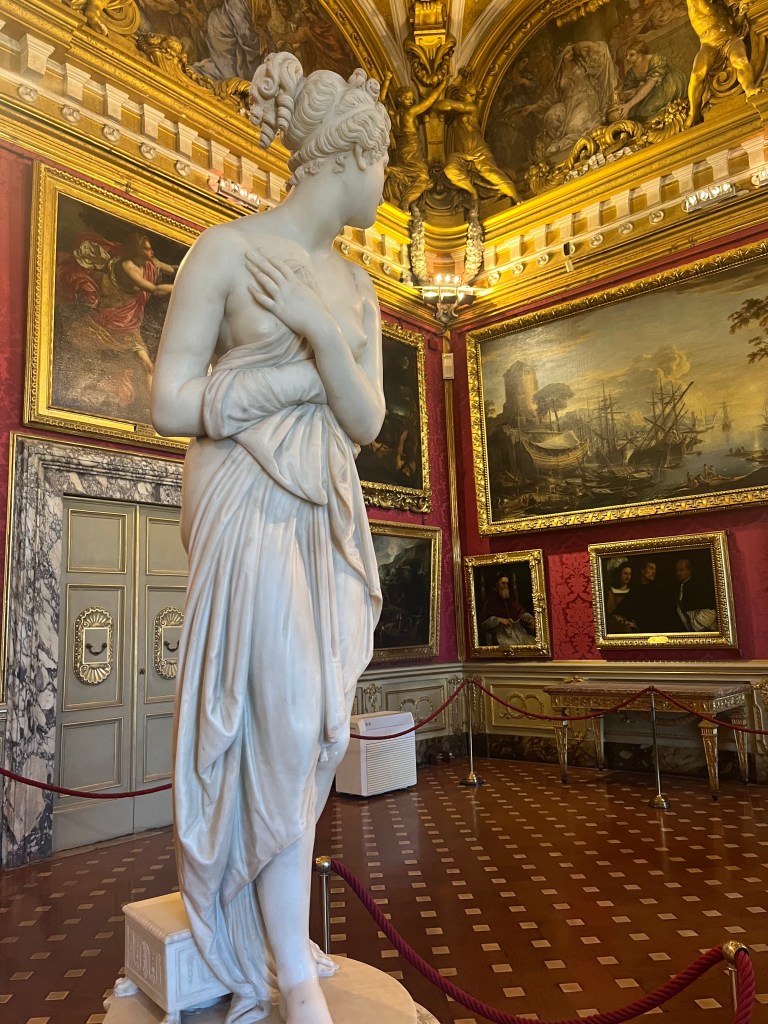
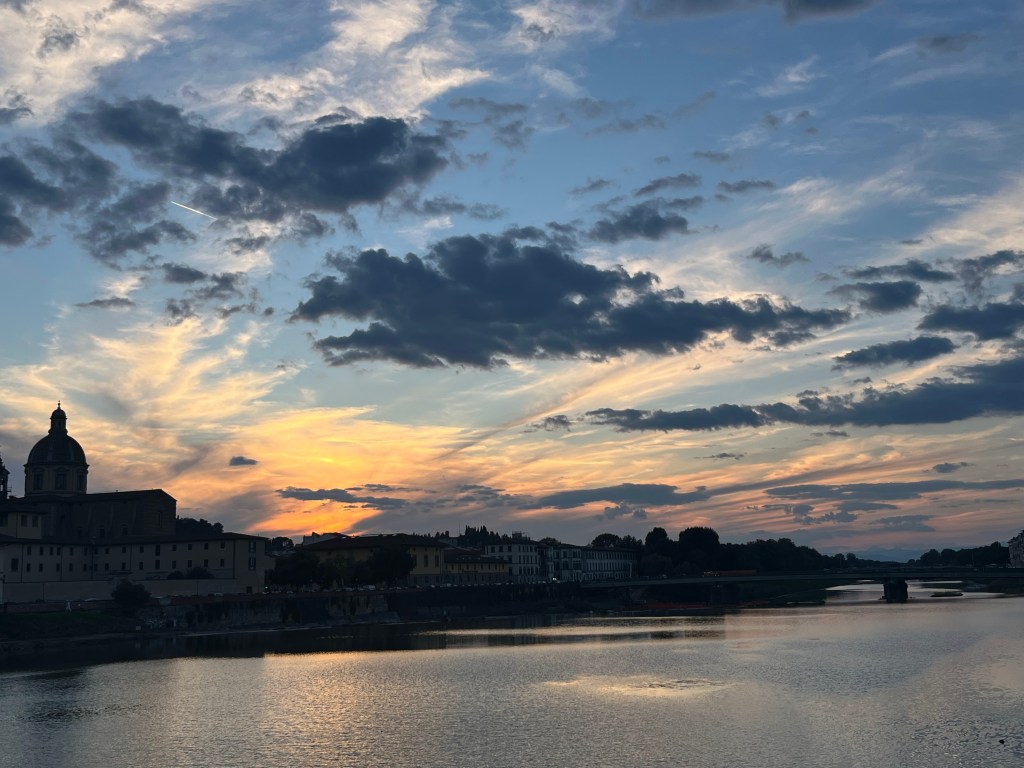
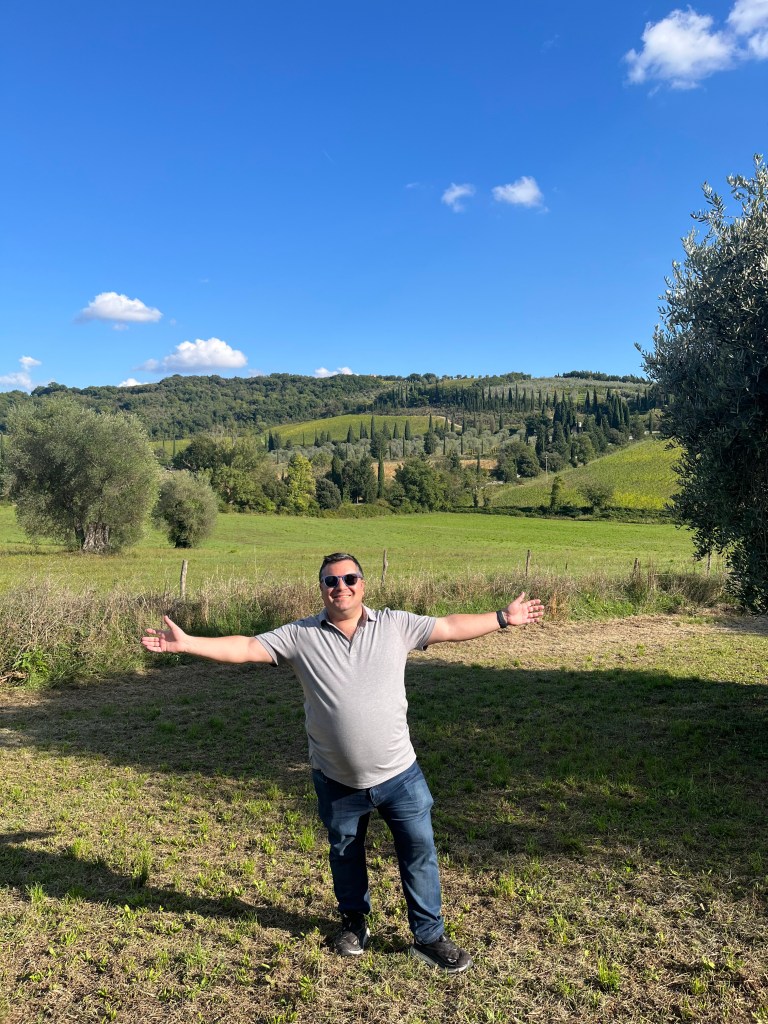
Feeling more buoyant after my visit to the Great Synagogue of Padova and the Jewish museum, I headed south to Florence for a few days. Florence, like Bologna, is generally rather lefty and occasionally graffiti-filled. But to its credit, it’s pretty damn beautiful. Not only the art and architecture of the city, but also its stunning countryside. The countryside in particular was soothing, as the medieval villages were clean and not filled with graffiti and fortunately trees can’t hate Jews. Here are some pictures from my travels in the area:

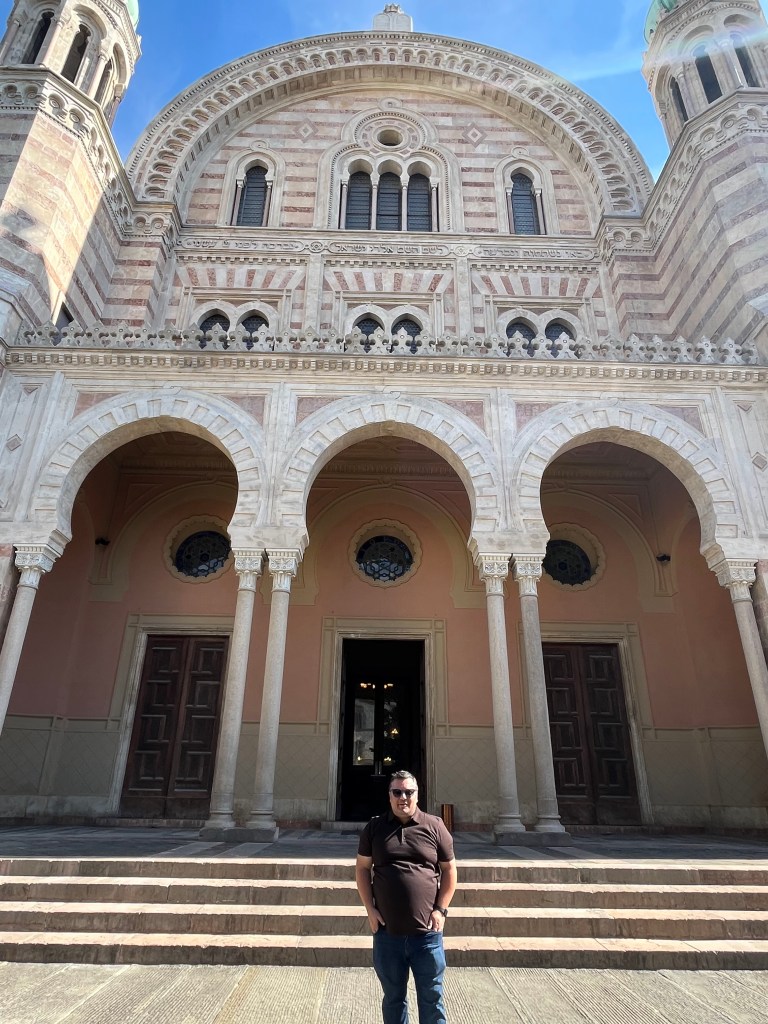
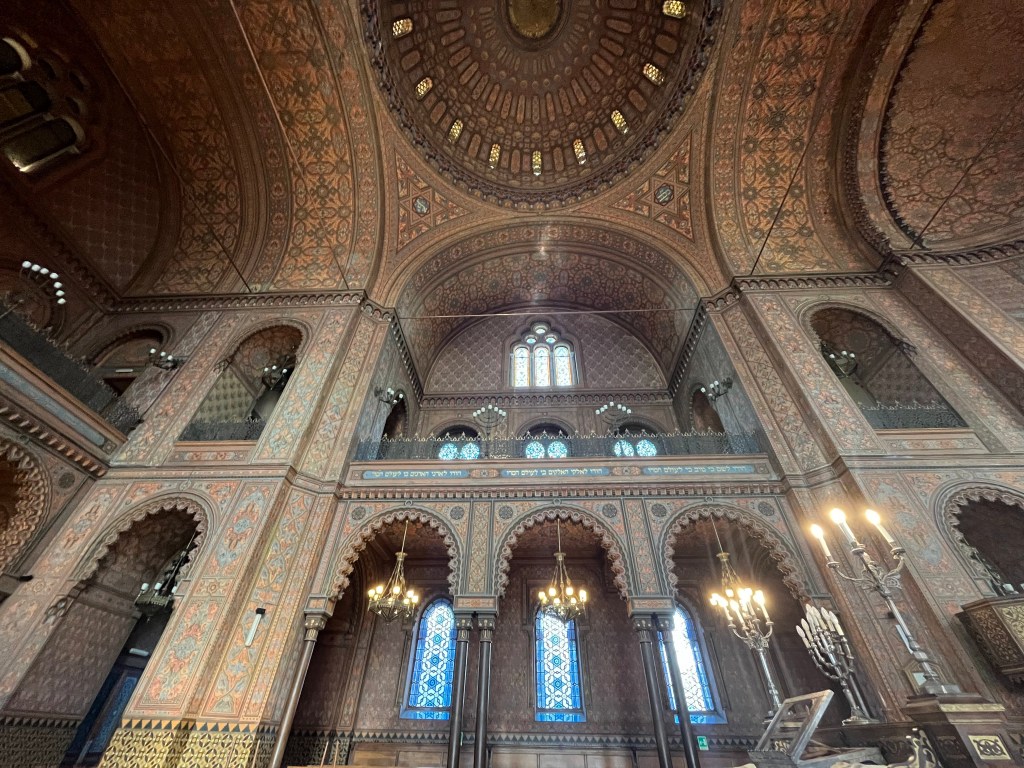
Florence and its Jews have a long history of ups and downs. The famous Medici family at times was very welcoming of Jews and helped them build quite a spectacular community. I got the chance to take a Jewish tour of Florence and learned a lot about the history of the community. The community, many hundreds of years old, lost half its members in the Holocaust between Italian fascist persecution and the Nazi invasion of the country. Its Great Synagogue and museum are absolutely worth a visit as well. Here are some pictures of the synagogue:

Perhaps my favorite part of visiting the synagogue besides the architecture was the chance to chat in Italian with the non-Jewish cashier and her friend in the museum bookstore. I speak intermediate Italian (with an occasional Spanish word thrown in) and they loved it! They were really touched that a non-Italian would learn their language, especially since among Romance languages it’s certainly less popular than Spanish or French, for example. We had a great conversation about Jewish life in Italy and Florence in particular. It was a beautiful moment that reminded me of the good in people. That while graffiti may be irritating and uncomfortable, it doesn’t represent everyone.

My last major stop on my trip was Venice. I had never been before and boy was it stunning. I stayed in Cannareggio, a historic area near the Jewish Ghetto and much quieter than the main touristic parts of the city, which was a true blessing.

Sadly, my travel plans to Venice got disrupted by a massive, 24-hour countrywide anti-Israel train strike and I lost about 700 Euros in having to change hotels and getting a new train ticket at the last minute from Florence. This train strike took place on Yom Kippur, making it even more offensive. I told my hotel manager that this was a real pain to deal with and his response was “pray for peace in Palestine”. Why a train strike in Italy would bring peace to Palestinians (or Israelis for that matter – not that they were included in the hotel manager’s prayers apparently) is beyond me. All it did was make me angry and not want to come back to Italy any time soon. Train strikes are frequent there, which I suppose is just part of the culture. Why it needed to be about Middle East politics was beyond me. Unfortunately the train strike was accompanied by a massive two-million-person national demonstration in every major city, complete with kuffiyehs, violence against police and property, and malicious anti-Israel signs. I can’t imagine what it’s like to live in Western Europe as a Jew. It unfortunately calls on the resilience of the oldest Jewish community of Europe to withstand such ridiculous bigotry and hatred. An ancient hatred renewed in modern times.

Once the rallies died down and the strike was over, I got to enjoy Venice. I traveled with a friend from the States who was also Jewish which was really comforting during this challenging part of the trip. My friend, perhaps a bit scarred by our experience with the anti-Israel strike and protestors, asked for a pseudonym to be used for this piece, which is understandable and incredibly sad. He was concerned that anti-Israel protestors might find him online and harass him. He was comfortable with me using the name “David” instead of his actual name.

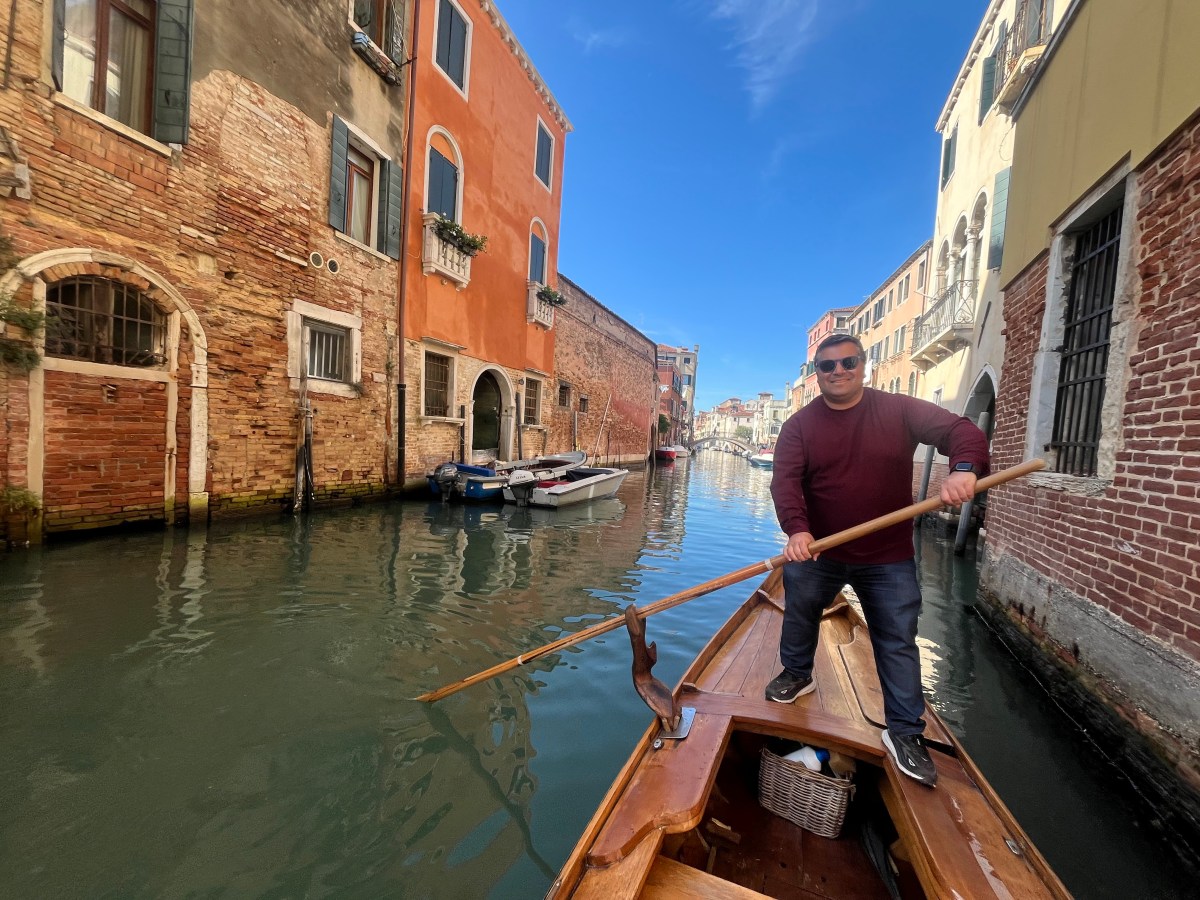
David and I did a lot of fun stuff. Venice is a city of the sea. I love being on the water. While David was busy doing some other stuff, I actually had the chance to take a gondola rowing class with Row Venice! It was a fabulous way to see the city and the teacher taught me some of the history too.

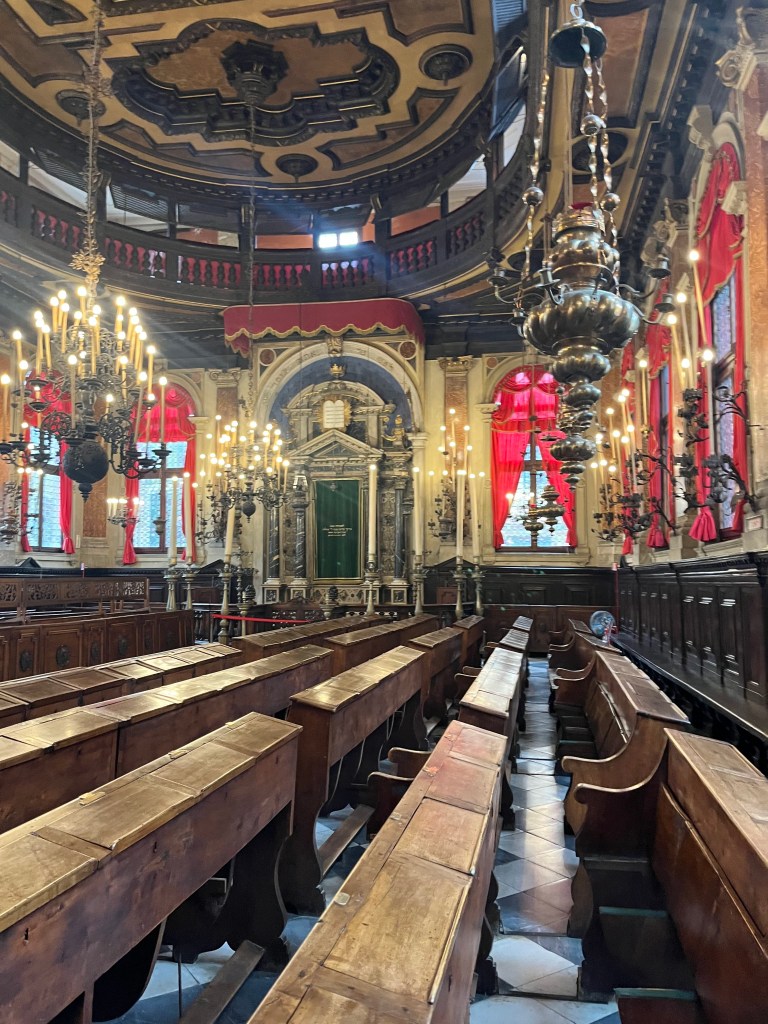
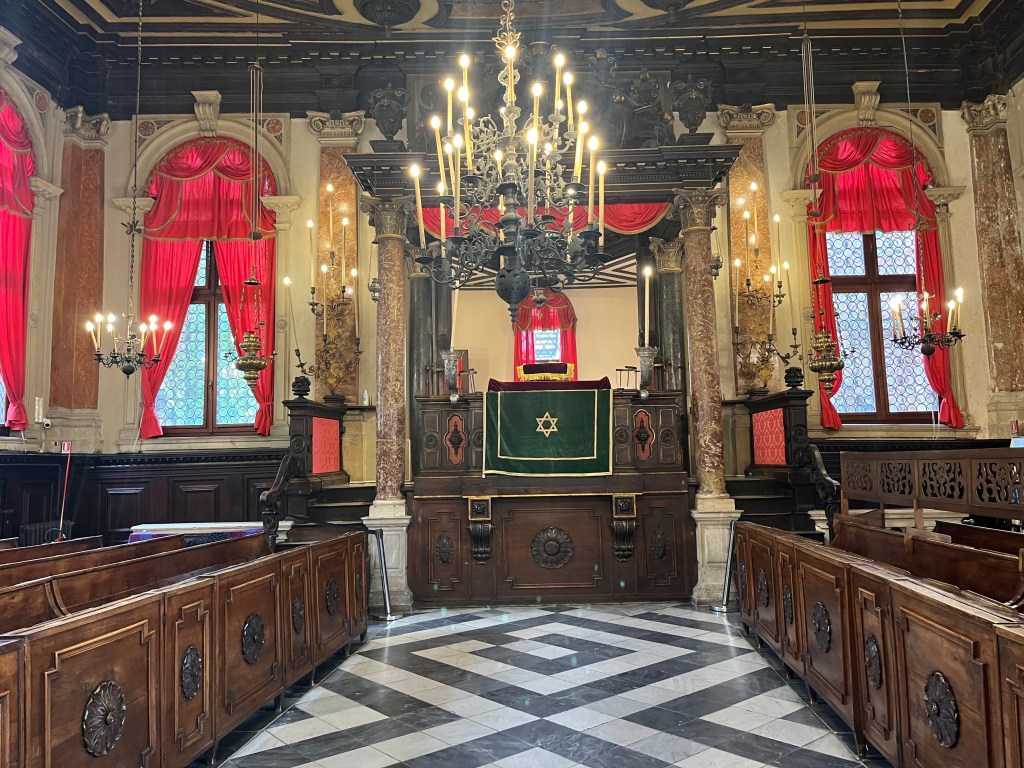
In addition to the typical Venetian tourist activities (I highly highly highly recommend a visit to the exquisite Doge’s Palace!), we got a chance to take a guided tour of the Jewish Ghetto. We loved our tour guide! You can book it here. The two synagogues we got to see were stunning. Learn more about the community’s storied history here. And here are some pictures below too!

One of the highlights of visiting the Venetian Jewish Ghetto (where the word “ghetto” actually comes from) was meeting members of the local community. I always love meeting Jewish brothers and sisters around the world and Venice was no exception. First, I went to the bookstore of the currently renovating Jewish Museum of Venice. The woman behind the counter was a member of the tiny Venetian Jewish community. She was so kind. I ended up buying a book about the Judeo-Venetian dialect (so cool!) and a book about Ashkenazi and Sephardic music from Venice. It was refreshing to talk to a Jew after seeing so much hatred on this trip. Perhaps finding community with our brothers and sisters and allies is a way of coping, a way towards resilience in these challenging times for our community around the world.

After the bookstore, I got some Judaica from a local store called Shalom. It was beautiful. For those of you who know me well, you might know that I recently moved to Atlanta. I’m excited to put up my new Murano glass mezuzahs I got at Shalom in my brand new apartment as a reminder of the fragility and beauty of Jewish life.

After a fun, challenging, and beauty-filled trip to Italy, I was ready to board my plane to Atlanta. I had many fond memories of the Jewish communities, museums, rural villages, and canals I had visited. But most of all, I wanted to go home. Not because I dislike Italy. But because Atlanta is a safer place to be myself, a gay Jew, than Florence, Padova, Bologna, Verona, Venice – any of these stunning places. They are fabulous to visit and I’m so glad I got to experience new things on this trip. But there is a reason I moved from D.C. to Atlanta besides the rats in my old apartment. It is because in these days of polarization, Atlanta is a haven. It is a moderate and open-minded city where nine times out of ten, I feel like I can just be myself. I’m not surrounded by the hate-filled graffiti and protests of D.C. or certain parts of Italy. I’m surrounded by acceptance and love.

I’ll put up my new mezuzahs soon and will always carry a piece of Italy in my heart – the kind people who opened up to me, both Jewish and non-Jewish. And let the mean folks float away like a piece of driftwood floating down a Venetian canal towards the great lagoon. Far away from my life.

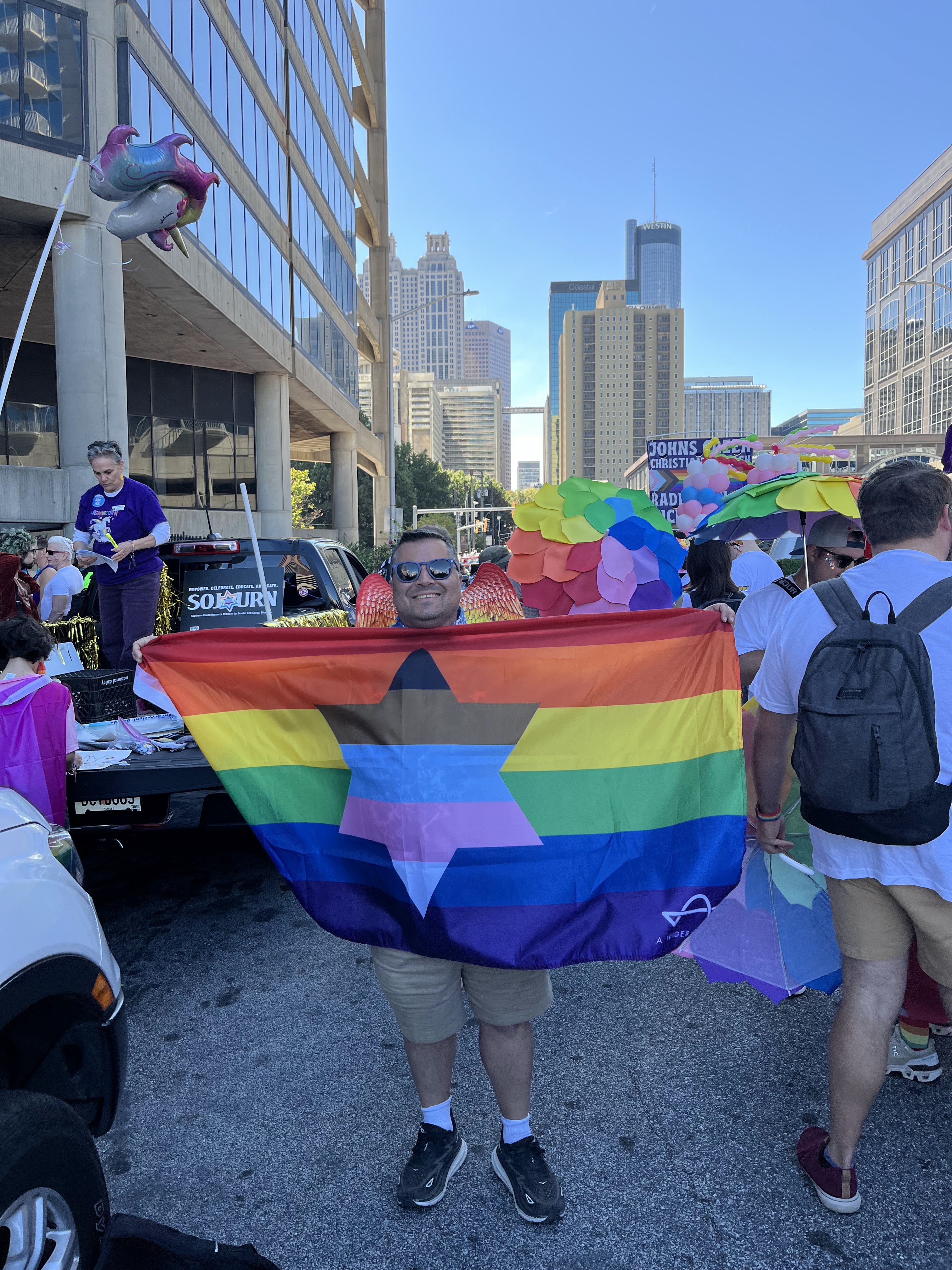
I’ll end with a picture of me marching proud with the LGBTQ+ Jewish community of Atlanta the weekend after I got back. Because there is no better antidote to hate than loving who you are. May we all get to know that acceptance and I hope for a better future for us all. Shanah tovah!

American anti-Semitism

           Tonight, I went to an LGBTQ+ dinner outing.  Our organization was partnering with another one to put on the event.  I sat down outside Union Market across the table from someone from the other organization named Ezra.  We were talking about healthcare in the U.S. and I mentioned that I loved my healthcare in Tel Aviv because of the digitized medical records.

            Ezra glared at me and then said: “Americans fund your healthcare system so you can bomb everyone to pieces.”

            I promptly excused myself and said, “that was rude” as I walked towards the other end of the table to escape extreme discomfort from Ezra’s anti-Semitism.

            It was an awful way to spend my evening. Ezra knows nothing about me.  Ezra had talked to me for all of five minutes.  He didn’t know anything about me, let alone what my political views are.  Nothing.  All Ezra knew was I lived in Tel Aviv and that I liked Israeli digitized medical records and that was enough for his anti-Semitic floodgates to open.

            A few nights before, I was sitting in my favorite Thai restaurant when an Uber Eats deliveryman walked through the door talking loudly on speakerphone.  Shouting in the middle of the restaurant, he said: “Israel is disgusting.”  He then went on a ten-minute diatribe about the evils of Israel.  When I asked him to please turn off his speakerphone so my friend and I could eat a pleasant dinner, he glared at me and even yelled into his speaker “these people at the restaurant want me to turn off the speakerphone.”  And he continued to spout venom as my friend and I tried to tune him out.

            These two examples are on the progressive end of the spectrum.  But progressives are not the only people trying to box Jews in and caricature us.

            I recently met a far-right conservative gay man.  After telling me that trans people were disgusting (which is a disgusting comment in and of itself), he asked me “why don’t you vote Republican?  The Democrats hate Israel.  Republicans love Israel.”  To which I responded: “yes, many Republicans support Israel – perhaps more so than some Democrats.  But many Democrats support Israel too.  I also vote for a candidate based on many issues and see whose values align best with mine.”  His lecturing continued unabated as he then tried to teach me about Judaism!  He claimed all Jews believed sex should only be between a man and a woman (he clearly hasn’t heard of Reform and Conservative Judaism) and that God controls everything (again, depends on the Jew and the interpretation of Judaism).  The irony of a Catholic guy trying to explain Judaism to me was not lost on me and I decided to disengage from the conversation.

            Donald Trump himself has repeatedly goaded Jews by saying that if he loses, it’ll be their fault.  That Israel “won’t exist in two years” if he’s not elected.  All the while, he praises the leader of Qatar and hosts him at his estate in Mar-a-Lago- the same Qatar that hosts Hamas leadership.

            Democrats are no better.  The Squad and their allies regularly trade in anti-Semitic rhetoric about Israel “hypnotizing the world” and unfounded claims that Israel is “committing genocide”, rather than fighting an incredibly complicated war in the face of the worst terrorist attack in Israeli history.  They berate Israel for defending itself while trying to deny it funds for the Iron Dome which protects its civilians from Hamas and Hezbollah rocket fire.

            America has always been home to anti-Semites. Just like many countries in the Western World.  But American Jews, particularly the generation of my grandparents and parents, enjoyed a kind of cultural, economic, and political renaissance.  We have achieved must that we can be proud of in this Goldene Medine – the Golden Land.

            The question is what next?  What, if any, future do we have in a country where from left and right we get grilled, stereotyped, yelled at, boxed in, and denigrated?  Where we can’t go to a LGBTQ+ dinner or a Thai restaurant in peace?  Where we are told which party we “have” to vote for based on how someone else perceives our interests, rather than what we feel is in our own best interest?

            As my mom would say, “enough already!” Jews – American, Israeli, French, Russian, Moroccan, Turkish, Ethiopian – from any and everywhere.  We are one of the oldest civilizations on earth.  We founded the modern day miracle of the State of Israel, imperfect as she can be sometimes.  We have gotten elected to office, built innovative businesses, and founded incredible institutions of learning.  All while preserving and evolving our traditions in an increasingly complex world.

            We will not give in to anti-Semitism.  From any person.  From any gender or sexuality.  From any ethnicity.  From any political party.  For every anti-Semitic anecdote I’ve shared in this blog, I can provide 100 others.  The time has come for us to raise our heads up high because we are God’s chosen people.  That phrase may mean different things to different people, but I personally believe it should be a source of pride that our very essence is infused with holiness, and of course great responsibility as well.  A responsibility to the planet, to the other peoples of the world, and yes, to ourselves.

            May we find the little blessings along the way, the allies who make our lives better, and may we always pray for the peace of Jerusalem.  May better days come our way.  And soon.  Amen.

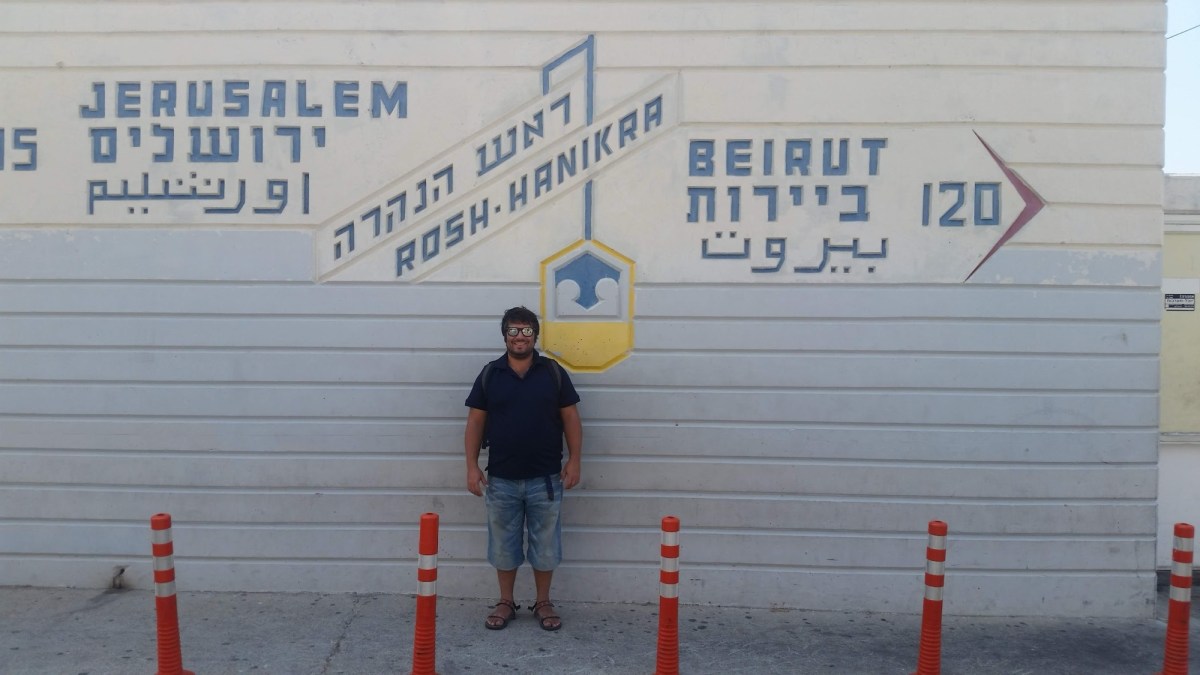
p.s.- my cover photo is of me at Rosh Hanikra, Israel’s border with Lebanon.  My prayers go out to Israel’s north and the civilians suffering in Lebanon because of Hezbollah’s reign of terror.  May we one day all know peace.

The Magic of VerMontréal

This may be one of my favorite vacations ever, so be sure to read all the way through!

When I lived in Israel, I used to travel all the time. It was healing, it was wholesome, it was exciting.

Towards the end of my time in Israel, I was struggling with my mental health and was experiencing transient homelessness as I made my way across Europe, eventually settling in Philadelphia in early 2019. There, I regained my stability and reconnected with my mom and rest of my family.

Coming back to D.C. that fall was hard. I successfully managed to rebuild my relationship with my family and find a great mental health team to give me the strength to live safely as a man with bipolar disorder. And D.C was full of memories, good and bad. It was supposed to be a temporary stop on my way back to Israel.

A few things happened. First of all, my mental health dictated that I needed to really settle down somewhere for a while and get treatment. Second, I needed to strengthen and heal my relationship with my family after being out of touch for several years. And third, the pandemic started months after I came home. Then my mom was diagnosed with Sarcoma, an aggressive form of cancer.

Going back to Israel or traveling for any extended period of time was out of the question. My health and my relationship with my family came first. It was a difficult decision- I missed seeing the rest of the world and exploring. I put my (then) plans for rabbinical school on hold. And I prioritized my mom. Which was the right thing to do. Because three years later, I would lose both her and my stepdad David to the very same type of cancer.

The past few months have been rough. My mom and I spent our last Passover together, she passed away on April 18, and we started packing up my childhood home. I nearly had a manic episode after my last packing day with friends. I have another packing day tomorrow and frankly I’m nervous. But I am doing my best. I am supported by incredible friends and family and a mental health care team that is standing with me every step of the way. Oh, also we went through my first Mother’s Day without mom here and Father’s Day (for my stepdad) is this Sunday. It’s all too much.

Given all this stress, I could have just stayed put. But I decided to do what I do best: travel. Explore. Engage other cultures. Immerse myself in nature.

For the first time in five years, I took a 10-day vacation. And it was worth every moment.

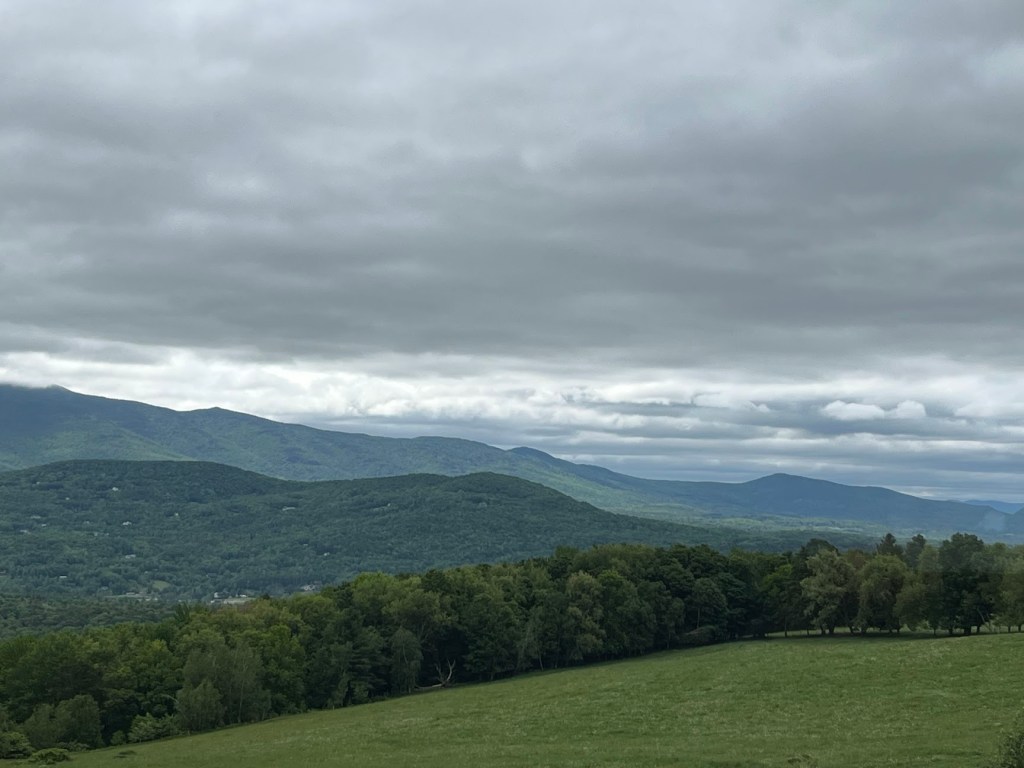
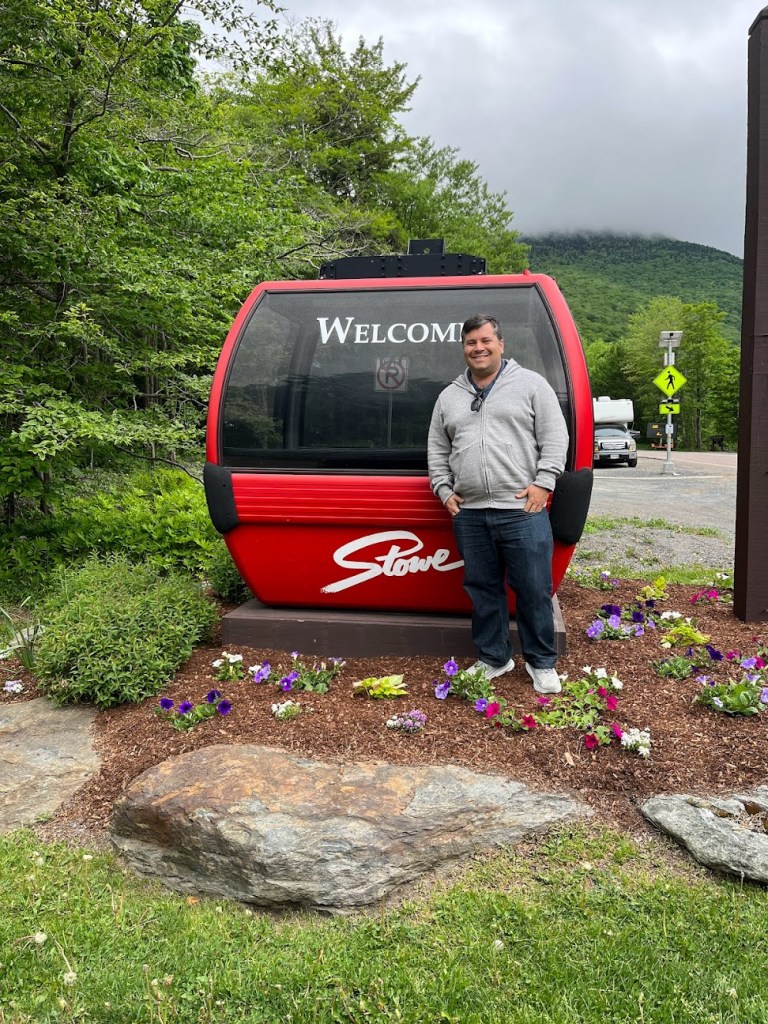
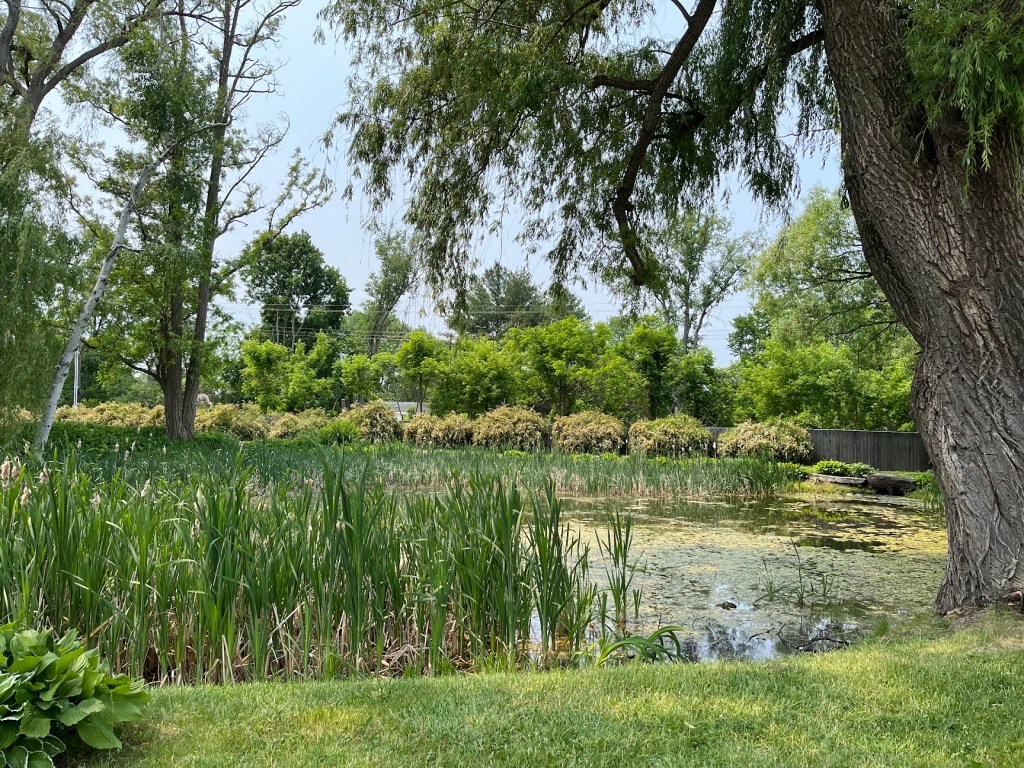
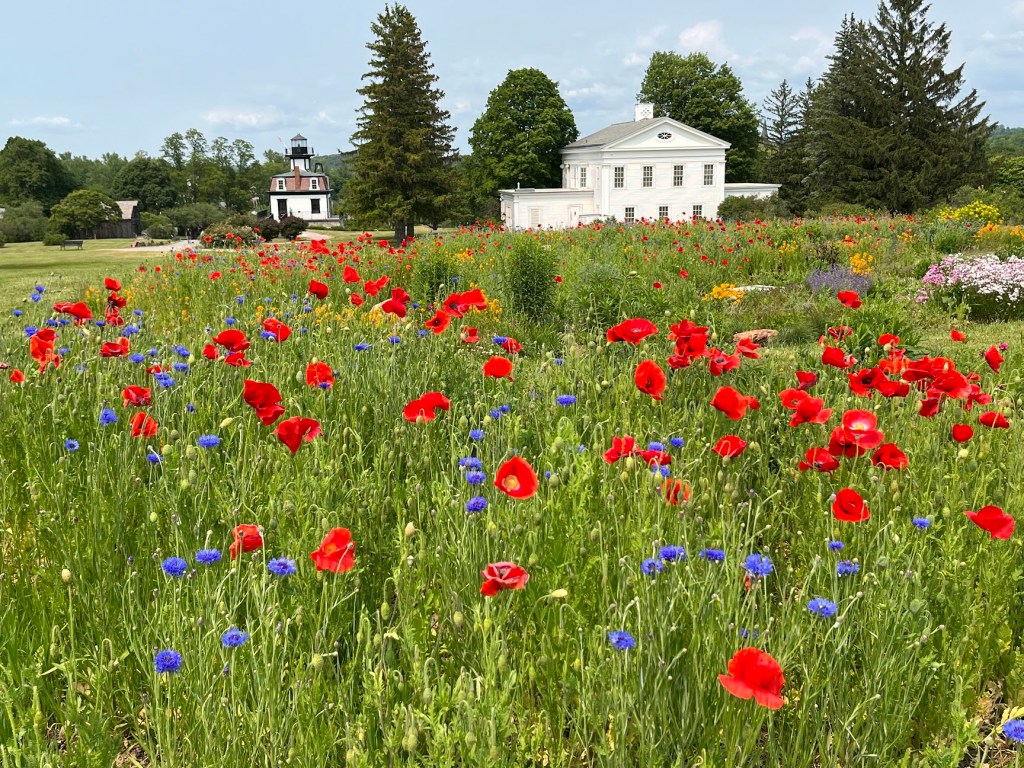
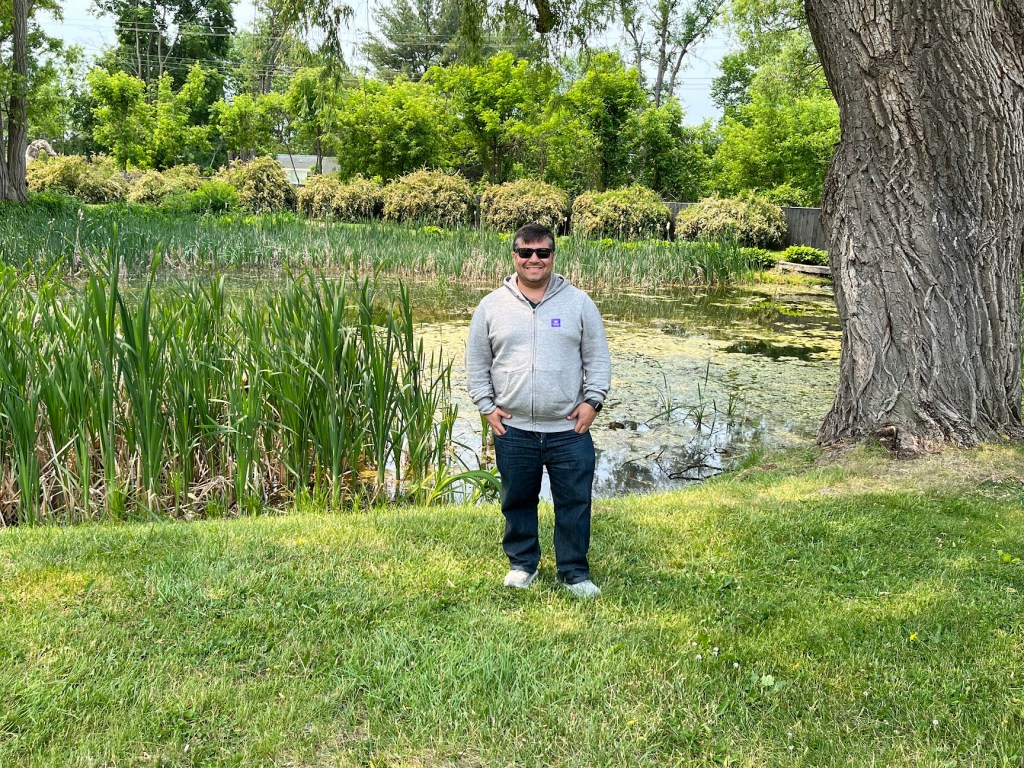
I started in Vermont. For those of you who haven’t been to this tiny little state, it is absolutely gorgeous. Take in some of the scenery:

I felt healed by all the green and nature around me. I hiked for the first time in many years and went sailing on Lake Champlain with a wonderful group of people. I met up with my friend Neale’s sister Catherine (mom loves Neale!) in Burlington, one of the cutest cities I’ve ever visited.

I feel incredibly lucky that this cute little green paradise is just an hour and half direct flight away from D.C. It took a little time to get adjusted to being on vacation and putting a pause on some of my worries, but once I did, I felt better than I have in years. No pandemic, no parents’ cancer looming over my head, just vacation and travel.

In Vermont, I took a maple syrup tour, met a Von Trapp, and took an urban forest tour with a quirky (and smart!) guy who told me he once climbed a tree and found underwear in it! I met tons of friendly people, including my cab driver Joe from Long Island, who helped me get around rural Vermont.

Then, it was time to cross the border. I took a cab from Vermont to Montreal, one of my favorite cities. I was there last summer on my first solo trip there, and had been twice before with other groups of people. I stayed at my favorite AirBnB and had a blast catching up with the host. I may even go back later this summer because I had so much fun!

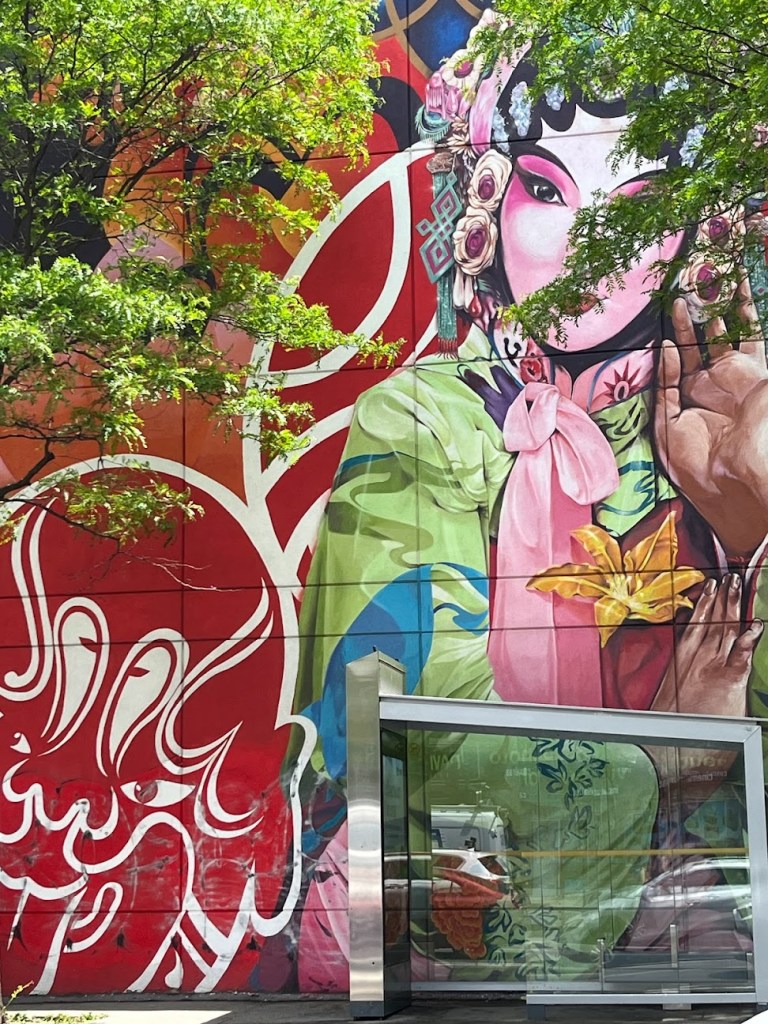
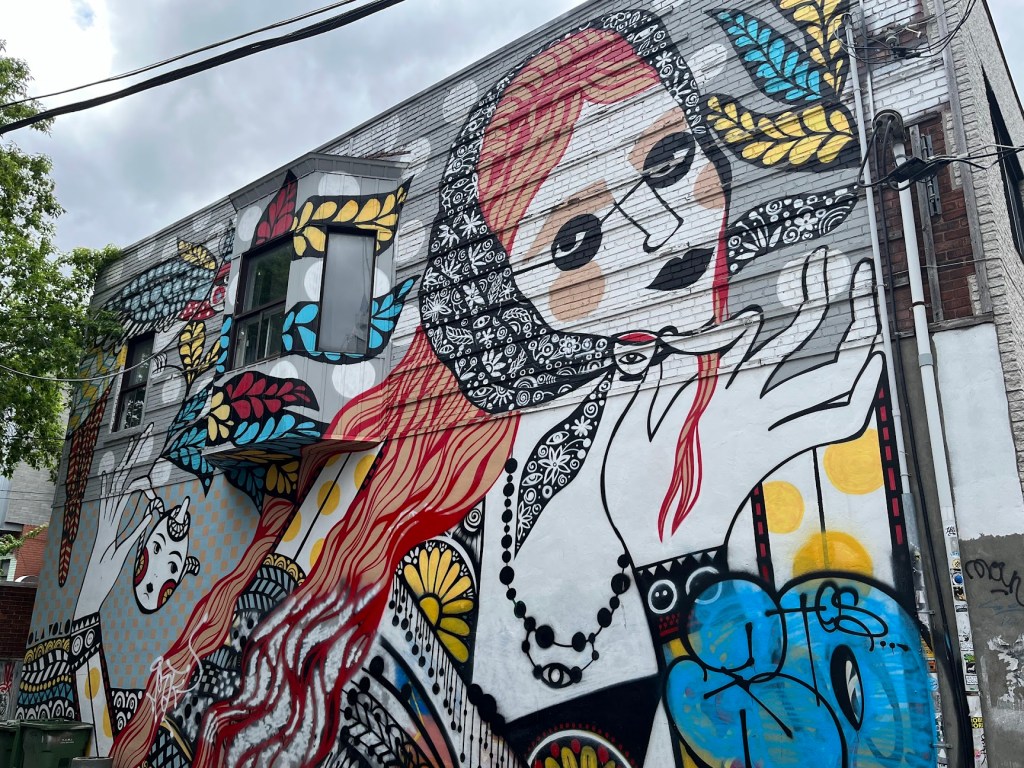
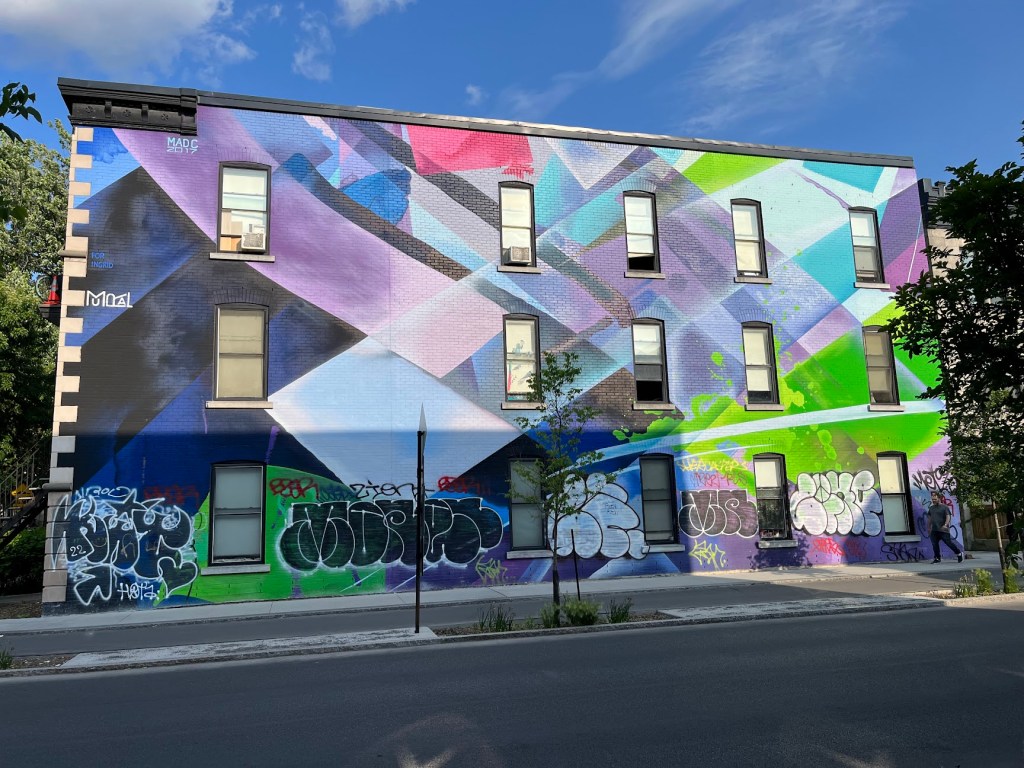
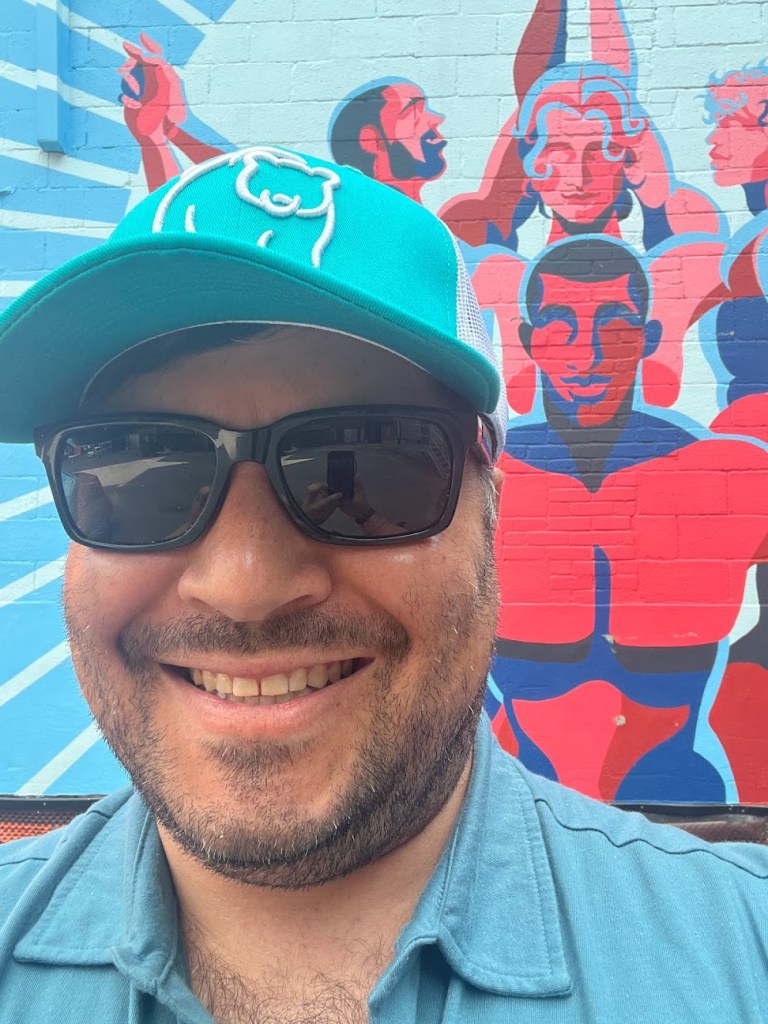
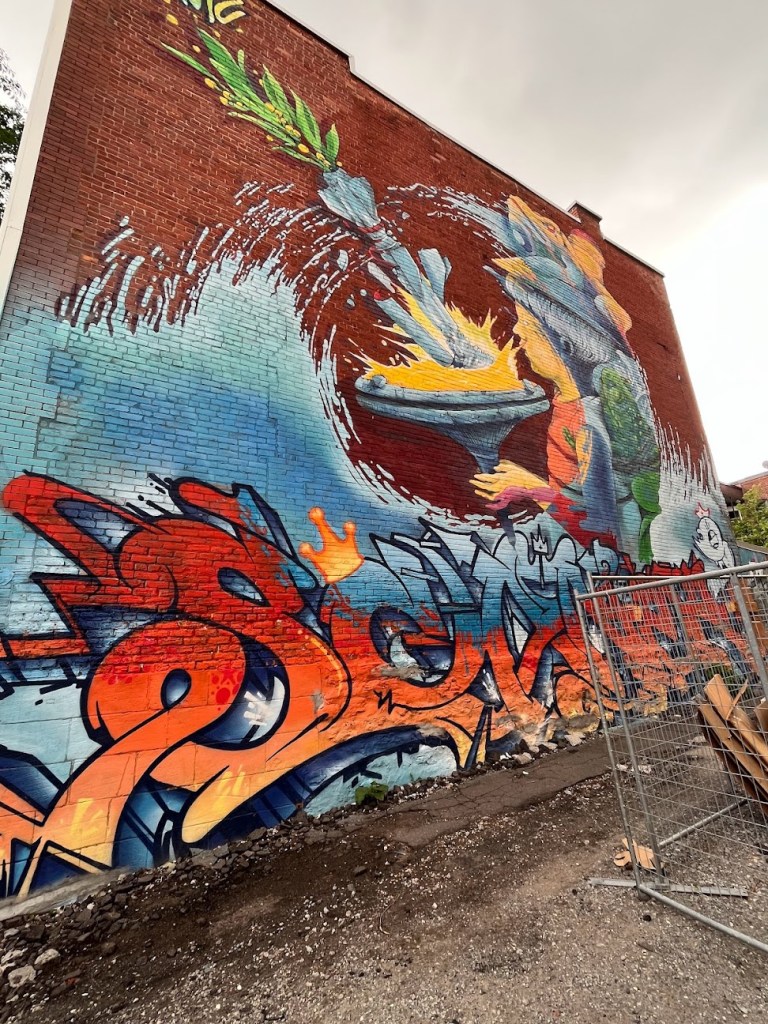
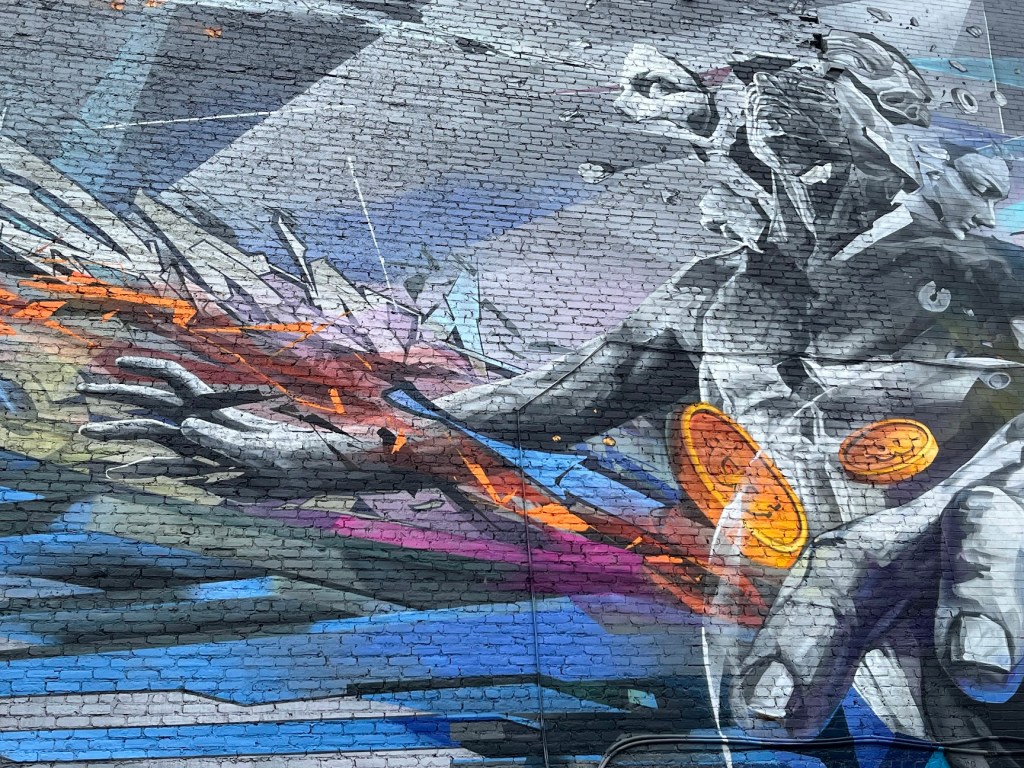
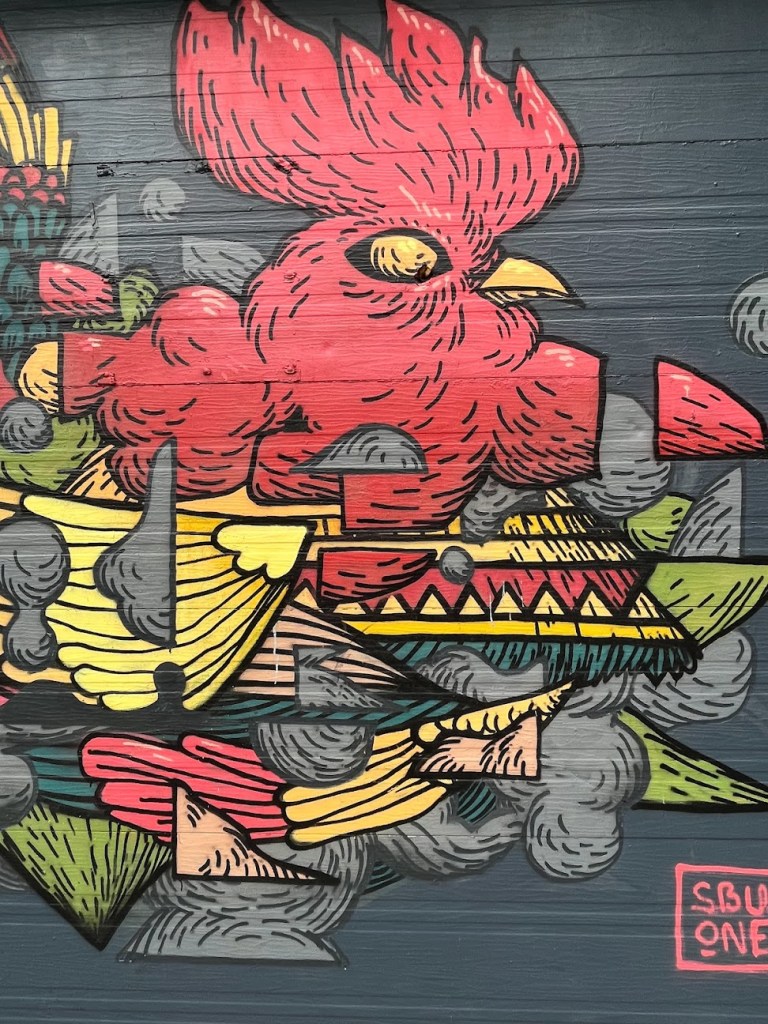
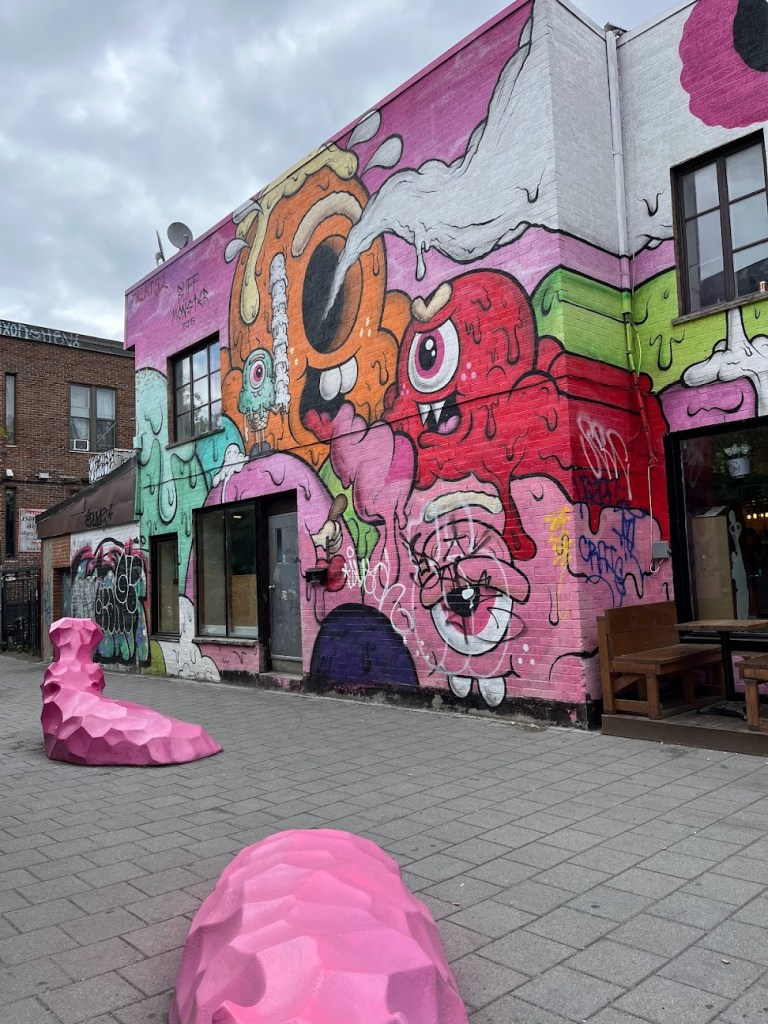
While earlier in my trip I had been calling friends because I was feeling lonely, by the time I was in Montreal, I was feeling great. It’s such an energizing and creative city. Look at some of the cool murals:

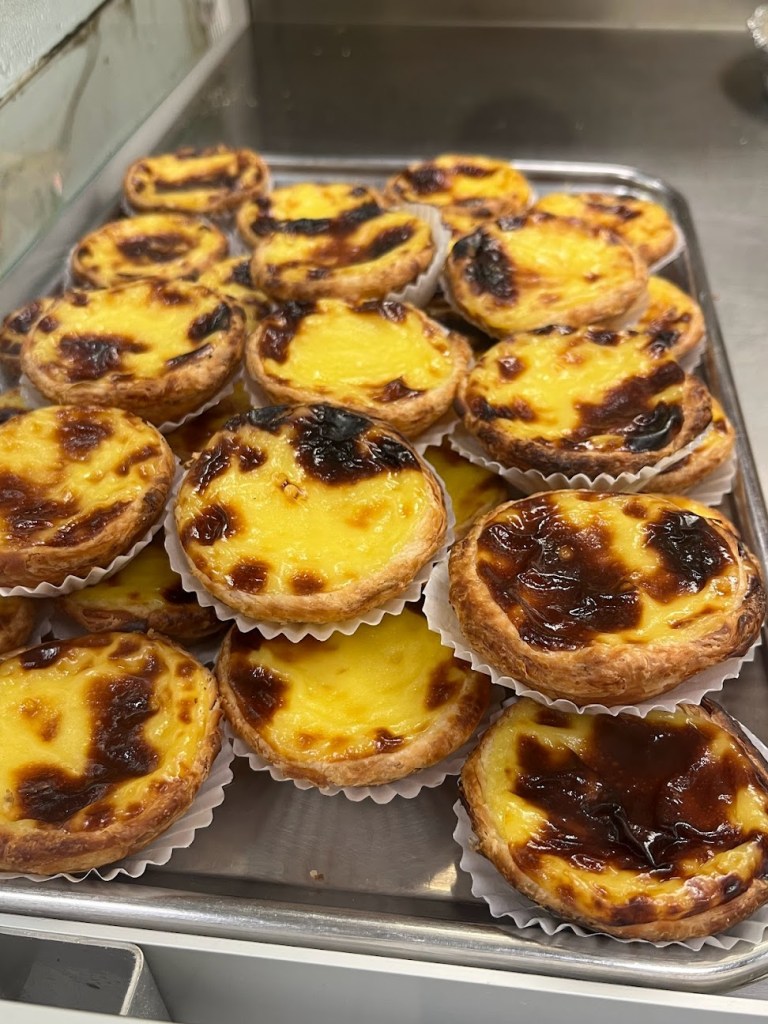
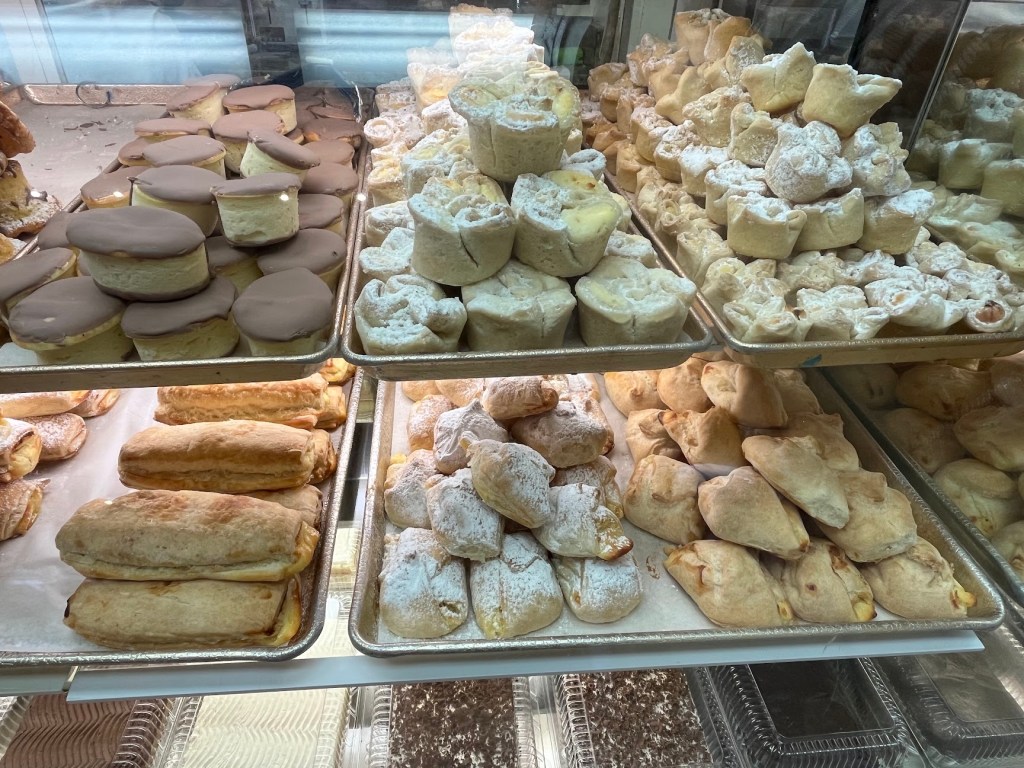
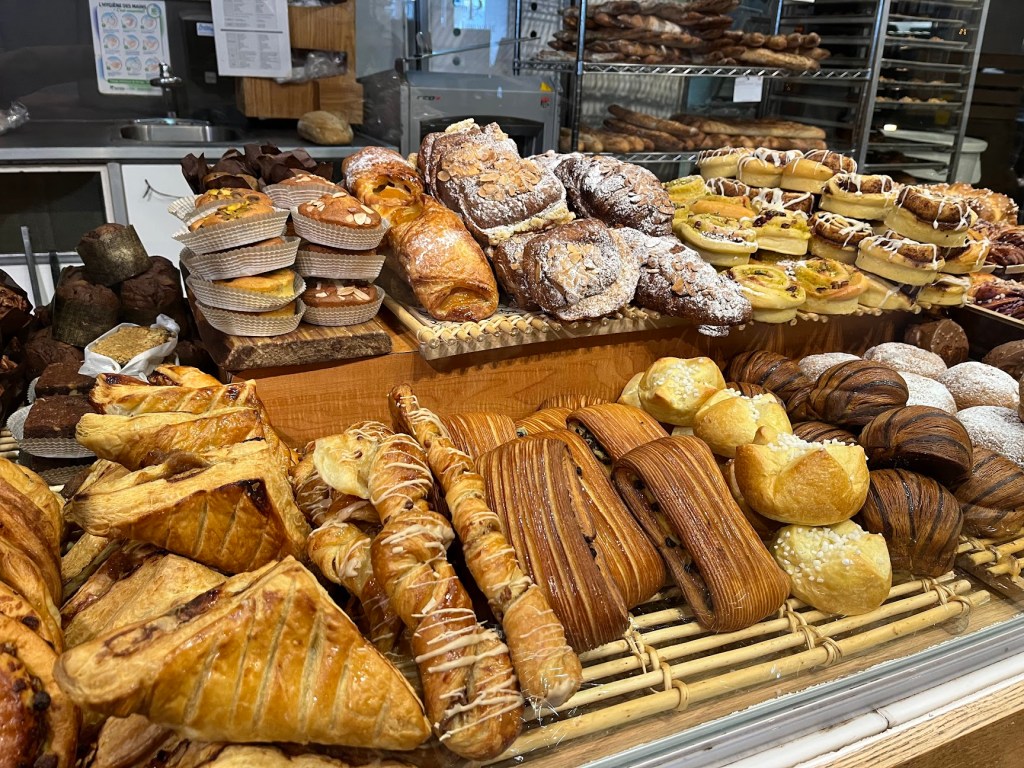
It’s not only the beautiful street art that makes this city special. It’s also the amazing food and diverse cultures. Take a look at some of the Hasidic Jewish, Chinese, Portuguese, French, and Italian pastries I had:

Over the course of just five nights, I spoke English, French, Spanish, Arabic, Hebrew, and Portuguese! And in the past, I’ve even gotten the chance to speak Yiddish and Catalan! That’s all of my languages in one beautiful city.

I got the chance to take a “Rabbis and Radicals” Jewish history tour of the city with the Museum of Jewish Montreal. My guide, Claire, was a fellow queer Jew who had lived in Israel just like me. It made the experience extra special and I highly recommend the museum’s walking tours for anyone visiting the city.

At the end of my trip, I got to add music to the mix. I saw Isabelle Boulay, one of Quebec’s premier singers and a Franco-Country star. I love this kind of music. It was inspiring. My mom raised me to love music. It always infused our house. Sometimes our tastes overlapped, other times they diverged. But we always loved a good tune together. And she would support me even when my tastes were different.

I could go on and on about the magic of Montreal and Vermont- or as I like to call this space only 1.5 hours apart, VerMontréal. It is a place filled with greenery, with culture, with history, with friendly people. I will be back.

My journey has evolved over the past few years. You never know where life – or death – will take you. But the only thing you can be certain of is that if you don’t “go for it” now, you’ll regret it later. Book the ticket, dip into your savings. You can’t take money to the grave. But you can live a fun, meaningful, thoughtful, and creative life. And give back to others.

To all the Uber drivers, cab drivers, AirBnB hosts, hotel employees, sailboat captains, forest tour guides, and others who made my trip so special – thank you.

And to my mom, I miss you every day. And I will continue to live my life to the fullest and most meaningful way possible in honor of how you taught me to live.

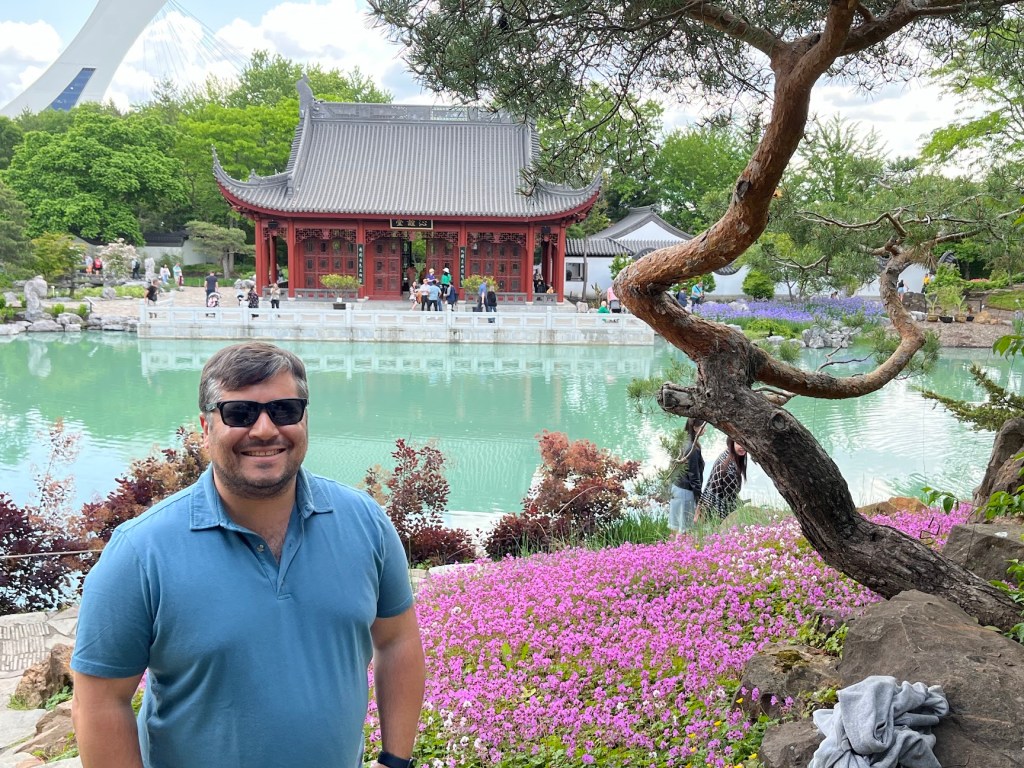
With that, I’ll leave you with some beautiful pictures of the Montreal Botanical Garden. My mom and stepdad loved plants and flowers, and I hope they enjoy seeing some of the beautiful ones I got to enjoy on my trip. I love you guys.

להציל את היהדות

מזמן לא כתבתי בעברית. כנראה שאכתוב עם מלא טעויות. אבל אני מרגיש שכדאי לכתוב. כדאי לפרש את הרגשות שלי ברגע כל כך רגיש בהיסטוריה של עם ישראל ומדינת ישראל. הרבה אנשים שקוראים את הבלוג שלי יודעים שאחרי כמה שנים בארץ, אני חזרתי לארצות הברית, איפה שגדלתי. התכוונתי לחזור לארץ ללימודים בבית המדרש של הרבנות הרפורמית. אבל לא מעט זמן אחרי שחזרתי לארה”ב, אמא שלי חלתה בסרטן. אז הייתה מגפת הקוביד. אז נפטר אבא החורג שלי. ותוך קצת זמן, אמא שלי גם תלך לועלמה. בקיצור, הרבה דברים קשוחים התרחשו בחיי ופתאום לחזור לארץ לא הייתה בחירה הגיונית. לפחות כרגע.

אבל למרות שאני נמצא רחוק מהארץ פיזית, אני חושב עליה כל יום. אני מתגעגע לחברים שלי שם ואני מודאג מאוד לגבי המצב הפוליטי. לצערי, כאמריקאי, אני מכיר את הפאשיזם באופן מאוד אישי. אני גר בוושינגטון די סי. הייתי פה כאשר דונלד טראמפ השתדל לגנוב את הבחירות וכאשר הוא הסית נגד אזרחיו ב6 לינואר. הייתה תקופה מאוד מפחידה.

עד ה6 לינואר, הרבה חברים שלי בארץ או התלהבו מטראמפ או לא הבינו למה אמריקאים מבחינות פוליטיות שונות לא היו יכולים “להסתדר”. כלומר, אנחנו פשוט לא ידענו איך לדבר אחר עם השני. אבל אחרי ה6 לינואר, הרבה חברים שלי סוף-סוך הבינו שזה לא היה עניין פשוט ובעצם זה היה משבר פוליטי שחווינו בקפיטול.

לצערי הרב, כל ישראלי שפוי עכשיו מבין מה שקרה בארה”ב לאחרונה. שיש בשתי המדינות תנועות פוליטיות שרוצות להרוס. שרוצות לדכא מיעוטים, למחוק את “האחר”. זאת תנועה פוליטית בינלאומית- מרוסיה להונגריה, מארה”ב לאיראן, וכן לישראל.

מהנסיון שלי בארה”ב, אני רק יכול להדגיש כמה זה חשוב להמשיך להפגין ולתמוך בתנועות פולטיות שהן בעד הדמוקרטיה לכולםן. גם כן לפלסטינאים.

אין עתיד למדינת ישראל בלי דמוקרטיה. ואין דמוקרטיה בלי חרות לכל תושבי ישראל ופלסטין.

בסוף, כמו כל דבר במדינה היהודית, זה עניין של איזה סוג של יהדות תהיה חזקה יותר בישראל. ברור שצריך להיות מקום לגיוון- גם ליהדות השמרנית שאני לא מאמנין בה. אבל- בואו נגיד את זה בצורה ברורה- אנחנו רוצים עתיד של איסור חמץ בבתי חולים או אנחנו רוצים עתיד של יהדות שוויונית?

ליבי במזרח. לכל המפגינות והמפגינית האמיצים- תודה. אני איתכם בלב ואני אמשיך לדבר עם הממשלה שלי בארה”ב כדי לשכנע אותה להשתמש בכח שלה לשמור על הזכויות שלכם. כי בעצם, למרות שאנחנו רחוקים פיזית, האינטרסים שלנו דומים מאוד. אנחנו חייבים לתמוך אחד בשני בשוויון.

אני הפכתי אולי פחות דתי אחרי כל המוות והטרגדיות במשפחה שלי ובחברה שלי בשנים האחרונות. אבל אני כן מאמין שהגורל שלנו הוא משותף. ואף פעם לא אוותר על הקשר בינינו והחלום של שלום, של דמוקרטיה, ושל יהדיות שמייצגת את הערכים שלנו. מתגעגע המון- שנתראה בקרוב בע”ה עם חיוכים של הצלחה של המאבק.

A queer Jewish-Arab encounter in Budapest

If you’ve been following the news, there’s been at least as much darkness this Chanukah as there has been light.  In recent weeks there has been a slew of anti-Semitic attacks, including the destruction of a Torah scroll in a Persian synagogue in Los Angeles, anti-Semitic graffiti on the 6th and I historic synagogue in Washington, D.C., the murder of three people at a Kosher grocery store in Jersey City, and just today, the stabbing of five people at a rabbi’s house in Monsey, New York.

It’s enough to make anyone’s Chanukah flame flicker.  May the memories of the deceased be for a blessing, and may the Creator send healing to the wounded- and serve justice to those who did us harm.  May we find ourselves safer, with non-Jewish allies standing at our side like we so desperately need them.

On days like this, I often find myself in need of a bit of hope.  Which brings me to an old story from one of my adventures.

I found myself alone in Budapest.  I was backpacking through Europe and had spent the first part of my trip in Romania.  It’s not the most gay-friendly country in the world, especially not some of the rural areas I visited, although they were very interesting.

In need of some company, I opened up the CouchSurfing App.  It’s an app better known for finding a place to crash for free, but I was just using it to meet some new friends.

I found one woman, let’s call her Ayesha since she’s not out of the closet and the internet makes our world smaller by the day.  She had written “Looking for someone to go to a gay bar with”.  I immediately wrote her.

Now keep in mind my profile said I was from Israel.  Ayesha’s said she was from Amman, Jordan.  Two countries technically at peace, but whose populaces have almost no interaction.  A huge percentage of Jordanians are actually Palestinians, so the potential for a hostile interaction was not hard to imagine.

But Ayesha wasn’t like that.  She was excited to have someone to join her at the club, and I was just as enthused.

I walked in, we hit it off, and ordered some pizza together.

We got to talking and it turns out Ayesha was bi and this was her first time in a gay bar- ever.  Also, she was not out to her family.  Also, apparently I was about to participate in her first gay DATE!  Yes, you read that right.  Ayesha didn’t just invite me to the bar.  She also invited a Macedonian rugby player with whom she hoped to rumble in the pitch (I have no idea if that’s a rugby metaphor, but you get the point).

Turns out, it was one of the best nights ever.  The Macedonian rugby player brought her teammate and the four of us had a blast.  We talked about our different countries, the good, bad, and ugly (Macedonia is not a gay paradise either- but apparently has a growing scene!).  We talked about being queer, about music, about our shitty pizza and Hungarian customs.

And after the two Macedonian women had to leave, Ayesha and I just danced.  Danced and danced and danced.  None of the stress of the Middle East or its various conflicts mattered.  We laughed, we sang, we lip synced, we lived.

It was one of the best nights of my life.

Not because of the night club (it was ok), or the pizza (can I say again how shitty it was?), or the cute boys (c’mon Budapest, I thought you could do better!).

It was because for one night life stood still.  All the world’s conflicts and shouting and arguing didn’t matter.  Because one Jewish gay guy and one bi Jordanian woman had a great night together.  Despite it all.

I hope this holiday season, whatever your religion or traditions, you find your Ayesha.  Someone who is essentially curious about the world more than seeking conflict.  Someone fun who brings out the best in you.  And that you find your inner strength to take a bit of a risk.  To reach out to someone you don’t know.  And to send a tiny bit of warmth their way to light the path to a better reality.

Chag sameach, happy Chanukah, and shanah tovah- to a happy New Year!

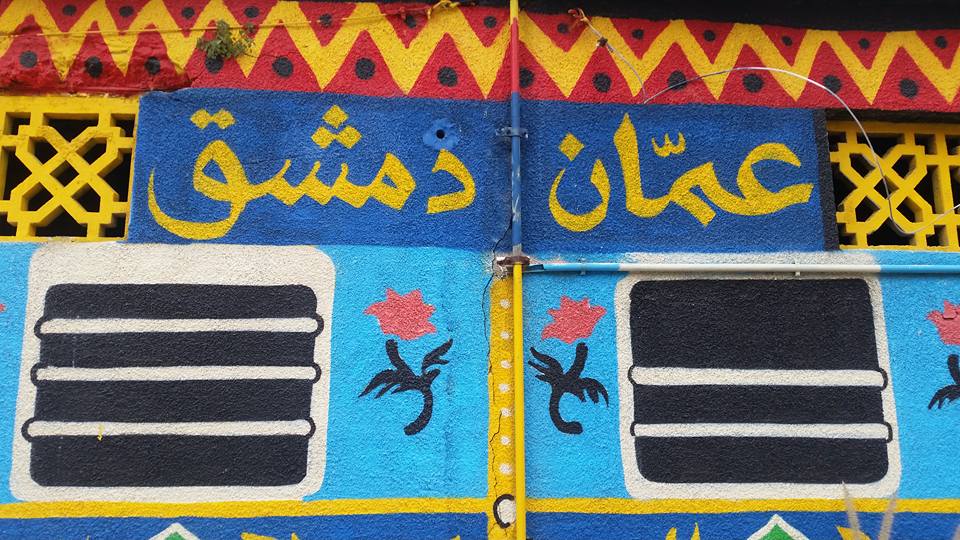
Cover photo is of a mural in Haifa near the railroad that once connected Amman, Jordan to Haifa, Israel.  What was once may yet be once more.

In search of a job

I’ve written before about the many challenges of making aliyah, of immigrating to Israel.  There are mammoth cultural differences, the hardest apartment search of my life, the air raid sirens (a false alarm, and then a real one), the LGBT Arab-Israeli refugee Jew-on-Jew political conflicts, and for me, healing from 30 years of abuse.  I’ve managed to overcome all of these obstacles while moving here alone at the age of 31- not a small task.  One that I’m proud to have accomplished and it has changed me as a person and made me realize my true strength.

There’s another challenge I didn’t have to face when I first arrived here but now seems rather daunting: finding a career.

I arrived here with fluent Hebrew (and Arabic and Yiddish) – something that facilitated my social relationships, my integration, my exploration of the country.  Something most olim don’t have- but that I invested in learning on my own initiative since I was 13.

This should also help finding a job, but I have to tell you the process is daunting even knowing the national language.  I was fortunate enough to arrive to Israel with a job- I’ve been doing digital marketing and public relations freelancing from home for 5 years.  And for my first year here, that worked quite well.  Due to the time difference between America and Israel, the fact that I was being paid in dollars, and the flexibility of my business, I was able to travel during the day and work at night.  Something that helped me build this very blog.

I put a lot of effort into building that business.  I got a graduate degree from Georgetown University in communications, something that to this day means I owe the U.S. government $40,000 in student loans.  I found clients, I networked, I presented at various conferences and built a reputation.

The problem is that that work is becoming harder for me to find at the moment.  Perhaps it’s due to me living halfway across the world- it’s harder to network and find new clients.  It’s also cyclical- there tends to be more work leading up to elections.  Now that the election is over, there seems to be a lull.  I’m still open to doing the work, but part of the risk you take on as a freelancer is that you have to find your own clients.  And I’ve been quite adept at it, but I think my geographical distance and the circumstances are making it harder now.  It’s hard to find a new client when your only connection is via LinkedIn or email.  I don’t live in America now, it’s hard to make those personal connections so crucial to getting your foot in the door.

So I find myself applying for jobs here.  It’d mean giving some of the flexibility I’ve enjoyed as a freelancer (or if projects come through, I could continue doing them on the side).  But it’d come with the security of a paycheck.  Something I need after some fulfilling travels that have left me with a great understanding of self (and some great blog posts) and unfortunately, a smaller bank account.

So I find myself in Israel hopping from friend’s house to hostel to who knows what.  I left my apartment before my recent travels so that I could afford to do it.  A smart choice (plus my landlord wouldn’t let me sublet).  Also, my old neighborhood was quite rough, the poorest part of Tel Aviv, so I wouldn’t want to move back there anyways, as interesting and life-changing an experience as it was.

All the while, I’m applying to jobs and networking.  With non-profits that support olim like me.  Cold calling, reaching out on LinkedIn, friends of friends of friends.  I’ve expanded my career search- everything from the Ministry of Foreign Affairs, the Ministry of Defense, libraries, archives, museums, the tourist industry, marketing, politics, hi-tech, higher education, language teaching.  And I wouldn’t even limit myself to the ones I’ve mentioned (I’ve probably forgotten a few that I’ve applied to).

I’m ready and willing to use my 8 languages, my travel knowledge, my desire to support Israel and the Jewish people, my passion for research and learning, my teaching experience- all of it.  Just so I could build a fulfilling career and rebuild my bank account in the only country I really feel is home.

And it’s proving quite tough.  I’ve met with headhunters who say I have an amazing resume.  I worked for the Obama campaign in 2008, and then later in the Obama Administration.  I have 10 years experience working in marketing, community outreach, media relations, blogging, and social media.  Most of that time either in the non-profit sector or government, or with public relations firms consulting for them.  I have an undergraduate degree from Washington University in St. Louis and a Master’s degree from Georgetown, schools that any American knows are pretty great institutions.

The problem is jobs in Israel seem to be mostly about who you know.  In a country where, much to my delight, there is a strong sense of community, this can make it quite hard for a newcomer to break in.  I’ve met many people here who are still best friends with their crew…from kindergarten.  That’s not an exaggeration.  People serve together in the military- a difficult experience but one which brings lifelong connections, and jobs.  Sabras have family here, and they look out for each other.  It’s part of the reason the government won’t recognize French and Russian academic qualifications.  It’d put these highly educated immigrants in their appropriate fields, while competing against native-born Israelis in those same industries.  Which is why protektzia, or “connections”, reigns supreme.  It’s like having legacy at an Ivy League school- it protects insiders from generation after generation.  And it leaves quite a number of Russian physicists and French lawyers working as grocery store clerks or in late-night telemarketing.

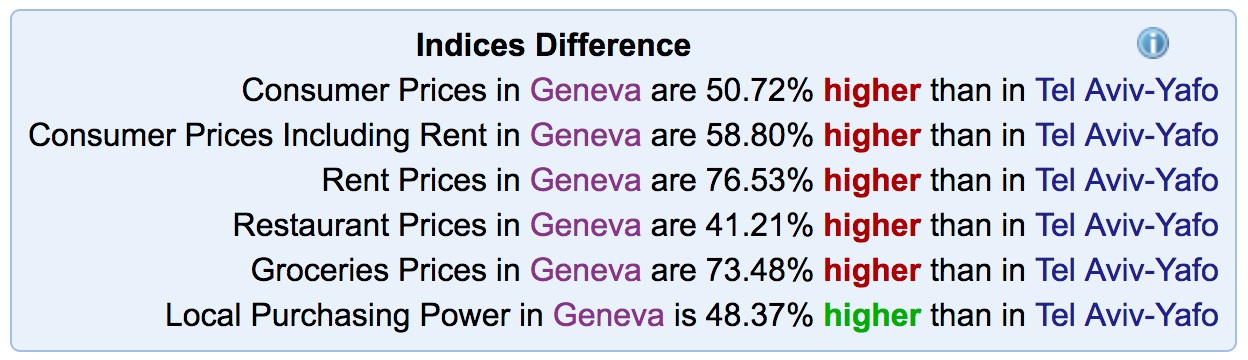
Just to give you a full sense of the picture, understand that the cost of living in Israel is also extremely high.  Tel Aviv was recently rated the world’s 9th most expensive city.  Even if you don’t live in the city proper, the cost of housing, groceries, and other goods is disproportionately high to people’s salaries.  We’re hardly the only country to confront a wealth gap- Spain has a youth unemployment rate of 34%.  Capital around the world is becoming more and more concentrated in the hands of a few wealthy people– while most struggle.  The problem is Israel’s cost of living index is higher than all other developed countries except for ultra-wealthy Switzerland, Iceland, Norway, Denmark, Australia and New Zealand.  So that while Geneva is more expensive than Tel Aviv, its residents earn more than twice as much as the average Tel Avivi, with 48% more purchasing power, as you can see in the graphics below from Numbeo.com:

Screen Shot 2018-11-21 at 11.57.52 AMScreen Shot 2018-11-21 at 11.58.05 AM

The hefty cost of living and minuscule salaries (especially in any industry outside of the famed Israeli high tech scene), is what drove 500,000 Israelis to the streets in the largest social protest in the country’s history.

Allow me to quantify this for you.  Recently, I was in the process of interviewing for a non-profit job at a well-respected NGO.  Knowing my full qualifications (and despite trying to negotiate, as a good Israeli does), the full-time job’s salary was fixed at 7,000 shekels a month- before tax obligations.  In Tel Aviv.  That’s $1,870 a month.  When I last lived in Tel Aviv, in the poorest neighborhood where literally prostitutes walked the streets, I paid 3,600 shekels a month for a one bedroom apartment.  About 3.7 shekels per dollar, so about a thousand bucks.  For Tel Aviv, this is an absolute steal.  I’ve seen one bedroom apartments advertised for 4,000-7,000 shekels- and above.   You could end up living with two roommates in the city center and still pay 3,000 shekels.  Something I’d rather not do at my age.  Or you could live further outside the city and perhaps save some money on rent, but then spend your money commuting and watch your social life shrink.  In a country where public transit doesn’t run from Friday night to Saturday night and Sunday is a working day, your weekend (i.e. the time you have to see friends) takes on new importance.  Where you live is where you’ll socialize, so unless you’re willing to buy a car (the car tax here is around 100%- 5 times higher than Europe), you need to live near your friends.  And let’s just say the young gay Reform Jews (and people who befriend them) aren’t usually living in the sticks where the housing is cheaper, like in most countries.  While new immigrants do get some breaks on the financial challenges, you start to see just how difficult it is to make a living here.

So to return to the calculations, let’s say I was able to find a similarly priced apartment to my last one.  That would leave $870 a month- to furnish the apartment, pay municipal property taxes, pay for your cell phone, pay for food, pay for transportation, pay for medical expenses, pay for life.  Oh yeah, and presumably have fun and maybe save a buck or two.  And that doesn’t include paying income taxes.  It’s worth noting the tax burden in Israel is significant.  There’s a debate about just how high, but this site rates it as one of the 15 highest in the world.  Higher than the U.S.  While the tremendous socialized healthcare system defers some tremendous costs I had to bear in the U.S., it does become a question of just what exactly is the trade off here.  And whether it’s worth it.

After this interview process and despite most of my background being in cause-based non-profit work, I immediately expanded my scope to the for-profit sector.  The salaries are higher.  I’ve met with headhunters and am applying diligently.  The higher salaries still pale in comparison with the States, especially as an oleh.  Someone with my background might be expected to find a job in the for-profit sector for somewhere around 10,000-15,000 shekels a month.  With 10 years experience, fluent Hebrew, native English, and a Master’s degree.  At the very high end, that comes out to $48,084 a year- pre-tax.  Consider that I’m 32 years old, would like to start a family, and that the average cost of an Israeli home is $415,000.  In Tel Aviv, it’s $582,442.  The average.  If you can manage to find it and beat out the sabras waiting in line with decades of family connections.  The latest statistics resulted in the following headline: “Buying a Home Will Cost an Average Israeli 146 Monthly Salaries“.  Chew on that for a while.  As difficult as my situation is, it’s hard to even comprehend how Israelis living in or near poverty make it work here.  A lot of them, unfortunately, don’t.

So the reality is this: in my own country, I feel I’m a wandering Jew.  Going from place to place, trying to find affordable AirBnBs and sofas to crash on as I fire away resumes.  A process that can take some time in any country, so I remind myself to put my head down, network, and apply apply apply.  And I’m incredibly grateful to my friends who are helping me along the way.  My friend Rotem who let me crash at her apartment for a week and a half while she was abroad.  The wonderful cashier at the market who, when his credit card machine wasn’t working, just let me bring him the money two days later.  And so many others.  The level of trust here can be truly heart-warming.

Nobody said immigrating would be easy, and I’m grateful I even have a country to move to.  It’s not easy to be a Jew anywhere now, as the terrorist attack in Pittsburgh showed- and as the rapidly increasing anti-Semitic violence in Europe reminds us.  There are good reasons Israel exists and why people like me come here despite all the challenges.  It’s a country with a lot of warmth, a spirit of survival, a generosity, a frankness that is refreshing.  Landscapes that totally melt the heart.  And more possibilities of finding a Jewish partner than anywhere else in the world.

WhatsApp Image 2018-11-21 at 1.19.06 PM.jpeg

The problem becomes when the great things about this country start to obscure your other life goals.  Building a family, financial stability, and feeling fulfilled in your career.  Olim here often have to take jobs unrelated to their careers and are limited in our upward mobility by the Israeli “good ol boys” network.  I understand every change requires sacrifice, but I want to like what I do.  And I’m not fortunate enough to have parents to buy me a home.  Which is the main reason Israelis manage to get one in the first place- and why many olim don’t experience economic advancement here.

In the meantime, my search continues.  I believe in the idea of Israel and I like a lot about life here, which is why frankly I blog about it all the time.  Haters gonna hate, but the Jewish people deserve a homeland and I’ll defend that idea till the day I die.  The sometimes boorish economic policies of our government or the monopolies that stand in the way of our progress are in no way a critique of our right to be here.  Indeed, it is Israeli workers who bear the brunt of the economic inequality here- and that doesn’t make us any less Israeli.  It makes us more.  Sadly, these are problems many other workers face around the world.  That we much find solution for.  So please don’t consider this post an opportunity to hate Israel, because it’s not.  What I’m sharing is a critique of how we should make this place better so people like me can succeed here.  A hope that we can build a vision for how we want to live here with fairness and opportunity.

I’m open to a lot of different careers and I want to feel fulfilled in what I do, even if it’s different than my first choice or second choice or even third choice.  If you know of great opportunities, reach out to me, I’d be happy to chat and appreciate you keeping your eyes peeled.

The greatest irony of my aliyah process is that I discovered my passion is Israel, but that its very soil may be too poor for my roots to dig in.  To establish themselves, to build a solid foundation, to grow and flourish.

What I won’t accept is the situation my friend found himself in recently.  A couple years older than me, a fellow American oleh, he interviewed at an English tutoring company.  Obviously, it’s his native language so he’s got a pretty good handle on it.  The salary: 30 shekels an hour.  8 bucks.  And the worst part about this story is he didn’t even get the job.  As he bravely tries to raise a family in the land of his ancestors and pursue his dreams.

Im tirtzu eyn zo agadah.  The famous Zionist saying suggests that if we will it, it is not a dream.  I agree.  The dream becomes a hope, a goal, an aspiration, something you wish to achieve.  It’s a hope I’ve pursued since I was 13 years old learning Hebrew in the house of an Israeli woman in Washington.  The problem is that hope sometimes clashes with harsh reality.  With circumstances out of your control.

Do you continue to tell yourself that anything is possible?  Or do you look at your diminishing bank account, the salaries, the limited opportunities for advancement, and the $140,000 it costs to have a child here as a gay man and think:

My heart is in the east, but my wallet- and future- may be elsewhere.

Goodbye America, for now

It’s appropriate that I write this blog on the eve of America’s midterm elections.  As my country prepares to pivot, so do I.  Tomorrow, I board a flight to say goodbye.  For now?

I find myself feeling a mixture of excitement and anxiety.  Excitement because I think Democrats will take back the House of Representatives.  And if it’s truly a blockbuster night, even the Senate.  I think Donald Trump needs a wake-up call that he can’t govern this country alone.

Anxiety because I worry about the future of the Democratic Party and what it means for this nation.  The extremes of the Democratic Party, as best represented in the Trump-like antics of politicians like Alexandria Ocasio-Cortez.   Someone who on the surface level, I agree with 80% of the time.  But who takes her positions- and most importantly her rhetoric- to extremes.

Ms. Cortez, almost certainly to win her election tomorrow, supports a variety of policies that are fairly standard in Israel and Western Europe.  Socialized medicine, environmental protections, affordable higher education, and civil liberties for LGBT people.

The problem is she takes public policy and turns it into a bombastic crusade in which anyone who disagrees with her is the enemy.  And in which purity Trumps all.

Ms. Cortez compared the threat of climate change to that of Nazi Germany.  She supports impeaching Donald Trump without considering the consequences to her party or the national discourse.  Or the potential counter-reaction of angry armed Americans who will doubtless double down on hunting down minorities.

She criticized Israel for having “massacred” innocent Palestinians in Gaza- without showing any understanding of the fact that many of them were armed Hamas members.  And that while all killing is a travesty and some of the deaths may have been avoidable, it’s not so simple here.  I’d like to see how she’d react as an 18-year-old soldier when people volley rockets and flaming kites at you and your family’s neighborhoods.

The most audacious and Trump-like aspect of this accusation is that Ms. Cortez’s response to criticism was: “I am not the expert…on this issue”.  A bizarre and deeply narcissistic approach to politics.  You are a future lawmaker- if you’re not an expert on an issue, you probably shouldn’t make such wild and factually incorrect claims.  You sound a lot like our Tweeter-in-Chief.  Shooting from the lip.

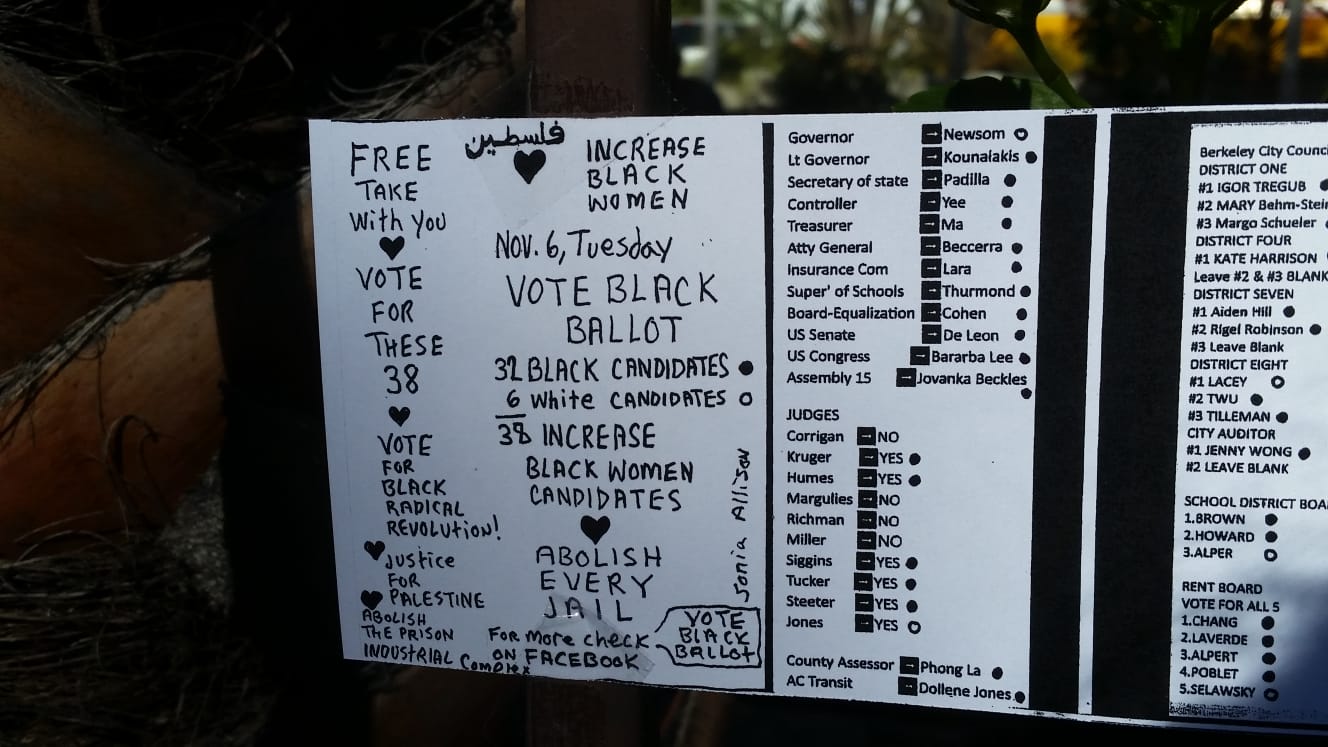
Lest you think this is an isolated incident, I found the most shocking flier walking around Berkeley.  Although if you’re from the area, you won’t be surprised.

WhatsApp Image 2018-11-05 at 4.37.19 PM

At face value, I agree with some of the flier.  I would like to see more black women in politics.  Minorities are perpetually underrepresented and it changes the discourse to have different people in the room making decisions.

On the other hand, this is no better than Donald Trump’s extremist rhetoric.  “Abolish every jail”.  “Black radical revolution”.  “Justice for PALESTINE”- and the word Palestine written in Arabic.  “Black ballot”.

It’s not that each of these words on their own are necessarily bad.  I advocate for Palestinian human rights.  I want black empowerment.  I think the prison industrial complex needs reform.

But the way it’s presented is so fundamentalist.  It’s a “with-me-or-against-me” rhetoric that is dangerous in and of itself.  It is imbued with a fanaticism, a sense of infallibility reminiscent of a Puritan more than a public policy debate.

I don’t believe in abolishing every jail.  Some people are dangerous and need to be behind bars.  Not everyone can be rehabilitated and I want want serial killers and rapists off my streets.  I also don’t think that any ballot should be all about one group.  I don’t vote a “Jewish ballot” or a “gay ballot”- it’s exclusionary it is very phrasing.  And the Palestine piece- it’s telling that there wasn’t a call for peace, nor was there a condemnation of anti-Semitism.  Let alone an acknowledgment that Israel, that the Jewish people are entitled to empowerment too.  Especially days after the worst anti-Semitic attack in U.S. history.  I have never seen an attack so clearly demonstrate the need for a State of Israel or for solidarity with our people.  Yet where are the grandiose words, the empathy for us?

We’re not on the agenda for the far left- and I feel it.  I see poster after poster here in California.  “Hate has no place here”.  “Against hate”.  “Immigrants, Muslims, LGBTs are welcome here”.  But not on one single sign have I seen the word “Jew”.  Out of hundreds I saw, one sign had “you are welcome here” written in Hebrew- a reminder that some people care.  But if I’m honest, I leave California with a deep sense of disappointment and a feeling that most of the left doesn’t feel we are worthy of their solidarity.  I am inspired by the thousands of Jews and non-Jews who came together to #ShowUpForShabbat, but I have yet to see progressive activists put us on their agenda.  We are worthy of our own discussion- not just in terms of Trump, not just in terms of gun control, not just in terms of hate crimes.  All of these are valid issues and related- but they are not the same.  This was an anti-Semitic attack during a period of rising anti-Semitism around the world.  And I expect progressive activists to step outside their comfort zone and learn about us on our own merits- not just when it’s convenient for their ideological agenda.  If the attack makes them reconsider their reflexive support for Palestinians over Israel (as if one should have to choose), then I’m glad it makes them uncomfortable.  Because if you’re upset about Pittsburgh, imagine what Moroccan Jews and Polish Jews feel like about thousands of Pittsburghs and having no home left to go to.  That’s why Israel exists- and you need to face the fact that your society is failing to protect us.  The extremes on both sides.  Which is why a wise Jew will never give up on the state that is our only insurance policy.

Black-and-white thinking results in aggression and a breakdown in communication.  A young Jewish student at Florida State threw chocolate milk at Republican volunteers while invoking the Pittsburgh massacre.  I share her frustration at the rise of the far right and its racist and anti-Semitic elements.  I also will offer some humility in saying its different analyzing this from afar than living here.  I’m American, but I am not here most of the year and it’s different to physically be here.  I think that as a (somewhat) outside observer, I can illuminate things that are hard for you to notice when your surroundings shadow your vision.  And I bow to the fact that we live in different, overlapping existences and I recognize that you bear certain consequences more directly than me.

I will offer this advice- do not behave like the people you hate.  Of all the times people have said nasty things to me (and again- I don’t know what, if anything, the Republicans said to arouse her anger), I have never considered launching my beverage at someone’s face.  It’s not that I thought about it and decided not to- it just never occurred to me.  Everyone has a right to their feelings- but we don’t have a right to attack people.  Even people we disagree with or think are damaging society.  The greatest challenge of being oppressed is not to become the oppressor in fighting back.  I’m a double minority and a survivor of three decades of abuse.  I get it on a gut level- it’s hard.  And I hope this young woman can learn from this experience and realize that she has further poisoned debate rather than showing courage.  We’ve all been impulsive students once, but it’s important to remember our actions have consequences.  And I can’t imagine her behavior has made Jews any safer at a time of deep discomfort about our place in society.

Empathy is about understanding where others come from- not necessarily agreeing with them.  So in that spirit, I’d like to offer this.  I am American-Israeli.  I feel more American in Israel and more Israeli in America.  I am a hybrid.  Some people share my observations, and sometimes people disagree with them.  I address a mostly progressive audience because that’s part of who I am and it’s who I know best.  Its whose actions hurt me the most because I care what they, what you, think.  Many of my observations about extremism apply to the far right as well- it’s just that I don’t have much cachet with them.  I can’t imagine they’re particularly interested in hearing the voice of a queer Jew at this point in history.

There are distinct cultural differences between Israel and America.  Israelis are famously direct, Americans famously polite.  Israelis will message you pretty much non-stop, Americans think you’re in love (or desperate) if you message someone the day after a date.  The words we use, the emotions we feel, the way we convey them- our behavior- is deeply influenced by the culture we live in.  And I live in both.

American friends expecting me to conform to American cultural norms- to always remember them- please consider that I don’t live here.  I’m not an American abroad, I’m not an expat, I’m not on some jaunt or program.  I’m an Israeli, an out-of-the-closet Jew running by completely different norms.  And if I sometimes am too direct for you, consider my reality too.  I shouldn’t (and can’t) always revert to your way of thinking because it’s hard- it’s not fair, it’s not who I am, and it’s not how I live.  If you’re offended by my bluntness, I won’t always say I’m sorry- because sometimes you need to hear some straight talk.  That’s my Israeliness.  But I will say I never intend to hurt you and I care about what you think.  Otherwise I wouldn’t write this blog.

As we sit on the eve of great change- for me personally and for America my country- I want to share my hopes.  I predict Democrats will gain power this week.  Not sure how much, but it will change the discourse and perhaps even bring some balance to the national debate.

The question for my progressive friends is how will you wield this power?  After several years of hearing worn-out tropes from the far right, after being wounded, will you be the adult or the child?  Will you govern with a gavel or a sledgehammer?

I hope you govern wisely.  Yelling at people doesn’t change their opinions.  Some people we can’t dialogue with- but some people are not only open to hearing your thoughts, they could teach you something too.  Protect yourselves, but don’t close off your hearts entirely.  And check in with yourself to see if you’re becoming the domineering person you’re fighting against.

This is something I personally wrestle with, especially in Israel.  A place packed with tension.  Beauty, for sure.  But it’s not for nothing people are angry there- rockets are falling on my friend’s kibbutz this week.  Ideologies, religions collide.  This is not suburban California- it is a country the size of New Jersey with ISIS on its borders.

The best thing I can offer you is to evaluate ideas on their own merit.  Just because Donald Trump likes Israel, doesn’t mean you should hate it.  And just because Alexandria Cortez doesn’t like Donald Trump, doesn’t mean you should join her in hating Israel.

Find the counterexamples.  When I get angry at Arabs or Muslims (I have a lot of reasons- I have a high likelihood of being killed for being gay, American, Israeli, or Jewish in their societies), I find someone who reminds me.  Who reminds me that there is good too.

My friend Muhammad is a Bedouin student who just moved to Ramat Gan.  He’s having a rough time- it’s not a particularly diverse city and he has experienced racism.

He told me he felt Jews only care about their own.  And I got angry.  I reminded him that I’m a Jew and I helped him find an apartment and adjust to life in his new home.  Hours upon hours of expensive long distance calls from abroad.  And that I was proud to do so.

He relented that it was politics, the TV, the blowhards who got him down.  And I told him I understood- if I went by what the TV told me, I’d think all Muslims want to kill me for being a gay Jew.

And that’s where we found our common ground.  We remind each other of our humanity.

He apologized, which of course I accepted.  And I wrote him in Hebrew:

“No worries, bro.  Remember there are Jews like me, and I’ll remember there are Muslims like you.”

His response: “Exactly!” and a kissy emoji.  Which, to remind my American readers of cultural differences, is not a romantic gesture.  Arab men (and a lot of straight Israelis) show a lot of intimacy towards their male friends.  That in an American setting would make you think we’re heading for the sheets.

But we’re not.  We’re friends.  We’re each other’s alarm clock, a reminder of the people who don’t fit our preconceptions.  The people who value us the way we are.

America- that’s what I hope for you November 7th.  No matter what happens, no matter what you advocate for, do it with humanity.  Remember the other, remember the exception.

I hope next time I visit, instead of a “black ballot” or a “white ballot”, I’ll see people talking to each other face to face.  Instead of a voiceless flier slapped on a cold brick wall.

I believe in you.  And I want you to succeed.

The wonderful, the ignorant, and the outright anti-Semitic

I’m writing you from Spain.  The past week, I stayed in Almería, a small city in the southeast corner of the country.  This is my fourth visit to Spain.  When I was 13, I came with my school.  When I was 21, I did research here for my thesis (including a fair bit of research on Spanish beaches 😉 ).  This past year, I realized my dream of re-visiting Catalonia after having learned Catalan.  And now, I’m chilling in the south of Spain.

Spain has always been an important place for me.  Spanish is the first foreign language I learned and Spain is the first country I visited without my abusive family.  At a time in my life when I was suffocating, Spain and its wonderful, warm people gave me room to breathe.  And have fun.

I fell in love.  I majored in Spanish in college.  By accident.  I was supposed to major in sociology but my university closed the department midway through my studies (yes, that’s a thing).  And I so loved Spanish that just by virtue of my desire to learn it, I had already taken enough coursework to put together a major.  Follow your heart, not the curriculum.

Every language is a source of richness.  I speak a bunch, including minority languages like Catalan and Yiddish (and have studied Irish and Basque).  Sometimes people shit on these languages for not “being useful”.  As far as I’m concerned, the way you feel about a language (or accent) is mostly about what you feel about its speakers.  Every language, like every culture, has something to offer, to make you grow, if you choose to see it that way.  Perhaps that’s why subconsciously I chose to wear a Catalan t-shirt at the Alhambra on Spain’s National Day.  An unintentional but loud statement in Andalucía, where dissing Catalans is as common as eating Gazpacho.

What enchants me about Spanish in particular is how I fit in.  Most of the time.  Because of my olive skin and Semitic features (Spaniards are also very Mediterranean-looking and have a lot of Jewish blood), I often am seen as Spanish.  Or Latino in America.  Sometimes people overlook Mediterranean/Middle Eastern people, but we look different than the Swedish people in Minnesota or the Irish Americans in Boston.  We look ethnic.  In Belgium, people think I’m Arab (including Arabs).  And I’ve actually had people tell me I don’t look American.  Not the nicest thing, but maybe there’s some truth to it.  Most people in Abercrombie ads don’t look like me.

But in Spain, people think I’m one of them- or at least a native Spanish speaker.  Partially because I’ve got a great accent, but people over the past week thought I was anything from Catalan to Venezuelan to Chilean.  In America, someone once called me a “Spic” on the Metro.  I’ve had multiple cases where people I’ve already known discover I’m not Hispanic, tell me how surprised they are, and suddenly want to be friends with me.  Here, I feel a little more at home.

In Israel too I often felt that physically I more fit in.  My appearance, indeed my DNA (I’ve run tests that show my makeup is closest to Lebanese, Greeks, Sicilians, and Palestinians), is from there.  Trust me, nobody in Hungary mistook me for an ethnic Hungarian.  Even though my great-grandparents were from there.  Israeli clothing models, politicians, rabbis, studs at the beach look a lot more like me than Channing Tatum.  But don’t get me wrong, I do like Channing Tatum 😉 .

In Spain, I’ve met some incredible people.  I met a Spanish man who told me how proud me was of his town’s judería, or Jewish quarter.  I met a Russian guy married to a Taiwanese woman who owned a bubble tea store.  Who spent 10 minutes looking up directions for me to a Sephardic heritage site.  I told an Afghan baklava seller I was from Israel- and spoke some Farsi with him.  His eyes lit up. 🙂  I ate amazing Moroccan bastilla and chatted with the owners in Arabic.  I even met a very Catholic young man marching in a Semana-Santa-style procession who directed me towards the local Jewish museum.

There’s also a lot of ignorance.  Not necessarily outright prejudice, but for sure ignorance.  A lot of people have no idea where their town’s Jewish quarter is- even when the local municipality has developed it as a tourist attraction.  And it’s been there for over a thousand years.  This particularly struck me yesterday on El Día de la Hispanidad, the day “celebrating” Columbus’s “discovery” of the “New” World.  The same year Spain kicked out its Jews.

On this day, I saw a massive Catholic procession which (although it is not actually connected) looks like a much more elaborate and classy KKK march.  Even Spaniards joked with me about it.  It really does look similar, but it is not a hate parade.  I will say it momentarily jolted me.

Spain is known for being the most (or one of the most) anti-Semitic countries in Europe according to the Anti-Defamation League’s polling.  Not surprising given the legacy of the Inquisition, although neighboring Portugal had that too, and moreso than Spain, is undergoing a kind of Jewish renaissance, including a burgeoning philo-Semitism.  Strong ties with both Israel and the Jewish community make it a much more comfortable place to be a Jew, right next door.

Spanish municipalities, particularly those governed by left wing parties, have tried over and over again to boycott Israel.  Something I find ironic, at best, in a country covered with the blood of my ancestors.  Where I’ve seen synagogues turned into office buildings, where thousands of people fill the streets celebrating Christopher Columbus.  A man by all accounts a genocidal maniac.  Incidentally likely the descendant of Jews forced to convert to Catholicism by Spain.  Hired by the royal family celebrated during this week’s holiday.  The family who ethnically cleansed my people from this land.

To return to the issue of these Catholic processions, I’d like to share my experience in Alicante, another city in Spain.  In the province of Valencia.

I was walking down the street and asked someone to explain the meaning of everything.  I’m a curious guy so I listened patiently as someone explained about the various teams that put together the saints displays.  Like I mentioned, some Spaniards like to joke about how it looks like a Klan rally (long robes, candles, crosses…).  I agreed it was a bit of a culture shock, and the rather nice Spaniards I spoke with said: “yeah, it has nothing to do with violence.”

But actually, that’s wrong.  Catholicism in Spain (frankly, Catholicism for most of its existence) has until recently been about violence.  Towards Jews, towards Muslims, towards apostates.  And while today, religious processions are mostly a cute cultural custom (it’s cool to watch, the music is neat too).  Not too long ago, they were a way for the church to impose its will on the people.  Including countless Jews it forced to convert or abandon this land under penalty of death.

After a relaxing bus ride up the coast to get here (the scenery in Spain is spectacular), I went out tonight.  It was a Saturday night and I wanted to talk to people.  Traveling alone can be so rewarding, I’m learning so much about myself.  And sometimes it’s nice to take a break and be with people.

I met an interesting mix of people just by chatting on the street.  Spaniards are known for being friendly and they live up to their reputation.  There are few better places I’ve visited for someone traveling alone.  Everyone is ready to chat.

I spent the night with a mix of Spaniards, Americans, Ukrainians, and one Argentinian man.

When I said I was from Israel, everyone was cool.  In fact, the Spanish guy knows his family has Jewish roots and he wants me to bring him to a synagogue.  And if you saw his cute punim, you could see he wasn’t lying.  He’d fit right in on a kibbutz.

The only person with a problem was the Argentine.  He said to me- to my face- “how do you feel as a Jew, controlling the world’s economy?”

I wish I could say I was surprised, but there was something in his silence when I said I was from Israel that told me he’d be an anti-Semite.  Perhaps a defense mechanism I’ve developed after dealing with so much bigotry.

I told him point blank: “that’s an anti-Semitic question based on stereotypes.”

He didn’t accept it.  When I tried to explain (as if you can reason with someone this insane) that actually Israel has a lot of poor people with one of the widest wealth gaps in the OECD, he pushed back:

“The Jews in Argentina control everything.”

I gave him a deep stare, told him I actually spent two weeks helping poor Jews in Argentina after the economic crisis, and reiterated that he was being anti-Semitic.  And to my great credit, he asked for the check and left.  Two hours later, he came back with free wristbands to go to a nightclub- for everyone in the group but me.  He said: “you don’t get one.”

Message understood.

I still love Spanish.  I love every language I learn.  Every culture has richness to share.

But I don’t fit in here.  For a visit, sure.  I suppose on some level I always thought I could be Spanish or in the words of my former coworkers at a Hispanic advocacy group, an “honorary Latino”.  Before moving to Israel, I spent most of my college years and professional career working for Latino and immigrant rights.  And I’m proud of it.  It reflects my values as a Jew and as a human being and a lover of Spanish-speaking cultures.

In the end, though, it’s not mine.  At least it can’t replace my Jewish identity, though at times I wished it would.  It felt easier- what an amazing global community to be a part of.  There’s a reason everyone’s listening to reggaeton these days- it’s infectious.  For all the wars and coups and discrimination and poverty and dictatorships, being Latino is fun.  I love French and I speak it when I want a sense of calm.  But let’s face it- when people want to get down, they put on salsa, not French folk music.  Although I listen to that too 🙂 .

I wish I could say my experience with the Argentinean man was unique, but it’s not.  In fact, when I visited Argentina, I saw authentic Nazi war medals being sold at the local fruit market.  My middle school Spanish teacher taught us that in her country of Guatemala, to call someone a Jew was to call them a “burro”, an “ass”.  As she laughed.  At a gay club in Spain, men excitedly guessed where I was from and when I finally said “Israel”, two of them fell silent and turned away.  One Spanish woman compared me to an Islamic terrorist because I don’t eat pork.  In Granada, I asked the tourist info booth why the Jewish museum was closed on Friday morning, even though it was listed as being open until 2pm that day.  And the woman sassily snapped: “you have to respect, it’s the Sabbath, that’s why they’re closed, it’s their norms.”  As if I couldn’t possibly know- or be Jewish.  I explained I was Jewish and that Friday morning is not the Sabbath- they chose to list the museum as open then.  The woman couldn’t care less as she ignored me and moved on to her next task.  Her much nicer colleague grimaced.  And tried to help me.  When I worked for a Latino advocacy group in Washington, they refused to give me Yom Kippur off in exchange for Christmas.  I appealed to the president of the group.  And got my vacation back almost a year later.

It’s not because all Latinos or Spaniards are anti-Semitic.  There are people here, as in all cultures, who are curious about Judaism.  Some who love it.  And some who are indifferent or ignorant but not hostile.  Some Latinos are Jews.

I’ve also experienced a deep strain of anti-Semitism in Spanish-speaking cultures.  No doubt a product of hundreds of years of Catholic-church-sponsored hate and Inquisitions.  Today, sometimes repackaged by far-left parties as anti-Israel fanaticism.  A kind of new religion in which Jews remain all-powerful and in need of constant reprimand.

In the end, I’ll always be a Spanish speaker.  It flows off my tongue better than any other, maybe even more than Hebrew.  The language is filled with warmth.  The people such friendliness.  The culture such a diverse and interesting history.  One in which Jews have always played a part.  Our blood flows through the veins of its people, our ruins dot the town squares.  Like the former synagogue in Guadix I visited that’s now an unemployment office.

Tonight, my best conversation was with an Algerian man.  Feeling distraught about the Argentinian anti-Semite as well as some homophobic comments I heard, I wanted a taste of home.  Shwarma.

I talked to the man in Arabic, and he was surprised.  “Where are you from?”

“Tel Aviv.”

“Tel Aviv?  Palestine?”

“Israel.  Palestine.  The Land.”

“Oh, you’re Palestinian?”

“No, I’m Jewish.  I’m Israeli.”

“But you speak Arabic!”

“I do, I love it.  It’s a beautiful language.  And I like Algerian Rai music and I have Algerian Jewish friends in Israel.”

“Wow!!  Rai?!?  And your friends- do they still eat couscous?”

“Yes they do.  Every Shabbat.”

Perhaps the world expects me to have more fun with a bunch of young Spaniards and expats at a bar.  Telling me how progressive and open they are, while spewing bile about Jews and gays after a few drinks.  Perhaps belying what they really think.

But my favorite conversation tonight was with an Algerian falafel man.  Because I’m the first Israeli he’s ever met.  And my language, my heart, brought him a smile from ear to ear.

So in the end, I’m not Latino, I’m not Spanish, and I don’t really want to be.  But I am a Spanish-speaker, an Arabic-speaker, and most importantly, a person who uses language to warm hearts.

Expel us, boycott us, ridicule us in a bar.  But Judaism is as Spanish as paella.

Queen Isabella could have never imagined me staring down an anti-Semite on the streets of Alicante 500 years later.  And winning.  Let alone a Jew and a Muslim speaking in Arabic.

Confuse me for a Latino, I don’t care.  Once it would’ve made me scared that you won’t like me.  Or I’d defiantly wear my honorary Latino badge, proud to be different.  Now, I just feel I’m a human being.  I’m a Jew- who I am and what society makes me.  And I’m happy to explore all cultures and stand with kind-hearted people no matter who they are.  I’ve learned to love my olive skin more.  And I’m grateful to have places like Spain where I look normal.

Libi bamizrach.  My heart is in the East, I’m in the far West.  And the person who brought me there was an Algerian shwarma man.

Yehuda Halevi would be proud.

==

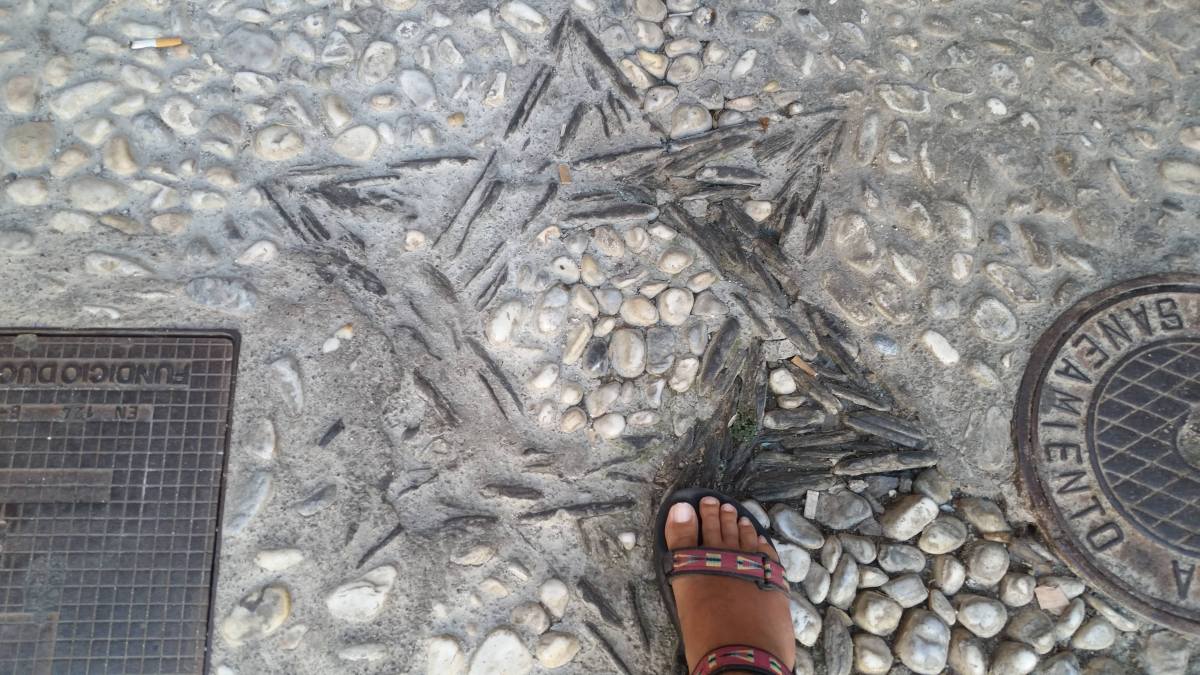
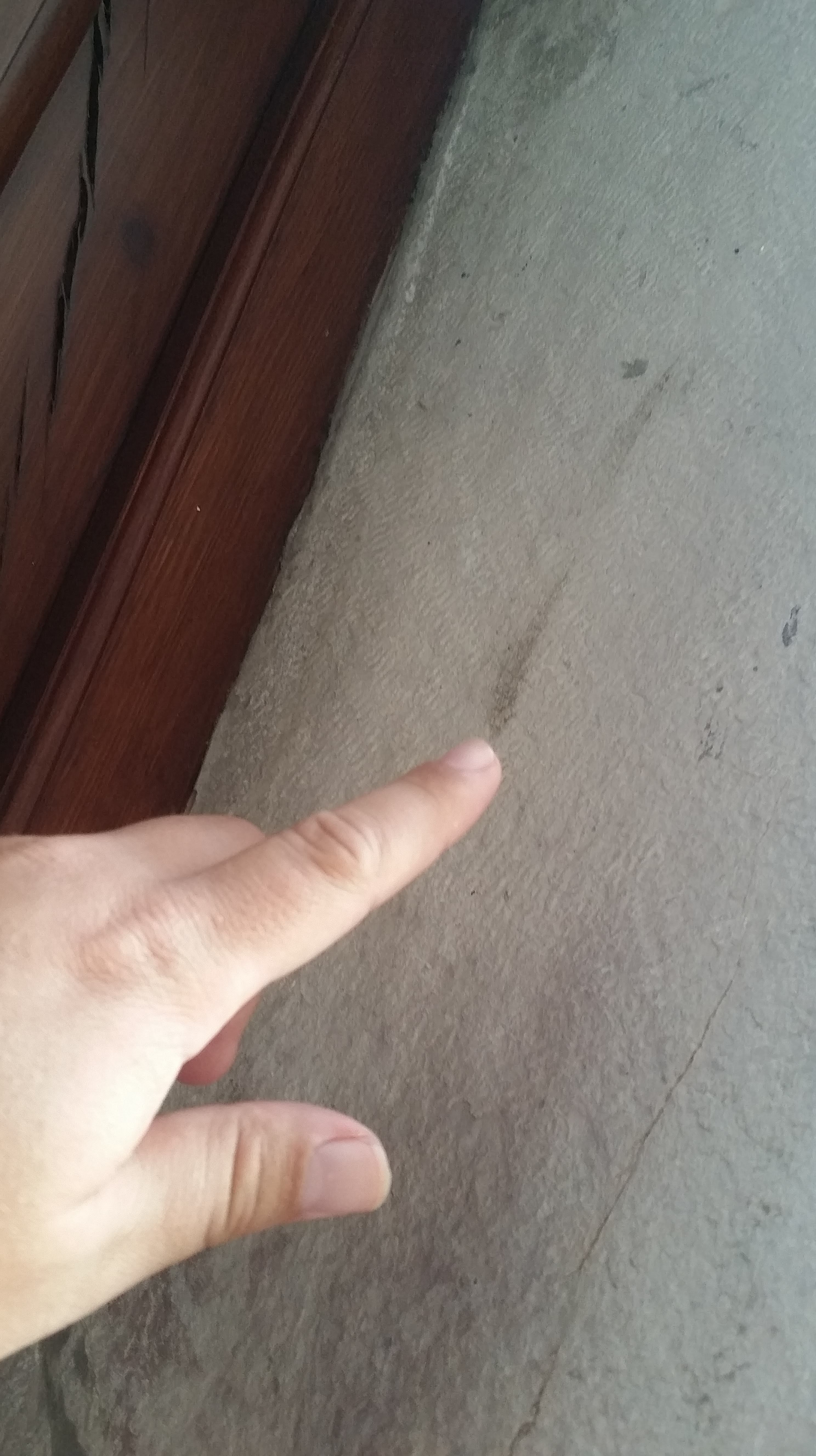
20181012_134415.jpg

This picture is of a door in Granada’s Jewish quarter where you can still, 500 years later, see the marks of a mezuzah.  We’re everywhere.  Scatter us like seeds, but we sprout back up wherever we’re planted.

You’re welcome, Belgium

My trip to Benelux, as I like to call it, has been interesting.  The series of low-lying small countries- Belgium, the Netherlands, and Luxembourg- has long been a destination I wanted to visit.

I like small countries.  They have unique character and frankly they’re cute!  Not so overwhelming and often overlooked- just the way I like things sometimes.  People tend to be more appreciative too when you visit places a bit off the beaten path.  Brussels isn’t a village in Latvia, but it’s certainly not Rome or Paris either.  It’s cute- not too big, not too showy, interesting.  And for me, a French-speaker and a lover of languages, this is a fascinating part of the world.  With languages bumping up side-by-side- Belgium a truly multilingual country.  With all the good and challenges that poses for its society.

While unfortunately I didn’t make it to the Netherlands, I did visit Belgium and Luxembourg.

The good thing about small countries is you can see a lot in a short amount of time.  And things do tend to change a bit from place to place.

After flying into Charleroi Airport and staying over in Jumet, I visited Namur and the Ardennes.  The Ardennes is the site of tons of World War history- from both wars.  With tremendous casualties, including many Americans who died to liberate this part of the world from fascism.

The Ardennes are green and peaceful.  Some pockets of poverty.  And some gorgeous medieval villages like Dinant and Bouvignes.  Take a look:


While I didn’t plan on coming to the Ardennes for its military history, it kind of found me.

When you go to the cute village of Bastogne, you can see the war everywhere.  There are graveyards for soldiers, American tanks, a museum.  And mostly Western tourists coming to see it- sometimes to meet their departed relatives.

I knew my great uncle Barney Marcus was killed here in the war- he was an American soldier.  But I didn’t know where- it could’ve been Asia or Europe.  And I didn’t know exactly when.

Without wanting to go into the war traumas or history (I think seeing the destroyed Jewish communities of Eastern Europe was enough), I didn’t visit much.  But I did take a picture with an American tank.  And I noticed that one older woman, initially standoffish, was quite warm to me in French when I said I was American.  I could feel her gratitude.  For something I didn’t even think of when planning this trip.  But nonetheless, it felt good.  After experiencing so much stigma in Eastern Europe, it was nice to see some people who liked me for who I was.  And to think about good things my country has done.  Like liberating this part of the world from fascism- twice.
20180926_151940

I also made time to visit Luxembourg.  While so many Debbie Downers asked me over and over why I would go there, my answer is simple: it’s there.  It’s a tiny country, with something different, right at my doorstep.  It’s cute, quadrilingual (Luxembourgish is a language!), and I find it interesting.

From Bastogne, I hopped on a bus.  Now I’m going to sound pretty hipster when I say I didn’t even go to Luxembourg City.  I passed through towns and villages on the way to Ettelbruck, an even smaller city in a teeny tiny country.

My image of Luxembourg was wealth.  It is one of the richest places on the planet.

And I saw some of it- the native Luxembourgers (is that a word?) were readily recognizable, driving Mercedes and BMW’s.  Not all of them, but a lot.

What was shocking was that Ettelbruck is anything but wealthy.  The rest of the town is a melting pot of Portuguese, Chinese, Africans, Cape Verdeans- name a culture.  There to work, to somehow survive in the face of eye popping prices, to make a better life.  Ettelbruck isn’t scenic, but I did learn a lot.

What I learned is there’s a lot of racism here.  Europe, in general, feels really racist.  Not everyone, but it’s a deep feeling.

As someone with caramel, olive skin and Semitic features- I stand out.  To the people (usually on the far left) who claim all Jews are white- tell that to the Luxembourgers who looked at me like I was there to clean their houses.

Because of my appearance (and sometimes because I go to decidedly non-touristic spots), I often am approached with fear and suspicion.

I should say, by all those who aren’t themselves outsiders.

On multiple occasions, Arabs have approached me in Arabic here.  Confirming my thought that the white people around me also thought I was Arab.

In fact, one night, after a particularly miserable AirBnB I had to escape (like the wolf in the forest I had to run away from- that’s another story), I ended up at an expensive hotel in Bastogne.  The Arab employee comes up and starts speaking to me in Arabic.  I said I was American…needless to say that despite my bravery and pride, this was not the moment to say I was Israeli.  Just this week, a Jew was attacked in Germany.  Sometimes it’s neo-Nazis, and a lot of the times it’s Muslim extremists.  Europe isn’t as safe as I thought it would be.

The Arab man, from Tunisia (a cool accent I hadn’t heard much before outside of Jewish Tunisian music), immediately directed me to a Halal restaurant.  Assuming I was Muslim.  Not about to say “I respect everyone but actually I’m a secular Godless Jew”, I simply went to the shwarma restaurant.

There I met a Kurdish man, a Syrian refugee, and a Libyan guy.  We had a nice chat- again, they all pretty much assumed I was Muslim (whatever, I don’t really care, and the food was great).  At the end of the meal, they gave me a free dessert, namoura.  It was delightful.  Also, the Kurdish man gave me PKK literature.  That was a first.  Despite having lived in the Middle East, I have never been so generously offered terrorist literature after dinner.  I smiled, accepted the brochure, took a few pictures, and threw it in the trash in my hotel.  The last thing I need is more airport scrutiny.  I’ll take the flight over the flier.

To return a moment to Luxembourg, something really stunned me.  I found a synagogue!  Obviously, like most of Europe, an empty abandoned one.

It was an unexpected, somewhat invasive surprise.  I was hoping to get a break from seeing the ruins of my people (see my blogs about Eastern Europe), but here we were again.  The 47 families of Ettelbruck turned into ash.  According to the sign, by “villains”.  As if this were a murder mystery and we didn’t know that Nazis and their Luxembourger collaborators killed them.


It’s a reminder that our blood lies spilled over this entire continent, over centuries.  It’s depressing, although I’m glad something of our civilization here remains, in spite of so much continuing hatred.

While I tried to engage with some Luxembourgers (interestingly, Yiddish proves quite useful in talking to them), they mostly shied away or even laughed at me when I said I was Jewish.

Meanwhile, the Cape Verdean women loved talking to me.  We shared the Portuguese language- a reminder that my tribes include the languages I speak.  The foreign workers in Luxembourg, almost to a fault, were welcoming and kind to me.  Perhaps seeing me, on some level, as one of their own.  Or at a minimum, to not look down on others in need of directions or a laugh.  Poor people, at the risk of sounding tokenizing, tend to be a lot warmer than rich people.  In almost every place I visit.  I suppose it doesn’t cost anything to be nice.  And when you don’t have much, hopefully you have a bit more empathy for others in need.

One of the reasons I came to Belgium was that there are living Jews.  Unlike the communities in Eastern Europe where the headstones outnumber the heads, Belgium still manages to keep Jewish life alive.  Though not with ease, in particular because of rising anti-Semitism from many directions, including (though not exclusively) its Arab immigrants.

I had the pleasure of visiting Moishe House Brussels.  For those who don’t know this international institution, it’s a pluralistic, secular-minded communal house that Jews live in around the world.  I used to go in Washington and it’s great to have a place to meet other young Jews.  Which is exactly what I needed after a long dry spell the past few weeks.

It was so nice to talk to people who understood me.  Not because I love every Jew any more than you could say you love everyone in any group.  But because in the deepest sense, all Jews share something.  Especially those who take the time to cultivate it.  We share 4,000+ years of history, of food, of persecution, of cohesiveness.  Of survival.  Of humor.  Things you can’t just understand by taking a course or going to a Bar Mitzvah.  It’s in our shared experience.

And what was also awesome was that a few non-Jews joined us.  An Italian-Belgian guy, even an Azerbaijani woman studying Israel for her PhD!  Even the Jews were diverse- Spanish, Argentinian, Croatian, Algerian, Belgian, and me- Israeli.

It was so nice to make some new friends and to do Shabbat.  Not to pray, but to eat together.  That’s what nourished me.  The conversation, the togetherness.  The warmth.

One person who I particularly connected with was named Forster.  I don’t have his whole story yet- we’re hopefully hanging out again tomorrow.  Besides a shared sense of humor, a love of animals, and a strong passion for secular Jewish culture, I was moved to hear that he grew up on his family’s Holocaust survival stories.  I know my family was murdered in the Holocaust, but since I never knew them and they were across an ocean, it’s more of a puzzle I’m piecing together.  And one thing I notice about European Jews is that, with the exception of some Sephardic Jews who made their way here after the war, almost all are descendants of Holocaust survivors.  Or are survivors themselves.

After Brussels, I visited Antwerp.  While the Brussels Jewish community is quite secular (which is cool, and somewhat hard to find outside Israel these days), the Antwerp community is hard core Hasidic.

For those of you who’ve followed my blog, you know that the last time I stepped foot in Israel, I was pretty pissed off at this community.  A community, while diverse, whose leaders use religion to prevent me from building a family.  From adopting, from using surrogacy, from getting married.  Because I’m gay and the Torah blah blah.  Utter bullshit.  Even though I spent a lot of time in Bnei Brak, Mea Shearim, Modi’in Illit, and other Haredi areas, I stopped going once I saw how hated I really was.

Something about this trip changed that.  Not because I think Haredi parties are any different now than a month ago.  But perhaps because living in the Diaspora makes it a little warmer between us.

When the government isn’t tied to religion, we don’t have to fight about it as much.  And when our non-Jewish neighbors are so fixated on persecuting us for no apparent reason, it acts as a glue to bring us together.  I can’t say I enjoy persecution, but it feels kind of nice.

As I imagined the ruined Hasidic communities of Romania and Hungary, it felt nice to see living Hasidic Jews.  Speaking Yiddish, Hebrew, English, Flemish- name a language.  It’s a Diaspora chulent.  And it tastes good.  Almost as good as *the* best cinnamon rugelach I have ever eaten in my life from Heimishe Bakery.  Go!

I had a nice chat with the owners and a Hasidic man.  I wished them a gut yontif- it was Simchat Torah that night.  The day of celebrating our book.  I’m not always a fan of this book, but it’s definitely ours.  And it felt a bit like home to be among my people.  Alive.  It put a smile on my face when the baker told me she was from Israel.  With a broad smile of her own.  In this little shop, I didn’t have to lie.

As I pondered what to do tomorrow, I thought about how I will meet with Forster.  I want to know his family’s story- if he feels up to sharing it.  And it got me thinking about my own.

I’ve often told people on this trip that I’m the first member of my family back in this part of the world since the 1880s.  When we were kicked out.

But it’s not true.

As I discovered tonight, Barney Marcus, my great uncle, died liberating Europe.

Barney Marcus was drafted at age 22 from Pittsburgh, Pennsylvania.  With World War II raging, he enlisted in the 314th Regiment of the 79th Infantry Division.

Barney was a proud Jew.  He served as the secretary of the Phi Lambda Nu fraternity- an all-Jewish fraternity started in Pennsylvania when non-Jews didn’t accept us in their ranks.

His frat brothers held a going away party for him before he was drafted.

Barney’s regiment wasn’t any old regiment.  It freed Europe from fascism in the Battle of Normandy.  You can read the incredible story here and see a rough map of his experience:
Screen Shot 2018-10-03 at 2.29.11 AM.png

His brothers in arms pushed the Germans out to clear the way for Allied Troops to free France, to free Belgium, to ultimately conquer Germany and put its demons to rest.

Unfortunately, Barney never made it to Germany.  He was gunned down by Germans and their sycophants in La Haye-du-Puits, France.  Not only that, he was awarded a Purple Heart and Silver Star posthumously for dying while trying to save a wounded friend.  His particular regiment was cited for “outstanding performance of duty” on July 7, 1944.  The very day he died.  Fighting his way through “artillery and mortar fire and across dense mine fields”.  I’m not bashful at all to say that his regiment took German soldiers prisoner- he came to Europe a soldier and died a victor.  An American, a Jew, a freedom fighter, and a Nazi crusher.

Barney’s regiment went on to liberate eastern France, close to the border with Luxembourg, then conquered Germany near Cologne, and ultimately ended up managing post-war chaos in Sudetenland, where German Nazi aggression started this war.  Including some displaced persons camps, perhaps with Jews in them.

I’ve noticed in my travels here that a lot of Western Europeans have forgotten.  A cab driver, when I asked him about the local history in the Ardennes, said the young people don’t want to learn it anymore.  Maybe some do, but when I hear anti-American sentiment or prejudices in this part of the world, it rubs me raw when I know that my family shed blood to keep here free.
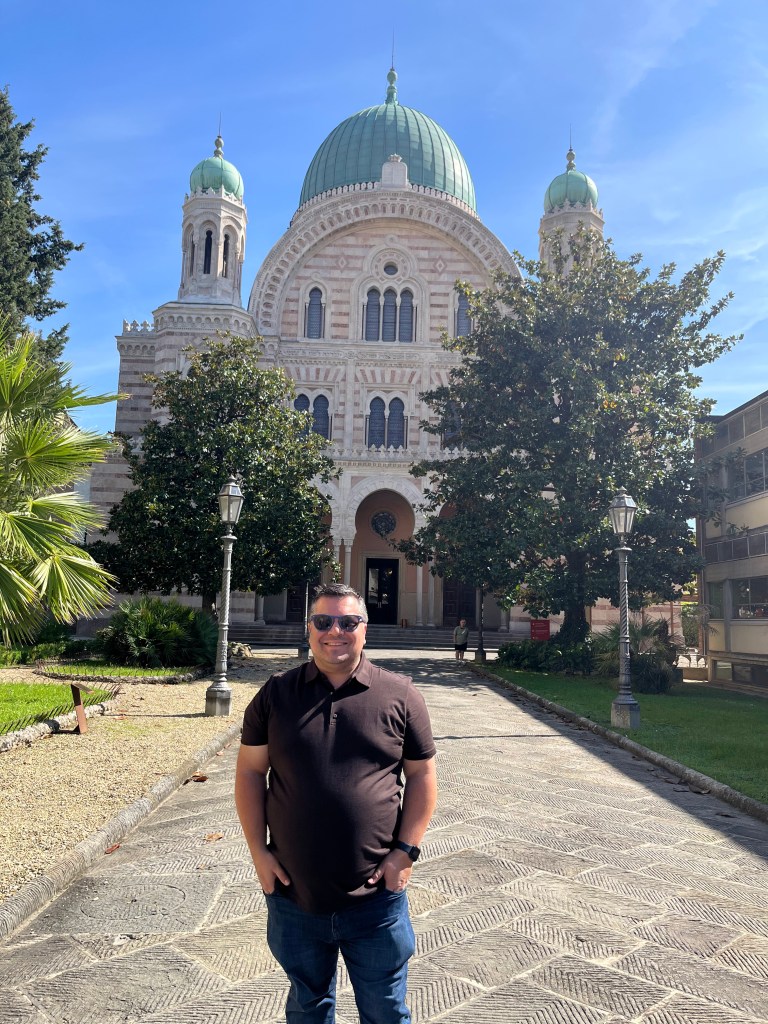
As hard as all this genealogy has been, I think it’s been worth it.  I wish I had known my great uncle, Barney Marcus.  Because he sounds like someone pretty cool.  Someone proud of his Jewishness, a brave American, someone who sacrificed his very future to save another life.  Someone I am proud to call my own.

Europe- Jewish and non-Jewish- you’re welcome.  Barney and I have sacrificed for you to exist.  Like the library I visited today in Leuven, rebuilt twice by the Americans for the people of Belgium.

Jews here have a longer historical memory- though I can’t pretend I haven’t experienced some anti-Americanism from them too (or perhaps playful jealousy fed by delusional interpretations of Hollywood as reality).  But the non-Jews here, although there are some truly admirable ones like Alexis who actually lives in a Moishe House and worked for Jewish radio, they have forgotten.

They have forgotten that Belgium (not to mention France) exists because of the United States- twice.  That Jewish soldiers liberated their countries even as not a small number of their citizens helped deport our Jewish relatives.

Every city on this continent has a “Jew Street”, abandoned synagogue, or largely empty Jewish quarter.  And I’m tired of hearing people say they know nothing about it.

Or in the case of Germans I met, that I should visit Chemnitz, the site of recent neo-Nazi rallies, to realize that the people really are great and they’re just protest voters.

Enough.  Europe- anti-Semitism is your problem, not the Jewish people’s.  Just like racism is not black people’s responsibility to resolve.

I’m willing to pitch in and help educate- and even to learn from you.  Which is why I’m starting a new project, Nuance Israel, to bring together Jews and non-Jews, in Israel and abroad, to learn together.  To build connections between kind, open-minded people.  To help European non-Jews understand their Jewish neighbors- and Israelis.  For Israelis to understand their roots- and the importance of diversity.  For people across cultures to build a new tribe- a mindset of openness, tolerance, and moderation.  Join me.

In the end, I’m done hiding who I am.  Yes, I’m from Washington, D.C., but that’s not where I live now.  I’m Israeli.  And American.  And Jewish.  And gay.  And empathetic.  And a lot of things.  And I’m not a liar.

If you- whether you’re Moroccan or Belgian or whatever- can’t handle that, then too bad.  My family is part of the reason this continent isn’t called Germany.  And I’m tired of your worn-out excuses for why America or Israel are so terrible.

Your social safety net was set up by the Marshall Plan and your economies thrive in part because American tax dollars provide most of your defense.

I’m not suggesting America (or Israel) is perfect- it’s not.  We’re not a shining beacon of light for the rest of the world to emulate- we’re just another country.  But one that does some good.  And has things to learn from you too.

I thought about making a spontaneous trip to La Haye-du-Puits tomorrow to see where my uncle sacrificed himself for freedom.  For Europe, for its Jews, for tomorrow.  On some level, for me.  Thank you, Barney.  Today you gave me a little ray of hope- a connection to someone I’m proud to call my own.

Maybe one day I’ll visit- I’ve long been searching for specific places in Europe my family stepped foot on.  I have some I might visit one day, but I don’t know that I’ve reached them yet.

What I do know is tomorrow I’m hanging with Forster.  A living Jew.  A new friend.  Someone whose own destiny is tied up with my own.

Because even though we’ve barely met, I know we’re both survivors.  That when his family, wherever they were, were resisting Nazi fascism and anti-Semitism, holding on for dear life in the face of deep inhumanity.  My great uncle was working to set them free.  Because wherever we are, we don’t give up.
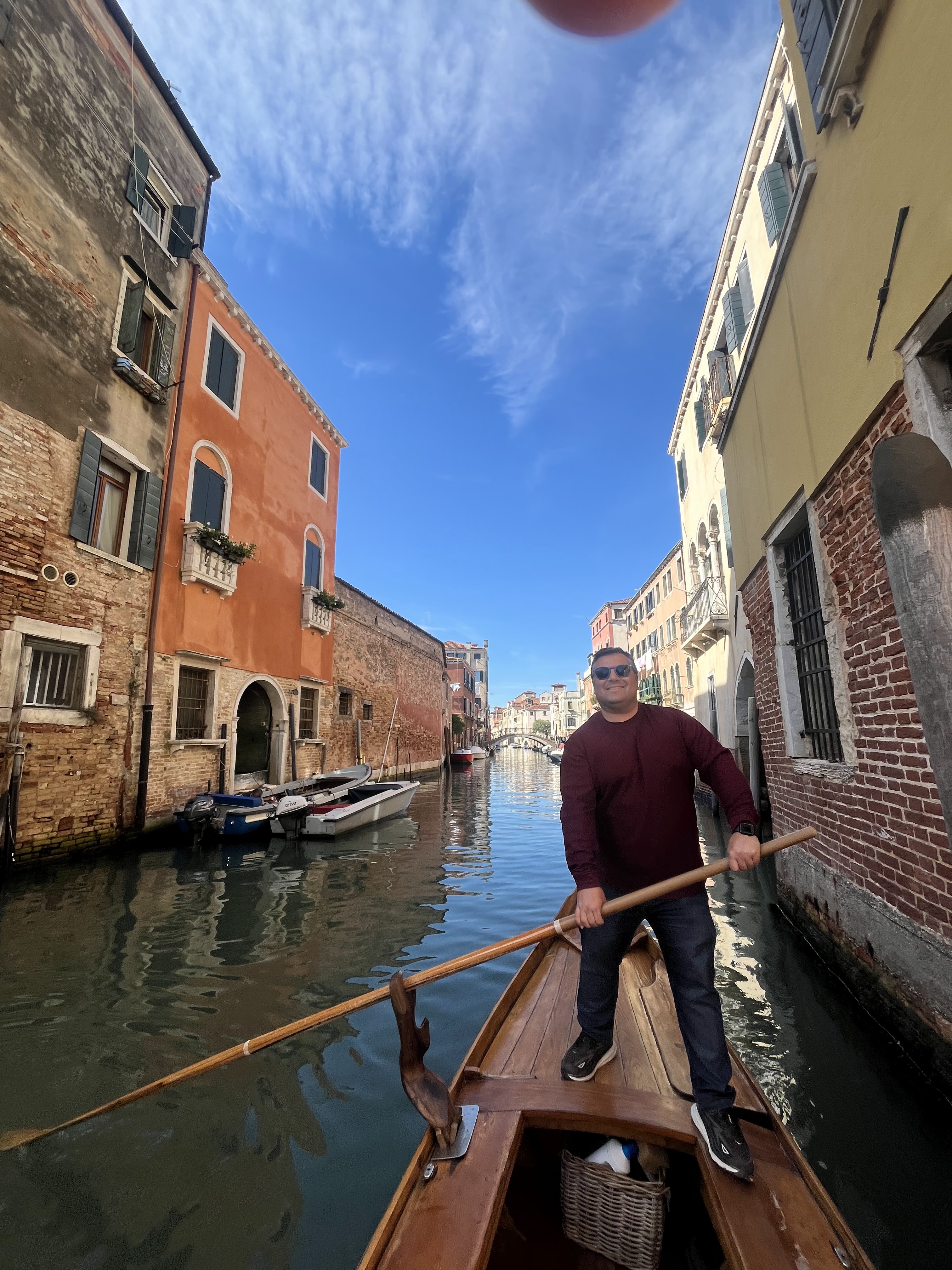
Which is why in the face of the deep inhumanity I’ve faced, especially from within my family, I choose life.  Am yisrael chai, the people Israel lives.
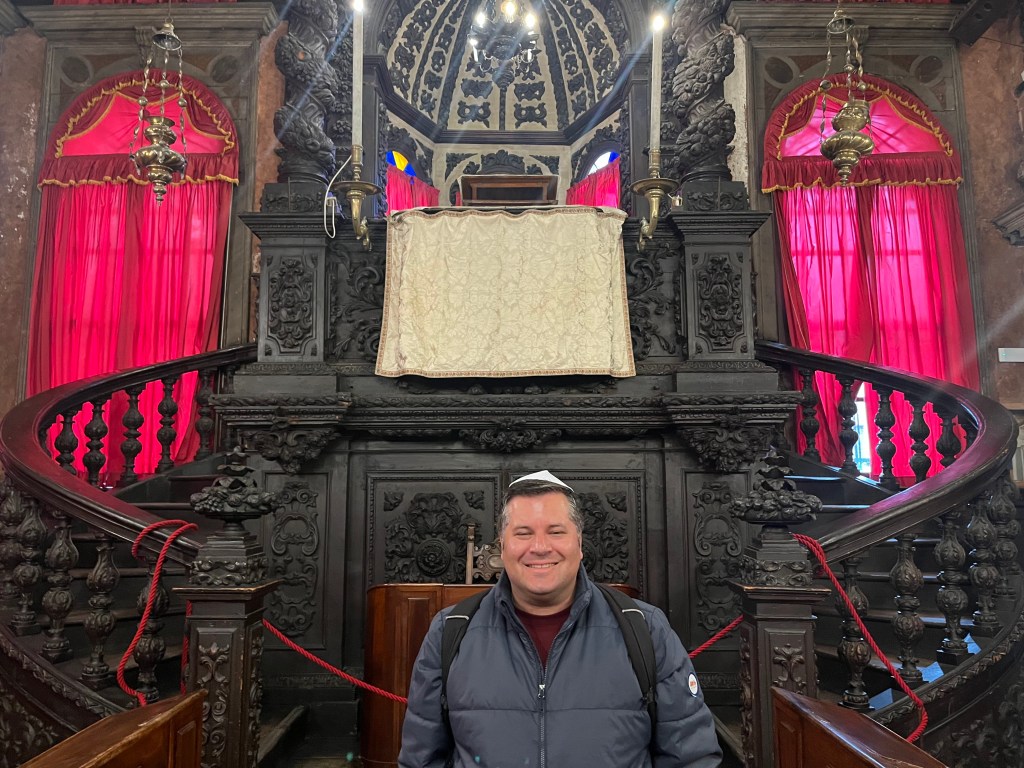
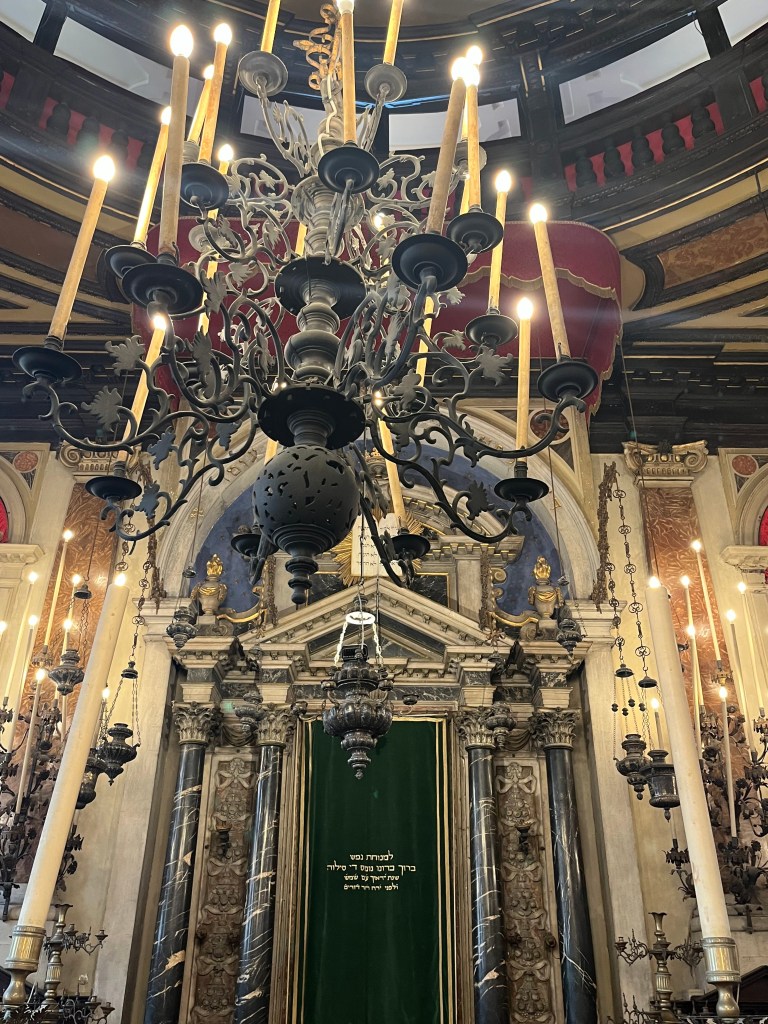
And if you don’t like it, I’m afraid you’ll never succeed in extinguishing our flame.  It burns as bright as the bombs my great uncle dashed between to set your country free.