Gay-friendly Arab, homophobic secular Jew

Recently I was up in Haifa and I met Ahmed, a young Muslim man from Nazareth.  He’s open to marrying a Jew, a Christian, or a Muslim.  When I asked him to keep his eyes peeled for a partner for me, he laughed and said he didn’t know anyone.  And when I said: “that you know of.  Maybe they’re afraid to share it”- he said “maybe you’re right.”  Without hesitation, just an honest recognition that his preconceptions were faulty and he was willing to listen and learn from others’ experiences.  And in the end, he said he’d let me know if he met someone for me.

Sometimes here it can be excruciatingly hard to differentiate between group dynamics and individuals.  The fact remains, despite Ahmed’s kindness, that it is much more dangerous to be gay in a Muslim village here than in largely-Jewish Haifa or Tel Aviv.  Or even Jerusalem, whose Judaism trends more conservative, but only rarely violent against LGBTQ people.  And while these generalizations are important in protecting yourself or at least being aware before entering a place, generalizations they are.

Because individual psychology matters.  And bigotry exists in all quarters- so does hope.  I personally know straight Arabs from Kfar Qasem, the birthplace of the Israeli Islamist movement, who help gay Arabs in their community come out.  In my heavily conservative South Tel Aviv neighborhood, I’ve met neighbors with ultra-Orthodox Shas rabbis pictures all around their houses.  Who then set me up with guys on Shabbat.  On the other hand, in the middle of the day yesterday I walked by two men who laughed out loud at me as I walked by.  At my clothes, my sunglasses, my hair- my “purple shirt”- that’s what they said when I asked.  Was it at me being gay or my difference?  How easy it is to separate the two?  All I know is they couldn’t stop laughing and it hurt.  Just like the teenagers shouting homophobic things late at night while I walked home alone.  I didn’t feel so safe.

Last night, I went to a hippie Shabbat.  I love certain things about my neighborhood and how it can surprise you.  And I love traveling to Arab and Druze villages, where people also have surprised me- like the bi-curious Druze boy.  Sometimes, I just want to be in a place where I can be queer and gay and laugh out loud and not have to be worried about being judged, being exemplary, being offensive.  I can just be me, an individual who is queer and creative and funny and thoroughly myself.

When I say hippie Shabbat, I really mean it.  Dreadlocks, incense, candles, namastes- and Jewish prayers.  It’s really cool and I have never seen anything like this outside of Israel.  Everyone is young, aside from a few 40 or 50 year olds who totally blend in.  Nobody cares.  In America, Judaism often felt so formalized to me.  So ritualized and rigid.  Perhaps if trying to maintain a tradition in the face of a society gobbling it up, it’s necessary to maintain some things for the sake of continuity.  Or because Americans themselves are more formal, it’d seem out of place for a synagogue to sit in a circle and chant Jewish mantras.  There are a few places in American Judaism I’ve seen that are somewhat similar- and they trend older.  Mostly people in their 60s and beyond who still have that renewal, hippie vibe.  But what I saw last night- people meditating and chanting and dancing and veganing all while people’s kids were crying and screaming and cell phones were going off- that was thoroughly Israeli.  And somehow, rather Zen.

A friend of mine brought a guy she was starting to see to the event.  I met him- a secular, pretty vanilla guy from the center of the country.  He had a kind of gentleness to him, a soft speech, a very bland body frame.  His family was American and made aliyah when he was a child.  Young, educated, open enough to try a hippie Shabbat.  We chatted for a bit- he was excited to hear I was American too- he prefers American culture.  Apparently for the politeness which I now find somewhat superficial.

As we were talking, for some reason drag shows came up.  He said: “I don’t have a problem with it, but…” which is always a solid sign that someone does have a problem with it.  He didn’t like that men dressed as women because it’s not “manly”.  And he claimed that that’s because the Torah prohibits it.  While the Torah does indeed prohibit cross-dressing, I’ve never- never- heard a secular person use this argument.  He felt it was disingenuous for a man to dress as a woman on the street because it could deceive someone.  My friend and I patiently- perhaps too patiently- explained to him why this is bullshit- and he just repeated the same argument.  With an odd gentleness of speech for someone spewing hatred.

He then also said he was opposed to same-sex couples, also because that’s written in the Torah.  I explained it’s not- what’s written in the Torah is about same-sex sex, not marriage, and even that interpretation is challenged by Conservative and Reform Jews like me.  Many of whom believe the prohibition was in relation to pagan cults where there was same-sex rape.  And who also believe rules evolve with time.  We don’t stone people anymore either.  It’s also worth noting the Torah does not even mention lesbians, let alone prohibit their relations, sexual or matrimonial.

When presented with these facts- along with the idea that it’s perhaps a bit hypocritical for him to use the Torah to bash gays when he doesn’t even keep Shabbat.  A commandment mentioned repeatedly throughout our Bible.  His answer: “a prohibition is a prohibition.  Where does the same-sex prohibition come from?  Who said it?”

At this point, the conversation was futile.  He doesn’t like gay couples or cross-dressing yet can’t even point to the Bible verse that deals with it.  Nor does he observe anything else in Judaism other than fasting on Yom Kippur.  And yet this secular guy found it convenient to bash my identity based on something he doesn’t even know.  While I have Orthodox friends who study in yeshiva and accept me as I am.  I felt angry, deflated, and sad.  Perhaps proud at how calm I remained despite such provocation in a place I thought was safe.  And angry that I wasn’t showing more anger.

I don’t know if this guy realized I was gay from the outset.  And it doesn’t really matter.  Though by the end, I made it clear.  The point is anyone could be gay- why would you speak with such cruel audacity?  It shouldn’t matter who I am, just that I deserve to be talked to with respect.

I grew up in a deeply homophobic family.  And in many cases, society.  Which can make it hard to find that adequate middle ground where I’m standing up for myself and neither being overly accommodating nor aggressive.  I hope this man takes this experience and uses it to grow and treat others with more kindness than he treated me.  In the one place I thought I would be safe on Shabbat.

In addition to trying to find that healthy space where I’m proud and assertive, understanding and protective- I had another thought.  Nowhere is totally safe.  Even a normal-looking secular guy with a soft voice can use that voice to voice hatred.  And an Arab Muslim from Nazareth can show me great kindness and more willingness to learn than the Jew at hippie Shabbat.  I’ve met Hasidim who chewed me out for being Reform and others who simply accepted me.  I’ve met Arabs who were deeply homophobic and others who were gay themselves.  And afraid their families would kill them.  And others, who help Arabs come out.

Point is this- there is a reason why we Israelis have to generalize about people.  For all the pie in the sky rhetoric I hear from some Americans, the truth is some places- some groups of people- are less safe.  It’s a fact.  A pride flag in Hebron- either the Palestinian or the Jewish side- is not likely to be well-received.  A whopping 4% of Palestinians accept gay people.  And I’ve met some who do.  More Arabs in Israel are open-minded, but it’s still pretty taboo.  And while secular Jews can be ruthless homophobes, it’s usually easier to be gay in that segment of society.

At the same time, I think it’s important to remember we are individuals.  Generalizing serves a purpose- often to protect ourselves- and it doesn’t always match up with the facts.  As a gay Jew, I felt safer in a baklava shop with Ahmed than I did with a secular Jew at a hippie Shabbat.  A sentence I couldn’t have imagined myself saying a year ago.  And here I am.  Because having in-person experiences with different types of people- that’s what helps me stay rooted and realize that generalizing has its limits.  That when it comes to gays, for every society we expect to be safe, there are holes of darkness.  And for every community filled with fear, there are rays of hope.

My cover photo is a rainbow-colored mural in the Bedouin Muslim village of Jisr Al-Zarqa: “hope, culture, creativity”.  That’s what I believe in.

Here are some other photos that fill me with hope, I encourage you to read the captions:

May you go in peace, wherever you go 🙂

The Bi-curious Druze Boy

For starters, to protect the young person involved, no names or identifying information is used in this story, but all the essential facts are true.

The past few days, I went on a trip to what I call the Druze Galilee.  There’s an area largely north of Karmiel where there’s Druze village after Druze village and they’re all absolutely gorgeous.  Here’s a map and some pretty pictures:

Screen Shot 2018-05-01 at 10.49.32 PM.png

It’s a beautiful, peaceful place where I enjoyed practicing my Arabic.  I love speaking Arabic, but due to fanaticism among some sectors of society, I can’t speak it comfortably everywhere especially as a Jew and as an Israeli (and sometimes even an American).  What’s great about Druze villages is they, by and large, wholeheartedly accept me as a Jewish Israeli and are thrilled to see a Jew taking interest in their language and culture.

Early in my trip, I was walking up a hill and a young man, 17 almost 18 years old, pulled over his moped and said hi.  As with all my stories from this trip, pretty much everything was in Arabic with a sprinkling of Hebrew.  He asked where I was going and offered to get me in the right direction.  So I hopped on with him and he drove.

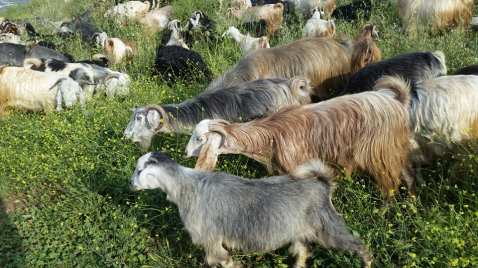
I felt free, riding around in the countryside, babbling in Arabic as the wind swept across my face.  A young Druze boy showing me around his beautiful neck of the woods.  Couldn’t get better.  I asked him to pull over to take some pictures.  He begged me not to get off- “we could go for a trip!”.  I asked him to wait a second as I took some pictures.  Because suddenly there were goats in the way!  Tons and tons of goats!  I was so excited- having spent most of my life in cities, it was pretty exciting to see goats on the road!

31641871_10101761611433392_5290224149952349447_n

While I took pictures of the goats, the young man started asking me questions- questions I often get from young Arab kids here.  “Do you have a girlfriend or boyfriend in Tel Aviv?”  I said no.  “But if you had one, would it be a boyfriend or girlfriend?” he said with hesitation.  “Boyfriend,” I said.  “Boyfriend?  Like male or female?  Or like the ones who change their gender?”  “Nope, just a boyfriend.  A man and a man together.”

I waited for the reaction.  It was a gamble on my part.  We were pretty much alone on a wooded path at least 100 meters from a main street.  I know absolutely nobody in the area.  He has a moped and I have…a cellphone?  In the end, you don’t know how people will react.  Druze, while extraordinarily accepting of my Judaism, are known for being quite socially conservative including on gay issues.  Not like certain right-wing Christians in the U.S. who try to influence the law because of it.  But conservative nonetheless.  And I was the only Israeli Jew for several miles around.  I had never been to this part of Israel.

Trusting my good instincts and what seemed to be his good nature, I stood there with him, next to his moped.  And it turns out, I not only made a good choice, I may have done a mitzvah.  A good deed.  He continued to ask me all sorts of questions about gay people and my life.  Dating, romance, sex, even the wild world of the internet.  Of course some things I just wasn’t comfortable sharing- to respect my privacy and to remember that he’s 17 years old.  But I did share what I thought was relevant and helpful and appropriate.

After the 20th question, I asked him: “are you asking me these questions because you yourself are curious?”  And he said: “maybe…could we do something?”

I smiled.  On some level, I was flattered.  Also intrigued that this guy knew I was gay simply by meeting me on the street.  And that he had a comfort level to ask me these (sometimes invasive but well-intentioned) questions.  We had a nice moment.  It makes me smile to think a Druze teenager propositioned me.  17 year old me would’ve loved such a moment.  If I weren’t being abused by my family and subjected to rabid homophobia at school, in sports, even sometimes in synagogue- I would’ve come out sooner and maybe I could’ve had more high school romances.  Maybe even with a Druze guy!

And the reality was that I was 32 and he was a minor.  I wanted to be supportive of his desire to learn more and also had to draw some clear limits.  I explained to him why we couldn’t have sex and he was disappointed.  He asked me: “there are other guys in the village- they have sex with men, but I’m not sure they’re gay.  If I have sex with a man, does it mean I’m gay?”

I told him: “you have to discover that for yourself.  Some people try things and it’s more of an experience.  Some people feel it fits them.  It’s up to you.”

I thought back to an earlier part of our conversation when he asked me how I knew I was gay.  I’ve gotten this question millions of times from liberal Americans and it frustrates the hell out of me.  Nobody asks them when they figured out when they were straight.  Because it’s something you feel, it’s not something you wake up in the morning and decide.  The only reason we have to discover it is because society assumes we’re not gay from the day we’re born.  And we have to uncover an identity hidden from us, that nobody will bestow upon us.  After often years of estrangement, many (though not all) of us come to realize who we are and what we like.  It can be exhausting and quite hard.

Before I realized this young man was curious about his own identity, I had told him: “well, I know I’m gay just like you know you’re straight.  You just are.  How did you know you were straight?”

And then I realized: he didn’t know.  He doesn’t.  And he may never know.

This young man was not any old Druze.  He’s a religious Druze.  There are secular and religious Druze- the latter take on many more responsibilities along with special dress and customs.  He’s dated girls some and seems to like it- I’m not sure to what extent.  If he lived in a more liberal society, perhaps he’d be out by now.  I don’t know.  Maybe he’s bi.  Maybe he’s gay.  Maybe he’s straight and just trying things out.  I don’t know.  And I hope, even with the pressures of the society around him- a society I love dearly- that he can figure out the best path forward for him.

If that’s coming out and risking family disapproval or being cut off- I wish him well.  He did mention one family in the village that had a gay son living elsewhere in Israel with a boyfriend- who accepted him.  That’s pretty awesome.  Maybe he’ll get married and have trysts (or maybe not)- I hope he’s happy.  I’m not here to judge him.  It’s hard to straddle multiple identities- and in the case of being Druze and (maybe) gay- it must be difficult.  You shouldn’t have to give up one part of yourself to be another.  And the reality is negotiating that balance, as hard as it is, might be worth it.  I pray for his well-being and his happiness.

I saw the disappointment on his face when I said no to a romantic tryst in the woods (but readers- I am single, so if you’re of age, I do like the idea of kissing under a cedar 😉 ).  I bid him goodbye with this blessing: “good luck habibi, bnjaa7!  find someone your age 😉  It’ll be OK”.

He smiled as he went down the mountain on his moped. Teenage Matt and Matah were smiling.  I hope I did for him what I wish more people had done for me at his age.

My milkshake brings all the Druze to the yard.  Now if only I can find one my own age… 😉

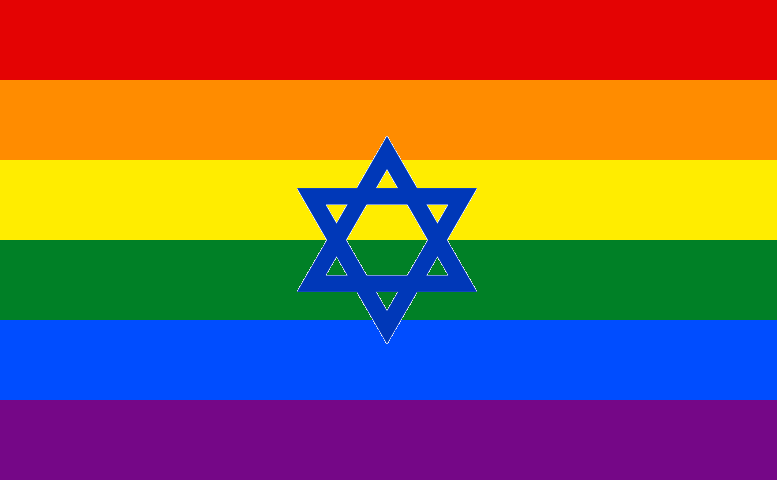
P.S.- the cover photo isn’t a pride flag, it’s a Druze one!  Now tell me that beautiful rainbow flag wouldn’t look fabulous in a pride parade some day carried by some exceedingly hot Druze guys? 🙂

Independence from black-and-white thinking

Today concluded my first Independence Day as an Israeli.  And the first one I’ve celebrated on my homeland’s soil.  It was an independence day for me, a chance to declare my freedom from my own oppressors.  To celebrate my progress.  It was a day to rejoice.

Rejoice I did- I danced to Mizrachi music in the streets, I hung out with friends, I wore my Israeli flag as a cape, I got congratulated for becoming Israeli many, many times.  There were goofy people dressed up as Israel’s founding mothers and fathers.  There was fun.  We deserve a day to just have fun and be proud of our accomplishments.  In 70 years, we’ve managed to do more than some countries do in 200- and under the near constant threat of destruction.  Just today, I was grocery shopping and read a newspaper article while in line.  About Iran wanting to attack us from Syria.  Welcome to life in Israel, where every day we’re alive is a victory.

At some points, I felt I should be happy but wasn’t quite as happy as I thought.  Maybe it was when the tour guide at Independence Hall said: “we’re all Jews here, so feel free to interrupt.”  I totally get the sense of humor and I had to wonder how the Filipina woman and her child behind me felt.  Or perhaps a Druze man sitting in the back.  I think growing up in the Diaspora made me more sensitive to including others- we have some work to do here.  Because most of us are Jews- and not all of us are.  And we all deserve a seat at the table.

It got me thinking.  I really wanted this day to just be about celebrating Israel.  All year long we talk politics and people around the world hammer us for problems both real and imagined.  It can be hard to tell whether some foreigners are criticizing us out of a desire to make this a better place or because they single us out and want us to fail.  Trust me- I’ve met both kinds of people.

So I wanted to just enjoy.  And at some point, I realized nothing is 100% happy or sad in life.  In the Passover Seder, we dip our fingers in our joyful wine 10 times- once for each plague.  We put that wine or grape juice on our plates to symbolize our empathy for innocent Egyptians who suffered on our way to liberation.  No Jewish holiday is black-and-white, we’re a people who knows how to meld the bitter and sweet to the extent that it can be hard to even untwine the two.

The most obvious elephant in the room on Yom Ha’atzmaut, our Independence Day, is the Palestinians.  We are neighbors and the people right across the border have no independence day.  The reasons are complex- and it would be incorrect and even prejudiced to suggest that all of the blame falls on one side of the fence.  And it’s sad that while I’m celebrating today, some Palestinians are mourning what they see as a catastrophe.  The creation of my state.  While they still don’t have one.

I can empathize with why this day is hard for Palestinians (and Arab-Israelis/Arab citizens of Israel).  For someone whose village was destroyed in 1948, sometimes purposefully sometimes not, this day must be rough.  And the wound is still unhealed as our region has been in a near constant state of war for the past 70 years.  With bloodshed all around, including 37 soldiers from my neighborhood alone.

I also wish my neighbors across the border would try to understand why we’re celebrating.  I’ll tell you personally- I’m not celebrating the destruction of any village.  I’m celebrating the fact that I feel free here as a Jew.  Even in America, I’d feel scared or embarrassed to walk around with a big Israeli flag on my back.  In America, I felt self-conscious as a Jew.  Laughed at, picked on, discriminated against.  I felt my Judaism belonged in synagogue or a community center, not on the streets.  The idea of praying in public or being visibly Jewish was scary and anathema to what I felt we were supposed to do to be “respectable” and “cool”.

In Israel, we also have Jews who survived the Holocaust, with no family members, only to build new families here.  Some of whom then lost their children to terrorism or war.  We have Jews here from Egypt whose government stole their property, robbed them of citizenship, and kicked them out.  Just for being Jews.  And now they’ve managed to build themselves a new life and home here.  The place that would offer them refuge, no questions asked.  A miracle.

You can go through this story with just about any Jew here.  This is the only place on the planet where I feel safe being a Jew.  An out-of-the-closet Jew.  For 2,000 years we’ve been at the mercy of whatever ruler we lived under.  And all too often, turned into scapegoats like Roma/Gypsies or African-Americans- and suffered the violent consequences.  Here, we are empowered to choose our own fate for the first time in millennia.  And we’re not going to give it up.  Our greatest threat is our greatest strategic advantage- we have no other place to go.

As Israelis like to say, living here is “lo pashut”- it’s not simple.  And they’re right.  When I saw a person dressed up as Ben Gurion today, I was laughing and also thinking back to when he derided Yiddish.  When I celebrated by dancing to Mizrachi music in my neighborhood last night, one of the women said: “I want to go to America, it’s terrible here.  Well, it’s not the Jews who are terrible…”.  I empathize with her- there are a lot of reasons why a Mizrachi Jew might be prejudiced against refugees or Arabs, as I’ve written about.  And I also hate it.

I am proud to be Israeli.  I love my country and its people.  I’m blessed to be a Jew and I think we have contributed so much to the world and this region.

I’m also sad that many of my Palestinian neighbors live in deep poverty, are ruled by the corrupt Palestinian Authority and Hamas, and are subject to a largely unaccountable and undemocratic Israeli control over their lives.

And I’m sad that Arab-Israelis are basically caught between the two worlds because to a degree they identify with both.

I’m sad that refugees are discriminated against and might be deported.  And I’m sad that their neighbors- my neighbors- have been utterly neglected by the government for 70 years, fomenting their anger.

I’m sad that as a Reform Jew I have no religious rights here.  I have more rights in the States.  I’m sad that as a gay person, I can’t adopt children.  And I’m grateful to live in the only place in the Middle East where being gay is not only legal, it is accepted by a large part of the population.  According to one poll, 40%+ of Israelis say we should accept homosexuality.  The next closest Arab country is Lebanon at 18%.  Palestinians come in at 3%.  Those numbers also obscure a lot of gray space (including among Palestinians).  My city, Tel Aviv, is one of the gayest places on the planet and has a city-funded LGBTQ center.  Almost 80% of Israelis support gay marriage or civil unions.

In the end, living here is complex.  I’ve learned to become a more empathetic and textured thinker by living here.  If you want to come here and try to break things down into good and evil, right and wrong, black and white- you’re coming to the wrong place.  Like the Bedouin man married to a Jew who converted to Islam and are raising their kids in a Jewish school.  We are awesome and diverse and not easy to fit into a box.  So put down your placards and get to know us before boycotting us or telling us we’re all fascists.  While you sit on Native American land or, in the case of Europeans and some Arabs- on our Jewish property.  Life is not so simple when you start to empathize with everyone.

And it makes it much richer.  So on the 70th anniversary of Israel’s founding, let’s declare our independence from black-and-white thinking.  When you start to live in the gray space, you start to realize it’s not gray at all.  It’s the many, many colors of the rainbow.  Each with is unique shade.  Sometimes too bright to stare at, and often too beautiful to gaze away.

In a note to my American friends struggling with a difficult time in history, join me in embracing the complexity.  Get to know your Appalachian neighbors, gun owners, evangelicals- people you don’t agree with.  Not to convince each other or approve of toxic behavior.  Rather, simply to understand what might cause someone to think that way.

Embracing complexity can bring with it a lot of emotions- sadness, fear, joy, anger, hope.  It is eye-opening and sometimes even overwhelming to see the full spectrum of humanity.  The easy solutions don’t look so easy and sometimes, I feel as helpless as I do empowered.  At that point, I invite you to learn from Israelis.  Because what Israelis are astoundingly good at is just letting go.  Give yourself a chance to celebrate- anything.  Because all people- no matter the race, religion, or country- we all deserve time to celebrate.

Happy birthday Israel.  May year 71 bring us, our friends, and our neighbors peace, prosperity, hope, and strength.

I love you Israel.  When I criticize you, it’s because I want to make you better.  I’m glad to be home in your arms.

Am Yisrael Chai.

30704776_10101754173733602_4239613470407884629_n

Bedouin Arabic…in Hasidic Bnei Brak

Yes, the title is exactly what you think.

As an appropriate sequel to my blog “Bedouin Yiddish“, in which I discovered a Bedouin man who speaks Yiddish in Rahat, I found Bedouin speaking Arabic in Bnei Brak!

Before we get to that, let’s start at the very beginning.

Today, I was planning on visiting the West Bank.  Area C, where Israelis can visit, is where I’ve made contact with a Palestinian practitioner of non-violence who partners with Israelis (including settlers).  However, feeling rattled after yesterday’s “preview of a terrorist attack“, I decided I wasn’t in the right frame of mind to make the most out of the experience.

Instead, I made my way to Bnei Brak.  I’ve written a lot about this Haredi city of 200,000 people on the doorstep of Tel Aviv.  My first Haredi hug, my first time praying in a Hasidic shtiebl, Satmar Yiddish newspapers, the hot guys, and the time I got a blessing from a Vizhnitz Hasid.

Speaking of Vizhnitz, that’s exactly where I went today.  Kiryat Vizhnitz, named after the town in Europe where the Hasidic dynasty was founded, is a part of Bnei Brak I knew less about.

Knowing that there was a renowned Vizhnitz bakery AND a Yemenite Haredi bookstore, I knew this was my destination for the day.  Quench the thirst of my soul and my stomach!

I started at Nosach Teiman, a Yemenite Jewish bookstore and Judaica shop.  The riches of this small store are innumerable.  I bought loads of Yemenite music, a Judeo-Aramaic calendar (!!), prayers written in Judeo-Arabic, and a book of Judeo-Arabic expressions translated into Hebrew.  It does not get any better than this.  Here are some pics:

They even had Yemenite Jewish clothing, make-up, and perfume for sale.  For a community that had to escape by the skin of its teeth from fanatical neighbors who wanted to exterminate them, they’ve sure done an amazing job of preserving their culture upon arriving to Israel.  While unfortunately fewer and fewer Yemenites here speak their unique language, I did hear a few words in the store- which I could mostly understand with my Arabic!

Energized, I headed to the Vizhnitz bakery, sure that I’d also find new adventures on the way.  On my way there, I came across several yeshivas.  The first, a Sephardic one, where I got a free book called “Mishnah Brurah”.  It’s old and beautiful- and free.  Bnei Brak is one of the few places on the planet where you’ll find timeless beautiful books simply sitting outside waiting for you to grab them.  For free or minimal cost.  These are the Jews who truly continue to embody that we are the “People of the Book”.  Looking for Jewish knowledge?  Skip Amazon and head to shuls in Bnei Brak.

Down the street, I saw the Belz Yeshiva.  There’s a famous song about the shtetl, or Jewish village, of Belz that once existed in Eastern Europe.  So to see the town recreated in front of my eyes- its Jewish presence in Europe exterminated- was awe-inspiring.  As Holocaust Remembrance Day approaches in Israel, I couldn’t help but let out a huge smile.  As the famous Yiddish resistance song says: Mir zaynen do.  We are here.  In the face of Nazi persecution, Christian annihilation, Islamic fundamentalism, ever-shifting anti-Semitism on both left and right- we exist.  We survived.  We. are. here.

To see my heritage continue in the face of 2,000 years of European brutality is a miracle.  It fills me with hope, wonder, amazement, and joy.  Our mere presence is a victory in and of itself.

I headed to the bakery with a fulfilled soul and a hungry stomach.

The bakery was delicious.  It was nothing but challahs left and right.  Some huge, some small and all a bit sweet.

While I noshed on my challah, I noticed something interesting- a sign with baking instructions in Arabic.  Bnei Brak is 1000% Jewish.  A mixed city this is not.  A secular person moving here would be considered a mixed population.

Then I noticed a tan-skinned man yelling in Hebrew at a Hasid.  Something about business.  Given how everyone yells in my neighborhood- even when not angry- I didn’t make much of it.  Must just be a Mizrachi guy who does business with Vizhnitz bakers.

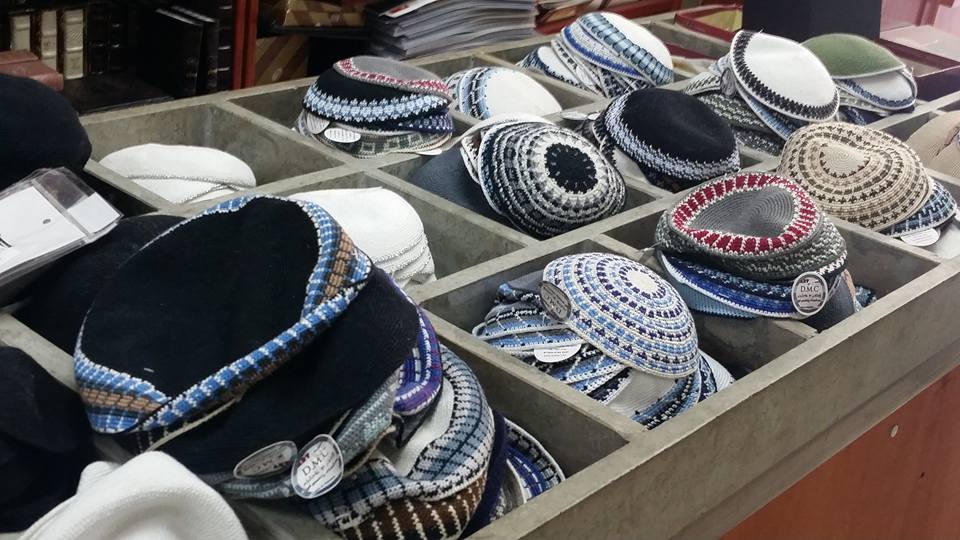
Then I heard the most unexpected thing ever: Arabic.  And not Yemenite Judeo-Arabic.  Arabic from here.  I approached the tan men in Arabic.  Their eyes widened with excitement and surprise.  You have to remember I’m wearing a black yarmulke, a kippa, a head covering.  I look, for all intents and purposes, Modern Orthodox.

Turns out, they’re Bedouins.  I told them I had been to Rahat (where I discovered the Yiddish speaker).  They said they lived in a nearby town of Ad-Dhahiriya, whose name at first I confused with Nahariya, a city in the North of Israel.  Only once I google its name right now did I realize…it’s a Palestinian city.  In the West Bank.

We had a great talk about the Bedouin dahiyye music I like (they’re going to teach me the dance next time) and I was proud to hear, as I walked away, them say “wallahi bye7ki 3arabi mnee7”.  Wow he really speaks Arabic well.  My smile inside and out could not be bigger even as I write this now.

While Yemenite Arabic in Israel is struggling, I found Bedouin Palestinians who are keeping Arabic alive in Bnei Brak.  While my trip to the West Bank didn’t happen today, I did end up meeting Palestinians.  And having fun.  And hopefully warming a few hearts, like they did mine.

Still hungry, I grabbed a sweet for the road.  The man at the store turned out to be a fellow polyglot.  He spoke Hebrew, Yiddish, French, and English.  And a straight-up Haredi Jew.  We shared a fantastic short conversation in all languages.  I bet you didn’t expect that in Bnei Brak.  Or the gluten-free falafel I found.  Or the multilingual dictionaries for learning Arabic, Hindi, Chinese, Italian, Spanish, Farsi, and Yiddish (the latter possibly for Mizrachi Jews).  All alongside a side for “kosher” phones that filter out “non-kosher” content.

What I hope you take from this adventure is the unexpected mystery and glory of finding new places and new people.  Bnei Brak is an awe-inspiring place.  With things that will surprise you if you open your mind and heart to the possibilities.

On my way back to Tel Aviv for a Eurovision concert headlined by Dana International, Israel’s first transgender superstar, I felt sad taking my yarmulke off.  I like my black yarmulke.  It suits me.  Not as a decoration and not just as a sign of respect for Bnei Brak.  But because I like that part of me.  That heimish, passionately Jewish, bookish, dancing-down-the-aisles Matt.  The Hasidic part of me.  The Haredi part of me.

And I don’t like feeling that I need to take it off when I come back to Tel Aviv, especially at an event with a lot of gay people.  Who- and I understand why- will be afraid to talk to me because of it.

This is what I hope we can one day overcome- on all sides.  I long for the day when I can be a gay Hasidic Jew- with the flexibility to still pray Reform and to go to gay parties.  And find a gay partner.  I long for the day when secular gay people will accept my passion for Judaism, including Orthodox Judaism, as a part of me.

I shouldn’t have to sacrifice bits of my soul to keep other people happy.  Nobody fits into a box- boxes are boring.  I’m glad I explore different things and my life is much, much richer for it, even with the challenges.

When I go to Bnei Brak now, I’m not just a visitor.  I know this place.  And I like some of it.  I hope it continues to passionately preserve its Judaism and I hope it can find ways to be more inclusive of people like me.  And I don’t know how possible it is to do both.  I would like to try- I suppose I already am.

So next gay party, don’t be surprised if I put on my yarmulke for a bit- just to see how it feels.  And to see how you react.

And next visit to Bnei Brak, don’t be surprised if I linger a bit under your city’s rainbow-colored flag to take a selfie.  Because inside it feels really queer.

Just like speaking Bedouin Arabic in the middle of a Hasidic bakery.

30516213_10101746604043322_7992752775041405545_n

A New Year’s Resolution for Israel

Today is the secular new year.  In Israel, fittingly but quite strange for me, they say “shanah tovah”, the typical Jewish greeting for Rosh Hashanah- the Jewish New Year.  It’s a fun night of celebration and also a chance to think of what’s ahead.

For me, this week marks my 6 month anniversary of arriving in Israel.  I’ve learned so much in such a little amount of time.  I’ve visited over 35 cities.  I’ve been to Hasidic dance parties, Mizrachi concerts, dabke dancing, Israeli folk dancing, Yiddish theater, a Russian puppet show, and a Yemenite concert.  I’ve eaten Bukharian, Moroccan, Persian, Ashkenazi, Romanian, Druze, Arab, Kavkazi, Georgian, Indian, Iraqi, Lebanese, Eritrean, Filipino, and so many other types of food.  I’ve davvened with Haredim, Reform Jews, Chabad, and hippie vegan Jews.  I visited a Druze shrine and a Karaite synagogue.  I got to watch Islamic prayer up close and personal in a mosque and I went to an LGBT Orthodox Torah study group.

Not bad for the half year mark!  I’m quite proud of all my accomplishments- moving across the ocean alone, making friends, finding an apartment, adjusting to a new culture, and using all nine of my languages and starting to add Greek!

There has been a lot of stress along the way.  Israel is an extraordinarily hard place to live- or so say Sabras who grew up here.  And while sometimes they exaggerate because whining here is kind of a national sport (and they don’t know much about the challenges faced by people elsewhere), the truth is in many ways they’re right.  And it’s all the more difficult for someone like me who moved here at 31 without an extensive support network.

What’s hardest about life in Israel is also the source of my New Year’s resolution.  The hardest part of life in Israel is the people.  More specifically, the intense and mean-spirited prejudice I experience on almost a daily basis.  Towards me as an American and towards other cultures- especially within Israel.  Don’t get me wrong- there are some fantastic people here, who mostly join me in complaining about the awful ones.  But boy- there is a mean streak to Israeli culture that I haven’t seen elsewhere in the world.  It’s not because I haven’t seen prejudice elsewhere- I’ve experienced it in places like Spain (anti-Semitism), Argentina (homophobia), and the U.S. (all of the above).

The difference in Israel is the intensity and the degree to which many people here celebrate judging others.  I’m someone who deeply values multiculturalism.  I’m well aware that there are limits to it and questions about how far it should extend.  But the basic principle of respecting- at times embracing- parts of every culture to me is second nature and a fundamental way I live in the world.  The good news is Israel is chock full of interesting cultures.  Sadly, that most Israelis know nothing about- and don’t care to appreciate.  While some Israelis are curious about Berlin or America, few are particularly curious about their neighbors who look or talk differently from them.  Let alone their own roots.

The truth is when the State of Israel was being built, its founders despised (and that is not too strong a word) multiculturalism.  Yiddish, Ladino, Judeo-Arabic- these languages were vigorously and shamefully repressed by the state.  Kids grew up with shame about their roots.  And sadly some 2,000 year old beautiful Jewish cultures are going extinct as a result.

The un-rootedness of many Sabras fosters insecurity and prejudice towards those who maintain their heritage.  Just ask many a Sabra what they think of French Jews or Russians who continue to speak their languages here.

There has been somewhat of a resurgence in interest in cultural diversity, but it needs to be nourished.  And that’s where I- and you- come in.  There are Israelis like me who are proud of our origins.  There are Israelis- I’ve met them- who realize you can speak fluent Hebrew and still maintain (or re-learn) your French or Russian or Arabic or Romanian.  There are many who don’t realize that because they’ve been trained to revile the Diaspora.  And that’s very sad.

But in the end, I believe in multiculturalism and I’m convinced there are some people here who are ready to join me in this movement.  I want to celebrate the incredible cultural richness here- of Jews, of Arabs, of refugees, of everyone.  It is a gift that must be cherished to be protected.

It is no longer acceptable to me that when I tell my Sabra friends that I met Aramaic-speaking Christians or Samaritans who speak Ancient Hebrew or Eritreans with an awesome juice bar that their reaction is: “wow I didn’t know that was there- you’ve seen more here in 6 months than I’ve seen in a lifetime!”

Bullshit.  Time to get off your hummus-filled tuchus and get to know the richness of your country.  No- not the high-tech.  The cultural treasures right underneath your nose waiting to be discovered.

It’s time to leave behind the old-fashioned Zionist concept of the “effeminate”, “decadent”, “overly pious”, “cosmopolitan”, “weak” Diaspora Jew.  It’s 2018, time for a change.  It’s time to realize the “Diaspora” is The World.  And lucky for us, a whole bunch of people from all over the world have made this country their home.

Now it’s time to realize that if we understand where we came from, our cultures, our heritage- it doesn’t negate our Israeli identity.  It thoroughly enriches it.  Just like my delicious cover photo of Pringles, Russian sweets, Korean seaweed, and Israeli Bissli that co-exist at my neighborhood store.  Pluralism that begins with culture can increase respect between all sectors of society.  And instead of Jew hating Arab hating Zionist Orthodox hating Haredi hating Secular hating Mizrachi hating Ashkenazi- maybe, just maybe, we build just a little bit more understanding and a lot less hate.

Ken yehi ratzon – may it be God’s will.  Inshallah.  Ojalá.  Mirtsashem.

Let’s do this y’all. 🙂

My Queer Sarit Hadad Party

First off, who is Sarit Hadad?  Sarit Hadad is the queen of Mizrachi music, one of my favorite styles of music.  Perhaps my very favorite.

When I was 13 years old, as a typical American Jewish teenager, I had a Bar Mitzvah.  At this point, many a kid drops out of Hebrew school and doesn’t return to synagogue except for maybe Rosh Hashanah and Yom Kippur.

I, on the other hand, loved Hebrew school.  I had several truly awesome teachers and I think my energy and passion for my tradition made me a favorite student.  Especially since so many kids hated it!

When I finished my Bar Mitzvah, I knew I wanted to keep learning at synagogue.  But I wanted something more- I wanted to learn the language of my people: Hebrew.

I approached an Israeli teacher and asked if she’d give me private lessons.  She did- and that’s why I speak pretty baller Hebrew for someone who’s lived in Israel for 6 months.  Because at age 13, I knew that’s what I wanted and I went for it.  It’s a unique and brave decision that changed my life.  Without it, I doubt I would’ve made aliyah.

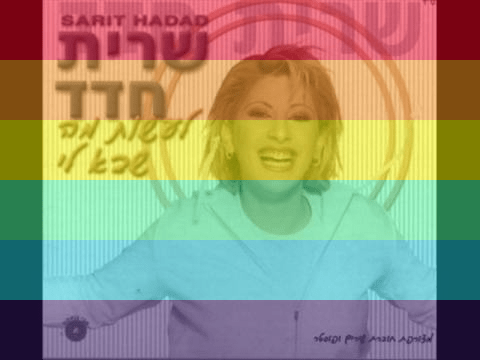
I remember that my Hebrew teacher gave me a gift- I forget for what.  Maybe her sister had been in Israel or something.  In any case, she gave me a CD- one of Sarit Hadad’s first albums (the one in the cover photo- the rainbow is my addition 😉 ).  She herself wasn’t a fan (of the music or Mizrachim), but it didn’t matter- I loved it.

The CD moved.  It moved me physically- the rhythms were infectious.  I danced all over my room and blasted it in my discman.  It moved me emotionally- her songs were about empowerment and love and doing what you feel like.  Growing up with an inescapable bunch of toxic relatives, it was just the medicine I needed.  And it powered me through many hard times and gave me hope and happiness.

A couple years into my Hebrew lessons, I found out Sarit Hadad was coming to Rockville, Maryland- where I grew up.  She was performing at Montgomery College in a small auditorium.  And at age 14 or 15- I went.  Alone.

And I had the time of my life.  Me and mostly a bunch of Israeli expats shimmied and danced and sang.  It was freedom, it was love, it was my newfound identity.

Over the years as I learned more Hebrew, saw more Israeli films, traveled to Israel, made Israeli friends, ate the food, and embraced the culture- the Mizrachi music Sarit inspired me to love was there.  Every step of the way.

As Sarit became more popular, her songs got more and more poppy (and less and less Georgian/Arabic/Mizrachi).  Personally, I love her old stuff the most- the CD of her live show in France is one that I played over and over again in my living room as a teenager.  I also used to (and still do!) belt out her old version of Inta Omri.  It’s incredible- I watched it with my Syrian neighbors last Shabbat.

In addition, as I explored other Mizrachi singers (and I more and more associated Sarit with some of the tougher times in my life), I drifted a bit from her music, although it was never far.  Her songs were particularly popular at Israeli dancing, which I’ve done for some 15 years.

Which brings us to tonight.  On Facebook, I found a party that was entirely dedicated to songs by Sarit Hadad.  While not an explicitly gay party, it definitely had that vibe (both by featuring a female singer and the way it was advertised).  In Tel Aviv, many parties are mixed queer and straight.

I was ecstatic but unsure of what to expect.  I went alone- which is hard in any country, especially a new one.

And boy did it pay off.  Once the music started booming, I found fun people to dance with.  Over the course of about 3-4 hours of Sarit’s songs (and some other singers), I think there were 2 or 3 songs I didn’t know the words to.  It brought me back to the earliest days of my Israeli identity and to my teenage passion for it.  It brushed the dust off and brought them back into my heart.

And yes, there were a shitton of queer people, which only made it more awesome.

I shimmied, I swiveled my hips, I shook my bootay, I waved my hands, I shouted every single lyric.  And it was fabulous.

As I headed home, I thought about this amazing transformation.  How music I listened to 18 years ago helped sustain me, build me an Israeli identity, and bring me to this very country to enjoy it, against all odds.

Like Mizrachi music, like Sarit herself- I am a survivor.  I’ve done the unthinkable in making aliyah and building my Israeli identity from the 7th grade- pretty much on my own (and often with the opposition of toxic relatives).  And despite the cries of the loads of Israelis who hate Mizrachi music- often for prejudiced reasons- I love it to death.

Because sometimes Israel sucks.  Air raid sirens, bureaucracy, terrorism, racism, and not a small amount of difficult people.

But you know what?  Israel is also tonight.  Israel is the free-spirited fun of Mizrachi culture.  Israel is me looking back at 13 year old Matt Adler and saying- it’s going to be okay.  Because no matter how bad things seem now, you’re going to power through, you’re going to pray, you’re going to dance, you’re going to listen to beautiful music.

And you’re going to make it like Moses to the Promised Land.  To spend the night of your life dancing to your teenage tunes- the ones you chose to listen to.  Among queer people.  Among your people.

And nothing, my friends, is sweeter than that.  I’m here, I’m queer, kululu!

South Tel Aviv is the Best Tel Aviv

Some of you may know that a couple weeks ago, I finally found a long-term apartment.  Everything about my identity- being Reform, being American, being progressive, and being queer- should lead me to live in the more secular center and north of the city.  But I feel utterly blessed that I ended up in the south.

When I first moved to my neighborhood (whose name I won’t reveal over the internet), I was apprehensive.  I knew absolutely no one there and there were posters advertising Shas concerts everywhere.  There are almost no young secular/Reform Ashkenazi people and I have yet to see a pride flag.  There are no pubs, nightclubs, cafes with WiFi- it is quiet.  Part of that is the beauty of the place and why I chose to live there.  Though at times, it was so quiet I felt lonely.

Today, I had no plans for Shabbat.  I had plans Saturday night, but during the day I figured I’d wander around and get to know my neighborhood.  And then I heard a boom.  And a tap tap.  Boom. And a tap tap…it was a darbuka!  I stepped outside and heard loud clapping and drumming and singing coming from across the street.  Not the utterly depressing slow moan of westernized Israeli rock (sorry guys- I do like some of it, but mostly it makes me want to cry!).  But rather the boom boom and ululating of Middle Eastern music.

I’m an outgoing guy, so I simply stood outside and listened- and as seems to be the Israeli custom, they immediately invited me inside.  When I say invited- I don’t mean a polite “how do you do?” and offering a cup of tea.  No- I was ushered into a room of 20 people, given a Mexican sombrero, plied with food and drink- all while I danced with people I just met to beautiful, soul-stirring Mizrachi music.

It was amazing and overwhelming all at the same time.  While I danced, the uncle tried to get me to drink whiskey (I don’t drink), then the cousin handed me pitas with hot dogs in them (which I shook while I danced), then the grandfather told me over and over again to keep eating!  I was living my dream of being in My Big Fat Greek Wedding.

Then, the most amazing thing happened.  The family asked me what song I’d like to sing.  I am an avid Mizrachi music fan.  This music is, hands down, the most unique cultural product to ever come out of Israel, although many (sometimes racist) Israelis wouldn’t realize that.  This music was born out of a fusion of the traditional Arabic, Turkish, Greek, Ladino, and Persian music brought by Jews to Israel in the 40s and 50s.  It then used the best of the West- drum sets, synthesizers, and electric guitars to imitate traditional instruments.  Add in a dose of Israeli folk tunes along with elements of Ashkenazi melodies and voila, you have the first “world music” before “world music” even existed!

So as I stood there, the first song that came to mind was “Mabruk aleek”.  It’s an Arabic-language wedding song.  And there I was dancing, having an absolute blast.  As with most things in Israel, life can go from quiet and lonely to exciting and heart-warming in the matter of seconds.

I was told I could sit and eat now- as relative after relative brought me food and water and food and water.  But things only got better- I discovered my new adoptive family is half Syrian and half Iraqi.  And with the exception of the youngest generation- everyone in the room speaks Arabic!  I specifically studied Syrian Arabic in college in the U.S. with a professor from Damascus- and now with Syrian refugees on Skype.  It was a dream come true!  Everyone’s smiling with each Arabic word I say.  And I’m spending Shabbat with Jews- in Arabic!!  For an American Ashkenazi Jew, this is a surreal experience, and one I’ll never forget (though I’ve been invited to come again over and over- so I doubt it’ll be the last!).

Then we moved to another room so I could meet the other 15 relatives.  I was asked at least three or four times if I was married, but the final time it was because they wanted to set me up with someone’s daughter.  The first few times I laughed off the question, but now I had a choice to make.  In the living room where we were banging on darbukas and recording videos on cell phones (things Orthodox Ashkenazi Jews don’t do on Shabbat), there were also at least half a dozen pictures of a rabbi who I presume was Rav Ovadia, who founded the Haredi Shas party.  Let’s just say the party isn’t generally a big fan of gays, Reform Jews, or really most of the things that people in the north of Tel Aviv support.

So I debated internally and did something brave: “you can set me up with her daughter, but it won’t work because I’m gay.”  I looked around and asked: “are you in shock?”  And without skipping a beat, one of the aunts says to me: “oh no, we have that in our family too.”  I started to smile as relative after relative starts thinking of men to set me up with.  One of the younger relatives actually pulls out her phone, calls her friend, and gets me the number of a gay guy to help me make friends in the community.

After helping one of the men download an app on his phone to turn YouTube videos into Mp3’s (he loves everything from Eyal Golan to Umm Kulthum), I hung out with the youngest kids- two 10-year-old girls.  We danced to Justin Bieber on the street and made funny videos.

Before I left, I was of course given a full container of homemade Iraqi kubbeh and rice.  They told me to come by whenever and one of the little girls even said, “come every Shabbat!” at least three times.  They took my number and said they’d introduce me to the neighbors, show me where I can volunteer, and feed me a lot.

My neighborhood is a lot browner, a lot more Middle Eastern, a lot more Arabic-speaking, and a lot more working-class than North Tel Aviv.  And you know what?  That’s not only “OK” by me- it’s fucking amazing.  Because the 14-year-old me who went by himself to a Sarit Hadad concert in Maryland is smiling from ear to ear.  Mizrachi music- Mizrachi culture- isn’t something new for me.  It’s something that, from the first days of when I learned Modern Hebrew after my Bar Mitzvah, gave me hope in dark times and energy and smiles.  It connected me to my Judaism and to Israel itself.

Unfortunately, there are many Israelis now and back in the early days of the State who are avidly racist against Mizrachim.  Even Mizrachi music was banned from the radio by the government in its early days.  And to the surprise perhaps of some of my fellow progressive American Jewish friends- this racism largely comes from secularized “progressive” Jews of Ashkenazi origin.  The kind who write for Haaretz or sit on the Supreme Court- two of our favorite institutions.

But let’s move beyond the politics.  What I’m trying to say is my neighborhood- this is not where the tourists are.  This is not where the wealthy people are.  This is not “trendy” and it’s not French-Vietnamese vegan fusion food.  These are people who have fought for their cultural and economic existence- and are here to tell the tale.  These are people whose Sephardic Judaism has a remarkable fluidity- even queerness- to it.

God bless them.  Because when a lonely newly-minted Israeli stumbled outside his house today, he didn’t just meet his neighbors.  He met family.

Because for all the beautiful luxury penthouses in North Tel Aviv, there’s one thing money can’t buy.

Warmth.

The hardest part of making aliyah

When I moved to Israel, I anticipated many challenges.  Israeli culture is very different from even American Jewish culture.  The directness, the sometimes harshness of people’s words can really catch an American off guard.  As can the practically non-existent social boundaries.  I knew I’d have to make adjustments to my career and make new friends.  I’d also sorely miss some of my favorite foods and cultures that are omnipresent in the diverse area I grew up in.  I’d be far from my existing support network and would have to build a new one- practically from scratch.  All this in a country I hadn’t visited for 12 years.

But the single hardest part of my journey, by far, was finding a home.  Not a metaphorical home, but an actual house.

Before arriving, I had reserved an AirBnB for a month to give me time to search for an apartment.  Little did I know that even though the woman advertised having air conditioning, she claimed that she was “allergic” to the machine so she wouldn’t turn it on.  As my Sabra friends told me, she was allergic to the electricity bill.  So there I was, a freshly minted Israeli arriving after 15 hours of travel (with only 1 hour of sleep on the plane) and a bedroom at 87 degrees Fahrenheit.  The final straw for this apartment was when I got food poisoning at four in the morning and rather than offering some words of consolation, the host complained about me waking her up.

After having received a refund for the remaining three weeks from AirBnB, I scrambled to find a place.  Still hung up on jet lag, I managed to find a generous lesbian couple who had also made aliyah from the States a year ago.  I slept in their office for a while while I searched for an apartment.  But as I think we all discovered, having three people, a dog, and multiple cats in a small apartment just doesn’t work.  And from the beginning, this was going to be a temporary place.

So I ran around trying to find a new place.  I found a sublet in the middle of the city.  I had a roommate- not ideal, but fine for a temporary stay.  My landlord, on the other hand, stole money from me that required endless hours of mediation and legal threats to be returned.  It’s not worth going into a ton of detail, but let’s just say that that’s one among many examples.

Needless to say, I was tired of hopping around apartments.  I wanted my own place- no roommates, no pets, no thieving landlords.  With a long term lease.  A home.

This is when I really discovered why Israelis protested en masse in 2011.  In particular in Tel Aviv, there is a massive housing shortage.  Most Israelis want to live in the Center of the country but the building hasn’t kept up.  As a result, demand is high and so are the prices.  Although prices are significantly lower in Tel Aviv than in places like Washington, D.C., San Francisco, and New York (which Israelis should realize- this is not a uniquely Israeli problem), there is a unique competitiveness to the market here.  When you show up to view an apartment, there are often multiple people viewing at the same time.  I can’t think of anything more awkward.  Everyone is trying to woo the all-powerful landlord while somehow pretending to like each other.  It’s super uncomfortable.

Then, the landlord will tell you there’s an extensive waiting list.  And to be honest, there usually is (although of course some lie).  The landlord can ask you any friggin question he wants.  In the U.S., there are extensive rental protections.  Where I lived in Maryland before aliyah, there was even a free service offered by the local government to investigate unscrupulous landlords.  Of course there were still bad apples, but at least there was legal recourse.

Here, the legal system is basically a load of crap.  When it comes to housing, the landlords know they run the show.  I was asked invasive questions about my salary, my family’s salary, my job, my religion, my national origin, my sexuality, my politics, and more.  What Israelis need to understand is that while this is par for the course in Tel Aviv, it is illegal in the U.S. and most civilized countries.  If you have the money and pass a background check, you can legally rent wherever you want in the U.S.

Could I have chosen not to answer these questions?  Sure.  But why would the landlord choose me, then, when she can simply pick someone else from a list of 30 people?  One guy, after grilling me for 30 minutes, ended by saying “you seem like a nice guy, but I have a whole list of people who work for the army and get great bonuses and benefits, so I’m just not sure we’ll choose you.”  With a smile.

I had landlords ask me to pay 6 months rent- up front.  I had landlords ask me to pay rent- in cash.  Leaving me with no paper trail of having paid the rent at all in an almost non-existent legal system.  I was offered one apartment that I’m pretty sure was tied to some sort of mafia.  I was told over and over again that the apartments were quiet- only to find construction projects (both existing and planned- there is a database) all around.

Trying to fix this situation, a new law was passed in the Knesset this past year to provide more rental protections.  What I then encountered were multiple landlords (illegally) inserting clauses into the leases stating that the new law did not apply.  Of course a lease doesn’t supplant the law of the land, but it certainly spoke to what kind of landlord they’d be.  One woman, when I asked her to revise the lease, said “but I’d never hurt anyone!”  And she refused to change it.

At the end of my rope and having seen literally dozens of apartments in person, I turned to the hated real estate agents here.  Real estate agents in Israel are nothing like real estate agents in the U.S.  Here, I don’t hate Arabs, I don’t hate Haredim (these are the usual targets).  No, who I absolutely detest in this country are real estate agents.

I had real estate agents (who I told I wanted a quiet place) try to sell me on illegal apartments inside a carpentry factory.  I had real estate agents tell me a place was too small for me only to call me frantically the next day and say we should go see it because it’s great.

I had a particular apartment I was ready to sign on.  I had had my lawyer review the lease in Hebrew twice.  I had prepared my checks (you have to pre-sign a year’s worth of checks here).  I had prepared my 5000 shekel deposit and my 4000 shekel pre-payment of the last month’s rent in addition to the 4000 shekels for the first month.  In addition to all that, I’d have to pay several thousand shekels to the real estate agent.  But two hours before the lease was supposed to be signed (the day before moving day), the real estate agent told me the landlord wanted to add a clause.  A clause that stated that if I left early, I needed to find a replacement (no problem, this was already in the lease), but also to give up 4000 additional shekels.

Of course I didn’t sign.  Adding a last minute clause is already a huge red flag.  Adding one that would rob me of 4000 shekels if, God forbid, I had a life emergency and needed to find a new renter- now that’s depraved.  The real estate agent yelled at me, a lot.  I told her I had to go.  And she called- I counted- 6 times in 10 minutes and texted over and over.  I wish I could say this was the only time, but I was also berated over the phone by at least two other real estate agents who felt this was somehow acceptable behavior.

The worst part of all of this is that based on the comments I heard from landlords and real estate agents alike, I knew I was being taken advantage of because I was an oleh chadash, a new Israeli.  Even though I have fluent Hebrew.  Nothing about this process is more revolting than that.  I made the sacrifice to make Israel my new home and to see fellow Jews manipulating me made me sick to my stomach.  And exhausted.

Tired of all the games, I decided that I’d look in South Tel Aviv.  It’s cheaper and more importantly, less competitive to find a place.  And when I say South Tel Aviv, I don’t mean the hipsters of Florentin- it’s also a mess to find an apartment there.  And I don’t mean Yafo- it’s in such high demand (and gentrification) that I found it quite hard too.

No, I live where the music is Mizrachi.  Which I love.  Where the streets are filled with diverse refugees from all over the world.  Where there are real, honest-to-God neighborhoods, not some sort of revolving door of young people trying to pay astronomically high rent.  Is my community super queer-friendly and packed with Reform synagogues?  No- although I haven’t gotten to know my neighbors yet and I know Israel can always surprise you.  I do know there are Shas posters nearby, which I find both amusing and frightening.  I’m thrilled that the food is cheap and absolutely delicious.  I even found a sushi place- and the maki rolls cost 9 shekels!  Try finding that in Dizengoff Center!

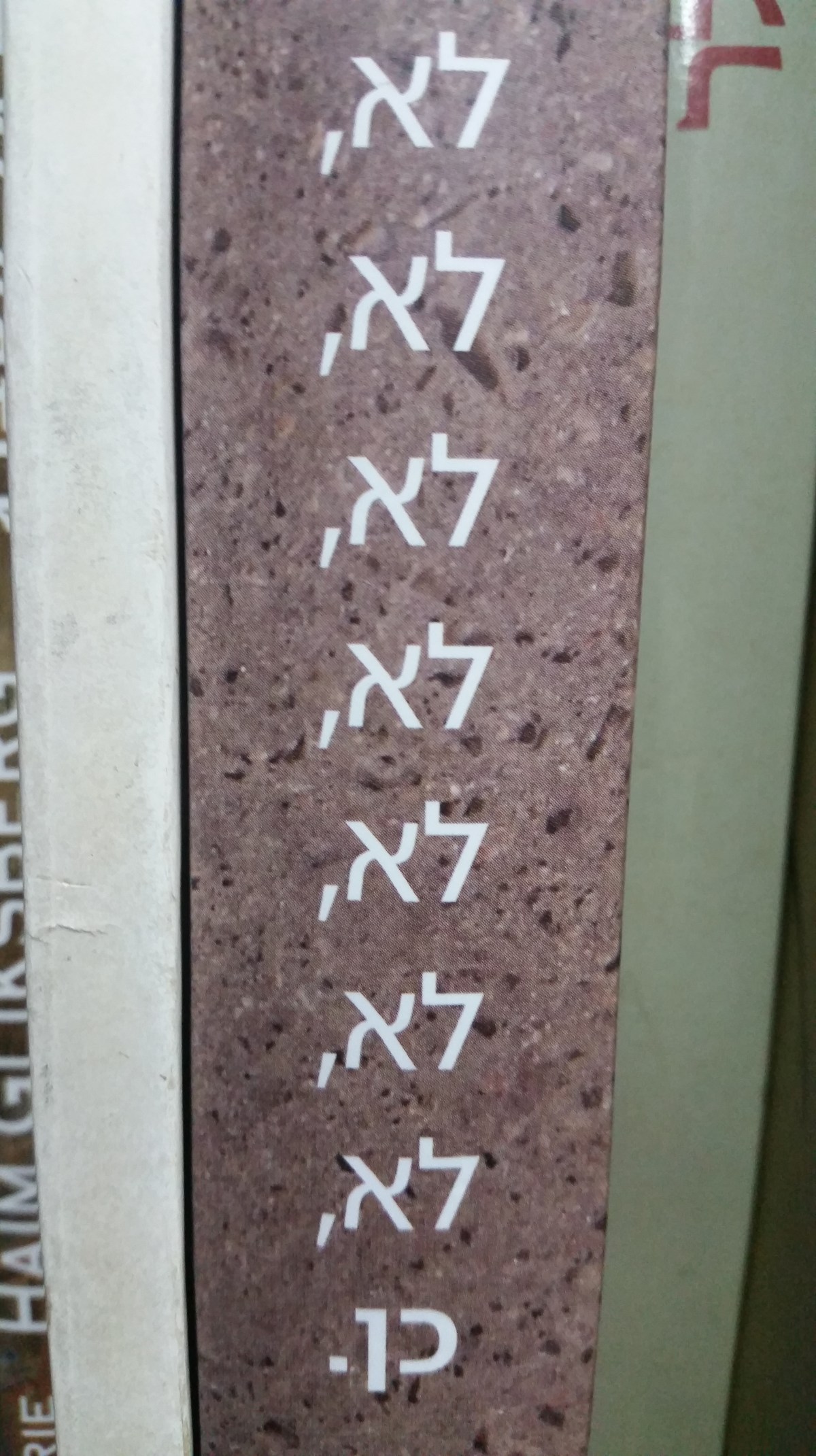
In the end, I come back to my name, Matah מטע.  It means orchard and I chose it because I’m planting roots to bear fruits, to blossom.  And what I realized is this- I was tired of the “no, no, no, no” I was hearing and wanted to get to the “yes”, like in my cover photo.  More than being in a central location packed with young people, what I needed was a home.  And what I started to realize is that having gone through so much in the States, this wasn’t really a new home so much as a first home.  I needed some soil so I could ease my bark into the ground and find some stability.  After four months here, I just needed a quiet, safe place to come home to at night and sleep.

And that is what I found.  I’m grateful for the help of friends and my lawyer, who supported me emotionally and with advice.  Was it easy?  Absolutely not.  If you’re making aliyah because you think it’s a piece of cake, you should immigrate to Ireland.  Or Belgium.  Or Japan.  Because Israel can be really friggin tough.  Not always for the reasons Sabras think, but it is hard.  I have to admit my faith and my hope were tested repeatedly while finding a home.  And I hope I can find some peace of mind by reconnecting to the Israelis who give me spirit, rather than the people who drained me of it.

On my way home Friday, I heard a song wafting through the air in my new neighborhood.  I recognized the melody.  And as I got closer, I sang along: “lecha dodi likrat kalah, pnei shabbat nekablah.”  The traditional Jewish song for welcoming Shabbat, the Sabbath bride.

I couldn’t help but think that for all the challenges I’ve been through- and the unknown ones that may lie ahead- that I made the right choice.  Because rather than hearing the boom boom boom of the middle of Tel Aviv, I’m hearing the songs of my people.  Prayers I’ve said since childhood.

There may not be a lot of Reform synagogues in South Tel Aviv, but you don’t always need one when your prayers fill the air of the market and you’re singing along.  With your new key in hand.  When you move to a new home, you’re praying with your feet.

Coming out to a (hot straight) Arab Catholic guy…in Arabic!

Ok so I’m going to make you wait a bit to get to the title story, but we’ll get there soon 🙂  First, I want to tell you about Tarshiha.

I decided to wander around the Arab village of Tarshiha alone.  Having talked to several Jewish Sabras here afterwards, they were a bit surprised- and none of them had done it themselves.  This seemed bizarre to me- Tarshiha, half of the mixed Jewish-Arab municipality of Ma’alot Tarshiha, felt much, much safer than at least half of my hometown of D.C.  And it’s historic and beautiful:

As I like to do, I wandered around with pretty much no agenda other than exploring and meeting cool people.  And speaking a ton of Arabic 🙂  As my new favorite self-made motto goes: “if you’re cool, I’m down”.

Among a bunch of historic homes I noticed a door that said “photography studio”.  I talked to the man inside, a 30 year old man named Eli (short for Elias).  He is indeed a photographer and he invited me into his studio and immediately made me Arab coffee (think shot-sized coffee and much, much stronger).  Because that’s how things work here.

Since I happen to do social media public relations for a living, he asked me some questions about Facebook.  I sat down with him for about an hour and showed him tricks of the trade, because why the hell not?  He’s a good guy.  Plus his Fusha (Modern Standard Arabic, for writing) was a little rusty, so I helped him add a section on his page in Arabic.  Otherwise, he had written his page information, geared towards Arab clientele (weddings, etc.)- in Hebrew!  Somebody go write a PhD thesis about the American Jewish oleh helping an Arab-Israeli write in Arabic because he was publicizing his events to Arabs…in Hebrew.  Unpack that for a lifetime!  So much meaning here 🙂

As we sat and sipped our drinks, car after car of his relatives pulls by the door and everyone greets each other.  A cousin is a famous journalist, an uncle is a (Arab Greek Orthodox Christian) Mizrachi singer who performs for the Iraqi and Kurdish Jews in the neighboring villages (again- PhD thesis material).  I could go on and on, but this town is like a non-stop family reunion.  I feel like it’s My Big Fat Greek Wedding but an entire village.  And I love it.

Before making my way to another part of town, we exchange contact info.  He shows me his newly renovated church around the corner with great pride (even though he identifies as “Secular Orthodox”- a hilarious phrase in a Jewish context).  Then he did something extraordinary.  This man knows I’m an oleh chadash and that I know very few people in Israel.  He points his hand towards the door of the studio and says in Hebrew: “Tireh, bo matay sheba lecha.  Zeh habayit shelcha.”  Come whenever you want.  This is your home.  I came to Israel looking for family, I just didn’t expect it would be a Secular Greek Orthodox Arab man!  But why the hell not?  I can’t think of a more generous way to welcome me to Israel than what he said.  And you better believe I’ll be back- especially for the weddings he photographs!

I continued to wander about the village.  Most people were welcoming- a few stared.  I don’t think many Jews wander the residential neighborhoods of Tarshiha, so I might have looked like a bit of an oddity.  But frankly, I’m proud of myself for trying something new and I met a lot of kind and welcoming people there.  I find it absolutely embarrassing that not a small number of my fellow Jewish Israelis know more about South America, Germany, or India than about their own neighbors.  It’s not only problematic for the future of this country, it’s also a great loss for the people who don’t visit.  I literally stumbled upon an Ottoman mosque and administrative headquarters just when looking for a bathroom.  It’s true that it can be scary or disorienting to get lost in an unfamiliar town, but if you can handle trekking in the Himalayas, you probably have the instincts to manage Tarshiha.

Out of the corner of my eye, I caught sight of a door and house covered in flowers.  It was gorgeous.  Clearly someone had put great effort into making it pretty.  There was a picture of a woman who had made the Hajj pilgrimage to Mecca and then just tons of funky modern artwork and colors.  As I stood staring, I heard a voice from inside: “tfaddal” – come on in!

Meet Yasmin.  Yasmin is a spunky, artistic Bedouin woman who lives in the village.  As she’s literally doing her laundry in front of me, she brings me water and candies and invites me to sit.  We chat and chat.  She works at a factory with Jews and she frankly liked to speak Hebrew with me while I spoke Arabic with her.  To her, the North is a great place because “Jews and Arabs are brothers”.  She feels they work well together and have good relationships.  Like most Israelis of all stripes, she is very very fond of her hometown.  She has relatives in nearby Arab villages, but she doesn’t even like to visit there because home is where it’s at.  We talk about her mom who made the Hajj pilgrimage.  Yasmin was very proud, but Yasmin herself doesn’t want to do it.  She believes in God but not all the rituals and prayers- like not a small number of Jews.

Making my way down the hill to eat sushi with my kibbutznik friends who were hosting me (because yes, the Arab village has sushi), I couldn’t help but think how hospitable a country this is.  Both Jews and Arabs go out of their way to make you feel at home- with absolutely no expectation of something in return other than kindness and gratitude.  Very, very few Americans would invite a stranger into their home like Yasmin or Eli did- even generous Americans.  There is just a much greater sense of trust here and it’s frankly refreshing.  It even inspires me to be a more generous person.

Across the street from the sushi place, I saw a guy selling nargeelah (hookah).  I popped into his store and good lord if this is not one of the hottest people I’ve ever met, then slap me silly and call me a potato.  His muscles were bulging.  His face was gorgeous.  And he has the friendliest smile to match.  “I’ll have what he’s having.”

Murad is a 20-something Arab Greek Catholic man from a small village up north.  He works in Tarshiha selling supplies for nargeelah at his own shop.  As is the custom here, we talked all about life- where we’re from, our background, our hopes and dreams.  Because in Israel, you don’t wait until five coffee dates to get to know each other.  He told me about his girlfriend- he said he feels no pressure from his family to get married or have children.  That they’re having a good time.  And then it was my turn and I did something pretty brave and I came out to him.  In Arabic.  Alone.  And…it was absolutely fine.  I don’t want to minimize the challenges of homophobia in any community, but since I got a positive vibe from him, I had a good feeling about it.  He was very curious- he asked me how I knew, etc. etc.- the same kinds of questions I get even from liberal Americans.

When I explained that when people are attracted to the same sex, it’s totally natural and that you even find it in other species, he looked fascinated and frankly, just accepted it.  No pushback, no antagonism, just kind of a “hmm never thought about it that way” look.

We exchanged contact info, gave a nice bro hug, and sent each other some pretty big smiles.

Until I did sushi that night, I had spent my entire day in Arabic other than a few Hebrew words sprinkled in.  For all intents and purposes, I spent my day in the Arab world.  And guess what?  It was pretty cool.  I met a Secular Greek Orthodox man, a Sunni Muslim Bedouin woman, and a (super hot) Arab Greek Catholic guy with eye-popping muscles.  I saw funky murals and artwork alongside ancient architecture.  I even got delicious herbal melon tea at a cute cafe.

This is Arab Israel.  20% of the country.  If you haven’t visited an Arab village- do so.  You don’t really know Israel if you haven’t.  And if the extent of your visit is eating schwarma and going home- then you visited a restaurant, not a culture.  Get off your tuchus, as we say in Yiddish, and try something new.  Friends, food, and fun await you.  Tfaddal- come on in 🙂

Samaritans, Russian Puppet Cabaret, and Hasidim

Today I heard or spoke Hebrew, ancient Samaritan Hebrew, Yiddish, Russian, English, Arabic, and Ukrainian.  Today I danced with Hasidim, watched a Russian man dance with life-sized puppets, and davvened in a messianic Chabad shul.

Here’s how it went down.

I wanted to get out of the house and explore.  Missing the fun of trekking up north, I decided to explore Gush Dan, or Central Israel (near Tel Aviv).  I went to the decidedly not-so-touristy Holon and Bat Yam, both a short bus ride away.

I had no plans and really no idea what to expect.

I got off the bus in Holon and noticed a sign pointing to the “Shomronim” neighborhood.  That’s the Hebrew word for “Samaritans“.  Maybe you learned about the “Good Samaritan” in your Bible class.  Yes, that’s them.  They claim descent from the tribes of Ephraim and Menashe, who are in turn tied to Samaria (Hebrew: Shomron).  Hence their name.

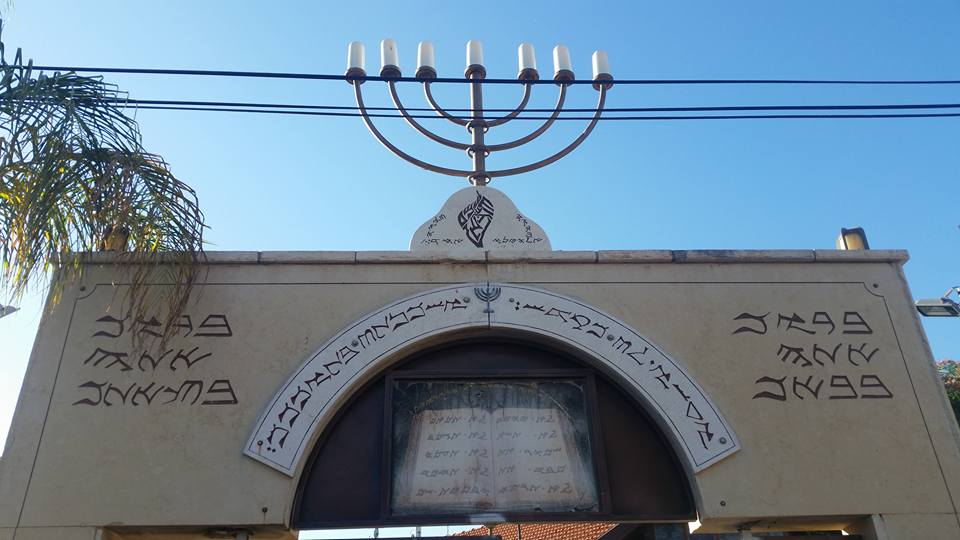
I immediately asked around and found my way to their neighborhood.  To give you an idea of how unique this is- there are 800 Samaritans in the entire world.  They are keepers of pre-rabbinic Judaism and they use an ancient form of Hebrew, including an alphabet much closer to the original since rabbinic Judaism adapted an alphabet based on Aramaic.

Here are some examples from today:

Because this is how I roll, after knocking on four or five doors (all of which had Samaritan Hebrew on them!), I got referred to Benny Tsedaka, a leader in the community.  He was sleeping, but his brother told me to walk in and wake him up.  So, to the horror of my friends in America, I walked into a total stranger’s home and basically kept talking and knocking on the door till the old man woke up.

He invited me in and gave me quite the lecture about the history of the Samaritans and their “original Judaism” (a phrase, incidentally, told to me several times by Haredim, but this guy might have them beat).  He, along with the other older men on the street, wore a white robe.  He showed me their prayer books, still written in the Samaritan script that I recognize from ancient Jewish tablets.  I almost asked him who their rabbi was, but caught myself 😉  It was like peering into the past, even as he told me to grab my smartphone and take pictures.

He chanted Torah for me using the Samaritan pronunciation and their trop, or cantillation system.  And he did it from memory.  Incidentally he chose the first day of Bereishit, or Genesis- the parashah I used to chant at synagogue on Rosh Hashanah.  The reason he could do it from memory is that unlike rabbinic Jews, like myself, they don’t read Torah in synagogue.  Instead, people pair off and go read in people’s homes- both men and women.  That way, he said, everyone learns to read.  A nice idea indeed.

He is very proud of his tradition and he has every right to- his community has survived conquest after conquest for thousands of years.  Before there were Christians or Muslims or Arabs or Byzantines or Persians here, Samaritans were here- and they managed to survive.  Or perhaps better put, since we are all Israelites, we managed to survive.  When I told him I was an oleh chadash- a newly minted Israeli- he made a point of saying “welcome home”.  A long delayed reunion, indeed.

He’s not a fan of Haredi Judaism because he feels it’s not traditional or authentic enough.  That it’s a product of Eastern Europe and interactions with Christians, unlike his authentic Judaism from here.  He also said he likes that in his community, women read Torah too and that if God didn’t want women to be front and center, why did Miriam sing as we crossed the sea?  An interesting point.  I won’t delve into the debate about what Judaism is best other than to say I think there’s something beautiful in all varieties.  I will say, though, that someone who wants to argue about what the most “original” form of Judaism is is going to have a tough time beating someone who prays in paleo-Hebrew script.

Still digesting my interaction with ancient Judaism, I hopped on a bus to Bat Yam to see the sunset.  I liked learning about Samaritan Judaism, but sometimes the conversation veered into (very) right-wing politics and religious debates that are less interesting to me.  Benny could certainly make Bibi (or a rabbi) blush.

As I made my way to the sea, I saw this ridiculous man dancing around with busty life-sized female puppets (and later, Jewish puppets with peyos!).  To disco music, to Russian music, to Mizrachi music, and even to Yiddish classics!  I can’t tell you how much this made me laugh and smile.  What a nice way to unwind after the meaningful but at times overwhelming experience I had in Holon.  Apparently his grandfather grew up with similar shows in the Soviet Union in the 50’s.  I was thoroughly entertained.  I gave him a nice tip and we exchanged words and smiles in Hebrew and a bisl Yiddish.  These are the people who make the world go round.

After some delicious kebabs, I grabbed a bus home.  Except that on the way, I heard Hasidic music blasting.  I hopped off the bus and ran and joined in dancing with a bunch of men in a circle.  Speakers blasted Hasidic hits (some of which I knew and are on my phone) as we oy yoy yoy’ed and danced.  Just when it couldn’t get any cooler, they started blasting Mizrachi music, including songs entirely in Arabic.  I swerved my queer Jewish hips and my hands suavely bounced around.  I felt a little out of place (I think some of the men just didn’t know what to think of me- it’s not every day someone like me is at a Hasidic street party in Bat Yam), but in the end, it’s my God too so I rolled with it.  And although I wish that the women and men could dance together, I had some fun.

Based on the signange, I knew it was Chabad that put on the event for Sukkot, the holiday currently being celebrated.  Chabad is a Hasidic group focused on kiruv, or outreach to other Judaism.  As Judaism is not evangelical, they only reach out to other Jews.  I don’t identify as Chabad, but I do appreciate some of the work they do.  Anywhere you go in the world, Chabad is there to give you a kosher meal, a place to pray, a place to do Jewish.  In my neighborhood, I frequently stop by to buy supplies for various Jewish holidays.  The best part about Chabad is whether it’s your style of Judaism or not, they’re always there.  And that is a mitzvah.

Now as my sweaty body prepared to hop back on the bus, a cute young Chabadnik asked me if I had davvened arvit (evening prayers).  I hadn’t (because that’s not usually how I approach Judaism), but I told him I’d join their minyan.  Jews are supposed to pray in groups of 10 (men only for Orthodox- men or women for progressive Jews).  I haven’t generally found the Orthodox prayer style meaningful for me (it feels too fast for what I’m used to), but I think it’s a mitzvah to help these people out so I joined in.

We went downstairs into a shtiebel (small synagogue) and prayed.  The cute guy helped me keep up with the pages (they move really fast!) and before you knew it, we were done.  By the way, when I say cute, he’s not a cute kid- he’s a cute adult.  He’s a “your kippah is super sexy I’d like to daven maariv and make a mitzvah” adult.

I digress.  As I’m leaving, another hot young Chabadnik starts talking with me.  He’s from Ukraine and the woman sitting next to us is half Georgian half Ukrainian.  They are both olim like me- new Israelis.  I’m starting to think I might want to learn Russian for an even richer Israeli experience.  I notice a sign in the synagogue about the former leader of Chabad, Rabbi Schneerson being the moshiach (messiah).  Not the typical generic “moshiach” signs, but much more direct and specific.  There are some Chabadniks who think he was just a great leader and others that veer into messianism, thinking this particular rabbi will come back as the moshiach.  Playing dumb, I ask the Ukrainian guy if the sign meant that the rebbe was the moshiach and he said yes.  I am far, far, far from an expert on Chabad, but I’m pretty sure I just prayed in a synagogue of the more messianic stream of the movement.

As I headed back to Tel Aviv, I couldn’t help but think what a messy, meaningful, and deeply satisfying day I had had.  I had been lectured about my progressive politics and rabbinic Judaism by a man who speaks ancient Hebrew.  I had felt kind of out of place as a Hasidic dance party as a queer person and a Reform Jew.  And I ended up praying with (maybe?) messianic Chabadniks when I absolutely never would have prayed with them if that’s what their synagogue was about.

And on the same day, I met an ancient relative of mine.  I saw ancient Hebrew script written on doors and flyers.  I danced to Hasidic music – for free – in public.  I saw a Russian guy dance around with ginormous puppets to Yiddish and Slavic dance music.  In short, I experienced thousands of years of history in the course of minutes.  I lived it up.

Sukkot is, in English, called the “Feast of Booths”.  It’s one of the few holidays that doesn’t commemorate an event.  Rather, by setting up sukkot, temporary structures, we remind ourselves of the fragility of life and of our wandering in the desert for 40 long years.  Wandering in search of a home, a more permanent structure than the ragtag hut of a sukkah.

This Sukkot, I’ve found my home.  A home where yes, things are sometimes complicated and messy and take a while to untangle.  And also a home filled with more meaning per square foot than anywhere else on the planet.

Some Israelis ask me if Americans make more money.  “You’re crazy!” some say, “you’d make so much more money there and have a bigger house!”.  So the f*ck what?  You can give me the biggest mansion on the highest hill with the best view, and I’m not interested one bit.  Because there’s no way in hell I’m going to spend Sukkot there with a Samaritan, a Russian puppet dancer, and Hasidim.

America has better air conditioning and cleaner toilets.  But I don’t really care.  I’ll be too busy out and about exploring thousands of years of history, dancing and laughing along the way.