My Druze, Muslim, Orthodox, Reform Rosh Hashanah

Tonight, Rosh Hashanah ended.  As a Reform Jew, I observe one day of the holiday, which you can read about here.  I had amazing meals with friends, went to services for a taste of home, was greeted everywhere with Shanah Tovah, and even ate sushi 😉

This evening, I decided to go Israeli dancing.  Anyone who’s known me for a while knows that I love Israeli dancing- it’s one of the first things I did in Israel.

I go to this marathon event (it goes till 6am!) and there are hundreds- I mean hundreds- of people.  All ages, all attires (I even saw a bustier), and tons of enthusiasm.  There’s even a guy I know from dancing in DC.  Because, Jews 🙂  The music was booming- there was even a live band to accompany the music!  They had a screen that showed a picture of each singer, the name of the song, and a running clock of how long the marathon had gone on!  I recognized so many of the songs I danced to at home- it was fantastic.

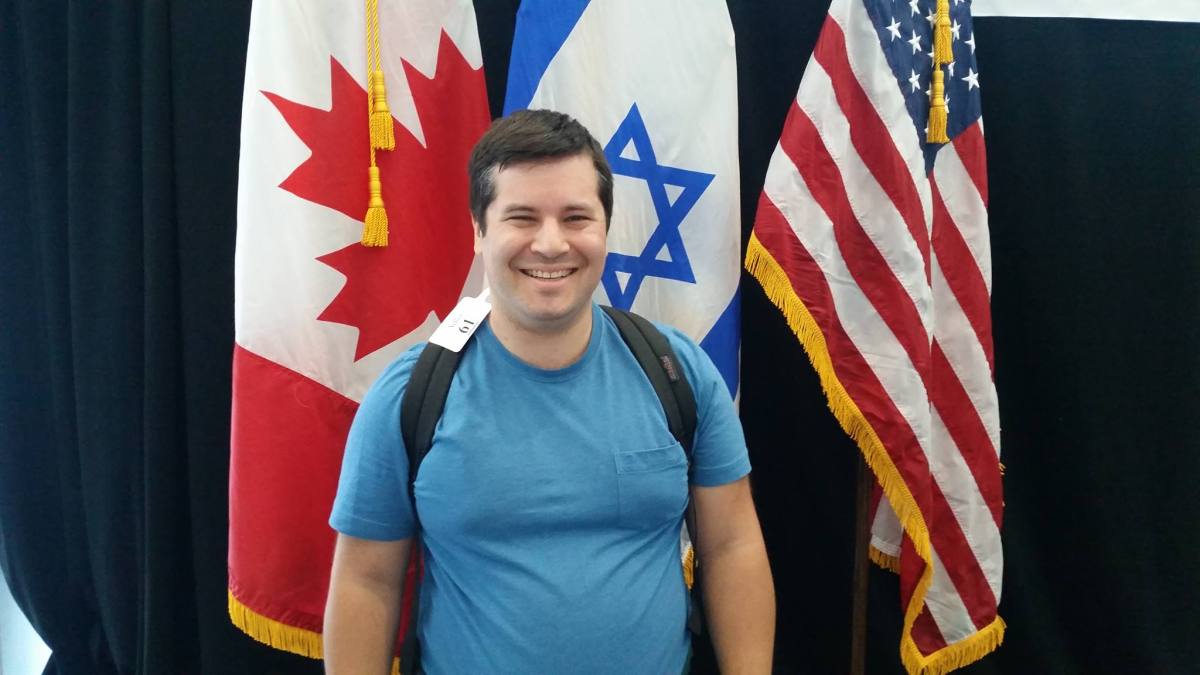
During couples dancing (which I tend to avoid unless I’m with a friend- some of the middle aged women can get frisky!), I stepped aside to rest.  I saw this cute guy so I started talking to him.  I wished him “chag sameach”, a happy holiday.  He said “what holiday?”  I said “oh are you not Jewish?”  And turns out, he wasn’t.  He was just working the event.  In fact, he’s an Arab Muslim from Nazareth named Muhammad Abbas.  Poor guy’s name is so, so close to the name of the leader of the Palestinian Authority that pretty much nobody, Arab or Jewish, really likes.

He’s a student at Tel Aviv University studying English literature.  He only listens to American music and he loves dark, intense American novels.  We talked in Hebrew and Arabic about American film and literature (I recommended he watch Office Space for a clever satirical movie), and he stepped outside to work.

Then it hit me- I owed him an apology.  Growing up as 2% of the American population, I was constantly barraged with “Merry Christmas” for a two month period every year.  I don’t begrudge anyone saying Merry Christmas- I just don’t want it said to me because it’s not my holiday.  I stepped outside and I apologized to him for assuming he was Jewish.  He took it totally in stride and laughed it off.  We also both knew that this year, the Muslim New Year falls on the same day, so I ended up being right in wishing him a Happy New Year 🙂 .  In the end, I do feel like I owed him an apology because I made an assumption about him and it wasn’t the way I like to treat people (or be treated).  Just goes to show that you can’t assume a cute Semitic-looking boy here is Jewish!

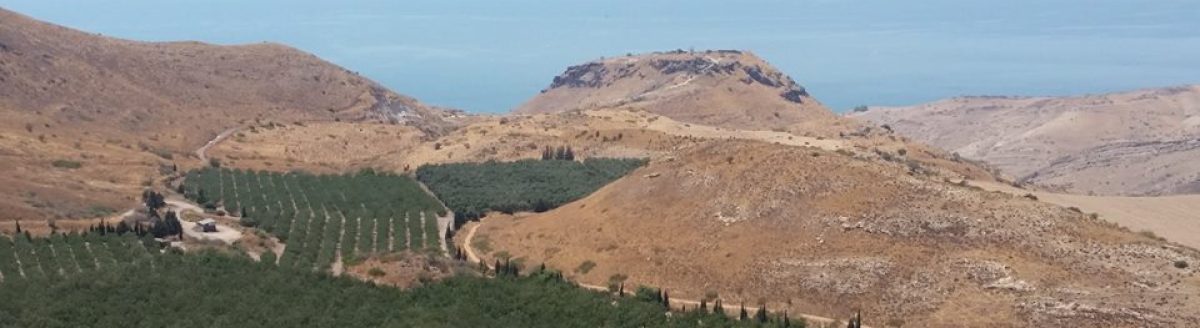
At this point, a man selling food in Hebrew with an Arab accent starts talking to me saying not to worry about my holiday faux pas.  That we’re all people and it’s good to wish each other blessings.  This man, Ramzi, is from the magical place called Daliat Al Karmel.  This place entrances me.  If you’ve followed my blog, you know that in the course of 2 months in Israel, I’ve been there twice.  That it has a special magic- the people, the trees, the view- that I have seen in few places in the world.  And this man, just for this event, happened to be selling Druze pita in Tel Aviv!  He lives up North!

We switch over to Arabic (and back and forth to Hebrew and English) as we talk about life and his village.  He invited me to come visit him.  You ready for a real twist?  He owns a Matah – an orchard.  My Hebrew name, which I chose when making aliyah and is extremely unique, is also Matah מטע.  He invited me to come up whenever I want and we’re going to hang out on his orchard.

As if my night couldn’t get any more fabulous or diverse, on my way home I see an Orthodox family by an ambulance.  In America, you’d pretty much say a prayer for them in your head and move on- not wanting to invade their space.  Since this is Israel, I did the exact opposite.  I walked over and asked if I could help.  One woman said she couldn’t ask because I was Jewish (Orthodox Jews believe that it is not permissible to make another Jew work on a holiday).  The other woman, perhaps in an act of pragmatism, simply told me they needed a cab, so I ordered it.  I’ve spent enough time in pluralistic Jewish circles to know that even if Orthodox Jews can’t ask me to do something on Rosh Hashanah, if I just do it, it’s acceptable.

I ordered a cab but just in time, another one came by and they got in.  Luckily it was nothing life-threatening, but it looked like their little girl had a wound on her head.  I hope she’s feeling better.

As I walked away, I wished them a Shanah Tovah.  I knew they were celebrating my holiday 🙂 .  They shouted back with a smile “ktivah vechatimah tovah” – may God write you a good year in the Book of Life.

On my way home, I realized just what an amazing holiday I had had.  In the course of one day, I went from Reform services to Israeli dancing to hanging out with a Muslim friend to talking with Druze and helping Orthodox Jews.

This is my country.  Where every fiber of my being is filled with meaning.  I couldn’t be prouder to start a new life and a new year in Israel.  My diverse, caring, and wonder-filled home.

Shanah tovah from the place where miracles aren’t on 34th street- they’re on every corner.
The Mediterranean is my mikvah

Today, I really started feeling Rosh Hashanah.  I did some reflecting on the holiday and decided I wanted to adapt a Jewish tradition I learned about in the States.  Some people go to the Mikvah, the Jewish ritual bath, before the start of the New Year.  The idea is to cleanse yourself- to leave behind the sins, the hurt, the “shmutz”.

When I was in America, I would go to what most religious Jews would recognize as a mikvah- an indoor space where you disrobe and go through a series of ritual dunks and blessings.

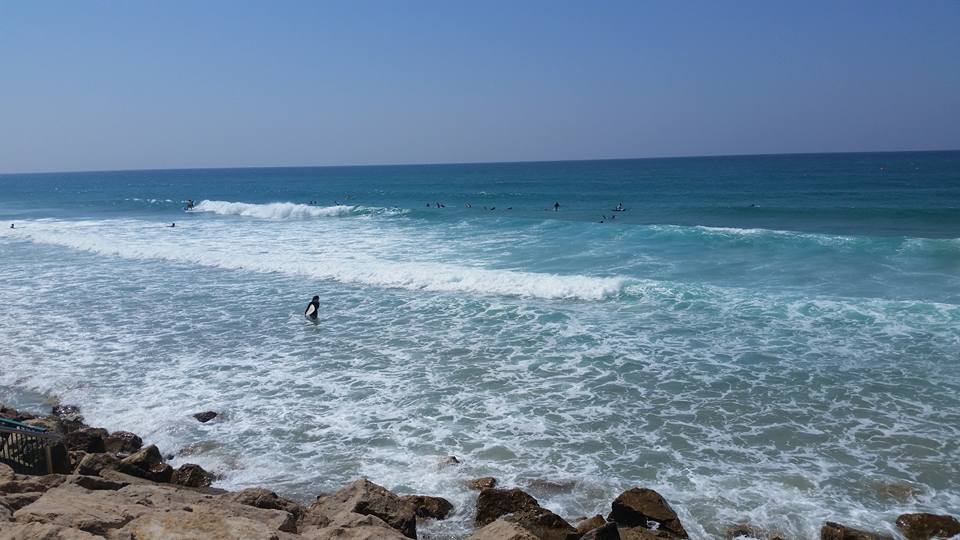
Here in Israel, I tried something different.  I bought five rolls of old bread from the grocery store and headed to the beach.  I looked for something sweet to eat along the way for a sweet New Year and drank my first Israeli bag of chocolate milk (yes, that is a thing!).  I felt it was appropriate because as I’m keeping my Jewish customs alive I’m also adding to them.  A nice modern and Israeli twist.

I started by doing the Tashlich ceremony.  Tashlich is where we symbolically cast away our sins by throwing them into flowing water.  With the first few rolls, I hurled them into the sea as I thought about how I had hurt others or myself during the past year.  Then, I did something unconventional (I’m a Reform Jew and reform is a verb- so we believe in an ever evolving Judaism)- I threw a few rolls to chuck away the sins others had committed against me.  I asked God for forgiveness for the hurt I had caused and for justice to be served towards those who had hurt me.  I asked for healing for my body and soul from the pain and I asked God to send healing to those who I had hurt.

Then, I undressed (except for my bathing suit- a dunk in the mikvah is usually naked but I had to adapt since people were still walking along the beach- even Tel Aviv has limits 😉 ).  In an indoor mikvah, there are seven steps you walk down to get into the water.  So I simply walked seven steps into the Mediterranean, talked out loud to God about my hopes for the year, made the bracha, and took a dunk.  Each time I felt lighter and lighter.  I looked up at the stars, listened to the waves crashing, and thought to myself that really everything is bigger in Israel.  Instead of an aisle dedicated to your food at the grocery store, the whole store is your food.  Instead of holiday greetings being limited to the walls of a synagogue, you can say “shanah tovah” to any stranger on the street. Instead of a mikvah inside a synagogue, you’ve got the entire Mediterranean where your ancestors sailed.

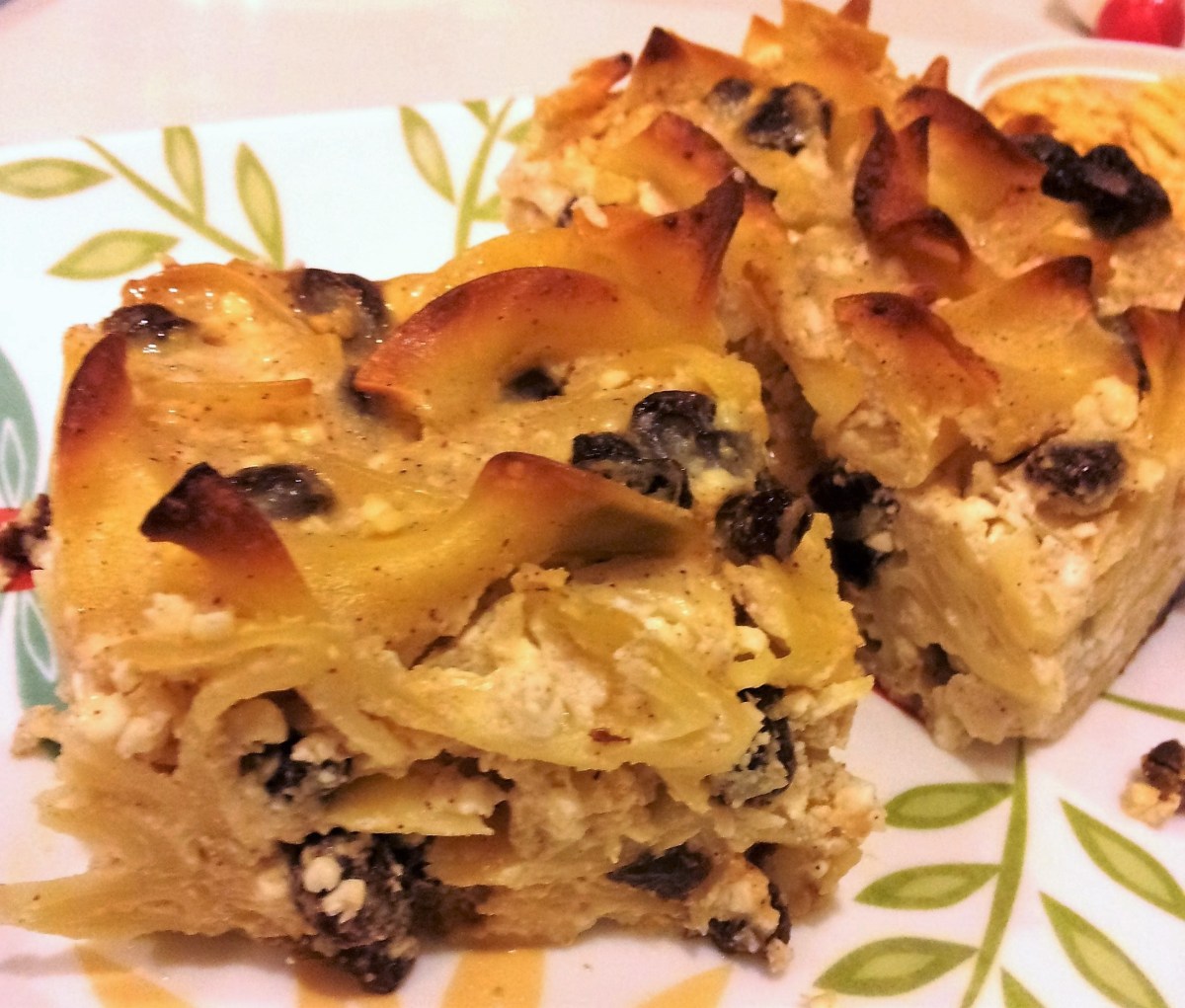
There are things I miss about American Judaism.  For one, it took me two separate trips to grocery stores here to get ingredients for dairy kugel!  And literally one store didn’t even have sour cream- thank God the Russians here appreciate this food so I found it at one of their stores.  I miss the rituality of American Judaism- I even found myself watching Youtube videos of Rosh Hashanah services at Reform synagogues to hear my favorite melodies and prayers.

What is amazing about Israel is that you can take these traditions and, in a completely spontaneous fashion, riff off of them.  Theoretically, I could’ve done a mikvah dunk in the Potomac River (although it might’ve required a lot of showers afterwards!), but I never thought of it.  Here, this whole country is a Jewish playground.  The sky is the limit.  Especially when you’re staring at it from your planet-sized mikvah.

My First Israeli Rosh Hashanah

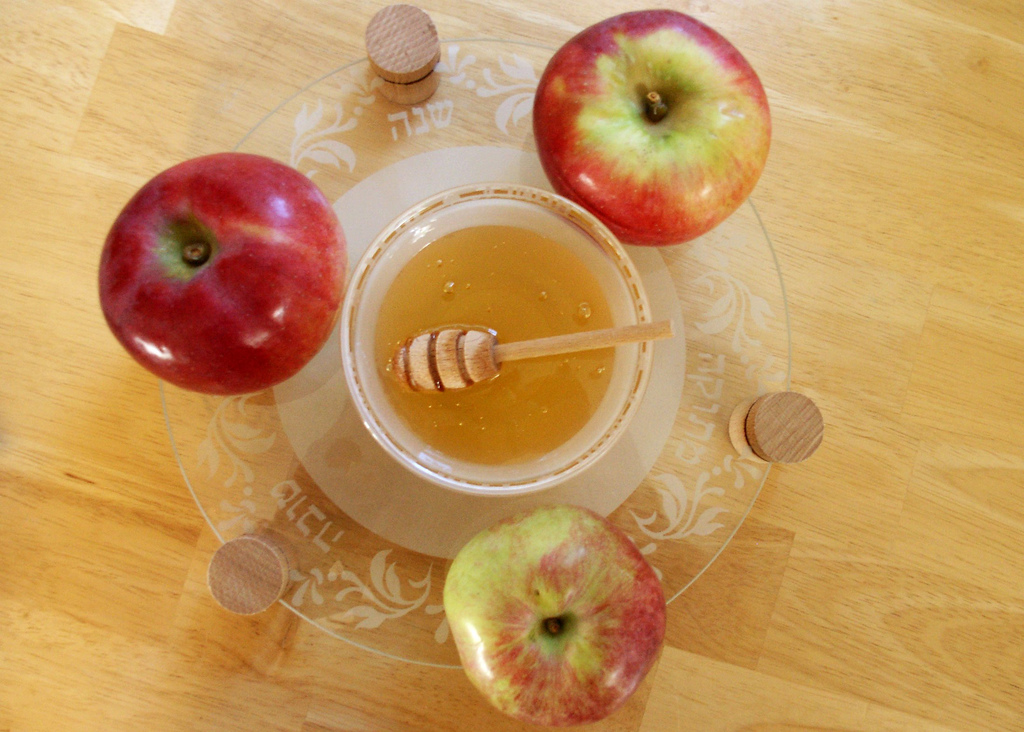
Yesterday, I walked by a Breslover Hasid on the street doing his typical goofy (and cute) stuff to make people smile.  After I bought a sticker, he wished me “shanah tovah” – a happy new year.  I had to pause for a second.  Is it really that soon?  Is Rosh Hashanah only a week away?

And then I had another thought- other than a Jewish person I already knew, nobody in my life has wished me “shanah tovah” on the street.  If you want to understand in one interaction why I’m here, it’s that.  Something most Israelis don’t even notice because they’ve lived in a Jewish-majority society their whole lives is something very unique and special for me.  I’m validated on every street corner.

Then I got to thinking- what does Rosh Hashanah mean to me as a new Israeli?  I’ve never been here during holidays- only during summer trips.  What is it like?  I found out my synagogue doesn’t have first day Rosh Hashanah services- something unimaginable for an American synagogue.  For American Jews, the High Holidays (yamim noraim) are THE event of the year.  Millions of people who don’t regularly participate in any other aspect of Jewish life will still go to shul.  More secular Israelis may simply do a holiday meal.  But American Jews en masse go to synagogue- for hours and hours.  And they pay a lot of money for it.  It’s a very interesting difference.

In America, Ashkenazi Jews have our special foods.  For Rosh Hashanah or Yom Kippur break-fast, I remember eating sweet dairy kugel, amazing bagels, lox, whitefish salad, 5 varieties of cream cheese (including lox spread!), black and white cookies, dense American rugelach, matzah ball soup, chopped liver, egg salad, herring, you name it.  Israeli salads and Sephardi foods are delicious, they are just not what I grew up with as Jewish food because I’m Ashkenazi like 90% of American Jews.

Before the holiday, everyone runs around to get the food ready and pick up their spreads, greeting each other in our Jewish English sprinkled with Yiddish.  At my synagogue, you had to pick up your tickets in advance- because we don’t have a government that pays for our synagogues, we have to pay ourselves.  You get to synagogue and you’re dressed to the nines- suits, ties, high heels.  Here in Israel, the only time I’ve seen a suit is on a Haredi person!  There are people here who have “wedding jeans”.  We’d all eat together before going to synagogue.  The way I grew up I’d go to Erev Rosh Hashanah services followed by a 3 hour morning services.  Most Reform Jews don’t observe the second day.

I was lucky enough to grow up in an area with a large Jewish community, so public schools were closed.  But in the vast, vast majority of the U.S., schools and offices and transportation are open- and you need to request time off to observe it, which is not always as simple as it sounds.  In the U.S., Rosh Hashanah is special because of what you do at synagogue with your community and at home.  And it can be very special- very intimate.  Like you’re part of this cool 4,000 year old club.  Because outside your home, it is invisible.  When Israelis wonder why Americans go to synagogue, this is one of the reasons- to have a space to be Jewish.  At 2% of the population, there are no TV ads that wish you “shanah tovah”.  If you don’t make the space, there is no Jewish community.

Here, it is everywhere.  I was at a bakery last night and I noticed an ad for five different types of honey cakes (oh yeah, we eat those too in America).  These are cakes you eat specially for Rosh Hashanah.  I was in shock.  In America you have to know where to go to find these.  The local Au Bon Pain won’t be selling them.

I don’t really know what Rosh Hashanah will be like here.  I’m a bit anxious.  I’m a religious Reform Jew and it matters to me.  And yet on some level I feel less a need to go to all the services and more of a need to build community, especially in light of the fact that I’m here alone.  I also feel that if all I do is have holiday meals, that won’t be enough.  I believe in God and I want to pray for a good year and renewal.

My Judaism here is evolving, in ways I didn’t even expect.  This year was a hard one and one of immense personal growth and fortitude.  I sometimes miss being a Jew in America- the foods I know that are almost invisible here.  The heimish religious communities where if you are participating, it’s because you really care about your Judaism.  Because you don’t have to.  Here, you’re Jewish by default.  There’s something beautiful in how “normal” Judaism is here.  And I also feel like in some ways for that reason it can be easy for Jews here to lose sight of how special our tradition is.

My hope for this year is that I can embrace the beauty of a country where I can walk down the street and see myself in every street sign, every ad, in a Hasid with a clown nose wishing me a shanah tovah.  And where I can share some of my special American Jewish spirit so people here remember just how rich our tradition and spirituality is- and that it will only continue if we cherish it.

Wishing you all a Shanah Tovah- a good new year.  May it be filled with happiness, hope, community, and freedom.  A zisn yor – a sweet new year.  May it be as sweet as the dairy kugel I’m going to bake 😉

Arab by association

Today, I went to a settlement.  Ariel is a beautiful city of 20,000 a little over an hour by bus from Tel Aviv.  It’s located beyond the Green Line in Samaria (Hebrew: Shomron).  This area is called Shomron because that’s the name of the ancient Jewish capital of the Northern Kingdom of Israel that was in this vicinity.  To most Israelis, this is Israel (larger settlements like this tend to be part of the national consensus).  To international organizations, this area is often known as the West Bank.  And to most Palestinians, it’s part of Palestine.

This is not a typical tourist spot for Reform Jews or part of the Gay Pride Circuit, so I had never been here before (as a queer Reform Jew).  I’m a curious guy and open to new things, so I hopped on a bus.

The most interesting thing about Ariel is that it’s not interesting.  I don’t say that to be mean- there are actually some attractions in the area like stalactite caves and an archeological site of a 3,000 year old Jewish city.  Unfortunately, because this is a small town, none of that was open or easy to get to.

What I mean is that it’s very normal.  I think the image me (and many progressive Jews and non-Jews) have in our mind of a settlement is an Orthodox family of 16 living in a trailer on a hilltop beating up Arabs.  Just to be clear- there’s nothing wrong with an Orthodox family of 16, it’s just that I think many people think about settlements as a caricature, not realizing their diversity.

Ariel is possibly the most (Jewishly) integrated city I’ve been in in Israel.  There are loads of secular people, there are Russians, there are Ashkenazim, there are Mizrachim (blasting some cool Mizrachi music I stopped and listened to).  There’s a Kosher Mexican restaurant and a non-Kosher restaurant with Thai food.  There are men in yarmulkes and women in tattered jeans with purple hair.  There are judo lessons and piano concerts and even a mall.  There are Palestinian workers and there are Arab-Israeli students at the local university.

It’s also beautiful:

The truth is, in a lot of ways, Ariel is like any other city.  I think it’d behoove people of all backgrounds, particularly from the progressive world I come from, to understand there are many reasons people might live in a settlement.  For some people, it’s just about affordability.  Other people might like the view.  And for some people, it’s a religious statement.  For religious Jews, this is the land God promised us.  And the West Bank/Shomron was an integral part of Jewish history for thousands of years and is still home to many sacred sites.  I’m not interested in the politics, I just want people to understand that if you can’t put yourself in the shoes of a religious Jew who wants to live in the land of their ancestors, you’re not going to do a great job of figuring out how we can all live together.  Empathy is about understanding where other people come from even if you disagree.  People are complex and come in all shades of good and bad- including settlers.

As I prepared to catch my bus back to Tel Aviv (the West Bank is really, really close- you can see Tel Aviv from Ariel), I started to well up.  I wasn’t sure why at first, but I figured it out.  I snuck over to some bushes and just started balling.  As much as I liked exploring Ariel today, I just couldn’t help but think about the Palestinian villages I could see on the hilltops.  What was life like there?  First-hand- I don’t really know.  If we were elsewhere in Israel, I could just hop on a bus and go find out.  But reality here is a bit starker.  Due to the complicated situation (on both sides), I can’t just hop on a bus and visit a Palestinian village.  I’m not even sure if/where it’s legal to do so.  Or safe.  The situation made me so sad and the tears came down.  I hate seeing the world broken.

I told myself that whenever I’m feeling despondent here, something magical happens to lift my spirits.  And I was right.  As I was waiting for the bus, I saw a familiar face.  Sarah is a Muslim Arab-Israeli I met through a Hebrew-Arabic practice group in Tel Aviv.  What are the odds that my first time visiting a settlement I bump into an Arab friend when I’ve only been here for two months?  There are coincidences and then there’s bashert.

We hopped on the bus and I asked if I could sit next to her (important detail).  We got to talking about Arabic dialects in Israel (I’m trying to figure out which ones to study- I already speak Syrian which is intelligible but want to get more local too).  We spoke in a mixture of Hebrew and Arabic.  She told me about her work at Ariel University (that’s right- she works at a college in a settlement) and her work with promoting Hebrew language studies for Arabs in her town of Kafr Qasim.

Then we pulled up to a checkpoint.  I’m glad there’s security to make sure everyone is safe.  That being said, something fishy happened.  Two guards came on board and walked around, but the only person they asked for ID from was the Muslim Arab woman in a hijab next to me- my friend Sarah.  There wasn’t even the illusion of not profiling her.  Then they looked at me sitting next to her: “Are you with her?”  My answer (as I sat there fairly scared shitless): “We’re friends”.  At that point, the guards requested my ID.  After some skeptical glances, they gave us our IDs back and left the bus.

I asked Sarah if they always asked her for her ID.  She said yes.  She also said that if I hadn’t been sitting next to her, they wouldn’t have asked for mine either.  I said that I knew.  It was kind of a scary experience for me, and I’m sure it’s upsetting for Sarah too even if she has resigned herself to it.  Sarah is a full Israeli citizen born and raised.  I’m not sure why a terrorist would be dumb enough to put on a hijab, but I’ll take at face value that anyone could be a threat and the guards have a stressful job.  That being said, check everyone’s ID, keep people safer, and stop being racist.  It’s a win-win.

I have to say I’m proud of myself.  When I was asked if I was with Sarah, the easy way out would’ve been to say that I don’t know her or barely know her.  But the words that came out of my mouth, under pressure, were “we’re friends”.  If that makes me an Arab by association, so be it.  I’m a human being and damn proud of it.

Sarah got off the bus and I headed back to Tel Aviv.  I couldn’t help but thinking about what an overwhelming day I had.  Full of meaning and also a lot to process.  How I try to find humanity in every community- settlers, Arab-Israelis, Palestinians- everyone.  And how that can be really hard.

Israel is a verb.  It means “wrestles with God”.  It would’ve been easier for me to sit static on the beach today (and frankly I might need that after this trip).  But instead, I moved, I wrestled.  I went by myself to a place where most people I know have never stepped foot.  It was interesting, it was hard, it was brave.  I’m proud of myself.

As I got off the bus, I thanked the driver in Hebrew, assuming he was Jewish.  He responded back “ma3 asalaameh” – that’s Arabic for goodbye.  He winked at me and I smiled back.  Guardian angels come in all shapes and sizes 🙂 .


How an Arab saved my Shabbat

Shabbat shalom!  I don’t typically blog on Shabbat.  I usually go to shul, have a meal, and chill with friends.  But tonight, I had a very unique night.

First, I started off at Reform services.  They were musical and fun.  They start at 6 so that ended pretty early, leaving me with an empty evening alone.

To avoid feeling lonely (aliyah is hard and this has been a hard week), I did something I don’t typically do on Shabbat which was to go to a movie!  It was my first time in a movie theater in Israel, so I said a Shehecheyanu and watched Logan Lucky, a film starring Channing Tatum (mmmm!) about some rednecks in West Virginia robbing a Nascar race.  Dudn’t get more ‘Murrican than that!  Honestly, I probably wouldn’t have seen it in the U.S. (although, Channing Tatum), but here it felt perfect.  I laughed at all sorts of things the audience didn’t get and I relished hearing some southern accents, which you don’t hear much around here.

After I left the theater, my friend invited me to Arisa, a gay Mizrachi music dance party.  I love Mizrachi music (it’s my favorite music in the world) and have been aching for months to go to this event.  My friend was running later than me, so I showed up alone.  The security guard patted me down and then asked me to empty my pockets.  I’ve been to a lot of clubs around the world and I appreciate the need for security, especially in Israel, so I did as I was told.

He then noticed my circular pill case.  Without my permission, he tried to open it.  He was opening it the wrong way so that all the pills would fall out if he succeeded.  I told him to stop and that I would open it for him.  Again, I was already feeling really uncomfortable with this invasiveness, but I understand the need to avoid drugs getting into the club.  I explained to him what the medications were for and the names of the prescriptions.  There is also some writing on the pills, as is typical for prescription medication.  At this point, the guard and his colleague, without my permission, start thumbing through my medications and grabbing the actual pills.  I told them to stop but they ignored me.  Meanwhile, I was having to explain my medical issues in front of other patrons who were waiting behind me.  A female guard even told me that I couldn’t enter the club with my pills.  Eventually they let me in, but I was so angry, embarrassed, and humiliated that I just left.  This is a disgraceful way to treat a customer and to handle someone’s medical needs.  If you can’t distinguish a prescription from ecstasy, you probably shouldn’t work club security.  I plan on contacting them through their Facebook page because I was so insulted.  I won’t complain if you join me 🙂 .

Feeling blue, I headed to Yafo, perhaps my favorite part of Tel Aviv.  My friend got tired so we didn’t end up meeting up.  I was just exhausted.  After a long week, the last thing I needed was some random guy grabbing my very personal medications.

I headed to my favorite baklava shop to see my friend Seger, an Arab from East Jerusalem.  He’s a wonderful, fun-loving guy in his early 20s.  And when I entered the shop, by coincidence, he was blasting Mizrachi music- the same music I was supposed to hear at Arisa.  He gave me free knafeh and we talked in Arabic and caught up.  He showed me his favorite Arab singers and I taught him some English.  I even came out to him and his immediate reaction was to show me on Facebook his gay Arab friend.  I had been nervous about coming out to him, but not a split second passed before I felt comfortable again.  It’s good to feel like you can be your full self.

The night was coming to an end as he closed up shop.  As this is Israel, things went from sour to sweet.  And not just because of the heavily discounted baklava he gave me.

Seger put on Sarit Hadad, whose first CD was my first CD when I was 13, and blasted the music.  We started to dance.  Then, people walking by start dancing.  And before you know it, I’m having my own gay Mizrachi dance party.

I gave Seger a hug and we wished each other Shabbat Shalom.  I told him my night really sucked before I walked into his store and that he made me feel happy.  Since we’re now Facebook friends, he might even be reading this blog.  Thanks man 🙂

Would it have been fun to dance in a room of 500 beautiful Israeli men singing to my favorite Mizrachi songs?  I think so.  And maybe I will find out one day if I’m treated with dignity there.

In the meantime, screw Arisa.  I don’t need to pay 120 shekels to have a gay Mizrachi dance party on Shabbat.  I just need to hang out with an Arab friend at a baklava shop.

You know you’re in Israel when an Arab saves your Shabbat.  Eid Mubarak indeed.

Everything is Better in America

Israelis love, love, love to tell me how much better and easier things are in America.  Aside from several seriously well-informed Sabras who understand the challenges of American healthcare, college education, crime, gun violence, public transportation (or lack thereof), and anti-Semitism, a lot of people here just don’t get it.  On the other hand, a lot of Israelis (including some who say America is better, in an act of serious cognitive dissonance) like to tell me how awful the food is, how naive the people are, and how fake everyone is in the U.S.

In the spirit of shedding light and dispelling myths, here’s my take on what’s better in America and what’s better in Israel.

AMERICA THE BEAUTIFUL

  • America is the most diverse country on the planet.  430 languages are spoken in the U.S.  There are hundreds of Protestant denominations alone- not to mention Catholics, Jews, Orthodox Christians of all varieties, Muslims, Buddhists, Hindus, Jains, Sikhs, Bahai, Rastafarians, Mormons, and Native American religions.  It’s extremely racially diverse- there are twice as many Asians in the U.S. as there are Israelis in the world.  And seven times as many Latinos.
  • Much more so than in Israel, Americans of different backgrounds work, play, pray, and learn together.  On my high school soccer team, white Christian kids were a minority (and somehow almost all of them were blond!).  Just on one team, off the top of my head 13 years later, we had kids from El Salvador, Korea, Iran, Israel (!), Georgia, Bulgaria, Peru, Cameroon, Brazil, Uruguay, Bolivia, Turkey, Russia, and a bunch of Jews.  There were no organized co-existence activities- this was just our normal life!
  • Pluralism.  In the U.S., thanks to the separation of church and state, religion is a personal rather than a legal matter.  This even benefits the Jewish community, where over the course of my life I became friends with Reform, Reconstructionist, Conservative, Modern Orthodox, and even Haredi Jews.  Are there debates between Jews?  For sure.  But the relationships between communities are much deeper in the U.S. than here and there is far, far less vitriol.
  • Ethnic food.  Yes, thanks to the tens of millions of immigrants from around the world, American food is amazing.  I’m really sorry (not sorry) for my Israeli friend who posted about her office in Denver not providing her with suitable vegetables for breakfast (side note- nowhere I’ve been outside of Israel eats vegetables for breakfast).  But the fact is, American food IS international food because we’re an international society.  Don’t come to America expecting your (albeit delicious) Israeli cheeses, yogurts, and tomatoes for breakfast- that’s not what we do.  But we do have immensely better, fresher, and cheaper Thai, Burmese, Indian (southern and northern), Vietnamese, Chinese, Mexican, Salvadoran, Cuban, Laotian, Korean, Nepali, Japanese, etc etc.  Not to mention the best Jewish deli food in the world.  The point is that unlike in Israel, where I grew up, these are not seen as exotic tastes of foreign lands.  They become part of our diet and become American food.  When I spent a summer in Spain, I didn’t miss hamburgers.  I missed Chinese food.

ERETZ YISRAEL YAFFA – THE BEAUTIFUL LAND OF ISRAEL

  • Healthcare – I’ve already written a blog about this which I recommend reading.  Israeli health spending per capita is $2910 and in the U.S. it’s $9403.  The number one reason for bankruptcy in the U.S. is medical expenses.  Just two years ago, I had to spend $20,000 on medical care in one year- in addition to the $500/month I spent on medical and dental insurance.  Israel’s healthcare system is ranked 4th for efficiency- the U.S. is ranked 46th.  My friend Dave is battling a brain tumor and has to raise $68,000 for treatment, something unthinkable in Israel.  Please consider donating (and stop whining about Israel’s healthcare).
  • College education – in the U.S., college education ranges from about $9410-$32,410 a year.  And that doesn’t include thousands more dollars for housing or food.  Some schools like Bates are charging over $60,000.  The better the school, the better the job prospects.  Israeli tuition is about…$3000 a year.  Pretty sweet.
  • Fresh produce – yes I just touted American food, which is amazing.  Truth be told, the fruits and veggies here are better.  Perhaps because Israel is small and doesn’t ship grapes from California to New York, the produce is super fresh and extremely tasty.  Other than farmers markets, fruit in America tastes watery.  In Israel, it is full of flavor, inexpensive, and delicious.
  • Weather – this depends on where you are in the U.S. (I’m looking at you beautiful San Diego), but at least compared to D.C., the weather in Israel is much nicer.  Yes it can get very hot, but there is a beach.  There are beautiful rural places to escape to with nice breezes.  When there is three feet of snow on the ground during a D.C. blizzard, Tel Aviv is 60 degrees Fahrenheit on a February day.
  • Caring for one another – this might surprise Israelis, but I find Israelis to be much more willing to trust one another and to help one another than Americans.  I regularly see people step up and help people who are sick, lost, in need of a place to stay, etc- even if they’ve never met them.  These are things that would usually be met with suspicion in America, but here are totally normal.  If you have nowhere to go on Friday night for Shabbat, just tell someone and you’ll be eating a warm meal before you can remember their name.
  • Judaism – yes, the U.S. is pluralistic with a much bigger Reform community than Israel, but the fact remains that the entire country here is a synagogue.  When I walked down the street today, my friend and I heard a shofar.  There is biblical graffiti everywhere- done by hipsters.  My favorite Israeli dancing songs play on juice bar stereos.  All of my holidays are government holidays.  I can go to the Western Wall in Jerusalem in the morning and a gay Orthodox Torah study in Tel Aviv at night.  There is also unparalleled Jewish cultural diversity (and food!) here- with Jews from dozens of countries represented.  My identity is validated over and over and over again even in ways Sabras don’t recognize.  Here, I am normal.

We won’t even get into the economics of things, because while Israelis decry how much more Americans make, the fact is things are a bit more complicated.  The average Israeli household earns a net income of $56,892 a year.  In the U.S., the figure is $55,775.  For sure, there’s variation by region and industry, and there are different tax burdens.  But the point is- not all Americans are rich (most aren’t) and especially when you consider that significant sectors within Haredi and Arab societies here don’t work, there’s not as much of a gap between Americans and Israelis as some people here think.

In the end, I’m not writing this blog to declare victory or to engage in endless debate.  That feels a waste.  There are beautiful things in America and beautiful things here.  And shitty things in both places.  And I could give many more examples of both.

I chose to be here not because it would be easy, although in some ways it is easier than America.  I made aliyah because it would be meaningful, it would be validating, and it would be inspiring.  In short, because I think it’ll make me happy.  Much like this famous scene from Monty Python, let’s not bicker about who’s right.  Let’s just respect each other’s choices, including mine to become an Israeli.  Because in the end, I’m not asking for your approval or your advice.  I’m here.

A gay Reform Jew goes to Bnei Brak

Today, I went to Bnei Brak and had a good time.

Bnei Brak is an almost entirely Haredi (ultra-Orthodox) city of nearly 200,000 people right on the footsteps of Tel Aviv.  It is the sixth most densely populated city in the world.  Door-to-door, it was a half hour ride.  Culturally, it’s a million miles away from the bikinis, hip-hop street performers, and pride flags of Tel Aviv.  Inhabited by a variety of Hasidic and misnagdic sects, with a smattering of Modern Orthodox, there are a lot of black hats, swaying peyos, and tons and tons of children.

To many of my more secular friends, the idea of a day trip to Bnei Brak is at best a waste of time and at worst, nauseating.  Please allow me to share what I, a gay Reform Jew, actually found to enjoy in this fascinating city:

Delicious Ashkenazi food – I sorely miss American Jewish food, which is almost entirely Ashkenazi.  I love me some jachnoon and falafel, but it is not what I grew up on.  I had delicious matzah ball soup tonight and it hit the spot.  Ashkenazi culture for secular Israelis has become nearly invisible.  This is due to repression from more hard line Zionists in the early years of the state, when Yiddish theaters and newspapers were shut down by protestors, and due to a desire to fit in in Israeli society.  For the majority of American Jews, Ashkenazi-ness is an essential part of our Judaism and I was happy to see people keeping it alive here.

ChocolateRugelach.jpeg

Hot guys – perhaps it’s from growing up in a more religious Jewish community (progressive American Jews as a whole are more religious than left-wing Jews in Israel), but I find a cute non-bearded guy dressed in 17th century Hasidic garb and a kippah…hot!  I love that he’s boldly Jewish, that he loves Torah, and that he has a certain softness to him.  Don’t get me wrong, I love me some strong Zionist men, but seeing a Hasid here reminds me a bit more of the Jews I know from home in the Diaspora.  Which is perhaps why they bug the h*ll out of secular Jews who don’t want much to do with the “old Jew” of the shtetl.

Good music – I love me some Hasidic music.  I bought a compilation of Vizhnitz niggunim sung by artists from Bnei Brak.  I found a really cool music store which has hundreds of different artists, mostly in Hebrew, but some in Yiddish.  Some of the artists were American Hasidim like Lipa Shmelzer who I knew from the U.S.  Quite a number of Mizrachi artists were popular in the store, like Zion Golan and the Revivo Project, which is interesting and shows there’s more cultural fusion going on here than meets the eye.  In general, I noticed more Mizrachi Jews in Bnei Brak than I expected to see and quite a number of shwarma joints, something you’d never find in Williamsburg.

It’s a city – I’ve visited Hasidic Brooklyn (Borough Park, Crown Heights, Williamsburg).  You can read some of my thoughts about that community and my visit there in this blog.  One of the big differences between Hasidim there and in Bnei Brak is that the former is a community intertwined with its neighbors.  There are Jamaicans and hipsters wandering through.  It is a neighborhood, not a city.  Bnei Brak is an entire Haredi city and it is really cool to see.  I saw boys and girls playing together.  Both men and women were friendly and willing to talk to me (and I was wearing jeans and a t-shirt).  I had found it a bit more difficult to get people to open up in New York, especially women (even though I also speak Yiddish).  I couldn’t help but think that maybe if Hitler hadn’t succeeded, there would be cities like this all over Eastern Europe.  And I’m grateful that Bnei Brak is a living testament to our fearlessness and our willpower to survive despite antisemitism.

Are there problems in Bnei Brak?  Sure.  I saw a sign today with pictures of hellfire admonishing women to avoid evil and wear headscarves instead of wigs.  I also saw a sign lamenting secular education.  And there are almost no pictures of women anywhere for reasons of modesty.

20170821_181544

At the same time, I saw tons of Haredi women wearing the wigs despite the signs.  I also saw secular people and foreign workers wearing short sleeves without anyone batting an eye.  I actually saw a Chinese guy completely shirtless in the middle of the street.  And yes, I saw a young woman in a sleeveless shirt and shorts walking down the street with no harassment.

I’m not here to tell you Bnei Brak is a bastion of progressive thought.  Or that there aren’t problems or that there aren’t Haredi people who are radical or violent.  These things exist (and not just among Haredim).  At the same time, I am concerned because I think the rest of the world tends to paint this community with a broad brush.  I am concerned that some of the anger towards Haredim in Israel isn’t about policies (like Shabbat laws, which are a real issue), but rather about longstanding ideological feuds among the Jewish people and, frankly, prejudice.

Just like any other group of people, there are Haredim who are more friendly, who are more open-minded.  And there are others posting signs admonishing women about their hair styles.  And many people who are somewhere in between.  In the end, we are people and when we start generalizing about hundreds of thousands of people, we are bound to foment prejudice rather than understanding.

I went to Bnei Brak today so that I could observe and I could learn.  Because I believe that if my only source of information about people is the news, then I’ve already lost.  Because my day ended not with stones being thrown at me for immodesty, but rather with a Hasidic guy winking at me and walking into a wedding where the band played beautiful Yiddish music.  Music I understood.  Because Israel is a 2,000 year old delayed family reunion.  We’re just getting to know each other.  Step outside your comfort zone and meet your relatives.  If a gay Reform Jew could find something to like in Bnei Brak, I bet you could too.

20170821_183204.jpg

What America can learn from Israel

Tonight, in the span of 5 minutes, I saw what Israel has to teach the world about tolerance and diversity.

Walking back from an outdoor movie in Yafo (which overlapped with the Islamic call to prayer halfway through), I heard a man on a microphone.

The man was talking to a crowd at a restaurant on the roof of a building.  He started to sing.  I figured it was just a guy playing music for tourists.

Then I started to recognize traditional Jewish wedding music, saw a chuppah, and realized it was My Big Fat Jewish Wedding.  People started to dance and shimmy as the music blared.  Definitely the only time I’ve ever walked by a rooftop restaurant and discovered it was a Jewish wedding- on a Wednesday!

Then I headed to a great spot where you can look out at the sea, just meters away.  And there I saw a group of Korean Christian tourists with a guitar singing their songs of praise.  A crowd of secular Jews, Orthodox Jews, and Muslims watched with great interest.  Women in hijabs swayed back and forth as the Koreans sang their hymns.  Everyone applauded at the end while the song leader said “God bless you” to all of us.  It was beautiful.

As I headed over to a dessert shop, I could hear the ululating (in Hebrew “kululu”, in Arabic “zaghrada”) from the Jewish wedding.

The dessert shop is run by Arabs.  For the first time, I tried malabi, a creamy Israeli pudding dessert likely of Turkish origin.  It was de-licious.

As I chowed down, I noticed the shopkeeper, Zidan, was blasting “Shav El Admati” (I return to my land), a famous Zionist Mizrachi music song about Jews returning to Israel.  So this was an Arab man singing at the top of his lungs a Jewish song about returning to Israel.  While I, an oleh chadash (new immigrant), am singing all the words with him because I learned them while pining for Israel in America.

As the song ended, Zidan gave a Haredi (ultra-Orthodox) Jew directions to the nearest Kosher restaurant.  When the man didn’t understand, the gay Reform Jew (me) showed him the restaurant.

All of this happened in a one-block radius in 5 minutes.  It was the best part of my day.

At a time when America is suffering, I can’t help but think that perhaps my former country has something to learn from Israel.  I’ve often spoken of ways Israel can learn from America, but I think it’s time to turn the tables for a moment.

Tolerance and coexistence don’t just happen at big elaborate ceremonies or through proclamations.

They happen in our day-to-day lives, when people least notice or expect it.  Organically, not by way of grandiose announcements or gestures.  If you put yourself out there in your own surroundings, you’d be surprised what you can find.

In some ways, Israelis are much better at this than Americans, probably better than Israelis even realize.  I’d love to see my fellow Israelis appreciate the miracle we’re living in.

At a time when Americans are struggling, understandably, to figure out how to repair their society, my advice from Israel is this: living your values in your day-to-day life is the best way to make change.  Forget the speeches and the rallies- there may be a time and a place for them, but their impact is temporary and can’t sustain long-term change.

Be the Korean Christian singing for Israelis.  Be the Muslim woman swaying to their music.  Be the Haredi guy asking directions from an Arab shopkeeper.  Be the new immigrant exploring new foods and new cultures.

There’s a lot you can’t control in life, but what you can- enjoy the hell out of it.  Look around you, there’s miracles happening everywhere.  Just look.

Nigerian Hebrew on Tisha B’Av

Today is Tisha B’av, a somber holiday where Jews recall the destruction of both holy Temples in Jerusalem   According to tradition, they were both destroyed on this particular date of the Hebrew calendar.  For some Jews, today is marked by fasting and reading from the Book of Lamentations.  For others, it’s a day to contemplate the baseless hatred that supposedly brought about the destruction of the Temples, the infighting among Jews that purportedly gave our enemies the opportunity to destroy us.  For some Jews, it’s just an ordinary day of the week, but where almost all the stores are closed for the holiday, making them frustrated that the Ultra-Orthodox Rabbinate has so much power in this country to impose their vision of Judaism on others.  On the night when Tisha B’Av starts, the Rabbinate has the power to fine businesses that open.  I’m starting to understand why secular Jews bristle at the power of this theocratic governmental institution.

That all being said, today for me was about moving.  While I had planned to go to synagogue last night, I didn’t end up going because I was looking at apartments, scrambling to find a place to live.  I successfully found a new place (yay!) and am now writing you from my new room!

To get my things to my new apartment, I took a cab.  The driver spoke English with some sort of African accent that sounded familiar.  I asked where he was from and he said Nigeria.  Nigeria!  I knew there were foreign workers here but never knew there were Nigerians!  I grew up with several Nigerian friends, so we bonded over our love of foo-foo (a Nigerian food).

Then, we started speaking in Hebrew.  I have spent my entire life doing Jewish things and have never heard someone speak Hebrew with a Nigerian accent.  It was unique and beautiful and a sign of true respect for my culture like I have rarely experienced.  To hear him say he was turning left on “Rechov Yud Lamed Peretz” (a street named after a famous Yiddish author) gave me the tingles.  I realized that my culture really is the dominant force here- like it is in no place on the planet.  Something that both excited me and make me kind of curious what life was like for this man.  I can’t imagine being a foreign worker in most places is particularly hospitable and I know the Israeli government doesn’t have a great track record with guest workers or refugees.  I felt empowered and privileged and fortunate and I also felt confused and uncertain.  All valid feelings.  I’m proud to see my identity validated after a lifetime of pain and discrimination.  And I am concerned about the fate of this man, my neighbor, considering he has lived here for 20 years and may not even have citizenship.

As we pulled up to my new place, I heard something curious.  The man was speaking in Ibo, a Nigerian language, but I recognized some of the words.  Not just the English words, but also Hebrew ones!  He’d slip in “balagan” (a mess), “chashmal” (electricity), and other Hebrew words into sentences he was speaking in Ibo.  It reminded me of how American Jews sprinkle our English with Yiddish sayings or how Latinos in the U.S. do likewise with Spanish.

This place is a melting pot.  Judaism has always been a place where different cultures come together.  Long ago in the days of the Temple it may have been Moabites and Canaanites.  Today in Israel it’s Polish Jews and Russian Jews and Moroccan Jews and Ethiopian Jews and American Jews and yes, even Nigerians.

As I got out of the car, I heard a politician on the radio say “today, our Temple is the Knesset, it’s modern Israeli society.”  An interesting thought.  Rather than waiting for us to rebuild the Temples of old, perhaps we should consider that we live in a time where we once again control our own destiny.  What should that look like?  Who belongs to our people?  How do we want to contribute to the world?

As it says in Leviticus: כְּאֶזְרָח מִכֶּם יִהְיֶה לָכֶם הַגֵּר הַגָּר אִתְּכֶם, וְאָהַבְתָּ לוֹ כָּמוֹךָ

“The stranger that sojourns with you shall be unto you as the home-born among you, and you shall love him as yourself.”

If the State of Israel is in some ways our new Temple, then can we make space for those who tie their fate to us, for those non-Jews who join us in peace along the journey?  Can we give them a holy space in our house?

I very much hope so.

Alabaman Arabs and the Western Wall

Yes, that is what happened to me today.

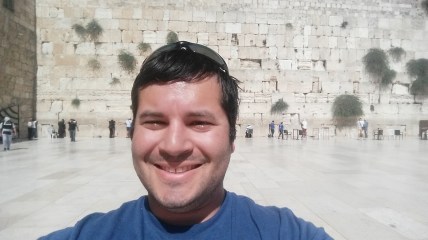
Today, I took my first trip outside of Tel Aviv since making aliyah and went to Jerusalem.  I decided to go to the Kotel, known in English as the “Western Wall” or the “Wailing Wall”.  It’s the last remaining wall of the Second Temple built in Jerusalem for the purposes of Jewish worship.  Basically, it’s the most sacred site on the planet for Jews.

It’s been at least 12 years since I was at the Wall and I was very excited to go back.  My anticipation was building as I made my way through the markets of the Old City.  This was the place my ancestors came from, the site that informs all Jewish spirituality.  Even today’s Jewish rituals and prayers are modeled after the Temple rituals.  The cruelty of the Roman Empire that destroyed the Temple couldn’t defeat our faith.

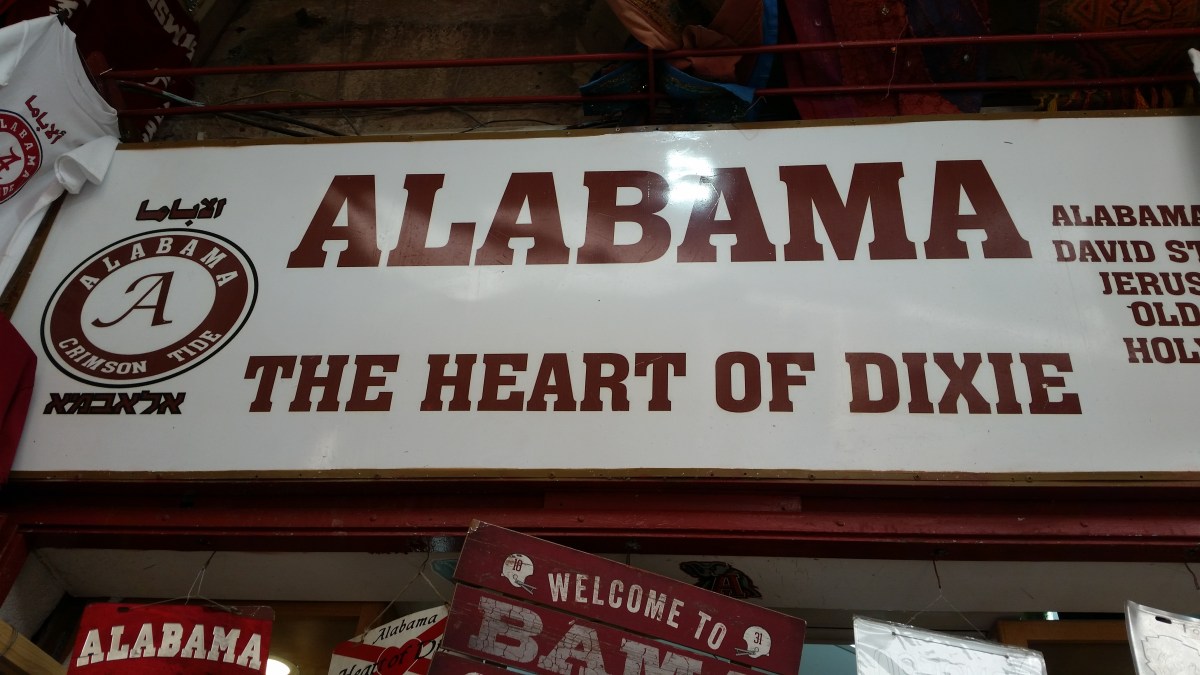
As I thought these powerful thoughts and felt these deep emotions, I came upon a sign that said “Alabama, the heart of Dixie”.  I had to re-read the sign a good two or three times before I realized yes, I was staring at a trilingual sign that said “Alabama” in English, Hebrew, and Arabic.  I felt like I was in some dystopian novel.  On what planet is there a University of Alabama store in the middle of the holiest city on earth?

Sure enough, it was an entire store dedicated to the University of Alabama owned by Arabs.  I met the kids running the store, who were sweet.  I spoke with them in Arabic and it turns out one of the kids’ dads studied at University of Alabama and became a huge fan.  I asked who exactly comes to their store, given the small number of Alabamans in Jerusalem, and they said lots of people came by.  I have to give them props for marketing because it obviously drew me in!

They had mugs and signs that said “Roll Tide” in Hebrew and Arabic.  For especially my Israeli friends who don’t understand this, watch this video.  Alabaman fans are particularly fanatical (about their team) and unabashedly southern, so even as an American it was a total curiosity to see a Palestinian store dedicated to probably the most Republican place in the country.

20170730_15123920170730_151050

And there it was.  I had a great conversation with the kids and their uncle- they’re very funny and friendly.  And then I walked to the Western Wall.

When I got to the wall, I tried praying once and it was pretty good but didn’t feel super powerful.  It ended up being a warm up.

I chatted with some German tourists and then went back for round two.  I grabbed a tallit from some Chabad guys (I was smart enough to tell them from the get-go that I didn’t want to lay tefillin, but of course they tried anyways, and of course I said “no thank you” and did what I wanted).

I then headed back to myself and enshrouded myself in the tallit, giving me a sense of privacy and direct connection to God and my inner spirit.  It was like my own personal synagogue.  I now started to open up.  I noticed a kid next to me.  He was probably in high school.  I had talked to his group earlier- they were Reform students from the U.K., from the same Jewish movement I belong to.  It felt powerful for us to pray next to each other given the Israeli government’s recent rejection of Reform prayer spaces at the Western Wall.

After a few moments, he stood there by myself and just started crying.  It’s one of the most beautiful things I’ve ever seen.  And one of the most sincere.

As I peered through the hole in my tallit at him and heard him wailing, I started to well up with emotion and sob.  I thought of all my ancestors who walked this land.  That their hands built this Temple and this very city.  That it’s because of the sacrifices of millions upon millions of Jews who were butchered mercilessly for over 2,000 years by Babylonians and Greeks and Romans and Catholics and Klansmen and Spaniards and Portuguese and Germans and Poles and Russians and Protestants and Arabs and Muslims and on and on and on.  They laid down their lives for me.  Most of them could only dream and pray for the day when they would be able to return to our homeland and pray at our holiest site.  And I carry their prayers in my heart.

When I decided to make aliyah, some of my friends asked me questions like “do you 20170730_154705.jpgknow anyone there?” and “have you ever been there?”.  Yes I do and yes I have.  If you’re a very active Jew, you almost certainly know people in Israel and you’ve visited.  Totally innocent questions, but ones you might typically ask someone moving somewhere far and exotic like Vietnam or Zimbabwe.
Israel may be Zimbabwe for you, but it is not for me.  Even though before making aliyah I had only been here twice, it is not a strange and foreign place.  While there are for sure cultural differences that I continue to learn about, this is not a colony.  This is not a destination.  This is not a stint abroad.

This is my homeland.  It is the source of my religious beliefs and my cultural heritage.  It is my people whose traditions gave rise to both Christianity and Islam many generations later.  Its stones cry out with the tears and laughter of my forefathers and foremothers.

It is a place that belongs to me as a right that my people have fought long and hard for.  The right to pray at our ancient holy sites free of violence or discrimination.  As recently as 1967, I could not have prayed at the Western Wall because Jordanian troops wouldn’t allow it.

The point is this: I am a Zionist because I believe I am not “moving to a new place” but rather because I am returning to the place I come from.  A place that has room for me to pray in peace at the Western Wall, for my Christians friends to visit the Church of the Holy Sepulchre, and for my Muslim friends to pray at the Al-Aqsa mosque.  And even to own an Alabaman t-shirt shop.

Amen.

20170730_153233.jpg