Every sector of Israeli society in one day

Today, my day started with terrorism and ending with me and some Mizrachim singing Umm Kulthum.

I’m in the (very stressful) process of finding an apartment in Tel Aviv.  I’ve never had such a difficult time finding a place to live in any other city.  The loosely-regulated rental market here is super competitive with sketchy offers abounding.  I’ll find something, it’s just exhausting.

In need of a break, I did something most Tel Avivim would not do when in need of relaxation, and went to Jerusalem.

Having gotten a bit turned around, instead of taking a bus from the Central Bus Station, I actually ended up taking a bus to Kfar Chabad and then a second bus to Jerusalem.  I could detour here and tell you about the adventures of making a highly-improvised bathroom stop between bus rides, but I’ll save that for one-on-one conversations 😉  Israel constantly challenges your definitions of “gross”.

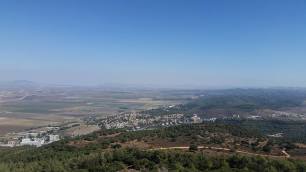
I hopped on the second bus, which incidentally took us partially through the West Bank/Samaria.

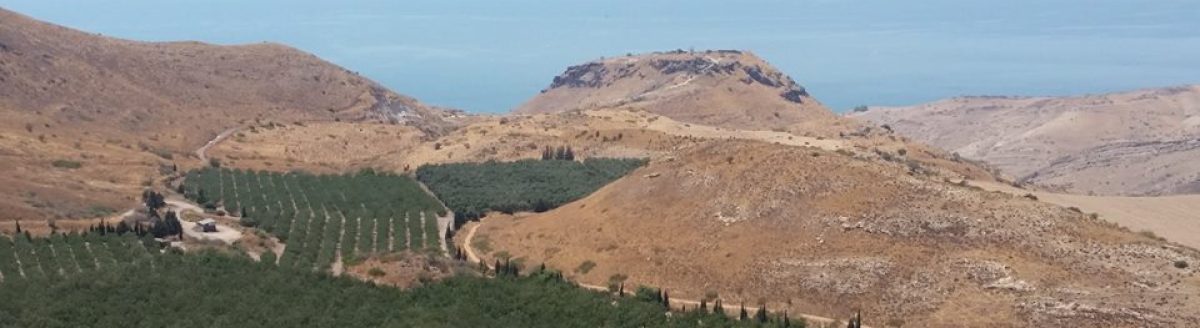
This particular route was gorgeous.  Unlike the main bus lines to Jerusalem, this was totally rural with no traffic whatsoever.  The scenes were idyllic.

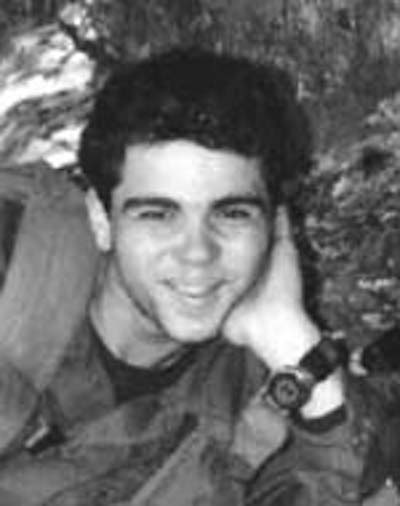
I felt a bit nervous going through this area today as there was a terrorist attack this morning.  Three young men – an Ethiopian Jew, one (I believe) Mizrachi Jew, and one Israeli-Arab – were ruthlessly murdered as they did their job providing security for the community of Har Hadar.  Solomon, Yossef, and Or – may their memory be for a blessing.  I’m praying for their families.  And I was so sad this morning I was frankly at a loss for words- and I still am.

I almost didn’t go to Jerusalem, but in the end- fuck terrorism.  There’s only so much you can control in life and after taking reasonable precautions, I just want to live my life.  Just like these young people would’ve liked to.

Incidentally, we passed by a sign to Har Hadar on the way to Jerusalem.  It’s that small of a country.

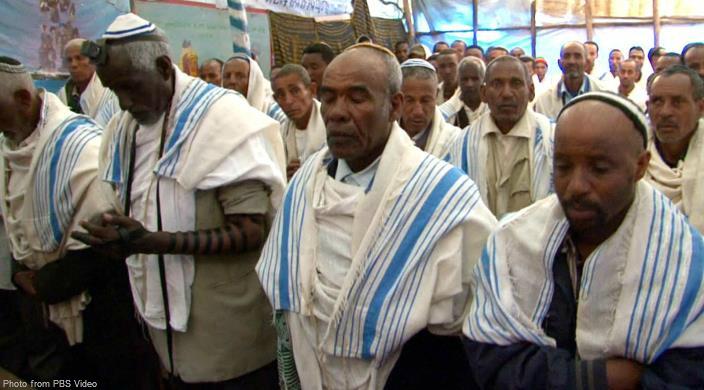
I get to Jerusalem, a bit frazzled, and hop off the bus.  To my right is a sign with bunch of Hasidic posters, one of which was in Yiddish.  I approached two twenty-something Hasidim and asked in Yiddish for them to explain one of the signs.  Turns out, there is a Yiddish-language theater production being broadcast out of Brooklyn into movie-style screens in Jerusalem and Bnei Brak, which they invited me to.

The two young men were Belz Hasidim and for an hour and a half, we spoke in a mixture of Yiddish, Hebrew, and English.  One, Dovid, was born in London and the other, Yankev, grew up in Montreal, another one of my favorite cities.  Yankev was a bit shy, though we spoke a little French together since he learned some in Montreal (and so did I!).  Dovid was a real shmoozer and a sweet guy.  He told me all about yeshiva and how he lamented the lack of Kosher steak in Jerusalem.  He made a point of telling me he doesn’t go to political demonstrations, which reminded me of how I often felt in America having to show I wasn’t one of “those” people in my minority group.  We talked about our favorite Jewish texts.  They love the halachos of Shabbes and I shared with them my favorite Jewish teaching – which, much to my surprise, they didn’t know.  In fact, they asked me to translate it for them into Yiddish, which remarkably I did!

Before leaving, as some people are wont to do here, Dovid shared with me a little bit of prejudice.  He told me, in light of today’s attack, that Arabs aren’t very bright.  I of course challenged him on this and his response, while bigoted, was quintessentially Jewish and kind of funny: “The Arabs aren’t very good at terrorism.  Jews don’t do terrorist attacks but if we did, we’d be better at it.”  So basically, in a phrase that would make the alt-Right twist and squirm and vomit, he said that Jews would make better terrorists than Arabs.  As the father in My Big Greek Wedding would say “the Greeks invented everything.”  I couldn’t help but chuckle.

I headed towards the Old City as two Arab women stopped me.  They asked me in Arabic for directions (how cool is that??) – and surprisingly, thanks to my Arabic and the glory of modern transit apps, I helped them find their way!  In fact, I was headed in the same direction.

We hopped on the train and I froze.  I had walked with them 10 minutes speaking in Arabic but when I got on the train, I was scared to keep talking.  I looked around, and thinking about today’s terrorist attack, I was worried how people might react.  There are legitimate reasons I felt that way, as you can read about here.

As I got off the train, I walked towards the Old City.  I saw an Arab man selling sunglasses.  I approached him and I said I didn’t need any glasses, but I told him he was making me happy so I wanted to give him a gift and handed him some money.  He invited me to sit with him.  We spoke in Arabic (I felt more comfortable out in the open air instead of cramped public transit where, frankly, attacks are more likely so I can understand people’s fear).  Turns out he’s from Hebron in the West Bank/Samaria.  He comes to work in Jerusalem each day.  He doesn’t know any English, so I taught him some English words to help with his marketing.  The poor guy is 60, 70 years old with 10 kids and a two-hour commute each way.  I can’t imagine what today’s terror attack is going to do to his livelihood as transit will slow and work permits may be frozen.  I suppose the terrorist wasn’t thinking of his fellow Palestinians who need to make a living when he shot three people.

The man gave me a big smile and a warm handshake as I headed off to meet my friend Sarah, a Modern Orthodox/Traditional Jew from America.  We ate Kosher pizza and then wandered through the Armenian Quarter, where I had never been.  I love Armenians.  When I was in high school, a friend gave me an Armenian CD which I still have on my computer.  Armenians are so, so similar to Jews.  They are a Diaspora community that survived a genocide and manages to preserve their language and religion.  And they’re pretty cute!

We talked with several Armenian men about their visits to the homeland, their life in Jerusalem, the Armenian Church (they had strong opinions- and not positive ones!), and the Armenian-language schools down the street.  I even got to hear their Armenian-accented Arabic!  One man votes Meretz and his wife votes Likud.  I went to an Armenian restaurant and got a fascinating dessert made out of crushed grapes and walnuts with a string inside.  And, because this is how I roll, I got info on some Armenian tutors- because at some point, that would be fun.

On my bus back to Tel Aviv, I befriended a handsome American tourist named Nicolai.  Non-Jewish and from Wisconsin, we talked the entire hour-long trip about Israel, Judaism, America, Bernie Sanders (we’re fans), and so much more.  A truly open-minded fellow- which is not something to take for granted.  Too many people arrive to Israel with preconceived notions of what it is and isn’t.  He was pretty much an open book.

His phone didn’t have internet, so I walked him 20 minutes to his bus stop and got him on his way home.  Because that’s what we do in Israel- we go out of our way to help others.  I find the generosity that surrounds me here encourages me to be even kinder to people.

I hopped in a monit sherut cab and headed home.  What a day!  Hasidim, Modern Orthodox, Arab-Israelis, Palestinians, tourists, Reform Jews (that’s me!).  What else was missing?

As our Russian driver helped us wind through (largely) secular Tel Aviv, two Mizrachi guys up front started singing.  Koby Peretz, Sarit Hadad, Shimon Buskila- you name it.  Then, to their surprise, I made a request.

“Inta omri,” I said.

Pleasantly surprised that an Ashkenazi would request an Egyptian classic, they started to sing.  And to their delight- I joined in.

On a day when a deranged man tried to break the place I call home, I started the day with his hatred and I ended it by singing with Jews in Arabic.

And in-between, I hung out with every sector of Israeli society.

Want to write public policy papers about how to solve the Middle East conflict?  Go for it- maybe they could help.  Honestly, I don’t know.

What I do know is I probably won’t have time for your conference.  Because I’m going to be speaking Yiddish with Hasidim, training a Palestinian in marketing, and singing Mizrachi music in a cab.  I’ll be getting to know my neighbors.  Just like Solomon, Yossef, and Or would’ve wanted.
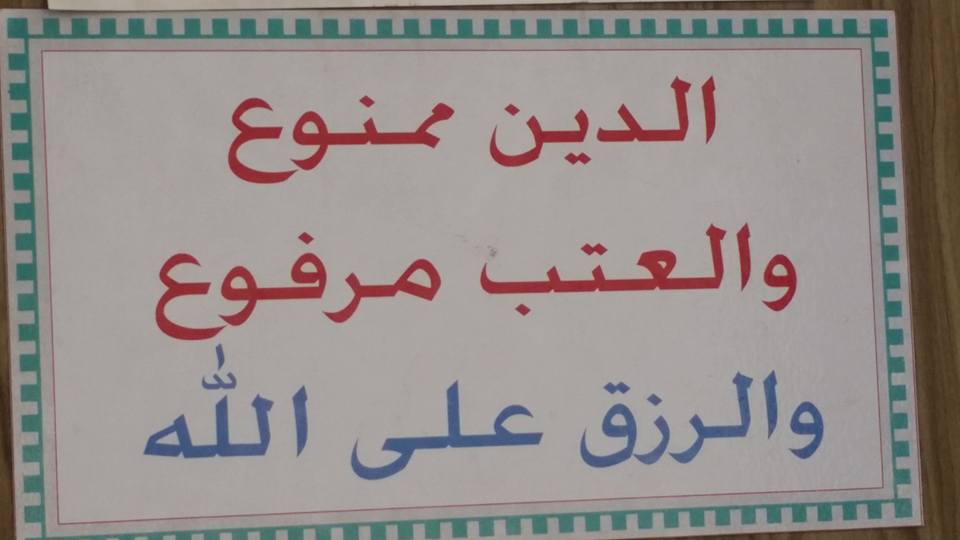
A 2:00 am Arabic lesson

I spent all day looking at (five) apartments and was exhausted!  I treated myself to a stroll along the beach until I found myself in Yafo, my favorite place to get away.

I grabbed a delicious melon ice cream, served in a frozen melon, and grabbed a seat outside.  Nearby there was a young Arab kid named Muhammad.  We struck up a conversation in a mix of Hebrew and Arabic and I asked if I could sit with him.

Muhammad is a 25 year old tow-truck driver from Kfar Qasem, incidentally the village where my friend Sara is from from a previous story I shared on my blog.  Much like my beloved Daliat Al Karmel and Yafo itself, certain towns seem to find their way into my heart over and over again.  American Jews would call that bashert.

He’s a sweet kid- he speaks fluent Hebrew and Arabic…and Turkish!  He’s gone on a half dozen trips to Turkey and is going for a month again this year.  He was even recommending resorts and cities for me to visit there.  He learned his Turkish from soap operas.  It’s nice to know that both Jews and Arabs do that here (so many Jews here speak Spanish thanks to telenovelas).

Because this is Israel, things quickly got personal.  Nice to know that intense sharing about deeply held opinions when you first meet someone isn’t just a Jewish trait here!  Muhammad says that when he first talks to Jewish customers over the phone, they are so relieved that their car will get off the road and back to safety that they offer to make him tea and invite him over.  Then, when he arrives to help them and they see his face, the conversation freezes and he feels they are afraid of him “cutting off their heads”.

I told him I thought that was sad, and then his response was even sadder: “I’ve gotten used to it, it’s always been that way.”  You know there’s some real toxicity to heal from here when a young man like this feels resigned to the mutual distrust that exists between so many Jews and Arabs here.

At this point he leans over to pull up something on Youtube.

While he’s pulling up the video, his friend Mamdooh tells me about his family.  His family arrived from Libya during a war with Italy and lives in Ramle.  Yes, re-read that sentence about 10 times.  His Muslim Arab family arrived to present-day Israel 100 yeras ago from Libya.  I was baffled.  I had heard some about Arab labor migrations from neighboring countries to Ottoman (and Mandatory) Palestine, but never had I heard of his family’s 6,000 person Libyan clan in Ramle.  Apparently, his family and a neighboring family (keep in mind “family” means thousands of people) engaged in a several year blood feud resulting in 40+ deaths in the 1990s.  He said a sheikh intervened to end it, but even to this day it’d be too difficult to try to marry the other family.  I told him that sounded sad and he agreed with a gentle nod of the head.

As we munched on loads of malabi (which they of course gave me for free), Muhammad came back to show me the Youtube video.  It was an Arabic-subtitled Hebrew video (kind of like an Arab MEMRI) of a Haredi classroom talking about the Temple Mount.  Honestly, I couldn’t hear the video that well, but it was clear that racist things were being said about Arabs.  I told him that that video sounded offensive and that it’s also important not to judge entire groups of people based on one video.  I even had the chance to teach him about Reform Judaism.  I reminded him that there are closed-minded and open-minded people in every community.

“Like you” he said as I mouthed the words “open-minded”.

My heart swelled.  I’ve had a lot of powerful moments here in Israel.  Tonight may take the cake with this one comment.  I saw that I had made a difference in this one man’s life and it made me feel hopeful- and proud.

The conversation turned back to fun things- because in Israel, life fluctuates rapidly between the bitter and the sweetest of the sweet.  Muhammad showed me Youtube videos of techno dabke music from Nablus.  In a sentence that would suffice for a linguistic anthropology thesis, he said: “shoof al-dabke min Shchem”.  Look at the dabke from Shchem.  Which is to say, in an Arabic-language sentence, he used the Hebrew word for a Palestinian city in the West Bank/Samaria.

Before I headed home at 2am, Muhammad invited me to visit him in Kfar Qasem and we exchanged numbers.  He said he hangs out with his friends in Yafo pretty much every night- and told me to come back.

Some of you might know I speak eight languages fluently.  I speak a few more to varying degrees.  Throughout my life, there have been people telling me what I should do with them.  That I should work for the CIA or the FBI.  That I should be a translator.  That I should do this or that.

Guess what?  While you’re pondering what you think I should be doing with my life, I’m using my languages to enrich mine – and others’.  What do I do with my languages?  I do what I did tonight.  I make friends, I explore the world, I learn from others, I change minds.

Want to wring your hands about what I should do?  I’ll be too busy to notice.  I’ll be hanging out in downtown Yafo, as the lights go dim, eating malabi, and laughing with friends as the Arabic blends into Hebrew back into Arabic.  And the sun rises on another life-changing day in the land I call home.

Norwegian-Persian Jews

I didn’t fully appreciate the diversity of Israeli Jews until I made aliyah.  Yes, I had visited on trips, but you don’t get to know people with the same degree of depth.  One of the things I love about American Jewry is the cultural cohesion and unity.  And one of the things I love about Israeli Judaism is how incredibly diverse it is.

Last week, I was in Jerusalem.  My friend and I went to a Thai restaurant.  We were joking around with the guy behind the counter.  Turns out, he’s a half Kurdish half Moroccan Jew.  We joked about him finding us a fourth person so we could all go on a double date.  He said he’d be happy to take us to a Kurdish restaurant down the street and then taught me some Kurdish.  Right, my Jewish Thai restaurant waiter offered to teach me the Kurdish his grandparents say around the dinner table.  Chew on that one for a while.

This past weekend, I hung out with a bunch of vegan hippie Jews at a commune in Tel Aviv.  As they munched on lentils and drank home-brewed Kombucha with shouts of “lechaim”, I met a half Norwegian half Persian Jewish filmmaker.  Yes, both halves are Jewish.  Apparently, her grandparents on either side only spoke their native language (Norwegian and Judeo-Persian), so they couldn’t communicate with each other!  Luckily, this talented young woman speaks both Norwegian and Farsi and even spent two years living in Norway.

Today I hung out in Bnei Brak.  While I was buying some books and music, I befriended the two salesmen.  One, who looked quite clearly Ashkenazi, was a Vizhnitzer Hasid and a Yiddish speaker.  We had fun shmoozing a bisl in the mamaloshn.  Turns out, he also understands Dutch- his mother’s family is from the Netherlands.  Oh and his father was born in Switzerland, where his parents were working for the Jewish Agency.  For people who know the politics of Hasidim and Zionism, take a moment to digest that one for a bit.

The other Hasid in the store looked more tan skinned, so I mistakenly assumed he was Mizrachi (there are Mizrachi Hasidim).  Turns out, he’s just like me- an Ashkenazi Jew who kept his Middle Eastern complexion even in the Diaspora 😉 .  Guess there isn’t just one “Ashkenazi look” after all.  Now brace yourselves for a real kicker.  His family made aliyah…from Mauritius.  Right, so basically his family escaped the Nazis but the British refused to let them into Mandatory Palestine.  So they sent them to a bunch of islands in the Indian Ocean.  To this day, his family likes to tell stories of what it was like there.

I could literally go on and on with examples- my friend who is half Serbian half Moroccan and works at a Kosher Georgian restaurant, my half Iraqi half Ashkenazi female rabbi, my half Italian half Ashkenazi friend married to a Cherokee Jew!  The diversity here is endless.  If your image of Israel is that everyone looks like Andy Samberg, you’re in for a major shock.  And I’m saying this as someone who would very much like a country of Andy Sambergs- what a cute Jewish boy!!

Israel is an incredible fusion of hundreds of Jewish cultures from around the world, preserved for 2,000 years and reuniting and reconfiguring meaning.  I definitely miss my American Yiddishkeit, a force that unites the 90% of American Jews who are Ashkenazi with a shared humor, cuisine, and dialect.  The good part about Israel is that in the absence of a unifying Judaism, there is the freedom to mix and match.  It’s truly a place where no one can say, as someone told me on a temple trip in 5th grade: “you don’t look Jewish.”


My Druze, Muslim, Orthodox, Reform Rosh Hashanah

Tonight, Rosh Hashanah ended.  As a Reform Jew, I observe one day of the holiday, which you can read about here.  I had amazing meals with friends, went to services for a taste of home, was greeted everywhere with Shanah Tovah, and even ate sushi 😉

This evening, I decided to go Israeli dancing.  Anyone who’s known me for a while knows that I love Israeli dancing- it’s one of the first things I did in Israel.

I go to this marathon event (it goes till 6am!) and there are hundreds- I mean hundreds- of people.  All ages, all attires (I even saw a bustier), and tons of enthusiasm.  There’s even a guy I know from dancing in DC.  Because, Jews 🙂  The music was booming- there was even a live band to accompany the music!  They had a screen that showed a picture of each singer, the name of the song, and a running clock of how long the marathon had gone on!  I recognized so many of the songs I danced to at home- it was fantastic.

During couples dancing (which I tend to avoid unless I’m with a friend- some of the middle aged women can get frisky!), I stepped aside to rest.  I saw this cute guy so I started talking to him.  I wished him “chag sameach”, a happy holiday.  He said “what holiday?”  I said “oh are you not Jewish?”  And turns out, he wasn’t.  He was just working the event.  In fact, he’s an Arab Muslim from Nazareth named Muhammad Abbas.  Poor guy’s name is so, so close to the name of the leader of the Palestinian Authority that pretty much nobody, Arab or Jewish, really likes.

He’s a student at Tel Aviv University studying English literature.  He only listens to American music and he loves dark, intense American novels.  We talked in Hebrew and Arabic about American film and literature (I recommended he watch Office Space for a clever satirical movie), and he stepped outside to work.

Then it hit me- I owed him an apology.  Growing up as 2% of the American population, I was constantly barraged with “Merry Christmas” for a two month period every year.  I don’t begrudge anyone saying Merry Christmas- I just don’t want it said to me because it’s not my holiday.  I stepped outside and I apologized to him for assuming he was Jewish.  He took it totally in stride and laughed it off.  We also both knew that this year, the Muslim New Year falls on the same day, so I ended up being right in wishing him a Happy New Year 🙂 .  In the end, I do feel like I owed him an apology because I made an assumption about him and it wasn’t the way I like to treat people (or be treated).  Just goes to show that you can’t assume a cute Semitic-looking boy here is Jewish!

At this point, a man selling food in Hebrew with an Arab accent starts talking to me saying not to worry about my holiday faux pas.  That we’re all people and it’s good to wish each other blessings.  This man, Ramzi, is from the magical place called Daliat Al Karmel.  This place entrances me.  If you’ve followed my blog, you know that in the course of 2 months in Israel, I’ve been there twice.  That it has a special magic- the people, the trees, the view- that I have seen in few places in the world.  And this man, just for this event, happened to be selling Druze pita in Tel Aviv!  He lives up North!

We switch over to Arabic (and back and forth to Hebrew and English) as we talk about life and his village.  He invited me to come visit him.  You ready for a real twist?  He owns a Matah – an orchard.  My Hebrew name, which I chose when making aliyah and is extremely unique, is also Matah מטע.  He invited me to come up whenever I want and we’re going to hang out on his orchard.

As if my night couldn’t get any more fabulous or diverse, on my way home I see an Orthodox family by an ambulance.  In America, you’d pretty much say a prayer for them in your head and move on- not wanting to invade their space.  Since this is Israel, I did the exact opposite.  I walked over and asked if I could help.  One woman said she couldn’t ask because I was Jewish (Orthodox Jews believe that it is not permissible to make another Jew work on a holiday).  The other woman, perhaps in an act of pragmatism, simply told me they needed a cab, so I ordered it.  I’ve spent enough time in pluralistic Jewish circles to know that even if Orthodox Jews can’t ask me to do something on Rosh Hashanah, if I just do it, it’s acceptable.

I ordered a cab but just in time, another one came by and they got in.  Luckily it was nothing life-threatening, but it looked like their little girl had a wound on her head.  I hope she’s feeling better.

As I walked away, I wished them a Shanah Tovah.  I knew they were celebrating my holiday 🙂 .  They shouted back with a smile “ktivah vechatimah tovah” – may God write you a good year in the Book of Life.

On my way home, I realized just what an amazing holiday I had had.  In the course of one day, I went from Reform services to Israeli dancing to hanging out with a Muslim friend to talking with Druze and helping Orthodox Jews.

This is my country.  Where every fiber of my being is filled with meaning.  I couldn’t be prouder to start a new life and a new year in Israel.  My diverse, caring, and wonder-filled home.

Shanah tovah from the place where miracles aren’t on 34th street- they’re on every corner.

The Mediterranean is my mikvah

Today, I really started feeling Rosh Hashanah.  I did some reflecting on the holiday and decided I wanted to adapt a Jewish tradition I learned about in the States.  Some people go to the Mikvah, the Jewish ritual bath, before the start of the New Year.  The idea is to cleanse yourself- to leave behind the sins, the hurt, the “shmutz”.

When I was in America, I would go to what most religious Jews would recognize as a mikvah- an indoor space where you disrobe and go through a series of ritual dunks and blessings.

Here in Israel, I tried something different.  I bought five rolls of old bread from the grocery store and headed to the beach.  I looked for something sweet to eat along the way for a sweet New Year and drank my first Israeli bag of chocolate milk (yes, that is a thing!).  I felt it was appropriate because as I’m keeping my Jewish customs alive I’m also adding to them.  A nice modern and Israeli twist.

I started by doing the Tashlich ceremony.  Tashlich is where we symbolically cast away our sins by throwing them into flowing water.  With the first few rolls, I hurled them into the sea as I thought about how I had hurt others or myself during the past year.  Then, I did something unconventional (I’m a Reform Jew and reform is a verb- so we believe in an ever evolving Judaism)- I threw a few rolls to chuck away the sins others had committed against me.  I asked God for forgiveness for the hurt I had caused and for justice to be served towards those who had hurt me.  I asked for healing for my body and soul from the pain and I asked God to send healing to those who I had hurt.

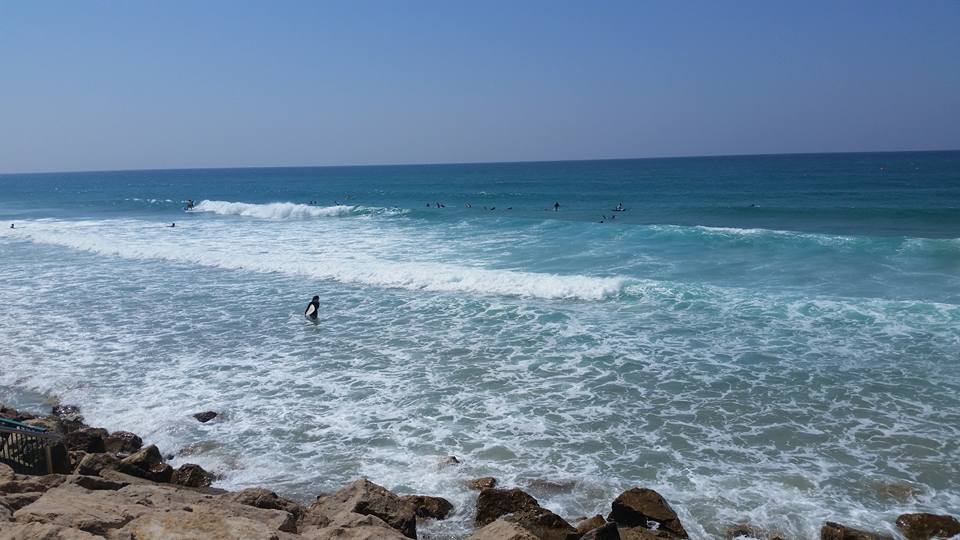
Then, I undressed (except for my bathing suit- a dunk in the mikvah is usually naked but I had to adapt since people were still walking along the beach- even Tel Aviv has limits 😉 ).  In an indoor mikvah, there are seven steps you walk down to get into the water.  So I simply walked seven steps into the Mediterranean, talked out loud to God about my hopes for the year, made the bracha, and took a dunk.  Each time I felt lighter and lighter.  I looked up at the stars, listened to the waves crashing, and thought to myself that really everything is bigger in Israel.  Instead of an aisle dedicated to your food at the grocery store, the whole store is your food.  Instead of holiday greetings being limited to the walls of a synagogue, you can say “shanah tovah” to any stranger on the street. Instead of a mikvah inside a synagogue, you’ve got the entire Mediterranean where your ancestors sailed.

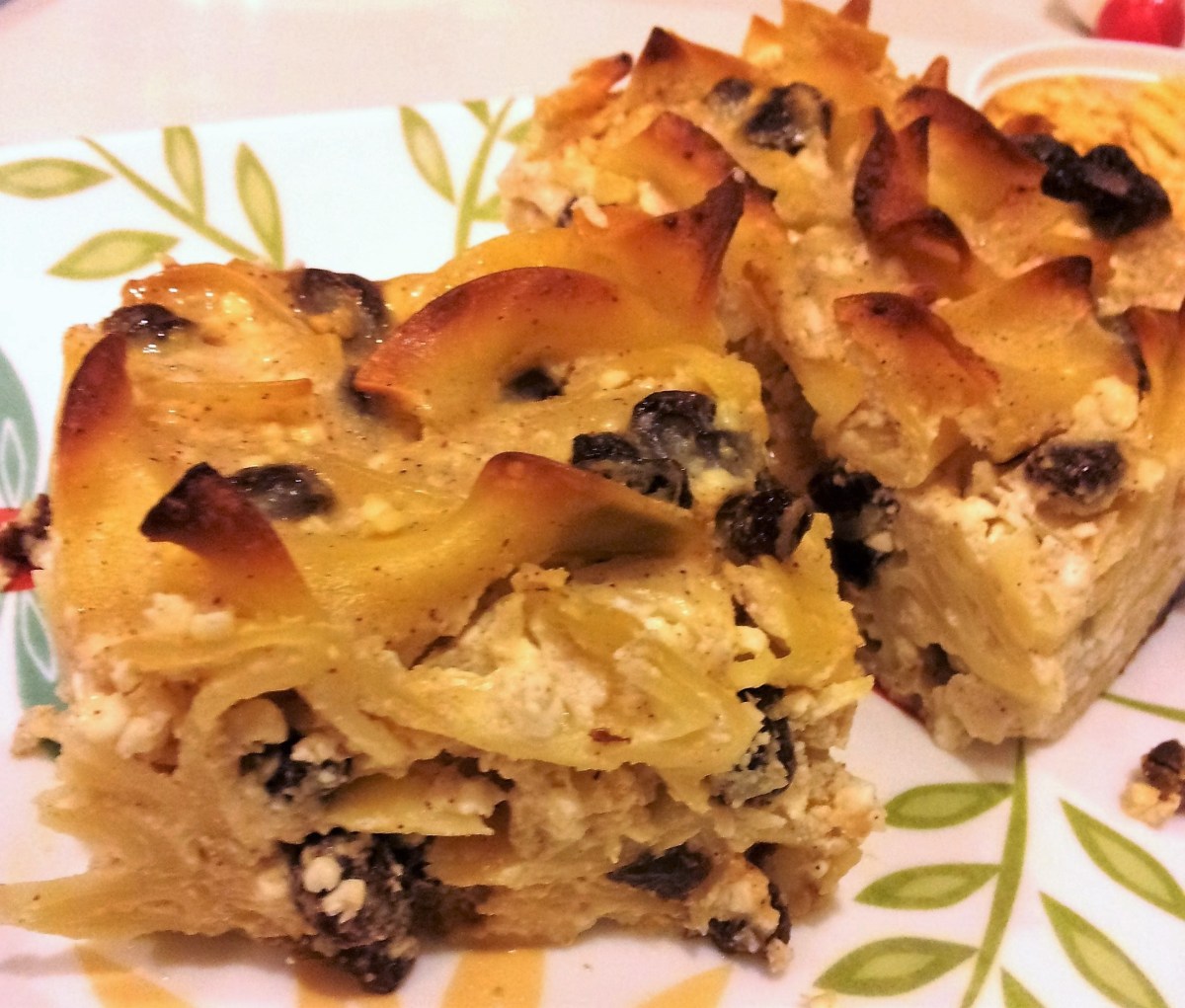
There are things I miss about American Judaism.  For one, it took me two separate trips to grocery stores here to get ingredients for dairy kugel!  And literally one store didn’t even have sour cream- thank God the Russians here appreciate this food so I found it at one of their stores.  I miss the rituality of American Judaism- I even found myself watching Youtube videos of Rosh Hashanah services at Reform synagogues to hear my favorite melodies and prayers.

What is amazing about Israel is that you can take these traditions and, in a completely spontaneous fashion, riff off of them.  Theoretically, I could’ve done a mikvah dunk in the Potomac River (although it might’ve required a lot of showers afterwards!), but I never thought of it.  Here, this whole country is a Jewish playground.  The sky is the limit.  Especially when you’re staring at it from your planet-sized mikvah.

My First Israeli Rosh Hashanah

Yesterday, I walked by a Breslover Hasid on the street doing his typical goofy (and cute) stuff to make people smile.  After I bought a sticker, he wished me “shanah tovah” – a happy new year.  I had to pause for a second.  Is it really that soon?  Is Rosh Hashanah only a week away?

And then I had another thought- other than a Jewish person I already knew, nobody in my life has wished me “shanah tovah” on the street.  If you want to understand in one interaction why I’m here, it’s that.  Something most Israelis don’t even notice because they’ve lived in a Jewish-majority society their whole lives is something very unique and special for me.  I’m validated on every street corner.

Then I got to thinking- what does Rosh Hashanah mean to me as a new Israeli?  I’ve never been here during holidays- only during summer trips.  What is it like?  I found out my synagogue doesn’t have first day Rosh Hashanah services- something unimaginable for an American synagogue.  For American Jews, the High Holidays (yamim noraim) are THE event of the year.  Millions of people who don’t regularly participate in any other aspect of Jewish life will still go to shul.  More secular Israelis may simply do a holiday meal.  But American Jews en masse go to synagogue- for hours and hours.  And they pay a lot of money for it.  It’s a very interesting difference.

In America, Ashkenazi Jews have our special foods.  For Rosh Hashanah or Yom Kippur break-fast, I remember eating sweet dairy kugel, amazing bagels, lox, whitefish salad, 5 varieties of cream cheese (including lox spread!), black and white cookies, dense American rugelach, matzah ball soup, chopped liver, egg salad, herring, you name it.  Israeli salads and Sephardi foods are delicious, they are just not what I grew up with as Jewish food because I’m Ashkenazi like 90% of American Jews.

Before the holiday, everyone runs around to get the food ready and pick up their spreads, greeting each other in our Jewish English sprinkled with Yiddish.  At my synagogue, you had to pick up your tickets in advance- because we don’t have a government that pays for our synagogues, we have to pay ourselves.  You get to synagogue and you’re dressed to the nines- suits, ties, high heels.  Here in Israel, the only time I’ve seen a suit is on a Haredi person!  There are people here who have “wedding jeans”.  We’d all eat together before going to synagogue.  The way I grew up I’d go to Erev Rosh Hashanah services followed by a 3 hour morning services.  Most Reform Jews don’t observe the second day.

I was lucky enough to grow up in an area with a large Jewish community, so public schools were closed.  But in the vast, vast majority of the U.S., schools and offices and transportation are open- and you need to request time off to observe it, which is not always as simple as it sounds.  In the U.S., Rosh Hashanah is special because of what you do at synagogue with your community and at home.  And it can be very special- very intimate.  Like you’re part of this cool 4,000 year old club.  Because outside your home, it is invisible.  When Israelis wonder why Americans go to synagogue, this is one of the reasons- to have a space to be Jewish.  At 2% of the population, there are no TV ads that wish you “shanah tovah”.  If you don’t make the space, there is no Jewish community.

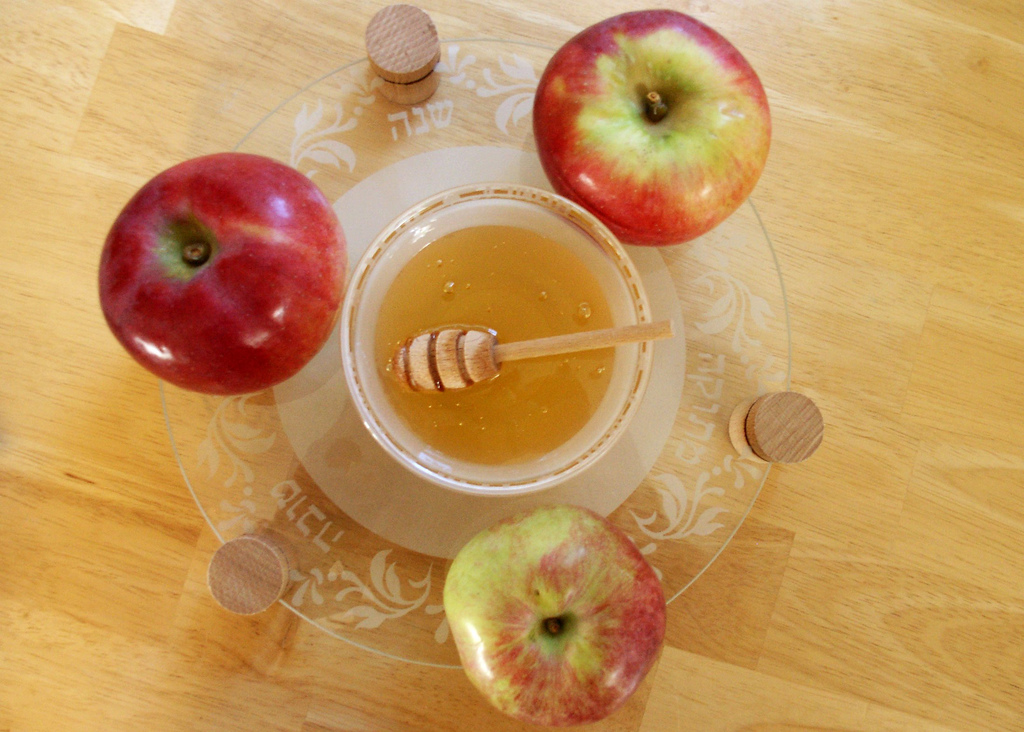
Here, it is everywhere.  I was at a bakery last night and I noticed an ad for five different types of honey cakes (oh yeah, we eat those too in America).  These are cakes you eat specially for Rosh Hashanah.  I was in shock.  In America you have to know where to go to find these.  The local Au Bon Pain won’t be selling them.

I don’t really know what Rosh Hashanah will be like here.  I’m a bit anxious.  I’m a religious Reform Jew and it matters to me.  And yet on some level I feel less a need to go to all the services and more of a need to build community, especially in light of the fact that I’m here alone.  I also feel that if all I do is have holiday meals, that won’t be enough.  I believe in God and I want to pray for a good year and renewal.

My Judaism here is evolving, in ways I didn’t even expect.  This year was a hard one and one of immense personal growth and fortitude.  I sometimes miss being a Jew in America- the foods I know that are almost invisible here.  The heimish religious communities where if you are participating, it’s because you really care about your Judaism.  Because you don’t have to.  Here, you’re Jewish by default.  There’s something beautiful in how “normal” Judaism is here.  And I also feel like in some ways for that reason it can be easy for Jews here to lose sight of how special our tradition is.

My hope for this year is that I can embrace the beauty of a country where I can walk down the street and see myself in every street sign, every ad, in a Hasid with a clown nose wishing me a shanah tovah.  And where I can share some of my special American Jewish spirit so people here remember just how rich our tradition and spirituality is- and that it will only continue if we cherish it.

Wishing you all a Shanah Tovah- a good new year.  May it be filled with happiness, hope, community, and freedom.  A zisn yor – a sweet new year.  May it be as sweet as the dairy kugel I’m going to bake 😉

Arab by association

Today, I went to a settlement.  Ariel is a beautiful city of 20,000 a little over an hour by bus from Tel Aviv.  It’s located beyond the Green Line in Samaria (Hebrew: Shomron).  This area is called Shomron because that’s the name of the ancient Jewish capital of the Northern Kingdom of Israel that was in this vicinity.  To most Israelis, this is Israel (larger settlements like this tend to be part of the national consensus).  To international organizations, this area is often known as the West Bank.  And to most Palestinians, it’s part of Palestine.

This is not a typical tourist spot for Reform Jews or part of the Gay Pride Circuit, so I had never been here before (as a queer Reform Jew).  I’m a curious guy and open to new things, so I hopped on a bus.

The most interesting thing about Ariel is that it’s not interesting.  I don’t say that to be mean- there are actually some attractions in the area like stalactite caves and an archeological site of a 3,000 year old Jewish city.  Unfortunately, because this is a small town, none of that was open or easy to get to.

What I mean is that it’s very normal.  I think the image me (and many progressive Jews and non-Jews) have in our mind of a settlement is an Orthodox family of 16 living in a trailer on a hilltop beating up Arabs.  Just to be clear- there’s nothing wrong with an Orthodox family of 16, it’s just that I think many people think about settlements as a caricature, not realizing their diversity.

Ariel is possibly the most (Jewishly) integrated city I’ve been in in Israel.  There are loads of secular people, there are Russians, there are Ashkenazim, there are Mizrachim (blasting some cool Mizrachi music I stopped and listened to).  There’s a Kosher Mexican restaurant and a non-Kosher restaurant with Thai food.  There are men in yarmulkes and women in tattered jeans with purple hair.  There are judo lessons and piano concerts and even a mall.  There are Palestinian workers and there are Arab-Israeli students at the local university.

It’s also beautiful:

The truth is, in a lot of ways, Ariel is like any other city.  I think it’d behoove people of all backgrounds, particularly from the progressive world I come from, to understand there are many reasons people might live in a settlement.  For some people, it’s just about affordability.  Other people might like the view.  And for some people, it’s a religious statement.  For religious Jews, this is the land God promised us.  And the West Bank/Shomron was an integral part of Jewish history for thousands of years and is still home to many sacred sites.  I’m not interested in the politics, I just want people to understand that if you can’t put yourself in the shoes of a religious Jew who wants to live in the land of their ancestors, you’re not going to do a great job of figuring out how we can all live together.  Empathy is about understanding where other people come from even if you disagree.  People are complex and come in all shades of good and bad- including settlers.

As I prepared to catch my bus back to Tel Aviv (the West Bank is really, really close- you can see Tel Aviv from Ariel), I started to well up.  I wasn’t sure why at first, but I figured it out.  I snuck over to some bushes and just started balling.  As much as I liked exploring Ariel today, I just couldn’t help but think about the Palestinian villages I could see on the hilltops.  What was life like there?  First-hand- I don’t really know.  If we were elsewhere in Israel, I could just hop on a bus and go find out.  But reality here is a bit starker.  Due to the complicated situation (on both sides), I can’t just hop on a bus and visit a Palestinian village.  I’m not even sure if/where it’s legal to do so.  Or safe.  The situation made me so sad and the tears came down.  I hate seeing the world broken.

I told myself that whenever I’m feeling despondent here, something magical happens to lift my spirits.  And I was right.  As I was waiting for the bus, I saw a familiar face.  Sarah is a Muslim Arab-Israeli I met through a Hebrew-Arabic practice group in Tel Aviv.  What are the odds that my first time visiting a settlement I bump into an Arab friend when I’ve only been here for two months?  There are coincidences and then there’s bashert.

We hopped on the bus and I asked if I could sit next to her (important detail).  We got to talking about Arabic dialects in Israel (I’m trying to figure out which ones to study- I already speak Syrian which is intelligible but want to get more local too).  We spoke in a mixture of Hebrew and Arabic.  She told me about her work at Ariel University (that’s right- she works at a college in a settlement) and her work with promoting Hebrew language studies for Arabs in her town of Kafr Qasim.

Then we pulled up to a checkpoint.  I’m glad there’s security to make sure everyone is safe.  That being said, something fishy happened.  Two guards came on board and walked around, but the only person they asked for ID from was the Muslim Arab woman in a hijab next to me- my friend Sarah.  There wasn’t even the illusion of not profiling her.  Then they looked at me sitting next to her: “Are you with her?”  My answer (as I sat there fairly scared shitless): “We’re friends”.  At that point, the guards requested my ID.  After some skeptical glances, they gave us our IDs back and left the bus.

I asked Sarah if they always asked her for her ID.  She said yes.  She also said that if I hadn’t been sitting next to her, they wouldn’t have asked for mine either.  I said that I knew.  It was kind of a scary experience for me, and I’m sure it’s upsetting for Sarah too even if she has resigned herself to it.  Sarah is a full Israeli citizen born and raised.  I’m not sure why a terrorist would be dumb enough to put on a hijab, but I’ll take at face value that anyone could be a threat and the guards have a stressful job.  That being said, check everyone’s ID, keep people safer, and stop being racist.  It’s a win-win.

I have to say I’m proud of myself.  When I was asked if I was with Sarah, the easy way out would’ve been to say that I don’t know her or barely know her.  But the words that came out of my mouth, under pressure, were “we’re friends”.  If that makes me an Arab by association, so be it.  I’m a human being and damn proud of it.

Sarah got off the bus and I headed back to Tel Aviv.  I couldn’t help but thinking about what an overwhelming day I had.  Full of meaning and also a lot to process.  How I try to find humanity in every community- settlers, Arab-Israelis, Palestinians- everyone.  And how that can be really hard.

Israel is a verb.  It means “wrestles with God”.  It would’ve been easier for me to sit static on the beach today (and frankly I might need that after this trip).  But instead, I moved, I wrestled.  I went by myself to a place where most people I know have never stepped foot.  It was interesting, it was hard, it was brave.  I’m proud of myself.

As I got off the bus, I thanked the driver in Hebrew, assuming he was Jewish.  He responded back “ma3 asalaameh” – that’s Arabic for goodbye.  He winked at me and I smiled back.  Guardian angels come in all shapes and sizes 🙂 .


Hitchhiking on a Druze golf cart

Tonight was rough.  I had an amazing Shabbat which included hosting American students, Reform services, Libyan food, the beach, and an Israeli techno party.  After all that, I headed to the America Restaurant on Ibn Gvirol only to find all sorts of Trump-themed and racist paraphernalia.  It was an unwelcome surprise for someone who came here to get away from that.  I felt angry and typecast.  The only good part was my excellent company and the mac n cheese.  I headed home feeling deflated and wondering why I was here.  It’s hard to be a Jew in America and it’s hard to be American in Israel.

After blowing off some steam, I decided to write about my trip to Daliat Al Karmel and Haifa.  Because there, I felt the inspiration that can happen in Israel.

Let’s start in Daliat Al Karmel.  A beautiful Druze village, I loved exploring every nook and cranny.  I had heard there was a monastery nearby, so I made my way by foot.  Each person I asked for directions told me it was 5 minutes away.  I asked four people the same question, so needless to say it was more than 5 minutes away.  After 30-40 minutes in the heat, I saw a golf cart heading towards me.  I asked the man and his son in Arabic for a lift- and so I hitchhiked with the Druze family to the monastery.

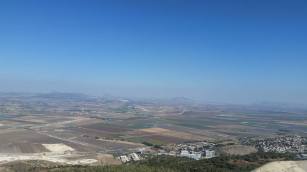
This place is gorgeous.  On top of the roof, you can see all of Israel’s North.  It looks like this:

21433059_10101541044621052_5796979956103695357_n21433261_10101541044246802_1998713033793038133_n21462588_10101541044531232_5301219092773346993_n21557439_10101541044850592_4218424586938077001_n

I felt at peace.  Tel Aviv is a disgusting dirty city.  It’s a fun place.  It’s filled with youth and queer people and the beach and a million and a half cultures.  But it’s gross.  And loud.  The North is peaceful.  It is where I go to meditate and connect with God.

Realizing I was far away from the village bus and in need of a way home, I talked to the Druze guy who worked at the front desk.  Since this is Israel, there is ALWAYS a solution.  A priest from the monastery was headed back to Haifa, where I was staying.

I ran after his car and hopped in.  The generous and kind Italian priest drove me the entire 45 minute ride.  He spoke decent Spanish and I speak Spanish so we talked that way- in “Itañol” as he called it 🙂 .  He works for a Roman Catholic church in Haifa that cooperates with Greek Catholics and Maronites- both of whom are also in communion with Rome.  He loves life in Israel and wants to stay.  He even did an ulpan- although he was frustrated that the teacher only explained things in Russian!  25% of Haifa is Russian so it makes sense.  Kind of funny that the words he learned in ulpan were zdrastvootie and pazhalsta haha.

I then went out in Haifa to check out the nightlife.  I connected with some Americans teaching English in Haifa, which was great.  It’s nice to get a dose of the motherland once in a while 🙂  I was then headed home when I heard Arabic music blasting from a sushi bar.  I immediately went inside and found an entirely Arab sushi restaurant singing and dancing.  I joined in, started clapping and dancing.  It is hands down the most fun I’ve had since arriving in Israel.  And there’s wasn’t a Jew in sight.  Because it would probably never occur to a Sabra to step foot in this place.  I’m pretty fearless and open-minded, so I said what the hell.

The next thing I know, the music stopped and the bartender starts belting out some amazing Arabic tunes.  And he. is. GOOD.  Everyone starts swinging and swaying and banging on the bar.

It’s 3:30am and I head home.  I can’t help but think now how my Americanness helped make these moments possible.  My multilingual interactions.  My trust of Druze and Arabs.  My appreciation for all religious traditions.

Because my American identity isn’t a metaphor.  And it’s not a Britney Spears concert or a goofy picture of Donald Trump or a selfie in Times Square.

It’s my appreciation for diversity.  My willingness to listen.  My open-mindedness and my love for my neighbors- Muslim, Christian, Jewish, Hindu, Buddhist, you name it.

When I made aliyah, some Sabras told me not to hang out too much with other Americans.  Not to be too diasporic.

Bullshit.  My American identity makes me a better Israeli.  Quite a number of Jews here speak better German than Arabic and know more about Berlin than Kafr Qasem.

I intend to be part of the solution here as an American-Israeli.  Instead of throwing shade, hop on the golf cart with me.  We’ll climb atop a monastery in the middle of nowhere.  We’ll stare out at the North and realize that anything is possible if you just let yourself dream.  The American-Israeli dream.

A Kavkazi soldier died in battle today

Tonight, after a delicious dinner of Kavkazi dumpling soup, I met Ruslan Yosifov.  Ruslan was killed 20 years ago today by a roadside bomb in Lebanon.

How did I get to meet this brave young man?  Let’s start from the beginning.

I was walking around exploring Ramat Gan, an interesting and diverse suburb of Tel Aviv.  I was feeling hungry after a day of trekking around so I got really excited when I saw the sign “Restaurant Uzbekistan”.  It’s a Kavkazi-owned restaurant that serves Kavkazi, Georgian, and Bukharan food.  I jumped in and ordered Dushpara.  Honestly, it kind of reminds me of a Central Asian wonton soup with a little vinegar.  De-licious!

I got to talking with a handsome young man who works in the restaurant.  His name is Adam and he’s half Kavkazi and half Russian.  He was born and raised in Israel but has relatives in Siberia and Vladivostok.

He just got back from a trip to Russia and he told how he had had an issue with his cell phone there but nobody in Russia would help him.  He spent an hour just trying to get someone to help him fix his phone before boarding a train to Siberia.  He told me this would never happen in Israel because we’re family here.  If you need something, you just ask for it and people help.

I told him I’ve had the exact same experience.  In the U.S., my experience is that people are more suspicious of each other.  If someone asks you for help, you often wonder what their motive is, especially if it’s a stranger.  To the contrary, today in Israel I hitchhiked for the first time in my life and it went…totally fine.  I had a great conversation too!  And to make things funnier, as Adam and I were talking about this, his phone charger wasn’t working so I simply took out mine and gave it to him.  We laughed about how our conversation became reality.

Adam is 17 which means next year, he’ll be drafted into the Israeli military.  Adam is an extremely fit guy- he trains twice a day (and if he could, he’d do more).  He told me he wants to be in a combat unit- the most prestigious and risky choice.  Prestigious because you’re serving your country with great honor.  Risky because you’re more likely to die.

He’s a sweet guy with a really optimistic attitude.  I noticed that everything he was wearing was made in America- his Billabong bracelet, his Adidas shoes, and his U.S. Marines t-shirt.  He asked me how cheap McDonald’s was in America and I told about him about bacon cheeseburgers (he doesn’t keep Kosher- he was fascinated by this American creation that doesn’t exist here).  He’s never been to America but wants to go one day, maybe after the army.

I was wrapping up my meal when another man walked in, a relative of Adam’s.  The man was showing Adam and another woman pictures and videos of something on his phone.  Because this is Israel and it’s perfectly acceptable to nose your way into something, I asked what it was all about.

That was when I met Ruslan.  Ruslan was Adam’s cousin.  Ruslan was also a Kavkazi Jew.  In 1997, at age 21, just one month before he was supposed to be released from the military, Ruslan was ambushed in South Lebanon and then killed by a roadside bomb.  20 years ago today.  I was overcome with sadness and shock.  Nothing like this has ever, ever happened to me in the U.S., especially not at a restaurant with people I just met.  People here are very open and I was honored to have his story shared with me.  I told them I would say Kaddish for Ruslan this week at synagogue and that I prayed his memory would be for a blessing.

I’m a fan of the teaching “pray as if everything depended on God and act as if everything depended on you”.  Which is to say, prayer is important and so are actions.

So now it’s time to act.  Ruslan was a brave soul who fought to keep Israel safe.  His cousin Adam, even in spite of this loss, wants to join a combat brigade and put his life on the line for me and my country- my family.

Please keep Ruslan’s memory alive by writing a message of hope, blessing, or encouragement below.  You can also check out his Facebook memorial page and post a note there.  If possible, write in Hebrew, but if not it’s ok, I will reply to your comment with a Hebrew translation so his family can understand.  I will share these hopeful sparks with his family on this tough day.

When I left the restaurant, Adam told me “we need more people like you here.”  After dozens of people giving me all sorts of grief about making aliyah- even some telling me to turn back and go to America- this is the nicest thing anyone has ever said to me.  It radiates kindness.

Let’s radiate some kindness back.  Adam- I’m glad there are people like you here to welcome me and keep me safe.  I’m glad your cousin was here and I’m sorry he’s not anymore.  We may have just met, but as far as I’m concerned we’re family.  We’re Israel.

How an Arab saved my Shabbat

Shabbat shalom!  I don’t typically blog on Shabbat.  I usually go to shul, have a meal, and chill with friends.  But tonight, I had a very unique night.

First, I started off at Reform services.  They were musical and fun.  They start at 6 so that ended pretty early, leaving me with an empty evening alone.

To avoid feeling lonely (aliyah is hard and this has been a hard week), I did something I don’t typically do on Shabbat which was to go to a movie!  It was my first time in a movie theater in Israel, so I said a Shehecheyanu and watched Logan Lucky, a film starring Channing Tatum (mmmm!) about some rednecks in West Virginia robbing a Nascar race.  Dudn’t get more ‘Murrican than that!  Honestly, I probably wouldn’t have seen it in the U.S. (although, Channing Tatum), but here it felt perfect.  I laughed at all sorts of things the audience didn’t get and I relished hearing some southern accents, which you don’t hear much around here.

After I left the theater, my friend invited me to Arisa, a gay Mizrachi music dance party.  I love Mizrachi music (it’s my favorite music in the world) and have been aching for months to go to this event.  My friend was running later than me, so I showed up alone.  The security guard patted me down and then asked me to empty my pockets.  I’ve been to a lot of clubs around the world and I appreciate the need for security, especially in Israel, so I did as I was told.

He then noticed my circular pill case.  Without my permission, he tried to open it.  He was opening it the wrong way so that all the pills would fall out if he succeeded.  I told him to stop and that I would open it for him.  Again, I was already feeling really uncomfortable with this invasiveness, but I understand the need to avoid drugs getting into the club.  I explained to him what the medications were for and the names of the prescriptions.  There is also some writing on the pills, as is typical for prescription medication.  At this point, the guard and his colleague, without my permission, start thumbing through my medications and grabbing the actual pills.  I told them to stop but they ignored me.  Meanwhile, I was having to explain my medical issues in front of other patrons who were waiting behind me.  A female guard even told me that I couldn’t enter the club with my pills.  Eventually they let me in, but I was so angry, embarrassed, and humiliated that I just left.  This is a disgraceful way to treat a customer and to handle someone’s medical needs.  If you can’t distinguish a prescription from ecstasy, you probably shouldn’t work club security.  I plan on contacting them through their Facebook page because I was so insulted.  I won’t complain if you join me 🙂 .

Feeling blue, I headed to Yafo, perhaps my favorite part of Tel Aviv.  My friend got tired so we didn’t end up meeting up.  I was just exhausted.  After a long week, the last thing I needed was some random guy grabbing my very personal medications.

I headed to my favorite baklava shop to see my friend Seger, an Arab from East Jerusalem.  He’s a wonderful, fun-loving guy in his early 20s.  And when I entered the shop, by coincidence, he was blasting Mizrachi music- the same music I was supposed to hear at Arisa.  He gave me free knafeh and we talked in Arabic and caught up.  He showed me his favorite Arab singers and I taught him some English.  I even came out to him and his immediate reaction was to show me on Facebook his gay Arab friend.  I had been nervous about coming out to him, but not a split second passed before I felt comfortable again.  It’s good to feel like you can be your full self.

The night was coming to an end as he closed up shop.  As this is Israel, things went from sour to sweet.  And not just because of the heavily discounted baklava he gave me.

Seger put on Sarit Hadad, whose first CD was my first CD when I was 13, and blasted the music.  We started to dance.  Then, people walking by start dancing.  And before you know it, I’m having my own gay Mizrachi dance party.

I gave Seger a hug and we wished each other Shabbat Shalom.  I told him my night really sucked before I walked into his store and that he made me feel happy.  Since we’re now Facebook friends, he might even be reading this blog.  Thanks man 🙂

Would it have been fun to dance in a room of 500 beautiful Israeli men singing to my favorite Mizrachi songs?  I think so.  And maybe I will find out one day if I’m treated with dignity there.

In the meantime, screw Arisa.  I don’t need to pay 120 shekels to have a gay Mizrachi dance party on Shabbat.  I just need to hang out with an Arab friend at a baklava shop.

You know you’re in Israel when an Arab saves your Shabbat.  Eid Mubarak indeed.