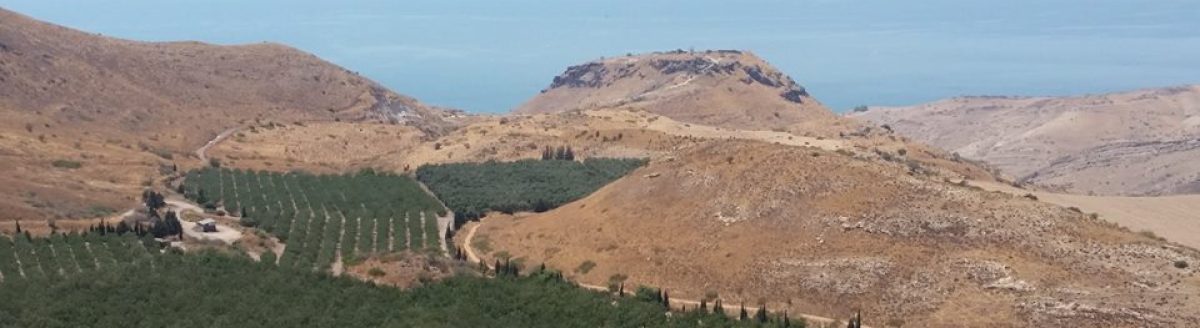

I was asked the most outrageous question by a rabbi I had just met. “Are you Sephardic or just a tan Ashkenazi Jew?” I answered: “I’m Ashkenazi and am also 1/8th Romani.” She responded: “oh yeah, I can see that you’re Romani. You know my synagogue once hosted an Israeli girl of Moroccan descent but she was the fairest skinned girl you could’ve ever imagined.”
Seeing as how I was at a party, I felt like it wouldn’t be appropriate for me to make a scene. So instead I just sat with feelings of otherness, of an interrogation of my identity and my skin color. Do I think the rabbi was coming from a malicious place? Unlikely. It probably was just ignorance. And yet something within me began to stir and I became very, very angry on my way home.
After all, besides feeling demeaned by the whole conversation, I thought to myself – what if I had been a Jew by Choice, a convert? What if I was raised as a Christian in Puerto Rico or Mexico, with similarly brown skin, and had converted to Judaism? Would it have been appropriate for a rabbi to ask if I was a tan Ashkenazi or “just” a Sephardic Jew? What if the answer was “neither”?
What struck me most about the conversation was the casual questioning of my identity. I don’t even think the rabbi knew my last name – I don’t know hers for that matter. Why it’d be remotely appropriate to ask about my ethnicity and skin color at a party is beyond me.
The thing is it tapped into something much deeper within my American Jewish experience. As a kid, I remember going on a synagogue volunteer trip and another child asked me if I was Jewish. I said I was and the kid responded: “but you don’t look Jewish”. My heart broke. Judaism meant everything to me. If this kid didn’t think I looked Jewish, perhaps I didn’t belong in this community. Perhaps I should find a sense of belonging elsewhere.
While the rabbi’s comments never questioned my Jewishness per se, they certainly questioned how an Ashkenazi Jew could possibly look so brown. And how her Moroccan-Israeli acquaintance could be so light-skinned. I felt like I somehow had to justify my skin color to a stranger, as if all Ashkenazi Jews looked the same – looked like her.
There’s a reason my Judaism flourished in Israel. The warm people, the varied expressions of faith and culture, and perhaps because I felt I fit in. Physically. A lot more Israelis look like me than Ashkenazi Jews do in the U.S. (although note to the rabbi- there are other olive-skinned Ashkenazim like me). I blend in. I never once had my Judaism questioned for how I looked in a place as ethnically diverse as Israel. After all, what does an Israeli Jew look like? There are endless ways to “look Jewish” in Israel, in fact there are so many ways it’s hard to pinpoint what it even means to “look Jewish” there. Which is the beauty of the country I miss so much.
An American rabbi who studied for five years and has worked in the field for many more should know better. The Reform Movement, which I proudly grew up in and she is a part of, strives to include Jews of all different backgrounds in its social fabric.
And clearly work remains to be done. Do I think this rabbi is racist? I don’t know. I don’t think she was being malicious and there are plenty of times that I’ve put my foot in my mouth after saying something. That being said, it’s not an excuse for egregious behavior that centers light-skinned Ashkenazi American Jews at the expense of people who look different.
May we all find ways to explore the beautiful kaleidoscope of Jewish communities and cultures, avoiding othering and finding new ways to engage our diverse people.
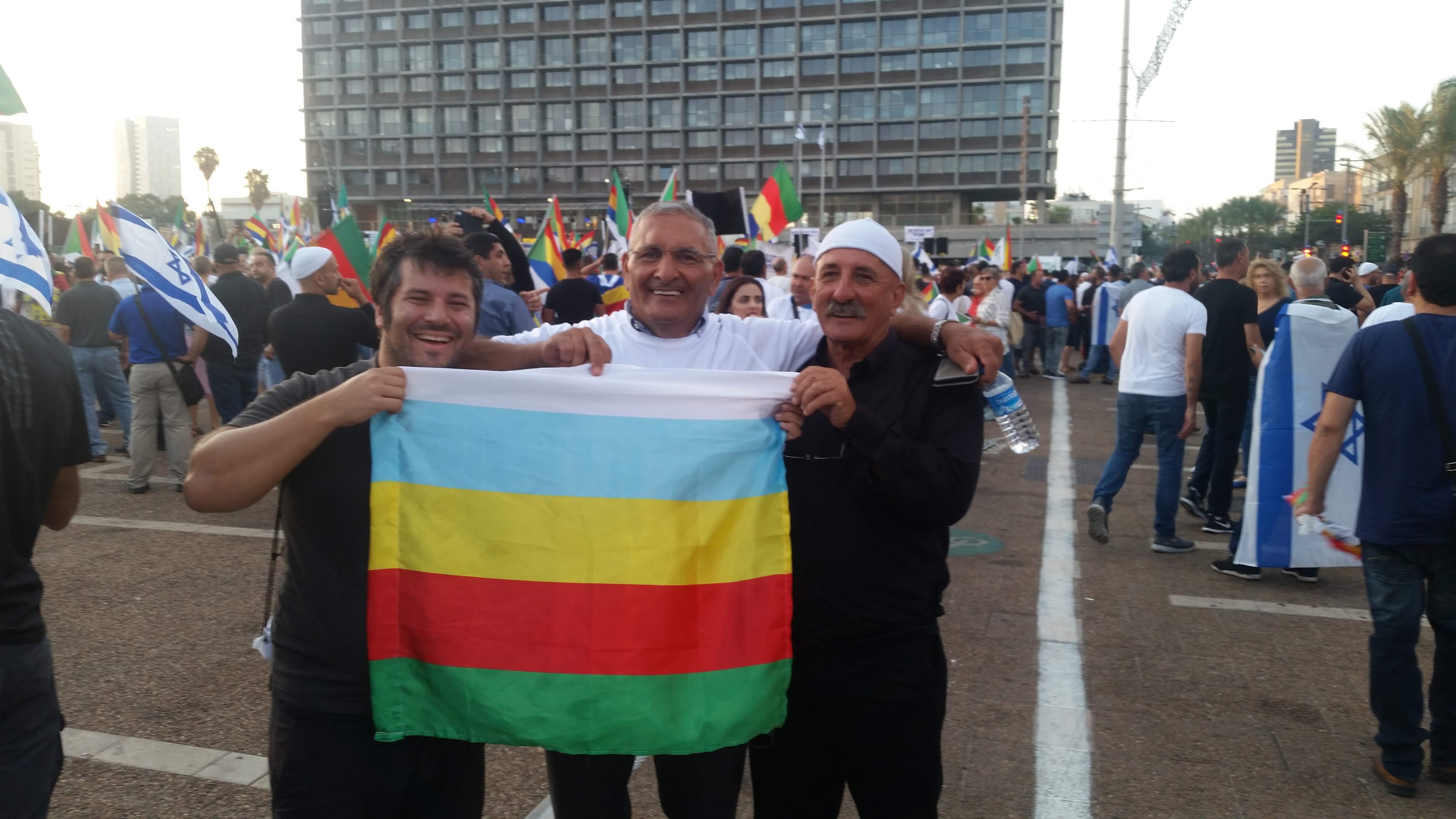
This is beautiful, olive-skinned, Ashkenazi, part-Romani me with some of my Druze friends in Israel! And I love myself just the way I am. As my cover photo from Israel says in Hebrew and Arabic: “the ‘other’ is me”.


Really should know better. What good was all that Hebrew education in the long run…
LikeLike