On March 5, I turned 40. On March 9, I started rabbinical school. On April 1, I’ll be hosting a Pesach seder with friends to celebrate Passover. On April 12, my mom’s third yahrtzeit starts. It’s a busy month with so much joy and some sadness. I think it makes a lot of sense why these events are bound up together and I’ll explain why.
Let’s start from the end. My mom’s third yahrtzeit will be this April. When my mom passed away from cancer, it came five months after my step-father died from cancer too. I wasn’t just extremely sad – I also felt like my Judaism had been annihilated. From a young age, I’ve been not only deeply passionate about my Judaism, I’ve been a leader in my communities. I’ve been a teen prayer leader, a youth group board member, a founder of the Reform community on my college campus, a service leader in Tel Aviv. To go from helping others on their spiritual journeys to someone who was openly pondering atheism or agnosticism was a radical shift for me. And a scary one. I felt rootless at a time when I desperately needed community, love, and spirituality.
When my mom passed away, I could barely utter the words of Kaddish, the traditional Jewish mourning prayer which praises God’s greatness. I even asked one of my rabbis if we could use an atheistic/humanistic version for the funeral which omitted God’s name. She said she wouldn’t do that and so I forced myself through the tears to fulfill my promise to my mom to say Kaddish for her as much as I hated every bit of the prayer at the time.
During that period of time in my life, a lot of friends stepped up for me and helped me through the darkness. They helped clean out my childhood house, they helped bring me meals, they came to funerals and shiva, they hugged me, and they provided a kind ear to listen as I grieved. I am incredibly grateful to them, my chosen family.
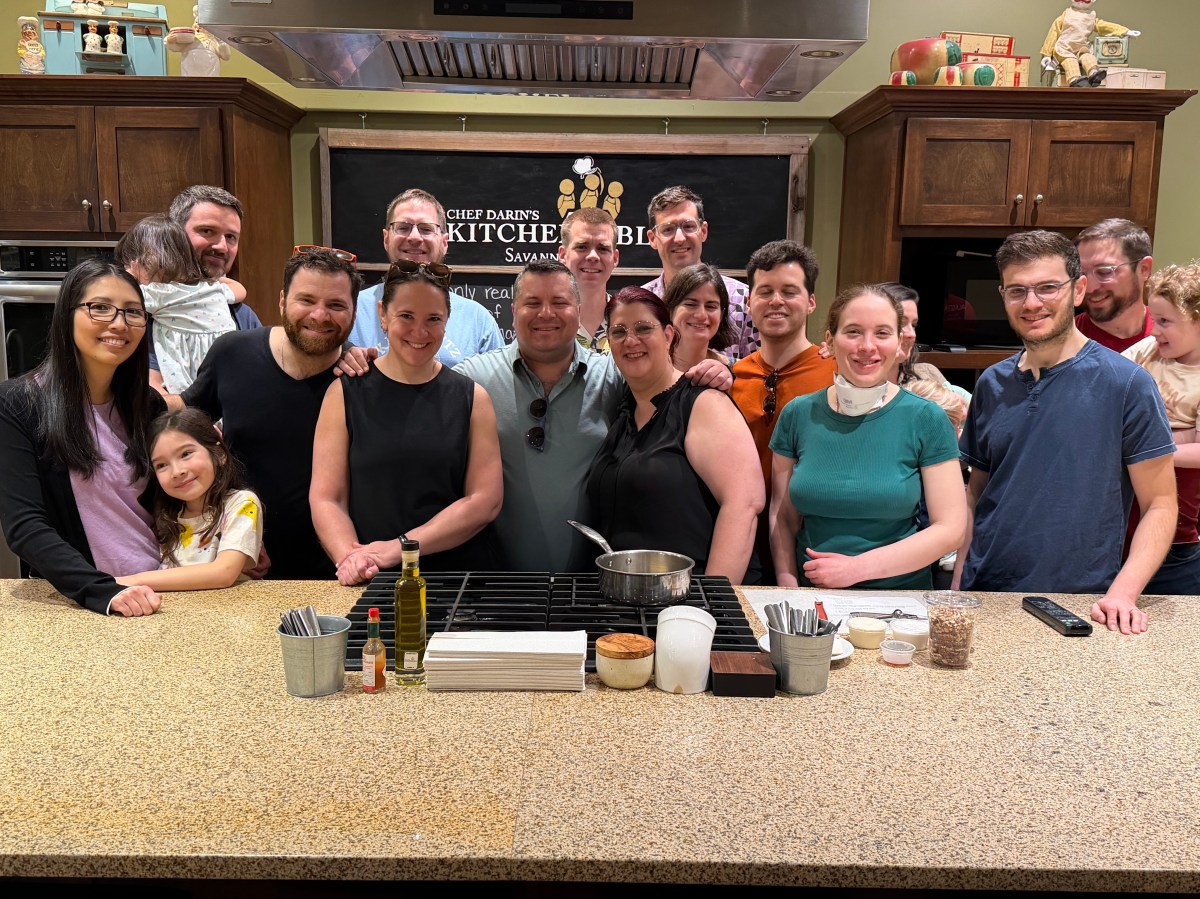
So what does this have to do with my birthday? Well, first things first – I had one of my best birthdays ever this year. Some people dread turning 20, 30, 40, 50, etc. Those big years with a zero at the end. For me, this year felt just right, rounding out my previous decade. While of course I wished I could have celebrated with my mom and step-dad, I had the privilege of bringing together some of my closest friends for a birthday to remember in Savannah, Georgia. This amazing group of humans is pictured in my cover photo. These people have been with me through thick and thin and I’m not only incredibly grateful for their friendship, they are also a great time!
When my mom was near the end of her life, she told me relationships are all that matter. And she was right. Over the years, I’ve met some incredible people who make me laugh, smile, and feel supported. I took her lesson to heart and have built a strong sense of community. It is one of the ways in which God has turned my mourning into dancing, as the psalmist says.
“You turned my mourning into dancing; You loosened my sackcloth and girded me with joy”. That’s specifically what it says in the psalm. And recently, I’ve felt extra joyous. I started rabbinical school recently, a dream of mine since I was a young child. I can still remember telling Cantor Roemer in first grade that I loved the song “hashiveinu” and walking with her to her office to get a copy of the lyrics. The tune was beautiful and the lyrics are poignant for where I’m at in life right now: “Turn us back, turn us back, O LORD to You and we will turn, and we will turn renew, renew our days as before.”
That’s how I feel. Rabbinical school is a new start, but it is a return to my authentic self. Just like the words from Lamentations above. When my mom passed, my childhood rabbi told me my faith was not weak, it was being tested. And if that’s the case, I’d say my decision to reengage in Jewish life is active proof that I have passed this test. I’m sure my faith will continue to be tested throughout life, but if I can manage to go from being nearly unable to utter Kaddish three years ago to studying to become a rabbi, I’m processing grief in a healthy way.
So if my birthday was about relationships and rabbinical school is about a return to self, what are my hopes for Passover and why is it bound up in this series of events, including my mom’s yahrtzeit?
For those who don’t know, my religious Hebrew name is Pesach, Hebrew for “Passover”. I was named after my great-grandmother Polly. It’s a unique name, but one that I feel suits me. Pesach is a holiday not only about the national liberation of the Jewish people, it is also about personal liberation. We are commanded to envision each of ourselves as having been freed from slavery in Egypt.
This Passover, I am liberated from the feeling that my grief over my parents has to only be about sadness. It might sound strange. After all, I am sad that I’m not leading a Seder with them, singing Chad Gadya together and eating all their delicious food. And I of course find myself feeling sad that they’re not here to see me start rabbinical school or celebrating my 40th birthday with friends.
And I’m also giving myself permission to feel happiness. Part of grieving is allowing yourself to add new memories to the old. And to integrate the two in a meaningful way.
So to that end, I’m thrilled to start 40 by beginning rabbinical school and finding ways to serve my community. I’m excited to start what I hope will be one of the best decades of my life surrounded by so much love. I’m thrilled to be hosting a Pesach seder with friends. I’m proud to be prioritizing my relationships above all else.
Being a rabbi will not just be about the classes I’ve taken, it’ll also be about the life experiences I’ve had and will yet have. If the past few years has been a test of faith, as my rabbi said, then I have passed the test. While we’re never truly “out on the other side” of loss, I feel I’m well on my way to integrating my trauma into my understanding of self and am very proud of the work I’ve done to get here. It’ll make me a better rabbi for having been through it.
Wishing you all nothing but love and strength with whatever tests your faith may face in the days and years ahead. Because my story is proof that you can make it through too. May your resilience surprise you.
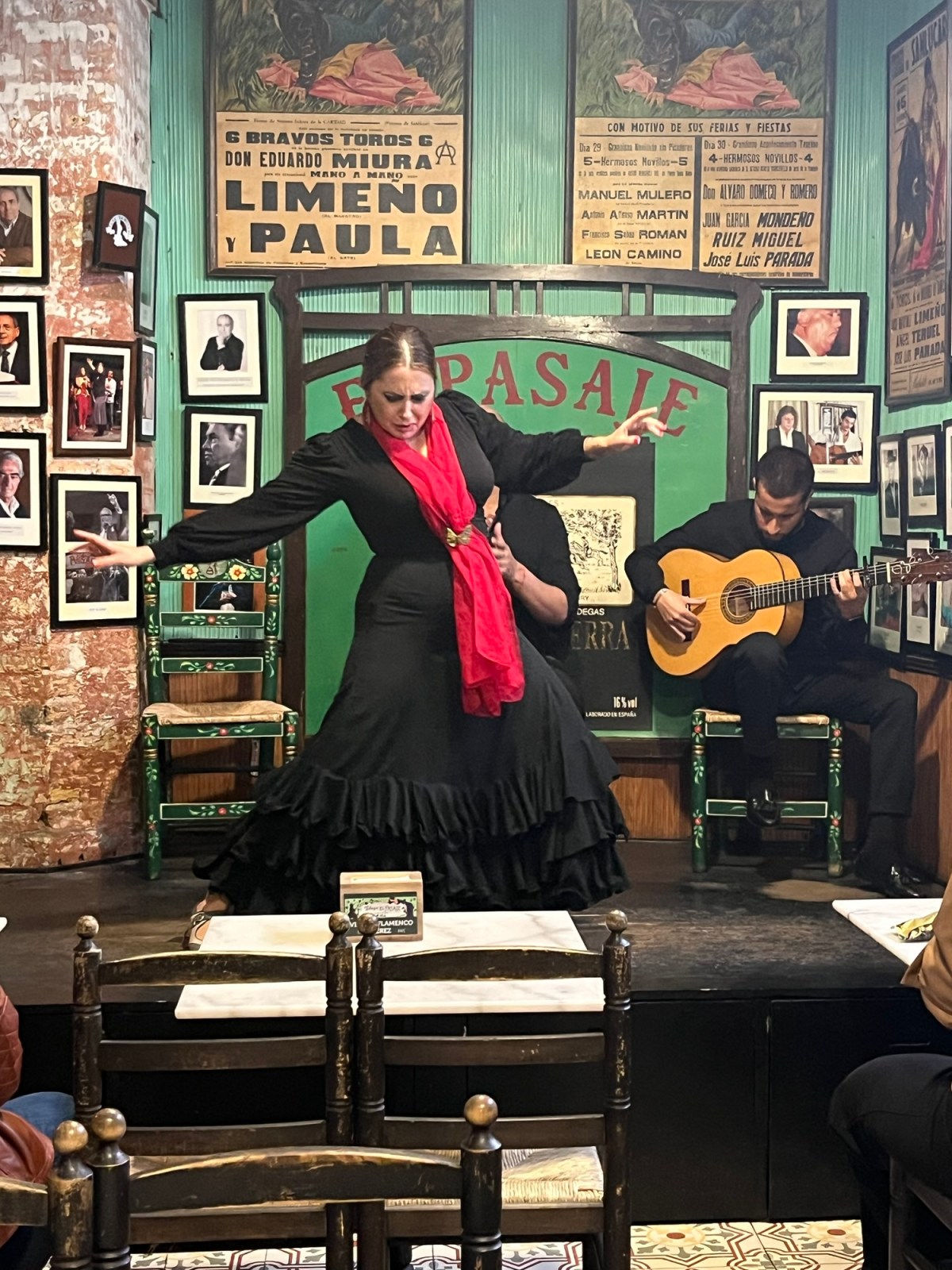
After watching a typical tourist flamenco show, I found myself wandering around Triana, the neighborhood where flamenco’s heart beats in Sevilla. I Googled other spots to check out and came across a flamenco bar.
Yes, a flamenco bar! It had amazing reviews, but wasn’t too crowded. At first. I wasn’t sure what to expect. I love flamenco music and I didn’t see any dancers on stage.
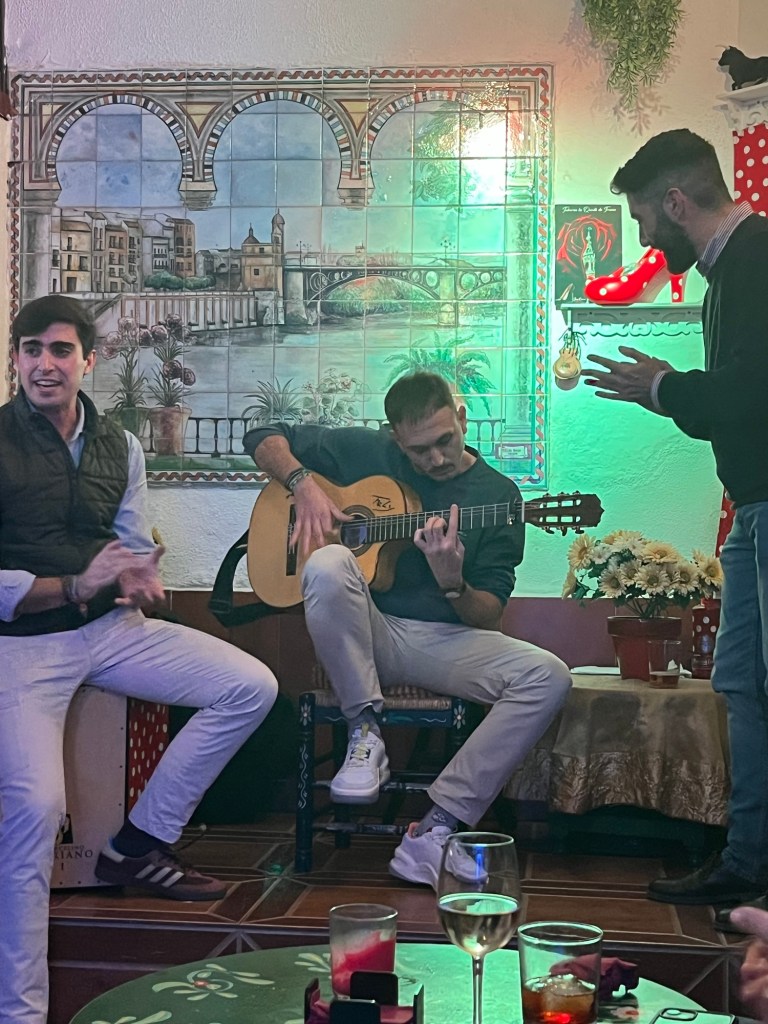
Instead, I saw a man playing guitar and singing. And then two people from the audience simply got up and danced flamenco in front of him.
Then, a group of hot presumably straight guys next to me started requesting songs. And then the guitarist gave the guitar to the hottest guy in the group, who then serenaded the bar with his friend.
It was part flamenco show, part karaoke, part sing-a-long – everyone was singing in the bar!
Flamenco has been a part of my life ever since I visited Spain as a teenager. My Spanish host family in eighth grade gave me my first flamenco CD – “Mahareta” by Siempre Así. It’s light, popular flamenco and so much fun.
One of my favorite songs on the CD is “Para volver a volver”. It means “to return, to return”. And it’s a song that resonates with me. Since visiting Spain in eighth grade, I’ve been back another seven times. I’ve spent more time there than anywhere besides the U.S. and Israel.
When I first heard that song, I was in a rough situation. I had an abusive father waiting for me in the U.S. There was constant fighting, shouting, and manipulation at home. Going to Spain was a welcome escape and did nothing short of change my life. It helped me fall in love with Spanish, with languages, with travel. Ever since I first visited, I’ve been wanting “to return, to return”. And that’s exactly what I’ve done – and never been disappointed.
So I decided to request the song from the guitarist. I figured, like in the States, that he’d perform – that he’d sing it for me. And he did start to sing the chorus and everyone joined in, until he lowered the volume of his voice and guitar and looked straight at me as he asked me to sing the verses!
There I was, decades after I first fell in love with flamenco, singing to a now-full bar of Spaniards my love song for Spain. A place that has always given me such joy and let my spirit sing.
After I sang each verse, people applauded. And it’s not because I’m a professional singer. It’s because that’s Andalucía’s vibe. It’s a place where instead of internalizing our problems and anxieties, we sing them loudly and proudly – laughing, crying, sometimes at the same time.
Andaluces do the opposite of many Americans, at least in Washington, D.C. where I’m from. Andaluces externalize their emotions- good, bad, and ugly.
Several days later I took a flamenco dance lesson, in which my teacher taught me that the relationship between the singer and the dancer is a dialogue – each has to make space for the other and take turns “speaking” through music or their dance moves.
That dialogue is something sorely missing in the U.S. right now. Coming back to D.C. after the life-changing and emotionally-open Andalucía has been hard. People in my hometown are suffering – countless have lost jobs including dear friends. And I can see people on all sides retreating to their ideological cocoons instead of engaging in the difficult work of back-and-forth conversation. This obviously includes the President, who could use a flamenco lesson about dialogue and taking turns speaking.
First, it needs to be said that my hearts go out to everyone suffering right now, including my friends who have lost their jobs. Everyone has a right to feel pain, sadness, and anxiety as we face an uncertain future.
What I would encourage us all to do is to learn from the spirit of Andalucía. It’s a place, as one cab driver laughed and told me, “where nobody has money but everyone is happy”. That’s not to suggest we should never stress about paying bills, but rather that we should remember that there are more important things in life.
As people on different sides of the political spectrum get angrier, rather than bottling it up inside and passive-aggressively attacking friends and relatives who disagree, maybe they should “flamenco” the situation. Don’t sit and watch the show. Join in like I did. Request your song and get up there and sing. Sing through the words in your heart and share it with those you love and maybe even those you don’t. In a way that garners empathy and respect.
Maybe it won’t work. Maybe our country is beyond dialogue. But if Andalucía can live through a civil war, a dictatorship, centuries of conquest and reconquest, and poverty and still find room for joy – maybe we can give something new a try.
Para volver a volver. To return, to return. I’ll keep returning to Spain for inspiration, hope, and a smile on my face no matter what I’m facing.
Spain is where my soul breathes. It is full of life. Of laughter. Of stunning views. And of kind, generous people who make every moment worthwhile.
This trip was my sixth to Spain, dating back to when I was 13 and went on a school trip. Other than the U.S. and Israel, where I am a citizen, it is the single country where I have traveled most.
I started my trip in Madrid. Madrid is a city that holds a special place in my heart. Besides being where I first went to Spain as a teenager, it is also where I studied abroad a summer in college with my college roommate Ben who is one of my best friends. We had a wild summer. This trip was definitely less wild (I’m 38!) but was so much fun!
Fresh off the plane, I started hitting up the sights. And walking around the gorgeous neighborhood I stayed in, El Barrio de las Letras, named as such because famous writers such as Cervantes spent time there. The sidewalks are lined with quotes of Spanish authors and it is full of one of my favorite things – bookstores! I was also lucky to find that the time I spent in Madrid overlapped with the antiquarian book festival, where I got some real gems, including a hundred-year-old book in Spanish teaching people how to read Hebrew!
Madrid has some pretty churches and of course, the Royal Palace (it was booked up by the time I got there so I admired it from the outside – I had been many years ago and next time I will get a ticket in advance!). It also has some world-renowned museums. I went to the Reina Sofia, the modern art museum. I did this on the second leg of my Madrid trip. I started and ended my travels in Madrid. It was nice to see something modern and creative. I love cathedrals and history. I also enjoy modern, creative artwork that shows a different side of Spain. It was really nice to see everything from Dalí to the famous Guernica work by Picasso.
I also went to two tablaos to see Flamenco shows while in Madrid. Flamenco is an art form that I have always enjoyed. And the performers didn’t disappoint. The footwork, the passion, it was all there. And most importantly, being from a dull city such as Washington that is full of bureaucracy, the performers were all smiling. Improvising. Being creative.
That is the spirit of Spain. Of Madrid. Its people are full of life. Whether it was the cab drivers over sharing about their love life, the Flamenco dancers hugging me telling me that my Gypsy blood explained why I loved the music so much, the woman who insisted on giving me extra ice cream flavors just to make sure I chose the right one. This is how Spain lives. It is the two-hour lunches. It’s the waitress who laughed with me at how many times I ate her restaurant’s salmorejo soup (four times) and told me I was “in love with it”. I am! It’s the best soup and makes its otherwise delicious cousin gazpacho look like Campbell’s.
Another great thing about Madrid is how central it is. It is so easy to get to other parts of Spain. It has long been my dream to visit Zaragoza. And I was not disappointed. Only one hour and change on the high-speed rail system, I did a day trip. Keep in mind this would’ve been a three and a half hour car ride. Spain’s rail system is fucking incredible. And surprisingly affordable. Amtrak blows. I have no idea what we’re doing with rail in the U.S but we are decades behind Spain.
Back to Zaragoza. The city has one of the most incredible churches I’ve seen in my life: Cathedral-Basilica of Our Lady of the Pillar. You can’t take photos inside the magnificently and tastefully adorned interior. But I took some pictures from the outside to give you a sense of the magnitude of this thing.
In addition to seeing a bunch of beautiful historic streets and museums, I got to visit a bookstore, opened just for me! I had asked a man passing by whether this antiquarian bookstore was open. He said he wasn’t sure, then asked a man down the street whether he would open it. The kind man came by and opened the place. Just for me. This is how Spain (and a lot of the Mediterranean) works. There are no set hours for many places. It’s just when the owner feels like opening up. And he was kind enough to do so for me.
I found some gems! I bought books in Aragonese. It is a very old language, on the verge of extinction, that was spoken throughout the Kingdom of Aragon. I’m hoping that with my Spanish and Catalan (a closely-related language), I can understand some of what I bought. The bookstore owner kept bringing me new books to read and to check out. He never, I mean never, rushed me. This is the spirit of Spain – take your time, enjoy, peruse, explore. Never, never rush someone. It’s a lesson I wish many parts of the U.S. would take to heart.
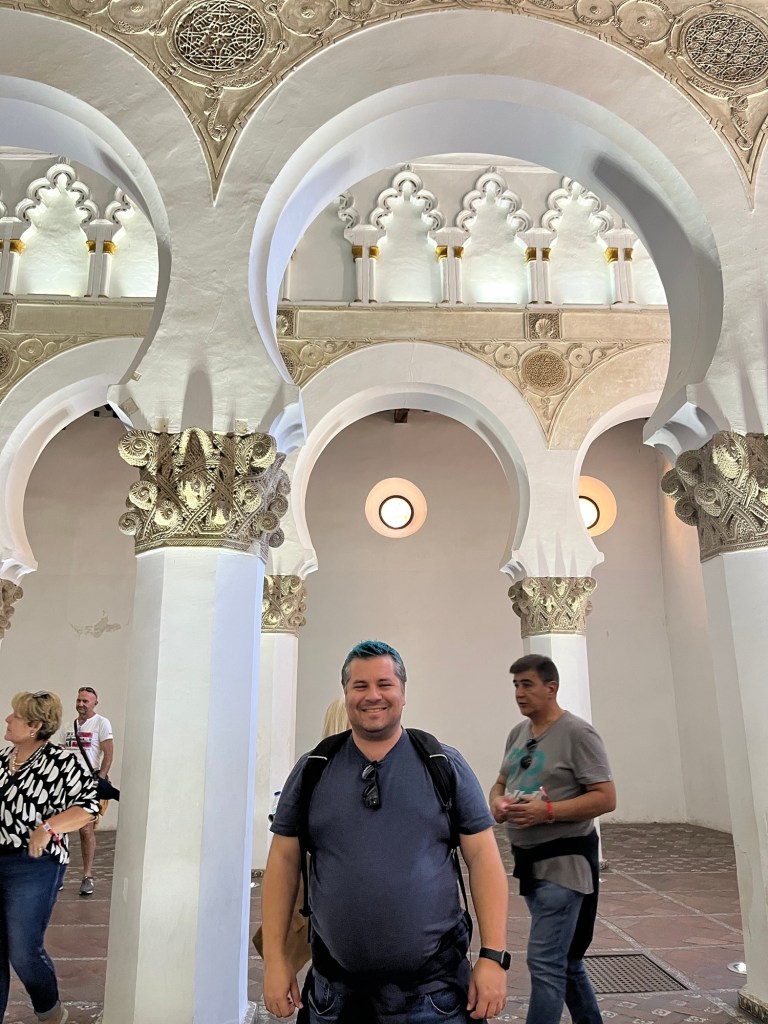
Zaragoza was incredible and it inspired me to do two other day trips. One I actually did before Zaragoza and that was Toledo. Having not visited since I was 13, I wasn’t sure what to expect. Boy was I happy to see what I did! As a Jew, Toledo holds special importance. It was a city with a large and active Jewish Quarter before the expulsion of Jews from Spain. It has two Jewish museums – both former synagogues. Both of which are adorned like mosques, were converted to churches, and then reconverted into Jewish museums.
The cityscape was full of churches and a stunning cathedral and tons and tons of marzipan! Everywhere. I must’ve tried 10 different types of marzipan and it was all delicious and never going to make it into my packed suitcase (full of books!) unfortunately. But boy did I enjoy it! It’s a local specialty and I highly recommend eating lots of it while you’re there.
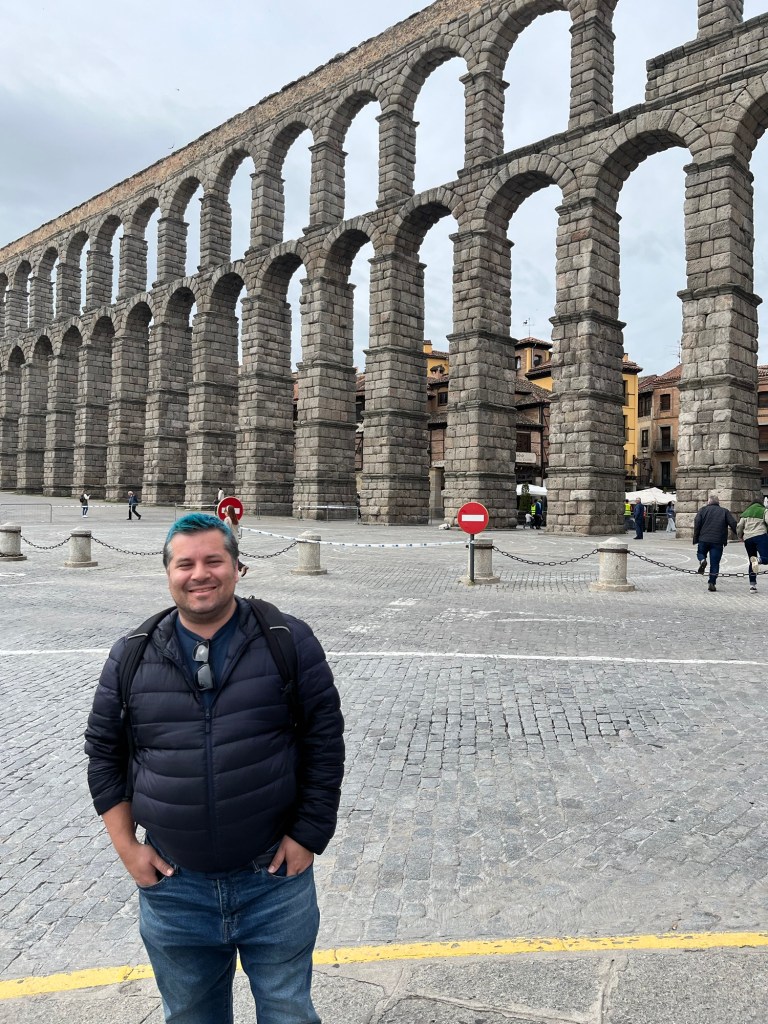
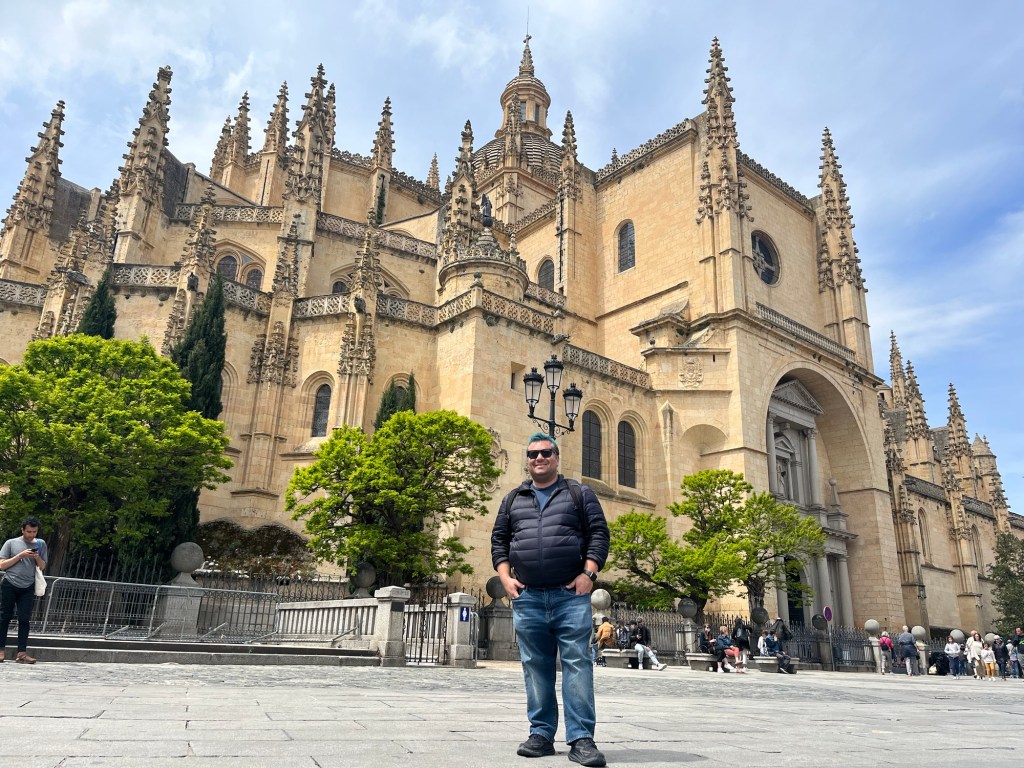
The other day trip I did from Madrid was Segovia. Most known for its ancient Roman aqueduct (it’s absolutely stunning), it also has a beautiful cathedral and a Jewish museum! It has been inspiring to see Spain caring for its Jewish heritage in ways that even a few decades ago was not happening.
The other half of my time in Spain was spent in Valencia. While I had visited parts of Castilla-La Mancha before (albeit many years ago), I had never been to Valencia! I was attracted to the warm weather (it was sunny every single day), the Mediterranean, the Valencian language (a dialect of the Catalan which I speak), and the landscapes.
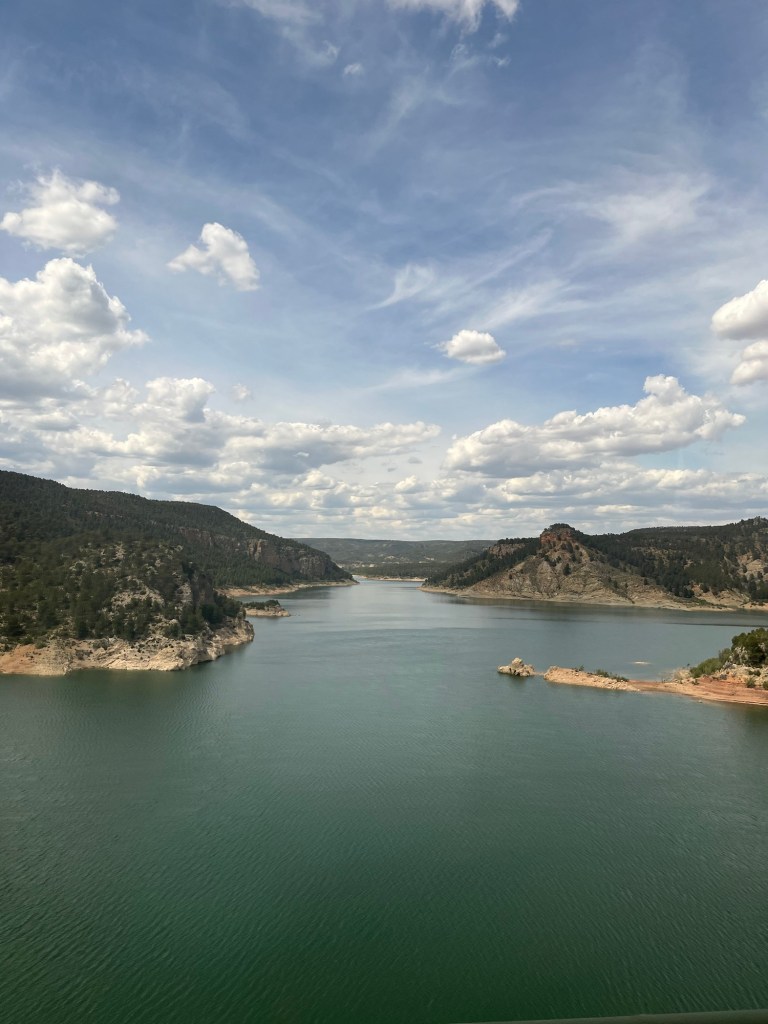
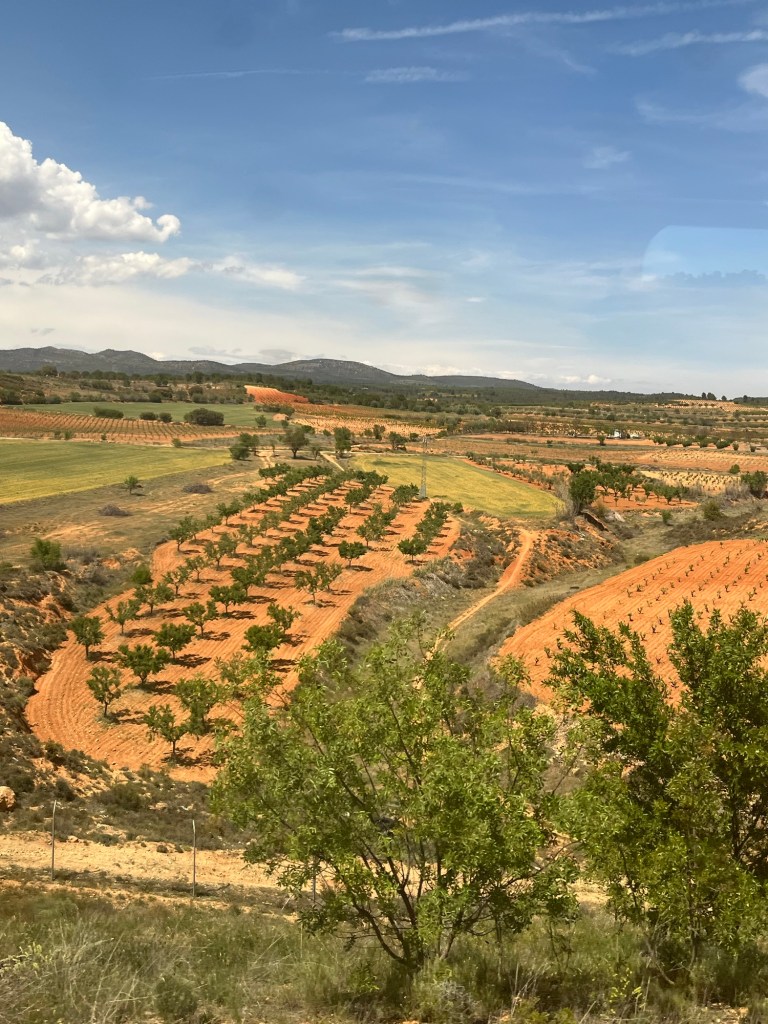
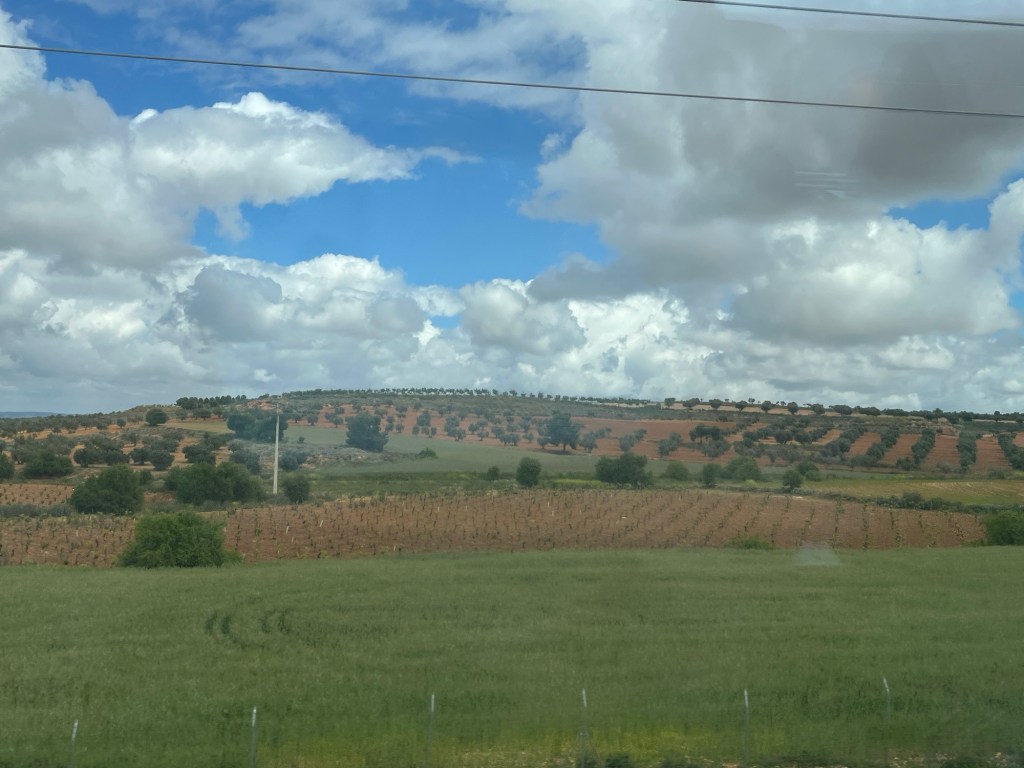
The train rides to and from Valencia (which interestingly enough took different routes I believe) were almost worth the trip itself. Here’s some of the scenery:
Valencia is where I started to engage more with people, not just sights. I had, of course, met very kind people in the cities I had visited before. Now that I was over my jet lag and wanting some more in-depth contact with folks, I decided to do some planned activities. In my experience, every good solo trip is a mix of individual exploring and meeting other fellow travelers (and locals!).
Before I get into some of those experiences (city tours, paella making, a flamenco lesson, and a visit to an orange orchard!), I want to share a couple stories about some villages I visited.
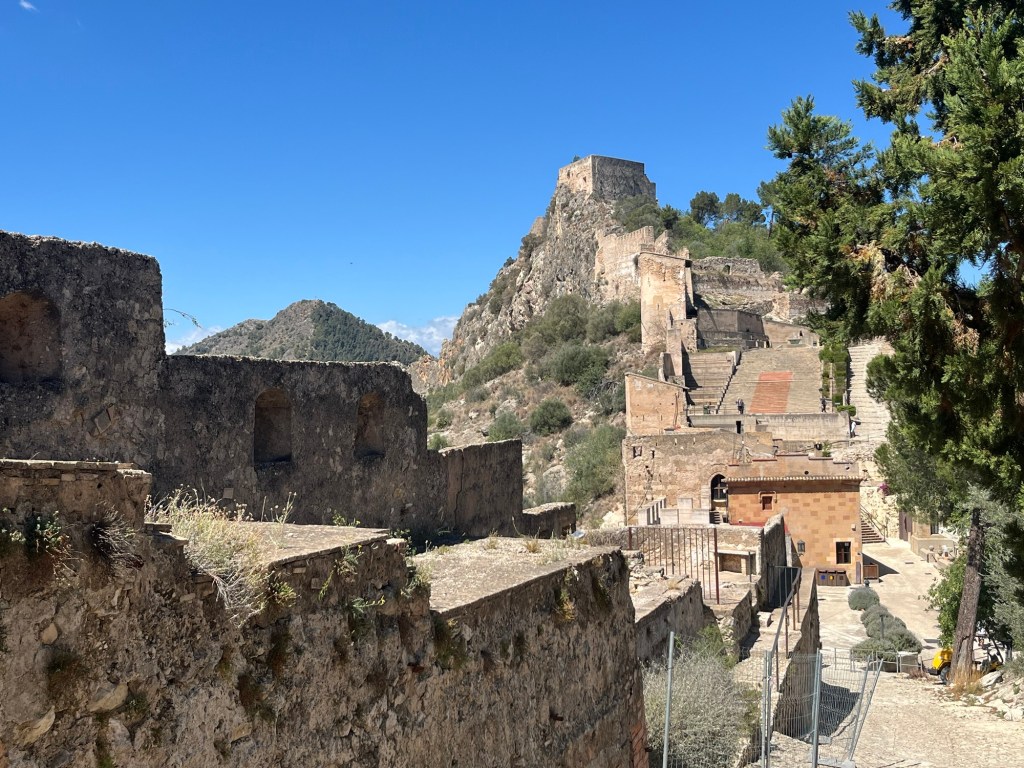
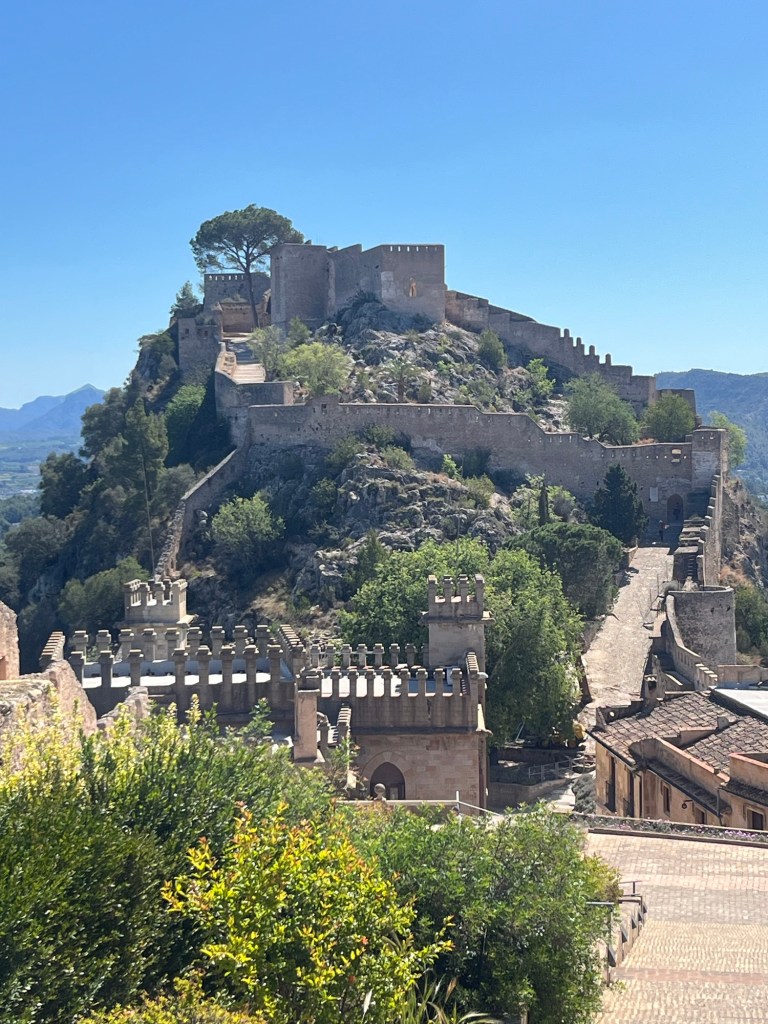
During my stay in Valencia, I made sure to get out of the city and see some of the countryside. The first place I visited was Xàtiva. Xàtiva is famous for its castle. And wow it is stunning. Perched atop a mountain, it actually contains two castles connected by a wall surrounding the area. Pictures are worth a thousand words so here are some:
Instead of hiking up the mountain, I took a cab. I got as close as the cab could get to the entrance to the castle, but there was still some way to go to get to the ticket office. And the pathway was partially open. Meaning, there was a steep cliff to the side as you walked by. For those of you who know me well, I am not into steep cliffs or in certain circumstances, heights. So I mustered up a ton of courage to walk into the castle. And I did it! I’m very proud of the steps I took. The bravery I showed myself. And I will always remember Xàtiva not only for the gorgeous views, but also for the relationship of trust I built with myself there.
Other towns I visited included Port Saplaya (a little Venice by the Mediterranean), Buñol (home of the tomatina tomato throwing festival and a very delayed bus driver who was super kind to me), Sagunt (home to a beautiful castle and Jewish quarter), and Puçol.
Sagunt’s medieval Jewish Quarter
Puçol is where my online Catalan/Valencian tutor lives! It is not on anyone’s tourist itinerary because it is quite simply a place where people live. There are no “sights to see” (although the church is quite nice). It is just a place where we walked around, finally met in person, and ate the best white chocolate-filled croissant of my life.
Now let’s come back to some of the experiences I had with other tourists and locals in Valencia. First off, I had a private flamenco lesson! The teacher was kind, patient, and kept telling me I learn the dance quicker than others (thanks!). It was so much fun. We kept doing this move she called “un, dos, tres, cuatro, patada!” Which just sounds so fun to stay in Spanish. A “patada” is a kick. And I got a kick out of this lesson.
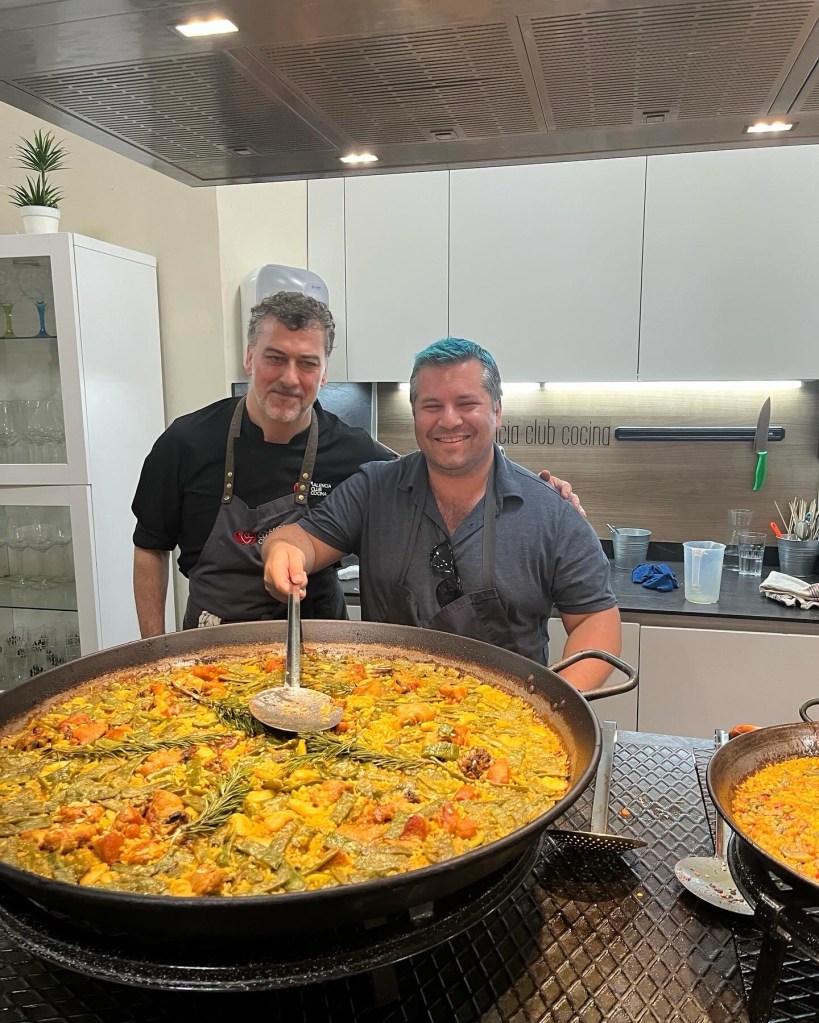
I also took a paella making class with a wonderful group of tourists from the U.S., Germany, the Netherlands, Kuwait, Costa Rica, and more! The chef was a riot. He was so funny. And we all got to contribute to making the paella (and Spanish “tortilla” omelet) together. The paella was hands-down the best paella of my life. The crap that I had eaten in the States (or even at other otherwise-good restaurants in Valencia or Madrid) did not compare. It was fresh and delicious. For those of you who didn’t know, paella comes from Valencia and maybe that’s what it made it so yummy.
After paella class, one of the German guys asked me if I wanted to go watch the Real Madrid soccer game. I said sure! We talked for hours. Deniz is from Hamburg, incidentally the port where some of my ancestors passed through to get to the U.S. from Eastern Europe. He is also of Turkish descent and Muslim. And married to a Ukrainian Jewish woman. We had such a nice time together. I hid nothing about myself. Although given all the news that has come out of Europe (and the Middle East) this past year, I was hesitant to reveal too much, I felt comfortable with him. And he did with me. We learned a lot about each other. I shared what it’s like to be gay. And Jewish. And some of my experience in Israel. And his experience as a man of Turkish descent in Germany, where he is not always accepted for who he is. It was heartwarming and one of the best nights of my trip. Traveling solo is not always traveling alone.
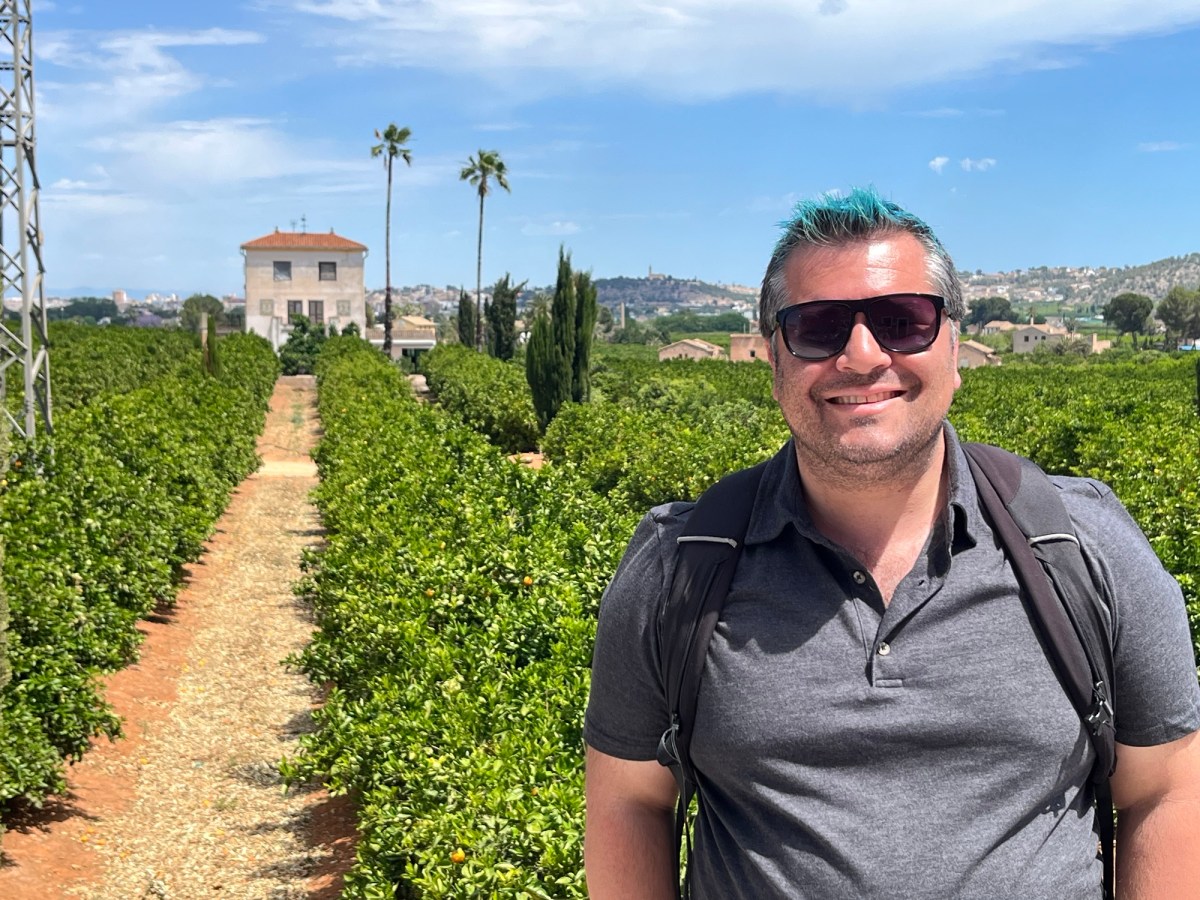
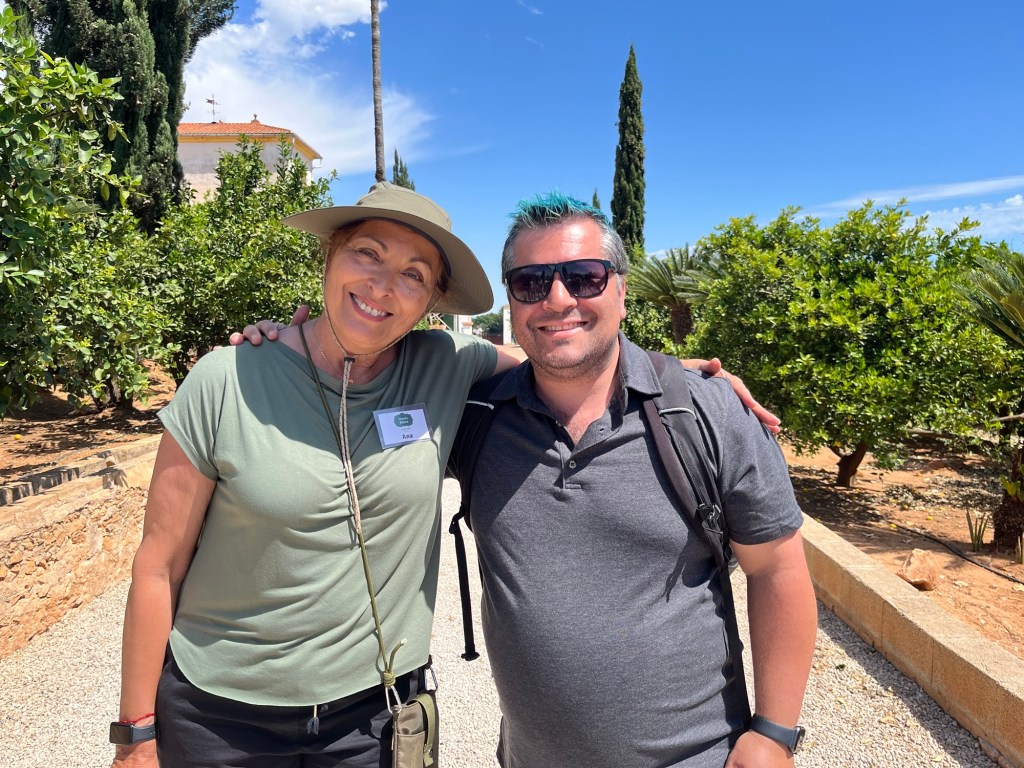
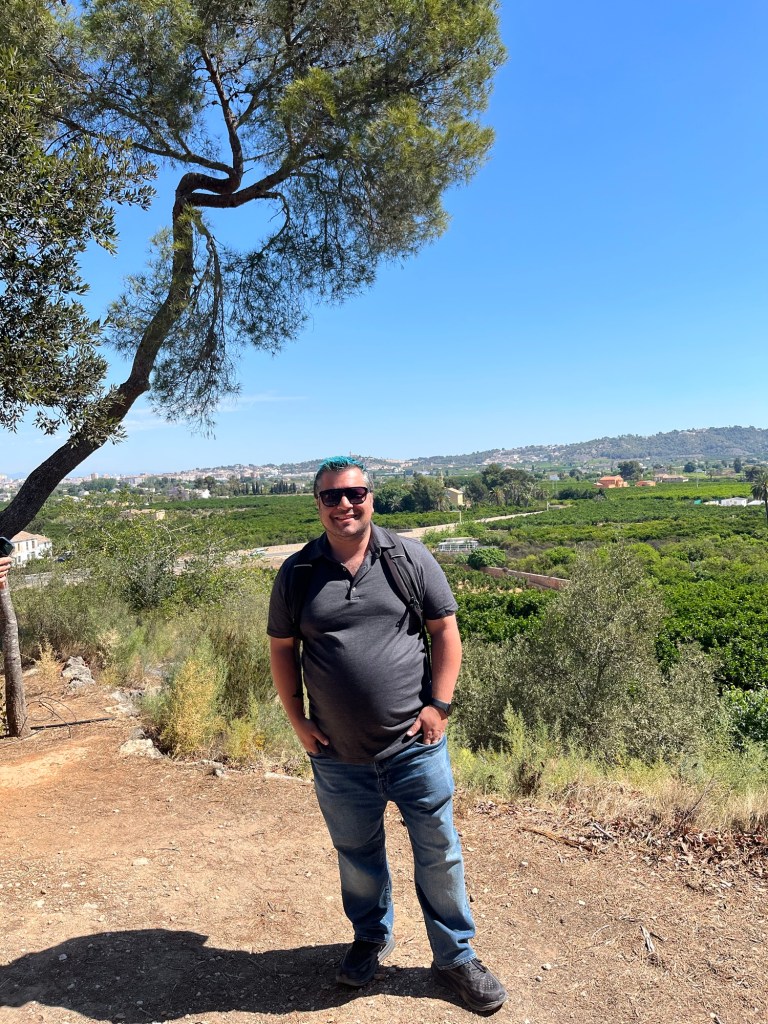
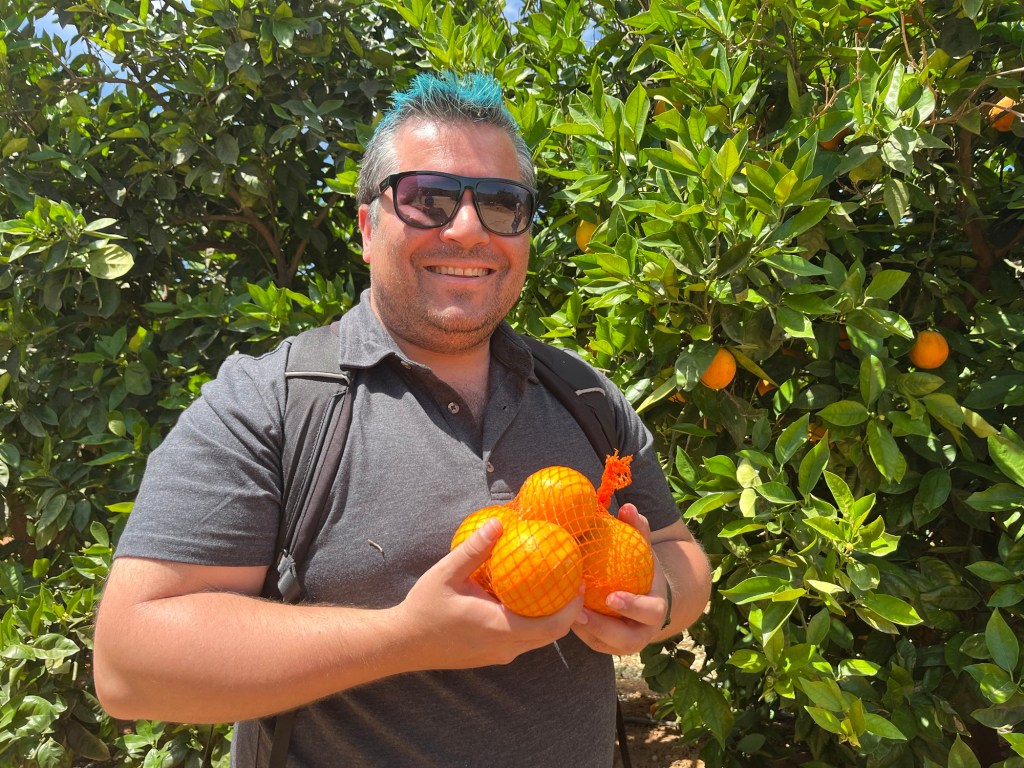
Perhaps my favorite tour experience of the trip was a visit to Huerto Ribera. It’s an orange orchard in Carcaixent, about 40 minutes outside of Valencia. I asked one of the tour guides what languages she spoke, since she was speaking some French to these Quebecois tourists and a group of French twentysomethings. Her native language, it turns out, was Valencian. She was thrilled when I started speaking to her in Catalan (which is mutually intelligible). Since there were so many French-speaking tourists, she sent the English-speakers to the other guide and took the French-speakers (and me!) with her. Since I speak French and Valencian (and she had only taken three months of French), she asked me to help her translate along the way. It was a challenge but a fun one! Frankly, it’s not one I may ever get again. These are two languages that don’t come into contact very often, especially not in Washington, D.C.
Ana was an incredible, warm, friendly tour guide. We learned all about the different types of oranges (which taste incredible!) and got to try them. We even got to taste orange blossom honey made right there on the orchard. And learn the history of the place. We even got to pick some ourselves! I wish I could bring those rich, citrusy flavors home with me.
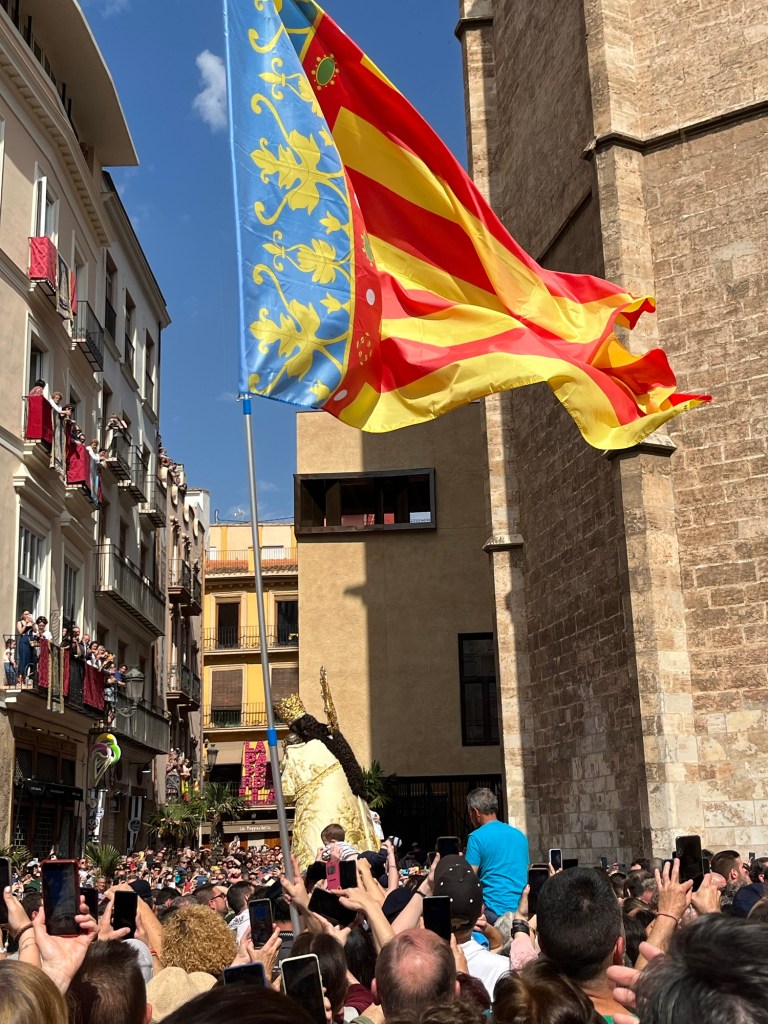
Before I left Valencia, I got to see something truly special. Spain has many holidays. In fact, there were two while I was in Madrid, one on either end of my trip. And one in Valencia. In Valencia it was called the festivity of “la verge dels desamparats”. The Virgin of the Helpless. It was packed. Thousands of people filled the streets. An incredibly generous woman next to me explained every step of the celebration. They brought the Virgin’s statue through the streets as people threw flower petals from their balconies. It was a dream.
The woman next to me was with an older woman. Maybe her mother. And the woman started to cry. She said “it’s very moving” in Spanish. And I agreed.
This is the spirit of Spain. It is a place where your emotions are free to flow. Where people are generous. Where quality time is the most precious commodity. Where, rather than keeping everything bottled up inside, you can simply stomp it out like a flamenco dancer or give a “patada” kick like I learned in Valencia. Because Spaniards live well. They aren’t always wealthy and they don’t necessarily wear all the designer brands, but they know their neighbors’ names and they’ll invite you over for dinner.
If you haven’t been, go. If you’ve been, go again. Spain always has something to offer and no matter how long you travel there solo, you’ll never be alone.
A few months into the grieving process after my mom passed away April 18, 2023 and I could already hear a voice in my head telling me to “move on”. That somehow if I buried the memory of my mother further and further in the depths of my psyche, that if I only let myself be happy, then her memory would fade and I could go on with living my life.
Obviously this wasn’t the only voice I heard. I experienced a lot of sadness, anger, guilt- you name it. And the further I tried to suppress the feelings, the more potent they would get. Because without release, they just forced me to twist my emotions in a way that didn’t reflect the reality I was living in. I had lost my mom and my best friend when I was 37 years old. And nothing – no dissociation, no amount of throwing myself into other things could change that.
On top of the loss of my stepfather five months before my mom passed away, I had to numb my feelings. I couldn’t let myself feel the depth of sadness I truly felt because I had to clean out and sell my childhood home, get through the funeral and shiva, deal with the estate and death bureaucracy (an ongoing pain in the ass), design and pay for a tombstone, and more. There was so much to “do” that I couldn’t just “be”.
On top of that, I was working in a toxic professional environment where my boss told me point blank: “Matt, when you started this job, you were so enthusiastic. Then you lost your parents and you lost your motivation.” As if somehow losing motivation after losing two parents in five months was unreasonable or irrational.
I made one of the best decisions of my life the day my boss told me such utter and cruel nonsense. I walked into her office and I quit.
Since late October 2023, I have worked part-time doing my communications consulting business that I’ve had for over a decade. But mostly, I took time to focus on myself. I focused on my health, increasing my exercise and working with a nutritionist to improve my diet. I’ve lost fifteen pounds and more importantly, I am starting to feel better.
In addition, I’ve built strong friendships and relationships. That’s something my mom really emphasized to me in her waning days on this planet. It’s the people who matter. And I’m truly blessed to be surrounded by a tremendous group of empathetic and supportive friends who’ve made this year so much more bearable and even at times, fun.
I did important therapeutic work, using both art and talk modalities to express conscious and subconscious emotions. I even look forward to my art therapy, as I can use my creativity to work on issues in an almost playful way.
I joined a bereavement group for young people who had lost parents. This allows me to connect with other people in my circumstance who get things viscerally and personally. It gives me the chance to feel accepted and acknowledged in community with others who are going through incredibly tough times and making it through it despite it all.
I started dancing again! As a little kid, I used to prance around the living room to the soundtrack of Phantom of the Opera. In college, I joined and choreographer for an Israeli dance troupe and performed in Latino, West African, and Indian pieces. Since my parents passed away, I couldn’t find the joy in movement anymore. That is, until recently, when I picked up Latin dance classes and started reconnecting with the DC Israeli dance community.
While I’ve spent the better part of my mom’s three and a half year cancer battle angry at God and disconnected and confused about my own spirituality, I now feel an itch again to explore. Being angry at God won’t bring my mom back. And while I may not believe in a God that actively makes decisions or works in the world, I do feel a desire to live in community as a Jew and rediscover what that means to be.
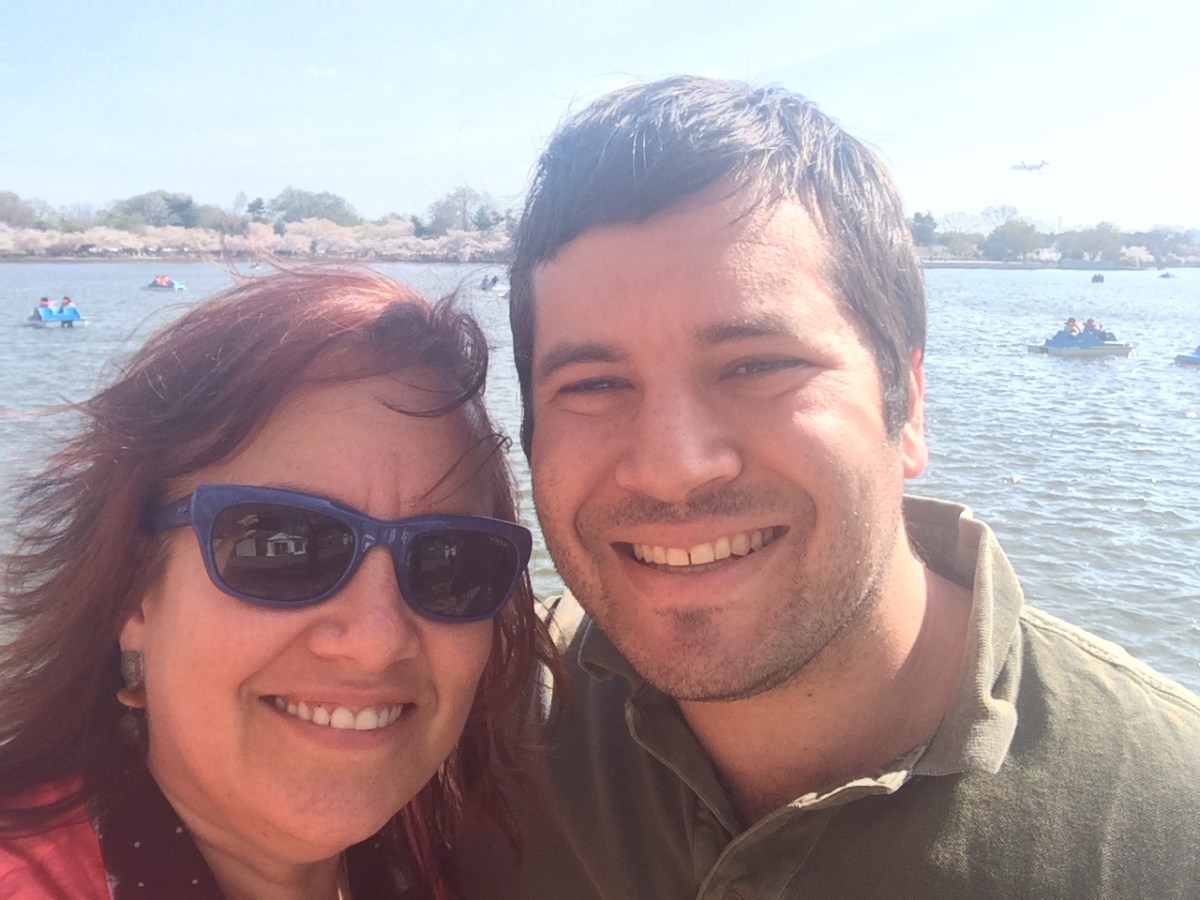
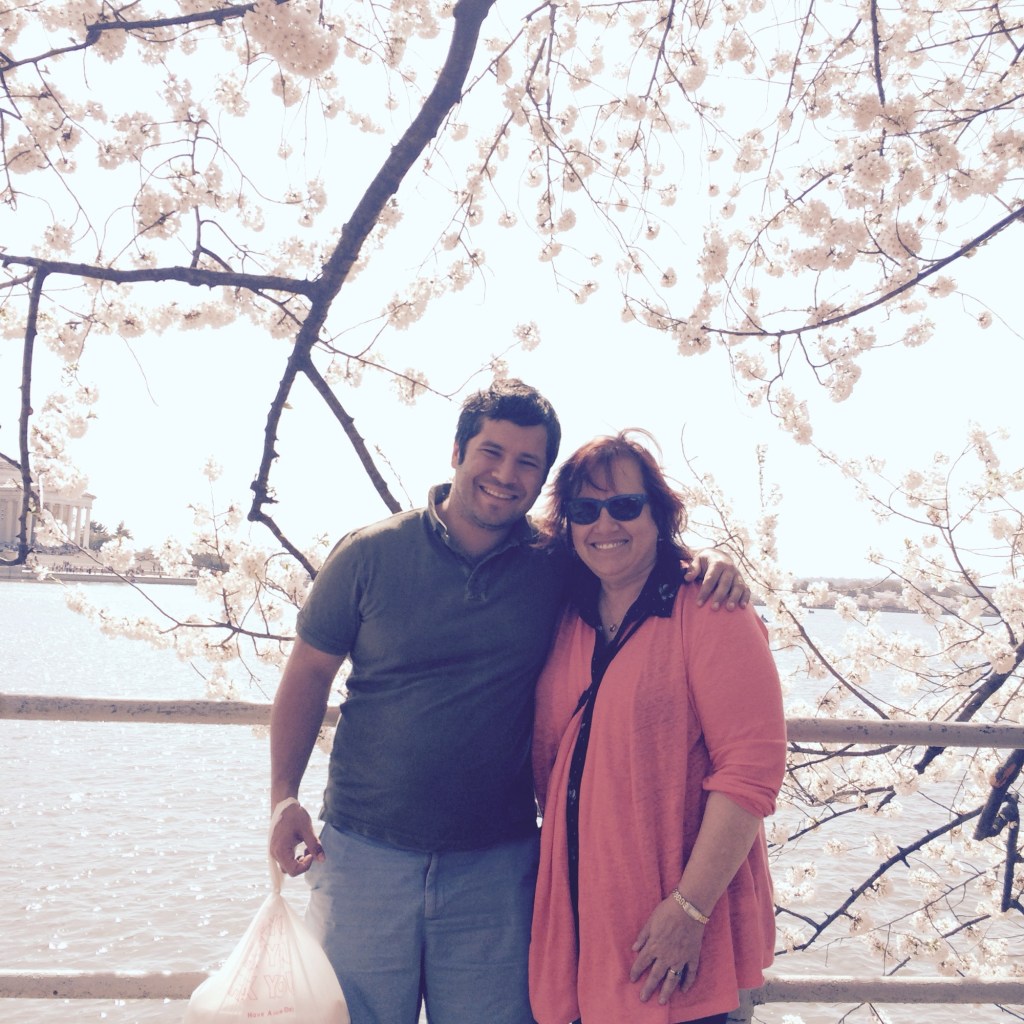
Today I went to see the cherry blossoms in Washington, D.C. where I live. They were beautiful. I went with a friend. We took pictures and smiled and played “tourist”. Just like me and my mom would do every single year since I was a little kid.
Mom- they were gorgeous. I remember you asking me, in the last few weeks of your life, to go down to the Tidal Basin and to take pictures with them to send to you as you were stuck on your deathbed. To give you perhaps a sense of joy and freedom from the awful, painful, isolating monotony you had to endure at the end of your life.
I hoped at the time those pictures would bring you some relief. Not only that I would carry on our tradition of visiting the beautiful cherry trees we so adored. But also because it meant I would move forward with my life. Not “move on”. Not leaving your memory behind. But forward. One. Step. At. A. Time.
That is the meaning I’ll always hold on to when I see these beautiful trees. Your kindness, your love, the many fond memories we had together. And my commitment to take care of myself and move forward. To let myself feel both sadness and joy. To let myself feel all of the spectrum of emotions. To slowly and carefully let go of some of the numbness I needed to get through those first few months. To give myself the freedom to live a good life. Even though I know you can’t be in it in the way I wish.
Because that is what your death means to me. It means the fact that I’m crying right now is ok. In fact, it’s healthy. I cry because I love you and always will. I weep because you’re someone that I miss.
Grief never goes away. It evolves. My hope for the year ahead is that my mom’s memory can serve as inspiration for living a good, healthy, happy life. Exactly what she has always wanted for me. And I believe somewhere, somehow, she still wants it for me today.
My mom z”l passed away on Tuesday April 18th, 2023. This past Sunday, about 10-15 very dear friends of mine came over to help pack things up. The only consolation on a very, very difficult day was the presence of these kind individuals, helping me sort through three and a half decades of our family life.
In fact, their presence so radiated throughout the house that had known so many wonderful family memories that it temporarily obscured the pain I was experiencing. While I found a moment to cry in my mom’s old bedroom, most of the time I actually felt reasonably good. But that’s the nature of trauma. It comes in waves. It ebbs and flows. And can sometimes hit you when you least expect it.
Some of my friends in their 20s and 30s have lost parents, though fortunately most have not. Of those who did, very few have experienced what I did this past weekend because usually there is a second parent to help with managing the deceased parent’s belongings, medical bills, and house.
Several friends have asked if I have anyone to help me. And to a degree I do- I have several relatives and family friends who’ve stepped up to help out. And I have a top-notch group of close friends who’ve time and again gone out of their way to help me.
But here’s what people need to understand: some things only I can do. My friends and family can’t decide whether to keep my childhood books, my stuffed Ernie that my mom repaired countless times as his dangling cotton-filled arm repeatedly threatened to dismember, my mom’s mosaics, my high school yearbooks, my mom’s records, or my family photos from Japan.
My friends and family can’t sign legal or financial documents, or do something as dark but necessary as designating my *own* beneficiaries.
What my friends and family can do – and some of them really have been doing – is to provide unconditional love. To go out of their way and make spending time together a priority. To be a phone call away. To help pack up my mom’s house. To check in on me.
To those people who’ve been making me feel loved – thank you. Nothing can replace the love of a mother, but the kindness of a friend goes a long way to soothing my soul during this difficult time.
Touching the objects of my childhood was not easy. Some of them reminded me of my loving mom, some of my toxic father, and some of myself as a young boy. That child-like part of myself that I had tucked away for years, hadn’t thought of in what seemed like millennia. At times it made me smile. And at times, it made me want to cry.
Where have the years gone? How I can honor my memories of my mom, of my step-dad, of myself? Where is the justice in buying two parents within 5 months of each other? How do I give up my childhood home so soon after?
These are all impossible questions to answer. But the only question that haunts me from morning to night – and sometimes in the middle of the night – is a simple one: “Where’s my mom?”
There are many answers to this question, both literal and metaphorical. And while I know I carry a part of her with me wherever I go, the answer to my question of “where’s my mom?” is “not here, not again in the flesh.”
Nothing put this answer into such stark contrast as packing up her belongings and my childhood home that we shared together since I was three years old. Because as those belongings cross the threshold and depart that house in the coming months, it’ll hit me with greater force. My mom is gone.
Mourning is a process. My period of shloshim is over. I continue to recite the mourner’s kaddish each night for my mom’s soul. And each night I have a little conversation with her – I do believe she’s in touch with me. And it doesn’t make it any easier to not be able to call or see her here.
To the people here in this world who are accompanying me on this journey: thank you. I can’t put into words what comfort it is to be able to rely on you. My mom taught me relationships, not things, are what matter. So I’ll take this message to heart. The things we packed were important, but the most important thing from last Sunday can’t fit in a box, and that is your love.
The past few weeks have been a whirlwind. With my mom’s passing on April 18th and the funeral and the shiva, not to mention the several years of ups and downs with the cancer treatment, I am completely and utterly exhausted. It’s 11:19pm on a Sunday and the quiet has set in. After a day, indeed a weekend, of seeing great friends, I felt boosted and even happy at times. It is only when the quiet sets in that my anxiety spikes and the sadness, more than anything else, comes to fruition.
I find myself doing what I know how to do to process my feelings, which is to write. When I lived in Israel, I started this blog as a way to keep in touch with my friends back home. And now I continue it as a way to keep in touch with my mom.
Mourning has been an uneven process, as I’ve been told to expect by clergy and family and friends. It comes in waves. I was lucky enough for my mom to make me a video and several audio clips when she was aware of her impending passing but alive enough to record something for me. In the clips that I’ve heard so far, she envisions a beautiful future for me. And encourages me to pursue it in her honor. I bawl every time I watch her. What an incredible gift that she gave me. And what an incredible robbery that she won’t be able to be there for my life milestones going forward.
At my mom’s funeral, I requested that the cantor learn to play one of my favorite Jewish songs, “Shirat Ha’asavim” – the song of the grasses. In this adaptation of the mystical Rabbi Nachman of Breslav’s words, Naomi Shemer sings that “every blade of grass has its own song”. When I lived in Israel, when I was out of touch with my family in part due to my own mental health issues, I would yearn for a way to reconnect. And I would sing this song in the fields of the holiest of lands. It sustained me and got me to where I am today. Just like my mom.
A few months ago, when we knew my mom was going to pass away, my mom and I met with one of our family’s rabbis (we’re lucky to have several!). I wanted to give my mom the chance to talk about how she envisioned being honored. It was a difficult and at times surreal conversation to have, but one that was important. It came to me that when the rabbi asked what if anything I would like in the service, that I wanted to include this beautiful song. It brought things full circle. Even when I was out of touch with family, I could feel a spiritual presence looking over me. A presence I still feel with me at times even though my mom has departed this earth. I believe my mom’s presence continues to guard over me and look after my well-being at a time when I sorely need it.
And for those needs she can’t take care of, I’m lucky enough to have an entire cadre of amazing friends who have stepped up to grieve with me, to cook for me, to care for me. Just like my mom would’ve wanted.
So mom, I can’t help but cry when I think of you. But know that it just means I love and loved you very much. And you always taught me it’s OK for boys to cry.
Not a day goes by without me thinking of you and trying to live my life in a way that would make you proud.
Thank you for always having my back, even when sometimes I didn’t know I needed it.
Sometimes the burden feels too heavy to carry. I will do everything I can to move forward, but won’t be afraid to ask for help when I need it. I hope you and David, my stepdad, are OK. And while it is probably going to be a long time before I join you all, I can’t wait to see you again. In the meantime, I’ll try to surround myself with people who help me “be my best me” as you would say.
It’ll be OK. It’s OK to not be OK. As you would say. I miss you. The only way forward is through – one step at a time. Love you mom.
For those who don’t know yet, my mom is in hospice care. After several years of battling cancer, the chemotherapy just isn’t working anymore. To say my mom is the center of my universe and the most important person in my life is an understatement. She is everything to me and I’m devastated to an extent that is hard to put into words. All just months after losing my stepdad David to the very same type of cancer my mom has. Meanwhile, my stepbrother’s mom is battling cancer as well. No wonder I feel like my faith is being tested.
It feels as if on a personal level, I’ve experienced and am experiencing my own personal Holocaust. It’s as if someone waved a wand and threw every bit of crap at me humanly possible and said “now deal with it!”
I could barrel my way deep into the valleys of despair- but that’s not what my mom taught me about survival. From a young age, my mom taught me to find the positive in any and all situations. And I’m not going to lie, with an abusive father in the picture, there were some really dire circumstances sometimes.
But somehow we always found room to laugh amidst the tears. To drive around Potomac and gawk at fancy houses. To count all the Christmas lights on the way back from Hebrew school. To pray. To celebrate holidays. To invite friends and family to our ever-expanding table of loved ones. To always, always, always make room for another at the table.
My mom’s experience – and my own – over the past few years battling cancer has made me think about my Judaism and about what it means to be a survivor. Those of you who know me well know that I’m a bibliophile, a true lover of the written word. So I gave thought to what book of mine represented what it means to survive, to overcome darkness.
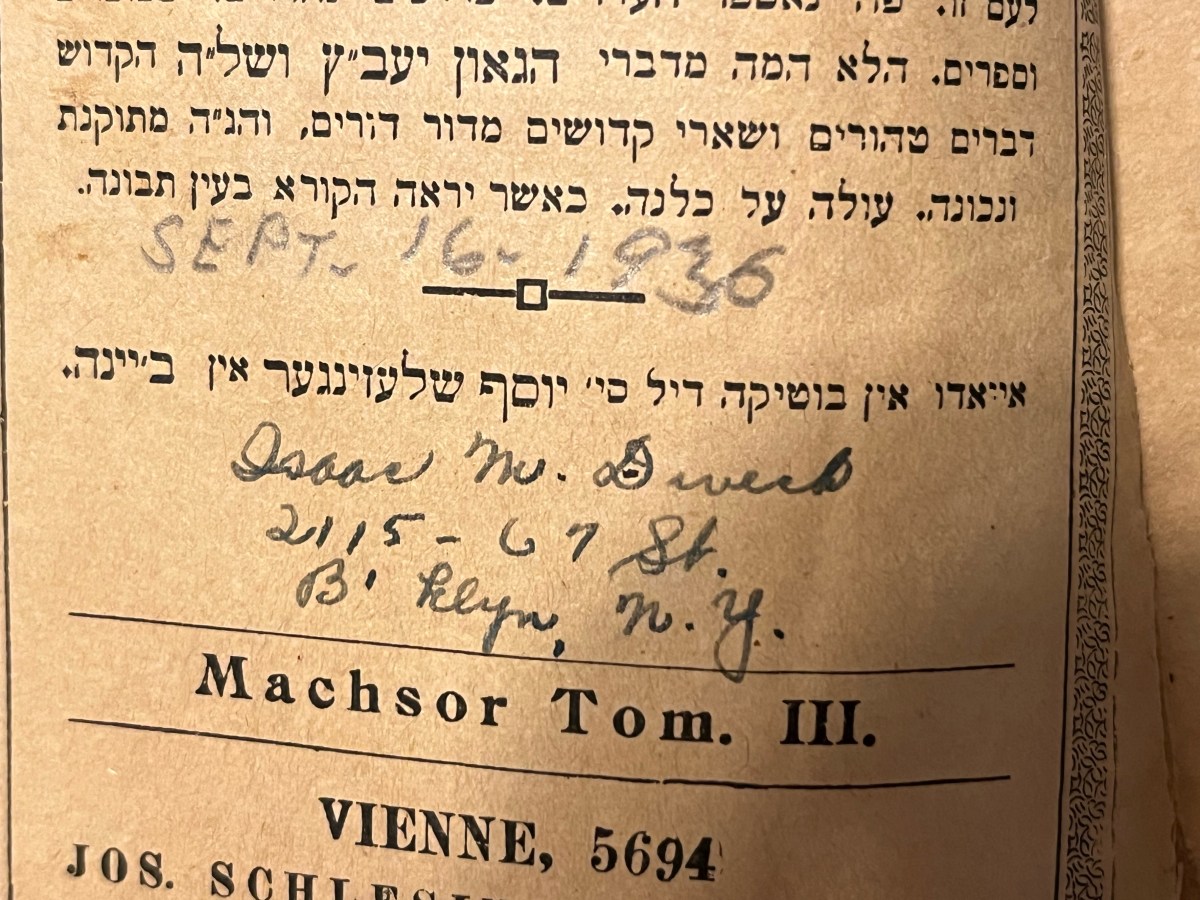
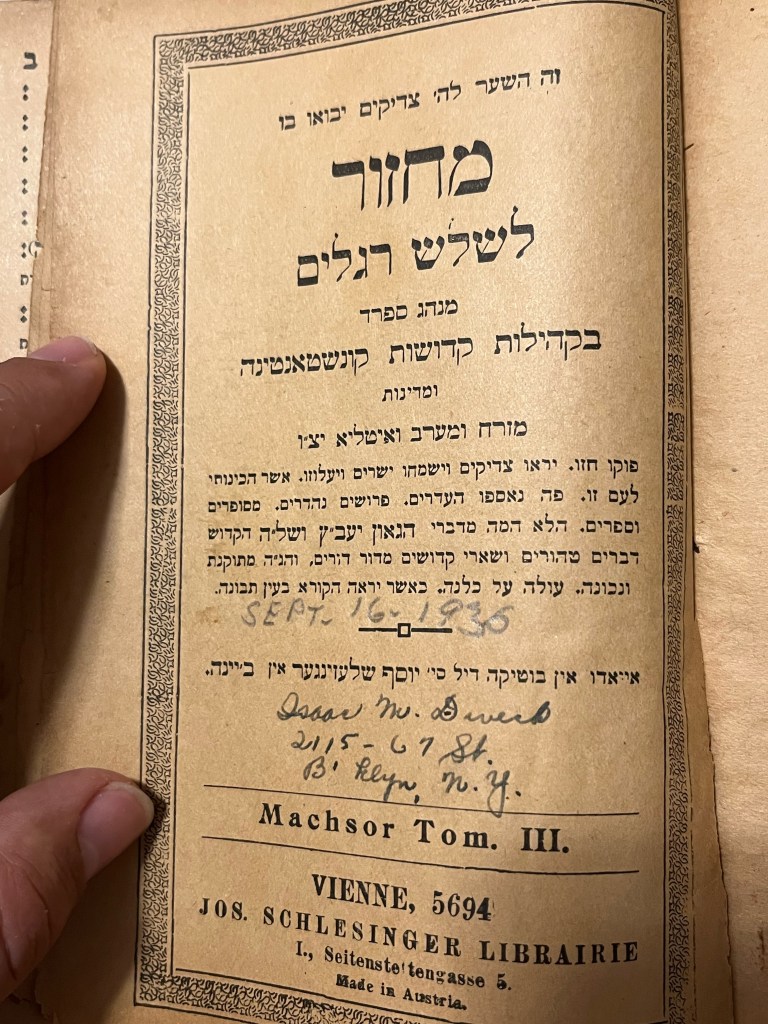
I found a Machzor, or prayer book, in my apartment. I can’t for the life of me remember where I got it, but probably in New York or Israel. And the book was fascinating.
The prayer book was owned by someone named Isaac in Brooklyn N.Y. with the date “1936” written in pencil. But the book itself was not from New York- it was from Vienna, Austria. And it was (according to the Jewish calendar date listed on the cover page) printed in 1934. Just four years before Austria became part of Nazi Germany. Who knows that became of the original publishers and owners of this book. I’m grateful it found a safe home in the U.S. with Isaac and eventually with me.
Which got me thinking – what does it mean to survive? After all, the original people who touched this book in Austria – they may not have withstood the Nazi onslaught that was about to engulf them. But their work lived on – and lives on in me every time I turn a page, every time I touch the cover. Every time I utter a printed word.
So too is it with people. My stepdad is a cancer survivor because every time I think of Lord of the Rings or his green thumb or his steadfast support of my family, I bring him back to life. And my mom will always be a survivor because I carry with me the strength that she taught me from the day I was born. My mom is much like this prayer book. Filled with soul. And built to outlast the evil that pursued it – be it the Nazis in Europe or a truly despicable cancer.
Lately I’ve been feeling more spiritual. I can’t quite say what form that takes or is going to take as I continue to tend to my own needs and ponder what’s next for me in life. But I am feeling more connected.
Those of you who know my mom know that she likes to look for the little signs of things going right. Of feeling connected to something larger than any one individual.
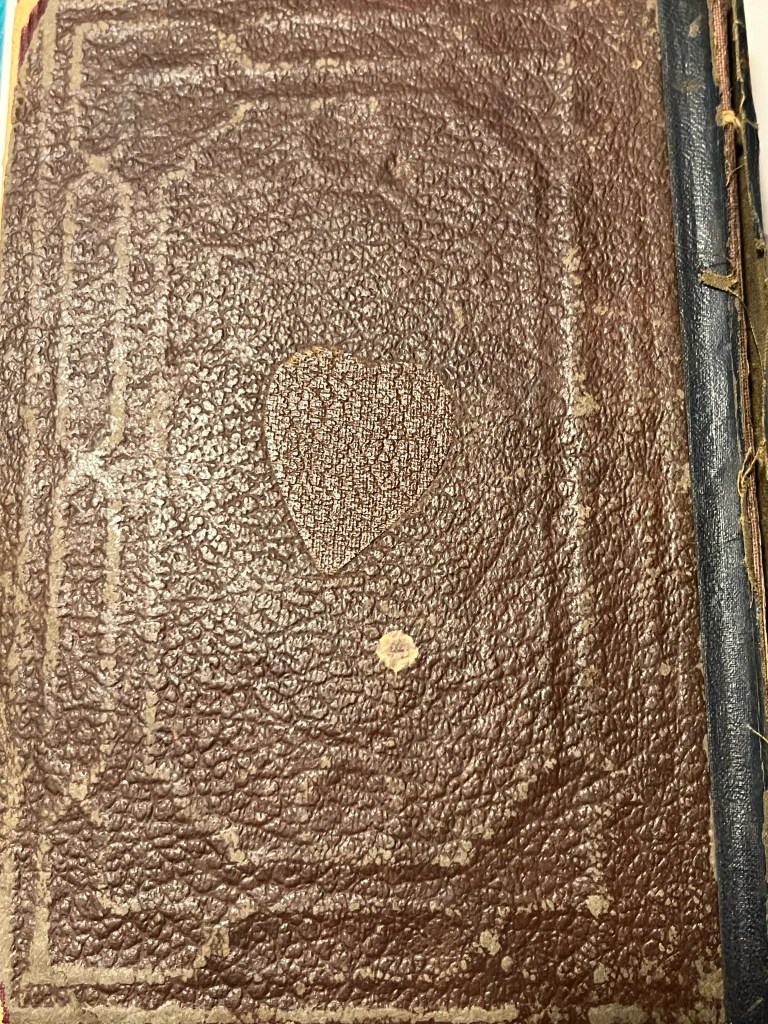
Which is why I think it’s beautiful that when I closed the prayer book, I noticed a heart on its cover.
It was as if this was all a bad dream. As if something out there was sending me a sign that it will be OK. That while this situation absolutely sucks and I wish it weren’t happening, that love is what will ultimately tie me to my family forever.
Thank you to all the friends and family who have been there and continue to be there for me and for my mom. We couldn’t do this without you. And I will never forget all of your kindness.
While some people perfect a nice clean crisp book cover, I like mine like this prayer book’s – a little worn. Because it shows someone loved it. So as worn out as I feel, I am happier for having lived this journey and known so much compassion along the way.
Love your neighbor as yourself. Hug your loved ones. The rest is just details.
The past few months have been a mess in many respects. I don’t need to be another person to tell you about the massive amount of death, of political idiocy, and economic disaster. You know it- you’re living it with me.
Coronavirus is tiring. Not just the news (which I have limited myself to viewing one day a week). It’s the seeing little children wearing masks. It’s the hour I spend wiping down my groceries. It’s the fear I feel when there’s a leak in my apartment. Not from the leak itself, but from the fact that building maintenance will have to come and how will I keep my social distance. Will they be wearing a mask? Will I have to disinfect my (soaking wet) couch that they moved since they touched it? Can I even disinfect a couch?
It’s the endless litany of questions you ask yourself every day to stay safe but still build a life worth living. Balancing that need for safety with the desire to see friends, to go outside, to live in a lively way at a time when there is so much pain and fear. When you find yourself avoiding people on the sidewalk as if they were the plague itself. Because what if…
In a lot of ways, America has proven utterly inept at responding to this crisis. Our fierce independence and distrust of authority, which helped us create this country, become liabilities when communal responsibility is required to survive.
This push and pull between liberal and conservative, Democrat and Republican, libertarian and communal that can be a source of creative tension. Or destruction. It lends itself to an interesting question. How honest are Americans as they have this debate and what does it have to do with COVID-19?
Having lived in Israel, one of the most common tropes I heard about Americans was that we were fake. That when we asked “how are you?” we didn’t expect a real answer. I often found myself pushing against this notion, because clearly Americans are a diverse lot, capable of being as fake or authentic as everyone else.
And yet as I watch people coping with the COVID-19 crisis here, I can’t help but think there’s a grain of truth to this Israeli stereotype. Because the expected answer to “how are you?” in American culture is “I’m fine, thanks”. Which is not an answer. It’s a lie. Especially at a time like this- nobody’s fine. Some days might be good, some days might be shitty. But none of them are just fine. Well and swell. It’s just not real.
My question is as we debate the political and social ramifications of the COVID-19 crisis here, could we learn something from Israeli directness? Could we, instead of packaging our comments in “please” and “thank you” just drop the charade and let ourselves be angry, be sad, be surprisingly happy in the face of it all. Whatever we’re actually feeling. And share that with those who agree with us- and yes, with those who don’t.
It’s not because I live in a dream world where I think emotional honesty will all by itself heal the rift tearing our country apart, as Democrats and Republicans fall ever deeper into ideological pits harder and harder to climb out of. Nor does it mean assigning the blame 50-50 to each side. Hardly- I’m a Democrat and I think 95% of the irresponsible political behavior over the past few months has to be owned by Donald Trump and Republican governors disregarding public health experts by opening their states too soon. I also believe all of us have ideological biases and gaps in our logic.
But see that’s the thing- I was honest. I didn’t sugarcoat. And it doesn’t make me any less willing to engage with (or want to persuade) someone who disagrees. I didn’t take my ball and go home. Because what I learned in Israel is you can be direct and respectful. That being upfront about our personal emotions and opinions can do good not only for ourselves, but perhaps for society. It’s not easy at first, but once you get used to it, it’s hard to go back.
Back to the “I’m fine, thanks!” era. That era is over. Thank God. The new one is up to us to define. May we do it wisely.
The past month has been stressful. Fortunately and unfortunately, I’m not alone in coping with this stress. The whole world is suffering. Quarantines, layoffs, sickness, death- it’s nauseating and depressing. I’ve given up on reading the news, except for my favorite site. I mostly count on my mom to filter in the information I actually need to know to protect myself. We’re living in, if not unprecedented, then supremely strange and difficult times.
So how do we respond to such confusion and chaos? Pain and suffering?
The answer lies in some happier times I experienced.
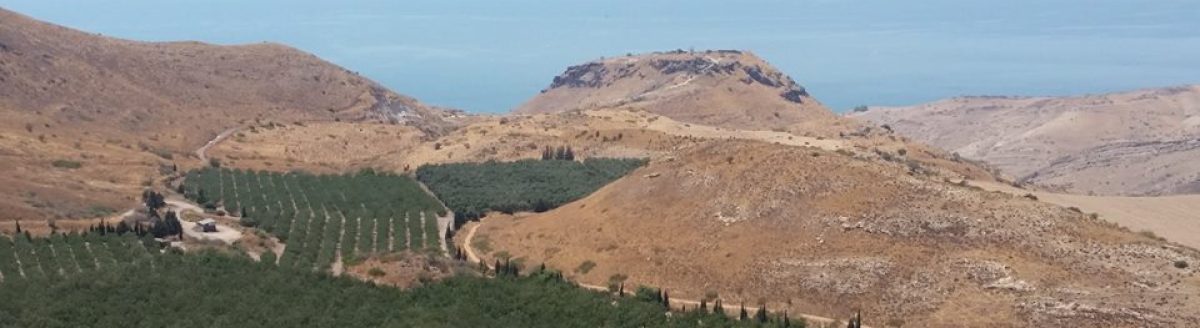
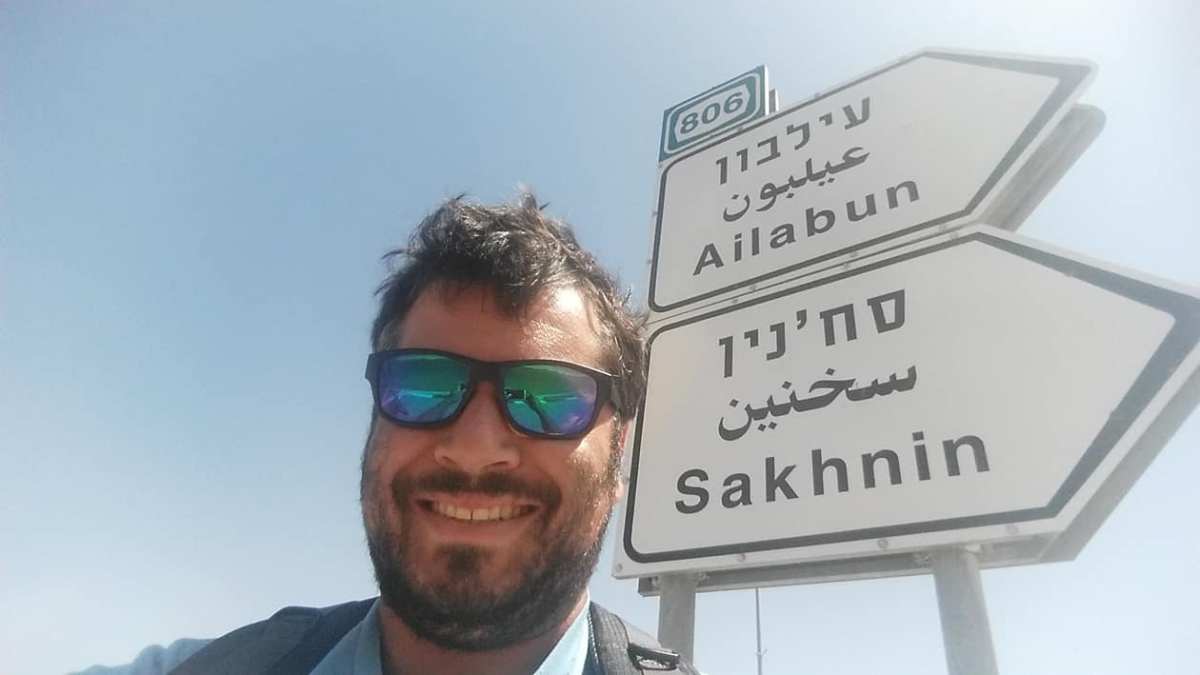
One day I found myself on a bus from Tel Aviv headed northward. I had long wanted to visit the Christian Arab town of Eilaboun. It is absolutely stunning in beauty.
The town is surrounded by orchards and olive trees. The scenery didn’t disappoint. But just as importantly, neither did the people. When I knocked on someone’s door to see if I could visit the church, the elderly gentleman was quick to not only open the building, but also to be my tour guide. The tiny building was beautifully decorated. And I got to go on the roof and see where the old man had, as a child, been the one responsible for ringing the church bells. He regaled me with stories of his naughty childhood antics- he was such a sweet man.
After having visited the church, I decided to roam the fields a bit- I like doing that kind of thing. Just communing with nature and being in touch with my surroundings in a way that was hard to do in Tel Aviv except when I’d go to the shore.
Suddenly, as has happened to me a few times on my travels, I found myself a bit too long in the bright Middle Eastern sun and my water was running dangerously low. With no store in sight, I wasn’t sure what to do. It’s not exactly like there’s a cab waiting alongside an olive grove that you can hail.
Starting to get a bit worried, I came upon another elderly man. This man was working by his shed in the fields. He must’ve been at least 75. I greeted him in Arabic and told him I was trying to find water. I noticed he had a large two-liter bottle next to him. He reached for it. I figured he’s pour me a cup – he had some. And that, to quote the spirit of our recent Passover holiday, would have been enough.
Instead, he handed me the whole bottle. Without hesitation, without asking where I was from, who I was, what I was doing wandering an olive grove. No questions. Just handed me the bottle.
I was shocked. I had seen tremendous generosity in Israel but this was a new record. I asked him if he was absolutely sure he could part with the water. And he insisted I take it.
In the Middle East, water isn’t a fun thing to sprinkle on your plants or to fill a bathtub with or to fill pools with in every neighborhood. It is a precious commodity. It is quite simply life.
So as we’re faced with our own societal drought- a drought of reason, a drought of compassion, a drought of knowledge to combat a disease we know precious little about. Focus on what we do know. And what we can do. And what we can do is share our bottles. Since we can’t hand someone a drink, find another way to contribute. Call a friend. Teach someone a new skill. Help your neighbor navigate the unemployment system. And even as we all ask for help ourselves – and rightly so – be sure to find your water bottle and give it away. Like the man in Eilaboun did for me.
Because that’s the reason I’m sitting here typing this blog.
As I’m sure all of you know by now, if nothing else because of the surge of ads, the Democratic primary is underway.
Among the slew of Democrats who have competed (and the not-so-small number still competing), each candidate has his or her strengths and flaws. Personally, I’ll be happy to have anyone new in the White House who is a functioning adult and doesn’t make foreign policy via Twitter.
That being said, not all of the candidates are equal in my mind.
But first, a bit of context. In 2008, I worked on the Obama Campaign and was a pledged delegate for him at the Democratic National Convention. In 2016, I not only voted for Bernie Sanders, I held a house party for the campaign. I became so upset with the party’s treatment of him that I (albeit in the very safe blue state of Maryland) voted for the Green Party in the general election.
This time around, I feel different.
It’s not because Bernie doesn’t have some good policies. His approach to higher education and healthcare is correct and would put us in the same category as Israel or most Western European countries. It’s a crying shame that there are un- and under-insured people in this country. And if countries with fractions of our GDP can do it, so can we. It’s time to stop pretending we’re so different from the rest of the world that it just “couldn’t be done” here. It can- and should.
That being said, especially after having spent time in Israel, there is something grating about the way Bernie talks about the world. It’s so utterly black-and-white in its approach, when the world is shaded in so many hues of gray.
It’s the half-Norwegian half-Persian Jew who celebrates Passover with smoked fish and steaming kabobs. It’s the Bedouin man who married a Jewish woman who converted to Islam but are raising their kids Jewish- with Arabic spoken at home, and Hebrew at school. It’s the far right-wing man I saw on TV saying he’d vote for Lucy Aharish, an Arab TV celebrity, for Prime Minister. It’s the Hasidic Jew I met who fixed my cell phone! And will almost certainly go to the voting booth to vote for the most homophobic party in the Knesset. Meanwhile, I bought him dinner.
Life, my friends, is not simple. And while sometimes there are clear victims and perpetrators, oftentimes, especially when talking about masses of people, it’s not so simple. The Palestinian kid in the refugee camp is not the Hamas leader launching rockets, nor is the Israeli settler attacking Palestinian farmers the same as the settler who engages in peaceful dialogue with his or her neighbors. Because yes, settler-Palestinian dialogue is a thing.
But much as Bernie boils down the Israeli-Palestinian conflict these days to a matter of a lofty giant trouncing a powerless foe, he does so with pretty much every issue he can talk about. I’m not a particular fan of the way wealth is distributed in our society, but I also would like to lose the “millionaires and billionaires” line he constantly repeats. It’s old and it’s not going to move us forward.
And what it also won’t do is attract a single centrist Democrat or Republican vote when ultimately a (theoretical) President Sanders has to actually pass legislation, rather than just give a rowdy stump speech.
Again, I’ll be happy if anyone can begin to bring order after what has been perhaps the most chaotic and unruly presidency we’ve seen in my lifetime. If the person to bring that order is President Sanders, then the people will have spoken.
But my hunch is that if he’s the nominee, the people will look at Trump and Sanders and millions will vote with their feet and stay home. That’s not my plan- I’ll vote for Bernie if that’s what’s on the menu. But don’t get me wrong- I think it’s a mistake to nominate him and I think that he jeopardizes the Democrats’ chances of winning the White House. And we’d do well to nominate someone a bit more nuanced and a little less angry.
Just some thoughts from a former “Bernie or bust” kind of guy 🙂













 Planting Roots Bearing Fruits
You must be logged in to post a comment.