My First Israeli Rosh Hashanah

Yesterday, I walked by a Breslover Hasid on the street doing his typical goofy (and cute) stuff to make people smile.  After I bought a sticker, he wished me “shanah tovah” – a happy new year.  I had to pause for a second.  Is it really that soon?  Is Rosh Hashanah only a week away?

And then I had another thought- other than a Jewish person I already knew, nobody in my life has wished me “shanah tovah” on the street.  If you want to understand in one interaction why I’m here, it’s that.  Something most Israelis don’t even notice because they’ve lived in a Jewish-majority society their whole lives is something very unique and special for me.  I’m validated on every street corner.

Then I got to thinking- what does Rosh Hashanah mean to me as a new Israeli?  I’ve never been here during holidays- only during summer trips.  What is it like?  I found out my synagogue doesn’t have first day Rosh Hashanah services- something unimaginable for an American synagogue.  For American Jews, the High Holidays (yamim noraim) are THE event of the year.  Millions of people who don’t regularly participate in any other aspect of Jewish life will still go to shul.  More secular Israelis may simply do a holiday meal.  But American Jews en masse go to synagogue- for hours and hours.  And they pay a lot of money for it.  It’s a very interesting difference.

In America, Ashkenazi Jews have our special foods.  For Rosh Hashanah or Yom Kippur break-fast, I remember eating sweet dairy kugel, amazing bagels, lox, whitefish salad, 5 varieties of cream cheese (including lox spread!), black and white cookies, dense American rugelach, matzah ball soup, chopped liver, egg salad, herring, you name it.  Israeli salads and Sephardi foods are delicious, they are just not what I grew up with as Jewish food because I’m Ashkenazi like 90% of American Jews.

Before the holiday, everyone runs around to get the food ready and pick up their spreads, greeting each other in our Jewish English sprinkled with Yiddish.  At my synagogue, you had to pick up your tickets in advance- because we don’t have a government that pays for our synagogues, we have to pay ourselves.  You get to synagogue and you’re dressed to the nines- suits, ties, high heels.  Here in Israel, the only time I’ve seen a suit is on a Haredi person!  There are people here who have “wedding jeans”.  We’d all eat together before going to synagogue.  The way I grew up I’d go to Erev Rosh Hashanah services followed by a 3 hour morning services.  Most Reform Jews don’t observe the second day.

I was lucky enough to grow up in an area with a large Jewish community, so public schools were closed.  But in the vast, vast majority of the U.S., schools and offices and transportation are open- and you need to request time off to observe it, which is not always as simple as it sounds.  In the U.S., Rosh Hashanah is special because of what you do at synagogue with your community and at home.  And it can be very special- very intimate.  Like you’re part of this cool 4,000 year old club.  Because outside your home, it is invisible.  When Israelis wonder why Americans go to synagogue, this is one of the reasons- to have a space to be Jewish.  At 2% of the population, there are no TV ads that wish you “shanah tovah”.  If you don’t make the space, there is no Jewish community.

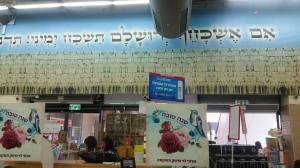
Here, it is everywhere.  I was at a bakery last night and I noticed an ad for five different types of honey cakes (oh yeah, we eat those too in America).  These are cakes you eat specially for Rosh Hashanah.  I was in shock.  In America you have to know where to go to find these.  The local Au Bon Pain won’t be selling them.

I don’t really know what Rosh Hashanah will be like here.  I’m a bit anxious.  I’m a religious Reform Jew and it matters to me.  And yet on some level I feel less a need to go to all the services and more of a need to build community, especially in light of the fact that I’m here alone.  I also feel that if all I do is have holiday meals, that won’t be enough.  I believe in God and I want to pray for a good year and renewal.

My Judaism here is evolving, in ways I didn’t even expect.  This year was a hard one and one of immense personal growth and fortitude.  I sometimes miss being a Jew in America- the foods I know that are almost invisible here.  The heimish religious communities where if you are participating, it’s because you really care about your Judaism.  Because you don’t have to.  Here, you’re Jewish by default.  There’s something beautiful in how “normal” Judaism is here.  And I also feel like in some ways for that reason it can be easy for Jews here to lose sight of how special our tradition is.

My hope for this year is that I can embrace the beauty of a country where I can walk down the street and see myself in every street sign, every ad, in a Hasid with a clown nose wishing me a shanah tovah.  And where I can share some of my special American Jewish spirit so people here remember just how rich our tradition and spirituality is- and that it will only continue if we cherish it.

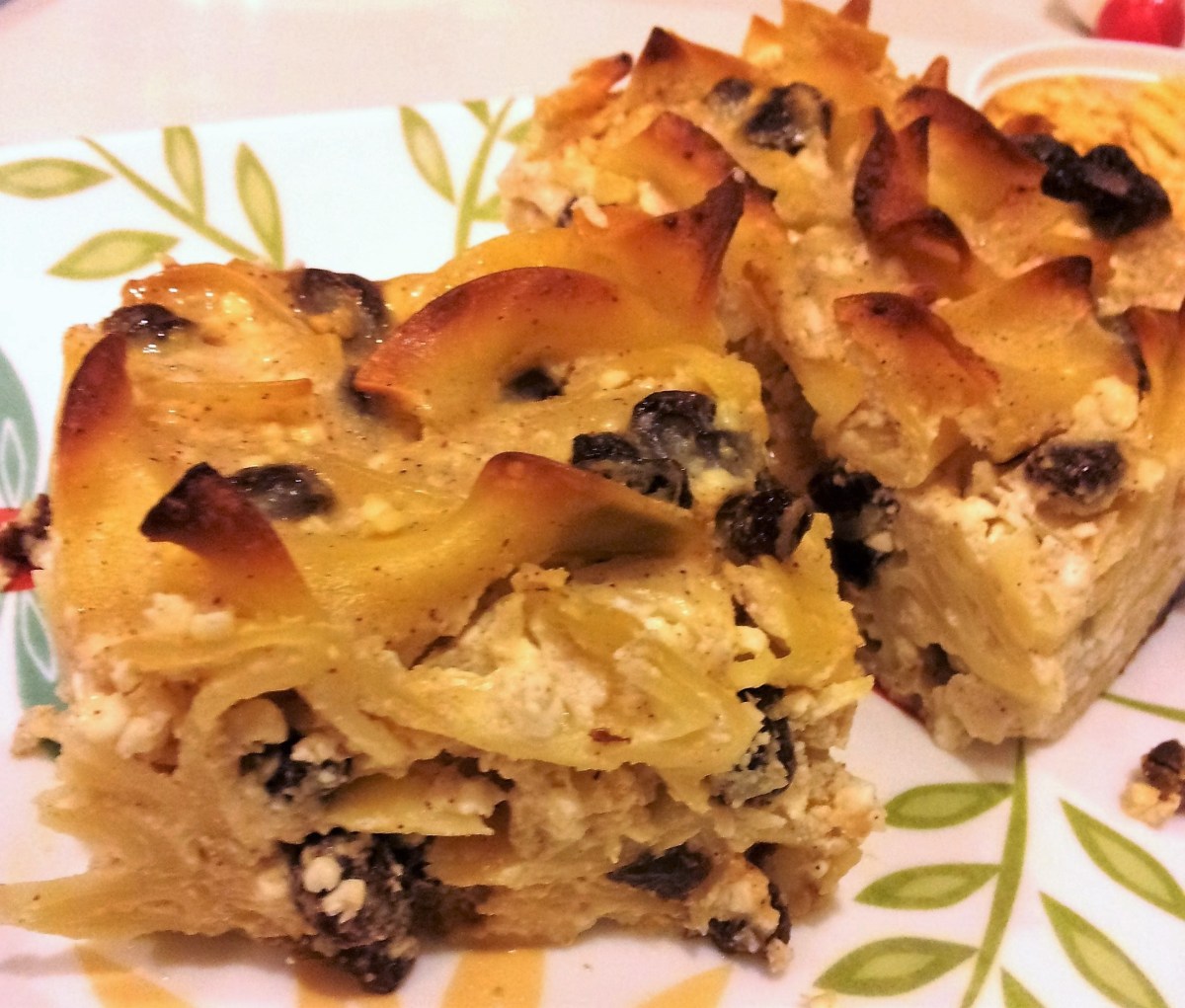
Wishing you all a Shanah Tovah- a good new year.  May it be filled with happiness, hope, community, and freedom.  A zisn yor – a sweet new year.  May it be as sweet as the dairy kugel I’m going to bake 😉
Arab by association

Today, I went to a settlement.  Ariel is a beautiful city of 20,000 a little over an hour by bus from Tel Aviv.  It’s located beyond the Green Line in Samaria (Hebrew: Shomron).  This area is called Shomron because that’s the name of the ancient Jewish capital of the Northern Kingdom of Israel that was in this vicinity.  To most Israelis, this is Israel (larger settlements like this tend to be part of the national consensus).  To international organizations, this area is often known as the West Bank.  And to most Palestinians, it’s part of Palestine.

This is not a typical tourist spot for Reform Jews or part of the Gay Pride Circuit, so I had never been here before (as a queer Reform Jew).  I’m a curious guy and open to new things, so I hopped on a bus.

The most interesting thing about Ariel is that it’s not interesting.  I don’t say that to be mean- there are actually some attractions in the area like stalactite caves and an archeological site of a 3,000 year old Jewish city.  Unfortunately, because this is a small town, none of that was open or easy to get to.

What I mean is that it’s very normal.  I think the image me (and many progressive Jews and non-Jews) have in our mind of a settlement is an Orthodox family of 16 living in a trailer on a hilltop beating up Arabs.  Just to be clear- there’s nothing wrong with an Orthodox family of 16, it’s just that I think many people think about settlements as a caricature, not realizing their diversity.

Ariel is possibly the most (Jewishly) integrated city I’ve been in in Israel.  There are loads of secular people, there are Russians, there are Ashkenazim, there are Mizrachim (blasting some cool Mizrachi music I stopped and listened to).  There’s a Kosher Mexican restaurant and a non-Kosher restaurant with Thai food.  There are men in yarmulkes and women in tattered jeans with purple hair.  There are judo lessons and piano concerts and even a mall.  There are Palestinian workers and there are Arab-Israeli students at the local university.

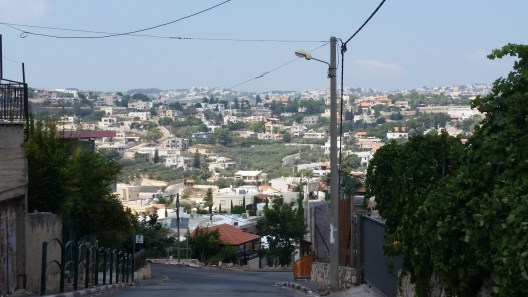
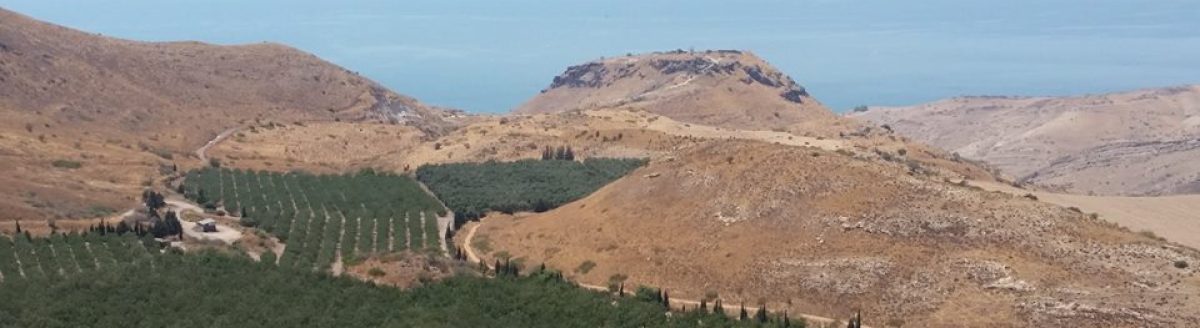
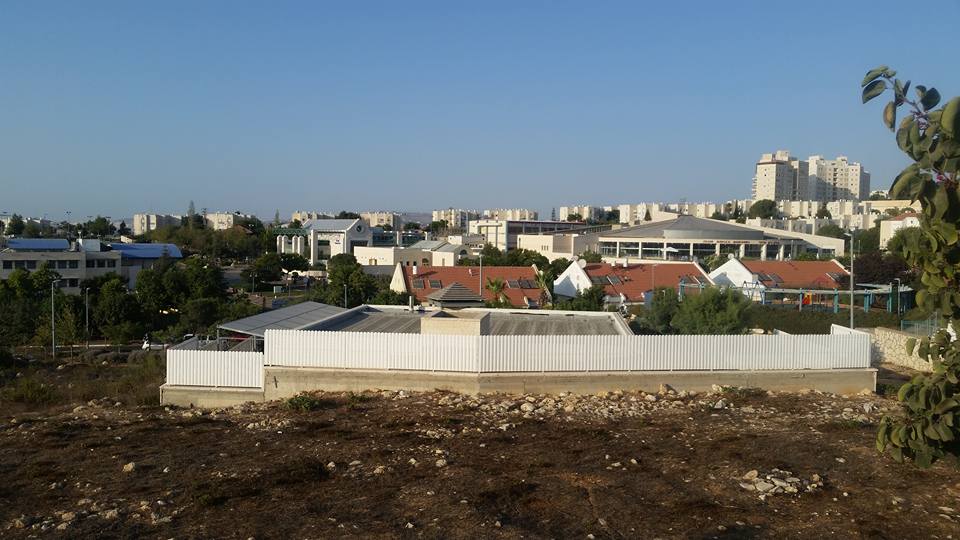
It’s also beautiful:

The truth is, in a lot of ways, Ariel is like any other city.  I think it’d behoove people of all backgrounds, particularly from the progressive world I come from, to understand there are many reasons people might live in a settlement.  For some people, it’s just about affordability.  Other people might like the view.  And for some people, it’s a religious statement.  For religious Jews, this is the land God promised us.  And the West Bank/Shomron was an integral part of Jewish history for thousands of years and is still home to many sacred sites.  I’m not interested in the politics, I just want people to understand that if you can’t put yourself in the shoes of a religious Jew who wants to live in the land of their ancestors, you’re not going to do a great job of figuring out how we can all live together.  Empathy is about understanding where other people come from even if you disagree.  People are complex and come in all shades of good and bad- including settlers.

As I prepared to catch my bus back to Tel Aviv (the West Bank is really, really close- you can see Tel Aviv from Ariel), I started to well up.  I wasn’t sure why at first, but I figured it out.  I snuck over to some bushes and just started balling.  As much as I liked exploring Ariel today, I just couldn’t help but think about the Palestinian villages I could see on the hilltops.  What was life like there?  First-hand- I don’t really know.  If we were elsewhere in Israel, I could just hop on a bus and go find out.  But reality here is a bit starker.  Due to the complicated situation (on both sides), I can’t just hop on a bus and visit a Palestinian village.  I’m not even sure if/where it’s legal to do so.  Or safe.  The situation made me so sad and the tears came down.  I hate seeing the world broken.

I told myself that whenever I’m feeling despondent here, something magical happens to lift my spirits.  And I was right.  As I was waiting for the bus, I saw a familiar face.  Sarah is a Muslim Arab-Israeli I met through a Hebrew-Arabic practice group in Tel Aviv.  What are the odds that my first time visiting a settlement I bump into an Arab friend when I’ve only been here for two months?  There are coincidences and then there’s bashert.

We hopped on the bus and I asked if I could sit next to her (important detail).  We got to talking about Arabic dialects in Israel (I’m trying to figure out which ones to study- I already speak Syrian which is intelligible but want to get more local too).  We spoke in a mixture of Hebrew and Arabic.  She told me about her work at Ariel University (that’s right- she works at a college in a settlement) and her work with promoting Hebrew language studies for Arabs in her town of Kafr Qasim.

Then we pulled up to a checkpoint.  I’m glad there’s security to make sure everyone is safe.  That being said, something fishy happened.  Two guards came on board and walked around, but the only person they asked for ID from was the Muslim Arab woman in a hijab next to me- my friend Sarah.  There wasn’t even the illusion of not profiling her.  Then they looked at me sitting next to her: “Are you with her?”  My answer (as I sat there fairly scared shitless): “We’re friends”.  At that point, the guards requested my ID.  After some skeptical glances, they gave us our IDs back and left the bus.

I asked Sarah if they always asked her for her ID.  She said yes.  She also said that if I hadn’t been sitting next to her, they wouldn’t have asked for mine either.  I said that I knew.  It was kind of a scary experience for me, and I’m sure it’s upsetting for Sarah too even if she has resigned herself to it.  Sarah is a full Israeli citizen born and raised.  I’m not sure why a terrorist would be dumb enough to put on a hijab, but I’ll take at face value that anyone could be a threat and the guards have a stressful job.  That being said, check everyone’s ID, keep people safer, and stop being racist.  It’s a win-win.

I have to say I’m proud of myself.  When I was asked if I was with Sarah, the easy way out would’ve been to say that I don’t know her or barely know her.  But the words that came out of my mouth, under pressure, were “we’re friends”.  If that makes me an Arab by association, so be it.  I’m a human being and damn proud of it.

Sarah got off the bus and I headed back to Tel Aviv.  I couldn’t help but thinking about what an overwhelming day I had.  Full of meaning and also a lot to process.  How I try to find humanity in every community- settlers, Arab-Israelis, Palestinians- everyone.  And how that can be really hard.

Israel is a verb.  It means “wrestles with God”.  It would’ve been easier for me to sit static on the beach today (and frankly I might need that after this trip).  But instead, I moved, I wrestled.  I went by myself to a place where most people I know have never stepped foot.  It was interesting, it was hard, it was brave.  I’m proud of myself.

As I got off the bus, I thanked the driver in Hebrew, assuming he was Jewish.  He responded back “ma3 asalaameh” – that’s Arabic for goodbye.  He winked at me and I smiled back.  Guardian angels come in all shapes and sizes 🙂 .


Hitchhiking on a Druze golf cart

Tonight was rough.  I had an amazing Shabbat which included hosting American students, Reform services, Libyan food, the beach, and an Israeli techno party.  After all that, I headed to the America Restaurant on Ibn Gvirol only to find all sorts of Trump-themed and racist paraphernalia.  It was an unwelcome surprise for someone who came here to get away from that.  I felt angry and typecast.  The only good part was my excellent company and the mac n cheese.  I headed home feeling deflated and wondering why I was here.  It’s hard to be a Jew in America and it’s hard to be American in Israel.

After blowing off some steam, I decided to write about my trip to Daliat Al Karmel and Haifa.  Because there, I felt the inspiration that can happen in Israel.

Let’s start in Daliat Al Karmel.  A beautiful Druze village, I loved exploring every nook and cranny.  I had heard there was a monastery nearby, so I made my way by foot.  Each person I asked for directions told me it was 5 minutes away.  I asked four people the same question, so needless to say it was more than 5 minutes away.  After 30-40 minutes in the heat, I saw a golf cart heading towards me.  I asked the man and his son in Arabic for a lift- and so I hitchhiked with the Druze family to the monastery.

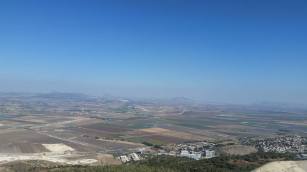
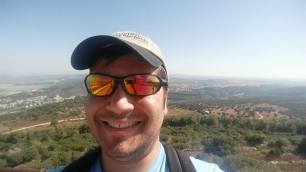
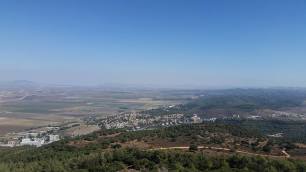
This place is gorgeous.  On top of the roof, you can see all of Israel’s North.  It looks like this:

21433059_10101541044621052_5796979956103695357_n21433261_10101541044246802_1998713033793038133_n21462588_10101541044531232_5301219092773346993_n21557439_10101541044850592_4218424586938077001_n

I felt at peace.  Tel Aviv is a disgusting dirty city.  It’s a fun place.  It’s filled with youth and queer people and the beach and a million and a half cultures.  But it’s gross.  And loud.  The North is peaceful.  It is where I go to meditate and connect with God.

Realizing I was far away from the village bus and in need of a way home, I talked to the Druze guy who worked at the front desk.  Since this is Israel, there is ALWAYS a solution.  A priest from the monastery was headed back to Haifa, where I was staying.

I ran after his car and hopped in.  The generous and kind Italian priest drove me the entire 45 minute ride.  He spoke decent Spanish and I speak Spanish so we talked that way- in “Itañol” as he called it 🙂 .  He works for a Roman Catholic church in Haifa that cooperates with Greek Catholics and Maronites- both of whom are also in communion with Rome.  He loves life in Israel and wants to stay.  He even did an ulpan- although he was frustrated that the teacher only explained things in Russian!  25% of Haifa is Russian so it makes sense.  Kind of funny that the words he learned in ulpan were zdrastvootie and pazhalsta haha.

I then went out in Haifa to check out the nightlife.  I connected with some Americans teaching English in Haifa, which was great.  It’s nice to get a dose of the motherland once in a while 🙂  I was then headed home when I heard Arabic music blasting from a sushi bar.  I immediately went inside and found an entirely Arab sushi restaurant singing and dancing.  I joined in, started clapping and dancing.  It is hands down the most fun I’ve had since arriving in Israel.  And there’s wasn’t a Jew in sight.  Because it would probably never occur to a Sabra to step foot in this place.  I’m pretty fearless and open-minded, so I said what the hell.

The next thing I know, the music stopped and the bartender starts belting out some amazing Arabic tunes.  And he. is. GOOD.  Everyone starts swinging and swaying and banging on the bar.

It’s 3:30am and I head home.  I can’t help but think now how my Americanness helped make these moments possible.  My multilingual interactions.  My trust of Druze and Arabs.  My appreciation for all religious traditions.

Because my American identity isn’t a metaphor.  And it’s not a Britney Spears concert or a goofy picture of Donald Trump or a selfie in Times Square.

It’s my appreciation for diversity.  My willingness to listen.  My open-mindedness and my love for my neighbors- Muslim, Christian, Jewish, Hindu, Buddhist, you name it.

When I made aliyah, some Sabras told me not to hang out too much with other Americans.  Not to be too diasporic.

Bullshit.  My American identity makes me a better Israeli.  Quite a number of Jews here speak better German than Arabic and know more about Berlin than Kafr Qasem.

I intend to be part of the solution here as an American-Israeli.  Instead of throwing shade, hop on the golf cart with me.  We’ll climb atop a monastery in the middle of nowhere.  We’ll stare out at the North and realize that anything is possible if you just let yourself dream.  The American-Israeli dream.

A Kavkazi soldier died in battle today

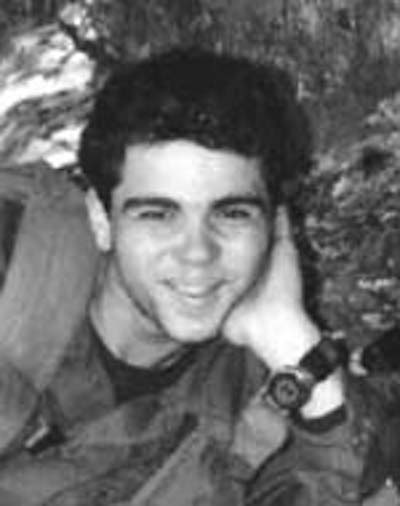
Tonight, after a delicious dinner of Kavkazi dumpling soup, I met Ruslan Yosifov.  Ruslan was killed 20 years ago today by a roadside bomb in Lebanon.

How did I get to meet this brave young man?  Let’s start from the beginning.

I was walking around exploring Ramat Gan, an interesting and diverse suburb of Tel Aviv.  I was feeling hungry after a day of trekking around so I got really excited when I saw the sign “Restaurant Uzbekistan”.  It’s a Kavkazi-owned restaurant that serves Kavkazi, Georgian, and Bukharan food.  I jumped in and ordered Dushpara.  Honestly, it kind of reminds me of a Central Asian wonton soup with a little vinegar.  De-licious!

I got to talking with a handsome young man who works in the restaurant.  His name is Adam and he’s half Kavkazi and half Russian.  He was born and raised in Israel but has relatives in Siberia and Vladivostok.

He just got back from a trip to Russia and he told how he had had an issue with his cell phone there but nobody in Russia would help him.  He spent an hour just trying to get someone to help him fix his phone before boarding a train to Siberia.  He told me this would never happen in Israel because we’re family here.  If you need something, you just ask for it and people help.

I told him I’ve had the exact same experience.  In the U.S., my experience is that people are more suspicious of each other.  If someone asks you for help, you often wonder what their motive is, especially if it’s a stranger.  To the contrary, today in Israel I hitchhiked for the first time in my life and it went…totally fine.  I had a great conversation too!  And to make things funnier, as Adam and I were talking about this, his phone charger wasn’t working so I simply took out mine and gave it to him.  We laughed about how our conversation became reality.

Adam is 17 which means next year, he’ll be drafted into the Israeli military.  Adam is an extremely fit guy- he trains twice a day (and if he could, he’d do more).  He told me he wants to be in a combat unit- the most prestigious and risky choice.  Prestigious because you’re serving your country with great honor.  Risky because you’re more likely to die.

He’s a sweet guy with a really optimistic attitude.  I noticed that everything he was wearing was made in America- his Billabong bracelet, his Adidas shoes, and his U.S. Marines t-shirt.  He asked me how cheap McDonald’s was in America and I told about him about bacon cheeseburgers (he doesn’t keep Kosher- he was fascinated by this American creation that doesn’t exist here).  He’s never been to America but wants to go one day, maybe after the army.

I was wrapping up my meal when another man walked in, a relative of Adam’s.  The man was showing Adam and another woman pictures and videos of something on his phone.  Because this is Israel and it’s perfectly acceptable to nose your way into something, I asked what it was all about.

That was when I met Ruslan.  Ruslan was Adam’s cousin.  Ruslan was also a Kavkazi Jew.  In 1997, at age 21, just one month before he was supposed to be released from the military, Ruslan was ambushed in South Lebanon and then killed by a roadside bomb.  20 years ago today.  I was overcome with sadness and shock.  Nothing like this has ever, ever happened to me in the U.S., especially not at a restaurant with people I just met.  People here are very open and I was honored to have his story shared with me.  I told them I would say Kaddish for Ruslan this week at synagogue and that I prayed his memory would be for a blessing.

I’m a fan of the teaching “pray as if everything depended on God and act as if everything depended on you”.  Which is to say, prayer is important and so are actions.

So now it’s time to act.  Ruslan was a brave soul who fought to keep Israel safe.  His cousin Adam, even in spite of this loss, wants to join a combat brigade and put his life on the line for me and my country- my family.

Please keep Ruslan’s memory alive by writing a message of hope, blessing, or encouragement below.  You can also check out his Facebook memorial page and post a note there.  If possible, write in Hebrew, but if not it’s ok, I will reply to your comment with a Hebrew translation so his family can understand.  I will share these hopeful sparks with his family on this tough day.

When I left the restaurant, Adam told me “we need more people like you here.”  After dozens of people giving me all sorts of grief about making aliyah- even some telling me to turn back and go to America- this is the nicest thing anyone has ever said to me.  It radiates kindness.

Let’s radiate some kindness back.  Adam- I’m glad there are people like you here to welcome me and keep me safe.  I’m glad your cousin was here and I’m sorry he’s not anymore.  We may have just met, but as far as I’m concerned we’re family.  We’re Israel.

How an Arab saved my Shabbat

Shabbat shalom!  I don’t typically blog on Shabbat.  I usually go to shul, have a meal, and chill with friends.  But tonight, I had a very unique night.

First, I started off at Reform services.  They were musical and fun.  They start at 6 so that ended pretty early, leaving me with an empty evening alone.

To avoid feeling lonely (aliyah is hard and this has been a hard week), I did something I don’t typically do on Shabbat which was to go to a movie!  It was my first time in a movie theater in Israel, so I said a Shehecheyanu and watched Logan Lucky, a film starring Channing Tatum (mmmm!) about some rednecks in West Virginia robbing a Nascar race.  Dudn’t get more ‘Murrican than that!  Honestly, I probably wouldn’t have seen it in the U.S. (although, Channing Tatum), but here it felt perfect.  I laughed at all sorts of things the audience didn’t get and I relished hearing some southern accents, which you don’t hear much around here.

After I left the theater, my friend invited me to Arisa, a gay Mizrachi music dance party.  I love Mizrachi music (it’s my favorite music in the world) and have been aching for months to go to this event.  My friend was running later than me, so I showed up alone.  The security guard patted me down and then asked me to empty my pockets.  I’ve been to a lot of clubs around the world and I appreciate the need for security, especially in Israel, so I did as I was told.

He then noticed my circular pill case.  Without my permission, he tried to open it.  He was opening it the wrong way so that all the pills would fall out if he succeeded.  I told him to stop and that I would open it for him.  Again, I was already feeling really uncomfortable with this invasiveness, but I understand the need to avoid drugs getting into the club.  I explained to him what the medications were for and the names of the prescriptions.  There is also some writing on the pills, as is typical for prescription medication.  At this point, the guard and his colleague, without my permission, start thumbing through my medications and grabbing the actual pills.  I told them to stop but they ignored me.  Meanwhile, I was having to explain my medical issues in front of other patrons who were waiting behind me.  A female guard even told me that I couldn’t enter the club with my pills.  Eventually they let me in, but I was so angry, embarrassed, and humiliated that I just left.  This is a disgraceful way to treat a customer and to handle someone’s medical needs.  If you can’t distinguish a prescription from ecstasy, you probably shouldn’t work club security.  I plan on contacting them through their Facebook page because I was so insulted.  I won’t complain if you join me 🙂 .

Feeling blue, I headed to Yafo, perhaps my favorite part of Tel Aviv.  My friend got tired so we didn’t end up meeting up.  I was just exhausted.  After a long week, the last thing I needed was some random guy grabbing my very personal medications.

I headed to my favorite baklava shop to see my friend Seger, an Arab from East Jerusalem.  He’s a wonderful, fun-loving guy in his early 20s.  And when I entered the shop, by coincidence, he was blasting Mizrachi music- the same music I was supposed to hear at Arisa.  He gave me free knafeh and we talked in Arabic and caught up.  He showed me his favorite Arab singers and I taught him some English.  I even came out to him and his immediate reaction was to show me on Facebook his gay Arab friend.  I had been nervous about coming out to him, but not a split second passed before I felt comfortable again.  It’s good to feel like you can be your full self.

The night was coming to an end as he closed up shop.  As this is Israel, things went from sour to sweet.  And not just because of the heavily discounted baklava he gave me.

Seger put on Sarit Hadad, whose first CD was my first CD when I was 13, and blasted the music.  We started to dance.  Then, people walking by start dancing.  And before you know it, I’m having my own gay Mizrachi dance party.

I gave Seger a hug and we wished each other Shabbat Shalom.  I told him my night really sucked before I walked into his store and that he made me feel happy.  Since we’re now Facebook friends, he might even be reading this blog.  Thanks man 🙂

Would it have been fun to dance in a room of 500 beautiful Israeli men singing to my favorite Mizrachi songs?  I think so.  And maybe I will find out one day if I’m treated with dignity there.

In the meantime, screw Arisa.  I don’t need to pay 120 shekels to have a gay Mizrachi dance party on Shabbat.  I just need to hang out with an Arab friend at a baklava shop.

You know you’re in Israel when an Arab saves your Shabbat.  Eid Mubarak indeed.

Kosher Curry in Ramle

This morning, I felt like crap.  Making aliyah is hard.  I’m far away from my friends and my D.C. Jewish community.  I’m alone.  I’m adapting to a new culture and country.

To shake off the blues, I decided to go on a tiyyul (trip) to Ramle (which can also be spelled Ramla).  A small and fairly poor town, it’s not usually on Israeli or foreign tourist maps.  I went several hours without seeing a single tourist.  And that’s exactly what I needed- somewhere a little quieter and off the beaten path to unwind from the hectic and exciting energy that is Tel Aviv.

First off, Ramle reminds me of the D.C. suburbs where I grew up.  It’s quiet, has about 70,000 residents (almost identical to where I lived before Israel), it’s calm, and it’s diverse.  Much like Montgomery County where I’m from, there are mosques, synagogues, and lots of churches.  I kind of miss seeing churches sometimes.  Ramle is a “mixed city”, meaning there are significant Jewish and Arab populations (and even Karaites!).

20170824_150201

I started my adventure at what American Jews might call a “tchotchke store”- odds and ends.  What immediately caught my eye were tons of cheap CD’s- of music I adore.  For 10 NIS a piece ($2.80), I bought Jewish music from Iraq, Tunisia, and Morocco.  As I paid for my CD’s, I noticed all sorts of amulets knows as hamsas.  Some were in Hebrew, obviously for Jews.  Yet I noticed some in Arabic.  I asked the store owners, who themselves were Russian Jews, whether the Arabic hamsas were for Arabs or Mizrachi Jews or both.  They gave the most beautiful answer: “they’re for everyone.  Jews, Muslims, and Christians all need protection from the evil eye.”

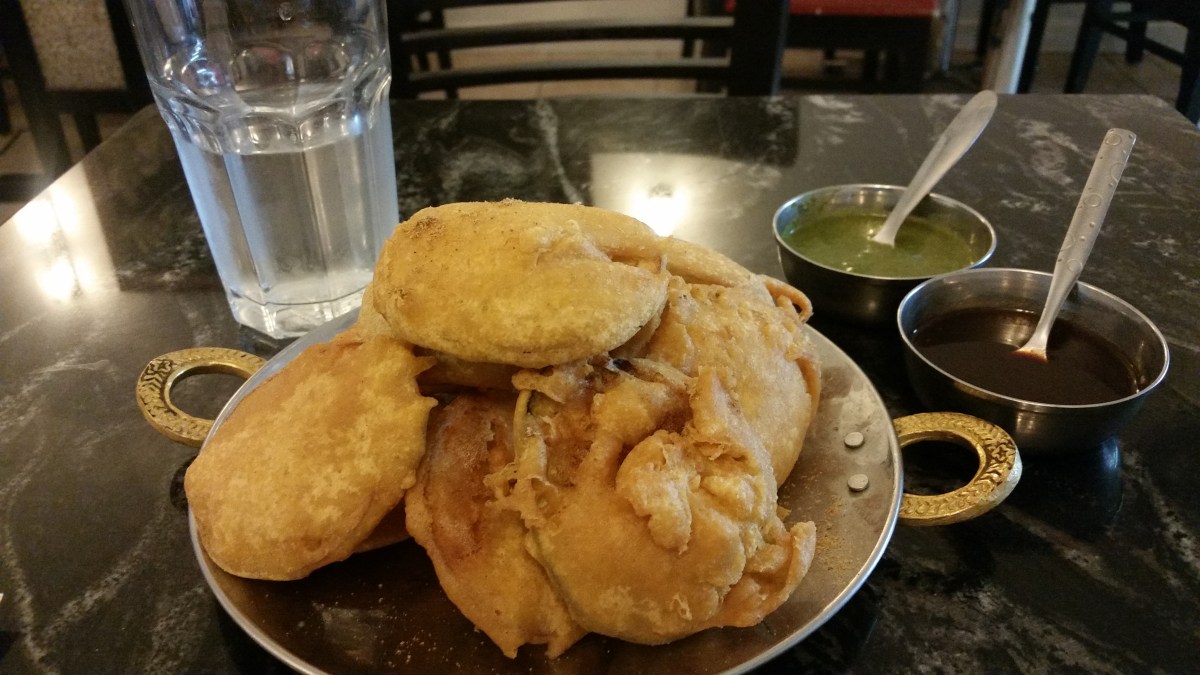
I then made my way to an Indian restaurant owned by Indian Jews.  It’s vegetarian and closed on Shabbat, which makes it Kosher in my book, but I’m not sure if it has a teudat kashrut.  I badly miss the ethnic cuisines of America- especially Thai (no, the Thai food in Tel Aviv is not that great), Chinese (cheap, delicious Chinese food of Rockville Pike), and Indian.  As soon as I entered the place, I knew I had made the right decision.  The smells wafted over me as I began to smile.  I sat down by myself and ordered pakora, palak paneer, and naan.  The waiter’s Hebrew wasn’t strong so I spoke to him in English.

20170824_155807

At this point, a woman came over to me and asked if I was American.  Turns out, not only is she American too, she’s a half-Persian half-Indian Jew from…Bethesda, Maryland!  Exactly where I lived before making aliyah!  And she knows one of my rabbis from D.C.  The odds of this happening are infinitesimally small.  She’s a tourist, I don’t even live in Ramle.  There are 6 million American Jews and over 326 million Americans spread across 50 states.  What are the odds!  Reminds me of that famous Hebrew school song “Wherever You Go, There’s Always Someone Jewish“.  It’s cool to be part of an international 3,000 year old club.

20170824_174556

After this amazing coincidence, I walked through a bustling marketplace, where unlike in Jerusalem or Tel Aviv there are no tourist traps.  Just lots of grapes and candy and tomatoes.  I stumbled upon a Turkish synagogue and then a Tunisian one.  Without asking permission (because that’s how we do in Israel), I just walked in and talked to the janitor who is also a congregant.  His name is Zion and he grew up in the synagogue.  He made aliyah from Tunisia at age 5.  He showed me an original Torah scroll, hundreds of years old, brought from Tunisia.  He also handed me a book which had all the traditional Tunisian Jewish piyyutim (liturgical poems).  Everything in the synagogue was handcrafted and beautiful, including the stained glass.  I told him maybe I’d come pray with them some day.  What a treat.

20170824_181218

As I walked by a Crusader monastery, I heard a car blasting Middle Eastern music.  I thought it was Arabic music, since the town is 20% Arab.  But as I listened more closely, I realized it was Mizrachi music, the music of Middle Eastern Jews.  That’s Ramle for you- a town where you don’t know exactly whose culture the music belongs to.  Where ethnic boundaries are blurred and mixed.  Where Russians sell Arabic amulets, where Tunisian Jews pray next to Turkish Jews, where mosques and churches dot the landscape next to synagogues.  Where Indian Jews prepare American olim kosher curry.

Some people might say there’s not a lot to see in Ramle.  To which I’d say I suppose it depends on what you want to see.

As my bus headed back, all I know is my eyes gazed more towards the fields around the town than towards the skyscrapers awaiting me on the coast.


Druze make the best Zionists (and kubbeh)

Who are the Druze?  The Druze are an Arabic-speaking minority in Israel, Lebanon, Syria, and Jordan.  They have their own secret monotheistic religion that was often persecuted by Muslim rulers.

By their creed, they are loyal to the state they live in.  Druze serve in the Lebanese, Syrian, Jordanian, and Israeli armies.  In Israel, they voluntarily signed a pact with the state for their sons to be drafted into the army.  Other Arabic-speakers are not legally obligated (some choose to volunteer).  It’s important to note that in Israel, many Druze simply identify as Druze and not as Arabs due to their Zionism, their previous persecution by Muslims, and societal pressure to distinguish themselves from the Arab minority.

Today I went to Daliat al-Karmel, a Druze village, to see what they’re all about.  First off, this place is gorgeous:

20170817_13124620170817_14222120170817_145014

I started off the day by buying local Druze music.  Or as I like to call it, Druzic.  (The puns are innumerable- just think, if Druze drank, you could have a “Druze booze cruise”!)  At this little hole-in-the-wall shop, I got three CD’s by local singers in Arabic- two pop CD’s and one of wedding/folk music.  I can’t wait to pop them in my iPod.  If your only experience in a Druze village is eating hummus, you are an awful tourist.  Go try something new that expands your cultural boundaries.

I did go eat amazing Druze food, including the best kubbeh I’ve ever had.  For my American friends who’ve traveled in the South- it somehow tasted like hush puppies but better.  My waiter was an 18 year old man who was very excited to hear me speaking Arabic and also told me all about how he’s going into the army in December.

Then I wandered around and ended up at a Druze holy site- the cave of the Prophet Abu Ibrahim.  The Druze visitors kiss the doorway as they enter, much like Jews kiss mezuzahs.  Everyone must take off their shoes and wear long sleeves, including men (some women put a long-sleeved shirt on me).  I wandered into this stone cave where there were candles.  I was all alone, so I spoke out loud to God.  We had a good conversation.  It was one of the most spiritual moments I’ve ever had.  Me and God alone in a cave in a Druze village.

20170817_143505

Then I came out and went to a memorial for Druze soldiers who were killed while serving in the IDF.  I was so moved.  These are non-Jews whose community chose to put their lives on the line to protect my right as a Jew to live here and their right to live in peace.  80% of Druze men serve in the Israeli military, a higher percentage than Jews.  As I stood at the wall of names, I said Kaddish out loud for these brave men as the breeze swooshed by and you could almost hear their souls rustling in the trees.  Another powerful spiritual experience.

20170817_145136

The memorial is a reminder that not all Jews are Zionists and not all Zionists are Jews.  I’ve met a number of Jewish anti/non-Zionists in Tel Aviv.  Some are disaffected Israelis born here who are looking for a better life in another country or have political qualms.  I can understand that to an extent even if I disagree- this place can be difficult economically and there are real religious and political issues here.  Other anti-Zionists here are olim (new immigrants).  Now this frustrates the hell out of me.  You want to take advantage of the fact that you’re Jewish to receive money from the state, citizenship, and a free flight.  Then, you want to go around telling everyone how you’re not a Zionist?  You might not be a Zionist but you are a hypocrite.  Criticizing Israel out of the spirit of bettering the country is democracy.  Demonizing us is not.  Our people didn’t die for you to have the opportunity to enjoy the privileges of being Israeli only to use that privilege to trash us.  Against Zionism? Then don’t come to Zion.  There are plenty of English teaching jobs in Korea.

Meanwhile, non-Jews like Druze put their lives on the line for us to survive.  And at great cost.  There are even some Druze who are pushing back against military service because of the tensions it creates with their Arab neighbors and because of poorly-funded municipalities.  All Jews should become “Jews for Druze” (I’ve loved that name for years) and help our brethren feel appreciated for their sacrifices.

Before I headed off, I stopped into a store for some water.  As often happens with me here in Israel, this became a three hour Arabic and Hebrew discussion with a local Druze family.  Samir’s family runs the store.  In his own words, he is a secular Druze (something I’ve never heard of but piqued my curiosity).  His wife is a devout Druze woman.  According to Samir, this is legitimate in their community, but if it were the other way around, it’d be perceived as problematic.  He said this was very much “inside baseball” and I loved the insight he was sharing.  All his children are secular Druze and are doing some combination of army and school.  His daughter is studying to be an engineer.

I explained to him I was a Reform Jew (which surprisingly he understood- more than some Jews here I’ve met!).  As we were talking about spirituality and identity, I actually did something very brave and came out to him as gay.  In the middle of a rural Druze village.  I was nervous about his response, but to be honest, he barely made note of it.  We just continued our great conversation as his wife plied me with walnut-stuffed dates.  We even exchanged numbers and he said he’d invite me to a local wedding sometime.  Interesting things do happen here!

In short, we’re taught in the U.S. not to generalize about people.  And usually I agree.  But in this case, I’ll make an exception: Druze are awesome.  I love them.  They are righteous gentiles who support my people and my right to live in my homeland.  And they make delicious food.  I will support them as well.  They’ve earned it.  If you’re Israeli or Jewish or just a good person, support this fascinating minority.  We should never take such friends for granted.

American Nazis, Syrian refugees, and baklava

Today on many levels was just a normal Israeli day.  I ran around doing errands, dealing with Israeli bureaucracy, hearing my favorite songs blasted from cars on the streets, and walked down the beach to Yafo.

That is exactly what made today so weird.  In America, today was not a normal day.  As I could tell from post upon post from my friends in the States, something big was happening.  Neo-nazis and the Ku Klux Klan (KKK) held a rally in Charlottesville, VA, a beautiful, musical college town which I have fond memories of.  I’ve been there twice, heard great live bluegrass music, and hiked in the nearby mountains.

One of the Nazis literally drove their car over a counter-protestor, killing the woman.

On the one hand, this was shocking.  I lived in the U.S. almost my whole life and I’ve never heard of a massive Nazi rally, even in the most conservative parts of the country.  Estimates are that 1,000 people came.  For something that’s supposed to be fringe, that’s a shockingly large number of people to come to a random town in rural Virginia.  For any Israelis shaking their heads saying this is “overblown” (מוגזם), you are naïve and literally know nothing about America other than Britney Spears and Times Square in New York.  You complain all the time how Americans are so “polite” and never say what they think.  So if that’s true that we keep our opinions to ourselves, then 1,000 Nazis showing up at a public rally (not approved by the police) is a very big deal.  Get your heads out of the sand and realize that if this phenomenon grows in the U.S., it’s going to affect Israel and the rest of the world big time.

While this rally was shocking, it was not surprising.  I’ve experienced a lot of bigotry in the United States.  I went to a sleep away camp in North Carolina for many years and I actually met a camper who told me he was in the KKK youth group.  I told him I was Jewish and he said “I don’t mind the Jews as much, I just hate those n*ggers”.  While riding the Metro in D.C. I’ve been called a spic.  At my progressive liberal arts college, Wash U, my roommates once had to defend me from a fellow student who was homophobic and trying to attack me- in my dorm.  At the same school, I wanted to go with another gay guy to a dance and the people there told me “it’d be better if you didn’t, they won’t like it.”  At my diverse suburban high school, a girl once told me “you’re cool, you’re not like the other Jews who are all loudmouths and stingy.”  I was holding hands with a guy once in the D.C. area and a man followed us yelling “faggot” until we snuck into a restaurant.  As recently as a year ago, I was literally thrown out of a taxi cab by an evangelical pastor for being a gay Jew.  To this day, I still find it hard to wear the rainbow yarmulke I wore on my head in that car.   And that makes me sad.

The examples I gave above- I could give many dozens more.  I think every minority in America can.

That’s because Nazism and bigotry are not new to America.  There was a pretty strong Nazi Party in America in the lead-up to World War II, to such an extent that many believe it caused Franklin Roosevelt to reject Jewish refugees who were later sent to death camps.  Of course the Ku Klux Klan has been murdering minorities for 150 years- African Americans, Jews, Catholics, Latinos, you name it.

My point is this- while in some ways we’re witnessing a new and scary phenomenon, in other ways, it is a revival of long-standing American social movements.  What this means is this is not about any one person alone, it is about a movement.  You can’t extinguish a movement with an impeachment or an election.  You have to solve deep-rooted societal issues (I think many of which are economic and addressed by neither political party) and ultimately extinguish the hatred.

To my friends in the U.S.- my heart is with you.  Remember that with all the anger, it can be easy to misdirect it towards people who might otherwise be open to your message.  Practice self-care and keep an open heart as you try to build a better society.  Focus on what you can control and accept that there are things you can’t.

I found it strange today.  I couldn’t figure out why I was so upset.  I knew I was upset about what was going on in America- that I was worried for my friends.  But things were great here.  The sun was shining, I was eating a delicious chicken shnitzel, and I felt safe.  Everywhere around me were Jewish songs, Jewish signs, Jewish policemen, Jewish everything.  While Nazis marched in America, I couldn’t have felt safer.

I felt all sorts of conflicting feelings.  The pride for having predicted this would happen.  The relief and happiness that come with having made a good choice to make aliyah to escape these problems.  Deep sadness for the state of America.  Fear for my friends’ safety and well-being.  Anxiety for my non-Jewish friends who can’t make aliyah and hoping they’ll find a sense of security.

Overwhelmed with emotion, the 103 degree heat index, and the LOUDNESS of every Tel Aviv street, I raced towards the beach.

The beach at night is perhaps the only (fairly) quiet place in Tel Aviv.  Tel Aviv is a city smaller than D.C but with the energy of three New Yorks.  Sometimes, I just want some friggin’ peace and quiet.

I hopped on the phone with my friend Shadi, a Syrian refugee living in Erbil, Kurdistan in Iraq.  Shadi is my Arabic conversation partner, even going back to when I lived in the States.  Through the organization Natakallam, I pay to practice my Arabic and Shadi earns a living.

Shadi is awesome- he’s Kurdish, so we love talking about our minority experiences.  He’s also extremely open to my Judaism and my gay identity.  Whenever I’m in need of some positive energy and affirmation, I hop on Skype.

Today, I told Shadi all about what was going on in America.  How I felt happy in Israel and how I felt scared for my friends.  How I felt guilty for feeling happy with my life here while my friends suffered.  I compared notes with how his experience was as a refugee.

And then he opened up.  Turns out, Shadi’s mom and dad still live in Qamishli, Syria where he grew up.  Four years ago, he fled to Erbil, a Kurdish city in Iraq, both because of the civil war and because his wife has leukemia.  Apparently, treatment is much less expensive in Iraq.  So as to allow him to focus on helping his wife with chemo, his daughter stayed seven months with his parents in Syria- in the midst of a civil war.  Thankfully his daughter is reunited with him and his wife now and he is learning coding so he can be a computer programmer.  One day he hopes to return to Syria.

Interestingly, Shadi and I both chose to escape bigotry (there is intense persecution of Kurds in Syria) by going to places where our peoples are the majority.  There’s something about living in a place where you’re normal that’s healing and gives you a great sense of security and validation.

I don’t share Shadi’s moving story to try to minimize my own pain or that of my friends in the U.S.  Rather, I share it to put things in perspective.  Things are bad in America right now.  Fortunately not yet to the extent that they are in Syria, which makes me count my blessings and helped calm my anxiety.

Yet things in America will get worse.  Several years ago, when I told my friends Donald Trump would become President, they thought I was nuts.  Putting aside the question of whether you support him or not, my prediction was correct.  All the babbling idiots on CNN and MSNBC and the pompous writers in the Washington Post didn’t see it coming because they live in a bubble.

Now they ponder how the courts or the elections or this and that will help.  It won’t.  Time to accept reality- American democracy is unraveling.  Either it will be stitched back together by an engaged and powerful citizen movement.  Or it will die.

To my American friends- I’m praying for you.  Even as I write this.  I love you and I want you to be safe.  You have to decide how to move forward.  Want to stay and fight for a better America?  Absolutely your right and your choice and I applaud you.  Want to get the hell out and build a life elsewhere like I did?  I totally support you.  Just understand what’s going on so you can make an informed decision.  I think there is a substantial possibility that the U.S. is headed for a civil war or intense civil strife.  I hope to G-d almighty I’m wrong, but just be prepared that this is a real possibility and plan accordingly.  If there’s any way I can help, in particular for those considering aliyah, I’m here.

To my Israeli friends- wake up and smell the coffee.  I’ve talked to several sabras (native-born Israelis) today and nobody seemed to get why this was a big deal.  Even on the website of Yediot Achronot there was no mention on the front page, although there was an article about a woman who became a Jewish food guru.  What happens in America affects us- our foreign aid, our diplomatic support, aliyah (I’d bet there was a spike in applications today), etc.  An America where Nazis are gaining power is bad for Israel and bad for American Jews.  Start paying attention and realize that listening to Rihanna and having a cousin in L.A. doesn’t mean you understand America.  Read JTA, Huffington Post, even the radical left-wing Socialist Worker and the right-wing Washington Times.  You could even go further off the deep end and look for extreme right-wing blogs, but I won’t recommend that on my blog 🙂  The point is be informed because this affects our friends, ourselves, and the world.  I’m always happy to suggest resources or chat.

After my conversation with Shadi I made my way to Yafo, enjoying the summer breeze as it hit my face.  I made my way to my favorite baklava spot, hung out with my friend Sager who works there, and bit into a delicious slice of heaven.  I could’ve sat for two hours telling him all about America, but I just relaxed and soaked in the fun.  The tension in my body faded and I felt safe.

Something I hope my friends in America will feel soon too.

Hebrew, Yiddish, and Arabic in “occupied” Akko?

Thursday I had a fun, frustrating, and complex experience in Akko.

Akko is a 4000+ year old city continuously inhabited since the Bronze Age.  It has been home to Canaanites, Phoenicians, Jews, Greeks, Byzantines, Arabs (Christian and Muslim), Crusaders, Ottomans, Brits, and most recently, Israelis of all stripes.  It also has a Druze and Baha’i population, being home to the resting place of the founder of the Baha’i religion.  So basically it’s diverse and historic as f*ck.

My initial intent was to write about my experience on a boat.  I was exploring the historic city and noticed something curious- almost everywhere around me, people were either Arab or ultra-Orthodox (Haredi).  From now on, I’ll use the term Haredi since that’s preferred by people in that community.

It was interesting to see women in hijabs flowing by men in black hats.  Very Jerusalem-esque, but at least in this part of town, absent any other secular or traditional Jewish communities that you’d find in the capital.

Honestly, I didn’t feel particularly uncomfortable.  You might expect a gay Reform Jew to head for the hills at this point, but frankly I found it more interesting than threatening.

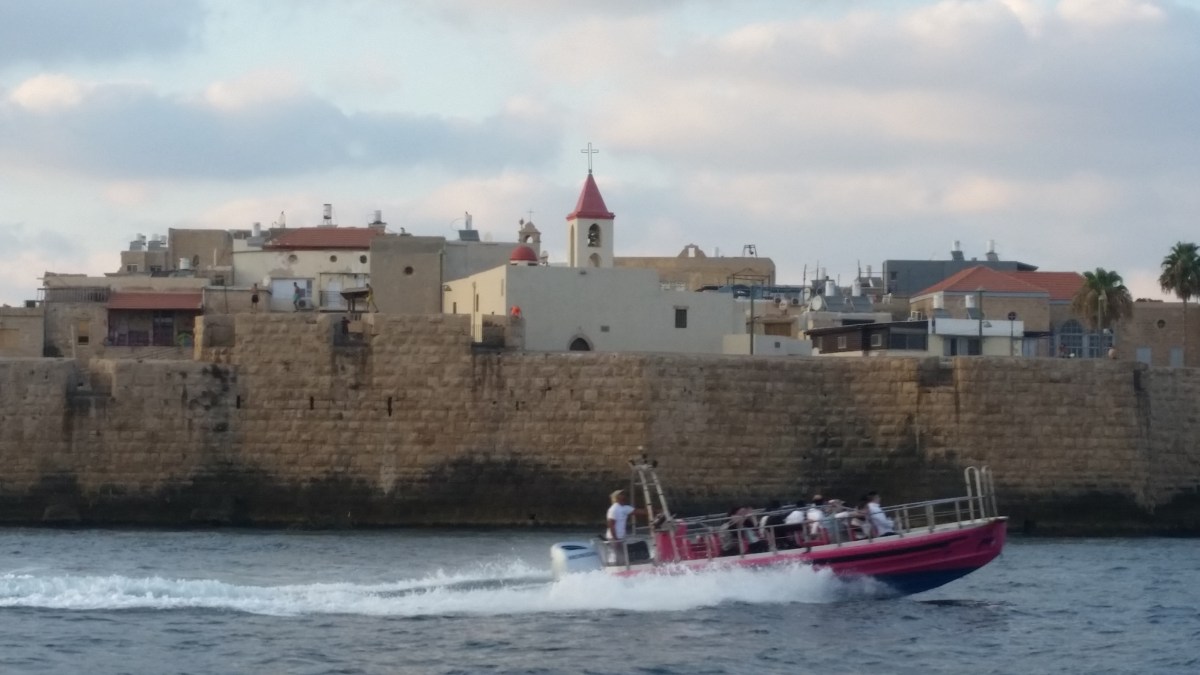
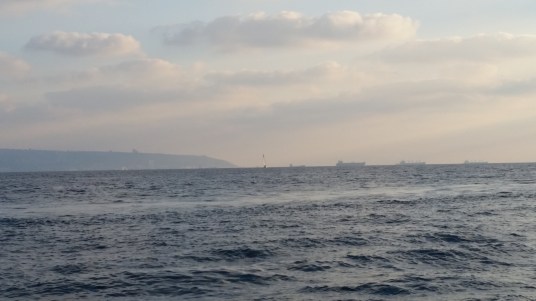
Then, I found a boat.  It was a 10 shekel ($3) boat tour.  The boat was being driven by an Arab man and was blaring Hasidic pop music (which I happen to like).  On board were two Haredi families…and me!  The scenery was exquisite.  Here are some pictures from the ride:

20170810_18395120170810_18524520170810_184855

I started talking with Haredi family #1 in Hebrew.  They were super sweet and congratulated me on my aliyah.  They live in Bnei Brak, a Haredi city right next to Tel Aviv.  When I said I lived in Tel Aviv, they said “oh we’re neighbors!”.  They also helped me find a legit Ashkenazi restaurant in their city so I can get my fill of the foods I grew up on.  He even said I could just come to their house some time for a home cooked meal!  Falafel is great, but I miss my whitefish salad and kugel.

Then I overheard Haredi family #2 but they weren’t speaking Hebrew- their girls were laughing and taking selfies…in Yiddish!  Whoa!!  This got me very excited!  I started talking to them in Yiddish and it turns out they’re Vizhnitzer Hasidim from Borough Park in Brooklyn and were in town for a wedding.

They were polite but a little less warm than the other family.  I think it’s because they thought I might be ex-Hasidic (seeing as so few non-Hasidic American Jews speak Yiddish anymore).  The father kept asking me for my Hasidic lineage, to which I kept replying that I don’t have any (that I know of).  At first, I was kind of annoyed for having to repeat this over and over again.  Then, I realized he was playing the timeless game of Jewish geography.  Turns out, he knows some Adlers and was trying to see if we were related.

Before I got off the boat, I made some chit chat with the Arab driver in Arabic.  But he was too busy taking pictures of the other boats (should you be doing while driving?) for anything too in-depth.  But a friendly guy.

So there I was, on a boat, speaking Hebrew, Arabic, and Yiddish.  The progressive gay Jew hanging out with Haredim and Arabs.  While to a number of secular Israelis and even some Modern Orthodox Jews, a city teeming with Arabs and Haredim is their worst nightmare for Israel’s demographic future, I actually found the experience fascinating and rather benign.  I’m not saying there aren’t legitimate concerns for Israel’s future, but in the end we’re all people.  Among groups that, at least if all you do is read The New York Times, you’d think would be ripping each other’s throats out, there was a pretty basic coexistence that was refreshing.

Then, I made the mistake of the internet.  On my way home from Akko (Israel has a pretty clean, efficient, and cheap inter-city train system, something America might get around to one day), I opened Youtube to find dabke music from Akko.  Dabke is an Arab folk dance found in Lebanese, Syrian, Palestinian, and Jordanian culture.  It sometimes has nationalist overtones.  Overall, it is fun.

There are videos of dabke in Akko on Youtube, but several of them had (in my opinion) inflammatory titles like “Dabke in occupied Palestinian Akko”.  There was even a video from neighboring Haifa, which has a recorded Jewish history going back to 200 C.E., about 450 years before Arabs conquered the area.  The Haifa video was entitled “Palestinian dabke in ‘Haifa’ in the heart of Israel”.  I’m not sure exactly why Haifa was in quotes, but if the angry back and forth in the comments section was an indication, the title was meant to be provocative.  Side note: never read the comments section of anything ever.

I then read an article that said an Arab man in Akko claimed Jews were pushing his people out so they would go live in Europe instead of Akko.  He said Jews were given preference for new housing.  The first sentence seems specious because if Jews are trying to push Arabs out of Akko, they’re not doing a very good job because there are a lot of Arabs everywhere.  Unlike in everywhere else I’ve seen in Israel, I even saw signs with Arabic on top and Hebrew on the bottom.  That being said, it’s true that during Israel’s War of Independence, many Arab communities including Akko were displaced- sometimes voluntarily and sometimes under pressure from Israeli troops.  It’s also true that there has been discriminatory housing policy, so even if this man was exaggerating, there may be truth to what he is saying.

Then, for things to get more depressing, apparently there used to be a larger Jewish population in Old Akko, going back a long time.  However, due to demographic changes they moved to other parts of the city.  Then, apparently the Islamic Movement, an Islamist organization, removed the signs to historic synagogues and replaced them with quotes from the Quran.  If this is true, this is truly depressing.

I began to feel deflated.  Was the coexistence I was seeing everywhere just a facade?  Do Israeli Arabs really just see me as an occupier like the videos on Youtube indicated?  Do they know nothing about Jewish history in this land (or elsewhere)?  Were Jews really pushing Arabs out of Akko or discriminating against Arabs in housing?

These are all complex questions that deserve sophisticated and well-researched answers.  I don’t have the expertise at this moment to answer them all right now.  I do believe people are entitled to different narratives so long as they respect each other and empathize.

What I can say is this: Arab identity in Israel is diverse.  Half of Arab citizens of Israel recognize the right to a Jewish state.  Half don’t.  26% identify as Palestinian, 36% percent as Palestinians in Israel, and the plurality (37%) as Israeli-Arabs.  Another survey found 64% believe Israel is a good place to live and 43% favor their Israeli-Arab identity over a Palestinian one.  Perhaps surprising to the Western ear is that 24% of Arab Muslims in Israel vote for Zionist parties.

Do some of those numbers sound contradictory or confusing?  Welcome to the complexity that is Arab-Israeli identity.  There are anti-Semites, there are Islamists, there are people who volunteer to serve in Israel’s military, there are Zionists, there are secularists, there are communists, there are feminists, there are nationalists, there are pragmatists.  And some people fit into multiple categories.

So in the end, is the coexistence I saw on that boat a facade?  Are my conversations with Arab-Israelis merely window dressing to deeper prejudices?

Sure, I think that there are some prejudices here that are merely beneath the surface.  When you read about Arabs throwing rocks at Jewish worshipers in Jerusalem or that between 32-48% of Jewish citizens would favor expelling or “encouraging emigration” of their Arab neighbors, you know there is prejudice here.

Was that Haredi man who invited me to his house really just a bigot against secular or Reform Jews?  Was the Yiddish-speaking family that joked around with the Arab driver just faking it?  Are my secular friends reading this blog rolling their eyes and thanking God they weren’t on that boat with me?

Perhaps- we’ll never know.  But rather than stew in cynicism, I’d like to enjoy the moment I had in Akko.  A moment where people pretty much got along.  A gay Reform Jew, two Haredi families, and an Arab boat driver.  Hebrew, Yiddish, and Arabic in Akko.

Anti-Semites who visit Israel

Tonight, I went to an English-Hebrew practice group.  Not because I particularly need to practice my Hebrew, since I’m surrounded by it all day and I speak it at every opportunity.  But because I wanted to make friends.

There was an interesting cast of characters, including a guy who claimed for 20 minutes he was a porn producer, only to say later he was not.  I spoke some Hebrew, others spoke English, all was fine.

Then I met an exceedingly handsome French guy whose Hebrew accent was to die for.  Even after he revealed he had a girlfriend, I couldn’t stop looking at his beautiful skin and face and smile.  Oulala!

Let’s call him Pierre.  Pierre has a very cushy job at a pharmaceutical company who has asked him to work in Israel for four months before moving him to London.  Not a bad life.  Pierre is actually not Jewish!  This surprised me, because actually there are a ton of French Jews here, many of whom are escaping rabid anti-Semitism in France.  He asked some thoughtful questions about Israeli politics, religious identity, and had an impressive command of Hebrew for someone who’s been here for a few weeks.

I decided he might make a good friend, so we walked for a while together after the event.  Sadly, it didn’t take long for the garbage to come out.  Perhaps feeling liberated from being away from a larger group, he started to tell me all. about. the. settlements.  Please don’t get me wrong- talking about the Jewish presence in the West Bank is a very legitimate political issue and one that is far more complex than the Western media makes it out to be.  I can understand why there are people critical of the settlements (their word) and- just as critically- I can understand why Jews choose to make their home in Judea and Samaria (their words).  There are genuine concerns about human rights violations and there are very real religious and historical reasons why Jews want to live in these places.  I’ll save the political debate for a future blog- the point is I try to have empathy towards different types of people.

Pierre was not so interested in empathy, but more in lecturing me.  The truth is I found it shocking, but not too shocking.  I’ve had many non-Jews, especially those visiting Israel, jump into long-winded speeches about their political beliefs.  Before really even knowing much about me or frankly, Israel.  Unfortunately, so many people around the world view this place solely through the prism of news articles and not through their own personal experiences and relationships here- both with Israelis (Jewish and Arab) and Palestinians.

I often feel like the world expects Israelis and Palestinians to entertain them, like a circus.  One person dies here (doesn’t matter the religion or nationality), and the BBC cameras race to the scene.  It’s front page news.

Yet when a black kid is shot on the streets of D.C. or when hundreds of thousands of Syrians are butchered or when Tibetans are colonized by the Chinese government, the world barely blinks.  The conflicts go on, untended and unresolved.

It’s not that I’m arguing we shouldn’t pay attention to what happens here- we should.  It’s just that the amount of attention that the world puts on this tiny little place is absolutely out of proportion and exacerbates the problem rather than solving it.

In the end, non-Jews who visit here from Western countries should treat this place with respect- including the Jews who live here.  If you want to understand why Jews return to their homeland, you need to learn something about Jewish history.  Plenty of American Christians know what Chanukah is (vaguely), but most couldn’t tell you about the pogroms that brought my ancestors to the U.S.  Or Martin Luther’s antisemitism.  Or the laws that prohibited Jews from owning land in Europe.  Or forced conversions of Jews to Islam in Iran.  Or the myriad blood libels, burnings, discriminatory clothing, or expulsions you can read about here.  And before my American friends chime in with “oh well this is foreign to the U.S.”, you can read this.

My point is this- before you rush to judge another culture (because yes, Jews are both a culture/people and a religion), learn something about it and show some humility.  When I met Pierre, I didn’t rush to ask him to condemn France’s myriad expulsions and massacres of Jews over the course of 2,000 years.  Nor did I ask him to condemn the extensive French collaboration with Adolf Hitler (as an aside, I had a highly educated French teacher who thought the first time French people did something antisemitic was the Holocaust).

Why?  Because I don’t even know him!  If I met a Chinese person, would I launch into a tirade about Tibet?  Is that socially acceptable?  Is that kind?

No.  Because everyone is a human being first and foremost.  If you really want to get to know Israel, you have to get to know Israelis.  Just like anywhere else on the planet.  You have to accept that things aren’t always black and white and that there are reasons why things are the way they are- even if you don’t always agree.  Empathy isn’t about morally approving of everything another person or another culture does- it’s simply understanding where it comes from and acknowledging that all behavior is caused.

There’s a reason why if I hear a Jewish Israeli criticizing settlements it bothers me less than if a French Christian does it.  There are historical reasons for that.  Jews have had to band together over the course of two millennia to survive oppression without a state.  Now that we have a state, we still find our situation fragile as we’ve endured war after war for our existence.  This is a place with eons of trauma that we’re trying to heal from- even as we try to make peace with our neighbors, who have their own issues they’re sorting out.

Let’s say you have a zany uncle.  You laugh about your uncle with your mom, with your cousin, even with your aunt.  But the second some random person at a gas station laughs at him, your back straightens and you’re ready to defend him.  Because you’re family.

For Jews and especially for Israelis, we are a family.  If I’m gay and I use the word queer, it feels safe.  If a straight person uses it, I start to worry that it might be an insult.  I think the same concept applies.

You don’t have to dance around things all the time- let’s talk.  But you do have to be sensitive to my people’s historical experience if you want to talk with me.  Try to understand where we’re coming from.  The fact that you have a Jewish friend and like challah does not mean you understand my history and my identity.  I’d in particular recommend the book “A Short History of The Jewish People” as a great place to start learning.

A while after my conversation with Pierre, I looked at his Facebook profile.  Hoping to find some sign of nuance or interest in Judaism that would abate my anger, I instead found a homophobic quote, a picture of Hitler, and an article posted that mocked Jews who were concerned about antisemitism.  I blocked him.

All goes to show that yes, you can ask good questions about Israeli identity, you can speak some Hebrew, you can be intellectually curious about Judaism, and even visit Israel.  And be an anti-Semite.