Recently, I went to my first gay Jewish wedding. It was a wonderful experience to see friends coming together to build a loving future. And while I’ve been to many wonderful weddings, there was something special about seeing queer Jewish joy in action, in reality. A joy I hope to share someday with someone special.
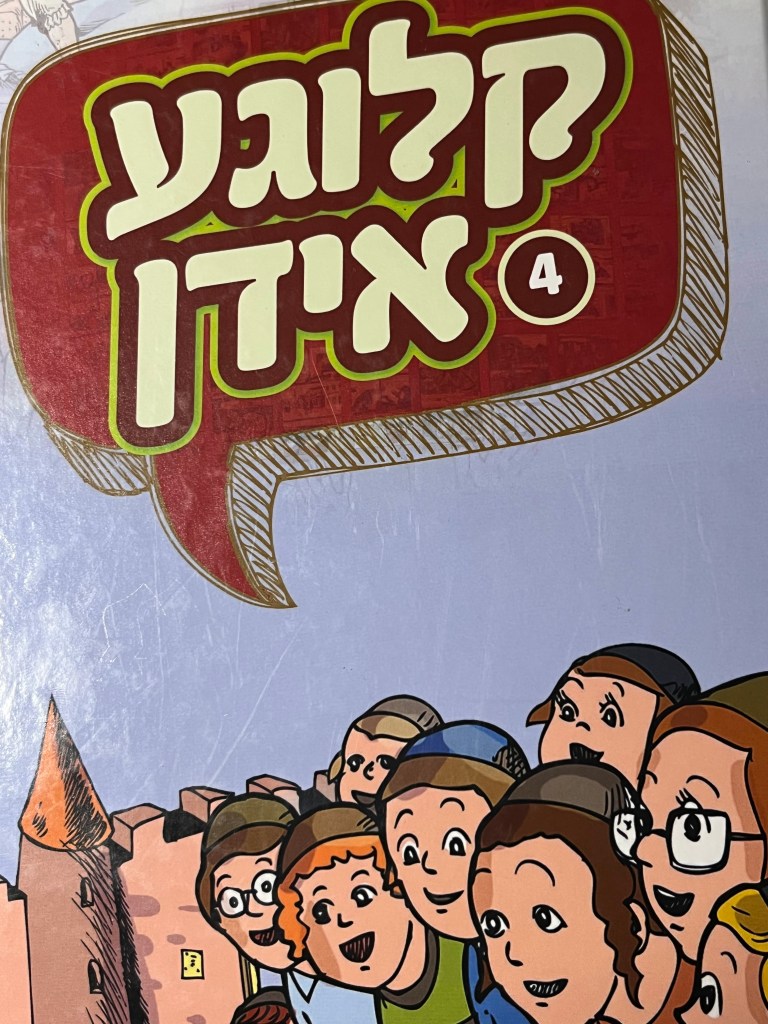
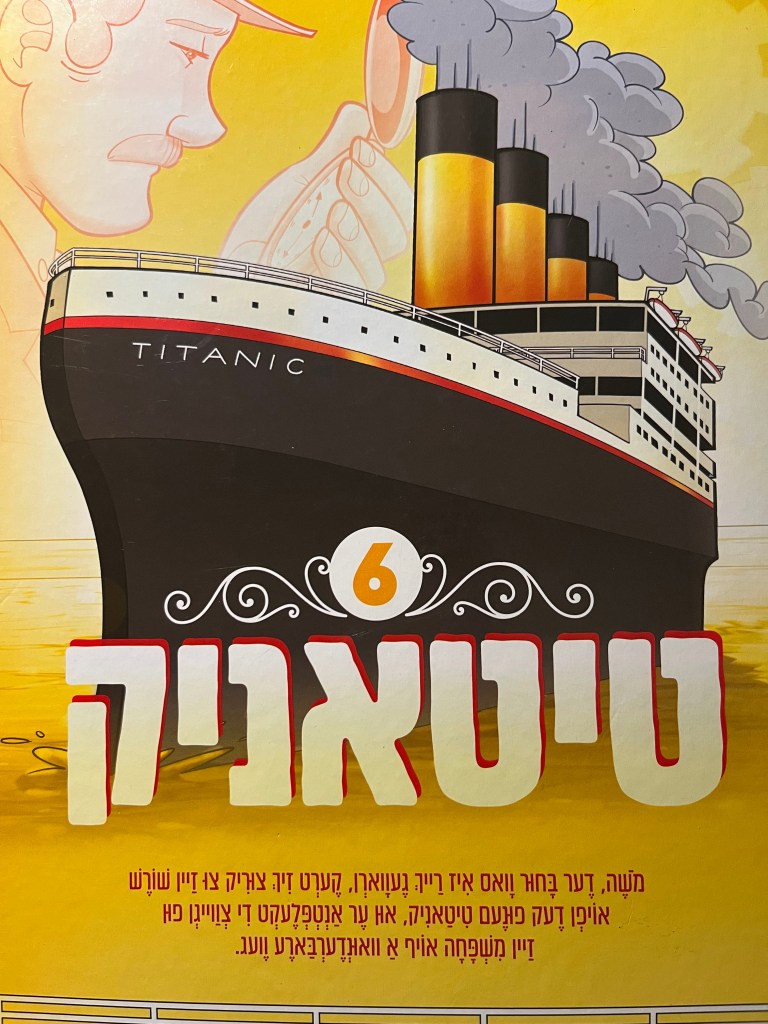
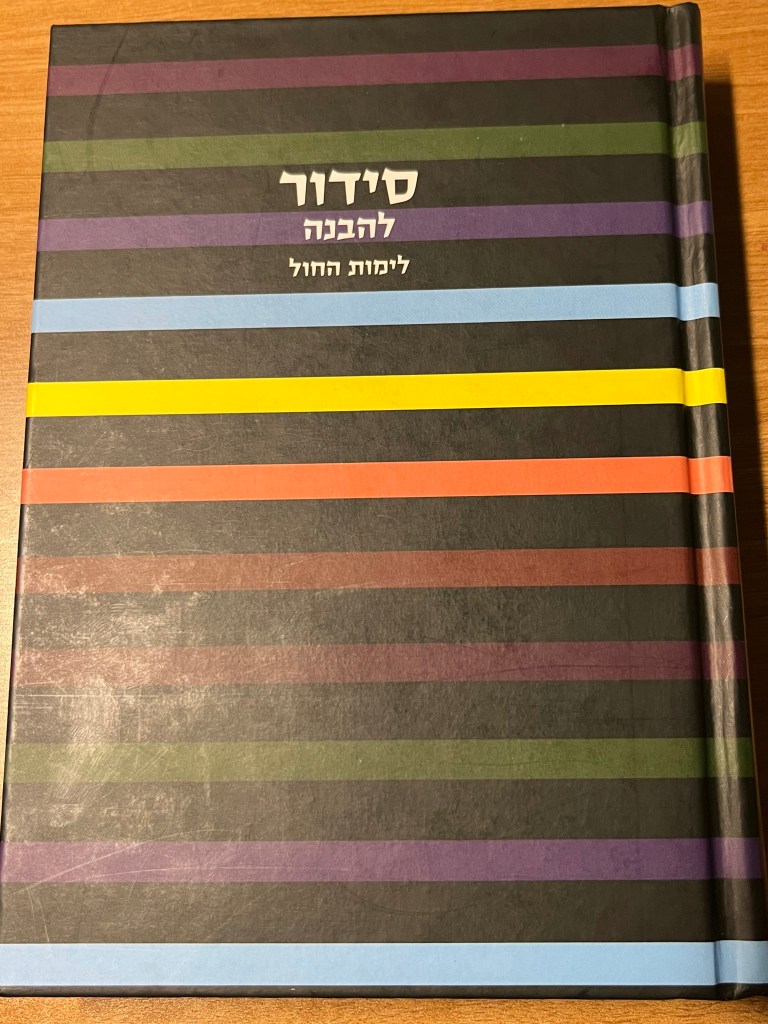
While in New York, I relished the opportunity between wedding festivities to visit Hasidic Brooklyn and practice my Yiddish. After buying a black yarmulke, I visited Hasidic bookstores in Williamsburg and bought some books in Yiddish, including a kids book called “Smart Jews”, a book about the Titanic, and a prayer book with Yiddish translations of the traditional Hebrew.
I love speaking Yiddish and I surprised the bookstore employees by speaking it while wearing decidedly non-Hasidic clothes. While some people looked at me with an almost suspicious curiosity, others were incredibly warm and hospitable and thrilled to hear me speaking Yiddish.
Next, I got the good stuff – gefilte fish! Yes, I love gefilte fish. It is a delight and while it’s true that maybe you need to grow up with it to love it, I absolutely adore this dish, especially when made fresh (not in a jar!).
I sat next to a rabbi in the restaurant and he was very welcoming and kind.
Near the restaurant, I walked through Williamsburg and saw a crowd of Hasidic Jews gathered outside an apartment, where a rabbi was preaching in Yiddish as hundreds listened attentively on the street. It was an amazing sight. At a time when we’re being persecuted yet again, this community is preserving our Jewish traditions despite it all. It was like a scene out of a shtetl.
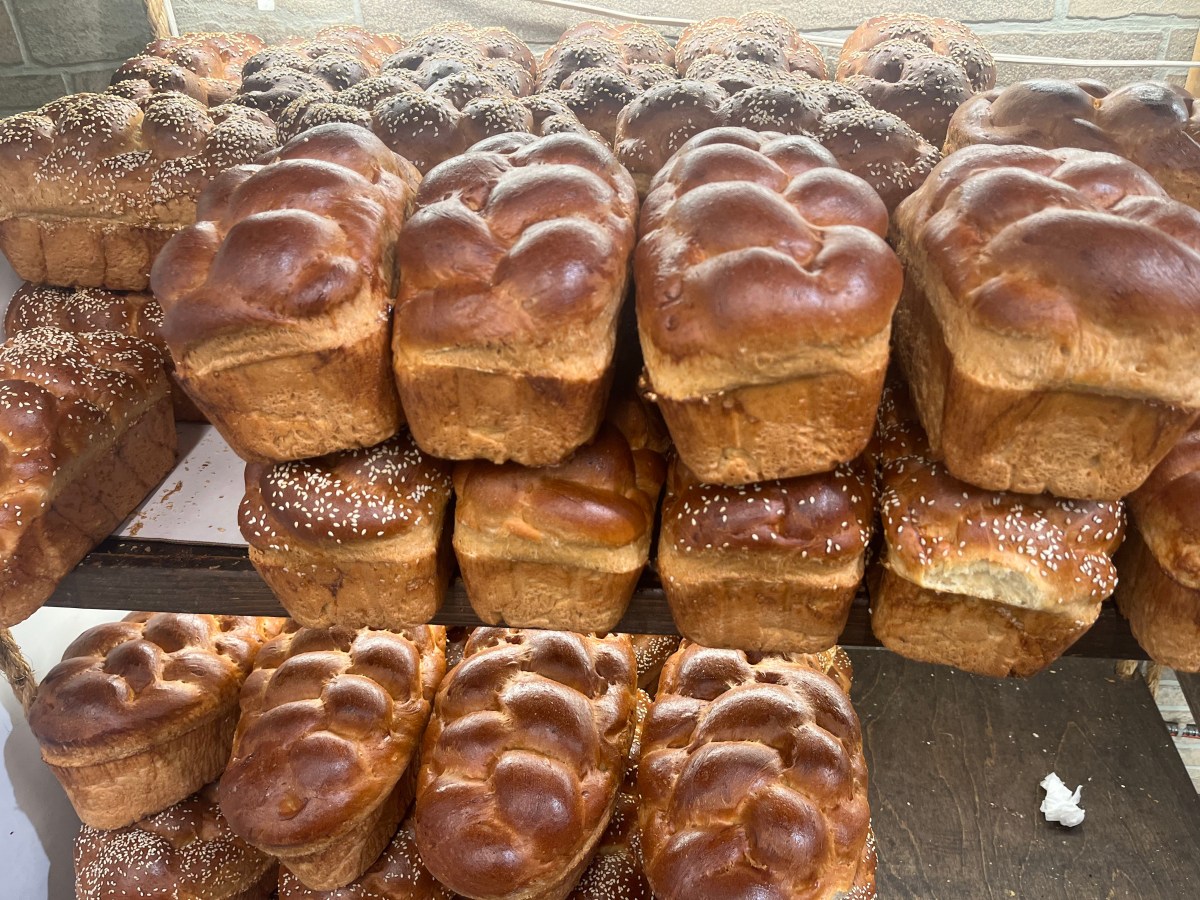
After exploring Hasidic Williamsburg, I made sure to stop at a late night Kosher bakery and get some sweet cheese rugelach, a novel combination that was a true delight. They also had tons of challahs of various sizes, like the ones in this blog post’s cover photo. Even some local hipsters came in for a taste of the bakery’s delicious food.
Over the next two days I met up with other friends in New York, ranging from Yiddishists to a Modern Orthodox college friend on the Upper West Side, and of course got a bagel with whitefish salad. None of this was particularly Hasidic, nor in Brooklyn, but it just shows the incredible diversity of New York Jewish life that I was able to slip in and out of these different communities plus a gay Jewish wedding in the course of a long weekend.
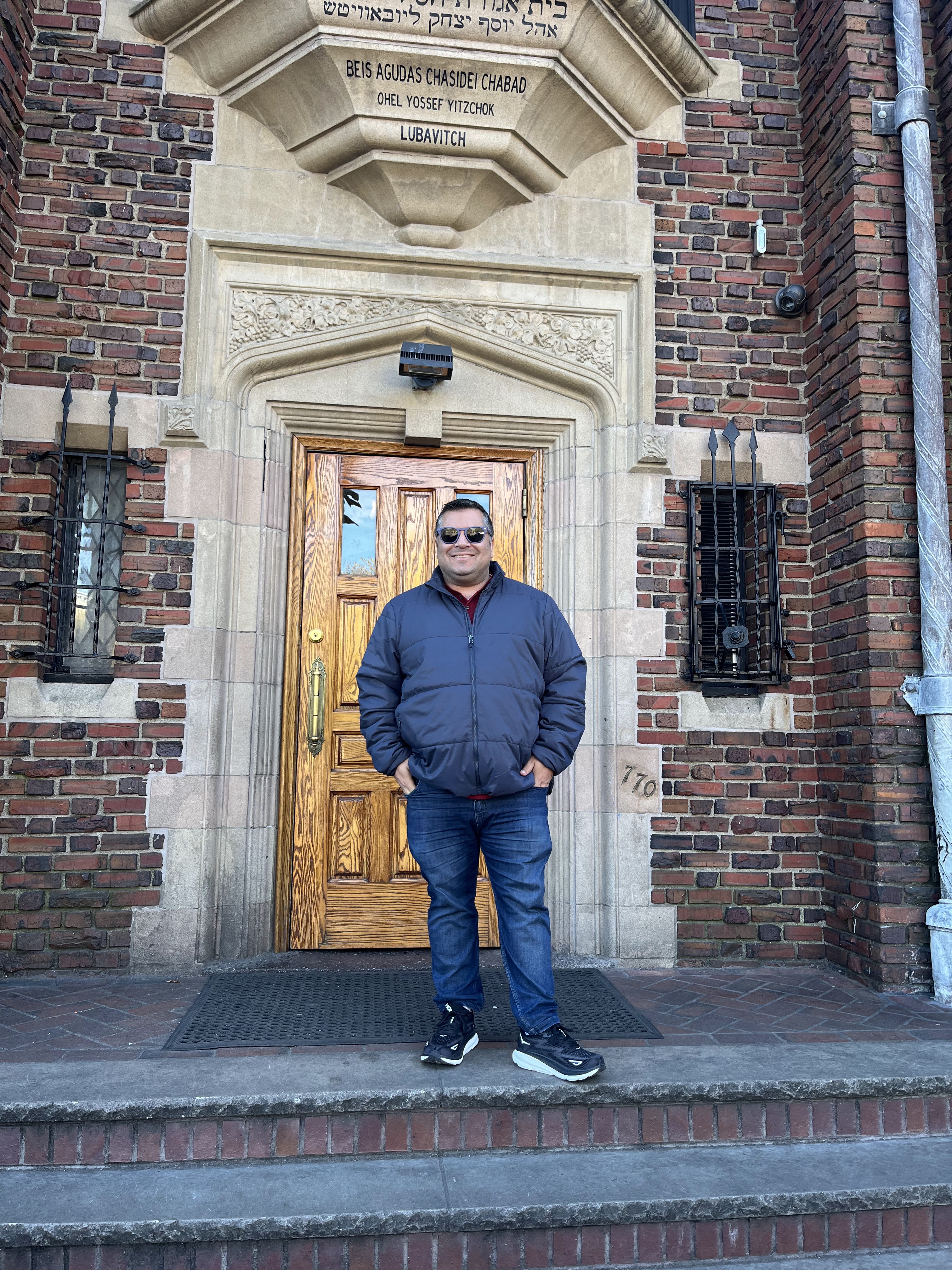
After the wedding, I decided to go to Crown Heights. Williamsburg is heavily Hasidic, but predominantly populated by communities that are a bit more insular in their approach to preserving Jewish tradition. Crown Heights, while also Hasidic, is predominantly a Chabad area. Chabad is a group committed to outreach within the Jewish community, making it a little easier to get to know people even as a semi-outsider.
I visited 770, the house of the former Chabad Rebbe, a deeply revered leader.
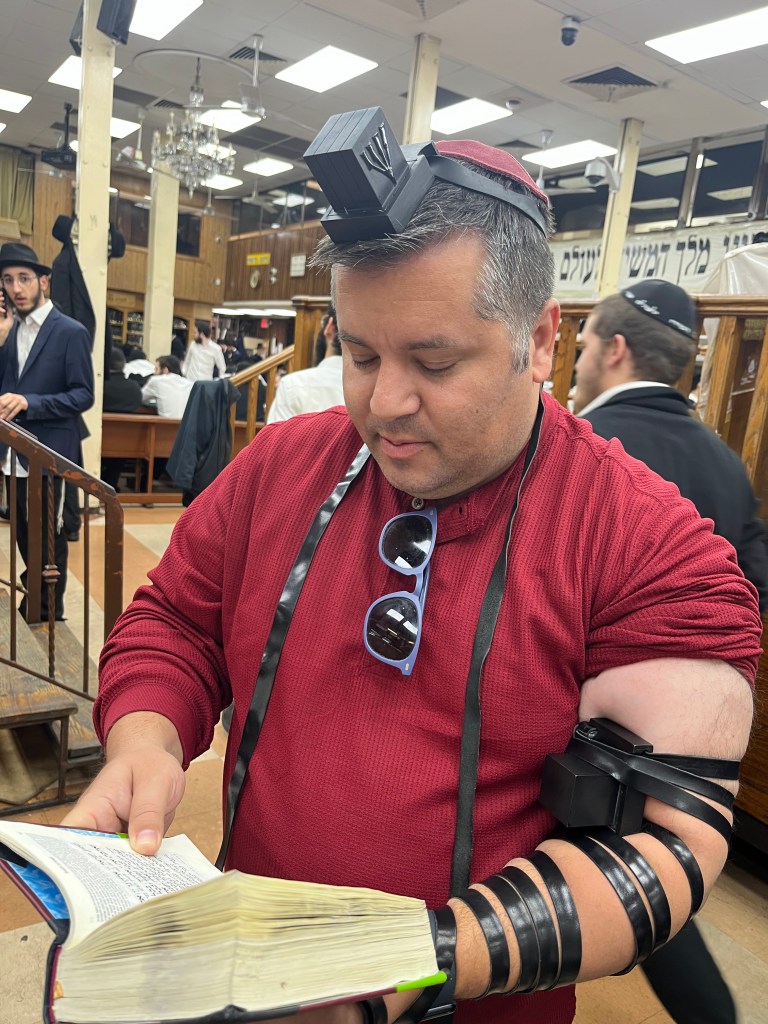
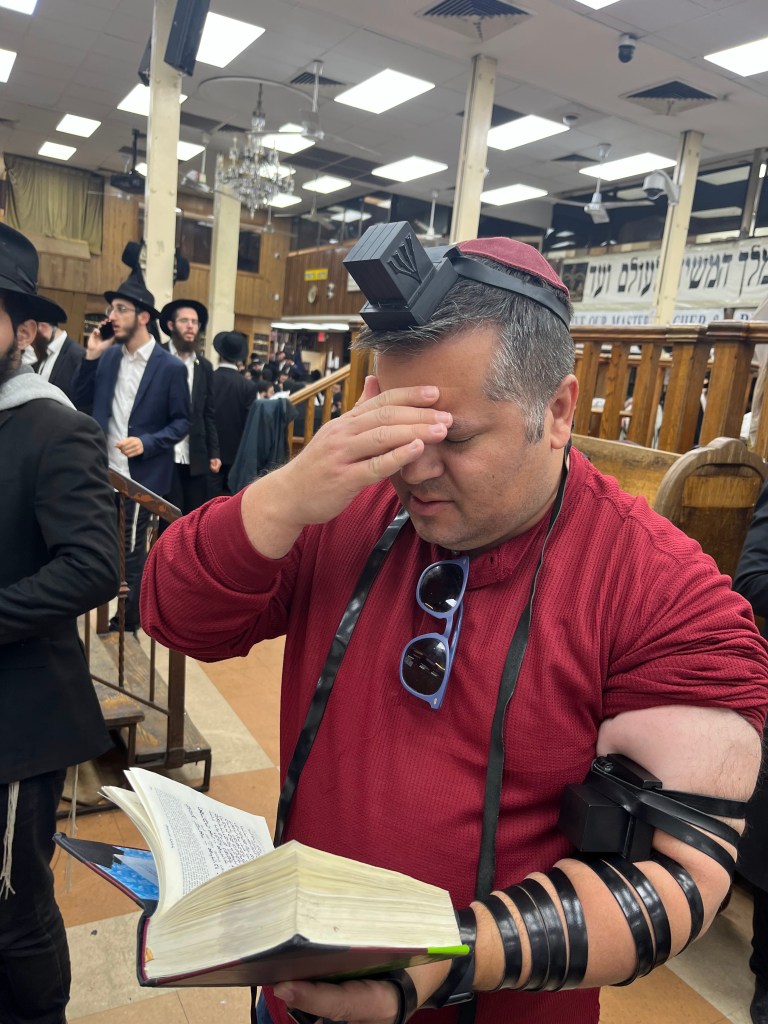
I then decided to do something I had never done when visiting Crown Heights years ago: I went inside the synagogue next door to the Rebbe’s house. I decided to lay tefillin, an ancient Jewish ritual, with the help of a young man. It didn’t matter that every other man in the building was dressed in the traditional black and white suits and I was in jeans and a red shirt. Chabad doesn’t care- they just want you to fulfill mitzvot, commandments from G-d that Jews are instructed to follow. It was a really nice experience.
Laying tefillin is a truly embodied ritual that made me feel connected to Jews everywhere and to thousands of years of our history. At a time when it seems we can control so little, it helps me feel grounded and secure in my faith.
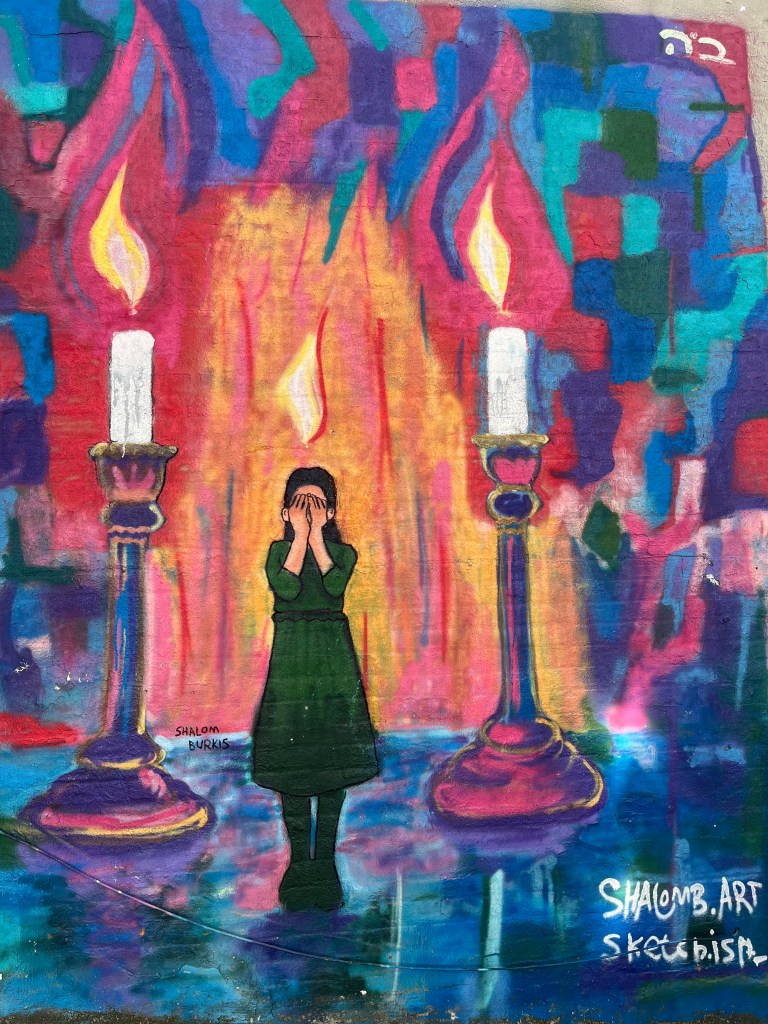
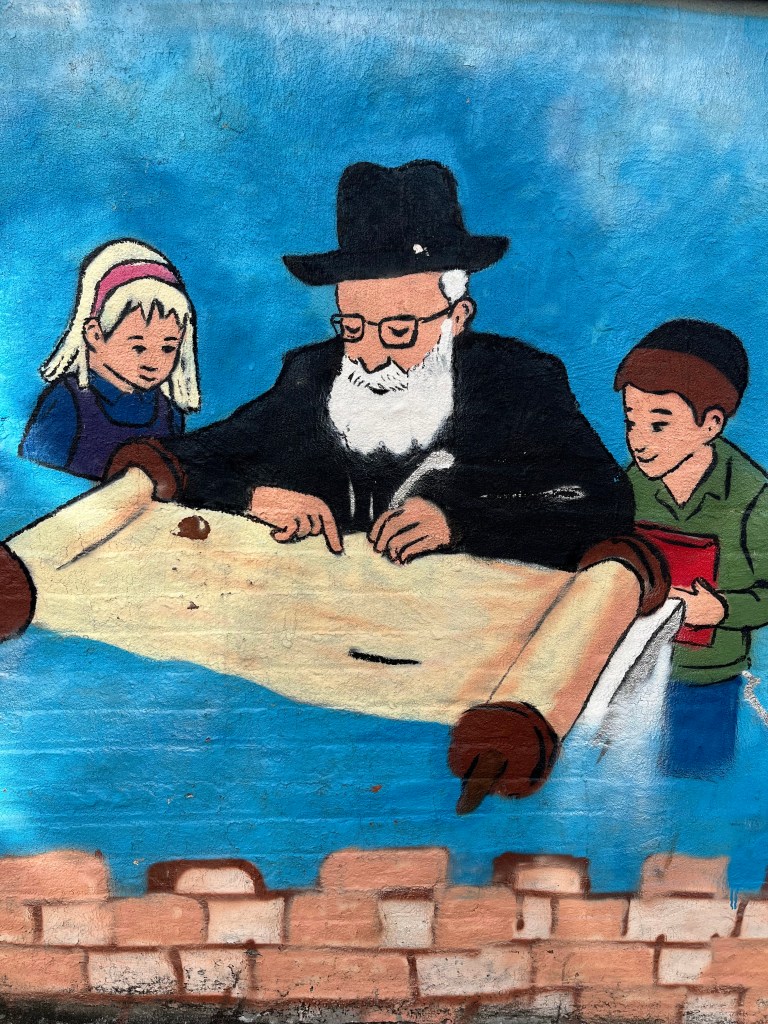
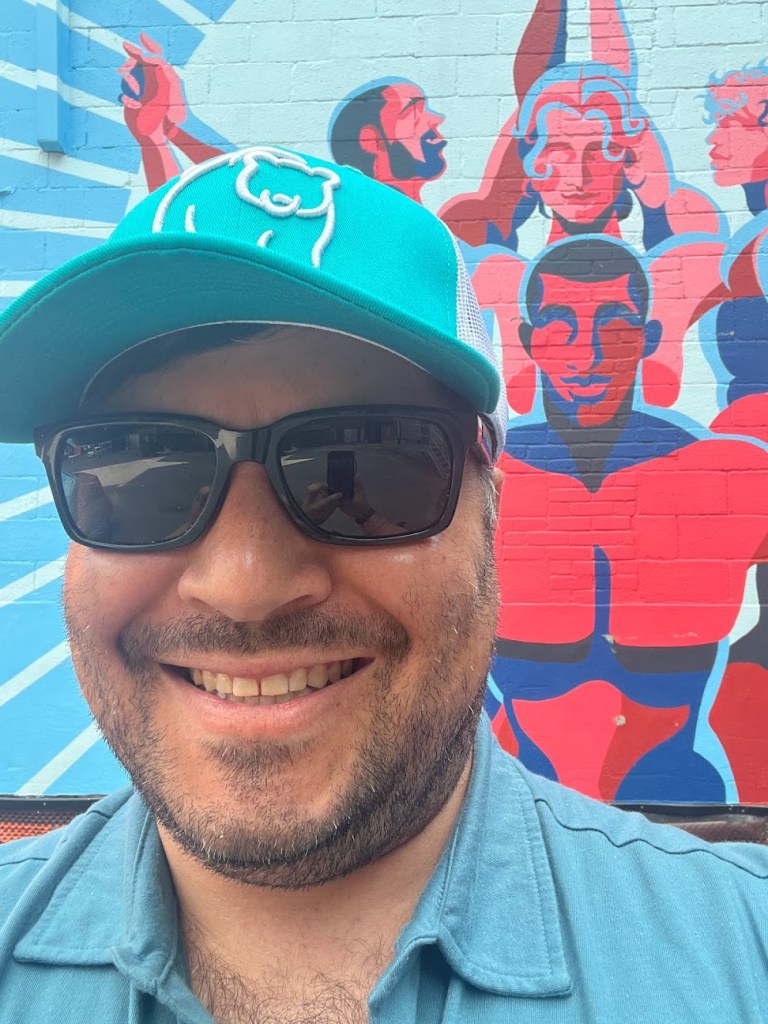
In addition to laying tefillin, I found some interesting Jewish street art in the neighborhood.
I love seeing murals whenever I travel, and to find Jewish ones was especially heartwarming and exciting.
Lastly, it was not lost on me that I was in New York the last weekend before the fateful election that led to antisemite Zohran Mamdani becoming elected mayor of the city. I’ve already written my thoughts about him here.
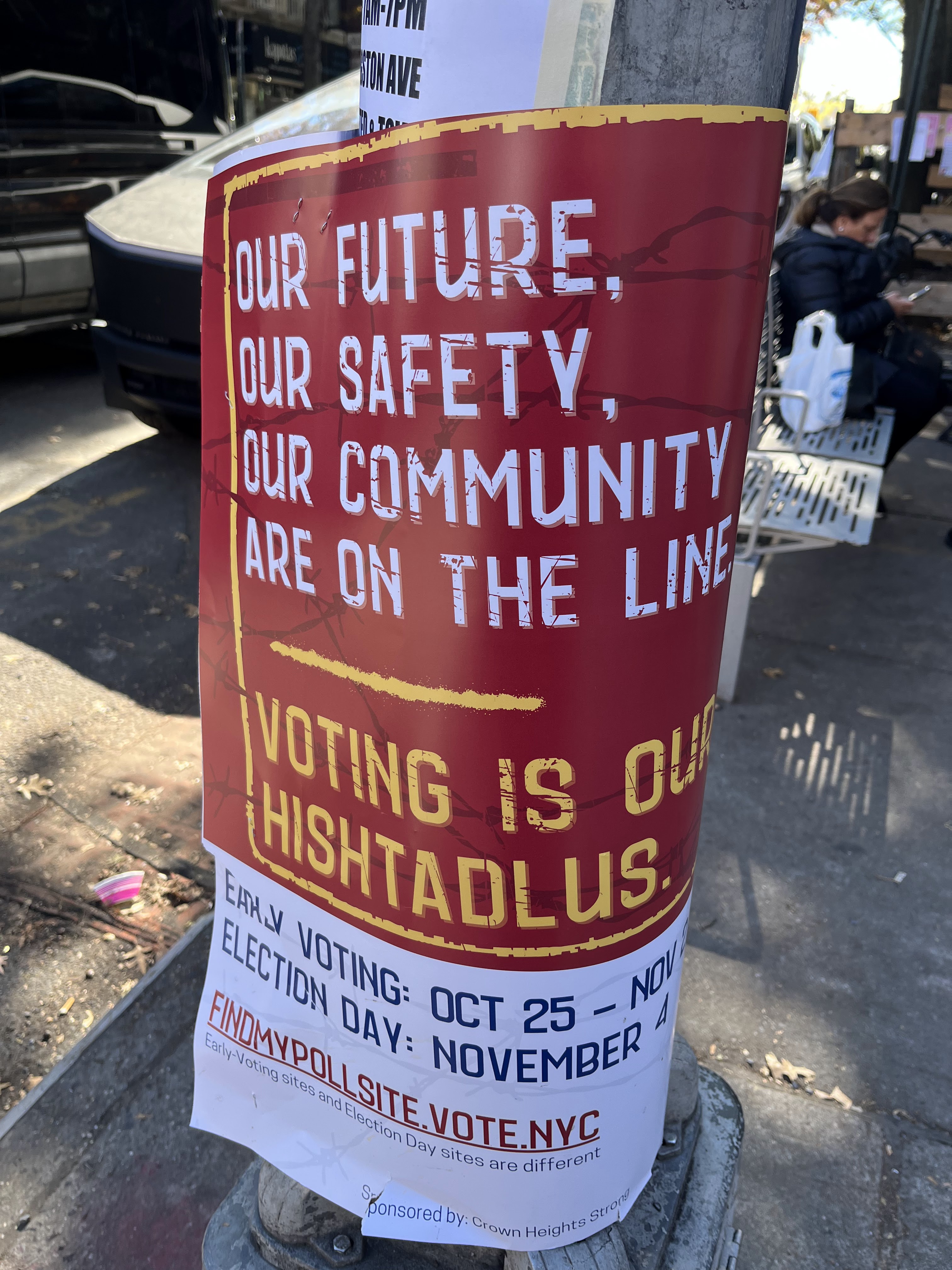
The feeling that the community was slipping through our fingers, as Jews, was palpable in Hasidic Brooklyn. I saw election turnout signs like this one that were as clear as day:
Seeing Hasidic Brooklyn was amazing. I highly recommend a visit. Go see this beautiful community before the coming storm. Let us hope and pray that we will weather it together.
Because in the end, the people who hate Jews won’t distinguish between the gay ones or the Hasidic ones, the secular ones or the Modern Orthodox. They will come for us all. Which is why it’s so important we show solidarity with each other. We don’t need to agree on everything. I’m gay, I’m aware of the challenges that would face me living in a Hasidic community. And I’m also aware of prejudice and judgment that Hasidic Jews face in progressive Jewish circles.
Let’s come together in our time of need. So if there’s a storm ahead, let’s grab each other’s hands and dance in the rain and make it through as one strong community. Ken yehi ratzon. May it be so.
I was born in Washington, D.C. and grew up in suburban Maryland. As an adult, I’ve lived in Tel Aviv, St. Louis, Florida, Philadelphia, and now Atlanta. I’ve experienced different cultures in each place and tried to absorb the best of each into my life.
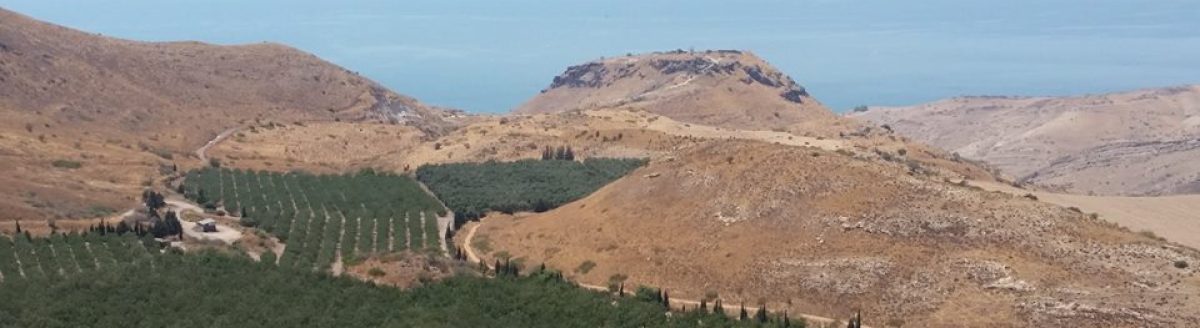
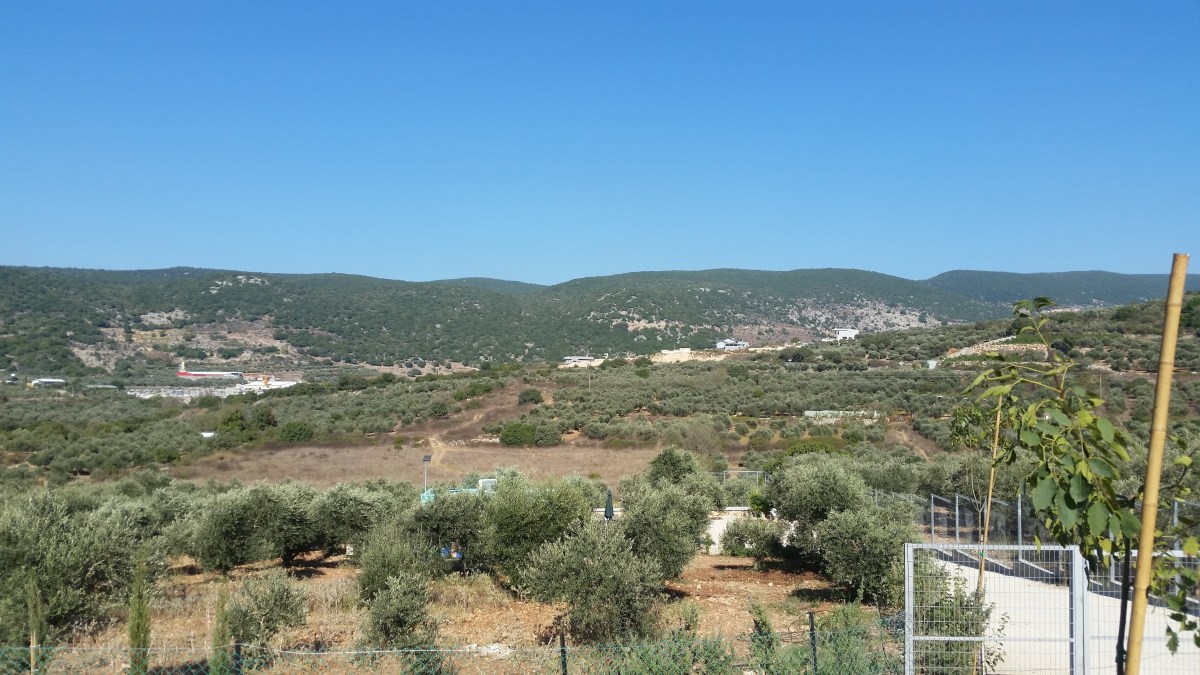
When I made aliyah to Israel, I chose to Hebraicize my name Matt but I did it in a unique way. I chose the name “Matah” (מטע) which sounds like Matt but comes from a different root. It means “orchard”, as in an olive orchard, like the one in the cover photo for this blog post near Rehaniya. The idea was to plant roots in Israel- ones that would bear fruits. Just like the name of this blog.
I would say that even though I returned to the U.S., I did plant roots in Israel and feel deeply connected to my homeland. And they certainly bore fruits – new friendships, mature social and political perspectives, stronger Hebrew and Arabic, and even publishing a book about my adventures! I’m extremely excited to go back this April (inshallah!) for a month and visit again. I miss my friends and favorite places and am thrilled to see what new adventures are in store for me.
While I’ve lived in many places, I’ve called the D.C. area home for most of my life. I grew up there, came back soon after college, and returned there after living in Tel Aviv to be closer to family. My relationship with D.C. could take up multiple blog posts, but let’s put it this way – it’s complicated. I love my friends and remaining family there and I relished the chance to see many of them recently when I visited. And D.C. is also a place of deep pain – one where both of my parents struggled through and died from cancer, one where I experienced a life-threatening manic episode in my 20s that led to my diagnosis with Bipolar Disorder, one where I experienced the loneliness of the pandemic. It’s somewhere where I have many loved ones but it is bittersweet because frankly it’s never been my vibe. While it’s full of beautiful museums, culture, bookstores, cafes, and restaurants, it is overly focused on work and networking with an intense atmosphere that used to stress me out.
“Used to stress me out” because I don’t live there anymore. And while I will certainly be back to visit D.C. again, it is not my home right now. I now live in Atlanta. And frankly I feel so much more relaxed here. It’s been a fresh start for me full of new friends, new experiences, and a less intense way of living. It’s a vibe and it’s peaceful. I sometimes wish I could import my friends and family down here so it’d feel a bit more like home and more quickly. It’s where I live and I’m enjoying it, but it’s maybe not quite home yet. After all, I’ve only been here about four months. But it’s starting to feel more and more like home by the day. When I travel to other cities or abroad, I feel relieved and happy to come back to Atlanta. It’ll take time to see how this place will figure in my life, but it has a lot of promise. Yet inevitably there are those tough days when after moving to a new place when I wonder what I’m doing here. It’s a kind of imposter syndrome perhaps, because I feel pretty content here. Hopefully with time I’ll feel even more at ease.
Perhaps instead of thinking where is “home” and where is not, it’s more useful to return to my Israeli name “Matah”. Orchard. Roots. Planting. Rather than debating which place I’ve called home is most “home” to me, it’s better to think about where I’ve planted roots and what fruits they have borne or may yet bear.
Put that way, I can say that in D.C. I created lifelong friendships and honored my parents by supporting them through their cancer diagnoses and passing away.
In Tel Aviv, I learned to explore the world, from tiny villages in the Galilee to rural Cyprus. I regained my confidence to engage with different cultures and put that passport to use. I visited 120 different municipalities in Israel and met people from every religious, linguistic, and ethnic background imaginable. I connected with my Jewish identity and homeland. And I became a writer reaching 100,000 views on this blog site!
In Atlanta, the story is yet to be written. I’ve met some wonderful people here. And it has been good for is my mental health. I feel better here psychologically. Having a fresh start in a relaxed place has allowed me to have some space from the traumas I experienced in D.C. and redefine myself for the next stage of my life.
So I will refuse to answer the title of this blog post. Because rather than one home, we can have many. And we can plant roots wherever the soil is fertile.
The election of Zohran Mamdani has put many Jews, myself included, on edge. You can look up his long history of virulently anti-Israel comments here. His obsession with Israel (and not with other countries’ human rights concerns) is antisemitic. He has no problem marching in the NYC Pakistan Day Parade but boycotts the Israel Day Parade. The double standard is appalling, given that Islam is the official state religion of Pakistan and religious minorities and LGBTQ+ people are legally discriminated against. Yet it is only Israel that Mamdani chooses to boycott. No country is perfect and expecting Israel to be exemplary while excusing Pakistan’s human rights abuses is bigoted.
The purpose of this post, though, is not to rehash what many media outlets, Jewish organizations, and politicians have debated. I find Mamdani’s rhetoric appalling and antisemitic. You may not. But one thing is crystal clear: Mamdani has clearly said he boycotts the world’s only Jewish homeland and that requires a forceful and thoughtful response. Because Israel, for all its imperfections, is the only safe haven for our people and has saved the lives of millions of Jews from around the world fleeing persecution.
This post is about what’s next.
First, let’s define Zionism. Zionism is the national liberation movement of the Jewish people. It is the belief that Jews are a people, an ethnic group with literature, cuisines, customs, languages, and millennia of shared history. There are right-wing Zionists, centrists, and left-wing Zionists who have debated the future of our people and our relations with our non-Jewish neighbors both inside and outside Israel’s borders. But fundamental support for a Jewish safe haven in our ancestral homeland is backed by the vast majority of American Jews – 85% in this poll. You don’t need to agree with all of a particular Israeli government’s policies to believe that Jews need a place to call home.
Now that we’ve defined the problem (Mamdani) and what Zionism is (and isn’t), let’s talk about what a Zionist response to his rise should be.
The Zionist response to antisemitism is to invest in our people, our homeland, and our allies.
Our homeland. In addition to supporting Jewish businesses, find ways to strengthen Israel. Donate to the Spirit of the Galilee, led by my dear friend Rabbi Leora Ezrachi-Vered, a group promoting co-existence between Israelis of all faiths. Support Blend.Ar, led by my friend Chen Kupperman, which organizes Arabic immersion courses in Abu Ghosh to promote thoughtful collaboration between Jews and Arabs. Contribute to Magen David Adom, Israel’s emergency responders who treat (and are treated by) people of all faiths. There are so many other fabulous charities out there that deserve your backing. Don’t hesitate to reach out if you need some advice about how to strengthen Israeli society.
Our allies. Many non-Jews are standing by our side and deserve recognition. If we take some of the energy we feel towards people like Mamdani and put it towards thanking people who have our back, we’ll feel better. For example, I live in Atlanta and the moderate mayor Andre Dickens won re-election Tuesday too. He has visited Israel and vigorously condemned the October 7th attacks. He takes safety seriously for his Jewish constituents. It’s people like him we need to elevate in our national discourse. Thank politicians like him for standing with us and support them with votes and donations. And donate to non-partisan organizations like the American Jewish Committee that build bridges of understanding between Jews and diverse communities.
In the end, the best response to hate is to remember that we may despair and feel like it’s 1933, but today is different. We have a homeland to call our own. We must stand together with our people, our safe haven Israel, and our non-Jewish allies. Haters gonna hate, but we are a strong community full of love and hope and we will come together and win.
A few days before the election, I was uncertain how to react to a near-certain Mamdani victory. A friend told me Delta restarted direct flights from Atlanta to Tel Aviv and I jumped on the site and bought a ticket to Israel. I’ll be back in Israel this spring for a long visit and I’ll be looking for all sorts of ways to support my friends there – Jews, Christians, Muslims, and Druze. Because by building a stronger Israel, I not only help them, I help bring greater safety and security and resilience to Jews in New York and around the world.
On my trip to Italy, I encountered a beautiful country, intense antisemitism, and a 2,000+ year old Jewish community that continues to survive it all.
My trip started in Padova, a bit off the beaten path. A historic college town, it was beautiful and not overrun by tourists, but also had frequent anti-Israel graffiti and regular demonstrations, as has been the case at American universities as well. Situated in the more conservative Veneto region, it was certainly less antisemitic than far-left places I visited like Bologna. But nonetheless, at times I felt uncomfortable as a Jew.
For instance, my food tour guide in Padova was a welcoming Italian man named Davide. He was well-traveled and intellectually curious. When I was brave enough to share that I was Jewish and an Israeli citizen, he had many questions. He was on the left side of the political spectrum in Italy, which in Europe sadly correlates with increased antisemitism and anti-Israel bias. He had never heard of Arab Israelis (i.e. Arab citizens of Israel with full legal rights) – he was curious enough to say he’d Google the topic. He had not heard that Arab parties existed in the Knesset (Israeli parliament). When I told him I felt that Italian culture was quite similar to Israeli culture, he was shocked. He also had no idea that LGBTQ+ people were persecuted in many Arab countries including the incredibly repressive one he’s visiting next – Saudi Arabia!
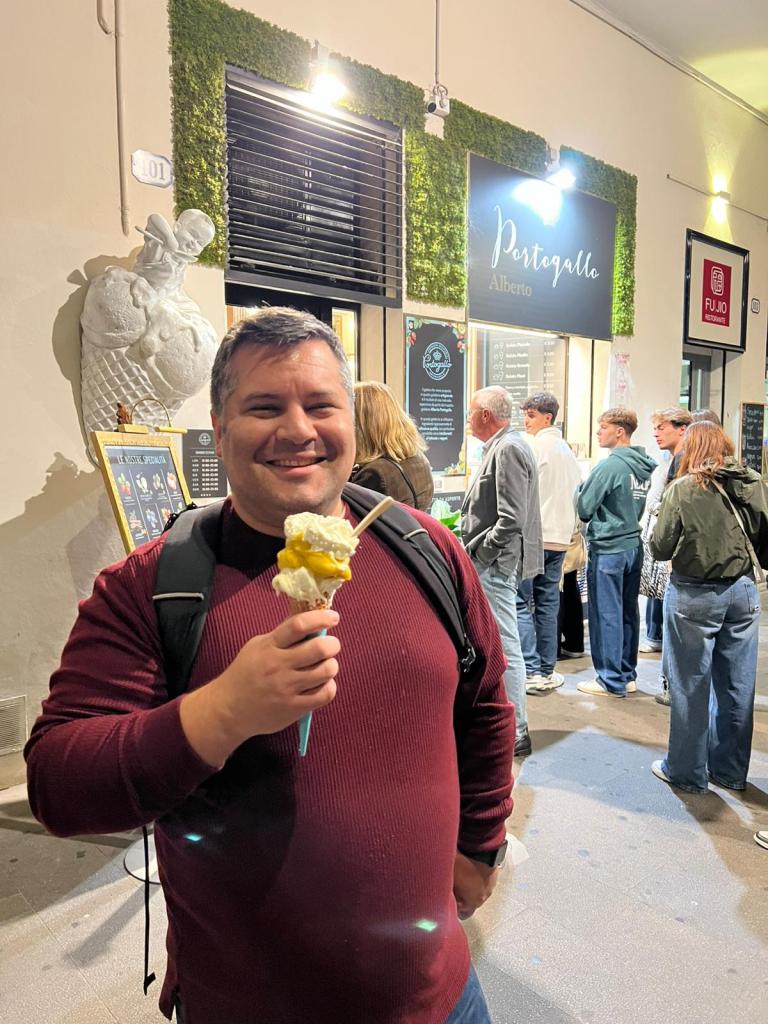
It was hard for me to go on that tour. Not because of the delicious food and gelato (man, the mango gelato in Padova was out of this world!). But rather, because I felt like I had to be an ambassador for my people. This guy wasn’t a bad guy. He just didn’t have many facts. And to his credit, he was willing to learn and grow. I just didn’t have the energy on vacation to play teacher. I hope he continues to delve into Middle Eastern history and culture – with my people included. It’s important for me to remember people like him – people who may largely disagree with Israel or are rather naïve, but are not necessarily malicious. We must engage with these people more gently and with more understanding than with some of the other instigators and criminals who persecute Jews these days.
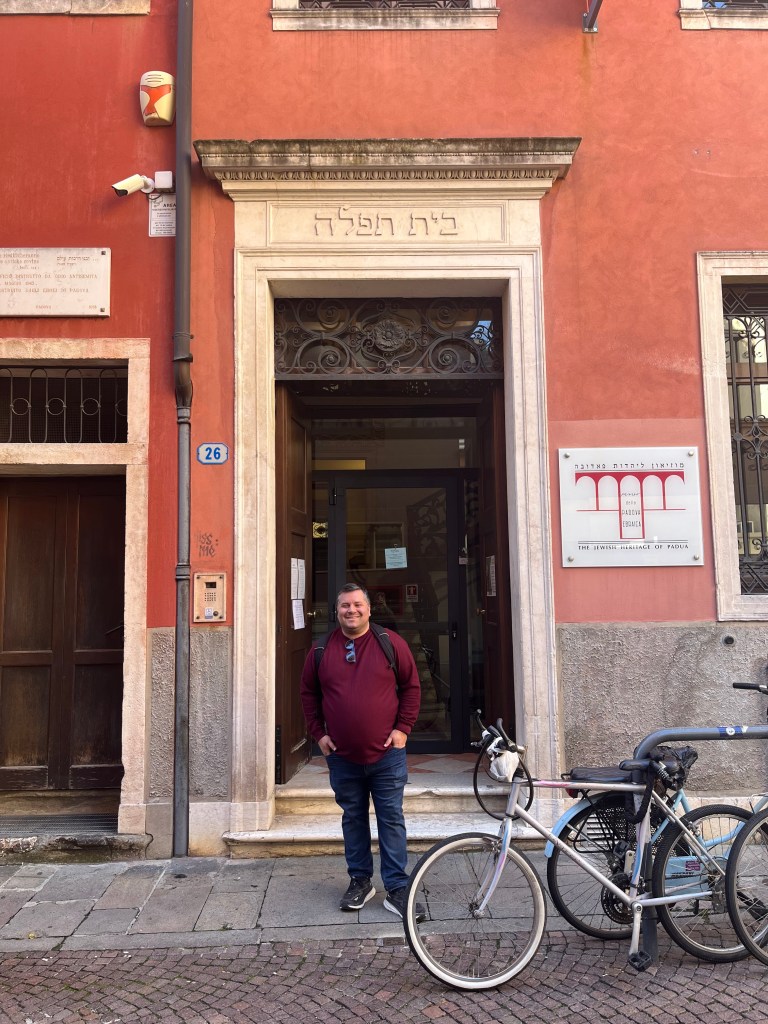
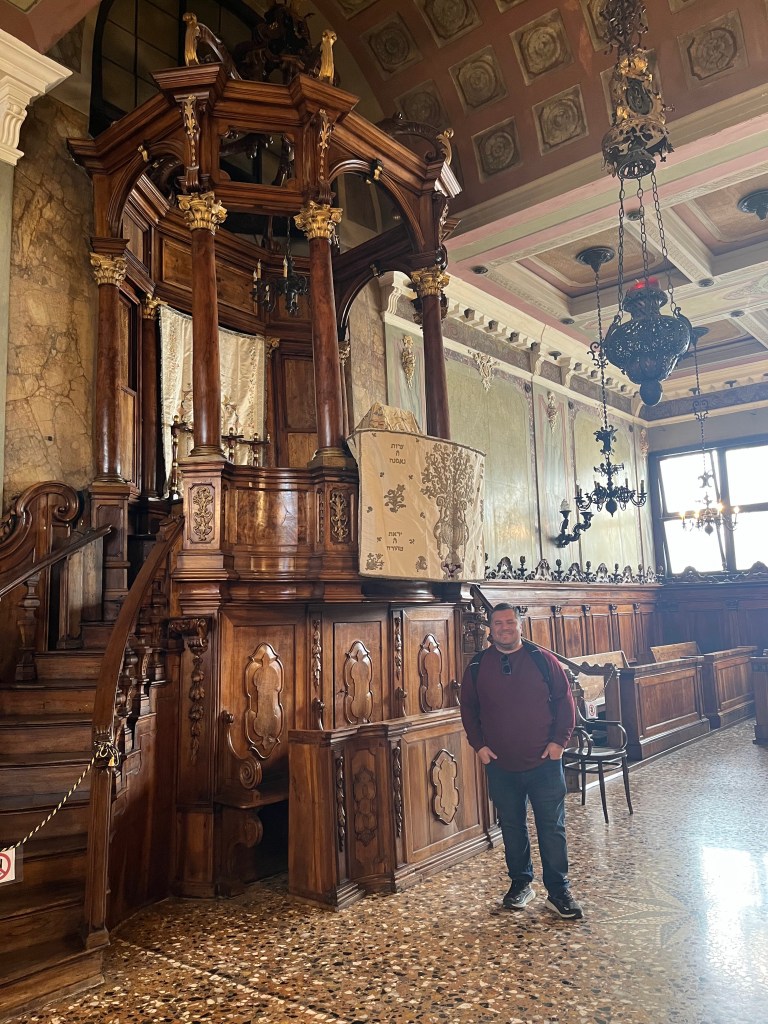
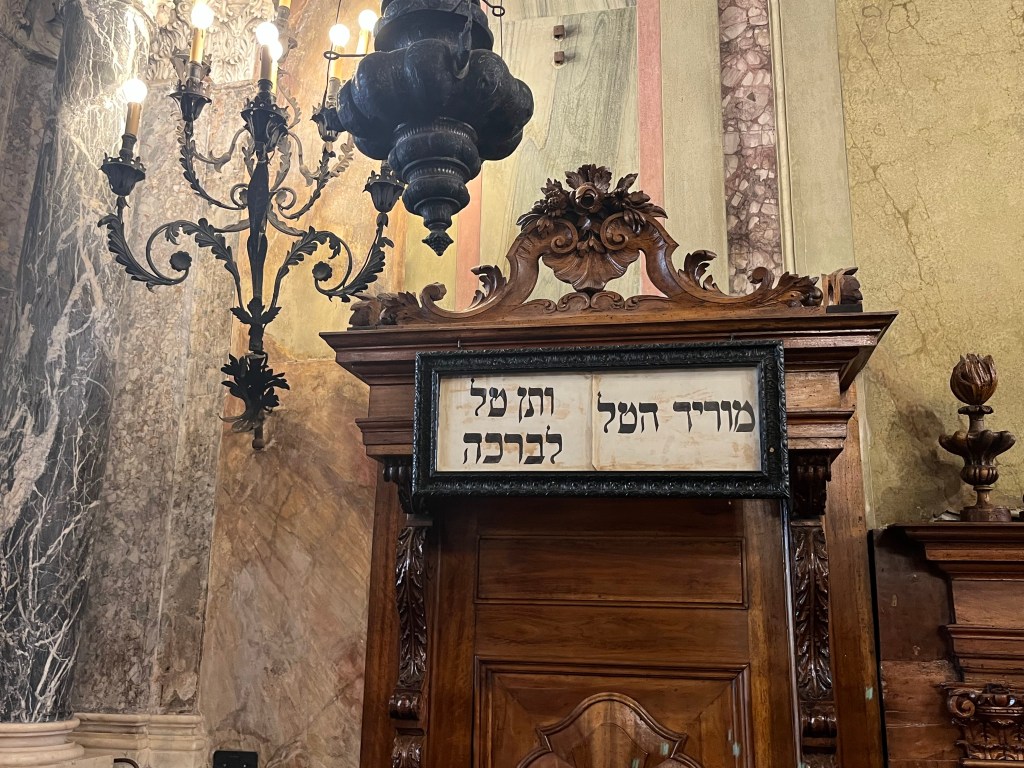
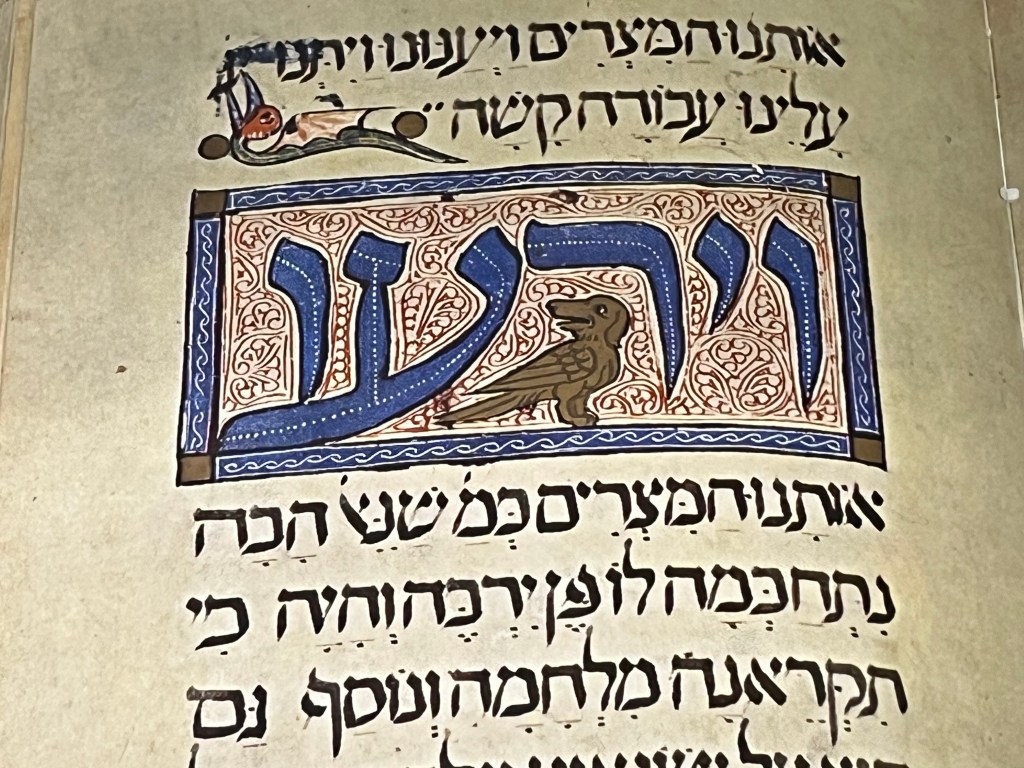
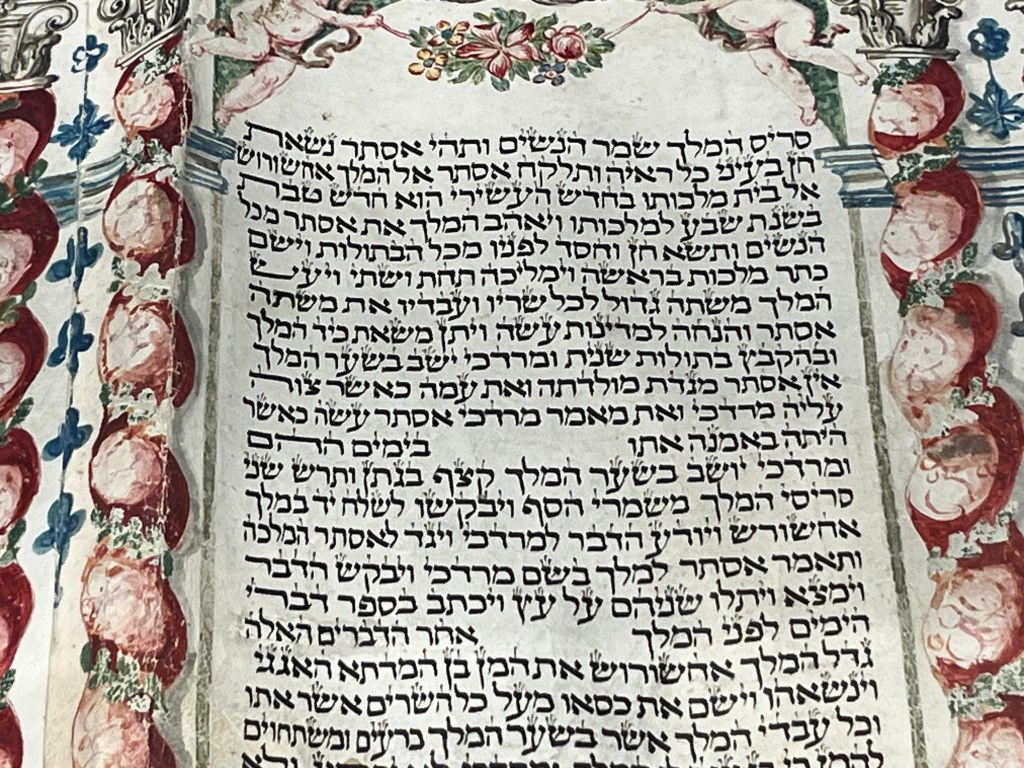
I had the great privilege of visiting the Jewish Museum of Padova, including a visit to the historic synagogue, which is still in use to this day. I highly recommend this museum and synagogue. Not only did I learn so much about this historic community, I got to visit the 477-year-old synagogue all by myself! Here are some pictures:
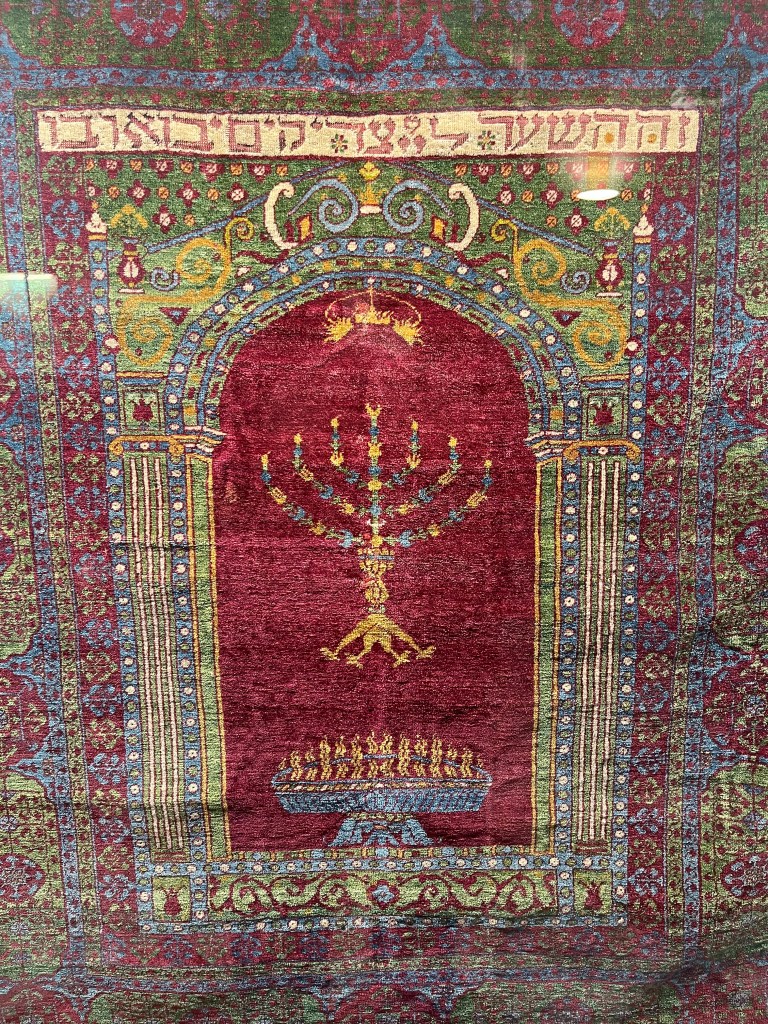
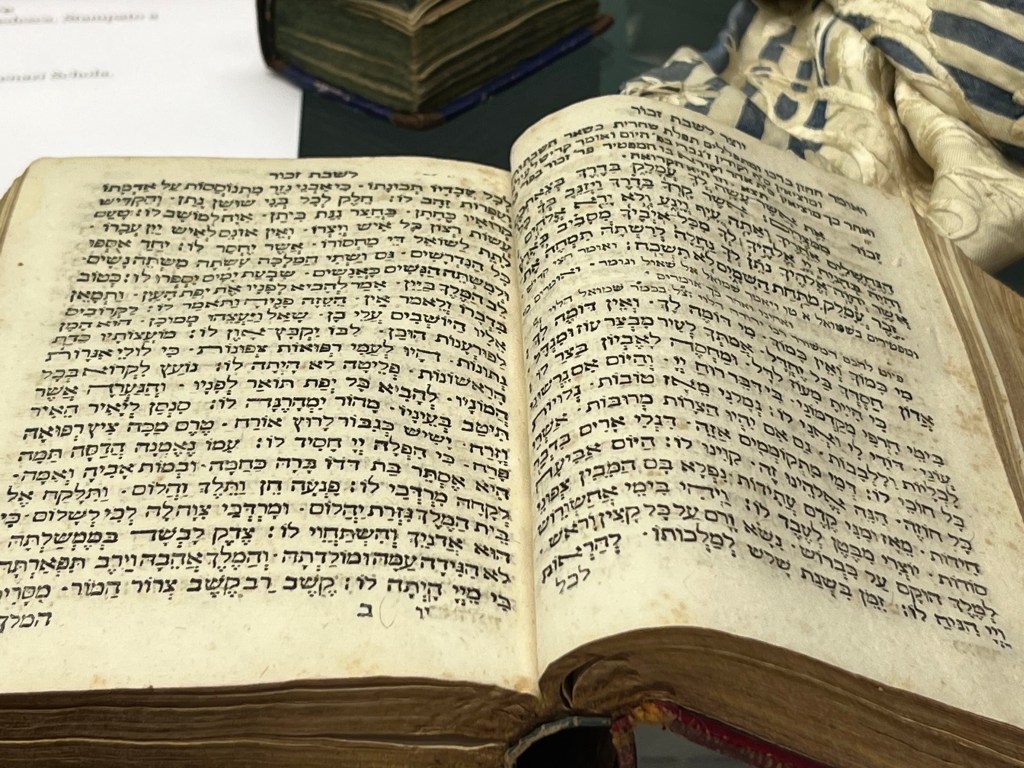
The museum tells the story of Padova’s Jews and some Italian Jewish history as well. For those who don’t know, many different types of Jews have lived in Italy, including Ashkenazim (yes, Yiddish was spoken in Venice and parts of northern Italy!), Sephardic Jews, Levantine Jews (Sephardic Jews who migrated to the eastern Mediterranean and came back towards Italy), and Italian-rite Jews who have been in the country for over 2,000 years! There are many beautiful artifacts such as the ones below dating back hundreds of years:
The beautiful Baroque synagogue miraculously survived Italian fascism and the Holocaust and is absolutely worth a visit. The employee working the front desk was not Jewish but was very knowledgeable about the community and charmed me with her Italian-accented Hebrew as she explained the different parts of the sanctuary to me.
Before I move on to my next Italian Jewish destination, I want to share a quick disclaimer. From Padova, I did a quick day trip to Bologna. While Padova certainly had some antisemitism, it was largely calm and pleasant and I’m glad I stayed there for a few days. Bologna, on the other hand, is not a pleasant place if you are Jewish. It is covered in antisemitic graffiti (i.e. “death to Israel”). It is called the “red city” in part because historically it has been the bastion of the Italian Communist Party. I felt deeply uncomfortable there and decided to leave earlier than expected to head back towards Padova. Of course not everyone in Bologna is a communist. When I asked my cab driver to the train station in Italian whether it was a political city he said “troppo!” Too much. He found the anti-Israel graffiti disturbing and disruptive and an unfortunate stain on the beauty of the city itself.
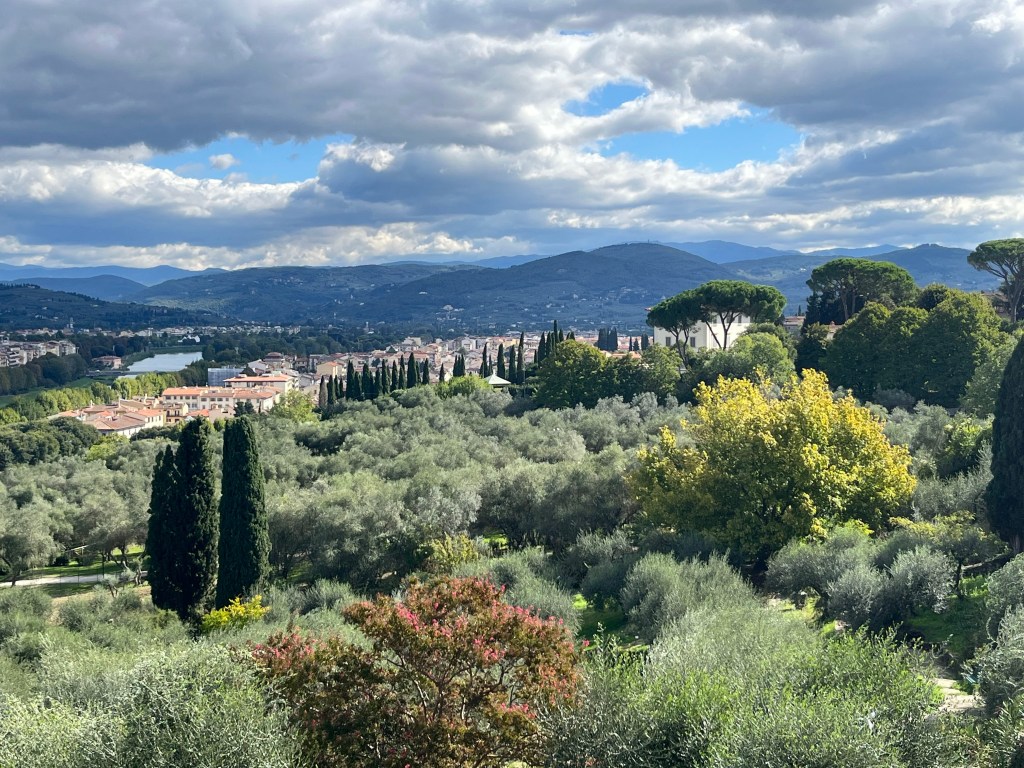
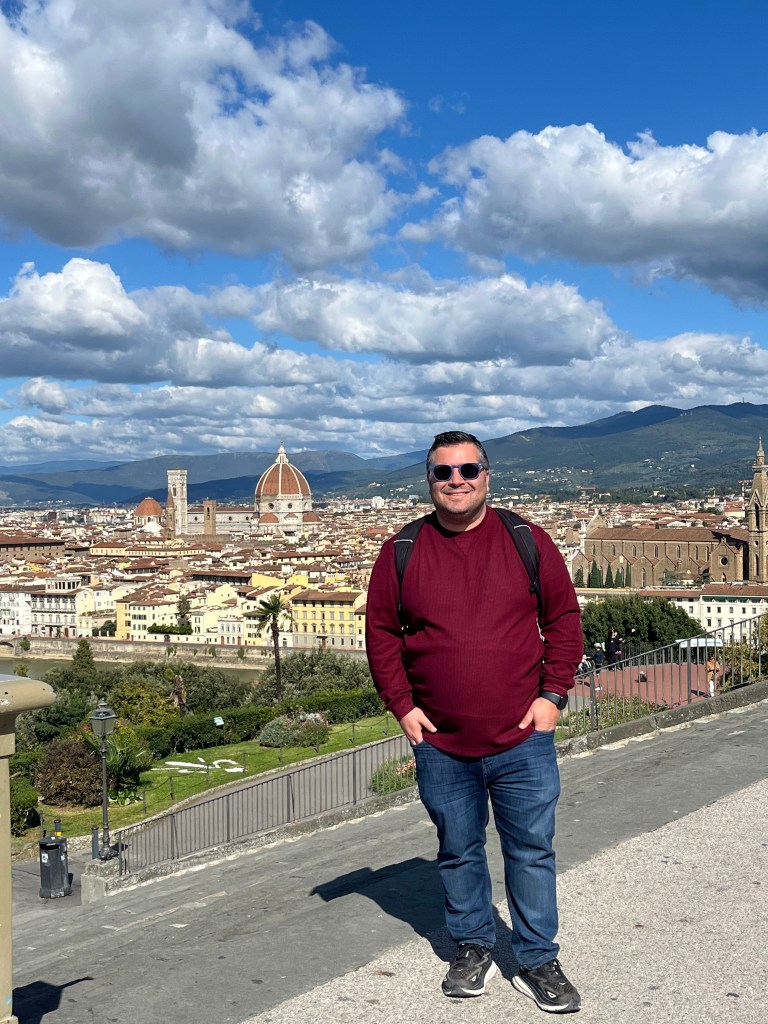
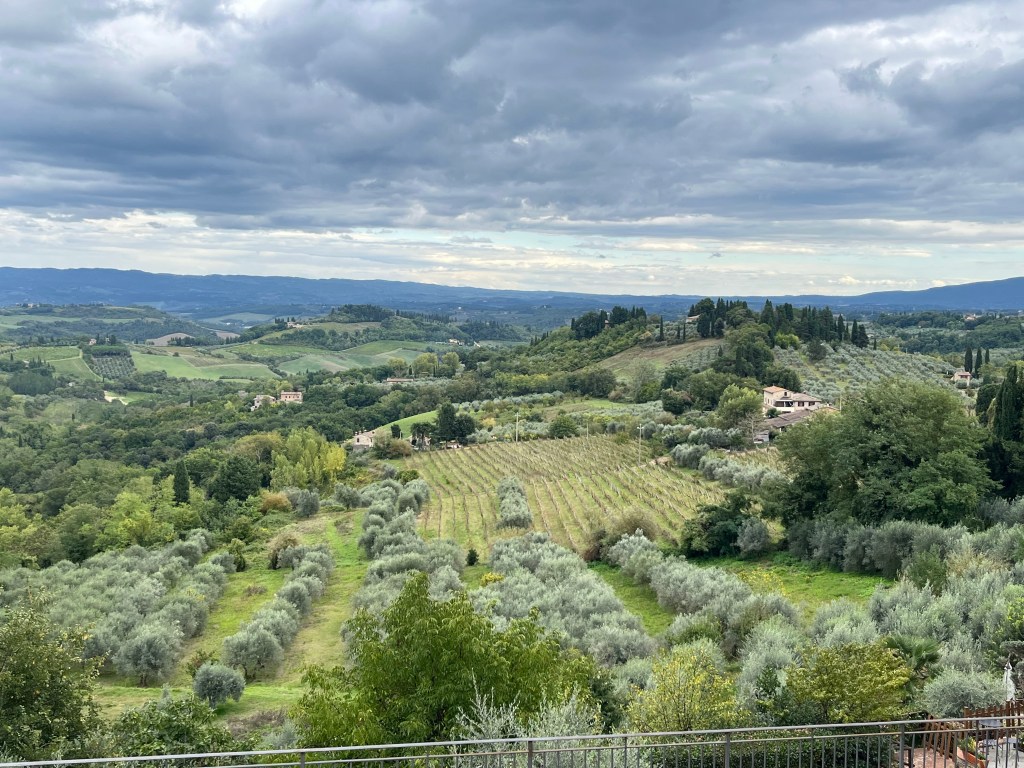
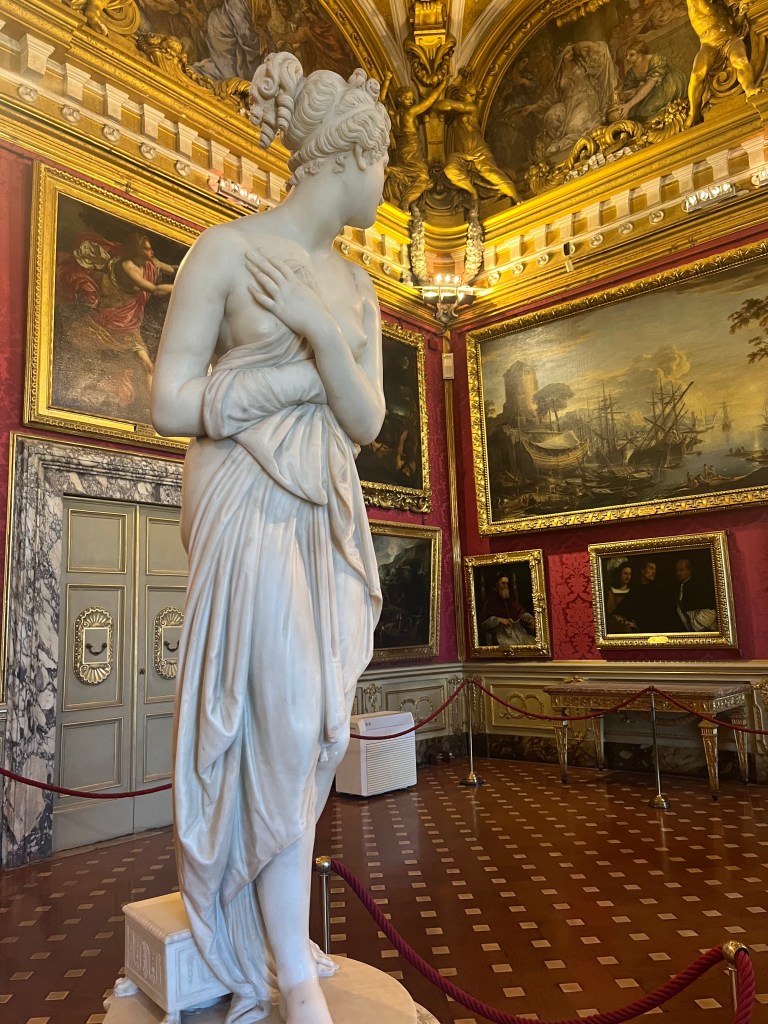
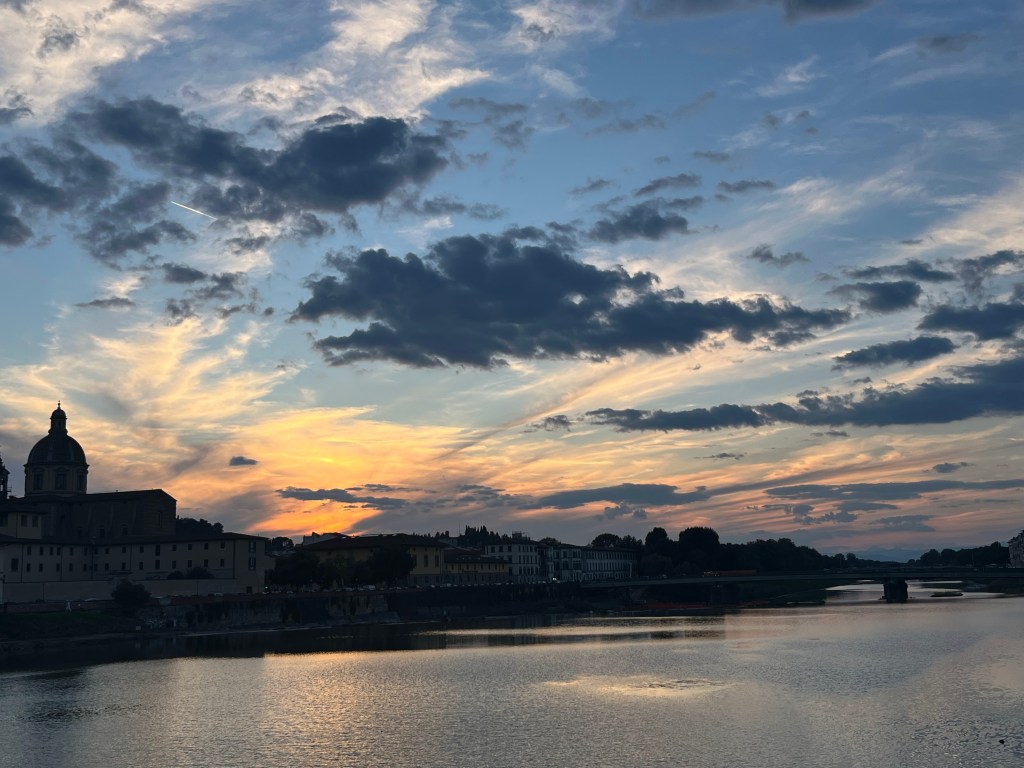
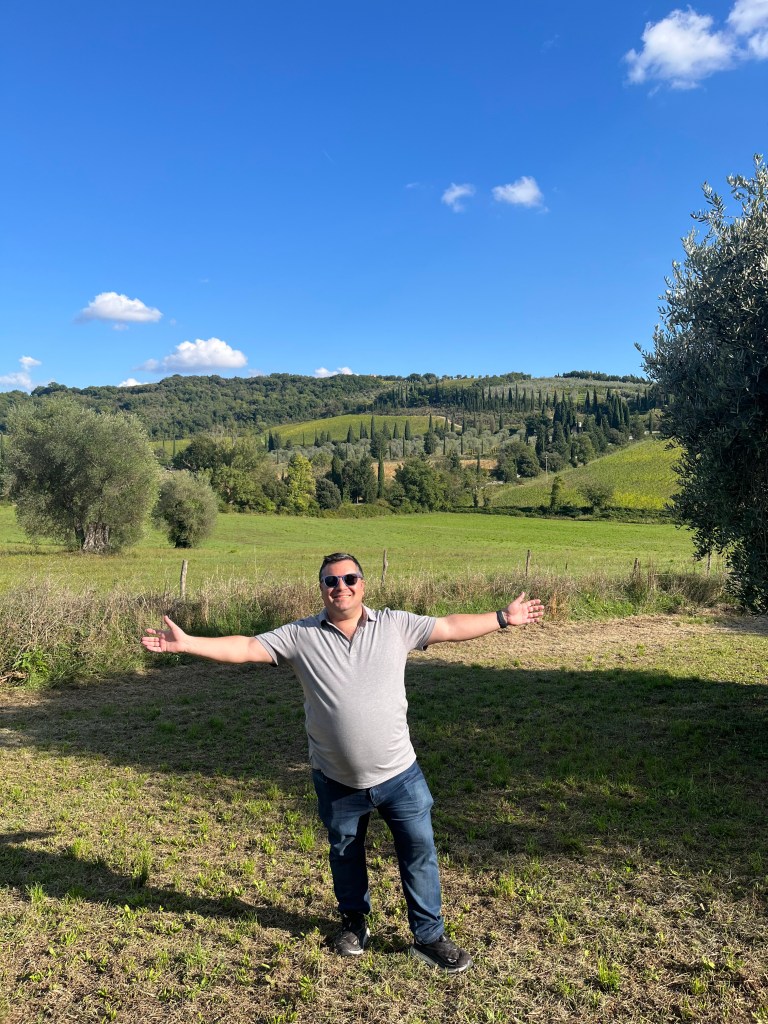
Feeling more buoyant after my visit to the Great Synagogue of Padova and the Jewish museum, I headed south to Florence for a few days. Florence, like Bologna, is generally rather lefty and occasionally graffiti-filled. But to its credit, it’s pretty damn beautiful. Not only the art and architecture of the city, but also its stunning countryside. The countryside in particular was soothing, as the medieval villages were clean and not filled with graffiti and fortunately trees can’t hate Jews. Here are some pictures from my travels in the area:
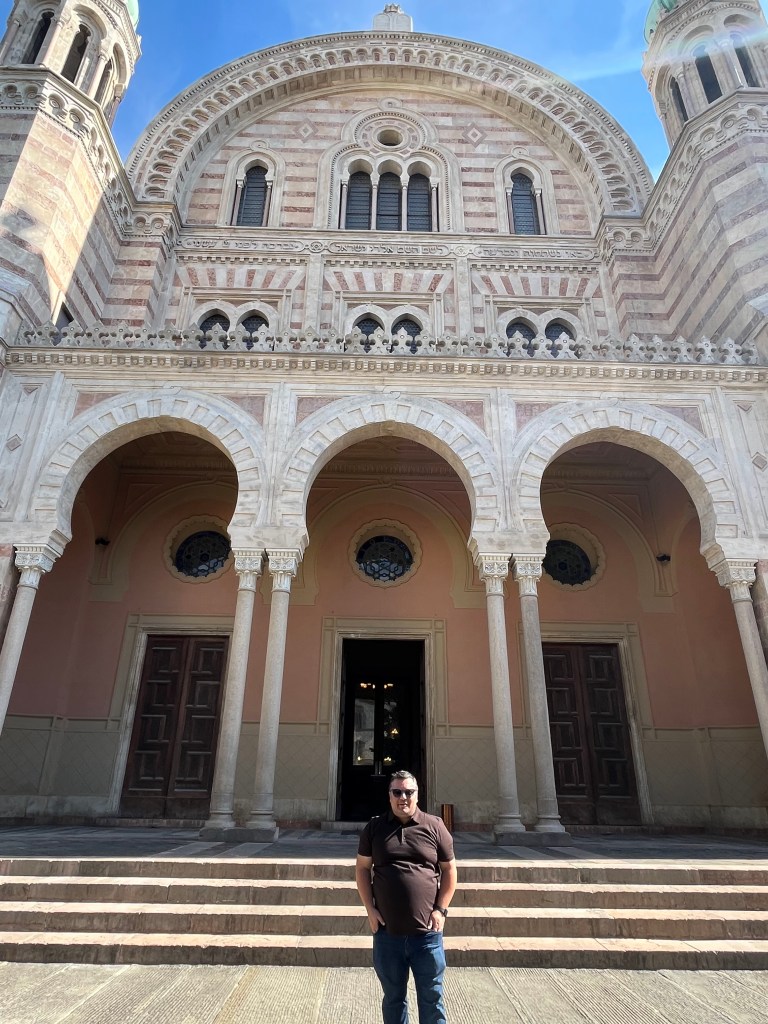
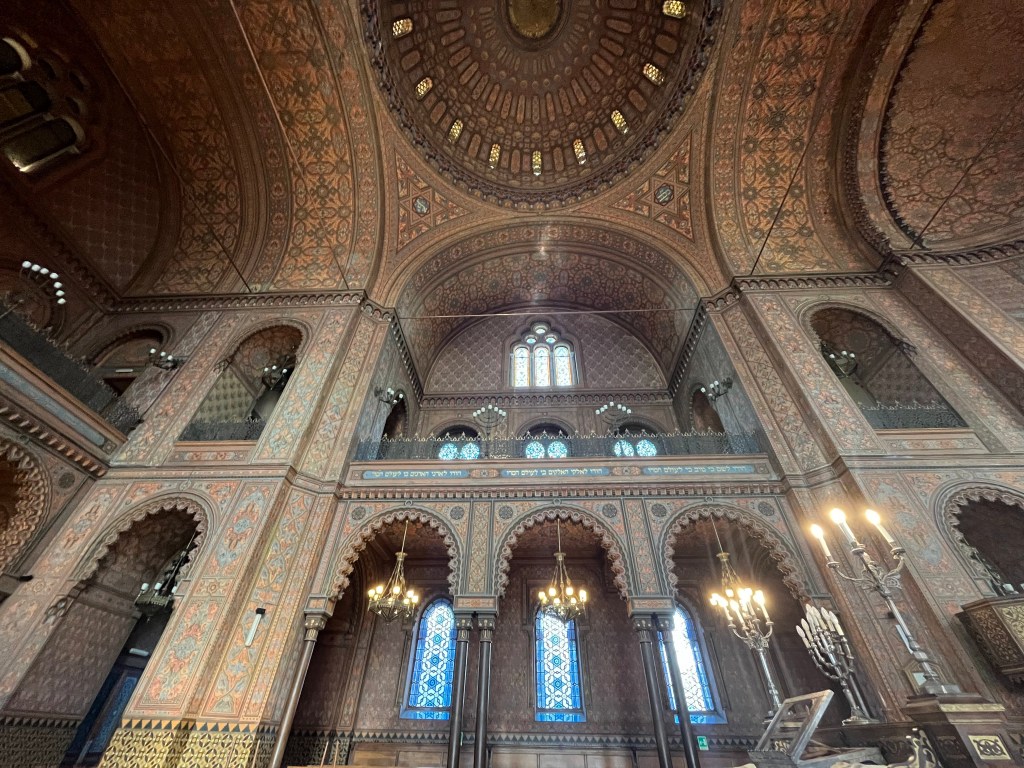
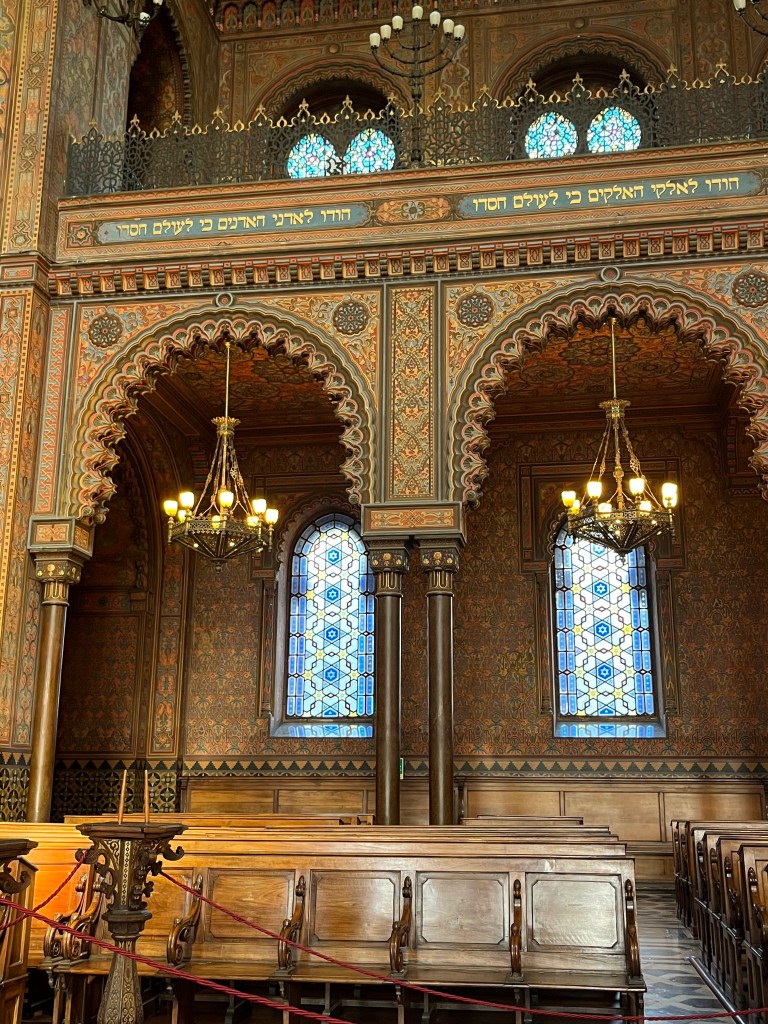
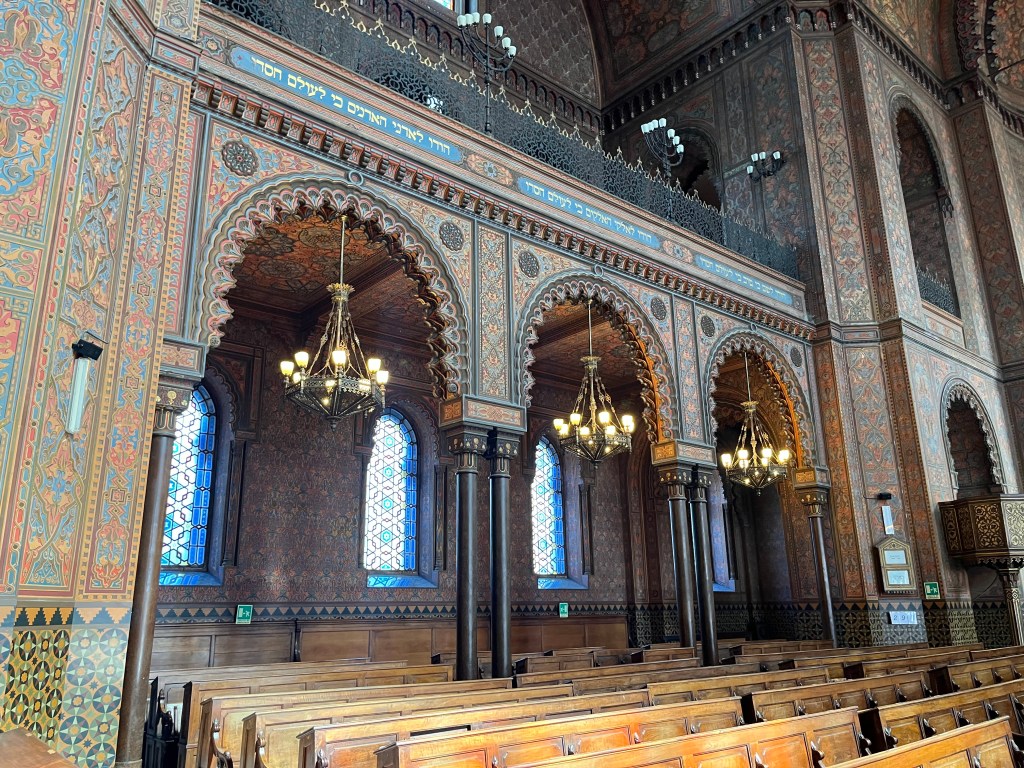
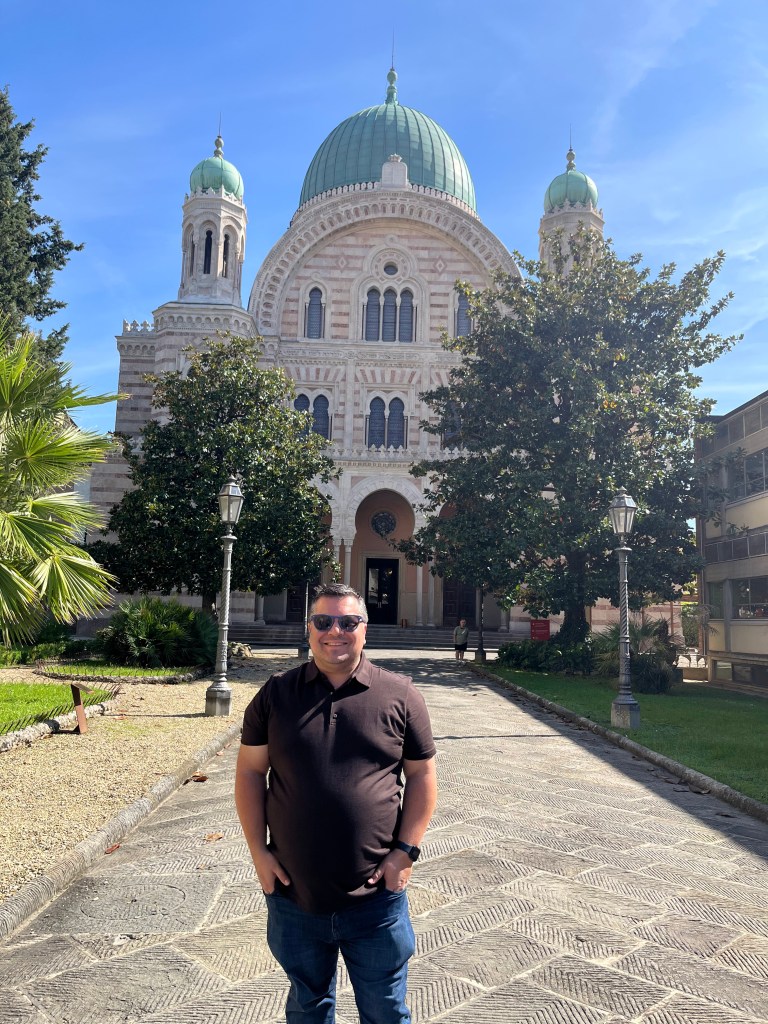
Florence and its Jews have a long history of ups and downs. The famous Medici family at times was very welcoming of Jews and helped them build quite a spectacular community. I got the chance to take a Jewish tour of Florence and learned a lot about the history of the community. The community, many hundreds of years old, lost half its members in the Holocaust between Italian fascist persecution and the Nazi invasion of the country. Its Great Synagogue and museum are absolutely worth a visit as well. Here are some pictures of the synagogue:
Perhaps my favorite part of visiting the synagogue besides the architecture was the chance to chat in Italian with the non-Jewish cashier and her friend in the museum bookstore. I speak intermediate Italian (with an occasional Spanish word thrown in) and they loved it! They were really touched that a non-Italian would learn their language, especially since among Romance languages it’s certainly less popular than Spanish or French, for example. We had a great conversation about Jewish life in Italy and Florence in particular. It was a beautiful moment that reminded me of the good in people. That while graffiti may be irritating and uncomfortable, it doesn’t represent everyone.
My last major stop on my trip was Venice. I had never been before and boy was it stunning. I stayed in Cannareggio, a historic area near the Jewish Ghetto and much quieter than the main touristic parts of the city, which was a true blessing.
Sadly, my travel plans to Venice got disrupted by a massive, 24-hour countrywide anti-Israel train strike and I lost about 700 Euros in having to change hotels and getting a new train ticket at the last minute from Florence. This train strike took place on Yom Kippur, making it even more offensive. I told my hotel manager that this was a real pain to deal with and his response was “pray for peace in Palestine”. Why a train strike in Italy would bring peace to Palestinians (or Israelis for that matter – not that they were included in the hotel manager’s prayers apparently) is beyond me. All it did was make me angry and not want to come back to Italy any time soon. Train strikes are frequent there, which I suppose is just part of the culture. Why it needed to be about Middle East politics was beyond me. Unfortunately the train strike was accompanied by a massive two-million-person national demonstration in every major city, complete with kuffiyehs, violence against police and property, and malicious anti-Israel signs. I can’t imagine what it’s like to live in Western Europe as a Jew. It unfortunately calls on the resilience of the oldest Jewish community of Europe to withstand such ridiculous bigotry and hatred. An ancient hatred renewed in modern times.
Once the rallies died down and the strike was over, I got to enjoy Venice. I traveled with a friend from the States who was also Jewish which was really comforting during this challenging part of the trip. My friend, perhaps a bit scarred by our experience with the anti-Israel strike and protestors, asked for a pseudonym to be used for this piece, which is understandable and incredibly sad. He was concerned that anti-Israel protestors might find him online and harass him. He was comfortable with me using the name “David” instead of his actual name.
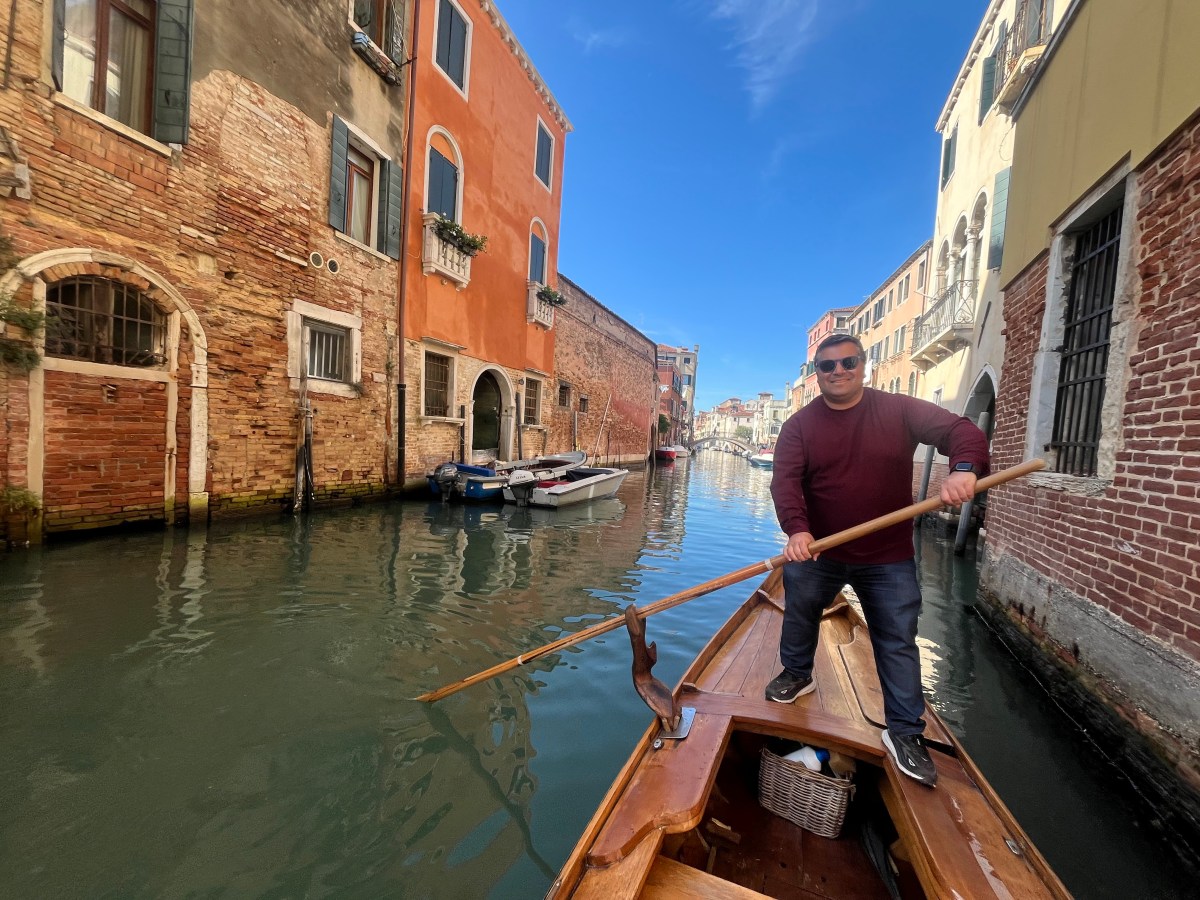
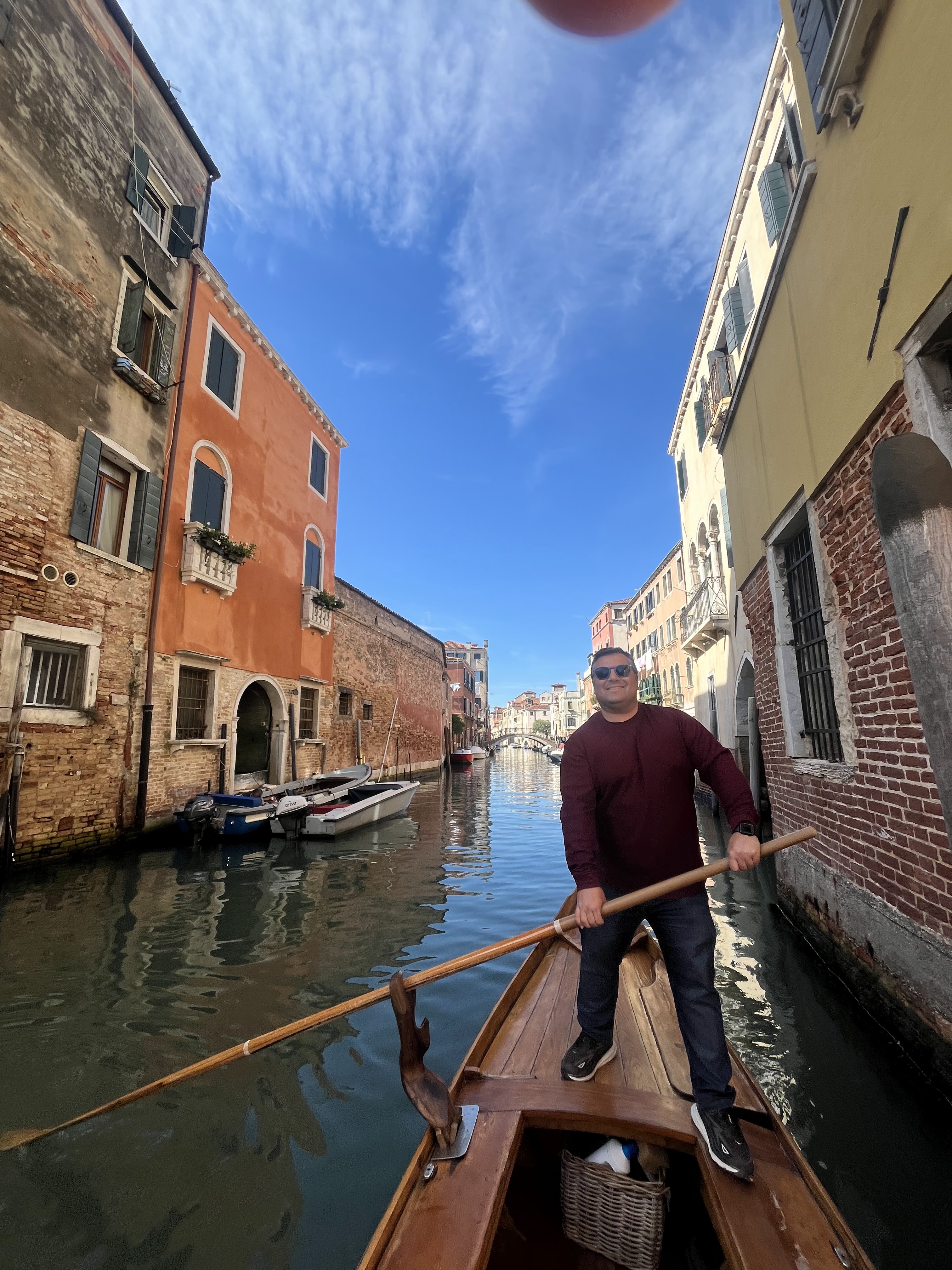
David and I did a lot of fun stuff. Venice is a city of the sea. I love being on the water. While David was busy doing some other stuff, I actually had the chance to take a gondola rowing class with Row Venice! It was a fabulous way to see the city and the teacher taught me some of the history too.
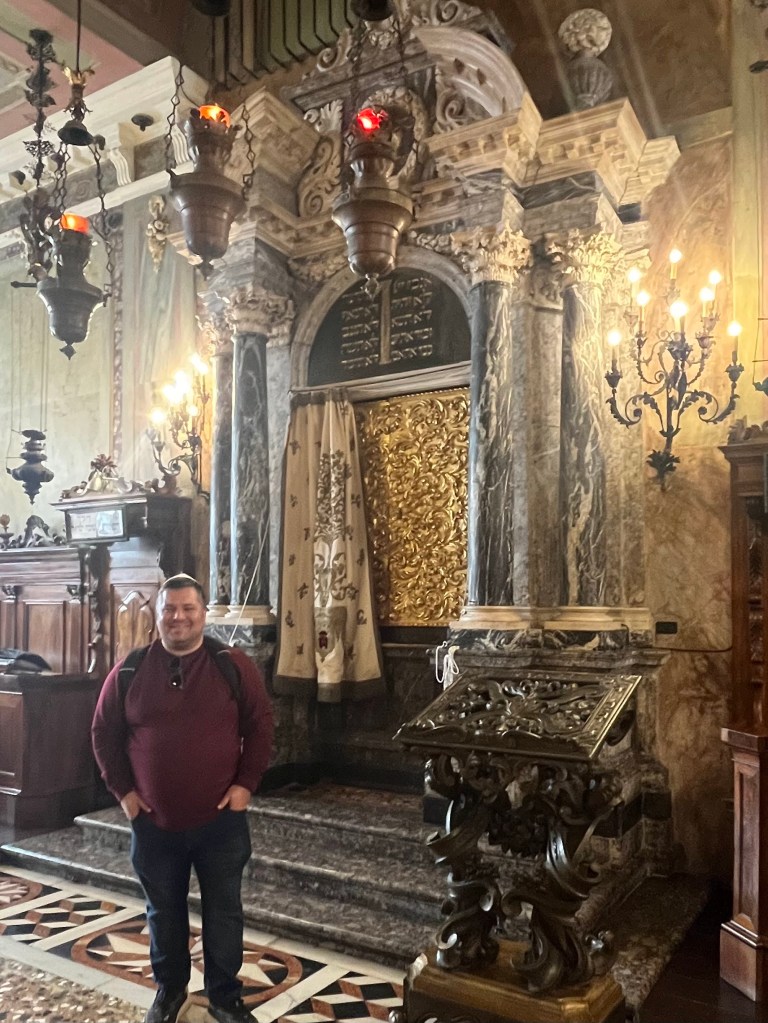
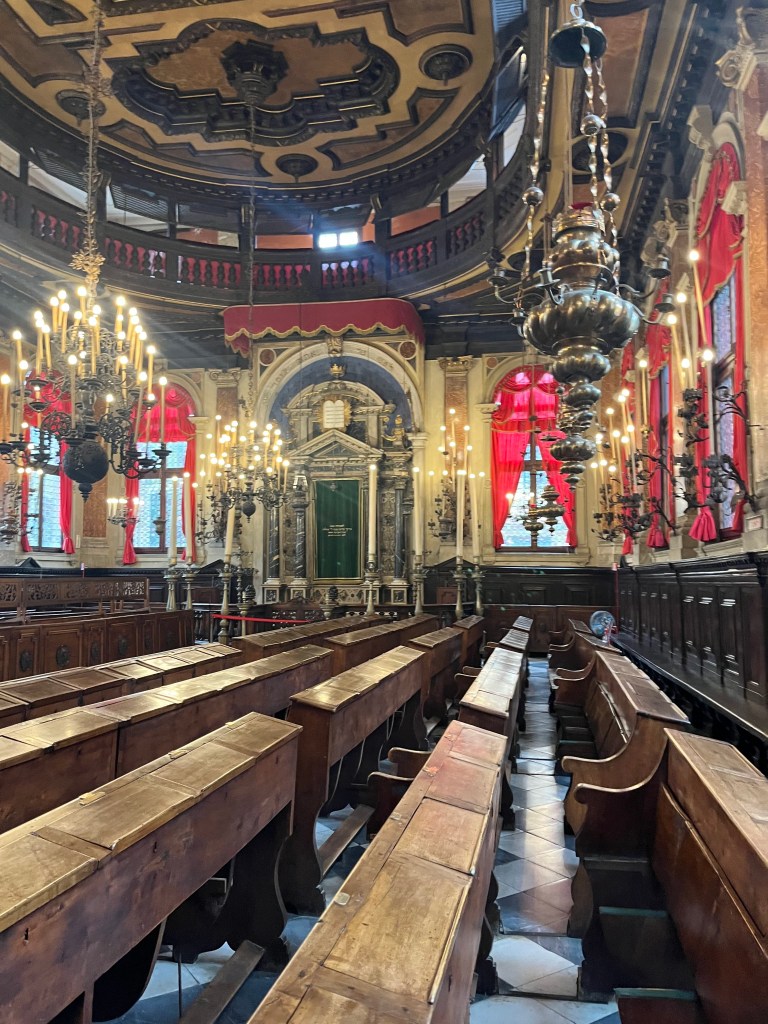
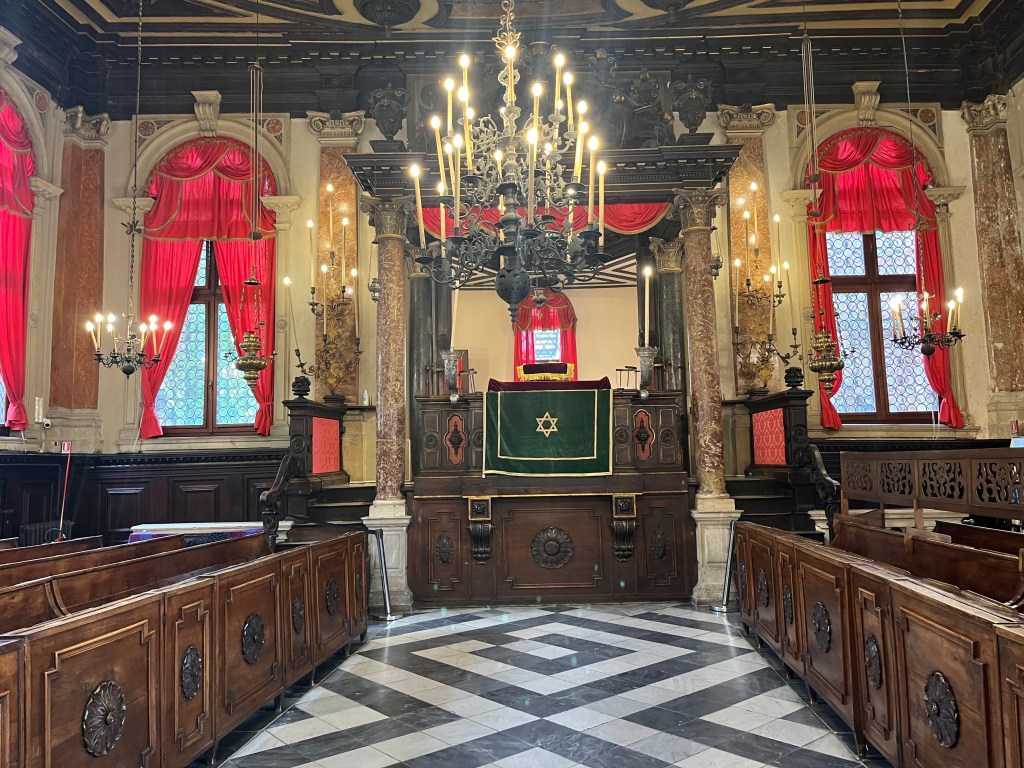
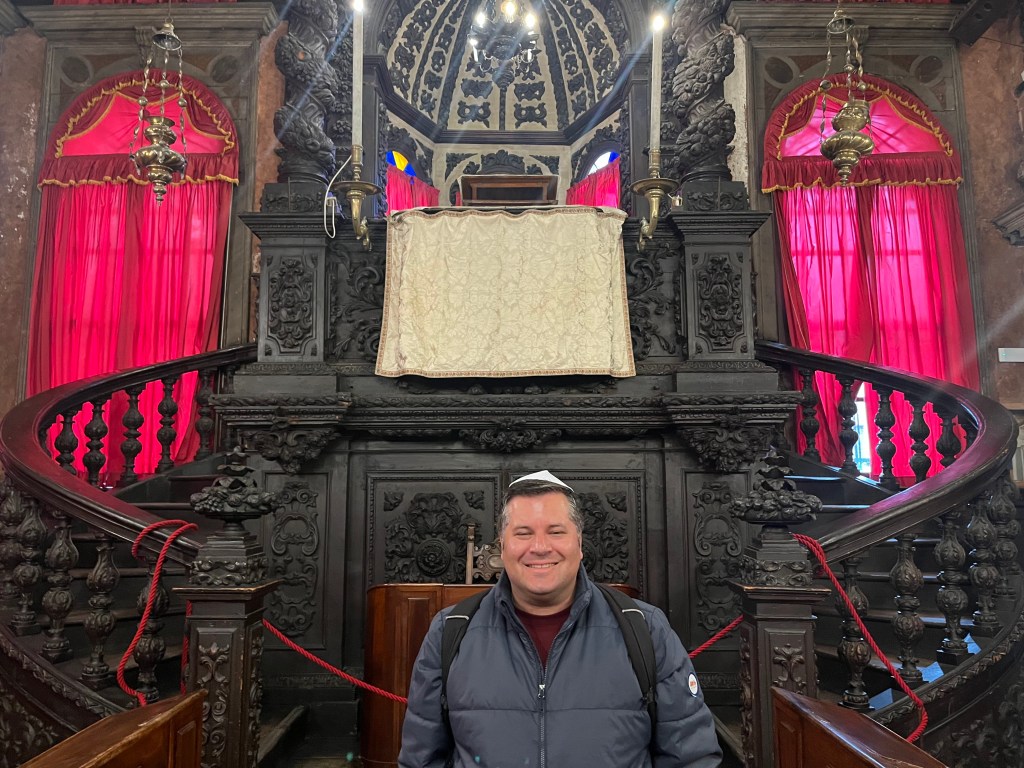
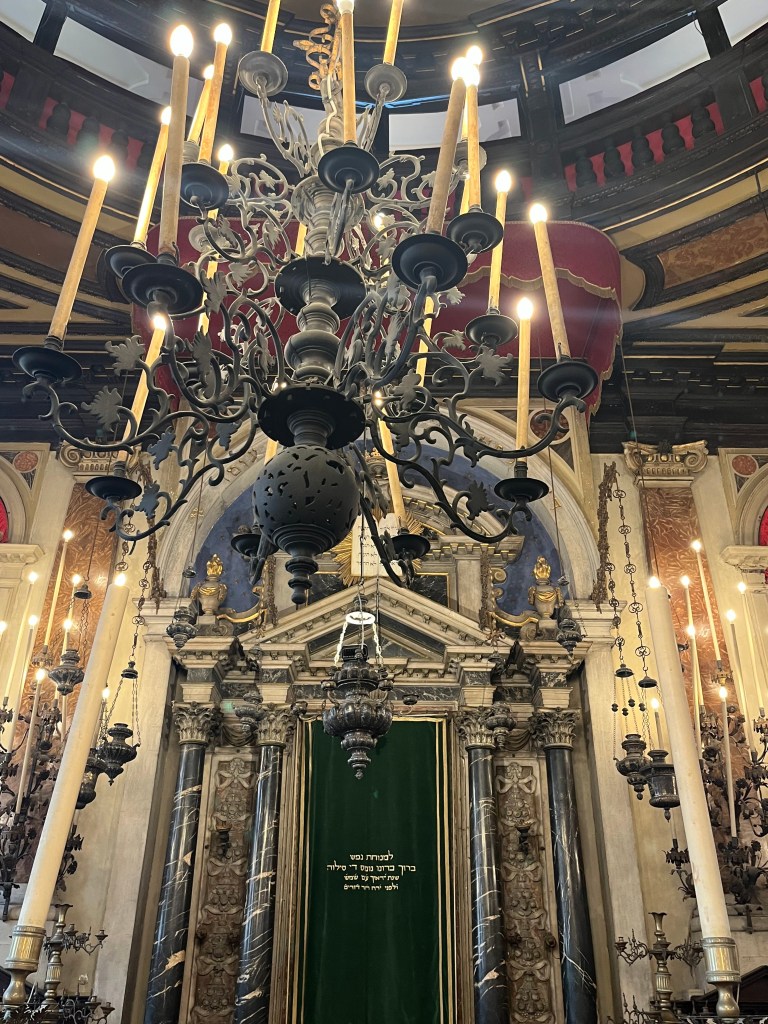
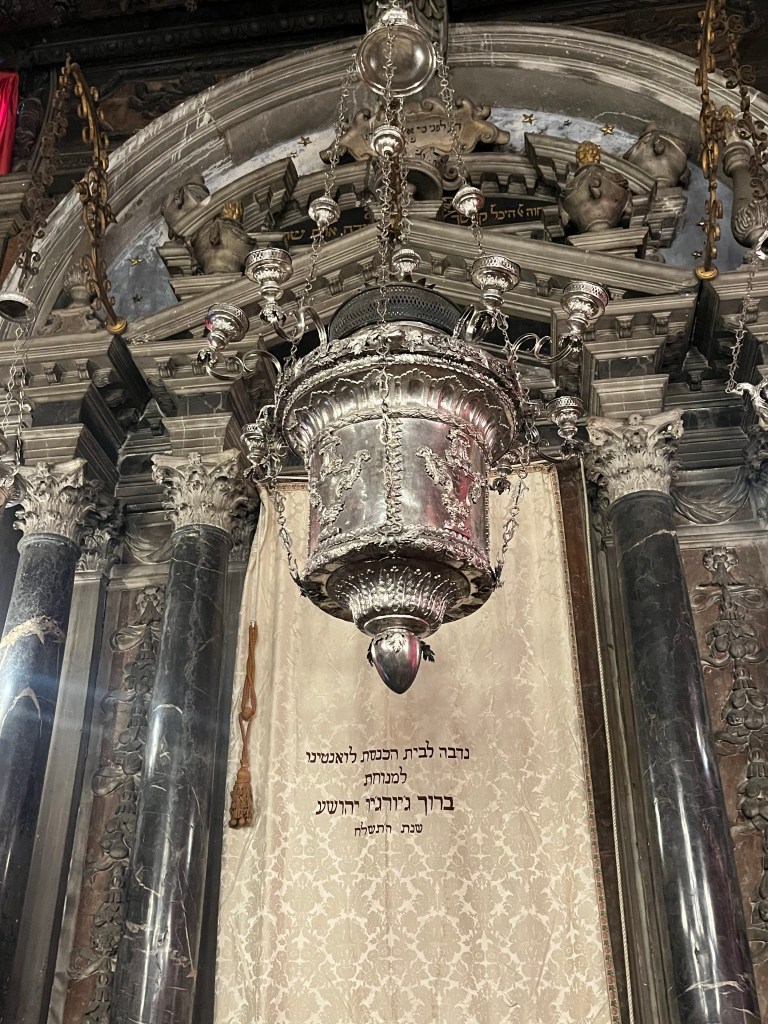
In addition to the typical Venetian tourist activities (I highly highly highly recommend a visit to the exquisite Doge’s Palace!), we got a chance to take a guided tour of the Jewish Ghetto. We loved our tour guide! You can book it here. The two synagogues we got to see were stunning. Learn more about the community’s storied history here. And here are some pictures below too!
One of the highlights of visiting the Venetian Jewish Ghetto (where the word “ghetto” actually comes from) was meeting members of the local community. I always love meeting Jewish brothers and sisters around the world and Venice was no exception. First, I went to the bookstore of the currently renovating Jewish Museum of Venice. The woman behind the counter was a member of the tiny Venetian Jewish community. She was so kind. I ended up buying a book about the Judeo-Venetian dialect (so cool!) and a book about Ashkenazi and Sephardic music from Venice. It was refreshing to talk to a Jew after seeing so much hatred on this trip. Perhaps finding community with our brothers and sisters and allies is a way of coping, a way towards resilience in these challenging times for our community around the world.
After the bookstore, I got some Judaica from a local store called Shalom. It was beautiful. For those of you who know me well, you might know that I recently moved to Atlanta. I’m excited to put up my new Murano glass mezuzahs I got at Shalom in my brand new apartment as a reminder of the fragility and beauty of Jewish life.
After a fun, challenging, and beauty-filled trip to Italy, I was ready to board my plane to Atlanta. I had many fond memories of the Jewish communities, museums, rural villages, and canals I had visited. But most of all, I wanted to go home. Not because I dislike Italy. But because Atlanta is a safer place to be myself, a gay Jew, than Florence, Padova, Bologna, Verona, Venice – any of these stunning places. They are fabulous to visit and I’m so glad I got to experience new things on this trip. But there is a reason I moved from D.C. to Atlanta besides the rats in my old apartment. It is because in these days of polarization, Atlanta is a haven. It is a moderate and open-minded city where nine times out of ten, I feel like I can just be myself. I’m not surrounded by the hate-filled graffiti and protests of D.C. or certain parts of Italy. I’m surrounded by acceptance and love.
I’ll put up my new mezuzahs soon and will always carry a piece of Italy in my heart – the kind people who opened up to me, both Jewish and non-Jewish. And let the mean folks float away like a piece of driftwood floating down a Venetian canal towards the great lagoon. Far away from my life.
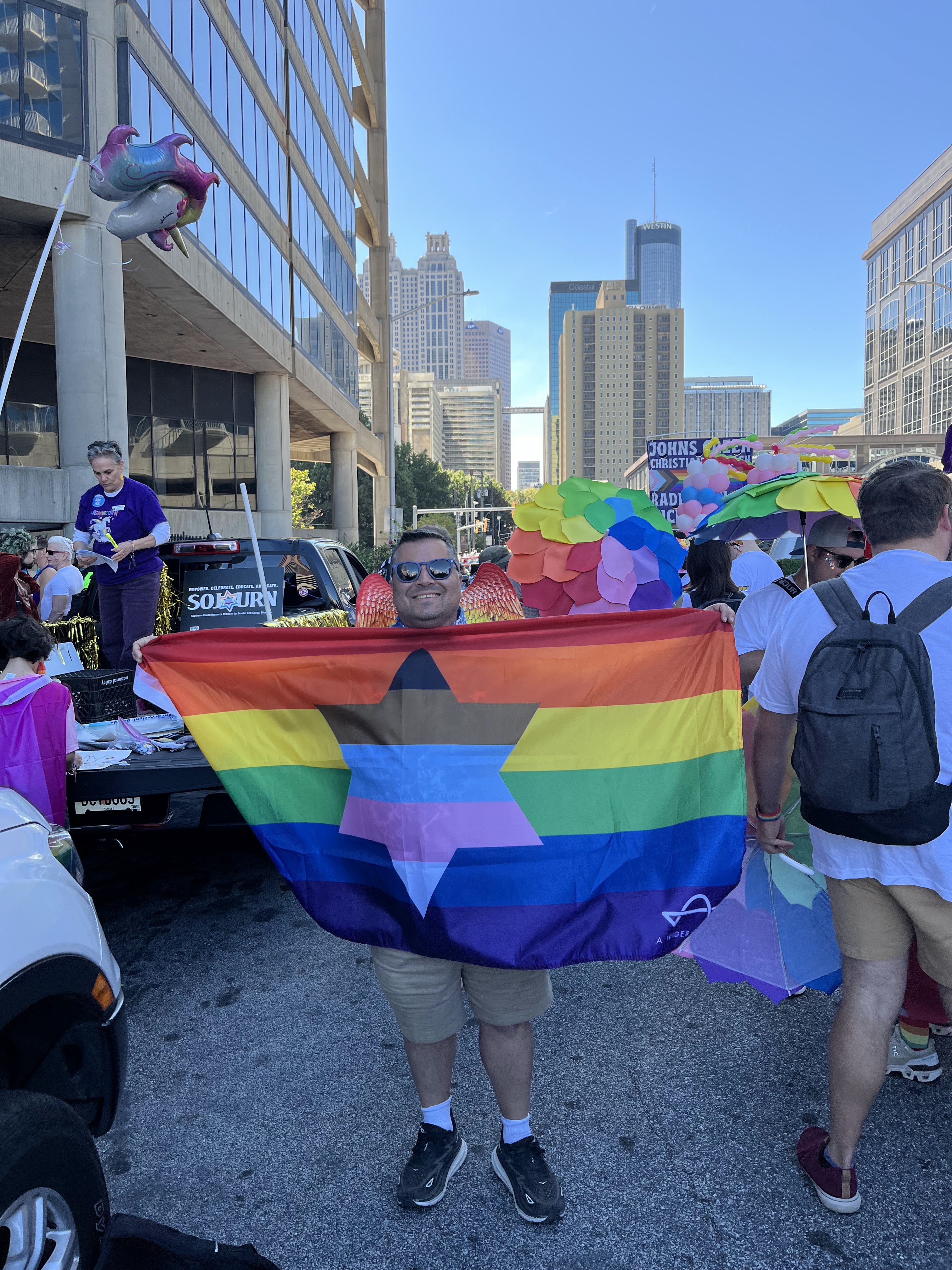
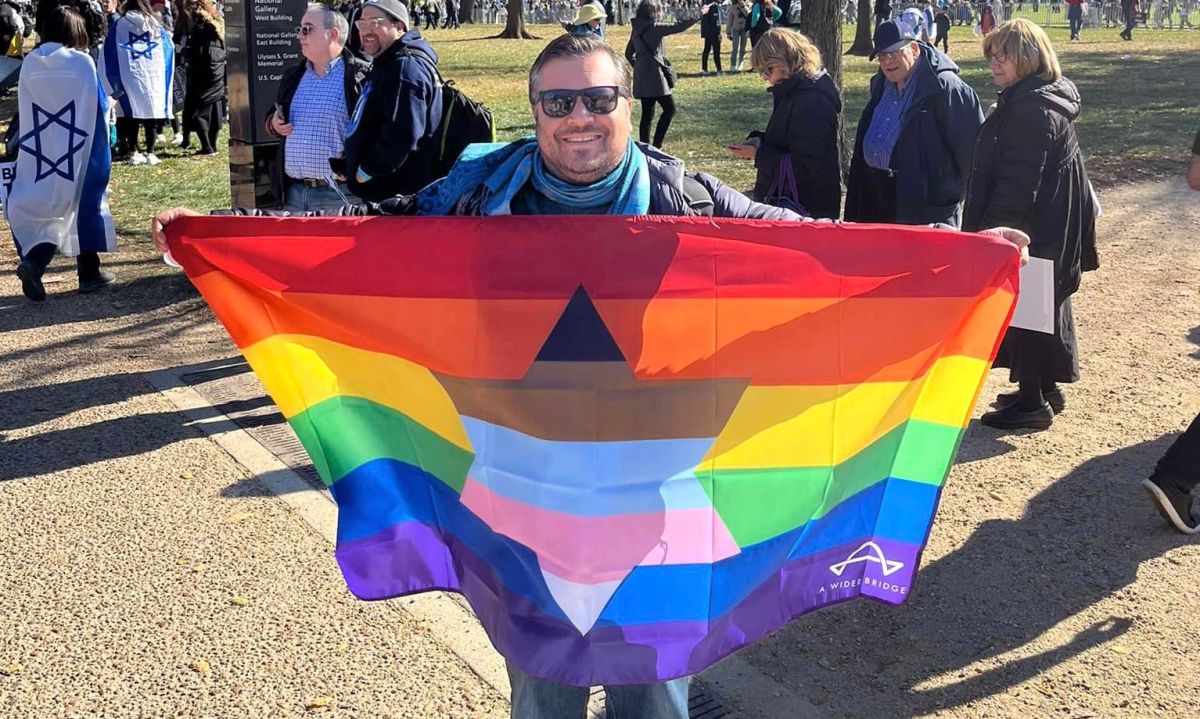
I’ll end with a picture of me marching proud with the LGBTQ+ Jewish community of Atlanta the weekend after I got back. Because there is no better antidote to hate than loving who you are. May we all get to know that acceptance and I hope for a better future for us all. Shanah tovah!
Tonight, I went to an LGBTQ+ dinner outing. Our organization was partnering with another one to put on the event. I sat down outside Union Market across the table from someone from the other organization named Ezra. We were talking about healthcare in the U.S. and I mentioned that I loved my healthcare in Tel Aviv because of the digitized medical records.
Ezra glared at me and then said: “Americans fund your healthcare system so you can bomb everyone to pieces.”
I promptly excused myself and said, “that was rude” as I walked towards the other end of the table to escape extreme discomfort from Ezra’s anti-Semitism.
It was an awful way to spend my evening. Ezra knows nothing about me. Ezra had talked to me for all of five minutes. He didn’t know anything about me, let alone what my political views are. Nothing. All Ezra knew was I lived in Tel Aviv and that I liked Israeli digitized medical records and that was enough for his anti-Semitic floodgates to open.
A few nights before, I was sitting in my favorite Thai restaurant when an Uber Eats deliveryman walked through the door talking loudly on speakerphone. Shouting in the middle of the restaurant, he said: “Israel is disgusting.” He then went on a ten-minute diatribe about the evils of Israel. When I asked him to please turn off his speakerphone so my friend and I could eat a pleasant dinner, he glared at me and even yelled into his speaker “these people at the restaurant want me to turn off the speakerphone.” And he continued to spout venom as my friend and I tried to tune him out.
These two examples are on the progressive end of the spectrum. But progressives are not the only people trying to box Jews in and caricature us.
I recently met a far-right conservative gay man. After telling me that trans people were disgusting (which is a disgusting comment in and of itself), he asked me “why don’t you vote Republican? The Democrats hate Israel. Republicans love Israel.” To which I responded: “yes, many Republicans support Israel – perhaps more so than some Democrats. But many Democrats support Israel too. I also vote for a candidate based on many issues and see whose values align best with mine.” His lecturing continued unabated as he then tried to teach me about Judaism! He claimed all Jews believed sex should only be between a man and a woman (he clearly hasn’t heard of Reform and Conservative Judaism) and that God controls everything (again, depends on the Jew and the interpretation of Judaism). The irony of a Catholic guy trying to explain Judaism to me was not lost on me and I decided to disengage from the conversation.
Donald Trump himself has repeatedly goaded Jews by saying that if he loses, it’ll be their fault. That Israel “won’t exist in two years” if he’s not elected. All the while, he praises the leader of Qatar and hosts him at his estate in Mar-a-Lago- the same Qatar that hosts Hamas leadership.
Democrats are no better. The Squad and their allies regularly trade in anti-Semitic rhetoric about Israel “hypnotizing the world” and unfounded claims that Israel is “committing genocide”, rather than fighting an incredibly complicated war in the face of the worst terrorist attack in Israeli history. They berate Israel for defending itself while trying to deny it funds for the Iron Dome which protects its civilians from Hamas and Hezbollah rocket fire.
America has always been home to anti-Semites. Just like many countries in the Western World. But American Jews, particularly the generation of my grandparents and parents, enjoyed a kind of cultural, economic, and political renaissance. We have achieved must that we can be proud of in this Goldene Medine – the Golden Land.
The question is what next? What, if any, future do we have in a country where from left and right we get grilled, stereotyped, yelled at, boxed in, and denigrated? Where we can’t go to a LGBTQ+ dinner or a Thai restaurant in peace? Where we are told which party we “have” to vote for based on how someone else perceives our interests, rather than what we feel is in our own best interest?
As my mom would say, “enough already!” Jews – American, Israeli, French, Russian, Moroccan, Turkish, Ethiopian – from any and everywhere. We are one of the oldest civilizations on earth. We founded the modern day miracle of the State of Israel, imperfect as she can be sometimes. We have gotten elected to office, built innovative businesses, and founded incredible institutions of learning. All while preserving and evolving our traditions in an increasingly complex world.
We will not give in to anti-Semitism. From any person. From any gender or sexuality. From any ethnicity. From any political party. For every anti-Semitic anecdote I’ve shared in this blog, I can provide 100 others. The time has come for us to raise our heads up high because we are God’s chosen people. That phrase may mean different things to different people, but I personally believe it should be a source of pride that our very essence is infused with holiness, and of course great responsibility as well. A responsibility to the planet, to the other peoples of the world, and yes, to ourselves.
May we find the little blessings along the way, the allies who make our lives better, and may we always pray for the peace of Jerusalem. May better days come our way. And soon. Amen.
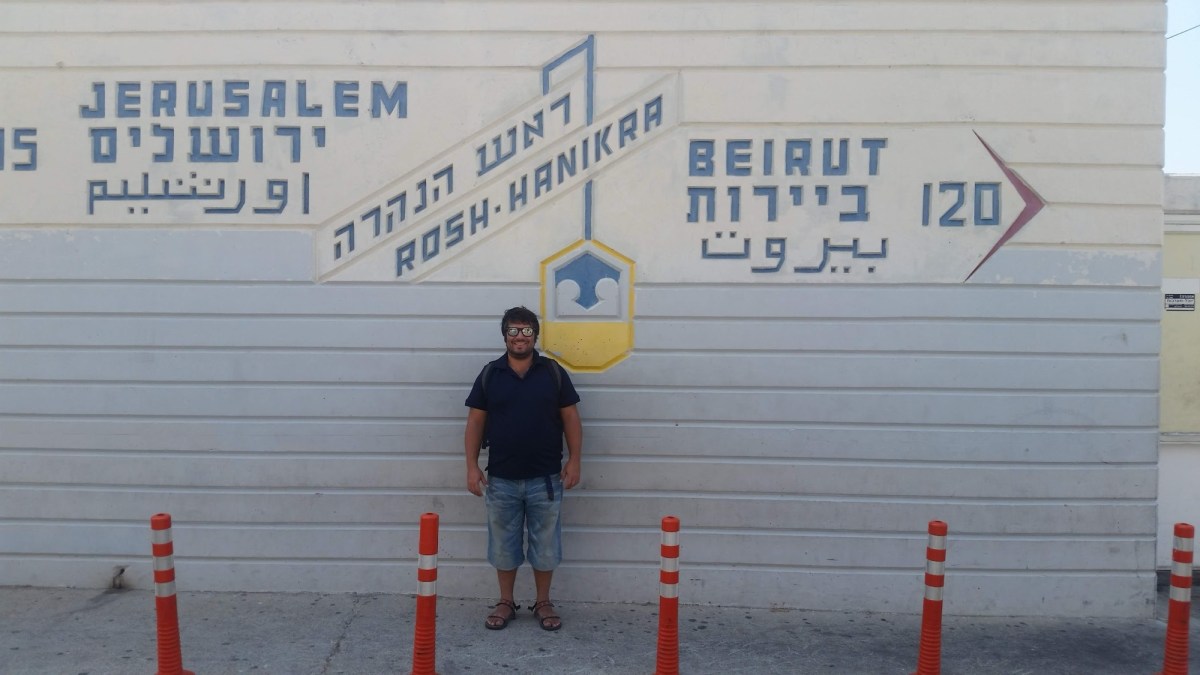
p.s.- my cover photo is of me at Rosh Hanikra, Israel’s border with Lebanon. My prayers go out to Israel’s north and the civilians suffering in Lebanon because of Hezbollah’s reign of terror. May we one day all know peace.
This holiday season has been rough. This whole fall has been filled with “firsts”: my mom’s birthday, my step-dad’s yahrzeit, Rosh Hashanah and Yom Kippur, Thanksgiving, Chanukah, and now Christmas/New Year’s. All without my mom and step-dad for the first time.
I’ve frankly felt lonely lately. I’m working on it – I have great friends and am picking up some new hobbies like getting back into dance. It also comes with the time of year – lord knows I get the winter blues. It’s just hard to spend time with family that’s gone – while your friends spend time with the ones they still have.
So I decided to go to Nashville! Nashville? Why go to Nashville? Isn’t that just for bachelorette parties? Well, to get a break from the loneliness of the holiday season, I turned to the best medicine I’ve ever found for the blues: travel. And as an avid fan of country and bluegrass music, Nashville has long been on my list.
I certainly bumped into the bachelorettes and drunk middle aged women thronging Broadway’s honkey tonk bars. But then I quickly realized that my scene was elsewhere.
My first night in Nashville, I made my way to a local bluegrass jam session away from the center of the city. It was everything I wanted and more. I sat in a heavenly daze for over an hour and a half and just soaked in the amazing tunes. As more than a dozen different fiddles, banjos, mandolins, guitars, and other instruments plucked away and made my ears melt with joy. Santa Claus even made an appearance and played some bluegrass tunes! If I did nothing else in Nashville, dayenu– this would’ve been enough.
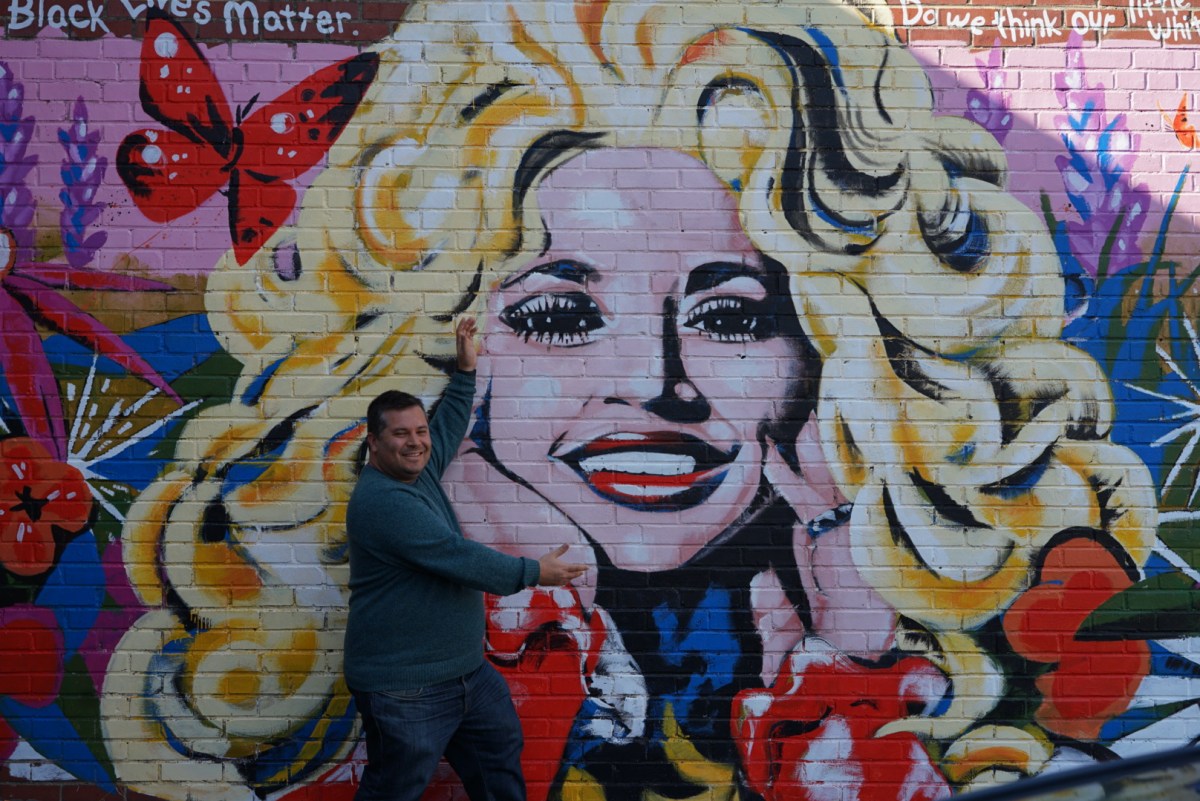
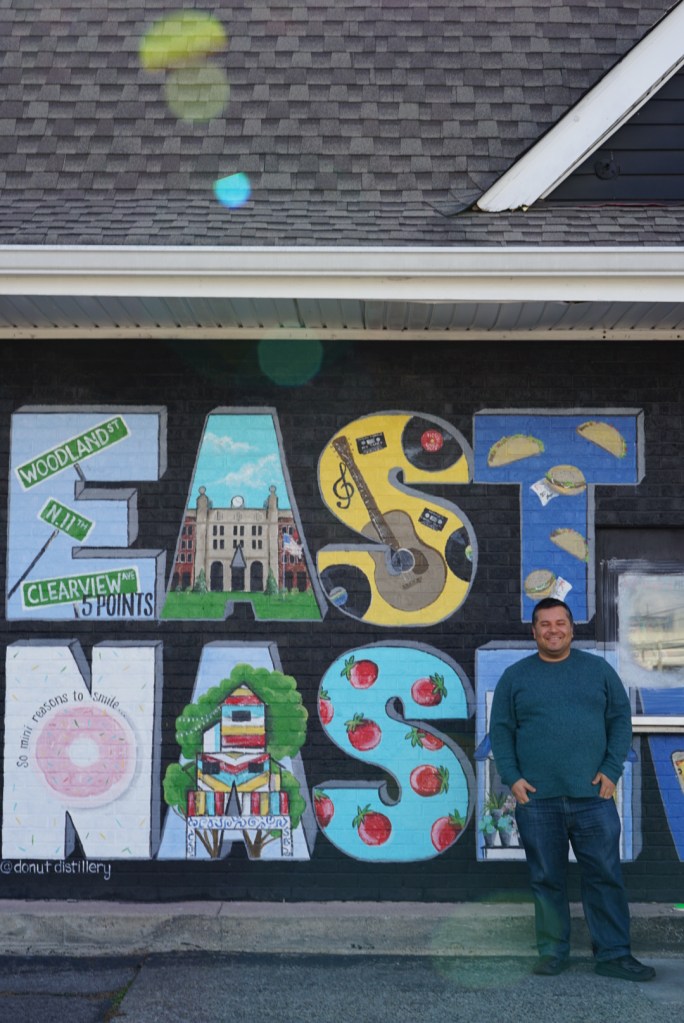
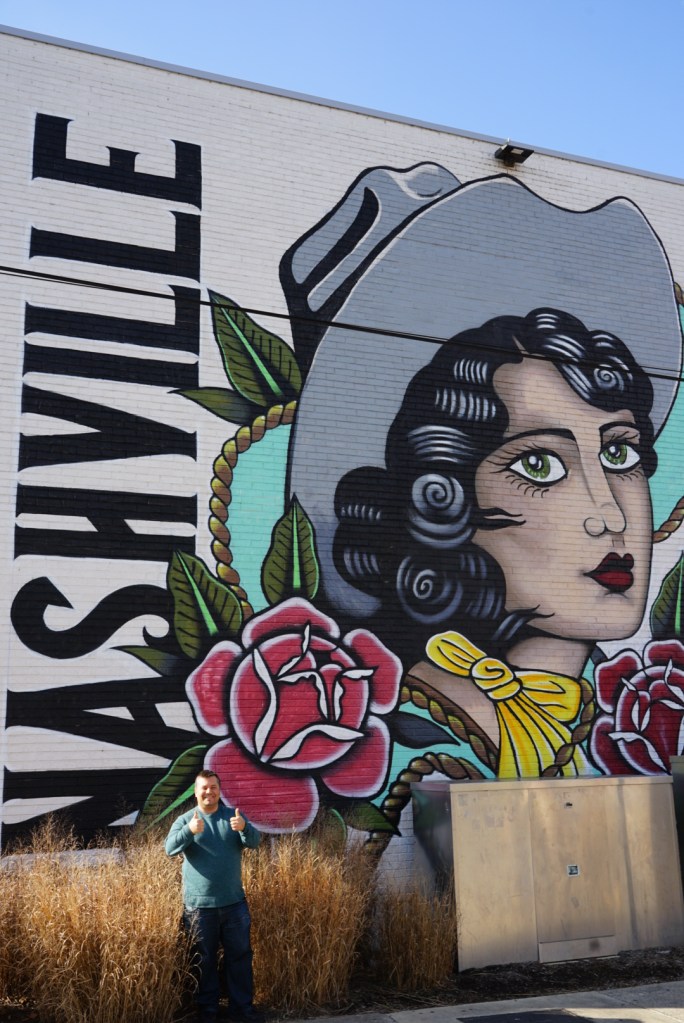
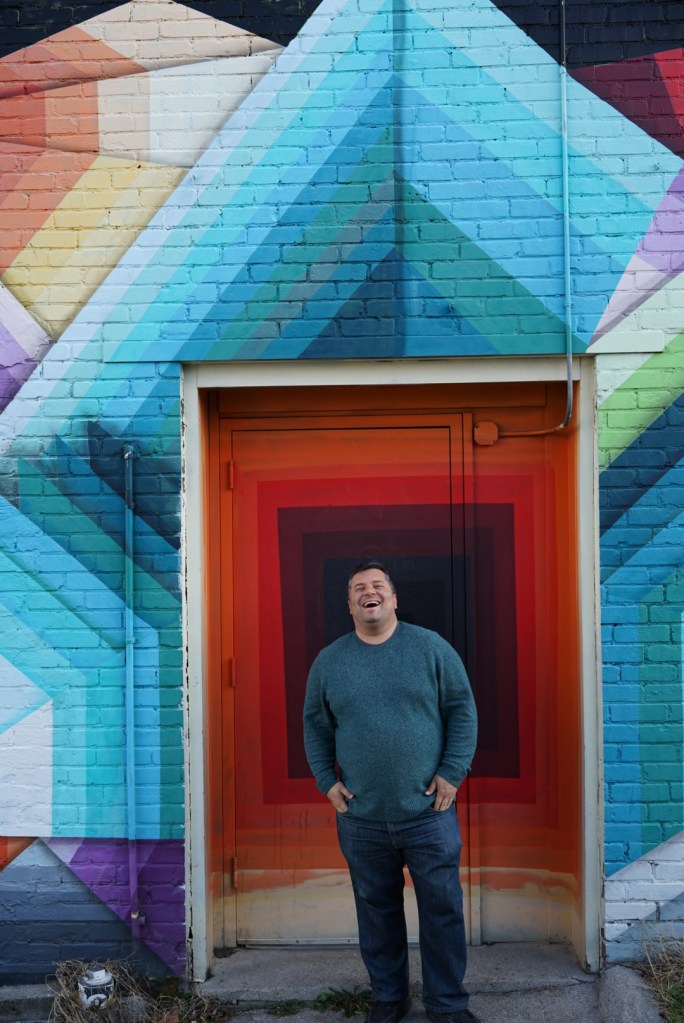
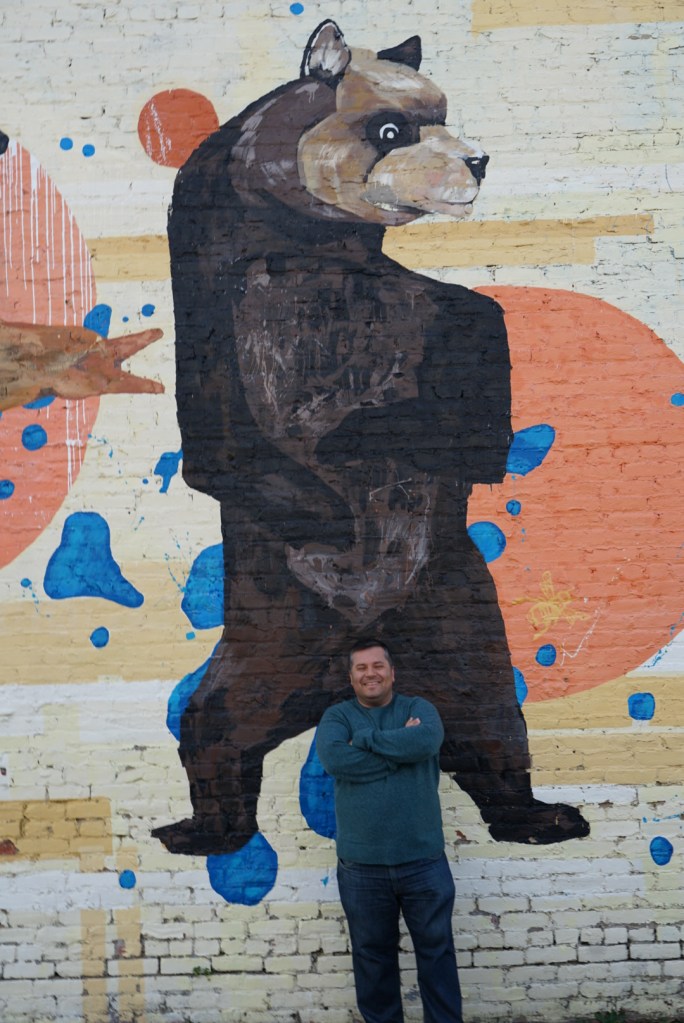
The next day I woke up energized and headed to East Nashville for a mural tour and photo shoot. My guide Aidan was one of the kindest, funniest, and most engaging people I’ve met in my travels. I immediately felt at ease and felt I had found a kindred spirit. We took some great photos, including this post’s cover photo of a Dolly Parton mural. My mom would’ve loved to see it- she was a huge fan. Here are some of my pics:
I then headed to a country line dancing lesson on the main strip on Broadway. I was joined by a Canadian bachelorette party and a 15-year-old girl’s birthday crew. It was a riot. While not exactly my scene socially, the dancing was so much fun and the instructor was really patient and engaging. I’m going to get a video in my email later this week so we’ll see how I did! It reminds me of the good old days in college when I used to go to Wild Country bar outside of St. Louis and go line dancing with friends. And boy was it a workout – I had really worked up a sweat by the end and was having a great time. Plus, I got to dance to one of my favorite country songs- “Save a Horse, Ride a Cowboy”. I’m hoping the meaning was lost on the 15-year-old haha.
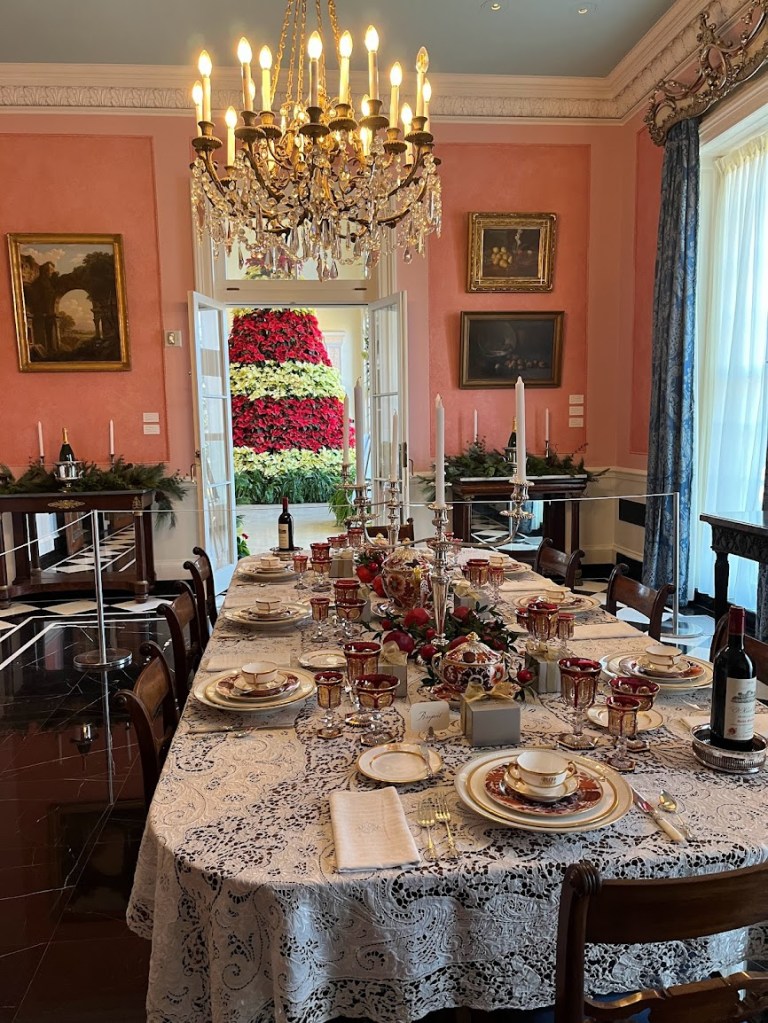
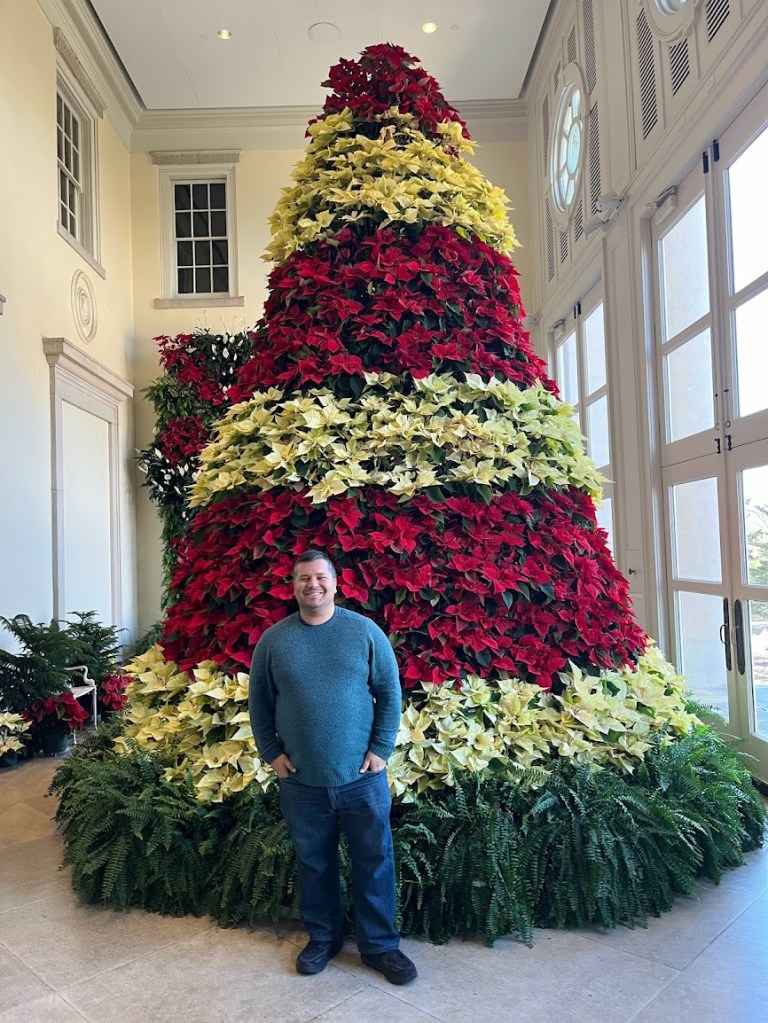
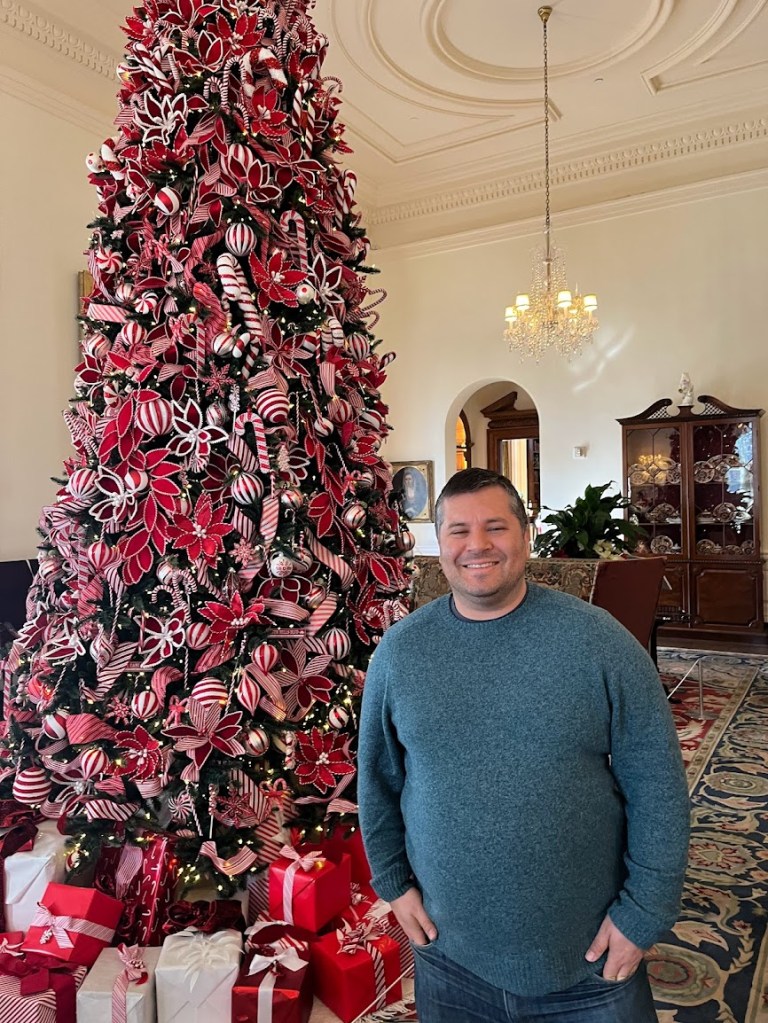
Tuesday I hit up a historic mansion outside the city that was beautifully decorated for Christmas.
During my stay, I got to visit several museums documenting music history, including the National Museum of African American Music and the Country Music Hall of Fame. I learned how so many bluegrass and country music stars drew inspiration from black artists in their communities and often learned their instruments with them. Latino acts such as Los Lobos drew from and influences country music styles. Jazz, the blues, ragtime, bluegrass, country, and folk music are inextricably connected and all make this town pulsate with life.
On that note (pun intended!), I got to hear a truly wonderful concert at one of America’s most famous venues, the Grand Ole Opry. A live radio show in front of a several-thousand-person studio audience that has been running for almost a century, the Grand Ole Opry was so much fun. I got to hear some amazing bluegrass, country, and soul artists and get exposed to new sources of musical inspiration.
An Israeli friend once told me to guess which part of the United States most resembled Israel. At the time, I hadn’t lived in Israel yet and had only visited twice. I wasn’t sure where she meant. But she told me – “the South. There, life is simple. People aren’t as materialistic. They are warm and friendly.”
Having spent a lot of time in the South (where I went to summer camp growing up) and in Israel, I think she’s on to something. While the South (much like the Middle East) can suffer from conflict and racism and misogyny, it also is the place where I’ve encountered the warmest people in the U.S. Of all races and religions. Whether they’re hipsters, locals, transplants, conservative, liberal, white, black, or none of the above, I’ve found in my travels to the South that people just have an extra soft spot for helping others feel welcome. It’s social lubricant that frankly my hometown of Washington, D.C. sometimes lacks.
Nashville is a creative place. It’s artsy, it’s musical, it’s filled with murals and the dreams of hundreds of songwriters and guitar players. Of fiddlers and of new residents coming to its communities from around the country and around the world.
They know something that not everyone else has discovered and I hope remains somewhat of a secret for the sake of keeping the magic of this city alive. Nashville isn’t just bachelorette parties. Far from it. It is the people who live there who make it so special.
For now, I live in Washington, D.C. and I don’t know if I would move to Nashville or somewhere like it. Kinda hard to live there without a car. But maybe one day there’ll be more public transportation or I’ll simply come back to spend some more time there. Because one thing’s for sure- Nashville’s got a hold on my heart. And if that doesn’t sound like the beginnings of a country song, then I’m not sure what does!
As a gay man, I’ve fought for years to live with pride as who I am. It has also offered me a unique vantage point from which to experience and explain internalized antisemitism – and its antidote.
First, let’s start with some definitions. Internalized homophobia – something I experienced quite a bit of especially before and during my coming out process – is vile. It is when the surrounding prejudices and bigotry of others force LGBTQ+ people to unwittingly adopt some of the hateful viewpoints directed at them.
I can remember my first real run-in with internalized homophobia. I was dating a guy named Matt my freshman year of college. He was my very first male kiss. We had had a wonderful night together and I woke up in the morning feeling great. I got down off my bed after he had left and all of a sudden I felt a wave of disgust fall over me. “Why was I so disgusting? What was wrong with me?” I felt a sense of panic. Anxiety. Dismay. It was almost an out-of-body experience and I had no words to describe it.
Once my therapist explained to me the concept of internalized homophobia, it all started to make sense how I could love being gay and yet the very act of gay intimacy could arouse such self-hatred. It was the classmates who called me faggot. It was my dad telling me he was proud of me for dating women in high school – he said he was glad I wasn’t gay. It was the “health” book I was given by my family to read as a teenager that said if I had feelings about another man, it didn’t mean I was gay. It was my soccer team in high school that had a team “fag” – a guy who we pretended was gay and laughed at. It was my grandfather writing me out of his will all while making comments about my “lifestyle”.
And that’s the tip of the iceberg.
Victims of abuse often internalize aspects of their abusers’ behavior without realizing it. And I had my own prejudices towards LGBTQ+ people that started with my self. While a part of me loved kissing this cute boyfriend, a part of me couldn’t bear to break with all the hatred that I had digested over the years. That I had been conditioned to obey. Or pay the price.
The antidote to this homophobia was a curious one. It wasn’t just to accept myself. It was to actively seek out opportunities to be loud and proud. And to do so regularly. Because coming out is a process that never ends. If you don’t actively fight against the forces pushing you back into the closet, you will continue to lean on those prejudices internalized deep within and you will falter. You will become miserable and silent.
So I became an activist. I led rallies against conversion therapy. I marched in Pride parades in Madrid and Washington D.C. and Tel Aviv. I went back to my high school to speak with the timid yet brave students who went to the Gay-Straight Alliance meetings. Meetings that when I was a high schooler, were not even allowed to use the word “gay” in their title. Because the principal thought it was too controversial.
In Israel, I visited Arab communities and spoke openly about my gay identity in places many people still fear to be out. I subsequently wrote a book about my experiences, allowing my gay and Jewish and Zionist identities to merge. There’s something therapeutic about writing that allows the singed seams of my past traumas to heal and to bring some connection between the different parts of me.
Which brings us to the title of this blog: internalized antisemitism. Have I experienced antisemitism? Oh yes. I’ve been thrown out of a Lyft for being a gay Jew. I was told by one of my college Arabic professors that there were “good Jews” who opposed Israel. I was told by a high school classmate that Jews were stingy and she was “proud of her Cossack ancestry”. Yeah, the Cossacks who murdered my ancestors and forced us to come to America. I was told by another classmate that “Matt, you’re not like the other Jews. You’re not a big mouth.” I can’t tell you how many times I’ve been told “the Jews are rich”. At a Brazilian Portuguese meet up in D.C., by a soccer teammate of mine, and at my YMCA summer camp. I was told countless times that I supported the “Holocaust” of the Palestinian people. I was even told by my own father, the most prescient example of an internalized antisemite, that it wasn’t “normal” for me to want to go to synagogue. Who would threaten me and my mom for taking me to Hebrew lessons. Because I should do what “normal” kids do. Not Judaism.
These are but a few examples of the antisemitism I’ve experienced in my life. In a country that’s getting worse. There has been a nearly 400% increase in antisemitic events after Hamas’s terrorist attack on October 7th. And believe me, Europe and the Middle East are even worse.
The antisemitism I experienced has at times led me to lean on the very prejudices I experienced, much in the way internalized homophobia works. While under great pressure from a number of antisemitic professors in college, I twisted and turned my Judaism until I found myself publicly and repeatedly condemning Israel in an effort to seek their approval. I would even email articles about me slamming Israel in the student newspaper to these professors, these authority figures who taught me to be a “good Jew”. And they would praise me. And it felt good and disgusting at the same time. Much like that kiss with Matt.
How have I fought back against this internalized prejudice? What is the antidote to internalized antisemitism? When we see Jews attacking police officers while calling for “ceasefires” with a terrorist group that knows no respect for humanity. The Jews who condemn Israel for committing a genocide that is quite simply not happening. While they remain silent about the 130+ innocent Israeli civilians kidnapped by Hamas. Who allow themselves to be tokenized by antisemites on the Left as the “good Jews”. Much like my Arabic professor thought of me.
The antidote for internalized antisemitism is Zionism. It is Jewish pride. It is the liberation movement of the Jewish people. Living in Israel and making aliyah (even though I returned) changed my life. I can no longer stay silent in the face of antisemitism whether it emanates from Hamas or IfNotNow or Alexandria Ocasio-Cortez. Because I am a proud gay Jew. I have learned from my experience as a gay man how to liberate myself as a Jew. And I would suggest that other Jews consider the ways in which antisemites have silenced them – and how it might be impacting their behavior towards their brethren in Israel now.
Because you don’t have to be a non-Jew to be an antisemite. And you don’t have to live this way forever.
I learned to love to kiss men and to be proud of who I am. And I learned to drape myself in the blue and white of my people with pride despite all the haters who would have me shy away from my ancestry and identity.
I’m a gay Jewish Zionist Israeli and American. And I will not silence any one of those identities to make someone feel comfortable in their prejudice. Am yisrael pride.
Israelis and Palestinians share a lot in common. As do most human beings. We want a good life for our families, we want to put food on the table, we want to find a sense of purpose. We often find ourselves perplexed by the lack of control we have over events in our lives. Nowhere is that more true than the Middle East.
But what most western liberals fail to understand, that I do understand having traveled extensively in Israel and Palestine and being a fluent Arabic speaker, is that there are fundamental cultural differences between these two societies. Differences that are leading to continued conflict and distress.
Let’s start with some basic premises before we dive into this difficult topic. First, innocent people are suffering in Israel and Palestine and that makes me very sad. Second, the way out of this conflict is unclear and anyone who pretends to have a “magic solution” like “from the river to the sea, Palestine will be free” (i.e. genocide of Israelis) or “death to the Arabs” is full of shit. Erasing the “other” will only perpetuate conflict rather than resolve it. And third, some of the people I know with the strongest opinions about Israel and Palestine have never stepped foot there. And should be invited to listen and learn and, frankly, shut up if they have nothing constructive to say.
So what are some of the differences between Israelis and Palestinians? Israel is a much, much more diverse society than Palestinian society. Consisting of Jews from all over the world (including the dozen or so Muslim-majority countries that ethnically cleansed them in the 20th century), plus Druze, Arab Christians, Circassians, Arab Muslims, and non-Jewish refugees- it is a virtual melting pot of civilizations. Meanwhile, Palestinian society consists of an ever-increasing Muslim majority, with a dwindling Christian population consisting of 1 to 2.5% of the West Bank. Life is far from perfect for minorities in Israel, but it is a fundamentally more pluralistic and inclusive society, with non-Jews making up approximately 26.6% of the population, with full voting rights and citizenship.
Palestinians are also rabidly homophobic when compared to their Israeli neighbors. Only 5% of West Bank Palestinians support LGBTQ+ relationships according to a BBC poll. A year ago, a Palestinian gay man was beheaded in Hebron. Meanwhile, 61% of Israelis (and 68% of Israeli Jews) support equal rights for LGBTQ+ people. While right-wing politicians continue to attack the Israeli LGBTQ+ community, they represent a minority of the country and face intense pushback from Israeli civil society. There is next to no Palestinian civil society pushing for social acceptance for the queer community. Religious fundamentalism and a deep-seated conservatism define Palestinian society in a way that western liberals have trouble understanding – or at times even justify.
I could go on and on about the litany of differences, including the rights and roles of women, but I’d like to focus on the single most important difference between the two societies. Most Israeli Jews are prepared to accept a Palestinian state as part of a peace agreement. Only 24% of Palestinians accept the idea of an agreement with Israel, with even lower numbers in younger generations. The numbers vary according to how the question is phrased and no doubt the number of Israelis feeling in the mood to make a peace agreement after the horrific October 7th Hamas massacre is going to go down. But fundamentally, one society accepts the existence of the other, and the other doesn’t accept the existence of the former.
Most American liberals or progressives or whatever you’d like to call people on the left-end of the political spectrum that I’ve often called home- most of them have no clue how to process the idea of Palestinians’ cultural differences as an obstacle to peace and human rights. Not the only obstacle, but certainly a big one. When you see people waving pride flags at anti-Israel rallies in Europe and the U.S., you have to wonder how these people have deluded themselves. How, in a colonialist fashion, they have imposed an American understanding of race, sexuality, victimization, and oppression on two countries across the world with very complicated and significant cultural differences.
I’m not in any way suggesting that Palestinian human rights be disregarded because they are by-and-large ultraconservative, antisemitic, and homophobic. Two wrongs don’t make a right. The status quo cannot continue. All human beings deserve dignity and I’ve been incredibly outspoken (if you’ve followed this blog at all) in advocating for Palestinian and Arab-Israeli rights.
But the only way to make peace is to understand reality first. And until American and European liberals can wrap their heads around the cultural differences between Israeli and Palestinian societies, we will get nowhere. We will get more heated rhetoric and antisemitism. Out of both hatred and a lack of understanding of how this conflict continues to plague the region.
Jews and Israelis of all faiths have a right to protect themselves. Ourselves. If seeing Jews wield the power to protect themselves scares you or causes you concern, you are an antisemite. Until our neighbors, the Palestinians, are willing to accept the existence of Israel, this conflict will continue ad infinitum. And the day Palestinians come to the peace table in good faith, I’ll be the first in line to protest the Israeli government until it makes peace a reality. I eagerly await that day and hope one day, much like there is an Israeli peace movement, that there will be an equally large Palestinian one.
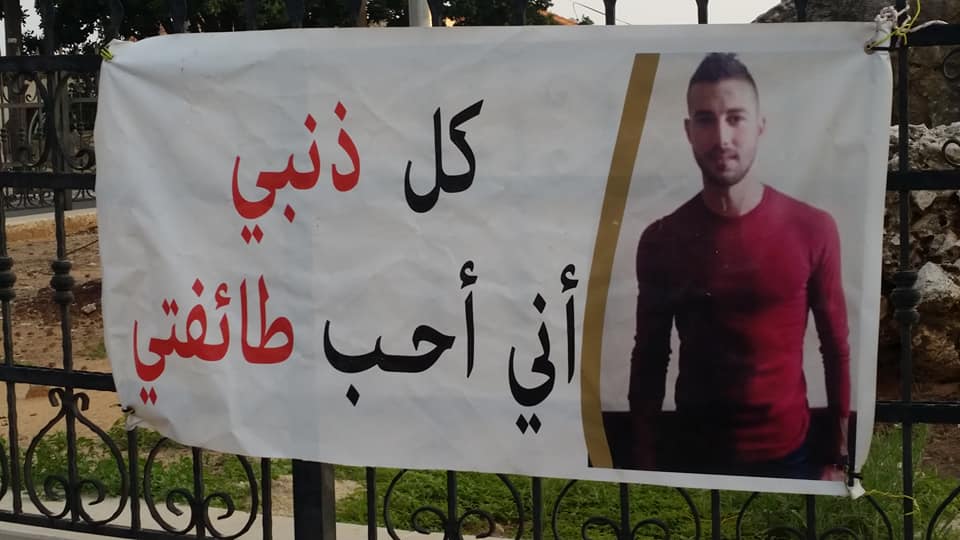
Until that day, we will protect ourselves. As my cover photo from a Druze village in the Galilee says in Arabic sarcastically: “it’s all my fault, I love my sect”. It’s all my fault. I love the Jewish and Israeli peoples and we will outlive all those near and far who wish us harm.
When I was a kid, I was always the most talkative one in class. I had the best grades but the one thing my teachers would say to my mom at parent-teacher conferences was that I had to learn to raise my hand. Ever since, I’ve been speaking out – and writing – about what is important to me. And what was once a liability in the classroom has since become a skill and one that I’m proud to use to articulate my thoughts about life and the world around me.
Ever since the massive Hamas terrorist attack and pogrom on October 7, I’ve felt numb. And despite my usual verbosity, at times speechless. I’ve felt out of place and sad at friends’ parties, unable to find my inner joy. I’ve felt lonely as I watch acquaintances and friends – mostly not Jewish but occasionally Jewish – justify Hamas’s horrific attack. I feel as if I’m carrying a weight in my stomach as I watch a constant stream of victims’ faces scroll across my Facebook and Instagram. A very significant number of Israeli friends, although themselves “safe”, have lost loved ones to Hamas’s slaughter of innocent civilians.
First things first. I am incredibly sad and extend my deep condolences to my friends living in Israel who have lost loved ones and are coping with the most existential crisis in Israel’s history in the past fifty years. Who are stuck at home and bomb shelters as thousands of rockets whiz overhead. Who are scared and deserve better than to live in chaos and fear.
For me, while I am not in Israel, I feel this pain viscerally. I’ve spent time in many of the places attacked. I’ve met people there – some of whom may no longer be alive. My blog post cover photo is from Sderot, which has been battered to a pulp by Hamas attacks recently and has endured their terror tactics for over a decade. The reason I feel this attack so viscerally is not only because I’m a Jew, is not only because I’m Israeli, is not only because my friends are suffering. It’s also because I recognize that it could have been me kidnapped or killed. If the timing had been different, I could’ve been one of the civilians tortured or burnt alive. It could have been me.
When I visited Sderot a few years ago, I stopped by Kibbutz Nir Am across the street. At the time, Hamas was “only” sending over rockets and flaming kites to set fire to agricultural fields and parks. I encourage you to read the blog about my experience there and the kind people I met, including a father of a five-year-old. I hope they are ok. Nir Am is one of the kibbutzim that was attacked in the Hamas invasion.
One loss is a tragedy. Thousands is a statistic. But we must never lose sight of the 1,500+ Israeli lives lost in an utterly unnecessary and evil act by religious fanatics. Each and every innocent life lost is as if an entire world was lost. Friendships, partners, parents, children, community. Destroyed. Not to mention the hundreds of hostages kidnapped, raped, and abused by Hamas terrorists. It should go without saying, but I will say it anyways, that the Palestinians caught in the crossfire and oppressed by Hamas deserve safety too. And a government that represents their genuine interests for self-actualization and freedom, not murderous rampages against Israeli civilians. I mourn the losses of Palestinians as well and I hold Hamas accountable first and foremost for instigating this war resulting in these deaths.
Where to from here? I don’t know. Part of me wants vengeance. Part of me wants to crush Hamas (more justifiable than vengeance). Part of me wonders what the plan is for once Hamas is hopefully defeated. Part of me wonders if Hezbollah and Iran will strike at Israel from the north, my very favorite part of Israel. Part of me wonders if non-Jewish Israelis who’ve been killed and kidnapped are also getting their airtime they deserve. Clearly this was an attack on the Jewish people and Jews in and outside Israel are more vulnerable to antisemitism and violence than in a very long time. This was the single worst single-day attack on Jews since the Holocaust. And Hamas is also holding non-Jewish Thai people captive, for example. Hamas terrorists are simply fanatics who will stop at nothing to kill, kill, kill.
Part of me experiences this death and destruction as an Israeli. And part of me experiences it as an American Jew who lives next to a synagogue which now has multiple police cars outside for protection. Within whose doors my friend works at a preschool every day. As Hamas calls for global jihad. And progressive American voices who are usually our allies stay silent or, worse, allow their latent antisemitism to seep through. I get nervous every time I walk by the synagogue. What if the jihad comes here? Will that be enough for my fellow American progressives to speak out for our lives?
Why is it so hard for people to realize that it is possible to be pro-Palestinian and not justify Hamas’s actions? One friend (now former friend) claimed that what Hamas did wasn’t terrorism, it was an an act of anti-colonial resistance. Putting aside the fact that Jews are not colonizers in their own historic homeland and that they don’t control the Gaza Strip, when did Mahatma Gandhi ever sanction raping and burning British women alive? How sick some people are. It makes me feel unsafe and angry.
As I write this blog, I am giving myself permission to feel. To let the numbness fade and to find my words. Much as I did as a little kid. Yet I don’t particularly care to wait politely and raise my hand this time. Sorry Mrs. Kyle.
I live now as a bold, liberated Jew and a compassionate human being. Hamas is trash. They are the ISIS of Palestinian politics and do not represent all Palestinians. I continue to believe in freedom for Palestinians and I wish for the destruction and eradication of the Hamas movement which terrorizes their lives as well.
To my fellow Jews heaping criticism on Israelis right now, take a step back and recognize your privilege. We are lucky to live in the United States where we haven’t known war on our shores of this kind for a very, very long time. The closest thing was 9/11 and that was 30 times smaller in proportion compared to what Israel is experiencing right now in terms of casualties. We have a right to speak out and even to disagree among ourselves, but show some sensitivity to people whose lives are marked by traumas we couldn’t even imagine.
It is 12:19am and I needed to write this blog because I’ve been holding these thoughts inside me and haven’t been able to sleep well in a week and a half. Here’s to hoping this helps.
To my friends across the ocean, Israeli and Palestinian, who are struggling – I love you. All I can offer are my words but I mean each and every one. May we find a route to peace, to justice, to safety. And soon. Inshallah. God willing.
This may be one of my favorite vacations ever, so be sure to read all the way through!
When I lived in Israel, I used to travel all the time. It was healing, it was wholesome, it was exciting.
Towards the end of my time in Israel, I was struggling with my mental health and was experiencing transient homelessness as I made my way across Europe, eventually settling in Philadelphia in early 2019. There, I regained my stability and reconnected with my mom and rest of my family.
Coming back to D.C. that fall was hard. I successfully managed to rebuild my relationship with my family and find a great mental health team to give me the strength to live safely as a man with bipolar disorder. And D.C was full of memories, good and bad. It was supposed to be a temporary stop on my way back to Israel.
A few things happened. First of all, my mental health dictated that I needed to really settle down somewhere for a while and get treatment. Second, I needed to strengthen and heal my relationship with my family after being out of touch for several years. And third, the pandemic started months after I came home. Then my mom was diagnosed with Sarcoma, an aggressive form of cancer.
Going back to Israel or traveling for any extended period of time was out of the question. My health and my relationship with my family came first. It was a difficult decision- I missed seeing the rest of the world and exploring. I put my (then) plans for rabbinical school on hold. And I prioritized my mom. Which was the right thing to do. Because three years later, I would lose both her and my stepdad David to the very same type of cancer.
The past few months have been rough. My mom and I spent our last Passover together, she passed away on April 18, and we started packing up my childhood home. I nearly had a manic episode after my last packing day with friends. I have another packing day tomorrow and frankly I’m nervous. But I am doing my best. I am supported by incredible friends and family and a mental health care team that is standing with me every step of the way. Oh, also we went through my first Mother’s Day without mom here and Father’s Day (for my stepdad) is this Sunday. It’s all too much.
Given all this stress, I could have just stayed put. But I decided to do what I do best: travel. Explore. Engage other cultures. Immerse myself in nature.
For the first time in five years, I took a 10-day vacation. And it was worth every moment.
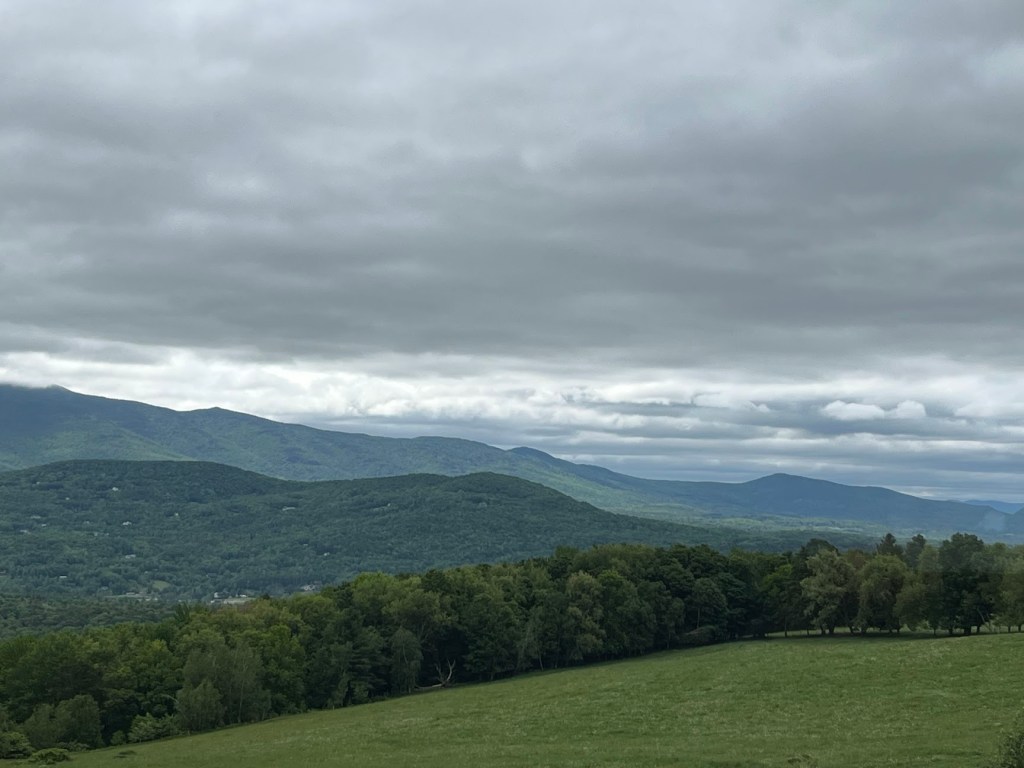
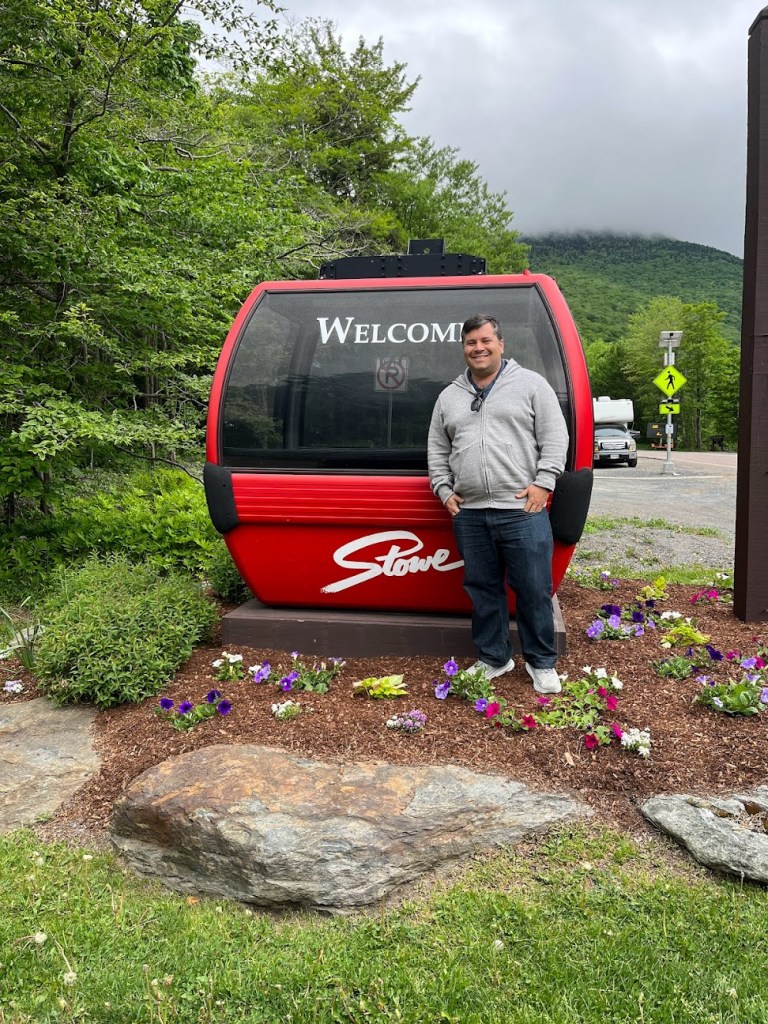
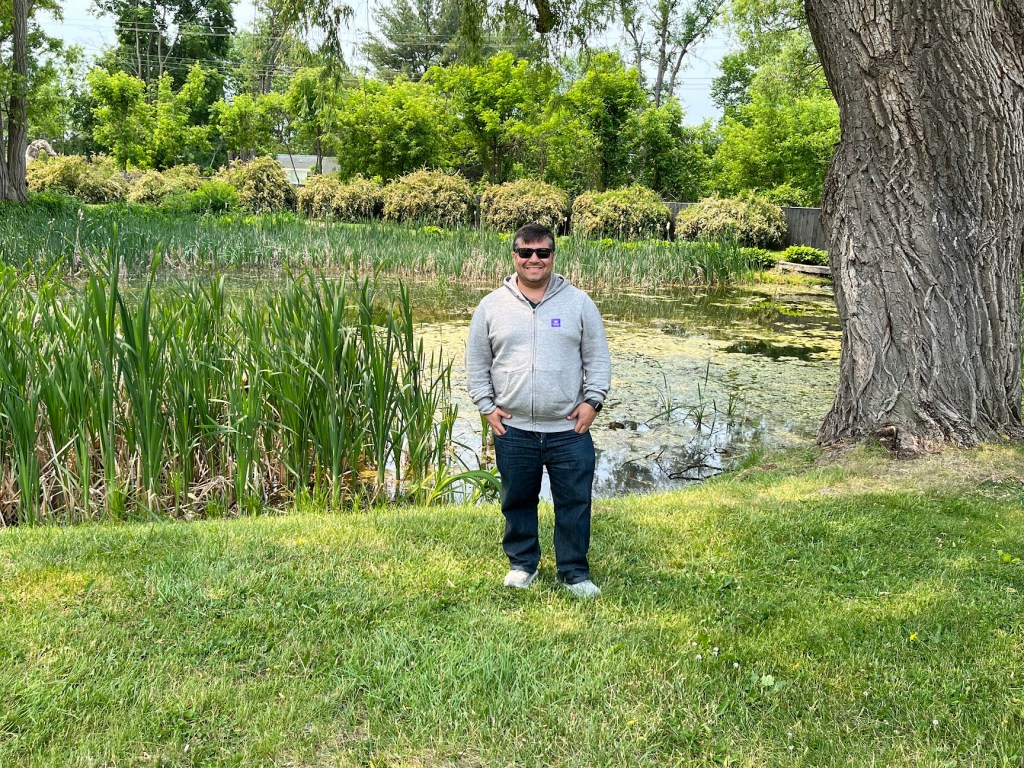
I started in Vermont. For those of you who haven’t been to this tiny little state, it is absolutely gorgeous. Take in some of the scenery:
I felt healed by all the green and nature around me. I hiked for the first time in many years and went sailing on Lake Champlain with a wonderful group of people. I met up with my friend Neale’s sister Catherine (mom loves Neale!) in Burlington, one of the cutest cities I’ve ever visited.
I feel incredibly lucky that this cute little green paradise is just an hour and half direct flight away from D.C. It took a little time to get adjusted to being on vacation and putting a pause on some of my worries, but once I did, I felt better than I have in years. No pandemic, no parents’ cancer looming over my head, just vacation and travel.
In Vermont, I took a maple syrup tour, met a Von Trapp, and took an urban forest tour with a quirky (and smart!) guy who told me he once climbed a tree and found underwear in it! I met tons of friendly people, including my cab driver Joe from Long Island, who helped me get around rural Vermont.
Then, it was time to cross the border. I took a cab from Vermont to Montreal, one of my favorite cities. I was there last summer on my first solo trip there, and had been twice before with other groups of people. I stayed at my favorite AirBnB and had a blast catching up with the host. I may even go back later this summer because I had so much fun!
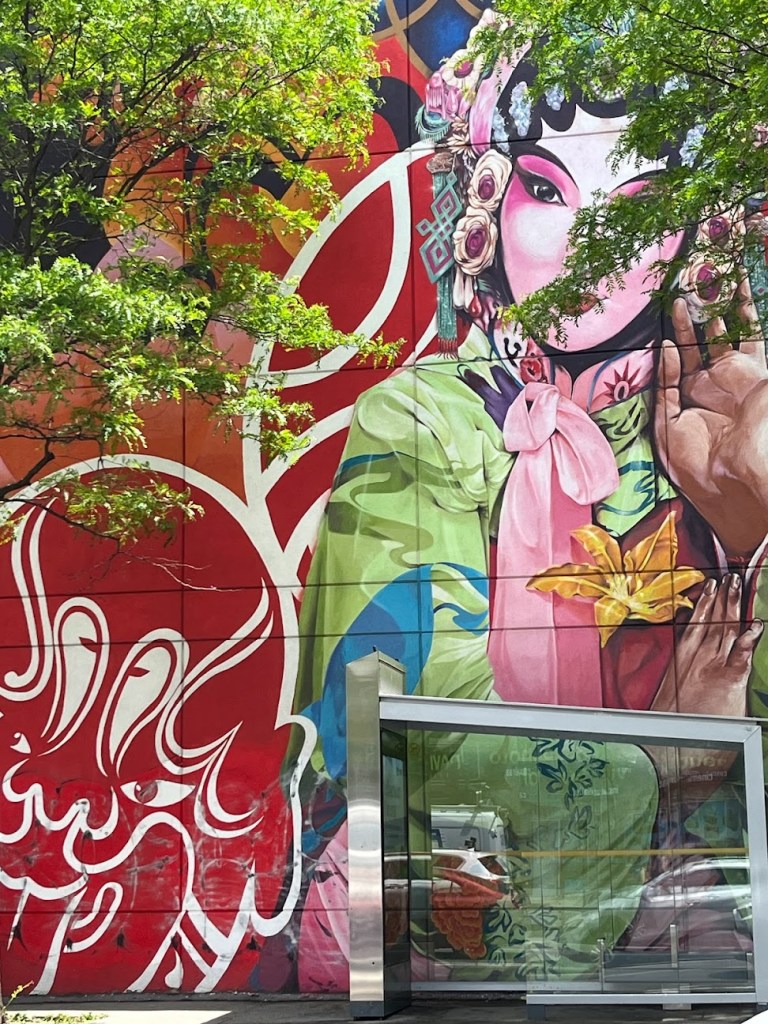
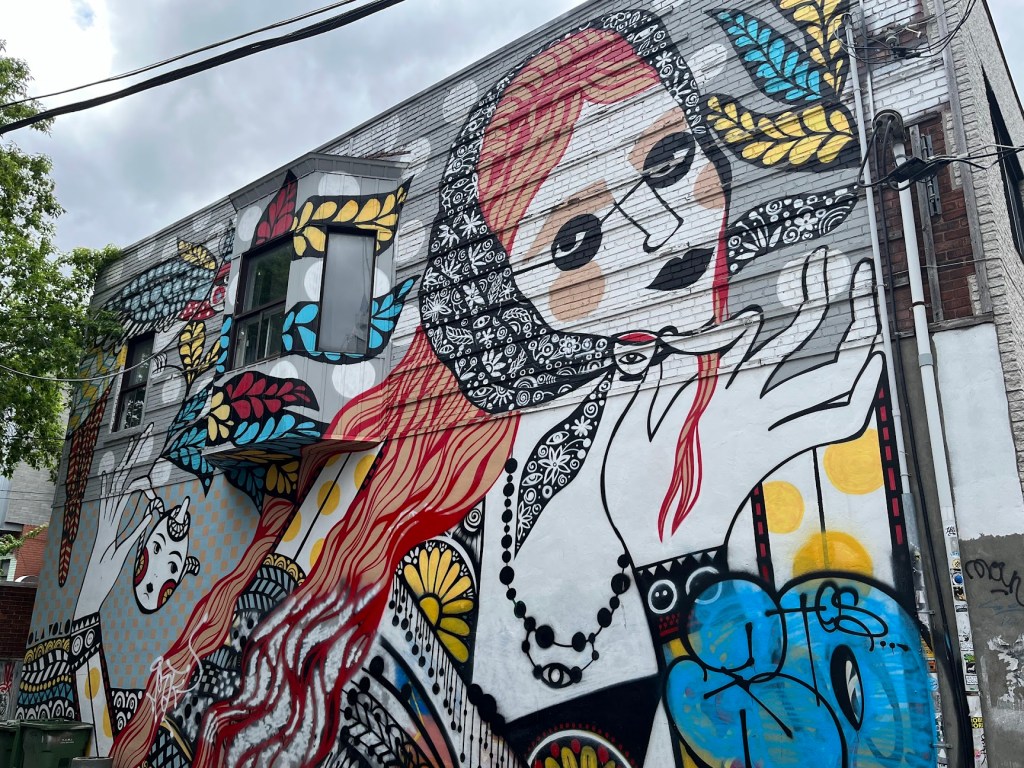
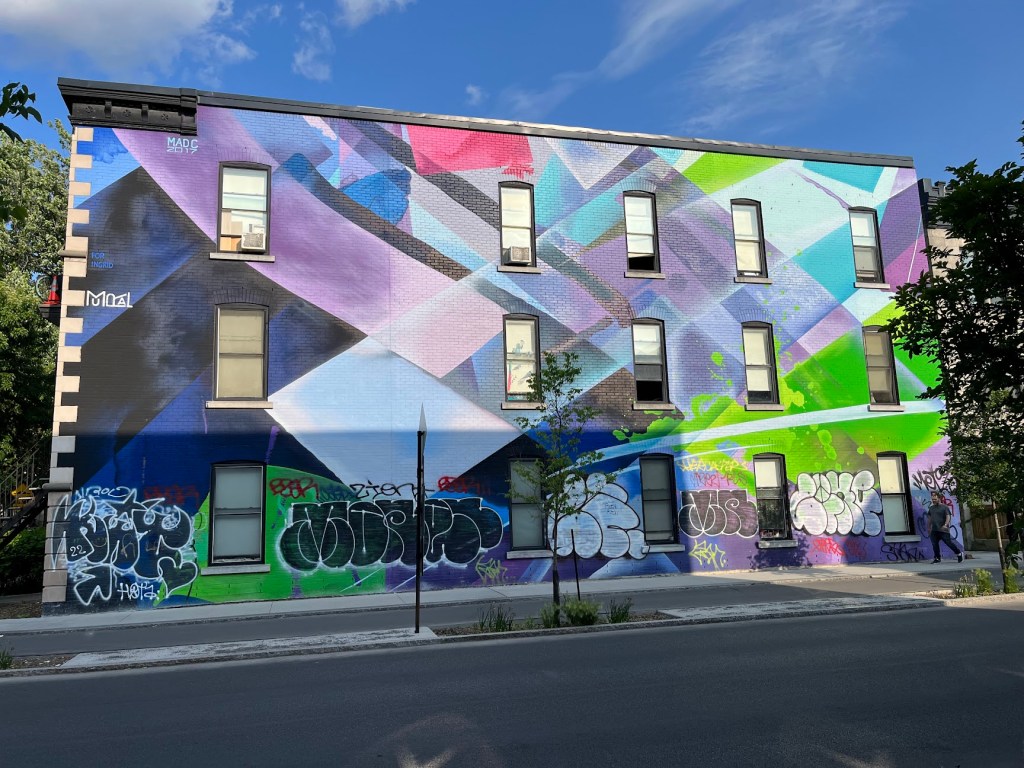
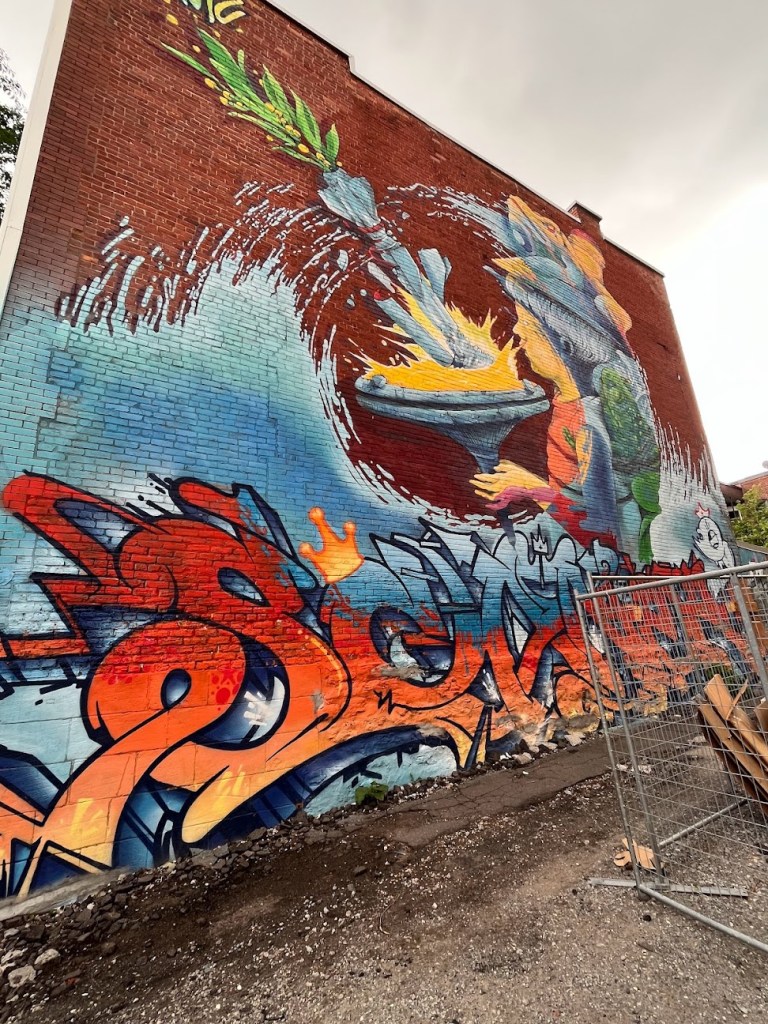
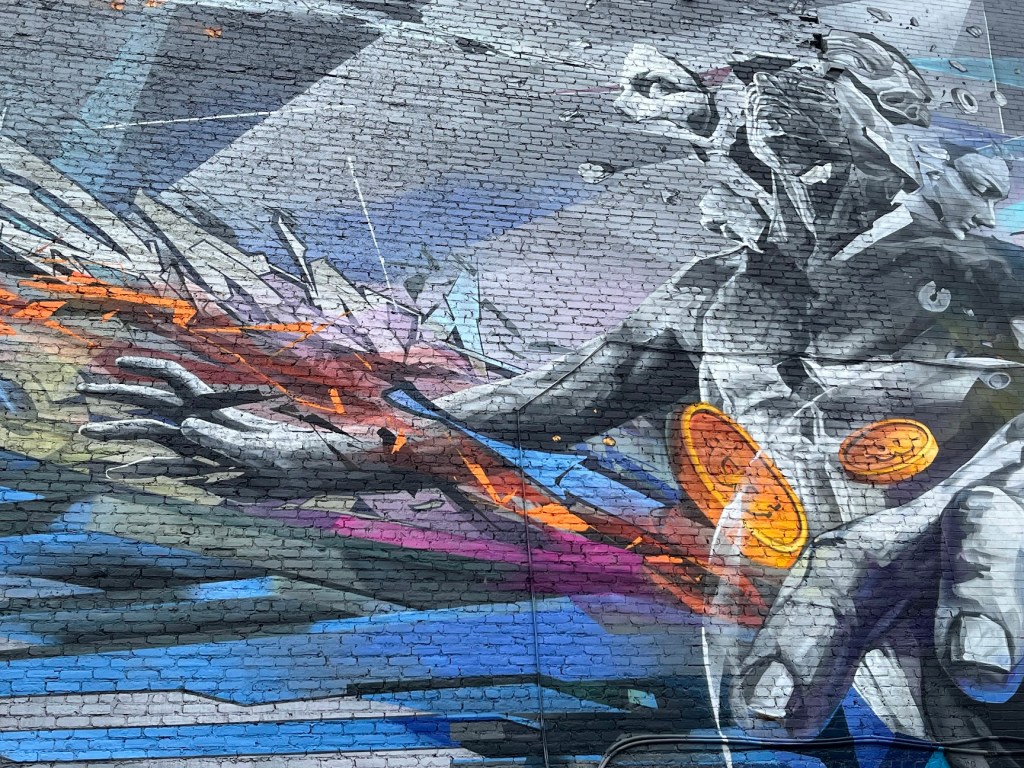
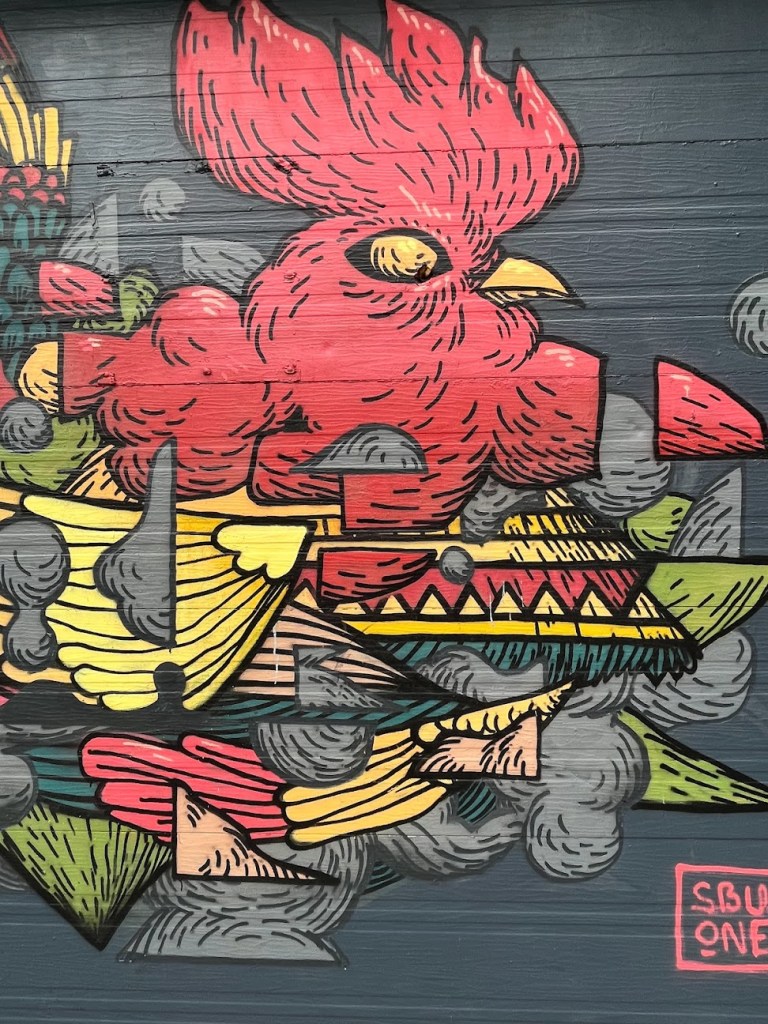
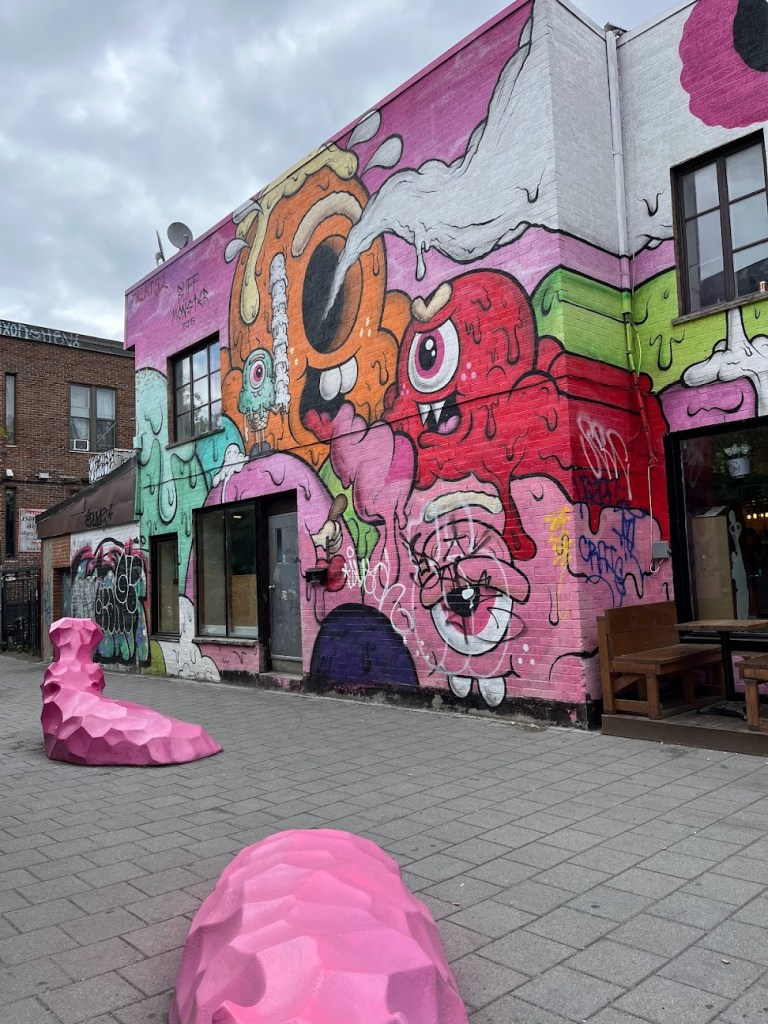
While earlier in my trip I had been calling friends because I was feeling lonely, by the time I was in Montreal, I was feeling great. It’s such an energizing and creative city. Look at some of the cool murals:
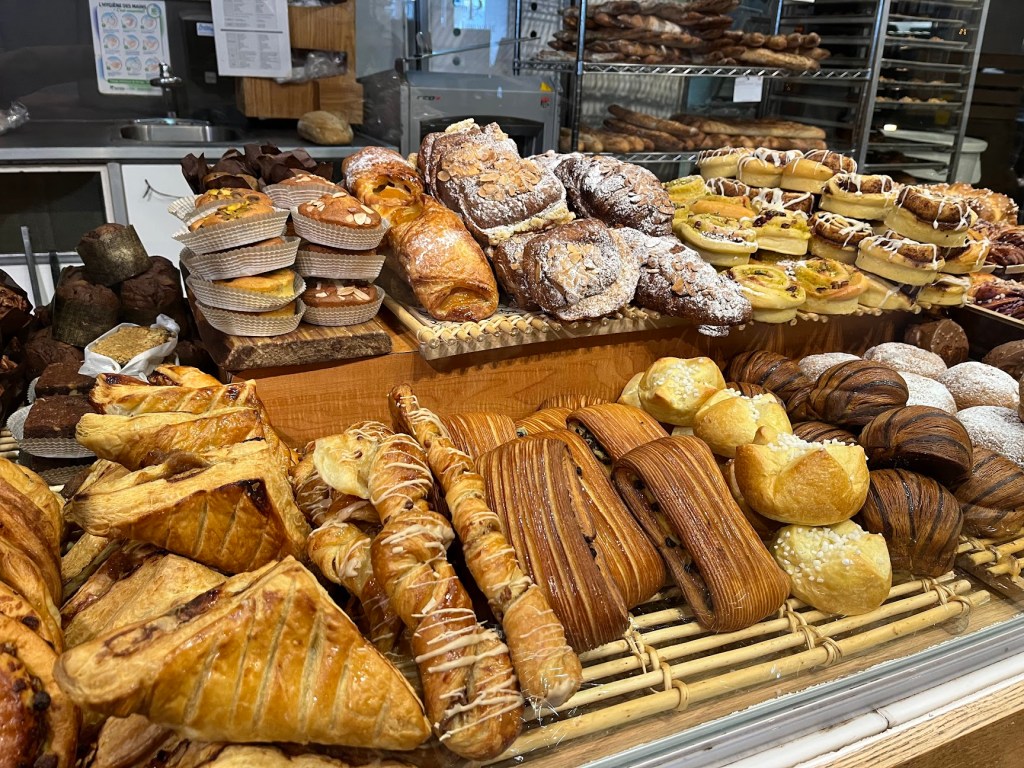
It’s not only the beautiful street art that makes this city special. It’s also the amazing food and diverse cultures. Take a look at some of the Hasidic Jewish, Chinese, Portuguese, French, and Italian pastries I had:
Over the course of just five nights, I spoke English, French, Spanish, Arabic, Hebrew, and Portuguese! And in the past, I’ve even gotten the chance to speak Yiddish and Catalan! That’s all of my languages in one beautiful city.
I got the chance to take a “Rabbis and Radicals” Jewish history tour of the city with the Museum of Jewish Montreal. My guide, Claire, was a fellow queer Jew who had lived in Israel just like me. It made the experience extra special and I highly recommend the museum’s walking tours for anyone visiting the city.
At the end of my trip, I got to add music to the mix. I saw Isabelle Boulay, one of Quebec’s premier singers and a Franco-Country star. I love this kind of music. It was inspiring. My mom raised me to love music. It always infused our house. Sometimes our tastes overlapped, other times they diverged. But we always loved a good tune together. And she would support me even when my tastes were different.
I could go on and on about the magic of Montreal and Vermont- or as I like to call this space only 1.5 hours apart, VerMontréal. It is a place filled with greenery, with culture, with history, with friendly people. I will be back.
My journey has evolved over the past few years. You never know where life – or death – will take you. But the only thing you can be certain of is that if you don’t “go for it” now, you’ll regret it later. Book the ticket, dip into your savings. You can’t take money to the grave. But you can live a fun, meaningful, thoughtful, and creative life. And give back to others.
To all the Uber drivers, cab drivers, AirBnB hosts, hotel employees, sailboat captains, forest tour guides, and others who made my trip so special – thank you.
And to my mom, I miss you every day. And I will continue to live my life to the fullest and most meaningful way possible in honor of how you taught me to live.
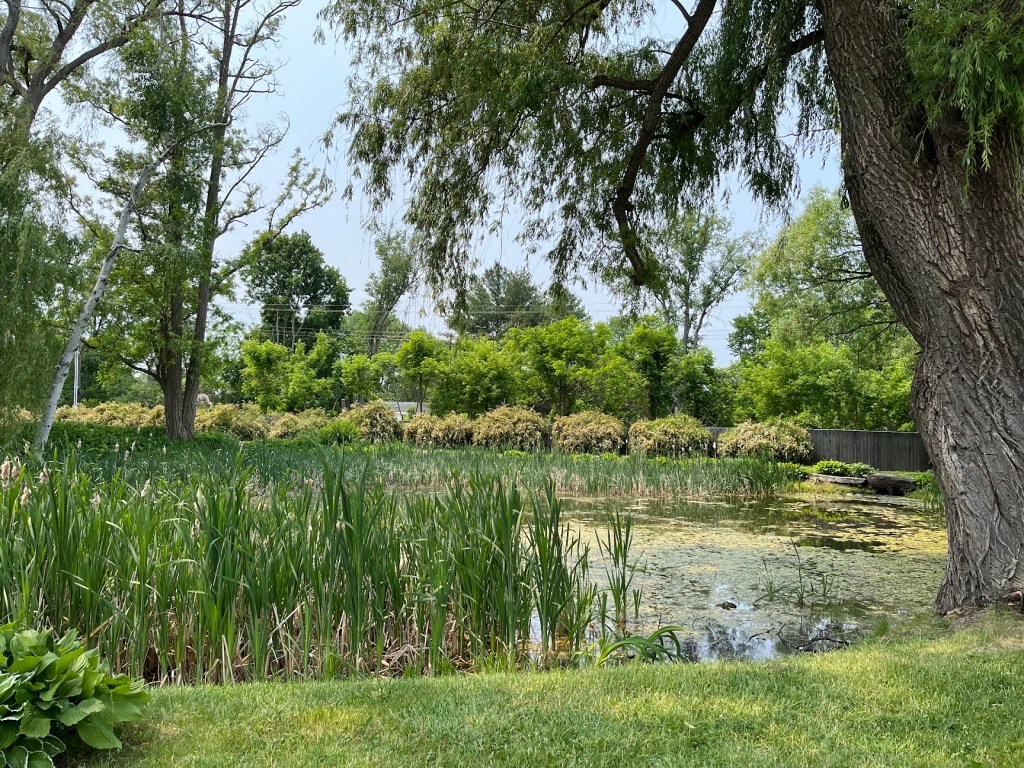
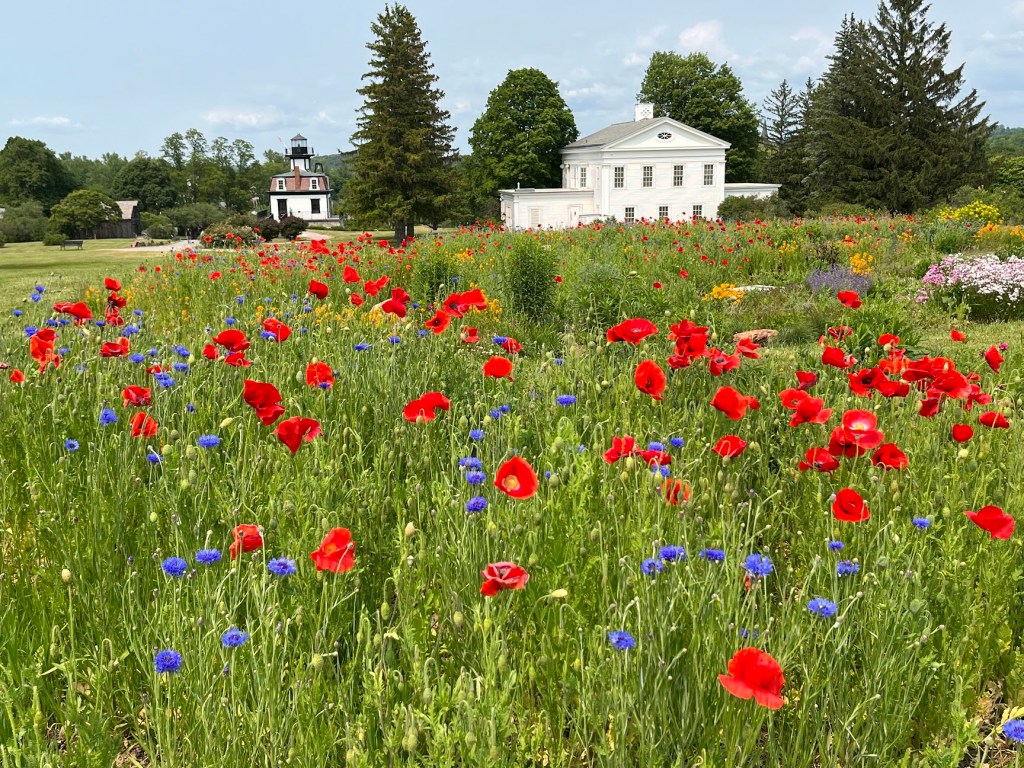
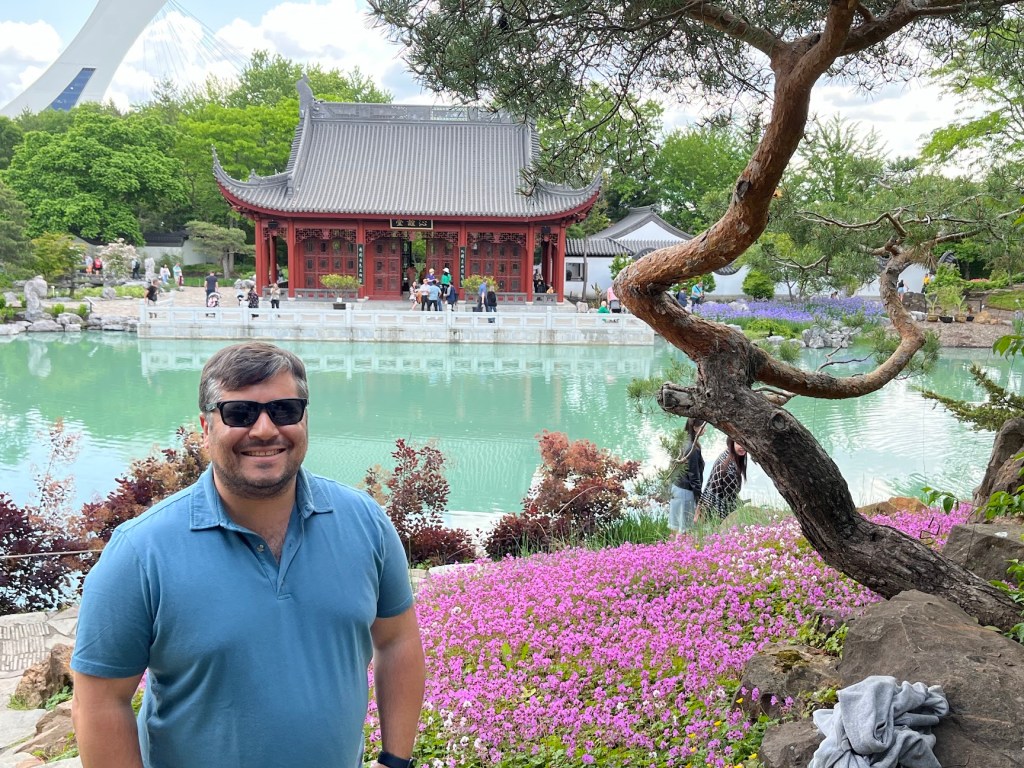
With that, I’ll leave you with some beautiful pictures of the Montreal Botanical Garden. My mom and stepdad loved plants and flowers, and I hope they enjoy seeing some of the beautiful ones I got to enjoy on my trip. I love you guys.



















 Planting Roots Bearing Fruits
You must be logged in to post a comment.