A gay Jew goes to Hasidic Brooklyn

Recently, I went to my first gay Jewish wedding. It was a wonderful experience to see friends coming together to build a loving future. And while I’ve been to many wonderful weddings, there was something special about seeing queer Jewish joy in action, in reality. A joy I hope to share someday with someone special.

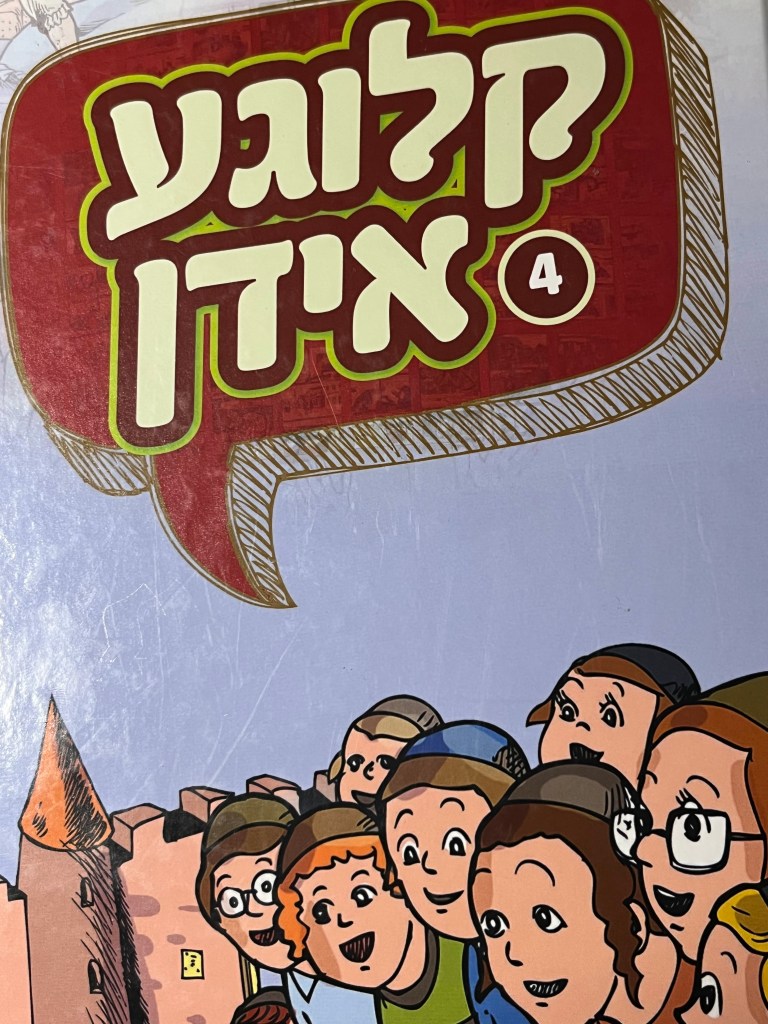
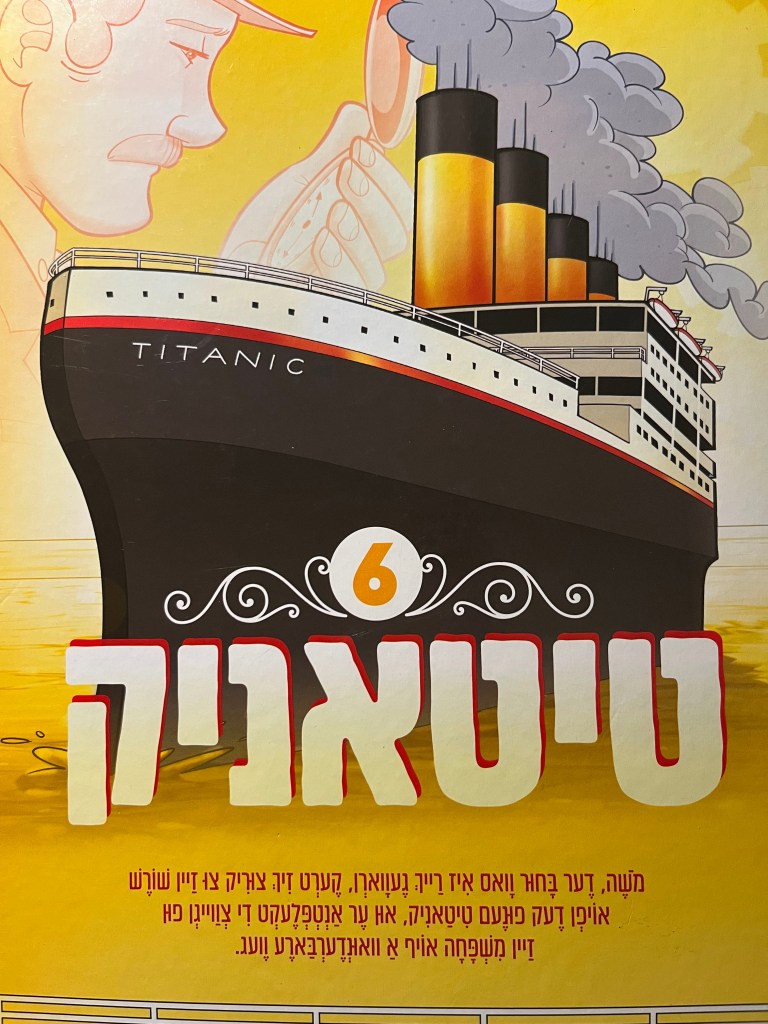
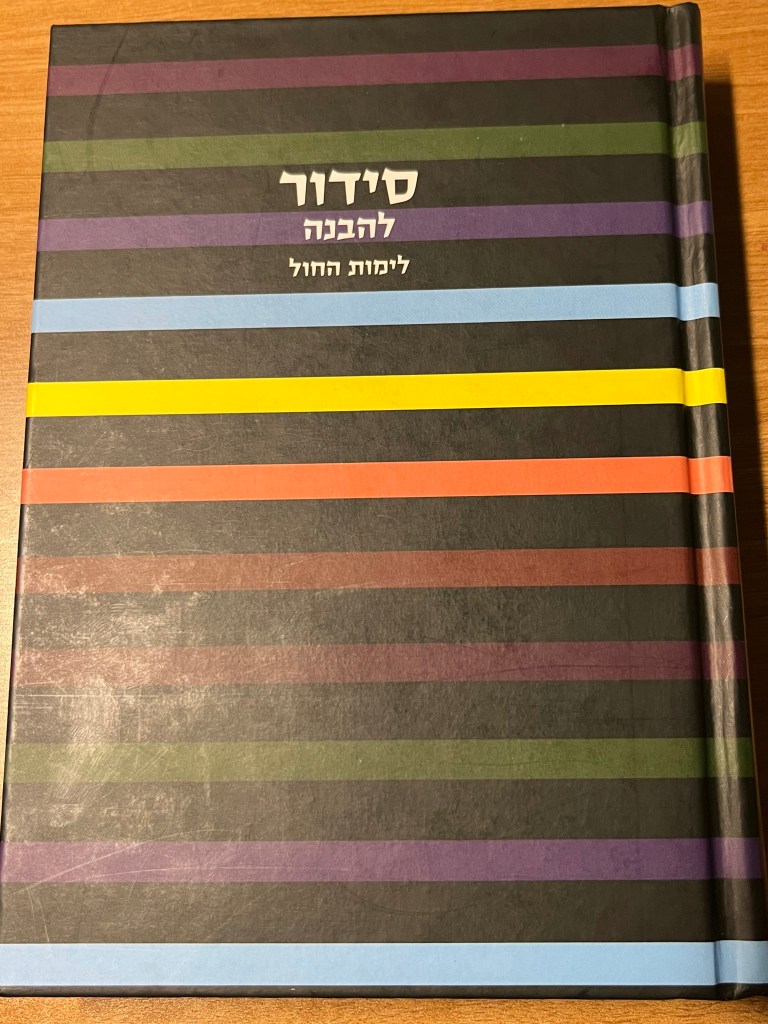
While in New York, I relished the opportunity between wedding festivities to visit Hasidic Brooklyn and practice my Yiddish. After buying a black yarmulke, I visited Hasidic bookstores in Williamsburg and bought some books in Yiddish, including a kids book called “Smart Jews”, a book about the Titanic, and a prayer book with Yiddish translations of the traditional Hebrew.

I love speaking Yiddish and I surprised the bookstore employees by speaking it while wearing decidedly non-Hasidic clothes. While some people looked at me with an almost suspicious curiosity, others were incredibly warm and hospitable and thrilled to hear me speaking Yiddish.

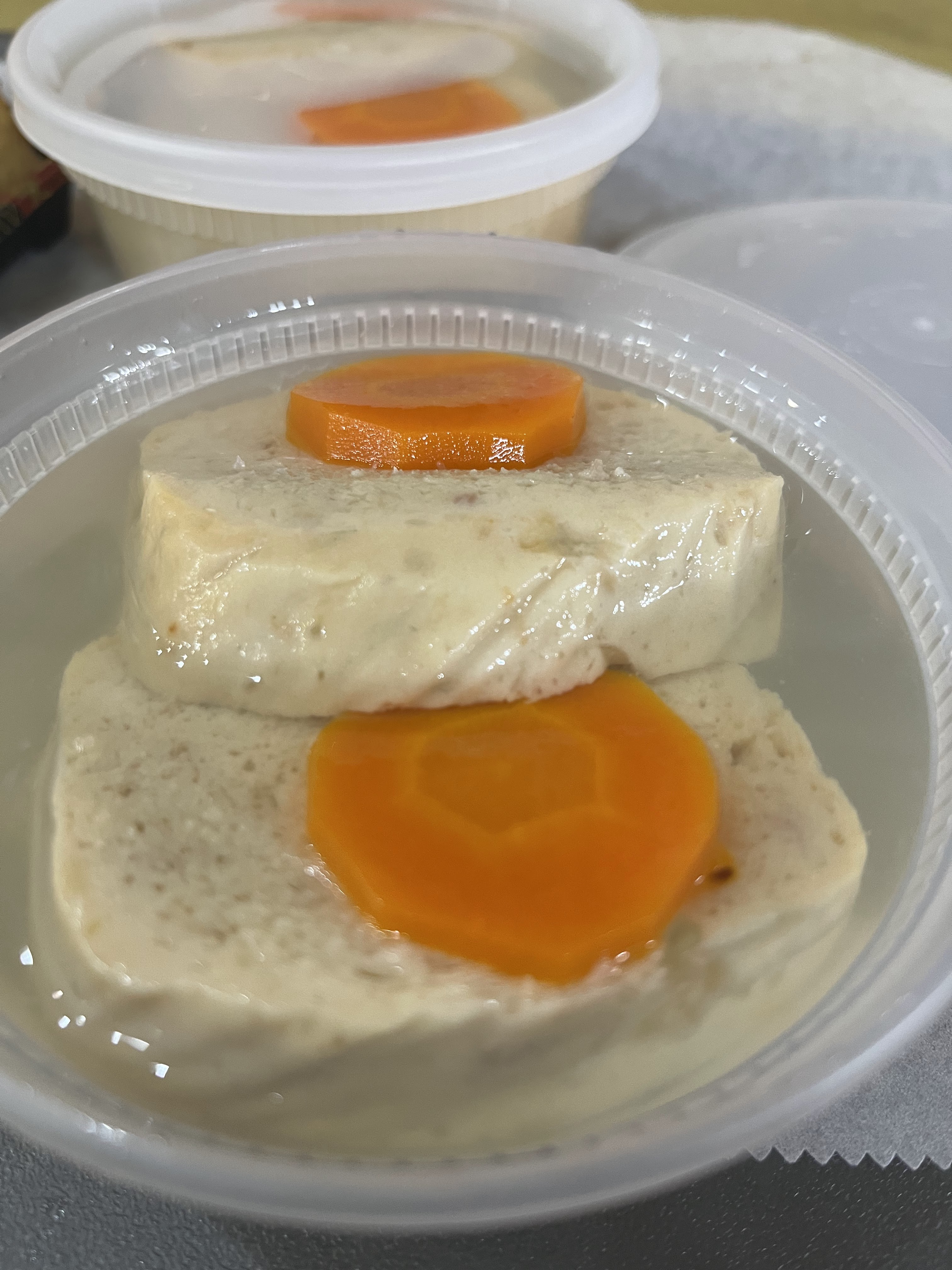
Next, I got the good stuff – gefilte fish! Yes, I love gefilte fish. It is a delight and while it’s true that maybe you need to grow up with it to love it, I absolutely adore this dish, especially when made fresh (not in a jar!).

I sat next to a rabbi in the restaurant and he was very welcoming and kind.

Near the restaurant, I walked through Williamsburg and saw a crowd of Hasidic Jews gathered outside an apartment, where a rabbi was preaching in Yiddish as hundreds listened attentively on the street. It was an amazing sight. At a time when we’re being persecuted yet again, this community is preserving our Jewish traditions despite it all. It was like a scene out of a shtetl.

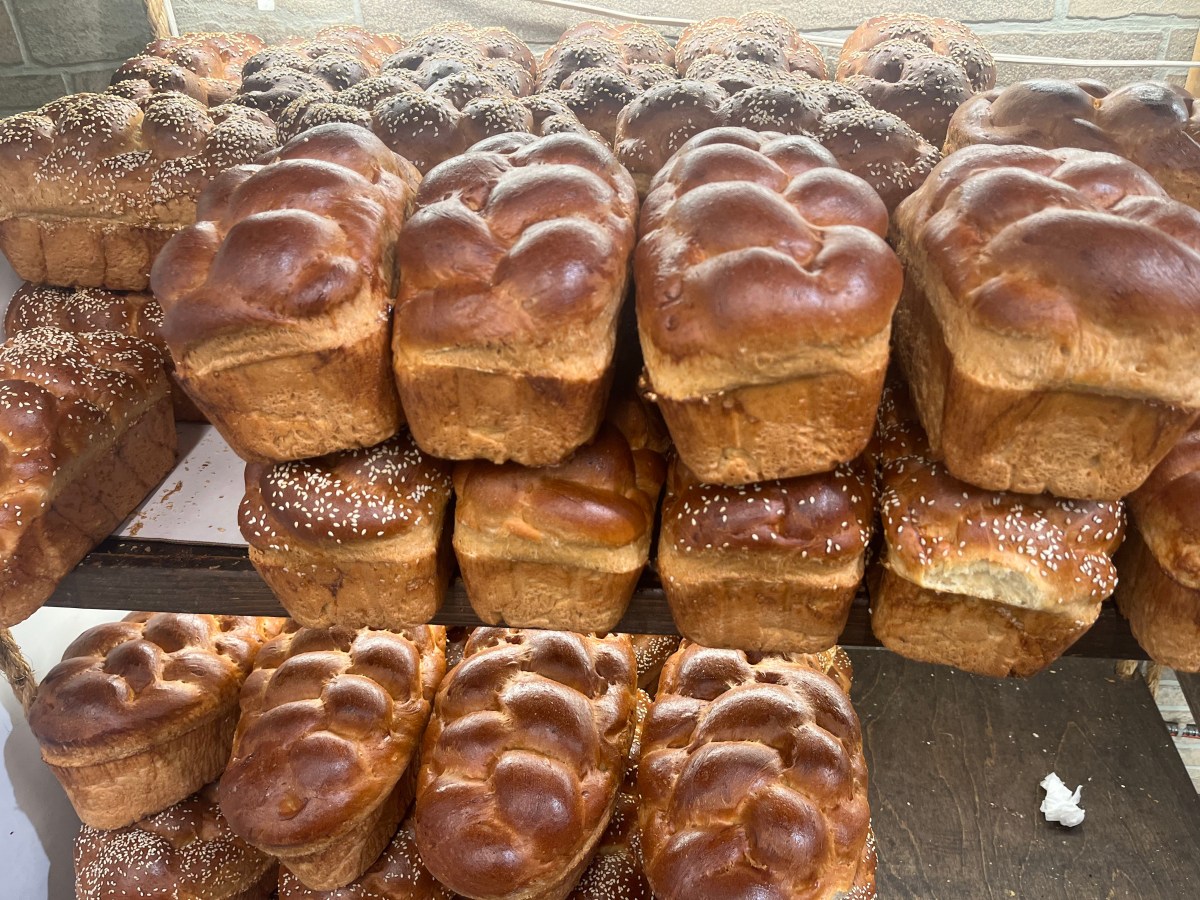
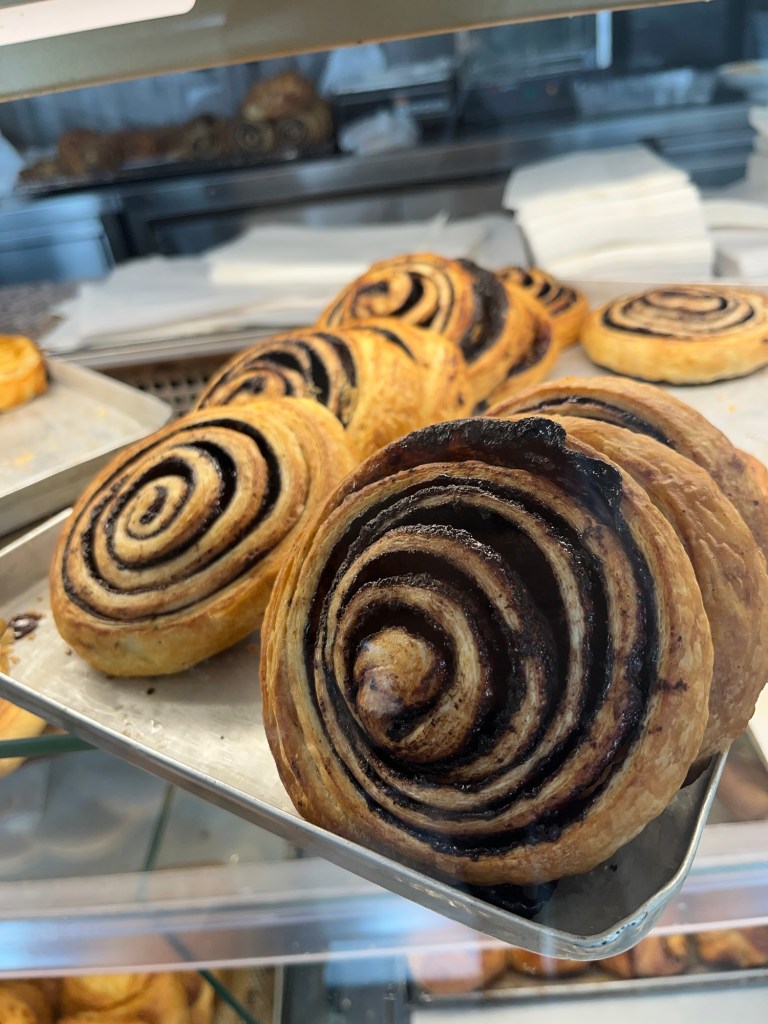
After exploring Hasidic Williamsburg, I made sure to stop at a late night Kosher bakery and get some sweet cheese rugelach, a novel combination that was a true delight. They also had tons of challahs of various sizes, like the ones in this blog post’s cover photo. Even some local hipsters came in for a taste of the bakery’s delicious food.

Over the next two days I met up with other friends in New York, ranging from Yiddishists to a Modern Orthodox college friend on the Upper West Side, and of course got a bagel with whitefish salad. None of this was particularly Hasidic, nor in Brooklyn, but it just shows the incredible diversity of New York Jewish life that I was able to slip in and out of these different communities plus a gay Jewish wedding in the course of a long weekend.

After the wedding, I decided to go to Crown Heights. Williamsburg is heavily Hasidic, but predominantly populated by communities that are a bit more insular in their approach to preserving Jewish tradition. Crown Heights, while also Hasidic, is predominantly a Chabad area. Chabad is a group committed to outreach within the Jewish community, making it a little easier to get to know people even as a semi-outsider.

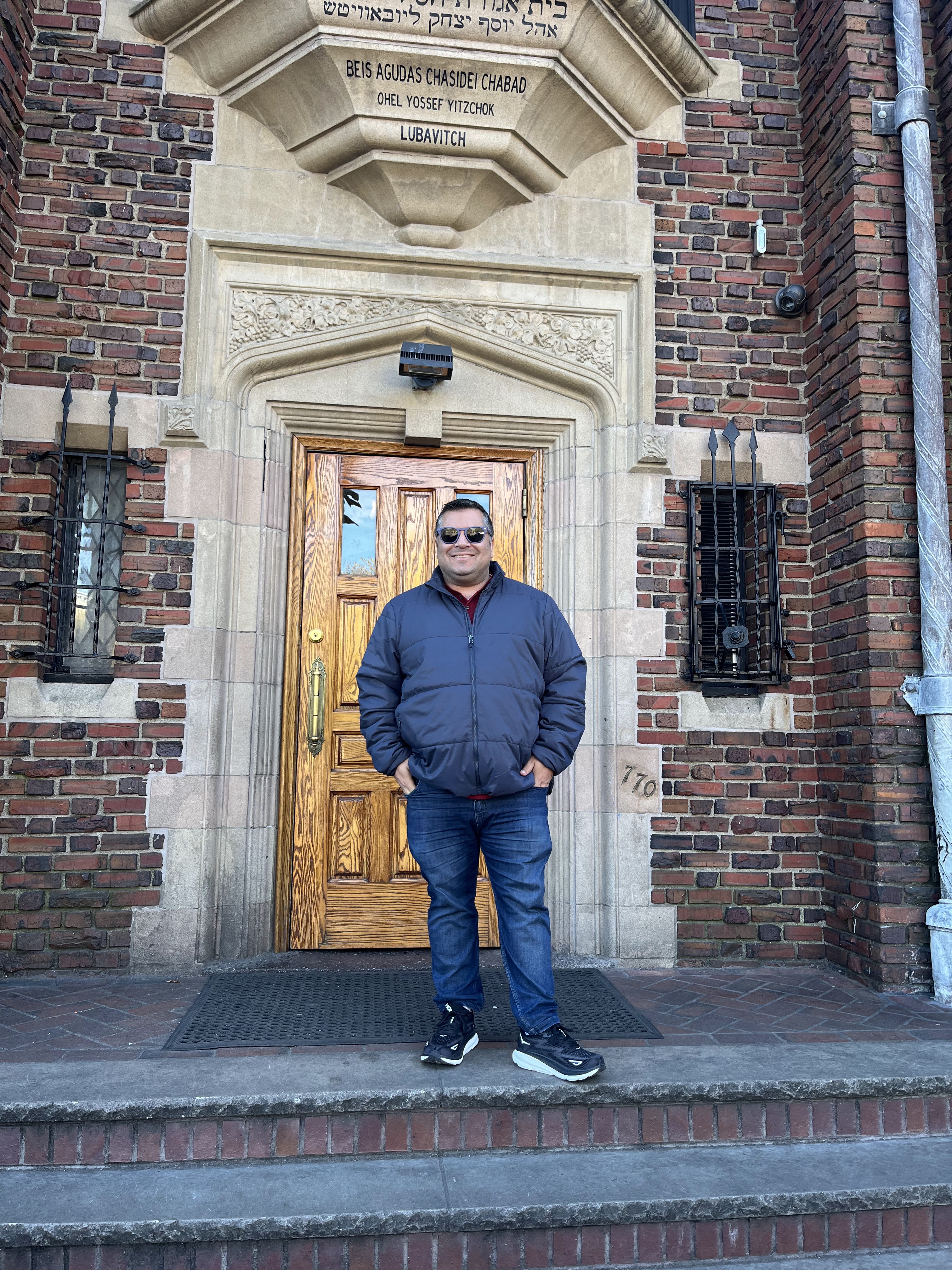
I visited 770, the house of the former Chabad Rebbe, a deeply revered leader.

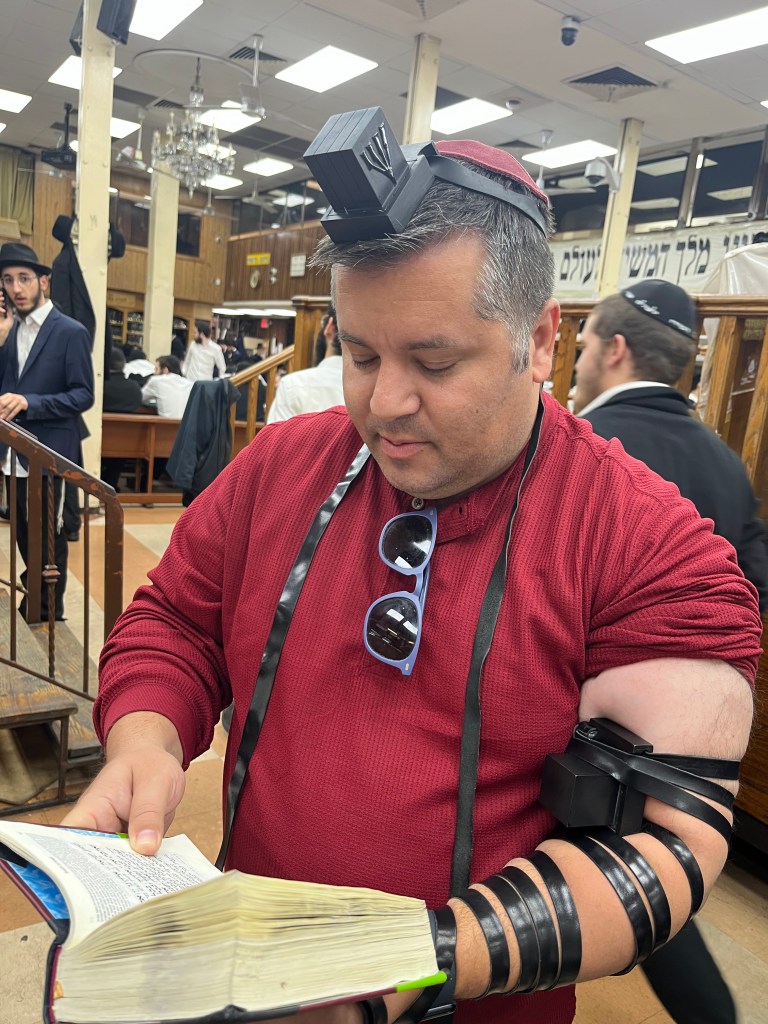
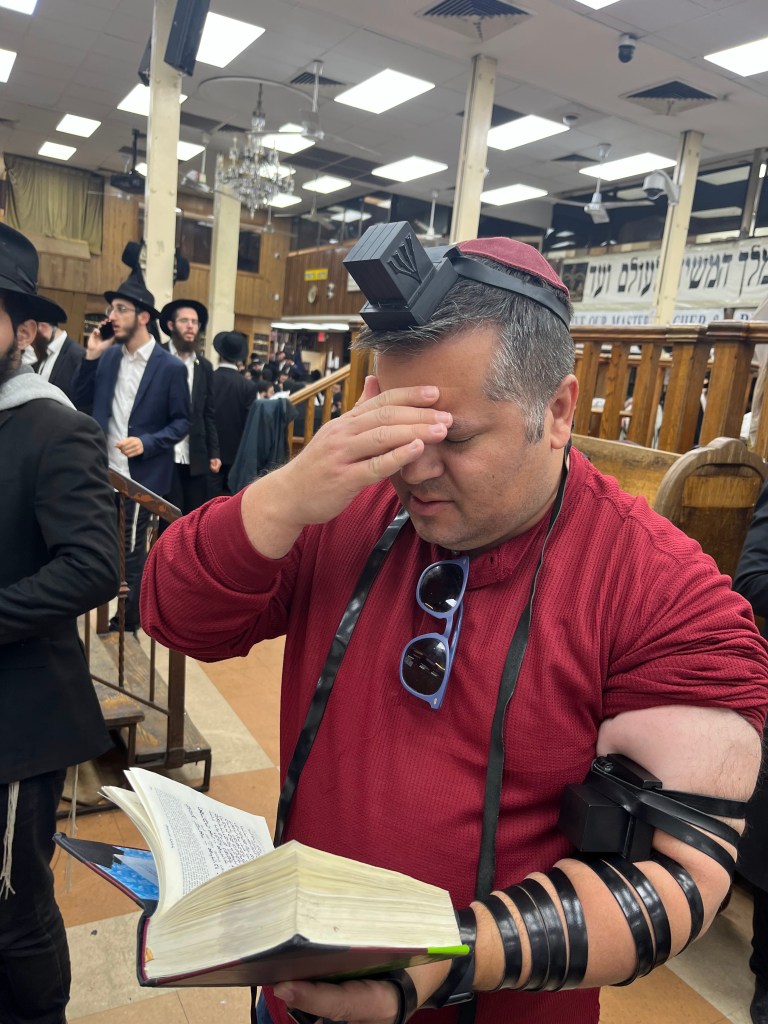
I then decided to do something I had never done when visiting Crown Heights years ago: I went inside the synagogue next door to the Rebbe’s house. I decided to lay tefillin, an ancient Jewish ritual, with the help of a young man. It didn’t matter that every other man in the building was dressed in the traditional black and white suits and I was in jeans and a red shirt. Chabad doesn’t care- they just want you to fulfill mitzvot, commandments from G-d that Jews are instructed to follow. It was a really nice experience.

Laying tefillin is a truly embodied ritual that made me feel connected to Jews everywhere and to thousands of years of our history. At a time when it seems we can control so little, it helps me feel grounded and secure in my faith.

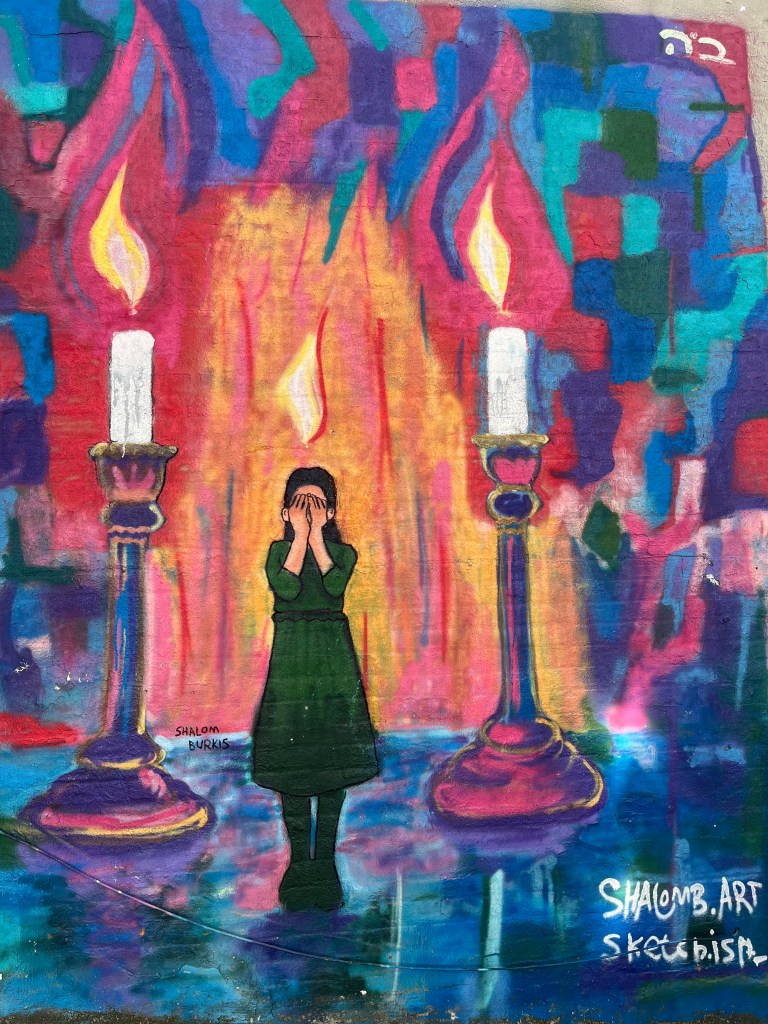
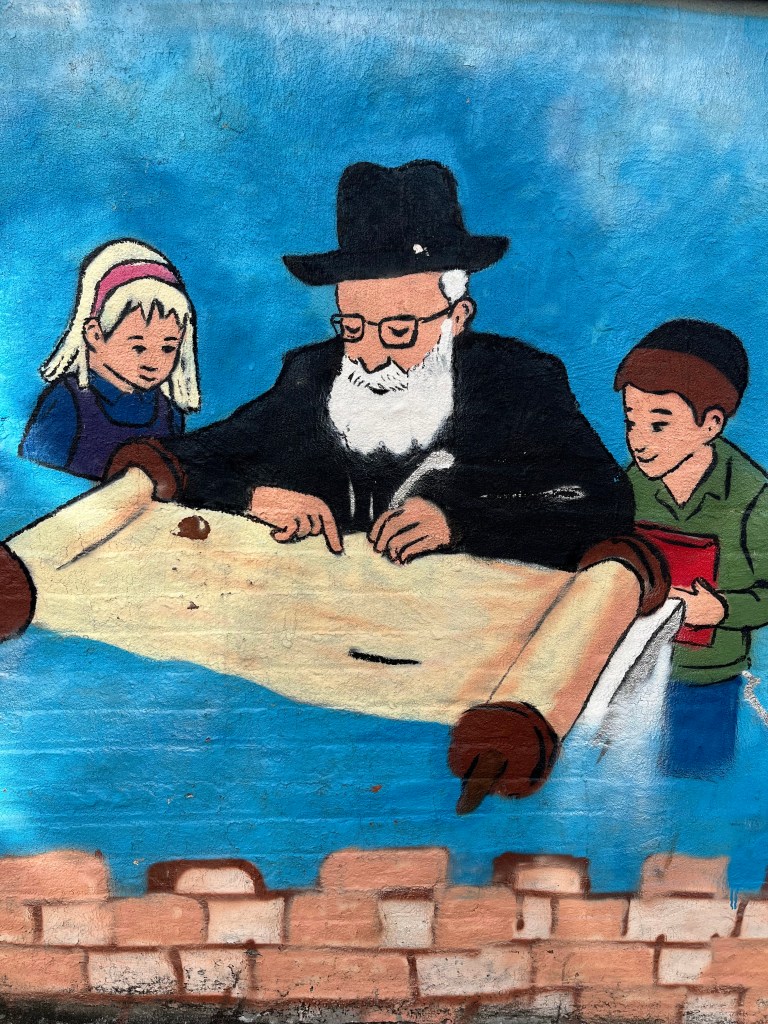
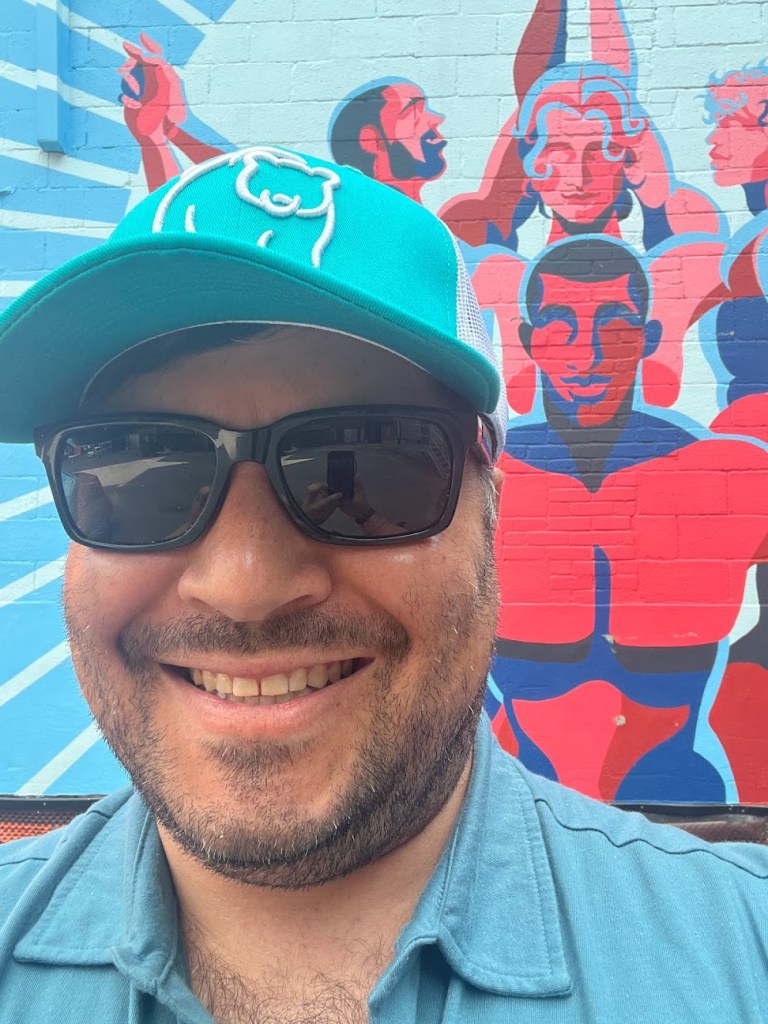
In addition to laying tefillin, I found some interesting Jewish street art in the neighborhood.

I love seeing murals whenever I travel, and to find Jewish ones was especially heartwarming and exciting.

Lastly, it was not lost on me that I was in New York the last weekend before the fateful election that led to antisemite Zohran Mamdani becoming elected mayor of the city. I’ve already written my thoughts about him here.

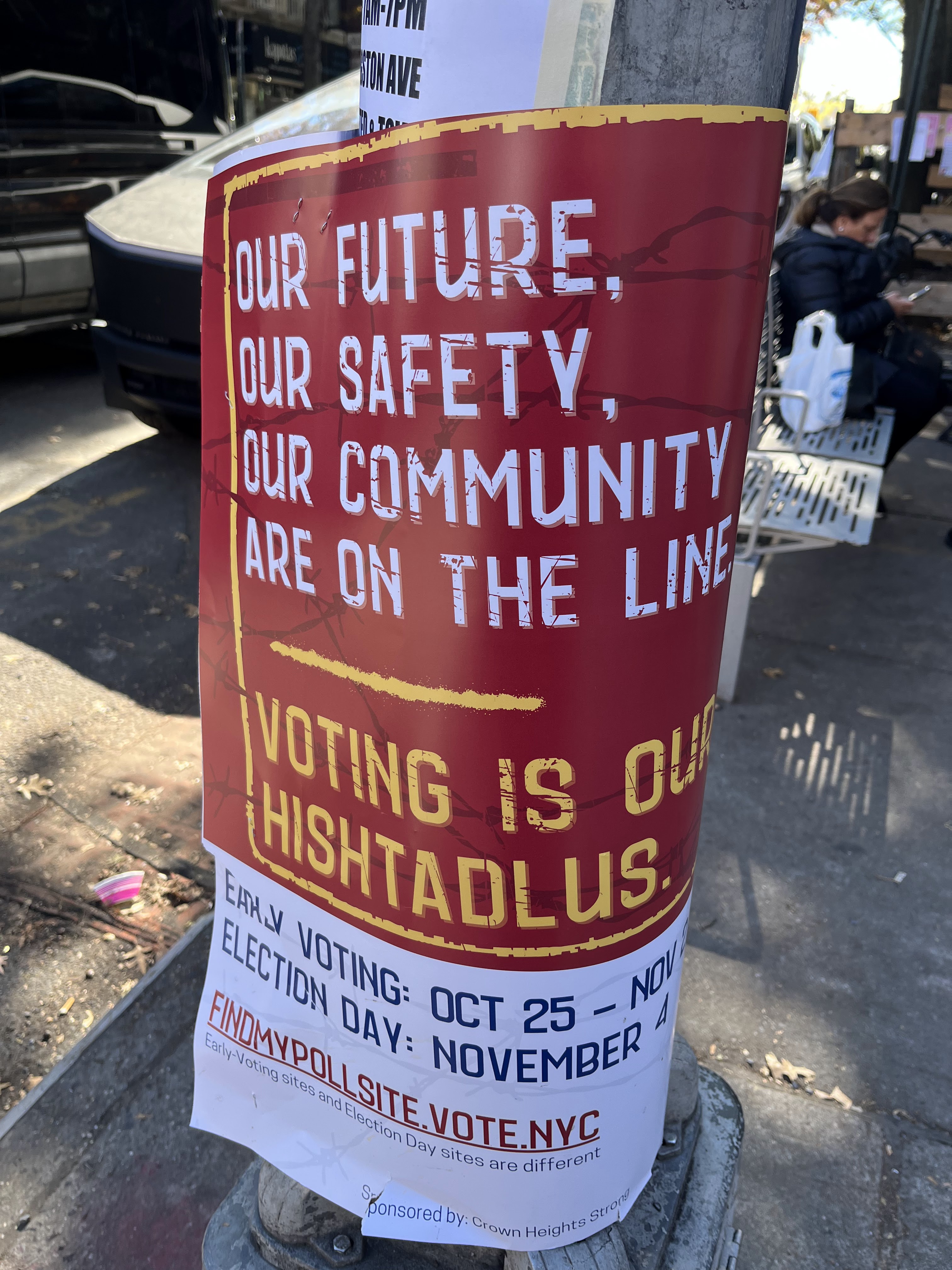
The feeling that the community was slipping through our fingers, as Jews, was palpable in Hasidic Brooklyn. I saw election turnout signs like this one that were as clear as day:

A week later, when election day came, the vast majority of Hasidic Jews voted against Mamdani. But it wasn’t enough to turn the tide of hatred gripping New York City.

Seeing Hasidic Brooklyn was amazing. I highly recommend a visit. Go see this beautiful community before the coming storm. Let us hope and pray that we will weather it together.

Because in the end, the people who hate Jews won’t distinguish between the gay ones or the Hasidic ones, the secular ones or the Modern Orthodox. They will come for us all. Which is why it’s so important we show solidarity with each other. We don’t need to agree on everything. I’m gay, I’m aware of the challenges that would face me living in a Hasidic community. And I’m also aware of prejudice and judgment that Hasidic Jews face in progressive Jewish circles.

Let’s come together in our time of need. So if there’s a storm ahead, let’s grab each other’s hands and dance in the rain and make it through as one strong community. Ken yehi ratzon. May it be so.

The Holocaust postcard I found in Salzburg

After witnessing a virulent anti-Israel rally, I was about to give up on Salzburg, a beautiful city in Austria. Then, I wandered into an old used book store and I found the most stunning thing.

I asked the book store owner in Yiddish (because Yiddish and German are similar and it’s super useful when traveling in areas where folks don’t speak fluent English!) if he had any Jewish books.

He said he didn’t think he had any, but that if there were any, they’d be downstairs in the history section.

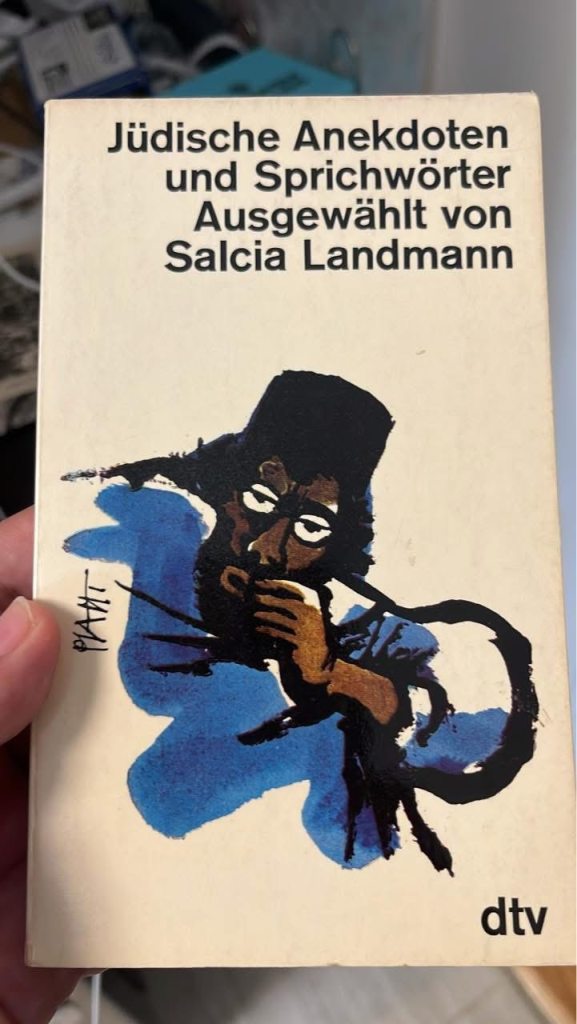
I picked up a Jewish book published in Germany in the 1960s:

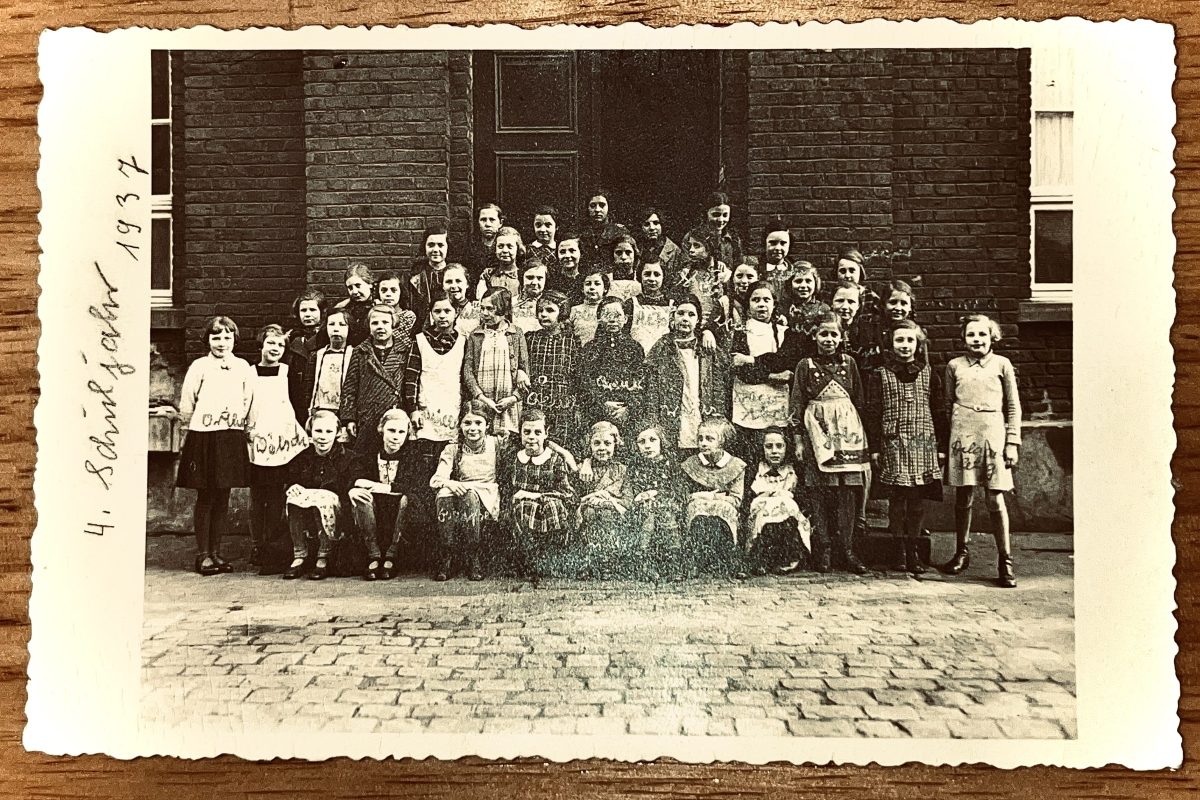
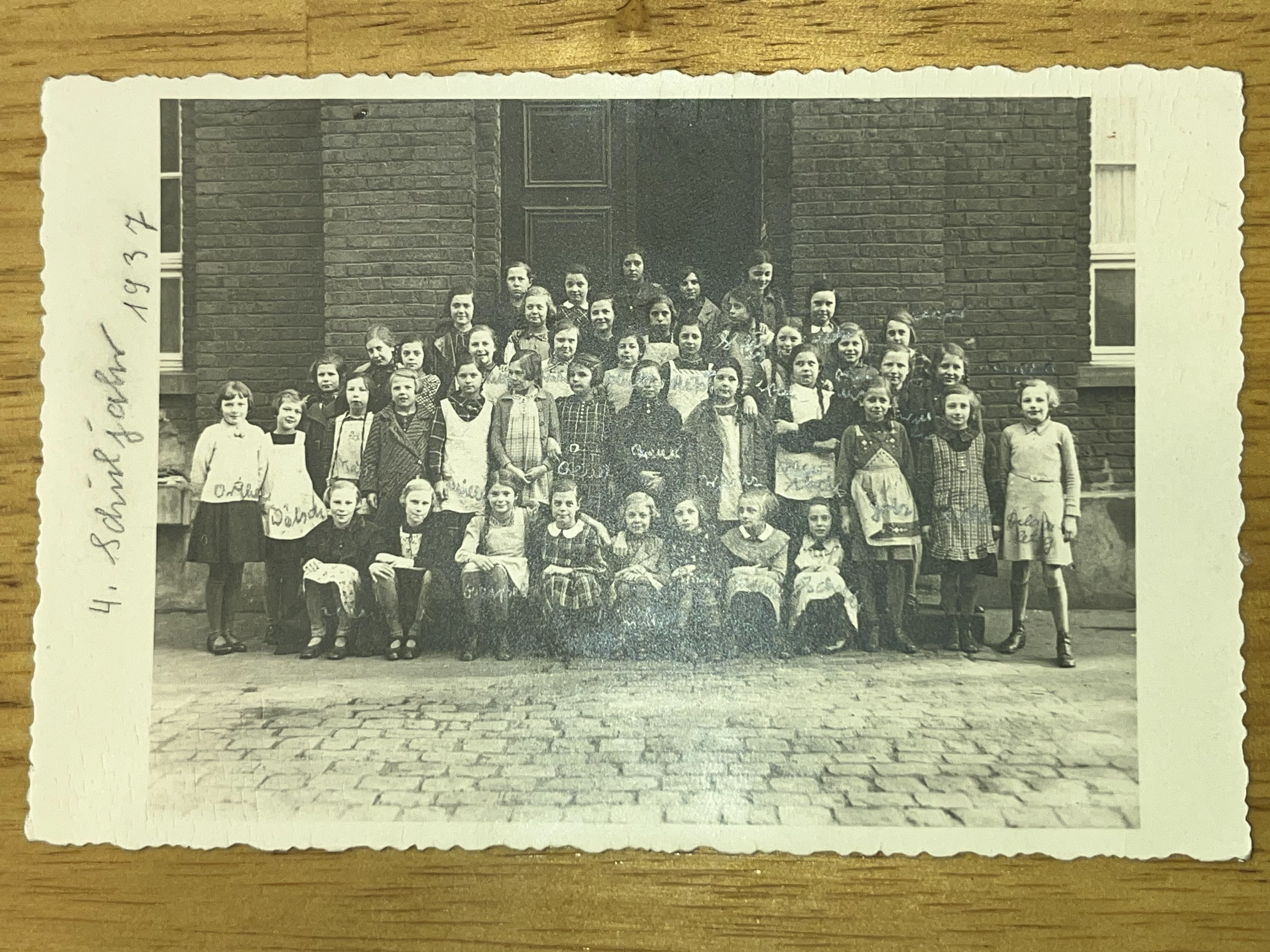
Then as soon as I opened the book, the most surprising and magical thing happened. A postcard of fourth-grade girls from 1937 – in the midst of the Holocaust – fell out of the book!

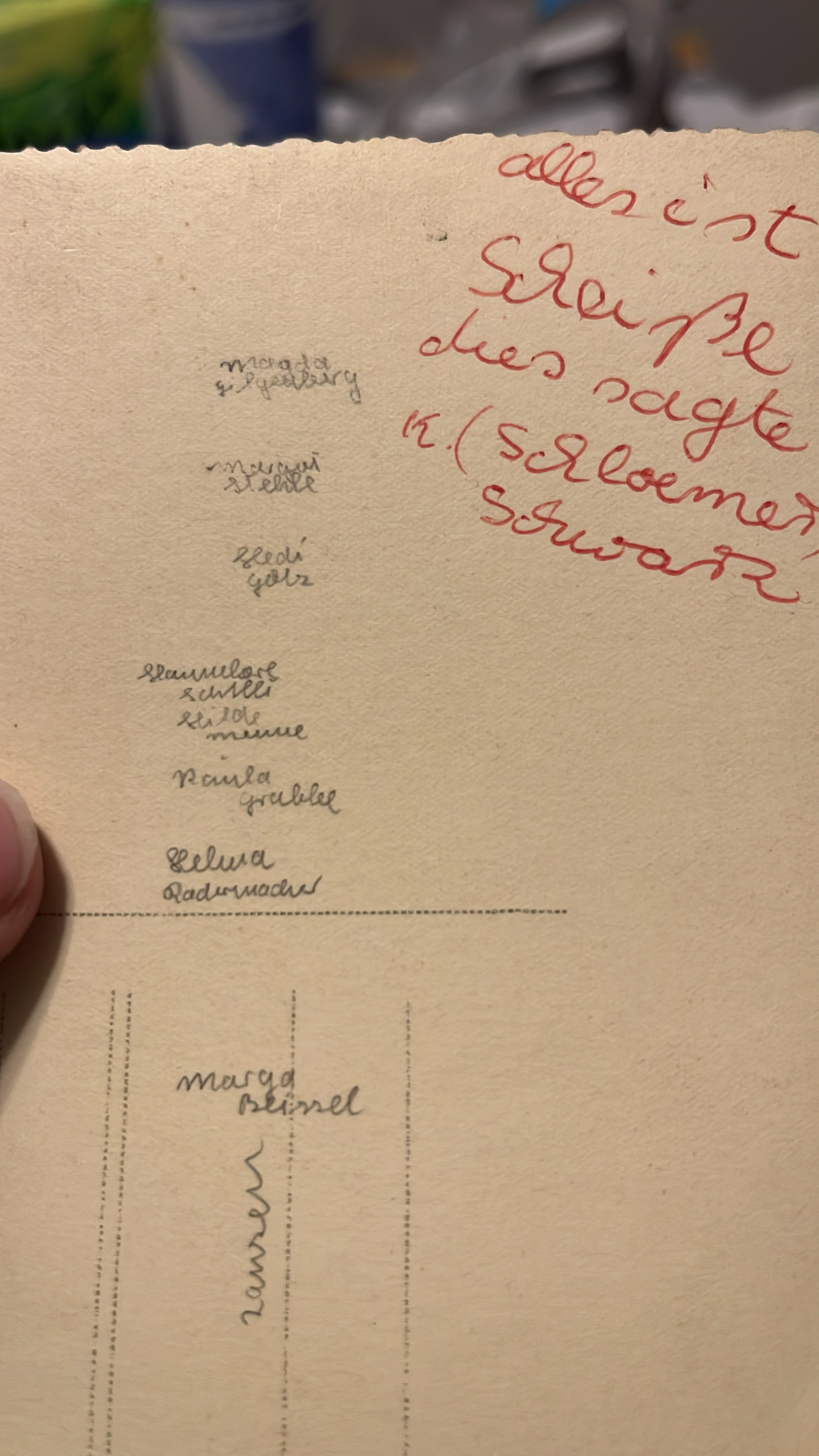
On it, there are some names written in cursive on the front. And on the back, even more names, some hard to decipher and written in pencil.

On the back of the card, someone presumably named “K. Schloemer Schwartz” wrote “everything is shit”. And if these girls, pictured below, were in fact Jewish and living in Austria or Germany during the Holocaust, you can understand why K. Schloemer Schwartz would think the world was shit. Probably very few, if any, survived.

To say this was “bashert” – or “meant to be” – is an understatement. This book could have sat in this bookstore for years untouched and unexamined. It could’ve been thrown out, along with this intriguing postcard. I felt honored that it had found me.

Since finding the postcard, I’ve shared it with U.S. Holocaust Memorial Museum and the National Library of Israel. I want to make sure this postcard can make its way to any of these survivors or their descendants. If you have any contacts at other institutions like Yad Vashem or Jewish genealogical resources, please don’t hesitate to comment below or contact me with any information.

Until then, the card remains a mystery. A mystery I intend to solve and that I’m happy ended up in my hands.

These innocent girls, now perhaps in their 90s if they’re alive, deserve to touch this piece of their past.

At a time of increasing antisemitism yet again, when it seems like the world has lost all sense of sanity and has forgotten the lessons of the Holocaust, this postcard is a reminder of Jewish humanity. It’s a reminder that our lives mattered then and they matter now – even if so many in the broader society demonize us for no reason.

We survived evil many times in our history and we will overcome it yet again.

May the memories of these young girls I discovered in Salzburg be for a blessing. And I hope, with your help, to find their families to offer a bit of comfort.

Am yisrael chai – the Jewish people lives. Now and forever.

Jewish Vienna

Vienna packs in more Jewish culture, diversity, and vibrancy for a city of its size than anywhere I’ve ever visited. In just one week, I met an American-Israeli looking for a fresh start during wartime, a Hungarian-Austrian rediscovering his Jewish roots, a German Yiddish activist, a Haredi man and son of Holocaust survivors, an Austrian Yiddish poet, two Italian non-Jews exploring conversion, and an Argentinian Jewish immigrant. And there are only 8,000 Jews here! Less than in the suburb of D.C. I grew up in, but bursting with energy from all over the globe!

Read to the end of this blog. Because there’s a pretty amazing surprise towards the end.

Let’s start at the very beginning, a very good place to start. OK, I’ll save any further Sound of Music references for my blog on Salzburg, but I couldn’t resist!

Philip is a Yiddishist – an activist speaking, reading, writing, studying, and promoting the Yiddish language. He is originally from Germany but has studied the language all over the globe and actually knew Yiddish speakers who I’m friends with back in the States. It really is a small Jewish world!

He was kind enough to take me on a walk through Leopoldstadt, the former principal Jewish Quarter of Vienna. Vienna used to have a massive 180,000+ person Jewish community before the Holocaust. To say its influence on the society was significant is a deep understatement. Musicians, psychologists, writers, composers, the list goes on and on. It includes world-renowned people like Sigmund Freud. And if you look at this list, not a small number of Adlers!

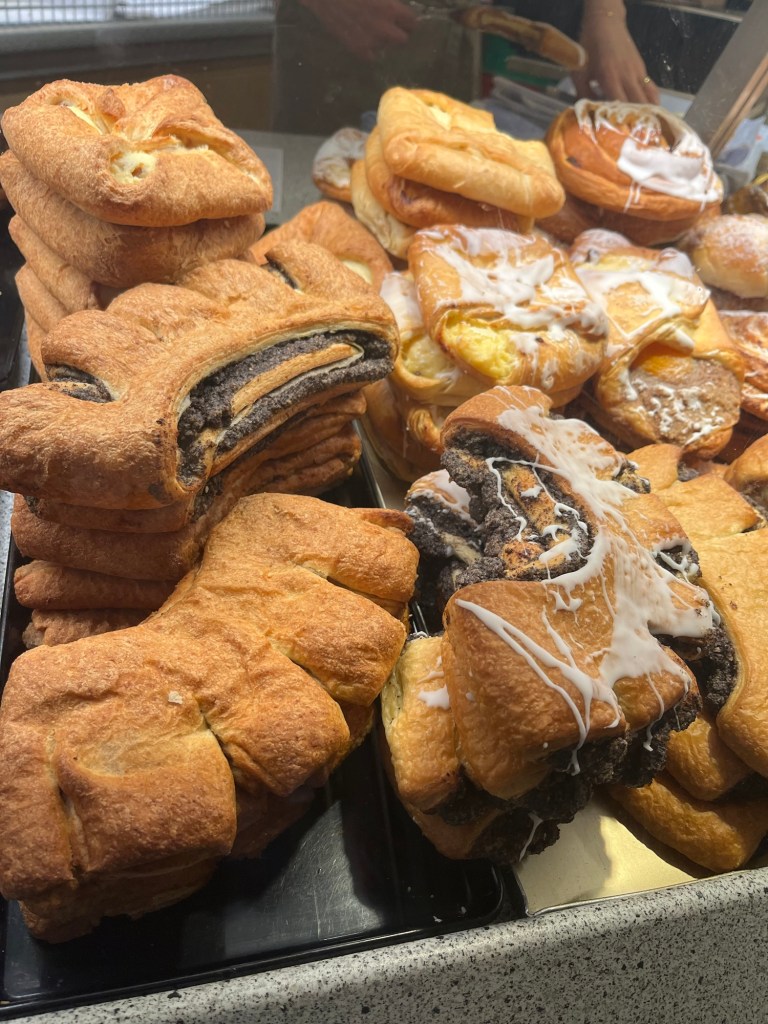
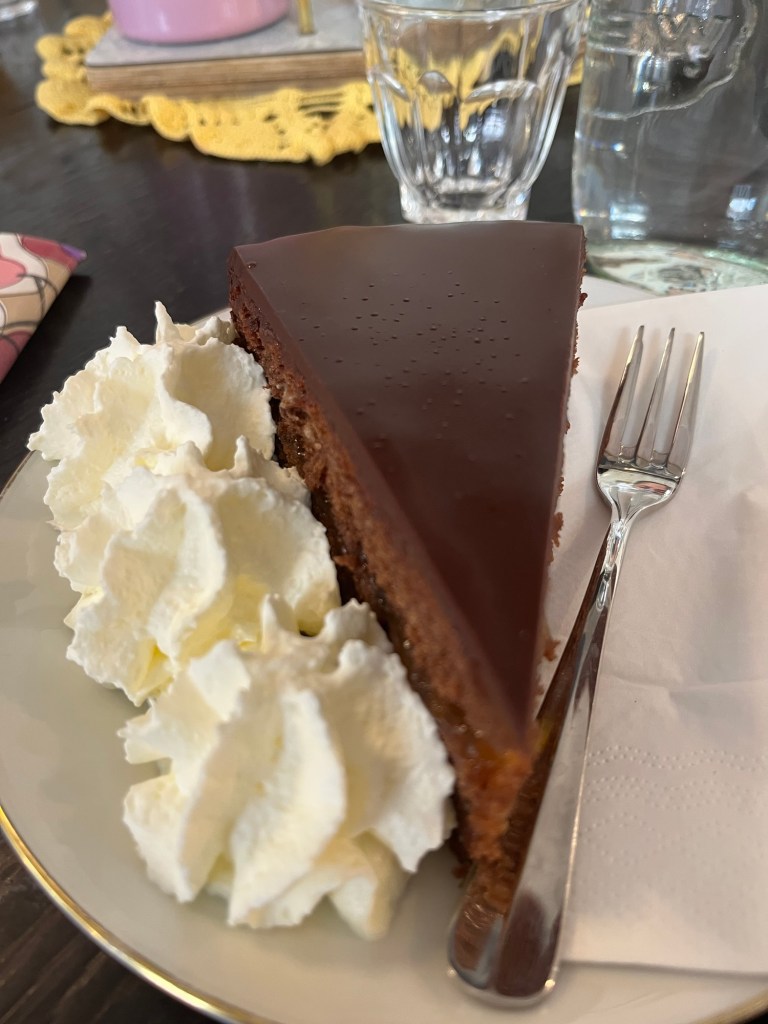
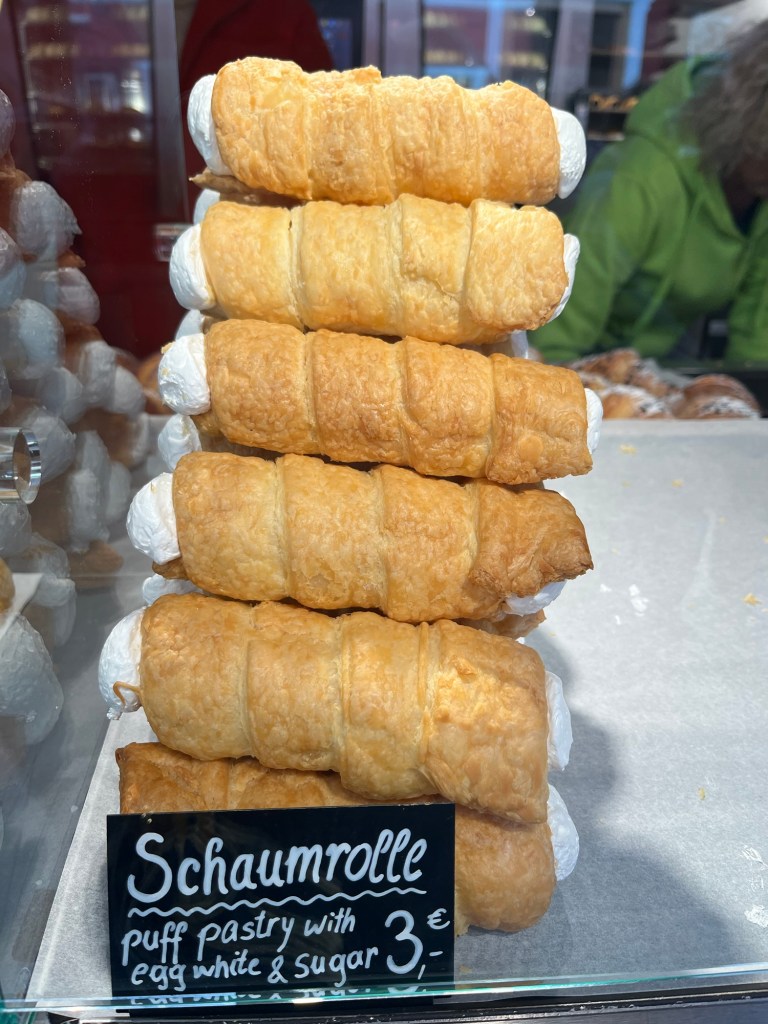
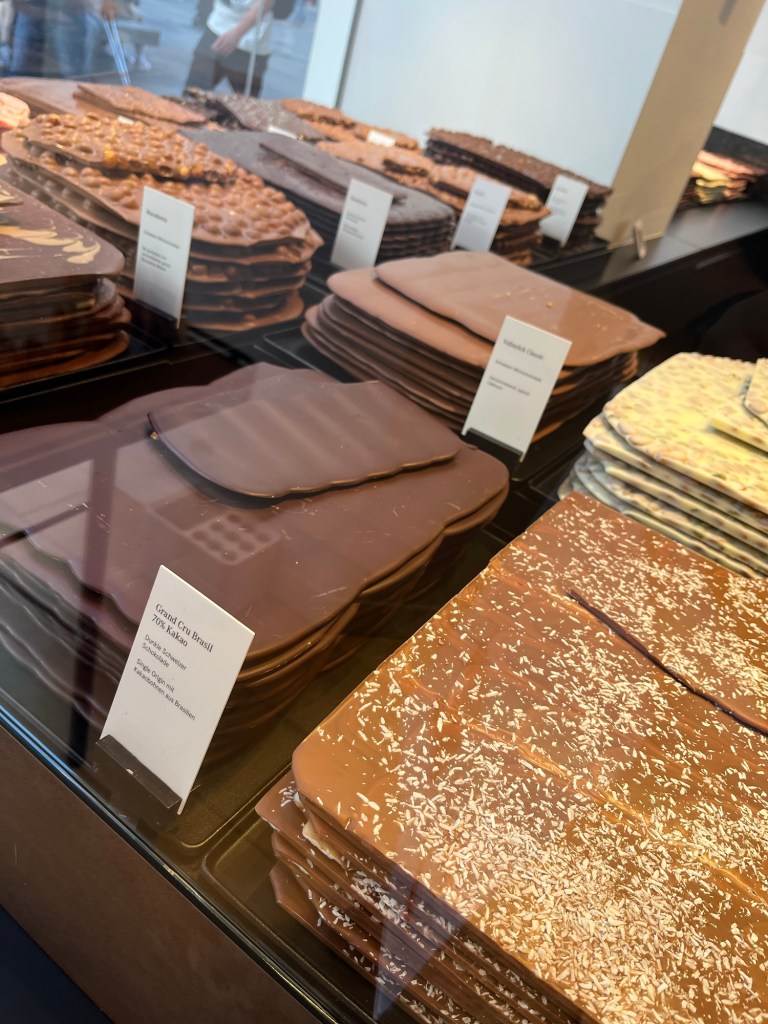
While in Leopoldstadt, Philip and I stopped at a Hasidic bakery for a quick sugar fix. Vienna is known for its sweets, such as its famous Sachertorte cake! The top left sweets are from the bakery and the rest from elsewhere, but I think it’s fair for Austria to show off a bit!

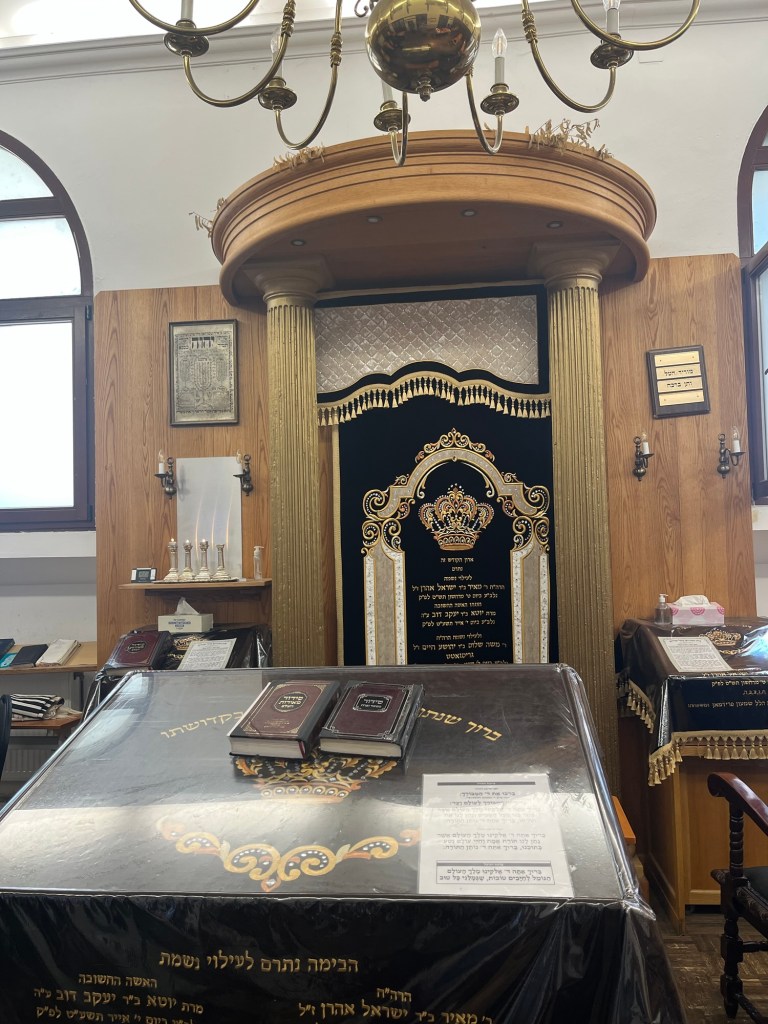
After leaving the bakery, we came across a Jewish man in a black hat. I greeted him in Yiddish and said I was a Jewish writer from the U.S. He immediately shook my hand and invited me and Philip to see his synagogue! It’s actually kind of two synagogues – one downstairs that was Hasidic and one upstairs that was Haredi (ultra-orthodox) but maybe not Hasidic. The historic building was called the Schiffschul, which you can read more about here.

After giving us a tour, he pointed us to the back of the synagogue. That’s where they’re building an addition to the synagogue including mikvahs (ritual baths) and more room for prayer. Nothing makes me happier. Despite our ideological differences, Hasidic and Haredi Jews are my brethren and to see Jewish life *growing* in a place where it was on life support after the Holocaust, was incredible. I’m proud of this community and wish it much success as it continues to grow and preserve so many Jewish traditions.

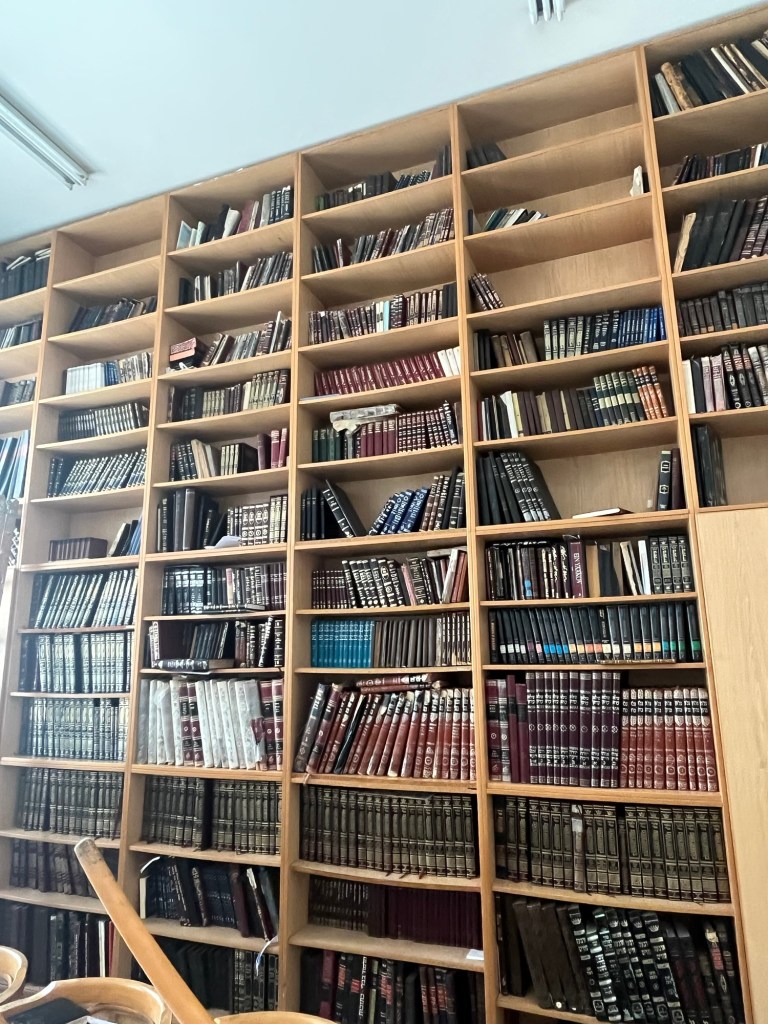
Here are some pictures from inside the Hasidic (downstairs) and Haredi (upstairs) of the synagogue:

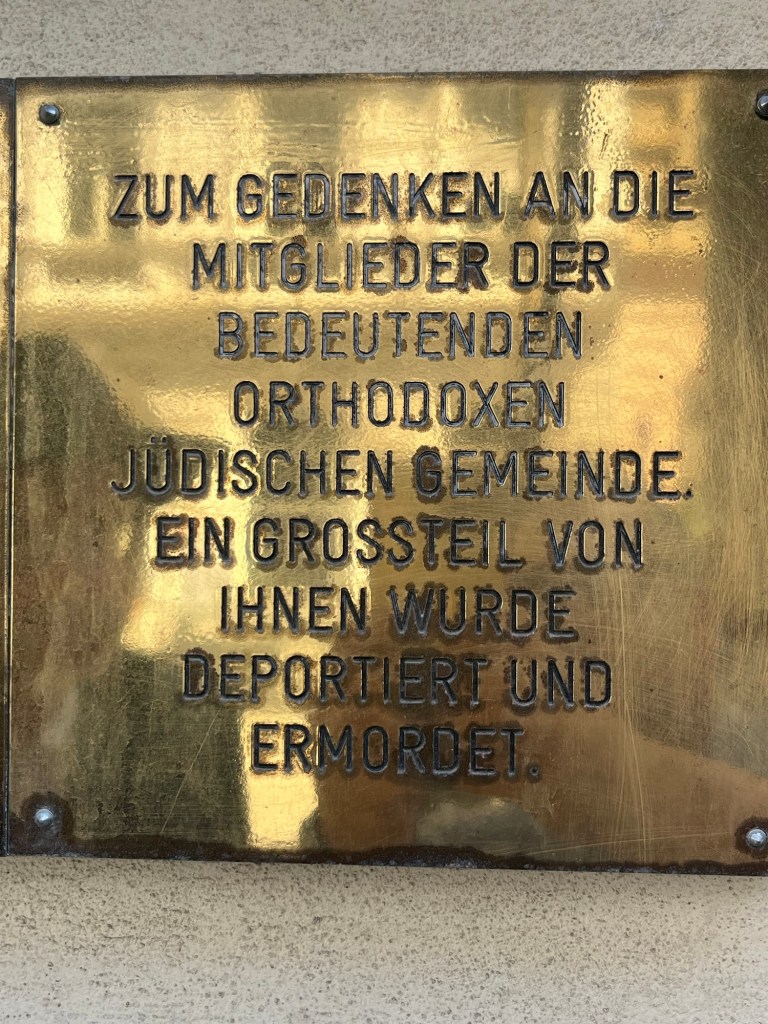
You’ll notice, besides the very beautiful interior and loads of Jewish books (nothing excites me more!), the gold plaque outside the synagogue. It commemorates the Jews sent to their murders in the concentration camps from this synagogue. The Holocaust is *never* more than one step away from the present here, where less than 3% of the original community returned to live after the Holocaust, the rest dead or in other countries.

Before we left, the man, named Yosef, asked us for a blessing for his ailing wife. Philip offered a beautiful Yiddish blessing for her health and we all parted ways – three very different people on paper, but all tied together by one beautiful yerushe, or “heritage”.

Philip was incredibly kind not only to show me around town, but also to connect me with Thomas Soxberger, a Yiddish poet and Jewish historian. You can read more about his background and poetry here. If you want to learn more about Jewish history in Vienna, he has also written the book “Gründen wir einen jiddischen Verlag!” or “Let’s start a Yiddish publishing house!” Philip also connected me with the Yung Yidish Vienna library + cultural organization, which unfortunately I couldn’t visit since I wasn’t feeling well. However, I know their sister organization in Tel Aviv very well and highly recommend all fans of Yiddish to check out their Vienna location!

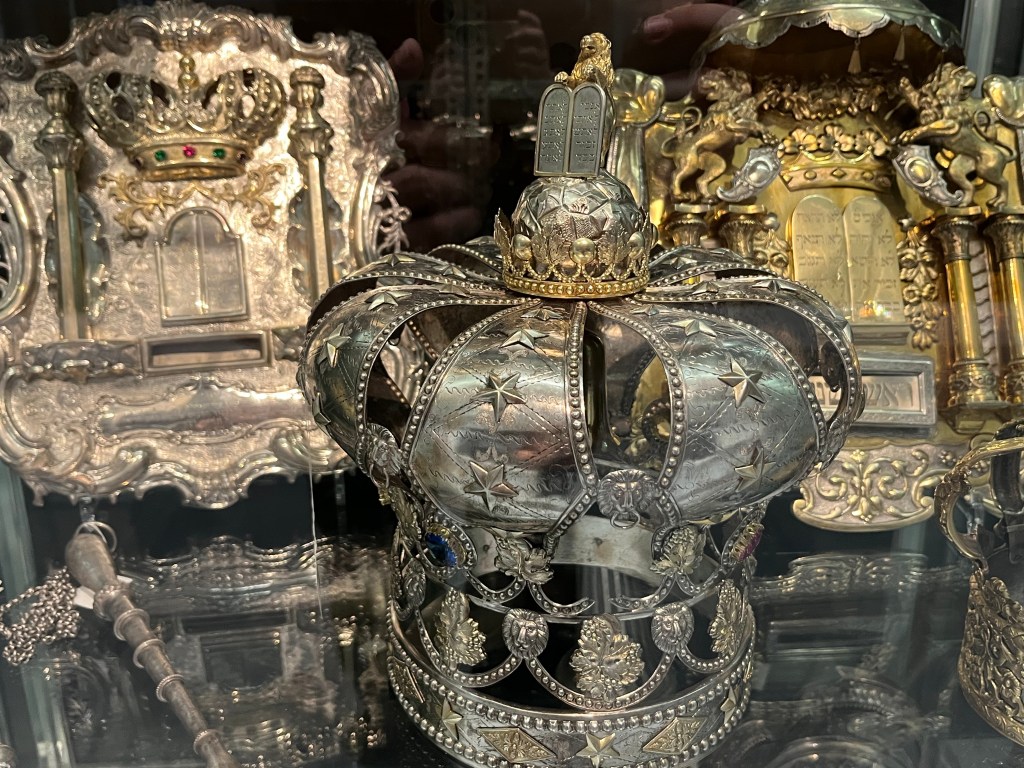
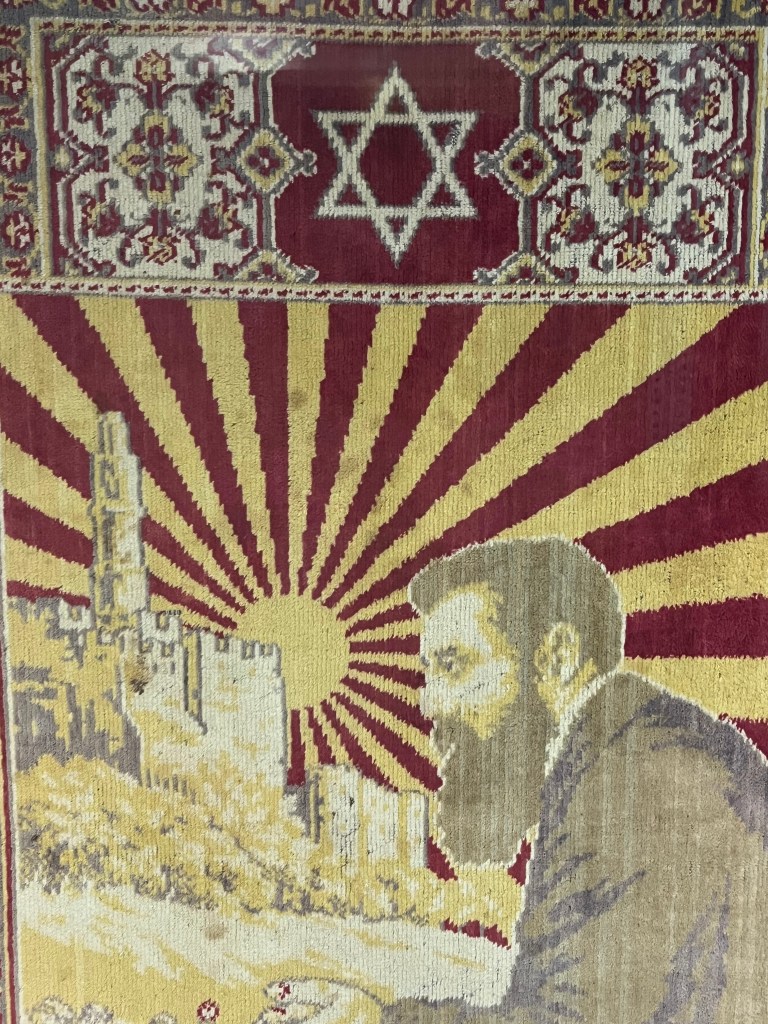
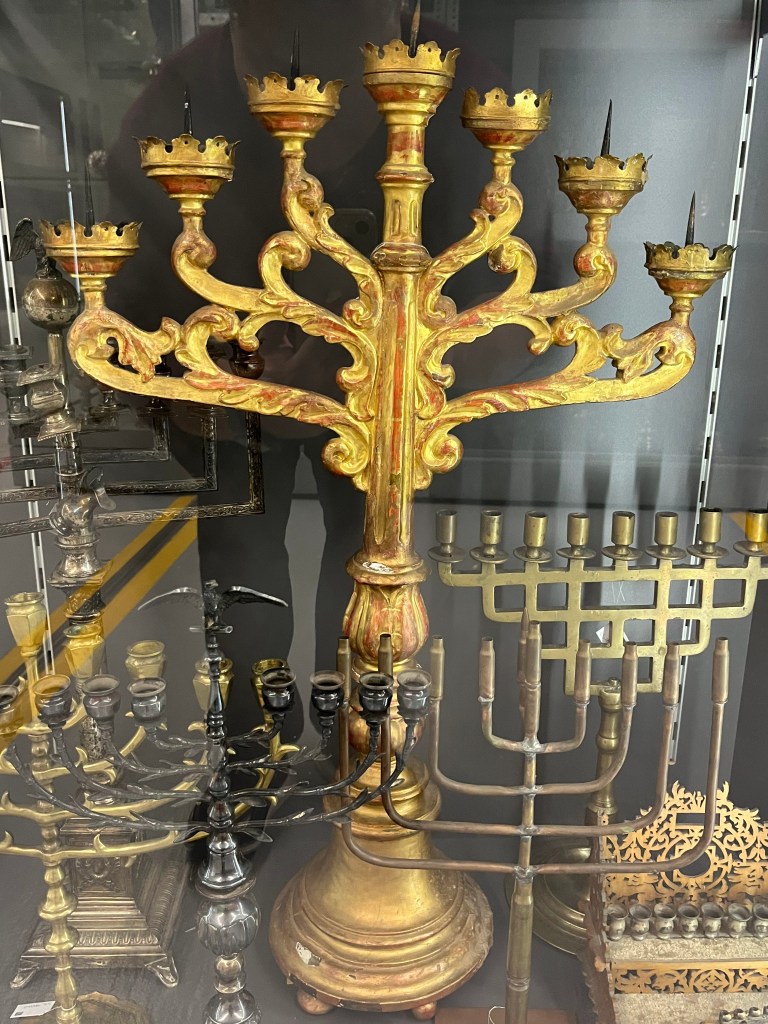
I also had the opportunity to visit the Jewish Museum Vienna and see some incredible Jewish artifacts – on Israeli Independence Day of all days. It was appropriate – the founder of modern Zionism, Theodore Herzl, lived in Vienna! The artifacts were from all over the Austrian Empire, including places whose Jewish communities I knew almost nothing about – like Bosnia!

The visit to the museum was one of the few times in Europe I have felt safe as a Jew. Jewish institutions are guarded by security – including Austrian police. And while it’s sad that that’s necessary, it made me feel more at ease than in some other places where the governments either fail to support local Jewish communities or actively create anti-Israel rhetoric in society. In Austria, I don’t know the politics well, but I definitely felt more protected.

Here are some pictures from the museum, then we’ll return to the stories of the incredible people I met:

After days of touring both Jewish and non-Jewish places (here, to be honest, the cultures are so historically intertwined that it’s hard to really distinguish between the two!), I decided to rest and go to Shabbat services at Ohr Chadasch, a Reform congregation in Vienna.

Longtime readers of this blog know that I have struggled with my Jewish identity in the past several years, as both of my parents died from cancer about two years ago. Such a shock to my system made me question a lot of things, especially God and Judaism, things that had been so central to my life.

So I was excited but also a bit nervous about going to service at Ohr Chadasch. Every prayer reminds me of my mom, who used to go to synagogue with me. Would I start crying in services?

What was magnificent to see is that my grief is evolving. I enjoyed the hell out of services. Ohr Chadasch, much like Ohel Jakob (the progressive synagogue in Lisbon), sings and sings loudly! Whereas I couldn’t have handled this even a year ago, now it brings me joy again. My Judaism was on life support and now it is supporting my life.

The people of Ohr Chadasch are who really bring it to life. There’s Natan, the friendly American-Israeli-Austrian building a new life in Vienna and immediately offered me a seat when I looked for one. There’s another man, whose Hungarian Jewish heritage was obscured by his family’s struggle with their identity after the Holocaust, but who now is reconnecting with his roots. There’s the man who was leading services while the rabbi was out of town – who is a Jew by Choice.

After services one night, Natan helped round up a group of people and we all went out to eat Asian food (how Jewish of us!). It was such a fabulous evening. Italian non-Jewish polyglots curious to explore what community means to them – and if Judaism might be a spiritual home for them. Several other community members of diverse backgrounds. And me and Natan – two American-Israelis.

It was a mix of languages, cultures, Judaisms (or potential Judaisms!). It’s just how I like to spent my Shabbats. Thank you to all these new friends and the Ohr Chadasch community for welcoming me with open arms and making my visit so special.

Speaking of special people, the second Friday night service I went to in Vienna at Ohr Chadasch, a different man offered me a seat. His name was Augusto. Augusto is an Argentinian Jew, a PhD in Philosophy, a former resident of Italy, and most importantly, a total mentsch (good guy!).

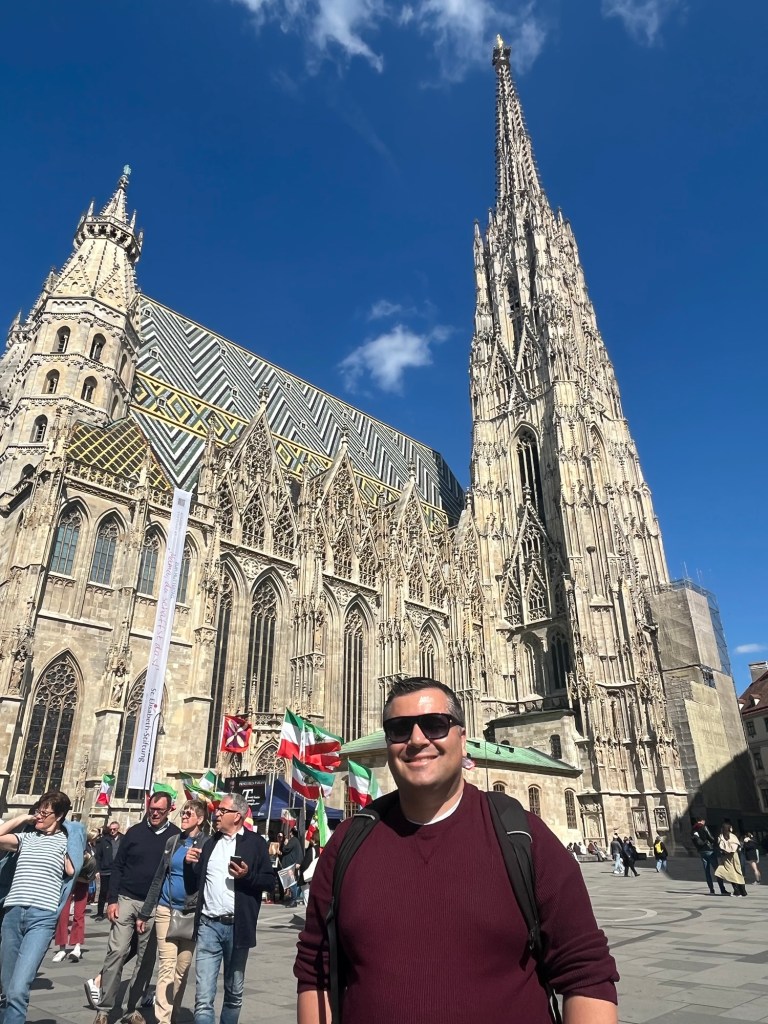
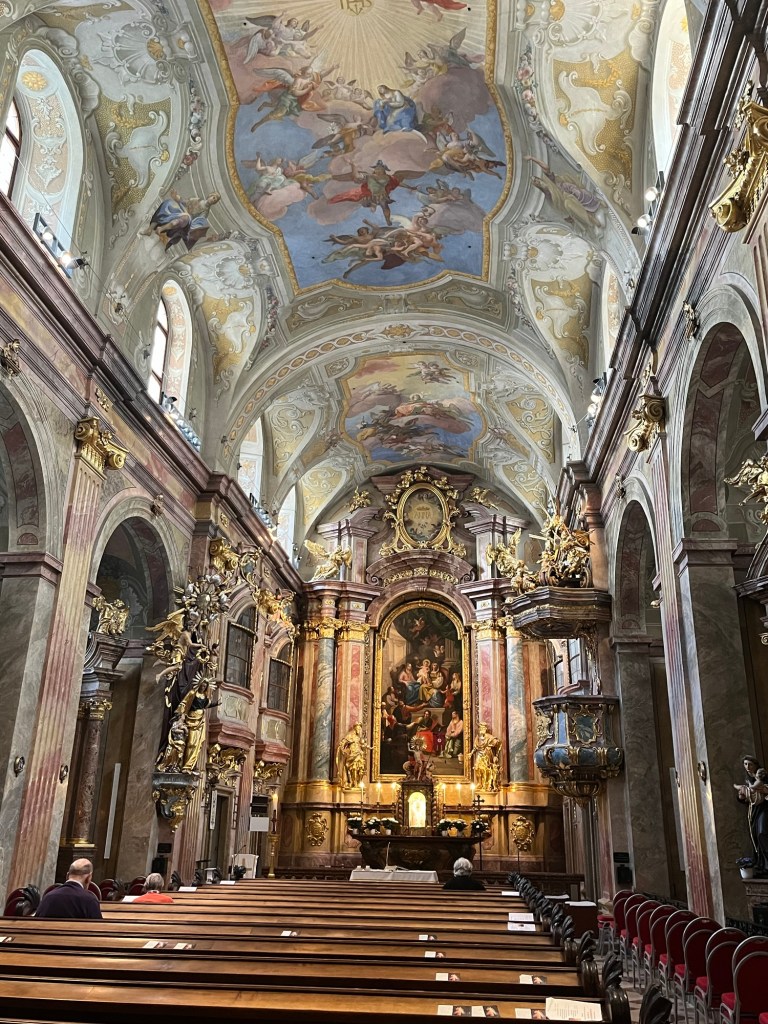
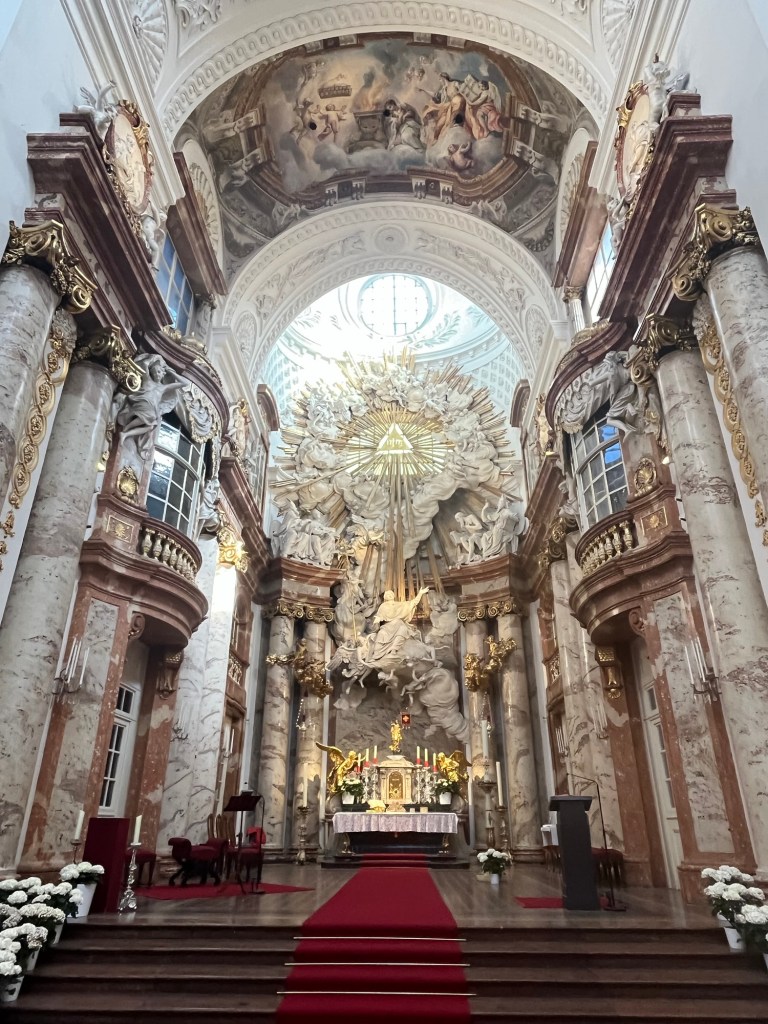
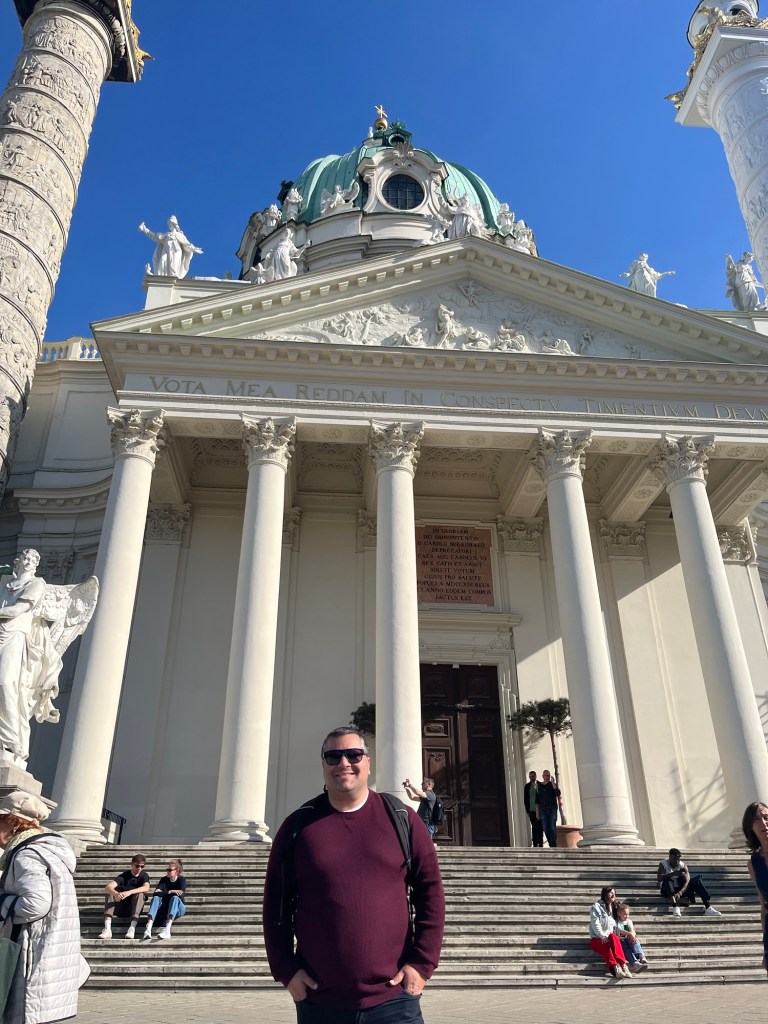
After connecting over our shared love of Spanish and Judaism, we decided to grab coffee a couple days later. For most Americans, coffee is maybe a 45 minute to an hour experience. But coffee in Vienna, and especially with a friendly Argentinian, is a six hour experience. Not only coffee and delicious pastries and lovely conversation, but also a whirlwind tour around the city. We visited the Cathedral, the Holocaust Memorial (which to the city’s great shame is almost hidden in a neighborhood tourists never visit), countless gorgeous buildings, and the MuseumsQuartier. He shared Jewish history with me along the way. The city is stunning and we’ve had influence everywhere. Even the beautiful Karlskirche which I loved was financed with money expropriated from Jews!

The history here is complicated and not always friendly to the Jews, who nonetheless contributed to it and with it extensively.

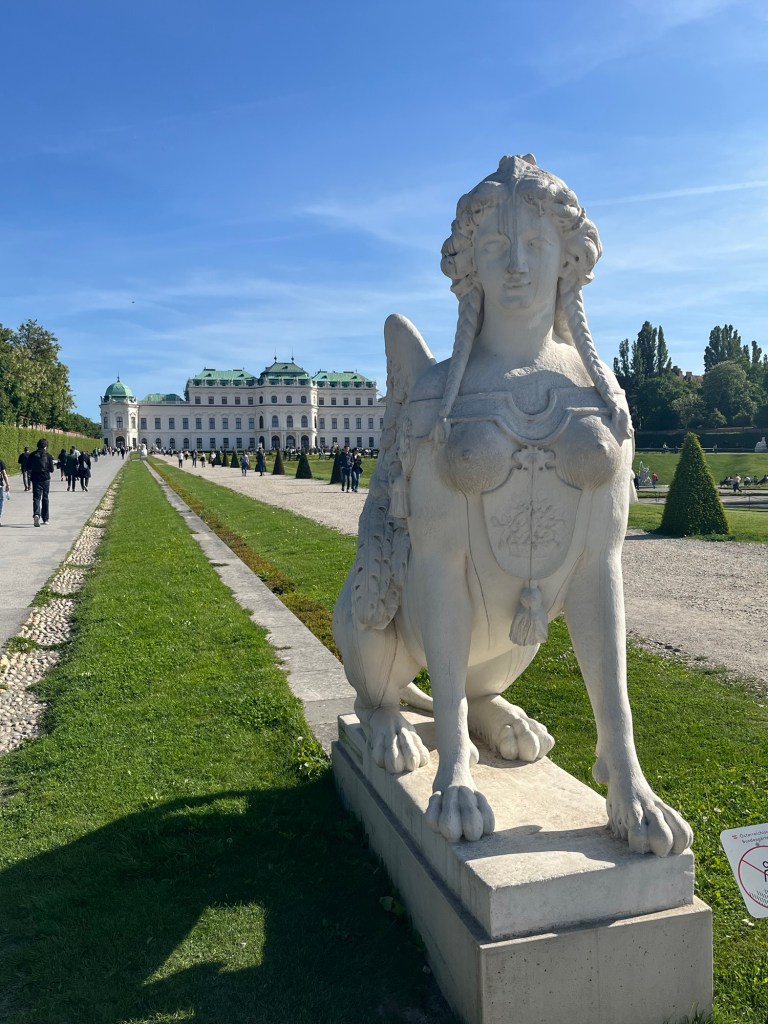
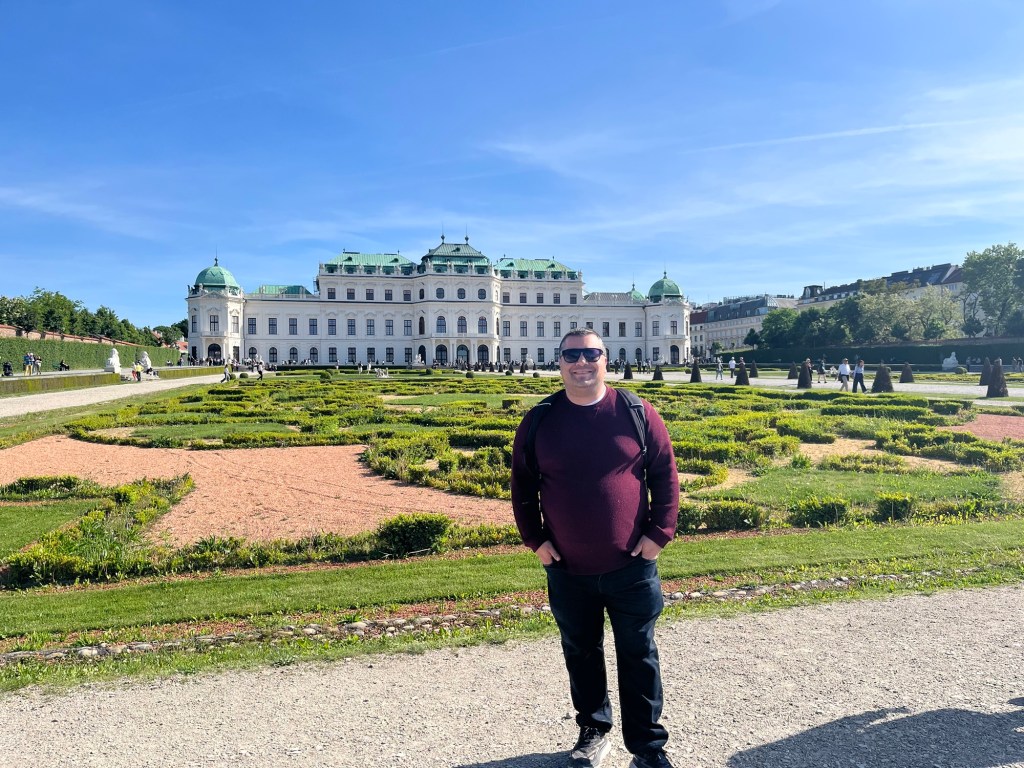
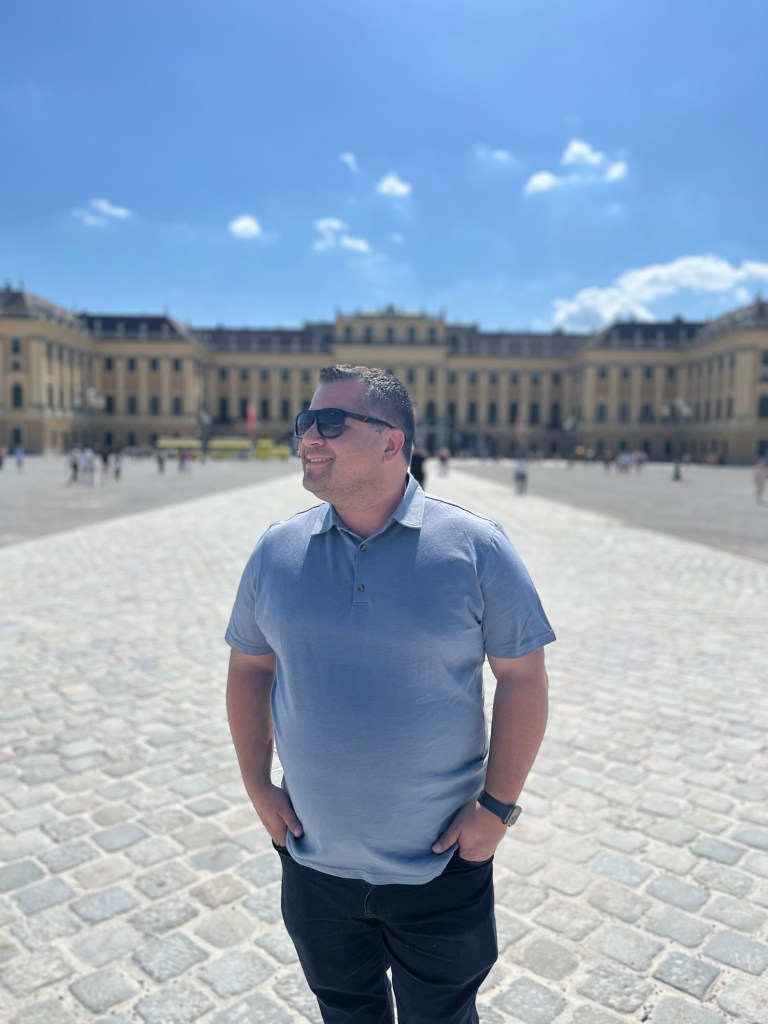
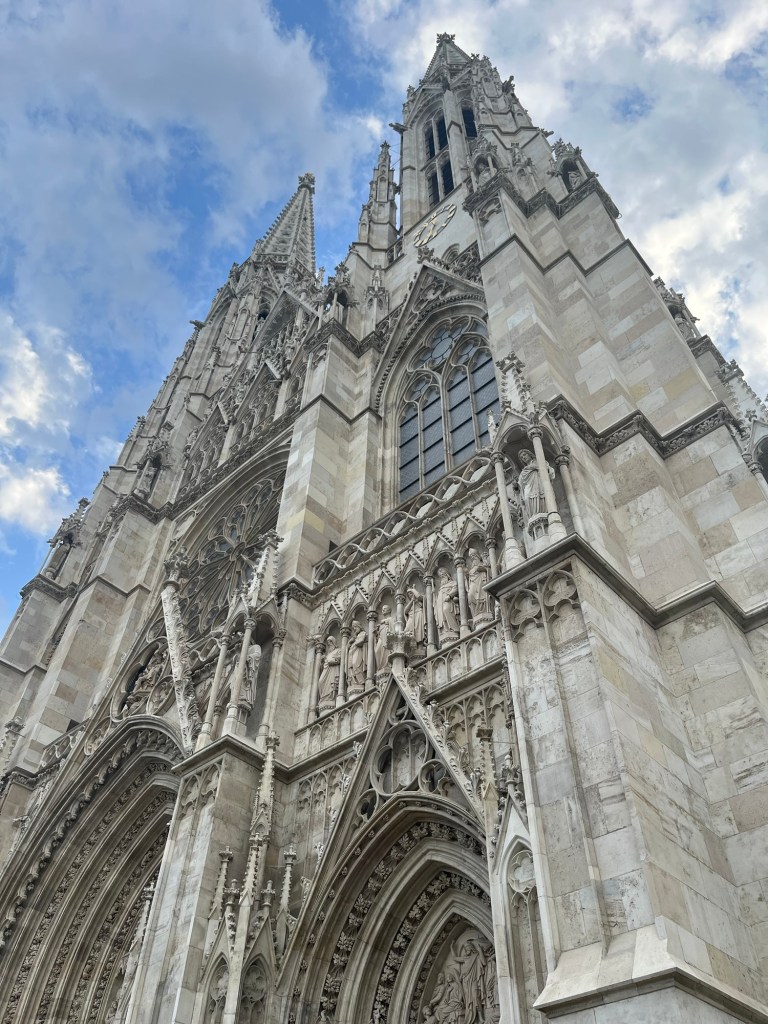
Just to show you how pretty a city this is, here are some photos of things Augusto and I saw together – and some places I went on my own:

Not only did Augusto and his wonderful wife Sabrina show me so many sights around the city, they did it with great kindness and warmth. I didn’t feel like a visitor. I like I belonged.

I felt like I belonged because they made me feel happy, they made me feel loved. And on a difficult day – Mother’s Day. I know my mom was smiling looking down at me making new friends on my journeys. To travel solo is not to travel alone!

There’s another reason I think I felt I belonged. This is the surprise. As I sat down to write this blog, I remembered a genealogy project I did for Hebrew school at my synagogue growing up. I listed where all my ancestors were from. And I’ve done a good bit of genealogical research since then. I know I’m Jewish – from Lithuania and Ukraine on my mom’s side. And on my father’s side, part Romanian and Hungarian. I had the strangest flashback though to the poster with my Hebrew school genealogy project. It said Vienna, Austria.

And that’s because my great-grandfather Max Grossman, a Yiddish speaker, was born to two Austrian parents. He may have even been born in Austria – it’s not clear. It is he who was on my school poster and I verified it on my family tree. For people who don’t believe in spiritual energy – I’m sorry but this is too clear to be anything other than beshert. “Meant to be”. Min hashamayyim. From the Heavens.

I love Vienna. It has a horrific antisemitic history and also a lot of amazing intercultural cooperation and glory. And it has what has to be one of the most resilient Jewish communities in the world. That’s one of the places I draw my resilience from. It’s quite literally in my blood and I had no idea the whole time I was there.

Vienna- I’ll be back!

The Magic of VerMontréal

This may be one of my favorite vacations ever, so be sure to read all the way through!

When I lived in Israel, I used to travel all the time. It was healing, it was wholesome, it was exciting.

Towards the end of my time in Israel, I was struggling with my mental health and was experiencing transient homelessness as I made my way across Europe, eventually settling in Philadelphia in early 2019. There, I regained my stability and reconnected with my mom and rest of my family.

Coming back to D.C. that fall was hard. I successfully managed to rebuild my relationship with my family and find a great mental health team to give me the strength to live safely as a man with bipolar disorder. And D.C was full of memories, good and bad. It was supposed to be a temporary stop on my way back to Israel.

A few things happened. First of all, my mental health dictated that I needed to really settle down somewhere for a while and get treatment. Second, I needed to strengthen and heal my relationship with my family after being out of touch for several years. And third, the pandemic started months after I came home. Then my mom was diagnosed with Sarcoma, an aggressive form of cancer.

Going back to Israel or traveling for any extended period of time was out of the question. My health and my relationship with my family came first. It was a difficult decision- I missed seeing the rest of the world and exploring. I put my (then) plans for rabbinical school on hold. And I prioritized my mom. Which was the right thing to do. Because three years later, I would lose both her and my stepdad David to the very same type of cancer.

The past few months have been rough. My mom and I spent our last Passover together, she passed away on April 18, and we started packing up my childhood home. I nearly had a manic episode after my last packing day with friends. I have another packing day tomorrow and frankly I’m nervous. But I am doing my best. I am supported by incredible friends and family and a mental health care team that is standing with me every step of the way. Oh, also we went through my first Mother’s Day without mom here and Father’s Day (for my stepdad) is this Sunday. It’s all too much.

Given all this stress, I could have just stayed put. But I decided to do what I do best: travel. Explore. Engage other cultures. Immerse myself in nature.

For the first time in five years, I took a 10-day vacation. And it was worth every moment.

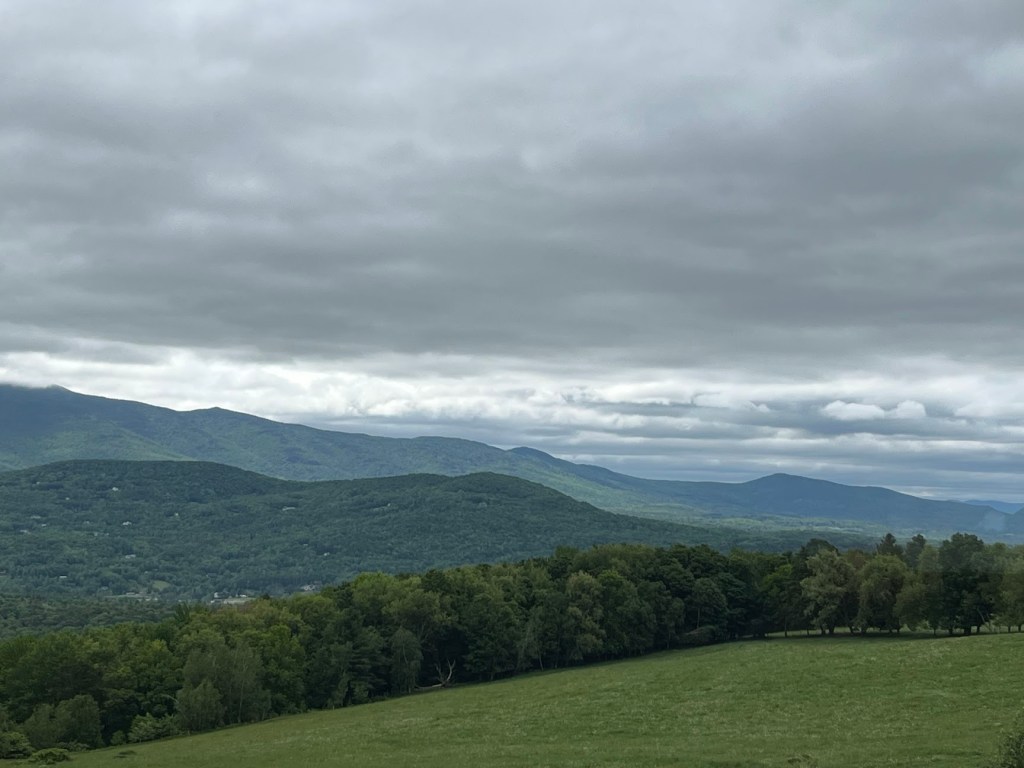
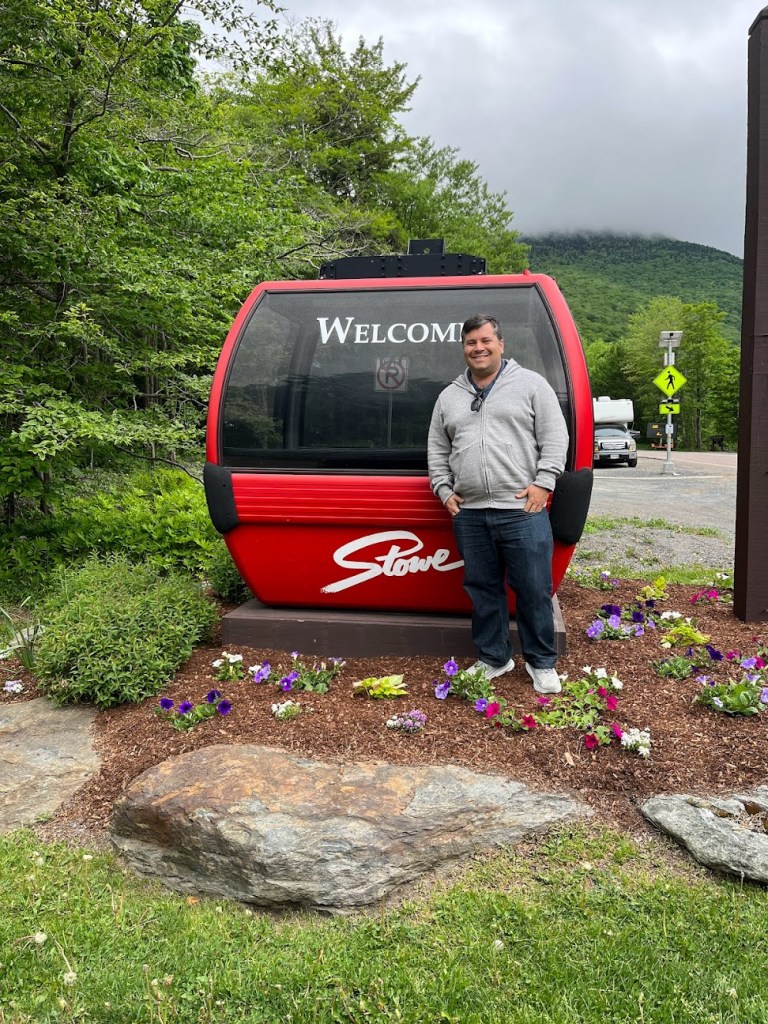
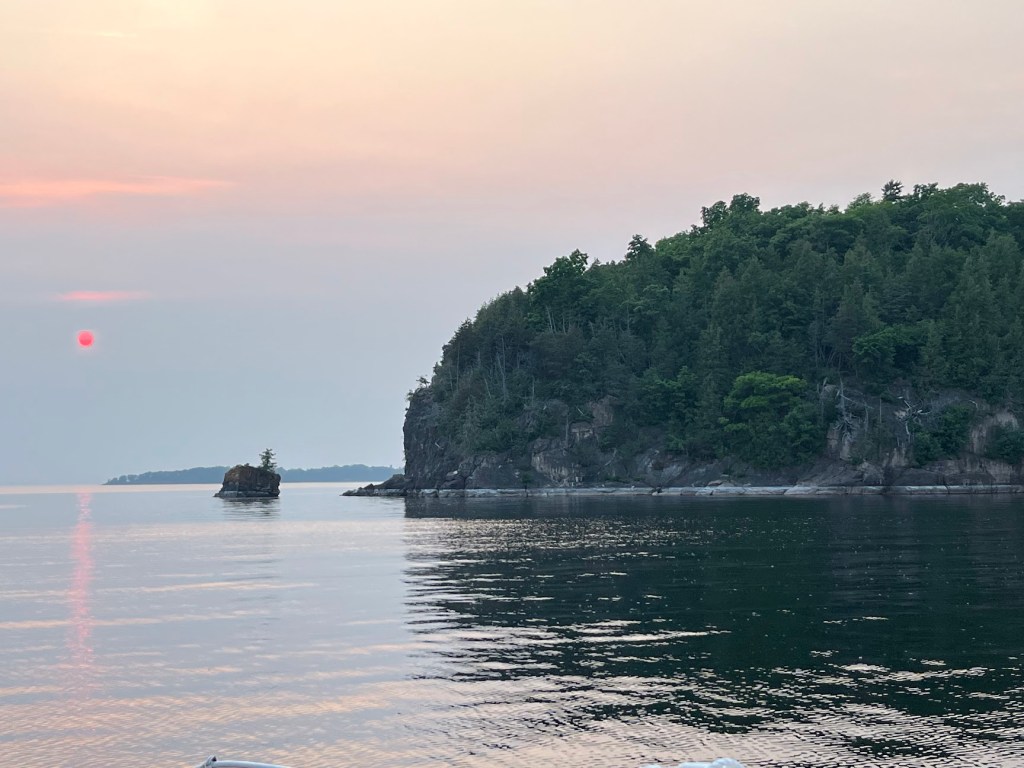
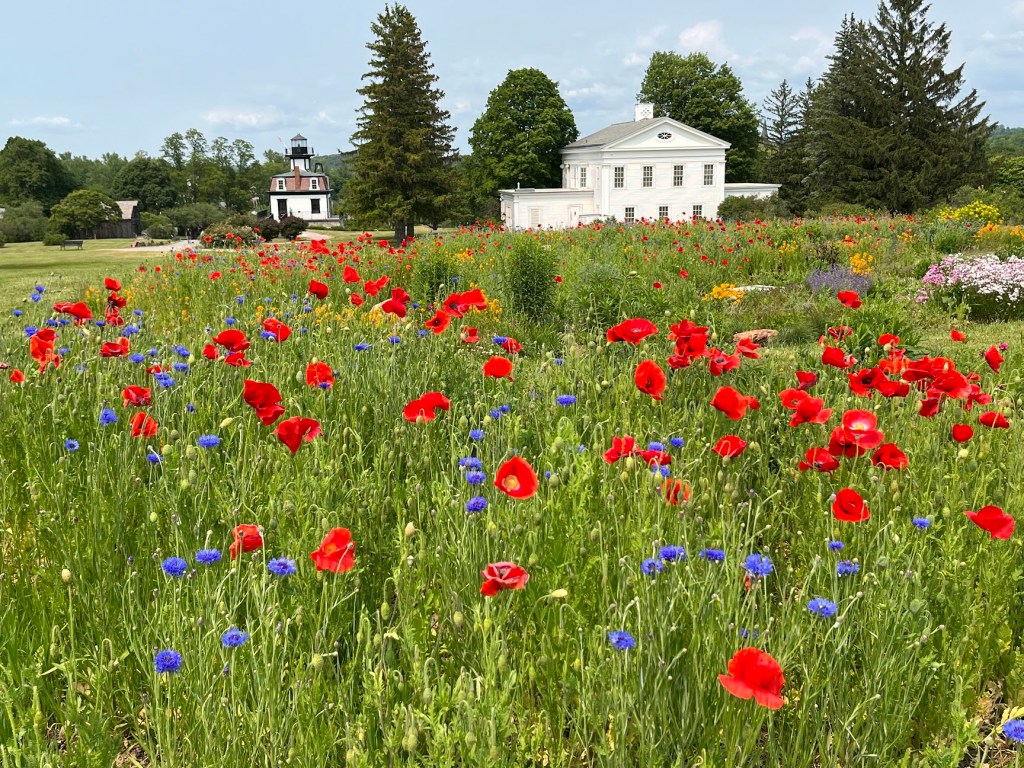
I started in Vermont. For those of you who haven’t been to this tiny little state, it is absolutely gorgeous. Take in some of the scenery:

I felt healed by all the green and nature around me. I hiked for the first time in many years and went sailing on Lake Champlain with a wonderful group of people. I met up with my friend Neale’s sister Catherine (mom loves Neale!) in Burlington, one of the cutest cities I’ve ever visited.

I feel incredibly lucky that this cute little green paradise is just an hour and half direct flight away from D.C. It took a little time to get adjusted to being on vacation and putting a pause on some of my worries, but once I did, I felt better than I have in years. No pandemic, no parents’ cancer looming over my head, just vacation and travel.

In Vermont, I took a maple syrup tour, met a Von Trapp, and took an urban forest tour with a quirky (and smart!) guy who told me he once climbed a tree and found underwear in it! I met tons of friendly people, including my cab driver Joe from Long Island, who helped me get around rural Vermont.

Then, it was time to cross the border. I took a cab from Vermont to Montreal, one of my favorite cities. I was there last summer on my first solo trip there, and had been twice before with other groups of people. I stayed at my favorite AirBnB and had a blast catching up with the host. I may even go back later this summer because I had so much fun!

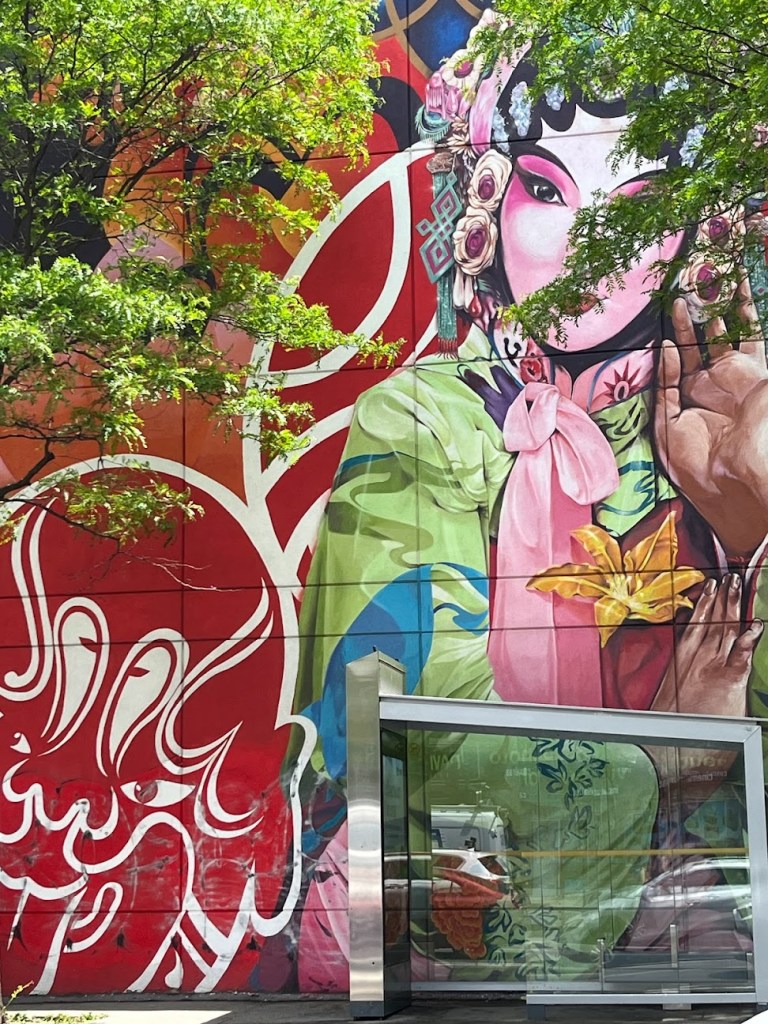
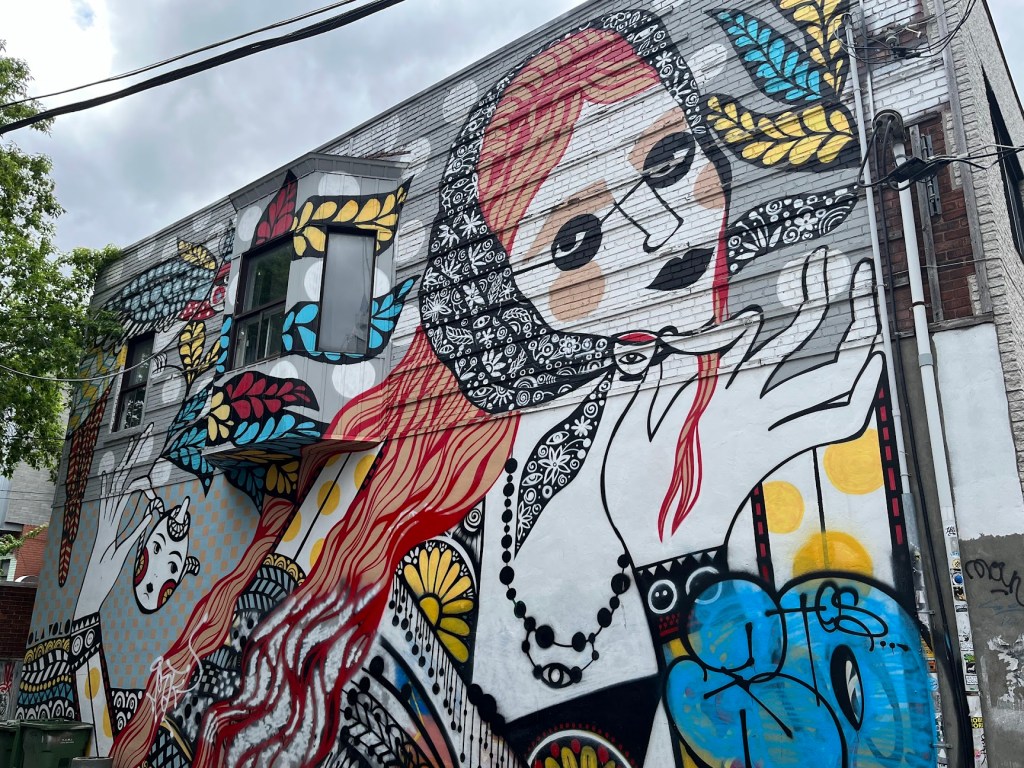
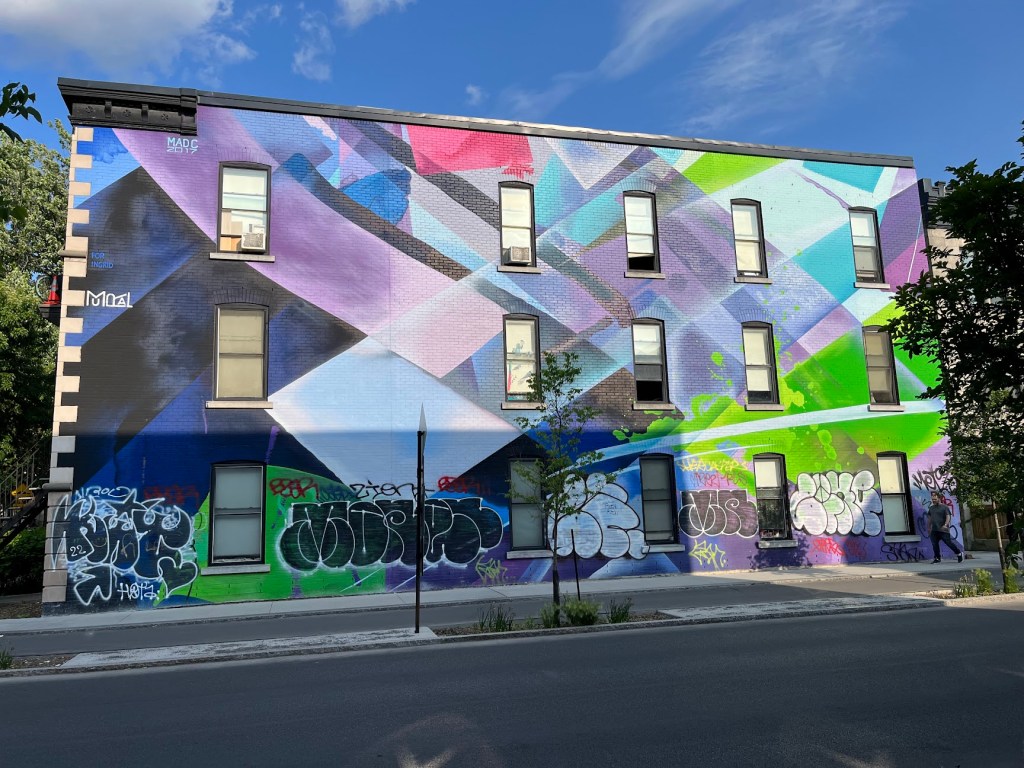
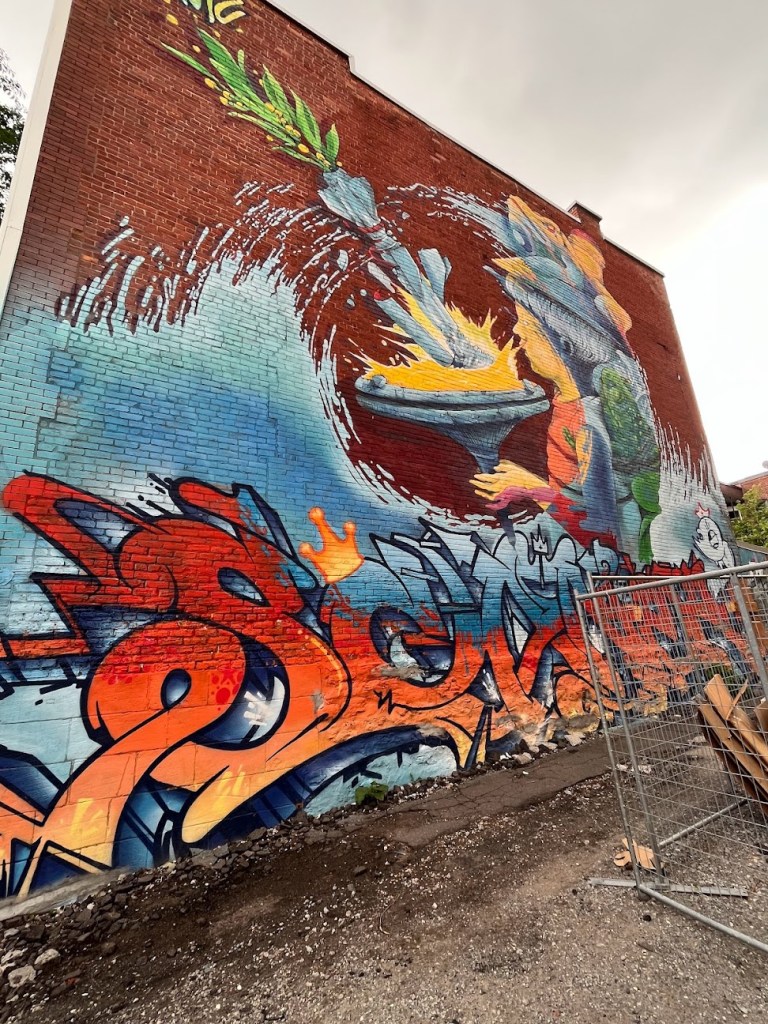
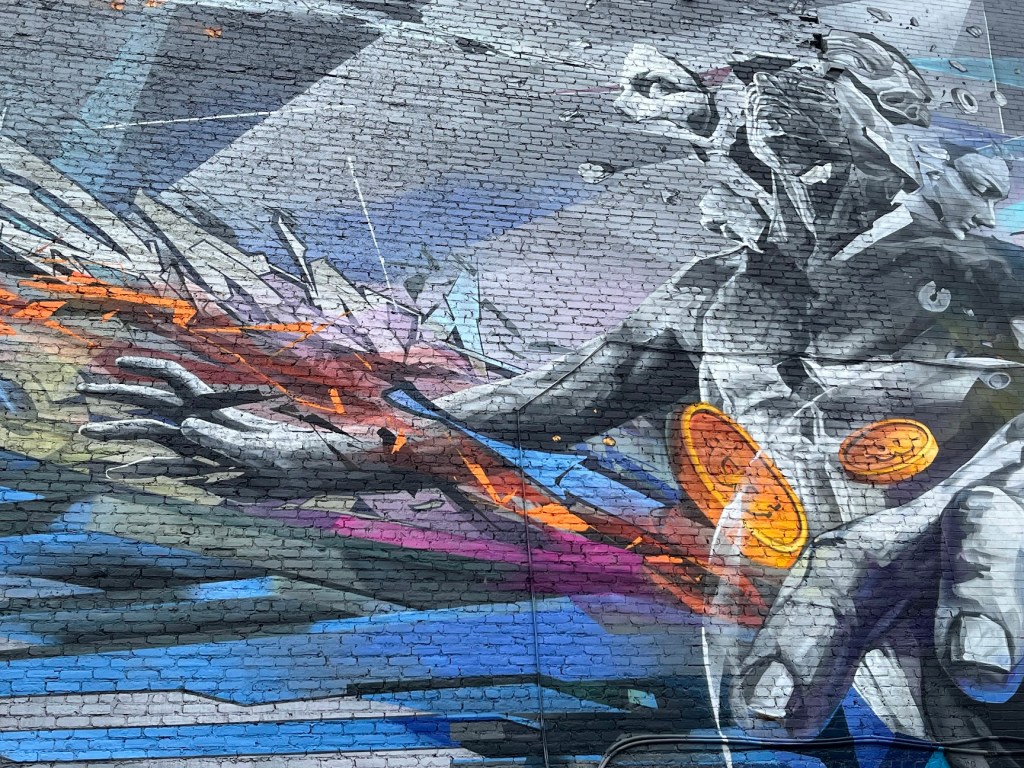
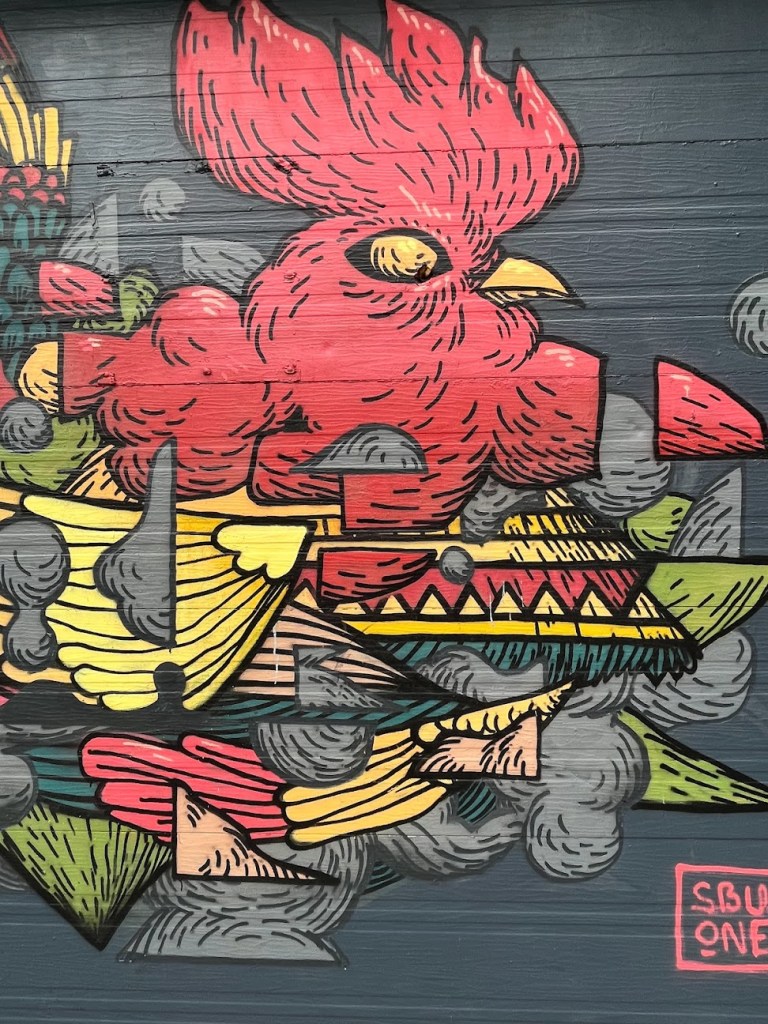
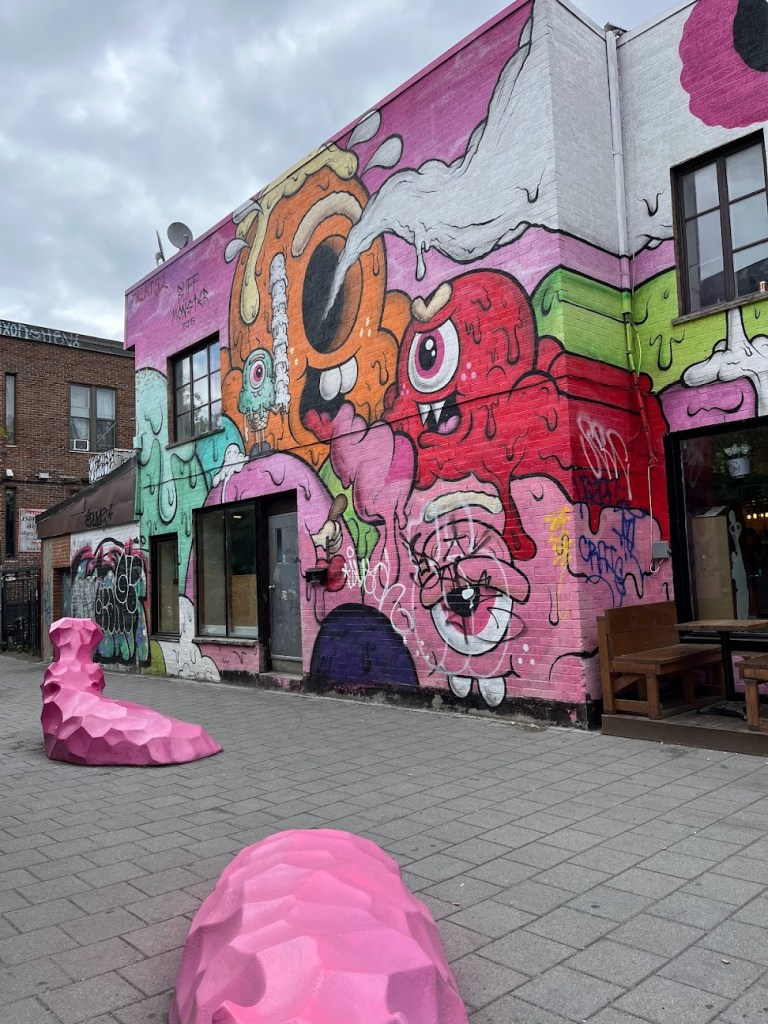
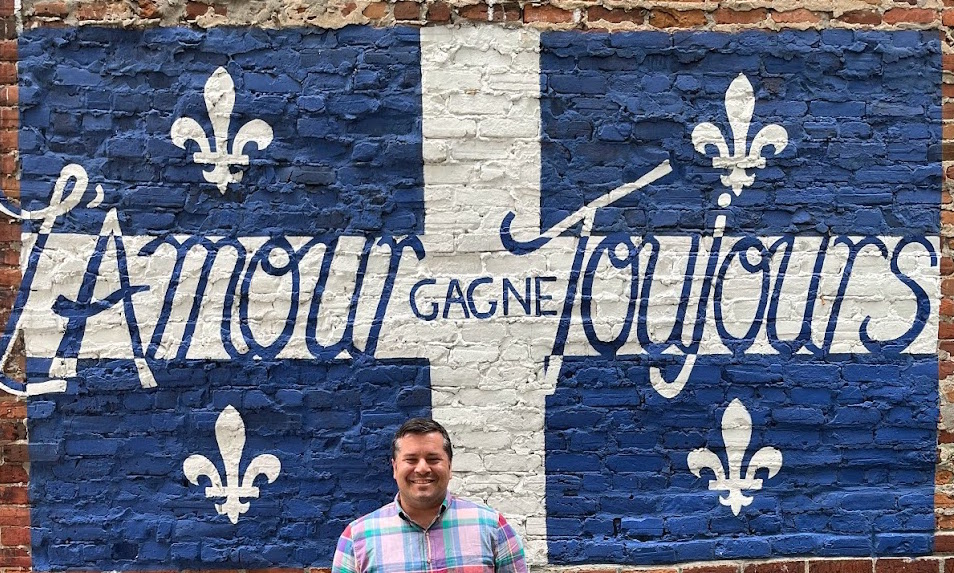
While earlier in my trip I had been calling friends because I was feeling lonely, by the time I was in Montreal, I was feeling great. It’s such an energizing and creative city. Look at some of the cool murals:

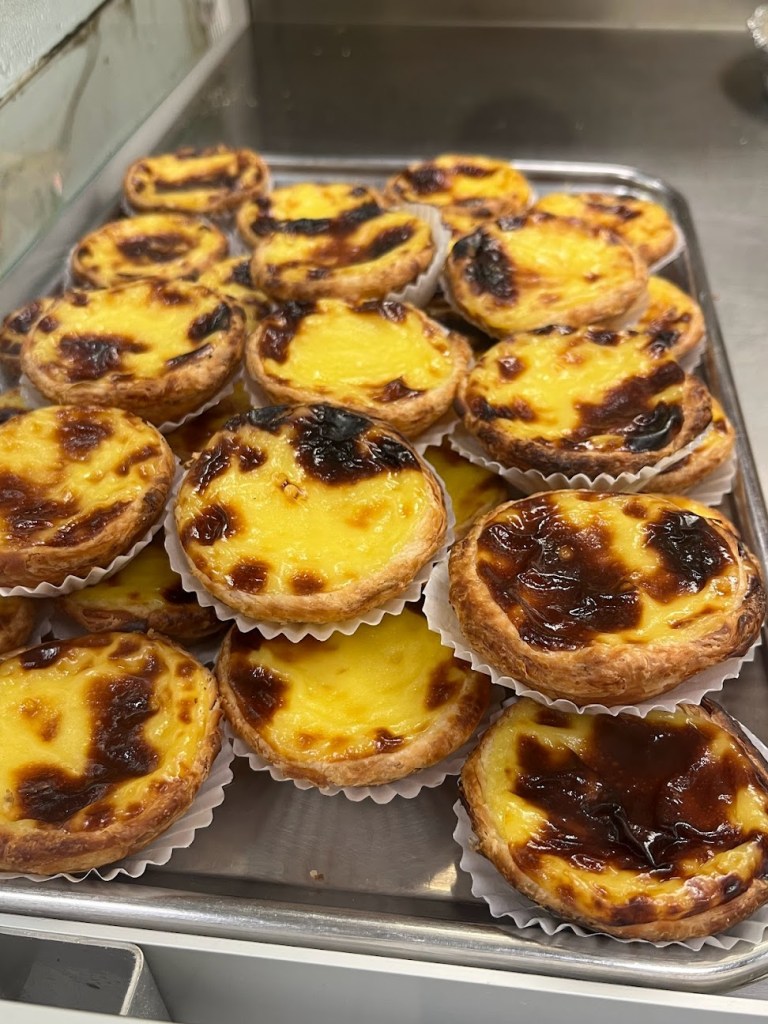
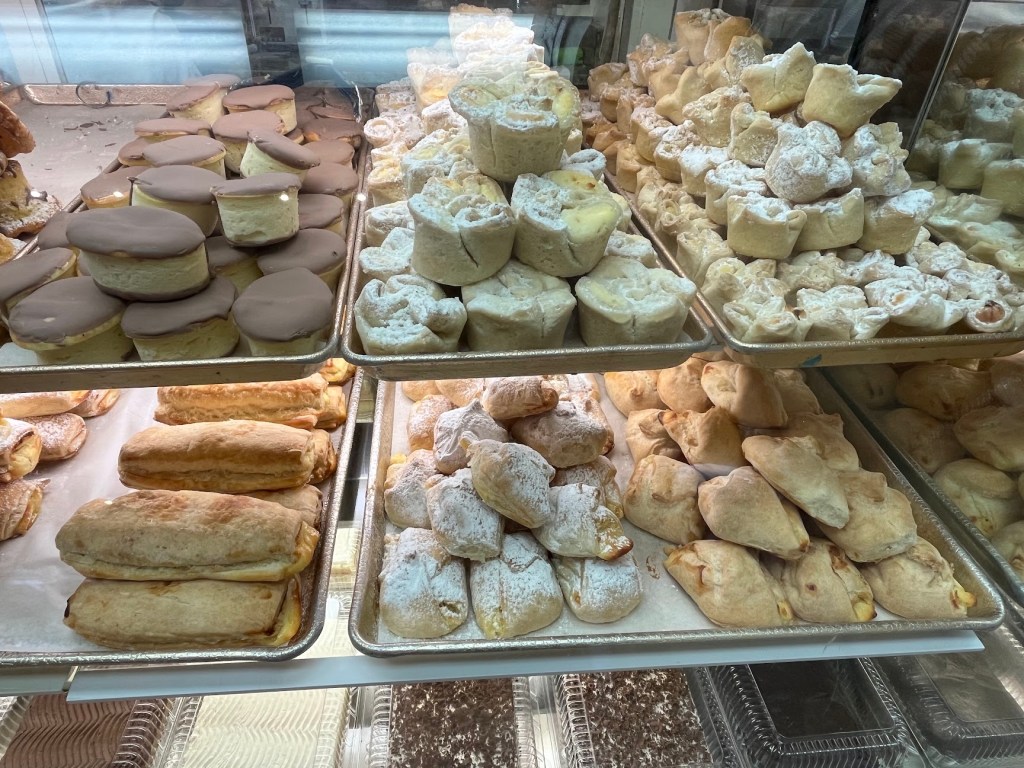
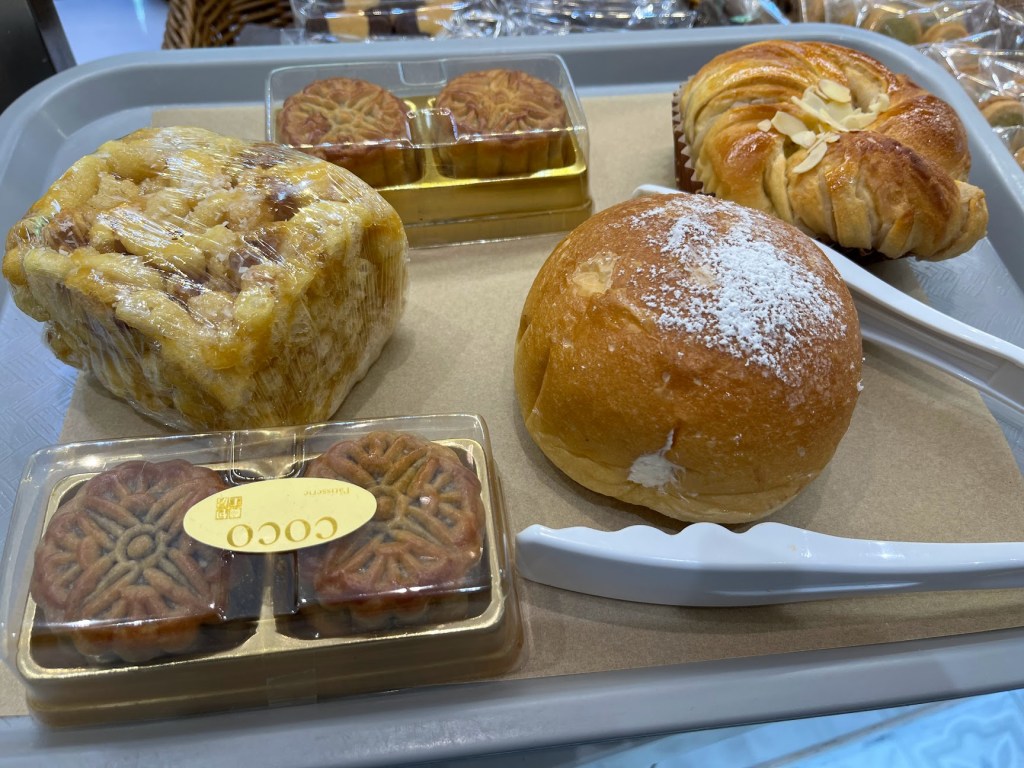
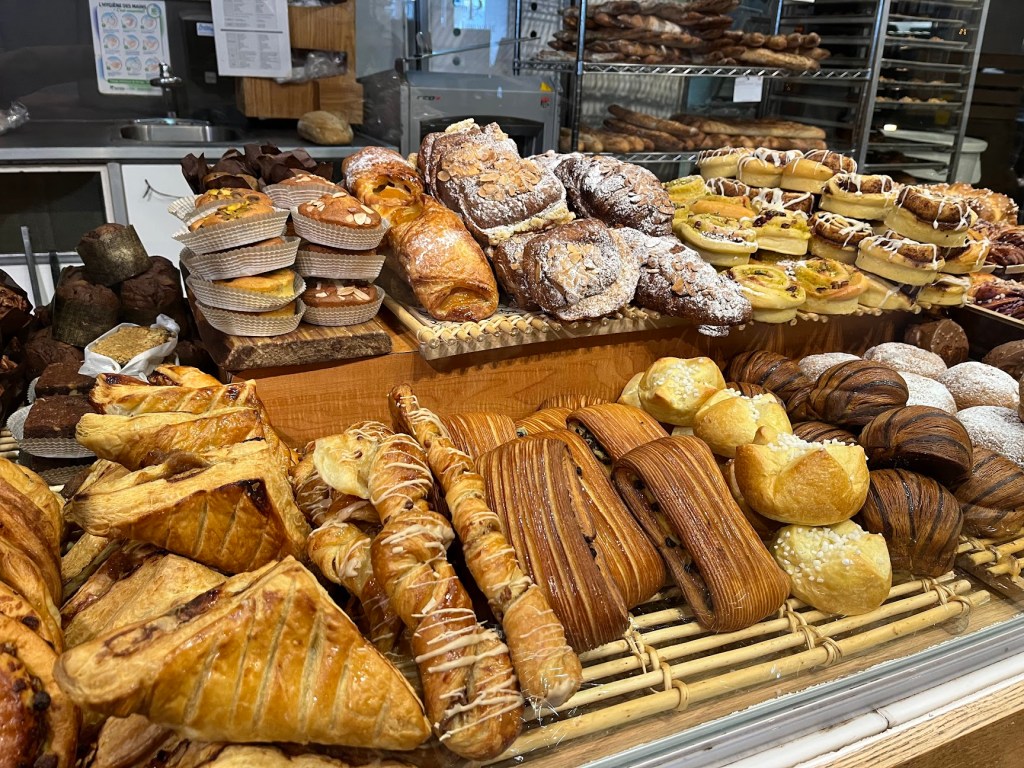
It’s not only the beautiful street art that makes this city special. It’s also the amazing food and diverse cultures. Take a look at some of the Hasidic Jewish, Chinese, Portuguese, French, and Italian pastries I had:

Over the course of just five nights, I spoke English, French, Spanish, Arabic, Hebrew, and Portuguese! And in the past, I’ve even gotten the chance to speak Yiddish and Catalan! That’s all of my languages in one beautiful city.

I got the chance to take a “Rabbis and Radicals” Jewish history tour of the city with the Museum of Jewish Montreal. My guide, Claire, was a fellow queer Jew who had lived in Israel just like me. It made the experience extra special and I highly recommend the museum’s walking tours for anyone visiting the city.

At the end of my trip, I got to add music to the mix. I saw Isabelle Boulay, one of Quebec’s premier singers and a Franco-Country star. I love this kind of music. It was inspiring. My mom raised me to love music. It always infused our house. Sometimes our tastes overlapped, other times they diverged. But we always loved a good tune together. And she would support me even when my tastes were different.

I could go on and on about the magic of Montreal and Vermont- or as I like to call this space only 1.5 hours apart, VerMontréal. It is a place filled with greenery, with culture, with history, with friendly people. I will be back.

My journey has evolved over the past few years. You never know where life – or death – will take you. But the only thing you can be certain of is that if you don’t “go for it” now, you’ll regret it later. Book the ticket, dip into your savings. You can’t take money to the grave. But you can live a fun, meaningful, thoughtful, and creative life. And give back to others.

To all the Uber drivers, cab drivers, AirBnB hosts, hotel employees, sailboat captains, forest tour guides, and others who made my trip so special – thank you.

And to my mom, I miss you every day. And I will continue to live my life to the fullest and most meaningful way possible in honor of how you taught me to live.

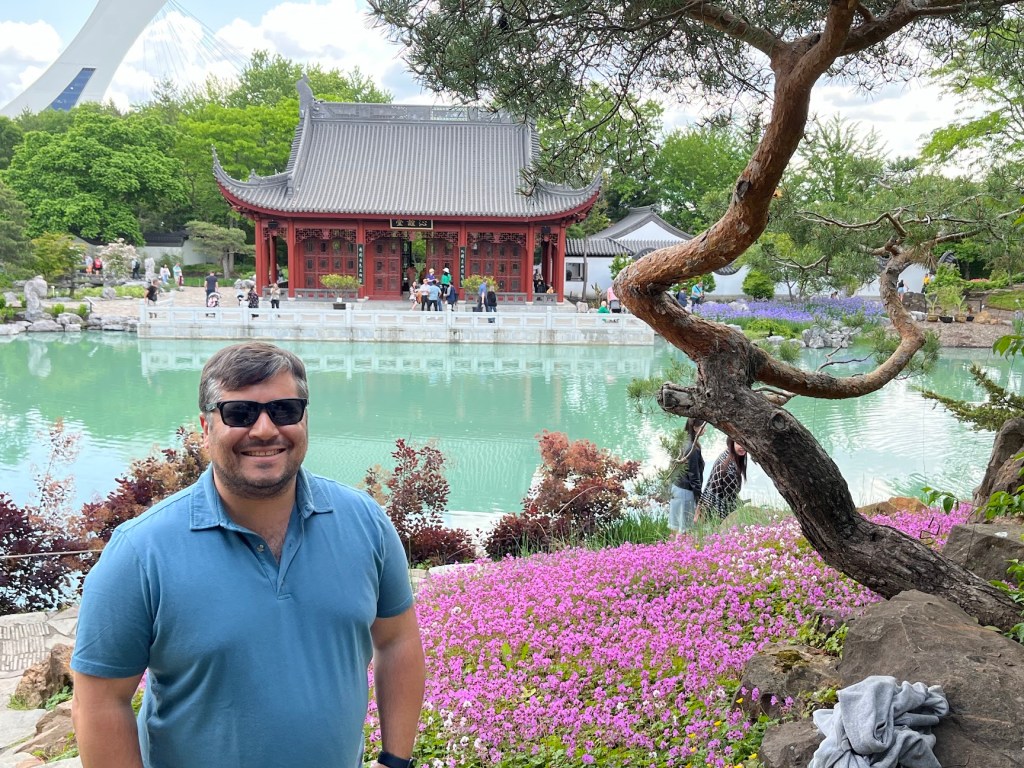
With that, I’ll leave you with some beautiful pictures of the Montreal Botanical Garden. My mom and stepdad loved plants and flowers, and I hope they enjoy seeing some of the beautiful ones I got to enjoy on my trip. I love you guys.

How Montreal saved my Judaism

I just got back from the most amazing trip to Montreal. I had been before, but with groups of people who spoke only English. This time, I was going to do it in français. And on my own.

I found the past three years so difficult. I love to travel but because of Covid, I hadn’t been on a plane since I led a Birthright trip in Summer 2019. I had done some smaller trips to Philly, Richmond, Annapolis, Baltimore, and Charlottesville, all with friends. Which was great. I got to see new places and have a relaxing change of scenery. And rebuild my travel skills.

I spent the better part of two years traveling when I lived in Israel. I visited 120 Israeli municipalities and 10 European and Middle Eastern countries. And what was so amazing about this experience in Montreal was that with a little preparation, I was back in the game. Perhaps even better than before.

Montreal, for those who don’t know, is one of the most multicultural cities on the planet. It is home to large immigrant communities and diverse religious groups, including a significant Jewish presence dating back to the 1700’s. The Jewish presence is integral to the Montreal’s cultural identity. Of the three most famous Montreal foods, two are Jewish- bagels and smoked meat sandwiches. And these bagels, by the way, are in fact better than the best New York bagel I’ve ever had. They are cooked fresh 24/7 in wood-fired ovens and are absolutely delicious.

To be honest, as I’ve written about lately, I’ve felt distant from my Judaism. So I wasn’t sure how much I was going to engage with it on this trip. After all, I wanted to practice my French. Most Jews in Montreal are anglophones. And I was just tired of Judaism. I had signed up for a French-language Jewish culinary tour and if it hadn’t been in French (which excited me!), I’m not sure I would’ve gone.

But in French it was and something about the combination of French and Judaism works for me. It adds a layer of culture and interculturality to the experience. I found myself as the only Jew on the tour, including the guide, who was a non-Jewish woman from Quebec. The other participants were a French woman and a Quebecois man, both non-Jewish. While the guide was very knowledgeable, I ended up getting the chance to add my own commentary and knowledge to the tour! By the end, the French woman said the Museum of Jewish Montreal should hire me 🙂 . I was flattered.

The day before the tour, my connection to Judaism began to revive – or refashion itself – as well. I found myself in the Mile End, a heavily Haredi (ultra-Orthodox) neighborhood. It was Shabbat and even though I was wearing decidedly non-Orthodox attire (a bright polo and jeans), I couldn’t help but wish the people walking by a “git shabbes”. A good Sabbath. And for the most part I got smiles and a “git shabbes” back.

Solo travel can be hard but little moments like this when a gay Reform Jew is greeting Hasidic brethren in Yiddish – that just makes my heart warm. And they weren’t the only people making my heart feel full. I’m part of the Yiddish-language community in the U.S. A French Yiddish-speaking klezmer artist and friend Eleonore introduced me to her Syrian KLEZMER VIOLINIST FRIEND. Who lives in Montreal! Yes, you read that right. So Zafer, the Syrian klezmer artist, and I did Greek food and talked about all things Jewish and Middle Eastern and queer! Because our commonalities were incredible. It’s the kind of mix you really only find in few places on the planet. Montreal is definitely one of them.

Having done the Jewish food tour, spoken a ton of French, and met a Syrian klezmer violinist, I had arrived at my final day (I did a bunch of other non-Jewish stuff but this blog can only be so long!). My last day I could’ve just gone to a park and eaten cheese with a baguette. Which sounds really nice right about now. But instead, I went back to the Mile End, bought a t-shirt from my favorite bagel place and went to a Hasidic bookstore in search of Yiddish books. I even got a compliment on my Yiddish from a young Hasidic man on the street who I asked for directions from!

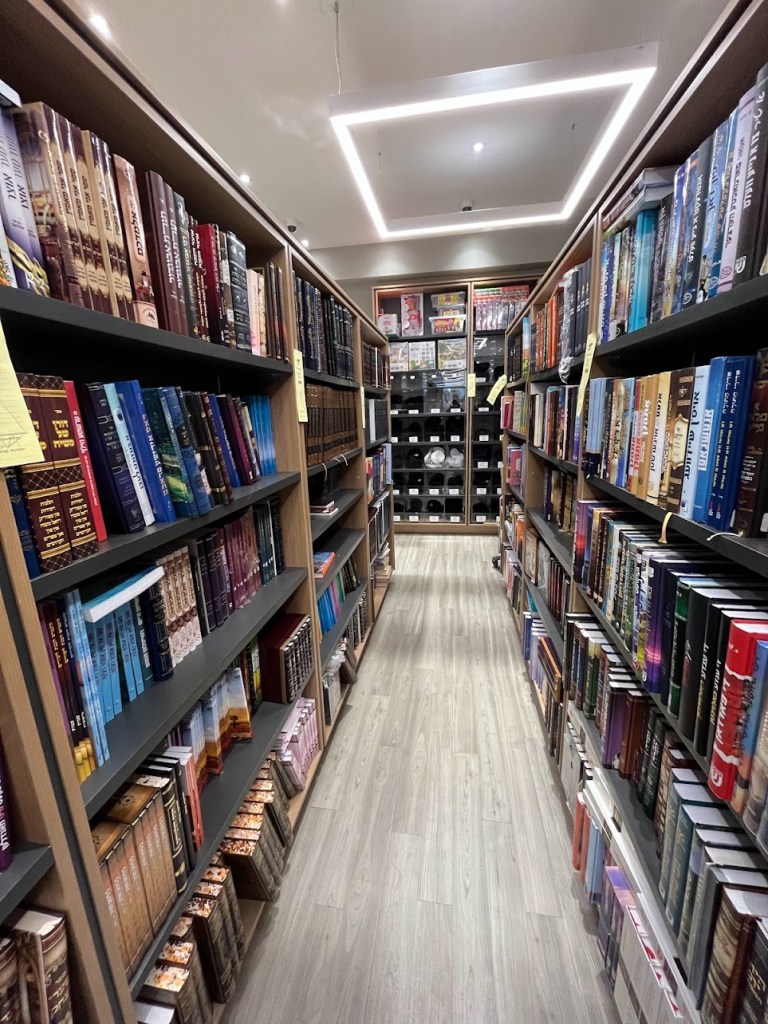
I found the bookstore and this entire section (and more) was just books in Yiddish:

The bookstore employee’s eyes lit up when I said I wanted Yiddish books. He showed me children’s books, Mishnah in Yiddish, and Siddurim with Yiddish translations of the prayers. I must’ve spent an hour and a half in there. I wanted to buy everything! And while my eyes initially drifted towards the children’s books (which are so cute!), I found myself surprisingly attracted to the religious books given my recent doubts about God. In addition to some children’s stories, I decided to buy a part of the Mishnah and, most importantly a Siddur, or prayerbook. Something about the Yiddish softens the prayers for me. So they don’t seem so scary or prescriptive. They feel a little queer. And I like it.

So to the province with a blue and white flag just like Israel, je t’aime. Ikh hob dikh lib. I love you! Because of you, I feel a renewed connection to my Judaism. It’s a Judaism that intersects with language. With Hassidism. With queerness. And even with Syria!

I’ll be back soon. Because to travel, to wander- that is to be a Jew.

Per què sóc jueu i independentista

Per als llectors que no em coneixen, sóc un jueu americà i israelià.  Vaig aprendre el català fa uns anys a Georgetown University a Washington, D.C.  Vaig prendre un curs d’un semestre, subvencionat per la Fundació Ramon Llull.  Encara que ja estava interessat en Catalunya abans, aquell aprenentatge em va canviar la vida.

Molts cops, la gent pensa que només les llengües amb més parlants importen.  Com si la quantitat de boques parlant representés la saviesa o l’intel·ligència.  Però no és veritat.  Podem pensar, per exemple, al cas del grecoparlants, que són només 13.4 millons, però que sense dubte han contribuït fenomenalment a la civilització occidental.

El cas dels catalans no és diferent.  Amb més de 10 millions de parlants, el català forma part d’una civilització de fa més de mil anys.  Una civilització amb literatura, música, dansa, arquitectura, poesia, i més.  I cada aspecte amb el seu caràcter únic i local.

Mil cops, quan vaig dir que parlava català, la resposta ha segut “per qué?  Cada català parla castellà, és una llengua petita, i no et serveix més el xinés o alguna llengua ‘important’?”  I la meva resposta és: “una llengua és un dialecte amb un exèrcit i una marina.”  O sigui, que a qualsevol lloc al món, podem trobar saviesa i riquesa cultural.  No importa el tamany de la llengua- encara si no té poder polític, val la pena aprendre.  De fet a vegades les llengües sense tant poder polític ofereixen una perspectiva nova i especial.

No és gaire curiós que aquesta expressió coneguda entre lingüistes i activistes és, de fet, una contribució de la meva civilització, la jueva.  El lingüista Max Weinrich, un acadèmic que s’especialitzava en la llengua ídix, la llengua dels meus avis.  I recenment, una llengua que vaig aprendre jo per a conectar-me amb els meus arrels culturals.  És una llengua minòritaria que, igual que el català, ha segut menyspreada pel seu tamany i “falta d’importància”.  Molts cops, racistes es refereixen al idioma com un “dialecte” de l’alemany, igual que el prejudici que diu que el català és només un dialecte del castellà.

És precisament per aquest menyspreu i imperialisme cultural que com a jueu, m’identifico amb el moviment per l’independència de Catalunya.  Perque jo sé bé que les forces majoritàries del món- no podem comptar amb elles per a protegir les nostres cultures.  Som pobles que hem patit la discriminació i la persecució- i del mateix estat espanyol.

Llavors comparteixo la meva solidaritat amb el poble català durant aquest moment difícil.  No sé qual sera el resultat, però vull que sapigueu que teniu el meu suport.  I seguiré parlant en català, en castellà, en anglés, en hebreu, en qualsevol llengua possible, per a que el món s’enteri de la justicia de la vostra causa.

Perque els pobles petits importem.

Una abraçada,

Matt Adler

Washington, D.C.

catala

Dialoguing in the face of hopelessness

Let’s face it- things look dire when you read the news lately.  North Korea this, Iran that, the Middle East generally speaking a mess.  Democrats who won’t speak to Republicans who won’t speak to Democrats who won’t speak to moderates who won’t speak to liberals.  It’s a dizzying and dismaying amount of isolation and siloing of society.

A friend recently messaged me upset about this breakdown in communication.  A liberal herself, she found it frustrating when she met people on her own side of the aisle who refused to recognize the humanity of those who disagreed with them.  That while some people clearly lie outside the pail of rational debate, there is room for disagreement in a democratic and pluralistic society.  And that if we resort to the tactics of extremists on the other side, what do we, in the end, become?

To this end, I’d like to share a story.

I found myself in need of an adventure.  And my adventure begins with Yiddish.  Yiddish is a Jewish language I speak, the language my own ancestors have used on a daily basis for countless generations.  A mishmosh (a Yiddish word itself!) of Hebrew, Aramaic, Latin, Old French, medieval German, Polish, Russian, and more- it is a mixed language much like English.  Enriched by its various components.  It allows for a degree of nuance.  For instance, the word in Yiddish for an acquaintance is “froynd” (“friend” in German), whereas a close friend is a khaver, which means friend in Hebrew.  It indicates a lot about the society Yiddish speakers lived in and how social and familial ties developed.  As did persecutions.

So Yiddish, for all its various components, is probably about 70% comprised of medieval Germanic words (words which occasionally differ in meaning from their Modern German counterparts, but bear a strong similarity).  Pennsylvania Dutch, as the famous scene from The Frisco Kid goes, is remarkably similar to Yiddish.  As a pre-standardized form of German passed down from generation to generation here in the U.S., I’ve found it rather comprehensible to me.  I tested my theory out by speaking Yiddish to an Amish woman in Reading Terminal Market in Philadelphia- she smiled from ear to ear and responded back in Pennsylvania Dutch.  She said she had heard of similarities between the languages and you could tell she was tickled to find out it was true.  As was I 🙂 .

A few weeks later, I hopped on a train to Lancaster, PA, home of the Amish heartland.  I went to another market and tried out my Yiddish while buying some whoopie pies (a delightful cream-filled dessert made by the Amish- they are really good at making dessert!).  Some young women smiled and liked chatting with me.  A few didn’t speak Pennsylvania Dutch, but were nonetheless happy to see me reaching out to learn and share about our shared cultural heritage.

And one woman was just mean.

After buying her decidedly delicious whoopie pies and complimenting her on them, I tried out my Yiddish-Amish experiment.  Her response was to tell me a story about a Jewish woman she knew who she used to call a “dummer yud”.  That’s German for “dumb Jew”.

Dumb-founded, I didn’t know what to say.  I tried to ask her why she would use such a mean phrase, even about a woman she may not have liked.  She simply smiled, my religious or social or emotional arguments completely ignored.

I left deflated.

This dichotomy explains the rough terrain we’re operating in today.  Especially when it comes to dialoguing across cultures.  Faced with mistrust, I understand the impulse to protect yourself.  It’s actually a positive one because we all deserve safety and to be treated with respect.

It can also be a negative one if taken to an extreme.  If I don’t ever make myself vulnerable, then I won’t see moments of light, like when the young woman smiled from ear-to-ear in the market while I spoke Yiddish.  The first time she had ever heard my language or experienced my culture.

And if I always make myself vulnerable- or hadn’t distanced myself from the mean anti-Semitic woman- well, then I won’t be particularly happy or self-fulfilled.

This is the great challenge of communicating in a time of deep polarization.  It’s not easy and I’m always learning and re-learning my boundaries and trying to protect myself while putting myself out there.  Because if we never take risks, we never reap rewards.  For ourselves or for those lives we could touch with compassion and kindness.

So be the voice of love.  When in a group of like-minded people, offer a word of kindness about “the other”.  Whether that other be a Republican or a Democrat, a Muslim or a Jew, an atheist or a religious person, an African American or a white straight cis-man from Appalachia.  We are people.  It doesn’t mean all ideas fly or should be accepted as true.  It means that we ultimately share a lot in common with more people than we think- and should take advantage of that to build more compassion in our society.

If there is a solution to our polarization, perhaps it lies in each of us stepping just enough outside our comfort zones to provide some meaningful contact with people of different backgrounds.  Even some backgrounds that could make us feel scared- sometimes justifiably, sometimes maybe surprising us with their kindness.  Or a combination of both.

And it lies in being understanding.  Having spoken with five or six different Amish people in Yiddish and gotten positive or neutral reactions from all but one of them, I am better able to see nuance.  So that instead of sitting only with the “dumb Jew” comment (which should, nonetheless, be noted to protect myself), I can also recall the smiles of the young women touched by my actions.

As I left Lancaster filled with whoopie pies, I felt a dash of hope.  A hope I wish for all of you.  That nuance need not mean being neutral, nor negating our fears or feelings.  But that stepping outside and adventuring and getting to know our neighbors as equals- that is a true step towards happiness and wholeness.  For us, and for the greater society we share.

The Hebrew letters you can’t read

What’s in a word?  When we think about linguistic changes over time, we usually think about words and accents.  How did the Ancient Greeks pronounce Homer’s Iliad? Why does the word “mashber” in Biblical Hebrew mean precipice or edge, but today means “crisis”?

One thing you might not think of is how our script changes.  After all, even if English words are different today than 400 years ago, they’re still written in Latin letters.  Even if you’d be surprised at how some of them have changed.

But some languages have had their scripts completely change alphabets over time.  For one thousand years, Turkish was written in Arabic characters. For only the past hundred years has it been written in Latin letters.  Which means a Turkish person today who does not read Arabic characters cannot read his own history.  She has to rely on a translator to re-write old texts in the modern alphabet. It’s a pretty strange thought.  Think in reverse- what if the original Shakespeare had been written in Arabic characters? And you had to rely on someone to connect you to your own history.

It’s a question that is very relevant for Jewish studies.  First things first, Ancient Hebrew wasn’t written in today’s aleph bet.  It was written in letters that look something like a cross between Japanese and hieroglyphics.  Take a look:

image1

Today’s Modern Hebrew alphabet is descended from our sister language, Aramaic.  Aramaic is the language of the Talmud, of the Kaddish prayer, and of not a small number of Kurdish Jews in Jerusalem and Christians in the Galilee village of Jish.  This same Aramaic alphabet has been used for a lot of Jewish languages, including Yiddish, the native tongue of millions of Ashkenazi Jews across time.  Take a look at this 19th century bilingual Yiddish-Hebrew machzor, or High Holiday prayerbook, from our collection.  Or the 11,000 Yiddish books digitized online- for free- at our friends the Yiddish Book Center.  Or pick up a copy of Der Blatt in Bnei Brak.  Or visit Beit Shalom Aleichem’s library in Tel Aviv.  You’ll see those Aramaic letters everywhere.  Telling the story of the Jewish people.

What’s interesting is that even these letters have changed over time. One of these different forms is called Ktav Rashi, or Rashi script.  This alternate way of writing is named for the famous medieval rabbi.

What’s really inspiring about Jewish history is that what happens one corner of the globe inevitably ends up in another.

Rashi script (and its sister Yiddish script called vaybertaytsh), although named for a famous Ashkenazi rabbi, is actually of Sephardic origin.  Jews originally from Spain and Portugal, expelled and persecuted by the Inquisition, sometimes successfully escaped to other countries. They brought with them an amalgam of different Romance languages- medieval Catalan, Castilian Spanish, Portuguese, and more.  Often containing Arabic and Hebrew influences.

These Jews, often from distinct parts of Spain and Portugal with different languages, eventually melded their tongues into a new one: Judeo-Spanish.  Sometimes popularly called Ladino, but most scholars prefer the former term, so we’re going to use it. This tongue developed in a variety of new countries, such as present-day Turkey, Greece, Serbia, and more.

Judeo-Spanish then came to take on local influences in terms of vocabulary and pronunciation.  Making it as mixed and rich a language as Yiddish or another hodgepodge tongue you’re reading right now: English.

This language was written in the same Aramaic alphabet we use today in Israel and in synagogues around the world.  But with a twist: it was written in a form of the Rashi script. Take a look below at our copy of Istanbul’s Sephardic newspaper “El Tiempo” from January 2, 1896.  To this day, even in Modern Spanish, this remains a popular title for newspapers.  In Washington, D.C., you’ll find newsstands with “El Tiempo Latino”.

Here’s the news out of 19th century Istanbul*:

unnamed

If you’re a Hebrew speaker, you’ll notice something curious.  The title of the periodical and the headlines are written in the Modern Hebrew block alphabet we see today.  But the content is all written in a strange font, unfamiliar to the modern eye: the Rashi script!

There are words here and there you can catch.  But if you haven’t learned the script before, there are letters you won’t even recognize!  At best, you might find yourself staring in wonder as the somewhat familiar letters begin to entrance your mind and confuse you into curiosity.

This script has a version for handwriting too.  It’s called Solitreo, an ancestor of the Hebrew cursive you’ll see in Israeli classrooms today.

What does all of this mean?

In short, even if you spoke Modern Hebrew and fluent Judeo-Spanish but didn’t know this alphabet, you might not be able to read it!  Even though your Sephardic grandparents probably could. What’s more, Judeo-Spanish underwent yet another change as today it is mostly written in Latin characters!

When we learn about our heritage, who is teaching us?  Are we able to read the original texts ourselves and come to our own conclusions?  Or do we need someone to interpret them for us?

What does it mean that these texts, unless expensively re-printed in Modern Hebrew letters, are out of reach for most of today’s Jews or people who study our heritage?

You could ask the same question of our Turkish neighbors who can’t access the majority of their history in their current alphabet.

One solution is to re-print the texts.  A time-consuming one and while a good idea, can be above the budget of many institutions.  Especially for a minority language. Which limits how many texts can be made accessible to the modern reader.

Another solution is for people studying Judeo-Spanish (or any Jewish text written in Rashi characters) to learn the new script!

David Bunis, a professor at the University of Washington, is doing just that.  Here’s his take on why he’s teaching his Judeo-Spanish students the Solitreo and Rashi scripts.

While re-printing texts is great because it makes them more accessible to others, being able to read them in the original makes you the source of information.  And empowers you to read history anywhere. You are the judge, you are the interpreter. And your capacity to read is only limited by your time and effort, not by the letters you know.

No matter what, it’s great to learn about your heritage or different cultures around the world.  Preserving Jewish heritage for Jews, for Israelis, and for all our friends around the world.  To learn the lessons of the past and apply them to our present and build a better future.

Maybe you don’t have time to learn Rashi script or Solitreo, although if you’d like to give it a shot, try this free resource online.  It claims it can have you reading in 10 minutes!  Then you can peruse our catalog and find more news from Istanbul and across the Sephardic world to learn about.  Or old Yiddish prayers written by and for women.  Or maybe you want to pump up some Judeo-Spanish music in your car as you brave the traffic to work.

But no matter what you do, access this beautiful heritage.  The more you learn about it, the richer you are. And you don’t have to spend a cent to put it in your mental grocery cart.

*Image credit: National Library of Israel and Tel Aviv University

What kind of Jewish State?

Lately, as some of you have noticed, I’ve felt rather down.  Job hunting is stressful- and job hunting in Israel is even more so.  Sending resume after resume, LinkedIn after LinkedIn, call after call.  It’s exhausting.  And knowing that the salaries here are so much lower than the U.S. doesn’t help.  As I’ve written about, Israel is one of the most expensive countries in the world.  Tel Aviv is the 9th most expensive city.  Yet the salaries don’t keep pace.  Out of the 34 OECD countries, Israel is ranked 23rd in purchasing powerAccording to Numbeo.com, an average meal at a low-cost restaurant is $14.78 in Tel Aviv and $20 in New York.  New York rent is also more expensive, although Tel Aviv is actually more expensive than the Big Apple if you want to buy an apartment outside the city center.

In that spirit, let’s compare apples to apples.  While most indices for New York are more expensive than Tel Aviv (although milk is 33% more expensive in Tel Aviv!), you have to remember the salary gap.  The average net salary, after taxes, is $4,505.72 per month in New York and just $2,294.76 in Tel Aviv.  And Tel Aviv is where most of the high paying jobs are in Israel.

All of which is to say that although New York is known for being one of the most expensive cities in the world, a place where most Americans couldn’t dream to live, Tel Aviv is actually worse off economically.  The average Tel Avivi has 14.96% less purchasing power than a New Yorker.

It’s an economic desperation you see on the streets here.  Today alone I noticed two different grown men rummaging in trash bins in the middle of the city.  Looking for food, I presume.  A degrading experience for them, and a deeply sad and disturbing one for me to see.  It makes me read signs like this one, which I saw at a bike store, with a bit of irony:
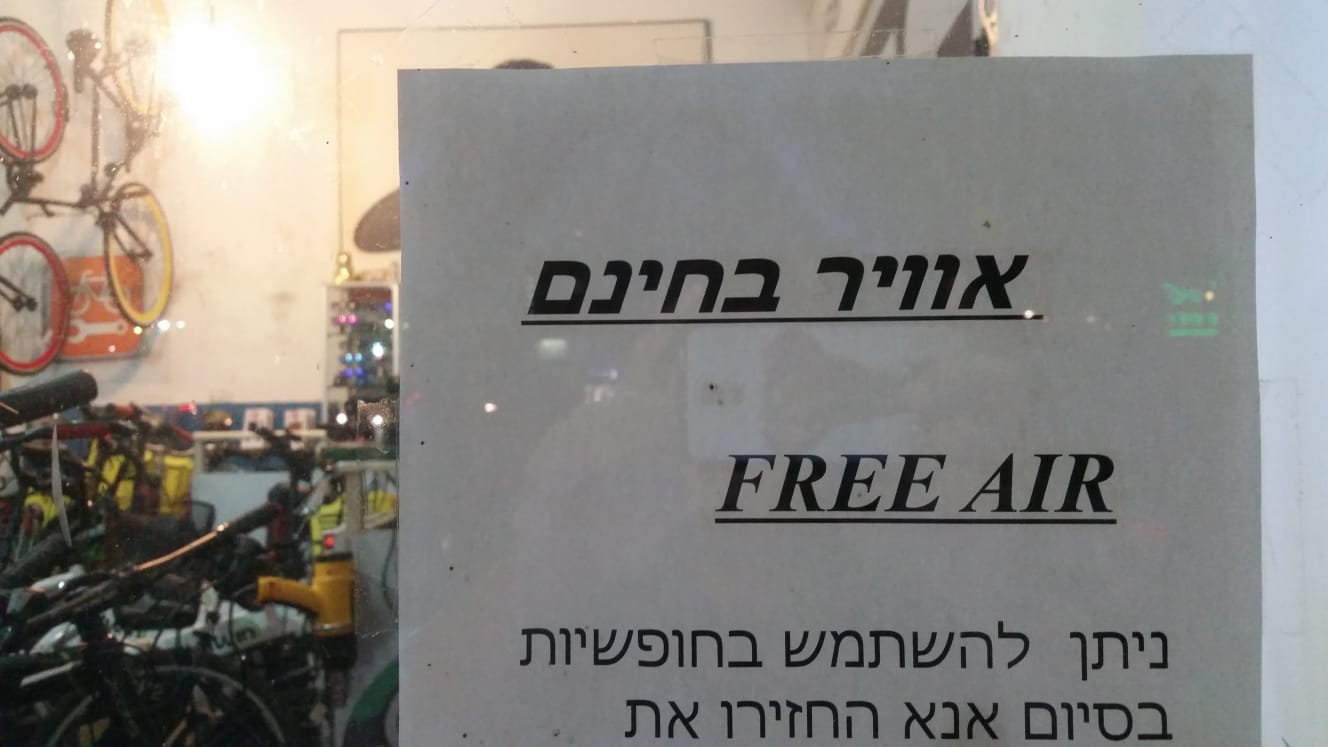
WhatsApp Image 2018-12-02 at 1.09.17 AM

Of course, these problems are not only happening in Israel.  Around the world, the gap between wealthy and poor has become a pressing issue.  When I was in San Francisco last month, I saw more homeless people than possibly any other city I’ve visited.  Rural Romania, where I spent some time hiking and backpacking, has largely been hollowed out by migration to London and Spain and Italy in search of work.  Village economy has dried up after joining the EU.

The thing is not everyone is suffering here.  In 2018, Israel counted over 30 billionaires.  In dollars.  High-tech firms here are some of the most successful in the world, with some of the highest salaries in Israel.  If you work in the start-up scene, Israel is the place to be and you could probably build a comfortable life here if you choose to make aliyah.

On the other hand, with the cost of living continuing to increase and other industries’ salaries failing to keep pace, Israelis are being left behind.  Including olim like me.  Who came here with a Master’s degree from Georgetown university, 8 fluent languages (including Hebrew), and 10 years of public relations experience.

I have some more meetings in the next few days.  I have been sending out my resume left and right, networking like a maniac.  Those of you who know me personally know I am an extremely proactive person.  Root for me, encourage me, I need it.

I want to share some stories from this journey.

Last week, I went from bookstore to bookstore in Jerusalem.  Calling, showing up in person, filling out forms.  I figured it’d be good to earn some money while searching for a job with a real salary.  No call backs.  I was even told by one bookstore that I was “overqualified”, even after explaining I was just looking for part-time work.  I also spoke to an employee of an Israeli travel company I was trying to network with.  With the hopes of collaborating on my blog, to hopefully earn some revenue and bring them business.  After I sent some English and Hebrew writing samples, the employee wrote to me: “it is hard to impressed by your writing.”  It was like a gut punch.  I know I’m a good writer- and the 50,000 people who read my blog are proof.  As are the wonderful comments you all share with me.  But it’s just demeaning.  How long should I fight for an underpaid job here?

Needing a break from the stress of job hunting- a hunt which at this point is extending to both Israel and the U.S. out of necessity- I headed to a museum.  Knowledge, history, learning- these things always light me up and give me hope.  Seeing the long spectrum of Jewish history and the beauty of art helps put my current struggles into perspective.  And fills the soul with light when people around you are swallowing your hope alive.

When I visited Italy last march, I learned about the unique history of Italian Jews.  A 2,000 year old community, they predate both Sephardic and Ashkenazi Jews and have their own rite.  At the Jewish Museum of Rome (which I highly recommend visiting), I learned there was another place in the world where the Italian rite was used: Israel.

In one of the most miraculous stories I’ve ever heard, Italian Jews transported an entire historic synagogue to Israel in the 1950s.  In a bid to preserve this ancient Jewish heritage- seen as endangered even after the Holocaust- the building made its way to Jerusalem where it is now housed in the U. Nahon Museum of Italian Jewish Art.  It’s a small but absolutely stunning museum.  With ancient and medieval Italian Jewish artifacts, and the synagogue itself.  It is used to this day- and has extremely rare Italian-rite prayer books which I got to hold and read up close.

The museum is a testament to Jewish history and the power and nature of Israel itself.  In the museum, I read from the Sereni Haggadah, a 15th century Italian book illustrated with Ashkenazi motifs and written according to their rites.  I read about how some Italian Jews even spoke and published in Yiddish.  A reminder of how all Jews are connected- that Ashkenazi, Sephardic, and Italian flow into one other.  In the sun-soaked land of Italy, where all three communities have co-existed for centuries.

The synagogue and the museum are a reminder of the power of the Zionist ideal.  Without Israel, who knows what would have happened to these treasures, to the synagogue itself.  While some synagogues in Europe are preserved, the vast majority have been destroyed or lay in decay.  I saw some turned into restaurants and casinos and there is even one that was turned into a strip club.  But more than anything, they are usually locked and empty.  To prevent continuing theft and anti-Semitic attacks, an eerie testament to their largely emptied communities.

Israel was the logical place to send this synagogue.  It’s a place where the history of the Jewish people can sit safely, far out of the reach of anti-Semites.  It’s a place where the National Library of Israel preserves 5 million Jewish books, audio files, and other treasures.  An unmatched collection spanning continents and centuries.  A gold mine I got to explore this past week.  The only library of its kind.  I perused Judeo-Arabic versions of the Torah, Catalan-language books about Jewish history, dialect maps of Yiddish, and a book about the xuetes of Mallorca, Jews forced to convert to Christianity.  Who manage to maintain a separate, often persecuted, identity to this day.  Check out the library’s website and discover a digital collection that can transport you from your home to almost any Jewish community- past or present.  If you’re in Jerusalem, go visit!  There are real gems right under your nose- and it’s free!

While visiting the Italian museum, I met some foreigners, who were intrigued by the exhibit.  Including Jews.  I spoke with a British Jew whose parents are Israeli.  He only speaks a few words of Hebrew, but he connects to his Judaism by studying Italian Jewry.  The museum staffer himself had Mexican parents and we spoke in Spanish about the siddurim.

I also made a point of talking to several sabras, or native-born Israeli Jews.  This segment of the population tends to have the least appreciation of Jewish heritage.  Israeli schools teach a lot of biblical history and a lot about modern Zionism.  But Diaspora communities of 2,000+ years are often relegated to discussions about the Holocaust.  Undoubtedly a painful watershed event for world Jewry that a third of Europeans don’t know about.  But hardly the only thing worth mentioning in two millennia of history.  Marked by both persecutions and amazing perseverance and creation.  It leaves the average sabra deeply ignorant of Jewish communities outside of Israel, something I see reflected in the growing gap between American and Israeli Jewry.  Clearly a gap that has origins on both continents, but which I see little effort to tend to here in Israel.

More than this, it also leaves Israelis ignorant of where they come from.  Here our history dots the landscape.  Ancient Jewish archaeological sites sit in every corner of the country.  Ritual baths, or mikvahs, built two thousand years ago- the kind I have personally used at my synagogue in Washington, D.C.  I have even done a genetic test- and my DNA is closest to Syrians, Lebanese, Greeks, Sicilians, and Palestinians.  Our guttural Semitic language was birthed in this land.  Yet we also were enriched- at times oppressed- by the cultures we have engaged with since our expulsion from here.  And without understanding the intermediate 2,000 years, the average sabra doesn’t really know a lot about how he or she came to be.  And what it means for the Jewish people- or our state- today.

Two sabra women I met had Iraqi parents.  I think being the children of olim, especially ones so ruthlessly expelled from Iraq, made them more open to learning about Diaspora history.  Perhaps just as importantly, they knew about their own rich heritage, so it might have made them more appreciative of other Jewish cultures.  I sensed their awe as they looked at the synagogue, admired its beauty, and stood in wonder at its journey from Italy to the capital of the State of Israel.  A journey Italian Jewish slaves in Rome 2,000 years ago never could have imagined.  Yet worked and prayed for- and whose descendants made a reality.

There was one young sabra in the museum, otherwise the latest generation was nowhere to be seen.  It’s a stark reminder that once you are cut off from your roots, and as you grow new ones, it is hard to inspire people to reconnect.  It’s a phenomenon I struggled with almost a year ago to the day.  My journey to learning Yiddish as an adult proves that reconnecting with the breadth of Jewish history is possible.  And some young Israelis, like the phenomenal Yemenite singers of A-WA, are joining me on that journey.  As they go around the world singing traditional Judeo-Arabic songs to sold-out clubs.  I personally have seen them three times on two continents- go experience the magic of Yemenite song!  They are keeping their chain of tradition alive while innovating along the way.  A fitting testament to two millennia of Yemenite Jewish heritage and to the fact that it has survived at all.  Thanks to Israel, where almost all Yemenite Jews live today after being expelled in the 1950s.

There is a certain push and pull, perhaps even an intertwined irony to having a Jewish state.  The state has saved the lives of hundreds of thousands, maybe even millions of Jews.  Jews whose countries senselessly butchered them or confiscated their property and expelled them.  From the U.S.S.R. to Morocco, from Algeria to Poland, from Germany to Iraq.  While some Jews have come here voluntarily, the vast majority have come under major duress.  I couldn’t help but notice an Italian and Hebrew prayer in the museum this week dedicated to saving Alfred Dreyfus.  The French Jewish army captain ruthlessly persecuted by his countrymen, by anti-Semites just over a hundred years ago.  Reading that prayer in a museum in Israel reminded me of the importance of having the ability to protect ourself.  That while we work with allies wherever we can find them, we have just as much a right to defend our people as anyone else.  Which is why we have put our lives on the line to make sure the State of Israel exists for all of us.

At the same time, it’s clear that nationl-building has come at a price.  As it does in all states.  Where minority cultures, where immigrant cultures, where the “other” is often ruthlessly assimilated until it is almost unrecognizable.  To this day, France won’t sign a European treaty recognizing its minority languages.  Arab governments such as Morocco and Algeria have forcibly assimilated their native Berber populations linguistically and ethnically.  A deep marginalization that continues to this day.  Turkey for years claimed that Kurds were simply “mountain Turks” despite their completely different languages.

For Jews, the curious thing is we did it to ourselves.  While for sure in Diaspora communities, Russians, Americans, French, and others have pushed us to assimilate into their cultures, in Israel, Jews did it to other Jews.  In other words, the sabras already living in Israel identified as the “new” Jews- strong, masculine, assertive.  And the old “effeminate” and “bookish” Jews of the Diaspora arriving here had to be reformed.  Which is why ancient Jewish languages like Yiddish and Iraqi Judeo-Arabic and Ladino were basically thrown out the window.  Hollowed out.  Jews were forced to take on a new, uniform Israeli identity.  To be more sabra and less Shmuly.  In some sense, more Israeli and less Jewish.  At least as how Judaism had been conceived of until then.  An odd statement to digest.

Some of this is the price you pay for building a nation.  Without a certain degree of cohesion, could Israel have successfully resisted Arab invasion after Arab invasion?  Could a Yiddish-speaking commander have successfully (and quickly) communicated with a Moroccan Jew who spoke Arabic?  If Israelis had had the luxury of being the Switzerland of the Middle East (not coincidentally, a country with four official languages), maybe it would have been seen as more feasible.  To allow a bit more room for diversity.  But our nation was not given an easy start.  So practicality took precedence over preservation, and entire Jewish civilizations were wiped out or cannibalized.  A couple weeks ago, I entered a Persian restaurant in Jerusalem (Baba Joon by the Centra Bus Station- the best Persian food I have ever eaten) and the really friendly waiter was clearly proud of his heritage.  But he didn’t know how to say “you’re welcome” in the language his ancestors spoke for 2,500 years.  I taught him, which made him smile.  There are people who want to connect to their heritage here, but it is hard and there are those who resist.  Partially to avoid painful memories of persecution, but partially because they’ve been taught that that “Diaspora stuff” is worthless.  It’s the dustbin of history.

But that’s wrong.  To wander is to be Jewish.  Whether physically, as in the case of Jews across the centuries.  Or intellectually, by visiting the National Library, by learning your ancestors’ language, by going on an unexpected hike or to a new museum.  To explore, to devour knowledge, to take the untrod path- that is Judaism.  We’ve been wandering since Abraham and our legendary trek in the desert.  On our way to the Promised Land.  Just because we have a state now doesn’t mean we should stop our inquiry, our curiosity, our search for the unexpected connections that bind us together and enlighten our selves.

At the end of the day, I stood in line at the grocery store.  Feeling disillusioned, stressed, in need of a smile, I struck up a conversation with the friendly Russian Jewish clerk.  In Slavic-accented Hebrew, she asked me how I was doing and what I was up to.  Our conversation roamed.  We talked about aliyah, the struggles.  She told me how she was Russian but her parents were Polish.  And how she only thought there was sweet gefilte fish until she moved to Israel, unexposed to the salty southern varieties of Ukraine.  A country that in her own words, she inexplicably detests.  Israelis are full of contradictions like all people, but we have a bit more courage to say them out loud.

We laughed as I told her my great-grandparents used to make this food by hand.  Putting entire carp in their bathtub and making the delightful fish balls one by one.

She then asked the best question. “Redstu yiddish?”  Do you speak Yiddish?

And I said “yo!  Ikh ken Yiddish!”  I do speak Yiddish!

And right there, in the line at the grocery store, as an impatient sabra waited behind us, we chatted in mamaloshn, the mother tongue.  A tongue our ancestors have shared for generations.  Filled with warmth and love and the smell of rich chicken broth bathing kneydlakh in the Passover kitchen.  Not to mention a literary tradition that has produced thousands upon thousands of books filled with wisdom, now available for free digitally at the Yiddish Book Center.

In the end, my Yiddish and my Hebrew co-exist, if at times uneasily.  I am no less fluent in one because I speak the other.  In fact, one helps me understand the other, as the languages overlap and have enriched each other throughout Jewish history.

It’s a symbiosis I hope sabras can achieve.  That while building a state does require new models and sacrifice and adaptation, it doesn’t have to completely erase our rich and complicated Jewish past.  To relegate it to nothing but our Shabbat foods, to museums, to archives.

Judaism is alive and kicking.  Despite all the people and peoples who have stood in our way.

The question we face now is what kind of Judaism?  Having built the first Jewish state in 2,000 years, one that continues to require our vigilance to protect, perhaps we need to shift our focus.

Our focus was once state building.  But now the question is what kind of state we want to live in, or have as a safe haven?

Do we want a state where a few people earn millions of shekels in high tech while middle aged men scrounge for food in trash bins?  A state where Jews live disconnected from their own rich heritage, on whose very land Jews mostly spoke Yiddish and Ladino until the 1920s?

Or do we want a state where people can earn a living.  Where, if not rich, people can survive, can build a career.  Can contribute to our people and our economy and connect with the world no matter how wealthy they are.  Where the Russian grocery store clerks who have PhD’s in chemistry can practice the profession of their training.  Instead of giving preference to sabras, who are in some cases far less qualified.

Do we want a state where you can be both Israeli and Moroccan, the kind of hyphenated, hybrid identities that hold so much potential.  That have enriched Jewish history for millennia.  That might even enhance empathy and understanding among Jews of all backgrounds.  And now offer us the rare opportunity to fuse our past to present, without erasing where we’ve been.

My answer is I hope so.  I won’t say yes because most things are out of my control and if there’s one thing I’ve learned from Jewish history and from living in Israel, it’s that things are complicated.

But I believe, at the end of the day, that it’s better to strive for something better than to sit stationary, stewing in malaise.

I don’t know where my journey will take me.  I don’t control the Israeli economy, but I do care about contributing to its society.  And I will do so wherever I find myself, even if for economic reasons I find myself longing for a warm plate of jachnoon from the other side of the Atlantic.

One day, I hope to sit in the Museum of Italian Art in Jerusalem.  To guide tours for hundreds of bright young Israelis eager to learn about their heritage.  To connect them with Jews and non-Jews visiting the same museum from around the world, who value them as Jews and as human beings.  Who see their past and their present as intertwined with their own and worthy of their care.

I hope to sit in that museum with a budget.  A budget the government will dedicate not just to security, not just to elaborate national ceremonies, not just to the hundreds of rabbis it employs.

But also to our culture.  To our institutions.  To the humanities, to our humanity that has persisted over generations.  To educators, to social workers, to artists, to after-school programs, to scholars, and to social innovators.  Not just social media.

So that one day, a well-educated, passionately-Jewish oleh like me can find a well-paid job.  Preserving our heritage, educating for tomorrow, and not just running pay-per-click campaigns from the 9th most expensive city on the planet.

Im tirtzu, if you believe it, it is not a dream.  This is the next frontier.  May we be the pioneers.

My cover photo is a medieval Italian Jewish painting.  Proof that our creativity extends not only to high tech, but also to high art.
El meu primer blog en català

Per a tots els meus amics i llectors que no saben, tinc una conexió prou forta amb la llengua catalana i el públic que la parla.

Seguint la recomanació del meu amic Felip Querol, qui em va entrevistar fa uns mesos sobre Israel, escriuré el meu primer blog en català.  O diguem, el meu segon, si s’enclueix el que vaig escribir com a estudiant de català a Georgetown University fa 5 anys 😉 .

Felip em va trobar a un grup de Facebook de Catalans a Israel.  Era curiós perquè justament en aquest moment, jo estava visitant Catalunya.  Tenim una paraula en Yiddish per a explicar aquests moments afortunats: “bashert”.  O sigui, “predestinat”.  Meant to be.

Podeu escoltar l’entrevista Començo a parlar a les 11:15 minuts més o menys.

Era una entrevista tan divertida.  Com hi ha molt antisemitisme acutalment a Europa, jo estava una mica nerviós.  Felip volia aprendre sobre Israel com un país diverse i complicat i interessant?  O volia fer polèmica?

Jo estava molt content de que ell volia aprendre.  Parlar com éssers humans sobre la complexitat i la bellesa del meu país.

No va ser el primer cop que vaig experimentar la màgia que és parlar en català sobre el judaisme.  Que és teixir junts dues identitats meves.  L’una enriquint l’altra.  Com si no va passar 500 anys de distancament i anhel.

Fa uns anys, quan encara vivia a Washington, D.C., on vaig creixer, vaig tenir l’oportunitat de ser un Katalonski.  Katalonski, per qui no sap, és un programa fenomenal de TV3 que va explorant el món, tractant de trobar gent com jo qui ha aprés el català.

Vaig tenir l’oportunitat de convidar l’equip d’aquest programa, inclouent-hi el presentador Halldor Mar, a la meva sinagoga.  Ell és un Katalonski com jo- nascut a Islàndia i ara un catalanoparlant radicat a Barcelona.  La meva sinagoga va ser la primera que van visitar mai.  No només això, els meus nous amics catalans van venir a fer danses folklòriques israelianes.  O al menys van tractar de fer-les 😉

Podeu veure l’episodi aquí.  Parlo de per què vaig aprendre la llengua.  Com la meva identitat com a minoria va influir la meva decisió.  Com ser jueu gay funciona- i per què em conecta amb el català.

Si dic la veritat, sempre quan em trobo amb dificultats o desafiaments, tinc ganes de parlar català.  I encara més, parlar amb catalans sobre el judaisme i Israel.

No és per casualitat.  Viure a Israel, viure com jueu és difícil.  Et trobes lluitant contra prejudicis àntics.  Per desgràcia, a Catalunya també, on un grup de ignorants van posar un boicot contra el meu país d’Israel.  Però clar, no contra dotzenes d’altres països molt més violents i agressius.  I sense pensar als israelians progressistes com jo que estan tractant de seguir construint una societat cada cop més oberta, tolerant, i diversa.  De lluitar per la justicia i un millor futur.  És la lluita de tot el món actualment- però els que proposen boicotear el meu país només parlen dels “pecats” dels jueus.  Un prejudici ibèric que no va desaparèixer durant els ‘ùltims 500 anys.

El que si m’anima es veure molts catalans que volen aprendre sobre el judaisme i la diversitat israeliana.  La comunitat gay a Tel Aviv, els jueus iraqís que continuen parlant el seu dialecte àrab àntic als carrers de Or Yehuda, els ciutadans àrabs que parlen al menys tres llengües i tenen representació política al parlament.  Un dret democràtic que per desgràcia no existeix als nostres països veïns.

Llavors quan parlo català i em conecto amb catalans que volen aprendre sobre la meva cultura, em fa content.  I m’anima aprendre encara més sobre ells- la seva cultura, la seva història, la seva llengua tan bonica.  Com em va passar a Vila Joiosa amb el meu nou amic valencià Josep.

I és per això que en aquest moment, quan estic buscant feina, quan vaig veure coets del Hamas, quan tinc la vida una mica estressant, em trobo escribint el meu primer blog en català.

Compto amb els meus amics catalans.  Som minories.  Hem sigut oprimit pel mateix estat espanyol.  Les notres llengües- el yidish, el ladino, el català mateix- han sigut ignorades i menyspreades per l’història.  Perque som “cultures petites”.  Perque segons alguns, només una civilització que té 300 millons de parlants importa.

Però jo sé, com jueu, com israelià, i com catalanoparlant, que no és veritat.  Que, com la meva primera professora de català em va dir: “cada llengua és una riquesa”.

Els èxits dels jueus i dels catalans són innombrables.  Hem pogut sobreviure i preservar les nostres cultures malgrat persecucions i ignorancia de fa segles.  Tenim històries riques i conectades.

Seguim tractant de tobar un equilibri entre la modernitat i la necessitat de preservar les notres identitats antigues.  Una cosa que poca gent al món enten.  Però seguim endavant.

Penso en el meu primer blog en català, el que vaig escribir com estudiant universitari a Georgetown gràcies a la Fundació Ramon Llull.  I potser no sigui per casualitat que aquest blog, que jo hauria pogut escriure sobre qualsevol tema, el vaig escriure sobre el ladino.  La llengua judeo-ibèrica que el meu pobre ha preservat fins avui malgrat la nostra expulsió del país que era el nostre.  El nostre- de vosaltres i de nosaltres.  De la vostra sang amagada i de la meva- les dues provenints del país del qual escric aquest blog.  Un miracle que l’Inquisició no hauria pogut imaginar fa 500 anys.

Quan penso en el català, penso en l’esperança.  En el futur.  En les dificultats acutals.  En la riquesa de ser una minoria que segueix contribuint i vivint i sobrevivint.  Rient malgrat l’ignorancia.  Rient en hebreu, en català.  Rient com som.

Per això, quan es parla del català i del judaisme, no em puc separar.  Perque per a mi, són dos aspectes inseparables de qui sóc.

Enviant una abraçada de Jerusalem.  Als meus germans i a les meves germanes a Catalunya.

Us estimo ❤️

La foto és del mapa del call jueu de Tortosa, una ciutat preciosa que vaig visitar l’ùltim cop que vaig anar a Catalunya.