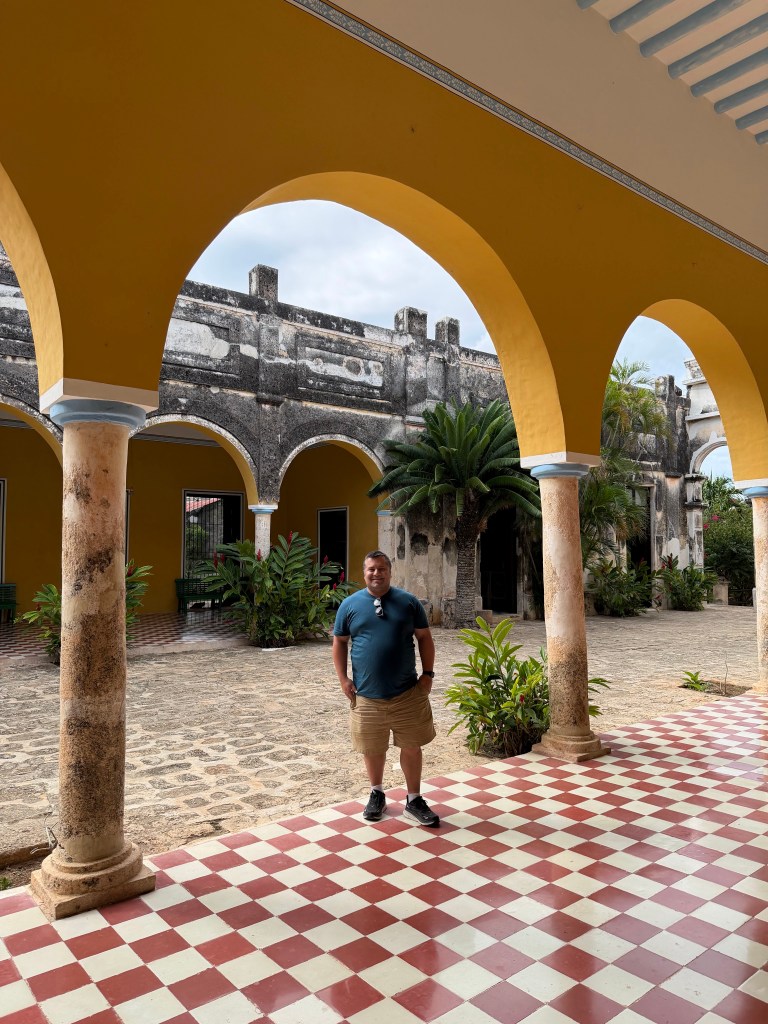
A gay Jew goes to Hasidic Brooklyn

Recently, I went to my first gay Jewish wedding. It was a wonderful experience to see friends coming together to build a loving future. And while I’ve been to many wonderful weddings, there was something special about seeing queer Jewish joy in action, in reality. A joy I hope to share someday with someone special.
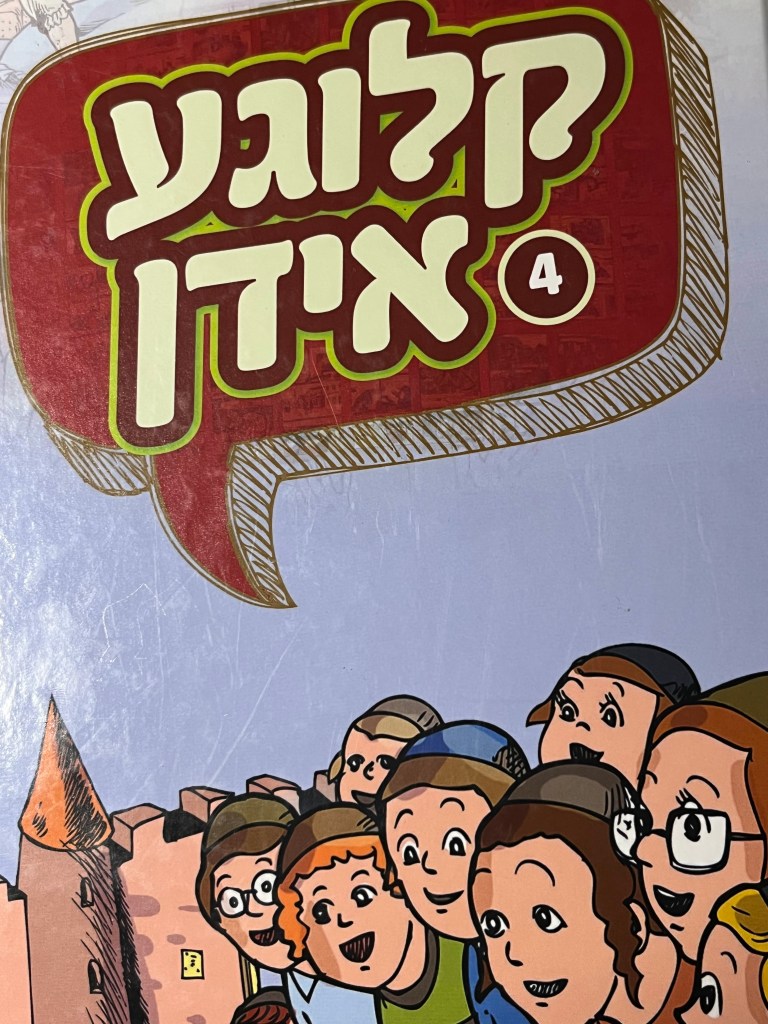
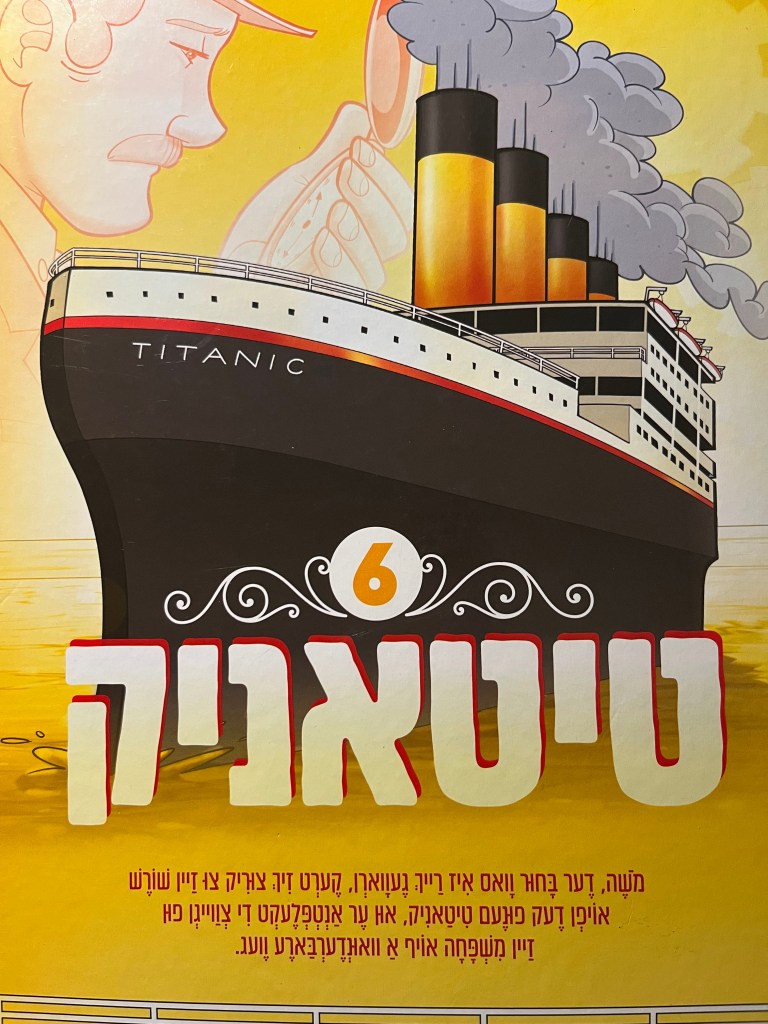
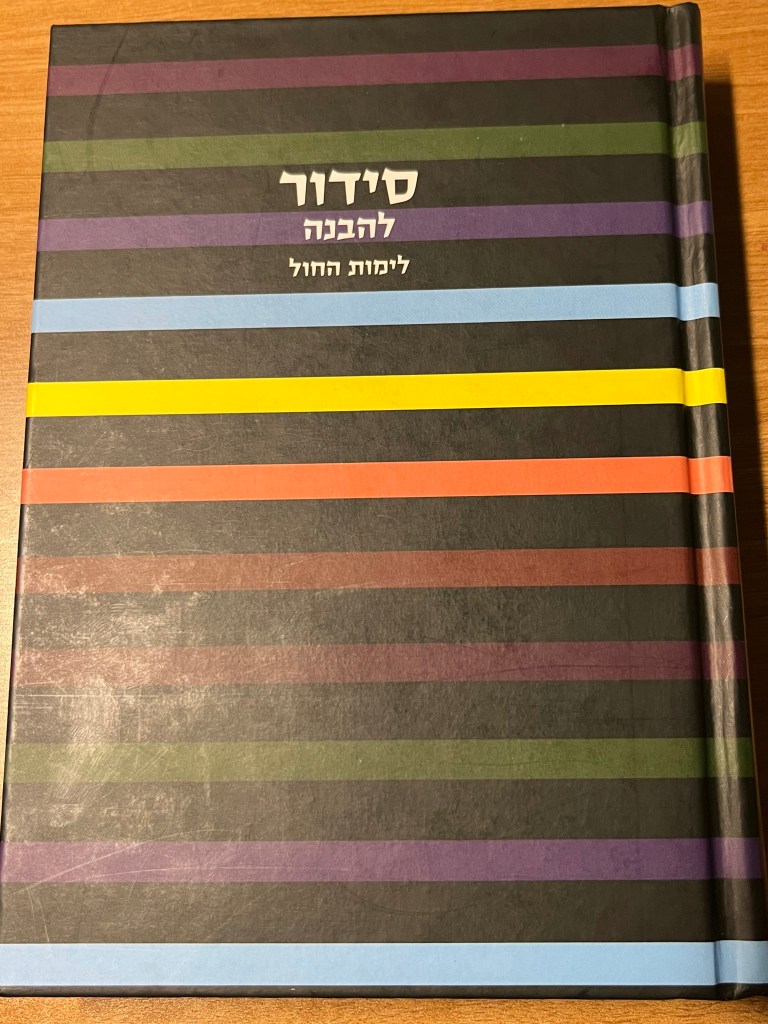
While in New York, I relished the opportunity between wedding festivities to visit Hasidic Brooklyn and practice my Yiddish. After buying a black yarmulke, I visited Hasidic bookstores in Williamsburg and bought some books in Yiddish, including a kids book called “Smart Jews”, a book about the Titanic, and a prayer book with Yiddish translations of the traditional Hebrew.

I love speaking Yiddish and I surprised the bookstore employees by speaking it while wearing decidedly non-Hasidic clothes. While some people looked at me with an almost suspicious curiosity, others were incredibly warm and hospitable and thrilled to hear me speaking Yiddish.

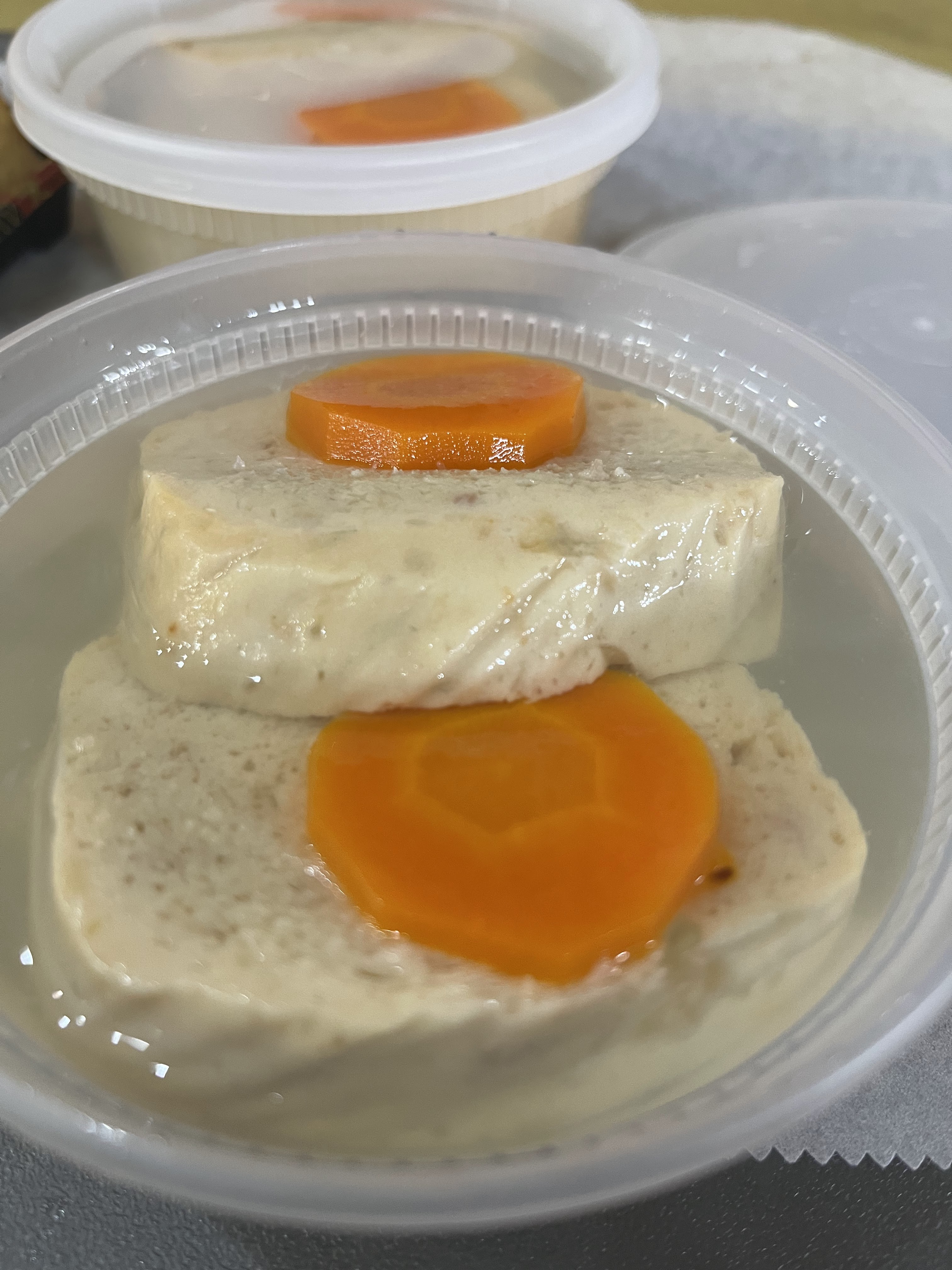
Next, I got the good stuff – gefilte fish! Yes, I love gefilte fish. It is a delight and while it’s true that maybe you need to grow up with it to love it, I absolutely adore this dish, especially when made fresh (not in a jar!).

I sat next to a rabbi in the restaurant and he was very welcoming and kind.

Near the restaurant, I walked through Williamsburg and saw a crowd of Hasidic Jews gathered outside an apartment, where a rabbi was preaching in Yiddish as hundreds listened attentively on the street. It was an amazing sight. At a time when we’re being persecuted yet again, this community is preserving our Jewish traditions despite it all. It was like a scene out of a shtetl.

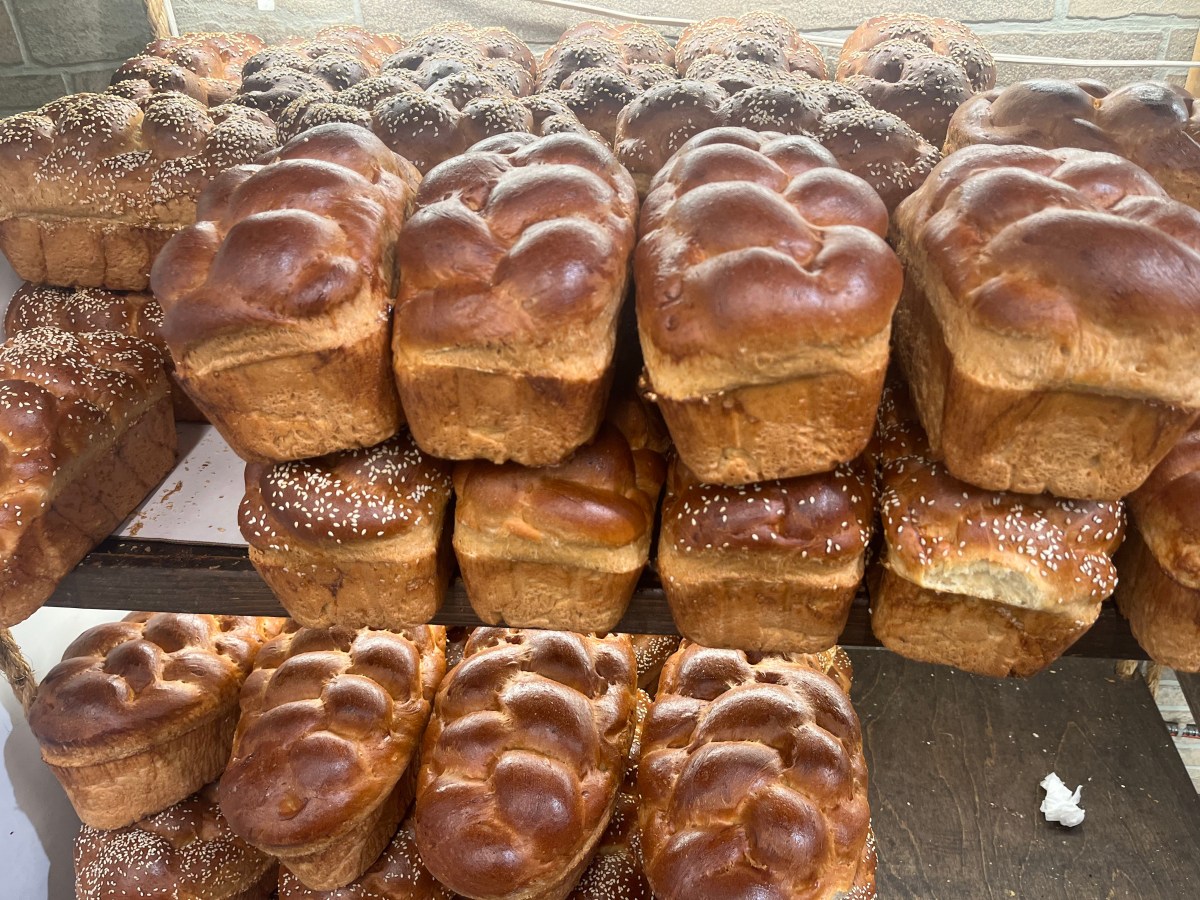
After exploring Hasidic Williamsburg, I made sure to stop at a late night Kosher bakery and get some sweet cheese rugelach, a novel combination that was a true delight. They also had tons of challahs of various sizes, like the ones in this blog post’s cover photo. Even some local hipsters came in for a taste of the bakery’s delicious food.

Over the next two days I met up with other friends in New York, ranging from Yiddishists to a Modern Orthodox college friend on the Upper West Side, and of course got a bagel with whitefish salad. None of this was particularly Hasidic, nor in Brooklyn, but it just shows the incredible diversity of New York Jewish life that I was able to slip in and out of these different communities plus a gay Jewish wedding in the course of a long weekend.

After the wedding, I decided to go to Crown Heights. Williamsburg is heavily Hasidic, but predominantly populated by communities that are a bit more insular in their approach to preserving Jewish tradition. Crown Heights, while also Hasidic, is predominantly a Chabad area. Chabad is a group committed to outreach within the Jewish community, making it a little easier to get to know people even as a semi-outsider.

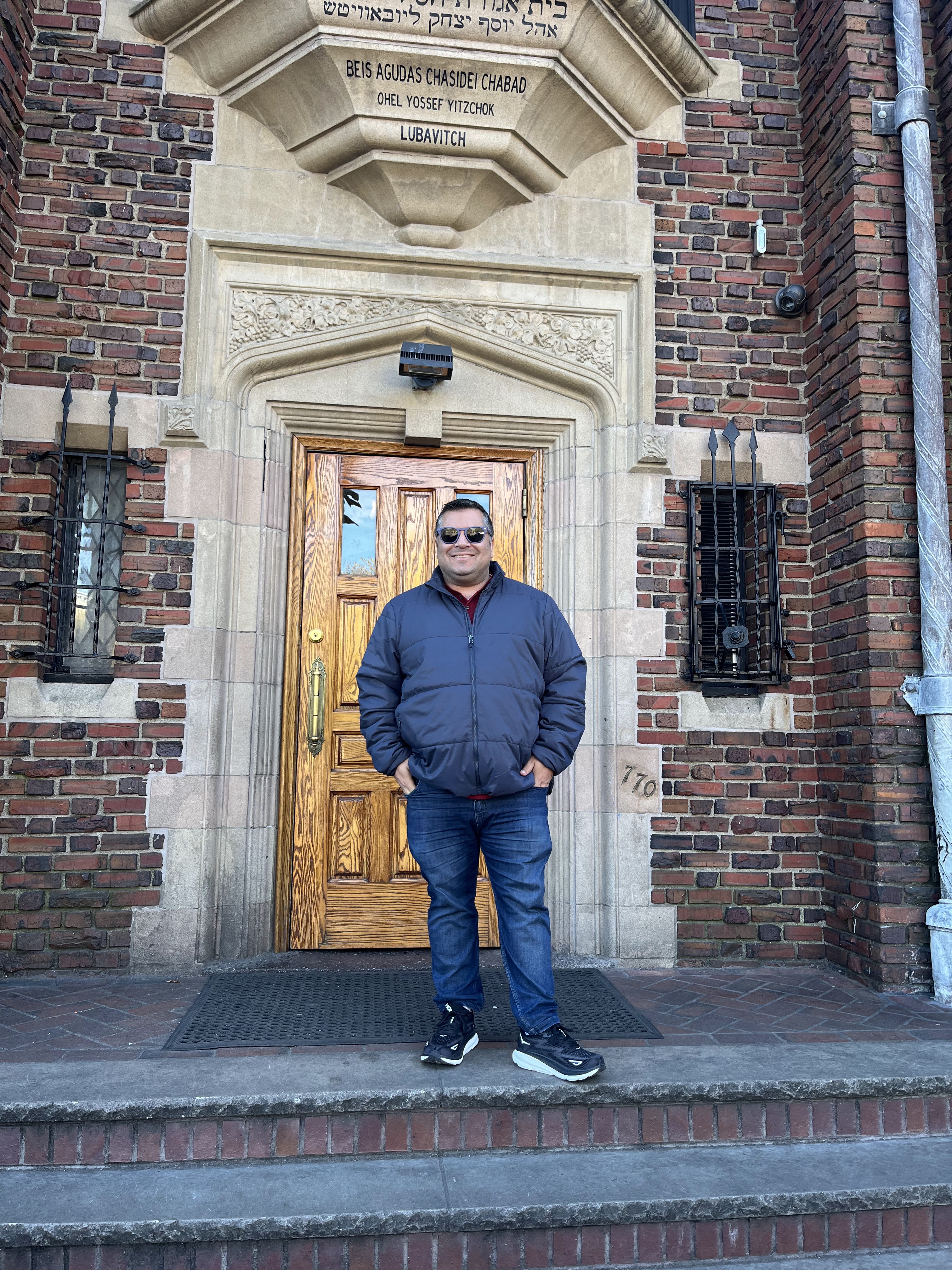
I visited 770, the house of the former Chabad Rebbe, a deeply revered leader.

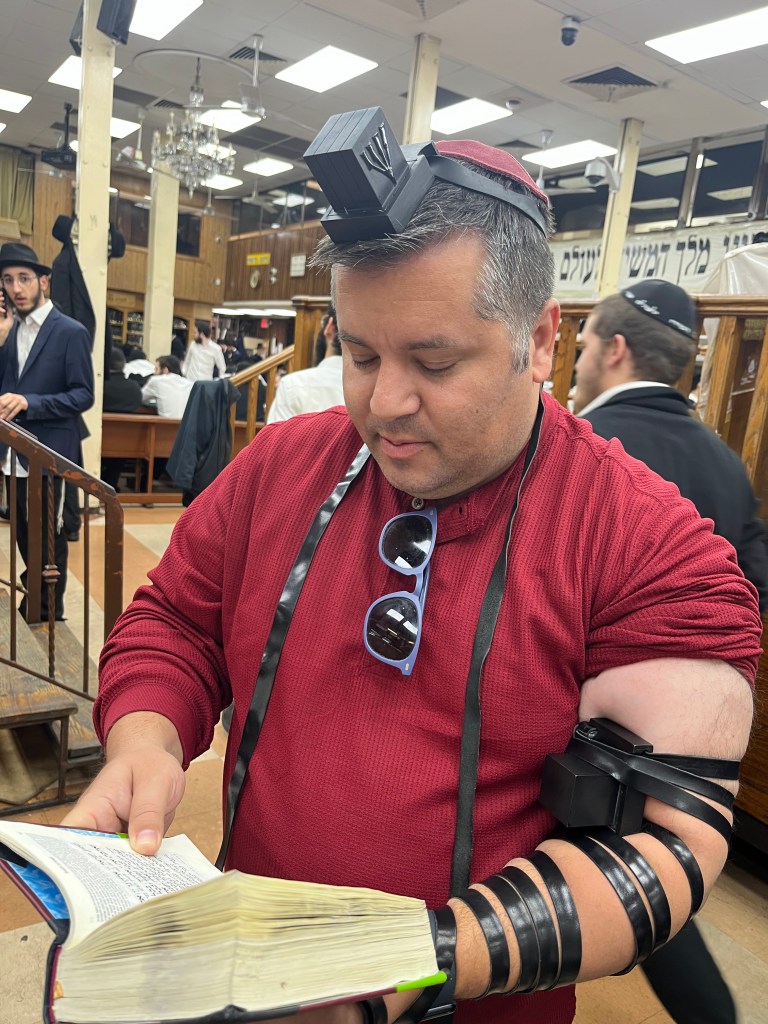
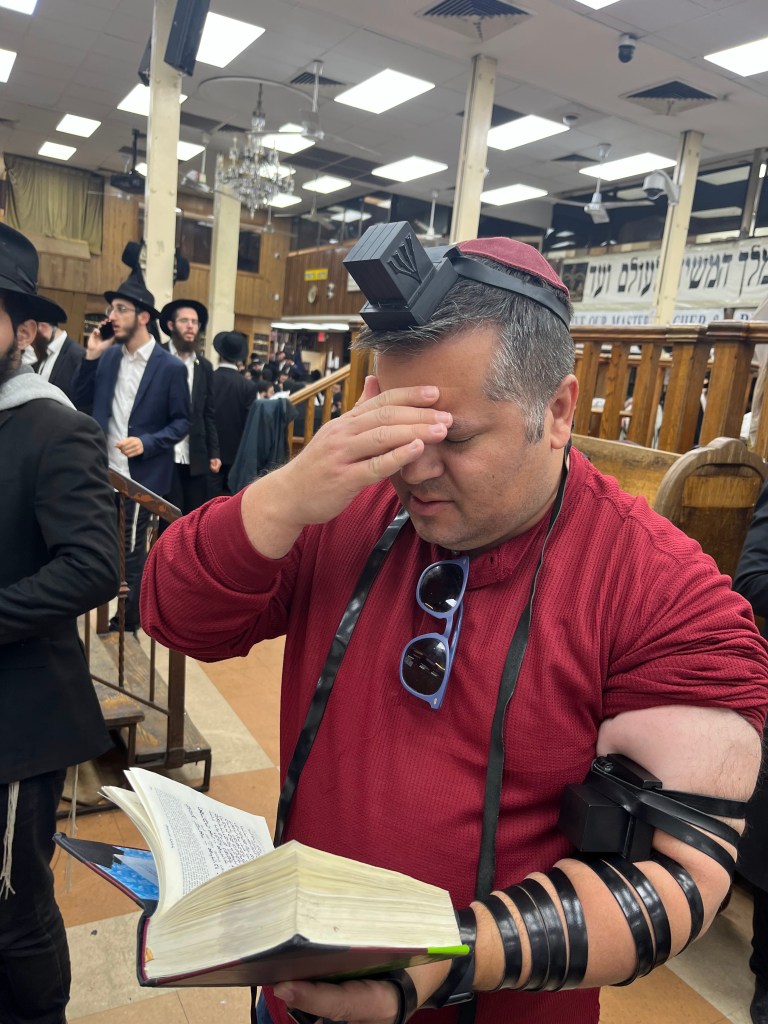
I then decided to do something I had never done when visiting Crown Heights years ago: I went inside the synagogue next door to the Rebbe’s house. I decided to lay tefillin, an ancient Jewish ritual, with the help of a young man. It didn’t matter that every other man in the building was dressed in the traditional black and white suits and I was in jeans and a red shirt. Chabad doesn’t care- they just want you to fulfill mitzvot, commandments from G-d that Jews are instructed to follow. It was a really nice experience.

Laying tefillin is a truly embodied ritual that made me feel connected to Jews everywhere and to thousands of years of our history. At a time when it seems we can control so little, it helps me feel grounded and secure in my faith.

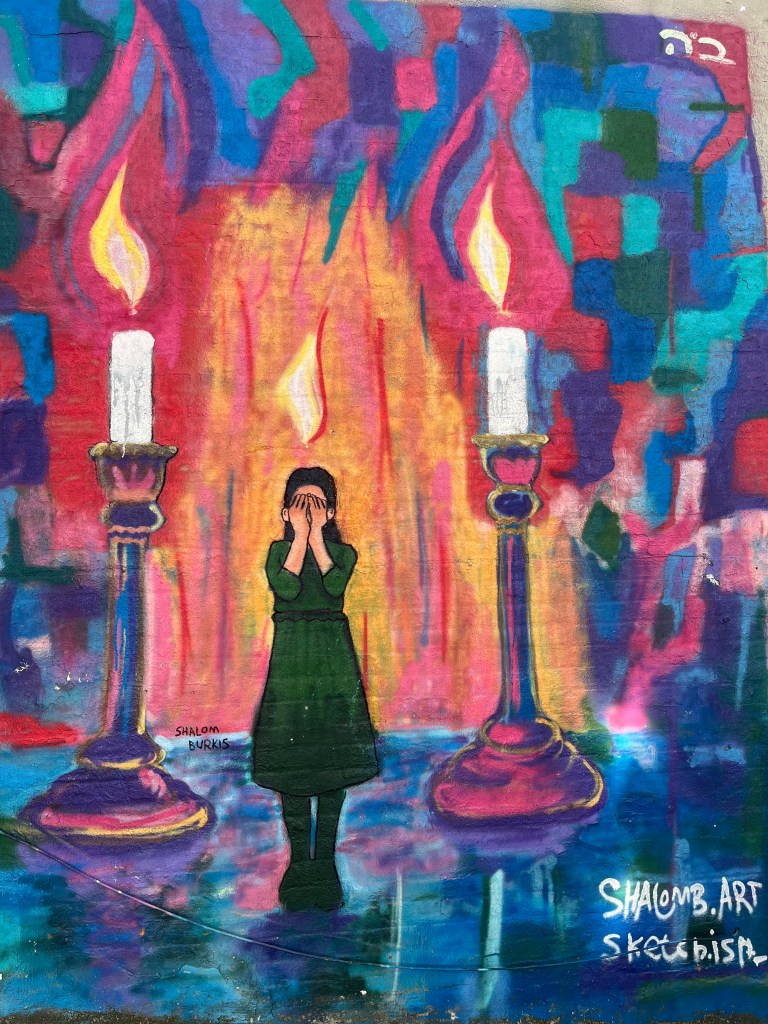
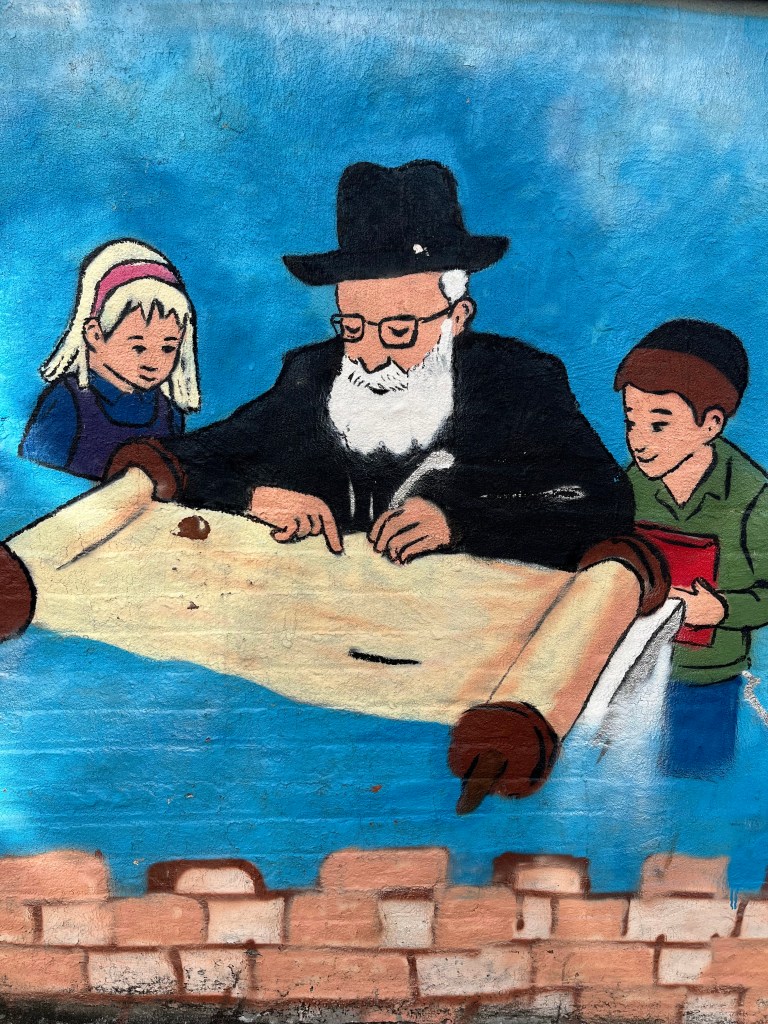
In addition to laying tefillin, I found some interesting Jewish street art in the neighborhood.

I love seeing murals whenever I travel, and to find Jewish ones was especially heartwarming and exciting.

Lastly, it was not lost on me that I was in New York the last weekend before the fateful election that led to antisemite Zohran Mamdani becoming elected mayor of the city. I’ve already written my thoughts about him here.

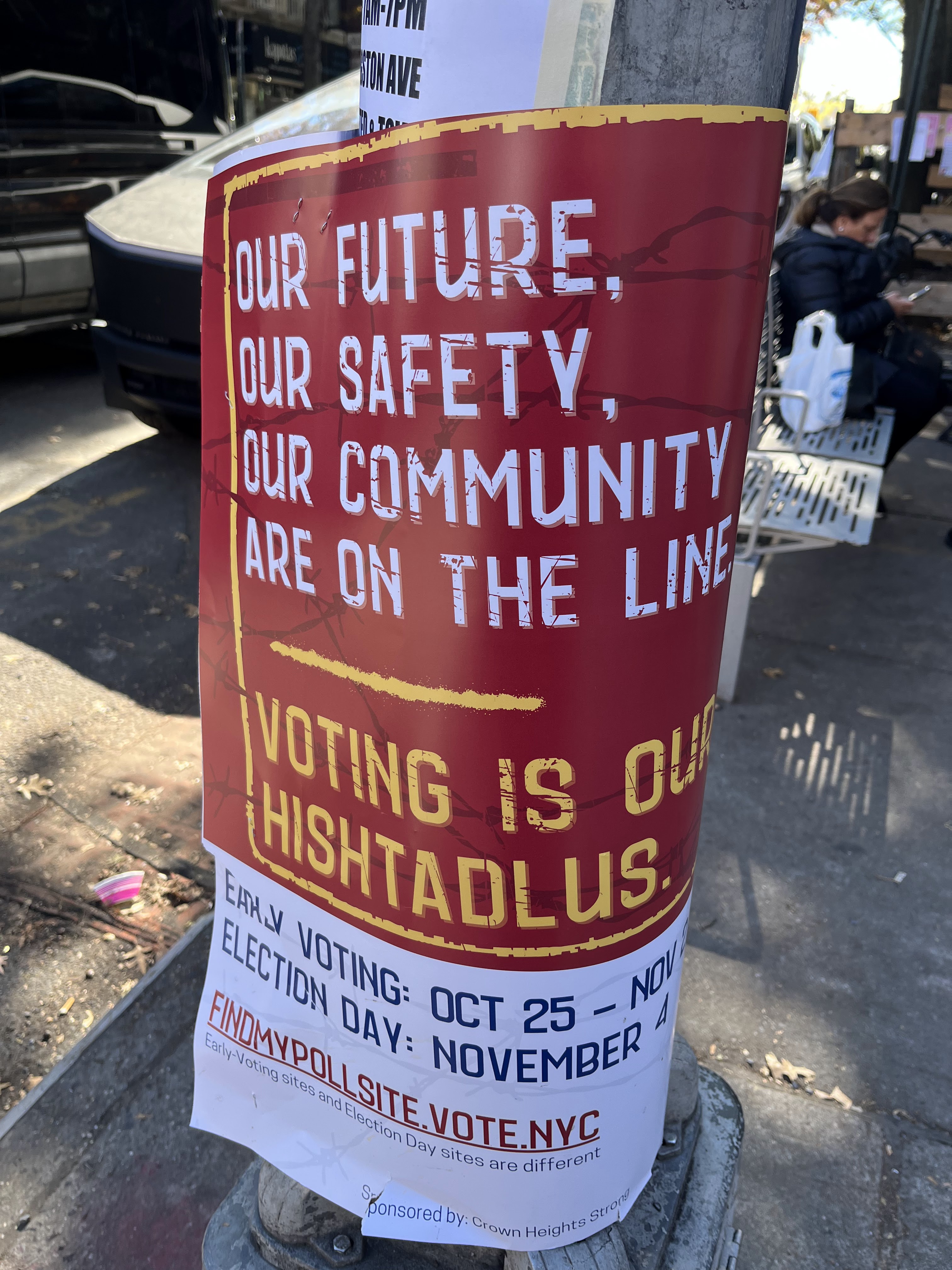
The feeling that the community was slipping through our fingers, as Jews, was palpable in Hasidic Brooklyn. I saw election turnout signs like this one that were as clear as day:

A week later, when election day came, the vast majority of Hasidic Jews voted against Mamdani. But it wasn’t enough to turn the tide of hatred gripping New York City.

Seeing Hasidic Brooklyn was amazing. I highly recommend a visit. Go see this beautiful community before the coming storm. Let us hope and pray that we will weather it together.

Because in the end, the people who hate Jews won’t distinguish between the gay ones or the Hasidic ones, the secular ones or the Modern Orthodox. They will come for us all. Which is why it’s so important we show solidarity with each other. We don’t need to agree on everything. I’m gay, I’m aware of the challenges that would face me living in a Hasidic community. And I’m also aware of prejudice and judgment that Hasidic Jews face in progressive Jewish circles.

Let’s come together in our time of need. So if there’s a storm ahead, let’s grab each other’s hands and dance in the rain and make it through as one strong community. Ken yehi ratzon. May it be so.

Where is home?

I was born in Washington, D.C. and grew up in suburban Maryland. As an adult, I’ve lived in Tel Aviv, St. Louis, Florida, Philadelphia, and now Atlanta. I’ve experienced different cultures in each place and tried to absorb the best of each into my life.

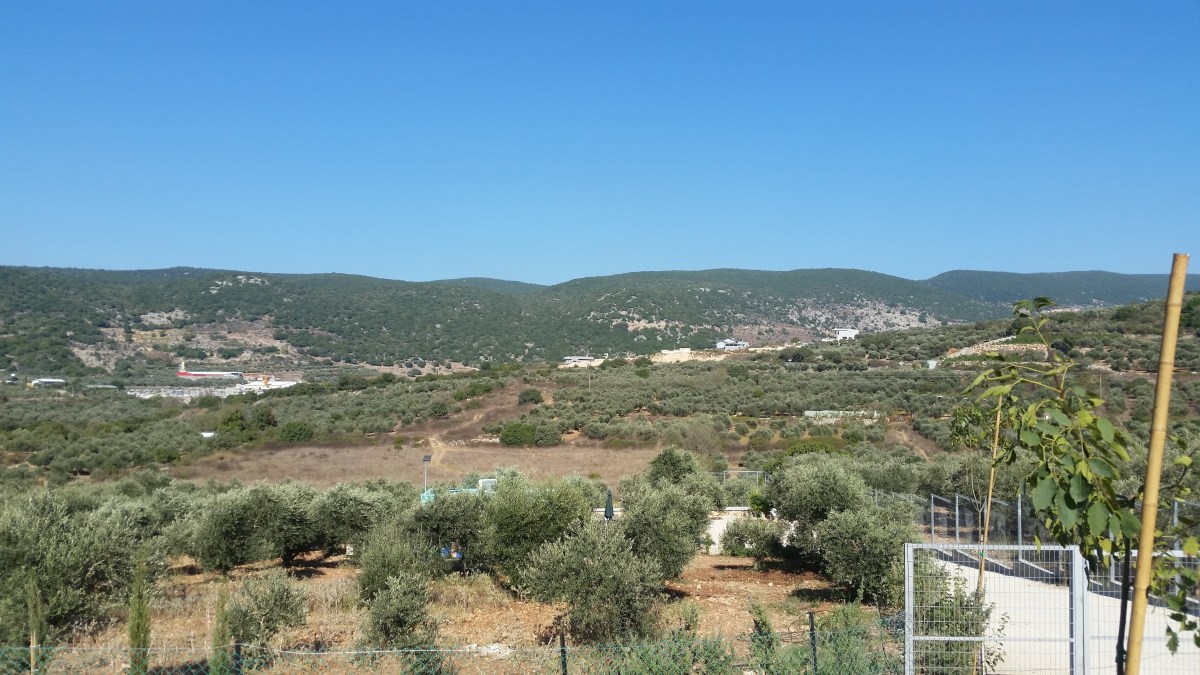
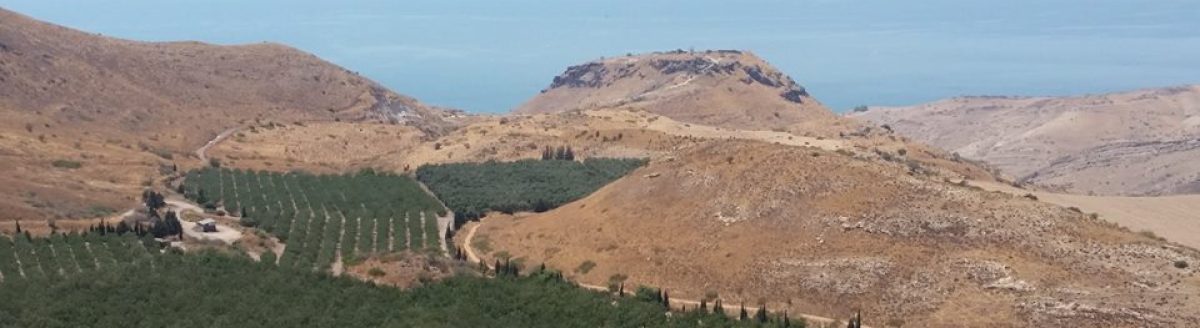
When I made aliyah to Israel, I chose to Hebraicize my name Matt but I did it in a unique way. I chose the name “Matah” (מטע) which sounds like Matt but comes from a different root. It means “orchard”, as in an olive orchard, like the one in the cover photo for this blog post near Rehaniya. The idea was to plant roots in Israel- ones that would bear fruits. Just like the name of this blog.

I would say that even though I returned to the U.S., I did plant roots in Israel and feel deeply connected to my homeland. And they certainly bore fruits – new friendships, mature social and political perspectives, stronger Hebrew and Arabic, and even publishing a book about my adventures! I’m extremely excited to go back this April (inshallah!) for a month and visit again. I miss my friends and favorite places and am thrilled to see what new adventures are in store for me.

While I’ve lived in many places, I’ve called the D.C. area home for most of my life. I grew up there, came back soon after college, and returned there after living in Tel Aviv to be closer to family. My relationship with D.C. could take up multiple blog posts, but let’s put it this way – it’s complicated. I love my friends and remaining family there and I relished the chance to see many of them recently when I visited. And D.C. is also a place of deep pain – one where both of my parents struggled through and died from cancer, one where I experienced a life-threatening manic episode in my 20s that led to my diagnosis with Bipolar Disorder, one where I experienced the loneliness of the pandemic. It’s somewhere where I have many loved ones but it is bittersweet because frankly it’s never been my vibe. While it’s full of beautiful museums, culture, bookstores, cafes, and restaurants, it is overly focused on work and networking with an intense atmosphere that used to stress me out.

“Used to stress me out” because I don’t live there anymore. And while I will certainly be back to visit D.C. again, it is not my home right now. I now live in Atlanta. And frankly I feel so much more relaxed here. It’s been a fresh start for me full of new friends, new experiences, and a less intense way of living. It’s a vibe and it’s peaceful. I sometimes wish I could import my friends and family down here so it’d feel a bit more like home and more quickly. It’s where I live and I’m enjoying it, but it’s maybe not quite home yet. After all, I’ve only been here about four months. But it’s starting to feel more and more like home by the day. When I travel to other cities or abroad, I feel relieved and happy to come back to Atlanta. It’ll take time to see how this place will figure in my life, but it has a lot of promise. Yet inevitably there are those tough days when after moving to a new place when I wonder what I’m doing here. It’s a kind of imposter syndrome perhaps, because I feel pretty content here. Hopefully with time I’ll feel even more at ease.

Perhaps instead of thinking where is “home” and where is not, it’s more useful to return to my Israeli name “Matah”. Orchard. Roots. Planting. Rather than debating which place I’ve called home is most “home” to me, it’s better to think about where I’ve planted roots and what fruits they have borne or may yet bear.

Put that way, I can say that in D.C. I created lifelong friendships and honored my parents by supporting them through their cancer diagnoses and passing away.

In Tel Aviv, I learned to explore the world, from tiny villages in the Galilee to rural Cyprus. I regained my confidence to engage with different cultures and put that passport to use. I visited 120 different municipalities in Israel and met people from every religious, linguistic, and ethnic background imaginable. I connected with my Jewish identity and homeland. And I became a writer reaching 100,000 views on this blog site!

In Atlanta, the story is yet to be written. I’ve met some wonderful people here. And it has been good for is my mental health. I feel better here psychologically. Having a fresh start in a relaxed place has allowed me to have some space from the traumas I experienced in D.C. and redefine myself for the next stage of my life.

So I will refuse to answer the title of this blog post. Because rather than one home, we can have many. And we can plant roots wherever the soil is fertile.

The Zionist Response to Zohran Mamdani

The election of Zohran Mamdani has put many Jews, myself included, on edge. You can look up his long history of virulently anti-Israel comments here. His obsession with Israel (and not with other countries’ human rights concerns) is antisemitic. He has no problem marching in the NYC Pakistan Day Parade but boycotts the Israel Day Parade. The double standard is appalling, given that Islam is the official state religion of Pakistan and religious minorities and LGBTQ+ people are legally discriminated against. Yet it is only Israel that Mamdani chooses to boycott. No country is perfect and expecting Israel to be exemplary while excusing Pakistan’s human rights abuses is bigoted.

The purpose of this post, though, is not to rehash what many media outlets, Jewish organizations, and politicians have debated. I find Mamdani’s rhetoric appalling and antisemitic. You may not. But one thing is crystal clear: Mamdani has clearly said he boycotts the world’s only Jewish homeland and that requires a forceful and thoughtful response. Because Israel, for all its imperfections, is the only safe haven for our people and has saved the lives of millions of Jews from around the world fleeing persecution.

This post is about what’s next.

First, let’s define Zionism. Zionism is the national liberation movement of the Jewish people. It is the belief that Jews are a people, an ethnic group with literature, cuisines, customs, languages, and millennia of shared history. There are right-wing Zionists, centrists, and left-wing Zionists who have debated the future of our people and our relations with our non-Jewish neighbors both inside and outside Israel’s borders. But fundamental support for a Jewish safe haven in our ancestral homeland is backed by the vast majority of American Jews – 85% in this poll. You don’t need to agree with all of a particular Israeli government’s policies to believe that Jews need a place to call home.

Now that we’ve defined the problem (Mamdani) and what Zionism is (and isn’t), let’s talk about what a Zionist response to his rise should be.

The Zionist response to antisemitism is to invest in our people, our homeland, and our allies.

Our people. We should proudly support proud Jewish artists, educators, writers, and businesses who contribute to the well-being of our community. For every boycotter like Mamdani, buy another gift from Israel for your friend for Chanukah or from one of my favorite Zionist artists in Alexandria, VA. Check out Modern Tribe as well! Put your money where your mouth is.

Our homeland. In addition to supporting Jewish businesses, find ways to strengthen Israel. Donate to the Spirit of the Galilee, led by my dear friend Rabbi Leora Ezrachi-Vered, a group promoting co-existence between Israelis of all faiths. Support Blend.Ar, led by my friend Chen Kupperman, which organizes Arabic immersion courses in Abu Ghosh to promote thoughtful collaboration between Jews and Arabs. Contribute to Magen David Adom, Israel’s emergency responders who treat (and are treated by) people of all faiths. There are so many other fabulous charities out there that deserve your backing. Don’t hesitate to reach out if you need some advice about how to strengthen Israeli society.

Our allies. Many non-Jews are standing by our side and deserve recognition. If we take some of the energy we feel towards people like Mamdani and put it towards thanking people who have our back, we’ll feel better. For example, I live in Atlanta and the moderate mayor Andre Dickens won re-election Tuesday too. He has visited Israel and vigorously condemned the October 7th attacks. He takes safety seriously for his Jewish constituents. It’s people like him we need to elevate in our national discourse. Thank politicians like him for standing with us and support them with votes and donations. And donate to non-partisan organizations like the American Jewish Committee that build bridges of understanding between Jews and diverse communities.

In the end, the best response to hate is to remember that we may despair and feel like it’s 1933, but today is different. We have a homeland to call our own. We must stand together with our people, our safe haven Israel, and our non-Jewish allies. Haters gonna hate, but we are a strong community full of love and hope and we will come together and win.

A few days before the election, I was uncertain how to react to a near-certain Mamdani victory. A friend told me Delta restarted direct flights from Atlanta to Tel Aviv and I jumped on the site and bought a ticket to Israel. I’ll be back in Israel this spring for a long visit and I’ll be looking for all sorts of ways to support my friends there – Jews, Christians, Muslims, and Druze. Because by building a stronger Israel, I not only help them, I help bring greater safety and security and resilience to Jews in New York and around the world.

Yachad nenatzeach. Together, we will win.

A Jew in Italy

On my trip to Italy, I encountered a beautiful country, intense antisemitism, and a 2,000+ year old Jewish community that continues to survive it all.

My trip started in Padova, a bit off the beaten path. A historic college town, it was beautiful and not overrun by tourists, but also had frequent anti-Israel graffiti and regular demonstrations, as has been the case at American universities as well. Situated in the more conservative Veneto region, it was certainly less antisemitic than far-left places I visited like Bologna. But nonetheless, at times I felt uncomfortable as a Jew.

For instance, my food tour guide in Padova was a welcoming Italian man named Davide. He was well-traveled and intellectually curious. When I was brave enough to share that I was Jewish and an Israeli citizen, he had many questions. He was on the left side of the political spectrum in Italy, which in Europe sadly correlates with increased antisemitism and anti-Israel bias. He had never heard of Arab Israelis (i.e. Arab citizens of Israel with full legal rights) – he was curious enough to say he’d Google the topic. He had not heard that Arab parties existed in the Knesset (Israeli parliament). When I told him I felt that Italian culture was quite similar to Israeli culture, he was shocked. He also had no idea that LGBTQ+ people were persecuted in many Arab countries including the incredibly repressive one he’s visiting next – Saudi Arabia!

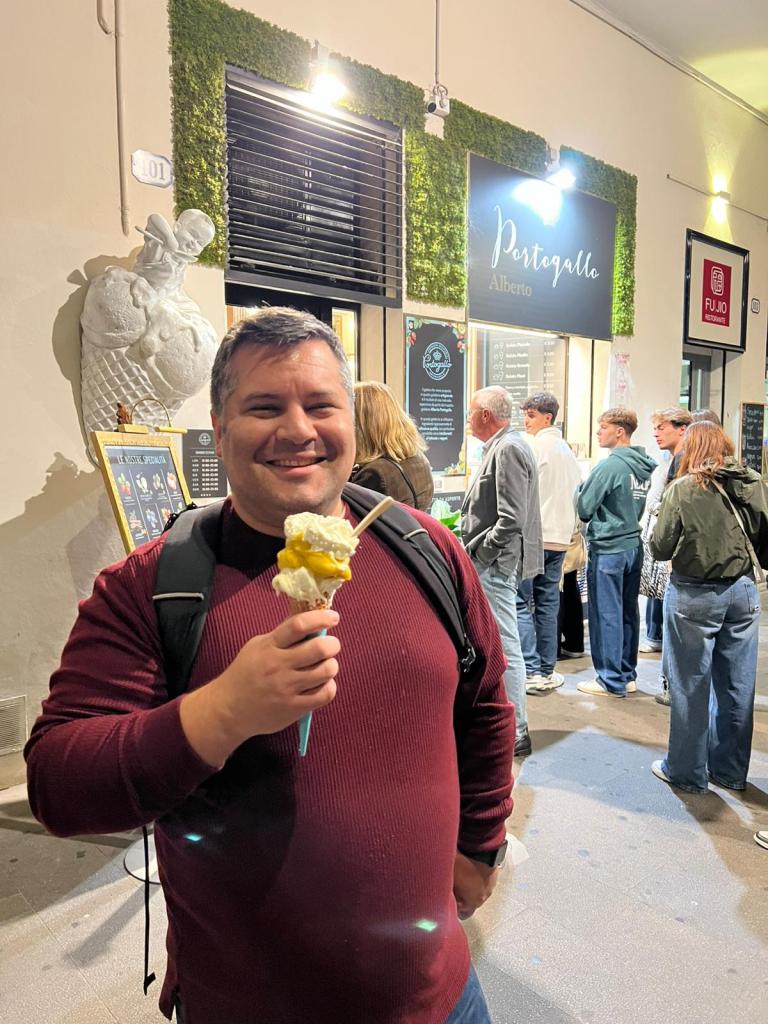
It was hard for me to go on that tour. Not because of the delicious food and gelato (man, the mango gelato in Padova was out of this world!). But rather, because I felt like I had to be an ambassador for my people. This guy wasn’t a bad guy. He just didn’t have many facts. And to his credit, he was willing to learn and grow. I just didn’t have the energy on vacation to play teacher. I hope he continues to delve into Middle Eastern history and culture – with my people included. It’s important for me to remember people like him – people who may largely disagree with Israel or are rather naïve, but are not necessarily malicious. We must engage with these people more gently and with more understanding than with some of the other instigators and criminals who persecute Jews these days.

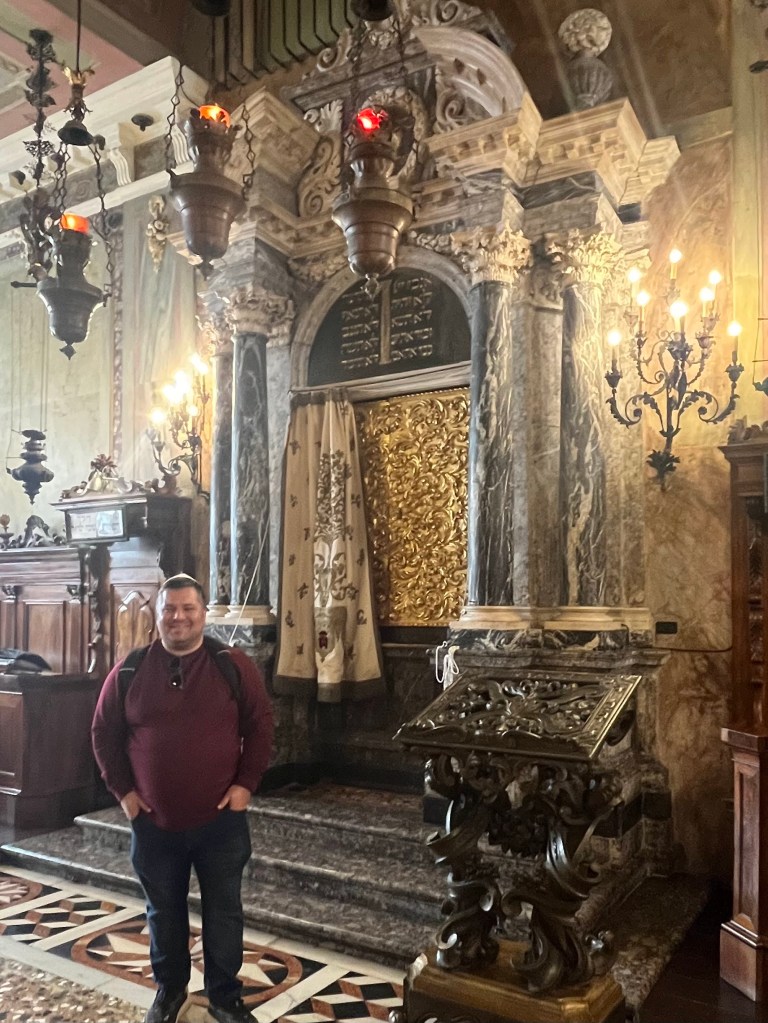
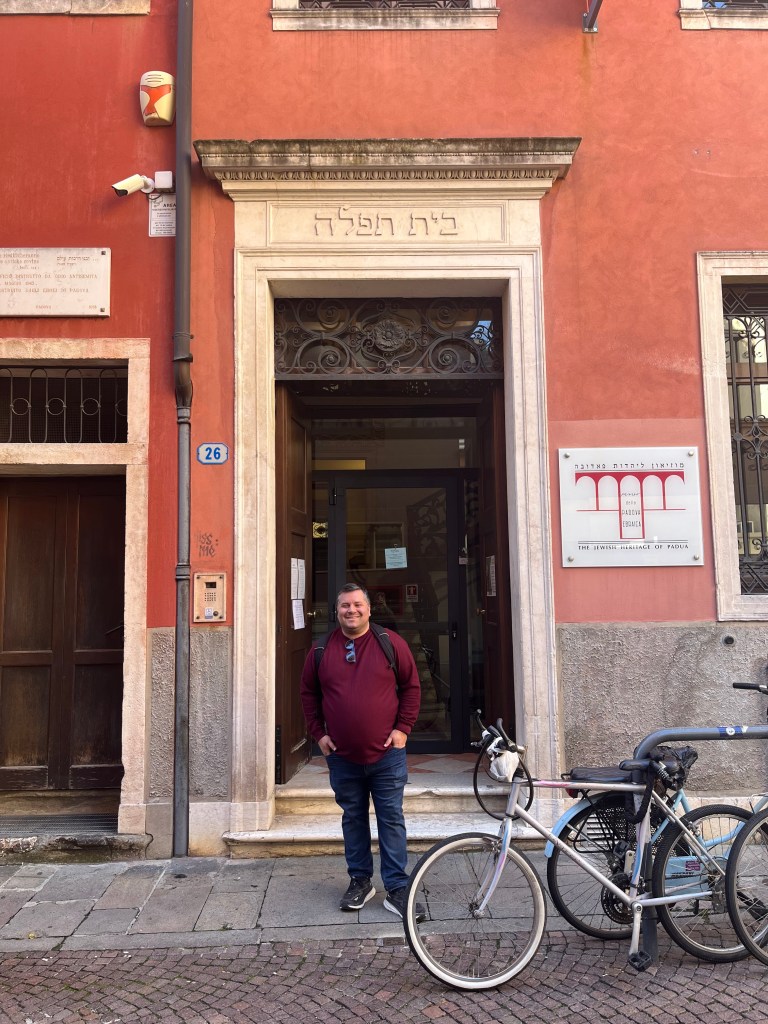
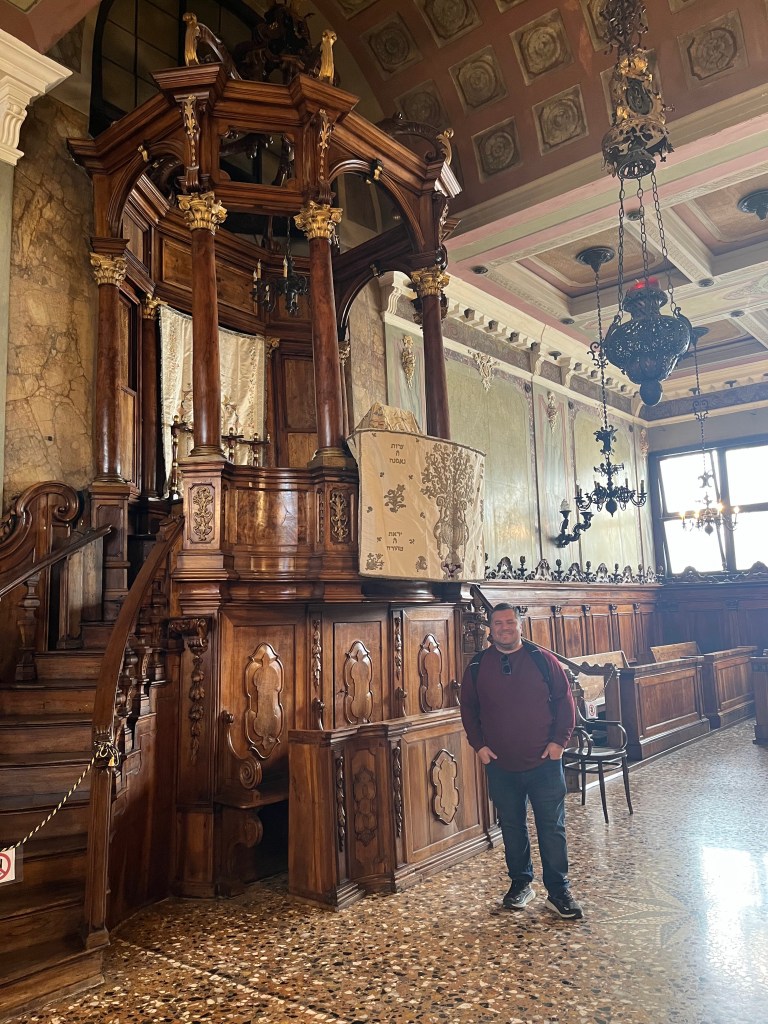
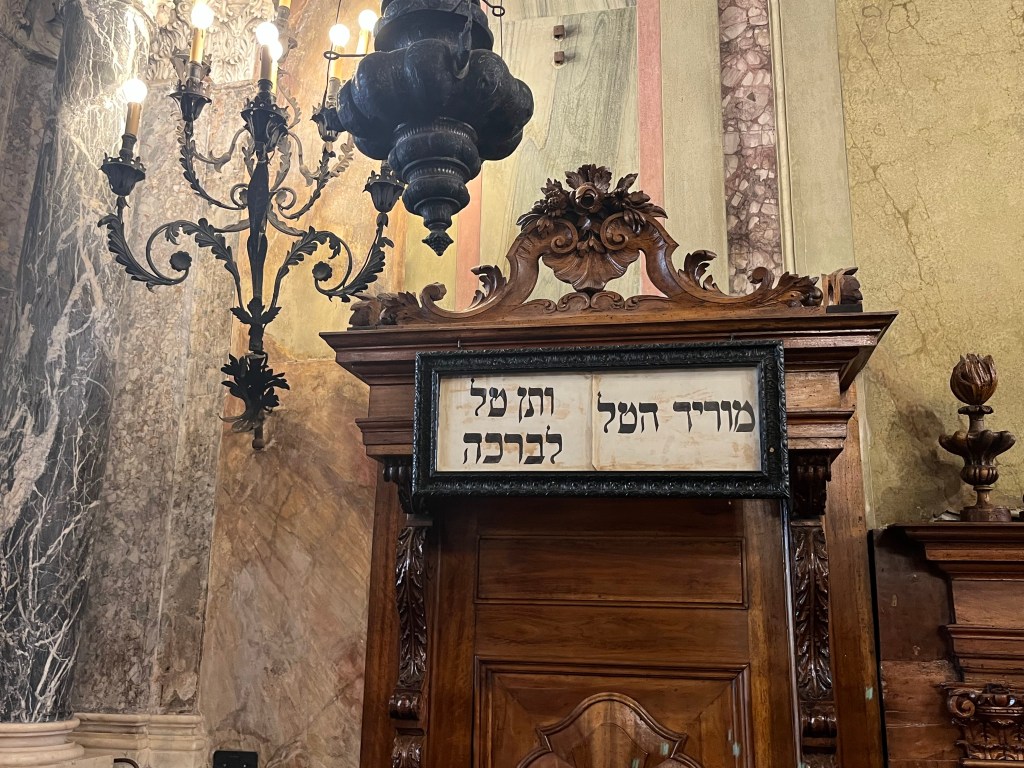
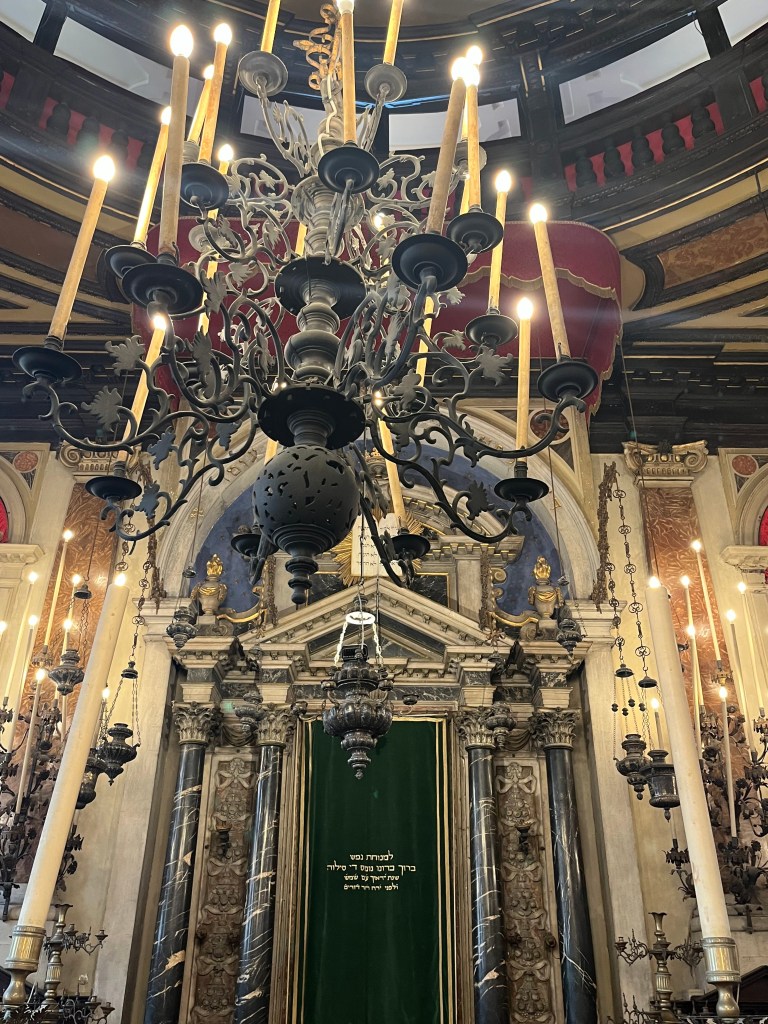
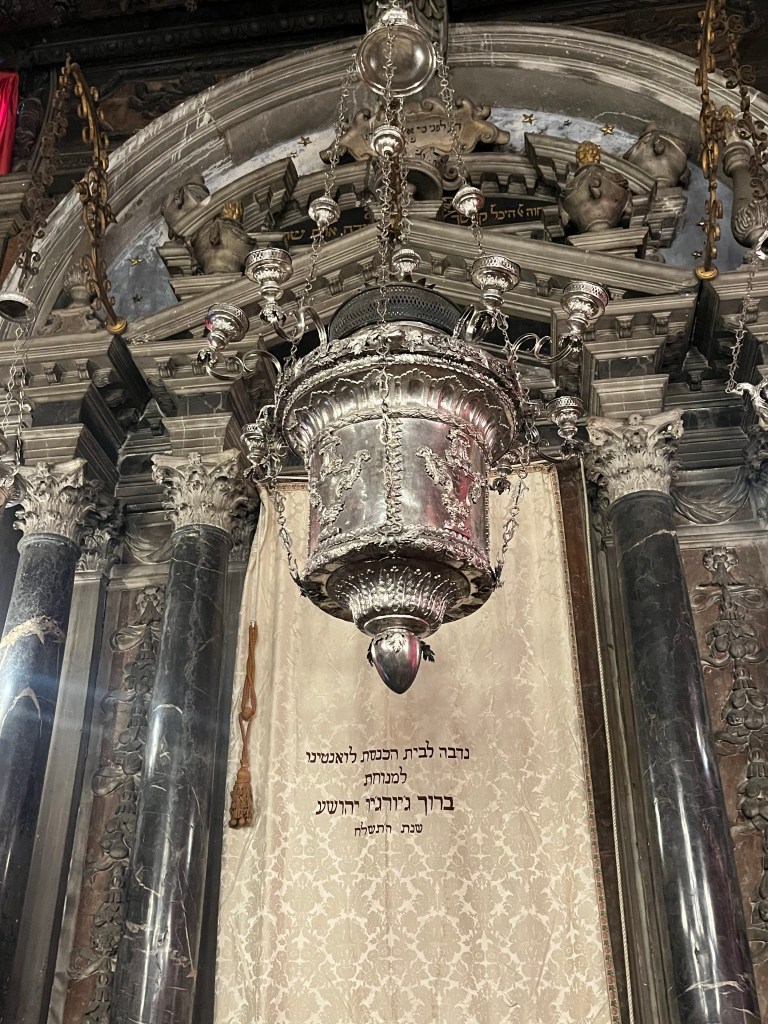
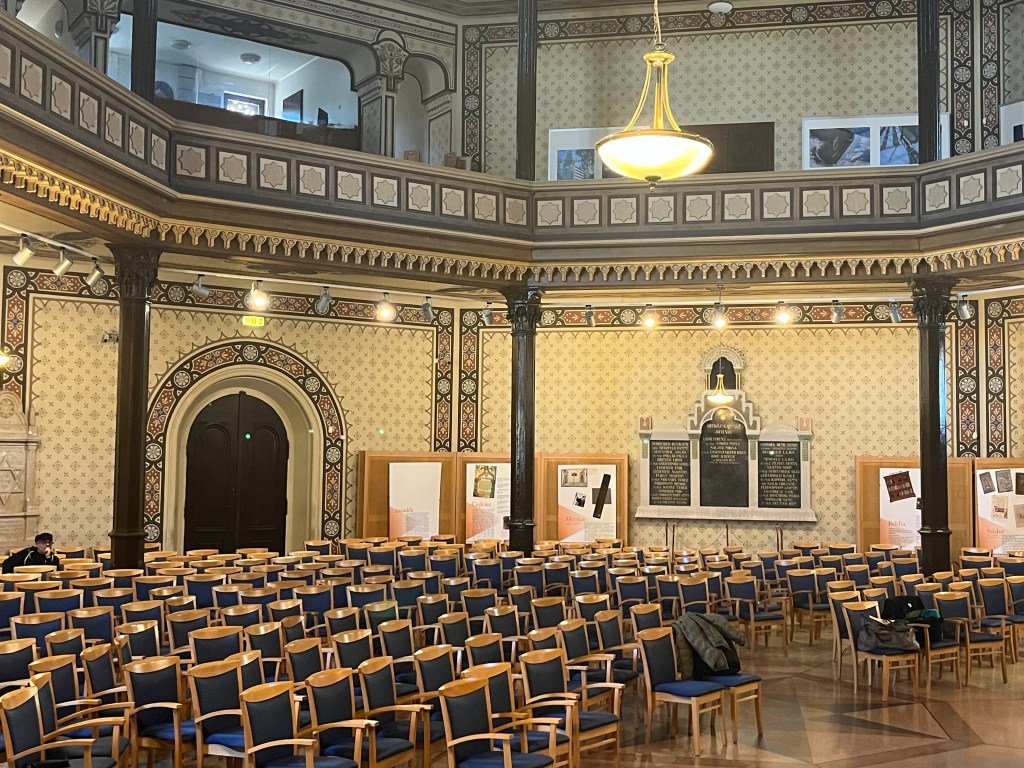
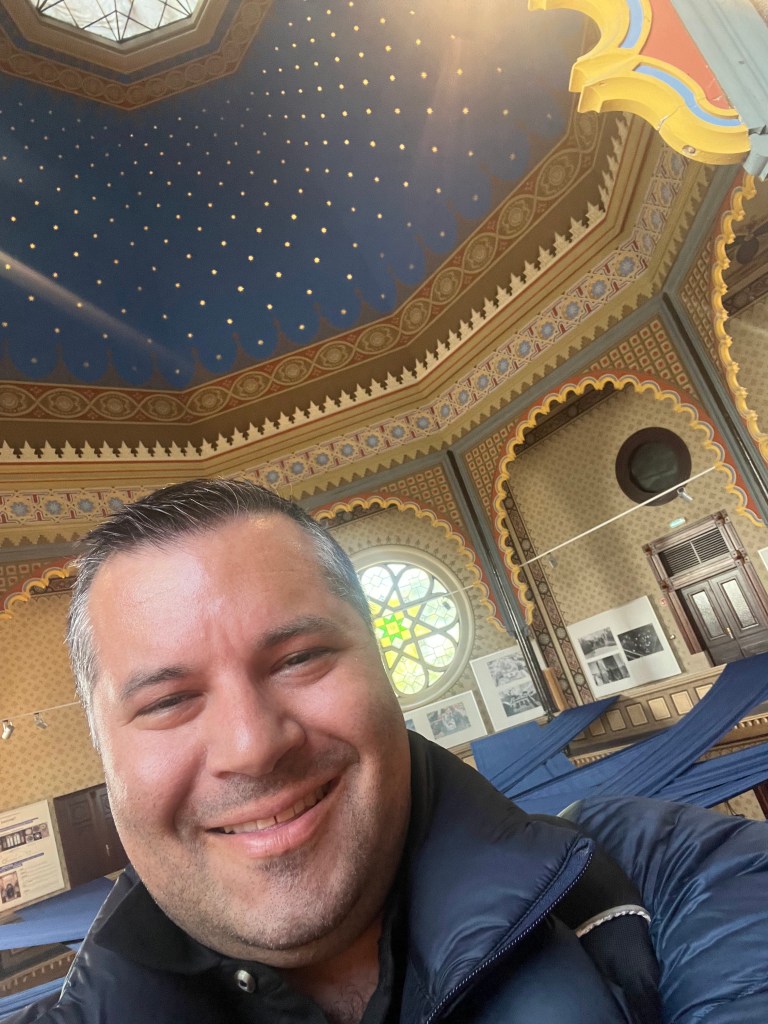
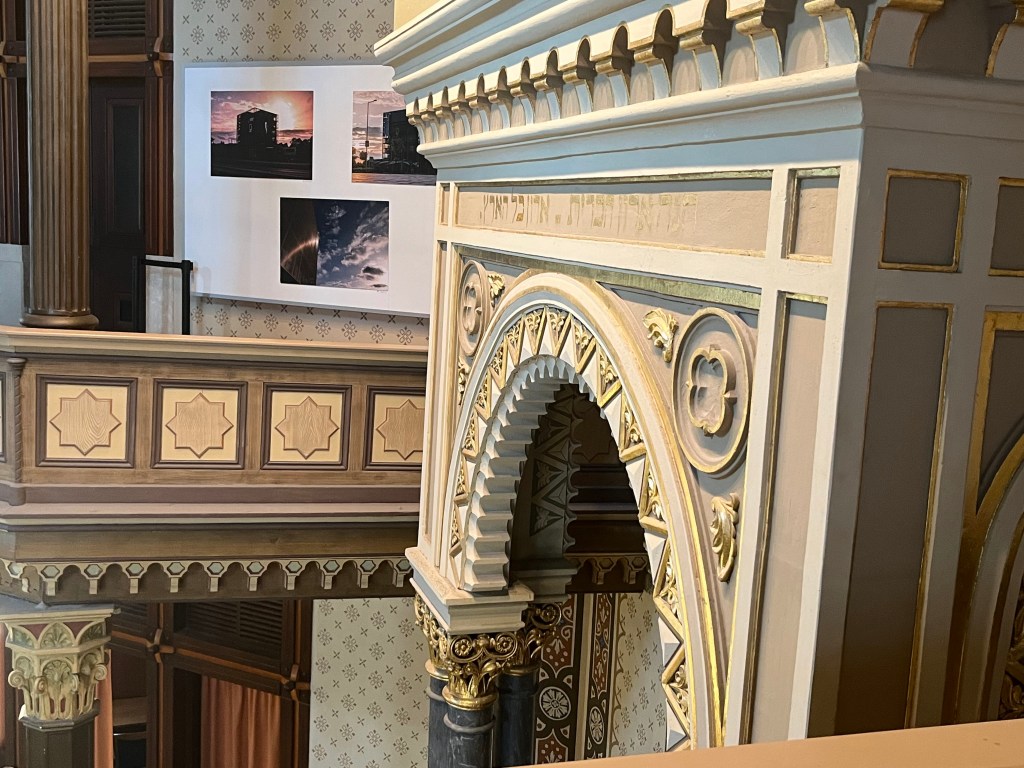
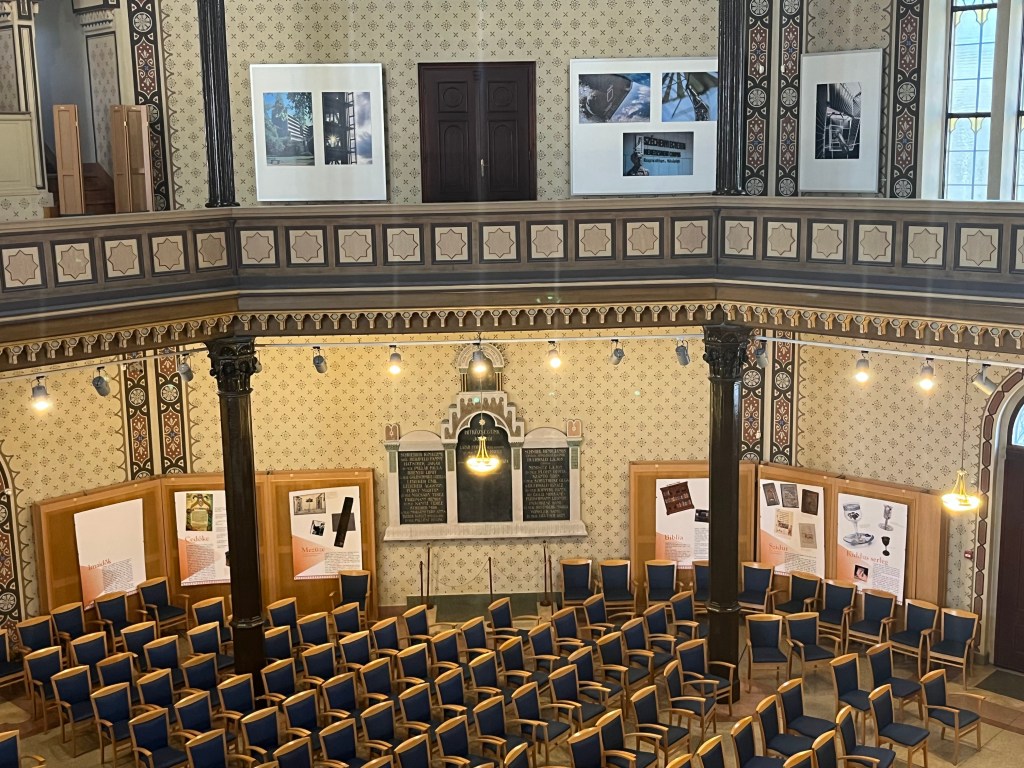
I had the great privilege of visiting the Jewish Museum of Padova, including a visit to the historic synagogue, which is still in use to this day. I highly recommend this museum and synagogue. Not only did I learn so much about this historic community, I got to visit the 477-year-old synagogue all by myself! Here are some pictures:

The museum tells the story of Padova’s Jews and some Italian Jewish history as well. For those who don’t know, many different types of Jews have lived in Italy, including Ashkenazim (yes, Yiddish was spoken in Venice and parts of northern Italy!), Sephardic Jews, Levantine Jews (Sephardic Jews who migrated to the eastern Mediterranean and came back towards Italy), and Italian-rite Jews who have been in the country for over 2,000 years! There are many beautiful artifacts such as the ones below dating back hundreds of years:

The beautiful Baroque synagogue miraculously survived Italian fascism and the Holocaust and is absolutely worth a visit. The employee working the front desk was not Jewish but was very knowledgeable about the community and charmed me with her Italian-accented Hebrew as she explained the different parts of the sanctuary to me.

Before I move on to my next Italian Jewish destination, I want to share a quick disclaimer. From Padova, I did a quick day trip to Bologna. While Padova certainly had some antisemitism, it was largely calm and pleasant and I’m glad I stayed there for a few days. Bologna, on the other hand, is not a pleasant place if you are Jewish. It is covered in antisemitic graffiti (i.e. “death to Israel”). It is called the “red city” in part because historically it has been the bastion of the Italian Communist Party. I felt deeply uncomfortable there and decided to leave earlier than expected to head back towards Padova. Of course not everyone in Bologna is a communist. When I asked my cab driver to the train station in Italian whether it was a political city he said “troppo!” Too much. He found the anti-Israel graffiti disturbing and disruptive and an unfortunate stain on the beauty of the city itself.

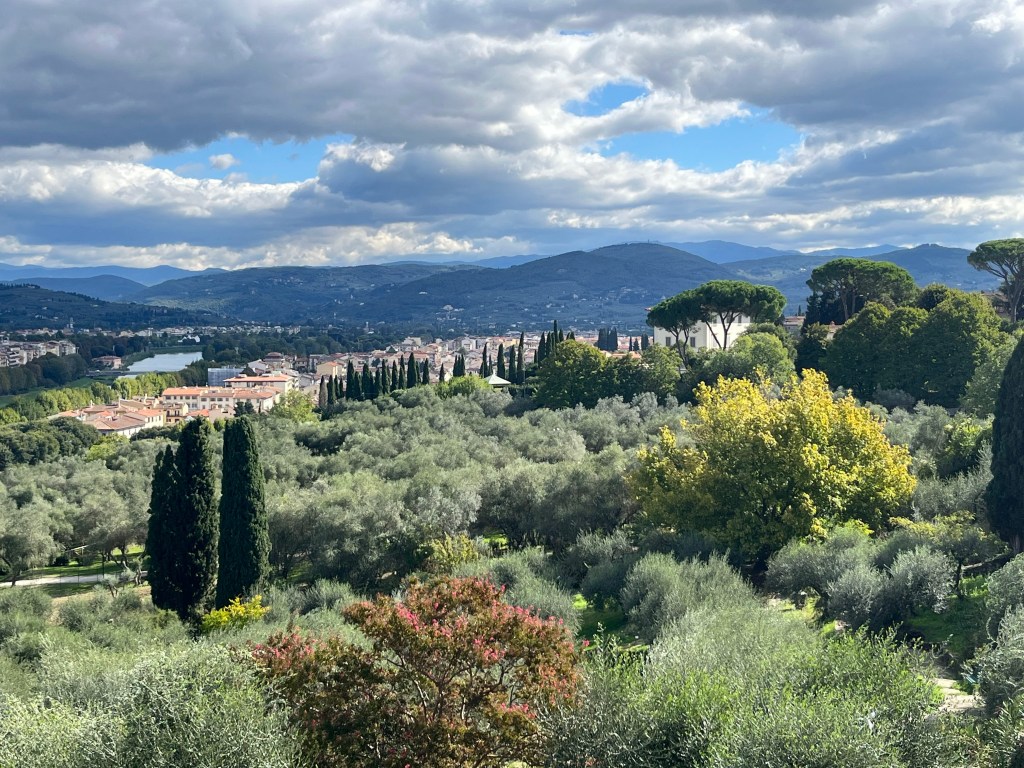
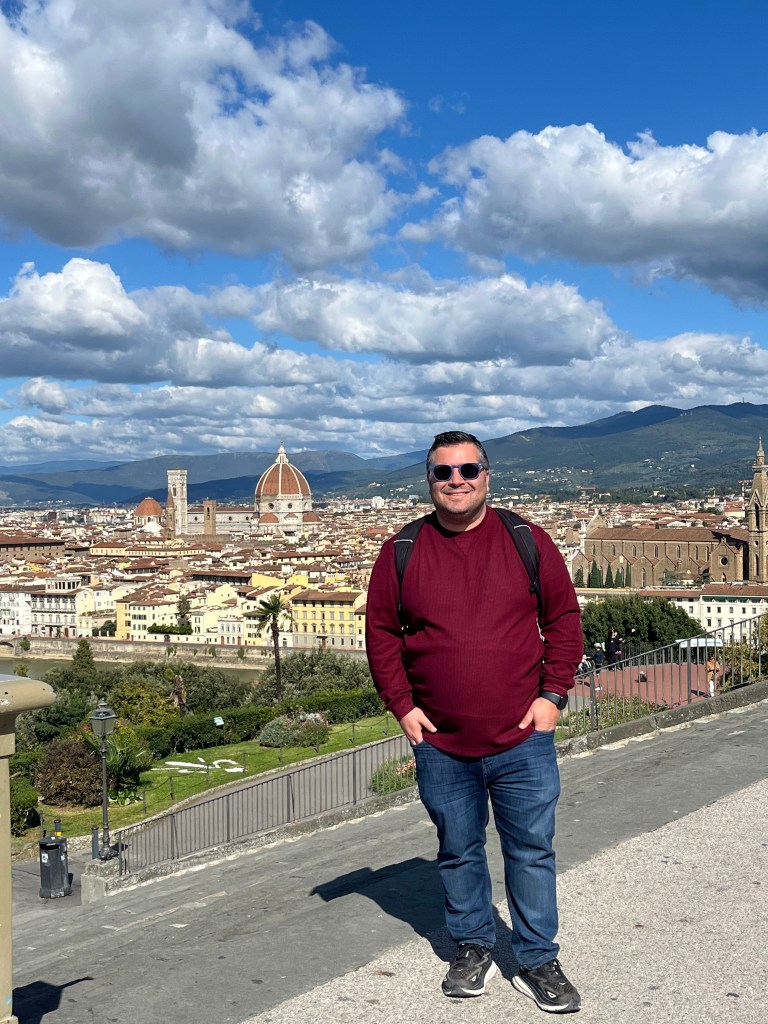
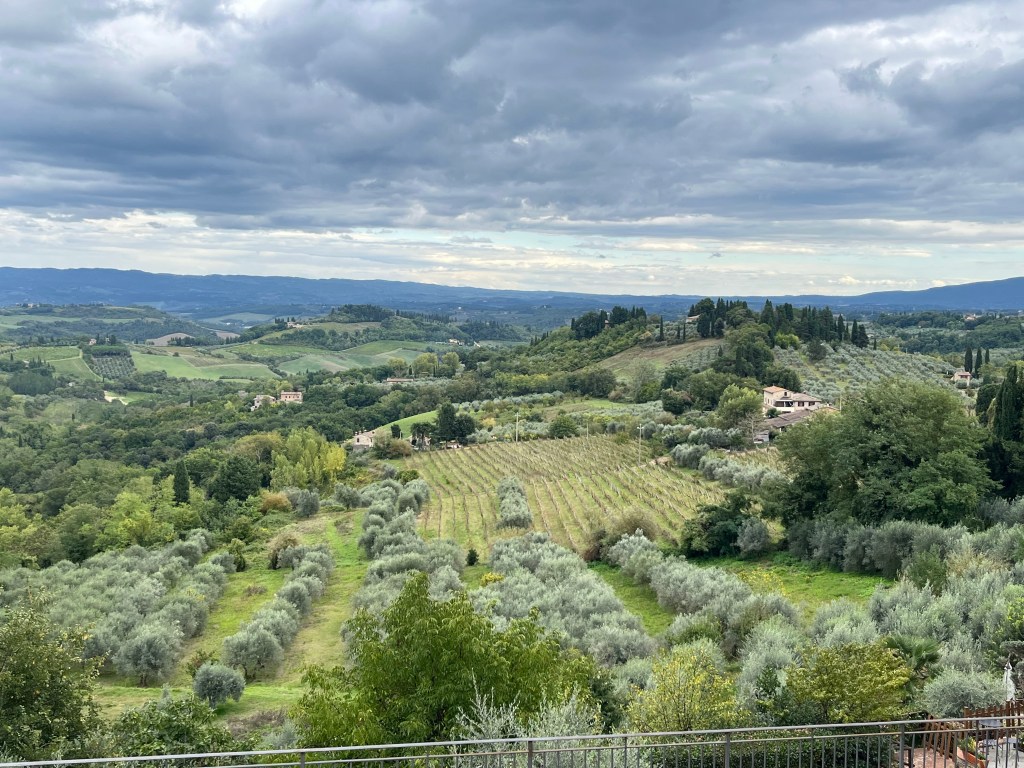
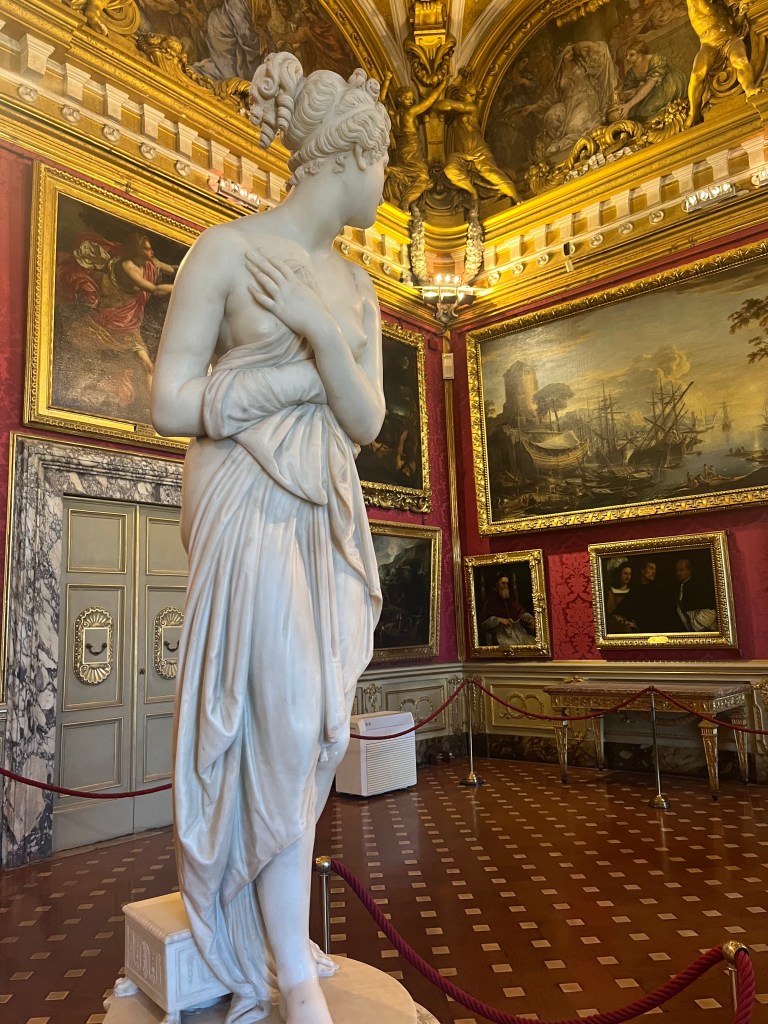
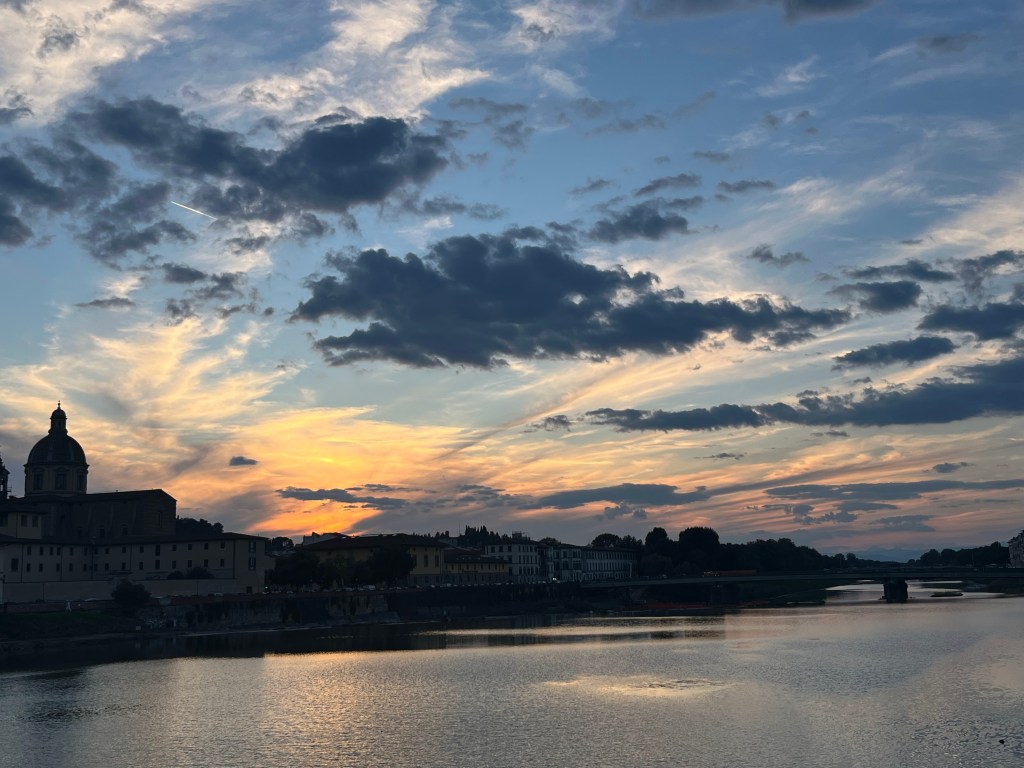
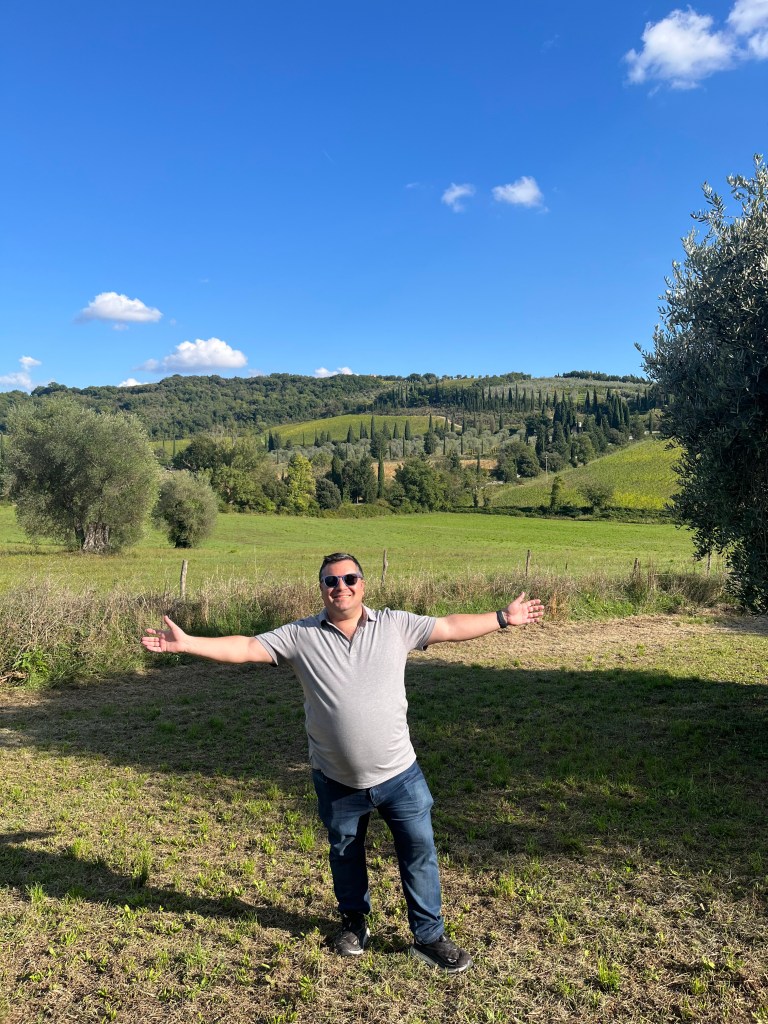
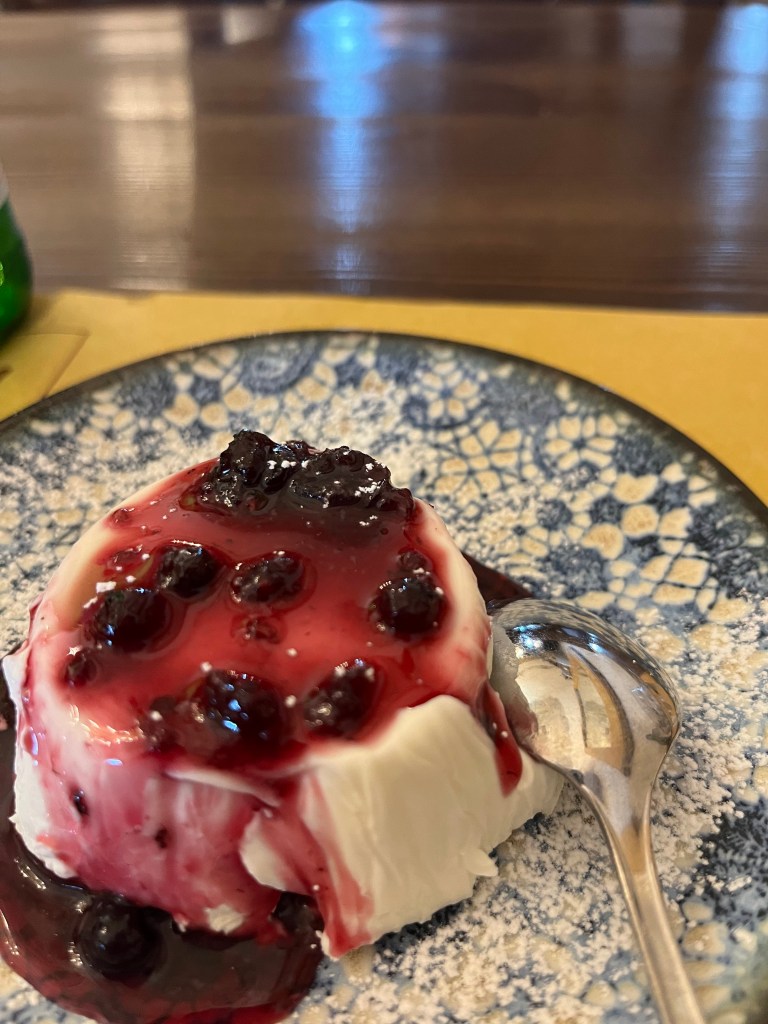
Feeling more buoyant after my visit to the Great Synagogue of Padova and the Jewish museum, I headed south to Florence for a few days. Florence, like Bologna, is generally rather lefty and occasionally graffiti-filled. But to its credit, it’s pretty damn beautiful. Not only the art and architecture of the city, but also its stunning countryside. The countryside in particular was soothing, as the medieval villages were clean and not filled with graffiti and fortunately trees can’t hate Jews. Here are some pictures from my travels in the area:

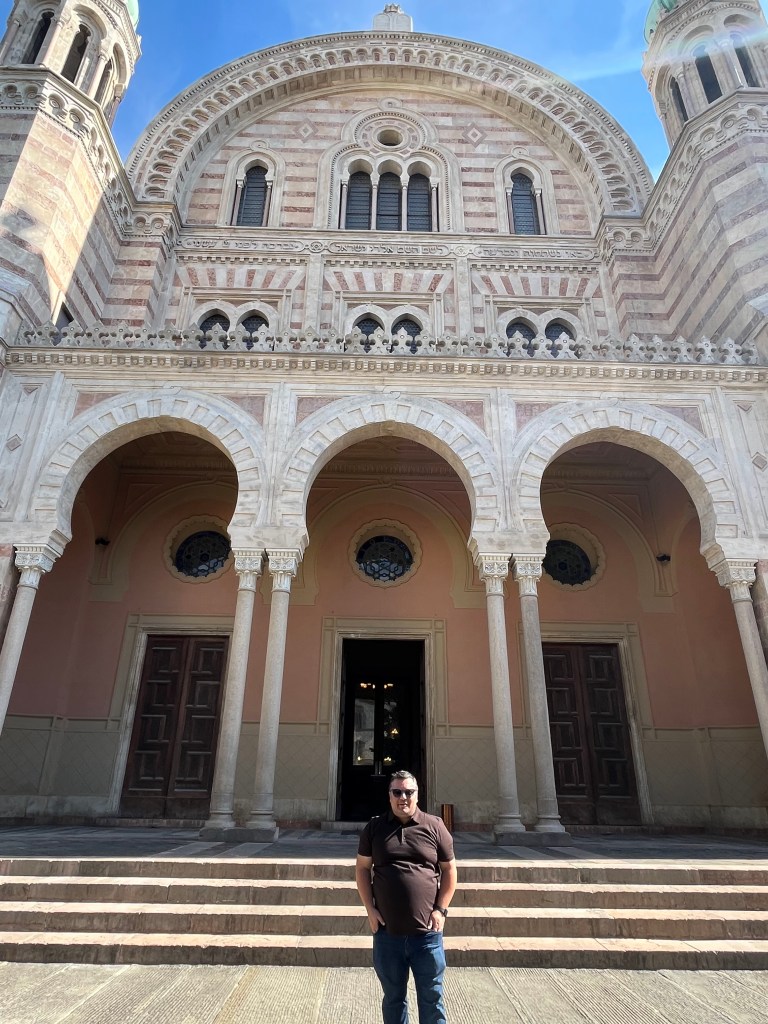
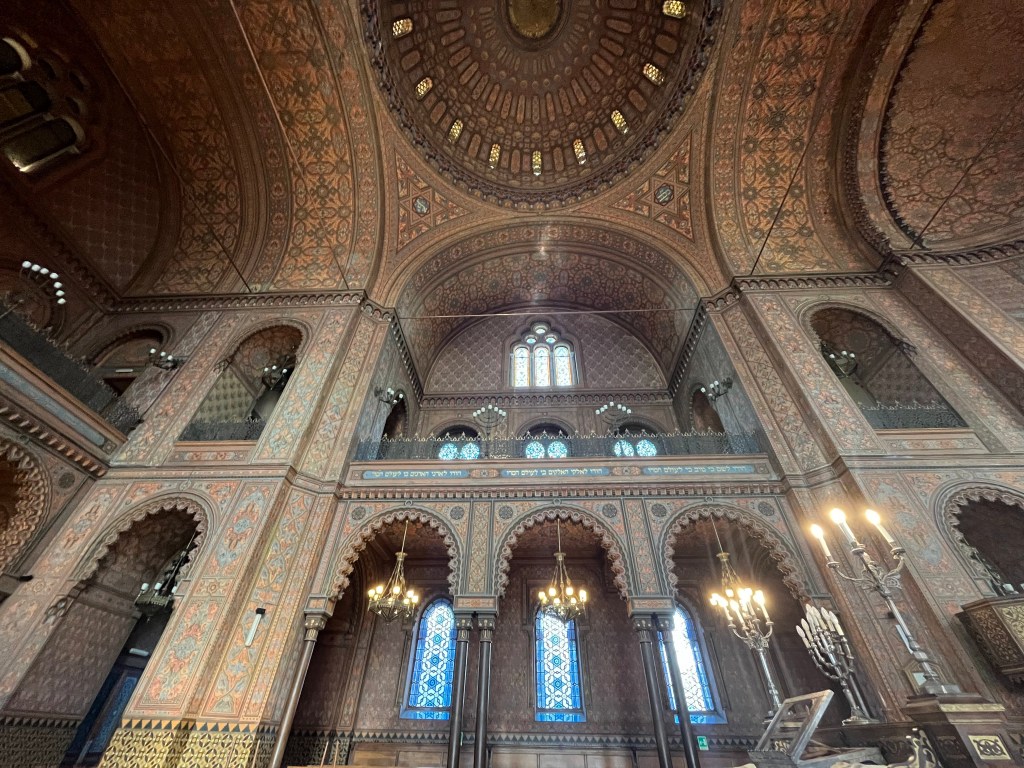
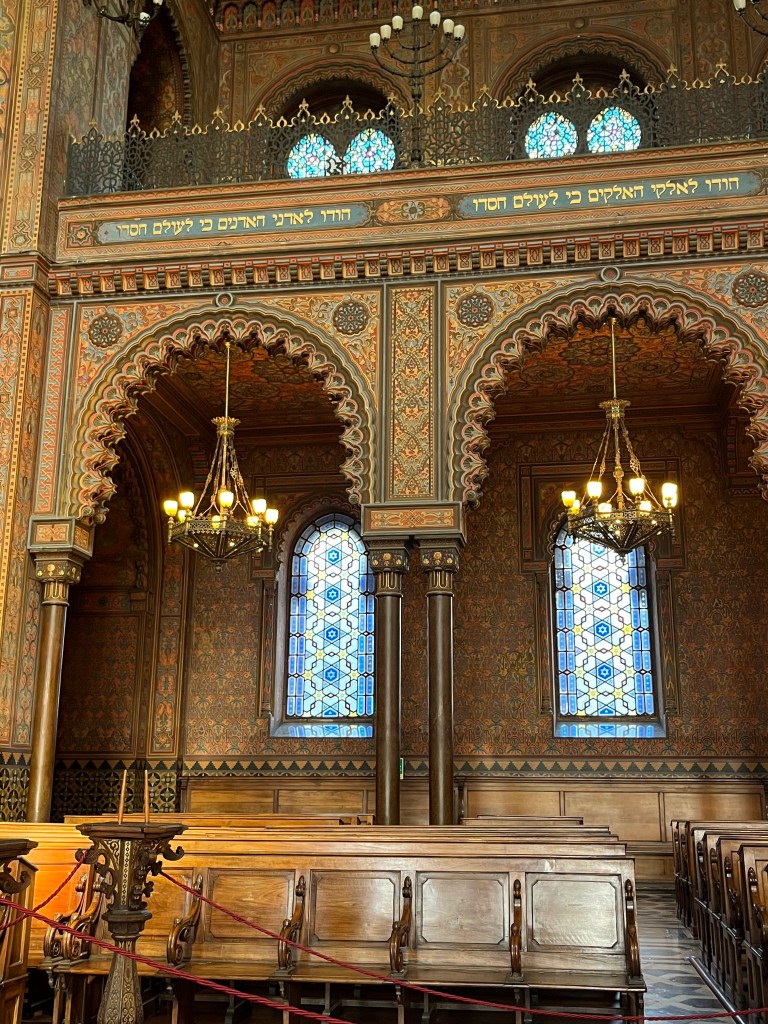
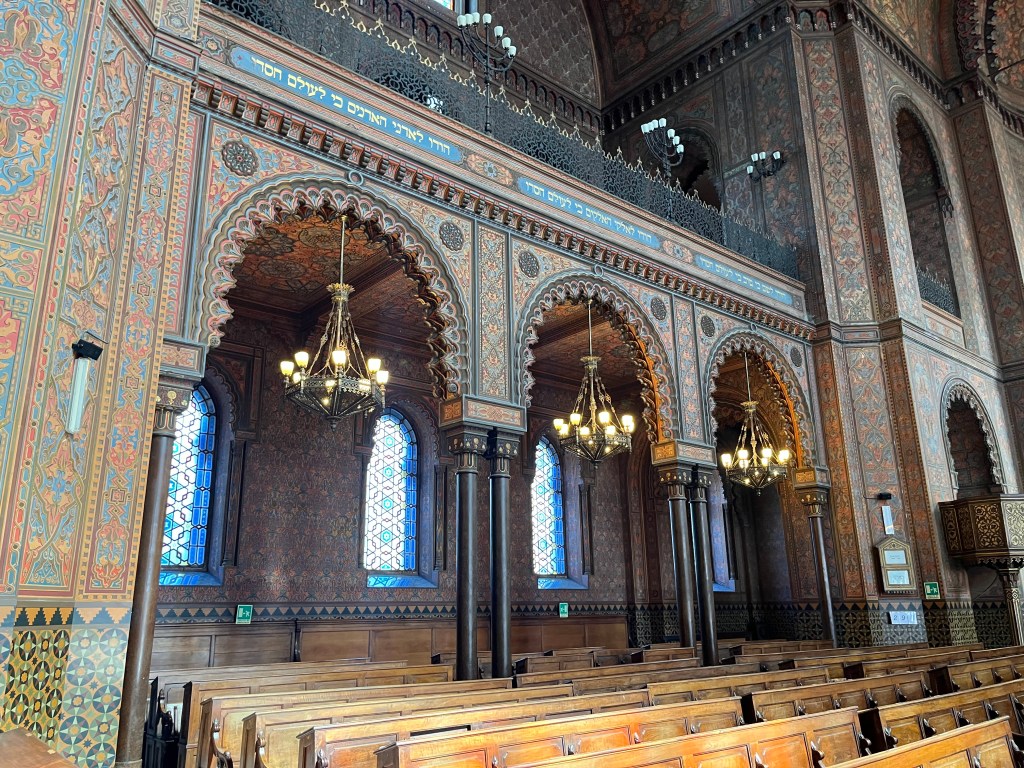
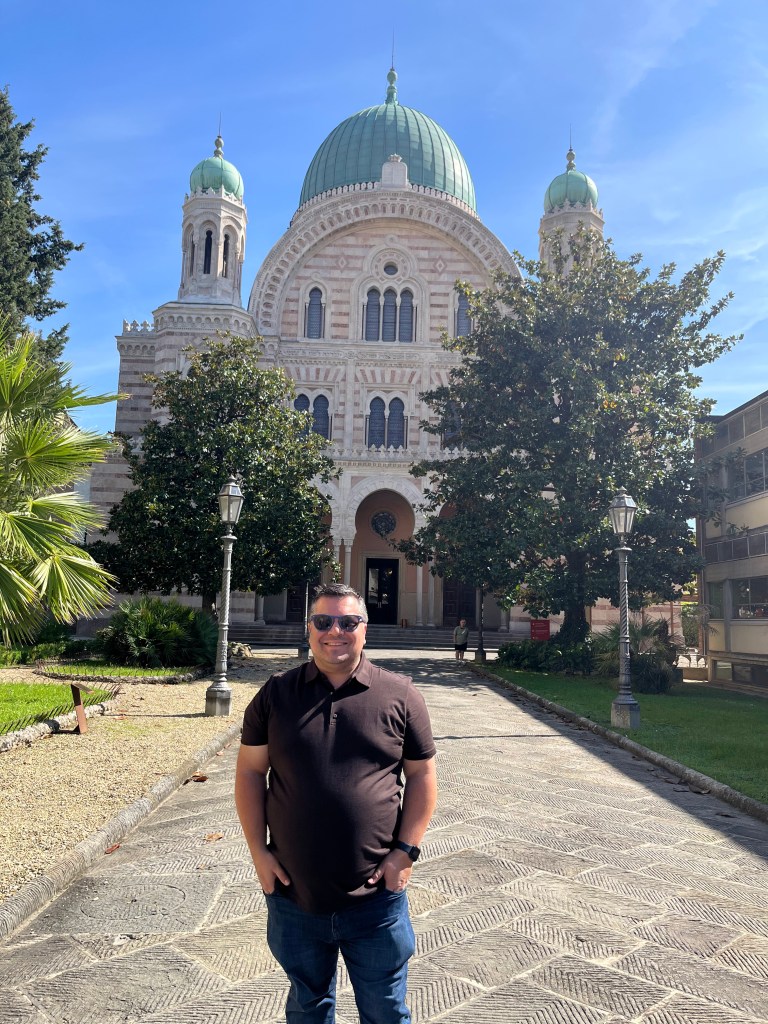
Florence and its Jews have a long history of ups and downs. The famous Medici family at times was very welcoming of Jews and helped them build quite a spectacular community. I got the chance to take a Jewish tour of Florence and learned a lot about the history of the community. The community, many hundreds of years old, lost half its members in the Holocaust between Italian fascist persecution and the Nazi invasion of the country. Its Great Synagogue and museum are absolutely worth a visit as well. Here are some pictures of the synagogue:

Perhaps my favorite part of visiting the synagogue besides the architecture was the chance to chat in Italian with the non-Jewish cashier and her friend in the museum bookstore. I speak intermediate Italian (with an occasional Spanish word thrown in) and they loved it! They were really touched that a non-Italian would learn their language, especially since among Romance languages it’s certainly less popular than Spanish or French, for example. We had a great conversation about Jewish life in Italy and Florence in particular. It was a beautiful moment that reminded me of the good in people. That while graffiti may be irritating and uncomfortable, it doesn’t represent everyone.

My last major stop on my trip was Venice. I had never been before and boy was it stunning. I stayed in Cannareggio, a historic area near the Jewish Ghetto and much quieter than the main touristic parts of the city, which was a true blessing.

Sadly, my travel plans to Venice got disrupted by a massive, 24-hour countrywide anti-Israel train strike and I lost about 700 Euros in having to change hotels and getting a new train ticket at the last minute from Florence. This train strike took place on Yom Kippur, making it even more offensive. I told my hotel manager that this was a real pain to deal with and his response was “pray for peace in Palestine”. Why a train strike in Italy would bring peace to Palestinians (or Israelis for that matter – not that they were included in the hotel manager’s prayers apparently) is beyond me. All it did was make me angry and not want to come back to Italy any time soon. Train strikes are frequent there, which I suppose is just part of the culture. Why it needed to be about Middle East politics was beyond me. Unfortunately the train strike was accompanied by a massive two-million-person national demonstration in every major city, complete with kuffiyehs, violence against police and property, and malicious anti-Israel signs. I can’t imagine what it’s like to live in Western Europe as a Jew. It unfortunately calls on the resilience of the oldest Jewish community of Europe to withstand such ridiculous bigotry and hatred. An ancient hatred renewed in modern times.

Once the rallies died down and the strike was over, I got to enjoy Venice. I traveled with a friend from the States who was also Jewish which was really comforting during this challenging part of the trip. My friend, perhaps a bit scarred by our experience with the anti-Israel strike and protestors, asked for a pseudonym to be used for this piece, which is understandable and incredibly sad. He was concerned that anti-Israel protestors might find him online and harass him. He was comfortable with me using the name “David” instead of his actual name.

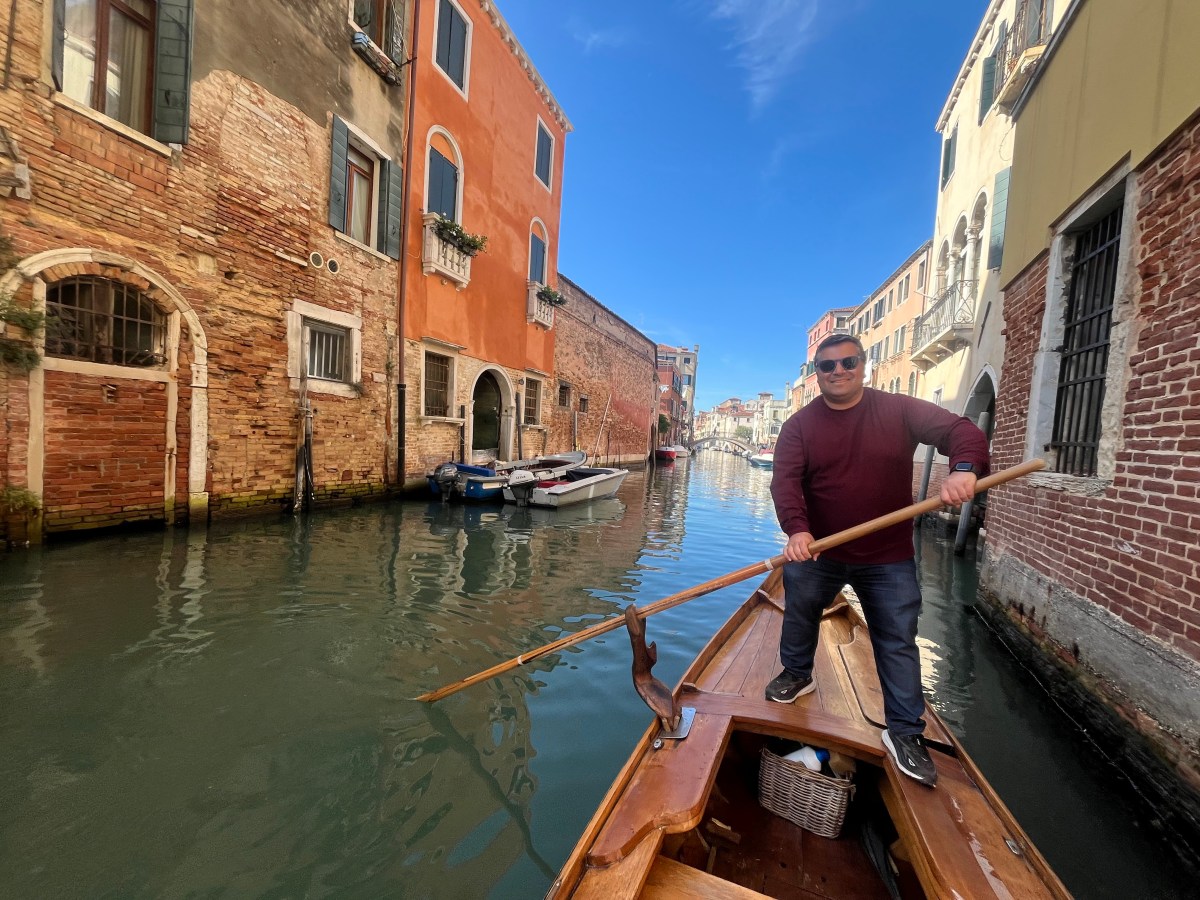
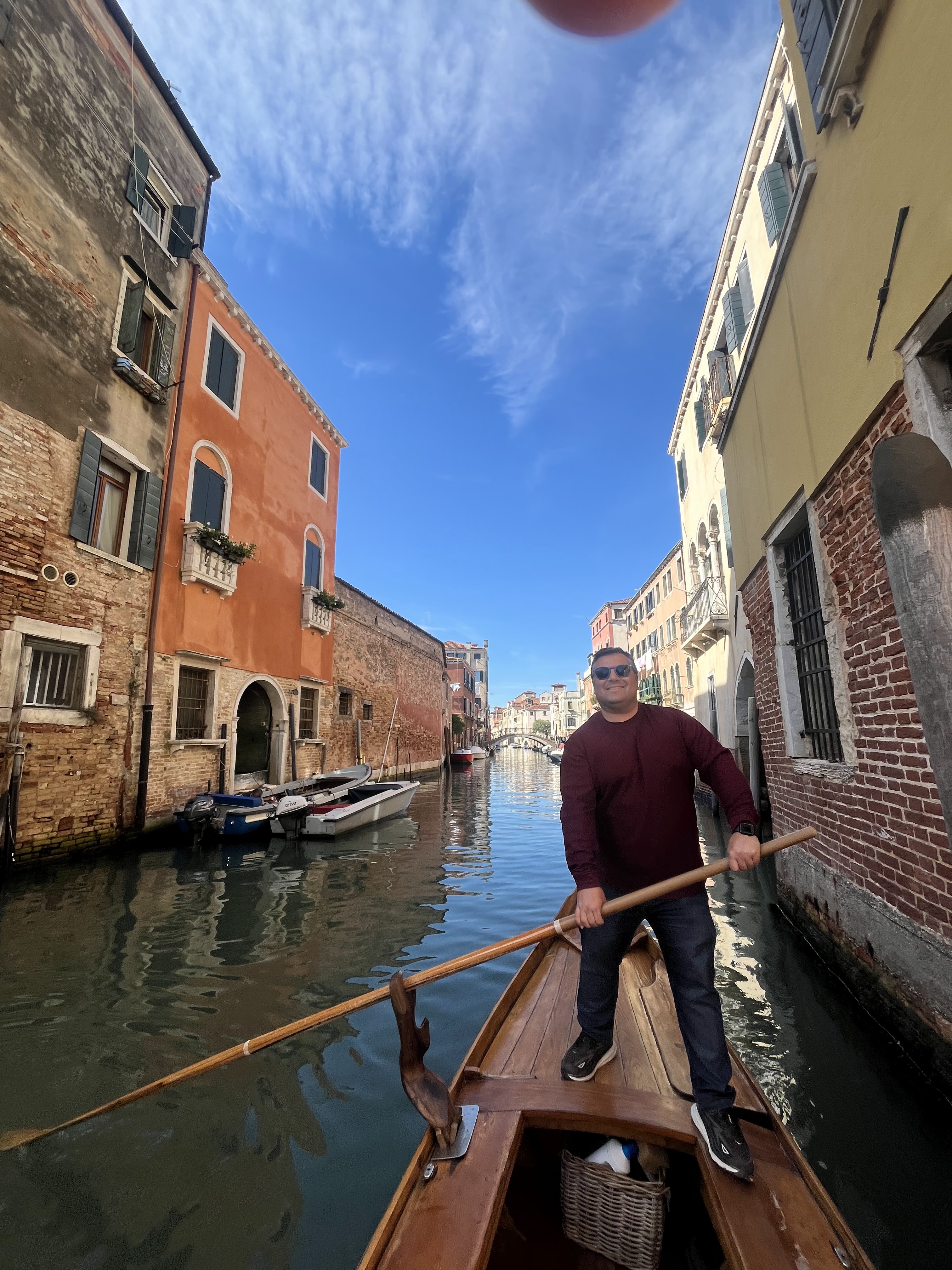
David and I did a lot of fun stuff. Venice is a city of the sea. I love being on the water. While David was busy doing some other stuff, I actually had the chance to take a gondola rowing class with Row Venice! It was a fabulous way to see the city and the teacher taught me some of the history too.

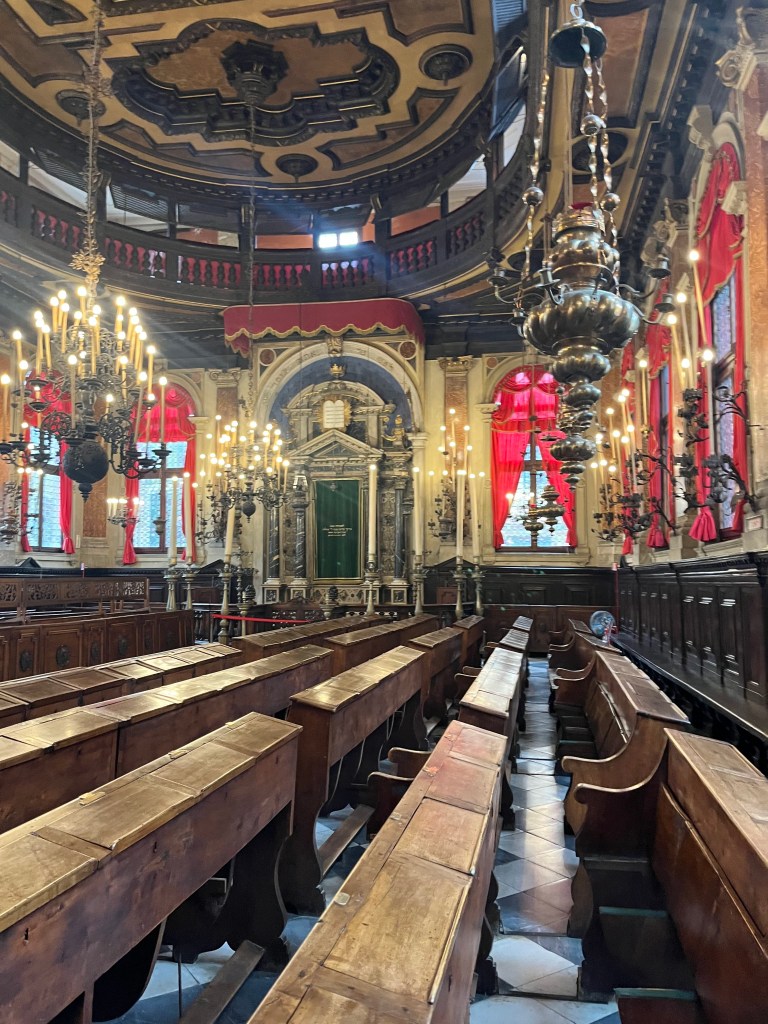
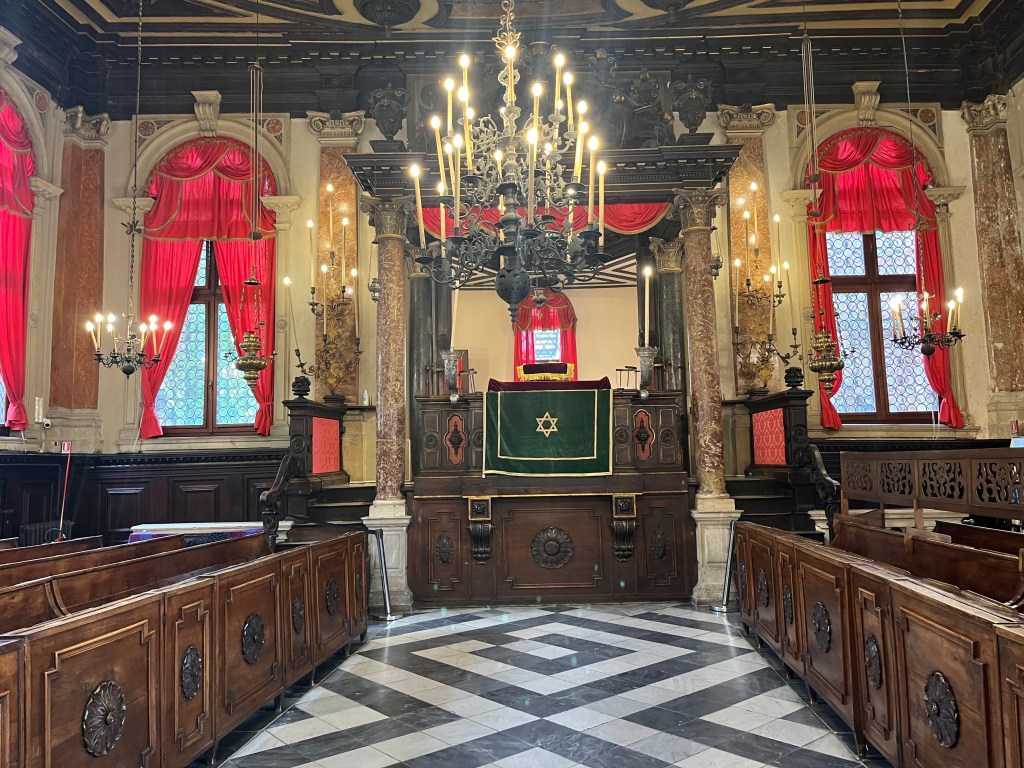
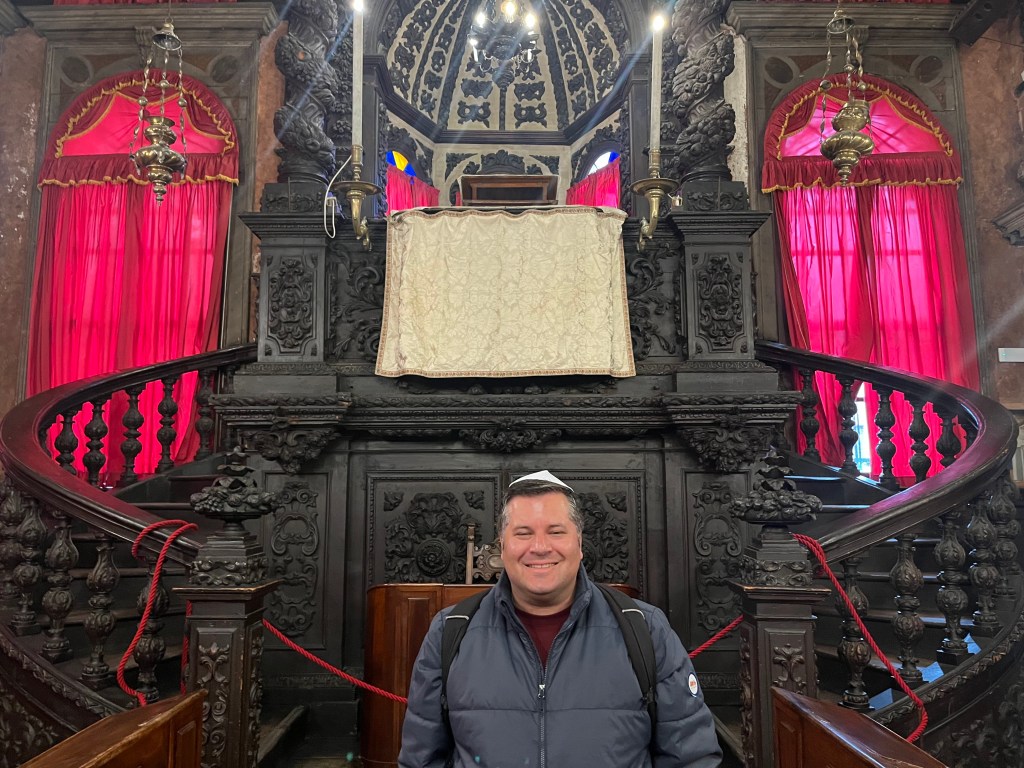
In addition to the typical Venetian tourist activities (I highly highly highly recommend a visit to the exquisite Doge’s Palace!), we got a chance to take a guided tour of the Jewish Ghetto. We loved our tour guide! You can book it here. The two synagogues we got to see were stunning. Learn more about the community’s storied history here. And here are some pictures below too!

One of the highlights of visiting the Venetian Jewish Ghetto (where the word “ghetto” actually comes from) was meeting members of the local community. I always love meeting Jewish brothers and sisters around the world and Venice was no exception. First, I went to the bookstore of the currently renovating Jewish Museum of Venice. The woman behind the counter was a member of the tiny Venetian Jewish community. She was so kind. I ended up buying a book about the Judeo-Venetian dialect (so cool!) and a book about Ashkenazi and Sephardic music from Venice. It was refreshing to talk to a Jew after seeing so much hatred on this trip. Perhaps finding community with our brothers and sisters and allies is a way of coping, a way towards resilience in these challenging times for our community around the world.

After the bookstore, I got some Judaica from a local store called Shalom. It was beautiful. For those of you who know me well, you might know that I recently moved to Atlanta. I’m excited to put up my new Murano glass mezuzahs I got at Shalom in my brand new apartment as a reminder of the fragility and beauty of Jewish life.

After a fun, challenging, and beauty-filled trip to Italy, I was ready to board my plane to Atlanta. I had many fond memories of the Jewish communities, museums, rural villages, and canals I had visited. But most of all, I wanted to go home. Not because I dislike Italy. But because Atlanta is a safer place to be myself, a gay Jew, than Florence, Padova, Bologna, Verona, Venice – any of these stunning places. They are fabulous to visit and I’m so glad I got to experience new things on this trip. But there is a reason I moved from D.C. to Atlanta besides the rats in my old apartment. It is because in these days of polarization, Atlanta is a haven. It is a moderate and open-minded city where nine times out of ten, I feel like I can just be myself. I’m not surrounded by the hate-filled graffiti and protests of D.C. or certain parts of Italy. I’m surrounded by acceptance and love.

I’ll put up my new mezuzahs soon and will always carry a piece of Italy in my heart – the kind people who opened up to me, both Jewish and non-Jewish. And let the mean folks float away like a piece of driftwood floating down a Venetian canal towards the great lagoon. Far away from my life.

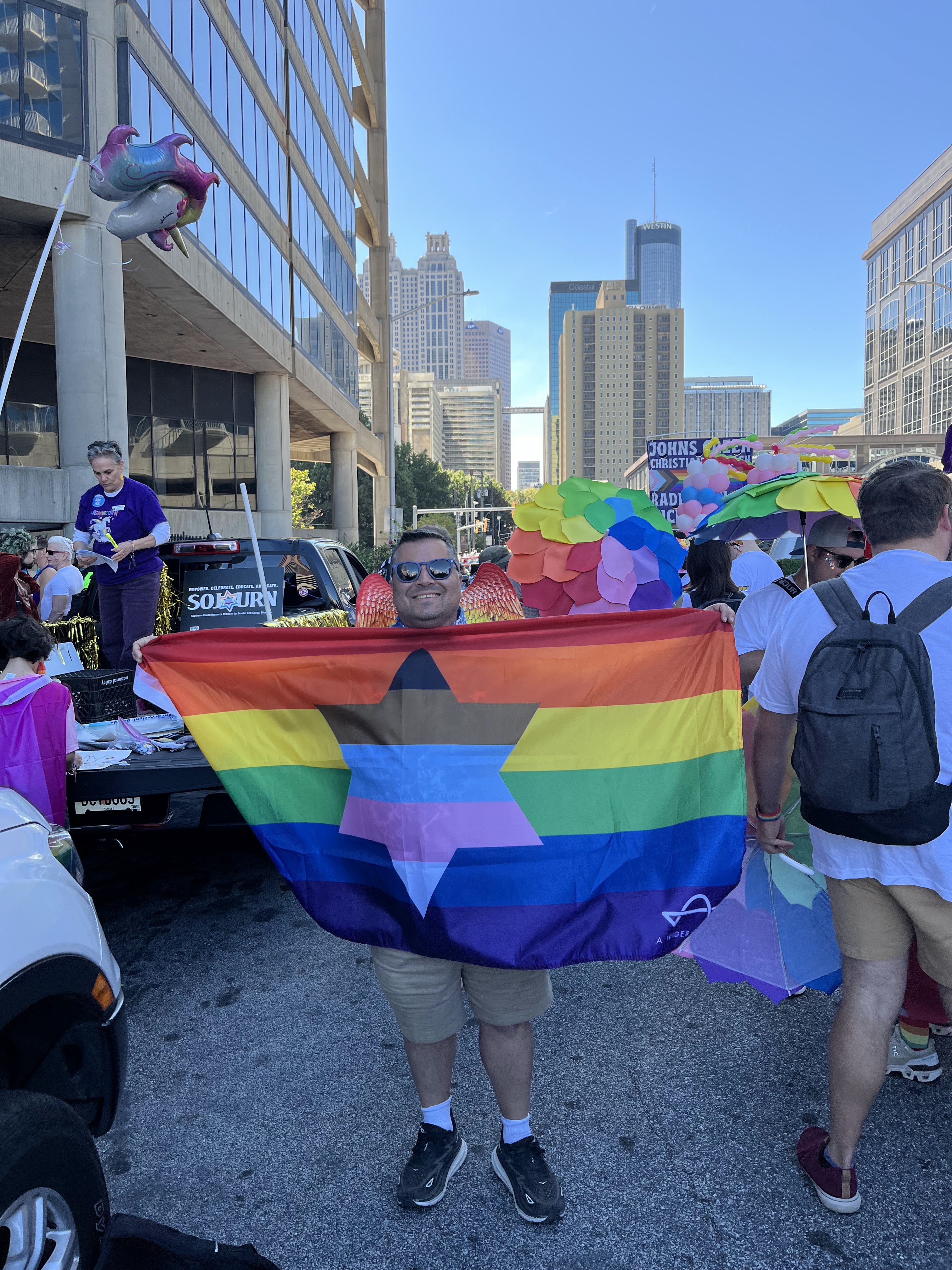
I’ll end with a picture of me marching proud with the LGBTQ+ Jewish community of Atlanta the weekend after I got back. Because there is no better antidote to hate than loving who you are. May we all get to know that acceptance and I hope for a better future for us all. Shanah tovah!

Making Peace With Arabic

My journey with Arabic started at the local Jewish Community Center, where I took a class in high school. I then studied the language for four years in college and with Syrian refugees on Skype. My studies were helped by my passion for languages and my love for Hebrew, its very similar sister language.

Why Arabic? It all started when I was sitting in my Lebanese friend Jad Zakhour’s (z”l) car hearing my first sounds of Arabic music. It was those tantalizing sounds, plus the delicious food and warm welcome I always received in his house, that caused me to become curious about this language. After all, Arabs and Jews are cousins. If we’re ever going to make peace with each other, we need to understand each other.

As with many other Jews and Israelis, I felt the pain of October 7th deeply and personally. In addition to the horrific results of the attack, the subsequent war has involved my friends risking their lives by serving in the military, going through countless rocket attacks, and a friend’s nephew being injured in the vile Hezbollah terrorist attack on Druze kids playing soccer in Majdal Shams.

I lost friends over the past couple years who showed their antisemitic (or at best, deeply ignorant) sides to me. I was discriminated against in the LGBTQ+ community, including being screamed at in public for being Israeli. I would walk by my local synagogue only to find antisemitic graffiti daily across the street.

All of this caused me to distance myself from Arabic. Anything that sounded like Hamas, like terrorism, like antisemitism, made me feel disgusted and frankly, scared. This was not an easy thing for me to reject. I had written an entire book about my relationship with Arabic as a gay Jew. Arabic is in my veins, it is part of what motivates me to make the world a better place for everyone. Yet the pain was so raw I just couldn’t do it. I couldn’t even listen to Arabic music for over a year.

Something changed for me recently. Because of the Syrian government’s attacks on its Druze minority, Arabic’s spirit has reawakened in me. Why? I’m not entirely sure. But I think it’s because I remembered – Arabic is not just Hamas. Arabic is not just Hezbollah and the wretched Syrian government. It is also the language of the my friends. It is the language of 20% of Israelis. Yes, it is a language of many Muslims – and also Christians, Alawites, Druze, and Jews! It has been a Jewish language, with specific Jewish dialects, for many hundreds of years across the Middle East. Some of which were spoken by my Iraqi Jewish neighbors in Tel Aviv.

Terrorists don’t get to “own” a language. Neither do antisemites. Arabic can and should be for all, just like any other language. It is a way to communicate, it is a way to build bridges, it is a way to make peace. I don’t know how to make peace in the Middle East, but I do know I’m in the process of making peace with Arabic. And maybe, here as I sit writing and soaking in the sounds of the Arabic music that got me interested in the first place, making that peace internally is the first step to making a more peaceful world for everyone.

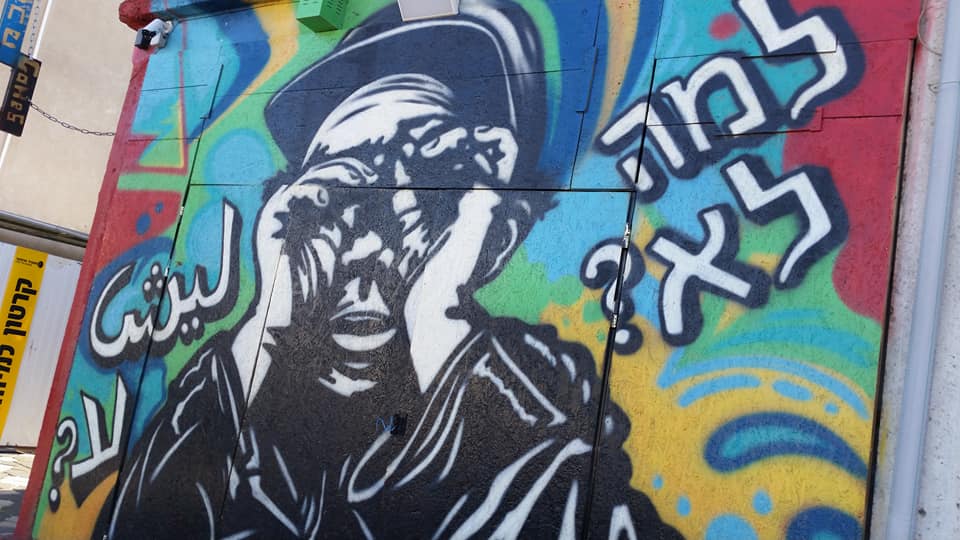
As my blog banner photo from Majdal Shams says in Hebrew and Arabic: “why not?” The time to heal, to build, and to grow is now. Make your internal peace and then maybe one day all sides can reach out their hands to create a safer, more peaceful world. Ken yehi ratzon, inshallah, may it be so.

Two Jewish books in Bratislava

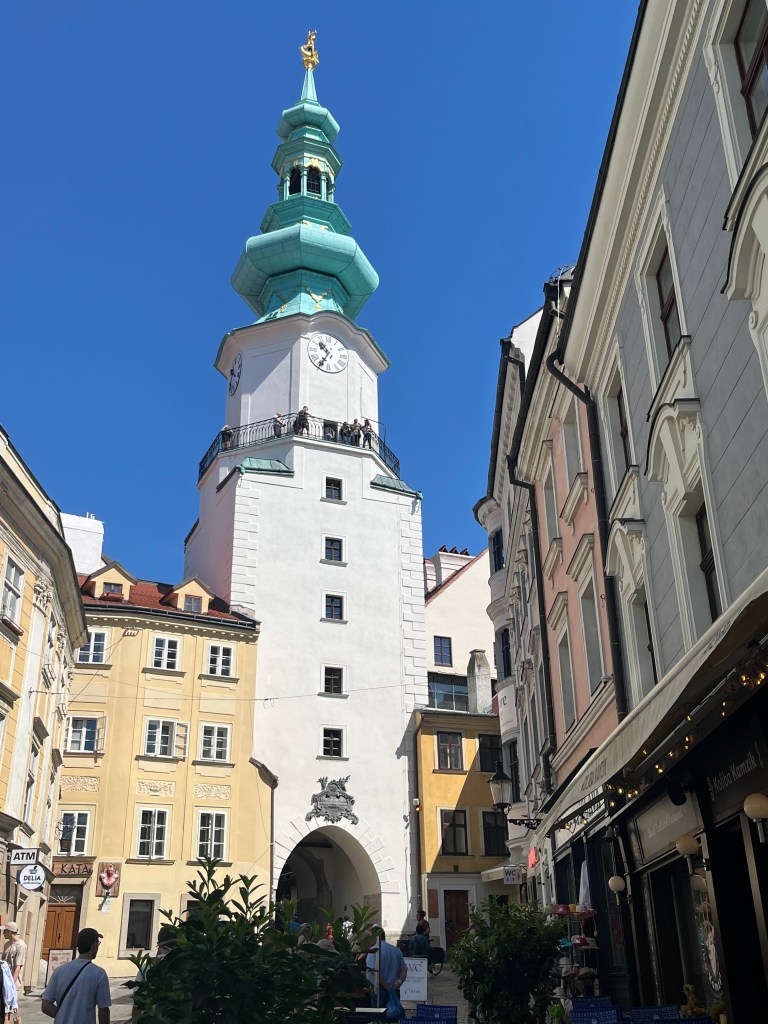
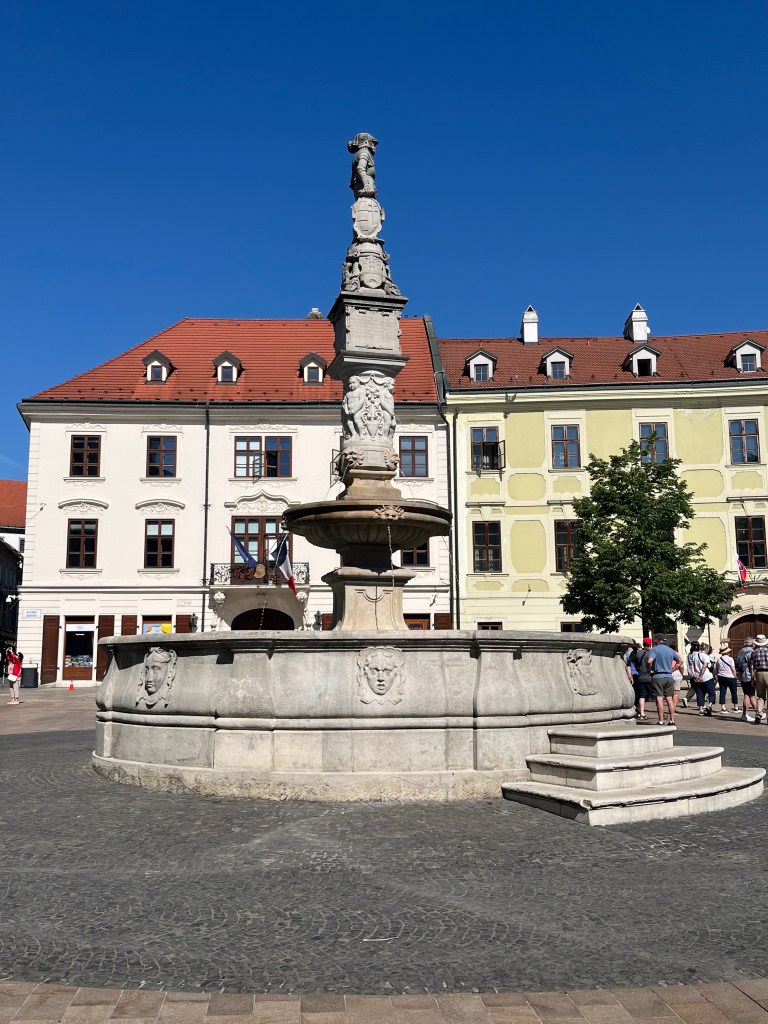
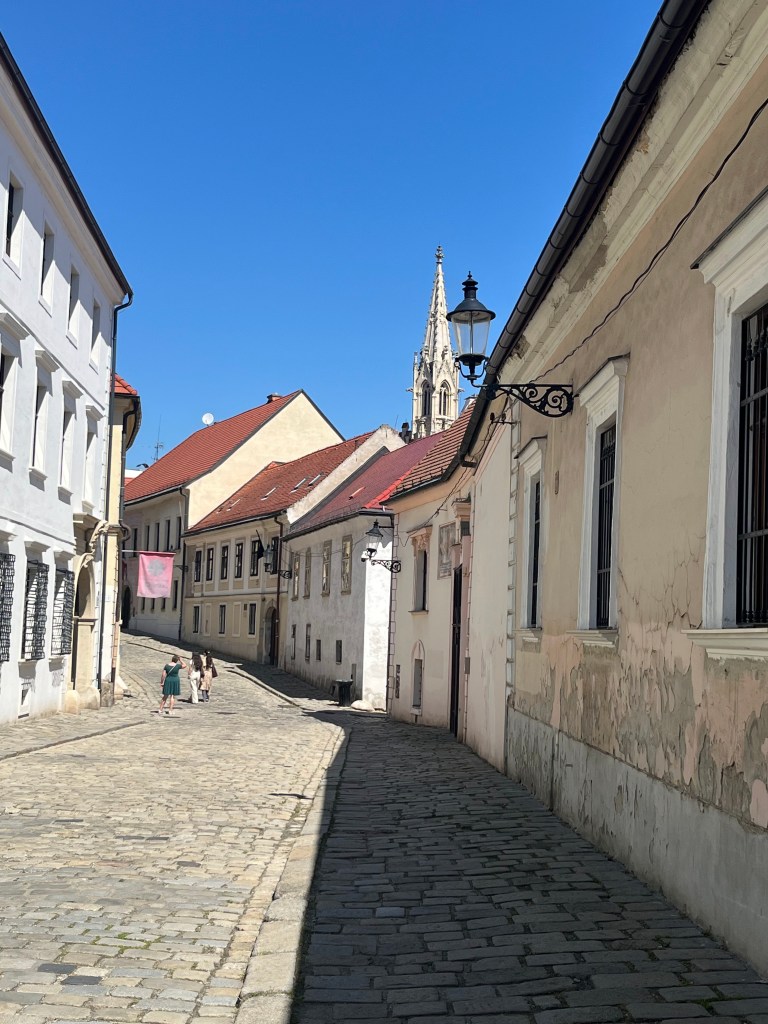
First off, Bratislava is a beautiful city. I had never been to Slovakia and wasn’t sure what to expect, but its cafes were cute, its churches elegant, and its vibe very chill. It makes for a great day trip from Vienna, where I was staying.

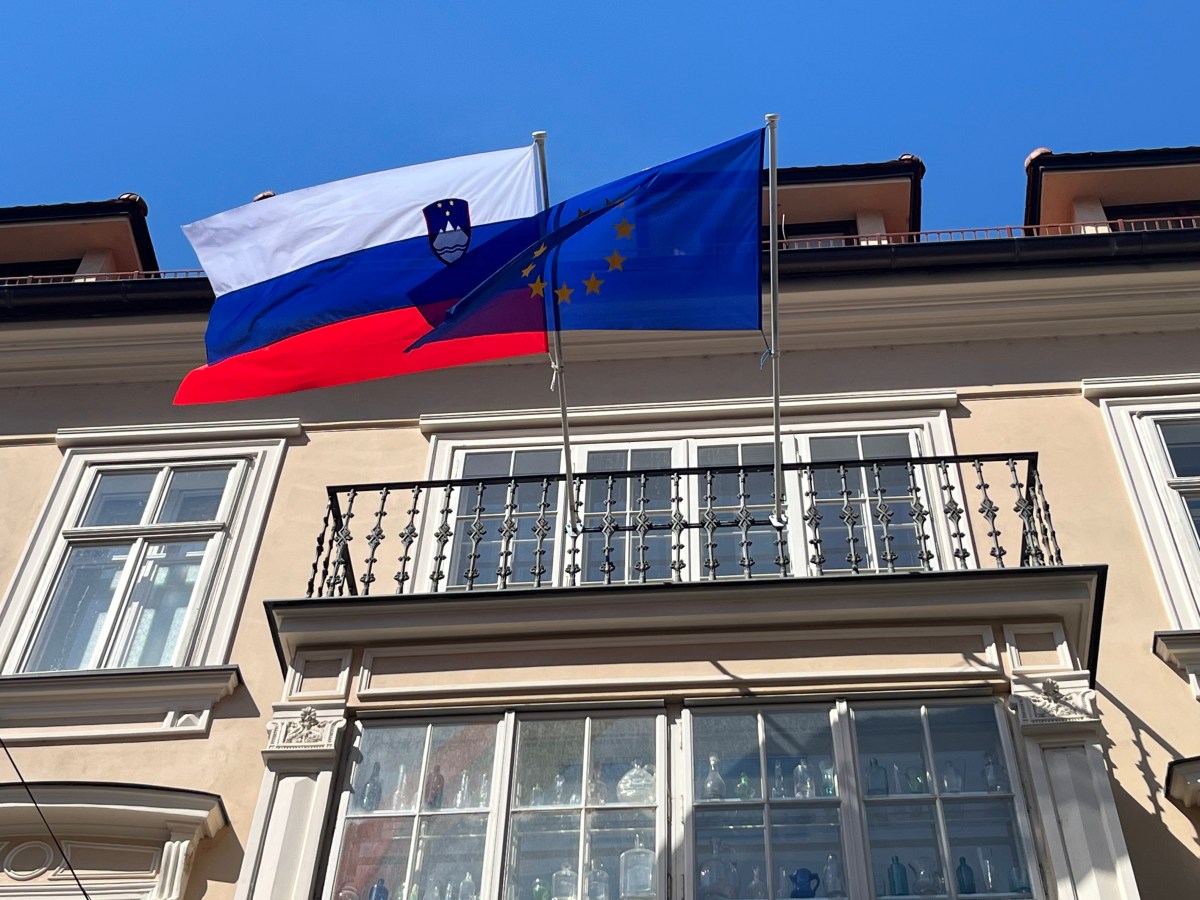
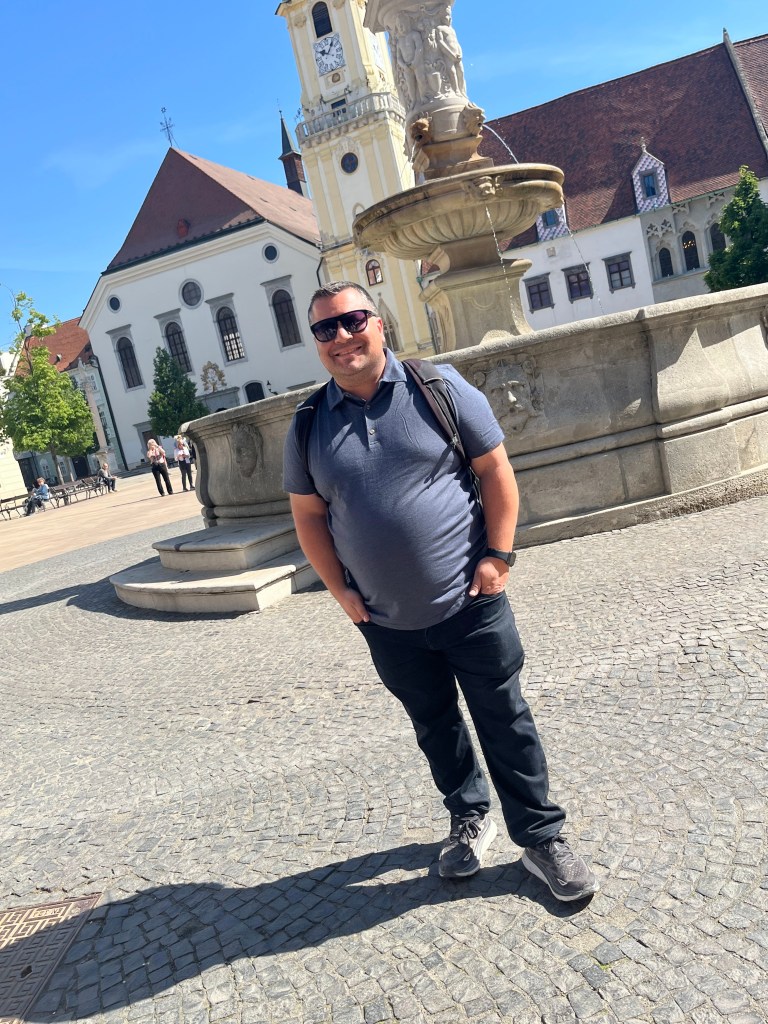
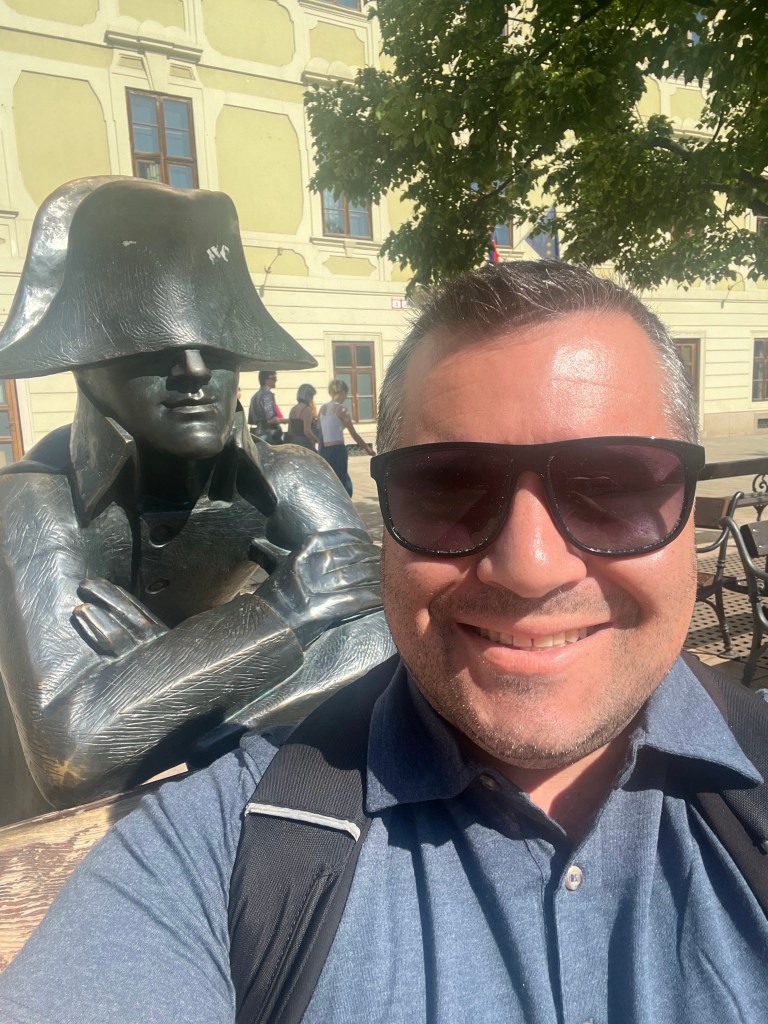
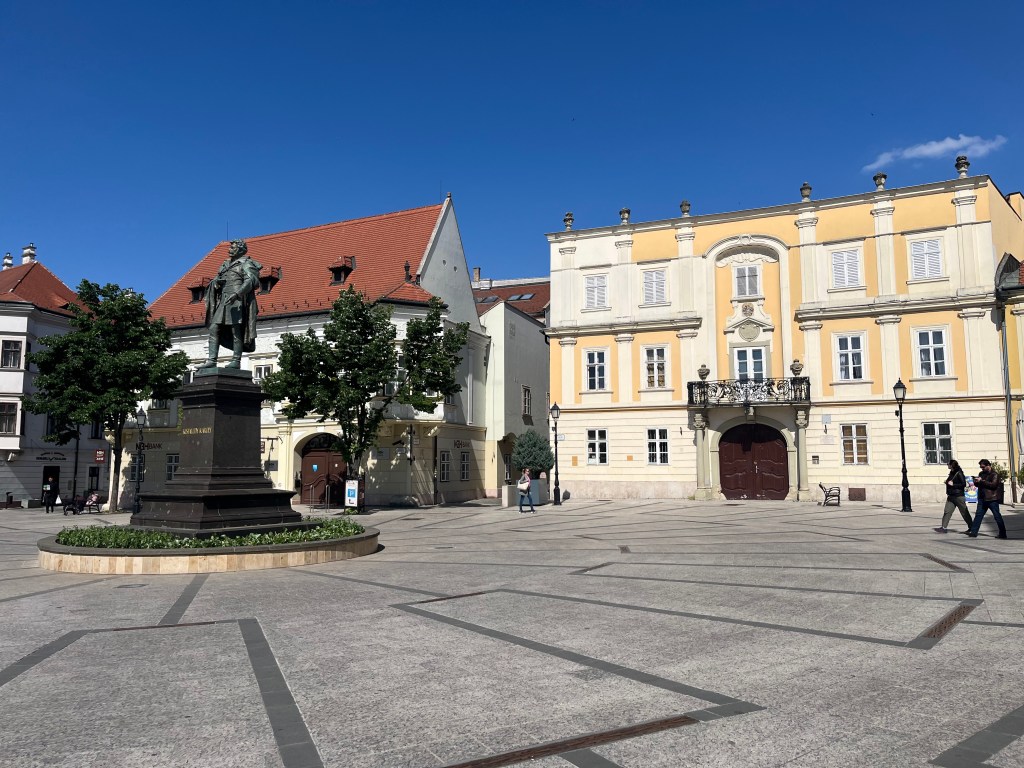
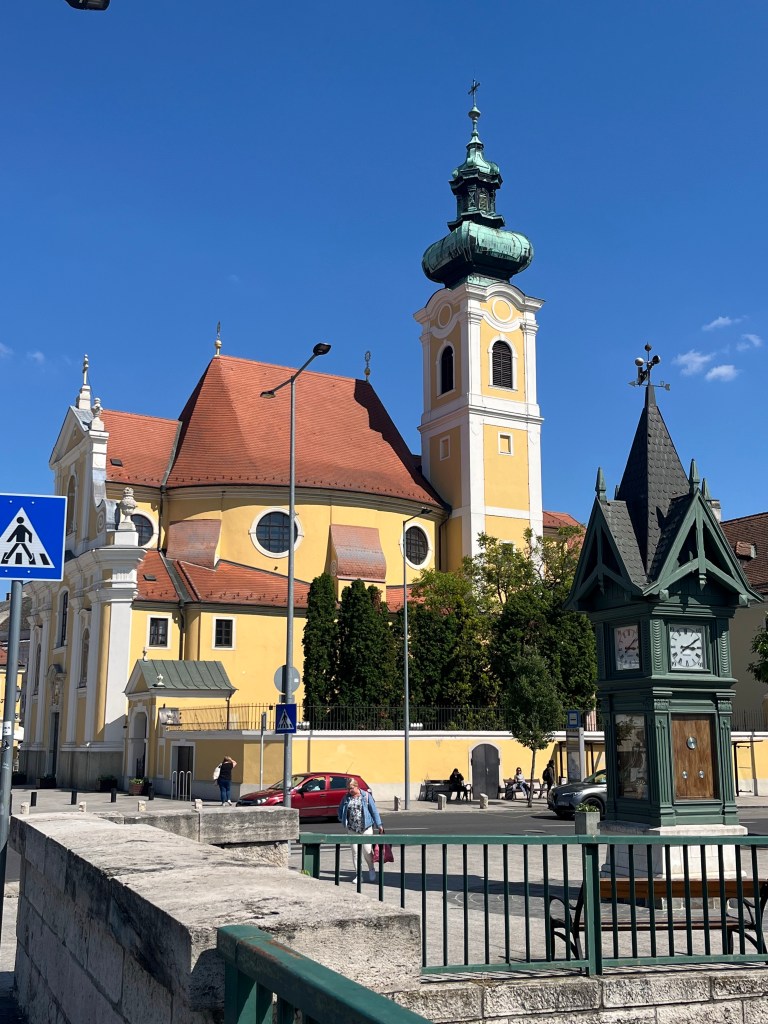
Here are some photos to give you an idea of what it looks like:

One of my favorite ways to get to know a new city is through its bookstores! I love books. They’re the only physical possession I care about and I love reading and collecting them! As was the case with a bookstore in Salzburg, the bookstores in Bratislava led me to some interesting discoveries.

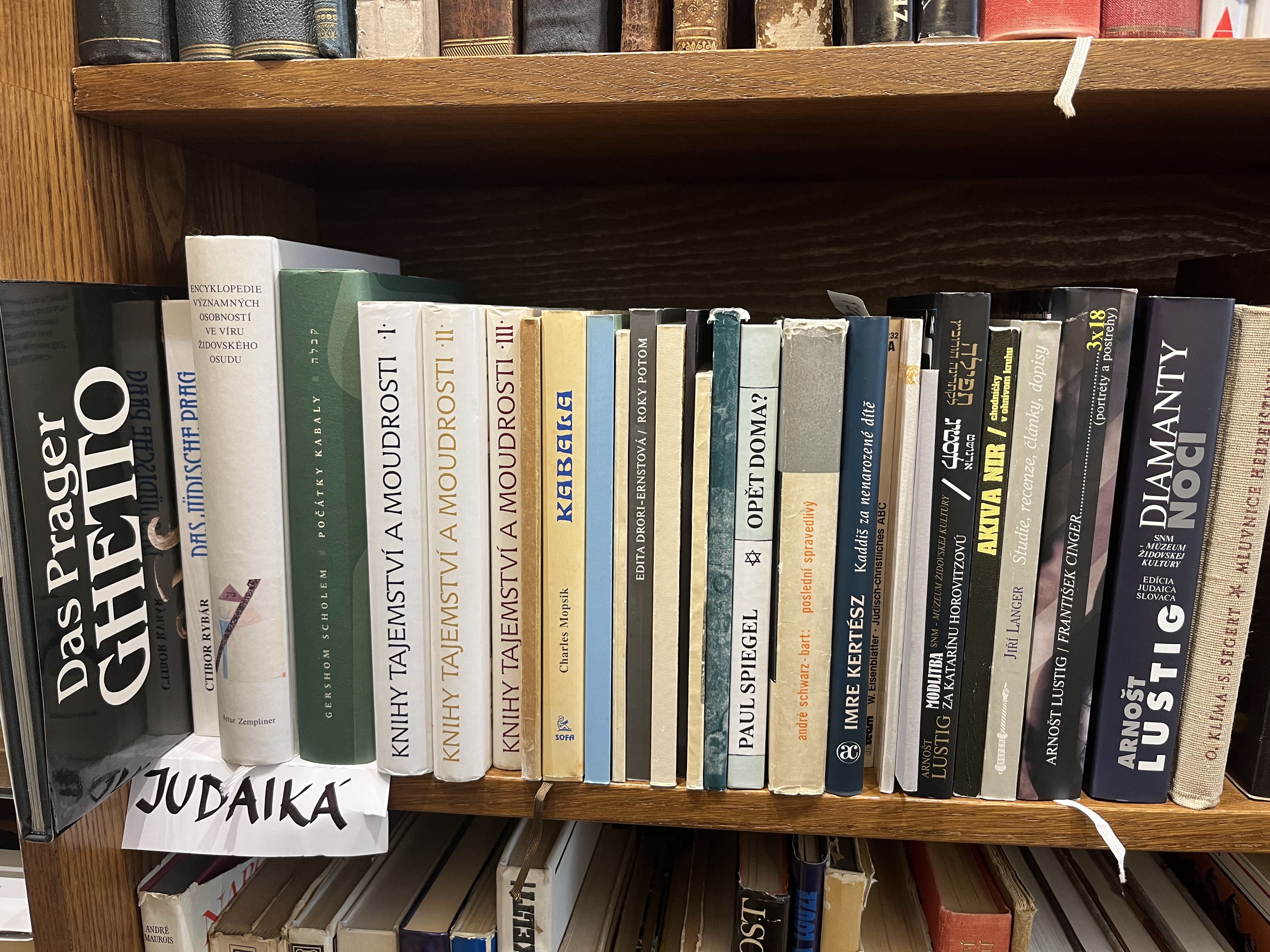
The first store I went to primarily sold new books. I got some Slovakian gay poetry and then asked where I might find Jewish books. I was able to find a book of Psalms written in Hebrew and Slovak! And one of the coolest parts about it was that it was new – meaning Jewish life still breathes in this part of the world. Sadly, the Jewish museum was closed on the day I visited, but apparently Bratislava has quite a significant Jewish past. In 1880, 16% of the city was Jewish– a higher percentage than today’s New York City! Today only 1,000 Jews live in Bratislava, from a pre-Holocaust population of 15,000. I’ll definitely want to come back and get to know the community more!

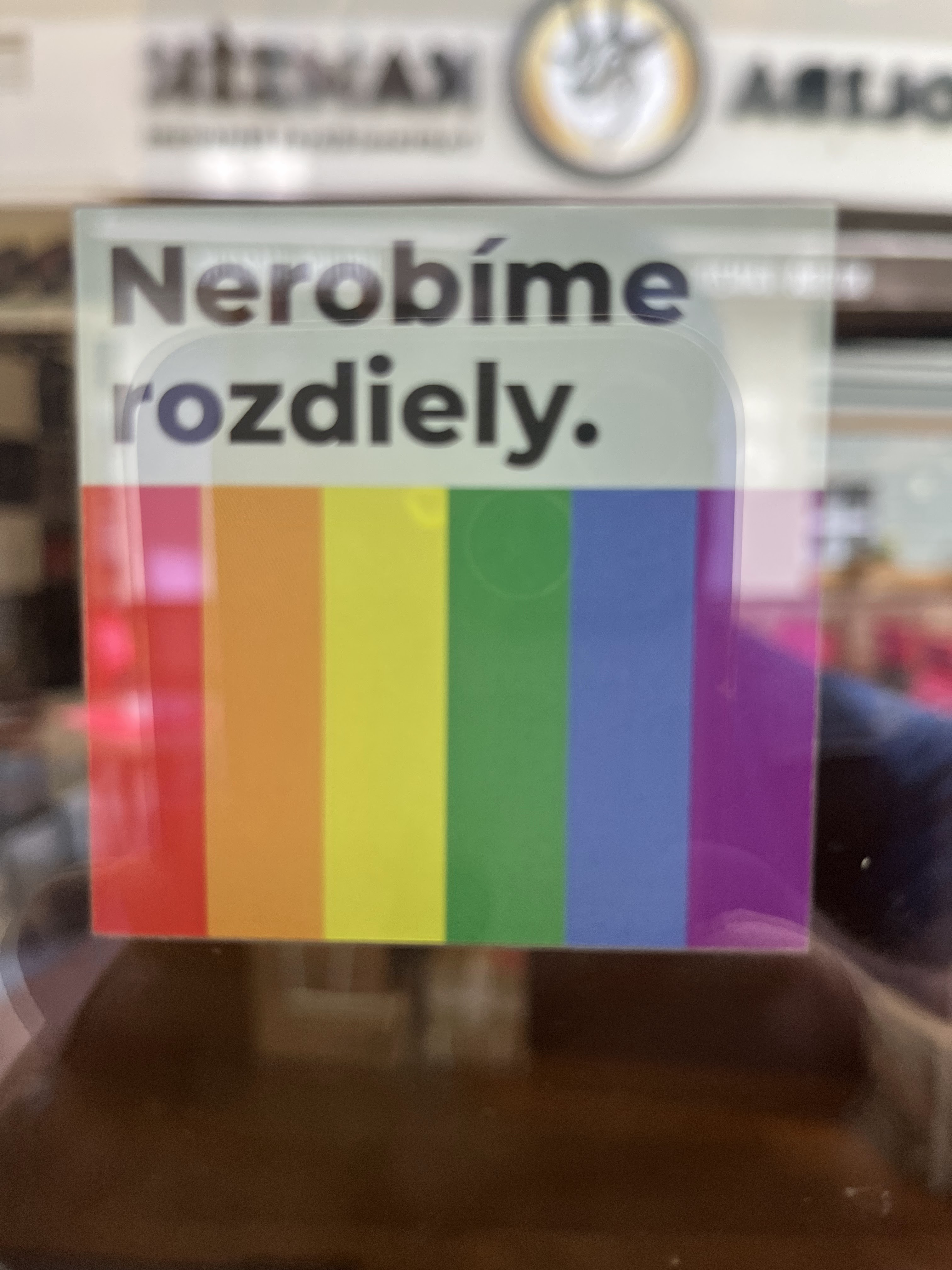
I had a meaningful conversation with the bookstore employee about LGBTQ+ rights in Slovakia, where she said it can be quite hard to come out. I was happy to see both of my identities validated – Jewish and gay – in this cute store. On the door to the store was a Pride sticker that said “we don’t differentiate (i.e. discriminate)”.

After visiting this cute spot, I found a used bookstore around the corner- Antikvariát Steiner. This bookstore is a treasure trove of old books! It was owned by a Jewish family before the Holocaust and I immediately asked to be pointed towards the Jewish books.

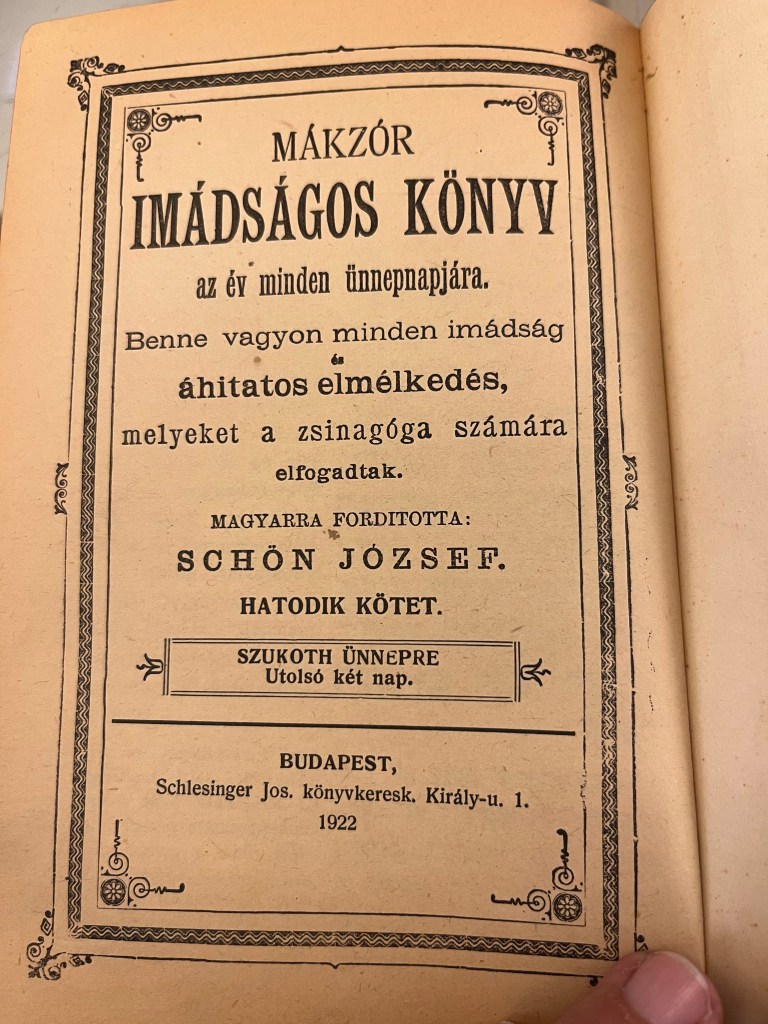
Perhaps because I am part Hungarian-Jewish, my eye was drawn to a machzor, a High Holiday prayer book in Hungarian. It was from 1922 and printed in Budapest, only a few hours away these days by train:

What was a Hungarian-language prayer book doing in Bratislava, Slovakia? Well, the answer is that this city used to be pretty diverse. Besides having a large historic Jewish population, the city was in 1910 40% Hungarian! And it wouldn’t surprise me if a number of the local Jews spoke Hungarian, just like my great-grandparents who immigrated to the U.S.

In fact, this visit to Slovakia could very well have been a homecoming for me. I know that my great-grandparents were from a town called Pacza (sometimes spelled Pacsa) in the former Hungarian Empire. However, the genealogists at the Jewish Museum in Budapest said it could be several different places, perhaps Pacsa (near Lake Balaton). But one of the villages mentioned was Pača in present-day Slovakia.

Perhaps I’ll continue doing some genealogy to find out exactly which village it is. But on some level, I am comfortable with the ambiguity. Much like Bratislava, I’m a mix. Bratislava was ethnically German, it was Hungarian, it was Jewish, it was Slovakian, it was Romani. And like Central Europe as a whole, I’m a bit of everything.

In days in which the world is so polarized between “this” or “that”, perhaps we can all strive to be a bit more like Bratislava and embrace our mixed heritage. Nuance. And diversity of thought and culture.

If you haven’t had the chance to visit this gem on the Danube, I highly recommend it and who knows what its books and history will lead you to discover!

Győr Hungary and its beautiful synagogue

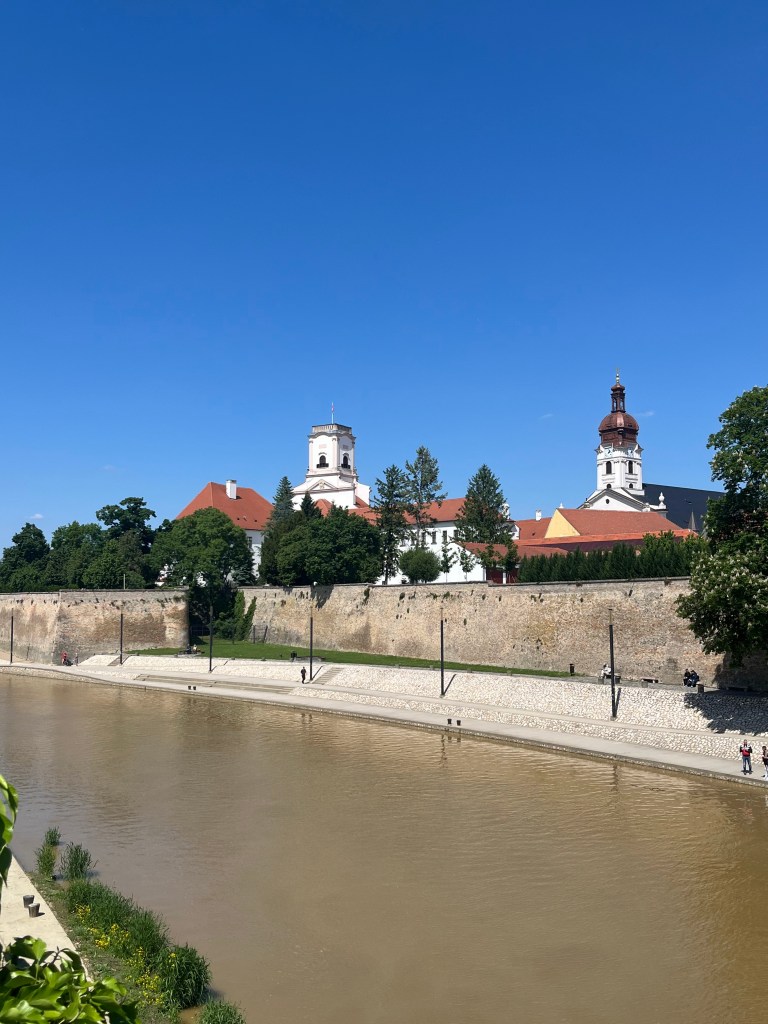
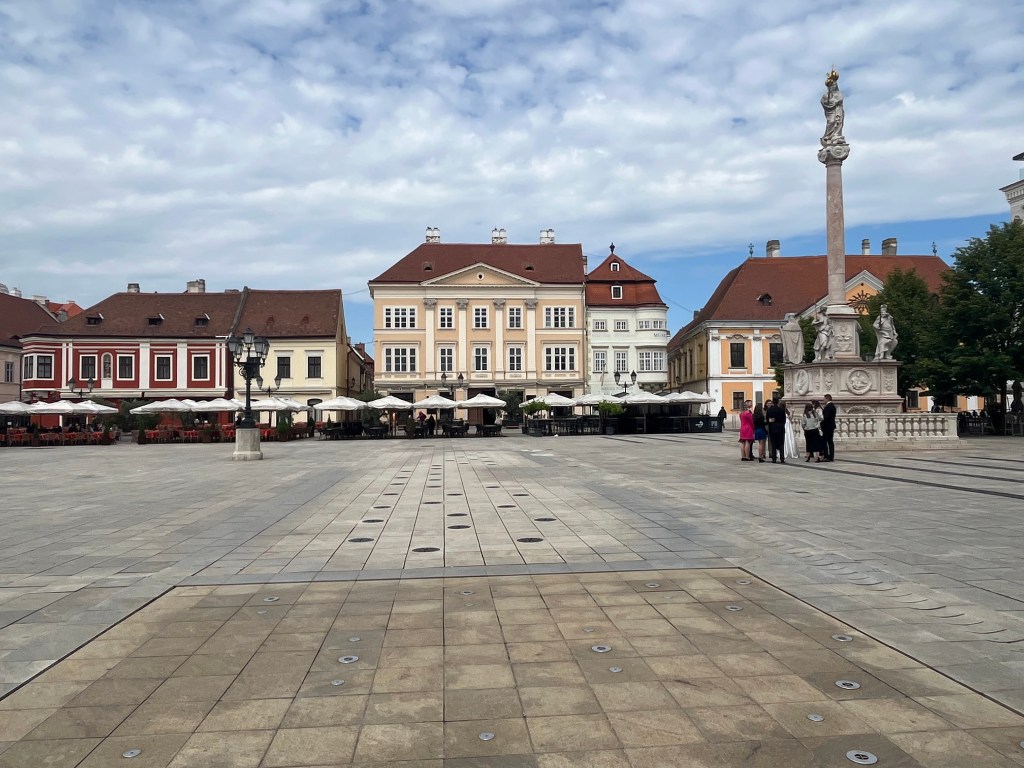
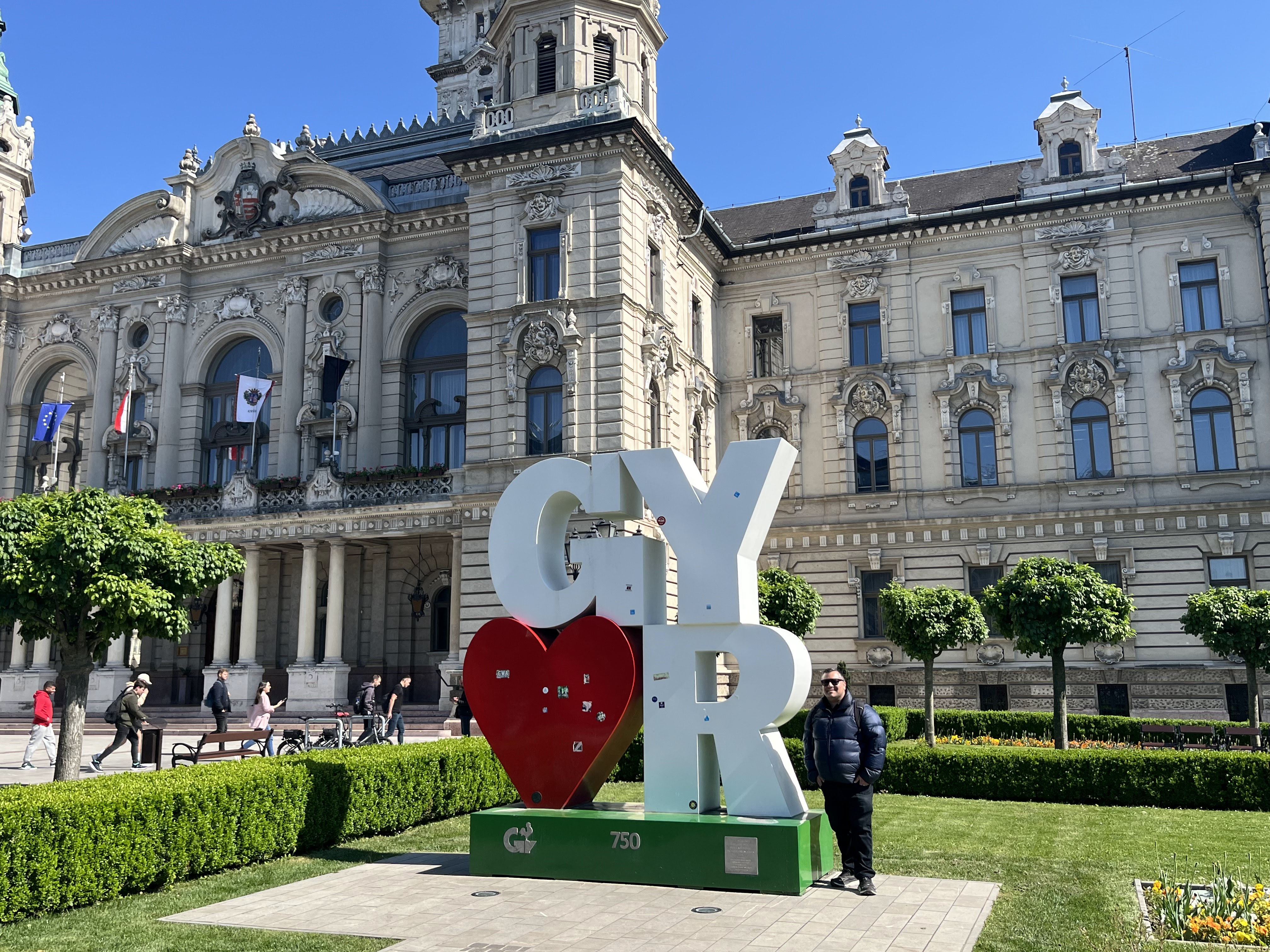
Győr is not a place many tourists visit compared to Vienna, Budapest, and Bratislava. It is smaller and there aren’t as many great “sights”. That’s what attracted me to it. Everyone enjoys a beautiful castle or cathedral- myself included. But I also like seeing how people live their daily lives and escaping some of the tourist crowds I found myself in during other parts of my trip to Central Europe.

After hopping on a quick train from Vienna, where I had explored the past and present of the local Jewish community, I headed to Hungary for the day. A few things caught my eye when I arrived to Győr. First of all, there were no organized tour groups. Second, the town was clean and safe. Third, the baked goods and goulash were delicious. And fourth, it was a relaxed, affordable city with a slow pace of life.

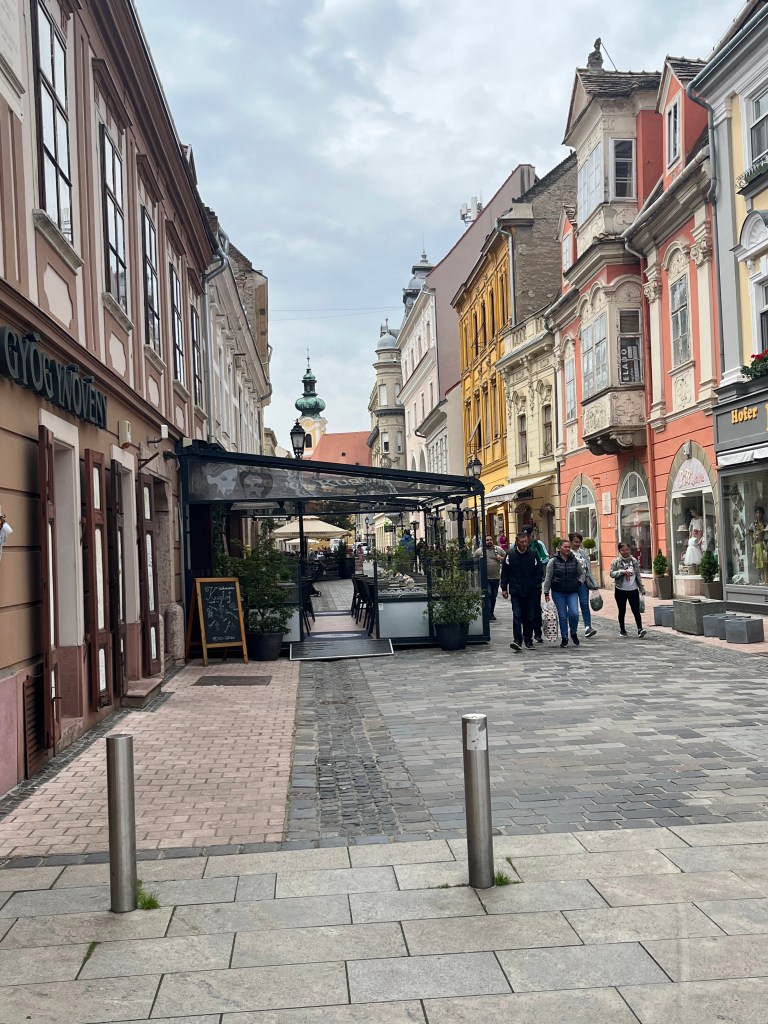
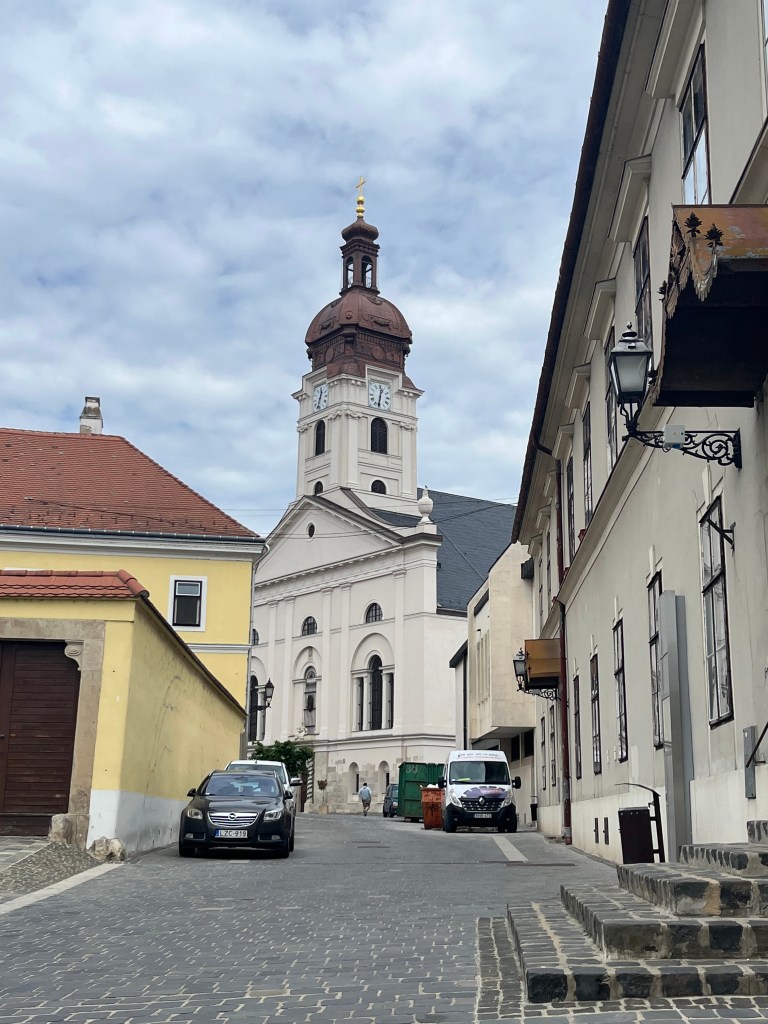
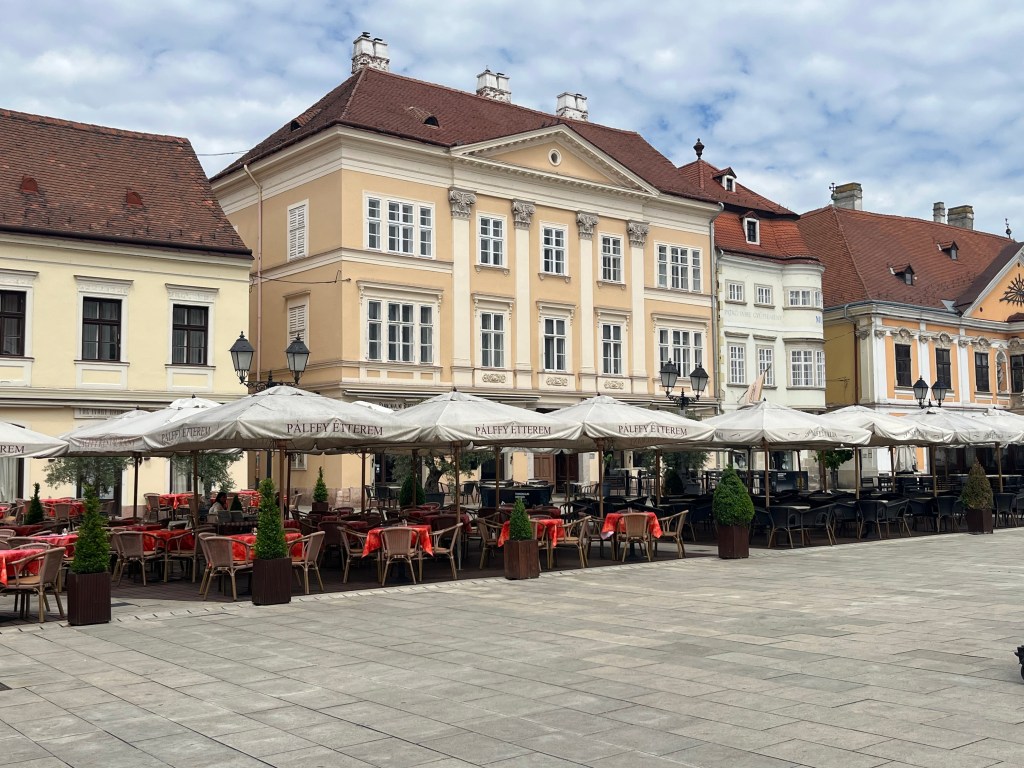
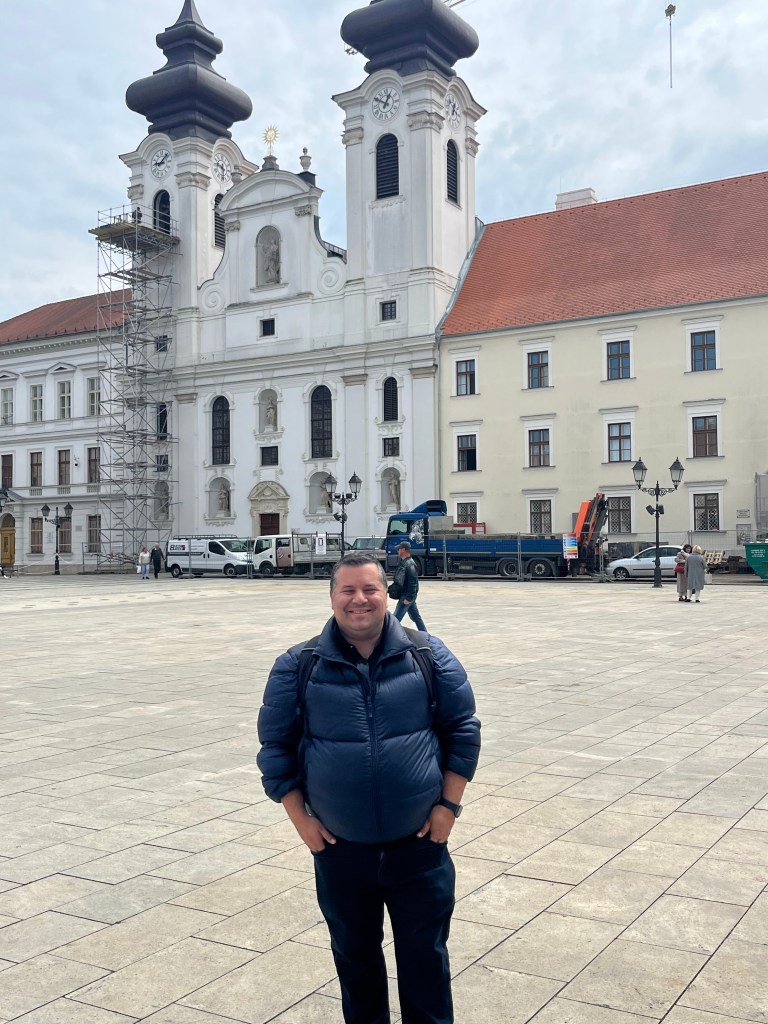
The old town streets and churches were beautiful and had a lot of charm.

After a bowl of delicious goulash (I later learned that there are different styles of goulash depending on where in Hungary or Central Europe you are!), I headed to the main reason I wanted to visit Győr – its magnificent Old Synagogue.

Along the way, I stopped at a used bookstore and asked if they had any Jewish books. I found a bilingual Hungarian-Hebrew copy of Talmud commentary from 1937. You could still see the former owner’s notes inside – it was incredible. I felt connected to this history – my history – because I’m part Hungarian as well. I wonder what became of the owner of this book or their family. 1937 was an ominous year and the ones that followed were only worse for the Jewish community – of Hungary and of Europe as a whole. I felt I had saved a book and I plan to learn more about this treasure, a testament to my people’s history.

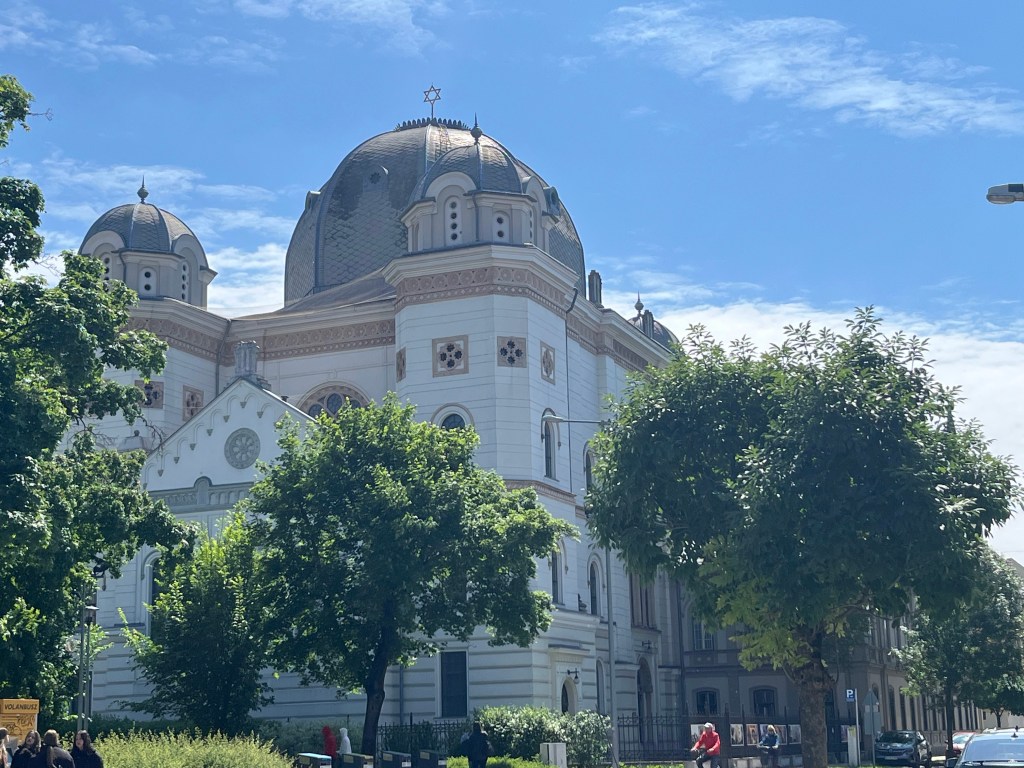
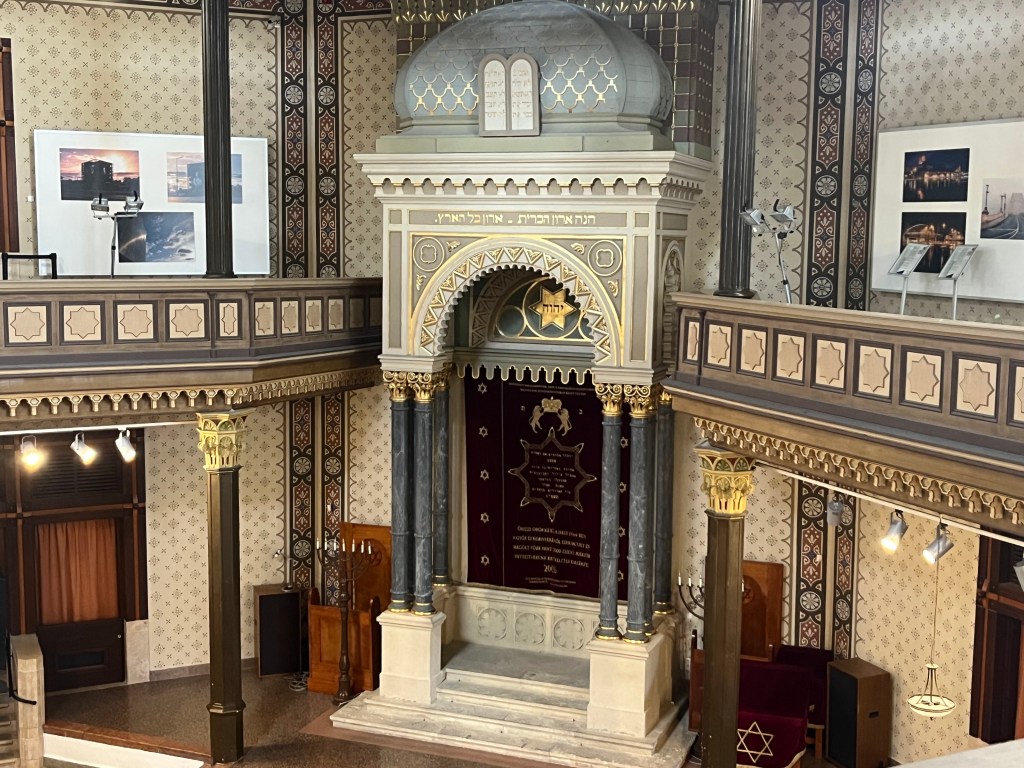
I finally made it to the Old Synagogue. It is a beautiful, beautiful building that dominates the part of the city across the river. Once home to a thriving Jewish community of almost 5,000 (8% of the population in 1941), few members survived the deportations to Auschwitz during the Holocaust. I encourage you to read more about the history of the community here.

Before going inside, I bought a ticket – it’s now considered a museum. Sadly, the community does not appear to be large enough to have a regular, active presence there from what I could tell. It’s largely used as a historic site and a music school.

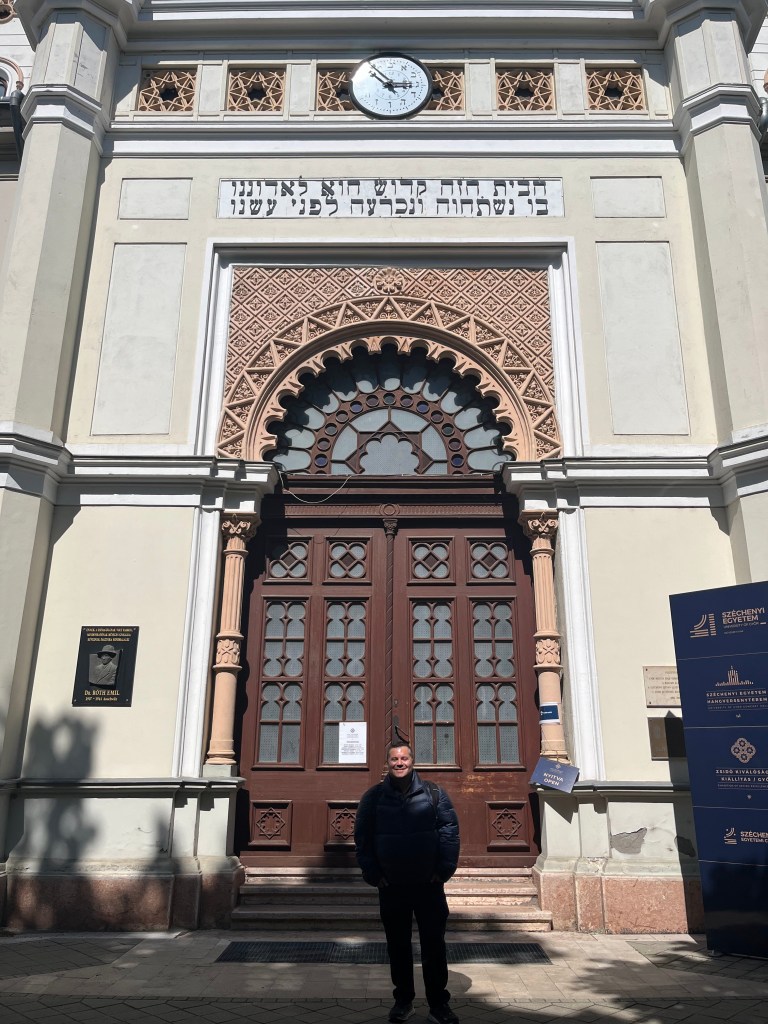
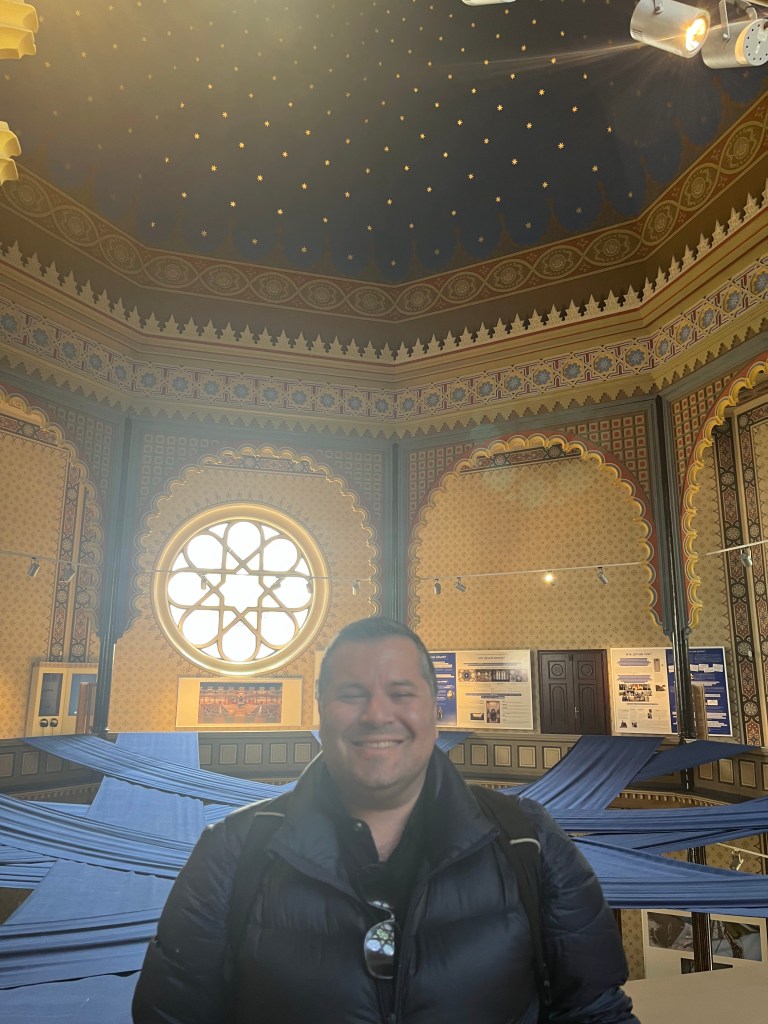
In fact, when I entered the synagogue, I heard a piano playing the most beautiful music. While it is sad that it is no longer an active synagogue, I am happy that it is being used to promote the arts, something that hopefully brings us some shared humanity during dark times. I met some of the music students who were kind enough to take a picture of me at the door to the synagogue.

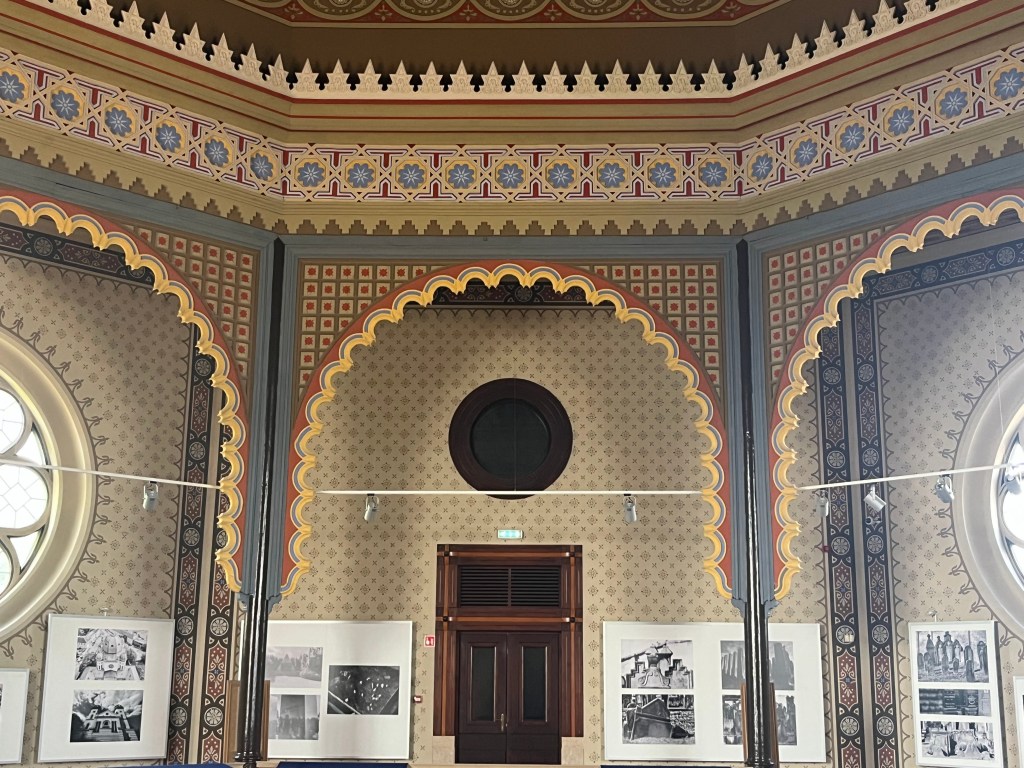
Now comes the real treat. The inside of the synagogue is absolutely stunning. The architecture was inspiring. You can almost hear the cantor’s booming voice filling the room. The aron hakodesh, or ark where the Torah is placed, is almost Ottoman in style and gleamed as the lights shone down on the pianist and his teacher.

Here are some pictures:

Other than the pianist and his teacher, who I smiled at and gave a thumbs up to (the music was gorgeous), I had almost the whole place to myself. What a treat.

I wish I was there with the Jews of Győr. Perhaps cousins of mine, fellow Hungarians who are no more. But I couldn’t be more grateful for the opportunity to explore my heritage in this beautiful city.

Hungary gets a bad rap for political reasons. And I think it’s blatantly unfair to judge a whole country because you may disagree with some of its leadership’s policies.

The fact is as a Jew, I felt safer in Hungary than I do in Washington, D.C. So for all of Hungary’s problems, I wish people would see the country with some more nuance and go visit to see it for themselves.

Because I, for one, love Győr. And I’m glad I made this detour from the more well-worn tourist path to explore a place of deep significance for my people and my Hungarian Jewish heritage.

The Holocaust postcard I found in Salzburg

After witnessing a virulent anti-Israel rally, I was about to give up on Salzburg, a beautiful city in Austria. Then, I wandered into an old used book store and I found the most stunning thing.

I asked the book store owner in Yiddish (because Yiddish and German are similar and it’s super useful when traveling in areas where folks don’t speak fluent English!) if he had any Jewish books.

He said he didn’t think he had any, but that if there were any, they’d be downstairs in the history section.

I picked up a Jewish book published in Germany in the 1960s:

Then as soon as I opened the book, the most surprising and magical thing happened. A postcard of fourth-grade girls from 1937 – in the midst of the Holocaust – fell out of the book!

On it, there are some names written in cursive on the front. And on the back, even more names, some hard to decipher and written in pencil.

On the back of the card, someone presumably named “K. Schloemer Schwartz” wrote “everything is shit”. And if these girls, pictured below, were in fact Jewish and living in Austria or Germany during the Holocaust, you can understand why K. Schloemer Schwartz would think the world was shit. Probably very few, if any, survived.

To say this was “bashert” – or “meant to be” – is an understatement. This book could have sat in this bookstore for years untouched and unexamined. It could’ve been thrown out, along with this intriguing postcard. I felt honored that it had found me.

Since finding the postcard, I’ve shared it with U.S. Holocaust Memorial Museum and the National Library of Israel. I want to make sure this postcard can make its way to any of these survivors or their descendants. If you have any contacts at other institutions like Yad Vashem or Jewish genealogical resources, please don’t hesitate to comment below or contact me with any information.

Until then, the card remains a mystery. A mystery I intend to solve and that I’m happy ended up in my hands.

These innocent girls, now perhaps in their 90s if they’re alive, deserve to touch this piece of their past.

At a time of increasing antisemitism yet again, when it seems like the world has lost all sense of sanity and has forgotten the lessons of the Holocaust, this postcard is a reminder of Jewish humanity. It’s a reminder that our lives mattered then and they matter now – even if so many in the broader society demonize us for no reason.

We survived evil many times in our history and we will overcome it yet again.

May the memories of these young girls I discovered in Salzburg be for a blessing. And I hope, with your help, to find their families to offer a bit of comfort.

Am yisrael chai – the Jewish people lives. Now and forever.

Jewish Vienna

Vienna packs in more Jewish culture, diversity, and vibrancy for a city of its size than anywhere I’ve ever visited. In just one week, I met an American-Israeli looking for a fresh start during wartime, a Hungarian-Austrian rediscovering his Jewish roots, a German Yiddish activist, a Haredi man and son of Holocaust survivors, an Austrian Yiddish poet, two Italian non-Jews exploring conversion, and an Argentinian Jewish immigrant. And there are only 8,000 Jews here! Less than in the suburb of D.C. I grew up in, but bursting with energy from all over the globe!

Read to the end of this blog. Because there’s a pretty amazing surprise towards the end.

Let’s start at the very beginning, a very good place to start. OK, I’ll save any further Sound of Music references for my blog on Salzburg, but I couldn’t resist!

Philip is a Yiddishist – an activist speaking, reading, writing, studying, and promoting the Yiddish language. He is originally from Germany but has studied the language all over the globe and actually knew Yiddish speakers who I’m friends with back in the States. It really is a small Jewish world!

He was kind enough to take me on a walk through Leopoldstadt, the former principal Jewish Quarter of Vienna. Vienna used to have a massive 180,000+ person Jewish community before the Holocaust. To say its influence on the society was significant is a deep understatement. Musicians, psychologists, writers, composers, the list goes on and on. It includes world-renowned people like Sigmund Freud. And if you look at this list, not a small number of Adlers!

While in Leopoldstadt, Philip and I stopped at a Hasidic bakery for a quick sugar fix. Vienna is known for its sweets, such as its famous Sachertorte cake! The top left sweets are from the bakery and the rest from elsewhere, but I think it’s fair for Austria to show off a bit!

After leaving the bakery, we came across a Jewish man in a black hat. I greeted him in Yiddish and said I was a Jewish writer from the U.S. He immediately shook my hand and invited me and Philip to see his synagogue! It’s actually kind of two synagogues – one downstairs that was Hasidic and one upstairs that was Haredi (ultra-orthodox) but maybe not Hasidic. The historic building was called the Schiffschul, which you can read more about here.

After giving us a tour, he pointed us to the back of the synagogue. That’s where they’re building an addition to the synagogue including mikvahs (ritual baths) and more room for prayer. Nothing makes me happier. Despite our ideological differences, Hasidic and Haredi Jews are my brethren and to see Jewish life *growing* in a place where it was on life support after the Holocaust, was incredible. I’m proud of this community and wish it much success as it continues to grow and preserve so many Jewish traditions.

Here are some pictures from inside the Hasidic (downstairs) and Haredi (upstairs) of the synagogue:

You’ll notice, besides the very beautiful interior and loads of Jewish books (nothing excites me more!), the gold plaque outside the synagogue. It commemorates the Jews sent to their murders in the concentration camps from this synagogue. The Holocaust is *never* more than one step away from the present here, where less than 3% of the original community returned to live after the Holocaust, the rest dead or in other countries.

Before we left, the man, named Yosef, asked us for a blessing for his ailing wife. Philip offered a beautiful Yiddish blessing for her health and we all parted ways – three very different people on paper, but all tied together by one beautiful yerushe, or “heritage”.

Philip was incredibly kind not only to show me around town, but also to connect me with Thomas Soxberger, a Yiddish poet and Jewish historian. You can read more about his background and poetry here. If you want to learn more about Jewish history in Vienna, he has also written the book “Gründen wir einen jiddischen Verlag!” or “Let’s start a Yiddish publishing house!” Philip also connected me with the Yung Yidish Vienna library + cultural organization, which unfortunately I couldn’t visit since I wasn’t feeling well. However, I know their sister organization in Tel Aviv very well and highly recommend all fans of Yiddish to check out their Vienna location!

I also had the opportunity to visit the Jewish Museum Vienna and see some incredible Jewish artifacts – on Israeli Independence Day of all days. It was appropriate – the founder of modern Zionism, Theodore Herzl, lived in Vienna! The artifacts were from all over the Austrian Empire, including places whose Jewish communities I knew almost nothing about – like Bosnia!

The visit to the museum was one of the few times in Europe I have felt safe as a Jew. Jewish institutions are guarded by security – including Austrian police. And while it’s sad that that’s necessary, it made me feel more at ease than in some other places where the governments either fail to support local Jewish communities or actively create anti-Israel rhetoric in society. In Austria, I don’t know the politics well, but I definitely felt more protected.

Here are some pictures from the museum, then we’ll return to the stories of the incredible people I met:

After days of touring both Jewish and non-Jewish places (here, to be honest, the cultures are so historically intertwined that it’s hard to really distinguish between the two!), I decided to rest and go to Shabbat services at Ohr Chadasch, a Reform congregation in Vienna.

Longtime readers of this blog know that I have struggled with my Jewish identity in the past several years, as both of my parents died from cancer about two years ago. Such a shock to my system made me question a lot of things, especially God and Judaism, things that had been so central to my life.

So I was excited but also a bit nervous about going to service at Ohr Chadasch. Every prayer reminds me of my mom, who used to go to synagogue with me. Would I start crying in services?

What was magnificent to see is that my grief is evolving. I enjoyed the hell out of services. Ohr Chadasch, much like Ohel Jakob (the progressive synagogue in Lisbon), sings and sings loudly! Whereas I couldn’t have handled this even a year ago, now it brings me joy again. My Judaism was on life support and now it is supporting my life.

The people of Ohr Chadasch are who really bring it to life. There’s Natan, the friendly American-Israeli-Austrian building a new life in Vienna and immediately offered me a seat when I looked for one. There’s another man, whose Hungarian Jewish heritage was obscured by his family’s struggle with their identity after the Holocaust, but who now is reconnecting with his roots. There’s the man who was leading services while the rabbi was out of town – who is a Jew by Choice.

After services one night, Natan helped round up a group of people and we all went out to eat Asian food (how Jewish of us!). It was such a fabulous evening. Italian non-Jewish polyglots curious to explore what community means to them – and if Judaism might be a spiritual home for them. Several other community members of diverse backgrounds. And me and Natan – two American-Israelis.

It was a mix of languages, cultures, Judaisms (or potential Judaisms!). It’s just how I like to spent my Shabbats. Thank you to all these new friends and the Ohr Chadasch community for welcoming me with open arms and making my visit so special.

Speaking of special people, the second Friday night service I went to in Vienna at Ohr Chadasch, a different man offered me a seat. His name was Augusto. Augusto is an Argentinian Jew, a PhD in Philosophy, a former resident of Italy, and most importantly, a total mentsch (good guy!).

After connecting over our shared love of Spanish and Judaism, we decided to grab coffee a couple days later. For most Americans, coffee is maybe a 45 minute to an hour experience. But coffee in Vienna, and especially with a friendly Argentinian, is a six hour experience. Not only coffee and delicious pastries and lovely conversation, but also a whirlwind tour around the city. We visited the Cathedral, the Holocaust Memorial (which to the city’s great shame is almost hidden in a neighborhood tourists never visit), countless gorgeous buildings, and the MuseumsQuartier. He shared Jewish history with me along the way. The city is stunning and we’ve had influence everywhere. Even the beautiful Karlskirche which I loved was financed with money expropriated from Jews!

The history here is complicated and not always friendly to the Jews, who nonetheless contributed to it and with it extensively.

Just to show you how pretty a city this is, here are some photos of things Augusto and I saw together – and some places I went on my own:

Not only did Augusto and his wonderful wife Sabrina show me so many sights around the city, they did it with great kindness and warmth. I didn’t feel like a visitor. I like I belonged.

I felt like I belonged because they made me feel happy, they made me feel loved. And on a difficult day – Mother’s Day. I know my mom was smiling looking down at me making new friends on my journeys. To travel solo is not to travel alone!

There’s another reason I think I felt I belonged. This is the surprise. As I sat down to write this blog, I remembered a genealogy project I did for Hebrew school at my synagogue growing up. I listed where all my ancestors were from. And I’ve done a good bit of genealogical research since then. I know I’m Jewish – from Lithuania and Ukraine on my mom’s side. And on my father’s side, part Romanian and Hungarian. I had the strangest flashback though to the poster with my Hebrew school genealogy project. It said Vienna, Austria.

And that’s because my great-grandfather Max Grossman, a Yiddish speaker, was born to two Austrian parents. He may have even been born in Austria – it’s not clear. It is he who was on my school poster and I verified it on my family tree. For people who don’t believe in spiritual energy – I’m sorry but this is too clear to be anything other than beshert. “Meant to be”. Min hashamayyim. From the Heavens.

I love Vienna. It has a horrific antisemitic history and also a lot of amazing intercultural cooperation and glory. And it has what has to be one of the most resilient Jewish communities in the world. That’s one of the places I draw my resilience from. It’s quite literally in my blood and I had no idea the whole time I was there.

Vienna- I’ll be back!

Sicily and Malta: echoes of Israel

Sicily and Malta are two of the most beautiful places I’ve ever visited. The Mediterranean islands have a lot in common. They’ve been conquered by many civilizations, including the Greeks, the Romans, the Arabs, and countless others.

Each civilization has left its mark on the islands’ history. In Sicily, there are Roman mosaics, Greek theaters, Greek temples, Baroque churches, Arabesque cathedrals, even Middle Eastern-inspired food that is quite different from what you might encounter in northern Italy. I did a street food tour and enjoyed every last bite.

Even the markets in Sicily look almost identical to Israel or any Middle Eastern country. With loud shouting and free samples!

Malta is even more Middle Eastern than Sicily! I speak Arabic and when I wanted to catch a cab from the airport to my hotel, I heard a driver talking to another driver. I understood almost every word. I hopped in the cab and asked the driver if he was speaking Arabic or Maltese, the local language. He said Maltese! I was stunned. This man’s speech sounded so familiar to me that it almost sounded like a Tunisian immigrant to Malta speaking Arabic.

The architecture in Malta, in particular, is very reminiscent of what you’d find in Israel in places like Akko and Jerusalem.

The nature in both countries is stunning. Malta’s blue lagoons and cliffs. Sicily’s incredible countryside, full of green hills, yellow flowers, lemon trees, and of course views of Mt. Etna (which erupted while I was on a bus!).

The Maltese and Sicilian people were incredibly friendly, especially in Malta. Both countries drive like maniacs but the people – the people were the superstars. They were so open. They were so willing to unabashedly share their stories, their lives, their problems with their spouses, their hopes, their dreams, their politics – it felt like being back in Israel but in a place that hasn’t known war in a very long time.

I have a lot to say about my experience in these two incredible countries. The sights to see are countless. The vibes are fabulous. The food delicious.

I couldn’t help but think that maybe one day, when Israel is given a chance to breathe, and when its neighbors accept its existence and all choose the path of peace, that it can be a destination as tranquil as Sicily and Malta. That have lived through ages of conquest and rich cultural heritage. But have come out on the other side stronger yet still welcoming. Whole.

May you have the great privilege that I did to visit these stunning countries. And may my friends in the Middle East one day know the peace of Malta and the peace of Sicily.

Libi bamizrach. My heart is in the east. Soon enough it won’t be enough for me to see buildings that remind me of Akko and Jerusalem. It’ll be time for me to visit the only place where I’m not a tourist. Where I don’t have to look longingly at beautiful architecture and be the “other”. The only place I can truly call my own.

Malta is home to an Inquisitor’s Palace and Sicily, once home to a bustling Jewish community, wiped it out during that very same Inquisition. These places, like many that I’ve visited, are or have been home to incredible Jewish communities. And I honor their resilience over the years.

And I wish for nothing more than for us to no longer need to be resilient. For us to be as tranquil as the Sicilian countryside or the lagoons of Malta. Because we’ve earned it.

Ken yehi ratzon. May it be God’s will.